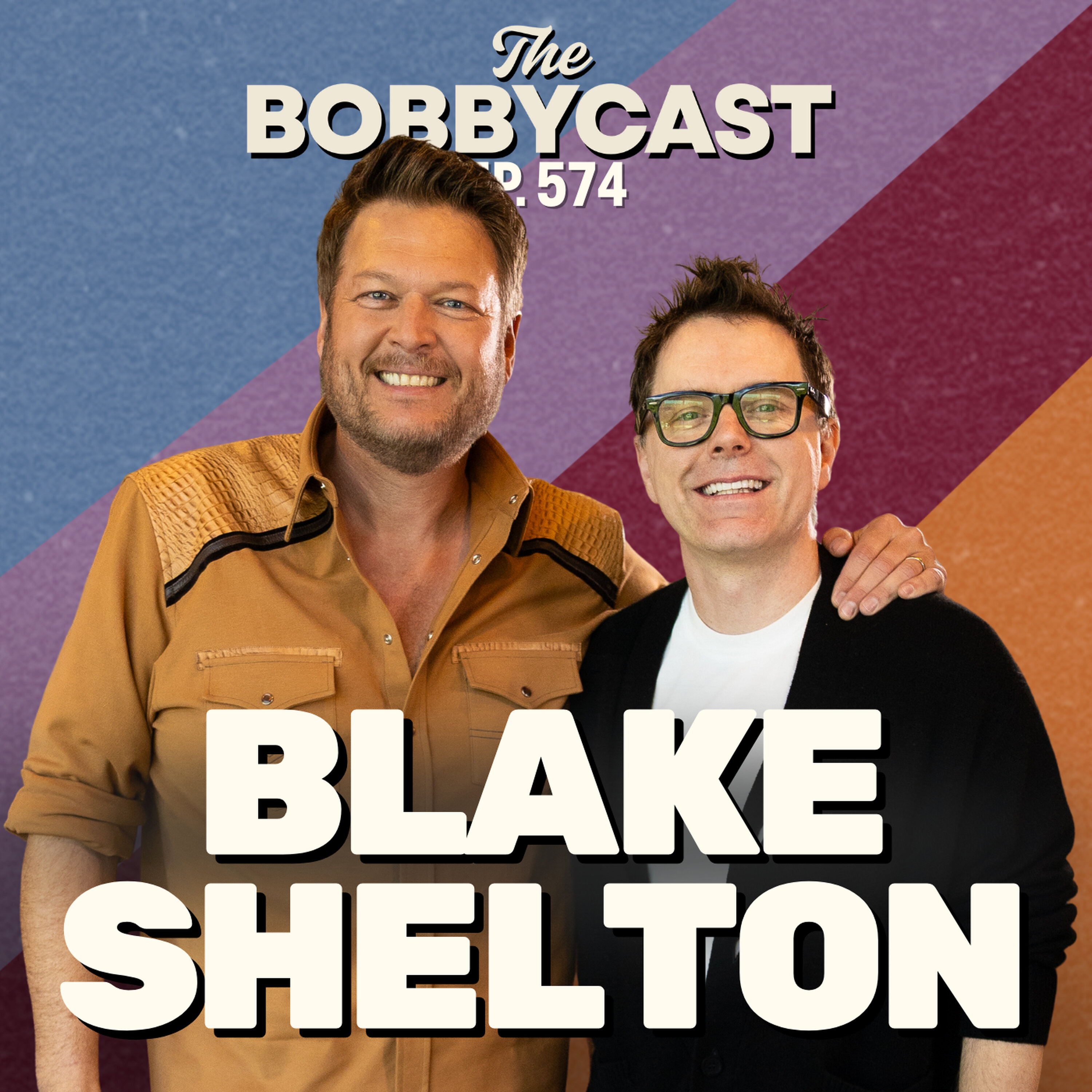
#574 - Blake Shelton on The Voice, The Downside of Stardom and His Perfect Day
Blake Shelton sits down with Bobby and talks The Voice—how he got the call, why he worried it might be “selling out,” and how it changed his level of fame. He also gets real about what it’s like being a different kind of famous, needing thick skin, and why he’s happiest keeping life simple. Plus, Blake breaks down his perfect day: the ranch with Gwen and the boys, and weather he’d take at 5 degrees over 100.
The BobbyCast is now streaming full episodes on Netflix!
Follow on Instagram: @TheBobbyCast
Follow on TikTok: @TheBobbyCast
See omnystudio.com/listener for privacy information.
Available Results
Generated results are saved to the knowledge database for reuse and search.
Extract Knowledge
Pick what you want extracted first. Model, scope, and chapter options appear after a template is selected.
Transcript
00:00:08
Speaker 1: Hey, thanks man, thanks for hanging out absolutely buddy.

00:00:11
Speaker 2: Good to see you.

00:00:11
Speaker 1: Yeah, good to see you too.

00:00:13
Speaker 3: I like to start off the show with because I never want to ask a question that you get asked all the time, because you'll be sitting the whole time thinking, I know he's gonna ask me about this.

00:00:22
Speaker 1: Okay, So the three questions you get asked the most, what's number one?

00:00:28
Speaker 2: Oh man, that is a good question. That's a tough one.

00:00:35
Speaker 4: Uh.

00:00:36
Speaker 2: I get asked about Gwenn a lot.

00:00:38
Speaker 1: Okay, you know, let's go.

00:00:39
Speaker 2: But I feel like it's not it's from the standpoint of, you know, the questions that you get, like, so, what are you guys doing for Thanksgiving this year? And does Gwyn cook or you know, it's they're innocent enough, you know, but it's it's just probably whatever the whoever's boss that go get this stuff from him so we can put it in the you know, the life section of the magazine.

00:01:02
Speaker 1: Okay, so it's Gwyn Cook, let me ask it.

00:01:04
Speaker 2: She loves the cook, all right.

00:01:05
Speaker 1: What's the question? Number two? You get asked the most?

00:01:13
Speaker 2: And I don't know, I kind of blackout during these these interviews.

00:01:18
Speaker 1: And it's like drunk or board.

00:01:21
Speaker 2: Uh, it depends on what time of day, I guess. I mean, I don't do a lot of interviews unless we have a you know, a project or something coming. That's why this one's this one's fun to do with you this time, because you know, I really I mean, I'm sure the record labels I don't say that, but I'm really not like promoting any We're not launching anything right now. You know, we're kind of in between projects, and so I thought it'd be fun just to come here and like actually have a visit with you, you know what I mean? Okay, then still quit asking me such tough Yeah.

00:01:58
Speaker 3: Yeah, this was supposed to be the softball part of the interview. Oh god, Greg, because I figured it was Gwynn. I figured it was Mullet.

00:02:04
Speaker 2: I'm not good at till like top ten things, you know what I mean. They even said, like, oh, bother you. They want to know, like what your all time top favorite albums of all time, you know, And I've been thinking about that for like three days and now going, oh my god, what are they? I don't even really know. I finally decided on some but uh, that was even hard for me to remember. I don't. I don't remember stuff that well, you know I did.

00:02:30
Speaker 3: You're worried about this a little too much, I guess, so I guess. So, Okay, the mullet, When did you cut it? This is gonna be the second question I figured you get asked all the time.

00:02:38
Speaker 2: Well, the mullet. It was was an evolving change because it went from what you know, we all considered in know what an actual mullet is, which would have been I had that for the better part of my teenage years and on end of my twenties. But I really only had the actual mullet for the release of my first single, which was in two thousand and one. And because I caught at the time, I didn't realize that mullets are cool again now, I guess. But back then when I had him, they weren't cool anymore. You know, it was like that phase it already ran out, and no one told me so. My first single came out with a video and there I was with a mullet, and by that time, Tracy Lawrence and Alan Jackson, everybody had cut their mullet and it was just like me and Neil McCoy left at that point that had him and so when I caught so much grief about it. There was a guy in Nashville that had a morning radio show named Carl P. Mayfield. He was gone before you came to town, and he would go on his morning show and just I mean just whether I was a part of the show or I'd be in my truck driving and he would play my song, Oh, there's the worst new mullet in country music, you know. And so I started thinking, well, I got to do something about this. But I was stubborn enough that I thought, Okay, I'm not gonna cut I'm not gonna let them tell me to cut my mullet, but I will grow out the rest of my hair and just have all long hair, you know. So that way they didn't win. I didn't cut my mullet. I just I grew the rest of it out to go with it.

00:04:30
Speaker 3: The third question I thought people would ask all the time is how did you get on the Voice.

00:04:35
Speaker 2: I got on the Voice because well, I had done a couple of shows before The Voice, one Nashville Star. I did one season of Nashville Star, which was on the USA Network, which was under the umbrella of NBC, and then I did another NBC show called Clash of the Choirs, which was just one they did one season. It was like one week holiday special they did and it was me and Nick Lache and Kelly Rowland and Michael Bolton and Patti LaBelle and we had to like coach and be the leaders of these choirs. And it was like an America voted on whose choir did the best, and it was like this series lasted a week, so it was every night, and it was during the holidays, so it's like a you know, a Christmas themed thing, and that when I did that, I I certainly was at best of at best of, you know, probably a B level artist in country music. And but as you know, you get on TV and all of a sudden, you know, you just are in front of so many new people and and so some executives at NBC I had caught their attention, So then I was on NBC's radar. But that's still the only part of the reason I was asked to be on the Voice. The reason I really got on the Voice is because Riba turned it down and I was being managed by Narvel Blackstock, who was managing RIBA and was married to her at the time, and Reba said, you know, she didn't want to. The only other show like that was American Idol at the time, and that was back when you know, I think Simon and those guys would kind of, you know, give people a hard time if they sucked, and and so Reba didn't want to be that, you know, on television, which is understandable and and so and even though that's not even what we did on the Voice, Reba just passed on reality television basically, I think. And they and they said, well, if she's going to do, who else do you manage there that we might be interested in? And he mentioned, well, have this new kid, Blake Shelton, and it rang a bell.

00:07:01
Speaker 1: With clash of the choir's Blakeshells Yeah, exactly.

00:07:04
Speaker 2: I think that was actually said, like, well, you talking about the guy from that choir, that's right, and so it at least there they're like, oh, well, we do know who that is, you know. And and at that point the offer came in. You know, they had had already Christina Aguilera signed up, and that's all I knew of at the time, but I I I pushed back a little bit at first, and finally I think, you know, somebody in my life was like, who who do you think you are? Like, you got this opportunity to go be on the show with Christina Aguilera, Like it's Christina Aguilera, She's doing it. Then who the hell are you to say no? You know, and it's like, you're right, okay, I don't know what I'm thinking. And so we did it. And I remember that was when I met Adam and Silo, and Adam and I quickly became friends. We had the same kind of sense of humor, you know, and we both thought the show was just the dumbest, the dumbest sell out thing you know, we could ever do, especially Adam was super worried about that part of it, you know, like looking like a sellout or whatever. But we both thought, you know, it probably wouldn't last anyway, and so let's let's do it and have some fun. And then the next thing we knew, you know, it became huge part of our lives. You know, that changed changed my life forever.

00:08:28
Speaker 1: Did you find that it helped your music a ton?

00:08:31
Speaker 2: Yes, without helped my music, meaning you know, just put it in front of so many more people. And so when I say it helped my music. It helped it sell and helped my momentum, you know at country radio. You know, all of a sudden, it was like I had momentum that I'd never had before, you know, which was crazy to me, you know, because I remember before The Voice, you know, we would release a single and I was very inconsistent as far as you know, what worked and what didn't work at radio. You can it's fun to think about it now. It's like, you know, it came out with Austin, which is this huge record, and then my follow up was this song that barely cracked the top twenty, and then we came with Old Red and got a little momentum back, and then had a few misses. And it wasn't until The Voice that you know that we had a run there probably ten years, or maybe not quite ten years, maybe seven or eight years. It's just every single we put out was of it just automatically. The people didn't even listen to it, they just put it on the air. You know. I was just had that kind of momentum for a minute there. You know.

00:09:54
Speaker 1: Was it weird to.

00:09:57
Speaker 3: Be a different level of famous because for me, when I started to do television, it was just different kinds of people that never recognized me. We're now coming up to me. But you was even at a different level. Did you start to notice that in your life?

00:10:08
Speaker 2: Yeah, it was the It was immediate, you know, as soon as the voice started to air. And there's a difference in being on TV and then being on.

00:10:19
Speaker 1: A hit TV, short primetime hit show. Yeah.

00:10:23
Speaker 2: Yeah, And it was all of a sudden like, oh, now, I know how if you don't have thick skin, I know how people lose their minds and you know, freak out. And these can't probably handle that kind of scrutiny, that that many eyeballs, that much attention, you know. And I liked it. At first. I thought it was I thought it was fun. I couldn't believe, like, you know, there was a paparazzi guy waiting outside our gate and and or try to go through an airport or whatever. These people were follow taking pictures and stuff. And and at the time, you know, right when I did the voice is also right when Miranda and I got married, and so there was this extra layer of it just kept piling on more reasons to have more attention, you know, And and then it became you know, not so fun. After a few years of that, and you kind of revert starting not leaving the house as much, and you reconsider like, well, I wanted to go to the store, but not today, you know, just send somebody else to go get whatever you need. And then and then now I've kind of stayed that guy.

00:11:39
Speaker 1: You've stayed ever.

00:11:40
Speaker 2: Since then, Yeah, how do you like living in California? I don't particularly love living here. It's not California. I don't love living in a city at all, you know. And even though now pretty much all of that attention's gone away out you know, old news now, Uh, but I've still kind of stayed that guy. You know. When I'm here, I just stay in the house pretty much and and uh, I watch Calling cal Herd in the morning. That gets me through till about you know, the half of the day, and then the kids get on from school and we mess around and that's about it. Now. When I'm in back in Oklahoma, which is you know, where I stay probably you know the other half of the time pretty much.

00:12:30
Speaker 1: That's you have avoid taxes here.

00:12:33
Speaker 2: No, I'm fifty one percent there, That's what I'm saying, Like, you want to live there? A little er about that. Yeah, but uh, that's where I don't even feel like myself until I'm there, you know, just being out on the ranch.

00:12:49
Speaker 1: And how much land do you have? I there?

00:12:51
Speaker 2: I think now it's about nine thousand acres total, you know, I've had. The reason I'm not sure is because you know, over the years, if something makes sense and it comes for sale, I'll try to it touches the ranch. I try to you know, try to get that bought, you know. And so there's been a couple of little parcels and and but I think it's right around nine thousand acres.

00:13:16
Speaker 1: Did you watch Ralph Emery growing up as a kid?

00:13:18
Speaker 3: That did me too all the time, and we were just you know, talking about television, like I watched TNN, which is the Nashville Network, which doesn't exist anymore, but I would watch Ralph Emery and the Puppet, and.

00:13:29
Speaker 2: I think that he was Nashville.

00:13:30
Speaker 1: Now, well TNN is what I remember.

00:13:33
Speaker 2: I just said, no, there's the name it in his show was Nashville now, I think on TNN. And then when he went away, it became Crook and Chase and they had primetime Country.

00:13:43
Speaker 3: And it's fun talking to those guys too, because I remember just watching Crook and Chase introduced music videos and artists to me. Like I remember when Little Big Town had like Tornado.

00:13:52
Speaker 1: Oh, I watched.

00:13:53
Speaker 3: Crook and Chase introduced me to Tornado. But like, that's what I watched with my grandma a lot.

00:13:58
Speaker 1: It was. That's how I got, you know, to love the Opry.

00:14:01
Speaker 2: Yeah, was were you still living in Arkansas?

00:14:03
Speaker 3: I was, yeah, and my grandma is who would either have me listen to the Opry because an AM radio, that thing would travel one thousand miles that night. And then we would watch Oh so you would listen to six fifty it would come through at night.

00:14:16
Speaker 2: Oh wow.

00:14:16
Speaker 3: So we would listen to it and it had it definitely had a run on TENN as well, and so we would watch it a bunch. And then we watched Ralph Emery and the Puppet. I love the Puppet.

00:14:24
Speaker 1: When I was a kid, it was.

00:14:26
Speaker 2: A shotgun red Yeah, I love the Puppet.

00:14:28
Speaker 3: And then Crook and Chase. When you were in Oklahoma, did you have Is that what you watched? How is that how you got Nashville?

00:14:35
Speaker 2: Yeah? For me, it was I would come home from school and I would flip channels back and forth between TENN and CMT. That was the only two back then, you know, Uh, and I would record. I would just put a video tape in and record, like if the video tape was four hours, I would record four hours worth of CMT and and like leave the house and hopes that whatever video that I was was my favorite at the time, I would catch during that block of time and I would sit there and when I get home and fast forward like on play to see if you know, oh, there's Kelly Willis. Finally I got the Kelly Willis video or you know, whatever it was at the time, or Mark, Mark Cauley or whoever I was, you know, a huge fan of at that moment. And and uh, it was that's where I learned. You know, CMT used to play the video and at the end they would show the credits and most of the time, it seemed like that period of time they would show who the songwriters were. And then I started getting really interested in that and into your question. That's where I really started getting this, Oh, this is a there's a community in Nashville that's putting all this together. Like between ten N and CMT, I started figuring that stuff out.

00:15:59
Speaker 3: You know, did you play music as a kid, because I was looking some stuff up because I feel like I know pretty much all the stuff that you would normally talk about. But I saw an award that you got at sixteen years old that was called like that. It was some Oklahoma award that I'd never heard of.

00:16:13
Speaker 1: Yeah, do you know what that was called?

00:16:15
Speaker 2: Yeah? It was the Denbo Diamond Award. What it is? Yeah?

00:16:18
Speaker 1: And I couldn't figure out what it was.

00:16:19
Speaker 3: They just said known for his Oklahoma's and or something like that.

00:16:24
Speaker 1: What is that award? Is that music?

00:16:27
Speaker 2: It was talent. It was a talent competition. There was a talent statewide talent competition called Oklahoma Kids. And you know, it's funny because now I see how these young kids, you know, make a name for themselves and become, you know, successful artists now basically through social media as far as I can tell, which is awesome. You know, whatever way makes it happen is what it is. Back then, man, nobody really knew like how do you make it? How do you get on CMT? Like where is this? Where do I apply? You know? And really the only thing anybody knew was, well, you got to move to Nashville. Well what do you do before that, you know, especially if you're you know, a kid in school, but you love country music. And for me, you know, the key things that happened for me was my mom knew I loved to sing, and she was all about you know, pageants or any kind of a talent competition or what. She's ate that stuff up, you know. So I'd be singing in my bedroom all the time as a little kid, and I remember she started entering me into talent shows and things and then anything pageants first and because they had a part where you could sing, and as is before karaoke tapes, and so I'd be singing, you know, old time rock and roll over the actual wreck, just trying to slycs out a louder than Bob Seeger, you know, our cat scratch fever was. But that was my other specialty. It's basically whatever records my brother had and and so, uh, anyway, she would sign me up for just about anything going on in ad Oklahoma that there was going to be a band, and she would just try to get me on these things. And eventually she got me uh hooked up with They had a little local opry type show there in Ate, Oklahoma called the Mcswayne Theater. They'd have local people come sing, you know, every other weekend and play with the house band. And through that I had met other people, you know, I met There was a couple in Nashville named Mike and Angie Stafford who was plugged into this Oklahoma kids thing and they said, man, you should, we should, you know, get you involved in this. It's like I say, white comp you could win, You could probably win this thing. We think you're good enough to win. And so I went and entered this competition and it was like kids doing you know, magic tricks to a lot of dancing, a lot of singers, a lot of like musical type performances. And I was, as far as I can remember, the only kid that walked out there. And I sang the River by Garth Brooks, and I sang if I could Bottle This Up by Paul over Street and I won this this whole thing, you know, and it was like I won twelve hundred dollars and I still have this little the Dinbo Diamond Award, which was an actual like pen that said, and it had a little tiny diamond on it or whatever, and uh, you know, and looking back on that, it seemed like it was a big deal at the time, but what it really was was a confidence booster for me. Like man, and I did that, you know, maybe I maybe I might have a shot at something. You know.

00:20:06
Speaker 1: May think had you not one, you possibly wouldn't have moved to Nashville.

00:20:09
Speaker 2: Uh maybe, you know, because it's one thing if your if your mom and dad tell you how good you are at something, you know, but when you have some people who don't know you that are really judging you on your talent, and they and you and they say you're good, then maybe I wouldn't have moved. Maybe I wouldn't have kept pursuing it. But you know, I won that thing. I won month like money, I got money for singing, like what, you know. I remember a couple of times I kept that twelve hundred dollars in like a jar in the in the cabinet. And my dad and I lived in an apartment in Ate, Oklahoma, and I remember a couple times he said, hey, man, can I borrow one hundred bucks? I pay you back? And I remember, like, oh, I leaned on my dad a hundred bucks, Like what you know, and it was just like it kind of just helped me to start realizing, man, it's time to start becoming a man and figure out what I'm gonna do with my life. And I really like how that felt. I was sixteen or seventeen, and like, all right, let's go with this country music thing for a while.

00:21:18
Speaker 1: Did you try that in Oklahoma for a while before you moved.

00:21:20
Speaker 3: Like, play any sort of restaurants or bars where you could make twenty bucks a night or something.

00:21:24
Speaker 2: Well, the McSwain Theater that I was talking about, that guy would give me. His name was Paul Offered and and my friends Larry and Carol Large they kind of helped run the band and stuff. But Paul would give me, I think forty bucks or something every time I sang. And you know which was I was in high school, Like hell, you know, I had friends that were delivering papers and stuff, not making that much money, you know, and so yeah, I would get paid to do little things here and there.

00:21:59
Speaker 3: What was it like when you moved Inshville and everything's elevated? Was that intimidating or inspiring?

00:22:04
Speaker 2: It was horrifying to me because in Ada, you know, even just as a high school kid. I you know, I was in the newspaper all the time, and people knew who I was. They would see me in come, say high or whatever, just because I'd kind of made a name for myself in Pontatock County, Oklahoma. And when I went to Nashville, nobody obviously knew how I was and really didn't care, you know. And I'd never felt that in my life at any level of like just just being you know, ignored. You know. Luckily, when I moved to Nashville, I had met a lady named may Burn Axton who was from Ada, who they had brought back to give her this award, like a lifetime Achievement award at that mcswaing Theater because she had written Heartbreak Hotel for Elvis and her son was Hoyd Axton, the actor and singer song and he came and it was I got a chance to meet them. And she told me that night, she goes, well, if you ever moved to Nashville, call me up and I don't introduce you or try to help you anyway I can. And that's I moved to Nashville. And the next day I called her. I just blind called her called her and said, I'm in town, you know, And she goes, well, you are you working? And I go, no, I just I'm not even eighteen yet.

00:23:28
Speaker 1: You have twelve hundred bucks of my name. Well, I love when I drove my dack.

00:23:30
Speaker 2: It's a long drawn out of that. Uh. And she said, well, I have some things that I need done around my house. I'll pay you to come work paint my house and stuff. I've got a family reunion coming up and I want the place to look good. And so that's what I did. For like the first two weeks. I moved to Nashville. Painted Maybourne Acton's house and you know her Hoyt was there. He was living in his tour bus in her driveway at the time. I don't know if it's where he lived, but that's where he was staying. He wouldn't stay in her house. And I remember I would go and sit on the curb and I'd go to Jack in the Box or whatever and get something to eat for lunch. And one day I was sitting on the curve there and he opened the bus door and I couldn't believe it, Like I was. My favorite movie as a kid was Gremlins. And so this is a guy from Gremlins like standing there and he goes, he goes, hey, boy, come on up here. And so I went up on his bus and and uh, and he just talked like he just wanted to talk, you know, and and uh. He was a chain smoker. And he was just the coolest person I had ever seen or met, Like he was just like not even a real person to me, like he was from the movie. Like I couldn't believe it. And I told him that day I said, well, okay, you know, like I've heard to go back to work. I said, are you going to be here tomorrow? And he goes, yeah, I'll be here, and I go, well, tomorrow's my birthday. I turning eighteen tomorrow. And so the next day, same thing. He invited me up on his bus and he said what kind of music are you gonna make? You know? And I told him who my people were I looked up to, and he said, well, listen to this song. And he started tapping. He didn't have a guitar, he just started tapping on the table in his bus and he sang old Red to me, and my mind was blown, like what is this song like? And you can imagine it coming from Hotz's voice, you know, it's big, deep voice. It was just mesmerized, and I didn't think I would ever hear the song again. I didn't even know what it was or where it came from or anything. And then he went back into his back of his bus and he came back out and he gave me this knife that was like this. It's like this, I'll still have it, and he told me a story. Well first he just told me the story about the knife, about the guy that made it out of some railroad tracks, and he gave it to me from my eighteenth birthday, and he's a happy birthday, you know. And so I got the knife on my eighteenth birthday and I was given what went on to be arguably my signature song, maybe the most impactful song of my career, within two weeks of moving to Nashville. On my I still have the knife. Yeah, that's I's got. I got a bar at my house that I have a few things that mean something to me, and it's right there in the middle.

00:26:42
Speaker 5: We interrupt this interview to bring you a message from our sponsor, and we're back on the Bobby Cast.

00:26:58
Speaker 1: What did your appearance, say, moved to Nashville.

00:27:03
Speaker 2: They were completely supportive of it. You know, I'm sure deep down they thought, you know, what the hell is this? But they also knew that I absolutely had no interest in anything else like it unless it was fishing or hunting. This is the only shot this kid has it something meaningful, you know, And so they were very supportive of it. And of course, especially my mom just probably thought, oh, he's gonna make it, you know. She just didn't have any doubt about it whatsoever. I'm not sure if my dad was it was totally that confident, you know, he had a little more different view on it, but he was very supportive of me going and trying it, and and and so that that was really helpful too. You know. There was never any resistance or you know, I just felt full on support from all of my family to go try this thing. You know, it's actually working for you around here in our area, so maybe you can do it.

00:28:08
Speaker 3: You know, do you remember the first time that they where they were living, not where you were, heard your song That actually meant you were making it, because they heard your song randomly somewhere.

00:28:18
Speaker 2: I don't I don't remember when they heard it like your.

00:28:23
Speaker 1: Mom's like I heard Austin on the radio. It's crazy.

00:28:25
Speaker 2: I'm sure that conversation happened. I think I probably beat them to the punch to everything though, Like is anytime something would happen, like when Austin came out, like when it first charted on Billboard back then, you just waited till the actual magazine came out and you're like, oh my god, there it is at seventy two. You know, first call you mom, my song is at seventy two. It's on the chart like for real, like, oh my god, you know. And so my constant updates probably outran any any kind of news that they would have for for me. You know. I remember, though I happened to be home back then when your album came out. This is oh my god. It was brutal to for me. When your album came out, you had to go do these in store signings like Walmart or Kmart was still a big music seller back then, and so they sent me out kind of like the radio tours. The week my album came out, I had to go do these in store like autograph things, and they thought it would be a good idea to send me back through where I came from. That would make a story. You know, he's back home with his And that week I was happened to be staying at my mom's house. I was in between Oklahoma City and Dallas, so I got to go to my mom's for a day in between. And that day their label called me and said Austin had gone number one at country radio. And of course it was just like I couldn't have been at a better place with my friends and family and and you know, it was just unbelievable. Like newspapers that I had grown up looking at as a kid, like the Daily Oklahoma, the Tulsa World, Like people were bringing to my autograph signing there and Ate Oklahoma, Like I was on the cover of those newspapers, and it was just everything, like like when you're talking about your dreams coming true, Like it was just like that for me. Like after seven years in Nashville, the song got on the radio, I was on the cover of the newspaper. Song went.

00:30:41
Speaker 1: You know, you went from two weeks working to seven years.

00:30:44
Speaker 3: It took that long with with my attraction a little tractions. You get close a couple times before like you got a deal, like were you ever almost there?

00:30:52
Speaker 2: The only person from the executive record label side that I only got close twice, and it was the same guy both times, and it was Doug Johnson. I had a I had gotten a meet a chance to meet Doug Johnson when he ran Epic Records or he was an R. I don't know what he did at Epic an R or something. And I went in and I got to plan, you know, my tape, and I think I might have even played him something on the guitar. He said, Man, I think you got something. He goes, I want to think about this. I think you I like this, you know. And so for like a week I was dying like for my phone to ring, like and finally he called like a week later, and he just said, you know, I just don't think you're ready. I think I want you to keep coming to see me, but I don't think you're ready yet. And he took maybe one or two other meetings with me, and nothing ever happened. And then a few years later I met Bobby Braddock, who who strongly believed in me, and he went and re produced like three tracks on me, one being old Red and a song called all Over Me, and I can't remember the third one. And he went to every record label in Nashville and pitched me, and he went to at that time, Doug Johnson had moved over and was taken over a Giant Records, and he had a meeting with Doug Johnson said I want to play this new kid and handed in Missus Blake Shelton, and Doug went, oh my god, that's the kid. I remember him. And I remember they called like a couple of days later and said I was you know. Doug said, I was right, you just needed some time. I want to sign you to Giant Records. And of course attorney at the times like, well, we'll see about that, and I was like, no, we're not going to see about it. I have been in Nashville all these years. I'm signing this record deal, you know. And and so uh it was four years though, I think three or four years after I signed before they we ever released any music. And so that was that was the same kind of purgatory as the first half of not being signed. But you know, it's getting the record deal. Was when I signed the record I remember I went and met Bobby and I drove there. Used to be a restaurant in Nashville called Naushville, and we went and met her there to tell her, all right, we decided to we want to we want to sign with Giant Records, you know. And that was the first day that I ever felt like I belonged in Nashville. I felt like I had a place, Like I didn't feel like a cling on driving down Music Row, you know, just beating on doors and being a pain in everybody's ass, and you know, just I just felt like I belong here now, like I really have a place on Music Row.

00:34:11
Speaker 1: Now, you know, did you ever think you'd go home? Did you ever think you quit?

00:34:15
Speaker 2: Yeah?

00:34:15
Speaker 1: There any instance way, like I don't know if this is for me anymore.

00:34:18
Speaker 2: There was always yeah. And it started happening when my friends that I graduated high school with were now graduating college and there I was still like, you know, hanging out in Nashville and I but every time that I almost gave up, something would happen. There would always be some little hey, I heard so, and so you know, they dropped, they dropped an artist, and they they are looking. You know, there would always be some little glimmer of hope. You know. I remember I got a meeting one time with you know, Byron Gallimore, which is from ten. Huh, don't know?

00:34:59
Speaker 1: From ten?

00:35:00
Speaker 2: From Tim McGraw. Yeah, tim McGraw's producer. I got and Byron would kill me, but I don't care. It's been long enough now I can tell this story. He'll probably give me crap about it. But I had a meeting with Byron and I played him a bunch of songs that I had written or co written. It was of my demos, and I even played him something on the guitar, and it was kind of like he goes, man, but he didn't run a record label or anything, but he was probably with Tim McGraw back then, the hottest producer in Nashville, and so it was as close to getting a record if Byron was going to produce you as somebody would sign you, you know. And he said, man, I really like these songs, and I like your voice. He goes, but you just don't really have like that that bottom end, that bass bass that you need, you know, to like you. He goes, how old are you?

00:35:54
Speaker 5: You know?

00:35:54
Speaker 2: Said man, I'm twenty or however old I was, and he goes, yeah, I mean it's want to be there. It'll be there. You know. You just need more wear and tear on your voice, and your voice just isn't quite developed. And he goes, this is what he's gonna kill me about. He goes, man, you do you smoke or you drink whiskey or anything? And I go, well, I don't smoke. I said, I drink if I can get it, you know. He goes, well, he goes, maybe if he smoked or something, and I man, I left his office and I went straight there. Used to be that Virginia's market. They might still be there that we called it the Murder Mark. I drove straight there and I bought a pack of it. Is right when Marlborough Ultra lights came out, I thought, man, I can probably smoke one of them. They're probably not too bad. And I bought a pack of Marlborough Ultra Lights. And for three months I sat on my back porch over by Harding Mall. I had a little apartment over there, and I try to smoke these cigarettes, and man, I would cough and gag. And I finally got to where I could smoke them, you know. And then but I don't know how, because my dad smoked. He was addicted to cigarettes his whole life, but most of his life, and I never got addicted to him. Finally, one day I was like, man, this is stupid, Like what am I doing? You know? I never I guess I wasn't doing it right, but I I tried it. I tried it. Byron. I guess eventually I got old enough that I had enough bottle.

00:37:26
Speaker 1: Me end developed.

00:37:28
Speaker 2: Huh, low end developed naturally enough. I guess. Let that be a lesson Byron.

00:37:36
Speaker 1: You know you're doing the residency in Vegas, which is super cool.

00:37:43
Speaker 3: I have a personal question about that. Do they send a plane to get you every show or do you stay there?

00:37:47
Speaker 2: No? I just have my own plane. You know, I don't have the Garth. I don't have the.

00:37:52
Speaker 1: Gard's bigger flex if you have your own plane.

00:37:55
Speaker 2: I guess. So it's just it's pretty expensive. Yeah. I always heard about it, we all as as country artists. I remember when Garth got that that residency that he did at the Wind, when that was end of the plane, and that was before residencies were like the thing to do, and it was like, what's he gonna do? What they gave him? What they gave him?

00:38:15
Speaker 1: The plane, the end, they gave him the pla R. Steve Wind gifted him the plane.

00:38:19
Speaker 2: Yeah, he set the bar too high right off the bat. You know, I don't I don't know if anybody's arrived at that Garth level ever again. You know, the Caesar's is like, hey man, we'll pay you, but you figure out how to get your ass hero, you know.

00:38:35
Speaker 1: So I went to the Garth Residency.

00:38:37
Speaker 2: I haven't never heard anything, but how incredible it Well, it was the acoustic one.

00:38:41
Speaker 1: Right, it was acoustic, and he would play songs that influenced him into a song that kind of made sense after it. So he'd play like a James Brown song.

00:38:52
Speaker 3: He played a song from the Eagles like a verse in a chorus and then going to one of his songs versus chorus, which then it was hour and forty five minutes. You know so fast that those shows are really fun though, because it's massive artists like yourself, but you're closer to them as you then you normally would be at an arena or a big amphitheater.

00:39:09
Speaker 1: Is that fun for you to actually be closer to people.

00:39:12
Speaker 2: I love to be able to to interact. You know, the one thing that I never truly loved about touring arenas, and when we got to those kind of size of venues, you know, I mean, that's your dream, that's the ultimate, like look at me, you know, but it was never as fun to me. And I learned early on, man, you can't have the kind of moments that you have at the coliseum at Caesar's Palace in an arena because people don't know who you're talking to. So if you try to like have a moment with somebody in the audience, you really lose. At least I never figured out, you really lose the arena at that moment. You know, you so everything you do, you really have to play everything over the top big to everybody. You know. That's how I've had to, you know, get through and feel like, you know, I did a good job, you know. But my passion, what I love is when I would play the bars or you know, a small theater or do something acoustic and and have those moments with somebody specific in the audience or a group that you can tell is a birthday party or a bridesmaid party or something, and have a moment because in the venue that size, everybody's in on whatever's happening, you know, and it just for me, that's the most fun to have that kind of a connection. I'm more afraid of an audience if I can't have that kind of connection.

00:40:47
Speaker 4: You know, Hang tight, the Bobby Cast will be right back. Well them back to the Bobby Cast.

00:41:03
Speaker 3: Yeah, those shows are always super fun because you're just closer. You just you can just again because only massive artists play those the Vegas residencies. But then it's kind of the opposite of what you're used to because then you're super close to a massive artist.

00:41:17
Speaker 1: Yeah, and so that that's fine. Is this your second round doing them though? Right?

00:41:20
Speaker 2: Yeah?

00:41:21
Speaker 1: Do you stay at the casino or do you get an airbnb? Or do you just go home?

00:41:26
Speaker 2: I usually just go home. I mean it's just like thirty minutes.

00:41:29
Speaker 1: Do you ever go to the casino?

00:41:30
Speaker 2: Huh?

00:41:31
Speaker 1: Do you ever go to the casino and gamble?

00:41:33
Speaker 5: No?

00:41:33
Speaker 1: Did you ever have a gambling phase?

00:41:35
Speaker 2: Yeah?

00:41:36
Speaker 1: Are you still in that gambling phase? Just not then?

00:41:38
Speaker 2: I wasn't. I wouldn't just call it a gambling phase.

00:41:40
Speaker 3: I'd call it a poker I had one of those two. Yeah, Big I used to fly out to Vegas all the time, playing tournaments.

00:41:46
Speaker 2: Just love to play the tournaments and stuff, but not as I don't bet on sports or any of that stuff, you know, outside of a stupid fantasy football league, you know. But uh no, I'll never go in there any more. Just I feel like, if I'm going to step out when I'm in Las Vegas, I'll go over to Old Red and jump on stage and sing something, you know, and feel like I'm getting, you know, getting to do something fun and you know, showing my face and you know, it's always you know, a good idea, you know. When I have these places to poke my head in once in a while, I feel like, because you know, I think it's important for people to feel like it really is somewhere that I would come to, and so I do try to go to them and when I can.

00:42:33
Speaker 1: Isn't it crazy how all that happened.

00:42:35
Speaker 3: You're you meet somebody in your hometown and she's like, move to Nashville. But then while you're living in Nashville, her son takes you in, plays you a song, and then you record that song in your first few songs, and then it becomes a had for.

00:42:51
Speaker 1: You and then you named Bart. But all that because she happened to be receiving an award in the small town that you grew up in, and you were there that night.

00:43:01
Speaker 2: I look back, man, and I think, you know, I wonder if if one thing, to go back to your question about that contest, I want, if one thing would have happened different, just one thing, I wonder what I'd be sitting here today talking to you about all this. You know, it's just amazing how things have to especially in this business. You know, have to just absolutely just line up perfectly and the right thing ends, something begins. You know, It's it's crazy to think about, you know, the what IF's for sure.

00:43:38
Speaker 1: I've got three more questions for you if you were to go sit down. We're an hour. What's about an hour?

00:43:44
Speaker 2: Really?

00:43:44
Speaker 1: Yeah?

00:43:45
Speaker 2: What do you want to know for about anything? Anybody wants to hear? It's just me?

00:43:49
Speaker 1: I think that's what they want about me the whole time.

00:43:50
Speaker 2: Talk about you?

00:43:52
Speaker 3: All right, give me one question. Give me the three questions you think I could ask the most?

00:43:56
Speaker 2: Were you dying to leave Arkansas?

00:44:01
Speaker 3: I knew the only way that I was going to be successful and what I wanted to do, which was radio, TV comedy. Is I had to leave a town to seven hundred people. So to me, Hollywood or New York or Nashville, that was fairy tale.

00:44:14
Speaker 2: Like, it wasn't hard, It wasn't luck.

00:44:17
Speaker 3: It was really hard because I knew nobody, but I just knew it was the only way that I was going to have a shot. Yeah, me too, because again, you would see TV that stuff wasn't real to me or to you because I'm in Arkansas, You're in Oklahoma. People in New York and LA that was so fancy and rich in Hollywood. Yeah, none of that was real. I when I went to Idol, because I was on Idol for four years and I'd never been to California until it was time to go for work, and that was what a lot of those kids were going through. That's part of the reason they hired me for that show because the first time that I was there and I was like, oh, I get it, and we'd be off to the side, I'd be like, you're freaked out.

00:44:51
Speaker 1: You've never seen buildings like this. Same same with me. So it was difficult, but I knew I had to do it.

00:44:57
Speaker 2: Yeah.

00:44:58
Speaker 1: Yeah, that's a question one, all right.

00:45:01
Speaker 2: Question two? The baby are you are you. Are you afraid right now? Are you excited? Are you scared?

00:45:15
Speaker 3: The easy answer is, yeah, of course I'm scared. The hard answer is that I never had a dad. I don't have a model, which like, I didn't really have parents. My mom was an addict, you know, so she was in and out. My grandma raised me a lot.

00:45:30
Speaker 2: For me.

00:45:31
Speaker 3: The part that's super scary is that I've not seen successful parenting, so it's totally unknown. It's like we're going to drop you off on Mars. That's what this feels like. So I'm excited about it because I think the part of me can heal through that version of it.

00:45:54
Speaker 1: But yeah, I don't know. I know what's gonna Well.

00:45:56
Speaker 2: The one thing that you know is you're going to be there.

00:45:59
Speaker 3: So but like my dad left me when I was five years old, how do you leave that? And is that genetically in me where I'm just like I should leave like that stuff. That's the part where that I wrestle with.

00:46:11
Speaker 2: Yeah, I hear you, but I don't think so.

00:46:12
Speaker 3: I don't either, because I have an awesome wife. Yeah, but yeah, that's that's the answer to that one. And your final question, because I have like two more questions for you.

00:46:21
Speaker 2: My final question for you is what are your other two questions for me?

00:46:24
Speaker 1: Great?

00:46:24
Speaker 3: Thank you, good question. Glad you asked. I want you to do this one through five. Give me your favorite Blake Shelton songs one through five.

00:46:35
Speaker 2: Number one, Well, I guess, I guess Austin is probably my number one favorite. You know, I've gone through such a love hate relationship with that song.

00:46:54
Speaker 1: Did you not like to play it for a while?

00:46:56
Speaker 2: It will only because like I was just so sick of it, like are you kidding me? Like, I mean, it's the it was brought me to the game, and and and so about five or six years after that song came out, you know, when I first started performing, we would do Austin twice a night. We would like do it like early in the set, because that's the only reason anybody's at this bar. And then we would like do it at the end because people showed up that weren't there when I first did it. You know, So doing that one song twice a night for at least two years, you know, because I don't have anything else you may wanted to hear. And we were so excited when Old Red started becoming a hit it was like, oh my god, we have two songs, and so I just got so burnt out on it and and it but I never stopped doing it, you know. It was just like, oh gosh, we got it. Here we go, you know, and now I'm back to man. What a song?

00:48:07
Speaker 5: Like?

00:48:08
Speaker 2: What a just an incredible song that those two that they wrote, and and it just stands. It seems like it stood the test of time, you know, and like people you know, come to the show and I could tell it takes them back to a moment like in their life when when that song was a hit. And so there's that. I think a song that I don't perform anymore in concert, which is probably one of the most well written songs that I've ever recorded, is called the Baby.

00:48:42
Speaker 1: It's number two on your Lesson.

00:48:44
Speaker 2: Yeah, because it it's just the most honest and heartbreaking lyric like it's like the stereotype of country music being the sad. I mean, it is it. It is the epitome of that. I stopped doing it in my shows because it would bring like you'd be you'd finally get the place going, you know, if you're playing an amphitheater or an arena and then you play the baby and literally like people want to leave. They're like, this is the worst feeling I've had all night, Like this is terrible. I I don't want to hear this, you know, And so I just stopped doing it. And and but the song was you know, it was a it was a big record for us, And it's weird to have a record like that that you just you're just afraid that if you do it live, you're just gonna kill the show. Uh and uh. And then I would put old that would be number two. I'd put Old Redd at three. Uh. And there's a song that I had out years ago called who Are You? And I'm not looking that. I just think so just a beautiful song and I just love the idea of that song. And I don't know, maybe mine would be You was another record that we had years ago that I just always thought was, uh, you know, underrated. And these are all ballads, huh.

00:50:14
Speaker 3: Yeah, My favorite songs are all ballads too, because you can really spend time with the lyric.

00:50:18
Speaker 2: Yeah.

00:50:19
Speaker 3: I don't know songs that are fast. I kind of know melodies that are fast. I don't know songs that are fast lyrics anyway, But I listened to the baby every night before I go to bed.

00:50:27
Speaker 2: Do you really you do? Not know? I don't, but you're just the kind of guy though you would have some reason like yeah.

00:50:34
Speaker 1: Yeah, you're right, you're right.

00:50:35
Speaker 3: Final question for you, if you have a perfect day, what's your perfect day?

00:50:40
Speaker 2: Perfect day is in Oklahoma at the ranch. Gwen is there, uh, and the boys are there, but the boys are doing their own thing, Like that's what I love about the ranch, Like, you know, that's where the kids have learned to dry, that's where they've learned to fish then do all the stuff. That's where they've learned that there's places you can go and just be free. And they don't get that here, you know. And so my perfect day is there with Gwynn and the boys. And the boys are outside doing things. You know. It makes me happy to see them just out messing around. It's simple and does that sounds It's just makes me happy, you know. And it's not hot. Yeah, and it's not hot. I'll take you know, five degrees over one hundred degrees.

00:51:40
Speaker 3: Yeah, I'm not going to take that, but I get it. Okay, you spent time of pairing, So give me your favorite albums. Three favorite albums of all time? Find this is It? Send Us on Blaze the Glory.

00:51:56
Speaker 2: Earl Thomas Connolly, Somewhere between Right and Wrong was one. I put a lot of miles on that cassette.

00:52:02
Speaker 1: Buddy, was that given to you by your mom or dad?

00:52:04
Speaker 2: Or no? I bought I bought that one. I bought that one. That the album had been out for fifteen years before I.

00:52:12
Speaker 1: Bought it, That's what I was asking.

00:52:14
Speaker 2: Yeah, Uh, I bought Mark Cawley's I think the name of the album. It was the album that had some even the Man in the Moon is crying on it. I think it was Born in Black and White is the name of the album.

00:52:33
Speaker 1: That was such a gem because even man in that's such a gem.

00:52:37
Speaker 2: Yeah, that whole record, Man, it got it. I'm gonna have to do my top five haul Over Streets Heroes album and then I'm going to say, Travis Tritt, it's all about to change those ones. And Sean camp had had an album that I lived on to six?

00:53:00
Speaker 1: Was it five? Or said? Was that six?

00:53:02
Speaker 2: I think so? All right?

00:53:03
Speaker 1: You said he didn't like lists.

00:53:05
Speaker 2: That's what I mean his interview.

00:53:08
Speaker 1: And you started the interview, I don't like lists. You demanded to do a list.

00:53:11
Speaker 2: I don't top fives or to our top ones.

00:53:16
Speaker 1: Lists.

00:53:17
Speaker 2: That's a Ki's said here tomorrow and go oh all forgot about Kelly Willis. Yeah, she's got to be in there. I thought I was going to marry her when I was in high school.

00:53:25
Speaker 1: You know, we used to record a video.

00:53:28
Speaker 2: And Teresa Berg I had her line through the Moon album of Miles on that thing.

00:53:32
Speaker 1: And you're still making the list. I love it. Yeah changed you, he changed man.

00:53:36
Speaker 3: I really appreciate the time we came out here to see you, so I really appreciate you spending an out here. Yeah, this is this is really cool. Uh and you guys, we talked about it at the very beginning before Blake got here. But it's happening at Caesar's Palace, the Residency. Go go see it. It's awesome. He talks to every single person in the crowd. And if he does not talk to you, your money back. You heard it here first, straight eye contact, a conversation with you or your money back.

00:53:59
Speaker 2: Like I just flashback to my instore autograph signings.

00:54:03
Speaker 1: All right, good to see you, Blake, Thank you buddy. This has been a Bobby cast production,