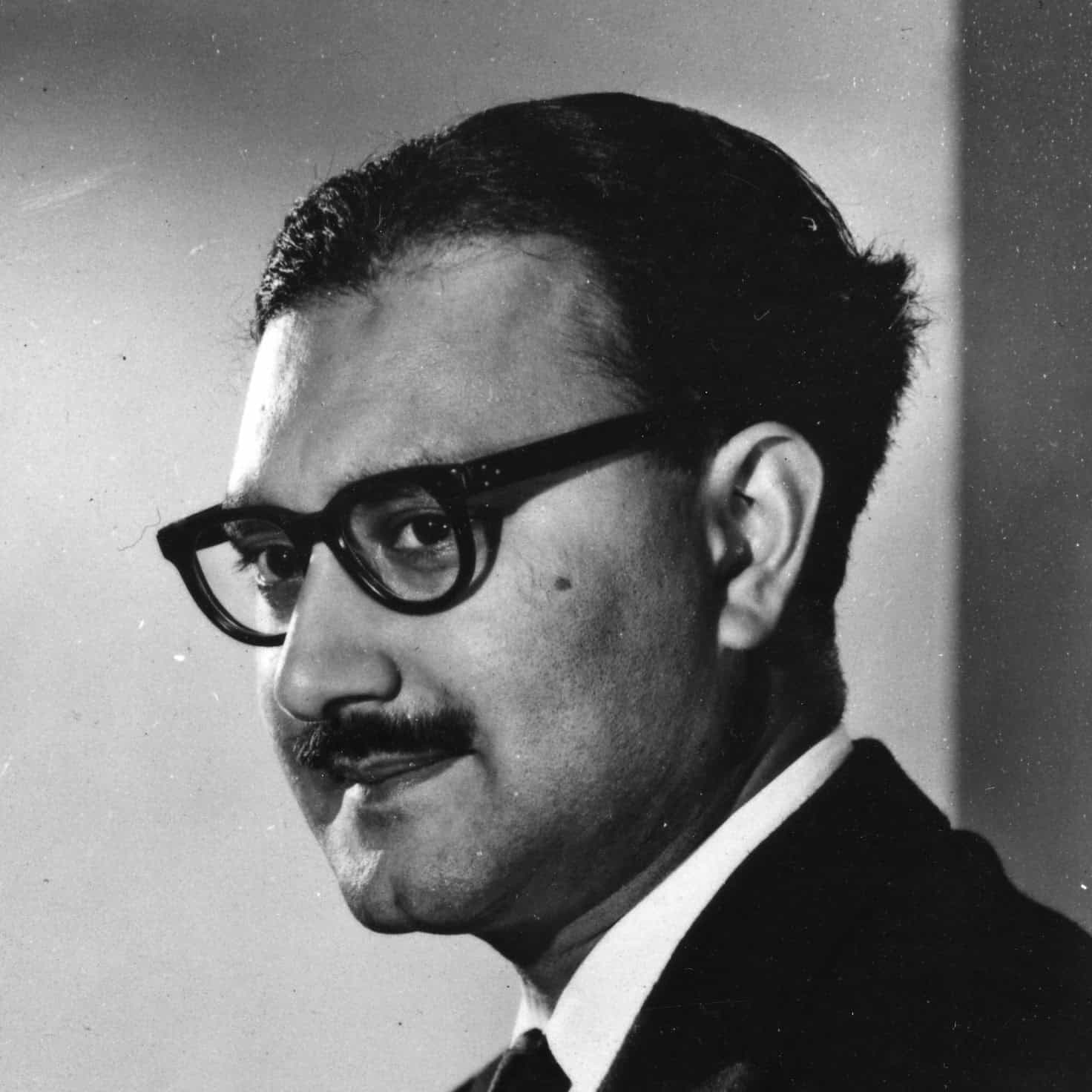
Abdus Salam: celebrating a unifying force in global physics
This podcast explores the extraordinary life of the Pakistani physicist Abdus Salam, who is celebrated for his ground-breaking theoretical work and for his championing of physics and physicists in developing countries.
In 1964, he founded the Abdus Salam International Centre for Theoretical Physics (ICTP) in Trieste, Italy – which supports research excellence worldwide with a focus on physicists in the developing world. In 1979 Salam shared the Nobel Prize for Physics for his work on the unification of the weak and electromagnetic interactions.
Salam spent most of his career at Imperial College London and the university is gearing up to celebrate the centenary of his birth in January 2026. In this episode of the Physics World Weekly podcast, Imperial physicists Claudia de Rham and Ian Walmsley look back on the extraordinary life of Salam – who died in 1996. They also talk about the celebrations at Imperial College.
Image courtesy: AIP Emilio Segrè Visual Archives, Physics Today Collection
Available Results
Generated results are saved to the knowledge database for reuse and search.
Extract Knowledge
Pick what you want extracted first. Model, scope, and chapter options appear after a template is selected.
Transcript
1
00:00:07,474 --> 00:00:10,275
Hello, and welcome to the Physics World Weekly

2
00:00:10,275 --> 00:00:12,214
Podcast. I'm Hamish Johnston.

3
00:00:12,674 --> 00:00:16,160
In this episode, we explore the extraordinary life

4
00:00:16,160 --> 00:00:17,460
of Abdus Salam,

5
00:00:17,760 --> 00:00:19,219
who shared the 1979

6
00:00:20,719 --> 00:00:22,500
Nobel Prize for Physics.

7
00:00:23,184 --> 00:00:23,925
But first,

8
00:00:24,225 --> 00:00:26,804
Physics World is brought to you by IOP

9
00:00:26,945 --> 00:00:27,445
Publishing,

10
00:00:27,904 --> 00:00:30,324
which is pleased to announce that the journal

11
00:00:30,625 --> 00:00:32,085
Progress in Energy

12
00:00:32,590 --> 00:00:34,689
is extending its article remit,

13
00:00:35,070 --> 00:00:37,570
and now accepts original research.

14
00:00:38,269 --> 00:00:40,689
This means that you can publish your groundbreaking

15
00:00:41,229 --> 00:00:41,729
research

16
00:00:42,244 --> 00:00:44,664
alongside some of our most impactful

17
00:00:45,125 --> 00:00:46,504
and cited reviews

18
00:00:46,884 --> 00:00:48,265
on energy research.

19
00:00:49,100 --> 00:00:51,579
We invite you to publish with us and

20
00:00:51,579 --> 00:00:54,000
share your work with a global audience.

21
00:00:54,780 --> 00:00:55,280
PRGE

22
00:00:55,820 --> 00:00:57,119
is a high impact

23
00:00:57,784 --> 00:01:00,984
multi disciplinary journal focusing on a wide range

24
00:01:00,984 --> 00:01:01,804
of issues

25
00:01:02,184 --> 00:01:04,685
related to the global energy transition

26
00:01:05,224 --> 00:01:07,329
and you can find it on IOPscience.

27
00:01:09,150 --> 00:01:12,349
A pioneer of modern physics who shaped the

28
00:01:12,349 --> 00:01:14,450
way that we look at the universe.

29
00:01:15,194 --> 00:01:17,454
That's Abdus Salam. In

30
00:01:17,914 --> 00:01:18,414
1979,

31
00:01:18,954 --> 00:01:21,730
he shared the Physics Nobel Prize with

32
00:01:22,130 --> 00:01:22,710
Sheldon Glashow

33
00:01:23,170 --> 00:01:24,549
and Steven Weinberg

34
00:01:24,850 --> 00:01:26,630
for their work on the unification

35
00:01:27,170 --> 00:01:29,030
of the weak and electromagnetic

36
00:01:29,650 --> 00:01:30,150
interactions.

37
00:01:31,135 --> 00:01:33,314
Salam was born in 1926

38
00:01:34,415 --> 00:01:37,314
in the Punjab province of British India.

39
00:01:37,935 --> 00:01:38,755
In 1947,

40
00:01:39,869 --> 00:01:43,489
Punjab was split between the newly independent Pakistan

41
00:01:44,109 --> 00:01:44,849
and India.

42
00:01:45,229 --> 00:01:46,049
And Salam

43
00:01:46,349 --> 00:01:47,409
became a citizen

44
00:01:47,789 --> 00:01:48,530
of Pakistan.

45
00:01:49,814 --> 00:01:52,375
By then, he had won a scholarship to

46
00:01:52,375 --> 00:01:54,555
attend the University of Cambridge.

47
00:01:55,334 --> 00:01:56,474
And in 1949,

48
00:01:57,459 --> 00:02:01,299
Salaam earned a BA degree with double 1st

49
00:02:01,299 --> 00:02:03,319
class honors in mathematics

50
00:02:03,859 --> 00:02:04,680
and physics.

51
00:02:05,605 --> 00:02:08,344
He stayed at Cambridge to do a PhD

52
00:02:08,724 --> 00:02:09,705
on Quantum

53
00:02:10,164 --> 00:02:10,664
Electrodynamics,

54
00:02:11,925 --> 00:02:14,550
which set the scene for his later

55
00:02:15,090 --> 00:02:16,790
Nobel Prize winning work.

56
00:02:17,650 --> 00:02:19,750
After a brief stint in Pakistan,

57
00:02:20,290 --> 00:02:21,990
he returned to the UK,

58
00:02:22,525 --> 00:02:24,844
and he spent much of his career at

59
00:02:24,844 --> 00:02:26,625
Imperial College London.

60
00:02:27,245 --> 00:02:30,180
And now the university is gearing up to

61
00:02:30,340 --> 00:02:31,799
celebrate the centenary

62
00:02:32,099 --> 00:02:35,239
of his birth on the 29th January

63
00:02:36,180 --> 00:02:36,680
2026.

64
00:02:38,134 --> 00:02:41,674
Here is Physics World's Mateen Durrani in conversation

65
00:02:41,974 --> 00:02:44,875
with Claudia Durham and Ian Walmsley,

66
00:02:45,495 --> 00:02:46,235
2 physicists

67
00:02:46,629 --> 00:02:49,210
at Imperial College who were involved

68
00:02:49,590 --> 00:02:51,449
in organizing the celebrations.

69
00:02:59,895 --> 00:03:01,995
Abdus Salam was one of the greatest theoretical

70
00:03:02,055 --> 00:03:03,675
physicists of the 20th century,

71
00:03:04,219 --> 00:03:06,620
and he was the only scientist from Pakistan

72
00:03:06,620 --> 00:03:08,620
to ever win a Nobel Prize sharing it

73
00:03:08,620 --> 00:03:11,120
with Sheldon Glashow and Steven Weinberg

74
00:03:11,705 --> 00:03:14,364
for unifying the electromagnetic and weak forces.

75
00:03:14,905 --> 00:03:16,584
And for many years, he was at Imperial

76
00:03:16,584 --> 00:03:18,584
College in London and I'm delighted to be

77
00:03:18,584 --> 00:03:20,604
joined by 2 people from the college

78
00:03:20,939 --> 00:03:24,379
who are helping celebrate Salam's legacy. It's Clouder

79
00:03:24,379 --> 00:03:26,780
de Arame who's a theorist at Imperial and

80
00:03:26,780 --> 00:03:29,659
Ian Walmsley, Provost of the College. Welcome to

81
00:03:29,659 --> 00:03:30,085
you both.

82
00:03:30,965 --> 00:03:33,764
Hi. Thank you. Hello. Thank you. Thanks for

83
00:03:33,764 --> 00:03:34,985
joining us. So Claudia,

84
00:03:35,444 --> 00:03:37,525
let's start with the basics for people who

85
00:03:37,525 --> 00:03:39,990
have forgotten who Abdulsalam was. Do you want

86
00:03:39,990 --> 00:03:41,290
to remind us about,

87
00:03:41,590 --> 00:03:43,990
who he was and his background and, you

88
00:03:43,990 --> 00:03:45,645
know, the contributions he made to physics?

89
00:03:46,205 --> 00:03:48,605
Yes, absolutely. And you already introduced him a

90
00:03:48,605 --> 00:03:49,504
little bit. But,

91
00:03:50,125 --> 00:03:52,205
I think it's fair to say that we

92
00:03:52,205 --> 00:03:54,465
can consider Professor Abdus Salam

93
00:03:55,229 --> 00:03:57,469
as really one of the founders of modern

94
00:03:57,469 --> 00:04:00,030
physics, of the way we think about, modern

95
00:04:00,030 --> 00:04:00,930
physics today.

96
00:04:01,549 --> 00:04:03,709
He one of the major things he did

97
00:04:03,709 --> 00:04:06,834
is pioneering the study of symmetries and unification.

98
00:04:07,614 --> 00:04:09,375
And that helped to contribute in the formulation

99
00:04:09,375 --> 00:04:11,849
of the standard model of particle physics, where

100
00:04:12,010 --> 00:04:14,810
the notion of symmetries is extremely important. It's

101
00:04:14,810 --> 00:04:15,310
foundational.

102
00:04:15,930 --> 00:04:17,850
And there's perhaps a little bit of a

103
00:04:17,850 --> 00:04:20,649
similarity in his way he's thinking of using

104
00:04:20,649 --> 00:04:21,149
symmetries

105
00:04:22,074 --> 00:04:23,774
to building the architecture

106
00:04:24,154 --> 00:04:27,435
of the fundamental constituents of matter and the

107
00:04:27,435 --> 00:04:29,055
fundamental forces of nature

108
00:04:29,490 --> 00:04:30,229
with perhaps

109
00:04:30,930 --> 00:04:32,470
the culture in which was,

110
00:04:32,930 --> 00:04:34,149
growing of Pakistan

111
00:04:35,009 --> 00:04:35,990
and the beautiful

112
00:04:36,449 --> 00:04:38,469
symmetry in the architecture itself.

113
00:04:40,165 --> 00:04:42,165
And one of the key physics aspects of

114
00:04:42,165 --> 00:04:42,985
what he did,

115
00:04:43,605 --> 00:04:44,345
was in

116
00:04:44,725 --> 00:04:45,225
1967.

117
00:04:45,685 --> 00:04:47,705
He incorporated the Higgs mechanism,

118
00:04:49,269 --> 00:04:51,189
which was actually co discovered as well by

119
00:04:51,189 --> 00:04:53,290
one of his imperial colleague,

120
00:04:53,829 --> 00:04:55,050
Professor Tom Kibbling.

121
00:04:55,669 --> 00:04:57,930
And so he incorporated the Higgs mechanism

122
00:04:58,555 --> 00:05:00,254
into electroweak unification

123
00:05:00,555 --> 00:05:01,055
theory.

124
00:05:01,435 --> 00:05:03,615
And this corresponds to unification

125
00:05:04,394 --> 00:05:05,134
of electromagnetism

126
00:05:06,154 --> 00:05:08,779
and the weak force. And that is,

127
00:05:09,240 --> 00:05:11,800
has sort of changed the way we see

128
00:05:11,800 --> 00:05:13,819
the world in realizing that,

129
00:05:14,439 --> 00:05:16,524
how important the notion of symmetry are, but

130
00:05:16,524 --> 00:05:17,745
also how,

131
00:05:18,524 --> 00:05:21,964
some different some forces which may appear as

132
00:05:21,964 --> 00:05:25,485
being different, actually a linked, unified through the

133
00:05:25,485 --> 00:05:25,985
same

134
00:05:27,300 --> 00:05:29,379
framework. So as you mentioned, this led him

135
00:05:29,459 --> 00:05:31,720
this breakthrough led him to the Nobel Prize

136
00:05:31,779 --> 00:05:32,519
of Physics

137
00:05:32,979 --> 00:05:33,800
in 1979,

138
00:05:35,384 --> 00:05:38,504
with Weinberg and Glashow. And that was the

139
00:05:38,504 --> 00:05:40,904
first Nobel Prize, the only Nobel Prize for

140
00:05:40,904 --> 00:05:41,404
Pakistan.

141
00:05:42,024 --> 00:05:43,964
It's actually making him the first

142
00:05:44,470 --> 00:05:46,889
Nobel Prize in science from an Islamic country,

143
00:05:48,149 --> 00:05:51,050
and actually the latest Nobel Prize, at Imperial.

144
00:05:51,509 --> 00:05:53,050
So we're very proud of him.

145
00:05:53,555 --> 00:05:55,795
You mentioned his connections with Imperial. So, you

146
00:05:55,795 --> 00:05:57,314
know, he grew up, he was born in

147
00:05:57,314 --> 00:06:00,035
British India, and then he studied after in

148
00:06:00,035 --> 00:06:02,400
Pakistan in his student years. Then he came

149
00:06:02,400 --> 00:06:04,000
to Cambridge, but of course, as you say,

150
00:06:04,000 --> 00:06:04,580
he had

151
00:06:05,040 --> 00:06:06,180
a long standing

152
00:06:06,720 --> 00:06:09,360
contribution and links with Imperial, didn't he? That's

153
00:06:09,360 --> 00:06:11,274
right. So after that, he studied,

154
00:06:12,235 --> 00:06:14,555
in Cambridge. And then, for a while, he

155
00:06:14,555 --> 00:06:17,029
went back to Pakistan, but he realized that,

156
00:06:17,750 --> 00:06:18,569
the scientific,

157
00:06:19,509 --> 00:06:22,310
opportunities there were were more limited. So he

158
00:06:22,310 --> 00:06:24,310
went back to Cambridge for a while, but

159
00:06:24,310 --> 00:06:26,654
then he was very quickly appointed as a

160
00:06:26,654 --> 00:06:27,154
professor

161
00:06:27,694 --> 00:06:29,634
of applied mathematics first at Imperial

162
00:06:30,095 --> 00:06:30,834
in 1957.

163
00:06:31,694 --> 00:06:34,009
And that made him the first Asian

164
00:06:34,550 --> 00:06:38,250
academic to hold a professorship at any UK

165
00:06:38,389 --> 00:06:38,889
university.

166
00:06:40,230 --> 00:06:42,225
And then he actually stayed at Imperial,

167
00:06:42,845 --> 00:06:44,444
he then moved to to physics.

168
00:06:44,764 --> 00:06:47,004
But he stayed at Imperial for his whole

169
00:06:47,004 --> 00:06:48,865
career. So for 40 years,

170
00:06:49,310 --> 00:06:51,709
He retained his position at Imperial throughout his

171
00:06:51,709 --> 00:06:54,750
life, and he really considered Imperial to be

172
00:06:54,750 --> 00:06:57,550
his scientific home all the way, to the

173
00:06:57,550 --> 00:06:58,289
very end.

174
00:06:58,935 --> 00:07:00,555
And at Imperial, he

175
00:07:01,334 --> 00:07:02,794
was really foundational

176
00:07:03,175 --> 00:07:06,110
there as well. He founded the theoretical physics

177
00:07:06,669 --> 00:07:07,810
group, and he worked

178
00:07:08,269 --> 00:07:09,729
with quantum electromagnetics

179
00:07:10,029 --> 00:07:11,490
and quantum field theory.

180
00:07:12,189 --> 00:07:13,729
And so he has developed

181
00:07:14,084 --> 00:07:14,824
the work,

182
00:07:15,204 --> 00:07:16,964
that led you to the breakthrough and the

183
00:07:16,964 --> 00:07:17,785
Nobel Prize.

184
00:07:18,165 --> 00:07:21,464
But he continued throughout his career at Imperial

185
00:07:22,220 --> 00:07:24,639
to do foundational work on the renormalization,

186
00:07:25,660 --> 00:07:27,519
electroweak theory, grand unification,

187
00:07:27,819 --> 00:07:28,319
supersymmetry,

188
00:07:28,699 --> 00:07:29,199
etcetera,

189
00:07:30,404 --> 00:07:31,464
and leading to,

190
00:07:32,725 --> 00:07:35,845
the centers of research in fundamental physics, which

191
00:07:35,845 --> 00:07:36,584
was really

192
00:07:37,009 --> 00:07:37,509
leading,

193
00:07:38,209 --> 00:07:39,029
leading the world,

194
00:07:39,490 --> 00:07:41,410
leading the state of the art in those

195
00:07:41,410 --> 00:07:41,910
aspects.

196
00:07:42,290 --> 00:07:43,830
There's actually many of his students,

197
00:07:44,454 --> 00:07:46,954
like Professor Michael Duff and Ray Vivers,

198
00:07:47,254 --> 00:07:48,074
had incredible

199
00:07:48,454 --> 00:07:51,574
discoveries, incredible impact in physics and paved the

200
00:07:51,574 --> 00:07:54,629
way for the way we do quantum theory

201
00:07:55,330 --> 00:07:56,230
today still.

202
00:07:57,009 --> 00:07:58,449
And of course, he was a sort of

203
00:07:58,449 --> 00:08:00,629
incredible figure who also wanted to help

204
00:08:00,944 --> 00:08:03,664
scientists from other parts of the country that

205
00:08:03,745 --> 00:08:05,824
of the world, in fact, who perhaps didn't

206
00:08:05,824 --> 00:08:07,985
have the opportunities that many people in the

207
00:08:07,985 --> 00:08:10,319
West did. And he was pivotal in well,

208
00:08:10,319 --> 00:08:12,159
he did set up the International Center For

209
00:08:12,159 --> 00:08:14,579
Theoretical Physics in Trieste, didn't he?

210
00:08:14,959 --> 00:08:17,154
Absolutely. Yeah. And you can see that in

211
00:08:17,154 --> 00:08:18,935
in many levels in how he

212
00:08:19,235 --> 00:08:21,955
thought about science, not only the unification in

213
00:08:21,955 --> 00:08:23,895
science itself, but unification

214
00:08:24,355 --> 00:08:27,319
in using science as a unification, as a

215
00:08:27,319 --> 00:08:29,019
unifying force in some sense.

216
00:08:30,199 --> 00:08:33,294
And even in setting up the theoretical physics

217
00:08:33,375 --> 00:08:35,454
group at Imperial, that was very much his

218
00:08:35,454 --> 00:08:35,954
perspective

219
00:08:36,575 --> 00:08:39,054
in using it as a center so that,

220
00:08:39,454 --> 00:08:41,554
people from all over the world could come

221
00:08:41,789 --> 00:08:43,889
and discuss together. This seems something,

222
00:08:44,590 --> 00:08:46,750
which is kind of, we're used to,

223
00:08:47,149 --> 00:08:48,750
today. But at the time, that was kind

224
00:08:48,750 --> 00:08:49,250
of

225
00:08:50,134 --> 00:08:50,715
foundational as well

226
00:08:51,174 --> 00:08:52,794
in setting up a center

227
00:08:53,174 --> 00:08:55,995
where, it was very much in driving,

228
00:08:57,095 --> 00:08:59,414
collaborations between people from different parts of the

229
00:08:59,414 --> 00:09:02,129
world. But yeah, Ed Salaam wasn't an incredible

230
00:09:02,269 --> 00:09:02,769
scientist,

231
00:09:03,309 --> 00:09:05,170
per se, but he was an incredible,

232
00:09:05,629 --> 00:09:08,429
really an incredible human being and eager to

233
00:09:08,429 --> 00:09:08,929
champion

234
00:09:09,675 --> 00:09:12,795
diversity and opening new opportunities in science and

235
00:09:12,795 --> 00:09:14,014
recognizing that

236
00:09:14,475 --> 00:09:17,340
doing science in a diverse way is for

237
00:09:17,340 --> 00:09:19,019
is for the best of science itself and

238
00:09:19,019 --> 00:09:20,160
for the best of humanity.

239
00:09:20,940 --> 00:09:22,700
So he was, I would say he was

240
00:09:22,700 --> 00:09:25,279
ahead of his time in realizing the unifying

241
00:09:25,420 --> 00:09:26,639
power of science

242
00:09:27,375 --> 00:09:29,714
and the ability to foster it,

243
00:09:30,575 --> 00:09:33,054
throughout the world. So that is, to some

244
00:09:33,054 --> 00:09:34,514
extent, one led the initiative,

245
00:09:34,894 --> 00:09:35,394
including

246
00:09:36,110 --> 00:09:38,769
founding ICTP, which is the UNESCO

247
00:09:39,389 --> 00:09:41,809
International Center For Theoretical Physics.

248
00:09:42,350 --> 00:09:43,730
He founded it in 1964.

249
00:09:44,785 --> 00:09:46,485
And the goal of ICTP

250
00:09:46,785 --> 00:09:47,264
was,

251
00:09:47,665 --> 00:09:49,985
sort of combat some of the issues related

252
00:09:49,985 --> 00:09:50,884
to our relations,

253
00:09:52,029 --> 00:09:53,789
that some people in some part of the

254
00:09:53,789 --> 00:09:55,250
world were facing,

255
00:09:56,029 --> 00:09:57,250
some lack of resources,

256
00:09:57,709 --> 00:09:59,789
particularly that some people in the global south

257
00:09:59,789 --> 00:10:00,850
were facing with.

258
00:10:01,834 --> 00:10:04,014
And that had a huge impact.

259
00:10:04,315 --> 00:10:05,934
It continues to do so.

260
00:10:06,714 --> 00:10:09,754
So today, ICTP is actually a network of

261
00:10:09,754 --> 00:10:10,654
5 institutions

262
00:10:11,340 --> 00:10:12,800
spread over 4 continents

263
00:10:13,420 --> 00:10:14,720
devoted to advancing

264
00:10:15,340 --> 00:10:16,480
international collaboration

265
00:10:17,259 --> 00:10:18,720
and scientific expertise

266
00:10:19,100 --> 00:10:20,879
to the non Western world.

267
00:10:21,514 --> 00:10:23,355
And and he has, as I said, he

268
00:10:23,355 --> 00:10:26,475
has been foundational for many, many scientists for

269
00:10:26,475 --> 00:10:27,615
generations now.

270
00:10:28,629 --> 00:10:31,990
It hosts around 6,000 scientists every years, and

271
00:10:31,990 --> 00:10:34,570
50% of them are from global cells.

272
00:10:36,735 --> 00:10:38,495
And and and we're very eager to make

273
00:10:38,495 --> 00:10:40,355
connections with with those as well.

274
00:10:40,735 --> 00:10:43,375
And then when Salaam died in 1996, and

275
00:10:43,375 --> 00:10:44,720
he had quite a sort of the last

276
00:10:44,720 --> 00:10:46,399
few years were quite difficult for him. He

277
00:10:46,399 --> 00:10:49,440
had a very difficult illness. But, you're probably

278
00:10:49,440 --> 00:10:52,399
too young to remember him, Claudia. But, Ian,

279
00:10:52,399 --> 00:10:53,700
I think, you

280
00:10:54,065 --> 00:10:55,665
you can share some of the stories of

281
00:10:55,665 --> 00:10:56,965
what you know about his life.

282
00:10:58,544 --> 00:10:58,865
Yes.

283
00:10:59,424 --> 00:11:00,004
I I,

284
00:11:00,785 --> 00:11:03,080
being considerably older than Claudia,

285
00:11:03,460 --> 00:11:04,440
had the privilege

286
00:11:05,139 --> 00:11:07,000
of meeting him when I was an undergraduate

287
00:11:07,220 --> 00:11:09,639
here in the Physics department. And,

288
00:11:10,180 --> 00:11:13,205
certainly he was he was a present figure

289
00:11:13,205 --> 00:11:15,384
then even to 1st year undergraduates

290
00:11:16,004 --> 00:11:16,325
and,

291
00:11:17,125 --> 00:11:18,745
in the sort of initial

292
00:11:19,339 --> 00:11:21,579
gathering of the freshman class, a number of

293
00:11:21,579 --> 00:11:22,159
the senior

294
00:11:22,779 --> 00:11:24,779
academics were there and he gave a sort

295
00:11:24,779 --> 00:11:25,839
of short talk

296
00:11:28,065 --> 00:11:30,544
on his work and on the work of

297
00:11:30,544 --> 00:11:32,865
the theoretical physics group as a whole and

298
00:11:32,865 --> 00:11:34,004
the work of the department.

299
00:11:34,950 --> 00:11:36,870
And it's that kind of thing, not that

300
00:11:36,870 --> 00:11:37,529
I understood

301
00:11:38,389 --> 00:11:40,090
much of it at all at that point,

302
00:11:40,230 --> 00:11:42,649
but it's the kind of presence and inspiration

303
00:11:43,029 --> 00:11:45,274
that I think is really important for,

304
00:11:47,035 --> 00:11:49,835
motivating young people to think about these questions

305
00:11:49,835 --> 00:11:51,615
and take on these hard problems

306
00:11:52,394 --> 00:11:54,940
and just to get get a sense of

307
00:11:54,940 --> 00:11:55,440
the

308
00:11:56,220 --> 00:11:58,139
kind of problems he was tackling and the

309
00:11:58,139 --> 00:11:58,639
enthusiasm,

310
00:11:59,500 --> 00:12:02,154
that he went about that was, was was

311
00:12:02,154 --> 00:12:04,794
really fantastic for for a young student. So

312
00:12:04,794 --> 00:12:06,235
that must have been, what, in the mid

313
00:12:06,235 --> 00:12:08,074
eighties was that? Ida must have already won

314
00:12:08,074 --> 00:12:10,820
his I wish it was. That was

315
00:12:11,200 --> 00:12:12,579
he came here in 1977

316
00:12:13,440 --> 00:12:16,079
that end, so, yeah, a little before that.

317
00:12:16,079 --> 00:12:17,360
A little before that. Had he won his

318
00:12:17,360 --> 00:12:19,125
Nobel Prize when do you have that lecture

319
00:12:19,125 --> 00:12:21,205
from him? He won it, when I was

320
00:12:21,205 --> 00:12:23,605
a second year student. So he was, you

321
00:12:23,605 --> 00:12:25,465
know, there was a lot of big celebrations

322
00:12:25,764 --> 00:12:27,784
and, parties in the department

323
00:12:28,950 --> 00:12:31,429
on that occasion. And as Claudio has already

324
00:12:31,429 --> 00:12:33,190
noted, there were there were a number, aside

325
00:12:33,190 --> 00:12:34,309
from him at that time, there were a

326
00:12:34,309 --> 00:12:36,889
number of other luminaries like Tom Kibble around,

327
00:12:37,334 --> 00:12:37,654
who'd,

328
00:12:38,214 --> 00:12:41,735
made lots of important contributions. So that group

329
00:12:41,735 --> 00:12:42,394
was really

330
00:12:42,855 --> 00:12:44,714
celebrated, I think, as probably

331
00:12:45,629 --> 00:12:49,090
the leading theoretical particle group in the UK

332
00:12:49,629 --> 00:12:51,490
and among the best in the world.

333
00:12:51,790 --> 00:12:53,549
And he really set that up and it

334
00:12:53,549 --> 00:12:55,784
was fantastic for the department to have that

335
00:12:55,784 --> 00:12:58,524
real, real boost of somebody of that caliber

336
00:12:58,745 --> 00:12:59,644
in its list.

337
00:13:00,345 --> 00:13:02,845
And Claudio, to come back to you, it's,

338
00:13:02,899 --> 00:13:05,220
you know, Salam was born in 1926, so

339
00:13:05,220 --> 00:13:07,059
we're coming up to his centenary of his

340
00:13:07,059 --> 00:13:09,139
birth. And I know you've got quite a

341
00:13:09,139 --> 00:13:09,879
few activities,

342
00:13:10,740 --> 00:13:13,355
planned for that celebration. Do you want to

343
00:13:13,355 --> 00:13:14,815
tell us about some of them?

344
00:13:15,754 --> 00:13:17,754
Yeah. So we already been having quite a

345
00:13:17,754 --> 00:13:18,894
few activities,

346
00:13:20,120 --> 00:13:21,659
initiatives been set up,

347
00:13:22,440 --> 00:13:24,620
building up to his 100 year

348
00:13:25,159 --> 00:13:25,659
birthday.

349
00:13:26,200 --> 00:13:27,259
We had a 98

350
00:13:28,554 --> 00:13:31,375
year birthday celebration just a few months ago,

351
00:13:31,914 --> 00:13:34,554
here in the campus of, Imperial College in

352
00:13:34,554 --> 00:13:35,375
South Kensington.

353
00:13:36,554 --> 00:13:38,950
So that the 29th January,

354
00:13:39,570 --> 00:13:40,389
that's his birthday.

355
00:13:41,329 --> 00:13:42,149
This year,

356
00:13:43,169 --> 00:13:46,709
this led to a big event on campus

357
00:13:47,315 --> 00:13:48,215
where we celebrated

358
00:13:48,835 --> 00:13:50,295
his, his legacy,

359
00:13:50,754 --> 00:13:54,035
very much the past legacy, but also moving

360
00:13:54,035 --> 00:13:55,955
into the future and seeing how we can

361
00:13:55,955 --> 00:13:57,095
use this to promote

362
00:13:57,540 --> 00:14:00,500
and celebrate the excellence in fundamental science, but

363
00:14:00,500 --> 00:14:01,399
also the excellencies

364
00:14:02,100 --> 00:14:02,759
in bridging,

365
00:14:03,620 --> 00:14:04,100
with,

366
00:14:04,420 --> 00:14:06,740
with engaging with the Global South and engaging

367
00:14:06,740 --> 00:14:07,934
with other opportunities.

368
00:14:09,995 --> 00:14:12,574
So what has already happened here on campus

369
00:14:12,634 --> 00:14:15,790
is, for instance, there's been a renaming of

370
00:14:15,790 --> 00:14:18,509
the Imperial Central Library to the Abu Salam

371
00:14:18,509 --> 00:14:20,269
Libraries. And now it is the Abu Salam

372
00:14:20,269 --> 00:14:20,769
Library

373
00:14:21,230 --> 00:14:23,009
with an official plaque and billing

374
00:14:23,815 --> 00:14:24,215
that,

375
00:14:24,695 --> 00:14:27,414
many people from the college, including Ian, were

376
00:14:27,414 --> 00:14:28,235
present too.

377
00:14:28,695 --> 00:14:29,654
There was a big,

378
00:14:30,350 --> 00:14:32,269
in addition to this unveiling, there was a

379
00:14:32,269 --> 00:14:33,570
public talk featuring,

380
00:14:34,110 --> 00:14:34,610
various

381
00:14:35,309 --> 00:14:38,050
fundamental physics, theoretical physics, physicists,

382
00:14:38,835 --> 00:14:41,735
including the ICTP director, Professor

383
00:14:42,115 --> 00:14:43,174
Atisha Dabodkar

384
00:14:43,795 --> 00:14:45,235
and Professor Brian Cox.

385
00:14:45,875 --> 00:14:47,014
We probably know,

386
00:14:47,590 --> 00:14:48,570
He's been recognized

387
00:14:48,950 --> 00:14:50,170
as a face of science.

388
00:14:50,550 --> 00:14:52,490
So we had a big, big event.

389
00:14:53,110 --> 00:14:54,195
It was very much

390
00:14:54,674 --> 00:14:57,335
as a testament of Salam's legacy

391
00:14:57,875 --> 00:14:59,335
and ensuring how

392
00:15:00,274 --> 00:15:00,934
the strength

393
00:15:01,394 --> 00:15:04,790
of the science itself, but also in showing

394
00:15:04,790 --> 00:15:05,290
how

395
00:15:05,990 --> 00:15:07,210
himself as a figure

396
00:15:07,910 --> 00:15:10,230
allows us to engage with people. And we

397
00:15:10,230 --> 00:15:12,410
had an outreach event here on campus,

398
00:15:13,375 --> 00:15:14,434
which was an exhibition

399
00:15:15,214 --> 00:15:18,174
featuring some of the articles from SALAM Life

400
00:15:18,174 --> 00:15:18,674
itself.

401
00:15:19,214 --> 00:15:19,714
So

402
00:15:20,759 --> 00:15:23,960
using that to engage with school children from

403
00:15:23,960 --> 00:15:25,019
all around London.

404
00:15:25,639 --> 00:15:27,500
So on the day there were over 4,000

405
00:15:27,720 --> 00:15:28,220
people

406
00:15:28,914 --> 00:15:31,075
that have registered for the lecture. There were

407
00:15:31,075 --> 00:15:32,695
thousands of people on campus

408
00:15:33,075 --> 00:15:35,970
from young children to all the all the

409
00:15:35,970 --> 00:15:38,610
people just eager to learn more about salaam

410
00:15:38,610 --> 00:15:39,669
and what it means,

411
00:15:40,370 --> 00:15:41,669
or to learn about,

412
00:15:42,370 --> 00:15:44,714
how we can move forward with his, with

413
00:15:44,714 --> 00:15:45,534
his legacy.

414
00:15:47,355 --> 00:15:49,754
And a lot of those aspects are actually

415
00:15:49,754 --> 00:15:52,779
now being exported online. So the exhibition was

416
00:15:52,940 --> 00:15:53,440
concretely

417
00:15:53,740 --> 00:15:55,120
here on campus with

418
00:15:55,980 --> 00:15:58,300
real, real things on campus. But now it's,

419
00:15:58,620 --> 00:15:59,920
you can find it online.

420
00:16:00,300 --> 00:16:02,735
You can find online as well some

421
00:16:03,214 --> 00:16:05,534
essay. There was an essay contest being made

422
00:16:05,534 --> 00:16:07,634
with, school children from Pakistan,

423
00:16:08,654 --> 00:16:10,115
in seeing how Salaam

424
00:16:10,820 --> 00:16:13,779
has inspired them. And it is very nice

425
00:16:13,779 --> 00:16:14,679
to see how,

426
00:16:15,620 --> 00:16:17,000
young children see,

427
00:16:18,365 --> 00:16:21,004
the trajectory, the journey that has gone, that

428
00:16:21,004 --> 00:16:23,325
Salaam has gone through, and realize that they

429
00:16:23,325 --> 00:16:25,245
can connect with art, and then themselves can

430
00:16:25,245 --> 00:16:27,085
realize this is something they can do. This

431
00:16:27,085 --> 00:16:27,919
is something possible.

432
00:16:29,039 --> 00:16:32,000
So we had 100 of essays being submitted

433
00:16:32,000 --> 00:16:33,700
by school children from Pakistan.

434
00:16:34,559 --> 00:16:36,399
And we selected a few of them, and

435
00:16:36,399 --> 00:16:38,134
those are now, they've been featured all the

436
00:16:38,134 --> 00:16:39,735
day, and now they you can find them

437
00:16:39,735 --> 00:16:40,235
online.

438
00:16:40,694 --> 00:16:42,314
We also had a special documentary

439
00:16:42,774 --> 00:16:45,754
made, in salam, which you can find online.

440
00:16:46,440 --> 00:16:48,600
But this is, as you say, very much,

441
00:16:48,919 --> 00:16:50,139
building up to

442
00:16:50,840 --> 00:16:53,480
how we can move forward to, to engage

443
00:16:53,480 --> 00:16:55,580
even, even, even further.

444
00:16:56,274 --> 00:16:58,754
I think one thing that was clear through

445
00:16:58,754 --> 00:17:01,235
this event, through building up to this event

446
00:17:01,235 --> 00:17:02,295
already in January

447
00:17:02,675 --> 00:17:04,775
and seeing the engagement of people,

448
00:17:05,329 --> 00:17:08,130
is how much people can how much his

449
00:17:08,130 --> 00:17:10,630
life story and what he has done resonate

450
00:17:10,769 --> 00:17:13,250
with people at every level. Absolutely at every

451
00:17:13,250 --> 00:17:13,750
level.

452
00:17:14,505 --> 00:17:17,565
No matter your background, no matter whether you

453
00:17:18,024 --> 00:17:19,944
are a scientist per se or not, I

454
00:17:19,944 --> 00:17:21,404
think it does awaken,

455
00:17:22,259 --> 00:17:24,420
the scientist in all of us in his

456
00:17:24,420 --> 00:17:26,279
way. He connects with people.

457
00:17:27,380 --> 00:17:29,619
But now we really want to to build

458
00:17:29,619 --> 00:17:30,315
some of that.

459
00:17:30,794 --> 00:17:32,634
And we want to build some of those

460
00:17:32,634 --> 00:17:33,134
initiatives

461
00:17:33,754 --> 00:17:35,054
and understand much more

462
00:17:35,914 --> 00:17:37,855
fundamental curiosity driven.

463
00:17:38,460 --> 00:17:40,079
Fundamental research is,

464
00:17:40,539 --> 00:17:41,839
also as a way to

465
00:17:42,140 --> 00:17:45,259
outward looking towards making connection with the non

466
00:17:45,259 --> 00:17:46,880
West Global Global South.

467
00:17:47,485 --> 00:17:49,585
So we're very much looking forward to,

468
00:17:49,965 --> 00:17:52,445
even bigger type of celebration for for his

469
00:17:52,445 --> 00:17:53,664
100th birthday.

470
00:17:54,019 --> 00:17:56,119
That would be on January 29th, 2026.

471
00:17:56,899 --> 00:17:58,500
And reach a new level of engagement,

472
00:17:59,859 --> 00:18:02,440
with with society, with the global south.

473
00:18:03,275 --> 00:18:04,494
And I don't know if,

474
00:18:05,035 --> 00:18:05,615
if Ian,

475
00:18:06,875 --> 00:18:07,855
you want to say

476
00:18:08,154 --> 00:18:10,305
anything else? Yeah. I was gonna say, Ian,

477
00:18:10,305 --> 00:18:11,960
you know, how how well known do you

478
00:18:11,960 --> 00:18:13,900
think Salam is to the wider population?

479
00:18:14,359 --> 00:18:16,539
Because there was always that concern in Pakistan

480
00:18:16,599 --> 00:18:17,740
because of his particular

481
00:18:18,674 --> 00:18:20,994
religious affiliation that he had, that the country

482
00:18:20,994 --> 00:18:23,075
sort of wouldn't say disowned him, but they

483
00:18:23,075 --> 00:18:25,075
didn't, make as much as they might have

484
00:18:25,075 --> 00:18:27,309
done if he had been belonged to the

485
00:18:27,470 --> 00:18:30,269
2 main sort of Islamic sects that, are

486
00:18:30,269 --> 00:18:31,970
at the moment. Do do you think he's

487
00:18:32,110 --> 00:18:33,870
a well known figure? And, you know, where

488
00:18:33,870 --> 00:18:35,470
would you place him in the sort of

489
00:18:35,470 --> 00:18:37,325
pantheon of great physicists?

490
00:18:39,465 --> 00:18:41,705
Let's see. Maybe those are 2 slightly different

491
00:18:41,705 --> 00:18:42,205
questions.

492
00:18:43,144 --> 00:18:44,285
Is he well known

493
00:18:45,099 --> 00:18:47,839
in the physics community globally? Absolutely.

494
00:18:48,940 --> 00:18:50,000
Is he well known

495
00:18:51,099 --> 00:18:53,714
in the general public in Britain as one

496
00:18:53,714 --> 00:18:54,694
of the UK's,

497
00:18:55,474 --> 00:18:55,974
adopted,

498
00:18:56,515 --> 00:18:57,494
great scientists?

499
00:18:58,115 --> 00:19:00,934
Probably not. I think he is well

500
00:19:01,480 --> 00:19:03,980
regarded and known across the Muslim community

501
00:19:04,279 --> 00:19:06,460
more than he is across the general population.

502
00:19:06,920 --> 00:19:09,180
And I think that's a shame because his

503
00:19:09,744 --> 00:19:12,085
skills as a pedagogue and his concern

504
00:19:12,625 --> 00:19:14,325
for people as a whole, and

505
00:19:14,625 --> 00:19:17,480
science as a motivating force for that, are

506
00:19:17,480 --> 00:19:20,599
really important messages, and things that he really

507
00:19:20,599 --> 00:19:22,299
championed, as, as Claudia said.

508
00:19:24,335 --> 00:19:26,115
On the ranking of great physicists,

509
00:19:26,734 --> 00:19:27,794
I'd hate to

510
00:19:28,494 --> 00:19:30,994
try and speculate there, but clearly, no, he's

511
00:19:31,454 --> 00:19:33,390
one of the superstars who has

512
00:19:33,710 --> 00:19:35,650
made a real difference to the field.

513
00:19:36,029 --> 00:19:37,570
And, it was really

514
00:19:38,190 --> 00:19:39,250
great to see,

515
00:19:39,630 --> 00:19:42,285
to have the opportunity for us to name

516
00:19:42,285 --> 00:19:45,025
a building after him, especially the library where

517
00:19:45,164 --> 00:19:45,664
students

518
00:19:46,045 --> 00:19:47,984
are congregating all the time.

519
00:19:48,605 --> 00:19:48,765
And,

520
00:19:49,565 --> 00:19:51,380
some of the great things have been

521
00:19:52,019 --> 00:19:52,519
there's

522
00:19:53,220 --> 00:19:55,380
a piece in the library right on the

523
00:19:55,380 --> 00:19:57,460
wall that describes a little bit about him

524
00:19:57,460 --> 00:19:59,319
and has a great picture of him.

525
00:19:59,779 --> 00:20:00,019
And,

526
00:20:00,795 --> 00:20:03,275
often families will go in because you can

527
00:20:03,275 --> 00:20:05,434
see it without entering the library and families

528
00:20:05,434 --> 00:20:06,654
will go in and

529
00:20:07,515 --> 00:20:09,819
take their children and show that picture and

530
00:20:09,819 --> 00:20:10,720
read the narrative.

531
00:20:11,339 --> 00:20:12,140
And I think it's,

532
00:20:12,859 --> 00:20:14,380
it's the kind of thing that is, that

533
00:20:14,380 --> 00:20:16,299
will no doubt spread his fame a bit

534
00:20:16,299 --> 00:20:18,400
more. So I think that's really, really important.

535
00:20:19,605 --> 00:20:21,365
Lovely. Well, I wish you all success with

536
00:20:21,365 --> 00:20:23,684
the, initiatives over the next year and a

537
00:20:23,684 --> 00:20:26,345
half before his, centenary of his birth. Claudia,

538
00:20:26,480 --> 00:20:28,240
is there a central place that people can

539
00:20:28,240 --> 00:20:30,000
go to to find out more? I guess

540
00:20:30,000 --> 00:20:32,960
the Imperial College website would be a good

541
00:20:32,960 --> 00:20:33,859
place to start.

542
00:20:34,160 --> 00:20:34,660
That's

543
00:20:34,960 --> 00:20:35,454
right.

544
00:20:36,095 --> 00:20:38,515
So there's an Empire College website,

545
00:20:39,054 --> 00:20:42,034
one which is dedicated to salon. It's

546
00:20:42,335 --> 00:20:44,839
quite, quite easy to find. And then from

547
00:20:44,839 --> 00:20:46,700
there, there will be links to the,

548
00:20:48,359 --> 00:20:49,420
the virtual exhibition,

549
00:20:50,200 --> 00:20:51,960
that where you can learn much more about

550
00:20:51,960 --> 00:20:52,845
his life,

551
00:20:53,305 --> 00:20:54,445
from every aspect.

552
00:20:55,384 --> 00:20:57,164
And there's also links to,

553
00:20:58,025 --> 00:21:00,045
the videos we have made and testimonies.

554
00:21:00,849 --> 00:21:01,589
There's also

555
00:21:02,210 --> 00:21:02,869
the speeches,

556
00:21:03,170 --> 00:21:04,690
some of the speeches that were made for

557
00:21:04,690 --> 00:21:05,349
the event,

558
00:21:06,049 --> 00:21:08,724
and the essays from the schoolchildren. So so

559
00:21:08,724 --> 00:21:10,964
that's why you're seeing links from all sorts

560
00:21:10,964 --> 00:21:12,585
of, different aspects

561
00:21:12,964 --> 00:21:14,644
of the Salamis in life,

562
00:21:15,045 --> 00:21:17,045
from the work perspective and from the connection

563
00:21:17,045 --> 00:21:17,970
perspective. Yeah.

564
00:21:18,529 --> 00:21:20,049
Lovely. Well, thanks so much for joining us

565
00:21:20,049 --> 00:21:22,049
on the podcast, Ian and Claudia. Great to

566
00:21:22,049 --> 00:21:23,569
hear from you. Thank you very much. Thank

567
00:21:23,569 --> 00:21:24,710
you. Thank you.

568
00:21:31,115 --> 00:21:34,474
That was Claudia Duram and Ian Walmsley in

569
00:21:34,474 --> 00:21:34,974
conversation

570
00:21:35,309 --> 00:21:36,369
with Matin Durrani.

571
00:21:36,750 --> 00:21:39,470
And there's much more about Abdus Salam on

572
00:21:39,470 --> 00:21:40,930
the Physics World website.

573
00:21:41,549 --> 00:21:43,890
A good place to start is Matin's review

574
00:21:44,134 --> 00:21:45,035
of the 2018

575
00:21:45,414 --> 00:21:45,914
film,

576
00:21:46,215 --> 00:21:47,275
Abdus Salam,

577
00:21:47,654 --> 00:21:48,634
which was directed

578
00:21:49,015 --> 00:21:49,835
by Anand

579
00:21:50,215 --> 00:21:50,715
Kamalikar.

580
00:21:51,799 --> 00:21:52,619
It explores

581
00:21:52,920 --> 00:21:54,859
Salaam's faith as an Ahmadi,

582
00:21:55,320 --> 00:21:56,059
a minority

583
00:21:56,440 --> 00:21:59,099
Muslim movement that has suffered persecution

584
00:21:59,400 --> 00:22:00,140
in Pakistan.

585
00:22:00,954 --> 00:22:01,775
To read that

586
00:22:02,394 --> 00:22:03,775
review, just look for the headline,

587
00:22:04,315 --> 00:22:05,375
Abdus Salam

588
00:22:05,755 --> 00:22:06,894
back in the spotlight.

589
00:22:07,755 --> 00:22:09,630
I'm afraid that's all the time we have

590
00:22:09,630 --> 00:22:12,609
for this week's podcast. Thanks to Ian Walmsley,

591
00:22:13,070 --> 00:22:16,350
Claudia Duram, and Mateen Durrani for joining me

592
00:22:16,350 --> 00:22:19,274
today. And a special thanks to our producer,

593
00:22:19,414 --> 00:22:20,315
Fred Ailes.

594
00:22:20,934 --> 00:22:23,255
We'll be back again next week with a

595
00:22:23,255 --> 00:22:24,954
chat about how quantum

596
00:22:25,419 --> 00:22:26,000
sensors are

597
00:22:26,539 --> 00:22:27,039
revolutionizing

598
00:22:27,900 --> 00:22:28,799
our understanding

599
00:22:29,339 --> 00:22:30,559
of brain development.

600
00:22:31,500 --> 00:22:34,305
But until then, have you ever wondered if

601
00:22:34,625 --> 00:22:36,725
humans could run on water?

602
00:22:37,424 --> 00:22:39,985
Find out by listening to the latest episode

603
00:22:39,985 --> 00:22:42,325
of the Physics World Stories podcast

604
00:22:42,890 --> 00:22:44,990
which is inspired by basilisk

605
00:22:45,289 --> 00:22:45,789
lizards

606
00:22:46,250 --> 00:22:49,549
and their ability to run upright across water

607
00:22:49,769 --> 00:22:50,910
to escape predators.

608
00:22:52,105 --> 00:22:55,465
The podcast features Nicole Sharp, who is an

609
00:22:55,465 --> 00:22:57,485
engineer and science communicator

610
00:22:58,184 --> 00:22:58,684
specializing

611
00:22:58,985 --> 00:23:00,205
in fluid dynamics.

612
00:23:01,099 --> 00:23:02,960
She chats with Andrew Glester

613
00:23:03,340 --> 00:23:06,000
about how the lizards manage to stay afloat

614
00:23:06,299 --> 00:23:08,320
while dashing across water,

615
00:23:08,974 --> 00:23:11,534
and explains how water running could be a

616
00:23:11,534 --> 00:23:12,674
sport for humans,

617
00:23:13,134 --> 00:23:14,835
but not here on earth.

618
00:23:15,375 --> 00:23:18,289
Nicole also talks about her passion for fluid

619
00:23:18,289 --> 00:23:18,789
dynamics,

620
00:23:19,170 --> 00:23:20,390
and her fascination

621
00:23:20,850 --> 00:23:22,870
for the roles that instabilities

622
00:23:23,410 --> 00:23:25,269
play in the rich behavior

623
00:23:25,650 --> 00:23:26,870
of fluid systems.

624
00:23:27,605 --> 00:23:29,525
You can listen to that episode on the

625
00:23:29,525 --> 00:23:30,825
Physics World website

626
00:23:31,285 --> 00:23:34,025
or at your favorite podcast provider.

627
00:23:34,619 --> 00:23:37,580
Just look for the headline, Could Humans Run

628
00:23:37,580 --> 00:23:38,400
on Water?