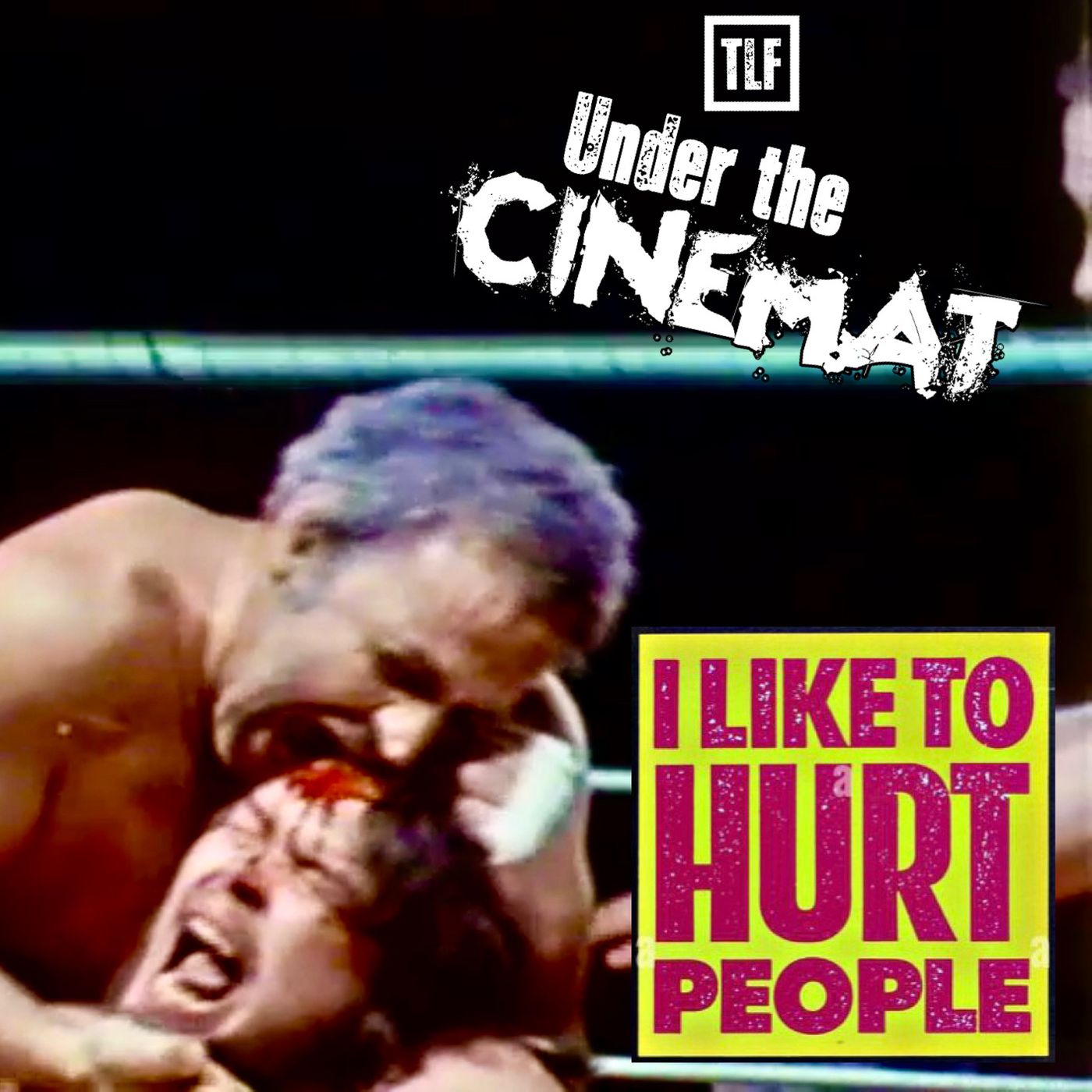
Under the CineMat Ep. 50: I Like to Hurt People Part 1
2023-11-03
210 min
Transcript
Available Results
Generated results are saved to the knowledge database for reuse and search.
No generated results are available for this episode yet.
Extract Knowledge
Pick what you want extracted first. Model, scope, and chapter options appear after a template is selected.
Generated results for public episodes are saved to the knowledge database so they can be reused and searched later.
Transcript
We have now on the sheet the United States gonna get down right now.
I don't want any reve you know, right going all over the country at
traveling. My daddy was a plumber for forty years. He raised the American
dream. This country is in need of a hero. You understand, Jodamatio,
baby Ruth they dead, Baby understand they did. Now there's one man,
the plumber's son, twenty eight years old, the greatest. So what's
attraction in the world? But Noah, and see what went on here?
To see what going on here? The grace for no turns my stomach.
Baby, you're not wind and dying with teens and queen, but I slipping
that and diying on poking beans too. Baby, I've been every way I
see you. No, I've cut it off and whatever woman from me to
wire. But I'll be walking doll when it's over. I'm propping you one
day. I'm praying you to need you. Oh, I'm praying you go.
Won't you need I'm praying you Yeah, I'm not gonna dream what time?
And I'll tell you what would I can do? Booget, You've been,
damn you and know the dream we walk in? Telling me here the
scene the lapsed Fan presents Under the Cinemat. Yeah, I love to talk
film. I have come here to chew bubble gum and kick at a break
gold. You're going nowhere under the Cinemat, Get out, Get out?
I pick up guns. Bad things happen to people. I don't like that.
We have a movie to make. Can we all pull together here?
Oh? Can make movies. It is the fiftieth episode of Under the Cinema.
Yep, we have chronicled fifty different samples of film featuring the collision of
Hollywood and wrestling. And I've already told you to tell me which movie it
is, and you will not tell me. That's right. We've seen where
they differ. We've seen where they are horrifyingly similar. Oh yes, we've
seen the cream of the crop, and we've seen the bottom of the barrel.
Today, we are going to take a journey, a journey that began
in nineteen seventy seven and concluded in nineteen eighty five the Coliseum Collection almost in
a way, actually, yes, in a weird way, but not necessarily
directly related. We watched this movie together, you and I did. I'm
pretty sure it was the first wrestling movie we ever watched together. No,
don't no, no, no, no, no now more than ever.
No, it is important to remember that when we dive under the cinemat,
I like to hurt people. Oh fucking god, you did not do this,
You did not do this. A month before Brian Solomon's Bill comes out.
I'm kind of pissed about that. I'm actually really pissed about that,
because I saw that it was coming out and I'm like, oh, I'm
sorry, I'll make a nice follow up convo, will it will? We'll
have to do like I'll watch you McCall at some point because I was like,
because this was already, this was I want to do something special for
the fiftieth show, and it was already kind of underway. And then I
looked up to see if there was a chic biography already out there, and
lo and behold, it comes out in April of this year, so it's
on the com Okay, what what is this movie? Okay, because we
did watch it together, we did, and I did study it and I
was fascinated, but I still don't understand what the movie is about. Well,
keep in mind one thing. I want you to remember one thing,
we know who made this movie. We've actually we've talked about him in in
depth under the cinemat Donald G. Jackson, Okay, who directed Hell Comes
to Frogtown. Yes, and it's it's it's a crazy story. I mean
to put it kind of briefly, it was intended as a horror film and
then along the way they just decided to make it into documentary. It follows
very much in the same vein this is so fucking Donald Jackson because of his
Zen filmmaking that he likes to do Zen filmmaking. So yeah, you're gonna
get the whole fucking scoop. But do you remember this movie at all?
Do you remember watching the Well, yeah, I remember watching it, or
like I said, I don't. I don't remember what it was supposed to
get across. I feel like a lit watched really was like some Detroit wrestling
fans handheld camera footage from the seventies for an hour a now kind of in
the way, that's what it was. I mean, in essence, Donald
Jackson and his filmmaking partner Brian Greenberg both Michigan natives, I think Detroit natives
for that matter, or in and around Detroit, and they they wanted to
make a movie together, and there were fans of wrestling. They knew of
wrestling in Detroit, and they were like, you know, they wanted to
make a movie that was kind of easy to make, that would be popular.
You know. They wanted to make a horror movie. Make the horror
movie, sell it, make money so they can make another movie. You
know. And along the way it turned into more of a documentary. But
if they still had these kind of staged scenes that they'd created, that's why
I left so confused. Yeah, they've got these kind of these scenes that
they've created. Yet they also kind of make it more of a documentary about
you know, the big time wrestling in Detroit and the chic And then it
slept for it slept for seven years. They just it's kind of thing.
They made it, and I don't know what to do with it, and
you know, they just kind of left it. I mean, there's more
to that and we'll get to it, but they kind of just left it
there. And then well, to be clear, when you say it slept,
you mean it wasn't released. It was not released right away. Wow,
it was not released. They filmed this, They filmed That's what I'm
saying they filmed in nineteen seventy seven. All that footage that we've seen is
fro nineteen seventy seven, and the movie didn't itself didn't get released until nineteen
eighty five because they I mean, in essence, Dolalgy Jackson had this movie
and it's like, okay, hey, New World Cinema, I got this
movie already in the can. It's pretty much already done. I need a
few thousand dollars more to go film something else, to film some more stuff,
and then I have a movie for you for the cheap and you know,
here we go, and then I can make another movie because of that.
Got it is essentially what happened. Yeah, it's oh fuck, this
is gonna say. Lord knows. I've seen just about every documentary that's been
made about a wrestling territory. Yeah, from Memphis Heat to the High Spots
mid Atlantic documentary, to documentaries on Australia and other territories and stampede and everything.
And I saw this and I feel like I didn't see a documentary about
the Detroit territory, but I felt like I did at the same time.
It's weird, yeah, exactly because it's a weird thing because you know,
it's not an all encompassing documentary about the entire territory in the history of it,
but it does focus on the dying days of it, you know,
and it's and it's not like and it's not loaded with interviews of people kind
of you know, waxing poetic about it or or or or bashing it or
you know, rose colored glasses like all things. It's literally, this is
just what it was. This is just what it was three years before the
promotion closed. And that's kind of crazy when you really think about it.
Oh yeah, when you consider the Sheik's run, absolutely uh huh huh.
That's a very apocryphal tale in wrestling history. Is it's like the Shekh,
you know, bringing a babyface in, blooding him up, using the fork
and not taking the fall and hardly ever leaving his feet worked until it didn't
for like fifteen years, right right, and then suddenly people were like,
no, like, I'm done coming to the arena to see this finish.
We're gonna, We're gonna, we're gonna hear, We're gonna hear some stuff,
you know, because we're gonna do you know, when the day comes
and we and we we get our hands on a ton of Detroit footage and
whatever, and you know, we do a journey on that. I'll leave
that up to you, but I'm gonna we'll do a little bit overview of
of of what I could gather from about Detroit, and I will gladly allow
you to fill in any holes that I have. But well, it goes
without saying, but uh, and those who might not know, who might
be newer to the cast and newer to the Patreon and under the cinemat,
need to know that Detroit, for a couple of New Englanders, holds a
very special place in our heart. It absolutely does. I mean, my
god, it's so weird for for for for for two people had you been
before we went to WrestleMania, No, no, yeah, for two people
who literally had never been to Detroit. I'd never been to Michigan for that
matter, until two thousand and seven. It's a it's a weird thing that
Detroit really holds this magical spot and it's only because of wrestling, when you
know, it's like, it's it's weird. We've talked about this before that,
and we talked about it. We went to the Silver Dome. How
it's weird how this one place can hold so much memory for wrestling fans.
Yet you know, you know, and I'm sure maybe for locals it holds
more for the Super Bowls and whatever. But like for wrestling fans that the
Silver Dome is, it's it's it's the castle, it's the Crown, it's
it's it's royalty, was royalty, And it makes no sense because it's Vince
McMahon's territory that had that legendary moment in the city that was not his,
not his at all, exactly right. You would think every moment that's worth
remembering for one hundred years happened in Madison Square Garden. But the stars aligned
on Rustlemania three. And you know, as much as Vince is going to
be associated with New York, yes, his biggest night was going to be
in Detroit, home of the Sheet yep. Exactly, so so fucking funny.
And then you know, I don't remember at all, but she was
inducted into the Hall Fame that night that we were there, and oh yeah,
that that it was like one of those highlight real things, right,
that showed still images, and but it was so fucking weird. Well,
Sabo would have been in at the time. Rights and the w w W.
I think they did they they didn't accept. I think they presented,
they inducted. And then was his son still alive at the time? I
think, yeah, yeah, that rings a bell. I'll take a look.
I think his son was still alive when that happened. And yeah,
so anyway, I thought it'd be fun to kind of and this is what's
so funny. So so right before we started recording, I was again,
I was telling I was telling Jack off the air that I couldn't find release
date. I have definitely for later on articles talking about the video cassette being
released, but there's no actual like here's the day it was released, right,
And so I was it was his widow by the way, Joyce Fardc
And she's dead too, so now not then obviously got it. So you
know, I'm looking just like thinking. Then I see on the Wikipedia page
that there's a link to a book. I was like, I didn't remember
seeing that book, and so I click on it, and you know,
there there it is. You know again, like literally right before second point
where we're gonna record, It's like there's there we go. We get more
stuff here than I is it always welcome to my world, seriously, like
I mean, I mean, it's it's that I'm usually I usually get that.
I'm like ready to go, like I need ten more minutes. Oh
yeah, there's no way to surface like the real moneymakers unless you're feeling the
pressure of recording time coming mm hmm exactly. So we're gonna take a little
trip to Detroit for a little while and just that's correct establish the the scene
specifically big time wrests. I know that there were several promotions in around the
area, but you know, the Sheikhs was big time wrestling. The film
was this last relic of what Detroit meant in terms of professional wrestling. Absolutely
love it. So we the scene dates back as early as the nineteen twenties.
And I did find, you know, I was like, I read
that someplace. I'm like, hmm, let me see about that. I
need proof. And so I did find an article in the Detroit Free Press
from June thirteenth, nineteen twenty one. June thirteenth, by the way,
the date of the first King of the Ring, just in case you wanted
to know. On paper, I was gonna say they had the King of
the Ring in nineteen twenty one, the first one, but seventy two years
later it was on pay per view on that exact date, historians will note,
but the Detroit Free Press was hyping a match between Stanislaus Zibisko and Giabami
Mazusum Oh my good friend for the world title at the Hamtram Open Air Arena
on June twenty second. So the Wikipedia entry was correct, and that it
was that there was wrestling dating back as early as the nineteen twenties. But
so after shit, who won't God, why didn't I write that down?
Who owned it? I forgot who was running it back then, But it
didn't really matter because after World War Two promoter Harry Light, who is Oh
my god, hold on, I gotta find that I could get the picture
of Harry Light, because my god, I don't know anything about this guy.
Oh my god, Harry Light, this fucking guy him. He is
the definition of promoter, okay, the definition of promoter with his image Joe
Petty's sidekicking home alone, Harry Lyme, Harry Lyme. Yeah, his picture,
this picture, this is what this is what wrestling is. Okay,
This is who promotes wrestling. This is who I always imagine is sitting there
like not counting the gate. But he is the one who is instructing people
to count the gate. Okay, I introduced to you Harry Light. Oh
she's just fucking talk about central casting. Look at this fucking guy, Jesus
Christ cigar chomping on this fucking cigar. That that cigar is locked in his
fucking mouth. Thick thick, black horned rim glasses so awesome shirt and tye
promoter. What's his name? Harry What Harry Light promoter, Harry Light promoter,
promoter, Harry Light. Let's be honest. He looks anything but Light.
Okay, is this guy as heavy as can be? Uh? But
Harry Light opened the no joke Harry Light Wrestling office. Oh fuck me,
Harry Light Wrestling office. And he would run shows at the Open Arena under
the Moniker Big Time Wrestling. And he and if I'm not mistaken too,
out of that office, he would book talent. He would book talent and
book shows and he would never read books. However, at the in his
office, in his home, in his personal library, in his little smoking
lounge, by his Harry Light people always wondered why it was so fuzzy because
it was a Hairy Light. That's correct. But what makes Harry Light so
fascinating and I think important to the whole. I mean, he's important anyway,
but makes him more important is that he is the guy who brought Big
Time Wrestling Detroit Wrestling to television in the local area in the forties, mind
you, So he's he's he brings it to Channel seven in the area and
obviously gives significant edge over the other wrestling promotions in the area. And Harry
Light, I mean, it's depends on where you kind of look, but
in certain areas, Harry Light is considered to be a founding member of the
NWALL, or at least he is one of the newspapers of the time.
Kind of suggested that he was kind of a guy who joined early on but
wasn't a founding member, But other more recent compilations, I should say,
in resources kind of list him as an actual founding member of the NWA,
mister Harry Light and then enter Johnny Doyle and one James E. Barnett.
Barnett se Johnny Doyle is the name I think of his foundational Midwest promoter.
But just quickly from Tim Hornbacker's book Death of the Territories, Let's see,
he writes, Pinky George and des Moine, Okay, things were handled in
much the same way in Tulsa and Buffalo. What era is he talking about?
In the two decades following the establishment of the National Wrestling Alliance, the
territorial map cordoning off specific regions for promoters didn't change all that much. So
he kind of goes through who you know, really every territory and who ran
it, and he says here that Pinky George and Des Moines, Orville Brown
in Kansas City and Harry Light in Detroit suffered a different fate. These men
were among the earliest members of the NWA, but were supplanted by aggressive,
politically strong opponents, and unable to fend off their rivals. Hornbacker writes,
they quietly retired, but the territories themselves remained unfazed by the changes. Ye,
So Doyle and Barnett they form a holding company and they bought out Harry
Light and then they held it for you know, about a little less than
a decade before selling Big Time Wrestling to Ed far Hat. That's correcteam sixty
four. So now we're going to turn'll see if there's anything missing in my
nose after I read this. But we're going to turn to the Detroit Time
Capsule Book, of course, chapter sixty two. This is literally the thing
that just fucking plopped in front of my lap, Chapter sixty three, Detroit's
Wrestling Titans. If you grew up in Detroit in the nineteen fifties through the
nineteen seventies, chances are you remember Big Time Wrestling on WXYZ Channel seven,
which aired on Saturdays from three thirty pm until four thirty pm. Ladies and
gentlemen sitting at home at three thirty in the afternoon to four thirty watching wrestling
right before dinner. All right, I kind of love it for dinner.
You know, probably have dinner around five o'clock. Mother is in the kitchen
and in the pantry, you know, making a roast, and father is
reading the newspaper, smoking a part. Father father certainly working the shift Ford
plan. Oh that's true to well, on Saturday might be homesol. Well,
no, I'm not saying that day, but I'm saying that's his job.
That's what you need to pictures assembly line workers. There is no world
in which everyone in this entire episode doesn't work for everyone, everyone, absolutely
everyone, you know, even even even the sheikh worked at Ford, right,
all right, there's nobody who you know. I don't know. I
don't know how there were restaurants open because everyone worked at Ford. It makes
no sense. But nonetheless that is the way that it goes. That's Detroit,
except that reality right BTW. By time, wrestling captured the rough and
tumble world of Detroit's blue collar angst. Detroit wrestling fans had a strong work
ethic, respect for fair play, and a hatred for dirty tactics and cheating.
They particularly loved grudge matches, loser leaves town matches, and wars of
attrition, which could last twenty minutes or more. BTW. Wrestlers were not
pretty boys from the West Coast or elite knobs from the East Coast. They
were blue collar heroes who had to work for a living. You're damn right
they did. They work the fans for a living, They work for a
living. Early wrestling storylines involved coastal invaders coming into our town, bragging how
tough they were. They would abuse and destroy our mid level wrestlers trying to
climb the ranks and then turn to insult the crowd, proclaiming Motor City wrestlers
are not that tough. The interlopers would leave town for a month or two
before returning. These sore winners would return to wrestle our top guys and get
their clocks cleaned. A notable exception to this rule was the most hated wrestler
in the business, Dick the Bruiser. He beat the hell out of everyone
in and out of the ring. Some of Detroit's fan favorites were Lou Klein,
the Man of a Thousand Holds, Dick Mister Michigan, Garza, Haystack,
Calhoun, Bobo Brazil, Ernie Ladd, Killer Kowalski, George the Animal,
Steel, the Junkyard Dog, and fan favorite Leaping Larry Sheen Shane n
E. I'm not sure, yeah, Larry Shane yep. In nineteen sixty
four, ed Farhat and his father in law bought the BTW television rights and
secured exclusive rights to promote wrestling events at Cobo Arena for a mere fifty thousand
dollars. Edward Farhat, better known as the Shek, was the most hated
wrestler in Detroit. Far Hat's character usually came out dressed in a robe and
an Arab headdress. He wore wrestling shoes with exaggerated pointed toes and had a
camel printed on his wrestling shorts. The Sheik was the focus of Detroit's frustration
with the Middle Eastern oil crisis, and the Sheik did everything he could but
set a ford pinto on fire in the middle of the squared circle to incite
the crowd against him. Out been fucking great, he did. The Sheik's
signature move was the camel clutch, but he was also known for blinding his
opponent with his patented magic fireball effect. Once his opponent was disoriented, the
Sheik would attack him mercilessly and stretch him out for a win. Usually,
medics stood by to roll the loser out of the arena on a gurney while
the crowd gave the Sheikh's victim a howling ovation. As a kid, I
was mesmerized by the fireball. A few years later, I discovered that magician's
flash paper could be purchased at any magic or novelty shop in town. Under
Farhat's leadership. BTW matches suddenly became edgier and bloodier with ethnic overtones. In
the nineteen seventies and nineteen eighties, Detroit faced the oil crisis in stiff competition
from foreign car competitors. Far had imported Japanese wrestlers like Kanuki Honda and Toyota
Matayashi from Japan to exploit this economic reality. Do you think a guy named
Toyota is going to be a heel in Detroit? Jesus Christ, Toyota and
Honda, Holy shit, they're at the they that's a little on the nose,
just a little bit. The Japanese tag team worked their way up the
ranks until they won the BTW title belt by throwing sumo salt into the eyes
of their opponents shades of the Sheik's Fireball move. Then, in front of
rabbid Detroit fans, the Japanese wrestlers destroyed the officially sanctioned title belts and replaced
them and replace them with one made in Japan. They bragged that their belt
was better quality and less expensive, just like Japanese cars. Oh, for
God's sake, can you imagine? Can you imagine when you live in a
world of wrestling that is like just you know, you're you're not yet there.
You're not yet there to believing that it's all fake. And these fucking
guys come in and just like just needly you that much harder And all you've
done is work fifty to sixty hours a week. You know what, what
decade are we talking about here? They're in the book right now, they're
talking seventies and eighties. Okay, it's gonna say. I mean, I
know that economic anxiety about the Japanese and their industriousness went back a long time,
but yeah, I didn't know when back that long. Jesus so seventies
and well, definitely eighties, I would definitely say eighties. Yeah, I
think of it as an eighties phenomenon for sure. In and around the walkman
right and Sony and stuff, all that stuff in those were fighting words in
Detroit, and the new champions were let out of the arena under police protection
and left the country with their belts. As the narrative went, in professional
wrestling, the line between reality and fantasy gets blurred, and if you can
get the crowd fired up, that's what brings fans back. When the national
economy went belly up in nineteen eighty, big time wrestling could no longer draw
big crowds to fill Cobo Arena. I thought, was Cobo Hall? Is
it not? I know that both are used, but I can't say I'm
sure I know that they're the same building or not, or other big venues.
Y I wouldn't know either, So anyone, anyone from the area,
let me know, let us know, or other big venues in the Midwest.
The advent of cable TV and two national wrestling federations, one out of
Stanford, Connecticut, named the World Wrestling Entertainment and the other out of Atlanta,
Georgia, named World Championship Wrestling, helped spell the death knell for regional
wrestling promotions. Local professional wrestlers or i'm local professional wrestling promotions went dark in
Detroit as these two television media giants vied for control of the wrestling industry.
There you have it. Yeah, Cobo Hall and Cobo Center were the same.
Place is now called Huntington Place. But we're thinking Cobo Arena, Is
that right? That's that's what they call it here, Cobo or I wonder
if let's see, I wonder if that's just like a Cobo Arena was built
in nineteen sixty. Okay, yes, yes, that's where the Pistons played,
but I can't tell. Yeah, the house the Sheik built, Yeah,
but it closed in twenty ten as part of a major renovation completed in
twenty fifteen. But I can't tell if it's considered the same building. It's
kind of rain interesting weird. Yeah, anyway, So back to uh,
back to far hat though, so he booked himself as the top star of
the promotion as the heel throughout the remainder of the sixties and the seventies into
the seventies. By the end of the seventies when this movie was being filmed,
the glory days of Big Time Wrestling were in the rear view mirror,
to say the least. And Uh, this is a clip here from featuring
Dave Drayson Drassen, Drayson d r yep uh and Terry Sullivan's Terry Sullivan talking
about some of the reasons one of which, uh that the that that Big
Time Wrestling closed down, One of which was the now it seems like I
didn't really dig in too far because I was running a little bit out of
time. That it seemed like television was limited all of a sudden in the
late seventies, like they only had. So it seems like during their heyday
they expanded to to much broader television stations that would reach greater parts of the
region, maybe all of Michigan and you know in other states that are close
by. But by the time that the late seventies rolled around, it seemed
like they were just down to one station that was very limited. But here
here's the clip. The biggest reason for the decline is nobody was seeing the
product. Nobody again, except for the core audience. There was not the
opportunity that we had with Channel fifty to attract new viewers, to have new
eyes on the show or people who had seen the sheet get disqualified for ten
years and were tired of it. Well, you had another group of people
who hadn't seen it, so they were coming up and yeah, they'll come
to the matches. So to me again that that was the big deal.
Well, now you're talking Detroit here, you know, in the Detroit market
of big time wrestling, right, what about all the other towns and the
TV that they had in the other cities. The key I think to that
was the formula was wearing out. And by the formula, I mean all
the disqualifications, there is very few, if any clean one two three wins,
run ins, yeah, run in. The whole thing about professional wrestling
is people paid to see the villains get beat and that stopped happening because the
Sheik wasn't going to lose, you know now, and then he did,
the belt would be held up or something like that, but he went it
back the next week put the belt on Gino Hernandez. You know, six
weeks later is the Sheik against Gino and the Sheik gets the belt back.
So as far as promotion of the towns around the area, you know,
I think other than counting on the television show and maybe a newspaper ad,
there was nothing happening. Nothing happening. It's definitely from Michigan. Do you
know her name? Yeah? What his impact felt wide and fired. That
was Gary Hart. That was is Gary Heart started in Detroit. Yes,
I was gonna say, yeah, they definitely during this the course of this
video they do talk about Gary Hart booking up in Destois also. So but
what's interesting, though, is I find me fascinating is that despite the problems
in the promotion, the roster's pretty fucking stacked. I mean, I don't
I know that they kind of that guys kind of float around from from place
to place, but specifically around this time, it's pretty stacked. And here
here are Dressen and Sullivan again talking about the talent roster in in nineteen seventy
seven. We'll talk about, you know, how, you know, the
fall of Big time wrestling and what went wrong. And let me give my
person sure first, and then let me ask you because you were around,
yeah, you know, at the dying days, but I wasn't, you
know. So this is what I have, and this is what I remember
nineteen seventy seven. The guys that were in the territory at that time,
really a guy you know who's who you still had the chic you know,
Bobo Brazil. Yeah, Dulla the Butcher, Yeah. And against Bobo Brazil.
Let's do and this is me being snarky. Let's do that for the
ten thousandth time, and you know what I mean? Okay, And Dick
the Bruiser, after you know, he you know, stopped his promotional war
against the Sheik, you know, he was still in Jimmy Valiant came in
for a couple of shots. Prince Peter Myvia came in from Hawaii. Superstar
Billy Graham came in for a show or two shot. Yeah, Gary Hart
took over the booking. George Goulis came in, you know, tojo Yamamoto.
You know those were Goulass guys from Tennessee. The Funks came in,
you know, Terry Dorry Junior, Prince Von Eeric came back after almost a
twenty year abs son, Kevin came in too. Kevin did gave one show.
Andre the Giant came in, Dusty Rhodes, Gino Hernandez. You know
what a great little talent and that was to come in. Thunderbolt Patterson came
back. Tony Marino when he came back after our UWA, he came back
as a heel, yeah, you know, which shocked the fans. Yeah,
and then you know, I'll lead up to it. But Lou Klein
retired in nineteen seventy seven. Also, so quite a stick roster. Yeah
yeah, that's a great let me actually a nice nice picture in my mind.
Yeah, but I have to say I'm not so sure that a guy
named Lou Klein could ever draw a dime in anywhere besides the furniture store he
managed on a Root eight. Well, let's talk about lu Klein for a
moment, shall we. All right, we're going to store back to Detroit
time capsule because uh, there's a little there's a little Luke line in there,
and it actually leads into a proge of his, who is featured in
I Like to Hurt People. He's a lapsed fan wrestling podcast with Jack and
Carnacio and JP Sorrow. It's a Lapsed fan Wrestling podcast, Chapter sixty six
wrestler lou Cline and protege Heather Feather Allen Park, Michigan resident. Lou Kline
began his professional wrestling career in nineteen forty one after dominating the Michigan amateur ranks
and earning four national titles. In the beginning of his pro career, kleinb
Don Damask and wrestled as the Green Hornet so he could earn a living while
protecting his amateur standing for a time. It sounds like a vern thing,
Oh for sure. Well, you know, we get a bullworm mask that
I can create my you know, your ranks. I can still compete in
the Olympics like I've done every year. That's insane. Every year the Olympics
every four years, Verna. Well, you know that's the thing about it.
You know, I can actually compete in the Olympics whenever I want.
I think you're confusing competing in the Olympics versus salmon fishing in Alaska. That's
what you do every year after every summer, I have an Olympics style tournament
in my backyard. I mean, competing in the Olympics, bringing the best,
the best, speaking of salmon, I will okay. I don't know.
I don't know why this stuck stuck with me so much. But when
Obama was doing one of the State of the Unions I think it was twenty
twelve, he had the Interior Secretary there, and he was decided to make
a joke about how kind of ludicrous the bureaucracy can be sometimes in the federal
government, in terms of you have overlapping responsibilities, like you have a body
of water and there's like three agencies that, if you read the laws certain
way, responsible for X, Y, and Z in that same body of
water. He was saying, if if if the if the salmon comes from
fresh water, it's the Interior Department if the salmon comes from saltwater, it's
the whatever, Apartment of conservation. And then everyone's like sitting there and then
he goes I understand it. It's even more complicated when you smoke it.
Even once his face. John Bayner, who is the House GOP speaker at
the time, just couldn't hate Obama's guts more. It was laughing. It
was like, did he really just dad joke in the middle of this like
that, it's about salmon, and I loved smoke. I love smoking salmon,
so that had a lot to do with it. Oh. I just
thought that was a time for that one. When I'm thinking of Verne casting
a line getting an He's got a fucking Elmer fudd hat, you know,
concierge helicopter so we can get way out in the deep with Greg and Kurt,
and he gets a hook in the eye and can't make it to Boston.
Greg, what fucking Greg's smart? Good? You got it. You
get to drill the whole first, you fucking idiot. I don't know if
it's ice fishing now, but it could be. I don't think no.
They would go in the summer. They would go in the summer. Yeah,
fern, give me a fucking break. For a time he wrestled with
Red Best Gene and in a tag team, but most of his career he
worked as a single performer, known to be a quote scientific wrestler. Early
on, Klein's tagline was the Atomic Blonde from Detroit, and later in his
career the quote Man of a thousand holds? Are you kidding? No?
Lou kleinb the Man of a thousand Holds Wow, and then lou Vega.
Lou Vega later would become Mambo number five. Now lou Klein, Ladies and
jail line. Right, you were just fucking honestly, you know, It's
like, if this book hadn't fucking just dropped in front of me, you
you would have said, you're lu Klin drawing thing and we would have just
moved on. But here we are. Now we are hearing we have a
chapter about lou Klin. I'd be like, how exactly was he related to
Monica and ross On friends. His signature moves were the Boston Crab and the
atomic Drop. After thirty six years of competing in the Squared Circle, Klein
retired on July ninth, nineteen seventy seven. Later In his career, Klein
was known as a developer and promoter of raw talent. I didn't know he
worked for w That's fantastic. He's an agent on the raw side, on
the raw brand. He's got the raw logo and it's black polo. You
gotta wear a logo bell. Okay, you can listen, you can wear
if you want, you can wear your own polos. But we get it.
You gotta bring them in. We're gonna put We're gonna put branding on
them. We need you guys dressing like offensive course leaders. And you are
you are are our you know, developers and promoters of talent for particular brands
of entertainment. Right, So therefore you cannot just be you know, walking
around or you know, just wearing regular clothes. We need to establish branding
on your attire and in this and so many other ways. The w w
W is essentially a development company. It's we well we the w w WE
do foster and developed talent on a on a different variety of levels and platforms,
from a standard in ring perspective to a on air broadcasting talent perspective to
a also behind the scenes writing as well, like different different areas of of
of development. Uh, you know, we also do different sides of you
know, we have different strategies in which do we determine the proper vertical structure
for the company going to develop that in a whole different genre of developing credibility.
Fast forward to the nineteen seventy eight an Arbor Chamber of Commerce breakfast and
there's Luke Kleine in his in his golf clothes, and someone sidles up to
him with a mimosa. So what do you do? I'm a developer?
Oh really, what do you develop? Talent? Commercial? What is a
commercial? Residential? No? Talent? Okay, I'll talk to you later.
Hey, do you have a business card? No? No, I
forgot him in the car. Oh well, what kind of what kind of
talent do you develop? Raw talent? Wrestling talent? Oh? Pro wrestlers?
Yeah, well they don't have any talent? You mean the fakes?
What is it, buddy? You? How you develop them? Oh?
Here's the scrimpt you know what what are you talking? Yeah? How you
develop them? You give them acting lessons and what the fuck? And there
was definitely cornby tad. But what's like a what's like an old not not
too old fashion, not like nineteen twenty would be like a nineteen seventies breakfast
pastry that you wouldn't really see today. I don't know, maybe I can't.
I get Danish, maybe from like a town in country cookbook and it's
like, oh great, the fucking pilgrims ate this, let's go, oh
good stuff. Back fucking Loukeline and he swiped his debit card of his low
decline damn right decline. That'd be awesome. Just call him a decline when
his last name is Cline. I'm sorry, sir, but your I'm sorry,
mister Kline, but your card was declined. Do you see what I
did this? Sir? How is your finisher and op the clothes Cline?
Or it could have been the incline as it were, fucking lou Cline.
In addition to teaching wrestling holds and counter holds, he prepared newcomers for the
professional ranks and pro wrestler's code of k fabe, the representation of a staged
event as genuine and authentic see lying see bullshit right even better. K fabe
required wrestlers to stay in character in the ring and in public, and not
give away trade secrets, k fabe can be considered a verbal non disclosure agreement.
As a person who heard that before, I have never heard that either
oh wait, here we go. This three syllable world is A is a
pig Latin Carnie term yes yes or B fake spelled backward be fake k fabe.
It's like I stand ready, I stand ready to admit right here on
the I like to hurt people episode number fifty of Under the cinemat here exclusively
for patrons. Yep that I did not know that until just now. Neither
did I. No, fucking I have never heard that. As the explanation
Pig left Carney for Bee fan By, I got to consult a book.
Give me one second. Consult your book? Do you mean to keep reading?
All right? If anyone came backstage who was not in the business,
for example, security or someone else would shout out k FABEA, and the
alert would travel through the ranks. People don't fabe won't even so what would
sound like? Now? You're absolutely right about that, a lot of people
don't know that. Before his recently released biography, Brian Blair had a book
called Smart and Up. Say it right. It's a very short volume.
It came out in two thousand and one, and it's basically a guide to
wrestling terminology interest in part so wrestling terms. Let me see, we're going
in alphabetical order. Here geek, gig'em green, right duck to hot tag
hooker. All right, k fabe, keep secret, tighten your lips,
don't tell. Whenever you're talking candidly with someone about wrestling and some other person
gets close enough to hear you, you'd say, k fabe, but no,
but nothing about be fake. Wow, fascinating. That's that is crazy.
Oh. And then the wrestlers would put on their game faces for the
press or whomever the interloper was. In addition to his gym and wrestling school,
Kline owned the local Tasty Freeze on Alan Road. Oh god, here
we go now, now it's gonna get creepy okay cage. Late in the
summer, young children would go missing around the And then, and what I
promise is an unrelated note. Ocasionally in the summer he would set up a
ring outside his gym or ice cream shop and let the local kids play on
it. Play him, Oh, play with him, I thought, Come
on, kids that play on the rest reading stage read Read that sentence again.
Go ahead, okay, from from which part the last sentence? You
just right? Occasionally in the summer, he would set up a ring outside
his gym or ice cream shop and let the local kids play on it.
Okay, I'm gonna try to keep pace with you one more time, please.
Occasionally occasionally he would set up a ring outside his gym or ice cream
ring outside, let the kids play on his shop and let the kids play
on it. Okay, what if it's said. Occasionally in the summer he
would set up a ring outside his gym or ice cream shop and let the
kids play with his dip reads much better, and it has nothing to do
with the first half of the Senate. Like the ring the ice cream shop
have nothing to do, you know what I mean? This old overweight slub.
I think ed. I think for some reason, Luke Kline is ed
as in my mind, he's letting the little kids play with this fucking cock.
Now. I didn't know what to expect when you told me just moments
ago, really that this episode is going to do. But I like to
hurt people. I did not think, however, it would be lu Klein's
turn. It's everybody's turn. That's accurate, because we'd like to hurt people.
It's everybody's heel turn. Damn right exactly. You put You put that
very very well. Klein and some of his wrestling cohorts would teach the guys
some grappling moves. Okay, what're you gonna do here? God, the
net come on. Some some of my Allan Park High school friends made pocket
money helping set up the ring for local promotions. Jack Ulrick lrich Ulric remembers
setting up and breaking down rings for Klein in Kingston, Ontario, Canada.
One of Lukelin's proteges was Alan Park resident Peggy Jones. Kline first met Peggy
when she was working the counter at the Thunderbowl Bowling Alley, where Bowling for
Dollars was broadcast weekly on local television. Oh, bowling for dollars, okay.
I thought that was just New England thing. That's just candlepin for dollars.
It was a weird thing. I was. I was both depressed happy
when bowling would come on after Saturday morning cartoons. You know, I'd be
like depressed because it's like, fuck, the cartoons are over, but the
real draws over but yeah, but it's kind of right. It doesn't have
to be over Like I wouldn't watch bowling if it was on by itself,
but the fact that it lets me kind of extend this sweet Saturday morning window
gives it a leg up. Oh God, bowling, God, I can
you know, like you when was when did you realize, by the way,
that can pin bowling is not a national thing? It took a while,
probably geez, like my twenties or something. I don't I say,
I don't think I knew until I Actually I don't think I knew that people
didn't know what candlepin bowling was until I moved to La. Yeah, that
makes sense. You have to come out of your element to know. We
bk somebody, you have to say it. Someone's like, what the fuck
is that? Here's another question. How long did it take you to realize?
Uh, candlepin bowling is a work? Oh that I knew right away.
I could tell you talked to Gordon solely too. Huh. It's like,
yeah, he came over to my house one time smoking a cigarette.
It was just like, hey, you know, I don't know a question
about it, honey. Uh, it's either Gordon solely or swamp thing at
the door again too. He's got a he's got a lot of women behind
him, and they're half naked. It appears to be something of a line
actually, And he's got a bunch of men that are like three times his
size. Remember that time someone someone was talking about our whole pimp king of
the Cat on Twitter and someone was like, no, Gordon was very good
to smoke. Thanks for that that. I'm going to run to the bank
with that one. Smoky. Okay, Well, got something else to talk
about. I mean, did he not set is? He is Gordon Sley
known for not setting forest fires? Right? Right? Can't there be a
difference between your wife's name and the sound of your voice? Can there be
a difference between your wife's name and your greatest habit? Right? My wife's
name is cackle. Personally, my wife's name is cackle like a hyena until
I can't breathe, my wife's name is eating pizza. Dude. Still still,
it'll stop me in my tracks. Ravioli apps. When you said just
the way you came with it too, it wasn't just the joke, It
was the idea that I fucking had the thing cocked and locked and look.
Part of what twenty five percent of what's so funny is I know that you
you, you set that one down and plotted from there like you had that
ready, like you. Part of it is the joy of picturing you coming
upon that realization that you have something here, you know, and then delivery.
I thought I had RAVELI abs all my life. I've had RAVELI abs.
No one said good stuff. I mean, I gotta say, oh
my god, thanks to the Hopper for that one. Thanks to the Hopper
for just about every twenty twenty two gem outside of cinemat seriously fucking Christ.
So I say, at five feet ten inches and weighing over three hundred pounds,
Peggy always stood out from the crowd. So now we're talking about al
Bundy's wife. Okay, and suffered more than her share of verbal abuse and
body shaming. That's Klein approached Peggy about coming to the gym and training for
a possible new career. I don't understand. She's in junior high. I
don't know what's going on. Is he developing more talent? Is he developing
talent? He's developing talent at a very young age. She did and Four
months later, Klein, acting as Peggy's manager, introduced her to Big Time
Pro wrestling promoter and he the Chikh Farhat. What Peggy lacked in speed and
wrestling prowise, she made up in bulk and strength. There were two things
Peggy needed to go pro, A gimmick and a stage name. For a
gimmick, far Hat had Peggy primarily wrestle men as a parody of feminism and
the growing woman's equal rights movement of the nineteen seventies. For a stage name,
far Hat came up with Heather Feather. She wrestled throughout Jesus Christ.
How long did it take him to come up with that one? Let's see
rhymes with Heather anyway? Is her name not even Heather? It's Peggy.
Well to save the details for late Leggy, Peggy about he and my panty?
No, we're not going to go with that, Lee What about?
Hmm? I see it? Heather Feather? Whatever I need you, damn
right whatever. She wrestled throughout the Midwest, but Detroit was her home base.
Feather would loiter ringside during about and taunt the male wrestlers, trying to
shame them into a match. Then in an unscheduled ringside interview with the announcer.
She would amplify her challenge, making the men look weak and cowardly because
they were dodging her. The crowd loved it. Heather Feather was the first
woman to wrestle and pin a man, and she soon became a fan favorite.
Her debut match was an eight woman Battle Royal in Detroit at Cobo Hall.
Now we got Cobo Hall instead of Cobo Arena. Make up your fucking
mind. There we go. Several of the lady wrestlers, with great effort,
threw the newcomer into the front row seats. Heather Feather was the first
woman eliminated that night. Peggy was black and blue for her pains, but
she was two hundred dollars richer. Her tenure lasted five years, from nineteen
seventy three until nineteen seventy eight. Toward the end of her career, Feather
wrestled an eight foot bear in an interspecies match. Victor. The bear was
found as an orphan cub and rescued. Pro wrestler Tuffy Truesdell purchased the bear
and trained him to wrestle humans. Victor wore a muzzle and was declawed.
Trudell and Victor toreed the wrestling circuit as a novelty act. The Bear was
undefeated by over one hundred men, but could only get a draw against Feather.
Once again, she bested the men, but left the Bear's undefeated record
intact. Heather Feather was one of the featured wrestlers in a wrestling mockumentary called
I Like to Hurt People, Oh My God. In a rare break from
the k Fabe code of silence, the film's host, doctor Sonya Friedman asked
Feather, what's a nice twenty three year old girl doing in this racket?
Out of character, Peggy answered, it's really kind of hard to say.
There are lots of reasons why I'm in it. Mainly it's a way of
proving myself, a way of making me something in life. Have you ever
met a girl built like Rosy Greer, the sixties football player. I've been
this tall and this way since I was twelve. I won't lie. It
was tough growing up. When doctor Friedman asked Feather how long she thought she
would last in her chosen profession, she answered, truthfully, a girl can
only last as long as she looks young. As soon as she starts looking
old, she's done. For a man can do this until he drops dead
in the ring. It was not long after this candid interview that Heather Feather
was released from her wrestling contract kay fabe had been violated tremendous. After her
pro wrestling career, Peggy Jones became a mother and raised her daughter in Taylor,
Michigan. She died of cancer in twenty four team, so we'll keep
an eye out for Heather Feather. Lukelin, I'll say I almost said it,
yep, so, but in that in the the audio clip that I
played before, you heard Drassen mention the Funks, Andre the Giant, Dusty
Rhodes and what do you know? These are our prime cast members of our
film. And yeah, so, like I said before, it was film
mostly nineteen seventy seven ninety nineteen seventy eight under the leadership of Brian Greenberg and
the late Donald G. Jackson. This is I'm going to play a clip
now from an interview Greenberg did with the six five podcast talking about where he
was at the time, right before filming get started and how we get started
working on I like to Hurt People. You know, I started as a
filmmaker in Detroit, and luckily there was there were a lot of other filmmakers
in Detroit my age at the time that I happened to link up with,
and one of them was Don Jackson, and Donna had was able to raise
money and do another movie before we did I Like to Hurt People, a
movie called Demon Lover, which has his own little history and story and can
be found clips can be found on YouTube. But once we finished, once
she finished that film, we were talking about what would be a good idea
for our next independent movie. Because back back in the days, if you
wanted to make a movie, you're a filmmaker, you wanted to make a
movie, you had to go out find investors, get them to put money
into your idea, and then hopefully, you know, he could go out
and to you know, film when you needed to film to make the movie
happen. So it was really it was a little bit challenging. So we
wanted to pick a subject that we knew we could we could pull off.
And we both were wrestling fans and we knew a person that had a relationship
with Bob Finnegan and they introduced us to Bob, who was the one at
the time that was really involved with the Shekh and the whole wrestling circuit in
the Midwest and was you know, actively involved in putting on the shows at
Cobo Hall and Detroit, and we thought that would be a good start as
far as introducing us to the Sheik and you know, pitching him on the
idea about doing what was originally a wrestling horror film. The original title was
Ringside and Hell, and the idea was the Sheik was possessed and that you
know, he was just terrorizing these people and we had to get him under
control. B you know, needed an extracism, you know, the whole
thing. And it sounded sounded great on paper, but we learned very quickly
that, you know, once we had the Sheik's blessing, once we went
to the Sheep and talked to him and convinced them that we weren't going to
you know, expose what they were doing, and that we were there to
you know, we were sincere and serious about making this film. He and
he liked us, and he slowly he started opening the door and letting us
come and film more and get more involved with him. And you know,
we we filmed a couple of wrestling matches, and you know, they were
very they wouldn't let us know from what they were going to be doing from
week to week, and we slowly gained their confidence, and then they did
and then things went into you know, full full swing. But that you
know, that was the basis behind you know, doing the ringside as we
got into it, as we started making this movie, we realized that the
wrestlers were never going to be cooperative with us, right right, that's cool.
Yeah, I never knew that. I mean, it kind of makes
sense when you watch it with the context of knowing they were after a horror
movie in the first place. YEP. A lot of these non sequitors make
sense because, like you said, you want to receive it as a documentary,
because it has such a documentary style with no audio to speak of,
you know, just natural sound and no voiceovers, no attempt to tell a
story. And then suddenly you're you're in the middle of this drama, like
suddenly you're being asked to write receive characters, and you know, the frame
of mind you'd been watching a typical film. Yep. YEP, that's totally
true. By the way. I didn't asked before, did you have any
clue that it was going to be this movie? No, nope, nope,
I did not even even crossed my mind. He's a lapsed fan wrestling
podcast with Jack and JP Soro. It's a lapsed fan wrestling podcast. So
yeah, So like horror film, I'm I'm kind of disappointed that it never
became the horror film, right, disappointed that we never got ringside in Hell.
I think that would have been so cool. But there are actually several
articles, the majority of which I'm going to keep for the production side,
but I do want to read part of this Detroit Free Press article that was
from June fifth, nineteen seventy seven, in the midst of filming the movie.
It was not a normal Sunday afternoon at Starvin Marvin's Bar in Winna Dot
win A, Dote, w y a and do Otte anybody there? Anybody
win Addy? No, he's not available for one thing. Starvin Marvin's is
not open on Sundays. Actually, things started out more or less as usually
terminally loud rock music washed over the Three Fleshful Ladies treading water on the go
go stages. A couple dozen people set at tables, drinking, talking and
looking New York. Raymond was there, trying to decide if he should change
clothes. The wrestlers were there too, King Ripper Collins doing a marvelous impression
imitation of Paul Lynde was entertaining Crazy Luke Graham and Al Cassello of The Fabulous
Kangaroos with an inexhaustible stream of off color jokes. Then things got strange.
The people were still drinking and talking, but they made no sounds. The
ladies gyrated on under the bright, flashing lights, but there was no music.
A dark haired man in a leather jacket walked in the door and stopped.
It was Bob Ace Finnegan, the executive producer for Michigan's Wide World Sports
production company. Nobody seemed to notice him much. He spoke briefly with Ron
Clark, owner of Starvin Marvin's, then moved further up the bar and greeted
Linda Marr with a kiss on the cheek. He complimented her on how well
she'd handle a TV camera during a recent wrestling show, but he added quote,
you know, your focus could have been a little tighter. Linda,
a striking blonde put a hand on her hip. Baby, my focus is
always tight, she responded, among other things, as well as my pussy
tight, pussy, I got yes, we died. William Hart is a
free press staff. The oh that's that's not that's from the picture. Probably
yeah, yeah, it happens. I'll get it. Uh. The damncers
swam on through the eerie silence. Crazy Luke sipped whiskey and mouthed conversation.
King Collins nursed a coke. Then Finnegan strolled over to New York Raymond a
quote CARNEYE from Buffalo, with a voice like a three packadet frog. Mom.
I gotta talk to you, Bobly, it's important. I gotta talk
to you. But it was not to be. One of the dancers who
looked seventeen but wasn't stripped off the T shirt she was wearing and tossed it
in Finnegan's face. He turned and looked up at her appreciatively, then cut.
None of this, of course, was really happening. What was happening
was the conception and birth of a movie scene. The real thing Starvin Marvin's
that day was more than a bar. It was a quote location someday,
maybe next September, you two will be able to visit a theater or drive
in near you and see Finnegan New York, Raymond King, Collins, Crazy
Luken, many many more in Ringside in Hell Oh there. It is now
in production right here in the Wolverine State by Michigan's own Savage Cinema. This
movie will have everything newbile, young girls of plenty on the stage and in
the streets, a psychotic killer who desires to deal with them only in terrible
ways, a mysterious confrontation with the forces of Satan, bad language, blood
everywhere, an ultra climactic in the ring exorcism with burning ropes, rolling fog,
falling lights, and thousands of screaming fans. And an original score by
Finnegan featuring quote the Ballad of Bobo Brazil. All of this and more rushing
frantically at you from the violent, beefy, wildly costumed crowd screening carnival World
of Middle America's premiere morality melodrama Professional wrestling. Is the Sheikh really possessed?
Will Father Billy Nelson take the wrestling priest, take the final fall against the
forces of evil? Does the American dream dust He Rhodes dare enter the ring
against the supernatural? What is Andre the Giant really like? Quote? We're
not just making a movie that we've already, that we've done already. We're
not just making a movie we've done that already, said Savage Cinema producer director
Don Jackson. This time we want to do more. We want to do
more, something incredible. We want to make the super exploitation film of all
time. Jackson, thirty three of Adrian, spoke while winding up a microphone
cord that plugged into the French built Eclaire sixteen millimeter camera mounted on a hand
pulled Dolly. After six tries, the scene was finished. The music,
which would have interfered with recording the dialogue, came roaring back on. The
first song was the Ballad of Bobo Brazil. Now we're trying to make each
scene incredible, continued Jackson, whose long way were here and rumpled blue jeans
approach central Casting's vision of a struggling filmmaker, A soft spoken, amiable man.
He keeps himself and the others moving. He gets things done. He's
seen after another should be like a race car building speed it starts off at
forty miles per hour and then belts and belts until it's going one hundred and
eighty, then slams into a brick wall. And we want a film that
gives them, that gives the audience it's money's worth and leaves them hungry for
more. And we want to do it all here in Michigan, he said,
with local people and local resources. Nobody's doing it now, but we
want to prove it can be done. Jackson and friends sort of did it
themselves to Ringside, and hell, it's Jackson's second film. His first,
Demon Lovers, which cost one hundred thousand dollars, is just beginning to break
even. The bill for Ringside will be three times as high, and so
hopes Jackson will be the profits years ago when they wrote, produce, and
filmed Demon Lover in Jackson, Michigan and our rated tale about an occult cult
and a cult cult whose members have an extremely high violent mortality rate. Lover
premiered in Jackson in June nineteen seventy six and is now in national distribution.
Lovers, which Jackson said cost less than one hundred thousand dollars to make,
was second only two Jaws in its hometown box office draw and even outgrossed Carrie
during its first week in New York's Lyric theaters. Pretty impressive, I mean
credit it's localized, but whatever. Jackson expects it to gross as much as
one million dollars over two years. Now. First time filmmakers often make the
mistake of going for some sort of art film that appeals to the intelligentsia,
he says. And we went for one that would sell so we could get
the experience and the credibility to keep going. A veteran comic, strip and
movie fan who studied at art at Adrian College then hung around with experimental filmmakers
and Ann Arbor, Jackson said he finally decided that the quickest way to become
a filmmaker was to make a film. I've been interested in films all my
life, he said, And I used to draw an interview. I used
to interview various filmmakers for movie magazines. I finally decided that I knew as
much or more than they did, and that I could do it too.
Now there are a lot of people around who want to make films but can't
get past the first obstacle. They sit around listening to other people tell them
what they tell them, what they can't do. But you have to create
your own breaks. Take what money you have, form a company, rent
a camera, and start shooting film. He chose the horror flick Round after
talking with the producers of such low budget bonanzas as The Texas Chainsaw Massacre,
which is gross twenty million, and The Night of the Living Dead. I
was inspired by these films because people won't would go to see them because of
their subject matter, even though there weren't any name actors in them. There
are exploitation movies, sure, but almost all films are. They focus on
something topical, take advantage of some style or fad. At one time,
motorcycle movies were big. Oh. At one time, motorcycle movies were big.
Women in prison was another theme. Lately, it's been things like CBE
Radios, The Occult, and since Rocky It's Boxing and other sports oriented movies.
Jackson, who formed Savage Cinema early this year to produce Ringside, said
he got money for both movies and stages from Jackson area businessmen by showing them
bits of film that had already been shot. Now, some of the investors
and people we know, or people who heard of us and wanted to get
in on it, he said. Now, one guy told us that he
had already done badly on oil investments, and at least investing in a movie
was a more interesting way to lose money. Neither the investors nor the cast
have yet made any money from Demon Lover, he said, although the film
has just begun to break even in receipts. Jackson thinks the chances are better
for Ringside to be a financial success. If we make some money from Ringside,
we'd like to open an actual studio here in Michigan. I'll buy some
equipment of our people, of our own and begin making films full time.
You know, people finally can make money investing in movies here, and if
others start making them, it would be that much better for us. My
main purpose in making Demon Lover was to make a second film. To be
honest, we want to make something that people will want to pay money to
see. I think they'll want to see it only if it's fantastic, spectacular,
much much much more than you can see on TV. Otherwise, why
bother? I guess that's the question. That is, that is the question
if you're not going to do if you know you're not gonna make something more
spectacular than on TV, why bother? Why bother? So Yeah, so
we're gonna get that article is fantastic, Yes, but we're gonna come back
to more of that when we talk about production. Yeah, but I'm just
fascinated still, Like it doesn't excite me less, no matter how many times
I read it to blend horror with wrestling, and maybe absolutely, I mean
that's like, uh, that hasn't been exploited yet. Not Wrestlemaniac. What
what's Wrestlemaniac? It's that movie I bought DVD. I bought you with Uh,
you know one of the you know, one of the faux versions of
Ray Mysteria. Oh that's the Ray Mysterio one that's called Wrestlemaniac. Wrestle Maniac
and he's a killer. Oh he's a Luca killer. Oh ray what go
want to kill somebody in the ring? There you goes, But no,
but I think that'd be I mean, I like the idea of this.
This one's so over the top, you know, the idea of of the
Sheik being possessed and needing to be exercised in the ring. That's a hilarious.
But let's talk about the man who brought us here. I mean,
granted, there there's not just one man who brought us here, because this
is there's there's literally a plethora of wrestling talent in the movie, but you
know, most of which I think we've seen more or less all of them
on cinemat minus a few. Maybe. I don't think we've done an andre
an Andre movie yet. I don't know how many movies there are with Andrea
besides The Princess Bride. But there is only one true star of this film,
both from an on camera as well as behind the scenes perspective, and
that would be mister Farhat, the Chikh. Edward George Farhat was born June
seventh, nineteen twenty six, in Lansing, Michigan, to Lebanese parents.
He played football in high school Jr. Has an orgasm, as well as
college jr. As another orgasm, before serving in the military during World War
Two and after that, after returning or after you know, the war ended.
Rather uh, he broke into wrestling in Chicago as the Sheikh of Arabi.
I guess, yeah, that's another way of referring to the Arab part
of the world. Okay, Arab sounds kind of cheesy, you know,
like a cartoon shoot all of Arabia. I guess his gimmick was that of
a privileged son of a wealthy Middle Eastern family. That's hilarious they were doing
that back then, you know, because isn't that like pretty much the majority
of every kind of yeah, you know, like they when they do that
with with because it wasn't that kind of what Muhammad Hassan was was too,
wasn't he kind of wasn't he supposed to? No? No from wealth?
No, No, Mohammed Asan was an American suburban kid who happened to be
Arab and suffered, you know, discrimination growing up. It wasn't from wealth.
Not really know they had him from. There's Rochester. I think they
had him from. Like they showed on the initial vignettes. He's in this
leafy suburb, but it's not palatial. Okay, all right, well fine.
In nineteen fifty five he had a huge opportunity as he would face lou
Tes in Chicago. Huh, I just said yes. Yes. According to
Sheikh's Wikipedia, Tes was resentful towards gimmick wrestlers, yes, and was known
to embarrass him in the ring. And actually I wasn't sure it sounded right
based on what we've what I've learned about lou Fez. But I decided,
you know, let's look at his book. Let's see if he does talk
about you know, I just did a search for guina in his book,
and indeed, here's here's something he does to kind of verify that point.
A lot of the gimmick perform from his book from Hooker, A lot of
the gimmick performers didn't know a wrestling hold from a handshake, and I always
refused to dignify their in the ring stuff when I worked with them. They
could mince around and play for the cheap crowd reactions all they wanted, but
when they finally got around to locking up with me, it was time for
school. My gimmick was wrestling, and I wasn't about to abandon it for
the sake of making those characters look good. Guess characters weren't welcome in Luthe's
ring, That's right, So I guess he wouldn't be a fan of he
would he wouldn't have been a fan of of of the the what was a
fucking uh. Oh Jesus Christ the fiend. Oh Bray Wyatt, Yeah,
he be a fan of that guy. No thanks, We're wearing my mask
for huh. What's wrong with you? Add Santel. It was a contest,
okay, Lou fine tell Charlie. I said, Hi, Eh,
funk Off, this has last words on Earth. I believe that Lu's last
by funk Off? Brother? What why? Yeah, Lutha Terry Luther has
just passed away. What do you say brother? Last words? Dude?
Does it really matter? Terry? I need to know, brother, I
need to know if he's you know, you know, he was the one
guy I didn't get a pin on him. Brother. I just need to
know what he was thinking. Dude, mentioned you, but I don't feel
like I should say anymore. Well, what I have to go, Terry?
But why are you going? Dude? What? What? Fuck?
Brother? What? You fuck? Brother? I repeat, fuck? Brother?
Why do you make me nervous? That's a new one. Well,
you make me nervous? Uncomfortable, man, I'm feeling Listen, my comfort
levels at an all time low right now. Dude, this is dead.
Brother. I don't know if he's gonna try to come from behind brother from
the afterlife, dude, And you're keeping secrets, dude, How do I
know he's really dead? Brother? How do I know? I mean,
I'll go in there, brother, and I'll make sure he's dead. Dude.
I don't kill him if he's not dead. Brother. Do you have
his death certificate? Dude? I'm just asking, how do you know?
Brother? Trust? But verify brother? I need to verify death, dude.
Did you Well, you've come to the right place, mister Bella.
This is the cleric's office. Brother, But I can you see body?
Dude? No, no, we don't have the bodies here. We just
so you're just gonna give me like brother, I can make a certificate of
death, dude. And for saying, hey, look, oh this guy's
dead. Brother, Look he's dead. He got a certificant dude, signed
by some asshole. Brother. What do you think that brother? Brother?
Did you just behind the brother that is that my certificate? Dude is trying
to write me off? What I'm a am? I dead? God?
Did the big man upstairs come from behind brother and give you the ultimate roll
up? Dude? We're gonna get that tweet the day he passes. The
ultimate rolled up? Oh my god, the big man upstairs came from behind
ultimate roll up, the ultimate roll up. You have big Show's attention.
That's how we that's how we announce our interest in the dish du jour because
I think it's true. Look, I'm in no position to deny it.
Just fucking storing in with his fucking two gallons of milk, idiot, And
I think it was something like ah, yes, yeah, yes, I
think yeah, yes, I think so. They all call it picture in
my mind. So he's funny when everyone ever it's it's Paul White. It's
him as the giant with his mouth like his huge mouth wide open. Hah,
oh my god. Ah. Anyway, l chic. So so she
knew of his of of FES's resentfulness towards them, towards gimmicks, and so
he bailed from the ring, and he hid, he hid under, He
hit under a bus. The Chicago this made headlines places and January first,
ninety fifty sixth issue of the Chicago Tribune wrote this, the Chikh of Araby
broke the tension in the last battle of the night against lou thez has gained
the decision, after which the Sheik ended up on his knees praying in a
blizzard in the middle of Halsted Street, Fez's National Wrestling Alliance champion and Gagny
and Gagnes built as TV title holder. Perhaps they will be paired for a
big bout in nineteen fifty six. Perhaps I got at'll bit money on it
right? How about that? So this, the publicity of the way he
handled this match actually took the sheek to the next level. And in his
career, and he guess we went to He went to New York. He
went to New York, worked in I guess Bruno. Yep, he faced
Bruno, a bunch of those fucking New York clowns, before finally coming home
to Detroit, purchasing Big Time Wrestling, where he would develop his most probably
notable contribution to the sport of kings extreme violence with weapons and pencils and things.
Yes, this is from a article from The Post Courier from twenty twenty
July nineteenth. Farhat was largely responsible for influencing today's generation of hardcore wrestling,
revolutionizing the business as far back as the nineteen sixties with fire, barbed wire,
and an assortment of foreign objects. What his matches lacked in actual wrestling,
they more than made up for in blood and himmicks. Quote. Dad
was doing hardcore before hardcore was even around, said far Hat Junior. He
used everything but the kitchen sink. All the pros to say he was too
wild for them, until, of course they started checking the gate receipts after
the show. Oh my god, it doesn't say says that, until of
course they started checking the gate receipts after the show. Well, wearing a
visor and smoking a cigar, I don't one, two, three, four,
How many licks does it take? Three? Three? Then they realized
they had an instant bonanza on their hands. Far Hat was also instrumental in
the careers of his nephew, former ECW daredevil Sebu and former e c W
and w W E star Rob van Dam, both of whom he personally trained.
The two inducted him posthumously into the w Hall of Fame in two thousand
and seven. And I'm gonna play a clip here. This is He was
asked in an interview if he was intimidated by the Sheet, and here is
rvd's response. Yes, I was very intimidated. In fact, the last
thing we wanted was for Sheet to get in the ring, which he would
do sometimes. He was already at least in his late sixties when I met
him. I'm gonna have to look that up and see exactly, but you
know, he was definitely an old man that took a while to get up
out of a chair. He didn't want to. He was gonna make it
work as well, because as he got up and caught in the ring,
it was too it was alive in us up or you know, wake us
up. He would. He would get up and he would just you know,
stretch us and grab us and slam those big hands into our throat,
choke us, you know, back into the corner, like bite on our
nose with these big eyes, and yeah, I mean it was very it
was very intimidating. So he would do that, you know, and then
afterwards he said, and you'll be fired up. And it worked because you'd
be fired up and also you didn't want to seek to come back for ron
teeny. Wow. So a normal profession. Yeah, that's that's how I
take it. He says, I get trained for every job that I've ever
had someone my nose off. Wow. Back to the article quote. He
was probably one of the best promoters around, said his son. He made
so many stars. I look at that. I look around at kids like
Rob Van Dam, Sabo and Scott Steiner, even the macho man Andy Savage.
They all got breaks working for this company. He started a lot of
people. Sabu reminds me of my father so much. He's a legend himself.
Longtime wrestling photo journalist doctor Mike Lenno, who ran the Sheikhs fan club
in the Los Angeles territory during the sixties, called him the greatest showman and
promotional genius of the pre nineteen eighty four era. Quote. I'll never forget
the riots because the United States, Canada, Japan, said Lano when I
got to manage him in the early nineties. I'll never forget him eating my
ninety dollars Nicole Miller Tye in Boston and throwing fire into the phase of the
announcer Chris Cruz or trying to interview us, or of Chik Barking. Order
is to have then not yet famous Saboo who drive us around in Chik's old
nineteen seventies Limo. I cried when I heard the news, and I'm still
crying. Was he was wrestling's most colorful performer ever, now never breaking character
in front of his fans, the Sheikh boasted a slew of titles during his
career, none more important than the Detroit version of the US Heavyweight Championship,
which he held on twelve different occasions from nineteen sixty four to nineteen eighty while
running his Detroit based Big Time Wrestling promotion. His most famous rival during that
period, for years and for years beyond, was fellow Detroit legend Bobo Brazil,
one of pro wrestling's greatest black performers. The two worked with one another
more than one hundred times and recorded a record number of sellouts at the Motor
City's storied Cobo Hall. The two would also take their decades long few to
several other major markets, most notably Memphis, Atlanta, and Los Angeles.
Born in Lansing, Michigan, in one of ten children of Lebanese immigrants,
and Far had brilliantly crafted his mysterious ring persona, becoming perhaps the most colorful
character of the post gorgeous George era. Known in the early days of his
career as the Sheikh of Araby and build as coming from a wealthy, aristocratic
Middle Eastern family, His character great gradually morphed into the maniacal madman from Syria
whose stock in trade included an assortment of foreign objects and fireballs. Shekh,
as he was called even by his closest friends, stayed in character throughout his
career, even years after Vincent Kennedy McMahon publicly declared that wrestling was more entertainment
than sport. To far Hat, it was an obligation and a duty to
the business that he had made him a wealthy man. Hey he led this
image. Far Had Junior said all his brothers called him Sheikh. Even his
grandkids called them grand past Sheikh. If you call them ed, he wouldn't
answer you. Unbeknownst the general wrestling public, there was another sign to the
Sheikh, a side rarely seen by those who loved to hate him. He
was a devoted husband to his wife of fifty three years, Joyce, and
loving father to his two sons, Edward and Thomas. He was also a
generous friend who was always willing to lend a helping hand to those who needed
it. Eight time NWA World Champion Harley Race, who passed away in twenty
nineteen, once told a story of how after his wife died in an automobile
accident, and he was forced to take time off early in his career.
The Sheikh mailed him a check every week for a year until he could return
to work. If anyone needed him some money, Dad was there, said
his son. If they mean it a car, tell him to take his
He was also a good father, and he went out of his way to
be a good father. He did everything he could in spite of his travel
schedule. We usually saw him three or four times a week. We lived
in Lansing, and when he went to Dayton it was about a five hour
trip. Next night stop would be in Cincinnati, only fifty miles away.
But instead of driving straight to Cincinnati, he'd come all come, all the
way back home. He'd get home at four o'clock in the morning, go
to bed, get up at one o'clock in the afternoon, and go all
the way back where he came from. He really tried to be with us
as much as he could. Yeah. Dorry Funk Junior, who held the
NBA world title from nineteen sixty nine to nineteen seventy three, said that Chic
had all the ingredients of a star. Yeah, I don't know how Dorry
Funks talks. How'd he talk? You know, he kind of has like
a kind of an antidyne x end. He doesn't really sound like he's from
Texas at all. He's kind of just like he didn't have any distinct distinction
to his accent. Ball well, he had an exceptional timing in the business,
Yeah, pretty good. Knew how to excite the fans, get the
heat mostimant when he was the hottest. He knew how to climax. What
the fuck are you serious? Of course that would come out of Dory Funk's
mouth. He knew how to climax that story and take those people home.
Oh my god. He would step out from underneath in them and make them
hungry for more. It was our top heel for the better part of two
years down here down there, and he led Lubbock to being the number one
town in Texas for drawing money. We had a state commission down there.
Lubbock by far wasn't the biggest town in Texas, but he was the number
one drawn for us. We packed it every week. You know. The
Sheik was always good to his word. He made lots of money in the
wrestling business and spent it where he wanted to, mostly in regards to his
family and home. He paid those who were putting people in the house for
him very well. He was a first class guy. When you hired the
Sheik, you hired someone who was going to come in, do a hell
of a job and put people in your house. I don't know if I
want that people in my house, but I mean they're random people. You
his house, You his house, You for a house? I love it.
So yeah. So, as has been established several times already, Uh
Sheik known for for being the ultimate k fabe artiste, never breaking character,
and he took it to such extremes that a segment like this was actually made
for a legitimate TV Do you know this? Have you seen? Have you
seen this clip from the TV show? You asked for it? No,
So what's gonna happen here in this clip is that this So basically, people
write into the show and ask for something I don't know what the fuck they
asked for, like they asked or some kind of a segment on something they
want they're interested in, And so somebody wrote in asking to do a segment
on the chic and Detroit wrestling him. So they focus on the Sheik.
But then but they can't but he doesn't speak English the Sheik. So to
kind of get a more idea of what the Sheik is like, they have
to talk to a guy named Ed Farhat who will help talk in English.
I see so here, listen, listen to listen to this. The Sheek
is two and forty two pounds of the meanest and most despised wrestling flesh ever
to climb into the center race exactly and his unique method of warming up his
opponent. If he've been following his career at all, you know that the
Sheik has been around for quite a number of years, but he still won't
give an interviews. The only way to really talk to him is to a
third person. We talked to Ed Farhat, the owner of All Star Productions.
We're going to get a closer look, rolla reasonably culture look at the
Sheep while he's in there battling Big Bob Life. The guy that goes into
the ring against the chief cast the first of all seer for his life because
he's either going to hit you with the fire or henna, he's going to
boots you to death, or he's going to pull out that little lodge that
he has always hidden away. He's gonna put away at that. And he
doesn't like anyone, and he doesn't want anyone to like him. He said,
he's a loneer. He's originally from damask Serious, but he can command
the Star Building just about any place in the world. For over twenty years,
the Sheik has made his name in professional wrestling by taking cheap shots,
by fighting dirty, by bringing all kinds of sharp objects into the ring to
use on his opponent. But nobody was ready for his latest dirty tricks.
Now watch it carefully because it happens kind of sam. Nobody knows exactly how
he does it, but we had to find out just how he gets away
with it in the ring is illegal. It's only legal if he gets away
of the world the referee is seeing it. So Sheik had won sixteen US
championships and he holds the title right now, But he's also been fined and
suspended more than anybody else in the business. In the world of professional wrestling,
they have the good guys and the bad guys, and in the way,
the Sheik is on the bad side of the ropes, but he's still
a favorite of the fans because truly he is the one man they love to
hate. I'm Mattie Major's in flat Michigan because Tom Emerson you asked for it.
Wow. Tom Anderson never got to the bottom of how he does it.
Now, now that's it. That's it. Lapsed fan Wrestling podcast with
Jack and jo It's a lapsed fan wrestling podcast. Bill After also had a
uh he shares a funny story here about far hat staying in character. Uh.
Here listen, listen to mister Raptor who looks by the way in this
video extremely creepy. Just look at oh. You don't say huh, you
don't say I mean with his like is like dry yet somehow clammy skin like
just oh man, Well, you certainly describe him in a way that could
be perceived any other way than creepy. Kind of a nun starter there.
He was amazing because he never broke character. He would be in a telephone
Stanley west And who started me in the magazine business, used to tell me
that Sheik would only call him from a telephone booth because he didn't want people
to know that he spoke English. But I never forgot my first wife on
our honeymoon, first wife, I've only two times. And we were in
Toronto and it was a Sunday night. I said, come on, I
just want to go see my other family. Here. Are you going to
take me to wrestling? Right? So we go back into the office and
they let us go backstage and there was the original Sheikh and Adulah Feru,
the Grand Wizard Ernie Roth and he says, you married this piece of garbage
when you could have tuk to the Sheikh this heer and he said, Sheik
looks at my now ex wife, looks at the bad grabs her hand,
kisses it and walks away. Very classy. So yeah, he was great.
He would say, he always stay in character. People never knew that
he could speak English. I would love You know, we don't get I
we to a degree, we kind of you know, we we we we
kind of can can can appreciate what k fabe is, but I'll tell you
I don't. I don't think anyone pre eighty four can really truly appreciate how
wrestlers can like they're like catnip heal wrestlers are like catnip for humans. Yeah,
you know, they drive them crazy, and you know I can't.
I can't fathom that, right, I just can't fathom that to that extreme,
Like I remember getting I was always annoyed at like a Sean Michaels in
ninety two ninety three. I was annoyed at Rick Flair, but not to
the point where like they like, there's a story I read where where a
fan pulls a gun on the chic flow, Like what the fuck? You
know, people were so convinced that what they were seeing was that someone was
really being victimized right right, or or they were just they got triggered by
some of the some of the stuff that that was being done or said,
And it's it's just crazy how I can't imagine getting that over. I never
I never wanted to kill Sean Michaels a as a heel. I never wanted
to kill h Rick Flair, you know, despite any kind of torment he
would do on Hulkgan or something like that. I never wanted to actually harm
them. But like, I can't, I'm I'm I'm wondering what that felt
like to be that enraged in a weird way, to be that out of
control of my own emotions that I'm letting this fucking Carnie affect me like that.
Yeah, well it was. You know, the business was so much
more oriented toward adult consumers at the time, right, and it was so
much less television showbiz that you could just sit back and laugh at that.
You know, they knew how to get across to an adult that this is
real violence going on our generation. They were trying to sort of there were
a lot of guys in the business who knew how to do that, but
that wasn't the mission of WWFWSW. You know, it was supposed to be
like this, this roller coaster of excitement and colorful characters, and yeah,
you cared about who won and lost, but everyone went home kind of laughing
about what a good time it was. You didn't show up, you know,
thinking that finally this guy's going to get the ass whipping that I've wanted
him to get for two years because he's such a prick all the time.
Right. Yeah, It's it's hard. It's hard because you know, whenever
you see these news pieces of people talking to wrestling crowds in the fifties,
the sixties, he's the seventies, and these old ladies and these old men,
they all sort of acknowledge that they understand what wrestling is and what it
isn't, but they also kind of acknowledge this strange trance that kind of comes
over them. It's like it almost becomes like you show up to the matches
and it's going to be a good time waving your purse at the bad guy.
But when you're in the moment and it's actually live in front of your
face and it's that intimate setting without all the bright lights and the slick production
and this thing that creates sort of this necessary distance between you and the entertainment
that I feel like they just become overcome with their roll of I came here
to hate you, and then you're right here and I'm actually gonna try to
fucking kill you. I don't give a shit. I'll just kill you,
you know, like because I'll I feel like the wrestlers are much better back
than the heels at making the people feel like, even if they were there
watching a performance, that this guy is such an asshole that he could take
liberties. Yeah, you may be watching him going too far this time,
right, you know, and actually hurting the guy that I just can't,
you know, like again, I'm not again to kind of be in that
to it. It's a shame that will never be able to feel that.
Yeah. I think it's like you watch so much wrestling, and if ninety
percent of it is relatively straightforward matches with winners and losers, and all of
a sudden, once every show or once every month or once every you know,
three months, when you go to the matches, there's this one guy
who totally breaks with the rules that everybody else seems to be following. It
just starts attacking someone with a fucking spike. Right, it becomes much more
of an outrage. Whereas us we grew up on hot heat angles every day.
Now you know, USh raw every week, and it's like there's six
examples of someone carrying uber violence. Right. If they want to come anywhere
close to heat like that, they have to do like, you know,
put the guy's head on the steps and can concave his skull with a chair
and a cinder block, and they have to go or make us or claim
that they took away you know raymister, Yeah, exactly. They have to
go so far to signal to us that this is a really intense beat down.
This is not your typical wrestling beatdown, and your typical wrestling beat down
four times more violent than the stuff that got these people hoping the rails at
cos that's always the funny thing is is how it is, how lame it
is, you know, essentially compared to what you know they they could have.
You know, they're doing so much more violent shit now on a regular
basis than the stuff that would get people over like crazy. Yeah, it
really is. I mean, I would love to be able to talk to
crowds back then and feel out where their line was drawn, you know,
because I don't think any of these people that attack these heels, if you
interviewed them when they left the building, would think it was real. Yeah,
yeah, or at least again to be again, it's not even it's
not even believing that it's real. It's that, you know, if you
think that's going that far to the degree that you want to cause harm on
somebody, right, that you're only gonna get arrested, right, Yeah,
that's everywhere in the seventies and mostly seventies, the sixties, you know,
the sixties wrestling I've seen there's there's certainly a lot of raw raw from the
crowd, but there is there's more smiles than scowls. I really feel like
there was like a wave of immigrant communities that were the preponderance of wrestling crowds
in big cities that kind of took to you know, Italians that would attach
themselves to Bruno in a sentimental way. Not just I love wrestling and he's
my favorite wrestler, but it's Bruno, like, right, I like Bruno
more than I like wrestling, right, right, exactly, I hate Chic
more than I like wrestling. You know, there were people who were sort
of bigger than wrestling, and so therefore the connection to them was a part
and separate from how they reacted to everybody else on the card, because that
was just wrestling. You know, when you see when you see your favorite
bad guy, your your favorite good guy get tortured and beaten in a in
a movie, you do feel differently than if it's a character you haven't been
made to care about who dies. Yeah, yeah, but I'm not.
I'm It's it's not it's not the the the creating of the emotion. It's
action. It's the it's the emotion taking over that I'm I'm mostly and and
you know what I mean, here's the thing obviously that is kind of rare.
It's not like it's a common thing. You're not You're not You're not
looking at a wrestling match where fifteen guys are pulling out guns every fucking night
to shoot the bad guy now, to pull the chic. But it's like,
I am I cannot, I mean, even as a kid, I
cannot fathom being so overtaken by something not happening to me or to a family
member or a good friend of someone who I'm you know, like, I
just can you can you fathom? Are there ever any stories either about you
know, people getting so angry at like the Super Bowl outcome that they fucking
shoot somebody to shoot one of the players, they kill on the players.
Well, I've certainly seen soccer hooligans attack, like I've seen like English soccer
hooligans attack Italian soccer fans after the World Cup, okay, in the in
the concourse, because they're just so brought to such a not attacking the players,
No, they're attacking the players something that there's something that I think is
so crazy that a fan is willing to attack or risk being arrested, put
in jail, whatever, not because a fan like I could almost I could
almost to a point and be more accepting if like two guys, if one
guy liked Brunos San Martino and one guy like the chic and they're going at
it like that, that their emotions because they're back and forth. I mean,
here's a guy who's essentially, you know, at the very at the
very least ten feet away from you at the most. Part than that is
that he's close. But also it's like, this is a physical sport,
you know, like to arouse the eye for an eye violence urge in somebody.
I don't think you can get that just watching someone defeat someone in a
stick and ball sport. Sure that's enough, But then let's talk about boxing.
How many times has a boxer lost or or or a like, No
one's you know, even even in his most violent, in his most kind
of repulsive days. No one Stille's pulling a gun on Mike Tyson. Now
that just happens like when the corners sometimes you know, in the family and
friends spill into the ring. But right, it's not a fan whose favorite
fighter is going to be up Like I I I'm so curious as to what
it is. And I don't know if we'll ever be able to get this
answer, but like what it is, I want someone who lived through it.
Really, I don't want speculation, I want absolute fact. I want
somebody who was affected by a major heel or a major babyface created this this
this emotion that is really un It's incomparable to any other thing entertained any and
it's unique to wrestling normally because it happens, but because the participants are rewarded
to make it happen, you know, but not only that it happens,
but that they but that it happens reliably, you know, I mean there
was do you think there was ever a time where where I mean, you
know, after he kind of figured out what the what to do, was
there a time where Bruno Sammartino's going in there like I don't know if I
can get this crowd over? No, No, right? That's that to
me? Is is is is there is a there's a ploy that is that
you could figure out essentially as a fan, but you still let it happen.
You still let it happen. It's it's such a unique thing. And
I am it's like, I don't know, I don't even know how to
explain my fascination with it, because it's just it's something that will never understand.
That's why these guys from that era where the riots they caused as badges
of honor because right, and they should. Yeah, well it represents the
peak of what they're trying to do, right, take these people out of
their personal sort of limits. And who's left from that generation? Is there
anybody left? Jeez? You know, when I think of people that get
shot or stabbed, I think a Sheik, Bobby Heenan, I think of
the blackjack Lands, a Mulligan. I don't know if he ever got jumped
like that Stan Hansen, Yeah, yeah, I mean Stan Hanson did hurt
Bruno, but that was sort of by mistake. It wasn't like a heat
angle, But like, did they But what I'm saying about, what the
did he ever get attacked by fans or like? No, no, not
that I can think of. No, like being in Puerto Rico at some
point, and well that was because he was. That was when he was
in the Dominican against Jack Venino, and he was absolutely terrified of what would
happen if Jack Venino didn't go over because he could sense the people were,
the fans were just ready to act out. That's another example of what we're
talking about. You know, when you go to these countries that don't have
a whole lot of wrestling on the regular, they don't have a great diversity
of wrestling. They just have Carlos Cologne, or they have Jack Vinino,
or they have one guy, Mario Milano. Although I don't know if he
caused any riots in Australia necessarily, but I'm trying to diversify out here.
That that's part of it too. It's like, no, we don't care,
we don't care about wrestling, care about this guy beating ass, you
know, and if he's in trouble before our eyes, it's going to feel
like a family member. It's going to feel that way. That's a Bruno,
that's a Bruno had. That's what it was is people felt like he
was part of their family getting attacked Jesus. I think the only way to
get it what you're talking about really is sort of like police interviews with people
who get arrested for attacking wrestlers and the reasons they give for it. You
know. But as we know, a big part of the the sort of
unwritten laws at the time was that the office the promotion would often get the
handoff from the cops when they'd arrest somebody, they'd rough them up in the
back so they wouldn't do it again. You know, he didn't necessarily want
the publicity someone being arrested, booked and all that being public record and shit,
you just wanted to make sure they didn't do it again. It is.
It is bonkers because you make an excellent point in that, Well,
there are streakers. There are people who hit the court, hit the ring,
hit the field. They don't do it out of a sense of anger
towards a player. They don't do it with the with because they've gotten so
lost in their dislike for the opposing team that they actually want to take matters
in their own hands, even in boxing where someone is you know, being
mortally wounded before your very eyes potentially Yeah, yeah, god, you know,
it's like it makes me want to but also not want at the same
time want what that kind of that that feeling of just the of being that
crazy. Well, if I'm sure you felt the live com out of that
building, like are you kidding? Like you got like twenty thousand people in
the garden like calling for crush over Due's head or whoever the fuck it is
against brute. I mean yeah, yeah, I mean yeah, you know
I should ask them, you know who I should ask? I should got
I don't want to talk to him, but I should ask the guy from
from the garden. He went to burna matches to burno matches as a kid
like I like God, then then he'd fucking get all my personal information and
fucking talk my ear. That won't be happening. Yeah. So yeah,
anyway, uh that so this, Uh where was I going here? One
thing that I that in in researching uh more on the chic was and the
Detroit area was just I don't think I realized how many legends made their way
through Detroit and worked for the Cheek. Yeah. It's huge. I mean
it's it's such a massive. Uh one we're gonna listen to right now.
Uh Greg, don't call me Ma for Telly Valentine right talking about here.
He talked about Detroit and the Sheikh. So I went to Detroit, Sheraton
Cadillacs. First place I remember Detroit where I stayed. They put me there
and then they kind of got me The next day, Porky Pig was his
name. Mike Lauren or something picked me up at shared Cadillac and took me
out to the Sheikh's farm and I ended up staying out there for six weeks.
I stayed. He had a floor downstairs, like a basement, but
it was all. He had a couple of rooms down there, and Sheikh's
son was down there with me, and I had my own room down there.
I stayed about six weeks. There was a ring out in the back,
and I was supposed to be working out with people, but nobody ever
came out there to work out with me and I she didn't work out with
me either because basically, all the she what's he going to do? Show
me how to use a pencil and jabbett in somebody's throat. So I but
I did start wrestling right away. I already kind of broke in. I
never liked these gyms and working out. I like to work. You know,
you got to learn it in front of the people. Really, That's
that's where you learn it, not in somebody's backyard by a swimming pool and
in the hot sun. You know, you can learn basically, But I
knew all the basics so I went out on the road. Bobo Brazil rode
with him, big name, great guy. Uh rode with with the Outlaws.
It was Dick Murder, Dick Murdoch and Dusty Rose back in the day.
And uh so, all these different shows we worked in Dayton, Ohio,
and Finley, Ohio, Cincinnati, Ohi, Columbus, Ohio, Detroit,
Michigan, Coble Ha, Flint, all these different places in Michigan.
I really remember Ohio though he went to Ohio a lot different shows. And
but Sheikh was always a nice guy to me. You know, he'd laugh
at me and he doesn't want to Actually, he gave me the name baby
Face Nelson. I did not like that name, baby Face Nelson, but
I had the baby face and it was so I went with that for a
while. Okay, thanks Greg. Hey, can we get an interview?
Oh tomorrow tonight? Oh great? Thanks thanks Greg? Greg? Can we
get an interview? Sure? Ask me tomorrow? All right, when's your
flight in fifteen minutes? Now? Also good stuff, that's good color.
But I don't know what he's talking about. Towards the end, the Sheikh
laughed at me. Here's always kind to me. He'd laugh at me laugh
at my face. It's not nice to you actually mean he'd called me a
Poindexter bitch boy. It was fine. It shoves sticks up my ass well
better than pencils. How amarny? More times you cana say the Cadillac Hotel
by the way, they can'tone knows what the fuck that is. I'm looking
at it, though, Sheridan Cadillac. It seems to be somewhat of a
Detroit landmark, and I can see based on the ship places wrestlers typically stay
why they had remembered this one. It probably made them feel like a big
downtown deal. Wasn't here anything we were at? You know, it's hard
to tell because these pictures are all sixties and oh sure seventies, so I'm
not really sure about the surroundings. It honestly does look like the area we
were in. Let me see if I can find it Visa viv. I
don't know what was that? What was that place called? Like the Red
Wing Catholic? I don't remember the Red Wings sports bar? Yeah, well,
well you're looking that up. Here's Ron Fuller sharing how he and his
dad attempted to buy Ohio from the chic the state apparently. I realized that
was possible, but crazy, you know, man usual probably didn't get to
the ring. You know, man, they he'd pack you on the way
to the ring or whatever. I had some experience with the Sheik. My
dad and I were going to buy Ohio from the Sheep and we had to
deal with him to buy Ohio for a one hundred thousand dollars. I took
sixty five thousand dollars in cash and went to Detroit and worked for Chic and
Gobo Gobo and left him sixty five grand and that night. We didn't actually
end up going into Ohio. My dad went in there two years later with
Jerry Jarrett out of Memphis, but she was working with she was what happens
to the sixty five grand? I never got it. I never got it
back. I mean, you know, my dad was going to pay the
other thirty five. Somehow he didn't pay the other thirty five. I guess
she knew that we didn't want to go in there. We never really pursued
it. We went to one television station in Cincinnati. They didn't take our
tape because she had been there for a long time and Sheik's wrestling was not
not what was well compared to Florida Wrestling, it was it was so different.
I mean, you know, Rustling and Florida was based on wrestling Jack
Briscoe. It's a Jack Risco type territory. And the Sheik is there's no
comparison between what the she does and what Jack Briscrow does in the rate.
And you could not talk television people into taking a tape that had a lot
of blood on that like Shek was doing. He was lucky to be on
some of those stations. Uh. But yeah, he's a he's a character
that you work with. Wing to biohile and this was who that's gonna buy
Ohio? Who is that? That was Ron Fuller? Okay, yeah,
good luck buying Ohio. Yeah that still stands, by the way. The
Sheridan Cadillac, it's now a Western property. And yes, it's just about
just around the block from where we spent most of our time in two thousand
and seven. Oh shit, on the bank on the banks of what is
it the Detroit River windsor ran across the town where we decided to do too
bad. We didn't fucking have money to have to stay there back then.
I didn't crossing the border that much today. Oh my god, why are
you guys staying in windsor No? The question is the question should be,
mister border patrol, why are we headed towards Detroit? That's right? Why
are we Why are we here to watch watch fake sports? That's the real
question. Why did we fly from the east coast and the west coast?
We did it, uh, because we wanted across the border a bunch of
times. What's wrong with that? We thought it would be fun. Oh
my god, in those fucking college kids that why are we old farts?
By the way, back then, going to bed it was like spring break
week though there all night, Yeah, and people were fucking drinking in the
hall and stuff like that. It's so fucking funny. We're just we're just
living for the eight thirty am. Tim Hortons, that's all. Wait,
that's right for Call and Wrestling podcast with Jack and and JP Sorrow. It's
the Lapsed Fan Wrestling podcast anyway. And finally, here's uh, here's here's
Bobby Heenan and Jim Cornett reminiscing about l chic Curious man I've ever seen the
Sheik? Yeah, these are guy that really broke me into business, and
you believed him. He wasn't kidding around. I remember bach Wicker told me
a story they were in the dressing with night in Omaha in the fifties,
was when TV first took off, and some people from the anti whit from
the Anti Anti Defamation Arab League were simply came back and they didn't think he
was a real don't talk bad about the no good dirties taking Arabs. That's
what that actually, yeah, that So they brought these people Omah. Joe
Deucey, the promoter said to the sheep, he said, a bunch of
people aside, they don't think you're really sent him in here. He brought
him in the dress room. He took off on all of them, and
they believed in after that, and he really was. He's from Michigan,
but his family everything for about leven eges means, and he was he was
hearing on we'd had a straight racer in the trumps. He take it out.
I mean, I'm telling you, and he's never seen those old sheaic
matches where the guys run in and all the guys all of a sudden it
started bleeding. It's didn't matter whether you want to get color or not.
You get color. I said, you got in there. She wasn't an
exception. There was no utation. He was throwing a out of your hands
at that point. But he was to me, the best heel ever in
the business. Think of this. He never did an interview, never spoke
a word. No, he ate your tied, but he never spoke a
word. That was on top for thirty years. Never took big bumps.
You know, right, if he'd taken big bumps, he had done like
everybody else. But you wanted to see what happened to him. Was selling
coachs at the Army in Indianapolis, and I watched his car from he give
me his keys. He names Eddie farhead. We right to be called the
sheep, and he hit the sheep his shamily's all. He wouldn't answer to
Eddy if you called him on the phone. I call him, I call
him dad. I can't call me punk, So that's in him and I
got wrong. I used to watch his car. I was going to go
from the partment. I used to read his name where he's really from.
Every didn't put the bass. Who wouldn't do that? Right? I did
to myself the other day, I look Florida. I didn't know, like
a why wc't wait you corner room? No? And but uh he's just
uh he was such a you believed him. He scared you. And I
used to sell coachs and intermission and he charged me after the match and I'd
run so other people left to me some coach right, simply the Sheik was
a wing for wrapping a great hero. But if you take him bumps to
anybody else, he wouldn't have been the sek he was. You never know
if he was going to throw a fire. Remember move chaws. This was
about a four hundred pound guy who was a nice guy, but he didn't
care about you. She always hits you like this dang and then you kich
it's gonna eat the pets right over your phone and they ran down behind your
neck. All the time. Somebody say, Moos, throw me on the
ring. That's why we want to take bumps out so Moose wouldn't get me.
She said, if you were in a ring, he would run over
and drop the four hundred pounds teetore right on your face. Would be a
piper and jelly. It's nothing. So she'll favor out there. Oh yeah,
So she has an idea. He tells Loose give me the big swash.
She's on a horse food driver, and Moose drags a hand about two
inches into the Sheik's longer. I said, father, what happened? He
said, you'll never see that match again. They never work again. So
I said, is longer than me? Sifty some years? You put a
show driving where? Yeah, but that prove the chak was at least stronger
than the vampires, because you couln't kill him even if he's taking an art
but he hit. Yes, he didn't take any fat for anybody, And
in my opinion, he was a great heal God Bobby heenan man, Oh
god, does he not know how to get you there? Like immediately a
mile a minute. That guy's talking. And yet like he literally in the
in the time that it would take one person to relay one story, he
gave like fifteen. And he picks like he picks the best details to illuminate
what's unique about the person. You know, Like, by the time he's
done, you can't say basically anything he said about the cheek you can't say
about anybody else. Yep, he's got that eye for that detail that that
stands out and tells the story about the person. What a memory to Jesus
Christ. Oh I can't. I'm so I feel robbed that I never had
the chance to meet that man, robbed, personally affronted. I haven't imagine
if he was around now and doing like a Conrad style podcast about every year
of his life. Jesus fucking Christ. I listened to that one, that's
for sure. It's just Jesus. I mean, I put him like he's
in the same part of my heart as George Carlin, you know, like
this guy like that you could rely on to, in his own way sum
up the mood of the time, right, he'd put the words to what
was in the air, be it in the wrestling ring or in the culture,
whatever it might be. And and that he's gone, and you can't
really point to anybody who's filling that void. And there's no like, I
mean, outside of his book, does he do two books? He did?
I mean outside of his book, there's really no I mean, now,
it's it's one thing to have the books, but to have like a
real record of him speaking is different. He did do I have to say,
he did do a fair amount of shoot interviews probably, yeah, yeah,
there's probably ten hours of him. There's that one with Jim Cornette.
There's a couple of RF video did so. He did an r o H
one when when r H was doing its own shoot interview series. So that's
Good of Honor one, right, Yeah. I think when Cornette was booking
for Ring of Honor, he would also as a side project do this kind
of shoot interview conversations with legends kind of thing, and gave Sapolski did some
too as well. I remember we talked about that when we did the Art
of War Games and that was some of the dusty talking about that year.
So again we we were you know, we get to the late seventies and
the world is, you know, the glory dayser behind us. I have
this article and I'm reading I was reading it listening to the Bobbyhead. They're
like going through like what is this article about? Like there's no point,
and I realized it really is just the beginning sentence. This is a legitimate
article, Okay from August first, I'm gonna be the first couple of sentences
because that's all that I really think is relevant here. From the traverse City
Record Eagle August Firth, and he said, August first, nineteen seventy seven,
call it fakery, call it a hoax, call it a put on,
or call it a ripoff if you want, but be prepared for some
resistance if you try to convince the followers and the athletes on the pro wrestling
scene that what they do in a thinly padded, sweat soaked ring isn't the
real thing, all right, I would call it that, call it first
sentence of this article. Call it fakery, Call it a hoax. It's
all there, so great, so fucking great, call me Ismael. Yeah.
Right. So they're making the movie, and they filmed the movie.
And then in nineteen eighty, due to partially the economic collapse of Detroit as
well as the Sheik booking himself on top well passed his prime, BTW shuts
its doors for good, and the Sheikh retires for the first time. The
grant Land website grantly and posted an article that highlighted the Sheik's final years as
a wrestler. And it does tie in a little bit with I like to
hurt people. This is from April eighteen, twenty fourteen. Cobo Hall was
the Sheikh's kingdom, the seat of his nefarious power, and the sight of
two decades of blood letting. The Sheik finally retired after a series of false
retirements in nineteen ninety eight. He was seventy two. His last appearances were
rutally violent death matches in Japan. During one of them, he suffered third
degree burns and slipped into a coma. Jesus Christ, the idea is huh
an infamous night? What happened? Well, he is on fire? Yeah,
it was actually well chronicled in the Dark Side of the Ring on FMW
is the FMW promotion at you Show Nita. They did a flaming ropes match
where they soak the ropes and kerosene and lit him on fire, and the
heat was such that it began depriving oxygen from people caught in the ring of
fire because the flames were climbing way too tall. And basically they were at
a situation where they were suffocating in the ring and they had to get out,
and they all were sort of spry enough to roll under the bottom rope,
including Saboo and get free. But the Sheik, being seventy whatever he
was, was much more reticent to roll underneath the flames because you know,
he just wasn't limber enough to do the the limbo dance you had to do
to not burn yourself. So he's like in the ring basically suffocating due to
the oxygen scenario in there. Eventually they pull him out. However, I
don't know about a coma, but I know that he suffered some pretty bad
oxygen deprivation in that whole thing and got burned as well. When he basically
was forced out of the ring and burned in the process, curiousy, you
know, not necessarily the thing you want to be using to. Well,
that was yeah, yeah, it was kind of a deal where it's like,
you know, Saboo talks about it kind of hilariously. Where's like,
yeah, they showed up, they told us we're gonna do a ropes on
fire match. That's fine, whatever, and then it's like when they finally
lit it up, they were like, oh my god, like it looks
incredible, but yeah, we actually can't get out of here, and we
didn't even consider what would happen to the oxygen levels. I mean, you're
you're just basically like being you know, if you're in a room that was
on fire. You know that there's an opening off of them light it on
fire. Right now. They got these like, oh you've never seen this
before before. Oh except the reality. They just and they and they slowly
slowly can't can't draw breaths, just like sitting there. Oh my god,
I mean they they have these like the these things, these padded things that
are let on fire. I mean they just stop. They just stop and
they realized they were like losing all their breath. Oh my god, this
is bonkers. This is stupid. No, they were just FMW was so
out of their fucking minds anyway, they were just coming up with as many
you know, circus like spectacles without even any thought of the consequence. Is
like, this is this is insane. Oh yeah, God goes goes out
of the ring and he just leaves its leather face, right, it's leather
face. And uh, I got Onita, go to chic and step oh
go that's right, go to yep. God, that is horrifying. And
yet they're still working the match. I'm the outside guy fucking grabs a chair
and starts going to town. This fire. He's out of control. Jesus
Christ. This quickly from Sabu's book The Fire Match, might as well sure
go for it. This is May six two ring a fire death match against
Onita. And like you said, Tarzan Godo, the ropes were barbed wire
too, right, Yeah, it was barbed wire and fire. When the
match finally started, okay for this brain child of a match from Anita,
the ring again had its ropes replaced with barbed wire, but to keep them
ignited, they used sheets soaked in gasoline, wrapped strategically around each one.
When the match finally started, the how is it strategic? Yeah, where's
the strategy? He's being sarcastic there, the ring crew lit approached the aprons
and lit the sheets on fire using torches. It was quite a spectacle being
outside. The winds were kind of a strong that day. They started picking
up before the match, and as any science teacher will tell you, oxygen
fuels fire. We started the match. In the meantime, the wind had
already knocked pieces of the ignited sheets down onto the apron. The thing was
there was almost also karrosceene on the canvas, and it dripped off the sheet
cloth and down onto the mat. We really couldn't do anything. The fire
was a huge distraction, and therefore the match was the shits. Before we
could really do anything. We were worrying more about our safety than putting on
a show. It would really be something she can't even fucking like. That's
it. She can't even do shit. Oh he does a fireball. What
an idiot, but he can't even like. He's not even selling a damn
thing. Oh well, that's par for the course. That has nothing to
do with the fire. I guess it would really be something Sabu rights if
we lasted any more than two minutes long. So there we were surrounded in
flames, and then came the heat. It was fucking unbearable. What the
hell do we do? I shouted to Anita. It was getting so hot
that the fire was actually turning the barbed wire red. I knew that staying
in the ring any longer than that and we were going to be screwed.
Finally, Anita waved his arms, following Anita and Godo's lead, I quickly
got out of the ring, diving through the flames the best we could.
But when I turned around, I couldn't believe my eyes. Chic, I
yelled, get out, my slower moving sixty five year old uncle was still
in the ring with crazy fire beginning to burn down everything in sight. Just
in time, a few young boys rushed to the scene with some extinguishers.
The spray did just enough to subside a hole large enough in the flame so
that she could slowly crawl his way to exit. After he was ushered to
safety, they rushed my uncle to the hospital for smoke inhalation and third degree
burns. He was pretty beat up, but fortunately he was okay. A
lot of smoking mirrors, smoking mirrors, so yeah, no cooma exactly,
but certainly some of the most heat she'k ever got. Well, thank us.
The idea had been to feature him as a tribute to the man who
created the hardcore style, and in a cruelly ironic sort of way, it
was there's a strangely poignant sequence and I liked to hurt people. That revolves
around a huge female wrestler named how their Feather. Oh we get we talked
about this Farhat didn't talk about a man could do this until he dropped,
until until he died in the ring. Remember, she says that farhad didn't
quite make it that far, but he came close. He appeared in nineteen
eighty eight at the age of sixty in the NWA's Great American Bash Tour when
it passed through Detroit, teaming with fan favorite Dusty Rhodes against Kevin Sullivan and
Dick Murdoch. Here's a clip of Cornet talking about that Bash eighty eight tour
and Chic. Finally the eighty eight Great American Bash in Detroit, Dusty arranged
to book the Shek. It was the Sheic and Dusty against Kevin Sullivan and
Dick Murdoch, right, and Detroit had not been doing well, not been
doing well. They did over one hundred thousand dollars gate that night. And
Bobby Fulton grew up in Ohio and got to see the Sheik in his glory
days as a childhood wrestling fan. So me and Bobby Fulton are standing in
the back watching the first match, but we're waiting for the Sheik to show
up because the first match on the card, this was his deal. The
first match on the card would be going and all of a sudden, the
back door of the Cobo Arena would lift, and then would come the stretch
limousine and out would get the driver and he'd walk around and the other maybe
the other bag assistant, would get out of the other side, and they'd
walk around and they'd open the door and out would step the sheet with a
three piece suit on with no shirt, a big ambulet and his head dress,
and they would grab the bags and they would fall in behind him as
he And so now there's a match going on in the ring and there's fucking
eight thousand people or whatever it is, with their heads crane to watch the
sheet because he was that larger than life personality. And I've seen people come
into the into the arena on actual entrances for their matches on horseback Lawler and
drop from the ceiling. Lawler did that. A bunch of people staying has
done that, and every kind of in between. The most magnetic entrance I
ever saw into a building was just for the guy, just for the riffree
of people to just see by. Oh, because he all the focus wasn't
on him, but he knew that if he carried it even that level to
come in when the show was already going on and interrupt things and blah blah
blah, and just they see him just walking out from the car to the
locker room, door. That was good enough. That guy made money for
forty fucking years. He never dropped his gimmick. It's true, never drop
the gimmick. It could be the name of somebody's book. We want the
gimmick, that's deep down, that's what we want as wrestling fans. It's
very true. Um so yeah, so that happens. And on January eighteenth,
two thousand and three, the Sheik died of heart failure at a hospital
in Wilmington, Michigan. He was seventy six, and then four years later,
at WrestleMania twenty three in Distois, the chic is inducted into the w
W Hall of Fame. Nineteen forty nine, the enigma known as the Sheikh
was released upon the wrestling world, unleashing a nearly four decade path of mayhem
and destruction. Sheikh is one of the most unpredictable human beans, if you
can call him that. Born Edward Farhat, the Sheikh brought a unique style
to the squared circle. He was sadistic. A steel spike, his trusty
number two pencil, as well as fighting his opponent's face were methods the Sheik
employed to disfigure. The Sheik is Fightinger Fightinger. Even more infamous, however,
was his mysterious ball of fire. He has the amazing capability of suddenly
producing fire. Little tactics such as these made the wild Man from Syria one
of the most bloodthirsty and insane competitors in wrestling. In nineteen seventy two,
Pro Wrestling Illustrated even named the Sheikh the year's most hated wrestler. But the
originator of hardcore was more than just a purveyor of payde He was a promoter
operating Detroit's Big Time Wrestling from nineteen sixty four to nineteen eighty and a champion,
capturing numerous titles worldwide, including the NWA US title and astounding twelve times.
In his wake, the Sheikh left behind a sea of scarred flesh and
broken bones, but his legacy lives on through his training of Rob van Dam,
his nephew Sabou, and many others who chose to follow the Sheikh's hardcore
footsteps. The WWE Hall of Fame is proud to welcome the Sheikh Edward Farhat
here. It is fucking music. It's hilarious. So yeah, so the
Sheich the Shekh, and that brings us to our tour of the Week and
we once again visit the mind and the I suppose to some genius of Donald
G. Jackson. When we last left mister Jackson, he was a corse
directing Hell Comes to Frogtown. And as we established then and I mentioned it
here, the only reason he was able to make Frogtown was because I like
to Hurt people was a smash hit on VHS, and I mentioned again as
well. Before that, Donald Jackson, we talked about zen filmmaking. And
this is just a reminder from from the Hell Comes to Frogtown episode that Donald
Jackson and his fucking idiot film partner Scott shaw In invented this zen filmmaking.
And here's a description of what that is. Don and I we we work
well together because we do a filmmaking style called zen filmmaking, which means we
don't use it and it's akin to gorilla filmmaking, which I'm it's much more
spiritually based than gorilla filmmaking. We don't use scripts. Cool, we don't
use no scripts. And you haven't had a problem with getting things to make
sense. No, it's been an advantage actually not having to stick to a
screenplay. It allows us to have a lot more freedom and we don't have
the restriction. So and it's also it's a lot more entertaining and far more
interesting. So I'm sure you've had a lot of quote unquote know it all
people who would tell you that you're doing everything wrong, because you know,
I think that the status quo or the the idea in town would be that
the script is the Bible and just get a shy and without a script,
I mean you can you can forget it. It will never make sense,
things will never come together. There seemed to be an awful lot of screen
play. I was in one agent's office about a month ago when the entire
room was full of screenplays. Unfortunately, a lot of those scripts never get
made. Absolutely absolutely, I think I believe, and I'm sure Scott probably
would support this, that like the Bible, it has to be lived before
you write it. There you go, it's more spiritual than that. Yeah,
right. I don't know why someone who has aversion to scripts would want
to do a wrestling movie, but that's fine, Like I don't want to,
you know. The chic walked around hinting scripts and verbiage out to his
wrestlers before Big Time wrestlers. What happened? I thought there was like dialogue
written down. Yeah, he'd sit in his he'd sit in his his den
and type out promos for his guys, full screenplay format. It's center center
the text interior ring day maratch occurs. I I, I don't you know,
to each his own in terms of whatever you know, you you make
your move your own way, like good for you, man, I'm I'm
I'm happy about your your your zen and filmmaking way. But god damns,
it's stupid. Just seems so stupid the way that they're like, you know,
and it's not even it's not even the idea that's stupid. It's the
it's the way they're talking about it that's stupid. And this Scott Shaws,
what a fucking idiot, What a fucking moron? What wrong? Oh what
didn't he do wrong? This idiot, this fucking ponytail express going on behind
his head? I can't stand him. His website is annoying, his face
is annoying, his hair is annoying. Is his name against Scott Shaw?
Is he an interviewer? Doesn't he? No? He was? He was
Donald Jackson's like film partner, late late in go to you can go to
w W dot w w W dot Scottshaw dot com. It's his fucking website.
It's fucking more. He looks totally harmless. It's totally harmful, full
o harm. You just you just harbor ill will towards the man. I
do, I do, I harbor a long be positive. It says in
his website. You know, anyone who told me to think positive is definitely
not a positive person. Fucking yourself. These positive people always somehow aren't satisfied
just knowing they're positive with themselves. They have to broadcast it right exact,
very suspicious, very suspious, exactly. He like any on his YouTube channel's
got you know, he's got all these quote unquote short films, but they're
these like it's and listen, I'm I'm you know again, you do whatever
you want with you know, anything can be clearly a piece of film and
all that stuff. But like his stuff is so he doesn't have to look
you know, he can be so inventive. But I guess my point is
his stuff isn't inventive. His stuff isn't like he just puts footage of Donald
Jackson with a title card in front of it and like a title card at
the end of it. And this is a film. This is one of
his little short films. It's like, fuck off, this is I want
to give you a clip of one. This is like, oh fuck,
oh that fucking idiot goatee that he has, Like, yeah, that needs
some work. Come on, brother, what the fuck? That's stupid hair?
Those eyes like he thinks he fucking matters. Oh yeah, he definitely
does. Oh god, he's seeing art is what he's seeing. Yeah,
yeah, yeah, me too. In art, In art, Donovan is
what I'm saying. Fuck, look that's what you're what you're seeing there is
simply an image of that. We must come to terms with, you know
what I'm saying. He is art, is what he is saying there in
that picture. He is. I am art. See I would. I'm
not sure. I think that one might be a little more of this is
art, but I could. I don't know, it could be wrong.
It depends. It sort of depends where you stand on the matter. You
know. It's like here we got we got a picture of Scott Shaw here.
Oh he looks like actually kind of looks like uh like uh uh Norberd
group, but von Homburg, Wilhelm Homberg. And in Ghostbusters too, it
looks like Vigo the ladies and gentleman Norberd group. Okay, forget norm group.
That's right, that's always I consider it fair game too, without any
warning to say Norbert group. You know, I feel like I'm within my
rights to do that. I think the next time you have a meeting,
right this, all of a sudden, you just chang Norbert group. God,
excuse me, normal group, go on, Prince Wilhelm von I mean,
I look here, I look at these two idiot pictures of Scott Shaw,
and then I got I got Harry Light over here, and I definitely
prefer Harry Light with his yeah, yeah, his cigar. And it's like
a fuck it all, for sure, fuck it all, Harry. But
here's a clip. This is a clip of Don Jackson. Uh. One
of this is one of Scott Shaw's short films. Uh. This is sharing
how he thinks you can make a movie, how you can make a movie.
And then it it transitions into I don't even know what transitions to.
When you have in your mind, when you can conceive it, you have
to first conceive it. A lot of people can't even conceive what they want.
But when you can conceive it, then you must believe it. You'll
never get it if you don't believe it. You have to believe I am
capable of obtaining this goal or I see myself as a filmmaker. I see
this movie being complete, I see the audience in the theater. I can
feel, see taste what is like to be at the world premiere of One
Shot Sam. When you can conceive it, when you have the creative ability
to conceive, when you have the determination to believe, then you will achieve.
Conceive it, believe it, and achieve it. Ce BA, CBA,
not ABC, but CBA. I think what's happening is I'm now transforming
into the apostle filmmaker. I didn't want this to happen this morning. I
didn't want to I didn't want this spirit to take over. But I can
see it's happening now as we get near Meil Rose, because I want to
tell you the important the importance of Mail Rose. A lot of people out
there don't no who was Mel Rose. Will let me tell you. Back
in the days when ec Comics used to publish the comic book magazines, the
magazines that were drawn by Bernie Craigstein, the magazines that were drawn by Wally
Wood, The Good Arn't Work by Jack Davis. In the back of the
magazine there would be an ad, and the ad would say, be a
detective. Study to be a detective at home. You can learn how to
be a cop. You can be a detective, you can be a private
investigator. So one day, what I did when I was reading ec comic
books is I sent off five dollars. Now I didn't have five dollars.
I had to borrow five dollars. I had to promise i'd pay back to
five dollars by mowing the line twice a week. But I didn't have the
money. But I sent off the five dollars for the correspondence course. And
it might have been a bit of a rip off, but I did get
chapter one, I did get chapter two, and I did get a magnifying
glass. All right, can I talk to you tomorrow? Can we stop
this episode? I mean, I know when you said I like to hurt
people. I don't know you me well, you know you're number one.
He's a la fan wrestling podcast with Jack and Jo. He's a lapsed fan
wrestling podcast. Did that guy think he was? He was like convincing anybody
of that whole stick that I don't know what the fuck is he doing that
with tongue in cheek. I can't tell. I don't know, I don't
out of his fucking mind. What's his name? Donald g that's Jackson said,
this is part of the problem. He's part of the problem. Just
look at his face and make a decision. Oh yeah, yeah, he's
part of the problem. I mean talk about Goates, his his fucking thing.
That's just like hangs Low. He's a soldier of cinema, according to
this book. That's his book. Yes, Old, can we stop?
Please? Can we stop? Old Jackson? The soldier's cinema? Can we
stop making film? A filmmaker gotta make film, gotta make film, gotta
make film, gotta experiment the film. Anybody can be a filmmaker. You
just have to believe you can see, even achieve blah blah blah, Oh
my God, help us. G B A c B A c B A
Zen filmmaking en Zen Zen. So uh. The idea for a movie about
wrestling actually stem from Donald Jackson watching Rocky. He said. He apparently said
to himself, if they can do that for boxing, why not wrestling.
Okay, And like we said earlier, he had finished making his first feature,
The Demon Lovers, which was Yes, I guess he never saw Paradise
Allely. Huh. I guess he never saw Paradise Alley, which would have
well, in his minor defense, they would have. They probably would have
been filming or I think they probably were filming around the same time. Okay,
because Paradise Ally was that came out in seventy eight. Yeah, seventy
eight. So let's see here, I'm looking back at my old notes.
Let' see what we got here. It Actually they were doing it after this
movie was in production, so Paradise Sally came after, so he would have
no knowledge. Yeah, he'd have no knowledge of Paradise Sally. Maybe he's
too close to Heaven, but at the same time he was too close to
Hell. Sometimes the difference too our to tell. It's just the way it
goes. This is an excerpt from an interview that he did in a print
interview that he did in Trash Times. This is Jackson in the Midwest,
where I grew up. Wrestling has always been one of the life bunch of
sports. Now every month or so there would be a big wrestling match planned
at one of the local arenas, and the matches were on local television every
Saturday and Sunday. I love wrestling from the time I was a child forward.
The wrestlers were like comic book superheroes, so I really wanted to make
a film about them. What I began to do was take my first eight
millimeter, then my super eight camera, and later my sixteen millimeter boat Lex
to matches, and I began to put a lot of wrestling footage together.
The idea for both Ringside and Hell and I Like to Hurt People were both
born from that inspiration. He was also asked why he didn't use a more
likable wrestler as the star instead of the chic because it didn't have a likable
director. See The interviewer asked, why didn't you use like Hulk Hogan You
were fucked off? Well, Hulk Hogan wasn't. He is a superstar wrestler
and just couldn't touch him. He was under very strict contracts. Every time
he was photographed for film, those images had to be approved by his manager
and the wrestling federation. What I love about the chic is that he though
he was a well known wrestler, he was his own man. I went
up to him and at a match one day, told him what I wanted
to do, and he was the nicest guy. He gave me full access.
He also introduced me to many of the wrestlers who allowed me to film
them as well. And so we What I loved about the Chik is I
didn't have to pay him for his likeness and write sign any release forms whatsoever.
Yeah, basically he didn't. Basically he didn't have a corporation behind him
to like cause me try to make things hard for me, right, you
know they Therefore I wouldn't have to get up off my chair. Very it'd
be very anti zen to put a release form in front of Donald G.
Jackson. Yeah, and this is the Lansing State Journal from April twenty seventh,
nineteen seventy seven. This is a super class exploitation film. Jackson emphasize
not a quickie, low budget effort. The film employees a cast thousands,
including big stars in wrestling, The Sheikh, Dusty Rhodes, under the Giant,
Dick, the Bruiser, Bobo, Brazil, Lord Leyton, Bulldog,
Don Kent and many others. Actors will be flown in from Hollywood to play
the reporter and the wrestling priest. Special effects will be right out of Carrie
since special effects man Bob Skotak interview the technical people involved in that film to
learn the secret from behind flying object the gushing yes, yes, yes,
I have. I have to make it clear. I fully endorse that voice,
and I trust you to deploy it strategically. Yes. The producers are
sure that no special effects are needed for most of the wrestling scenes which are
being shot documentary style. I know the wrestling measures are all special effects.
Actually yeah, hey, hey look at it, Hey, look at it
this way. We don't need a stuntman budget for this one. M Cobo
Hall, r Camermon, Brian Greenberg actually got brave enough to jump into the
ring to film part of the action. That's really combat photography Rob Thine and
pr News fit Again. Bob fit Again has written about ten wrestling songs for
the film, and the producers hope to put out a sound track album.
Okay, I was a songwriter and a performer before said the current world.
Ride Sports Incorporated video producer and I'll probably be performing most of the songs.
Myself Fit Again and Jackson together wrote the script for the film, Jackson's second
feature length effort. His first, The Demon Lover, was filmed in Jackson
is currently playing in the in the Southern drive in circuit. The Demon Lover
was rated for violence R for violence. Jackson said, there was very little
sex, not because we didn't want any, but blood was cheaper. The
less perspective individual took Demon Lover at face value, but one with more experience
saw it as a satire. Only because it was a satire, it didn't
get an X rating. They wanted to give it an X because of all
the blood, but we convinced them that it was a comedy, so it
got an R X. His death at the box office, Jackson is shooting
for again for a violence based R rating. Because most R films are successful,
what well, this one? Films are very successful. This one bucked
that trend. I'll say. When asked if he actually it's not true,
it made money. You can't deny that it is successful. Wow. When
asked if he isn't consciously appealing to the basest aspects of human nature, Jackson
replied, that's right, and the more TV campaigns there are against violence,
the more successful the movies will be. The target audience for any movie is
the seventeen to thirty year old, but he is counting on attracting the entire
wrestling crowd, which has a wider age range. A film will appeal to
a broad range of people because it's an occult movie, it's a sports movie.
Plus it's a good old fashioned, safe Alfred Hitchcock type murder mystery.
Everyone wants to be entertained. People are tired of being ripped off at the
movies. You're worried about people getting fed up with being ripped off. And
then you go and shoot a movie at a chic and then it's the thing.
Then you can fucking shoot this piece of shit. Yes, I mean
Christ, this movie will definitely get you your money's worth. You need to
be entertained. I say that. That's what That's what Finnigan says. Bob
Finnigan says, this movie will definitely give you your money's worth. You will
be entertained. Sounds kinda there's intimidating. It sounds like it sounds like I
don't have a choice in the matter. It sounds like I might be hurt
if I'm not entertained. We were wwe we were entertained. The prime motive
Ringside and Now its producers admit is to make a lot of money. However,
the profits won't be used for mansions or Hollywood style parties. They will
be plowed directly into another film effort, and movies are the most expensive art
form, Jackson said. To make a movie, you need a lot of
money. Hold on, to track a movie, you need a lot of
money. We want to make a lot of movies, so we're doing an
exploitable film. We know we'll make a lot of money. We want to
go on and make a G rated film next. Not that Jackson and Finegan
are apologizing for Ringside, well, there's no purpose in just making a movie,
Finnegan said, if it's not exceptional or incredible, why do it.
Ringside and Hell will be the greatest exploitation film ever made. The partners aren't
worried about the film's future because the ranks of independent filmmakers are relatively small.
Jackson and Finegin believe they will have no problem getting their film shown. It's
a good time to be making movies, Jackson said, talk to any theater
manager and he'll tell you there's a product shortage. They're looking for good movies
that will make money. What does it say there? Talk what? Talk
to any theater manager and he'll tell you there's a product shortage? Theater manager,
is there a product shortage? There is a product shortage, my friend
that I'm glad you asked the question. Now, but I have a film.
I have product to help alleviate your product shortage. It's correct, you
do? Are you adorable? What's your name, young boy? My name
is Donald G. Jackson. I've got a film about Blend's genres. That
is is an exploitation film. It's a horror film, it's a sports film.
It is a romance and a novel. Don tell me, don,
young don, what did you have for lunch? Well, I'll tell you
what I had for lunch. I went over to the corner store and I
got myself a ham and cheese on rye. I like how and I rub
it against my cock. I love all. He says, tell me,
young man, what did you have for lunch? And he goes. He
doesn't say him and she's on rye. He says, well, I'll tell
you what I had for lunch. He repeats all of that, the whole
thing, dear that going here? Like what the fuck? Donald G.
Jackson? Okay, watch him very closely in Aisle six. Okay, he
is somebody you need to keep your eye on, but for all the wrong
reasons. I figure him sitting crisscross apple sauce on the conveyor belt at the
grocery store, moving at you know, zero point three miles an hour towards
the scanner. Can you scan my barcode? Dude? And then he hits
like he falls over. Well, maybe you shouldn't be up there, Don,
is a third time this week. What do you what's your end game?
You're like the dog chasing the squirrel. What are you gonna do if
you catch it? I didn't mean the squirrel. I meant it was a
metaphor. What are you going to do if you get to the end of
this conveyor belt. I'm gonna shut it out my ass. It's better than
shitting down another place. I'm zemming myself on this conveyor belt. Don Jackson
like to get a ride in the in the grocery cart when mommy pushes it
around. I lie that, you know, here. Whenever I go grocery
shopping, I hire someone to play my mom so that I can be pushed
around in the cart. But a lot of people don't know about Don Jackson
is his pensiant as he was, as he was pushing, pushing the rattling,
the rattling shopping carriage down the freezer aisle, occasionally right when he got
to the egos, begin accelerating at the high rate of speed and just go
no less than twenty miles an hour with the carriage right into the fucking breadstand.
When followed to a fucking bump over the damn stand and no one ut
bread all over him. Ah. You know what people don't know right now
is that I'm wearing a diaper that zaid brother. People also don't know is
this this this fucking rye is delicious? Do you smother bread over your whole
body to make it moist? The big problem when you lived in Don was
not Don Johnson. What's his name, Jeffrey Don Jackson's neighborhood is that you
never knew around Christmas time when you came out of your house to load into
the car, you never knew if he'd be standing in the manger, no
costume. Used to be standing there sometimes sometimes during the summer his bedroom window,
which faced the main road. Sometimes he'd just stand there for like three
hours, cheeks pressed against the window, making app cheeks. That's my kind
of shit. That's exactly right, he would, Don G. Jackson,
Probably on the roof. Okay, you got a title for the book you
have, probably on the roof. That's zen filmmaking. Do you want to
be all weird like that? All right, you met your fucking match under
the cinemat. By the time we're done with you, you'll be fucking doing
headstands instead of a vat of boiling oil for no reason and eating cheese.
I think that's correct. I think that's probably the truth. I mean,
I'd be willing a wager. I think he likes a good slice. I
think he watches the deli. You know, I prefer to get the package
sliced mozzarella. I don't know why it's so resonating with me, him running
at full speed and throwing himself at like the infrastructure of the supermarket, you
know, this infrastructure supermarketuitar the devil freaking down ladies and gentlemen. Don G.
Jackson underlaps Doneie Jackson. Yeah, And by Don G. Jackson,
I mean the guy who would get a head start like a Pamplona bull and
do a forward row front flip into the deli counter and then land on the
floor because the thing wouldn't budge. No, it's bolted into the ground,
right. But he fucking he fucking then dives into the fucking bread and it's
like gets bubbled. I would have trouble looking at the bread section of the
supermarket next time. You're not bust out laughing, Just get a fucking picture.
Little Don Jackson, fucking I'm gonna do it again, gonna do it.
He's gonna do it. He knows he shouldn't, but he knows it's
about to happen, to break down the foundation of the supermarket. He thinks
it sound like he's an anarchist or something, the pyramid scheme that is supermarket.
So I gotta avoid the deli counter and I gotta avoid the ravioli next
time. Sometimes sometimes you know, people start shopping and they'll see Don Jackson,
like laying out in the counter. Thing. He's laying down, he's
just out cold, like a body in the middle of an aisle. You
know, he just walked by him. It's I'm sorry, I know it's
it's Don Jackson. Don Jackson. He wants he what does he want?
He wants to knock himself out in the grocery store, that's what he wants.
I don't know why, but I have to go to make myself unconscious.
Yes, don embrace theater, embrace whatever's telling you to do that.
Listen to the voice is Don, it's Zen filmmaking. It's zem zem them
them. Then I like to hurt people, including myself, right, Uh
shit, so yeah, so Zen then he thought that, Uh I like
to hurt people was a very Zen. Was was quintessential Zen filmmaking. So
there was a delay obviously. We talked about it briefly between the filming of
the movie and the release, and it was purely financial reasons. They man
out of money and they couldn't you know, they had basically a cut well,
I'm gonna play a clip of of Brian Greenberg here again, the filming
partner, and they would actually after the movie he kind of was done,
and they lost money and they just kind of had this film sitting there when
they couldn't finish it. The Jackson Greenberg kind of went their separate ways,
and you know, Greenberg more or less forgot about it. And here's that
clip. This is Greenberg talking about the delays and then what would be the
eventual release of the film and how it all came about. I moved out
to Carmel about so I think it was around nineteen seventy nine. And when
I left, you know, we had the work print done. I mean,
it was locked, and I thought, you know, Don would pursue
trying to get it distributed, but that's not really what happened. I continued
my career. I didn't really pay much attention to what was going on with
I Like to Hurt People at the time, I didn't even know it was
called I Like to Heard People. I didn't pay much attention to the ring
side. Don had moved out to Los Angeles, he was living in Hollywood.
We weren't really communicating that much, and Don didn't really tell me what
he was up to. So I really have much exposure to what Don was
involved with until you know, until the run eighty three eighty four, when
he was involved with New World. He did a project called Hell Comes of
Frogtown with another director, Tony Randall, and after that, I think New
World asked him what he had if he had any other projects. They were
starting a laser dis division and they wanted something to put out really quick,
and I think he was able to pitch them the idea of going back to
Detroit with a few dollars, adding more scenes to it, and creating that
whole stop the Sheek movement that's cut throughout the movie. All that is new
footage I had never seen until I saw the film release. When he shot
that. He at that point cut a deal with New World, and New
World became the distributor that came out a laser disc that came out in VHS.
He called me maybe a month before it came out and said, oh,
by the way, you know, here's what's going going on, And
that was kind of a big surprise to me. I think I got then
associate producer credit on there. Probably should have got the co producer. You
got the DP credit, you got director? Oh yeah, I got it.
Yeah, which was proper. I mean I did shoot, you know,
I was the DP on the film, but I was also pretty much
the co producer, don you know, had a big ego. He he
wanted to and at the time he's he's trying to carve out a career in
Hollywood, I'm already doing my thing. And I really didn't It really wasn't
a big deal. I really wanted to see Don have some success and I
really wasn't worried about, you know, what was going on with the film,
believe it or not. To this day, I've never made a penny
on that movie. Don Still, I mean, they still literally owe me
money from what I put into it to keep it going back in the day
when you know, I needed to you know, buy a role of film
for you know, and get a process for one hundred bucks stuff like that.
So, uh, you know, I was. I was very glad
that Don was able to do something with it, to get it out to
take, to take to hurt people and you know, give it what it
was due, and it was always been I've always been delighted that it had
this called following. We were always very passionate about I like to heard people
are at ringside, and when it became I like to hurt people, I
pretty well, you know, I think that was a great title. So
yes, the ego of Don Jackson. Yeah, it doesn't sound like better
at all. He says he's not, and it doesn't sound like it.
I'm not better at all, you know. He just he completely fucked me
and he owes me money and he's dead exactly precisely. I'm also fascinated because
you know, we we we you'll see later we do. They do talk
about it coming out on on on laser discs. I'm fat, I am
I am un Yeah, I cannot believe that it is eighty five. There
were a laser discs, and I just like went down a quick rabbit hole
just now. The first I cannot believe this. The first optical video recording
technology using a transparent disc was invented in nineteen sixty three. I can't deal
with that. Nope, I can't can't deal with that. Deal with the
fact that there was that there was that there was the ability to have disc,
you know again, optical video recording on a disc before we had VHS
cassettes. Oh my fucking god. But it's true. The first laser disc
marketed in the North America was Jaws, Oh yeah, yep, and the
last one in North America to be released was Bringing Out the Dead scorsesees film,
right, So that's pretty crazy. But yeah, I totally am flabberg
acid by that, Like just totally flabbergasi by that. So he got a
couple of things wrong, like, you know, like he got it backwards.
The Frogtown was a result of this movie, yeah, because you know,
he recut the film. He added that extra footage of all notice in
there to stop the Sheikh stuff, and they gave him fifty thousand dollars and
the movie would go on to make half a million dollars on video sales.
So Don Jackson at Don Johnson. Don Jackson died of leukemia in two thousand
and three, the same year as the Chikh jaf find to be very interesting,
And this was in The Idiot. Scott Shaw was talked about Jackson's legacy
in the Idawamba Times. Although a handful of Jackson's movies are popular in cult
film circles, Shaw questions how much impact his work has had. You know,
once upon a time his films were shown on Late nine TV. This
solidified him as a filmmaker and allowed his work to continually be exposed to a
new audience as the Internet has taken over the world. I have watched as
fewer and fewer people seek out his work and with the exception of a few
standout pieces. Cool, nice guy, let's do it. I'm excited Son,
Don Johnson, Jesus Christ, and you've got me doing it. Don
Jackson has been you know, is basically fading, fading from history, and
that's fine, fine by me. The only two movies that I think are
worthwhile for me are the ones that one we already saw and this one.
So principal photography took place in nineteen seventy seven. They don't have any specific
dates written anywhere, and besides that, it wouldn't be very zen woul it
to actually dates. Good point, but based on ours that I found,
it's safe to say a filming occurred between the spring and summer of nineteen seventy
seven. This is from The Morning Herald, April twenty fifth, nineteen seventy
seven. Two forms of entertainment which have the largest cult followings are horror films
and professional wrestling, so it seems only natural that some motion picture people would
come up with the idea of blending the two. Thus the recent announcement that
Savage Cinema Corp. Is filming ringside in Hell and a cult thriller starring one
of the biggest names in big time wrestling. Production facilities for the flick are
being provided by Bob Finnigan's Worldwide Sports Company. In the film, Finnigan will
portray a ringside interview or a job he does daily on ten telecast seen national
heading the pro Matt Men will be the sheikh who has appeared on wrestling cards
in Pittsburgh. I think it's a Pittsburgh newspaper, which is right there.
Oh, that's gonna say, why is that necessary? I'm picturing Don G.
Jackson skateboarding in the back of a carriage, crashing over the the freezer
container that's right behind the stakes. That's tom, that's enough. You're just
walking down the aisle right that small between that center freezer and the end of
an aisle, and suddenly he just like rockets out of it and just crashes
and goes head over heels like a crash desk stummy. You might as the
woman he hired to play his mom, the actual mom. It's correct.
Uh, Sagging sagging Savage. Executives are negotiating for a popular Hollywood for the
role of Are you ready for this a wrestling priest whose exorcism in the ring
with the Chic will contribute to the films spectacular ending. So what's kind of
neat about the chek is he he's very friendly with the filmmakers. He breaks
k fabe in essence to kind of share, you know, just kind of
like be accommodating for the filmmakers. This is some more Brian Greenberg sharing what
was what it was like to be with the chic when we were making the
movie. Ed was was great. He was always there for us. We
got to know him and his family. You know, everybody lived at Sheik
man Man there and at the Sheikh's very large home, and that was always
going to go over there. It was you know, they're very friendly,
very family or in it, and you know would always end up in the
kitchen eating hot dogs at the end of the day, just you know,
gabbing away. But yeah, no, she Sheak really took kind of took
a liking to us, which was good. And he was around with He
was around us a lot and was very much a businessman. The only time,
you know, we really saw behind I'll tell you a little story.
The only time I really saw kind of Behind the Curtain is a match with
Ox Baker. I think he was featured that night, and I don't know
what he did, but he was in the next We were in the room
next to him and Don came in and saw you won't believe it. I
just you know, you know that screaming we just heard. Yeah, that
was a sheic and Ox Baker and I guess the sheek was really pissed at
him. I really read on the riot act and ox Baker was just,
you know, really really cowtow into the Sheeic and I don't know what went
on, but it was pretty intense. That was the only time I really
saw saw anything like that. Normally it was his business as usual. They
wouldn't tell it. You know. One of the things I'll tell you funny
story when first started filming, I think we were second I think we were
about four weeks in and we didn't we didn't we usually wire film on the
weekend, and we didn't film the weekend before. And we got there and
everybody goes, oh, where the hell were you? How the feather wrestle
the bear? Oh what why didn't somebody tell us? So we realized that
you know that we had to be the ones that really had to help me.
On top of it that they weren't gonna, you know, tell us
stuff. We had to ask the right questions. Mm hmm, damn,
right now, suppose sh love that great color? Yep, And we returned
to that Detroit Free Press article from June fifth, nineteen seventy seven. Jackson
and his crew associate producer slash, assistant director Brian Greenberg, soundman Dennis Skotak,
and electrician Bill Lantou came to Starvin Marvin's about one pm that Sunday and
stayed past midnight. It was the fourth day of thirty days of filming Ring
Side, which Jackson said would probably cost more than three hundred thousand dollars to
complete. Most of the days seemed taken up by preparations for the actual filming
of scenes that would be inserted at various points in the finished ninety minute film.
Greenberg had set up blinding white and colored lights, the latter to offset
the compelling red decor of the bars, rug walls, curtains, and tablecloths.
They plotted camera angles and rearranged furniture and people while coaching the actors about
their lines and figuring out just what those lines would be. At any given
moment, several things were happening. Greenberg was up a ladder adjusting a light.
Jackson and Finnegan were talking with Clark about his lines. I was I
was a camera woman yesterday. Linda Marr was saying, but I get killed
too, I think, Brian, she called, how do I get killed?
I don't know yet. Keep talking and you'll find out. Yeah,
ha, hey, yep, keep going, Brian, how do we get
chailled? Like this? We're flexible, We'll find a way eventually. He's
a Lapsed fan Wrestling podcast with Jack and Carno and JP Sorow a Lapsed fan
Wrestling podcast. Clark was busy mixing drinks as his film debut was being worked
out. Several of the actresses also bar employees were serving them. King Collins,
a rather gentle looking man with bleached white hair, flowered shirt, and
ring studded fingers, was relating the fact that he had just got in from
a match in Toledo and that morning was launch and tomorrow was laundry day.
Green Berg and Lanto pushed the camera dolly along the route Finnegan would walk in
the film. The killer, whose identity will not be revealed in this story,
came in and first learned of his grizzy future. I'm the killer,
he asked, in an apparent mixture of amusement. In trepidation, ME an
impromptu. It's gotta be the chikh, I imagine, right, because he's
supposed to be the one who gets possessed and everything and im prompt through dramatic
exchange arose between the killer and Michelle Morrison, one of his victims. I
have to kill you. I can't help myself, the killer told Morrison through
clenched teeth. I have to kill Please, don't please, I'll do anything.
Morrison begged, listen, my daddy's rich. And finally, around seven
forty five, the set and the actors were ready. I everybody who wants
to be in this movie has to sign a release, Jackson called out to
the assembly. He paused the name of the movie is Ringside and hell Yes.
The screenplay, most of which Jackson said he Finnegan and Greenberg Brainstormed in
three Days, is a breathless blend of live wrestling and dead bodies, steeped
in mystery and seasoned with the occult. The location is Destois and Southeast Michigan.
The time is now. Your time is up, but the time is
beyond the drink. Intric in tricoses, in tricases. Yeah, intricacies in
tricasies. Jesus Christ of the bizarre plot the film, We'll have a combination
of staged scenes, assorted shots of the Detroit area, and live footage of
wrestling bouts. What's the difference. They're all staged scenes, staged scenes,
staged scenes. Greenberg called the filming during live matches combat photography. He actually
stuck up into the ring and one night we talked about that. I'm just
shooting whatever looks good, Greenberg shouted over the ragged roar of the several thousand
fans who came to Coba one April Saturday night to witness, among other things,
a royal involving no fewer than eleven wrestlers in the ring at once.
The multi ton mob scene in the ring vined with that in the seats in
volume and action, little old gray haired ladies screamed and shook bony fists,
while pre trucker teenagers howled as under the Giant and Dick the Bruiser and Bulldog
Don Kenton the wild Man, Mark Merrow and the other costume behemoths careened off
of each other. Then Mark merrill I added off the ropes, off the
mat and occasionally out of the ring. I'm going to insert here Greenberg would
He actually shared in these interviews that other one, by the way, the
previous clubush I played of Greenberg was with Hannibal Hannibal TV. He did an
interview both of them, both the six o five in Hannibal ones. They're
very similar, but they're both great. They give a lot of insight into
the movie. But he shared stories about some of the wrestlers. And first
off we're going to talk about he's going to talk about Dusty Rhodes and this
is sorry, this is Ryan Greenberg ran yet you know that she was great.
He was one of the first wrestlers we put in the movie. And
he and Bob Finnegan were friends that went to I think West Texas State together.
But they had a data relationship that was strong and when he come in
he'd always hang out with us. Uh. He was really a good guy.
When we shot that match, we had no idea that it was going
to go on forever. Uh, this was one of the Like I said,
one of the first matches we shot for the movie, and once they
got into that leg lock man, it was just they was It just became
a whole big deal, which we didn't think it was going to be.
But you know that's that's them. Uh you know, that was wrestling back
then. But I loved, you know, the scene we have where he
does that little little ran about you know, living in an alley and port
convenience. That was just great. Uh No, he was fun to work
with. He liked hanging out with us. Again, so whenever he was
in town, would always be h you know, I'll always be doing the
shtick with you know something with him. Would always find a scene, make
something up that we could film with him. That's why there's that scene of
him in New York. Raymond Dusty was really you know, I didn't realize
how popular he was at the time. I thought I knew a lot about
the what you know what, a big fan of the chic and I knew
a lot of these wrestlers from growing up watching wrestling, But I didn't realize
how yeah, how big Dusty was. So that was fun mm hmm.
Nice. That was fun. Here he is talking about Terry Fumeke. Terry
Funk would come in. It was in town more than once, so we
got to know Terry pretty well. And a matter of fact that again I
got some behind some good behind the scenes with Dory Funk, an interview that
we did with him that's not in the movie, and some other shtick we
that we did with them after the match. You know, we went out
drinking with that one night, which was really Yeah, I don't know if
that was a good idea, but it was pretty funny because we shot an
interview with him and they were and Terry was when the interview of the movie,
he is very smashed the chic and him like they were buddies actually,
and uh, you know, they knew how to put on a good match,
and uh they were. Yeah, that was always fun to watch it.
You know, we never knew what the outcome was of these matches.
They never really told us what they were going to do. We just knew
that there'd be something going on and so we were, you know, we
were seeing it for the first time and experience it just like the audience was
so mm hmm. And lastly, he talks about Andre the Giant well,
we did with Andrea. It was a sure little scene, but that was
the first time he ever was you know, wasn't anything uh movie TV,
and he was he didn't really speak English at the time, spoke French,
so you know, he was from France, so we had to work with
him to final so we could phonetically speak what the dialogue was, which I
think is something like are you talking to Andrea? So I literally have on
one of our sound tapes probably twenty minutes of him saying that one hundred different
ways. You know, we finally got the right you know, so it
sounded good enough where we know we could we could film it. Andre.
It was a It was a really very cooperative, very sweet guy. We
had a fun time working with him. We drove around the tray with him
in the back of this this jeep that he just filled as he was just
huge, and you know, we're having him work on the dialogue and you
know, reacting to some things that had passed by, and as we were
driving by. We only had him for a short period of time, so
we just you know, we used all our time effectively. And then what
was greatest, you know, he was also promoted the wrestling match he was
in. And then we did this big Battle Royal, which was fantastic.
We had all these wrestlers in from all over town and they were all all
a bunch of characters, you know, and Andre was you know, of
course Andre would win. No one was going to throw Andrea out of the
ring. And the great thing is after, you know, after the show
was over, and after the event was over, all the wrestlers gathered together
and there we were up at the famous Ponchetrain Hotel in Detroit, all you
know, slugging back beers and here I am, you know, having a
beer with Andrea the Giant, which was very cool, you know, realizing
that, you know, his hand is bigger than my face. You know,
I'm having one beer, he's knocking back about a half dozen. It's
pretty wild, but it was, you know, it was fun to work
with him. He was he was he was, you know, very good
to work with and just fun to be around like everybody else. There's a
couple of pictures of the stills with Andrea the Giant. That's kind of funny.
When I first saw this one steal that's up on I think the site.
There's a picture of Don Jackson holding the camera and I had to look
at that for a minute ago, Why is down holding the camera. I
did most of the shooting. Don did most of the directing, and then
I realized it was because Andre was so tall. Don was about a foot
taller than me, so he could get a little higher with the camera to
actually shoot that scene. So, uh yeah, Andre was you know,
very well liked, and it was just fun whenever he was. I think
he was in town one other time. I think he was in town twice
and we just really just you know, enjoyed the time we had to spend
in with him. Good stuff. Yeah, so emphasis first film, and
I was saying that Andre's first non non wrestling based form of entertainment. So
you know, I mentioned the four names earlier, h Greenberg and Jackson,
and there's Dennis Skotek and Bill Lantou. It's important to remember these are the
only this is the crew that's it, right, right, Four guys in
a doing the work of what maybe thirty or forty guys would know doing,
people would be doing, you know. So it's pretty it is pretty incredible
what they're able to pull off given that it's only four people. One thing
I found that was kind of hilarious to me, is that, especially with
the way it turned out. But during the film, and they'd film a
lot of wrestling stuff, and in the end, Don Jackson was kind of
like, well, well he said this, this is a quote. Well
after founding so much wrestling, and we decided we had too much that we
didn't want this to be primarily a wrestling movie. So we introduced the subplot
of the psychotic killer, and we use the kind of Hitchcock trick of not
letting anyone know his or her identity until the end. So he doesn't want
to be a wrestling movie, a complete wrestling movie. Yet that's exactly what
it turns out to be. I know, right, I know. So
when the movie came out again, it came out directly to video, direct
to VHS, and it actually came out it was being marketed alongside WrestleMania,
the WrestleMania vhs they came out around the same time. And the tape this
I like to heard people was retailing for fifty nine to ninety five. And
the laser disc this I don't understand, but for some reason, the laser
disc, which to me is like a luxury item was cheaper at thirty four
five what yep, right there on the right there on the front page there
on the or on the video page, VHS fifty ninety five, laser just
thirty four unty five. If anyone can explain, is it because they just
weren't like they wouldn't they couldn't sell them as much like I don't understand to
me that would be like you'd be if you're spending sixty dollars on the VHS,
you're spending one hundred dollars on the laser disc. Yes, but we're
so accustomed on the music side, you know, right right sets to CDs
and dreamium that commanded well, especially because it's the newer technology, you know,
and and certainly the more the laser I mean, you're talking about a
much more a better picture the whole thing. I mean, I remember,
you know, laser disc was a thing to have back in the day.
I don't even remember laser disc before DVD. You didn't, you didn't,
Oh yeah, I remember, I remember for a while, like it was
it was kind of the dream I remember when I was, when I was
younger, my dad was like all he wanted was to get a laser disc
machine. He loved it. He was like, this is so cool,
this is what I want to get. This is the next thing. And
then DVDs came out and I was like, how the fuck is a little
CD disc going to compare to a laser disc? Right? And you know,
I'm I'll be the first woman. I am always behind the times when
it comes to technological advances. I I beat around the bush with I say.
The only thing that I'm actually kind of been more on top of in
more recently has been owning digital movies and digital media like that. Cause I
know a lot of people are still like they want the the hard copy,
like they're almost nervous or don't have it, don't understand it. But me,
I gave up on on hard media years ago, years ago, probably
like probably ten years ago. I think I started giving up. And you're
one of those cats with several binders full of movies on Yeah, exactly,
and and so I and and that. But usually I'm always behind, like
I'm always like no, no, no, no no, no, this
is not I like, this is the way this I've been doing iPod.
I don't want an iPod. I want to be able to have my my
my CDs. Okay what iPod what I don't understand? Why? No,
no? Who all my get out of here. I want my home.
I just want to my ceting and put my CD in. I can play
it, I can take it out, I can put another CD in.
That's all accurate. That's it's all accurate. I mean dead serious, like
when I when I finally came around, like it took me years to come
around to iPods and and whatnot, so and the same thing with DVDs.
I took me forever to realize that the DVD is going to be a preferred
format, right, it's a better format. Yes, drag my feet till
two thousand and five on DVDs. Yep, I remember, I remember you
used to bring your r your your home alone vhs to college. Oh yeah,
it's like a decoration more than anything. I'd watch it. But yeah,
yeah, I mean because you had your VCR for recording raw and SmackDown.
So yeah, I didn't have a DVD burner until like two thousand and
nine. Yeah yeah, yep, yep, Oh that's wrong. Two thousand
and five, I got it, but DVD burner I did, yep.
Wow, no shit, I was obsessed with making you know, chapter skippable
best of Yes, so I yes, I tape all the television and I
just picked the best matches and I'll deserve them on my two thousand and five
you know six disc set. I guess I was doing that too. Actually,
in two thousand and five, what am I talking about? I was
doing that too. I had, I had, I had DVD recordable items.
I definitely did. In fact, towards the end of the reason I
would buy WW stuff on VHS was not because I was, you know,
pining for pre DVD age. It was because the vhs is were all I
could burn onto DVD. I couldn't burn DVD to DVD. It didn't work.
Yep. Yep. But, as we've discovered during the Colosseum collection,
new VHS releases heavily advertised in newspapers and I like to hurt you and obviously
no exceptions. We just established, yep. The difference here, though,
the writers felt the need to insert their opinions of the film alongside the advertisement.
This is from The Daily News, June twenty first, nineteen eighty five.
It's not surprising, giving our given our current fascination with stimulus with It's
not surprising, giving given our current fascination with simulated pain, anguish, suffering,
and death, that there would be a video cassette coming out entitled I
Like to Hurt People, But it's all It's not all that serious, folks.
The stars of this one are Dick the Bruiser, under the Giant,
Abdullah the Butcher, Bobo Brazil, and several more of those fun loving professional
wrestlers. We use the term loosely. In fact, every single term in
this item has been used loosely. Okay, up to a great star.
The Pittsburgh Post Gazette, July eleventh, nineteen eighty five. Here we are
all grown up in nineteen eighty five, civilized, even urbane, many of
us would like to think. And here comes a tape from a distribution company
I won't name, only because I'm afraid some people would seek it out,
called I Like to Hurt people, kick people, stomp people, crash people.
Says the cover. It's disgustingly real attagline ads. It features wrestlers rather
large stupid men yep, who make a great deal of money pretending to be
wrestlers. That's tremendous shit. I hear by nominate this tape and the trend
that produced it, and the money hungry parasites who distribute it for the Nausea
Trophy nineteen eighty five, And for any who buy it, well, I
don't worry too much about offending them, unless, of course, some bright
friend happened to read this column to them. Sometimes the expansion of the video
business astonishes even me from the Daily Times again, this time July nineteenth,
nineteen eighty five. One of the stranger offerings of the home video industry is
hitting stores this week. Ringside and Hell, made in Detroit Wars years ago
and then shelved, is being sent directly to the home video market due to
the fresh wrestling fad. Along the way, the packages have changed the title
too. I like to hurt people and remove the country music and the murder
mystery. What remains are violent wrestling scenes involving the chic. There's also a
mini plot about whether he can be stopped. They followed quote, they followed,
this is this is ed Farhat. They followed me around with their cameras
for two years. Far Hat said, Then I didn't hear from them for
four years. All of a sudden, they called back and said they sold
it. I said, fine, send me the money. Uh yeah,
that's about all he worries about exactly. It is pretty wild that this tape
came out as the VHS boom took place, as WWF on home video was
one of the earliest real special interest hits on home video. Yes, and
then here comes this movie that had been shot in seventy seven, presumably for
very little, you know, just financial reasons most part. Right, try
to ride the wave of well, oh my god, everyone's talking about wrestling
on VHS. Let's fucking put this out there. We got this footage here,
so cool. It us been so weird to like, you know,
you rent this WWF stuff and it's eighty four and eighty five matches, and
then there's just one tape on the shelf that's all seventy seven territorial footage from
Detroit. I know, that's exactly it. The Evansville Press, August tenth,
nintheen eighty five legend. Four body slams equals the main event at any
arena in the world. Three body slams is worth your time, Two body
slams disqualified too much filler, one body slam for incurable grapple heads only.
Professional wrestling continues its invasion of home video, introducing from parts unknown more wrestling
videos, more wrestling videos. I Like to Hurt People, New World Video,
fifty nine ninety five. This Grappling Fans is one straight piece of work
in all likelihood. They started out as a documentary about professional wrestling, and
a ludicrous plot was tacked on around the edges to capitalize on wrestling's recent media
exposure. It seems a character named the Sheikh has been terrorizing the wrestling rings
in and around Detroit for years, and a stop the Sheik movement has popped
up to drive him out of the business. The concern seems warranted since the
Sheikh's major quote hold is pulling a pencil like object from his trunks you don't
think wrestling is dangerous and stabbing his opponent in the neck and chest and arms.
Veritable army of wrestlers do battle with the cheek while real life Detroit television
personality and newspaper columnist doctor Sonia Friedman conducts interviews with various Detroit wrestling personalities in
a strange, sad sidelight. Heather Feather, a very large female wrestler fulfills
her lifelong dream to wrestle a man. Those who dismiss wrestling as a bloody
and violent freak show will find plenty of ammunition for their argument in this bizarre
video one body slam and then, finally, from the Salina Journal, August
twentieth, nineteen eighty five, file this under tasteless, terrible, and unfortunately
immensely popular. Wait a minute, that's this? Is that? Wait a
minute? Oh, this kind of mentions it. Well, fuck the fuck
that one. That one's stupid. He compares this is about a different movie,
and then they basically this is movie called Faces of Death, and they're
comparing it. The guy the reporter asked the manager what his most popular rentals
are, and I like to hurt people? Is along with this faces of
Death? Do you know Faces of Death? No, I've never heard of
it before. Horrific? Is it? You know what? Basically yes,
it's basically a compilation tape of homicides and suicides that have been caught on camera
by news cruise, interspersed with like it is. If I'm remembering correctly,
it is sort of reminiscent if I like to hurt people. And then it's
a lot of documentary footage interspersed with like staged scenes of gore and violence.
Oh my secure stuff. I hated it. Oh my god. It kept
me up all night, freak me out. So sound that sounds like something
I definitely I wouldn't want to watch when I was younger. I don't want
to watch now. It's like, yeah, a friend of mine was like,
check this out. People really die. Oh I was like, uh
what what what what? It was like too late to do anything, it
was already on. Yeah, that's right, Yeah, exactly. Hate You're
done. I still like, I mean, I guess it's natural. It's
not like the problem like kind of shrink away when I yeah, like there's
a video online of someone actually dying, Like of course, it's not something
that you know, like, it's not something that's comfortable to watch when you
know that somebody is actually being you know, dying. And I have this
experience through faces of death knowing that like those images will stay with me,
you know, or at least at the time, I wasn't necessarily resilient enough
to to shut them out of my mind after the video was over. Yeah,
nope, new I'm always always on guard. To not find myself in
that position again. Yep, uh huh. And then so yeah, so
we kind of got our reviews and are releasing in the same time. There.
Now there is a little bit, you know, let's talk about the
future of this of this movie just briefly as we close out I Like to
Hurt People. In twenty seventeen, a Kickstarter campaign was started by co creator
Brian Greenberg to produce a sequel to I Like to Hurt People, called Like
to I Like to Hurt People Too. What. Yes, this was again
a Kickstarter. It's less to do with that. It really is here,
you'll I'm going to read the pitch that was on the Kickstarter. I am
the producer, DP editor, and co creator of I Like to Hurt People.
In nineteen seventy eight, my partner Don Jackson and I approached the Shekh
about doing a horror film with him and some of the top wrestling stars of
the day. And for reasons I am now revealing and I Like to Hurt
People Too. This cern turned in This soon turned into a much more interesting
story, and the cult classic I Like to Hurt People was born. I
Like to Hurt People Too is more than a sequel. It's a look behind
the curtain at all the two real world of the nineteen seventy eight cult classic
wrestling feature I Like to Hurt People, created six years before WW began airing
on the USA Network in nineteen eighty five. WW was airing before ninet and
eighty five on the USA Network. Yes, I Like to Hurt People considered
the woodstock of wrestling movies. Now forty years later, it is time to
let it go and reveal the incredible true story of makeing I Like to Hurt
People. So, basically, he was doing a Kickstarter campaign Brian Greenberg to
help fund a new project which was going to be a combination of like re
releasing the original movie on DVD and you know, probably making it look better
and whatnot, cleaning it up some and then making a separate project which would
be the behind the scenes of making this documentary. And he has Greenberg has
access to so much other footage that was not use all this extra footage,
and so he was going to make a whole thing. And again this was
twenty seventeen, and Greenberg was looking to raise fifteen thousand dollars in the end
seventy nine dollars was raised. Oh fuck, what happened? How much did
he want again? Fifteen thousand and he didn't even break a hundred. I
don't understand why he was so bad at marketing it. People just don't care.
We could have got that money together, I know now. This was
this was reason too. We probably we should have. We should have done
a campaign, a lapsed campaign for his Kickstarter campaign, because I do.
I want that footage. I want somebody to find him some I'm under the
cinemat listener, find a message him, say there's a podcast that has proven
that it can raise funds to keep wrestling history alive. Ye, and say,
would you be willing to put it back on the table and see what
the lapsed fan solar system can do for I need I need that extra footage.
I'm so curious as what was going on there. Yeah, but a
god damn tragedy if that went into the grave with that guy. So that
is that. That is I like to hurt people, and the build to
that, and next up, let's uh, let's hurt ourselves. Let's enter
the ring at Kobol Arena hall oh my god, and let's let's suffer through
this whole fucking thing again. He's the Lapsed Fan Wrestling Podcast with Jack and
Carnacio and J. P. Soro
Chapters
No chapters available.