#196 Stories of Courage and Career Development with Horn Award
We hope these stories resonate with anyone who has felt pulled between professional purpose and personal life, and remind you that you’re not alone in wanting both.
🔹 Sponsor: Oakstone CME
Use the code "CORE30" for 30% off: https://www.coreimpodcast.com/MKSAP
(1:09) | How the Horn Award Opened the Door to Growth in Dr. Tyra Fainstad’s Career and Life
(10:28) | How Dr. Carol Ward Created the Horn Award and Honored Mary Horn’s Legacy
(14:16) | Dr. Hilit Mechaber’s Story of Courage, Vision, and Impact Beyond the Award
(17:55) | Why does the Horn Award Matter?
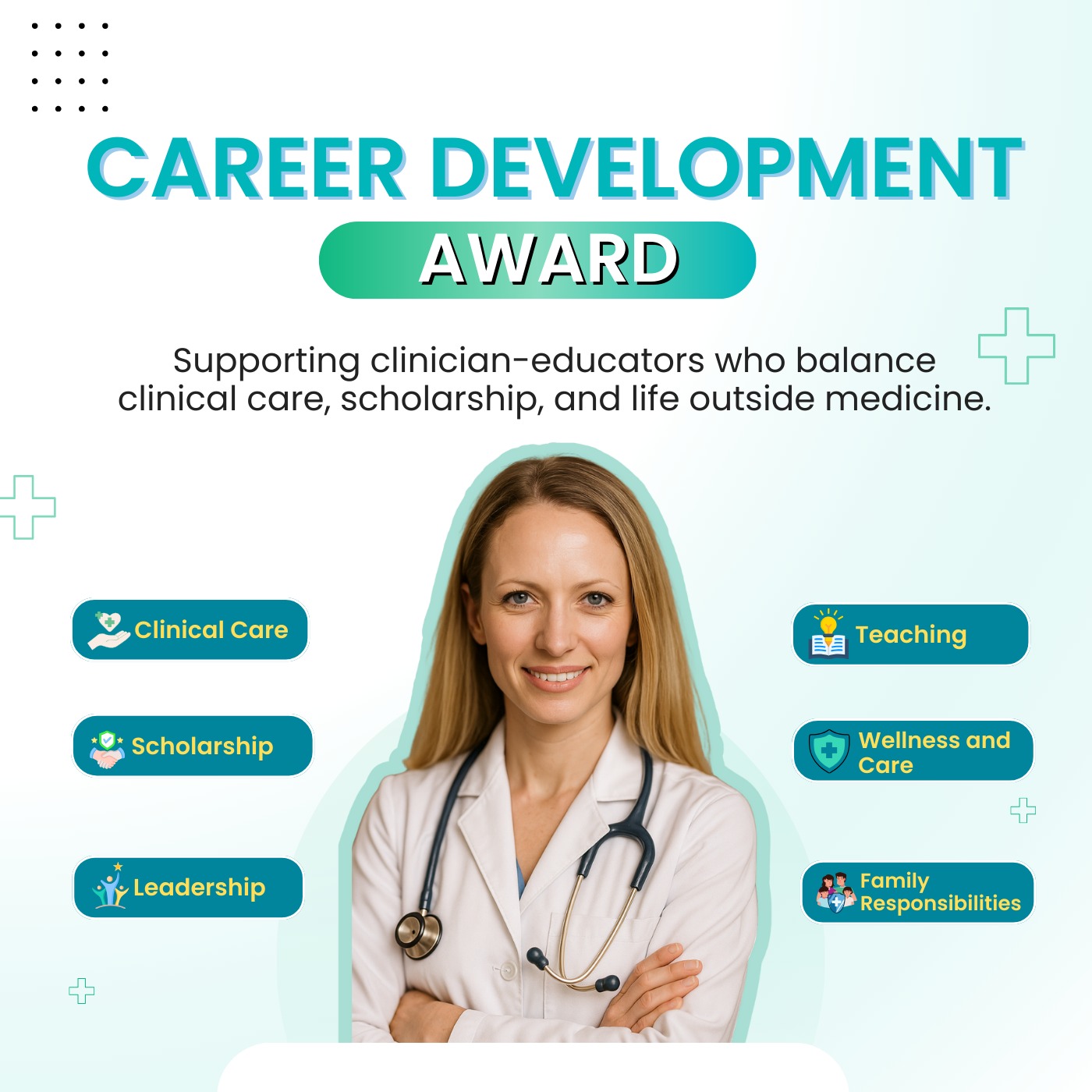
Tags: CoreIM, Internal Medicine, Career Development Award, Mary O'Flaherty Horn Award, Clinical Care, Scholarship, Teaching, Leadership, Wellness and Care, Family Responsibilities
Find the best disability insurance for you: https://www.patternlife.com/disability-insurance?campid=497840
Our Sponsors:
* Check out FIGS: https://wearfigs.com
* Click for 15% off Premium Starter Kit at Branch Basics: https://branchbasics.com/COREIM
Advertising Inquiries: https://redcircle.com/brands
Privacy & Opt-Out: https://redcircle.com/privacy
Available Results
Generated results are saved to the knowledge database for reuse and search.
Extract Knowledge
Pick what you want extracted first. Model, scope, and chapter options appear after a template is selected.
Transcript
[SPEAKER_00]: Today, we're getting a bit personal.
[SPEAKER_00]: For as long as I can remember, I have always found myself questioning in my head and mine off.
[SPEAKER_00]: And mine off for the team I'm on, and my doing enough for my family.
[SPEAKER_00]: I think growing up with a lot of invisible, carrying responsibilities to my brother, to my parents.
[SPEAKER_00]: I think I've always kind of walked into rooms just feeling, what does everybody else need of me, what can I do more for others?
[SPEAKER_00]: And I think it wasn't until I discovered the Mary-O-Flarity Horn award, and think like, got the award that I was able to grow in ways that I couldn't have imagined.
[SPEAKER_00]: And that's just not my story, that's the story of others who've gotten this award, and dared to reimagine what work-life balance and well-being looks like for them.
[SPEAKER_00]: Today, I'd like to tell you a few of those stories.
[SPEAKER_00]: What exactly the horn career development award is, and why it's like nothing I've seen out there.
[SPEAKER_00]: The hope here is to leave you inspired and hopefully help someone who might just need something like this in their career.
[SPEAKER_00]: And maybe that's you.
[SPEAKER_00]: We'll start with a very relatable story of Dr. Tyra Feinstead.
[SPEAKER_03]: Yeah, it's probably my favorite story of my entire life because it, it's really my own personal heroes journey, it feels like in a very nuanced way.
[SPEAKER_03]: Hi, my name is Tyra Fainstead.
[SPEAKER_03]: I live in Denver, Colorado and I'm a primary care internal medicine doctor here at the University of Colorado.
[SPEAKER_03]: I also co-direct and run coaching program called Better Together Coaching.
[SPEAKER_03]: Really, the story starts when I was a brand new faculty attending physician.
[SPEAKER_03]: I was at the University of Washington at the time in Seattle.
[SPEAKER_03]: And I had what I had thought was my dream job.
[SPEAKER_03]: I was attending in the primary care clinic that I was a resident in.
[SPEAKER_03]: And I was a chief resident there.
[SPEAKER_03]: And I just looked at those other attendings as
[SPEAKER_03]: the best doctors, you could possibly be in this world.
[SPEAKER_03]: I was in awe of them.
[SPEAKER_03]: I was simultaneously intimidated and attracted to being them and somehow I got a job in this clinic and it was my dream job.
[SPEAKER_03]: And when I got there, a couple of things happened.
[SPEAKER_03]: One was that my usual form of getting a sense of value and worth,
[SPEAKER_03]: was praise or positive feedback.
[SPEAKER_03]: And I was pretty good at playing that game as a medical student and as a resident, I could pretty much be what people wanted me to be.
[SPEAKER_03]: And then I was getting this regular stream of observation and feedback as you do in training.
[SPEAKER_03]: But when it became an
[SPEAKER_03]: halt.
[SPEAKER_00]: Yeah.
[SPEAKER_03]: And so my source of validation was gone.
[SPEAKER_03]: And I was just left with this like very loud inner critic that I had developed during training to like keep myself in line and make sure I was not going to hurt someone.
[SPEAKER_03]: But that was the only voice that was there with me in this these very early years.
[SPEAKER_03]: And then the second thing that happened was that I had to kids right off the bat.
[SPEAKER_03]: and those two kids were like the worst evaluators of me.
[SPEAKER_03]: I don't think that's the very objective at all, but they certainly weren't giving me much validation.
[SPEAKER_03]: They were both pretty collicky and just like not doing it how I thought that it should be done and so I blamed myself and applied a pretty like academic lens to it and read about
[SPEAKER_03]: How to be a better mom and asked a bunch of friends about how to be a better mom and looked outside of myself for the answers.
[SPEAKER_03]: And I wasn't despair at this point.
[SPEAKER_03]: I felt like a bad doctor.
[SPEAKER_03]: I felt like a bad mom and a bad partner.
[SPEAKER_03]: I just sort of felt like I was floating without any sense of who it was or groundedness.
[SPEAKER_03]: And I tried changing various things about my job and my life.
[SPEAKER_03]: I scaled down at work thinking, you know, maybe, you know, it's still time to talk here.
[SPEAKER_03]: Yeah, let's go part time.
[SPEAKER_03]: Didn't totally feel better.
[SPEAKER_03]: I actually scaled way up at work thinking maybe I'm not cut out to be such an involved mom.
[SPEAKER_03]: didn't feel any better, you know, try to couple of SSRIs, which didn't end up being the ticket for me.
[SPEAKER_03]: And then I hesitantly or I rolled my way into an accidental coaching conversation.
[SPEAKER_03]: And I say that because I didn't really believe that coaching was a thing.
[SPEAKER_03]: At that point, and it is not an exaggeration to say that more if the high life changed in like that first one or two conversations with her, then probably the decade leading up to it.
[SPEAKER_03]: It was I learned some wild things about my brain and about myself that shifted enough in me to realize that no change in circumstance or in somebody else's validation was going to do it for me.
[SPEAKER_03]: And I was totally hooked.
[SPEAKER_03]: So I got coached for a year or two.
[SPEAKER_03]: I sort of fell back in love with my job.
[SPEAKER_03]: I felt back in love with being a mom and came out of that experience with a ton of gratitude but also some anger that those skills of looking at my own thinking were never taught to me in medical training.
[SPEAKER_03]: So I wanted to do it, and I importantly at this point didn't have a track record for myself in my institution, which is something that you need if you're going to argue for protected time to create something new.
[SPEAKER_03]: And so I sort of ran into many, many different dead ends trying to put together
[SPEAKER_03]: a program that I could give to medical trainees to help give them the same skills that I desperately needed at that time, which was when I found out about the horn award.
[SPEAKER_03]: And it was kind of magic.
[SPEAKER_03]: So I was also in the process of moving back home here to Colorado, and so I was transitioning institutions.
[SPEAKER_03]: And it was my section head, my division chief at the University of Colorado, that knew about the horn award.
[SPEAKER_03]: And I still remember he emailed it to me, and it sounded just like, too good to be true.
[SPEAKER_03]: This incredible award was designed for someone who was being squeezed by life in all of the ways that I was.
[SPEAKER_03]: And instead of trying to solve for that time of life with some sort of mechanistic or systematic change, it was approaching that time of life as if it were a good thing.
[SPEAKER_03]: the way that I read the hornword, this isn't what it says, but the way that it landed with me was like, you're in a special position where you're being pulled in 20 different directions and because of that, not in spite of that, but because of that we want to award you.
[SPEAKER_03]: Yeah, with something that can help other people.
[SPEAKER_03]: I was wild, and so the application itself was in incredible processes, unlike any other grant or a word that you've ever applied for because it's sort of like a journal entry.
[SPEAKER_03]: Yeah, there's no like peer reviewing or making things sound perfect.
[SPEAKER_03]: It's like, what are your vulnerabilities we want to hear them?
[SPEAKER_03]: And it felt like the whole thing felt very therapeutic to just get my thoughts out on paper in the order that they asked them.
[SPEAKER_03]: And then the second key thing was that the person that supported me through the award, my section head and then ultimately my institution here was given the task of offering me support.
[SPEAKER_03]: for something that I hadn't shown yet that I could do.
[SPEAKER_03]: And so it was just an idea.
[SPEAKER_03]: And I had, like I said, no track record of success.
[SPEAKER_03]: I was very early in my career.
[SPEAKER_03]: I'm not a scientist and at that point I was not a researcher.
[SPEAKER_03]: And I hadn't really produced anything that was publishable or of academic value by then.
[SPEAKER_03]: and still the fact that I had not just this mentor but actually a team of mentors and an institution behind me backing this idea.
[SPEAKER_03]: So it was the first time that I had ever felt I think radical belief before I had proven myself in academia and that was imperative for the
[SPEAKER_00]: There is just so much unpack here.
[SPEAKER_00]: I am so used to writing grants awards.
[SPEAKER_00]: In writing about deliverables, right?
[SPEAKER_00]: What can I accomplish for this organization or this person?
[SPEAKER_00]: How is it going to benefit them?
[SPEAKER_00]: But the horn is completely different.
[SPEAKER_00]: It's asking you to look inside and honestly talk about your responsibilities between your work.
[SPEAKER_00]: your family socially, what are your aspirations?
[SPEAKER_00]: And so what does this award allow?
[SPEAKER_00]: It's a two-year career development award for clinician educators giving them the flexibility to go part-time and more so funding right to allow for a meaningful career development while also trying to balance the very real personal and professional responsibilities that might already exist on our plates.
[SPEAKER_03]: So it was the most incredible time for me because it gave two things when it gave time and space to breathe and think.
[SPEAKER_03]: So the horn award of course protects a portion of your time for a couple of years.
[SPEAKER_03]: And it has relatively few demands.
[SPEAKER_03]: You need to have some scholarly output, but it certainly doesn't have to be x, y, or z.
[SPEAKER_03]: It can be sort of self-defined.
[SPEAKER_03]: And so that lack of
[SPEAKER_03]: someone looking over my shoulder all the time, that lack of external accountability allowed for internal growth in a way that I hadn't experienced before.
[SPEAKER_03]: And honestly, if you had asked me before, I had the award or before I was in it, I might have even said like, I don't know if I would thrive that way.
[SPEAKER_03]: But instead, I was gifted this time and space.
[SPEAKER_03]: And I ended up counterintuitively
[SPEAKER_00]: Every time I hear a tire story, I feel so inspired by what can happen when you give people some leeway, some beliefs, some grace, and the financial support during the tough years and what can happen.
[SPEAKER_00]: And ultimately, the goal is to build up people who can have a career where they feel like they're thriving in multiple arenas of their life, right, and whatever it looks like for them.
[SPEAKER_00]: And this brings me to the founder of the Mary Ophlerity Horne Award, Dr. Carol Ward, and her origin story of her own work-life balance at how the Horne Award came to be.
[SPEAKER_00]: You see years ago, she was also stretched thin in many directions as an early faculty, also a new mom, and found this incredible opportunity where someone was looking to split a
[SPEAKER_01]: And so she designed this idea of a script full time of split faculty position where we actually worked full time, but she worked half and I would work half.
[SPEAKER_01]: We truly worked half of the week.
[SPEAKER_01]: When I was home, I was home and when I was at work, I was at work and it was.
[SPEAKER_01]: just it was amazing, right?
[SPEAKER_00]: Well, that went on for a few years and then something awful happened.
[SPEAKER_00]: She was on a phone call with Mary and noticed the slurring of her speech.
[SPEAKER_00]: That was one of the first signs of ALS and unfortunately a year and a half later she passed away.
[SPEAKER_00]: It was heartbreaking and hard on everyone.
[SPEAKER_01]: So when she was dying, I promised her that I would take care of her mom in whatever ways that I could.
[SPEAKER_01]: So several months after her death, Louise, her mother, and I met, and we were talking that one of our lunches, and I said, I really want to do something to memorialize Mary and the role that we had together in medicine, and Louise, that's a very wise person.
[SPEAKER_01]: Just off the top of my head.
[SPEAKER_01]: I said, oh, I want to get a program like this for other people to be paid to have a half and go to equity position.
[SPEAKER_01]: Just think, you know, going up against academic medicine, which is always full time, it would be really great to have a funded half-term position because money sneaks in medicine.
[SPEAKER_01]: So, because, well, how would you do it?
[SPEAKER_00]: And that was the beginning.
[SPEAKER_00]: Carol wanted to give this to other people have the opportunity to go part time and thrive in all aspects of life.
[SPEAKER_00]: And Carol met with the leaders of S.G.I.M.
[SPEAKER_00]: and share that idea.
[SPEAKER_01]: And it all went great.
[SPEAKER_01]: It's everybody, but Council was in favor of it.
[SPEAKER_01]: It all seemed to be going well.
[SPEAKER_01]: And then finally, I met with Louise again.
[SPEAKER_01]: And I said, it's really great, except for the funding.
[SPEAKER_01]: And then we're going to have to,
[SPEAKER_01]: You know, fundraise.
[SPEAKER_01]: I said no problem.
[SPEAKER_01]: So a couple months later, we came back and it really was a problem to get fundraising.
[SPEAKER_01]: I think we had raised $10,000.
[SPEAKER_01]: And she goes, well, how much do you need?
[SPEAKER_00]: She goes, well, how was she need?
[SPEAKER_00]: And Mary Horne's mother, Louise Flaherty, funded it.
[SPEAKER_00]: She donated it to S.G.I.M.
[SPEAKER_00]: and that was the birth of the Mary of Flaherty Horne Scholars Program.
[SPEAKER_00]: I think about Carol's story a lot and I think about how brave she was to really feel the pain points in her own life earlier in her career.
[SPEAKER_00]: Figure out a job that worked for her in a very different way than what a faculty position look like then.
[SPEAKER_00]: And then in the spirit of honoring Mary and in a spirit of service, right, she wanted to give this typical experience to others.
[SPEAKER_00]: And so, for the last two decades plus, it's made making an impact, not just for the people who've gotten the award, but for those who've also gone through the application process, and that brings me to my last story.
[SPEAKER_02]: I'm Humit Machabber, I'm the senior associate dean for student affairs at the University of Miami, Miller School of Medicine, I'm a general internist, so for me when I think this most exciting is that I did not receive the scholarship and the reason I know the story is so heartwarming to me is what came up the aftermath of not receiving this scholarship.
[SPEAKER_02]: So what I learned about myself first was that I did have a vision.
[SPEAKER_02]: I had a vision for what felt like an impossible goal of figuring out how to work less than full-time during those early years and still be committed to my work and growing my anger and even grow as a leader.
[SPEAKER_02]: and it certainly gave me confidence in that vision.
[SPEAKER_02]: And now receiving this scholarship, the exciting thing that came from that was a phone call, a personal phone call that I received back then from Dr. Carol Ward, one afternoon, while I was actually in clinic, I remember the phone call.
[SPEAKER_02]: And told me that she wanted to share news with me that she wanted to do so in person because she was so moved by everything that I put in my application that she wanted a chance to just talk to me maybe and connect over those ideas.
[SPEAKER_02]: And I remember it left me in tears.
[SPEAKER_02]: Sure, I didn't receive the award, but at the same time, I had never in my lifetime had anybody validate.
[SPEAKER_02]: The visions, the ideas that I had and just the humanity behind what I was dreaming about.
[SPEAKER_02]: And I learned so much from her and she has just been an incredible mentor and a wonderful friend.
[SPEAKER_02]: And I credit that phone call to just the sheer connection that came from my application.
[SPEAKER_02]: That vision several decades ago was that I needed a little bit more flexibility.
[SPEAKER_02]: Then the many more than 40 hour work week, we were working at an continued to work.
[SPEAKER_02]: So the vision was I would love at least for a short period of time, a little bit of flexibility to do this a little differently.
[SPEAKER_02]: So I can continue to show up daily as the wonderful physician I believe I was and wanted to be the educator that I was growing into and wanted to continue to grow.
[SPEAKER_02]: And most importantly to me at the time was to be a present parent and be involved in a way that was meaningful to me.
[SPEAKER_02]: Honestly, the other incredible thing that happened because I applied, as I mentioned, it was having the courage to really think deeply about what I wanted and learned that it was so important to me that even without the award that I was going to summon as much courage as I had to create a path to potentially negotiate how to work part time.
[SPEAKER_02]: early in my career when I wanted to do so at the time in the birth of my first child.
[SPEAKER_02]: We'll courage to approach my then division chief with a plan and it pushed conversations in a way that
[SPEAKER_02]: We weren't used to and we weren't comfortable with back then.
[SPEAKER_02]: A lot of tears, a lot of frustration, but a strong belief that there were folks out there who really understood the value of these critical times where some of us just decided that we have to work differently and you can still be incredibly productive and contribute in a different way.
[SPEAKER_02]: And that started my journey in the space
[SPEAKER_00]: There's a lot that the Horn Award has given me.
[SPEAKER_00]: It's given me the financial support to have the birth of my second child.
[SPEAKER_00]: I've been able to finish my master's in education and a bunch of other accomplishments, but the biggest chef will never make it on paper.
[SPEAKER_00]: It's an internal one.
[SPEAKER_00]: It's the space to look inward and finally feel enough.
[SPEAKER_00]: And for that I cannot think S.J.A.M.
[SPEAKER_00]: or the Horn Award enough.
[SPEAKER_00]: I couldn't not make an episode telling people to consider the Horn Award if you're in that time of life where you need time and space to look inward to build up skills or to just work in a different way that ultimately you can flourish.
[SPEAKER_00]: I'll put in the show notes a more information about the Horde Award, the application process, the letters you need.
[SPEAKER_00]: The deadline is the next coming cycle January 30th, 2026.
[SPEAKER_00]: Please reach out if you have any questions on the process, how to get support from your institution.
[SPEAKER_00]: I really do hope this could help someone or inspire someone out there.
[SPEAKER_00]: If you have a colleague or a mentor who could use this opportunity in this juggling act that is life, I am so glad there are organizations and programs out there that recognize and actually financially support these years of our life.