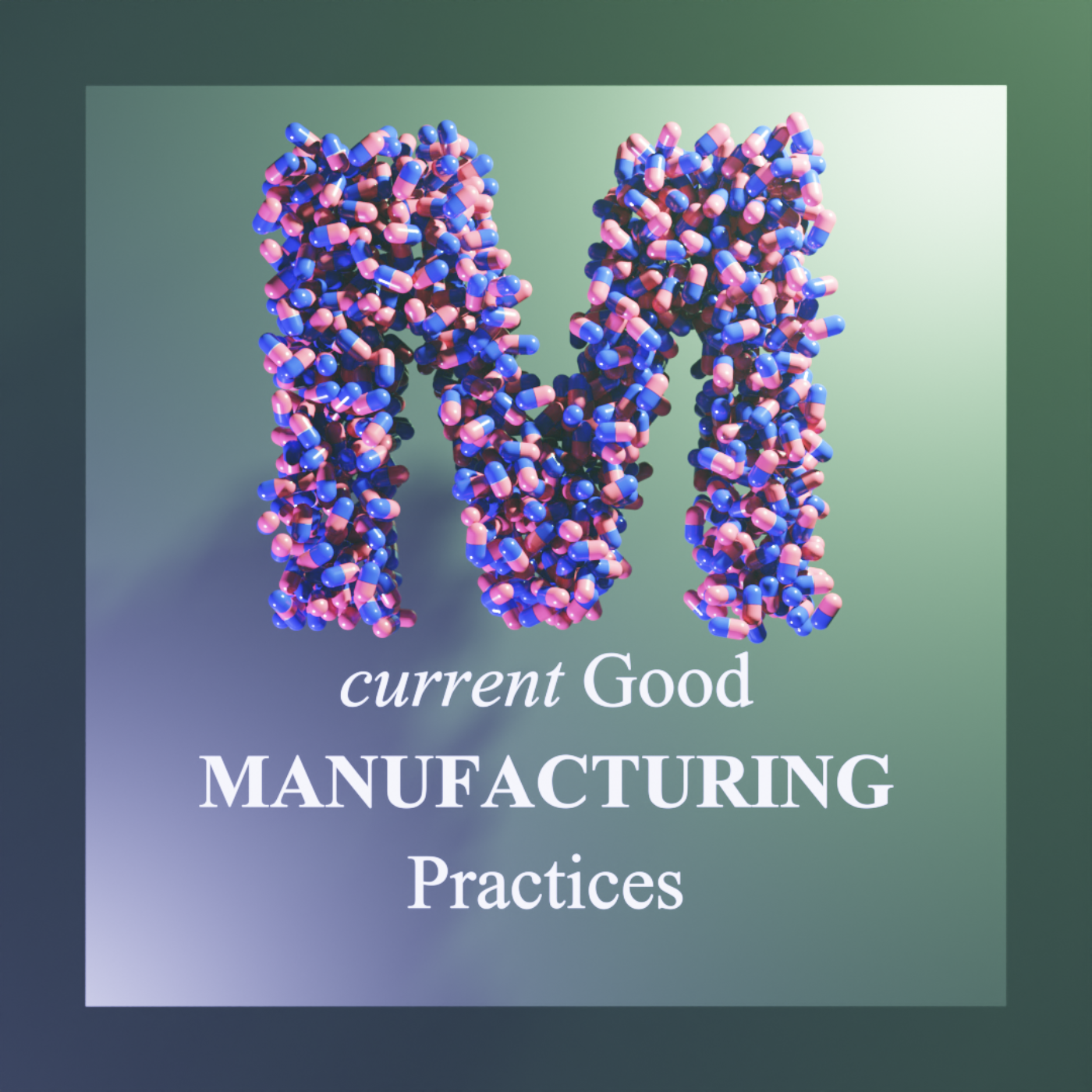
4 - Understanding FDA 21 CFR Part 210 (S14E1)
From Concept to Medicine - A Comprehensive Drug Development Journey
This episode delves into the foundational regulations of FDA 21 CFR Part 210, the cornerstone of Current Good Manufacturing Practices (cGMP) in drug manufacturing. We explore the scope and fundamental elements of this crucial regulation, explaining how it establishes the baseline for quality in pharmaceutical production. The discussion covers general provisions, regulatory intent, and the essential requirements that govern every stage of the manufacturing process. We highlight the significance of standardized procedures, environmental controls, and meticulous record-keeping. These elements, as described in this regulatory framework, are the bedrock for product integrity.
The episode emphasizes how adherence to 21 CFR Part 210 is not just about compliance, but about building a culture of quality. We detail each element, from the building itself to the personnel involved, illustrating how they are all interconnected. Emphasis on standardization and environmental management help showcase how this regulation is paramount for patient safety. It ensure consistent product quality and regulatory compliance. We aim to provide listeners with a comprehensive understanding of why these rules exist and how they contribute to the safety and efficacy of the medications we all rely on.
Available Results
Generated results are saved to the knowledge database for reuse and search.
Extract Knowledge
Pick what you want extracted first. Model, scope, and chapter options appear after a template is selected.
Transcript
All right, ready to dive into something really
important. We're talking FDA 21 CFR Part 210.
OK, so maybe not the most exciting title. I know.
Regulations aren't exactly beach reading, but
stick with us. This is about your medications,
how they're made, how we know they're safe. We're
talking the foundation of good manufacturing
practices. for pharmaceuticals. Exactly. So 21
CFR part 210, this is like the ground rules.
Yeah, the non -negotiables for any drug manufacturer.
In this deep dive, what's the mission here? To
understand why those rules exist. It's not just
about making pills look a certain way. It's bigger
than that. Much bigger. 21 CFR Part 210, it sets
the stage for what we call CGMP. The CGMP. Current
good manufacturing practices. It's a whole framework.
Like a blueprint. Yeah, for building quality
into every single step of how drugs are made.
Okay, so like... from the building itself to
the people working there, it's all connected.
Absolutely. Training, cleaning equipment, handling
materials, it's all under the CGMP umbrella.
See, this is why I want to do this deep dive.
I take medication, so this matters to me. And
to everyone who relies on these medications,
it's about knowing that there's a system in place.
A safety net woven into the whole process. Exactly.
When companies follow 21 CFR Part 210, they're
committing to minimizing those risks. The risks
of errors, contamination. you know, inconsistencies,
so greater confidence in the medications themselves.
That's the goal. OK, so let's get into some specifics
of this this 21 CFR part 210. What stands out
to you? Well, one of the most fundamental things
is standardized procedures. Standardized, you
mean like everyone doing things the exact same
way. Exactly. Every single step in making a drug
needs to be documented, followed precisely. Why
is that so important? Think of it like like a
recipe. but with much higher stakes. Yeah. You
mess up a cake, no big deal. Mess up a medication,
that's serious. Right. So these standardized
procedures, they eliminate guesswork, they reduce
human error. So clear written instructions for
everything. Everything. From cleaning that equipment
to weighing out the ingredients. Okay, so that's
standardized procedures. What else? Environmental
control is huge -y. The regulations are really
specific about this. It's got to be a clean and
controlled environment. You mean, like, more
than just a clean factory? Oh, much more. We're
talking controlling temperature, the humidity,
air quality, ventilation, all of it. Wow. See,
I wouldn't have thought of that, like, temperature
affecting my meds. It's easy to overlook. But
even small changes in temperature or humidity
during manufacturing or storage. It can make
a difference. It can degrade some ingredients.
Yeah. Affect how a drug is absorbed by the body.
21 CFR Part 210, it sets strict standards to
prevent that. So it's like creating the perfect
environment for each drug. Exactly. Controlling
those invisible factors that could compromise
the medication. This is fascinating. And this
applies to storage too, like where the drugs
are kept. Absolutely. And transportation. The
whole chain. Okay. So we've got standardized
procedures, environmental control, and what was
the other big one? Record keeping. Record keeping.
It's essential. Not just paperwork, but documentation
of every single batch of medication. So if something
goes wrong, you can trace it back. Exactly. Every
ingredient, every step, every piece of equipment
used, it's all recorded. For accountability and
for improvement if something needs to change.
Right. Wow. You know, you don't think about all
this when you pick up a prescription. Most people
don't. But this whole world exists behind the
scenes, making sure that medication is safe and
effective. And 21 CFR Part 210 is a big part
of that. It's the bedrock, really. The framework
that gives us confidence in these pharmaceuticals.
OK, I'm definitely seeing why this matters. Not
just for people making the drugs, but for all
of us taking them. Absolutely. And honestly,
we've just scratched the surface here. There's
more? Oh, yeah. 21 CFR Part 210, it goes deep.
And it's more interesting than you might think.
OK, so much to unpack here. Where do we go next
with 21 CFR Part 210? Let's talk about the people.
The one's actually making these medications.
Like the personnel. 21 CFR Part 210 gets pretty
specific about their training and hygiene. So
more than just like... Hair nets and washing
hands. Oh, yeah. Training is huge. They need
to understand not just their task, but how it
fits into CGMP overall. So technicians, supervisors,
everyone plays a part. Everyone. It's about building
a whole culture of quality and personal hygiene.
That's part of it. Yeah. I mean, we can all be
sources of contamination accidentally, of course.
Skin cells, hair, jewelry. Imagine a rogue earring
falling into a batch of pills. Okay, I'm trying
not to imagine that. But that's why 21 CFR Part
210 is so strict about it. The right clothing,
protective gear, all that, minimizing the risk.
Okay, so we've got standardized procedures, the
environment, record -keeping personnel, anything
else. Equipment. That's a big word. The machines,
the tools, all that. Right. 21 CFR Part 210 has
rules about the design, the maintenance, and
especially cleaning. So, like, not just any old
mixing bowl will do. Not quite. It's got to be
made from materials that are easy to clean that
won't react with the ingredients and the cleaning
itself. That's a whole process. I'm sensing a
theme here. It's all about preventing contamination
at every step. You got it. Strip procedures for
cleaning and sanitizing everything between batches.
Especially important for really potent drugs,
where even tiny amounts of residue could matter.
And I bet this cleaning, it's all documented
too. Every single step, what agents they used,
how long, verification checks, all recorded.
Wow. So 21 CFR Part 210, it really is weaving
all these threads together. It's creating that
safety net we talked about for patients. OK,
let's keep going. What else falls under this
umbrella? Materials. The stuff that actually
goes into the drugs. Makes sense. Can't make
a good cake with bad flour, right? Perfect analogy.
21 CFR part 210, it's got strict rules about
where they get those materials, how they store
them, how they handle them. So everything from
the main ingredient, the active one, to... To
everything else, the inactive ingredients, we
call those excipients. Excipients, okay. Never
heard that word before, what are they? The stuff
that helps the drug work, but isn't the active
ingredient itself. Binders, fillers, things that
improve absorption, or maybe mask a bad taste.
Never knew there was so much going on in a little
pill. There's a lot happening. And yeah, excipients,
they have their own regulations, too. They make
sure they're pure, safe, all that. Exactly. Identity,
purity, quality, all of it. plus procedures to
prevent contamination during storage. That's
like a chain of custody for ingredients, making
sure they're handled as carefully as the final
drug. Right. And that chain, it extends to everything,
packaging materials too. You don't want something
from the bottle louching into the pills. Hadn't
thought of that. OK, so we've talked about the
place, the people, the equipment, the materials.
What's left? The process itself. And how we prove
it works. Prove it works. That's called process
validation. And it's where things get really
interesting. It's about showing, scientifically,
that your manufacturing process consistently
makes high -quality medication. So, not just
following the steps, but proving the steps themselves
are good. Precisely. We do experiments, studies,
to demonstrate that the process, under certain
conditions, makes a product that meets all the
standards. That sounds complicated. Can you give
an example? Let's say you're making tablets.
You might test how different amounts of pressure
affect how hard the tablet is, how fast it dissolves,
all that. You're finding the sweet spot and then
making sure you hit it every time. Exactly. And
all of this is documented. So there's scientific
proof that the process is under control. not
just hoping for the best. This is making a lot
more sense now. It's about building quality into
every single aspect. That's what CGMP is all
about, and 21 CFR Part 210, it's the guideline
that makes it happen. Okay, part three of our
deep dive into 21 CFR Part 210. We've covered
so much ground already. What's left to explore?
Well, we've talked about building quality into
every step of the way, right? But how do we actually
check that quality? That's where quality control
testing comes in. Ah, OK, so it's like the final
inspection. Yeah, you could say that. It's the
last checkpoint to make sure that finished product,
that medication, actually meets all the requirements
we've been talking about. So like, does it actually
have the right amount of the active ingredient?
That kind of thing. Exactly. Quality control
testing, it's a whole battery of tests. They're
looking at the identity, the purity, the strength
of the medication. even its physical characteristics.
Think about it. You need to make sure those pills
dissolve properly in your body so the medicine
can work. Makes sense. So these tests, they're
like the seal of approval, saying, yep, what's
on the label is what's in the bottle. And 21
CFR Part 210, it lays out exactly what those
tests should be. what methods to use, even who's
qualified to do them. And I'm guessing all of
this is documented, too. You bet. Every single
test meticulously recorded. It's part of that
whole chain of evidence we've been talking about.
OK, so let's say a manufacturer doesn't follow
these regulations. What happens? Are there consequences?
Oh, there are. Big ones. The FDA. They're the
ones who enforce all this. And they can issue
warning letters. They can force a company to
recall their product. Serious stuff. It can even
get to the point of shutting down a whole manufacturing
facility if the violations are bad enough. So
these regulations, they're not messing around.
They can't afford to. We're talking about patient
safety. That's the whole point of this. Preventing
dangerous medications from getting out there.
Making sure people can trust what they're taking.
Wow. It really puts things in perspective. Yeah.
You know, when you take a pill, you just... you
expect it to work. Right. But there's this whole
system working behind the scenes to make that
happen. All these people dedicated to making
sure it's safe. So this deep dive, it's been
really eye opening. We've gone from like what
even IS21 CFR Part 210 to the nitty gritty of
these good manufacturing practices. And now the
consequences if those rules aren't followed.
And it all ties back to that one idea, making
sure the medications people rely on, they're
safe, they're effective every single time. It's
kind of amazing how all these pieces fit together.
The facility, the people, the equipment, the
tests. It's a whole system. And without that
system, without those regulations, it'd be a
lot harder to have that confidence. Confidence
in the medications we take and the companies
that make them. Absolutely. Well, I think we've
covered a lot of ground here. This has been a
fascinating deep dive into the world of pharmaceutical
regulations. It's a world most people don't see,
but it's vitally important. So the next time
you pick up your prescription, maybe you'll think
about all the work that went into making it safe
and all the people who made that happen. And
maybe you'll have a little more appreciation
for those regulations like 21 CFR Part 210. They
might seem dry on paper, but they're there for
a reason to protect all of us. Well said. Thanks
for joining us for this deep dive. We'll see
you next time. Take care.