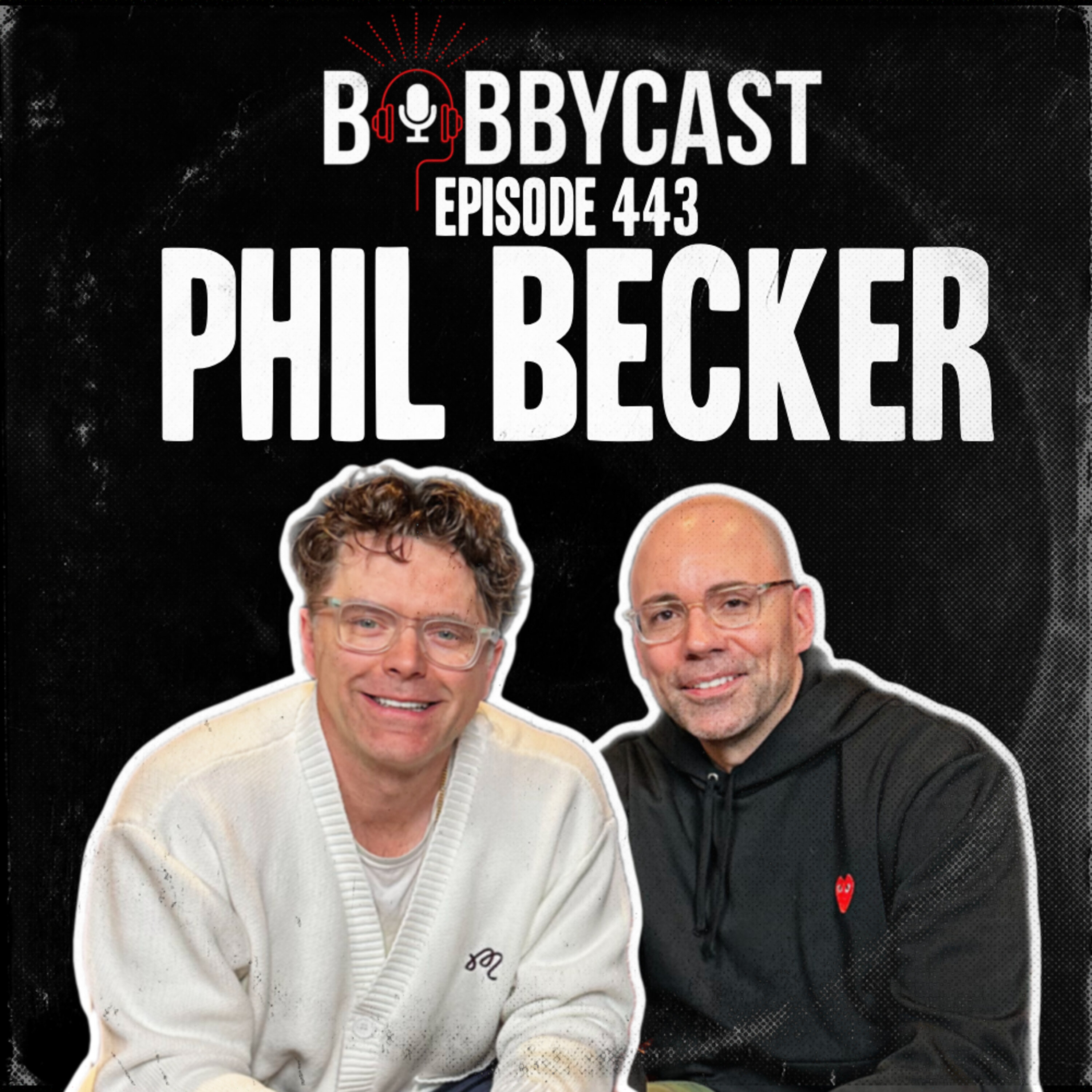
#443 - Phil Becker PT1: Phil on Introducing AI to Radio + Being The First Person to Invest in Bobby Nationally + Why Beyonce is Proving Genres Will Cease to Exist
On Part 1 of Bobby's interview with Phil Becker (@Philbecker), they talk about Phil's role in radio and media and it's everchanging landscape. Phil is a highly accomplished media executive with over 30 years of experience in the industry. He currently serves as the Executive Vice President of Content at Alpha Media where he oversees content and programming for over 200 radio stations nationwide. Phil shares why he thinks AI for radio isn't bad and why he introduced the first AI radio personality. He also goes into the backstory of how he and Bobby met and why he believed in him so much he chose to invest in Bobby nationally. Phil also addresses one of music's hottest topics right now; Beyoncé going country and why he thinks she will prove that music genres don't matter and won't exist anymore. Phil also talks about his podcast Phil-Osophy and more!
Follow on Instagram: @TheBobbyCast
Follow on TikTok: @TheBobbyCast
Watch this Episode on Youtube
See omnystudio.com/listener for privacy information.
Available Results
Generated results are saved to the knowledge database for reuse and search.
Extract Knowledge
Pick what you want extracted first. Model, scope, and chapter options appear after a template is selected.
Transcript
00:00:06
Speaker 1: I actually think that people that are younger now, they're going to laugh at us. Dude, They're going to laugh at us and go, you told somebody what a genre was, right, that's offensive.

00:00:19
Speaker 2: Episode four forty three with a guy named Phil Becker, somebody that I admire so much, and I won't even say just the broadcast space, the media space, in the creating content space. Follow him on Instagram at Phil Becker. I was looking at his bio and I feel like what I say is like normal, Like I watched the guy and I'm like, man, if people just listen to him, they could learn a lot if they were looking for a career in podcasting radio. I know music executives watch what he has to say, but like his official thing is he is the executive vice president of content at Alpha Media, one of the really big radio companies. As a matter of fact, it's like, I won't say a rival, it's not like Texas ou but he doesn't work for our company. But even though he doesn't work for our company, he was one of the first people to ever put us on an affiliate that wasn't owned by our company, which then made other companies go, oh, that can happen like I'm I'm and I don't even know Phil then, which is crazy. So he oversees content and programming for over two hundred radio stations. Super innovative, all those words, trailblazer, la la la, even like social media influencing. He has worked all over the globe, worked with people in all different capacities. But I just wanted to talk with him and ask him a bunch of questions because I know we have so many people that listen to the show that are in music or social media or like that's their job working at a label or radio. He has a podcast called Philosophy with Phil Becker Philosophy, and it's very motivating. Sometimes I'll repost some of his stuff on Instagram. And we're doing this in two parts because in the first part we were gonna do thirty minutes and thirty minutes as one episode. I was gotting interviewed Phill he's getting interview me and this is going up on his podcast too. I don't know if he wants to put this part up, but he's welcome to do that. But I ended up talking to him for like an hour, could have done longer, and I know I made him late to something because I kept going wins your heart out and he's like, well it just I was like, okay, good, not yet. But this is the first part where I'm talking with him. I hope you enjoy this. This is Phil Becker again on Instagram. Follow him at Phil Becker.

00:02:24
Speaker 3: Here you go.

00:02:25
Speaker 2: This is the first time that I've done a podcast where I actually share it with somebody, and I thought that would be fun for us to do. So this is going to go on the bobbycast feed obviously, but also Phil has a podcast and philosophy, right, How did you get to that name? Though?

00:02:41
Speaker 3: Is there other philosophies?

00:02:43
Speaker 1: No, that's the crazy part. There was nothing. There was no one else with it.

00:02:46
Speaker 4: I mean, there's like.

00:02:46
Speaker 3: All the pills in the world. No one else had a philosophy.

00:02:49
Speaker 1: There's Phil Knight and Phil Dumpied. I think those are the only Phil Collins.

00:02:53
Speaker 2: Phil Collins, he doesn't do a philosophy. So it'll be on both of the feeds. And what I proposed to Phil was because I have a lot of things I'd like to talk to you about that it feels way more comfortable talking about them in a setting where I'm free to ask whatever I want without you judging me as a human because it is a thing. I have friends that will come over and like really good friends. I would say some of my best friends Brad Eldridge or Ben Rector or Jaco and like, these are my close close friends.

00:03:20
Speaker 3: When we're together. I'm not asking.

00:03:22
Speaker 2: About something that is granular in the professional world because it's just not the time to do that because we live it. And it's a bit the same with you, where I'm like, oh, I got some stuff. I really want to ask him that. When he shares, he knows other people are going to be listening, not just me, right, Yeah, so we're gonna put this on his and you can just look at philosophy, right Yeah.

00:03:45
Speaker 4: So I have like a little logo, a little peeb logo.

00:03:47
Speaker 3: Yeah, it's crazy.

00:03:48
Speaker 2: Nobody else had that right now now I want to go and steal it and copyright it so you can't have it anymore.

00:03:54
Speaker 3: So it's gonna be on both.

00:03:55
Speaker 2: So the first half is going to be talking and asking things a phil and then is going to be asking me in the second half of this. I'd also like to start by saying that and I've not said this about anybody else, even people that aren't music, because we'll bring in other creators or writers. If in my perfect world, I would work with you every day and you would run like all content strategy.

00:04:20
Speaker 3: For me, meaning you'd.

00:04:23
Speaker 2: Be there to consult and be there for the radio show, you'd be there for strategy.

00:04:28
Speaker 3: Of digital media.

00:04:29
Speaker 2: Like that would be the perfect world for me is to have you be here and do that. And I wouldn't say that if I didn't mean it, because I look to you as somebody who in many ways has a mindset like I do. Now I may be like, hey, let's work together and we burn it to the ground, but we would do it kind of understanding that sometimes you gotta take a risk.

00:04:51
Speaker 3: Sometimes you gotta have extra vulnerability.

00:04:52
Speaker 2: Sometimes you have to ask people for help in areas that maybe you're not the best. But I just want my audience to know that's how I feel about you talking to you, that there is this tremendous amount of respect from me to you and what knowledge you have and even what knowledge you admit you don't have. So all that said, Phil was one of the first people to take my syndicated show on a station that wasn't the central company that runs my station. As mine, and now you know that happens a decent amount, but you were one of the first ones to do that.

00:05:26
Speaker 1: Why you know, I think sometimes people make investments in people because it makes business sense, and I make investments in people because it's their people.

00:05:36
Speaker 3: And so what was it bad business?

00:05:38
Speaker 4: No? No, no, But I'm just saying.

00:05:40
Speaker 1: I'm saying like, initially, people go, you know, this fits our portfolio, or this fits what we do, this fits our model. And for me, I was like, we don't build radio stations for radio corporations. We build them for listeners. So if I put the listener first, you were the show. Whether you were with my company or another company, you were the best option.

00:06:00
Speaker 4: And I'm glad I did it.

00:06:01
Speaker 2: And that was a much smaller because you live in Portland. Now, yeah, that was a much smaller town then.

00:06:06
Speaker 4: Yeah, and this was over a decade ago.

00:06:08
Speaker 3: Was it that long?

00:06:09
Speaker 4: Yeah?

00:06:09
Speaker 1: Man, maybe maybe even longer, because I don't think my daughter was miss Buddy.

00:06:14
Speaker 4: This might have been fifteen years ago.

00:06:16
Speaker 3: That's crazy.

00:06:17
Speaker 2: Yeah, yeah, that was because we're still on the air there too, are you.

00:06:22
Speaker 4: It's awesome.

00:06:22
Speaker 3: Yeah.

00:06:23
Speaker 2: One of our biggest clients that I still and I haven't raised a dollar of my rate, regardless of anything that's happened from TV to the success of the radio show.

00:06:31
Speaker 3: I still do a furniture store there, do you really? Yeah?

00:06:34
Speaker 2: And I do them every other like I do more spots for them, like once every two days. Because again, when you came and you put us on there and they came, I was like, I'm always going to stay and do the same to the people that came and jumped on early.

00:06:48
Speaker 3: So I do the the Auburn.

00:06:50
Speaker 2: Hey, it's on Auburn right off Highway in Auburn, you know what I mean, Kevin.

00:06:55
Speaker 3: Yeah, Sturn, but at State Road AD and Auburn.

00:06:57
Speaker 2: Yeah.

00:06:59
Speaker 1: Yeah, those about fifteen minutes from my house at the time.

00:07:01
Speaker 4: That's crazy to hear you say that.

00:07:02
Speaker 2: So do you know what the client is? Kevin Frommer's Home Center, Van's Home Center.

00:07:06
Speaker 4: Van's Home Center.

00:07:07
Speaker 2: That's right, Okay, So I still do Vans and but I say that because I still do that because of you who brought us on then, and they've always been loyal to us.

00:07:16
Speaker 3: Why are you in Nashville now?

00:07:18
Speaker 1: So I'm here for the country radio seminar CRS.

00:07:21
Speaker 3: You're not just a country guy though.

00:07:23
Speaker 1: No, No, In fact, I would say my whole skill set. That's probably my weakest, just because sometimes I look at the format and I scratch my head and I go, why are we doing this? But no, not just a country guys, So I think I do. I think I do eleven formats and forty two markets on two hundred stations.

00:07:43
Speaker 2: What have you been doing while you've been in Nashville? Is it going to shows and hanging out with other people, a lot of just networking or have you actually been learning things?

00:07:52
Speaker 3: Yeah?

00:07:52
Speaker 1: You know. Here's it's funny. I had breakfast with someone today and he said, did you go to the Rhyman for lunch?

00:08:00
Speaker 4: Oh? I gave somebody my wristband.

00:08:01
Speaker 3: Because that's where all the big artists were just playing music right right right.

00:08:04
Speaker 1: And then he was like, oh, did you go to acoustic alley? I said no, I gave somebody my badge And they said, did you go to this thing? And I said, I'm here not to go to concerts. I'm here to motivate people. I'm here to meet with my team. You know, we we don't do as much travel as we used to, so I think I have six or seven people for my team here, so spending time with them seeing you, which I've said for years, Yeah, I'll call you next time I'm there. And I kept my word and actually called you and said I'm here. So I didn't do a lot of the concerts. I did attend some panels people were talking about the industry and and you know, I like to raise my hand and try to make us think you know.

00:08:47
Speaker 3: So, which means pissed people off.

00:08:49
Speaker 4: Yeah, for the most part of the most.

00:08:51
Speaker 2: Anything that's not the current wave, it makes people feel uncomfortable.

00:08:54
Speaker 1: Yeah, Like if I go into if I go into a panel or go into a seminar and I see that the thinking has stopped, I'll raise my hand and I'll give like the counterpoint to hopefully keep the thinking.

00:09:05
Speaker 2: Going, which from experience, if people are interpreting a way that you're not presenting it, it's here's somebody raising their hand because they think they're smarter than me, and they think that the way that I'm doing it is not the right way, and the way that I'm doing it is way I'm comfortable doing it. So I feel threatened and then it ends not comfortable in many ways. And an example that I'll bring up and something that made the National News was the first AI radio personality that you put on?

00:09:29
Speaker 1: Yeah, yeah, so I did that in Portland.

00:09:32
Speaker 3: It was on like good Morning. It was on like the all the national shows.

00:09:35
Speaker 1: Yeah no, it's good Morning America, NBC Nightly News truly went, you know, globally viral. And I'll tell you something interesting about that was, it's been so long since to direct terrestrial radio. Was in the general conversation that people didn't know what to do. Once we had it, You're right, they were like, whoa, it's everywhere, right, and a year go we did that. About a year ago, it was not It wasn't popular yet. People weren't comfortable with it yet. The temperature in the room has changed though. In fact, a lot of this, a lot of this conference, people were saying to me, is Ai Ashley here, I'd like to meet her? And I thought to myself, a year ago you were dragging me in the comments and going crazy and pitchforks at the gate, and now you want to meet her because you want the picture. I want a picture with Ai Ashley. I'm like, wow, is it's changing? So that's positive.

00:10:32
Speaker 2: Explain how someone could meet Ai Ashley and actually what you did because it was based off a person, correct, Yeah, and who I reached out to and was like hey, yes. I was just like, I don't know her, but I was like, hey, I know that people are not nice to you right now because what you're a part of is new and innovative and it might work, might not.

00:10:50
Speaker 3: Who cares.

00:10:50
Speaker 2: That's not the point of it. The point of it is something is new. When something new happens, people feel threatened because they're not doing the new. And I hope she took that as encouraging and just to let the moment passed, because as you're saying, now, it has passed and people have shifted a bit on it.

00:11:05
Speaker 3: Why how and how's it going with it now?

00:11:09
Speaker 4: Yeah?

00:11:09
Speaker 1: So why because if not us? Who like, really think about that for a second. If not you, if not me, if not those people who we're we're in in the terrestrial space. We're in a legacy where people are leaving the dinner and we're letting them order our food. Why so we've got to do it? So the why is if because somebody needs to The how is all kinds of technologies. So you know, there's there's a ton of voice cloning technologies out there but it's bigger than being able to clone a voice. It's about teaching the AI to be Ashley. What is Ashley's opinion on this? What is their personality? Why would you teach sensibilities?

00:11:55
Speaker 4: So that's what I'm glad you asked that.

00:11:57
Speaker 1: So it's weird because you go into the soft where and you go like, I'm gonna make these up. These aren't Ashley's attributes, but like if it was like conservative, pessimistic, reserved, shy and joyful, whatever they are, the software will generate a piece of content in Ashley's voice with those attributes, and that's not there yet.

00:12:23
Speaker 4: So like you have the files get.

00:12:24
Speaker 1: Generated and you've got to listen to it as Ashley gets a chance to do so and go, is that real?

00:12:29
Speaker 4: Like what I really say?

00:12:30
Speaker 5: That?

00:12:30
Speaker 4: Would I not?

00:12:32
Speaker 1: But there's one key thing that I want to make sure that we point out, and that is I've always disclosed that it's Ai. Her name is Ai Ashley.

00:12:42
Speaker 3: Correct, it's not as a deep fake.

00:12:44
Speaker 2: No, you're trying to trick me that Tom Cruise is selling me oreos right.

00:12:48
Speaker 3: Not true.

00:12:48
Speaker 2: It's not Tom Cruise's face. They've done that, They've manipulated it.

00:12:51
Speaker 4: Correct.

00:12:51
Speaker 1: Yeah, so, you know, and Ashley's a real person and it's her real voice, and there are instances where we use her as her, and then there's instances where we use AA Ashley and we just tell the audience and and you know, I think, I think what the audience deserves in once is just you to just tell them. You know, we've as in the in the terrestrial radio space. I said this to someone the other day. We're okay using voice actors for prank phone calls. We're okay sending roses to people that aren't in real relationships. But I crossed the line because I cloned one of our employees and pay her for it.

00:13:32
Speaker 2: Yeah, come on, man, because you were the first one to do it.

00:13:35
Speaker 4: First one through the wall always gets bloodied.

00:13:38
Speaker 2: It's funny because I would and I have kind of saw it because the pushback I would get from the industry, and I wasn't doing it to piss people off, but I would talk.

00:13:46
Speaker 3: About the And it's funny you bring that up.

00:13:49
Speaker 2: Prank phone calls that are not real, right because legally, in most places you can't do it. And it's also not even worth the risk of a lawsuit. Someone's been sued multiple times SID for stupid things on my part.

00:13:59
Speaker 3: And yeah, the rose is fake, all fake.

00:14:03
Speaker 2: And I would go on the air and I would say I would love to do these segments because I think they're compelling, But as soon as it got out that it was fake, and now it can spread so quickly and easily, nobody's gonna trust any.

00:14:14
Speaker 3: Other bit that I do.

00:14:15
Speaker 4: Ever.

00:14:15
Speaker 3: Great point, it's the same thing with the commercials.

00:14:17
Speaker 2: If I came out and did whiskey, they'd be like, wait, I know he doesn't drink whiskey. He doesn't drink, so he's trying to say drinking. So then they wouldn't trust any other commercial that I was doing. And there's a lot of short term that I don't get to gain when I bet on hopefully long term gain of my listeners, whether it be radio or podcast or digital media.

00:14:40
Speaker 3: That yeah, I am going.

00:14:41
Speaker 2: To give up a few thousand, eight hundred here, but I think if I lose them because I'm trying to gain that short term, I'll never get them back. And I'm starting to chop my legs out from underneath me. But I would say the same thing with Ai Ashley in a way, and the thing is people generally don't care, but they only care if they find out that you're lying to them about something they don't care about, because then all of a sudden they care.

00:15:05
Speaker 4: That's right.

00:15:06
Speaker 2: And I did find that when you were saying this is AI that people were just like, oh not not industry listeners.

00:15:14
Speaker 1: I want to man see you always hit on the things that people overlook. No listeners were upset, right, No clients were upset. The brand didn't lose followers, There was no backclash. It was it was that that I came in and I brought a technology into a business that doesn't always lead with technology. And so you know, I just say, well, if if we have no ratings decline, which we don't, if we have no digital audience declined, in fact, that audience is up. If our clients don't feel they don't want to be a part of it, what what's the problem.

00:15:53
Speaker 3: So let me counterpoint that.

00:15:54
Speaker 6: Sure, let's take a quick pause for a message from our sponsor, and we're back on the Bobby cast.

00:16:10
Speaker 2: Well, the problem is somebody human could be working that spot and it's not so there's somebody that's doesn't have a job, or it's creating a space to create other places where somebody doesn't have a job.

00:16:24
Speaker 3: What would you say to that great.

00:16:25
Speaker 4: Question, Well, first, she still works there.

00:16:29
Speaker 1: And I think that AI doesn't replace A players. I think it replaces C players, D players, And shouldn't we be doing that anyway. So if somebody's not the best person for a position, then come in and be great. The other thing too, is there's not a lot of roles left in a terrestrial radio station. Like when you walk around your affiliates, it doesn't feel like it probably felt fifteen years ago.

00:16:54
Speaker 3: Yeah, you're you're absolutely right. And if the roles are that they have to do nine things.

00:16:57
Speaker 4: They have to do nine things.

00:16:58
Speaker 1: So if I can give somebody the chance to go do eight other things, then then I should do that.

00:17:04
Speaker 4: So I actually look.

00:17:05
Speaker 1: At it as a way to insulate people's jobs, not to eliminate them. And it's also going to create new jobs, Like there's going to be prompt writing degrees. That's going to be a thing.

00:17:16
Speaker 2: That's crazy to think about it, right, that's going to be a thing like the greatest prompt writer in the state.

00:17:20
Speaker 3: Yeah, that's that's going to be a.

00:17:22
Speaker 4: Thing, you know.

00:17:23
Speaker 1: And and AI audio engineering is going to be a thing. So there's going to be new businesses and new jobs out of it. So I actually, you know, I don't think it is the great replacer that everybody thinks it is.

00:17:34
Speaker 4: And let's call it like it is.

00:17:37
Speaker 1: The radio business has never had a problem firing people, absolutely.

00:17:40
Speaker 4: Right, So this isn't going to be the thing.

00:17:42
Speaker 2: And you know, I think you hit on something too that I feel because I've I went through it in a different way ten years ago. But d you, we'll say, d C players, we're not saying kill them. We're saying get better or prove that you can be a ber right, because you can. You can, you absolutely can't. And maybe it's not in the exact way that you think that you're going. Listen, my career is pivoted hard two or three times in ways that I really wasn't like.

00:18:08
Speaker 3: I did not think I would even be in Nashville.

00:18:10
Speaker 2: Sure, but you know, if you're a C player, and I don't mean you're not good or talented, I mean maybe you just haven't made the right strategic decisions yet or taken the right risks. Maybe that pushes you to actually have to commit to a slightly different strategy that's going to get you ahead or leave you behind. And I think you have to survive. Yeah, so, and I agree with you. Sometimes I just want to ask you to hear what your answer is. Voice tracking was a thing that I was twenty one twenty two and I was doing nights. They said, hey, you should voicetrack these other stations, and the technology was still pretty new. Now voice tracking would be to those listening it is I would sit in Austin and I would just record night shows all over the country because I was doing nights in Austin, Texas, and I did the show and they say, hey, would you do a night show in New Orleans. Yeah, sure, take me fifteen minutes. I'd use a lot of the audio that I was using in Austin from the night before, I do it before my show that night.

00:19:06
Speaker 3: And then I.

00:19:07
Speaker 2: Started to be one of the guys that voice tracked more stations than most other folks. But people were upset me because I was taking jobs. Now, I didn't invent voice tracking.

00:19:18
Speaker 4: I didn't invent.

00:19:19
Speaker 2: AI, absolutely not, but the voice tracking was going to be used at some point, and if somebody is going to get hired and need to be doing that, job. At a level, it's me and other people will be upset at me for taking the jobs. But I just remember saying.

00:19:38
Speaker 3: If they came to you, what do you take the job?

00:19:42
Speaker 2: And what do you because I would try to find new ways to get new affiliates and strategic ways, and it was, well, look at all the jobs that you're killing. Those jobs want to be there anyway. They're trying to find a way to replace revenue they're missing by putting the best product on for the cheapest, which is not just radio, which is every kind of business.

00:20:03
Speaker 3: You know.

00:20:04
Speaker 2: Our folks get upset because they know radio, they think they know radio, but every organization, every business is trying to get the most for the least. That's how they get their bottom line. And so that was and then it was syndication for me.

00:20:19
Speaker 3: When we launched. The first year and a half was hell.

00:20:24
Speaker 2: Not because I came to Nashville, because I had all my I brought my friends, you know, which was a whole other thing. But they took off like twenty five thirty shows, which they were going to take off anyway. There just hadn't been a national show that they had felt comfortable with. We went to all these cities, and it was miserable because it was attack from all angles, from Liller Rock where I was, from where they took off the legendary morning guy that I listened to. But again, they were going to do it eventually, they were looking for a way to do it, and I was the bad guy because I was the one that figured out a way to do it. But now it's so normal now a syndicated we'll say syndicated radio show and an influencer. They don't live in your town, the podcast that you listen to, the content they don't. Now, I think a local part of radio is awesome it just the same way as we have need local news. But to be beat up for a show that isn't local, that doesn't feel like it's as much of a thing either now because now it's just about what can you deliver, what content can you deliver, and how can you be compelling doing it? So I would just feel for you, but in a way of like, I was also proud that you were doing it because also it was it felt good to me because you were suffering from it like I'd suffered many times.

00:21:34
Speaker 3: I was like trauma bonding.

00:21:36
Speaker 2: Yes, So I thought the AI thing was brilliant and you were out in front with it and you were just taking shots, but you knew eventually, not only would the shots die down, that you would be the guy that did it first. And there's there's real like you own that territory.

00:21:52
Speaker 4: Yeah, it's it's strange.

00:21:53
Speaker 3: It's your bosses. They care what they think about it.

00:21:56
Speaker 4: They're great. Yeah, they were great.

00:21:58
Speaker 1: You know, they're they preached to me, they're like, be bold, take risks, do things. And I reminded everybody, I'm doing this with someone who works here, you know. And and I think that it was earned media like that, you know, and and it was you know your you're we went early.

00:22:16
Speaker 4: We got it right.

00:22:17
Speaker 1: I told my team, I said, look, you're gonna have days where you feel a certain way, but this will age.

00:22:24
Speaker 3: Well did it ever go wrong? Like she was like, hey, say Ashley buttle, but hole, but hold here's a song anything like that.

00:22:32
Speaker 4: Yeah that happens.

00:22:33
Speaker 1: Yeah yeah, So like like she'll she'll say, she'll stretch out words and it and it'll stutter. And that's why everything sits in the queue and you have to preview it and you know, no different than what we're doing anyway, like like it's still being touched, it's still being looked at.

00:22:49
Speaker 4: But yeah, there's there's times where.

00:22:53
Speaker 1: There's certain words and and and and anyone who's ever played with chat GBT will see this too. There are certain words that it loves to say, so like like delve, We're gonna delve into this.

00:23:05
Speaker 3: It has crutch words, like I have crutch.

00:23:06
Speaker 4: Words, buddy, it has crutch words. AI has crutch words.

00:23:11
Speaker 1: So yeah, it does that, and you got to go, hey, you say you said deep dives seventy four times this week?

00:23:16
Speaker 3: Dial that back. Can you do accents?

00:23:18
Speaker 1: You can do accents, and you can change languages, so like we we could. We could take this podcast right now and I could make you entirely speaking Russian while I'm.

00:23:29
Speaker 4: It would work, So.

00:23:30
Speaker 2: We should blow this thing up in Russia, except it'd be beeped and censored for like eight seconds of it. Only you will sometimes talk to on your social media, let's just say country radio for example, and I saw you talking about Beyonce uh and your thoughts and now it's kind of pure pressure people into Okay, we'll give it a shot.

00:23:49
Speaker 3: But it wasn't like that at first. God dang it was tough.

00:23:53
Speaker 2: Uh your thoughts whenever the super Bowl happened and Beyonce's got a country record?

00:23:57
Speaker 3: What did you say that night? The next morning in your.

00:24:01
Speaker 1: Oh gosh, I think it was my LinkedIn where I wrote just some feelings about it and then put it on social but and then turned it into a podcast. Actually I just took the script from LinkedIn and turned it into the podcast. But basically what I said was, we have one of the biggest artists in the world making an announcement on the biggest televised event of all time.

00:24:25
Speaker 4: She's creating an art.

00:24:28
Speaker 1: Let's not let anything else get in the way of someone exposing their art, you know, And let's not sit there and categorize things and say this isn't country. Why isn't it country because she's married to Jay Z, because she just did the renaissance to her and it wasn't country songs, it is a country song. And so it was just a conversation about in historically, how I sort of feel like country radios whift they missed out, they missed some missed the obvious sometimes, and I just wanted them to do better.

00:24:58
Speaker 3: Why do you think that is hum?

00:25:02
Speaker 4: I think that some of it is.

00:25:04
Speaker 1: We're only as good as the people who teach us, right, And that's that's for parents, if you can get your kid into the best school you can, or or if you don't have mentors, or if you don't take the time to sit down and grow someone. So if you're taught this is what a country station's supposed to be, then that's what you do. And then you teach somebody, and you teach somebody, you teach somebody, and then every once in a while there's a guy like you that comes in and shakes the snow globe like you're a snow globe shaker. You still love the snow, you still think it's a beautiful village inside, but you shake it up you and you make it think differently. So I think that you know, the fact that she's not traditionally a country artist makes people uncomfortable.

00:25:45
Speaker 4: But here's here's something I said to somebody.

00:25:47
Speaker 1: I said, you know, because we're in town for this convention, I said, now it's okay to play Beyonce on country radio. I mean, it's breaking all these records and it's very special. By the way, let's start with this.

00:25:59
Speaker 3: The song is really good it's got to start with that.

00:26:01
Speaker 4: It's got to start with that. Yeah, for sure.

00:26:03
Speaker 1: Right, So the song is really good, and I said, for anybody that's reticent to playing it, I would just say this, if Beyonce walked into that ballroom, every one of those people would line up to get a picture everyone. So don't be the hypocrite. Don't be the person that'll do it for the Instagram picture, but not do it for the bigger picture. Played the song the thing.

00:26:25
Speaker 2: That I struggle with the most, daily, weekly, monthly, in this format, which I love and grew up on. But I was also the napster kid first, so as much as country music was the Arkansas music, and my grandmother raised me on even traditional which I don't even know what current like a temporary country wasn'tntil later, I was still a napster kid, so I had every influence. So it's almost that first generation, even in like I'm doing a project coming up the next couple months with Malcolm Gladwell, wh wrote Outliars and I'd blink Yeah, so big fan of him, and in outlierscifically, you know, when Bill Gates lived in a town where there was a computer, he wouldn't have been Bill Gates if there.

00:27:06
Speaker 3: Wasn't that computer wasn't in that town.

00:27:08
Speaker 2: Like luckily, that environment worked out with the person that was accepting of it and pushed and the next thing you know, we have somebody who's changing media. I think I'm very fortunate to have been birthed in a time that allowed me to be on the front side of digital media. But where I was really curious, I was consumed by we don't have to live in this artistic box that we've been delivered in. But I'm very fortunate the same way Bill Gates was fortunate he had a computer in his town, like the only one for Miles and Miles and Miles. I got to be at the age where I had digital media first, and because of that, I have all of these different influences and from my most influential years, and so the one consistent thing has been other people my age or younger, regardless of where they grew up country hip hop hop, They've all been influenced by everything too. So the standard has been in this format, which again I know in love and I've dedicated my last fifteen years to it that anybody who comes over here must be a carpetbagger because why weren't they here originally? If that's the case, I'm a carpetbagger in a way because even though I grew up on country music. In my first radio where I begged to get a job at US ninety seven COT, they wouldn't hire me, and I did pop. But on my pop stations I would put country artists on, but to them because I wasn't completely I'm a carpet bagger. However, the thing I said with Beyonce was one, if we're going to say to be country, you've had to always be country, then there's a lot of people that if you're not a black artist coming over on a slave ship with a makeshift banjo, or if you're not a European with a basic fiddle, and the combination of those is what influenced the South and the South, then you're not country. So all you white dudes who have your goatee and your sunglasses are yelling at me that ain't country. Well, if you want to keep going back, I'm going to go back to the actual creation of country music, you ain't country. Secondly, I think also there is a problem, and I can understand this problem. And I understand why people feel this way because I feel it too. If somebody is not succeeding in a genre and they go, I don't I'm just gonna go and do country because it's not working for me. There I can understand being insulted by that, because, oh, where you're is it the easier format where you're second place? Where you're you think you can because you can't make it where you did make it. Now, you're just gonna come over and think you can just succeed over here where we are. To me, that's not so much about art, but it's like, oh, you think you can't be the governor of Minnesota, You're gonna move to Arkansas and run try to be the governor because you think we're idiots. So my point with Beyonce was she doesn't have to do that. She's doing it on her own. She's never been bigger yet she still wants to do country infused music and some of the music that is considered a country now. And I could go back, and I've been in a couple documentaries where I talk about music. Even if you go back to like Bob Wills, who is traditional, like extremely he was the first guy that ever amplified as steel guitar, an electric steel guitar, that's not country. Well now it's the first time they made an electric guitar. You can go to the greats who have all been told you're not country. Generally, the people that aren't country and make it are the ones that reset country. So people that yell, hey, your country music, this is I like traditional country. At one point that traditional wasn't Beyonce today. And I've been lucky enough to sit with these artists who have been told that, and actually just Garth for example, everybody Garth's the greatest car. Garth wasn't country according to a eighty percent of country music for a while because how he was doing his concerts. So I've often said, the people that say that something's not country, they almost have to exist. But if everything stayed the same, country music would die. If everything stayed traditional country music would die. Any art I just happen to be in this one and that that ain't country. It's annoying as crap. But if it didn't happen, I don't think the format would be able to progress.

00:31:26
Speaker 3: Like so I was upset with the Beyonce.

00:31:29
Speaker 2: I think and I got a lot of offers to go and do all these TV shows, but I've found that going on with somebody else controls the narrative and you're talking about race, that's tricky because they will they'll cut your promo, and as a white dude, I'm just like, I'm gonna talk talk about it on mine, right. But I'm super happy that now people are being way more understanding of black artist, female artists, bands, anything that's not considered traditional country for now, because it's going to be traditional country in ten years and history is going to be on the side of the same side it's always been on Russian.

00:32:00
Speaker 1: Well, you know, you talked about being the napster kid, and you talked about being the Bill Gates situation where if he didn't live in that town, there wouldn't be sure. I actually think that you and I because we're roughly the same age. You and I are going to be bringing children into the world. People that are younger now, they're gonna laugh at us.

00:32:25
Speaker 3: Dude.

00:32:27
Speaker 1: They're going to laugh at us and go, you told somebody what a genre was, right, that's offensive. You told someone how they had to feel about something.

00:32:35
Speaker 4: That's it.

00:32:36
Speaker 1: They're going to look back, and you and I are supposedly the outliers, right, the disruptors, the rule breakers, even us, compared to where the world will be, which is a beautiful thing. By the way, they'll laugh, it's.

00:32:48
Speaker 2: Very socratic, I'll say, because we're so smart. We know we're not that smart, right, Like I don't. I have no confidence that I know anything about art. I have confidence that eventually my sensibilities will get me to us that I realized I don't know, so I'm gonna trust what I can find out. I like that about me. I'm not afraid to mess up. I don't like to be ensued. I don't like costing my company money.

00:33:09
Speaker 3: That sucks.

00:33:11
Speaker 2: But I mess up all the time, right, And there is no absolute science to art, And I feel like what we're doing is a bit of allowing things to be artistic and giving a space.

00:33:24
Speaker 3: Why are you still doing this?

00:33:27
Speaker 4: Because I believe that there's still a lot more to do.

00:33:33
Speaker 1: Like I believe that I was put here to push people, grow people, challenge people, help people.

00:33:42
Speaker 4: I believe that there's got to be somebody. I'll give you an example.

00:33:50
Speaker 1: If I would have said to you ten twelve years ago, here's what's going to happen. We're all gonna start buying vinyl again, and we're going to put turntables in our house and it's going to be cool. We would have said to each other, we'd have done the whole podcast on why that's never gonna happen. Sure, right, And so I think that radio can have that vinyl renaissance moment. We just have to do it by doing things that aren't traditional. Because if we're going to push it forward and we're going to evolve it, we're going to transform it. We can have the nostalgia, i e. The vinyl, but we have to do more. We have to stop, you know, telling people that things are are not ai, admitting that that phone calls.

00:34:31
Speaker 4: Might not be exactly who you think they are on the.

00:34:33
Speaker 2: Phone except ours are everybody everyone on the But I swear to god, we used to get it. We didn't have the budget. We'd probably bought some back in the day, if we reread, if we just had to get good. None of ours are fake for the record, because we didn't have the budget. And now it's like I'll just get caught. But yes, you're right, yeah, yep, And I think that was the coolest thing about AI with you was you were very transparent about it. But that's also what brought that's what brought the thunder to you as well. Yes, is your transparency? Yeah? Do you have an out?

00:34:56
Speaker 3: Do you have an episode out? You need to leave by?

00:34:57
Speaker 5: No?

00:34:58
Speaker 2: Okay, cool? Because we've actually gone long. We'd have a couple more things that I'd like to ask of you.

00:35:03
Speaker 5: The Bobby Cast will be right back. This is the Bobby Cast.

00:35:16
Speaker 3: Give me a like a brief brief recap of your media history, like where did you start?

00:35:20
Speaker 2: Where have you moved to? Has your life been a bit nomadic radio wise? Just walk me through that.

00:35:26
Speaker 4: Yeah, so I grew up in Michigan.

00:35:27
Speaker 1: Grew up in a little city called Buchanan, Michigan, which you would have never heard of, except the very microphone that you're talking into is made in Buchanan, Michigan.

00:35:37
Speaker 3: Is it a big factory? I mean is that? Yeah?

00:35:38
Speaker 4: It was an electro voice factory.

00:35:39
Speaker 3: They have a lot of jobs. Is that a big part of the.

00:35:41
Speaker 1: It's not there anymore. So it was just there when when when I was a kid. But but on the microphones they still say it, which is kind of kind of crazy. That we're speaking into it as we sit here. And so I went on a cub scout tour to that microphone factory, and it led me to wanting to learn more about Is that right? That's how it happened. You a cub scout too.

00:35:59
Speaker 3: I thought it was just like, Hey, my town's known for this. No, you went to it, Yeah, saw the microphones. I had an interest. Yeah, what was your interest?

00:36:06
Speaker 4: Storytelling?

00:36:07
Speaker 1: You know, I I just I loved storytelling. I grew up on Chicago radio, even though I was I grew up in Michigan. I was near the lake, so all the signals would bounce off the water, and so I was exposed to Chicago radio in the eighties, which was just incredible and huge.

00:36:26
Speaker 4: And I remember like.

00:36:28
Speaker 1: Like, now, you know, parents say, well, your phone has to be off by nine o'clock. You know, I'm gonna put a time around your phone so it turns off. To me, that was my parents walking in when you need to turn the radio off ten o'clock you have school tomorrow. So I've always been drawn to it, and so I just started doing the same thing you did, you know, city to city, format to format, day part to day part. So I think, I went, let's see if I can do this my memory.

00:36:53
Speaker 4: But Michigan, did.

00:36:56
Speaker 3: You ever work at home?

00:36:57
Speaker 4: I did? I did. I worked at home. So I worked at the radio station.

00:37:00
Speaker 1: By my childhood home was probably seventeen eighteen. I was making three dollars and fifteen cents an hour. So I had to work at AutoZone during the daytime. Shout out to AutoZone, get in the zone. And that was paying like seven dollars, right, funny and so and I remember my friends like, dude, you make more than twice as much at AutoZone. So I would go to do that, and then I'd go to the radio station and then I go sleep for four or five hours, and I'm just do it over again and over again. So I was still in mom and Dad's house like doing that. So went from Michigan to Alabama to Indiana, to New York to Florida, back to Indiana to like buy radio stations.

00:37:41
Speaker 4: That's something I never thought was going to be a thing.

00:37:44
Speaker 1: And then off to this corporate role in Portland where now I'm in you know, forty four markets.

00:37:49
Speaker 3: Do you like living in Portland?

00:37:51
Speaker 4: I liked it better ten years ago. Why is that it was different.

00:37:56
Speaker 1: You know, we didn't have the drug problem, we didn't have the fen crisis. You know, Portland rioted for two hundred and eighteen straight nights.

00:38:05
Speaker 3: Did it feel unsafe?

00:38:06
Speaker 4: It did? Yeah.

00:38:07
Speaker 1: In fact, I was living right downtown. I lived in the party we want to live in, right I was. I was living in an area called the Pearl District, which was, you know, one of the better areas, and I just was like, it's loud, it feels unsafe. I didn't feel like I personally was unsafe, Like I've lived in worse neighborhoods, especially coming up in the radio business. You know, I go back to like where I lived in Detroit, and I'm like, wow, I really lived in a bad neighborhood. So I didn't feel that I was unsafe. But having kids, I was like, I can't, they can't be around here. I remember my son at the time he was would have been probably eight seven eight, and he said Dad, I said, yeah, he goes. Maybe say the next time we go somewhere, we can go without tents and spray paint. And I was like, wow, without tents and spray paint. So I still go downtown to our Portland Office. I still love it. I still believe that the city can reap found. But you know, it's got a lot of work to do. It's got a lot of work to do.

00:39:05
Speaker 3: Who do you report to at Alpha Media?

00:39:07
Speaker 4: I report to our CEO and our COO.

00:39:09
Speaker 3: Oh you go right up. Yeah, you're right to the top.

00:39:12
Speaker 2: And do you have have have they been consistent as far as been the same people since you've been there?

00:39:16
Speaker 3: Oh? Yeah, that's awesome.

00:39:17
Speaker 2: Like I've been very lucky at iHeart that my CEO and CFO are the same people the entire time, and there is to me. I'm comfortable even if I mess up, even if they're mad, I'm comfortable, but that I know how consistent they are and what their expectations are and that I.

00:39:36
Speaker 3: Can text them and I'm their guy. It's like a head football coach. If that changes, do you change teams?

00:39:46
Speaker 2: Sometimes you go in and you're not You're the quarterback, but you're not that guy's guy. And even though yeah, you're pretty good, they want their own guy in there. So it's it's given me confidence to have this some consistency on top. Do you feel that way with your guys? Like, what are the one maybe female. I'd just say, guys, in general, do you do you feel that they give you a landing space to sometimes veer off and mess up as long as you get back on.

00:40:09
Speaker 4: Yeah, that's so funny you bring that up. They said that to me last night.

00:40:12
Speaker 1: Uh, you know, we're talking about being bold, we're talking about taking risks, we're talking about transformation, and it doesn't feel like they keep a scorecard, which is a blessing.

00:40:24
Speaker 4: Like you know, I don't. I don't get told.

00:40:26
Speaker 1: Hey, remember when you came up with that idea to put Bobby in San Francisco, you know like that.

00:40:30
Speaker 4: I don't.

00:40:31
Speaker 1: I don't get those speeches. They're just sweet and they're they listen. But I would say to anybody, whether it's whether it's where I work or whether if you if work at Wells Fargo or you work at you know, Toyota, your job as a leader is to educate, convince and prove. And as long as you're doing that, you know, it doesn't matter what what business you're in. And and and my CEO and CEO have always let me take chances, and I appreciate that probably more than they know.

00:41:02
Speaker 3: Would you want to do that job?

00:41:03
Speaker 2: Maybe not specifically, you're not trying to take kick them out right, It's not Game of Thrones. But would you want to be a CEO of a media company?

00:41:12
Speaker 4: Sure?

00:41:12
Speaker 3: Would you want to be a CEO of a company that is mostly radio?

00:41:15
Speaker 4: No?

00:41:16
Speaker 1: No, I would want to be a CEO of a company that's many platforms. You know, I think that I think that that audio is this place I want to be. Digital is the place I want to be. I think they're the same thing. By the way, So.

00:41:28
Speaker 3: Do I think radio is anything on the phone?

00:41:30
Speaker 4: That's right?

00:41:30
Speaker 2: Like I often say yeah, radio and they're like, well what, I'm like, you know what, you can get it anywhere anyway. There's nineteen ways to listen to whatever you want to hear me or whomever. Yeah, so radio to me when I say that it is audio.

00:41:44
Speaker 1: Audio, yeah yeah, so yeah, anything in the audio space I would want to do. But then I also would say, you know, just like you're doing here today, the audio has to have a visual component.

00:41:54
Speaker 4: You know. You think about like your friends, Like everybody.

00:41:57
Speaker 1: Has that one friend where all they want to do is talk about sports or politics or whatever. They're not your best friend. You know why they're not your best friend because they're one dimensional. They only talk to you about that one thing you have, that one friend you go party with, you have that one friend you go golf with. I want to be somebody's best friend. So that means that you have to be able to hear it, you have to be able to see it. You have to be able to meet them, you have to be able to touch them, and they should be everywhere. So you know, my thing is, if I were to ever do this, I would want to be able to reach any audience anywhere.

00:42:28
Speaker 2: When you say meet them, touch them, I feel like I know people I don't even know why, because I spend a lot of time with them. Like there are people, media personalities, podcasters. I've never met Big Cat, who does pardon my take, it's sports podcast, but they'll be doing it forever. They were one of the first big ones. I never met him, don't I've ever been in the same place as him. But I feel like I know him and like I'm a fan. But it's also like like my friend, but he doesn't know that. And sometimes I need to remind myself that I'm that to some people you are because big Cat has no idea I exist but like, I look forward to that blue dot up there because that means there's a new episode to hear when his team lost. And it's not about breaking down scores. But sometimes I need to be reminded as a consumer what people's expectation is of me. It is to exist, be compelling and transparent, and they have a relationship and a loyalty until I'm not good enough, and then they're loyal to go somewhere else. And that's okay because I do that too, right, I was two more things and I'll be done. I was loading the dishwasher a minute ago, which I know you're gonna be like, what you love the dishwasher not often, but I do, okay. And so I was loading the dishwasher like twenty minutes before you got over to the house. And I don't do it a lot, but the dishes were piled up and my wife was asleep, and I was like, I'm gonna make this a little easier for today. And they just wouldn't go in the balls, wouldn't going to the bottom rack as clean as like they used to at the house we lived before. Couldn't get I was like, man, I was like, oh, I think they go on the top rack here, but I kept every time I kept putting the balls on the just instinct. My instinct was, get the ball put on the bottom rack. I was like, oh yeah, put it back on the top. That's a habit I've had forever since I was loading the dish washer as a kid, because I used to load the dish washer and do all the dishes at the house, and the bottom rack was always bowls and plates and up there. I kept putting the bowls and plates on the bottom rack, even when I knew I wasn't supposed to. But it took me to do it like five or six or seven times to then naturally grab the ball and put it on the top plate. My goal in media is to hopefully thump people enough because I'm not going to change their habit the first six times they try to put their bowl on the bottom. But if I can just be there enough where they're like, god, dang it, I have to remember to put that bowl on the top wherever it is. If it's a short form video, long form video, if it's podcast, if it's a video, if I can be then I can then be the top freaking rack. And I know oh, I'm not going to get everybody to come to me immediately, but I just need to be just so just exist so much as they remember, oh yeah, yea, I even though I always do this, I want to change and go over here because it's better for me. And that dishwasher that analogy is the stupid one of her habit. It is hard to change a habit, and the only way to change it is to.

00:45:19
Speaker 3: Just be there.

00:45:23
Speaker 2: And hopefully through the understanding of hey, this might be better, you can win that way. My dishwasher taught me a big lesson I get today. I'm not loaning the dishes again for a long time. But habits are almost impossible to change. But they can be changed if you get in the way enough and do a good enough job. And that is kind of what you're saying about being in multiple places. No one's going to hear one podcast in minding to be automatically a subscriber and listen to every episode. And I do have friends I don't know, and I can feel like I touch them even though I don't, and that you don't have to literally touch me, hopefully for people to feel like they know me, if I just really look up to how you see things. And I will end this on the first part of the because we've gone I've gone way over my time. I said I was gonna take with you if people listen to this now that are in radio or in podcasting or doing a bit of both, and they may feel like there's nothing for them. There's no money, there's no opportunity. They're in a market they've been in they can't get out because they have whatever's holding them down.

00:46:24
Speaker 1: What do you say to that, Well, I say that if you're not getting the result you want for something, whether it's in your personal life, your professional life, your romantic life, your business life, there's usually only about four things that are holding it back. Either you're working with someone that doesn't understand, doesn't think it's important, doesn't see what's in it for them, and doesn't realize why it matters to you.

00:46:55
Speaker 4: It's really only those four things.

00:46:56
Speaker 1: So I tell people figure out which one of those four things are the block and work on that one thing.

00:47:03
Speaker 2: What if you have a boss, It's like I believe you should just be You have nineteen seconds. You just don't need to talk over song. This is a bit old school, but still happens a lot of places and people feel trapped. Yeah, and that's you got to do that because by by doing that, you don't really win because they don't take your value because they think they've got you in a place, and your nineteen seconds isn't what's making ratings stay high. It's just keeping ready from going low. So then how can you move up if they don't believe.

00:47:30
Speaker 3: You're the reason that it's happening.

00:47:31
Speaker 2: Well, because there are a lot of folks in that position, what do you say that to that?

00:47:35
Speaker 1: I would say to them, take the job. They have to build the job you want. Like, look at your career. You were doing things at a certain point, maybe a certain market, certain format, a certain day part where you're like, not ideal, But I'll take the job. They have to build the job I want. And it's also okay to break up with a job. You know, we we spend so much time thinking that we're find by what it is we do. You're allowed to say this isn't a match for me, no different than someone you're dating, or why do you go to this restaurant? It's just not a match for what I want to eat tonight. So I would say you know, get in somewhere. So you're in somewhere, but know that it's not a long term relationship. You have to stay in forever. And if it's not fulfilling for you, it's okay to break up with a job. I would say that to anybody. It's okay to do it until you don't because we don't get a lot of time here, you know, and so why are you going to give your time, energy, life, love, emotions to something that doesn't fulfill you. You can do it enough to get going. And if you have to work at AutoZone for a minute, I.

00:48:48
Speaker 3: Was gonna say the auto Zone.

00:48:49
Speaker 2: That's exactly where I was about to say, Like, it's okay to work in AutoZone. It's okay because if you work at AutoZone enough, you can actually whatever the job is that you're working auto Zone, if you're doing music, you're doing radio like that, AutoZone may actually propel you to be able to do what you want to do forever.

00:49:05
Speaker 3: Yeah, it might suck real bad for a minute.

00:49:07
Speaker 1: I remember a guy saying to me, I knew it was back, you know, when I was making literally no money, and I remember thinking, man, I need to get into my overtime because then I'll make a little more money. And so I looked at my check one day and none of my overtime was in there. And so I walked into the business manager at this operation and I said, hey, I noticed that none of my overtime is in my check, which, by the way, at that point in my life, like I needed that. That was, you know, And they said to me, do you like working here? And they took their glasses off, and I picked up on the body language and I walked out and I kept working there until I didn't have to. So, you know, if you're being asked to, you know, say do this so for nineteen seconds. Fine, But in addition, yeah, come find someone like me that wants.

00:49:59
Speaker 2: To help you, like crush her for nineteen seconds, RuSHA for nineteen second, be the greatest freaking nineteen second or they've ever heard of. But you're allowed to do other things, that's all. You're the best. We're going to do a whole other thing. We're gonna flip it here in a second. But again, my dream world would just be you telling me what to do every day.

00:50:21
Speaker 1: Man, if I could only get my wife and kids today, I know, that, dude, I know that's the hack right there.

00:50:26
Speaker 4: It is.

00:50:27
Speaker 2: But then I'm like, I don't even want to tell her what to do because I'm I I would tell her wrong, and then she'd be I wouldn't have that. You know, we talk about the landing. I'd mess up a few times and she'd be like, I'm gonna let you do this anymore. She tells me what to do. She's pretty accurate. My wife is how does your wife do with you be in a media?

00:50:42
Speaker 1: You know, she's good, She's really good about it. She I remember though it was our very first date, how only been married. I've been married for about a year and a half, together for about eight okay, And I remember on our first dage she said, you know, general stuff.

00:51:01
Speaker 4: You know, what do you do? Where are you from? Blah blah?

00:51:03
Speaker 1: And she goes what do you do? And I was like, oh, I work in radio. She goes, oh, that's old school, and I'm like, wow, Like you know those with the unfiltered first dates that you get, you know, and so you know, I think that in a lot of ways, she's made me better at what I do because I'm like, I don't want anyone to ever say, what he does is old school, Like I thought my difference maker was I was an old school So you know, I think that that pushes me. And you know, she'll ask me though too, like because we do this for a living. She's like, are we gonna watch the Windy Williams documentary tonight?

00:51:39
Speaker 2: You know?

00:51:40
Speaker 4: Or or was that a thing?

00:51:41
Speaker 1: Or or you know, she's like, are we gonna She'll say, oh, I saw that.

00:51:45
Speaker 4: You know, George Soros is going to gather a bunch of money and buy a bunch of radio station. What does that mean? And so she's into it.

00:51:51
Speaker 1: But she's an attorney, so she's doing like smart stuff.

00:51:54
Speaker 3: It's like my wife. She does the exact opposite.

00:51:56
Speaker 2: And sometimes it's very frustrating because but but more time and not it's the elixir that I need to have an understanding of what is what isn't important and also what people that aren't all the way in and what they what and how they feel about yeah things and what they use.

00:52:16
Speaker 4: Yeah. So she's she's the best thing.

00:52:18
Speaker 1: I thank her for the tolerance and never complains, Like you know, if I say I'm in Nashville for three days, she's like, have a great time.

00:52:27
Speaker 2: You know.

00:52:27
Speaker 1: I told my son I was going to see you. He goes, yeah, I watch him on the National Geographic. Oh so you're on the Disney app as the kids are scrolling around.

00:52:36
Speaker 3: So it's very injured from that National Geograph. Are you all my body parts.

00:52:40
Speaker 2: From that show? Okay, let's we're gonna stop this version of it. We'll say this you guys, it's philosophy, Phil Becker media. And if you're like, why would I follow somebody who does, there's like the an executive and media his socials aren't really that. If anything, it's you giving human perspect to talking about media, talking about how to turn disadvantage into the opposite or equalize disadvantage, or how that is.

00:53:09
Speaker 3: So I would I've sometimes we'll.

00:53:12
Speaker 2: Just message you and be like that's awesome, or I'll just share you stuff. I don't share much of anybody's stuff. It's not even about you working in the same business as I am. At Phil Becker.

00:53:21
Speaker 6: All right, Thanks Phil, thanks for listening to a Bobby Cast production.