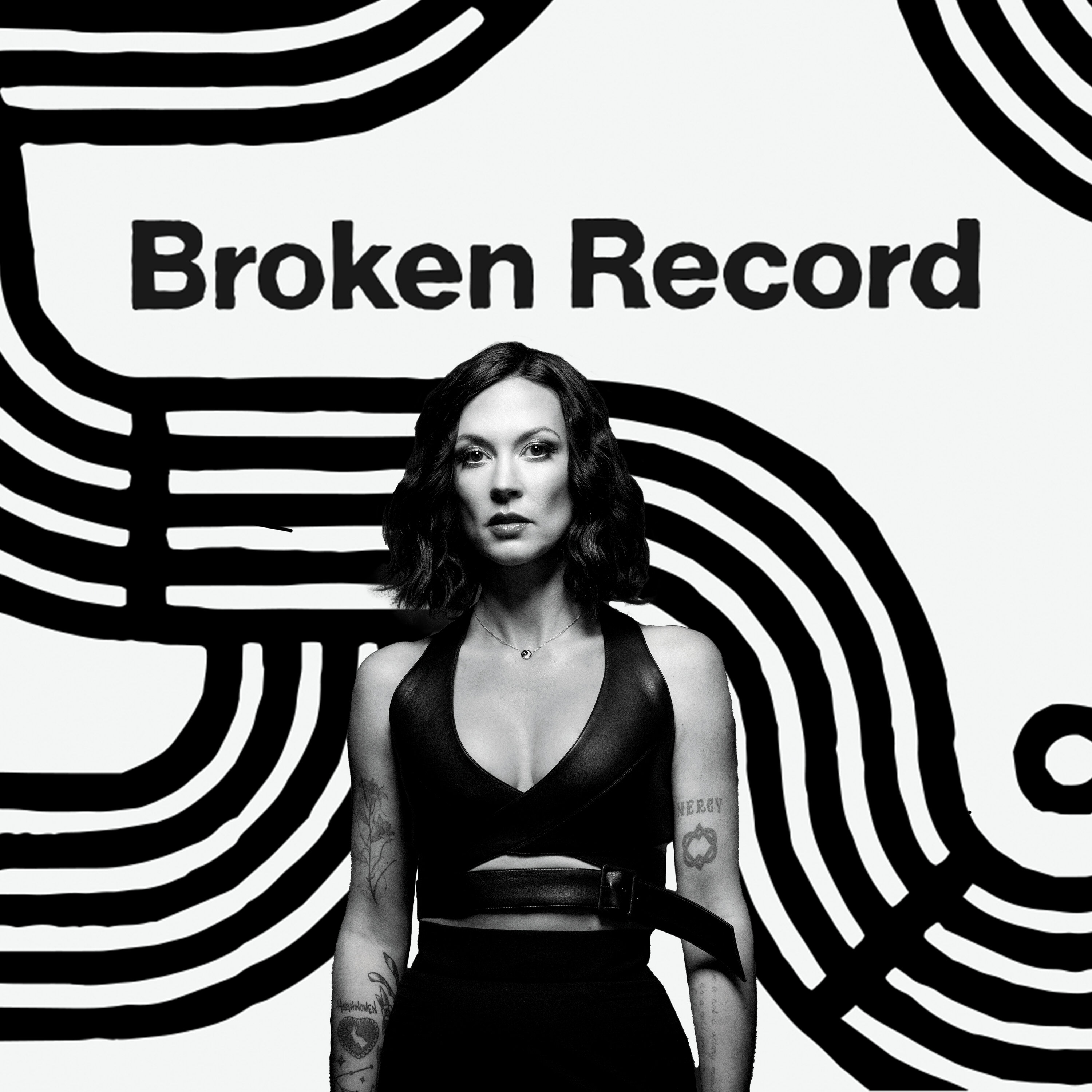
Amanda Shires is a Texas-born singer/songwriter who got her start at 15 when she joined Bob Wills & His Texas Playboys on fiddle. After starting her solo career in 2005, Shires continued to play with a number of other bands including her husband Jason Isbell's band, the 400 Unit. In 2019, she started the all-female country supergroup The Highwomen, which includes Brandi Carlile, Natalie Hemby and Maren Morris.
After the 2022 release of Amanda Shires’ seventh solo album, Take It Like A Man, she released an album of covers with the late Bobbie Nelson—who’s primarily known for playing piano in her younger brother Willie Nelson’s band. Amanda initially enlisted Bobbie to play on her version of Willie’s classic, “You Were Always On My Mind,” but they continued to record together. The resulting collection of songs became the album Loving You, which was released this past June, nearly a year after Bobbie’s death.
On today’s episode Justin Richmond talks to Amanda Shires about Bobbie Nelson’s unfortunate start in the music business. Amanda also talks about why she feels more comfortable singing about society’s big issues alongside The Highwomen. And she remembers the time she went to Vegas and gambled away all her band’s tour money—only to win it all back after playing craps through the night.
You can hear a playlist of some of our favorite Amanda Shires songs HERE.
See omnystudio.com/listener for privacy information.
Available Results
Generated results are saved to the knowledge database for reuse and search.
Extract Knowledge
Pick what you want extracted first. Model, scope, and chapter options appear after a template is selected.
Transcript
00:00:15
Speaker 1: Pushkin. Amanda Shires is a Texas born singer songwriter who got her start at age fifteen when she joined the legendary Bob Wills group The Texas Playboys on fiddle. After starting her solo career in two thousand and five, Shires continued to play with a number of other groups, including the four hundred Unit, which is fronted by her husband, Jason Isbel. In twenty nineteen, she started the all female country supergroup The High Women, which includes Brandy Carlyle, Natalie Hemby, and Maren Morris. After the twenty twenty two release of Amanda Shire's seventh solo album, Take It Like a Man, she released an album of covers with the late and reclusive Bobby Nelson, who's primarily known for playing piano and her younger brother, Willie Nelson's family band for decades. Amanda initially elicted Bobby to play on her vert of Willie's classic You Are Always On My Mind, but they continued to record together. The resulting collection of songs became the album Loving You, which was released this past June, nearly a year after Bobby's death. On today's episode, I talked to Amanda Shiers about Bobby Nelson's unfortunate start in the music business. Amanda also talks about why she feels more comfortable singing about societies big issues alongside her group The High Women, and she remembers the time she went to Vegas and gambled away all of her band's tour money, only to win it all back after playing craps through the night. This is broken record line of notes for the digital age. I'm justin Mitchman. Here's my interview with Amanda shires Man.

00:01:57
Speaker 2: Great to talk to you, Oh, great to talk to you.

00:02:00
Speaker 1: There's a lot to talk about, but I feel like I want to start with your record with Bobby. That's a pretty special thing.

00:02:07
Speaker 2: I really liked that record. We had a great time recording it, and it was a nice return to the songs that I played growing up.

00:02:16
Speaker 1: I guess for people who don't know, Bobby Nelson is Willy Nelson's sister and longtime piano player with Willy, although she played even before she joined Willie in like the early seventies, I guess the family band. But she was a pretty quiet person, as I'm led to believe, and she didn't seem to collaborate with a ton of people. I'm curious how you were able to get a record going with her.

00:02:46
Speaker 2: Well, i'd seen her play, you know, growing up all the time with Willie. But I think she started out when she was playing music, playing revival tints and churches and all that, and then started playing with Willie and one of her exes in a band that sold alcohol and quickly got her kids taken away from her. So that put a stop to all of that. And in the time when she you know, was coming up and growing up, she was powerless as what she was and had to figure out a new way to keep music in her life and get her kids back and eventually rejoin Willie. But I guess our collaboration started because I was considering putting you were always on my mind on my record take it like a man, and I went down there and we recorded it, and then she decided and I agreed that we were going to make a record together.

00:03:34
Speaker 1: So you wanted her to be on that song for your TAKEO Commander, Oh right.

00:03:38
Speaker 2: Yes, I'd played it in the studio with my piano player, Peter, and it was beautiful. But I just had a feeling that the way to do it right and to do it any justice at all would be to have Bobby on it. And I called and she said yes, and I sent her a bunch of orchids, and when we got to the studio we recorded it and just started talking about songs and life and we decided that I was going to come back and we were going to make a record. In this first song we would do would be Summer.

00:04:09
Speaker 1: What's it like hanging out with Bobby inspiring.

00:04:12
Speaker 2: In the way that she had like she had knowledge of every song ever, like Cold you could not stump her. And then just the way she carried herself with love and forgiveness, the way that she just was able to forgive and lead with love. And then also at the same time she was very centering, she was very she was very sure of herself with the piano, and also very much about the point of music being to be connection with people or with whatever God you believe in, and you know, with the heart and with your with your friends. She's really, really awesome.

00:04:55
Speaker 1: I don't have any tattoos, but I often feel like if I had tattoos, I would have a Ray Charles and Willie Nelson tattoo, because I feel like that kind of encompasses all of you know, American music and all the music.

00:05:07
Speaker 2: I mean, Ray Charles is record is I still stand by it the best country record ever recorded.

00:05:12
Speaker 1: He says, the best country record.

00:05:14
Speaker 2: Yeah, I ever recorded modern songs at country music that and along with the time that it came out and just you know, there's a lot that goes with that record.

00:05:23
Speaker 1: Yeah yeah, yeah, Wow, that's surprising you hear you say it's the best in your in your views?

00:05:27
Speaker 2: Absolutely absolutely what makes you.

00:05:29
Speaker 1: So good to you? Like as a country record.

00:05:31
Speaker 2: He can play the shit out of it and it inspired and even the sequencing is great. The players are great. It's inspiring to the story of it, you know, him getting his rights to his music and all that kind of stuff at that time. The I don't know, it's just fearless to me, fearless, you know, I mean we will all have fears, so to me, it feels fearless in the way that it was made. And then there's some incredible you know, solos and feels and stuff that are just like, what how did you come up with that?

00:06:02
Speaker 1: Yeah?

00:06:02
Speaker 2: Yeah, you know, yeah knows country music. It's so good, Like, how could you not that record? The best country record? I don't care. Wow, stand by it.

00:06:12
Speaker 1: I gotta go, I gotta revisit it. I haven't listened to it.

00:06:15
Speaker 2: Yeah yeah, damn. And to do that and being black, you know, can you believe it? Like during the sixties and you know, I don't know, just everything about it is like there's there's a hero right there.

00:06:27
Speaker 1: Yeah, yeah, I understand. My first concert was a knockoff like Boys to Men kind of group, but.

00:06:32
Speaker 2: It wasn't new edition.

00:06:34
Speaker 1: It wasn't new edition, No new aeddition was dope.

00:06:36
Speaker 2: It was my first was Black Street new Edition.

00:06:39
Speaker 1: Black Yep, that's a great show. That's a great show.

00:06:42
Speaker 2: Yeah, it was awesome.

00:06:43
Speaker 1: Remember all for one that had that song I se I do that was That was my first concert. But my second was a Garth Brooks concert. So oh wow, being black in a country environments.

00:06:57
Speaker 2: Get it, Yeah, exactly, I get it.

00:07:00
Speaker 1: But that was pretty that's pretty mind altering, I'll say. But like you know, to my point, like Ray Charles, Willie Nelson like great players. But you know, when you really dig into Willy's music, like it's not just Willy, although it's Willy as much that he brings the table, but it really by the time it really, in my view, kind of finds his stride in terms of recordings and all that. You know, it's with Bobby and the band, and she really has a beautiful way of accompanying Willie. Was it difficult to get her to consider kind of slapping her name on a record, Like, it's not like as if she's accompanying you on this, it's like you and her together releasing something.

00:07:43
Speaker 2: Yeah, yeah, no, that was that was really easy. And it came along organically, like just sitting around playing together. I think too it we'd played together some in the past. I was introduced to her first by Mickey Raphael, the harmonica player, and at that point they had me on stage to join them in the band at a show, and they're gonna have me up for one, and they wound up keeping me up for like, I don't know, a whole lot of songs. And then I'd always go sit in with them. But after that show, we started talking about how much we liked each other's choice of clothing that night, and then the solos, and you know, we kept on talking to each other when we see each other. And then when I saw her, she said, we're gonna make a we're going to go on tour so we could go shopping and play music. And I said, yeah, we are, but we're going to need a record. She said, we're going to need a band, and I said, we could just be the two of us. And so our plan was to go around and spend a few days in a town, play a show, and buy some killer shoes. What year was this that we recorded?

00:08:46
Speaker 1: But no, no, no, that that you guys had that conversation about that.

00:08:50
Speaker 2: This stuff with the clothes and stuff that happened a long time ago. But the part where we actually were going to make a record that happened after we recorded always on my mind.

00:08:59
Speaker 1: Wow, do you remember what you guys were wearing when you first met that? You guys are dr.

00:09:03
Speaker 2: Had to toe black? And I think you know, she she wasn't a person that drew a lot of attention to herself, And I think that that was she started playing so young, and then she got her kids taken away so young, and then when that happened, she went to school, got a degree, started working, then was demoing pianos and working to get her kids back in a time when you really couldn't do it so low and then she did it, and then that's why she rejoined after, you know, Willie, after they were good and grown and everything.

00:09:36
Speaker 1: Yeah, yeah, Yeah, She's such an incredible character man, in person.

00:09:41
Speaker 2: I can't imagine, like if that had happened to me and then I got my kids back, sure, shit, I'll sit in the back. I don't want anybody to notice, but I'm gonna play.

00:09:47
Speaker 1: Right because she got her kids taken away because she was playing in environments that was apparently double right for.

00:09:55
Speaker 2: Yeah, and they called her all kinds of name, like a whore, and her reputation was solely just for like she wouldn't even drink at the places, and she you know, the churches would barely have her back, damn. Yeah. And she was by her grandparents to her and Willie were and when her granddad passed away, they threatened to take the kids away from the grandmother, saying that they didn't think she could provide and didn't even give them a chance, you know, but she managed to keep them. And but yeah, it's just I just can't imagine.

00:10:25
Speaker 1: So that that is that's sort of the mythology around her, is that she was just kind of to herself, you know, like in terms of she didn't really want Yeah, I wouldn't do interviews. Didn't want to.

00:10:37
Speaker 2: I don't blame her, I mean you don't want to, you know, stay out of trouble.

00:10:41
Speaker 1: Yeah. That's a fascinating but also kind of a sad story, you know. Yeah, yeah, yeah, I didn't consider.

00:10:48
Speaker 2: But like, like I said, she she led with forgiveness, and I was like, how do you get through all this trauma and then, you know, get your kids back and they're grown and healthy and everything, and then suddenly two of them, not suddenly, but then two of them die within six months of each other, and then the world is a vampire. And she said, the easiest thing to do, which is sometimes hardest, to forgive.

00:11:10
Speaker 1: I don't know where she gets a grace, but the Nelson family in general seems to have that level of grace and ease about life.

00:11:17
Speaker 2: I mean they are fashion forward with a lot, not fashion forward, you know, with weed and all kinds of things, you know.

00:11:23
Speaker 1: Yeah, I mean there were ahead of the times spiritually and culturally.

00:11:28
Speaker 2: Mm hmm.

00:11:28
Speaker 1: You came up in the same town as does the right No, the same state, same state.

00:11:35
Speaker 2: It sounds a lot alike there there grew up in Abbott, which is more hill country esque.

00:11:42
Speaker 1: I guess, got it, but but love it? What I mean? What doesn't isn't that where Willie's place is? Now?

00:11:48
Speaker 2: No, there's a place in Luke and Bac and one in the Florist Country store. I guess it's purdin Alis area. Yeah, but Luke and bach Is is a different place than Lon, like I think they're probably six hours apart.

00:12:00
Speaker 1: But yeah, I'm messing up my Texas geography.

00:12:03
Speaker 2: It's okay, it's a big state. It really should be four. But no, I grew up playing Texas playboys when I wasn't you know. I thought when I first heard West Side Connection they were playing fiddles, but it turns out it was a synthesizer. So part of my life was a hoax me trying to learn from.

00:12:21
Speaker 1: Was that, Like, so, we're you a Westside Connection fan? Were you listening to rap?

00:12:25
Speaker 2: I listened to all of it? Yeah. I have clippings from when Tupac died out of the Lubbic newspaper. I watched MTV jams countdown every day. I wrote fan letters to Tyrese. I have response letters, but I have yeah, yeah, yeah, it was like hy two K in the neighborhood, like nineteen ninety nine, and he signed it stuff about Y two K and all this, But no, I was like, I listened to all the music and I learned all the music, and yeah, everything from gang Star to what Are You Guthrie?

00:12:57
Speaker 1: Wow? What was pox? One of my favorite?

00:13:01
Speaker 2: Did you see how they arrested somebody in Vegas in connection with them? Oh my gosh.

00:13:05
Speaker 1: Yeah, yeah, I'm too deep into that rabbit whole song. Yeah.

00:13:08
Speaker 2: Yeah, you need to find some shit out.

00:13:10
Speaker 1: Yeah, No, I think I think it seems like they're close to figuring that out finally, which is a beautiful thing because that was one of the most crushing things.

00:13:17
Speaker 2: Part of me. You still hoped he was like living in an island somewhere.

00:13:20
Speaker 1: I always I always have that as well. He was so larger than life, you know it really, Yeah, and unbelievable at twenty six, spent a year in prison. So in twenty five years, six five put out six albums plus all the other stuff that was recorded, plus like five movies plus Yeah, just all the stuff. I mean, it's just insane, insane work ethic what So I'm imagining you're joking though that you thought it was fiddle on West Side Connection.

00:13:49
Speaker 2: Yeah, on that song bound Down, that part goes bear Bear Bear Bear Bar. I was very young. How was I supposed to know about synthesizers?

00:13:58
Speaker 1: You thought that was?

00:13:59
Speaker 2: Yeah? Yeah, I did, and I learned it. I was like, I had this dream I was gonna join. My dream one day was to play a violin with method Man. And while I did get to meet him in the Wu Tang, I didn't ever get to play with him, but he did let me dance on stage.

00:14:12
Speaker 1: Did you tell him.

00:14:15
Speaker 2: I did it? I got. I'm usually good at over sharing, but that time I was like, good job, Sharrees didn't overshare?

00:14:25
Speaker 1: Is that really? Do you really talk to yourself that way?

00:14:27
Speaker 2: Like, I mean, you know, so when I do a good job, I mean, we all talk to ourselves and our brains and most of it's a beat down. But at that time, I was like, good job, not oversharing.

00:14:39
Speaker 1: I feel like, I don't know. I definitely talk to myself. I'm definitely a self talker to psych myself up. But I just assumed from your music that you were pretty sure of your movements through the world.

00:14:54
Speaker 2: Oh no, God, no, no.

00:14:56
Speaker 1: What does the confidence in your music come.

00:14:58
Speaker 2: From Oh that's only happened of late. And that's because I feel like for me, I feel like I've always felt like I've had to have some sort of like uh certificate or or something to say that I'm allowed to do the things that I do or call myself a thing. Like I didn't really feel like I was much of a writer at all until I got my degree at Swanee. Although I was writing, and I mean not the worst at it. But I don't know. I guess maybe we all have imposter syndrome. I don't know if that everybody seems to say they have it. I know I do.

00:15:33
Speaker 1: I definitely have it, but I'm also like, you know, I'm not There's so much opportunity as a musician for failure and embarrassment, and so many opportunities to be exposed as a as a fraud as it were, you know. But yeah, it's like so it's like, that's a pretty wild decision you've made to I mean, I don't know, how do you how do you handle that? Because it's like to have I hide from most opportunities for embarrassment, and I'm able to do that in my chosen you know, path or less.

00:16:10
Speaker 2: I mean, I know I can play, and I know I can write, but I don't know why it exists. I mean, I don't know why it exists. I guess because some things are just maybe to me, it feels like the purpose of life, I guess is growing and learning. It feels like you can't master anything in the world. So how could you be a thing if you can't master a thing? Like we'll never truly master a violin, will never truly master the words on the page. I mean, they're always moving and living and shifting. And I mean, actually, now that we're talking about it, I'm going to think about it more because it doesn't really make you an imposter so much as it makes you, like you said, afraid to fail. But I guess that's a beautiful thing to.

00:16:54
Speaker 1: Your point of like words are, you can never master a language because language is a living, breathing thing that's always changing, evolving, adapting.

00:17:06
Speaker 2: Nobody will give a shit if you do it in Latin, right, right, right? The two Latin scholars alive might But.

00:17:14
Speaker 1: It's like music's saying. I mean, like you know, like like fiddle violin music, and the instrument's the same. It's like you're always in conversation with the current sort of time in place and leaving it up to the next sort of group of people to move it forward or backwards or just laterally or wherever, you know, in some sort of way. It's like music, for sure, is always evolving and changing, and that's what keeps it hopefully interesting for years to come.

00:17:42
Speaker 2: It does, and then you learn a lot about how it changes depending on the folks you get in the room to play with you, and that can be really fun.

00:17:49
Speaker 1: We're gonna pause for a quick break and then come back with more from an interview with Amanda Shires. We're back with more from Amanda Shires. Who are some of your favorite people to play with?

00:18:04
Speaker 2: I really like to playing with Bobby, but my favorite people to play with. I love playing with my piano player, Peter Levin. He's great. I'm at him and the Greg Almond band when I was opening for them, and he's fantastic. And I love playing with all the four hundred Unit members. They're fantastic. Yeah, Jason's band, they're good, good guys too. I recently played with the Asleep at the Wheel band, Ray Benson and them. They were fantastic. I mean it's rare to get on stage and play with anybody that that's no good or no fun because I don't really operate in that world much that no fun world?

00:18:43
Speaker 1: Are there some times you have?

00:18:45
Speaker 2: Oh yeah, Sometimes you get into situations with in studios, like when I first moved to town, where I worked with some people that I like. Now, in hindsight, know that the reason that wasn't fun was because of the people in the room. But and then you get some folks that operate in the top forty world that have very interesting facial hair and haircut, and you're like, you know, they're like little napoleons running around everywhere, and that you know that's not the whole Top forty. I'm not trying to talk shit on all of them, but there's some serious ass kissers out there. And then you try to tell them something. They're like, no, but x Y and Z said this, And I'm like, well, you're.

00:19:28
Speaker 1: So boring x Y and Z meaning like some industry person or right right damn. Do you feel like a commercial artist, like an artist who's operating or do you feel I feel.

00:19:40
Speaker 2: Like an artist but I know I'm not in the what they call the top forty country genre, and that suits me just fine. I don't mind wherever they put me, because I'm not really looking to get into wars with folks that are ding dongs releasing songs like that crap ass Jason al Dean song. I mean, I don't need to get in that argument every day. That's a piece of shit.

00:20:04
Speaker 1: So I mean you don't at all feel kinship with contemporary pop country.

00:20:10
Speaker 2: I do with some of them, but there's not They's just not enough room. And and so if there's not enough room, I don't want to be in your club anyway. If you won't let me in the club, I don't want to be in your club.

00:20:18
Speaker 1: Do you really feel like they won't let you in the club?

00:20:20
Speaker 2: Oh? Hell no. You have to be like poised and say the right things, and you have to, you know, believe in wrapping yourself in the American flag. I don't. I mean, I mean, my cousin did six tours and killed himself. I'm not wrapping myself in the American flag. And among other things, I have no bodily autonomy, and I will talk about it. They won't let you in that club if you're going to talk about it.

00:20:40
Speaker 1: Wow, how do you square that with you know, working in the country idiom so to speak, you know what I mean, like because the country feels more popular than it's ever but it's it's funny. I live in Long Beach, California.

00:20:53
Speaker 2: Okay.

00:20:54
Speaker 1: I was walking on the beach the other day.

00:20:56
Speaker 2: And I saw do you ever run in to give you on?

00:20:58
Speaker 1: No, I don't.

00:20:59
Speaker 2: Because I heard he lives there.

00:21:00
Speaker 1: He lives in Long Beach.

00:21:02
Speaker 2: Yeah really, wow, Okay that's what I heard. I really like that. I like the previous record a lot.

00:21:08
Speaker 1: Yeah. Yeah, I love GiB great, great voice. I miss I missed the baritones.

00:21:14
Speaker 2: Yeah, let's tell him I need If you needs a violinist or a fiddlist, I.

00:21:18
Speaker 1: Will, I will, Okay, lasty teenager like like you know, Long Beach. In my history, here's never been a ton of people that have Like when you're just out in the out in the world, like on the beach, particularly listening. But it's like everywhere I go now it's country music.

00:21:33
Speaker 2: Yeah right.

00:21:34
Speaker 1: It feels like a like a boom time for the genre.

00:21:37
Speaker 2: You know, in some ways I think there there is that just because there's luckily that the tie we're in. We can find music other ways than what we're what we used to be limited to with just the regular old radio. Like now we've got the Internet and hopefully the algorithms don't kill everyone. But like they say, people over thirty five don't listen to new music. I was reading that recently too, But we've got ways that we find music, and we.

00:22:05
Speaker 1: Go younger than thirty five, by the way, rarely listen to new music too. Like it's it doesn't seem doesn't seem that way?

00:22:11
Speaker 2: Yeah, yeah, it doesn't, does it. Yeah, But it's cool because you can find music now on you know, on the many shows you have at your at your streaming platforms and your you know, TV shows and all that stuff. Yeah, it's a lot of bad music more music that way.

00:22:27
Speaker 1: I watched your video for Bad Behavior and a lot of people commenting they discovered your that song in the grocery store. Nice.

00:22:39
Speaker 2: Yeah, the politics of sex at the grocery store. That sounds nice. I like that. I mean, my daughter discovered Christopher Cross at the grocery store really or whatever it is. Yeah, she's like I need that on my playlist. It's like that and bad Bunny, it's awesome Christ the grocery Store.

00:23:03
Speaker 1: That song, by the way, bad Woman, that's that's an incredible bad Woman. That's an incredible song. I got a gangster.

00:23:10
Speaker 2: I mean, let's go, let's go.

00:23:13
Speaker 1: Oh, when did you write that song?

00:23:15
Speaker 2: I think it was I wrote that one on the fly, kind of like in a ten day haze of writing. Like I like to write a record and then I like ten days before, so I get into a frenzy of wondering if I have the whole collection, and then I'll do one song a day, and then once I'm in the studio, I'll sometimes even write too. But my friend Lawrence Rothman, who produced my record, they said to me, man, they're so awesome. And then when I say something in the studio and nobody hears. They have a very low voice. So they said, they'll say, she said, could you do this? This is my bad impersonation, and then and everybody's like, oh shit, yeah, It's like it sounds like the voice of God. Their voice. Their voice is so low. They's such a tidy, you know, they don't weigh a lot. It's just interesting juxtaposition.

00:24:09
Speaker 1: So you you kind of got like a ten day writing haze and you always you don't have the right material.

00:24:15
Speaker 2: Yeah, always. And then they sent me this folder of what we call randoms. We call randoms now that's just basically tracks they've made up where it can be drums and sometimes it'll be pianos, sometimes it'll be beat sometimes it'll it'll be different stuff. And I just would go through and listen to them. And I found that one and I really liked it and moved a few measures out and in and then had a track and I wrote to it, which was the first time I ever tried doing that, which was pretty fun.

00:24:45
Speaker 1: Actually you wrote to the track.

00:24:48
Speaker 2: Yeah, I'd never done that, and they were they were scared to send me a folder of tracks. I was like, well, I'll try anything seven or eight times, and so I wrote to that once because you know, you know, you think you'll learn your lesson, but you usually takes four of the one time.

00:25:06
Speaker 1: Yeah.

00:25:07
Speaker 2: It's like but it's like.

00:25:08
Speaker 3: You know, when you try something, like even if you did try something out or I don't know, say, I mean, how many times have I told myself I was never gonna drink whiskey and did it?

00:25:18
Speaker 2: Shit, keep doing it? And then I did it again. It's like Okay, I guess it's time number eight.

00:25:25
Speaker 1: That's hilarious. I'm gonna steal that seven or eight times. Yeah. What what what about the track like appealed to you? Did it immediately resonate with you or did you sort of just take it as a as a challenge, like, oh, let me just see if I can write to this or well.

00:25:37
Speaker 2: It was a folder of them, so I switched through them and it was actually I actually wrote a verse that I wanted to give you on to sing on, but he never responsed my emails because I wanted to do a remix. But it's like, come on, man, surely you can handle get an email for me. Surely you've got three seconds already wrote it. Just go sing it. Quit being like that.

00:25:56
Speaker 1: It sounds would have I would be an incredible song from the feature on there. And there is a really like you know, there is a I guess it's I don't know, soulful R and B. There's like a vein in there through the whole record of like it's super soulful. The whole record is incredibly so thank you. Yeah, and really I'm proud of it. Yeah, And it's really like I said, like something when I was listening to when I've listened to it, it's like, in its way it has what resonates with me when I listened to Pok, which kind of has this attitude, you know, it as like a real strong like I don't give a fuck. Yeah. Has that always been a part of your you said it's sort of new to your music. Has it always been that sort of self assurance and confidence that you said is sort of No.

00:26:38
Speaker 2: I used to care more. I used to care more. I used to care a lot more. And then I realized, you know, I'm not trying to sound jaded or anything, but I realized how much people don't actually give a shit in return. So the reciprocation is a factor in my fuck giving definitely. And also when it comes to your art and having had a couple of near death experiences, I give less fucks now than I ever did. I'm like, I'm making my art and it's going to be my way, or you can go ahead and leave because I'm paying for the studio.

00:27:08
Speaker 1: Time you had a couple of near death experiences artistically or in life.

00:27:14
Speaker 2: In life, I had a ruptured my I didn't rupture it by any topic. Pregnancy, that ruptured and then I was internally bleeding all that and then my life was spared for some reason. And it must be to keep on, keep it on into all that. But anyway, then you know the me and my mom called the silly ways to die, like riding the horse around the swimming pool or some she has a horse.

00:27:41
Speaker 1: So does my mom?

00:27:42
Speaker 2: Really awesome.

00:27:44
Speaker 1: I gave a bride and it was terrible.

00:27:46
Speaker 2: Yeah.

00:27:47
Speaker 1: Yeah, I got bucked off and ran over once and that was it.

00:27:50
Speaker 2: Man, I got bucked off too, but it was because I was trying to do Jesse Jabe stuff like this was like just two years ago. I was like, I'm gonna pick up my friend and sling around the back, and the horse was like, no, the fuck you're not, and it bucked us both off. It was incredible. The insides of my thighs looked like I looked like I had just like took a be with I don't know, a bunch of lipstick.

00:28:12
Speaker 1: When you hit the ground for the top of a horse, man, it's just that's I don't even know. I'd be punched seven to eight times.

00:28:18
Speaker 2: Yeah, yeah, it's you feel it everywhere. It's like there's nowhere for the shock to absorb except your own bones.

00:28:25
Speaker 1: No, it's it's the gnarliest thing I think I've ever experienced.

00:28:29
Speaker 2: Yeah.

00:28:29
Speaker 1: Yeah, it feels like this is sort of a new addition to your character, personality, and music. It feels like there's like this inverse relationship between levels of fuck given and your sort of your your popularity seems to Does that feel true?

00:28:50
Speaker 2: I don't know if I'm very what qualifies as popular?

00:28:53
Speaker 1: Well, it definitely. It feels like you've had a really great three four years.

00:28:58
Speaker 2: No, I mean, I don't know. I live in the country, so I can't tell if I'm popular or not. It I recently deleted Twitter and don't do anything on Instagram like.

00:29:09
Speaker 1: Play of bigger shows, aren't you? I mean, it feels like people know you love you these days. No, right, I think I.

00:29:14
Speaker 2: Think I might be playing bigger shows. Uh, I think, I think so. I haven't really thought about it because it was my first four way out after COVID, so I had a little bit of shows to make up there at the beginning of this record cycle of from from COVID. So I think I guess so feels like.

00:29:32
Speaker 1: That be here I hear Howard Stern name check you, you know, I.

00:29:37
Speaker 2: Hear Howard Stern.

00:29:38
Speaker 1: Yeah, all different people. You know. I feel like the your music is getting better and better and better. It seems artists in the world it feels like there's sometimes an energy around them that you can feel from afar as a as a fan, as a listener, and it certainly feels that way about you. So that's it just seems ironic to me that the less you care to care, the more that people seem to care.

00:30:05
Speaker 2: Oh right, well, I care about the people that come to the show. When I care about the people that are actually, you know, supporting the music and believe the same things I believe, I care about that a lot. That's the part where the reciprocation feels good. It's other areas of music that I just don't need to concern myself with because I'm just going to keep on making music that helps me understand the world better. And if it makes me some new friends and fans because it helped them, then I feel like I feel like we're doing something right.

00:30:38
Speaker 1: Yeah. Yeah, we have to take another quick break and then we'll be back with more from my conversation with Amanda Shires. We're back with the rest of my conversation with Amanda Shires. Are you writing new stuff now?

00:30:57
Speaker 2: Yes, Yes, I've got one that I'm really proud of. The second I have a second one that's just kind of funny. I've been writing a bunch, but there's there's two or three that I'm really excited about.

00:31:09
Speaker 1: It's the one that you're really proud of.

00:31:10
Speaker 2: The one that I'm really proud of is living is what I call it, but it's it's super sad. And then I have this other one about Las Vegas. And then another one that's called the Talking Shires Blues that's it's like nine minutes long.

00:31:26
Speaker 1: Wow.

00:31:26
Speaker 2: Wow, I'd like to get it to thirty three minutes or thirty five so it could be a whole record, just one song.

00:31:34
Speaker 1: Three weeks ago, have my very first Vegas experience. So how was it? I got there and I was like, damn, I think I'm I think I'm a movie.

00:31:43
Speaker 2: It's so fun.

00:31:44
Speaker 1: It was warm, and all of a sudden, I was like, wait, you can drink outside anywhere you want me. I thought we were kind of sneaking around with it. You know, you can drink outside. There's all kinds of crazy. Just there is no sense of shame out there is what I both said, and so I love amazing, but I beat myself.

00:32:01
Speaker 2: There's all this facade that's beautiful, and there's all this fun that you can have. There's some definitely some dark shit. It is fun every part of your brain and get some kind of action.

00:32:11
Speaker 1: It's crazy, it's it's out of control, but it's it's also like I can't. I don't know if I can. I don't know. I don't know if I trust myself back there? Do you play when you go out there?

00:32:20
Speaker 2: Yeah? Yeah, I win. Yeah, I'm not that great at black jack, but I went at crabs.

00:32:28
Speaker 1: Like you went big or you just like like do you are you putting down there?

00:32:31
Speaker 2: I mean I'm winning big. I mean I accumulated as I go and kind of progressively get more and more.

00:32:39
Speaker 1: You know, what's the most you've lost gambling?

00:32:42
Speaker 2: Well, I did take my tour float sorry whoever's listening, that works for me, and I went and lost it all a blackjack and I took a bunch of money and won it all back. I took it out of my ATM so I could win it. It took me. I was late for bus. Call it took me, I don't know, like six hours to get it all back. But I had to go get it all back on the craps table. But the the dealer at Caesar's Palace remembers that day what I want and all that money back. It was close to four thousand dollars, but I want it all back plus like twelve dollars, so I felt good about myself.

00:33:17
Speaker 1: Rewind the story about hold Home. We want the story back. So you took your tour floats, you.

00:33:22
Speaker 2: Said, the tour float, the tour cash.

00:33:24
Speaker 1: Tour cash, the cash money for you guys to be on tour, to live and move around and do your thing. You took that cash and you took.

00:33:32
Speaker 2: It to play black jacket and you let some stuff. Yeah exactly.

00:33:37
Speaker 1: You lost it. You lost and you left four thousand.

00:33:41
Speaker 2: Yes, but I didn't lose it because I went to the ATM and got got five hundred dollars back and then spent the next rest of the night at the craps table getting it back. Yeah, it was, it was. It was a thing I'm never going to do again because it was. It was. It took a lot of work for twelve dollars. In the positive that I left with. That was like a whole day's work for twelve dollars. You know. I was like, I was like, well I lost that at blackjack. Well maybe if I just try hard, I could. That's the number one thing you should never do is just think that you could win it back. You should never think that. Go in there planning to lose, which you want to lose, and that's all. Don't take the tour money.

00:34:22
Speaker 1: And you and the guy the dealer still remembers, Oh he still remembers. Yeah, you've seen him since.

00:34:29
Speaker 2: Yeah, they've all been working there thirty five forty years and they remember that. And then one night I got kicked out of the Bolaggio because they thought what I was wearing was not a shirt. And I was like, your firstly, your suit and your title match. Nextly, this is sold as a shirt. It looks like a brawlett, yes, but it's a shirt and I was wearing a sheer top over it. So I got kicked out of the Bolaggio. That I threw a fit about how they were uh just you know, you know dress codes. What they are is that they're just not fair. They're meant to get like be away out get to kick people out of things anyway. So I went to Caesar's Palace where I made my friends, and that night I I won two thousand dollars and they were the same dealers.

00:35:12
Speaker 1: Oh my god.

00:35:13
Speaker 2: Yeah, that's the most I've ever won two thousand, or maybe it was that it was three thousand because I had to win my keyboard players thousand dollars back for him because he lost his.

00:35:25
Speaker 1: I was like, doun't I got to Vegas song? It sounds like this is your place.

00:35:33
Speaker 2: I mean, I like the craps tables.

00:35:35
Speaker 1: Yeah, I think that's going to be my place from now.

00:35:38
Speaker 2: Yeah, yeah, definitely.

00:35:39
Speaker 1: Yeah. I didn't know.

00:35:40
Speaker 2: And they have great shows. Did you go to any shows?

00:35:43
Speaker 1: Yeah, I saw. I saw. The whole reason we went out there is I was to go see Usher.

00:35:48
Speaker 2: So oh shit, that's awesome. Did you see his documentary tour movie?

00:35:53
Speaker 1: No, I didn't know he had a documentary on this tour.

00:35:56
Speaker 2: It's like maybe it's like not this tour. It was like one of his older ones where he does like I have a DVD collection of concert DVDs like Ushers one of them, and it like his dance moves and like he does his dancing and the shows, and then does some behind the scenes stuff, like he was late to a show one time because he wanted to spend eight hours at the mall. He loves the mall. I like knowing little details about things, the people.

00:36:21
Speaker 1: You know. Yeah, you're knowing these details about people's lives.

00:36:24
Speaker 2: Yeah, I'm a music fan.

00:36:26
Speaker 1: He likes to spend time with the mall. I didn't know that about us.

00:36:28
Speaker 2: Yeah, yeah, he likes the mall.

00:36:30
Speaker 1: What else is in your your DVD collection, your music collection?

00:36:35
Speaker 2: Destiny's Child at the Fox Atlanta.

00:36:38
Speaker 1: Wow, it was probably a great one.

00:36:39
Speaker 2: That's really, really, really good. And it's then I have the her other one where she has the all the ladies playing all the instruments. You know, she was very you know, thinking of things way before I even had thoughts of things. But that one in Atlanta, that concert is so good. Yeah. I've watched that one a whole lot, probably too much. I'm glad it still works. I also like comedy. Do you do you know that Seth Galifianakis live at the Purple Onion?

00:37:09
Speaker 1: I think I've heard of that, but I don't think i've seen it.

00:37:11
Speaker 2: It's really funny.

00:37:12
Speaker 1: Yeah, it's not that bit. It's like a small place, right, Yeah, yeah.

00:37:17
Speaker 2: The purple and then he's got a piano that he plays. It's really funny. I really like that.

00:37:21
Speaker 1: Yeah, people have told me about that. I need to see that. He's a character, that guy. I see him around Venice sometimes.

00:37:27
Speaker 2: And he's yeah, oh really that's awesome, just Chris. I would like to run into him in Venice.

00:37:32
Speaker 1: Yeah, yeah, it's a good place to run it. Yeah, it's about where i'd imagine running into him. What do you spend most of your time listening to? Do you listen to music a lot time?

00:37:41
Speaker 2: Oh? Yeah, like not when I'm writing, but I listened to music a whole lot. I mean, I'm still stuck on the Scissor record. I got that. It finally came to the male vinyl and the seventy six songs that Tom Petty and then released from Live at the Film or Auditorium.

00:37:56
Speaker 1: Yeah, it's like an a mission like Scissor hasn't quite it's been years now. I mean, I don't know, maybe this will never happen, but okay, it's hit for me yet.

00:38:05
Speaker 2: Okay, so there's this song, let me get my record or quick so I can tell you. Yeah, this is really good. Ray Charles at to Newport. That record playing with the Horn, That one's so good. That's a rare one.

00:38:21
Speaker 1: I don't have that on vinyl or nothing, but I listened to that all the time. That's great.

00:38:24
Speaker 2: It's you gotta find. It's hard to find, but you could. The one that she has is if to start, If you need to start first, this is awesome record cover and there's on side three it says nobody gets Me. That's good, and then you know the other songs are really good. She's a fantastic writer.

00:38:45
Speaker 1: Friend helped write a lot of that record too.

00:38:47
Speaker 2: Tell your friend, Tell your friend, I'm interested in writing with that friend. Yeah, why not. I'm interested as hell this This song's are fantastic.

00:38:56
Speaker 1: I'll text them as soon as we text him.

00:38:59
Speaker 2: I but that song Nobody Gets Me. I think that's a good place to start because you know it's it's soulful. They don't usually lead with the soulful tracks when they're releasing a record, you know, they tend to put the other types out there.

00:39:12
Speaker 1: Yeah first, that's why I like, That's why, that's why to bring it back. Because I'm a master at what I do. I'm just joking. Take it like a man, because it leads me Hot for the Dove. It leads off and it's just soulful the whole way through Man and it ends the last track My Own Galaxy is also an incredible song, and I love it also so full its way, but then it ends like it's like a heater that guitar solo into your violin, into your fiddle. I don't know what you want to call it.

00:39:43
Speaker 2: Either way, it's a violin when you're selling it in a fiddle, when you're.

00:39:46
Speaker 1: Buying it violent, it's incredible. And then if you listen to that motherfucker, cause I'm laying my turntable's broken, so I just do almost all listening on streaming now. But if you listen to it with like the record repeating and you know, the little the transition from the end of My Own Galaxy back into Hawk for the Dove is that's a great.

00:40:06
Speaker 2: Somebody's doing it right. I always wonder if somebody's doing it right.

00:40:10
Speaker 1: Yeah, that's right. Are you going to continue working with Lawrence on that?

00:40:15
Speaker 2: Yeah? I mean, I feel like we still have much to to see about in the music musical world, you know, I think we work well together and all that. But yeah, if they want to, I bet why wouldn't they want to?

00:40:31
Speaker 1: Yeah, Christmas record?

00:40:36
Speaker 2: Yeah, what else are they going to do better?

00:40:38
Speaker 1: Yeah? You are? And you also have the high women going. Still does that still feel like? Does that still feel fun? And?

00:40:45
Speaker 2: Oh that one's real fun? It kind of During COVID we of course couldn't play it. Our shows got canceled. Then afterwards everybody's doing their own thing. But we played at the Gorge recently and Maren Morris, my friend, she said that we were making a new record, so we will be doing that.

00:41:01
Speaker 1: You guys are gonna make a new record.

00:41:03
Speaker 2: Yeah, yeah, we are. We talked about that. She brought it up on stage this time. It wasn't me that let the cat on the bag. So I it's like, good job not sharing too much shows because I've done that before with that group and it was over spoke too soon and.

00:41:18
Speaker 1: Well that's all your friends, right, So is it like if you do mess up, it's all it's all love, right, it's all love.

00:41:23
Speaker 2: No, it's all love, it's all love. We're we're we used to say we got married first, then learned each other and now now are now we know each other really well and it's like perfect less nerve wracking.

00:41:37
Speaker 1: Do you have songs that you've written specifically for that project?

00:41:40
Speaker 2: I do?

00:41:41
Speaker 1: I do.

00:41:41
Speaker 2: Our plan is to continue sharing our songs with each other and you know, find a date to start recording and may the best song win again? Was how we did it last time?

00:41:54
Speaker 1: How do you then? Okay, so hold on? So obviously four of y'all incredible artists on your own coming together do the high women when you bringing a song to hopefully get them to pick up? Like, how do you balance keeping songs that you love for your own sort of record and how knowing that you sort of need to bring sort of the best the best to that group of.

00:42:19
Speaker 2: To me, in my mind, I'm a little bit it's easier for me to compartmentalize the two things for my own work. It's it's it's well, while the Highwayman was my idea, yes, but it's the subject matter of that is more about. I say that we'll always be playing and singing as long as there's a reason and there are reasons still for that band to go on, and that's for you know, to keep widening the path for all people women and everybody else in country music to tell stories and you know, talk about everything from just the way that we would like to see the world different basically, and then in our own personal stuff. Yeah, we could do that, but to me, it feels easier to do in a group scenario sing about things that are you know, the injustices of the world or the ways that not everybody's equal in in a group, it feels more comfortable for me and more safe to do to make it feel more like a gang and solo. I've done a couple of things like that, and it's just it's just it's hard because you have you know, it's just you singing that song about abortion. There's you singing that by yourself up on stage. And I just like the that it feels safer to do with with other folks on stage that feel the same way as you do. And then with my own music too. I don't wanna be singing all those songs all the time, and I want to sing songs and make them up and make the world change. I don't wanna be l living these songs and seeing how slow it is every day that that get me down at a bog. So I have other things I want to explore, either via my own self and stories or the stories that other people tell me within their you know, life s ups and downs, woes and whatever. I don't really write joyful songs, so just be dirges, Amanda Shires and her dirges.

00:44:12
Speaker 1: So I don't know, I don't know. Yeah, I mean, but you know, I guess something about it. Like Neil Young Southern Man is kind of a dirge, but it also is like, yeah, gets me going, you know, at the same time, so can be it's not like you know, it can be both the dirge and sort of not necessarily down because I wouldn't classify I wouldn't classified records as downers or like, you know, anything makes me feel doubt that's true.

00:44:37
Speaker 2: There aren't that. It's a You're right, Do you.

00:44:40
Speaker 1: Feel like you're still exploring the same themes as take it like a man?

00:44:43
Speaker 2: Is that there some of them? I do. I do still think there's there's there's more to say about the nature of being a person that's multi dimensional. I guess. I don't know. Yeah, I just do. I just do my best and we'll see what happens.

00:45:01
Speaker 1: You certainly do contain multitudes and the thing. I mean, my own galaxy. That that that stuff you talk about. About. You know, it's like the position of It's like I both you know, am doing the dishes and doing the grocery list and yeah, cooking up dinner and blah blah blah. But also it's like, you know, there's.

00:45:22
Speaker 2: The whole nother me, or the dimension of.

00:45:24
Speaker 1: You beyond the domestic stuff that parenting, you know, and marriage and family brings.

00:45:32
Speaker 2: And yeah, exactly that.

00:45:35
Speaker 1: I can't say I experienced life the exact same way as you obviously, but as a married person with kids, that does resonate with me, like that need, that feeling of like man, I am like fuck, I am too people existing at once, and how do I how do I saciate both things and honorable things? You know, that's a tough, true, it is true thing to figure out. It's a tough balance to figure out.

00:45:59
Speaker 2: And then you do go to Vegas and you're like, damn, I missed my kid. How am I supposed to have any fun?

00:46:06
Speaker 1: That's always the damn catch twenty two? You can't wait to get away, you plan it, you get away and use pine for your kids.

00:46:13
Speaker 2: Yeah, yes, really sure?

00:46:15
Speaker 1: Well cool, thank you for chatting No thank you. Thanks Amanda Shires for the music and for talking to a song Broken Record. You can hear our favorite songs from Amanda, as well as her latest album Take It Like a Man, and her album with Bobby Nelson called Loving You on a playlist at Broken Record podcast dot com. You can subscribe to our YouTube channel at YouTube dot com slash Broken Record Podcast, where you can find all of our new episodes. You can follow us on Twitter at broken Record. Broken Record is produced with help from Leah Rose, Jason Gambrel, Eric Sandler, Nisha Vinkutt, and Sophie Crane. Our podcast is engineered by Echo Mountain. Broken Record is a production of Pushkin Industries. If you love this show and others from Pushkin, consider subscribing to Pushkin Plus. Pushkin Plus is a podcast subscription that offers bonus content and uninterrupt did ad free listening for four ninety nine a month. Look for Pushkin Plus on Apple podcast subscriptions, and if you like the show, please remember to share, rate, and review us on your podcast app. Our theme music expec. Kenny Beats, I'm justin Richmond.