Ostrava!!!
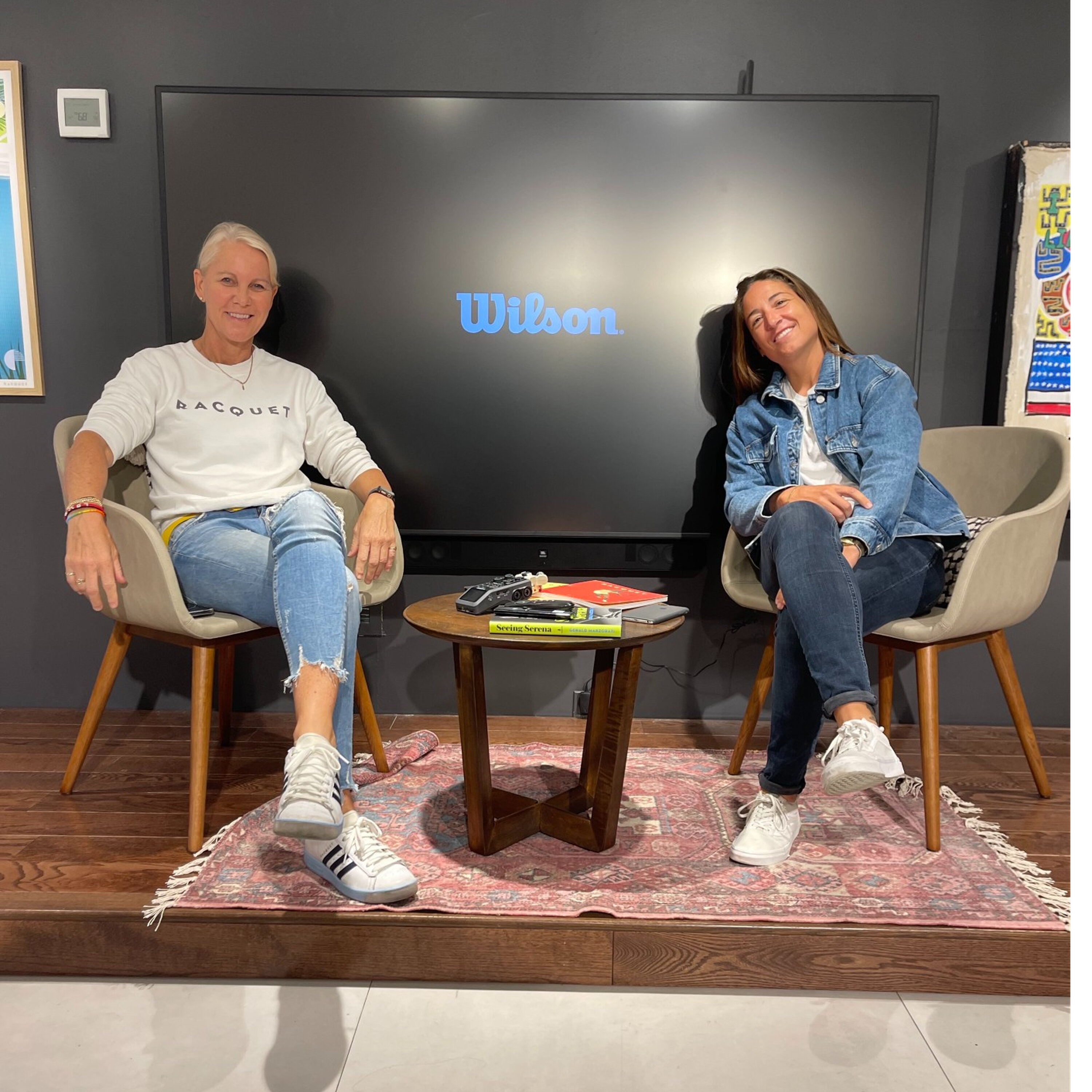
Coming to you live from the Wilson Pop Up Museum in New York's SoHo, Rennae and Caitlin dive into the post-US Open Fall season, featuring an inexplicably punctuated Czech tournament, the perils of doing business in unsavory places and we generously give the Laver Cup an opportunity to do better.
Hosted on Acast. See acast.com/privacy for more information.
See omnystudio.com/listener for privacy information.
2021-09-24
43 min
Transcript
Available Results
Generated results are saved to the knowledge database for reuse and search.
No generated results are available for this episode yet.
Extract Knowledge
Pick what you want extracted first. Model, scope, and chapter options appear after a template is selected.
Generated results for public episodes are saved to the knowledge database so they can be reused and searched later.
Transcript
00:00:11
Speaker 1: Hellover name.

00:00:12
Speaker 2: We are podcasting today from someplace very cool and special.

00:00:16
Speaker 1: Yeah, we are the Wilson pop up store on Broadway here in New York City. How long has this been a pop up.

00:00:22
Speaker 2: For We have had a Racket residency for the month of September, so it's nearly over. But they until our Cobra Theater are hosting Love All, which is a Wilson Tennis experience. So when we walked in today, walking through the museum, walking through some of the obviously the retail, looking at the history Billy Jing King did her book signing here for all in she gave a speech with kat Adams, I had a chat.

00:00:44
Speaker 1: In an interview. So there's a really really cool.

00:00:47
Speaker 2: You know, display going through, you know, from the Billy Jean King years to the Serena Williams years to the Roger Vetter years. And obviously there's a store and here we are upstairs in the lounge that Racket has curated. So it's a very very cool, very very cool thing.

00:01:00
Speaker 1: That we are exciting.

00:01:02
Speaker 2: It's intending to not do this in your living room.

00:01:04
Speaker 1: Yeah, well thanks, but yeah, I'm a lot more excited about doing it here. I was not able to come to all those really cool events during the US Open because I was working, as you know. And yeah, so it's kind of cool to see the history obviously with Billy and Roger and Serena and Venus seeing their sort of photos and their pictures up on the wall here, it was really cool.

00:01:23
Speaker 2: So yeah, and you did a great job obviously. Racket always does a great job.

00:01:27
Speaker 1: Yeah, thank you.

00:01:27
Speaker 2: So if anybody wants to visit it, it is at five pointinety four Broadway in Soho.

00:01:32
Speaker 1: You can pick up a guide that we did to New York City Tennis. Yeah that was cool, dude.

00:01:36
Speaker 2: It was all the public courts that we frequent, a few donut spikes that I like to head up afterwards.

00:01:41
Speaker 1: It's it's courts that you frequent, because I don't have anywhere near the time that you do clearly define tennis.

00:01:48
Speaker 2: No, it's flexibility. It's attitude and flexibility.

00:01:51
Speaker 1: That's what I have. You want to meet anyone who plays more tennis than every tennis player on the tour, it is Caitlin.

00:01:56
Speaker 2: Anyway, I'm living the Racket magazine lifestyle you are.

00:02:00
Speaker 1: And now I have to say, do come to the store. Please pick up one of those guys, because if you do want to find the most random tennis courts in New York City and donut shops Kateln's, you go there, you go. All right?

00:02:10
Speaker 2: We have so much talk about it, A post US Open suddenly very feakened period on the calendar, feakend feakened? Is that too much a word for you to get your mind around? I mean it is early, it's early. We've got Ostrava with three exclamation marks for some reason, which I love.

00:02:28
Speaker 1: Yeah, what is with that?

00:02:30
Speaker 2: I have no idea, but I saw it on the court and I just whenever I see it written now I'm going to scream. They put the exclamation marks on the paint on the word.

00:02:39
Speaker 1: On the back of the baseline. It's brilliant. I love it. Great marketing. I will say though, that when you think about tennis, particularly women's tennis, you think of Ostra. Now you think about the Czech Republic. I mean, honestly, you think about places like this that have produced so many great champions. And clearly they have a bunch still in the tournament there, led by of course Patrick Avitova, who I believe is the number two seed there. But we have an incredible lineup at that tournament. This week, we're seeing players that we'd hoped we're going to have great careers in the future, and we've seen what the US Open produced with an eighteen and nineteen year old, So some of these twenty two to three year olds are like what I thought tennis was supposed to be for thirty year olds now, but no, it's not. So you know, players like Shantek, who of.

00:03:24
Speaker 2: Courses a French Open champion, she's the number one seed there, and Rabakina, Sakari, Kviteva Benchitch.

00:03:32
Speaker 1: I mean, this is an incredibly loaded that murderers row. Hence the Reta Ostrava gets three exclamations emation between the courts. So it's kind of nice to see them playing indoors as well. In Europe. I'm not going to say anything about going to China after the US Open, but it is it's really tough for the players to go to China, and so clearly there's a lot of money there, Caitlin, I mean Beijing Wilhan New Stadium, zen massive facilities, just an enormous amount of money in Asia and in China in particular, and so tough for them during the pandemic. Now it's been a couple of years that they're going to miss out on having tournaments there, and I do feel sorry for them because they do put a tremendous amount of work in there. But from the player's perspective, not going to China is a lot easier for them, particularly Europeans. They go back to Europe and they play tournaments like Estrava. Now they would not have had the same draw because players would have been yeah, for sure, in Europe. So I don't know if the WTI needs to think about that or it's tough though, right, you can't say no to the dollars.

00:04:35
Speaker 2: I mean, there are some human rights reasons to maybe say no to the dollars, but you know, again, it's it's a tough landscape. Before we get back to Australia and talk about some of the great matches, I just want to sort of lay out what the rest of this year looks like, because, as you mentioned, it's way different than what the rest of the year looks like, especially on the women's side, which would be having their tour finals in then Now it's going to be in Guadala. Horror, which is cool af to me. I'm gonna trying to tell you it's probably cool af to a lot of people.

00:05:04
Speaker 1: And ahead of that, we've got.

00:05:07
Speaker 2: Indian Wells, which starts in a week and a half in California. Usually it's in March. It's been pushed back to October this year. The reason I've heard is obviously they want a bigger fan base to come. They are totally open to fans, but also there's only one hospital in the entire coach La Valley, and that population who lives in Palm Springs year round elderly, not young young. So you want to make sure that you're ready and everybody's vaccinated before you have a massive international event.

00:05:35
Speaker 1: Yeah.

00:05:35
Speaker 2: I mean, obviously, look the decision they made a couple of years ago. I was out there, we couldn't believe it. But now looking at it in hindsight, my god, thank god, what.

00:05:43
Speaker 1: A good just saying they were the first major sporting event to call it, the first major sporting event to call it. I believe the NBA n C Double A I think had canceled a game and then I think it went into tennis. But that was the first really major event that got canceled. And I mean I'm remember I was talking to you and I was like or I was actually texting Sam Stoza and she said, it's canceled. I don't know how it came about, but the word started coming to us at the racket house. Everybody was checking their phone, like, oh my god, what is happening. I mean, so, now, of course, hindsight two years later, we can look at it and go, they made a great decision. But that's a tough call for any tournament, a tough call for any any tournament to make. But having said that, it's great that we have a tournament in the US.

00:06:27
Speaker 2: It's going to be a hall for their Europeans to come back from Europe back to California. It's a long, long flight, so we'll see who turns up there. And some of them have never left. I mean, you've seen Gvinia Magruzza. She's been in California hanging out.

00:06:41
Speaker 1: You know.

00:06:41
Speaker 2: It helps that lives in beach basically so, but a lot of them haven't gone back. Some of them, like we said, playing Australia.

00:06:50
Speaker 1: Some of them.

00:06:51
Speaker 2: Are in the US now, either training or about to play Chicago.

00:06:55
Speaker 1: Some are playing a small event in COLUMBUS nice to see couple of Americans doing well there. And also yeah, Chicago starting which you know, to me being a player back twenty thirty years ago, like we had tournaments at the end of the year in the US, we had the Chicago's and Philadelphia's and that was after the was invendoor tournaments at the end of the year. That led into the Madison Square Garden Championship.

00:07:18
Speaker 2: Which is such a cool concept that we should bring back tour finals exhibition the middle of a basketball stadium.

00:07:24
Speaker 1: We got to get the money in New York and that's the key. Unfortunately, we followed the money and sometimes that leads us to places that we probably shouldn't be at. But yeah, so it's nice to see in different places. I don't know how the WTA. I'm sure it's going to go back to Asia after.

00:07:39
Speaker 2: This, but well, having been a Chicago resident for a long time, are you pumped that there's a LEGITI tournaments there this year? They've had two tournaments prior to the year.

00:07:48
Speaker 1: This one's a big one. This was a five hundred and this is a five hundred, which it's.

00:07:51
Speaker 2: At Kamal Murray's place in the South side of Chicago, where I lived for a bunch of years in Chicago, and I went down to that academy.

00:08:00
Speaker 1: It's excess, excess to tennis. It's incredible. Yeah, it's supposed to be an incredible facility. Incredible facility in the South side of Chicago. Not a place what you think mega of tennis, but the Midwest is a huge tennis smacker. Actually, Wilson, believe it or not, they have the headquarters, I believe in Chicago. I remember driving to the airport and I would always see the Wilson sign.

00:08:20
Speaker 2: So it's a huge tennis city. Good for them that they get a tennis event back. There's a lot of.

00:08:23
Speaker 1: Cities that should have big, big.

00:08:26
Speaker 2: Tournaments, you know, La being one of them. Obviously that last it's Philadelphia.

00:08:32
Speaker 1: Diego. San Diego was my favorite tour stop on the tour when we had it at La Costa. Yeah, so I know the men are having a tournament in San Diego. It's not is the tournament director really? Okay? So yeah, so I think it's at the Barnes Tennis Center. That sounds familiar, but I'm not sure. I'm not sure either, but but yeah, the guys are there, so itt' of be nice to see the women get a chance to go back to San Diego. Well, I just want to I have a surfboard there. Well, where is it? It can cheat his house with my with my full steamer suit.

00:09:05
Speaker 2: You're gonna have to explain for to non Australians what a steamer is.

00:09:08
Speaker 1: It's a full wetsuit because it gets cold in Californa. It sounds so gross.

00:09:11
Speaker 2: It sounds like you're like, you're no, I'm covering like a clam that's being covering.

00:09:15
Speaker 1: Like on a on a fire at a clam shack. Just to ask a surfer what a steamer is, they'll be able to tell you. It's not just an Australian thing. I don't know it. Maybe, yeah, I think it is.

00:09:26
Speaker 2: I just want to make a point about this calendar thing because a lot of people there's some fun thought experiments that always fly around.

00:09:32
Speaker 1: What would it be?

00:09:33
Speaker 2: Like? What are your what if the Labor Cup had a women's edition, which it should.

00:09:37
Speaker 1: Don't get me started, what I won't get you started? Fine?

00:09:40
Speaker 2: You know what if we shortened the calendar but made every event dual and made doubles and mixed doubles mandatory, you know, and everyone's like, oh, but that will never happen, and it's like, you know what, anything can happen at any time, in any way with enough willpower and imagination. And it constantly shocks me how averse to change people are. And then all of a sudden something PLoP down and it's like, oh, of course we have a tournament in Chicago, but that's a five hundred Oh of course we're going to play you know, Indian Wells in October. It's like, hey, everybody, stop getting married to the way things have been and start opening your minds to the way things could and should be, because then we can sort of envision a tournament, a tour, a joint gender structure that benefits everybody, fans, brands, players most importantly, and it gives us, you know, the sport that we deserve, which is one with healthy athletes and really engage fanships.

00:10:29
Speaker 3: You know.

00:10:29
Speaker 2: So for me, I really like to have these thought experiments, not because I'm trying to be provocative, but rather to sort of say like, hey, you know, five hundred years ago, we lived in an age of monarchs, where like the right of kings to rule over the.

00:10:40
Speaker 1: Land was let's not get into gamba thorns.

00:10:42
Speaker 2: But I'm just saying, you know, and now we live in democracies for better or for us, so you know, nothing is nothing is set in stone, So let's be creative about how we think about it. And nothing has been more impressive than tennis's response to how difficult the calendar bubbles travel and the players have been flexible, and the audiences have shown up, the ratings have been there, and so let's continue to innovate and try to think about what continues to make this for better and more engaging and the players healthy and engaged.

00:11:07
Speaker 1: Yeah, I mean, and look, we could talk at nauseum about what is the betterment of tennis, you know, is it having in in Asia? Is it having China? But I do think that there are parts of me that always I do have a hard hard time sometimes with tournaments being in places that do have human rights issues. I mean, we had you know, WTA Championships in Gutta in Daha, you know, and you know it's not exactly the Meca of women getting a quality, you know what I mean. So it's like, why are we having the wt Championships there? And of course I know why because they're shelling out the money. Okay, question the same thing. China.

00:11:43
Speaker 2: We're having the issues with the uigas there, and I mean you could you could call out many countries, Russia for example, or whatever.

00:11:51
Speaker 1: So but I do think it's a It's the same with the Olympics.

00:11:54
Speaker 2: I wrote a story about that years ago about you know, when you're choosing these places, whether it be having the Olympics or having the WTA finals.

00:12:01
Speaker 1: Okay, they're throwing a lot of money at us, but we're a code. You have to have a moral code at some point, and I do believe in that. I just would love the American sponsorships and American companies to get behind tennis more in this country. And after what we saw at the US Open with the women's final having better ratings than the men's when someone was going for the Golden excuse me, the Grand Slam of.

00:12:24
Speaker 2: Tennis, so number one seed versus the number two seed out shown outperformed by tons and some people say, well, it was going up against the NFL, not to mention the fact that the women's tennis matches have been going up against the NFL all year and college football. So the truth is, the audience is there.

00:12:41
Speaker 1: If Roger had been playing Rougher leave Me of course for a Grand Slam, the ratings would have been through the roof. Sure, Okay, So it just shows you people want to watch what they want to watch and who they want to watch, and they make those decisions prior and that story between Layla and Emma, it was it overtook the USO because people were interested in these young new faces that were changing the way tennis was viewed. I think that's true. I also people that have never been heard of, Yeah, Caitline, I mean Emma to a certain degree because what happened at Wonboletoe, right, two young players that never had any exposure. Yeah, so it's incredible. I think. I think the.

00:13:21
Speaker 2: Part of that that's really exciting for me is, yeah, we like a Cinderella story. We like this idea of like young talent called Carlos alcoraz On. The men's side had a very similar run where he brooks By Jensen or Jensen Brooksby, whichever of those two first names comes first, you know, And I think part of it is, yes, like new stories, new faces, new story lines, and I also think, you know, the tennis is there and it's compelling, and it really challenged the tennis world any great way in a way that differently always been about to stop relying on the same tied narratives and the same three or four names and start to say, oh, this sport is interesting because of the characters, because of the matchups, because of the clashes, and stories are going to appear that we had no idea about. And and maybe stories that we thought were predetermined narratives like Novak marching to his twenty first career major and you know, slammed the slam for the calendar year, ended up being a story about like, oh wait, did this guy just get like the thing he ate has actually been looking for the whole time, which is like love from the crowd.

00:14:20
Speaker 1: Who could have seen that story coming?

00:14:21
Speaker 2: And because people story were it's a much greater story than watching this guy collapse on the ground after winning another.

00:14:28
Speaker 1: Here's you know.

00:14:30
Speaker 2: Racket magazine does these great stories about the Medvedevs, about Nao Mirsaka before they really became big. And because they're as you said, they're not looking through the lens of.

00:14:40
Speaker 1: What cells, what cells? No, you're looking through the lens of who can we shine a light on to actually expose that tennis is cool and it's different, right, And I think that that's a challenge for Tennis Channel. And I think that if you know, I'm going to call Tennis Channel out and yes, okay, I I work for ESPN, But Tennis Channel is how people in this country view tennis and are.

00:15:05
Speaker 2: The vast majority, with the exception of the three of the Slams, everybody's getting their day in and day out tennis from the Tennis channel.

00:15:13
Speaker 1: So my thing is, how do you not have more independently, you know, stuff that is on Tennis Channel that is original content, that is stories about players, It's about stories about their lives. It's about, you know, really investing in trying to grow all of these different players, narratives and stories.

00:15:36
Speaker 2: Well, I think they would say that they have my tennis life and what are we talking about? And how dare we critique that? But the truth is the creative direction, the creative minds that are a Tennis channel. It's an ossified place and it's been directed by the same voices entirely men. As far as I can tell from a creative standpoint, I believe there's one senior woman in the marketing Department, and you know they have a hard time keeping women, keeping people of color. The you turn on the TV and you see a panel of weight guys agreeing with each other for the most part. You know, our beloved Mary Corilla doesn't work there anymore. Lindsa Davenport and chand To Ruben do a great job, but there I don't hear them enough. And the truth is there's not enough narrative for what I don't understand.

00:16:18
Speaker 1: Also, why when I turn it on, you know you'll hear someone like yesterday, for example, Mark Knowles was introducing the matches and then they went to the World Feed commentators. I don't understand that, Like you've already got somebody in the studio clearly at all hours of the night narrating in between matches. They're not using actual Tennis channel commentators using World Feed, So why by the rates if you're going to use that.

00:16:41
Speaker 2: Well, yeah, but it's more along the lines Caitlin of like just something different, you know what I mean, Like having hours and the pandemic showed how important it is to have original content one hundred percent, and look at the last dance, look at Drive to Survive that one all of this time, you know, and I know that there are people scrambling, including people who've approached us about doing all sorts of projects like this, documentaries, behind the scenes narratives, some of them about obscure people from history, art, fashion, culture, all the stuff that we've always been about. Because to us, tennis has been more than three names, has been more than one or two narratives. And you know, I think there are a lot of you know, very greedy folks at the top who saw no reason to change, you know, the few storylines in the few pockets that we're getting embellished and the pie shrunk as a result. I'm interested in the pie growing, even if it means proportionally smaller slice for a lot of different players, because there's going to be a lot of people at the table. And one of the things that really challenged the tennis channel specifically, but anybody in this sport to do is just like I was talking about the calendar being a not immutable object, but in fact like something that everyone can kind of tear up and start again. The pandemic is giving us every single pacet of this sport, from brands to clothing, to recreational tennis to storylines to the way we talk about the sport in print media, in digital media, and in broadcast media. A chance to hit the button, I would just why shouldn't we take it? Because we have more eyeballs on this sport and more recreational ragget purchases. Wilson was telling me their recreational one percentage increase is insane, you know, And I think for me, that's an indication that the tennis boom is here to stay, and let's really do a good job of making that door stay open, because it hasn't always been open.

00:18:20
Speaker 1: I just you know, when I do the podcast with players, whether it be ex players or current players, my goal is to make them seem interesting and to make them well, they are interesting. I we just don't enough to really just don't hear enough about their lives, you know. And some people listen to a podcast and be like, God, I never knew that about so and so, And I'm like, that is the job of in my opinion, of the tennis channels, the ESPNS. And I know that they'll say that their agents stop them from doing a lot of this stuff, which is absolutely true. So I also put it back on the agents to sometimes understand the importance of television, the medium of television and the medium of these cool magazines and stuff to show a different light of their of their clients and start, you know, pushing the one or two and start thinking about how they can grow the sport for themselves as well and for the and for their clients.

00:19:13
Speaker 2: But anyway, so let's say by tennis, Yeah, let's talk about tennis. H h.

00:19:37
Speaker 1: Let's on your mind?

00:19:39
Speaker 2: Darren Cahill and Simona hallup splitting out. That was an interesting little tweet that was sent out the other day by Simona. I'm not really surprised about it. I haven't talked to Darren about it. I'll be it's going to be transparent.

00:19:50
Speaker 1: Obviously, friends with Darren and with Simona didn't see that happening or coming. But clearly we're going to see where Darren Kale ends up, because can you coach me? He's on the market, so we'll see where he A good feeling. I know where he's going to turn up, but I'm not going to say it because it's a guess. It's me. It's definitely not you, although he could possibly help your foehand.

00:20:14
Speaker 2: So somebody's got here because I've helped your backhand, but you told me my friends above your period.

00:20:20
Speaker 1: Yeah, that's it's Darren Khle's your gut. Just got married.

00:20:26
Speaker 2: Yeah, we'll see where Simo ends up. But the coach, the husband's not a potential coach. He was definitely not a coach.

00:20:35
Speaker 1: So I don't know. Maybe they just felt like, and you do get to a point even if you I mean, they have really good friends, they like each other a lot as human beings. So I think it's also come down to the fact that maybe they've just run the race, you know. They There's only so many things and so many times you can say the same thing to a player before you feel like you've done everything you can to help them. So I think maybe it's a good time. I mean, six years is a long time together. They had that break in between when Darren basically said, if you don't pull your head out of your arse and stop being a shithead on the court, I'm out. So that would from time to town. But you know, credit to him, because I will tell you there's not a lot of coaches that do stuff like that. You know. I would hope that my players always feel like I'm telling them how great they are, they're supported, and they're you know, do it. They I wouldn't be here if I didn't believe in them. And yes, you can hit that fullhand under pressure, and yes, I feel like you're the best player I've ever worked with them. Whatever it is, you just tell them. You know, you got to tell them what they're doing wrong at the time on the practice court, But when it comes to matches and their emotional state, you've got to be very positive with them constantly, because that's the thing that they hook onto in the crisis moments on the court. And you know, I would suspect that Sam would say on a crisis moments she would hear me in the back of her head telling her how great she is and how this and how that, and it was always positive. Now, whether she believes it or not at that time, it's not like that's not.

00:21:57
Speaker 2: My but you issue You've labored to try to get her to that place exactly.

00:22:00
Speaker 1: But if you constantly ripping on your play, yea that they're incapable of doing something under pressure, that's what they're going to fall to.

00:22:07
Speaker 2: Very very few people perform their best when they are in a state of fear and anxiety, and having had a coach in college who tore us down and pitted us against each other, I can tell you that, yeah, you maybe got people to run harder in practice, but when it came time to match play or doubles or cheering for each other on a court, none of that materialized because we were all basically skilled a state of fear and anxiety as opposed to, hey, we're all in this together, let's go. You look over your coach and they're pumping their fists, they're positive, you feel like they have your back. That stuff makes a world of difference. At least it did at my you know, D one college level, and I can't even imagine at the pros. So can somebody get demoralized, especially a great, super talented player. Yeh Goodina has a great career ahead of her, assuming that you know, she puts the pieces together, and maybe this is a piece that could be changed. I mean, listen, I don't know if for a coach or anyone who in her cat in her camp listens to Rack and magazine podcasts, but if they do, and if he hears this, you are doing a disservice to.

00:23:03
Speaker 1: Your player by ripping her a new one. Every single time she plays a match in front of everybody at the gym's, in the player's lounges, wherever it is, you're doing a disservice. And any coach out there that thinks that that's okay, you need to come and have a chat with me, because it is not okay now that there are times where I have gone over a match with my player in the gym and you know, I mean, I'm very animated and no one would ever think I'm yelling at my player. Yeah, And so if you are dealing with that as a player, you got the wrong person, because you need someone who's going to support you in the toughest moments, be tough on you, tell you what you could have done better and whatever. But in the end you have to feel like in the pressure moments, like it's Samona Hall with Darren, she would never feel anything but support from him in those moments. You have got to have that person on your in your camp. And so I don't know why I wanted to bring that up, no, but it's been bothering me for like at least a year because I've seen it for a year now for him, so well, I want.

00:24:02
Speaker 2: It's actually a nice segue into somebody that we want to talk about. Who is Maria sakari who's had who's come getting closer and closer to having the breakthrough that I think a lot of people who watch her play who when you see her and she's on you think, oh, this is one of the greatest players in the world. She's fit, she's fast, she's got all the tools, and she's come very very close and had frankly some kind of devastating results in the Grand Slams only to say she's done so great. Had a match point to go into the finals at Rolangara sent against Barbara Kreschikhova, ended up losing the match. I think a lot of people are as I like to call a Kurjikiba whatever you want to pronounce her name, as she had a match point, Maria Sakaray should have been in that final against an Associa probably a t about two me. Similarly, she had, you know, a matchup in the semis of the US Open against Emma Radakano. That's I think. I don't know if that's a more winnable match or a less winnable match, but you know, she's she's knocking on the door, and that's got to hurt.

00:24:59
Speaker 1: Clearly came favorite once won her match against Sakari, sorry against Sablenka a Sabalanca, and then she knew that going into that match she was by far the overwhelming favorite to win the tournament, to beat Radakanu and then also to beat Leila Fez in the finals. So I think I don't know if the pressure of that moment hit her. It's similar to what happened to the French that was all of a sudden. It was such an open tournament, and you know Maria as if there's a nicer kid onto her, there's not many. She works hard, she puts her head down, she plays tough, and I think she's getting better at learning to deal how to play the game of tennis, because she does have quite a good all court sort of game. Costing points are more like yes man, instructing points and when to go for the big shots and when just slice the back end sometimes, when to come into the net every now and again. There's definitely parts of her game that can get better, and I think they will over time. She's with Tom Hill, she's been with him now for a while so I think that, you know, she's learning and maturing, and hopefully the next time the semi finals rock around, she will be prepared and ready to go. She had a weird incident incident at the US Open where she had the wrong skirt size on at the beginning of the match. Maybe that through her. She was literally had a skirt on too big, which I just don't even know how that happens, because we all get the size of sent to us prior. It was just an error. Yeah, and you don't look, you don't look, just put it on, because Adidas would have given that to her. You just like to say, Addas gave her that bag of stuff and she probably just took it out thinking it was a proper size and it wasn't. So that through her for sure in the first couple of games, because I even reported on that on ESPN Live, I said, there's something going on with that skirt. And then she went off the court it through two to one, I believe, and changed it. But she had opportunities to break Emma in the first game and didn't do it and was stressed about this stupid skirt, and then all of a sudden, you know, she ends up losing the match, so I don't know that's that was like a weird moment that forms.

00:27:00
Speaker 2: And which is why I'm really happy to see her, you know, Strava doing really well well because I look at the year that she's had and again somebody like Sablanca who's so close, like they're getting closer and closer. And these are two players you can see in Sabalanka can see in, you know, holding trophies over their heads, but Grand Slam trophies over their heads, and you sort of think who's going to be first, Sabalanka probably Yeah, I don't know, I mean, but from a coaching perspective, since you were just talking about belief, you know, those are both interesting moments to sort of go back and say, Okay, I'm close. How do I take the lesson from that without being devastated.

00:27:37
Speaker 1: I think that Sablenka will appreciate not having fifteen thousand people screaming against dred Prison. That definitely affected her and definitely probably cost to the match.

00:27:47
Speaker 2: She never loses that match on any others or I don't believe, so not even close. And I think that for Maria it's just learning to deal with the pressure.

00:27:56
Speaker 1: Of being really good now and she's having to expectations and she's still that. I mean, she's at our highest ranking, so I really love her. I mean, if there was a player I'd love to coach, it would be her. But she definitely is a player that will win a slam. She just got to stick at it. I think probably the French will be her best. Yeah, even though she plays.

00:28:14
Speaker 2: Great on hardcore. So I just think her gamelines itself really well to clay. So we'll see Labor Cup.

00:28:23
Speaker 1: What do we think about Labor Cup? Wow?

00:28:28
Speaker 2: I for the record, love exhibitions. I love team events, I love innovation. It's why I really, really truly love and I will fight to the death anybody who comes at me about Patrick Maritaglo's Ultimate Tennis Showdown. I think it's fun and silly, and there's nicknames and the trophies of Lightning Bolt, and it's dual gender. There's a lot that I appreciate about the fact that there's a new event with lots of hope and lots of spend and lots of creative direction. There's a lot that I'm finding left wanting and it's not all Zvera related to be honest, but the choice to include somebody who's been incredibly accused of domestic violence as your marquee player is just that a choice. Should it have been a time out from them with him, he should be suspended from the tours pending an ATP investigation. The fact that the ATP, the USTA An Tennis Australia are all investors in this event and they haven't pulled that card is disappointing. The fact that teammate was representing you know again, the company that puts this event on, that owns this event where this accusation of domestic violence in part occurred, confirmed to us in our original reporting by a Labor Cup official, is really disappointing. They if anybody knows about what happened, it's them. At a certain point, it's a choice. It's not just the default setting and an invitation only tournament, you know, the US Open kate control whether Alex verav makes the semifinal or final.

00:29:55
Speaker 1: I understand what you're saying.

00:29:56
Speaker 2: The invitation to come and represent your country and pose for photos around in suits and be part of all the press, and then to further delete comments with that from the internet, with anybody a choice to continue to include him insane. It's a barber Stratsan scenario.

00:30:13
Speaker 1: That is crazy. I could not believe when people were tweeting to me about it, and I was like, look, I've gotten control of this, don't. I mean, I mean, what am I going to do? I mean, listen, if I was the commission, I mean, I would have women at this event. But hey, that would be hotman cum.

00:30:28
Speaker 2: Right, But yeah, what was so bad about hotmin Cum?

00:30:31
Speaker 1: Nothing? Yeah, I am.

00:30:35
Speaker 2: If I if I were the commission, would I would have all three of the governing bodies I just mentioned divest. I would have a real reckoning and I would say, listen, exhibitions are great. It does not bother me in the least that it's you know, related to points that people are taking it seriously, that they're spending a lot of money and get a lot of fans engaged. I think that's awesome.

00:30:51
Speaker 1: Yeah.

00:30:52
Speaker 2: What I find critical about it is the choices that are being made. And when you look at something that's so great like Hopman Cup that is dual gender, dremely popular that the players love that again brings eyeballs onto the sport. I got a text from my mother in law, who I think has spent a total of two minutes contemplating the game of tenn as much as watching it. Roger Feder, it's so true. She could not give less of a ship she I got a text from our seven in the morning Roger Etfeedder is playing Serena Williams. How do I watch? And I said, well, that's kind of true. It's in Australia. It's a Hotbin Cup. They're playing on a mixed team against each other. But the truth is the are.

00:31:27
Speaker 1: Playing against each other and you can watch it. And here's how might.

00:31:30
Speaker 2: It be nice to see Andy Maray and Emma ren accounting the Brits?

00:31:37
Speaker 1: I mean, yeah, this back and call it the Racket Cup. We will do it.

00:31:41
Speaker 2: Just somebody give me all your money. I do that, Yeah, exactly.

00:31:44
Speaker 1: Can I be coach?

00:31:45
Speaker 2: Yeah, you coach the coach the world?

00:31:47
Speaker 1: Well I could coach either because I do have dual citizenship.

00:31:51
Speaker 2: No, but that's still world. You wouldn't be able to coach Europe's World versus Europe.

00:31:54
Speaker 1: So you're yeah, yeah, yeah, we'll get Yeah, my ancestors did do come somewhere from But here's my listening. Here, here's my thing about that wholes very of thing, and I get asked ignausum about it on Twitter and come on and make a comment unless here's the deal.

00:32:10
Speaker 2: The reporting has been done, the story is out there. You can read it for yourself.

00:32:15
Speaker 1: I'm not going to give you any further answers to that story and what happened then what the reporting is going to? So do me a favorite. Stop asking me about it on Twitter. I do appreciate that you bring me into the fold, but I don't have anything more to give on that. The one thing that I do not understand about this entire inquisition and this whole thing is that hot that labor cup official that went to the room quote unquote and saw and apparently said that she was in that bathroom with insulin. What where is that guy or a girl? I don't know who it is. It could have been a woman or a man. Do you know if it was a woman or a man?

00:32:54
Speaker 2: I do. We fact checked it with legal but I won't reveal their gender. But yes, it's a person they confirmed this is.

00:33:03
Speaker 1: Isn't this person? Why isn't this person brought up by the ATP? I respect that.

00:33:09
Speaker 2: Question, but I also think there are first of all, by the thresholds of domestic violence policy if there were one on the books, and there are rules on the books for everything. If there's ten thousand dollars fine for carrying a bag onto the court, which not approved. If somebody is accused of violence credibly like Bernardo Atomic's dad gets the boot from a tournament, right like, there are all sorts of rules that don't even exist on the books about domestic violence specifically that could be applied here. So two things. Some of this abuse was alleged to have occurred at atp ITF and Labor Cup events, all three. Any one of those bodies could decide, Hey, we have created a domestic violence policy, as the NBA has, as many other sports leagues have, and we will suspend the player, investigate and come to our own conclusions. We don't need a law. First of all, this woman is Russian. I'm sure she doesn't want to press.

00:33:58
Speaker 1: Charges in Russia.

00:34:00
Speaker 2: Events were alleged to have occurred in the US, Paris, and Geneva, which are all three very different jurisdictions. Alex Verev is a citizen of Germany of Russian descent who lives in Monaco. What are the extradition policies between all three of those entities. I don't know.

00:34:16
Speaker 1: I'm sure she doesn't.

00:34:17
Speaker 2: She's underfunded and doesn't you know, appear to want to expose yourself to further, you know, scrutiny and abuse the way that we know victims of domestic violence often find themselves scrutinized and criticized and come after by large swaths of fanship. The onus isn't on her to me. The onus is on the leagues. Yeah, and it's not. I have very little to say about Zverev himself, like he's playing good tennis and I'm sure if people want to watch the Liver Cups they can see him play in it. My issue is more with the empowered, the power, the powers that people have, and this is specifically teammate to take action and there's no there's no reason that that shouldn't be happening. And to actively invite somebody with whom this over whom this cloud is hovering without doing an investigation and exonerating them yourselves, is a choice. And it says something about power structures, and it also says something about why people don't come forward in the first place, because everybody in tennis, with the exception of frankly brave reporters and people who are clear minded enough to sort of say, hey, this is a good problem, have backed the default power structure that exists.

00:35:25
Speaker 1: Yeah. I agree on all of it. And it's a sad commentary in tennis overall.

00:35:33
Speaker 2: As any of this criticism is intended to be taken, whether it's US talking about the Tennis Channel or US talking about libor Popper, us talking about governing bodies, I don't like to see it as criticism. I like to see it as an invitation to do better. Yea, hey, it's an invitation to do better.

00:35:46
Speaker 1: Yeah. It's the same thing with what happened with NAIMI Like it's you know, there are there are people that you know, really support her, and there are people that don't, and there are people that don't support her for X reasons, and the people support her because of why reasons. I say, let's take a step back and say, what can we do as a sport to make it better?

00:36:08
Speaker 2: Can we do media to make it better?

00:36:10
Speaker 1: In an overall situation? And we now have Naomi Osaka not playing probably for the rest of the year, is that better for us. I don't think. So, Now, where's her state of mind? I don't know she does she love tennis? I don't know, does she? You know, is she completely exposing yourself constantly to this narrative of you know, you're weak and you don't want to play tennis and you're too busy going to the met gulla and it's just constant exposure. I don't know. I mean, probably the best thing for her is to completely step away from.

00:36:41
Speaker 2: Maybe the game. But I can tell you is the game better having her in it?

00:36:45
Speaker 1: Absolutely?

00:36:46
Speaker 2: Right?

00:36:46
Speaker 1: So same and.

00:36:47
Speaker 2: Again, like and I think so many of these things, especially on Twitter, want to be like you're pro Alex Parrap, you're pro Oh yeah, you're anti Namy, You're pro Namy. It's like, I don't know. All of this stuff, Like anything is an opportunity to be introspective, be in dialogue, try to actually hear what people are saying and get to a place that's that's better than you found it. And maybe that's just too old. I mean, it's just too idealistic. But I think again, none of this stuff is set in stone.

00:37:13
Speaker 1: People.

00:37:13
Speaker 2: The NBA went from not having a domestic vialence policy to having one right. Unfortunately, you know, tennis is an individual sport and as you said, the USTA or you know, the Grand Slams can have their say in certain things, but the ATP and the WTA can write their own rules and it's the only power that they have over the players is that they can actually stop a player from playing an event or whatever because it is sanctioned by them.

00:37:40
Speaker 1: And you know, these exhibitions.

00:37:42
Speaker 2: You don't invite people that you that are just in disrepute in so many ways to what you believe in as a human being. And so yeah, so challenge the overall picture, do better? Do better invade women and think about Yeah, I.

00:37:59
Speaker 1: Mean I don't where's where are the women's events?

00:38:03
Speaker 2: I don't know, But I would much rather be turning on the TV and seeing you know, the Harmin pup this week or yeah, you know, I'm not watching it. I'm watching Ostrava. But I mean, this is getting support from the USTA, from Tennis Australia.

00:38:17
Speaker 1: It's like to me that I haven't I have an issue with that. I do. I have an issue with that.

00:38:23
Speaker 2: I do.

00:38:23
Speaker 1: And listen, I know, Praye Tyley, he's a friend, you know, obviously Stacy Alistair. All these people at the USTA in Tennis Australia, they're friends of mine and I love that they're promoting the sport more and this is a huge event. But what yeah, I mean, that's all I can say. I think so. So in other words, you're gonna let You're going to let teammate or i'mg or wm me or at Octagon all these you know, sports agencies that have the players. That's the problem.

00:38:59
Speaker 2: They own the players, right, they own the players. These agencies, these agents own the players and tell them what to play. And this is how much I got money for you. I got you a quarter of a million dollars to play three matches here, would you play it?

00:39:13
Speaker 1: Of course they're going to play it. These players aren't vested in the betterment of tennis. That's the problem. Well, these players are not vested in the betterment of tennis.

00:39:21
Speaker 2: They're not. Okay, some people are going to be really pissed at me for saying that they are vested in as are the agents.

00:39:28
Speaker 1: How much money am I going to put in my pocket? Yeah? Okay, that's all they care about, and there's nothing wrong with that. It's we live in a society. But when you are getting money given to you by governing bodies that are supposed to take care of the grassroots their sport, I have a problem with you sanctioning an event that is solely for one sex. I do.

00:39:53
Speaker 2: Yeah, yeah, there's so many problems with la. Now, if you want to take all the money that you make from Labor Cup and you put it into grassroots for women and then you you.

00:40:05
Speaker 1: Let me know that and you say this is where it's going. Yeah, okay, then we might have a different conversation. Oh well, look at that. I think you just got to my conclusion of what an opportunity to do that?

00:40:15
Speaker 2: Better?

00:40:15
Speaker 1: Do better? There you go.

00:40:16
Speaker 2: Well, it's a challenge to you, guys. We know you're going to make a ship ton of money off Labor Cup.

00:40:20
Speaker 1: You're gonna make a shit ton of money.

00:40:21
Speaker 2: You have an opportunity to do better, So let us know what you do. Next topic, Next topic. I'm just did you feel how cool it was when you left your apartment today? We are getting into full I know I'm gonna as soon as we're done recording, publish a beautiful photo series that our creative director, David Bartholo from girla versus Bear, who's one of our LA brain trusts, took of Hawaii because David and I were talking this morning about how we're not ready for the fall and we want.

00:40:50
Speaker 1: To still hang on to the summer. An asshole get to go to Australia, so we'll hold like it. Don't get to an asshole because you how much is costing me to fly back to stress the pandemic. It is the point. It's not I'm not lining my pockets. You get to go to summertime, you get summer. I hear what you're saying. That's what I'm saying. I would pay and quarantine to get two summer's a year. I hear what you're saying. But you know, look, poor poor people in Melbourne who have this strain open. You know, they've been in lockdown more than anybody in the world other than maybe North Korea. And I'm not kidding you, poor poor Victorian stuff, and they just had a fucking earthquake. Okay, so give them a break. They need the strain open. Hopefully we can have crowds. I'm actually never break. I'm just not hearing you a breage. Okay, all right, fine, Well I got to do a lot of trap. I hope I can go to Melbourne one day. I've never been to the Australian Open Listen. All I can say is, people, we are trying to do better by the sport. We are thankful that you have joined us for this very interesting and different podcast. For us, we got a little what's the word controversial. We are in the Wilson pop up store and everyone is downstairs and they're being very quiet for us, and we do appreciate that. But if you are in New York, come to the Wilson pop up Store. It's on bradwayn House and yeah which and pick up our guide to New York City tasks And Chicago is one of the great cities in the world. Go visit Chicago. Even though it was the last time you with it. I'm not a big Chicago person. Oh I love Chicago. Go the West Loot best restaurant, Mary Wendy. It's get out of yourself. I don't, I just don't. I don't. You're from Montreal. It's on a lake. We love lakes. Well, that's one of the many ways in which we diverge. I'm a river I'm a river gal. All right, well listen stit tuned to the shoo Off for the rest of the year, and we're going to get back to you at some point about all of it.

00:42:32
Speaker 2: Fantastic, all right, Thanks Forney, We love you, Peepe, Thanks Wilson, and that's it for.

00:42:38
Speaker 3: This episode of the Racket Magazine Podcast.

00:42:40
Speaker 1: Thanks for listening.

00:42:41
Speaker 3: Our host is Renee Stoves. Our co host and producer is me Caitlyn Thompson. Music by internationally renowned DJs Jetch Armstrong.

00:42:49
Speaker 1: Thanks to Tim Or Jerry and then the team at acast.

00:42:52
Speaker 3: Find us at racketmag dot com, slash podcast, and subscribe to us at any of your favorite podcasters
Chapters
No chapters available.