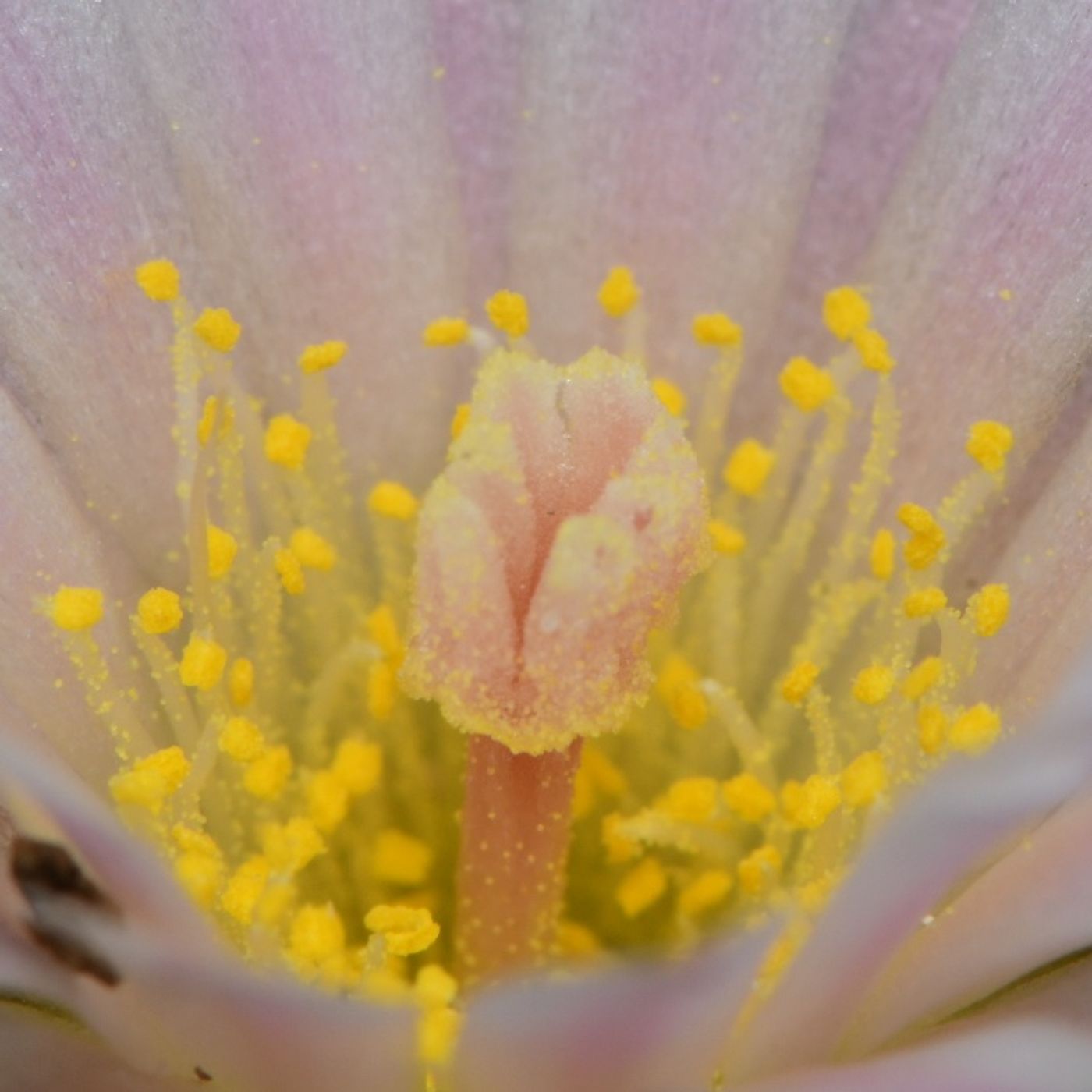
The Future of Peyote Conservation in South Texas
Intro ends at 15:03
In this episode we interview Benny Villareal about his work with Peyote Conservation in South Texas and his history with the Native American Church, touching on the topics of Peyoteros, Land Clearance, Habitat Destruction as a result of sprawl, and obstacles conserving what is becoming a rapidly diminishing cactus species in the only place in the United States where it grows - the state of Texas.
In this episode we interview Benny Villareal about his work with Peyote Conservation in South Texas and his history with the Native American Church, touching on the topics of Peyoteros, Land Clearance, Habitat Destruction as a result of sprawl, and obstacles conserving what is becoming a rapidly diminishing cactus species in the only place in the United States where it grows - the state of Texas.
2023-05-26
113 min
Transcript
Available Results
Generated results are saved to the knowledge database for reuse and search.
No generated results are available for this episode yet.
Extract Knowledge
Pick what you want extracted first. Model, scope, and chapter options appear after a template is selected.
Generated results for public episodes are saved to the knowledge database so they can be reused and searched later.
Transcript
Welcome to another episode of Crime Pays the Bonnie does It Today. I'm coming
to you from the light dappled canopy and a misky forest here in South Texas.
It's ninety five degrees. I'm surrounded by upuntia, Lynnheimerai and miskits everywhere.
Given a perfect a perfect dappled light shade canopy with an understory of cactus
and misky duff everywhere, they're just going to fruits. So all these pods
are are popping off, which are nice us. I use the misky pods
like you would use sunflowers, which I use sunflowers, the shelled ones to
keep my ass awake when I'm driving. You know, just the simple act
of you know, putting a bottom in your mouth, cracking a fucking shells
open, spitting the shells out, eating the seeds is enough to help keep
me awake. You just need like a chore to do, you know,
during those long night drives, which I try not to put myself in that
situation anymore, but anyway, but I realize I could use misky fruits for
that as well. So you just you know, you put pop in your
mouth, you know, shove them around, crack them up with your teeth.
The fruit's open, eat the mealy stuff, sucking the mealy stuff around
the seed, Spit the seed out, and you say, the seagull planets
somewhere underappreciated tree. God, damn it, I love mysquite. Man.
Anyway, I'm here. God, the fucking mosquitoes are kind of bad too.
I'm here, as hot as balls as it usually is. And man,
the buffalo grass is kind of a bummer. It's invasive buffalo grass everywhere.
It's weird. You talk to old timers down here and they talk about
the days before the buffalo grass showed up, but before it was as thick
as it is now. You know, it's invasive. It's really like the
last sixty years it's been being actively spread and seated for cattle. But they
talk about, you know what it was like before it was here, and
it was. It sounds really cool. It's just way more diverse, tons
of cool cactus and habitats like this, you know, like a lot more
cactus diversity. Mantillaria hydrye forming these little clumps a mato cactus set of Spinus,
which is still here, but not as abundant as it used to be.
You know, and now it's just a lot of tassah and uh in
buffalo grass and opuntiel and HIMRII. So who knows, who knows what's going
on, but I'm sure that it's a combination of the invasive buffalo grass smothering
stuff out, mixed with some feral pig activity, maybe some havelina activity too,
which are like the native peckery here. But uh, either way,
anyway, today I've got a conversations about an hour and a half with my
friend Benny about payote and it's cultural it's cultural history down here in South Texas,
and we talk about that. He's been working with Pale Tarrell's since he
was a kid. He's a member of the Native American Church. He's he's
rescued a lot of payote from for the Native American Church from projects where it
was actively being destroyed. And we've known each other probably three or four years.
And I love it, dude, and we've I've been we've been in
the field together multiple times, crawling around the bush. And you know,
he's he doesn't just love peyote. He loves all the plants. He loves
the star cactus, the hetrophic Cathartica. He loves the core of Phanta.
So I'm getting distracted looking at somebody. These hamato cactus are flown looking at
the core of Phanta, all the different species of a Kino series, and
just appreciating all the plants in general. So I went out and got him
Ken King's book Plants of Deep South Texas. Now, see, here's a
hamato cactus that got uprooted, probably by a pig, Just a giant hamato
cacus that got uprooted and should be replanted. But I don't have any kind
of shovel. God damn, if you just had a couple of violent theories
that could come out here and restore some of this stuff, help get rid
of the buffalo grass plants, some more cactus species. This is one of
the few public preserves down here. Nice mammalaria hider eye. Anyway, I
just wish there were more people into this kind of stuff down here. Anyway,
That aside, it's a really good conversation. My friend Luke Dude,
who runs the Payote Gardens Instagram account, though that's kind of a shitty way
to refer to something. He roads the social media account because he's much more
than that. Luke's basically an anthropologist. That's what he got his degree in.
Luke's got a degree, you know, unlike me, But he's a
he was looking at things from an you know, anthropology perspective. That's what
he was training. That's what he went to school for. And now he
lives in Mexico with his wife and kid and and just travels around his region
keeping an eye on payote populations, monitoring payote populations and oh shit, what
is this. There's a little what is that? Damn that's a it's a
climbing cacus. Could that be? Sealina? Serious? I keep getting distracted,
so I should just get to the fucking point. But anyway, before
we start, I want to mention I went out on the river the Rio
Grandy Sunday with my friend Carlos. Carlos is a criminal defense attorney. Really
good guy to have on your side, you know, if you ever need
him. But uh, he's got a boat. So we went out.
He's got a small, little little boat. We went out and we're we're
just going up and down the river, you know, like probably went like
five six miles up the river, came back and it wasn't as hot as
today. It was really nice. Brought my kid and it was so interest
because I've never been on the Rio Grand that extensively before. But they like
there weren't many Americans on it. The Mexican side was bumping. They had
music all up and down the Mexican side. There were people partying, grilling,
you know, they kept it really nice. They were beautiful parks.
There were a couple rich McMansion looking homes on the river, but a lot
of public parks in the zoo, like the Rainosa Zoo. He's right on
the river too. Um but everywhere, you know, up and done.
I saw people appreciating the river and loving it. And on the American side
swimming in the river. There were kids swimming in the river. But on
the American side it was just completely neglected. There were there was an area
where there were a couple of houses, but overall it was just ignored and
unappreciated and overgrown with the rondo, this invasive aquatic grass. And it was
sad to see. And it was also very telling, you know. And
you talked to old timers here, they say, you know, twenty thirty
years ago, it wasn't like that. You know, there were people on
both sides of the river using it and appreciating it. And you know,
the American side was well kept. Now it's just overgrown and neglected and uh,
let a run down buildings, you know. So it was just it
was an interesting contrast. I mean, the Mexican side looked so good.
If you took someone you know, from fucking Minnesota, you know, or
Massachusetts down here, showed them pictures of each side with no one on it,
so they couldn't tell which was the Mexican I mean, everyone down here's
Mexican Way, but you know what I mean, with no one on it,
they probably think the Mexican side was the American side because of how well
kept it was, you know. And the American side, meanwhile, I
just looked like shit was neglected, no one was using it. It was
I don't know. It was kind of depressing, also telling, and but
also kind of cool. And it kind of just shows you there's this whole.
I mean, granted, there is a lot of dark shit going on
in the border, you know, for various reasons, but you know,
the fear around the border that's just kind of stoked in people here as nuts
and I just I get like all kinds of ship people find out I live
in a border town, Like what's it like, I'm like, it's a
lot fucking safer and more chilled than Oakland or Chicago. I remember getting shot
at when when I lived in Chicago, we were paying graffiti. I was
like sixteen or seventeen. We were paying graffiti along the tune ninety. If
someone was up on up pedestrian bridge, I started shooting at it. I
saw my friend just start running like oh, I mean we were laughing about
the time. Granted we could have died, but it was still kind of
funny because it was just like, what the fuck this is? This is
hectic, This is such chaos man. Uh So, you know, but
down here, man, I mean, you could fucking leave your doors unlocked,
and in some places there's some mild crackhead activity, but you know,
or whatever crackheads are, just it's just petty theftically you gotta worry about two.
They're not gonna hurt you. But anyway, um that being said,
yeah, so what else? Yesterday? No, two days ago, I
was in the the Peyote Preserve, strounded by hundreds of flowering lafafa. They
do best in this heat. They do best in the shade and in the
heat where it's you know, tempts, but in the light shade such as
you know, it's such as the shade I'm in now, this light dappled
shade under the canopy of miski um so or bitchelly ridgardula to blackbrush. And
I was just paying attention. I just sat there. I noticed there were
some pollinators on the flowers were open. I was. I had been there
two days previous and it was only like eighty two, and it was starting
to get kind of overcast. It was cool. I could watch the flowers
close over the span of half an hour or an hour. Peyote generally flowers
for about two days. It'll close at night, and it'll close if a
cold front moves in. The flowers will close if a cold from moves in,
or if you suddenly get overcast weather. And so that's exactly what happened
that day. I wasn't noticing that m was pollat or activity on them.
But this other day, two days later, when it was ninety five,
it was loaded. I kind of saw like two different species, three different
species of pollinators. The most common one was in the genus ash Mediella,
which is a species of desert bee. It was either ash Mediella cactorum or
Maximus. What was it maximus or maximize? And month or two earlier,
when we were at the Wall project rescue and cactif from the Wall project,
I had seen what was that Acmeodra opuntier which was a genus of wood boring
beetle. So it's a beetle that bores into wood, you know, mesky
water or blackbrush wood. The larva do and uh and then mostly eats the
pollen of various flowers. But they were the only thing in the flowers of
the peyote that I saw at this ranch that was right on the border where
they were building at that stupid state funded border wall. And then there was
another genus of bee as a macro Tera, but it hasn't been identified the
species yet. I got up behind end. So it's interesting to me because
again this just further runs along the theme that any ecologists can appreciate, which
is that everything is connected. You know, you need in the case of
the wood boring beetles, you need the legume trees or the Carwinskia, which
is another all shrub in the buckdors family, very toxic plant that produces.
You know, once these things die, these shrubs die, the dead wood
is and bored into by the larva of these beetles. And supposedly this Eschemidiella
be also is a wood borer. Very rarely it'll bor into the ground.
But you know, you need the legumes, you need these other plants for
these pollinators to exist. And then who knows what other what other things that
are connected to you know, all these things. Of course, all these
organisms in an ecosystem have these relationships that develop over millions of years, sometimes
only you know, one hundred, few hundred thousand, whatever. Either way,
these lineages have been living together, co existing together for the most part,
for vastly long amounts of time. And you know, it's about the
whole picture. It's about you know, as humans, we tend to view
just just the one individual species we like this bees, we ignore everything else.
We can't really do that for too long because the deeper you go in
to appreciating one species, you realize it's depending on other species, either directly
or indirectly. Directly in the case of the bees, indirectly in the case
of the blackbrush that these these wood boring beetles and bees will nest in,
and uh, you start getting in appreciation for the whole picture, and then
you want to learn more about the whole picture. You want to learn more.
And now I want to learn more about these bees, you know,
And I gott I certainly, and I've had us for a long time,
have a deeper appreciation for blackbrush. It's such a cool fucking plant. But
Chellia rigid dula another legume. I mean to see, you know, a
quote old growth blackbrush, and I have no idea how long they live,
probably only one hundred and two hundred years. But you see these gnarled fucking
trees just looking like large bonds eye and they're they're covered in like fifteen different
species of liking. They're draped in oosnia and this beard liking, and they're
growing in a spot where it's like, you know, ninety five to one
hundred and five degrees for eight months side of the year and just uh it
barely rains, you know, So I don't know, they're one of the
only things that can grow out there. So you end up getting an appreciation
for everything. And so that's kind of that's kind of the path. I'm
had it done now anyway. Uh, that's all I got for now.
I guess I just wanted to get into it a little bit talk about some
of the pollinators. It's so cool just to sit out there and just just
observe, just see what what insects stop in, see what they do.
Like these these ash Meidiella bees would go into a flower. I thought we
were gonna have to pollinate somebody's because you know, I've been there on days
when the flowers were open and nothing was coming by, and so that's when
you're like a funk, I gotta you gotta come out here with a paintbrush,
and these things aren't getting pollinated. You see all the spent flowers,
you know, withered from a week ago, with no fruit developing under them,
and so it paints kind of this bleak picture. But then you're there
at the right time of day, on a day when it's warm enough and
all the pollinators are out, and you see them going in there, you
know, each beast spending three or four seconds inside of fucking flower, dancing
around, getting just coming out, just smothering in pollen. Abdomen on the
pollen on the abdomen, polld on the on the thorax, pawd on the
legs. Lit those little baskets of pollen um. I don't know, man,
no paintbrush needed. So anyway, that said, here's a hour and
a half conversation with Benny and Luke from Peyote Gardens about preservation and history and
more importantly conservation in the future of Lafa for Williams I the peyote in as
well as every other species that it grows with, you know, about preserving
habitat in general. That should be the long term, the long term picture
for all this stuff. So anyway, that's all I got for you.
Uh, it's all I got for you right now. I have a good
rest of the afternoon evening. Enjoy the podcast. Go fuck this up by
Well, I'm gonna show you what it's like, or I'm not gonna show
you part section, you know, I mean, I'll like they're talk like
they've got a nice shop. So they started taking each other and quash come
out. You know, I've seen a couple of night things in their room.
Fourth get a bunch of hippies club on each other to come with party
to put down three ninety for eighties. They're about to go bad, but
they're not. Okay, welcome to the crime page. But Binny doesn't podcast.
I'm here with my friend, Benny, good friend of mine. Down
here in South Texas. It's fucking ninety five degrees. We disturbed some lovely
little owls that were roosting in this shed that we're seeking cover from. But
yeah, I don't know. It's it's hot as fuck right now, even
in the shade. It's like ninety five. So anyway, we're gonna talk
about Payote and Benny's work with Payote and the history and ethnobol Panic history of
pay Alady done here in South Texas. So Benny, give us an intro.
Tell us who you are, how you got involved with the medicine uh
as you call it, and that kind of thing. Um, well,
my name's Benny. Um I've been, I've been, I've been working with
medicine Pyote my entire life. I guess, Joey, you know, I
was three years old when when my grandfather had an all night meeting and we
were in there, you know, I remember just parts of it, you
know, And and when I was really young, they were at ceremonies outside.
Uh they came in pick uh the natives. Um would come pick up
pyote at the property my grandfather had, and uh we will help him pick
the pyote. And when we were very young, and they would take it
have a ceremony and it was really cool, you know. And then um,
you know, we went back to my grandfather passed on. I got
older, and um, you know I kind of didn't know about uh the
pyod ever, like for for a while when when we moved to to to
town. We lived out here where I lived now, and then I moved
to when I was maybe eight years old, back into back to to real
grandhy um and uh I went to school there and uh my grandfather passed away
and kind of didn't didn't um very young, didn't see that ceremonies again until
I was older in life. You know. Um, I started, uh,
like everybody else, you know, started smoking a little bit of weed
and a little bit of cocaine. And back in the eighties, you know,
and uh my grandma lived in front of the potato uh dealer, you
know, and I was about you know, maybe thirteen, fourteen years old,
smoking a little bit of weed, a lot of natives climb by.
You know. I started hanging around with the older people that go pick up
pyote and came around with them. They drink beer. You know, we
drank some beer when we were young there. You know. UM kind of
kept it in my life, the peyote all my life, you know.
I would see native people at the hotel and I'd go up there and talk
to the nay to them because my grandfather used to teach us a little bit
of the name yacht a. You know, hello my relatives, you know,
and and um and uh. I would go try to sell some feathers
to them when I was young, you know, and it was pretty cool.
A lot of people natives were like, how do you know my language?
You know, you know, and where I've seen you before? The
older I seen you at at the poles, you know. Yeah, I
came around there. You got feathers. Yeah, we would trade feathers for
torquoise, you know, find find some some birds crossed in the in the
in the highway and would take the feathers, you know, the hawks and
stuff like that, you know, and uh, we would trade for torquoise
and stuff they had in their guard box, you know. At the very
beginning. I didn't know. It was always interesting. They had it locked
up. You know, time passed on passed, you know, of more
drugs, I guess in my life, you know, mostly cocaine. You
know. Um, I was, I was already. I'm already. I
was already married and have one child that lived in real lived in my grandma's
house right in front of the potato you know, would go picking, you
know, for medicine everywhere. You know, go drive driving down in the
car with a with a dealer and she would tell you, you know,
you chump this, fans, jump that fans. You know, there's a
corral there, you know, go down to the tree up the hill past
the lake. You know, you go out there and and pick peyote for
for the NAC for the church. Right with a dealer and who would take
us all over all over town. We had some properties at permission. We
would go in there pick pyots. It was I was always a good thing,
you know. Um. My friend of mine, um the nay man
said, I'm going to New Mexico. I was doing drugs. I was
drinking alcohol. I didn't want to go to New Mexico. Stuff. What
I was doing he was, man, I need you to come with me.
And I'm like, I don't understand why this guy wants me to come
with him. You know, we we we hang it around all day.
You know. He said he sold some sen art, you know. Uh,
he would make pictures, really beautiful pictures. And you know, I
knew people, and I was, you know, hustling him for for drugs.
You know, my friend didn't do drugs, but he always wanted to
take me out to New Mexico. And he went afternoon, you know,
it's real high, and he said, hey, come with me. You
know, I'll take you somewhere, you know. And uh, he was
gonna go meet with with an elder. Um, they were gonna they're gonna
do something. I'm not really sure what they were doing. But when we
got to New Mexico, Will stopped the gallop. He was gonna pick his
phone. Biller, don't never forget. I was sitting on top of the
car. I picked up a feather. I never forget this. Picked up
the feather and it was maybe a crows feather or something. I was hitting
it in my hand. Old man came across the king a lot and step
stepping around in front of me, and he said, hey, Manny,
how you doing. I'm looking at the old man and I never seen him
before, you know, I didn't recognize him at the time, you know.
And I said, who are you? He says, well, I'm
your grandfather. And I'm like, no, you're not my grandfather, you
know. And she says, yeah, I'm your grandfather. Your dad's miguel
O. Your grandfather says I know you. You live over there in the
street that you live on. And I was like, my wife, put
this man to come talk to me, you know. He just knew all
this stuff. Can you can you? Can you meet? You know?
I didn't remember, but the ceremonies when I was very young. Well,
he invited my friend, the art guy came out and uh. He said,
hey, this is my grandpa. You know, she's your grandpa.
And uh he said, I want to invite you to uh to an all
night meeting, to a ceremony, and I need to go up the mountain
with me. It's gonna be too gay, you know. And he said,
I got a kid for you. He gave me a eagle claw.
Have it in my house. I always wear it. He said, I
word it for thirty years. It took. It went with me and all
the prayers that I that I that I've done for people. He's a rope
man, you know. And so we had some food and he went in
his truck. We went in our car. We went up the mountain.
You know, a little snow on the ground. There was a nice,
beautiful TP. I was like, what is this, you know, up
in the red dirt is in New Mexico, New Mexico, up in Hi.
Uh, he had a little bit of snow on top it was.
There was a whole bunch of people out and Uh. There was a lady
running the ceremony. Her husband had just passed away. I'm still having done
drugs. I had two days. I was really getting messed up in my
life, you know, not paying attention, not going to work, not
being a husband or a dad, or just messed up. And went up
to the ceremony and my grandfather told me sit down right here. So I
sat down right there. Um ceremony started. You know, everything in there
looking so much familiar, like I've been there before. You know, kind
of kind of felt like at home at one time. You know, the
songs that were singing in lady. They looked so familiar, they sounded so
familiar, you know. So in the middle of the night they rolled the
tobacco and my grandfather asked permission that she was going to give me the tobacco
and sang sing four songs and give me some payote. You know, I
was already drinking a little bit of payode during the day, during the morning
when there was some morning ceremony going on, very the only ceremony that ever
met, something that may changed my life in a good way. Um.
So he came around, got the drum, sat in front of me,
gave me the pyote, gave me the tobacco, drank the pyote. Uh,
started smoking the tobacco started he started singing, Um, this song,
I still cure it, you know. And I look at the fire,
you know, and smoking, and I was feeling overwhelmed with the things that
were going in there. And I started crying, started crying a cry that
I never felt before, like a feeling kind of kind of cry before I
was solid stone, because all of those are drugs I was using, and
I didn't feel anything when I was using jobs and there it was different,
you know, And kind of he told me you know, think about who
you wanted to be in life, what you wanted to be when you were
young. You know, I wanted to be a good person, you know
that a that person you know, and he said, what you are today?
Think about what you are today? You know. It's like, okay,
you know, I really don't like what it was today, you know,
and what you want in the future, you know, what you really
want, you know. And for a second there I saw myself in the
spirit a person I didn't like, you know. So at the time I
felt so over whelmed, uh in a good way, you know. I
felt, uh something like left it from my body saying, hey, man,
you're gonna be okay. You know, I felt I kind of saw
a life different. I kind of met something, you know, not not
not only thinking about but remember, you know, I just had stopped using
drugs. I was doing drugs for a long time because I was over there.
That's why I didn't have drugs. But didn't realize that I was going
to stop using drugs at the moment at the time. Um at the time,
you know, uh. I we came out of the meeting and I
sangious numbers with my grandfather. Uh, we didn't come home. Uh,
we we went road trip. You know. My grandfather whispered in my ear,
I need you to get a a stone to carve into a pipe.
You can get them in Oklahoma, you know. So we drove from Oklahoma
to go get pipe rocks in Oklahoma. A rough sandstone you can file it
down make a pipe for the like a choop. Yeah, I still have
the pipe. I still have the stones that we went and picked up.
Um, and it was pretty cool. We went out that way. You
know, we passed down to uh to Saint Louis, and my family was
out there. We went across there and then we came down. You know.
When I came back to town, you know, I wasn't the same
person. It's kind of cool. Um. I kind of took all my
box that I used to do drugs and throw it in the trash and burn
everything. Didn't need it anymore, didn't want it. Um. Like the
next weekend, my brownfather, uh, my grandfather that that met in New
Mexico, drove up to my driveway. You know, it's kind of like,
what are you doing here? I came down for I want to teach
you some things, you know, and I'm like, Okay, what are
you gonna do. We gotta go to a flea market. You know,
you have a fleet market. Yeah, man, there's a fleet market somewhere
around here. So we went and the weekend he stayed at the house.
We went in the weekend and he was looking for a kettle, a kettle.
It's a drunk kettle, you know. And we found one. He
said, buy it. I bought it. You know. You have a
grinder and the kettle has a horn for to carry it. You know.
It's a cast iron kettle. I still have it, like for making tea
or uh, like to make soup. It's a little bigger one. Yeah.
Yeah, it's got a little three legs. Put this in here.
Do you want to start or anything? And he's got he's got two legs
on the on the on the on the kettle right and a little mary rigging
mics. And my grandfather, you know, uh, he showed me how
to cut it, cut the ears off. You know. We made a
big fire, you know, and uh, we threw the kettle in there
and we got some black tar and we got it cherry red and they covered
up with black tart. Throw it back in the fire, you know,
with gloves umu roading gloves, you know. But it's real hot, you
know, so it's kind of cool. You know. I was doing all
the work, and you know, once you cooled down the next day,
you know, he said, bring it over here, and so we went
back into his truck and took up an elk hut and some marbles and a
rope, you know, and he said, here, oh, you're making
a drum, a water drum, you know. And he said, this
are I'm gonna give him to you. So he put up a fire and
put some cedar and blessed on four times and gave me the the skin and
the marbles and the rope. You know, this is gonna be your drum.
You're gonna learn how to do this. I'm gonna need you to help
me do this. And I'm like, I'll try it, you know.
So all day long, you know, I tied it, take it all
apart, tied it, told me how it never went. It took forever
for me to do it perfect. But he said, okay, it don't
sound good. Take it apart. You know, Oh, it don't sound
good. Take it apart, put it back together. Take it apart,
They'll did that for about a week and uh um, and we sat and
talked about ceremony, theremony that we were in and you know, and once
I tied it, he gave me he keep on playing and he was seeing
four songs and repeat up to me the songs, you know, and I
kept playing the drum and we were signing four songs. You know. So
it's that boom boom boom boom boom really fast. Yeah. Yeah, And
you know, I was not a very musical person. You know, I
can't keep a beat. Yeah, you know, it never could. But
it was simple, you know, just balance it out and keep you know.
I kept seeing the bard and and and and just it was great.
You know. So the Gord's just to drive gourd with the Seasonside sign sound.
There's a He was like teaching me how to do this, you know.
And at the time, I was overwhelmed. You know, they'll do
some drugs. I was so intrigued by the Native way of doing ceremonies.
Ah, they used the payot. Actually respect and love the payote so much.
And it's considered a drug, right, but but it's it's not a
drug because kids been drinking in medicine and ceremony and all dolls been eating and
they don't go out. Nothing compared to to to anything that I've done.
Drugs, but nothing can compare. I mean, yeah, there's children in
ceremonies having medicine, having medicine. You know, it's it's actually helping alcoholics.
It helps the drug addicts. Maybe they give them medicine and pray for
them. You know. I'm I'm a I'm a you know, I stopped
using drugs, heavy drugs. Children about the potes, you know. And
my grandfather who showed me how to tie the drum, you know, we
we built a sweat lodge, said, you know, teach you how to
build a sweat lodge. Help the people around you down here, you know,
help them out. You know, it's still white. So much learning,
you know. And he told me, Uh, one time, he
says, can you ask your mother something? And I go, yeah,
I gave something to your mother when you were born, and I want to
know if she still has it. And I'm I'm like, what, you
know, what's this? You know? And I called my mom, you
know, the very next day. My mom worked at the at the at
the um. She was a bus driver at the school, and uh,
I called her and and she goes, hey, Mom, there's a native,
says that. And I told her him his name, and my mom
says, I remember him. Well. He wants to me to ask you
if you still have the things he gave you when I was born. And
he goes, I got a little box from him when you were born.
I got it in one of my purses at home. You want me to
take it to you? And I go, yeah, I'm gon't get you
bring it. She goes, tomorrow in the morning, I dropped it out
before I go to work. Oh, she still had this thing. She
still had it. And my grandfather was Jonah was there, and my mom
got there and she gave him a little little uh still little case, uh
like a makeup case. And he gave it and my mom and he told
me to come over here look at this. You know. He had an
open in it yet, you know, And he asked him, is it
the same as I gave it to you? Yeah, like the like the
way you told me to. So he opened it up and there was a
pyod chief. I didn't know at the time. He said, she's gonna
use this one, and right by it. It was my umbilical court,
the one that they they pin you, they give it to you or you're
born. It was in there too. So so what's what's payot chief?
What do you mean by that? It's a it's a pyod that they pray
to to have ceremonies that never gets eaten, never gets eaten. Right,
No, it's it's the chief. It's the connection through the fire, through
Creator God to the spirit room. Um. They used it and on top
of the moon. Um. It's very sacred. U. When they're done
using a ropeman. When they're done, they get gifted one or they pick
one themselves. They cut up. It's a it's it's a very sacred thing.
It takes about four days to it. And this is an old Yeah,
it's like a big one. It's a yeah, it's a thirty year
older or older. It could be. I don't know. I really don't
know how all the plants are today, but they could be sixty years or
some of the plants that i've seen, you know. Um, but there
was he said that I was able to use it. They put it on
top of the moon. It's a very sacred item. When they're done with
it when when the when the elder passed away and used it all his life,
he can uh seated it off and uh put it back in the garden
and for all the prayers can be in the ground in the ground. So
you know, it's not like like they ever eat it or you know,
or get lost. It's really beautiful. That's like a genuinely really beautiful thing.
Yeah, it's it's a very sacred thing. And you know, and
my grandfather taught showed showed me how to you know, I I since from
there, you know, I was picking taking care of fire for him in
a good way, you know. And we went out to New Mexico and
we went to child, New Mexico, and we we went all um whenever
he went uh wanted um uh to have a ceremony, he would call us
in, you know, and it was overwhelming. Um. I didn't really
know much about this, you know, not to have a lot of songs,
but he would tell me, you know, just it's really simple.
In her life is really good. You have any miss thoughts, you get
the cedar bag. And you know, I went from from a helper,
let me put from the doorman to the fire chief. And because there was
a small all ceremonies. There wasn't a lot of people the ones we were
running. So I was a helper at the door, uh, inside a
tepee all night, all night meetings. So these are all nine meetings between
like eight to fifteen hours meeting. Yeah, everyone's sitting in a circle of
fire in the center of the roadman leading it. Yeah, fireman coming in
bringing keeping care of the fire. I was helping the fireman and then they
moved deep to the fire. And it's a lot of responsibility and uh and
uh I drum I want meeting. I was a drummer chief, you know.
And it was very interesting, you know, um and uh. I
kind of followed that uh uh way with with my grandfather. He would call
me in, would try to make it, you know, and in between
that we would go peeking for the dealer. I lived out here. The
dealer. These are guys who are licensed, right, they got a paperwork.
They can't take any loss as they can know. They can't eat eat
it, they can't eat the pod um. We were we were working for
them to to um to get medicine for the for the natives because next and
you've got natives coming down here from far away like Idaho can go Arizona,
Mexico, Arizona right Uh, all over the all over, all over the
because these are the gardens. This is where it grows. Yeah, it
only grows down here, you know. Uh pass Cavnville, Uh Press Larado
is not pyod down down that way. It's it's closer to the real Grandia
anything. No, I'm good, um and uh they will grow closer to
the ocean Mecallen area. They don't grow out that way either, So it's
just a little area. We have four peakers today, just four, those
four Pyodi dealers that I know. Um. Uh there's one in real two
unreal. Uh. One of them is no, it's it's a license.
Both of them are license. Uh pod dealers. Uh. They have a
hard time getting pod at this time because there's a lot of been a lot
of places where they've been doing development and car great cow grazing. So the
older when we were young, really young, we would go and we could
find uh, we would work for the forum another pod uh dealer back then
there was to days there's only four, but back then there was three or
four back then, and it was a little bit more Uh. There used
to give us three cents per boding when I first started. And so so
you would just go out and you of course you're not digging out the whole
plane. You're just just the top part, the great part, right,
and that's very important so they can regrow. And and there would give us
three cents three cents. And this is its eighties and eighties, you know,
um and uh. But they would take us where they worked, where
there was a lot of them. You know. We would go down on
a tree and pick up maybe I don't know, maybe forty peepty buttons and
and just in the in the trees and then walk up that gale and you
know, we couldn't bring that many. We would get eight hundred. But
it was everywhere. I mean it was real. It was back then.
It was everywhere. You could find it everywhere. It wasn't real hard to
find that this grass here. Yet No, there was no grass, no
buffle of grasses and invade. It doesn't work. It doesn't go together with
the pod because my yeah, yeah, and um, we would we would
my uncles down here. The old roads that go into the properties only had
cattleguarts. So we had permission because we were able to be on the road
and they would drop us off and we were walk in the woods, you
know, and we would pick men and what were you guys doing? It
was like this, like ninety five degrees. You know. You know a
lot of the just adjusted packers, A lot of the peakers have an alcohol
problem, a drug problem, or they just don't like to work. You
know. We still we still make some money because it was a lot of
medicine out, but trumping around in a hundred degree heat, yeah, and
everything and everything and everything poking at you. Yeah. Yeah. Remember we
went out that day and you were it was one hundred and seven. Yeah,
and we had that reporter heard us and you're wearing fucking full like jackets
and jabs. And I look at I look at you guys. Were you
were wearing shorts? I know, I know, I was like, what
app Just I'm used to getting poked by man's na when I live in California.
They can't be that bad. The young young lady was wearing some flip
flops. I was destroyed, man, My legs were bloody. I probably
still got scars. But that was like, that was still a beautiful day
though, because I mean, as long as you got a cooler, you
got cold water to regulate your body temperature, you're not You're gonna be fine.
It's still safe, you know. Yeah, you just gotta make sure
you don't get lost. You get lost. Yeah, when we was got
real hot in the middle of the day, we jump into a pond or
a cow a cow water through. That was the project where they're there.
It's solar panels. Now, that's where we were, right, Yeah,
Yeah, that's fucking nuts man, most solar panel anyway. So okay,
but so back to these So your involvement, you're you're you're doing ceremonies,
you're helping spread this through South Texas, I mean, getting more people involved
with So let's go back to that. So when when was this? This
is like ten twenty years ago, about twenty eight, twenty nine years ago.
I'm fifteen now, you know I was. I was barely married nineteen
twenty. You know it was you got married when you were nineteen or two.
I would marry one, yeah, nineteen, yeah, yeah, I
think I think I was eighteen. I think I was nineteen and my wife
was eighteen or something. We were both adult, uh high school. Sweet
cards and together all my life. That's kind of cool. Um, yeah,
we would, we would there were less less fences to jump. You
know, a lot of a lot of people they it's a schedule one at
the end of the day. Um. And and people older people were very
scared. Oh, the government can't come get you. The police is gonna
get you because you can't touch that. You can't. Only there was only
the potato would give you a paper saying that you could do it. You
know. Uh, they would give you there would the um take your social
one and they could pay you. Uh. You could be driving around and
and and uh get pulled over, so you have a paper saying you're working
for a little car. Yeah, a little card and a paper card,
you know, with his name, phone number, and he would tell the
police. Back then, it wasn't it wasn't not not a throw your ass
in jail and then investigating. Then let you go make sure that the old
man or the dealers um where you were working for them, you know.
It was It's always been uh really hard because the dealers have to pay somebody
to do this, and uh, people don't actually didn't want to do it.
So the terrors aren't actually going out themselves. Not not often people do
it for him, younger, younger people who can get or or. I
had an uncle that was married to one of my aunts. He was guy.
You know. I used to go with him. You'd take two beers
and two secs of ballot sex. He says, come on, follow me,
you know, and I would take waters and he say, here's your
bag. He'll leave you on top of the hill. He's I'll pick you
up here. Don't go nowhere, you know, and you there's plenty of
medicine. You know, we picked it. I worked for him for twenty
years or something. You know. Uh, he passed away, Uh picking
medicine, had a massive heart attack, and it got lost from the one
it was he was sent out. Uh one of the dealers sent them out,
and uh the dealer told me, hey, I need somebody to go
find them. You've always been with him, you know. You know where's
that Uh maybe she's hurt, you know, and um, did you find
him? Yeah? We we we He come picked me up and he said
the little man could picked me up. And I go, okay, take
me where you dropped them out, you know, and got my chats and
my boots and my coat, you know. And uh, by the by
the time he can pick me up, they had already report him. I'm
missing. Uh. There was a police officer on the highway and I got
I got out of the car, and uh, two game boardings were there
also, and uh to to car the game boarding there had a helicopter flying
around. Um and uh and my uncle says, well they he went walking
that way, and I go, but there's no medicine that way, uncle,
you know, it says, well, go find him. You know
where is that? And I thought, say, you know the other opposite
way. I went in the woods and I and the police told me you
can't go in there. You've cut passing. And say, okay, you
can, I said, my friend, man, maybe he's hurt, maybe
he broke his leg, you know, uh something you know, I got
stung by bees because I've been stung by bees in the past. Um,
you know, I don't know. I just didn't expect for him to perish.
You don't pass away. Yeah, and we went out that way and
uh, once I started finding the medicine, I knew I was close by,
you know, so I kept walking up and the brooch is still thick
that I saw he's boots, you know. And by then the game ward
is where already following me. See where I was going to that I needed
help, I guess or something. And um, I go up the hill
and I grabbed his feet and yeah, he listened there and you know,
and they gave me and gave me his Pyodi bag the game ward is and
they took up a bar and they got a gnat and they put him on
the nat, you know, and they gave me him the child. He
said, make make up a trail, make a way to go to the
road, you know. And I grabbed the bag and I sat down.
How they were fixing them, you know, putting him in the and I
grabbed the pod and put it in my mouth and eat it. And they
grabbed another one. And he looked at me and he says, what are
you doing it? Well, I'm able to eat this, you know,
it's okay. Say oh, okay. They say you want something to say
no, stop eating those and and he had like, h I don't know,
maybe forty fifty buttons in the in the but there was a lot of
medicine where he where he was at, you know. And I asked the
game warding you know what happened? He says, well, there was no
struggle. You know, he was lying down, maybe fell asleep or had
a heart attack or just no. No, was it a hot day?
Was it? Oh? Yeah, there were hot days. Maybe it was
he exhausted. He used to h put break and see man and uh he
knew how to work with Sea man and Stuffy Man. I like them,
drank a lot, but he was He was always the one that you would
take us out and we'd bring a thousand each, bring it out out that
way, and and bringing it and he was always giving us a lot of
a lot of like, hey, this is where they where it sat,
this is where it sat. I always knew where where the medicine was because
I went walking with with him, and you know, he would jump him
off and the side of the road and he'd come back with a bag and
another half a bag of medicine. You know what he and I tell him,
how how do you can walk forever? Man? How do you do
this? You know? He says, well, when I was real young,
because he married one of my aunties, I just spent a whole bunch
of time there his house. Um, when I was young, I live
on top of the mountains, and uh my aunt lived on the bottom of
the mountain about ten miles away, and you had to go get milk every
morning, so you can walk forever. Then, you know what I'm saying.
I did didn't. He didn't. I never felt he'd never got tired.
You know, he's leaving you under the tree with your tongue out,
you know, all hot, you know, and he's I'll be back,
okay, you know you don't hear? Was he he passed away? Yeah,
he's the sixties. Wow, god, he was six. He was
in his sixties and out out looking for out out harvest and payoti. Oh
yeah. And the heat down there, that's crazy man um. Okay,
So so let's I guess he's moving forward then, So you're this was when
you started working doing ceremonies, lot and and and where'd you go from there?
Like? What was the next stop in in? I mean were you
were you working for dealers for a long time? Down here, you're working
for the Pao Taro's. I was working for the for the pay potatos and
uh I was I was, I was uh donating literally uh payotes to my
grandfather. But he was teaching me. This is Jonah Jonah, yeah,
teaching. He lives in New Mexico, New New Mexico. Uh. He
was teaching me, uh the way nay uh. Uh. He told us
how to use the sweat lodge correctly. He gave me the stones and gave
me, uh, the center feather of a of an eagle, you know,
gave me, gave me this girelle. But do this because I'm giving
this to you, you know, and teaching us. And uh you know,
Uh, my my grandfather only was with me because he passed away a
heart attack, not not like maybe six years after I started working with him.
After he found you thirty found me, you know, and I after
he passed away, I was gifted a lot of things from him. And
Um. One of the things that I was gifted was a fireplace that I
could use a ceremony. Um. I've done one ceremony for my mother.
Uh uh in my life, you know, I had a lot of ceremonies
done here at the house. Uh. My grand Uh Leonard came down several
times. Um. Marvin uh came down and prayed for the family. You
know. After my grandfather passed away. I kinda kind of lost my footing
with drugs a little bit, you know. I started going back into it
to start start going back into it a little bit still still UH worked for
for the payotatles, the dealers, you know, Um, you know,
I always it's a it's a great way of making money. And uh I
knew where it was and they would tell me when they see me at the
store, or he could give me medicine for me. So how long after
you went to a certain area and cut buttons, how long would it take?
How many years until you go back there? You could harvest a garden?
Uh eight hundred two thousand bodies. I know where they're at, and
uh you can go back in three years, but they won't be big enough.
The correct the correct correct years of one harvest to the next. Here
five years, five years. You'll find that's not that bad though, No,
no, no, especially when you've got it everywhere like you used to
ask you more, not anymore, but nowadays they go back every six months.
I don't work for people like that. I don't I don't support So
that's what's going on now is and that's what a lot of NAC members have
been complaining about it. They don't they get these quarter sized buttons smaller.
I've seen smaller some dealers. I've seen some natives complain. Take me a
picture and say, hey, why is this happening? I go because the
picker is not being picked up or dropped off farther out, and he only
have what he has, and the dealer needs it. So if there's only
an area where they already picked it every six months, so they don't let
it become anything, it seems. But I mean that's the thing though,
too, is if that would probably those intervals five years would probably be shorter
if you were in an area where someone was able to water it or take
care of take care of it a little furtilizer. Yeah, yeah, you
know. Um, there's a way to make it sustainable. The ranch owner
is always scared that's supposed to be touching it. It belongs to the natives,
or it's controlled by the government. So I think if they give him
like a tax break and let let natives go in and harvest it, you
know, and they have to pay for my taxes, maybe they open the
door and have it harvest you know, right. I don't, I don't
know. I don't know, and it certainly shouldn't. Maybe if it wasn't
Schedule one, that would be possible, it was scheduled two or something something.
It could be better. There could be, But right now the issue
seems we're facing with especially with all this land clearers, since it's still still
Schedule one, since it's still Texas, and since people are still kind of
afraid of it, or they think it's dangerous or there's you know, no
one wants anything to do with it. They really think it's dangerous. But
because they're not educated, right, you know, they never they never spoke
to a person that everyone's meetings or have ceremony, and they don't know.
They don't know that, they don't know this ceremony goes with it. It's
not just something you know, a lot of people have a lot of people,
a lot of people have this mentality, this drug war mentality, this
night raised in the drug war nineteen nineties. Teenager, let's take it and
get fucked up. Let's get fuck the same thing people have with alcohol.
But that's not what happens. You don't take payote and get fucked up.
You take payote and you realize it's like any a lot of psychedelics you can,
I mean, and it's not guaranteed as I have, but you can't
have experiences. We were just joking about that guy we know who's a cokehead
now and we were like, we're gonna slip him some peyote and it's like
and he's like, what will it do to me? He's like, man,
you get sober. He's like, I don't want to. I don't
want you know, all right, it's crazy. So but the it helped
out a lot of people that I know, Uh, with alcoholicalism. Let's
talk about that. Yeah, so what alcoholism is, it's a it's of
course in the Native world, alcoholism is very big. You know, they
have that that that uh, that problem with being alcoholics being a native.
Uh, it was worse back then, but it's still around. And uh
I I we really believe the Native people really believe that it helps uh to
break that habit of alcoholism and especially hard drugs. UM many many people,
many people have been saved by eating peyote and praying for them. Uh.
I'm gonna say this with another drug because it's still good to one. But
that it always say if you just make marijuana you do cocaine. You do
cocaine, you do other drugs, and uh, right now, it's it's
really bad. You know. We see a lot of people out and when
we travel like in Houston. Oh yeah, oh yeah. You know what
I'm saying. I've lost so many friends and myself, God man, and
and and how do we help these people? But nobody's helping them, you
know. And if we had a ceremony for one person that needed help,
we help that person and maybe have another ceremony for one other person. Can't
save them all, but we save one. But that's the importance of it
too. Is it's not just the plant, it's the ceremony too. It's
that. Yeah, it's supposed to have ceremony. It's it's the only way.
Yeah, you know I I I sing songs day all night, Uh
pray seeing eat pyote, put up a fire, you know, up lodge,
eat a little bit of pyote. Uh, ceremonies all night, ceremonies.
I've been to eat a lot of pyote. One more. What do
they say, don't think eating more? Yeah? I want to. I
want to ask you, Luke. You looked like you had something to say
just now in terms of just what we were talking about and how this is
used. What do you This is my friend Luke from who's a hemp farmer
from Wisconsin who also spends uh much of his time in San Louis, potoc
So like wincing is I'm come on, man, this is you do a
lot of good work. It's important to well. I've just always been interested
in hold like a little bit closer than I'm an interested in psychedelics along time,
and I mean Payote is a psychedelic but it is also something else too.
And I mean nobody's guaranteed to change anything, but boti lasts a long
time and it's got something special about it that really seems to stick. Sorry,
I'm just looking at the stick. We just yeah, either like talk
a little bit louder. I know, I got to get better technology here.
It's on me, but we're just using lapel mix. But yeah,
just talk talk a little bit louder and a little bit closer. I mean,
if there's one thing that's that really is magical about payote is that look
at what happens to people after they've eaten some for the night. Look at
how they come out of the tep or how they are after they ate it,
and at that moment, you have a chance to change your life.
And you know, there isn't a lot of times in your regular life where
you just get a break and you just get to, you know, think
about your life and consider if you want to improve it. And you know,
taking any drug isn't going to improve your life. It's after you took
it, do you want to continue doing the things that are going to improve
your life or the other way. And we all, you know, we're
all in need on this planet of this, almost all of us at some
time in our life or over and over in our lives. And I'm just
happy that I ran into peyote. I can't say I'm perfect or anything like
that, but it's something that for me when I go visit plants all over
and even without eating any it's just changes my whole day. I always feel
better. So that's why I started doing this as a more extensive hobby just
for me, just visiting plants and taking photos is it's one of the best
things that I do in my life. So it's not guaranteed, but the
possibility for self awareness and for reflection and for behavioral change. If it's necessary
or even just a pleasant time with the effects of the compounds on this plant
and the plant in the sense of community, that's all a big part of
what this is about. If you eat psychedelics on your own, you don't
have a supportive network necessarily to come back to after you take them. But
if you're doing them in these ceremonial type of settings, ideally you'd have that
network of people. It's it's not just before the ceremony or during or after.
And then, you know, like Benny's talking about these relationships that you
form with people who want you to improve your life, not just your relationships
in your regular life with people who may or may not want to improve you.
Right. You know, I'm not an expert in any of this stuff
as far as ceremonies goes or any of that, but I have seen a
fair amount of people who have eaten peyote. In the next day they have
just a beautiful look on their face, and you know, and I've been
really lucky to see all these people, and you just think, God,
you know, if if only that feeling could last, And it doesn't last
if you go back to your regular life and your regular patterns and and regular
behaviors. It's yeah, and the Bayoti and maybe those could just talk about
mescalin or sam Pedro as well. It's this is a slow substance. You
know, you got a long time to think about yourself and a lot of
people aren't gonna like it. Bayoti and Messlin and sam Pedro aren't necessarily for
everybody. It's a long lasting, generally introspective experience and not necessarily the fireworks
show of you know, psychedelics that I mean, it's it's it seems genuinely
like it can help people because they have time to think about their life and
it lack. And also, as far as I've noticed with these substances,
this is there's some sort of afterglow or after effects where you really feel improved
somehow, I guess. And then I always think that the world just looks
kind of new again. And yeah, I just think so many people,
I mean, we all know people, and we all think of ourselves.
We could all use some moment where we take a break and um we think
about our lives and hopefully then afterwards we improve our lives. If somebody takes
substances, any of them in it, they don't improve their lives. Then
you know, UM, I don't really think that that's of that much value.
You don't think taking a substance is the value. I think the value
is if you actually do improve your life in some way. Right, there's
a there's it's it's a productive it's a productive experience. UM. I wanted
to ask you too, because since you do you do document a lot of
these a lot of populations of this species, what do you see in terms
of declining populations and habitat destruction and issues like that. I mean, you
spend a lot of time in Mexico. Yeah, I just you know,
like a lot of people, I started, I thought a payote as a
Texas thing. I learned as much as I could that was in English.
And then one day I kind of woke up and I realized I got to
go to Mexico to learn about more of what's going on. And I got
really, really lucky that I met somebody who lives in San Luis Potosi and
their friends really started introducing me to some beautiful, beautiful payote sites that also
happened to be on the edge of where people are doing development. And I've
got to visit these sites and it's really sad to see areas where there used
to be a lot of plants and then you go back and they're they're gone.
And um, it's also pretty nice to see see that there still are
a lot of plants out there. There's a lot of good, healthy populations.
But human I think of it almost as like not to be rude or
disrespectful, but some sort of like an animal grazing. Everywhere there's a city,
there's a road, the payote just starts to disappear, just and everything
else too. You know that there's a lot of payote. If you see
payote on the side of the road, that's like I still but you have
to drive and drive and drive and hit a dirt road. Yeah. Um,
but it's just in Mexico and in Texas. It's just a constant process
of development. And you know, I don't have the ability to go and
visit the most rural areas. I'm usually visiting areas that are on the edge
of cities. Um. So you see the lance and maybe they're not gone
this year, but they don't. They are just constantly being either consumed by
people eating them, poached, or there's just human development and it's it's a
fast enough process that if you just go to a site every year, you
know, a lot of sites are literally every year there's less you start noticing
more. Yeah, you start noticing the shrinking populations and that the heavier impact
and yeah, and these are the areas that I'm visiting, and so I
just started to think, you know, what can be done? What could
I do? Like just trying to understand the issue. And I think that's
kind of like the big issue for this generation and for the future is just
what can we do? And it's it's a tough who knows. Primarily Saint
Louis is where you're amount of time from Saint Louis to Quawela, Like there's
a family to live at one end and the other. So we just end
up visiting them, and you know, it's just it's fun to get out
there and see what's out there. But I haven't visited everything that you said,
especially now, like because you just got here yesterday. It's it doesn't
get this hot down there. No. That's like the thing that I've noticed
about BATI is that it's this really this like massive issue. There's all these
things going on. There's different groups that use it. There's these development issues,
there's legalization, and I just kind of came to the conclusion a few
years ago that nobody really knows what's going on from one end to the other.
There's no one person. It's it really is a complicated issue, and
there's multiple different organizations doing Everyone's got a different plan and they're not always working
together unfortunately. Um, it's just not an encouraging thing to look. Okay,
you get interested in something like psychedelics or peyote, and you start researching
and trying to learn, and you know, you just the dream would be
that there would be more plants in the future, just that there could be
more plants and you know, as many areas as possible, there would be
healthy populations and they'd be increasing. But I've yet to see that anywhere I
visited. Nobody wants to work Yeah, yeah, I think nobody wants to
work together. There there are a lot of entities or saying that they could
do this, or want to do this, or can't do this, or
have to do this, or scared to do something. But we should all
walk together, not in front of each other or behind each other, but
walk together for one purpose. Protect it and save it and have for the
future. Right, Yeah, I think that needs to be propagation, restoration,
protection, conservation. And it's not for me. It's not even just
about this planet. It's about everything. Every cactus I see out there I
like seeing. I mean, you saw me today. I was taking pictures
of the fucking pollinators, some weird hoverfly. I was like getting all stoked
just watching what's pollinating these plants, you know, And so I think,
but I think that comes naturally, and that's the benefit of this plant.
That's why I love it so much. It's because I mean, I love
all of them, but I love this one especially because if this is what
gets someone into viewing the entire natural world as as an interconnected web, then
only good can come from that. You know. Maybe people start off with
an interest and I mean, look at you, like you, right,
you started off with an interest in peyote, and now there's like all star
cactus and all these other plants, and we see the habitat getting destroyed.
You know, we're trying to save star cactus. Now we're trying to save
all these things were you know, there's a lot of there's a lot of
beautiful things that can come from this. It's not to use a cliche ass
term beautiful. You know it's everyone you know, gets overused, but that's
really what it is. But let's talk about that. So you've seen just
being here in South Texas, right Rio Grande City, Star count, you've
seen populations to shrink and disappear. Did you always tell me about the school?
Yeah, there's a there's a down the road, there's a new school.
They would drop us off over there. Um and uh we would pick
twelve thousand bout its eighteen thousand boutons and you know, for the for the
for the dealer especially, and uh um we would go back every five years
or so. We would first started off in that property, uh, peeking
from mister Gheta and uh when I was younger, and every time I passed
by there, I say, man, they put the school just where all
the medicine was at. You know when I went to they put the tomato
plant like it's something to do it in on purpose. The school. People
didn't know the guy did on top of the hill, right, maybe didn't
realize they see it. They see it as nothing. That's the thing that
trips me out on here is they think there's nothing there. They think it's
just scrub, they think it's wasted land. Yeah, So who cares if
we introduce, intentionally introduce invasive grasses that decimate the ecosystem and smother all the
native plants? Who cares if we bulldoze it and never do anything with it.
We just bulldoze the land, clear it because it looks better when we
put it on the market. You know, they'll do that down here twice
all the time, cleary clearing land when they don't do anything with it.
Yeah, they clear it because they think it increases the value. You know,
because the land's already clear. There's that's crazy. I don't know,
you know, there's they don't know what they're destroying. But anyway, so
sorry to interject, but keep but keep going. So, I mean,
where else have you seen? I mean I've seen, Um, I've seen
a lot of places where it's been develop Uh the road coming up from from
Walmart. Uh that that road goes sement to divide, you know, right
where they are Royal is at. There's a police up there there. You
can see heels. There was a whole bunch of medicine there. Uh,
there's a subdivision. There was a whole bunch of medicine there. Um that
that I remember, you know that we used to um a lot of the
places uh are bulldozing for cattle grazing, you know, and it's like,
man, they's got this fuel over here. But the rocky part, you
know, still make the bulldozing part where the where the medicine is at.
It's like, I don't know if they're doing it on purpose or they just
really don't know. And I'm noticing that if they're doing it where the medicine
it's at, you know, um overwhelming. Uh. I was told that
the Highway two was going to pass by and there was a medicine that h
was gonna be bulldogs, you know. I talked to one property owner and
he let us in a lot of medicine out there that we could see and
not a lot of cactus. We were out there. Me, you remember
when the beast place. Yeah, he called me and told me that there
was he found some medicine or something and he wanted us to go take pictures
off and see it. And uh, they were gonna destroy the property and
see what we could do with all the cactuses. That's where all those rocks
were, yeah, like giant bowlders that have been rounded and you could tell
they've been in open water at some point. That was a cool spot.
That was nuts. There's a lot of a lot of wheat mills over there
in Mirondo that I've seen being destroyed, you know. Over there and no
Malanca. There was a property there was six wind mills. I would say
about ten years ago. We were up there. We helped the property owner.
They were building a road and where the where there was gonna be in
the marked it already and we were out there trying to gettle up some cattle
and he goes, hey, do you think we can move this plant to
pers not being destroyed? Now? Well, yeah, there weren't a lot
of payoty, but man, we got the trouble, me and the guys
and the wife and the kids, and on the weekend and we moved them
all to the shaper place under the trees, you know, and they developed
whatever and that we were able to move them, you know. Over the
years, my friend he's like, hey, you have some native people who
want to get some payoty. Bring them all here. They can come pick
it, you know, And I bring them I show them where they're at,
and I let him harvest it. You know, they take them back
home, you know, and take a take something beautiful back. You know,
we haven't we haven't been out there in a little bit. I haven't
been able to keep in touch as much as I used to with a with
a property owner. But it was always cool, you know that he was
always concerned. You know, there wasn't a lot of medicine in his property
acres, but it was in a lot of medicine. It's cool, man.
I've talked, because I've talked to a lot of a lot of older
natives too, who would buy medicine. They buy peyote. They buy the
buttons, and they wouldn't need it right away. And they realize after a
while it starts sending out roots and they say, holy shit, this thing
is still alive. Maybe I won't eat a few of them, and I'll
put them in a pot. And so they do that and then it ends
up now they've got a plant, and we like a little plant in a
pot, you know that they keep it's it's cool. I mean, that's
the remarkable thing about the plant, too, is it This plant on one
plant can give you a little bit of seats every every so often. They
don't need to be pollinated by but another plant, you know, it's a
that's what they say. I'm not a yeah, but it's a beautiful plant.
You know, as long as it's not being bulldozed, it could be
sustained by itself. You know, we wished to go back every five years.
Every five years, you can buy a whole back of medicine every five
years, you know, But once it's gone and it's called on, and
once the habitat's gone is gone, you know, it's like overwhelming, you
know, and the invasive grass is moving and yeah, that that that invasive
grass just it just so so after your grandfather passed away, you kind of
went back to your old lifestyle. And when did you start getting back into
payote and protecting payote and caring for and that kind of thing. Well,
we we had some tractors of bulldozing equipment and we we went and we noticing
that, um I always wanted to put some medicine back in the ground.
You know, my whole life, my whole life is just taking and taking
and taking for the for for money or for for for the dealer. Because
they needed it or the Native Americans really needed it. Um. Back then
the elders were a lot understandable. Um. The older people, the older
Native Americans, to use it, they would they would. Nowadays they don't
spend the younger don't spend time here. You know. Before they would come,
stay weak and learn about what we were doing and what was what would
be taking you know, or or why didn't they have enough medicine? You
know, my grandfather was one of them. I was concerned, you know,
um and um I was I was um. Uh. I started thinking
about it a long time ago of two how to how to save them or
how to protect them or move how to take care of them? You know,
Uh, I didn't know really what exactly uh the mission was, you
know, how to how to you know, about nine or ten years ago,
you know, I always thought about plenty medicine, uh for the future,
you know, close by where you have to go travel ten hours and
hot sun and carried it in your back. You know, I didn't know
uh. Um, But about ten years ago I was invited to make adobe
bricks. You know. That's what get me, uh got me more interested
in in in anything. But because at the place that we were gonna go
help. Uh. They had the idea of saving them from from from being
destructed, from being destroyed. And I talked to some people that were there,
you know, and they had this beautiful idea of you know, of
uh putting a whole bunch back in the ground. But they didn't know how
how to go buy you know, how to how to put it back in
the ground, how to do it correctly Texas law uh and feral law you
know. Uh. It was it was, It was the when they told
me it was, I thought it was a great idea, you know.
Uh. They were talking about a road being built and there was a payod
on the road and they wanted to move on, you know. And uh
they're uh mostly native people that I was hanging around with, uh building adobe
bricks for you know. Um, and this had this idea uh moving on
you know, from destruction, from from destroying you know. And they went
up to the plan and looked at it, and they figured it out that
it was not legal to to do it, you know, or or the
right thing to do it. So the road was built and the medicine was
destroyed, you know, and my my family, many members bout a tractor
and we were cleaning up this area. And I was working this old tractor,
and and I saw some medicine, and uh, I remembered about people
wanted to save them. We're gonna make a fence line. We were gonna
clear everything out. You know. I think we we we we pushed that
on the That was about twenty twenty. You know that I was gonna do
that job. And I just saw a lot of clusters and I said,
I'm gonna just gonna move them, you know. Uh, knowing that it
was a little bit of a of a headache, I thought it was cool.
You know, everybody else thought it was cool. I moved up a
whole bunch of plants, not a lot, you know. And uh there
I was going to run him over with the tractor, you know. And
I talked to the property owner, and the property owner told me right away,
I don't want it. And I say, well, I have a
native cart. I belonged to the beauty Way of the four directions. Um
I belong I belonged to the to to the on the native uh bonifit uh
church member. And I told them, you know, I was gonna harvest
them for for donated for the church or harvested for for pod us uh in
the sweat lodge. I'm not meeting, you know, And and I said,
well I can. The property owner don't want them, and I'm just
gonna there's a few of them, you know, not a lot of plants
and uh because they were being destroyed, you know, and a bunch of
other species to everything make a hundred uh uh, I don't know it was.
I don't know. It was one hundred miles one hundred feet that way
and then like six acres that way and then like four acres back. And
I thought it was a lot of there was a lot of uh stuff being
we were putting a fence line. I just I just saw that on on
on the story on my Facebook where where my dad is telling me roll you
know where where where we moved them? And I told the property owner,
you know you want to move them or or or harvest them for an ac
or um. That would I would be the guy, you know, call
me. You know, She's no, I'm just gonna make a fence line.
I'm not gonna take anything out, you know. So that was like
but the very first time I heard it, I thought it was a great
idea, you know. And um I walked around in that property. Uh
there was like maybe five thousand buttons there, Jesus, you know, and
uh, they were thinking of putting a lot of medicine. I went back
six years later and I couldn't find medicine though, so you know, it
was all it was all gone. Yeah, it would they harvested, I
guess. And but they were talking about protecting it and saving it and and
let it be more, you know, and and and they don't know.
We still don't know, uh how to let it be more. You know.
We we save some plants, but they're being destroyed every day, all
different species of plants that that that local plants from here from South Texas.
You know. Um, we gotta see, um how to make it where
it's uh it's be okay to fix it, to uh save the plant and
move it more, moving and replants plants somewhere, you know, in a
good way, you know, just to not only not only pyot this is
we're talking about pyot but star cactus. Star cactus is it's a dangerous species.
You don't see it very often, very rarely I see it. Uh,
and we're out and about and you know when I was young, there
wasn't a lot of plants either when we were working for the for the for
the dealer is like twenty times more abundant than the star cactus, you know.
And the third cactus is very delicate, more delicate than the peyote.
You know. It's a hard time. They don't really like the hot sun
that you've been taking pictures when they turn yellow and try to figure it out
that the hot sun is burning them. Yeah, they don't have any tame.
There's no storage rou yeah, crazy, you know. Yeah. And
other plants like the candelaria. We saw that and we've never seen before.
It was it was I never seen it, you know. And when we
saw it up there, and and like man, I was like something I
never see, especially the potato one that that I have the orange flowers,
oh troph cathartically, Yeah, that one I had never seen it out here.
Yeah, that's a rare one to the candelarias it was classified as before
be anti cypholytica. But it's different. It's a different species. It looks
like it, but it's not as blue. The flowers look different. They've
got spreading, sayathe old brass just like a family member to that. Yeah,
or no erect siathe ol bracts. I forget. A guy who studies
that genus told me about it. But it's it's different. Yeah, and
it's rare, and how did it get here? And why it's it's very
rare down here too. Yeah. There was an irbarium collection from the late
seventies at ut rgv uh and that's the only one. I mean, that's
the only time it's ever been collected down here. And then I've collected some
at that spot and put them in at sul Ross. But yeah, it's
nuts, man, I mean, this rare stuff. And no one would
have ever known about that, you know. Yeah, if people dozed and
be gone, you know, right, you know. And a lot of
different species of plant. I've seen a lot of like um my gaze.
Yeah, yeah, I've seen different species that on the wild green ones,
blue ones, brown one, you know. And if you don't see much
of those abundant anymore, not at all, not at all, while you
know, uh, and and there's there's different species of them that I wish
they wouldn't be destroyed, you know, try to say, try to keep
them around you know they're beautiful, you know, yeah like that. So
anyway, but you see, I mean you still see a lot of a
lot of land clearance and a lot of destruction and a lot of it,
a lot of it. Uh we we do down this road where we live.
Uh they they you know, property owners, they get old and die,
and then the son don't want to dream, don't don't have the same
dream as the dad. And taxes and other stuff going up in this time,
you know. And it's a lot easier to sell ten acre properties than
to try to sell two thousand acres. You know. So down the road,
man Hunt, there's like maybe six ranches that were probably three hundred,
six hundred acres turning to ten acre ranches. And there's two worth a couple
million dollars, two hundred and fifty thousand dollars for the ten acres. And
I was like, wow, excused to be when we were out here,
man, I would wanted to. I thought it was expensive seven hundred dollars
an acre, and I didn't buy it, you know, And now I'm
like a man, I should have bought it back then. You know,
some they didn't have the money. But but you know, um, so
a lot of these places that down the road. It's like six of them
that turn into ten acre ranches. You know, two or three of them
for a fact, that has peyote on them. So now you're not dealing
with one property owner, you know, you know ten acres. It's like
you can't you walk ten acres and then there's another property owner and they walked
ten acres another property owner. So it's a heart work for the for the
dealer to go ask permission if they could harvest the medicine. And most of
it are going to be development for cattle or housing or some something. They're
gonna build on it. The ten acres are not gonna leave it for you
see anybody preserving it just to preserve it. Do you see any like large
a lot men of land where people are no you know, there's a place
that me and Luke were talking about yesterday about a property. You know,
the only property I never saw uh never uh Bulldoles. It's one property I
saw and or never been picked. But there's a property that I know.
It's a lot of acres um that uh you go up to the gentleman up
there and you ask the owner, and you ask him if he'll let you
in the property. And he's like, I'm allowed. I'm a plant lover,
can't go in here. So you know, if there's not a lot
of peoty on the property, but you know that that property is being protected
as long as this own. He doesn't want people coming up. No,
no, you don't. He's he he loves all the plants and and and
he don't let nobody touch it. You don't want nobody, heart, he's
not destroying it. There was a property in North County, North Stark County
that uh I got onto. The owner was cool, a lot of sound.
I haven't talked to him in three years, but it was some of
the largest lafafra but I mean just huge payote three feet wide, presumably all
the same plant nestled up against mesquite. And he had that corfanta and a
kind of serious pan loofa's huge populations forming a carpet. You know, this
guy had taken care of it so well. There wasn't any invasives. He'd
never had never been picked. There was no destruction, you know. I
I wish there was a way to reach out to him again and be able
to go because it's just so rich. But besides that guy that I know,
I don't know anybody else. I mean I talked to property owners and
there's a guy that want to sell to property but he's like, I want
to I want to protect the pyote. How do I do it? You
know they're getting sends me pictures from his shunting camera. Do you know this
guy's got a bag, he's got pyote in hitors out there. You know,
somebody's been coaching his land and he's always angry. You know. But
you know, over the two years that I that I've been speaking with him,
he's been poked twice. And uh so he wants to to save him
in a way or something. And uh but he wants to sell the property
to uh maybe an organization or something. I don't know what he wants to
go. There's not all not thousands of bottens. But there's no like,
even if someone wanted to buy a large parcel of land and just start planting
payotes in there, they couldn't do that legally. I mean I don't.
I don't see how they would be able to do it. No, the
law with the law is, you know, unless there were some exception for
conservation or something something, But today I don't I don't. There's no light
turn on in that area there. It's always I don't know, I don't
know him nuts. It's so sad, it's so stupid, man. Yeah,
I'm needless, you know. It's it's it's it's it's end up.
And and you know, me, me and Luke were talking about how much
medicine does he really eating every weekend in the United States? You know,
the amount of medicine. And I believe it's a lot of medicine beaten the
pod beaten in ceremony every Saturday. Uh in in in Arizonia and New Mexico.
Uh. I don't know there's a zact number of it, but there's
got to be a lot of people doing it, you know. And it
mostly comes from South Texas here, yeah, you know so and and closer
to towns are over over picked. You know, some bacteria can get to
the root and and and perish. You know. Um, I've seen a
lot of a lot of medicine that went to waste because uh wasn't it wasn't
picked correctly, or it was picked and never sold somewhere. And I was
just sat there for a while yeah, and um, there was it was.
It's it's um overwhelming. But you've have you seen people picking entire plants
too lately and not just cutting it. I mean, you know we wetimes
were. There'll always be a collector, you know, Uh, some collectors.
I see some collectors on on on the internet. Um that that um,
not in a big scale, but but some some in other words like
straight posing instead of just harvesting. Ah, there's some but but but uh
moldly is harvesting. Yeah, Uh, it's done in a sustainable way.
Yeah, but it's still one part of the United States. It's just a
few miles out crossing a few miles. I don't know how many miles.
It could be thirty miles north. Yeah, you know, you know it's
not more than than one hundred miles square. You know what I'm saying.
Crime sitting today, you know, and it feeds out everywhere you want to
want to look at it. Um and uh, but things should change and
people should do more and um you know, um protected in a way,
especially from being destroyed. You know, we can't stop from over poshing them.
But maybe help by talking to the property owners. I'm not sure what
could be done. Uh Um, it's it's a it's a big step forward
to try to email every ranch out here and tell them that protect the pyotes
or something and know all the cactuses. But you know, I I remember
one of my uncle's uh pyote dealers uh told me, Hey, this guy
real is gonna buolldoz all the all the all the woods because I asked them
to to give me the pyotes for Selvy the pyote for an ac, you
know, or for the dealer. And he was my mouncle was telling the
story about he went up to his property owner and said, hey, I
want to buy the medicine. Let us in. You know, he said,
tomorrow bootdos everything for you won't come back, you know, Jesus.
So that's happening. That's just a spite, just because because they don't want
somebody on the property part close to the border. You know, I don't
know what's happening, but because we are so close to the border, a
lot of people don't want to know people in their properties, right. You
know, it's always been a big problem. Even with permission, they stay
out of that part of the property. Right. Yeah, that's just yeah,
that's just how people can be in Texas especially, it's like private property
is a religion down here. But I wanted to ask Luke here. I'll
give you the the mic. Yeah, I just hold it like a like
close to hear. Yeah like that. Do you what do you see going
on in Mexico? Do you see I mean, is there do you see
payote coming into the US from Mexico for ancus or what. Mexico is really
quite a bit different than the United States when it comes to what's going on
with bayote, because there's a ton ton of bayote poaching, but instead of
cutting the heads for consumption, people are just taking the whole plant. The
southernmost populations are again this effect of people just consuming wherever they can. Yeah,
talk a little bit louder too, just I can see it on a
graph. There's almost like a whole bunch of different issues. It's hard to
even cover it as one issue. But in the southern tip of the range,
in San Luis Boto, there are people that are just driving up the
highway, taking as much as they want and heading south, probably coming from
Mexico City or populated areas. The most of the people, many many millions
and millions of people live within a few hours of where they could go harvest,
so they're heading straight up the highway and there they are digging up plants.
You know, if you expand the discussion, start talking about related species
of peyote. The lofa for a diffusa is commonly sold as a poached plant
whole plant online. Not to give away any sources, but social media apps
are just are selling diffusive because it's rare going towards extinction, and that has
a value, and the payote it doesn't have a lot of value, but
people are buying plants. There's certain areas where you can buy plants on the
side of the road that I've seen. You know, I was just in
a normal place an hour or so from where payote grows, and I was
in a market with a normal plant seller, a nursery, and there is
a guy there and he asked, lady, do sell payote? You know,
it's just tons and tons of people have one plant or a few plants,
but they always take the whole plant, and they're not just rerouting the
tops. Here in Texas. The only reason that there is payote left after
one hundred and some years of harvesting is that you can actually harvest the payote
and that the top and there's a large tap root and stem that can regenerate
more tops. But if you take the whole plant, it's gone forever.
So you get the habitat destruction and then you have the whole plant, and
then they're gone forever. And then all over where payote grows in Mexico,
it's actually the one of the best places for development because it's usually areas with
less trees and just kind of a more open desert. So they say,
hey, this is the area to put in agriculture. Hey, this is
there. It's not as hot as here either. It's higher elevation so it's
a little bit cooler. Yeah, that's where you're kind of getting in this
topic of how peyote is different all over. There isn't one type of payote.
That's probably been the most interesting thing that I've got to experience and look
at is how the peyote in the north are different than the ones in the
south, and the ones in the south are different from east to west.
There's something really interesting still to learn about payote, what chemicals are in it,
what the ratios are at different sites, and how the effects could be
quite a bit different from area to area. In these areas that produce medicine
Texas and in Mexico that we're acuta desert, these areas can't You can't just
go to a different area and harvest the payote and it's necessarily exactly the same
as the medicine in one area. Each I think in the belief each area
seems different. I mean that's just yeah, I mean, that's just how
evolution works. It's a different environment, you know, you compare. That's
what I've noticed too, between East and West Texas. I mean, look
where we are, it's so fucking hot, and down in Mexico it doesn't
get that hot millions of years or you know, hundreds of thousands of years
of it, of a population being selected for by the environment. The environment
affecting what survives, what dies, what individuals rather survive, what individuals dye.
That's going to affect the overall population, the population genetics, you know,
So you know it's someone no one can tell me that the stuff that's
growing in West Texas, where it's completely different environment, is the same as
the stuff we've got here in South Texas, where it's a vastly different environment.
You know, where it's generally more lush, higher rainfall, more heat,
you know, versus there where it's rocky or soil. You see the
more blue plants, that's obviously something you can see a lot more and more
desert areas too, right, it's more blue. We were in this Payote
Gardens area of Texas, and it really is a type of a miracle that
they're here. This is the best possible habitat, it seems, for Payote
almost anywhere, and the plants have evolved to rapidly regrow. I'm sure you
know the plants grow faster here in good years than other areas I've visited.
This is a special area and there's still tons of beautiful habitat that could have
it. The populations expand. But you hear Benny talking and you see what
you've seen, and you know, all, I think, all of us
sitting here in a whole bunch of us listening, everybody just wants something good
to happen. And you know, I wish we had more and more good
ideas, and so we could, all of us that had money to donate
or time to donate, we could do something much bigger. And that's That's
kind of where I've become interested in. That's why I'm visiting here and talking
to people and just, you know, what can everybody do because most people,
most people just want to throw money at this problem, and I don't
really see that as even a big enough solution. I don't you know,
we can't just expect Elon Musk or Jeff Bezos to come in and buy up
all the land and preserve it. Those wouldn't be anyway, don't give a
fuck. Like those motherfuckers are trying to go to space. They don't give
a shit about Earth anymore. This is just where this topic is really interesting.
What can what can we do? Because it's it's a hard plan to
protect because it can be hard. What grows for a hundred years can be
harvested in one day, and there's so much development and there's so much destroyed
with the bulldozer on one day. And then you get into the topic other
topics about cultivation, decriminalization, and you talk to one person and they think
it's good and one person they think it's bad, and it's just home and
they're all fighting with each other, and yeah, there is no unified group
or groups that all want to work towards Everybody seems to want the same thing,
but nobody seems to have the same vision and how to get there,
and everybody just kind of thinks, oh, the next in ten years,
somebody's going to come along and save it. I feel like that's so only
that people just expect a miracle to come, and unless people would quit eating
it and quit doing development, there is no miracle coming, and people need
to actually do something. And I can't say I'm trying. I'm trying to
learn from everybody again what could be done. And it is nice that they're
organizations that are doing things, but there's no one organization that can do everything
in two countries and hundreds and hundreds of miles a habitat. But I think
there are a lot of people that want something to happen. Yeah, that
makes me wonder, like where would what would it possible solution be? What
would be like what would be something that could unite people and get them all
to have this, You know, at least they can work independently but share
a similar vision. You know, it's really like trying to learn about the
whole issue. It gets too complicated. But one person in one area can
do something and um, I personally think that when I think of the future,
UM, something to do with cultivation in rehabitating or moving plants that are
from one seeds from one site are growing on site and replanted. I don't
really see any other And the replant thing is absolutely necessary and right now it's
illegal and it's something that you know, you could have universities could be learning
how to do it so they could teach other people. Everything about peyote is
is truly is a mess because there's tribal governments, there's individual organizations, there's
a federal government. And you know howard, who's who's gonna say, who's
who's going to come along um and and really do stuff? And I would
just like there to be um this quap or. I wish everybody who is
interested could get together and talk about it until there is a solution as much
as possible. Let them fight it out in person instead of online. Change
the laws. Why is it so crazy that people don't think you could actually
have a government that functions to help people and this one issue. I mean
the government could, but you know, maybe they'd make it worse. You
know what blew my mind? This is during you know, because psychedelics are
being decriminalized in California and all this, you know, this kind of thing
for better or worse. I think it's good. You know, there's corporations
that want to get involved for better or worse. I think that could possibly
be good. Obviously it's not the way I would do things, but it's
better than what they're at now. But I mean, like, you know,
a place like Santa Cruz, they were going to decrim everything, and
they said, no, hold off, We're not going to decriminalize payote because
various groups don't want us to do that. But it's and I get the
argument on those groups too, but I don't think that's the way to do
it. Man. I don't think using a law that was fucked up from
the start is the way to do that is the way to protect your own
self interest in it. The decriminalized nature people, you know, they really
wanted to do something good, but maybe they weren't the organization to do it.
This. They refused to really understand payote is different than sam pedro,
is different than mescaline, And they actually ended up getting in some cases where
the mescalin concadion charactus didn't get legalized in the rest of the decriminalization. If
people were eating a legal mescaline and had access to legal sources of sam pedro
t I don't. I think most people actually, if they knew how that
would affect them, would probably choose that over payote. Payote maybe is best
in a certain in context, but these other the decriminalized nature people should have
done something like keep wild harvested payote illegal and decriminalize all types of cultivation.
They didn't want to get into a nuanced fight about it, so they just
in most cases seems like they just threw out payote along with san pedro and
mescaline and cultivation of sam pedro is and consumption of sam pedro in my opinion
is is one part of the things that could relieve some of the pressure on
people needing pot in Mexico. I've never met anybody that's eaten sam pedro cactus.
They barely cultivate it. And you know, if somebody wants a mescaline
experience, they're gonna take a whole rooted plant home with them and cut it
up right, And that's not sustainable at all. Yeah, And I just
I would like to see people encouraged to grow cactis from payoti, cactis from
seed, and make that decriminalized and keep the wild harvested by illegal um you
know, kind of out of respect for the people that need to harvest it
and have been doing it for a long time. Because it's completely legal to
grow san pedro and in no place in the United States is it. Is
it illegal? It's completely illegal to grow san pedro. Why shouldn't it be
legal to grow payote and and and but make exceptions. Yeah, so that
you know, native sovereignty, indigenous sovereignty around it as preserved, so you're
not going to get you know, yuppy tourists having payote whatever. Sure,
I'm fine with all that. But the problem now is that that same illegality
that certain native groups want to protect it for themselves is also harming the plant.
That's just the fact keeping it illegal now people can't do restoration efforts because
it's a fucking Schedule one drug along with fentanyl and cocaine and met than fhetamine,
that's fucking insane, and that's fucking insane. Caffeine has is more toxic.
It has a lower lethal dose fifty than mescaline, caffeine. Caffeine it's
like one hundred and eighty milligrams per kilogram of body way. Mescaline it's like
eight hundred and fifty milligrams per kilogram of bodyway. That's how much you have
to take to have it kill half the you know, half the people that
half the rats, excuse me, the rats that in a study. So
caffeine is more potentially dangerous than physiologically than mescaline. And but this is considered
a fucking Schedule one. And the whole reason it was made illegal in the
first place was because of racism and culture war later on culture war on hippies.
That's fucking nuts. Who the fuck would want to preserve those laws rather
than update them, you know, update them. I can understand wanting to
protect things for native use, so you don't get a bunch of fucking honkeys
holding payote retreats, which would further affect the pipe. I get that,
but do it in a way that makes sense, because right now this is
fucking the population. It's screwing the population over because there's no way to preserve
it for people that want to. And meanwhile, sprawl is continuing, you
know, destroying land for cattle, pasture is continuing. All this stuff is
continuing. It's it's nuts and so that's like the that's would you say that's
probably the big biggest impediment is the illegality of conservation. It makes conservation of
this species completely fucking illegal. It's it's quite unfortunate from you know, some
outsider perspective to look at people trying to keep the cultivation of payote. That's
has nothing to do with the wild harvested plants to keep that illegal. Um.
Just from my own perspective, more plants are more plants. And if
we're destroying, you know, humanity is destroying millions a year, we need,
you know, to be growing more than that number one. I'd love
to see the habitat protected. I don't really think that that's that's a pie
train. Yeah, especially in Texas. Man little parcels maybe go back in
time though it was possible one hundred or one hundred and twenty years ago.
You know, we can't change what happened. But you know, the only
possibility for being different is if this land had been returned to the original people
that you know, you know, and the people that need the medicine and
that's never really happened on a large scale. The groups that are consuming peyote,
in my opinion, unfortunately, do not seem to be taking responsibility for
the protection of the species. They're relying on individual landowners who aren't interested necessarily
in this issue. And that's that's a problem education of of of of the
of the way of use of the pyote or um for the prop pretty owners.
A lot of the property owners don't even have the slightest ideas it being
used for an aca use. They don't really know that they're helping uh people,
you know, because most of the most of the ceremonies that we've been
to is mostly for healing ceremonies, you know. So if the if the
ranch owners knew that exactly what's used being used for um help help the people,
maybe they would understand that it's okay to have people harvested, that it's
not this dangerous dangerous like you can it's overwhelming, but you say it's it's
considered like cocaine and her and then you know, it's like give me a
chalk in the brain, um, because it's not even close to those drugs.
It's not even close to acid. Man nothing. It's not his own.
You know, it's it's not a drug actually just considered one in a
in a law. But when they wrote those laws, brothers being being truthful,
there was a lot of medicine. All the ranches out here in the
seventies were abundant. There was an a lot of people eating it or collecting
it. I guess, um, when they wrote down the laws, they
agreed to this laws. Okay, let's get it done because uh, the
church wanted use of it. And and they never upgrade it the law.
The properties were sold, the properties were developed, the properties turning to something
else. A lot of roads came up, came in after that fifty years
ago. Fifty years it's been fifty years that it's the peyotes disappearing. Um
kind of um from the closer to the towns, you know, closer to
Roma, closer to Rio, closer, they're all disappearing because of development and
stuff. Did you make a new law where it helps the pyote helps the
natives? Uh? Maybe great? From seat, I guess you know,
find out property where they're where they can put them back in the ground or
something. You know, something, Um, And and everybody agrees and change
it into law. Go out, go up to Congress and sit there and
have somebody that worries about it write up something that help us out, uh
protect it and and then protect the native way of using it. You know.
Um, there's a lot to change, you know, and uh,
how do we do it? How do we how do we start? You
know? Uh, um something that I there's a lot of really smart people
out there. They you know, they can make it. Change change something,
you know, come together, reformulate a law. Try to make it
a law that everybody can sit with, every mostly happy with, that protects
native sovereignty, that protects the plant, that doesn't punish people growing it just
to grow it. If there's some you know granny growing it who does no
no, no hurt no right right? Yeah. You know. I know
a lady who cultivates astrophyight them and all these other different kinds of cactus,
and she's like afraid to touch the file for it. This is a really
straight laced woman who would never in a day take any kind of illegal substance,
and she's afraid to touch this plant, to touch peyote, because it's
because of its illegality. It's fucking nuts. That's nuts. It's so crazy,
man. You know, if anyone who's ingested this plant, they know
how unthreatening and completely undangerous this is. You know, you can't od mp,
you just throw up. You can't. You don't become addicted to it.
I mean, that's laughable, you know. I mean it's the same
conversations people were having about cannabis when it was people were, you know,
voting for it to be legalized. I mean, you could have the same
ones about peyote even more so, I think, I mean, I think
cannabis can be more problematic for people than pot, you know, for some
people so or than than Yeah, I don't know, it's it's just a
that that legality issue I think is the biggest impediment right now to conservation and
and that kind of thing, and certainly be at propagation, like how are
you going to restore? How are you gonna have a restoration project where you're
planting plants in the ground and you're not allowed to touch them or even grow
them from seeds. So, anyway, is there anything else you want to
talk about? I guess we got everything. No, Well, thank you
guys for being down to do this. I appreciate. It doesn't even even
notice the fact that's ninety five anymore. Man, it's fucking slowly sweating in
the shade. Luckily the birds a bit down to give us a nice background
background soundtrack. Anyway, all right, well, hopefully you get something out
of that. I enjoyed that conversation, but hopefully that elucidated things for anybody
out there who had questions or was curious about the status of the plant and
declining populations and cultural history. And we could talk. I'm sure we could
all talk for hours longer, but it's fucking hot and you've already been listening
for an hour and a half. So anyway, that's all I got for
you this afternoon, and thank everybody for listening, and for thanks to Benny,
to Benny and Luke for talking. So without further ado, I guess
that's it. So all right, everyone have a garrested, they go fu
somebody cool,
Chapters
No chapters available.