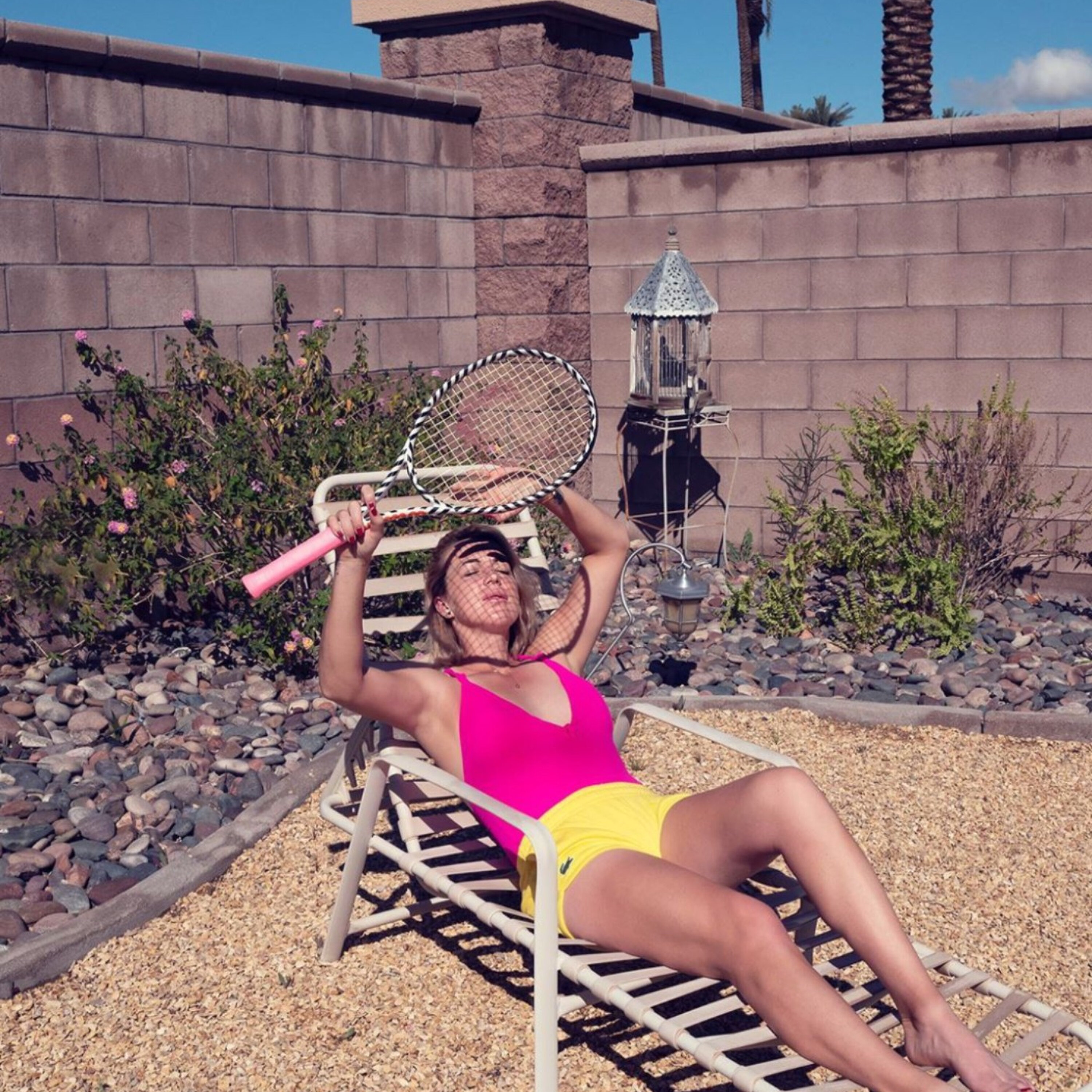
Anastasia Pavlyuchenkova
Or, as she's also called, Nastia Pavs joins us to talk about her best season to date, the importance of energy, and how she's spending her time off the court.
Hosted on Acast. See acast.com/privacy for more information.
See omnystudio.com/listener for privacy information.
2020-05-04
52 min
Transcript
Available Results
Generated results are saved to the knowledge database for reuse and search.
No generated results are available for this episode yet.
Extract Knowledge
Pick what you want extracted first. Model, scope, and chapter options appear after a template is selected.
Generated results for public episodes are saved to the knowledge database so they can be reused and searched later.
Transcript
00:00:04
Speaker 1: This episode of the Racket Magazine podcast is brought to you by Sergio Tucchini, offering iconic tracksuits, classic polos, and the new Young Line sneaker. Originally designed in the mid nineteen eighties.

00:00:15
Speaker 2: It's our favorite spring silhouette and it's back.

00:00:17
Speaker 1: You can get it now at Sergiotuccini dot com and follow them on Instagram at Sergio Tucchini Underscore Official. For updates, Enter the promo code racket Bag at checkout and you'll get thirty percent off your order.

00:00:33
Speaker 3: Maybe how somebody with my amazing advice is about live.

00:00:48
Speaker 4: Real nice subs.

00:00:49
Speaker 5: This week's guest is Anat Sassia probably a Chenkova.

00:00:53
Speaker 4: Pretty good, right?

00:00:54
Speaker 2: Oh?

00:00:54
Speaker 6: They did you practice?

00:00:55
Speaker 1: That?

00:00:55
Speaker 5: I did because I was editing the audio and I thought she deserved a really plus effort.

00:01:00
Speaker 4: Yes from me, she got one.

00:01:02
Speaker 6: She gone well done. That was impressive. I'm super impressive. I just call a.

00:01:05
Speaker 5: Nastia Nastia Nasty pads as she goes by on Instagram.

00:01:10
Speaker 2: What a character.

00:01:11
Speaker 6: She's awesome.

00:01:12
Speaker 1: Right.

00:01:13
Speaker 6: You know the great thing about doing these pods for me and just like with everything that we always talk about, like when I do postmatch interviews or I do an interview in general, I always just try and hope that their regular personality comes out when they're doing a postmatch interview or like they it's their moment, right, it's their ninety seconds often after a match, to show who they really are, because you still don't get to really see them in press. You get the written word down in a newspaper article, but you don't really get to see them as people. And you know, my goal and our goal with this, you know, with the Rack of Magazine podcast, is to actually have them forty five minutes show a little bit of who they are. And I think we're happy to say that we heard and we got a lot of Nastia today with her just honest about her life, about her coaching situation, about the things that she likes, the things that she doesn't like, and you know, being obviously in quarantine right now with her face.

00:02:09
Speaker 5: Great ideas about what to do with her career after she's done, but she's far from done, because she still has some very very big goals. One thing I learned, one thing I've learned kind of all season, I would not live survive a day in Russia.

00:02:24
Speaker 4: It is tough, Like no.

00:02:26
Speaker 6: Thanks, Yeah, well, I think, you know, obviously we had Setlana kuznettes Ofva and we had Arena Sabalinka, but they definitely had different sort of mindsets a little bit. Sabalanka's father, you know, seem to be quite a very good positive in her life, like and really built her up. She didn't really believe in herself. But the but the bottom line tone to a lot of Russian tennis players is there's not a lot of like happy sort of like everything's great, you're a ten out of ten, Like you're like you win a slam, you're six because you could have been a ten. You like, nothing's really good enough. No, I mean I spoke to Dariy Gavilov the other day just on an Insta live and the same thing. You know, she's obviously living and is now Australian and so she has that juxtaposition as well in her personality because one of the things she said is it was not really good enough in Russia. That's the biggest difference, and we've seen it now. Really it's a theme for all the Russians.

00:03:24
Speaker 2: Yeah, well better than than me. Because Nastia has handled it.

00:03:28
Speaker 5: She's turned into a hilariously funny person, also a leader on the WTA tour and somebody who's turned in some really really great performances.

00:03:36
Speaker 2: Hopefully more to come when we get back to the courts.

00:03:39
Speaker 6: Yeah, she had her best result in Australia. She had her best result in Australia in January, so you know it's slam level and you know she was probably looking forward to this year and really getting it going. But she's had an interruption with COVID nineteen and also now looking to change coaches, so it's going to be very interesting when she comes back. But you and I will definitely be their supporter, and I hope everybody is because she's a great chick. She's super super nice. As you said, she's on the board of the WTA Players Council now and so she really takes her best thing interest in what's happening with this fortune and we love her. Hey, Welcome to the Racket Magazine podcast, and today I'm not only joined by my co host finally Caitlin Thompson, but also by Anastasia Publishing coma. Okay, say the name correctly for everybody so they know.

00:04:33
Speaker 3: I'm so okay, I'm Asia Pavkover.

00:04:38
Speaker 2: Okay, thanks, love it.

00:04:39
Speaker 6: I'll remember that next time I do one of your margins.

00:04:41
Speaker 4: That's the Russian that's the Russian pronunciation. But you you said it really really good a little bit.

00:04:47
Speaker 3: Of experience, I guess, thanks buddy.

00:04:52
Speaker 6: This is crazy times. Let's start with that, because obviously we're not sure whenever we play our podcast, because we call them evergreen, meaning that we can play them at any time. But it's kind of tough for us to be able to talk to you today without talking about the fact that we're all sitting on our computers in other parts of the world. You are in Moscow because of COVID nineteen coronavirus, and it's been an unbelievably crazy time. What have you been up to?

00:05:25
Speaker 3: Yeah, it's been absolutely crazy, because, first of all, it's took me by a shock when we all arrived.

00:05:31
Speaker 4: I start from there when we arrived the Linda and Worlds, and because I'm on the player council as well, and.

00:05:37
Speaker 3: Then I will never forget that day when I was practicing and then one of our board members came to my practice and I'm like, what is she doing?

00:05:47
Speaker 4: Like since since when does she watched in my practice?

00:05:51
Speaker 3: But like I'm okay, you know, and then she grabbed me, grabbed me directly to the meeting and then we sit there and I'm complete the shop, like I didn't expect that one of the biggest events on tour is going to get canceled because of that, because I guess nobody really took it that serious, you know, that situation because at first, of course everybody was aware that there is a virus out there, but how bad it is, nobody knew.

00:06:18
Speaker 4: Okay, we had a few cases, but they're there, and you know, so then.

00:06:27
Speaker 3: Why I started from there because I felt completely lost, and then Xan wells because I was like, well, I'm absolutely probably not prepared for this.

00:06:37
Speaker 6: What was that meeting like? Because I remember being there, of course with Sam Stoza, and obviously we were hearing things, but you know, Sam was playing Quali. So the night before Qualie started, Sam text messaged me and she goes, I'm hearing things that they may cancel this tournament, and I was like, you gotta be kidding. There's no way, I mean, you just we just couldn't mentally go there, you know. So I want to know from your perspective, because you're on the council. What were those meetings?

00:07:04
Speaker 3: Like, well, first of all, because nobody was prepared for this, so it was completely out of nowhere for everybody. So as I said, like, she grabbed me, one of the board members grabbed me from my practice and then she said, well, there is an emergency.

00:07:19
Speaker 4: And do you know how many things went through my head?

00:07:23
Speaker 3: I thought, Okay, somebody died, a tournament director died, or something happened.

00:07:28
Speaker 4: I don't know, is there a bomb on Center Court. I'm like, what the hell is going on? You know?

00:07:33
Speaker 3: So I had hundreds of different scenarios in my head. What is the emergency? And then once I got to the meeting, all the girls were already there, and then obviously Tommy has came in, and so they started to explain that they had a few cases and in dan Wells, and because it's a resort, they don't have enough hospitals to accommodate in case a lot of you know, and so yeah, it.

00:08:05
Speaker 4: Was absolutely shocking situation.

00:08:07
Speaker 3: So they said, but I first thought they discussing whether to postpone or cancel. But but then they go like, no, it's not happening, and I, you know, it took me days to actually realize that, and so so I was like, I don't know. We were all waiting for Miami, but if Indian Goules got canceled in how Miami is going to happen?

00:08:33
Speaker 4: You know, That's like and then NBA we're also thinking to cancel their league and stuff, and I was like, I don't know what I'm going to.

00:08:42
Speaker 3: Do without tennis. I'm lost, Like, I don't know, I don't have a plan. B. I'm not prepared for this. And what is actually amazing, I've never been injured for a long period of time, lucky.

00:08:54
Speaker 4: You Like exactly, that's a good that's a good thing to have.

00:08:58
Speaker 3: But at the same time, like I'm twenty eight and I don't know, I've never stopped more than let's say, off season, like six weeks of fennis.

00:09:08
Speaker 4: So I'm like, I'm not sure.

00:09:11
Speaker 3: What I'm going to do with my time now, And you know, but slowly I'm getting into these new routines and I'm also enjoying it, trying to find new things.

00:09:21
Speaker 5: Well, I want to ask you a lot about that because your social media has been amazing to watch. You've done obviously a lot on your own account. You've done some for the WTA talk to us about what that new routine looks like. As far as I can tell, there's a lot of baking. There's a lot of going to your sauna, which makes me extremely jealous.

00:09:40
Speaker 4: It's also kind of snowy and what's your.

00:09:42
Speaker 5: Day to day.

00:09:42
Speaker 3: But like people tell me, oh, you've got a big personality and you're very funny and creative and stuff like that, so you can use a little bit more of that because most of the time I try to stay low.

00:09:55
Speaker 4: Key and just hit the tennis ball and play tennis.

00:09:59
Speaker 3: You know, all my friends they know how I can be like really hilarious and I like that. But we don't have this like different mentality in Russia. We don't used to like show off and show everything. In my family and my mom would be always like no, nast to please don't do it. She's like she's this like innocent angel, like we're completely it's different with her. I'm like the other day I was wearing my Christmas pants to the supermarket and she's like, NaSTA were in April, and I'm like, so what you know, like like the way I dress up as well. Me and my brother we like we have this different view ethnics.

00:10:41
Speaker 4: So yeah, I was doing this couple of double.

00:10:45
Speaker 3: Ta takeovers and for Russian Tennis Federation turned out to be fun. And so then I've done Live on Double Tea with betany Ma Taxans because we discussed.

00:10:57
Speaker 4: The I just recently went like baby pink with my hair.

00:11:01
Speaker 6: So yeah, I'm not saying that it's the tone. It's toned down a little bit of the hair because we actually can see it because we're on zoom video right now. But yeah, what do you think about it? You're gonna do that again when you come back onto it.

00:11:15
Speaker 3: Yeah, I actually I've done a couple of times before, but I've been a while ago. And because I'm very like a little cute, nobody notices me.

00:11:28
Speaker 4: That's why you don't remember.

00:11:29
Speaker 3: No, But anyway, this is how I am, and it's just like lately.

00:11:36
Speaker 4: I don't care.

00:11:38
Speaker 3: I don't mind what people think, Like if they don't like my style because I wear those SpongeBob socks. If they don't like it, that's fine with me because I like SpongeBob and.

00:11:50
Speaker 4: I'm gonna wear those socks.

00:11:51
Speaker 3: So that's for example, with my Christmas pants in April.

00:11:54
Speaker 6: Okay, so I do wear the Christmas hands with the SpongeBob socks to the supermarket. Yeah, yes, I'm with you on that one. I'm all go with us.

00:12:04
Speaker 5: Since you've found a little bit more of an overt presentation, I'm.

00:12:09
Speaker 2: Sitting here looking in your baby pink hair.

00:12:11
Speaker 5: We've got some tattoos in the camera. When Tennis resumes, you might come back with a bit more of a high key personality. Does this make you kind of reassess, you know, your persona a little bit, how.

00:12:21
Speaker 3: Much you show people, you know what, Like, I don't force this. This is something that that's how I am, and I don't need to make something extra to show to people. Like I just like the tattoos. I like to dress up. I like I love fashion. But you know, also my special way, I like pink hair, and so when I do it, if people see that, and from time to time I post a picture or a video of that, that's fine with me, you know, And I don't mind if they like it or not. If they judge me, that's fine because I like this. So I'm sorry, just don't watch it, like, don don't follow me.

00:13:04
Speaker 4: Know it's actually nice.

00:13:06
Speaker 6: One of the things that I wrote down that I wanted to talk to you about. Was you know, you are pretty low key, as you say, on the court, you sort of go about your business. But I know you and I also know that kind of fun different side of you. I guess, you know, is it something that has changed through the years leaving Russia and traveling and being around people of other cultures. Is that what sort of changed that a little bit in you? Or is that what you've always been like off of the tennis court.

00:13:35
Speaker 4: Yeah, good question. That could be because because like every time I go back to Russia.

00:13:46
Speaker 3: First of all, even my parents are like people, They ask me where I'm from, because I speak Russian with an accent, and I'm like, and I speak English with an accent, and I speak French with an accent.

00:13:58
Speaker 4: So I'm like, okay, give me. Yeah. So I'm a child of the world. And uh, And I think, because, yeah, I basically left Russia when I was thirteen. First I was in Czech Republic, and then from like fifteen, I was in Friends. Then I was a bit in Spain, and of course I travel a lot. So I guess.

00:14:19
Speaker 3: I picked up a little bit of everything and seen, like you said, hundreds of different cultures and.

00:14:28
Speaker 4: Yeah, I guess this like style and.

00:14:30
Speaker 3: Personality, and I started to care a little less because I think Russian.

00:14:33
Speaker 4: People do more be more closed.

00:14:37
Speaker 3: They so and like I said, when growing up, like I always been like that, but then I had to always phone it down because you know, my parents.

00:14:48
Speaker 4: Or some people that would be like, oh that's a little.

00:14:52
Speaker 3: That's a little yeah, yeah, exactly, that's a little too much, you know. And my older brother, you know, he's like with tattoos, he's very tall, and like, he also liked to express himself, but here like it wasn't good to do it because people would look at you like whoa, Like it's not right, always this judgment.

00:15:14
Speaker 6: So how did you get into tennis?

00:15:17
Speaker 3: So I was my older brother started playing, my dad was coaching him.

00:15:25
Speaker 4: So my whole family was in tennis.

00:15:28
Speaker 3: And then I was like four or five, and I picked up the racket because I was always around them, started to hit against the wall. And then like when I was six, they saw some potential there and it started to become a bit more serious.

00:15:44
Speaker 5: It sounds like from what you're talking about with you and your brother still have a ton of similarities. It sounds like you guys are very close. Is that is that the case? Does he ever is he involved in any way with your tennis? Does he come or travel with you or has he visited you when you've been in some of these far from places.

00:15:59
Speaker 4: No, not at all, Like he doesn't care at all action we and I always get pissed, uh, because he's very distant actually, like I have to explain.

00:16:16
Speaker 3: We are really close when we see each other and we spend time, but once we separate, like we sometimes we don't call each other, don't text each other for a month.

00:16:25
Speaker 4: But I know he's fine. He knows I'm fine.

00:16:28
Speaker 3: He's of course following my results. He always like Congress and that's it pretty much.

00:16:33
Speaker 4: And he yeah, he wouldn't want to travel.

00:16:37
Speaker 3: And you know, he's very special, like he's from another planet for sure, special special bad or special special special special. But in my in my world, it's special good because I like different people.

00:16:55
Speaker 4: I think everybody is very special in a way.

00:17:00
Speaker 3: We all have different personality and everybody has something and I think it's better this way to have this something extra spicy, because what I don't like when people are just boring and simple and you know, so yeah.

00:17:17
Speaker 2: I don't think anybody would describe you as boring.

00:17:19
Speaker 5: I was talking to Radka or photographer who got to do a photo shoot with you at Indian Wells in those weird days when nobody knew what to do, and.

00:17:28
Speaker 2: She was like, I do see much personality.

00:17:30
Speaker 5: We had so much fun on the shoot and it was so great because I hope the photos that she took well, you know, sort of help tell that story a little bit.

00:17:38
Speaker 3: Is what actually was one of my favorite photo shoots because you feel.

00:17:43
Speaker 4: Right away the energy and how creative she is.

00:17:46
Speaker 3: Because like as soon as she came in in my house, like you could say, she see things like in a different way.

00:17:55
Speaker 4: Like for example, she would be like looking at that wall there.

00:17:58
Speaker 3: And it's like a red wall and she's like, right, okay, you sit there. It's like she like she sees something already, like something is happening, but I have just a simple yellow shorts and something. And then the quarters turned out amazing, Like she made it so creative and I love those pictures and the photoshoot and the energy we had and it took like fifteen minutes to one hour and amazing.

00:18:24
Speaker 6: Speaking of energy, and you've spoken about like kind of how important that is, right, you feel that way the friends, you feel that with people you're working with. So I guess something that's happened over the last few weeks since Indian Wales is that you have stopped working with Sam Summick. So you've got now approximately probably six more months to find a new coach because God knows when we're going to be back on the tennis court. I mean, let's basically we don't know, right, this is very much a big unknown. But you know, here's your opportunity to sort of set the record straight a little bit. What happened there? Because you're obviously having great results. You know, made a final Japan, I think the first week you started working together. But you know that's also like a lot of work you'd already done. And then obviously Straight and Open had a great run there. But so what happened there?

00:19:14
Speaker 4: Yeah, I'll just make a little.

00:19:18
Speaker 3: Joke because I made a fine video with a filter where I look like super old, you know, and I make an announcement of my retirement announcement that guys, I'm thankful for the support that I really appreciated. But because of the lockdown, we're in twenty twenty six now.

00:19:36
Speaker 4: And we're still inside. You know, I just hope it's not gonna happen because I don't want to.

00:19:43
Speaker 3: That's not how that's not how I wanted to start my career. So you know, anyways, talking of me, it was pretty funny, so kind of Sam.

00:19:57
Speaker 4: Yeah, So first of all, and I hired him.

00:20:02
Speaker 3: I was in that kind of bad moment in my career last year and the year before because I wasn't sure. I guess I had like a burnout or something, because I came to the point where I wasn't joining tennis anymore. I had some personal staff of court and I had, Yeah, I wasn't sure what I'm gonna do because I couldn't find the right process in my with my team, couldn't find the right team, and the results wasn't there the ranking that I expected, so everything, like you know, And so I when I heard Sam, I because he's very well known in the on the tour, he's he's got great results with previous players, So I thought, Okay, I need this extra little like extra push, and it seemed like experience coach exactly, you know, and like the coach that Experience ever had before in the past, and so I thought, you know, this is going to give me this push and I need this discipline that I used to have ages ago when I was working with my dad. He was super strict. So I guess I missed that, you know. And I think just also that gave me this a little push. And you know, results came in after US Open, but I I just don't want to forget that I did a lot of work with Rob Steckley just before the US opened. He was helping me and he took me in this like relish bad bad condition.

00:21:37
Speaker 6: And Robert was the former coach of Lucy, So go ahead.

00:21:44
Speaker 4: Yeah.

00:21:45
Speaker 5: Oh and I should definite curse on this podcast, So don't feel like you have to censor yourself.

00:21:50
Speaker 2: Any curse words are more than welcome.

00:21:52
Speaker 6: Yeah, we get drop the problem gets hipped on the regular with me all the times.

00:21:58
Speaker 4: Fuck, thanks God, you's so me fucking Let's go carry on, carry on, OKAYO relieved.

00:22:08
Speaker 3: I just want to say this because there's been a lot of work done just before Asian.

00:22:14
Speaker 4: Then basically we.

00:22:14
Speaker 3: Started we started a trial with Sam just before a week then I don't final their final in Moscow and then yeah, and then.

00:22:28
Speaker 4: It was pretty good.

00:22:29
Speaker 3: But then the more time I was spending with the team, the more I was practicing and experiencing stuff with him. Then I had one month in California, then I shouldn't open and and.

00:22:41
Speaker 4: So slowly I just started to feel more and more that, Okay, I think, actually, this is not something that I want, This is not something that I feel comfortable with, and this is not something that I enjoyed.

00:22:55
Speaker 7: Why because yeah, because like you mentioned the end energy, because we I think there was miscommunication.

00:23:05
Speaker 4: Like communication just communication wise. It wasn't good enough for me. I because I'm somebody.

00:23:14
Speaker 3: Who needs to have also fun with my life and on court and enjoy and feel free. I need to feel free with whatever I'm doing, and I need some support, mental support, and I just didn't feel anything of that from him.

00:23:34
Speaker 6: One of the things that I saw that you had spoken about in the past was that and you you were quoted in saying, is that you felt it was a lot of ego on his regard as well, and a lot of I you know, you know, speaking about himself as opposed to you. And that does drive me crazy because obviously I've done a bit of coaching myself and obviously was a player for a long time. And I hate when coaches say we or you know, they make it about themselves. This is about Sure, the coach can make a huge difference, but the players the one that has to do the work and do what you've asked them. And so I think that was one thing that I read that you quoted about saying.

00:24:13
Speaker 3: Yeah, I did say that, And it's not only towards him, but like in general, there are a lot of coaches out there like this, and I just hate this in people. Also in general. I don't think it's normal because I, as I said, I think the whole team, whether it's tennis coach, fitness coach, a mental coach, you know, anybody that seem they need to work for the player to achieve what they want. They all discuss what they set up the goals, and they work for it towards and they help and support where they don't try to put put the player down or destroy the play or you know. So that's that's simple.

00:25:01
Speaker 4: Is that?

00:25:02
Speaker 6: I mean, for me, it's like such an important thing. I think what you're saying is that you want to work hard, you want to do everything that they ask of you. But in the end, you want somebody who's going to be see the glasses half full and to try and push you to be better, but to actually make you socially like have a life as well, like a good not a good life, not like partying, but you want them to actually enjoy working hard every time and have that good energy with you.

00:25:31
Speaker 3: I do believe that every person and everywhere is very individual, and the problem comes.

00:25:37
Speaker 4: I think that some coaches, they used to do.

00:25:42
Speaker 3: Their work in a particular way, and they do it with everybody in the same way. And I hate this, and I don't think it should be like that, because everybody is absolutely different personality, physically, and so.

00:25:57
Speaker 4: You can't just you know, you've got to adjust.

00:25:59
Speaker 3: You have to chast not the player, because this is how I play, this is how and I'm.

00:26:05
Speaker 4: Doing twenty four seven. I wake up and I try hard, and I want to improve and it's obvious and you know that.

00:26:13
Speaker 3: So so I'm doing everything that you ask me for. But you know, you gotta think a little and you know, I chast a little more to me and try to help me, you know so. And yeah, because maybe sometimes because of that ego ego, you don't see that that stuff.

00:26:35
Speaker 4: Maybe I don't know.

00:26:36
Speaker 6: Well, this is my last thing I'm gonna say on it, because I think it's super important you point that out that every player is individually different with their personality, and you have to as a coach, because I've had to do this adjust to those different personalities. One might be getting someone to see the glasses how full. One might be getting to see the player realize that their glass isn't quite as fall as I think it is, you know, and sort of push them in different ways. But also I know you and I'm I've always, you know, pulled for you. I've always hoped that you've done well. And I have to say when you turned up with Sam and I was like, because I'm not a big fan, so I'm not gonna I'm not gonna lie. I mean, I'm kind of happy.

00:27:14
Speaker 5: Now.

00:27:15
Speaker 6: I just hope you find a coach that pushes you to be great when you come back.

00:27:19
Speaker 4: Yeah, I just had to.

00:27:21
Speaker 3: I'm gonna give one example because I also I worked with the titter Kindleman. He was my coach right after he stopped with Maria Sharapor. He was with her for three years being her sparring and then my agent called me up and said, Okay, you're looking for a coach, He's available now, so try it out. And he wants to be a coach now. So I was his first player that he coached. And then what happened was started in April and then during friend shop and he would almost lug me down at the hotel and we would practice every morning at eight am offside, so two hours, grinding like crazy, and then he's like, okay, now you eat and you go back to the hotel. I'm going to stay at the courts. You stay there the whole day and we're.

00:28:10
Speaker 4: Gonna meet up for dinner.

00:28:12
Speaker 3: And I'm like okay, So one day, two days, three days, and then you know, it's like right now, I'm on a lockdown.

00:28:19
Speaker 4: That's how I felt by then.

00:28:20
Speaker 3: So I al really had the experience, and I'm like, I'm sorry, but I mentally, I mentally can't do this. And and there are a few exercises that Mario was doing with all my respect and we're actually good friends with her, but like I just basically don't think I should do it and I can't do it. And but but then what's the problem is that how he reacts to this.

00:28:45
Speaker 4: He then he starts to accuse.

00:28:47
Speaker 3: Me that I'm overweight, I'm lazy, you know this is and so that was him, and you know another coach similar. That's what I don't like. And I have no problem to work hard. But again, because I'm not Maria.

00:29:08
Speaker 6: I mean, this is like this is like tinder or like tinder for like coaches, it's just like you gotta swipe the right way.

00:29:14
Speaker 4: Man.

00:29:14
Speaker 5: Come on, well, I think there is a lot with your worldview, you know. I think some people and I think it is about ego, and I think for some people, all they want to do is make a player follow a particular plan or have their way be the most important. But what's amazing to me is the more we talk to players on this show, and obviously what our magazine is a lot about is talking about the humanity of the players a lot more than people who are machines who go and hit tennis balls. And it's always a delight to me when we talk to somebody who feels constrained by too much structure, somebody like Lena who doesn't want to take the funding from the state and do exactly what her coaches say because she knows that that's not how she's going to play the best. And what you're talking about and what you described is understanding how people are special is really meaningful because it means that their success looks like a lot of different things, but it has to be fueled by joy and by engagement. And you can't beat somebody into submission and make them Maybe you can make them a champion, but you certainly can't make them a happy person by doing that. And I always like when players understand that seem to get it.

00:30:29
Speaker 3: Yeah, No, I do believe in nowadays or like in the world, anything you do you have to be happy and sure what you're doing, otherwise you're not going to get any results out of it.

00:30:42
Speaker 4: And maybe I'm wrong, but I'm not going to regret it.

00:30:46
Speaker 3: Maybe I, like people said, maybe I bound like I didn't take the best coaches up because of my whatever personality, but I just I can't when I think this is great. But I have this luxury of choosing with whom I want to hang out with, whom I want to spend time work out who and who I want to practice with, who I want to be my coach with. I think it's luxury and I feel free. It's like I can choose.

00:31:27
Speaker 1: This episode of the Racket Magazine podcast is brought to you by Sergio Tucchini, revitalizing and disrupting the status quo since nineteen sixty six. Follow them on Instagram at Sergio Tucchini Underscore Official and go to Sergio Tucinni dot com for more. Enter the promo code Racket mag that checkout and you'll get thirty percent off your order.

00:31:52
Speaker 6: Well, I think nast year, you've seen a lot of players come and go. You've seen a lot of great players come and go. You've seen some of them when they're have gone that they're socially not so equipped for the rest of their life. Right, So I think it's super important that socially you're able to function an the normal world outside of the tennis bubble. I think that's something that people don't really understand. It's like a traveling circus, you know. And you even touched upon it, like what do I do without tennis? Has this period in your life with the coronavirus and no tennis, has it kind of made you think about what do I want to do after tennis?

00:32:29
Speaker 3: Well, well, I should be I should be doing that I should be probably thinking because you know time time goes fast, but I don't know right now, I'm kind of I tried to I learn how to live in the moment.

00:32:46
Speaker 4: And I know because I've been actually since a little girl, I've been always going in the future, like I always like, you know, when I was seventeen, I always expected myself. I was looking at that. I'm like, okay, but she's there, like I.

00:33:02
Speaker 3: Want to be talk, I want to be yeah, I want to win.

00:33:05
Speaker 4: And I'm always I'm not in the present, just like so now I want to try.

00:33:09
Speaker 3: To enjoy what I have right now, what I'm doing like now today and okay, maximum tomorrow, what I'm gonna have for breakfast. But but I always like when I had two years ago, like and last year is the spirit where I wasn't sure what I want to, like continue playing tennis or not. I was thinking like, okay, actually I was in a really bad condition with myself, Like I came to the point where I wake up and I don't want to do anything. And then I would take a list of paper. They say it's good to write down, write the things down, like what you want to do and achieve and I would see there for thirty.

00:33:52
Speaker 4: Minutes and I couldn't come up with anything. So then I was like, Okay, so that's a bit tough, you know, like it was a really tough moment.

00:34:02
Speaker 3: But now I'm happy that I'm out of it and I'm actually enjoying every single minute and day of my life. Maybe something, definitely, something maybe with TV, because I like people.

00:34:16
Speaker 4: I like the Unreacher.

00:34:17
Speaker 2: I like to.

00:34:20
Speaker 3: Exchange that, and I like to communicate with people, and you know, maybe help somebody with something with my amazing advances about life.

00:34:33
Speaker 6: And I mean, you're still so young. You're so young, still, right, you're only twenty. I mean players are playing until they're mid to late thirties now, so you know, maybe you've got another ten years ago. I don't know. I mean, this is certainly adding a year to your career, this situation we've got going on now. But yeah, I think that it's one thing that players don't think about enough because you're so in the moment. I mean I was so in the moment when I played, but I always sort of doing TV or doing stuff in the media because I knew that I did like it. So it might be something that you can consider now like weaving it into your career even though you're trying to be very serious and you know, be top ten and maybe make a final, win a Grand Slam, which you very capable.

00:35:15
Speaker 3: Yeah, I want that, Like I'm I'm I'm super hungry right now more than ever, and I still because of the times has changed a little, right, so we see a lot of players like Serena and a lot of players that over thirty and they're still in amazing shape. So that gives me also a little like motivation and plump it, like so I can still go on and you know, I'm still in my twin is sort of like, and I've got a big experience on tour, and yeah, I'm hungry, super motivated, and I think, you.

00:35:50
Speaker 5: Know, I want to try to go for someone just to kind of tie together some of the future stuff, but also of some of how you're philosophically dealing with your game, understanding yourself and looking at what your goals are.

00:36:03
Speaker 2: It's really interesting to me that you're involved in the.

00:36:05
Speaker 5: WTA leadership and I wonder what that sort of taught you, but also maybe what you're teaching them or what you're bringing to the table there and how you are thinking about shaping the sport not only for yourself but also for other players who are going to come after you.

00:36:20
Speaker 4: For example, right now, I'm trying to think of where's lower rank?

00:36:25
Speaker 3: Where is because you know it's not easy. When you sit at the table. The first thing, whatever we discuss, you always compare it to yourself. How would you react on the situation, And it always comes to you like, okay, I would do that, I would feel so you know, it's always about you the first thing, the first reaction.

00:36:47
Speaker 4: But then I'm like, hold.

00:36:48
Speaker 3: On a second, Like there are other thousands of plares on tour behind.

00:36:54
Speaker 4: You and higher than you. So you gotta that's the thing.

00:36:57
Speaker 3: You gotta change respective and look the whole picture at everybody. So you try to take top twenty and below handred and in the middle. So that's the thing I'm trying to think of right now. How can we actually help lowering players because this is a really extreme and bad time especially for them, not only for us. And so yeah, and so I tried to talk to other players and have some ideas.

00:37:30
Speaker 4: Just I think our structure, I would change our structure, the calendar. I think it's it's crazy.

00:37:38
Speaker 3: Like I always say, there is no other sports that have this crazy schedule.

00:37:42
Speaker 5: I think it's not healthy and it's not mentally healthy. No, it's way too long. I mean it's it's it's physically mentally and I think also for the audience, it's hard to know where to focus your energy.

00:37:55
Speaker 3: Yeah, right, fans, I think fans, they get confused.

00:37:58
Speaker 4: They're like, like, I.

00:38:00
Speaker 3: Remember I posted I have some assistant with my social media.

00:38:05
Speaker 4: But anyway, like they proposed, let's do the calendar. You're going to post on your Instagram what next tournaments you're gonna play? And we posted like.

00:38:16
Speaker 3: Leon In John Wolls, I know, Dubai, Doha, leon In John Wolls, Miami, Charleston, and I get comments like do you have time.

00:38:25
Speaker 4: For Lee for for life, like all this kind of it's it's true. So basically, how did you answer?

00:38:33
Speaker 6: No?

00:38:34
Speaker 3: No, exactly, No, I'm I'm rested in the in the plane when I fly to the next even But but it's true, like seven weeks in a row, and those are all very big tournaments, so of course it's tough.

00:38:51
Speaker 4: I can't right now, I can't afford to skip that many tournaments.

00:38:56
Speaker 6: I think, what I'm hearing from you, is that you actually are thinking about And isn't that nice to hear from somebody on the.

00:39:05
Speaker 4: Yes, I try to think about others.

00:39:08
Speaker 6: Yeah, well that's really nice of you. I'm glad that you've matured into a caring human being, which you know sometimes doesn't happen on the tour. I've got to say. But I mean, aside from you know, we still I want to still ask you what your goals are outside of taking care of everybody now and worrying about other players and obviously getting back onto the tour. You know, we're hoping that once this, you know, this coronavirus gets under control, will be all back playing. And what's one of your what are the most important goals for you? Like going forward in your career, what would you like to achieve? And now that you have this great perspective.

00:39:44
Speaker 3: I mean, I want to win as much as I can, titles, grandsons, and I want to be number one. Of course, I know it's like a cliche everybody is saying that, but I really wanted now like actually, you know, I was, I was catching myself before that.

00:40:09
Speaker 4: I was always.

00:40:11
Speaker 3: Ambitious, but I guess not fully not one hundred percent. I don't know's I'm going to try to explain. It's funny because like I was doing things well, but then you know, three days, but then two days so so, and then I want it. But then I'm like, oh no, that's okay. Now today I can skip it. So it's like it was always it was never really one hundred percent. And I think that's the biggest problem we had with Patrick Moreta glu when.

00:40:42
Speaker 4: He was my coach and now he took me.

00:40:44
Speaker 3: I was like sixteen years old till eighteen, and Patrick is very ambitious and.

00:40:50
Speaker 4: Of course like he wanted a lot, and when.

00:40:54
Speaker 3: I was seventeen, so I did this semi finals and Don Wills and all of a sudden, I'm twenty seven in the world and you know, so then of course, like all the team and him, he's super pumped, like he probably thought at eighteen, I'm going to be number one and winning Branstones, but it didn't happen. So not only I had a lot of pressure on myself from that, but also I was always down on myself because I was in achieving expectations and then but then yeah, I think back then I was always like that with off court and on court like I wanted, I'm doing it like a hundred percent, but not really, you know. So and where now I think probably with my maturity and getting older, I finally realized and I value, I appreciate and value ten is much more because I was never you know and even now, like all the girls, they complain about the season, how long it is, But at the same time, when you take some tournaments off, they start to complain why you took come up, we lost jobs, we need you know, So it's like it's so long or or you want more.

00:42:08
Speaker 6: So I always say that. I think sometimes players, when they go on court, they have a conscious and a subconscious, right, so the conscience is always saying I want to win, I want to be this, I want to win this title, I want to beat this person, and then there's a subconscious going yeah, but I don't know if you're ready for that right now. I don't know are you really good enough? Can you win this semi final of this Grand Slam? And you're kind of having this like conversation with yourself where you're where your thoughts don't align, right. So I'm always like, when you're subconscious and conscious meet together and say yeah, yeah, you're going to win this. We want to fucking win this. We're going to win this. It's like yes. And I think that's when you find that you have the success because you actually, you actually believe that you can win those big matches like a semi final of an Australian Open, for example, that you actually believe it wholeheartedly. And do you think that that's starting to align now a little bit more in big matches.

00:43:11
Speaker 4: Yeah, yeah, I feel much more comfortable playing big matches now. I feel good out there and I feel stronger and more confident. Just I think also my physical.

00:43:25
Speaker 3: Part was missing before, you know, because I do believe that to win a Grand Slam, or to win something.

00:43:33
Speaker 4: Big or you know, you need a combination of everything, a bit of luck, a bit.

00:43:37
Speaker 3: Of like a good draw for you, because there are certain players that you hate to play against and certain players that you find to playing against. You know, it doesn't mean you're good or she's good or she's that, it's just this like so much on book, then, yeah, exactly, And I do believe that of course, not only mentally prepared, you got to be physical prepared. Everything has to align and of course that subconscious and conscious, but also sometimes before, like I was playing quarter finals at the Grandsons, and then all of a sudden, I feel comfortable because I feel like it's good enough.

00:44:17
Speaker 4: Yeah why did I Why.

00:44:18
Speaker 3: Should I push for this extra when I'm young and still upcoming queer?

00:44:27
Speaker 4: It's still good enough.

00:44:28
Speaker 6: So just you know, is it not wanting to have the pressure? Is it not wanting to have the pressure of the spotlight because you also know and have seen what winning a Grand Slam, for example, has done, right, Is that part of it? Is it a little bit of being afraid to have the success?

00:44:45
Speaker 4: Yeah, yeah, it could be. Yeah, absolutely, there's also like a reaction.

00:44:51
Speaker 6: We'll change that.

00:44:56
Speaker 5: What you were talking about in terms of all the expectations both from you know, outside coaches, from you know, training, having a ton of expectations really is something hard to grapple with. And I think like maybe it's a defense mechanism for for not getting too emotionally invested and then too hurt if it doesn't if it doesn't happen. So you say it's good enough, I made a semi time.

00:45:18
Speaker 3: Yeah, you know, well better I always had this pressure that I have to I need to, and it was killing me, like it's tough to I couldn't really enjoy because every time you play, it's just.

00:45:35
Speaker 4: Like you've gotta do better, you gotta do you know.

00:45:39
Speaker 3: And also coming from a Russian family where your dad was your coach and super strict, it's never good enough, never, even if.

00:45:49
Speaker 4: You win the tournament.

00:45:50
Speaker 3: My dad would come up to me and say, yeah, but your we're hand technique. You didn't do it properly here, your swing wasn't I'm like, okay, you've got to be kidding me, but you know this, like that's how we grow up in Russia, and it's never good enough.

00:46:08
Speaker 4: And so.

00:46:11
Speaker 3: Yeah, And also so I was putting this pressure by myself as well in me and I was comparing myself, which thanks God, I don't there anymore, but I was, I have to be honest, I was comparing myself to Audigos and a bit older of my age, and I was like, okay, but you know, that's the worst thing you can do. And so and sometimes you also had matches where you want it too much that all of a sudden you got so tight because you want it too badly that I couldn't I couldn't separate this I want so much and what I need to do to win this match. I just couldn't separate those. So, yeah, I think I've experienced a lot of stuff on ward, but like now, I think it's a bit more clear in.

00:47:01
Speaker 4: My head what I want, what I need.

00:47:03
Speaker 3: Because because I think also, I was playing tennis because I had to because my parents wanted me to, and my dad saw me that I was good, and he was pushing me real hard. And when you were fourteen, I was number one engineers when I want a straight and open and all I care about during that final was this chemgaroo that I'm going to get, you know. So I wasn't realizing what I'm doing. Like I just knew how to hit a tennis balls, so I was doing it like automatically, but you know, and I didn't know what I need, why I'm doing this.

00:47:46
Speaker 6: I would know what to do with you as a coach. I would just buy you a stuff toy and put it over in the corner of a court and be like, nasty, I don't worry about the check, don't worry about winning. This is going to be yours at the end of the match.

00:48:00
Speaker 4: That's it. It was the best. It was the best present ever. No, but yeah, that My point is that you know, you I wasn't realizing why I'm doing it? For why because my parents want me? But actually what it going to bring me in life? You know what? What after what I'm going to do? So what?

00:48:22
Speaker 3: But now, okay, So I think that's the main thing is to know why you're doing this, What do you want?

00:48:28
Speaker 4: What is your goal?

00:48:30
Speaker 3: Then when it's so clear you then you try to think, Okay, who I need to help me with this and what I'm.

00:48:37
Speaker 4: Doing stuff like that. So I think, yeah, good.

00:48:40
Speaker 5: And now it sounds like we have a good pro tip for whoever your next coach is for what helps you get motivated?

00:48:46
Speaker 2: You know, stuffed animals?

00:48:47
Speaker 6: It might it might be different. Now I'm thinking that nasty. You might need like maybe a Gucci purse over the exactly. I mean, I'm not dummy, I see you. So I'm just thinking, you know, you can have that bad which is important. It's goal setting and sometimes it's simple things to actually you know, make it micro right instead of macro. You go, just think about that. You know, if you win, you can go shopping and it does help you take away sometimes the pressure of the enormity of something you're trying to do, which is win a grand suline.

00:49:23
Speaker 3: Oh, absolutely, our life. I'm not complaining, but that's a very tough it's a hard life. The traveling we're doing, the sacrifices we're doing.

00:49:35
Speaker 4: We barely see.

00:49:36
Speaker 3: Our family, we barely have a normal life and friends and stuff like that. So I mean, of course we'll win a lot. There is a lot of positives from that, a lot of benefits.

00:49:45
Speaker 4: But you know, like people have.

00:49:48
Speaker 3: To also understand and we do sacrifice a lot, so you know, it's good to definitely need something and somebody who understands how to take the pressure of because there is a lot of freaking nerves and pressure every time you wake up the day of the match, and you're always nervous.

00:50:07
Speaker 4: It will never go away unless you're going to it. I'm sorry, but exactly.

00:50:12
Speaker 6: Yeah, and then you start and then you start drinking like me, and then because you know, you put thirty years of nerves on yourself, so you just.

00:50:20
Speaker 3: By the way, By the way, I was also ad because I mentioned I love fashion, so you're right now, it's not stuff twists, it's good and stuff like that. But also red wine is always a good idea, a good French red wine.

00:50:35
Speaker 6: So I had one, almost an entire one last night for you. So there you.

00:50:42
Speaker 4: We should have, We should have, we should have all together right now. Cheers.

00:50:46
Speaker 6: Hey, I'm not going anywhere, so you can. You're happy to call me anytime, FaceTime me anytime.

00:50:51
Speaker 5: Get any hour and happy. It's always five o'clock at Renee's house. I come over for breakfast and she's like, like, it's ten a year, So the break.

00:51:00
Speaker 6: We want to say thank you. I also want to say now that you said that tennis is a hard life. You are on the road, you are away from your family. Well you are spending a lot of time with your family right now, so enjoy it and don't complain about it.

00:51:15
Speaker 4: I know, I know. Well, thanks for having me. It was a pleasure. Thank you girls.

00:51:21
Speaker 6: Yeah, nasty, I love you. I cannot wait to see you somewhere down the line, somewhere I'll be I'm super interested to see who you bring along in your team because I think you there's no question you have the talent to win that Grand Slam. We've seen a lot of one time, one time, we've seen a couple of random Grand Slam winners over the last few years that we thought, wow, that's crazy. And there's no doubt that I think a lot of those players have given inspiration to players like you that you can you can do it. So I want you to start believing in yourself.

00:51:52
Speaker 4: A little more inspiration and frustration. Yeah, exactly. Thank you for having you with pleasure. Thank you again, Thank you, thank you.

00:52:04
Speaker 1: I and that's it for this episode of the Racket Magazine podcast.

00:52:09
Speaker 4: Thanks for listening.

00:52:11
Speaker 1: Our host is Renee Stubbs. Our co host and producer is me Caitlin Thompson. Music by international renown DJ Stretch Armstrong. Thanks to Tim or Jerran and the team at ACAST. Find us at racketmag dot com, slash podcast, and subscribe to us at any of your favorite podcasters
Chapters
No chapters available.