If I Murder My Family Can I Still Get My Inheritance?
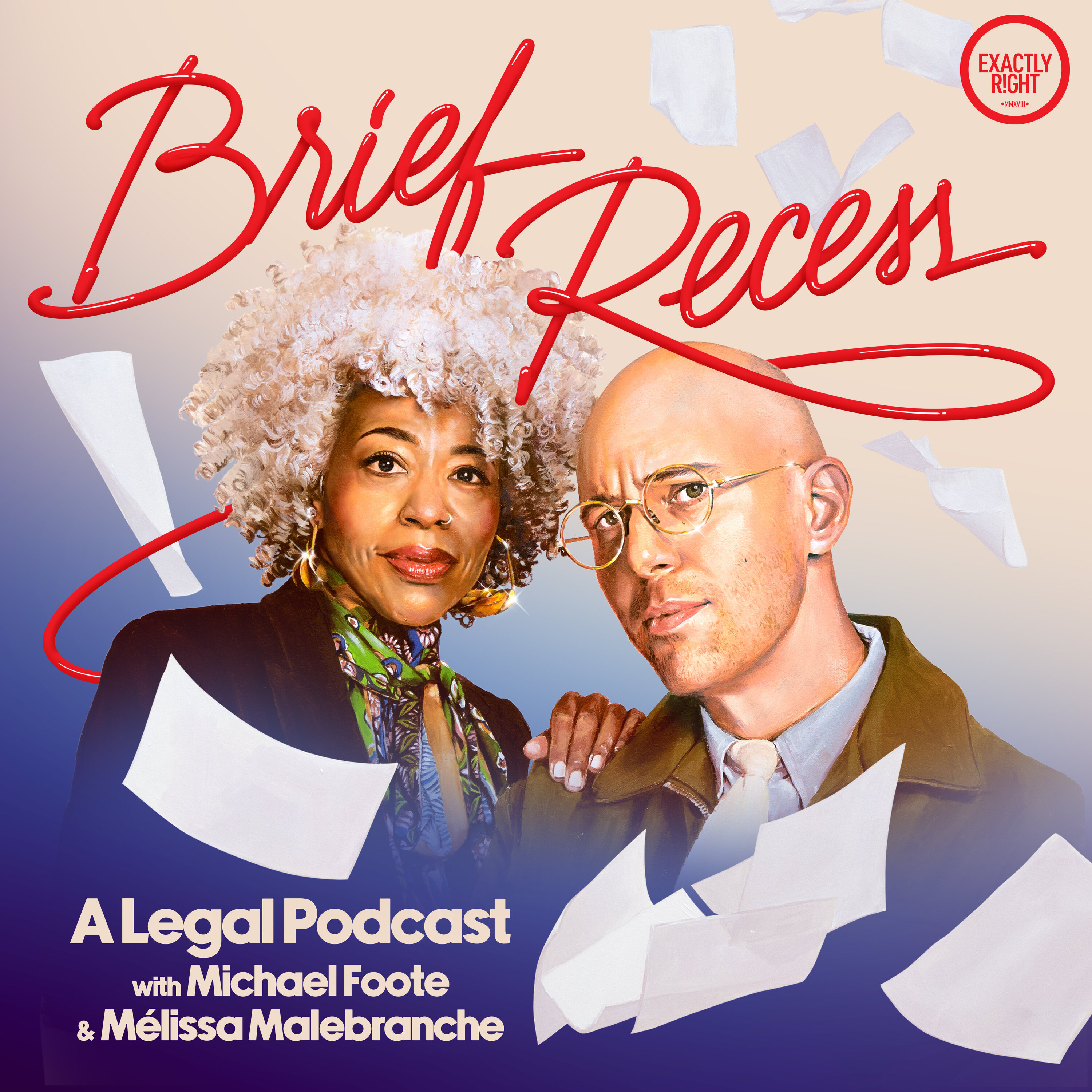
Brief Recess: A Legal Podcast with Michael Foote & Mélissa Malebranche
Michael and Mélissa discuss their weird melatonin dreams, deportation flights, Trump calling for the Insurrection Act in Minneapolis, and all the ways to prepare a Last Will and Testament.
Brief Recess is a new weekly legal podcast from Exactly Right Media. Follow Brief Recess wherever you get your podcasts, and watch full video episodes every Thursday on the Brief Recess YouTube channel! https://www.youtube.com/@Briefrecess
Find Michael on Instagram @dept_of_redundancy_dept or TikTok @Michael_Foote_ and Mélissa on both as @MelissaMalebranche.
Got legal questions? Email briefrecess@exactlyrightmedia.com.
See omnystudio.com/listener for privacy information.
Available Results
Generated results are saved to the knowledge database for reuse and search.
Extract Knowledge
Pick what you want extracted first. Model, scope, and chapter options appear after a template is selected.
Transcript
00:00:06
Speaker 1: Welcome to Brief Recess. I'm Michael Foot, I'm Melissa Meran. Today we're gonna be talking about melowtonin Dreams, Terry.

00:00:13
Speaker 2: Gross, Sorry, all our all.

00:00:16
Speaker 1: Our crazy ex boyfriends, deportation, flights in America, the Insurrection Act, your Last Will and Testament, and all the questions from my d ms stick around, sit your ass down. No, I'm just saying I just totally trip. I just fell into the studio. I just found out that I got Jerry duty, I got jury.

00:00:43
Speaker 2: I'm like to They're not gonna You're not gonna want him. You're not gonna want it. They're not no, no, no, But seriously, they're not going to want you. I hope not because I haven't been a paralegal in thank God, I don't know how many years. And anytime they've ever asked, oh, you know, have you has anybody ever been like a lawyer or whatever? And I'm always just like and they say, get the fun out, and they're like, how long has it been, and I'm just like, you know, it's been a really long time and it doesn't matter.

00:01:11
Speaker 1: Comment below all the way is that you got out of jury, Judy, because I need your help I'm calling to the to the community, the girl lies, the dolls, the divas, the boots on the ground, tell me exactly how to go.

00:01:24
Speaker 2: I think you need anyone's help. I think if you say, they're not gonna want you.

00:01:29
Speaker 1: And I'm gonna sit down for both legs behind my head and I'm gonna say you can't do that here.

00:01:40
Speaker 2: The fact that you are an attorney and the fact that you are, like your social media always talking about it, I would lead with that.

00:01:49
Speaker 1: I'm gonna be like, I'm whatever happens here, I'm gonna yell about it on social media. I'm going to go to my podcast podcast about me.

00:02:00
Speaker 2: It's just don't worry about it.

00:02:01
Speaker 1: Okay, Because here's the t I have a hearing that day, so I'm going to court and then I'm going to jury duty an hour later in the same in the same Yeah, I've got to go to It's like a it's a it's a calendar reset for a judge. It's a criminal charge. So I'm in I'm in the same friaking building. So I'm just gonna go downstairs. I mean, like, hey, I'll probably know the judge, I'll probably know the prosecutor.

00:02:27
Speaker 2: I honestly think this is like, don't worry about it. I wouldn't worry.

00:02:30
Speaker 1: I'm going to I'll film and TikTok. I'll try and update everyone on social media. I'll film going going to social media, going to Jerry duty, see what they say.

00:02:40
Speaker 2: How are you.

00:02:41
Speaker 1: I'm good. I'm good. I feel like I don't know, it's been it's been a crazy start to the week. I think it's been like a little bit. I mean, it's a weird week to be an immigration lawyer in America right now.

00:02:50
Speaker 2: I think generally, I think it's weird to be, you know, an American in America right now. But I can imagine that if you are somebody where this is like the work that you do, then it's insane. It must be insane, because I feel like I'm crazy, is what it is? Nothing like what do you mean?

00:03:05
Speaker 1: Like it is insane and it's busy, but like it's been in it's always been insane, So I feel like it's been a decade. I have like good boundaries with it. But I will say that, like I think about this is such like a stupid way to describe it. But Tony Collette talks about her role in Hereditary where she had Did you see that movie? No, big horror fan. I love horror movies. I do, and I scare the crap out of myself, and then I get scared and I can't sleep.

00:03:29
Speaker 2: Speaking of not being its self hard, Amaya tell me your thing, But I gotta tell you about my Melissa doesn't sleep story and what this doctor said to me the other day.

00:03:38
Speaker 1: Okay, wait, can you just tell me? Just kive me? Then? What did you say?

00:03:41
Speaker 2: Okay? So I have had a lot of trouble sleeping, and none of the things are working right, like over the counter stuff isn't working anymore. For a long time, I was taking I was taking like benajol, like chicklists. And then finally I heard, but you can't do that, you know?

00:03:58
Speaker 1: Did you hear it through my TikTok that I made. No, I made a video and I was like, Everyone'm so worried about venonel. But have you ever taken a ben adroom because that shit knocks me out. If I take a benadrome gone for two days, well, I mean out of office.

00:04:10
Speaker 2: You don't understand, like when you cannot sleep, Sure, it impacts everything. It makes me cranky and bitchy and like, do you.

00:04:18
Speaker 1: Have like a conup in his annex or something anything.

00:04:20
Speaker 2: So I have not yet tried anything prescription. Where trying to. I'm trying to. I've been trying to do this naturally. Then I started taking like sleep gummies and that worked for a little while, and then it stopped working. Then I also and then I was like combining all these things like Michael jacksoning myself. And so I.

00:04:43
Speaker 1: Will say when Melissa walked into the studio this morning, shopunder bag and a handful of pills fell out, started crawling around on the floor screaming, crying where are my dollies? Yeah, it was it was bad. It was a real Judy Garland moment, just to get her in the seat.

00:04:56
Speaker 2: And then the other thing is like, so melowtonin right, did you know that it gives you weird dreams?

00:05:01
Speaker 1: Oh my god, the hat man comes out of the ceiling.

00:05:04
Speaker 2: Okay, everyone's starts.

00:05:05
Speaker 1: I did not, Oh my god, everyone in the studio is not no Melotone.

00:05:10
Speaker 2: I was alone. I did not know this. The dreams are not bad dreams, they're weird dreams.

00:05:16
Speaker 1: Yeah, it's like watching the opening sequence to American Horror story. Anytime I take a melatonin it's like I start hearing the creepy music it is, I start seeing things. It's spooky dookie, And I was listening to an MPR show because you know, I'm a Terry Gross girly love Terry. She was talking to a doctor who was saying melatonin is good, and like it's like point zero zero two five is all you need. Is like the only study you need for melatonin to actually work. It is such a small dose, and like the minimum dose in America is like ten milligrams that you can buy from this store. So we are all taking like way too much melatonin and we shouldn't been doing it, is what they were saying.

00:05:53
Speaker 2: Well, but the thing is okay, So if that's the case, then then that dose of melatonin was not helping me sleep, right.

00:05:59
Speaker 1: No, it was just fucking it was just so hard.

00:06:03
Speaker 2: So so I was talking to my primary care physician and I was just like I can't sleep. She's like, okay, I want you to go do a sleep study. Sure, no problem.

00:06:10
Speaker 1: So interesting.

00:06:12
Speaker 2: So I didn't do the study yet, but I had that first meeting with the doctor and she's asking me questions and this was a telehealth.

00:06:19
Speaker 1: Okay, okay, yeah, I'm so excited.

00:06:22
Speaker 2: Any questions she should not be questions. And then she says to me, you know, she says to me to hold one nostril, breathe on one side, do it on the other side. Right, Okay. There's a reason why she's asking me to.

00:06:32
Speaker 1: Do okay, because there's a line of blow in front of you.

00:06:34
Speaker 2: Yeah, and so so then she says to me, let me see your tongue. Right, so I have my laptop.

00:06:42
Speaker 1: It's just it's just a lady at the zoo. It's just like a lady at the fucking circus that Melissa walked up and it was not it was not a doctor.

00:06:49
Speaker 2: She says to me, let me see your tongue. So I kind of like bring my up. You don't have to do that. She wants your laptop in because I'm like what, So I stick out my tongue and then she was just like, yeah, you know, I'm going to send you this machine to see if you have sleep apnea because you have quite a wide tongue.

00:07:09
Speaker 1: So, Mike, it's the guy from Kiss. It's like.

00:07:15
Speaker 2: Who got who got? In the notorious shitty interview with Terry Gross.

00:07:19
Speaker 3: Did he it's it's rolling around on the internets and Terry Gross and she reads him fulfilled and she's.

00:07:32
Speaker 1: Got It was so good.

00:07:38
Speaker 2: So then I been talking with my friends, Andrea shout out to Zann and I said to her. I was like, I'm going to do this sleep study. She's like, oh, because she's also having trouble sleeping. So I said to her, my doctor says to me that I've got like a fat tongue.

00:07:52
Speaker 1: Did Andrea show you her tongue?

00:07:53
Speaker 2: No tongue emojis since then, that bitch and she just like fat. And I was just like, the doctor didn't say I had a fat tongue, but that just that I had quite a wide She's like, no, when I tell it, it's going to be that a fat song. So I'm going to get the sleep apnea thing and I'm going to say, I don't know.

00:08:13
Speaker 1: Why can you document it for me? I got to see you with all the electrodes that what is it?

00:08:18
Speaker 2: That a hand thing?

00:08:19
Speaker 1: Oh?

00:08:19
Speaker 2: I hate that And it's disposable, which makes me very concerned about all the medical trash that we're getting. She was just like, oh, it's disposable. And I was like, is it plastic? And she was like yes, And I was.

00:08:30
Speaker 1: Like, do you remember when we were it was like the start of the pandemic. It was like still April. Tom Hanks still wasn't clear with COVID and he still had it, right, he still had it. And we had like ads on the radio. I remember listening to podcasts and hearing ads of like nurses begging people for like masks and gloves and stuff. Do you remember that we like didn't have anything. No, it was crazy. That just reminded me of that. Why just we were talking about like medical waste, you know.

00:08:58
Speaker 2: Like doctors, nurses, medical professionals were like reusing masks. Do you remember also during the pandemic sort of everybody was getting like mask acne.

00:09:08
Speaker 1: Yeah, they were getting like a line around their face.

00:09:11
Speaker 2: Like yeah, that was Anyway.

00:09:13
Speaker 1: Let's get into a sidebar. We've got a lot to talk about. It's every day feels like it's been a week, a week condensed into eight hours. But we've got plenty of news to cover, so stick around, all right, So this is Cydebar. We're going to jump into what's going on in the courts, what's happening in the what's going on this week? I was saying, it's a weird to be an immigration lawyer, but I had a client who people haven't reaching out to me a lot about this, and I actually would rather just address it on the show because I can't respond to everyone. But people are asking about what do you do if you get called to a USCIS appointment, like hey, you're going to get fingerprinted, or you get a request for evidence and you've got like an active asylum case, Like what do you do? Because what's happening is people are going we just we just saw it in the headlines. A New York City council person got arrested at like a routine immigration Did you see this? Did? Yeah? So people are being asked to attend these routine appointments and in a normal world under any other administration, and people don't want to go to their appointments anymore.

00:10:21
Speaker 2: So do you blame them?

00:10:22
Speaker 1: No, not at all, And especially because like council people are getting arrested at these immigration appointments, and those are like prominent public figures, like we have Mom Donnie speaking out every day about making sure that we release this person. So people are going to these appointments and they're not coming home, and it's like they're trying to comply, right. These are the rule followers. These are the people who are trying to do it right. They're trying to do it the legal way that came in. They're filing, they're trying.

00:10:47
Speaker 2: I'm trying.

00:10:48
Speaker 1: Yeah, I'm trying to get my lpr R. And then I go to the appointment and R permanent residence and they and they don't. They arrest them right then and there. So my client reached out to me and was like, I got this weird random request to get fucking fingerprinted. And it was like, we already did your fingerprint. I'm looking at it. I'm looking at it in the case in the file right And anytime they want, like it's called an R if you have request for evidence, they submit it through a special system and I get notified as this person's lawyer.

00:11:17
Speaker 2: So I'm like, I'm all right, did you get notified that they need?

00:11:20
Speaker 1: I did not get notified. So they contacted my client and said you have to come to this office in Queens for an appointment, and it's a USCIS office. Bitch. I went instead of my client, I went to the appointment. I went to the appointment. I said, what do you need? What are you looking for? Oh well, we missed a finger. I said, okay, because I'm looking at all ten on the documents, so which one is it? Oh well, we really need to talk to your client. You know. It just started to become like the uh A game of excuses, and I said, okay, great, what is it you need to ask my client. I'm happy to have them submit a written declaration answering whatever your questions are. And so I started pulled a power move, not just going but also I kept referring it back to the courthouse. So this is what I did. I said, whatever it is, let me know, submit it through the system, and I'll tell the judge. I'll tell the judge and the attorney for the agency, the DHS attorney the information you're seeking. Because the attorneys are like four people above the officer I'm dealing with. So I'm saying, great, submit it and I'll tell your boss's boss's boss what it is. And they kept being like, oh, well, where's your client? We need to touch your client. I advise my client, I said, do not be at home while I'm at this appointment. Go to a friend's house, go to the office, go where I don't be at the house because I don't know what they're going to do, so I said submit it through the system. Still don't have a request. Still don't have a request an RFI in the system. It is so clear that these are ploys to get people into an office, so it's easy for them to arrest them, snatched, and you're screwed either way, right because if you don't go, then they're going to see you didn't comply.

00:12:56
Speaker 2: With the But if you do go, if you you and they send you anywhere, apparently.

00:13:00
Speaker 1: Yes they don't. Oh yeah, and that's intentional, that's by design. They send you anywhere so that you don't have access to your community, You don't have access to an attorney, you don't have access to people you know, your family can come and visit you. It creates financial barriers for people to come and see you. I have clients who get sent to Colorado. They don't know anyone to call it. There are high elevations and they don't know like what the is actually crazy because detention centers are intentionally designed to be far away from city centers. They are not in the midtown, right, they are upstate New York. They are in West New Jersey, like, they're not near a metropolis, so it's harder for attorneys to access these people. So like this is like by design, like.

00:13:43
Speaker 2: This if somebody has been and remember everyone, while Michael is a lawyer, he is not you're a lawyer, So talk to your lawyer about this sort of thing. However, I do have a question for you. So is it okay if you were my attorney and I was asked to exactly what you did for your client? Yeah, yeah, it's okay if the client doesn't go, but the attorney goes in their place.

00:14:06
Speaker 1: That is I'm not willing to tell everyone to do that, like that is not a risk and willing to take. But but I was willing to take it for my client given their particular situation. I said, why don't I go and do a little bit more fact finding here? You're not currently being held inttention, so the likelihood of them immediately departing you if you don't do something they want, okay is lower because they just don't know where you are exactly. Okay, So that was how I handled it. But getting I'm getting increasing reports people reaching out to me through my DMS, through my link tree. Hey, I was asked to go to my husband boyfriend was asked to go to this thing. They never came home.

00:14:43
Speaker 2: Oh my god.

00:14:45
Speaker 1: Which leads us to your algorithm as showing I think we've got a lot to talk about in the headlines right now. I don't know if you are, but I'm not hearing a lot about deportation flights.

00:14:53
Speaker 2: I have, okay, but I think only as it relates to the Haitian community. Right It's like the the rumor mill about what they're doing. I don't know that it's actually happening, but my understanding is that they're like they've got all these chartered flights and they're shipping people off. I have don't know if it's yeah, do you know what I'm saying. I don't know if it's.

00:15:14
Speaker 1: Most of my clients are detained and I've only had I mean Knockwood and this. I'm not like bragging, but like, only one of my clients in the past couple months has been actually removed from the US. Everyone else's remaining and detention. Okay, whether that's because I'm doing legal work for them or not, it remains to be seen. But usually what happens is people get moved to Louisiana and that's where the staging happens before they're removed to their home country.

00:15:39
Speaker 2: When people get deported. Because I feel like this administration is different than others right in the past, would they just put you on a commercial flight and send you or would they sort of charter a flight and put sort of all the people from El Salvador would go to El Salvador and then dump them versus what might be happening.

00:16:00
Speaker 1: It's very opaque, like they don't release a lot of information. The public has pressured certain airlines. I think a Vello is the airline that the public like pressured them into stopping deportation flights. It's a South American airline.

00:16:15
Speaker 2: Oh gotcha, gotcha.

00:16:16
Speaker 1: Yeah, it's like the spirit of South America.

00:16:18
Speaker 2: I think it's really comfortable.

00:16:22
Speaker 1: People really pressured them into and it worked, which is why I made a video on TikTok about let's all tag the companies that support ice contracts. I mean, that really is one way to fight back, because boycott and stop supporting companies that support, you know, deportition of migrants. I wanted to say about the deportation flights, I think that I'm not hearing about them because the private prison system is the goal, like lining the pockets of the private prison system, of the companies that are getting those federal dollars from DHS. Like big beautiful bill went through, right, and all that money went to fund these contracts. A lot of it went to prisons, and so those beds, they make more money off of migrant staying in the US in a deportation detention center then they make from the flight sending them home. So not only are the flights getting canceled because the companies aren't going to run the flights anymore, or people are protesting and pressuring the companies to not run the flights. It's more lucrative for those private companies.

00:17:29
Speaker 2: Except that who's paying those companies is the federal government. Yes, and I thought that immigrants, illegal immigrants, undocumented people are sort of a blight on the United States and that they cost the United States money. So they've got these prisons that are charging. Do you see what I'm saying, that are charging?

00:17:50
Speaker 1: Yes, I get what you're saying, but I'm thinking, like who owns shares in those private companies lays in office.

00:17:57
Speaker 2: And we understand that their mo is to lie to the American people, except that that doesn't make any sense. Do you know what I mean like that?

00:18:05
Speaker 1: Yes? I think, yes, you're right, it doesn't make any sense. I don't know if that makes it untrue though, Okay, I think it's like very much a myth that like immigrants are costing the American people tax.

00:18:14
Speaker 2: Done, I understand, but that's what they're saying.

00:18:17
Speaker 1: Of course, yes, And I'm saying what they're saying isn't necessarily what is actually reality.

00:18:21
Speaker 2: No, we know that it's not. But if they are trying to make the American people believe that immigrants are taking their jobs and they're using resources, and that's why we're trying to get ridden.

00:18:32
Speaker 1: But what those people who want that and believe that that, you know, the Trump base. Yeah, all they're seeing our ice officer busting down door, dragging person by ponytail into van. We don't see what happens on the other side of the end, and they don't care in their minds that person is now gone. What I'm saying is from what I'm witnessing and what I'm reading about in the news, A lot of those people are still here in beds, costing American taxpayers a lot of money that then goes to private prison. So that is that's what I'm seeing. I don't know. There was this interesting thing Governor Hokel Did you see this? She was like, we are New Yorkers could sue ICE under her new plan. She's like trying to roll out this plan in twenty twenty six, so it's like it's on her like, you know, like twenty twenty six Barbie Dreamhouse. Her like vision board is that New Yorkers would be able to sue ICE for if they are like assaulting them or doing anything that Like there needs to be some sort of accountability for the individual officers. So that could be something that we see New York do that other state's model.

00:19:31
Speaker 2: Do ICE as an entity or the individual ICE officer?

00:19:35
Speaker 1: I think bolth So that was she did her like State of the State speech last week, and they covered that, which I thought was really interesting.

00:19:43
Speaker 2: Interesting.

00:19:44
Speaker 1: We can talk about the Insurrection Act because Trump said he wanted to invoke the Insurrection Act.

00:19:48
Speaker 2: I did see. I did see that, actually.

00:19:50
Speaker 1: Which is insane. The Insurrection Act of eighteen oh seven is a rare and powerful US federal law that allows the president to deploy military inside the United States. So it includes active duty troops but also the National Guard. And it's to respond to insurrection, rebellion, or domestic violence when normal law enforcement can't maintain order when federal laws are being obstructed.

00:20:12
Speaker 2: So it's an exception to the general rule. And I love this posse. What is this possy Comatatis Act?

00:20:19
Speaker 1: Yes, that's I love that, And that forbids using military for domestic police. Okay, because it's only been it actually, it's only been invoked a couple times in American history. It was during the La Riots, but there was yeah, yeah, born it was. I was very young.

00:20:35
Speaker 4: Ok.

00:20:36
Speaker 1: What was it like though?

00:20:37
Speaker 2: I mean I was in New York, so I don't I.

00:20:39
Speaker 1: Know, but like what was it?

00:20:39
Speaker 4: Like?

00:20:40
Speaker 1: Crazy?

00:20:40
Speaker 2: It was? It was insane. You're like glued watching TV. And I think I feel like that might have been I don't remember which came first, the La Riots or O. J. Simpson, but like those are the things that sort of stand out to me.

00:20:54
Speaker 1: I think LA Riots came first. It was like nineteen ninety two or ninety three.

00:20:57
Speaker 2: Oh then yeah, and I so, yeah, I was really young can remember being like absolutely glued to the TV and like talking them with both my friends, like what the fuck is going on? This is crazy? And I also remember like there was there was this truck driver. He was a white truck driver who and I forget it was in downtown Los Angeles. It may or may not have been in Compton, I don't remember, but he was driving. He got to the middle of the intersection, a bunch of people pulled him out of the of his of his truck started to beat the absolute crap out of him. There's we can find the video somewhere.

00:21:30
Speaker 1: And it was like my reaction was to be like, I can't believe I missed this. But I was four, so it was like I think I got a pass. I was like, Wow, I can't believe I missed this is crazy. Where was this?

00:21:40
Speaker 4: Huh?

00:21:43
Speaker 1: Whose nap time?

00:21:45
Speaker 2: No nap time for you.

00:21:48
Speaker 1: But I didn't miss the OJ. I saw the truck. I watched the truck driver and oh yeah, a core childhood memory. Okay, yeah, that's why I got into the courts in the first place.

00:21:58
Speaker 2: That's no reason why he got into the courses, because you watch your dad get perp walks out of a museum. It's to touch one, touch the painting.

00:22:07
Speaker 1: He touched one, Rauschenberg, I will tell.

00:22:10
Speaker 2: You even I don't know why. I don't remember where I was when I was watching the Riots, but I do remember where I was when we were watching the o jasonson thing. I was in a bar at a pool hall with a friend and my boyfriend at the time.

00:22:24
Speaker 1: Pool hall, pool hall. Wow, I know, billiards. Can you hustle and pool No? I can't, Okay, but your but your boyfriend at the time, Yeah, he was. He and we stayed his name for the record, or is it.

00:22:37
Speaker 2: We don't have to use his whole name, but call him Cliff. We love Cliff.

00:22:42
Speaker 1: That's a cute name. What was his deal?

00:22:44
Speaker 2: He was a good dude.

00:22:45
Speaker 1: It just broke up. Are you okay?

00:22:47
Speaker 2: I did want to I'm all right.

00:22:54
Speaker 1: Messages from my ex boyfriends have reached out to me since the show. Actually, I got to do a sidebar on this, Michael. I know.

00:23:02
Speaker 2: I told you.

00:23:03
Speaker 1: It's well because Mom, if you're listening, turn this off right now.

00:23:06
Speaker 2: Yeah might uh uh.

00:23:08
Speaker 1: I've got a lot of ex boyfriends, man, Like I was busy in my twenties, so like the the people that I not that I forgot about, but that I haven't thought about in a long time.

00:23:19
Speaker 2: Well because and not even in necessarily in a bad way, because we've moved.

00:23:24
Speaker 1: On, right, some of them weren't a bad way. Like it didn't end well, And if I do run into you, I don't want to talk to you.

00:23:30
Speaker 2: Yeah you don't see them?

00:23:31
Speaker 1: Yeah yeah, But then to reach out to me and be like, hey, like do I even give him the New York time? Yeah? Sure, fuck it, let's do it. This guy I was dating reached out to me and he was like we were really we were dating for a long time, like we were very close. And he reached out to me and he was like, hey, I just want to let you know. First of all, coming in hot, it's been at least fifteen years, it's been a long time. I just want to let you know. First of all, how did you get this number? Second of all, how dare you?

00:24:03
Speaker 2: Then? Let me let me let you know?

00:24:05
Speaker 1: He says, I'm so happy to see that you finally found your thing in life that makes you well.

00:24:17
Speaker 2: You and I were together, you were I was.

00:24:20
Speaker 1: Like, oh okay, noted bitch, Like this thing that I built that.

00:24:25
Speaker 2: Is definitely earrings off, vaccine kind of stuff.

00:24:29
Speaker 1: Get out of you, which I said, You've got the right bitch to put you in the wrong motherfucking place. Listen, I'm from Long Island, honey, I was born in a tanning bed. I will fuck you up, so I said. So, I of course called my friend, you know her. I won't say her name. I called her and I was like, this bitch, and she took me down. She was like, no review is better than a bad review. Do not respond to this person. Yeah, don't give them. Pretend like you don't even have the same because.

00:25:01
Speaker 2: They obviously reached out to you to needle you. Oh, it's very different if somebody if somebody's like, hey, I saw that you're doing this thing. Good for you, hope that you're well and we're moving on right.

00:25:15
Speaker 1: Yeah, I see an X of mine doing something in the public space. I am too busy leading a wonderful life that I'm very pleased with to reach out to that person and be like hey, and like retread old tea the fact that like, clearly he has nothing going on because he's like watching my up fifteen years later. I'm not that good in bed like it's not maybe.

00:25:42
Speaker 2: But so you know what's really interesting, I will say, oh man, this is not the same. God here, what is it again? At least twenty years ago now because mother has lived at This guy that I used to go out with every year on my birthday sends me a message and it's always and it starts out the same way, Happy birthday, Oh my god. I hope that you're doing well. And I don't know why. I always forget what happened the year before, and I'm like, wow, that's nice.

00:26:19
Speaker 1: You forget. It's all you're taking.

00:26:22
Speaker 2: Maybe it's shocked and he you know it's but like, this is not an opportunity for you and I to reminisce about the time that we fucked, Like I don't want to go off to you. And it's so weird.

00:26:33
Speaker 1: Yeah, my birthday is not about us talking about the years ago.

00:26:39
Speaker 2: Oh my god. And so again, so I so I told I tell my friends Ann and she's just like, you put it on him, and I'm like you did. But it's so it's so weird to me, like what what what do you want?

00:26:56
Speaker 1: I know? And then when that happens, I start thinking, I'm like, what did I do that night two am and Saucilyito, what was happening?

00:27:04
Speaker 2: You know?

00:27:06
Speaker 1: It was that biker gang and sauce Alito, what was I doing?

00:27:11
Speaker 5: You know?

00:27:11
Speaker 1: And then I'm like what was did I just something different? Like it was?

00:27:17
Speaker 2: But I just find it so fascinating, like because because like my other ex boyfriend, Clip, who's such a decent guy, do you know what I mean? Like we exchange you know, greetings on our birthdays and we you know, you keep it clean, right, happy birthday. I hope you're doing well. How are your kids? How's your husband doing?

00:27:35
Speaker 1: So sweet?

00:27:36
Speaker 2: Super super nice? He came to my dad's funeral, like, so sweet, such a.

00:27:40
Speaker 1: Good do was there? You didn't introduce me?

00:27:42
Speaker 2: He you went to the wake, he came to the service.

00:27:45
Speaker 1: Oh okay, okay, And.

00:27:46
Speaker 2: Like my mom was happy to see you. Clip was happy to see Clip. Like it's but like it's so fascinating to me how there could be that kind of person and this other motherfucker, Like like it's bizarre.

00:27:59
Speaker 1: It's passit that our judgment and sexual partners can spend such a spectrum, right of like the nice guy who comes to Thanksgiving and kisses your mother on the cheek and then this mother.

00:28:12
Speaker 2: But I think, I really think that everybody has that person.

00:28:18
Speaker 1: Sure, the guy on the chain gang.

00:28:21
Speaker 2: I'm like, or you know, I always feel like I mean, I don't know what it is for like men, but I feel like every woman has a man in their past that is the man who made them crazy, Like that was the guy, Like that is the guy that pushed you to a place where you have never been. And I am I am dead as there is there right like, no, no, no, there is every woman as a man in her life who was the one that you were Like, I think I'm going crazy. I am crazy. I'm about to step five to this motherfucker's house, Like there is something that.

00:29:09
Speaker 1: My friends had a guy's car on fire?

00:29:11
Speaker 2: Yes you did.

00:29:12
Speaker 1: I was like, get it, girl, get it guys. You keda guys, Melissa, that is so nineteen ninety two of you.

00:29:20
Speaker 2: It was ninety ninety It was king a car.

00:29:24
Speaker 1: Wow.

00:29:25
Speaker 2: Yes, she's like, my mom can't watch this. My mom can't watch.

00:29:30
Speaker 1: That's why they have keylas fobs now, because Melissa me, everyone's car.

00:29:35
Speaker 2: I had a friend of mine who literally it was it was not me, but I was her lookout. I had a friend of mine who took a drill to a guy's car.

00:29:45
Speaker 1: One you were the look.

00:29:49
Speaker 6: Look this coordinated the he had a he had a Navy blue Ford probe.

00:30:05
Speaker 1: Not even that's like a car that a drill isn't even the drill is more expensive than the car. Is a pinto What was this?

00:30:19
Speaker 2: She took a drill to his probe?

00:30:21
Speaker 1: That would get you what? That would get you covered under the Insurrection Act. Let's take a brobe. My god, this is under oath. We're going to do a deep vibe into into some hot topics. Melissa actually programmed this entire segment. I have no idea what we're going to talk about.

00:30:40
Speaker 2: Anyway.

00:30:41
Speaker 1: She wants to talk about Lauren Bobert giving a hand job to a guy at Beetlejuice. Did you see that? You remember that, I will Mifeel will always stand on Bobert's neck about that hand job. She's throwing neck in the front row of fucking Beetlejuice.

00:30:58
Speaker 2: And here's the I can't believe right, wait you wait, this is the thing like you go somewhere, go to.

00:31:07
Speaker 1: The bathroom, at least like my god, doing a car.

00:31:13
Speaker 2: Sit there the front first of all.

00:31:16
Speaker 1: Of all the shows, of all the shows, to just give a reach around to you choose, you choose. It didn't even get good reviews. I'm sorry it didn't even do that. Well, it closed pretty quickly. Well well no, I mean they were joining it, joking it in the front.

00:31:37
Speaker 2: Interest.

00:31:37
Speaker 1: It was so bad that it was like, you know what, let's do, let's throw down, right, I will. I will never let you forget that alarm bowbird as long as you live. We're going to do it a featured segment every week. Anyway, let's get into under Oath and Melissa, what was the topic you wanted to talk about?

00:31:59
Speaker 2: I hate you. I hate it here. I want to talk about wills and estates.

00:32:04
Speaker 1: Oh yes, okay, State lost.

00:32:08
Speaker 2: You know everyone's favorite.

00:32:09
Speaker 1: You're never too young to have a will. That's what we say in the biz.

00:32:12
Speaker 2: I think that people think that they are I will say.

00:32:15
Speaker 1: As someone who doesn't have a will, yes, that is true, as someone who has high blood pressure and a family history of high cholesterol and heart attacks and I still don't have a will.

00:32:25
Speaker 2: And I think that people are very superstitious about that. Even if they are not outwardly superstitious, they feel like Oh, why are we planning for my death while I'm still alive and well? And I think that that's actually the best time to do that. And I remember when several years ago now, we had a relative who passed away and she was unmarried, didn't have a partner, didn't have any children, and she died. And I think the thing about that that sort of really bothered me was that I remember going to see her in the hospital and I remember looking at this woman and thinking to myself, Oh, I have to tell my mom because my mother was away, okay, that this woman is going to die like she was very, very sick, and she had been sick for a long time. And I think she knew she was ill and sort of opted not to do anything.

00:33:20
Speaker 1: So that a lot of people, a lot of people do that, and I and a.

00:33:24
Speaker 2: Part of me understands, right, because she had no partner and didn't have any kids, it sort of fell to me to clean out her apartment and go through her things. Wasn't this in my neighborhood Upper East Side?

00:33:37
Speaker 5: No?

00:33:37
Speaker 1: Oh, what a different auntie who she lived like right across the street from me.

00:33:40
Speaker 2: Oh, that's a different person. Actually, her sister and her apartment too.

00:33:44
Speaker 1: This is okay. Sorry. I just got a text from Melissa that was like, are you walking your dog right now?

00:33:50
Speaker 2: No, it's Brad. I saw Brad. I saw Brad. It was and I was and I was like, had headphones, why are you? Yeah? And she lived in the apartment for forty years and she wasn't a hord or anything, but she had a lot of stuff and she didn't have a plan. Ye. This made me start thinking really hard about my parents and at the time, they didn't have any estate plan right. And I remember getting on my mom and dad about it, and my father especially was very superstitious about it, and he was just like, you know, your mom gets everything, You get everything, Joey gets everything. And I was like, it doesn't work like that. And I think that people think that it does.

00:34:32
Speaker 1: And I think that people think that my family is going to collaborate and get along and they're just going to figure this out when I'm gone. And I don't think people take into account like how they are oftentimes the glue keeping everyone together, or underestimate the grief that people are going to be going through and that people won't be in their right mind when they are trying to do this, and that's often when family rifts occur.

00:34:58
Speaker 2: Absolutely, it was what I said to him, and like, you know, I remember trying to explain to them that, you know, in the middle of grief, is not the time for the rest of us who were left to try and figure stuff out. Yes, right, yes, And I will say that I'm so glad that my parents' estate was in order by the time my father died, so that we weren't like scrambling trying to figure stuff out. Right, there was a plan. I was his healthcare proxy, which was difficult, but like it made the rest of it a lot easier to take because they had had a plan.

00:35:36
Speaker 1: God.

00:35:36
Speaker 2: And the other thing I think that people don't realize when there is no privacy in death, no right. And I remember going through my aunt's apartment being like, you know what, she would not want me to be looking at this stuff.

00:35:52
Speaker 4: Now.

00:35:52
Speaker 1: Everyone has that friend where you're my friend, like that where it's like if I go to me, wipe the drive, wipe the drive, clean out that drawer.

00:36:03
Speaker 2: Why you have bread?

00:36:04
Speaker 1: Yeah, I guess Brad too. No, there are some things I don't want really, you know, I have a.

00:36:08
Speaker 2: Really good friend of mine who says that she knows that her husband will not if there's if there comes a point where she's on life support that she knows that her husband will not be able to do it, She's made me her person perfect.

00:36:22
Speaker 1: Yeah, I know I'm not a person for some people.

00:36:25
Speaker 2: I don't much love that, but like I also get it right, because when you love somebody, you're like no, no, no, no, no, maybe maybe maybe yeah, And she's just like, he won't be able to do it.

00:36:35
Speaker 1: So I will say for like wills for me, I guess like my logic, which I'm not saying this is like the right logic, but I know that like, if I die, it will be in testacy. So basically intestacy law is what happens when you don't have a will to die without a will. It's called intestine and that's sort of like the legal term for it. It just means you didn't have a will, and the governing laws of your state will apply to your estate. So I know that the laws where I'm domiciled New York will distribute my estate how I want to distribute it, which is that if I die, it goes to Brad right, But if both of us die. It goes to right, I think my sister. See, but you don't know it does it goes to my sister.

00:37:18
Speaker 2: Yeah, but wouldn't it be more prudent for you to have a plan, like an actual plan? Yeah?

00:37:23
Speaker 1: I guess so.

00:37:25
Speaker 2: See. I think that's what happens to That's what it is. That's what happens to people. People are just like, yeah, I don't want to think about it, but like I will say, their own property, if you have investments or you know what, though, even if you don't. When I was a paralegal at the y Men's Health Crisis, we used.

00:37:40
Speaker 1: To do will you would do trust in estates?

00:37:43
Speaker 2: I didn't. There was another team that did that, but you know, and oftentimes these were people who didn't have much money. But you know, maybe you want to leave your favorite leather jacket to somebody, you know what I mean. Maybe you want someone to have your photography or your diploma or whatever it is. But that's why you need a plan.

00:38:03
Speaker 1: I will say, there is this one cemetery that I actually really want to be buried in, and I just I really want.

00:38:08
Speaker 2: To be buried.

00:38:09
Speaker 1: Yeah, I think so does brad Or like cremated and buried is fine with me. Okay, yeah, Brad knows that he does. Yeah, but it's like on my list to buy a plot there. I'm like, oh, yeah, I need to do that. I need to do that, and it always.

00:38:22
Speaker 2: It's on your list of things to do, but you haven't done anything.

00:38:25
Speaker 1: I know, I haven't done it yet. I know I really need to do that.

00:38:27
Speaker 2: But I think that everybody thinks that they have time. And I mean, and not to circle back around to renee good, but I'm pretty sure that you know. And the point is that nothing is absolutely right. Anything could happen to any of us at any moment in time, and if you have wishes, you should make them known. And I was looking I was thinking about this a lot, and I was looking at all the famous people who died without a will.

00:38:57
Speaker 1: And let's do some quick definitions first. I got some just like quick definition. So will is a legal document that says who gets your property after you die and who will handle your estate. A trust is a legal arrangement where a trustee holds and manages assets for a beneficiary, often to avoid probate, which is oh probate like probate court. I actually did really well in trust in estate's classes. I got like it is some of the few a's like.

00:39:23
Speaker 2: Why don't you do that?

00:39:25
Speaker 1: I don't want to. It's like kind of boring. I've written wills before, and I'm like, oh my god, this is it's just like a lot of it feels like boring paperwork to me as someone who is like a litigator goes to court like that's fun and exciting. But then to be like, oh right, someone's will, I'm like, oh my god, this is like really tedious. So I've done it. I really don't want to, really, but I'll do it.

00:39:46
Speaker 2: You wouldn't do that.

00:39:47
Speaker 1: I'll do it for you. Of course, I'll do it for you. But I'm gonna bitch the whole fucking time. I'm a gay man. I'm allowed to complain the entire time. I'm doing your family as your friend, I'm allowed to complain the whole time. But yeah, I'll do it for you.

00:40:00
Speaker 2: I don't care.

00:40:01
Speaker 1: Let's do it on their what do who do you want to get?

00:40:03
Speaker 2: One's yeah? No, no, no, no, no, no, okay.

00:40:08
Speaker 1: Power of attorney a document that lets someone make financial decisions for you if you can. A healthcare proxy a document naming someone to make medical decisions if you're unable to speak for yourself. Beneficiaries are the people and organizations who receive the money, property, your assets from your will or trust probate, the core process that legally settles the person's estate. I was right, you are a A for you A and trust in the State's law is still in there.

00:40:32
Speaker 2: It's just one class on just in the state.

00:40:34
Speaker 1: There's there's like I think there's like a normal one, and then there's like an advanced one, and then I think it might have been like a four credit class. It was like a long It was like a big heavy curricular lift. And then they covered so much on the New York State Parkaxan. When I took it, it was like days of covering it in New York. So I have drilled into my brain like the New York statutes around it. Okay, they really made us go through it.

00:41:01
Speaker 2: I wonder why.

00:41:02
Speaker 1: I think it's because it's just one of those things that it's gonna everyone knows someone who's gonna die or will die themselves. Sure, huge of true.

00:41:11
Speaker 2: Right, and huge, huge, huge.

00:41:15
Speaker 1: Of true and everyone, so they try and make sure all lawyers it's going to come up. A friend is going to turn to them on their podcast and be like, will you write my will for me? And you're gonna have to kind of know how to stumble your way through it and do it right. So New York, you need I know that you need witnesses. You have to have like witnesses in person. And it sounds like so extreme, but it really is, like it could be literally anyone just sign and write your name for your will.

00:41:40
Speaker 2: When we did our parents, my brother and I was sitting there signing our lives away. Everybody was okay.

00:41:46
Speaker 1: So tell me about these weird celebrities who died without wills.

00:41:49
Speaker 2: Prince no will.

00:41:51
Speaker 1: Prince has like a full like a library of music. They can like release the song every year forever.

00:41:58
Speaker 2: Come on to music for the ages. And he had no will, which is really surprising. He had no will. Aretha Franklin didn't have an actual will. She had a bunch of handwritten wills all and like they were all over her house, which apparently was a mess.

00:42:11
Speaker 1: So that happens a lot. Not saying that this is what happened with miss Aretha. What did I just did? I just what did I just call her?

00:42:19
Speaker 2: They're going to come for you. They are going to come for you, sir.

00:42:22
Speaker 1: So sorry, I'm so sorry, so sorry.

00:42:25
Speaker 2: The Queen so I love her.

00:42:27
Speaker 1: Oh my god, I'm so sorry. I just I burnt my tongue on really hot I really did lawsuit come in for your ass. Sorry, he's lying. I really did.

00:42:36
Speaker 2: He's like, no, no, no, no no, you stumbled on Aretha's name, which is okay, but you want to lie about it.

00:42:42
Speaker 1: I took a Benadryl and I drank hot coffee and now I'm sollurring in the studio. But Aretha, I'm not saying this happened to her. But people have, like we are at a lot of cases in that class about people who would like kind of go crazy and lose their mind and write little letters and then it would be like four conflicting letters and they all say something different.

00:43:05
Speaker 2: And they're not dated and they're not dated, and no.

00:43:06
Speaker 1: One knows who to believe in which one, who should get what. And there's always like that that nephew from out of town.

00:43:12
Speaker 2: Who he said that I was his favorite, uh huh, yeah, yeah, I've never seen you before.

00:43:16
Speaker 1: Great expectations, yeah.

00:43:18
Speaker 2: Amy Winehouse, which is I'm not surprised that she didn't have one. She was really young, but again that is not an excuse, especially when you reach a certain level of success, you should really have one. Kirk Cobain, Emmy Winehouse, Kirk Cobain, Jimmy Hendricks all twenty seven years old when they died, and none of them. There's like a whole list of people.

00:43:36
Speaker 1: And who else Janice Joplin died at twenty seven? I think as well, Yeah, there's.

00:43:39
Speaker 2: Like this whole Paba Picasso.

00:43:42
Speaker 1: I wonder where we expected he died like really old as well. I don't think he He did die really old.

00:43:47
Speaker 2: It wasn't like it.

00:43:48
Speaker 1: Wasn't like a sudden tragic Oh, he was one hundred and seven years old.

00:43:51
Speaker 2: He was really old when he died. And he should have had a will and he didn't.

00:43:55
Speaker 1: Oh, Martin Luther King and Princess Diana.

00:43:58
Speaker 2: Princess Diana didn't have a will.

00:44:00
Speaker 1: Who got the revenge dress?

00:44:02
Speaker 2: Megan? If it's Megan, was like, I need that.

00:44:10
Speaker 1: Were you silent or were you silenced? There's a tweet. Brad likes to quote it all the time. Were you a container ship or a ship contained?

00:44:20
Speaker 2: That's so fucking stupid. Said, I'll just be.

00:44:23
Speaker 1: Like in the kitchen cooking and I'll hear him talking to himself in the other room. That's someone who's going to write a will on a little piece of paper and leave it around the house.

00:44:30
Speaker 2: Brad talks to himself. We both no, no, no no.

00:44:33
Speaker 1: So I'll be like doing the dishes and I'll.

00:44:35
Speaker 2: Be like, I talk to myself all the time.

00:44:37
Speaker 1: I'll be like Bobert.

00:44:40
Speaker 2: No, I'm like, I'm like having imaginary arguments with things that I wish that I could say.

00:44:46
Speaker 1: You're fighting, see me, It's just like a brain rot, millennial brain rot of different memes.

00:44:51
Speaker 2: No, I'm fighting with people who have sucked with me and I wasn't able to say something.

00:44:56
Speaker 1: Or you weren't able to fucking keep their car.

00:44:58
Speaker 2: I was for anything too. It'll be like some random memory from like nineteen ninety eight. I'm like, and let me tell you something about.

00:45:09
Speaker 1: That should have said something. But we don't hold grudges. These are two tauruses on the air. We are both tauruses, and we absolutely hold grudges.

00:45:16
Speaker 2: Deeply damaged.

00:45:17
Speaker 1: Okay, I have some weird rapid fire facts about trust in estates that I looked up because there's the slayer rule.

00:45:23
Speaker 2: What is that?

00:45:24
Speaker 1: The slayer rule is if you kill someone to get their inheritance, you can't inherit their money. So it like skips over you. So if like a rule about that, there did. Yeah, and there's a lawsuit. There's a case around it because someone someone you know, ye did their husband in order to get that inheritance.

00:45:43
Speaker 2: It's actually weird too.

00:45:44
Speaker 1: Mendez brothers like, I don't like someone killed someone to get their inheritance and then then had to go.

00:45:51
Speaker 2: Or kill their parents to get the money.

00:45:53
Speaker 1: I don't think, So don't quote me on that. Even get sued, they're still around and we've got Ryan Murphy involved. Now, So did you watch that? No? I didn't watch that.

00:46:01
Speaker 2: I started to watch it. It was so weird, the constant Millie Vanilli in that. Did anybody else watch this? Okay?

00:46:10
Speaker 1: The music plays the music.

00:46:13
Speaker 2: And they apparently I don't know if this is true because it could be just Ryan Murphy doing this thing, but apparently at the funeral of the Menenda's mom and dad, they played a Millie Vanilli song and it was weird. Girl, you know it's true. Ooh ooh, ooh. Can I even say that you can say you can't sing it oo oo ooh, I love you. And that is what it was what.

00:46:34
Speaker 1: Was played at the funeral. Yes, I bet they didn't have a will or a plan for what was going to play at their funeral, and that's why they did that. So that's why I got yourself a lawyer. Don't ask me, I don't want to do it.

00:46:46
Speaker 2: Before my mom had a will, she had said she was going to funerals and she would see like people's PowerPoint presentations at their funeral, and she got a box her.

00:46:57
Speaker 1: Mother reviewing other people's funerals and being like, you know what, I actually don't want I don't want that.

00:47:02
Speaker 2: Have you.

00:47:06
Speaker 1: Coming home and she's like.

00:47:09
Speaker 2: Not even roasting people, but being like, I don't want that, I want this. And she she had this box in her coat closet where she would deposit pictures of herself that she liked and she would say to me, I need you to make sure and I And the thing about it is that's the kind of ship that like my parents, my parents would leave all these things to me, right so like before, way, way, way before my dad died, he would say, and especially if he had a friend of his who had gotten really sick. He would be like, don't let that happen. And I was like, well, see what we can do right, and he was just like, listen to me, Menissa, put a bullet in my brain before you let that happen to me. And he would say because he can't do it, and Joey can't do it, and I'm like I can do it, and you think I can do it, and he was just like, you'll be okay. Like my mom and my mom, well, my mom didn't want me to kill her. She did put all these pictures in a box and she was like, because your fun. I enjoy it. They can't do it. You have to do it.

00:48:22
Speaker 1: My mom's always like once the grays, like once they're not doing my roots or my nail, She's like, just fucking do it. She's like, don't let me get to it. She's like, the minute it's like not.

00:48:33
Speaker 2: As somebody her gray hair, I am deeply disturbed that your mom feels like should I just it's just like.

00:48:41
Speaker 1: An indicators, Just like the minute it starts getting a little bit less than like a glamour icon, like, let's just shut it down. She's like, I'm good.

00:48:49
Speaker 2: But yeah, my mom had all these pictures in a box and she was just like, at my funeral, these are the photos that I want you to put on the PowerPoint presentation. But now that we're all on phones and stuff, if she sees a nice picture of herself, she's like, this is.

00:49:03
Speaker 1: This is saving sa save this? You know what. That's pragmatic. I don't want any busted ass photos of my face at my funeral. How are you going to do me like that?

00:49:12
Speaker 2: What do you want you to send me?

00:49:13
Speaker 1: To be style? I think, like, you know the Guns N' Roses music video where she's in the wedding dress. I think if I could wear that Stephanie Seymour septemborine, yeah, September Raine. I think something like that. I love subtle. I want like the short wedding dress skirt.

00:49:28
Speaker 2: Really yeah, but okay here, so here's the reason why.

00:49:31
Speaker 1: Wait. There was this woman in New Orleans. They sat her upright and a throne. Yeah. Sorry, I know. I said I wanted to be cremated, but I changed my mind. But that's not they sat her upright. I can have it all, Wendy's have it your way. So you're standing upright. She had a pin that said bitch and it was like made of diamonds, and she had like she always carried around like a goblet. So she had her like crystal goblet with her and they like created her through the streets. I think something subtle like that.

00:49:59
Speaker 2: Yeah, let me see you dresses. Okay, all right, then I'll put you in a dress I've got.

00:50:03
Speaker 1: I will say, like, I I know, I've got like a crazy ego in that. I think very I think I look much better than I do. I will say objectively, yeah, I've got great legs if I'm in those, like I've.

00:50:15
Speaker 2: Seen your legs running. I think that.

00:50:19
Speaker 1: Compliments on my legs.

00:50:20
Speaker 2: I believe.

00:50:20
Speaker 1: I feel like if we did like a short number like a yeah, we could do a romper. I was thinking, like a Maxi.

00:50:26
Speaker 2: No, because then you don't see the legs in the mix.

00:50:28
Speaker 1: Maybe I don't know what a MAXI.

00:50:29
Speaker 2: I think you don't know what I don't think.

00:50:30
Speaker 1: Yeah, I think, well.

00:50:32
Speaker 2: You are the worst game man.

00:50:33
Speaker 1: Well hopefully I don't die soon. That way, I have time to like figure this out before my funeral. Yeah, okay, so the slayer role, you can't murder? We got such ADHD.

00:50:44
Speaker 2: Maybe we need to have we need to have like this will.

00:50:48
Speaker 1: Yeah layer role. You can't kill the person who you're going to inherit from and still inherit that is.

00:50:54
Speaker 2: Like I still think that's a weird Sorry.

00:50:56
Speaker 1: I ruined all your plans.

00:50:57
Speaker 2: Well, I think it's uh right.

00:51:00
Speaker 1: Like you can sometimes disinherit your spouse, which is interesting. In New York it's the one third rule, so you were automatically owed a third from your spouse as a state in no matter what. So people try and like screw over their spouse, like they stay married, but they hate each other very like you know, Catholic thing to do. And then from an Irish Catholic family, I'm allowed to say it. I'm allowed to say it. But people will be like, you know what, fuck that guy and write him out of the will. You can't do that automatically. It gets like overridden. So you know, stay married.

00:51:33
Speaker 2: If you stay married.

00:51:36
Speaker 1: A lot of people leave one dollar to someone that way, that person can't claim they were accidentally left out and go to court and be.

00:51:42
Speaker 2: Like give me my kill.

00:51:45
Speaker 1: We remembered. There's a little there's a little subplot of something like that in Better Call Saul. It's like that is I love that show. But they give him like a couple thousand dollars so he can't like contest it. And it's like just enough but not It's like not a lot, but it's just enough that you can't go to court.

00:52:01
Speaker 2: When we were talking about what we wanted our funerals to get, so you want to be buried in address and carted around?

00:52:07
Speaker 1: Yeah, I think so really, and that feels right to me.

00:52:09
Speaker 2: Okay, I don't want any of those things. I want to be cremated. I want to be cremated. I literally don't care where you spread my ashes. It doesn't matter to me at all.

00:52:19
Speaker 1: Okay, So the tcby at Penn Station is that good?

00:52:23
Speaker 2: If you want to, I'm gone, it doesn't matter. I do want a really nice repass with like really good food. It's the reception after after the funeral. Yeah, but I don't want a buffet. I was like, I don't know, but my friends Andrea knows, like I like lemon desserts, so they're and I want like a really good signature cocktail.

00:52:47
Speaker 1: You love lemon dessert, A lemon tart.

00:52:50
Speaker 2: I love a lemon tart, A lemon meringue pie. I also like, I also love like a lemon drop. So I want like a good signature cocktail. Okay, really good signature cocktails. Some kind of a lemon.

00:53:03
Speaker 1: Drop could talk slow or I'm writing, that's.

00:53:06
Speaker 2: What I want. I want it to be fun. I don't want people. I want people to wear what they want.

00:53:11
Speaker 1: What if we did like scratch offs, like we could like give out scratch offs some of the money. Okay, all right, you know there's no bad ideas in brainstorming.

00:53:18
Speaker 2: That was a bad idea.

00:53:19
Speaker 1: A little scratcher, put scratch offs at my funeral, all martinis and scratchers. Okay, that could be fun because as you're sad. But then like, oh, you want to let a.

00:53:29
Speaker 2: Serious question though, so can you put all of those things in your will? And you should probably if it's something that's important to you, if.

00:53:36
Speaker 1: You're dedicating money towards it from your estate, you can, like you can put your stuff in there, as long as it's not like breaking the law. Don't give the martinis to like the kids.

00:53:45
Speaker 2: Who has your phone password? No one, nobody? And is that what you want?

00:53:51
Speaker 1: You want? Brad probably knows it, huh. And I have to keep it really safe. I got to keep it really safe because I have like confidential client information.

00:53:58
Speaker 2: Sure, but I mean, is there anything in your phone that you think that Brad would need to know if God forbids something happened to you? Do you know? Is there any information in your phone that is relevant to like any wishes or how you live your life that Brad should know or is.

00:54:21
Speaker 1: It just like I think so? Yeah, I don't think so. And I also think that like there's nothing like superent like important that's in there that only I would have access to. Okay, Like anytime he and I travel together because we copar and a dog, I have a friend that I give like important information to of like, hey, something happens, we do go to some weird remote places, like we were hiking Machu Pichu a couple of weeks ago, so like that, I was like, Okay, that could be potentially treacherous. I don't know, I don't know what I'm getting myself into. So I did give my friend like a little bit of information of like, hey, if something happens, Sue has the dog, Like this is what his needs are, like Cure's access to know certain past and stuff. Like that I do.

00:55:04
Speaker 2: Yeah, yeah, yeah, we have life insurance. Yeah yeah, it's important.

00:55:07
Speaker 1: Okay, well, this has been a really great like working group sort of moment. I got a lot to do. Let's take a break and we're going to come back. I want to do Tales from the DMS because we've had a lot of questions from folks, which is I love to see it. Remember, leave us your questions and we'll be right back. Okay, So this is Tales from the DMS. I'm going to answer all the weird questions you send me cool interesting things. You can go to my link tree and record your question and we will play it on the air.

00:55:34
Speaker 2: And what I always say, friends, while Michael is a lawyer, he's not your lawyer. These are just for fun and information.

00:55:41
Speaker 1: All right, let's roll with the first clip.

00:55:44
Speaker 5: As an international and European fan of the podcast, I was just wondering if there's any type of law from another country, no matter where in the world, that you find extremely interesting that does not exist like that in the US.

00:56:05
Speaker 1: Well interesting, yeah, do you have any No, you don't. There's nothing like a weird law that you heard. There's one in j I really well, maybe it's not a law, but there's one in Japan that I thought was really cool. Okay, basically, there are two types of jury. There's like a judge and a jury in Japan, but the jury collaborates with the judge on the decision in the case. Interesting, so the jury will like go and deliberate with the judge. So in the US they're totally separate. The judge is just like presiding over the preceding and saying, you know, like yes, you're following the procedure, right attorney, or no, you're not the rules, and then they tell the jury like this, these are the rules, this is your mandate. But in Japan they say we're going to bring We're going to send you into the deliberation room with an expert, and the expert is the judge who like oversaw the whole trial. And they actually have like better conviction. They have like a ninety nine percent conviction rate in Japan because the prosecutors only bring cases that they know they can win. There there's none of this like guessing that a jury might stumble into a conviction if there is doubt in their mind or that so, so in Japan they have like a much better convictionery because they have a professional in the room, practitioner who oversaw the whole trial, understands the law thoroughly, sort of like advising the jurors in the room.

00:57:24
Speaker 2: It's actually really fascinating. Apparently it's so the mixed panel is called I'm going to butchert this, so forgive me a SI bond in feel free correct.

00:57:32
Speaker 1: Interesting, but it's pretty new. I think they started at like it's it hasn't always been like this, but they started doing it like ten years ago or so.

00:57:39
Speaker 2: Interesting. I wonder why. I wonder what happened or what was happening to make them do that. That's actually really interesting.

00:57:47
Speaker 1: All right, let's jump into the next question.

00:57:49
Speaker 4: Hi, Michael and Melissa. So my mother's family is of Italian descent, and the way the laws are in Italy, I am eligible for Italian citizenship. It's something I want to do for a number of reasons. But giving the state of xenophobian this country right now, I was wondering if you know of any legal issues being faced by people with dual citizenships.

00:58:08
Speaker 1: That's a good question, it's.

00:58:09
Speaker 2: A really good question. And actually did you sorry. I've heard recently that Trump has been saying that he wants to get rid of dual citizenship.

00:58:17
Speaker 1: Yes, I have. Yeah, I have not seen any sort of bill or any sort of executive order put in place that would threaten dual citizenship. It's still like very much a robust part of American citizenship. Even if some people in the US are xenophobic or have nationalist views politically, that doesn't change the legal status of dual citizenship. There's no law in the books right now that would sort of undercut that. I don't see like a downside to having dual citizenship at all other than the moment at a moment. But I guess I would want to talk to this person and like really understand what their specific concern is in so far as xenophobia, Like being someone who's identified with a non American status, Where you living, what community are you in? Are you someone who has to like get by by passing as an American? Like what is the sort of specific situation I think is something that, right, do you.

00:59:09
Speaker 2: Mean, like what is her this person's particular worry?

00:59:13
Speaker 1: Yeah, yeah, because I just think like someone who's sounds and presents as American, I wouldn't right understand how your dual citizenship could sort of factor into like seeing a phobia unless you were like open about.

00:59:28
Speaker 2: That, open about having duels.

00:59:30
Speaker 1: Yeah, yeah, it is something that is kind of like between you and the government, which I understand you're concerned that the government is a nationalist perspective right now, which it is, but at least on the books and so far as the laws concerned, I think you're fine.

00:59:43
Speaker 2: Okay, So somebody emailed us a question, and here's what they say. I just finished listening to your November twenty seventh episode. The gay panic defense is ridiculous, and I have a slightly off topic but related question. The question is the difference between first degree and second degree murder and the cooling off period for an emotional response. How does that work for domestic violence victims or victims of physical emotional abuse, where there is often years of big and small, big and small instances and the triggering event is a culmination of that experience, but not might not be seen that way by looking at it at face value.

01:00:19
Speaker 1: Oh that's interesting. Okay, Well, thank you for your question and for sending us such a you know, sensitive topic like I appreciate that. In all so, it does get kind of messy here, like there is no clear picture. I think when we're talking about gay paddic defenses, we're talking about these heat of passion crimes, we're looking at like well established case law from decades. So I think, you know, conversations around domestic violence have really changed, like pretty recently in the eyes of the law. The law is always like twenty years behind the present day in order to get cases litigated and really established precedent, it takes a while. So when someone has endured sort of like years of domestic violence or coercive control, courts don't always treat the last incident as like the whole story. So I would say that like the cumulative provocation is something that people that some judges will sometimes consider okay, they'll allow that. And again panic defenses or like these heat of passion reactive to get a reduced charge. Like there's no like statute that defense attorneys are looking to for these. These are really like trial strategies, So there's no like law in the books that says this is the defense you're allowed to use. It's like will this work in front of a jury? Yes or no? That's like what the defense attorney's asking themselves as they're sort of putting together the defense. Some courts let juries consider sort of like years of abuse. It's really up to the specific judge of like, Okay, I will allow that evidence, or no, I don't think it's credible, which is really interesting bec because judges are elected officials and they're often reflective of the communities they come from. So you might have a different result in a more liberal state versus a you know, deep southern conservative judge. So if the person reasonably believes they were in imminent danger of death or serious harm at the time of the murder, it could be an acquittal, or it could be a reduced sentence.

01:02:23
Speaker 2: Do you remember there was this case. It was this case that oddly enough, Kim Kardashian had gotten involved in.

01:02:29
Speaker 4: Right.

01:02:30
Speaker 2: It was this young girl who was sexually trafficked and she killed her trafficker. Apparently she was eventually given clemency.

01:02:41
Speaker 1: She was convicted. She wasted. I remember seeing that and we were all like, this is so fucked up.

01:02:46
Speaker 2: And she's not the only one. There was another young girl, Alexis Martin. That was in twenty twenty. Oh. Kim Kardashian also was very supportive of her case. So she was fourteen years old when she was trafficked by a man and she killed him, and she was convicted as an adult and sent this twenty one years to imprison This.

01:03:05
Speaker 1: Brings up for me something that I notice is that if there is an act of a crime and there's evidence of it, it's really hard for American judges to get over that, regardless of what the excuse was. I've just sort of like noticed that as a trend as I read case law. If there's an act and they can prove it, it's really hard for your men's raya to like totally overcome all that evidence. Judges are seasoned litigators, lawyers who've been in the BIS a long time. They're oftentimes previously prosecutors, so it's really hard for them to kind of get over these all that evidence, seeing someone who we know for a fact committed the crime. An affirmative like a self defense defense, is that it's an affirmative defense. You're admitting that you did it. But here's why. So I don't see them as often being like successful defenses or with like complete acquittals. It's usually a reduced sentence. Okay, it's like a factor that the judge considers right, but I don't. You're a ton about these lif things.

01:04:10
Speaker 2: Oh, get off Scott free.

01:04:11
Speaker 1: Later, you're good. Yeah, check in with your prole officer. Have a nice life. Like it's just really hard for judges to get over that. Yeah, it's like something. I think it's psychological. Okay, Thank you for sending us all your questions. This was tells from the Damns. Keep sending us your questions. We'll try and do these every week. Thank you so much for listening. I will see you in court, not me. This has been an exactly right production recorded at iHeart Studios, hosted by Me, Michael Foot.

01:04:39
Speaker 2: And Me Melissa Malbrant. Our producer is CJ. Ferroni.

01:04:42
Speaker 1: This episode was edited by Nicholas Galucci.

01:04:45
Speaker 2: Our associate producer is Christina Chamberlain, and our guest booker is Patria Cottner.

01:04:49
Speaker 1: Our theme song was composed by Tom Bradfogel with artwork from Charlotte Delarue Manessa Lilac, with photography by Brad Obono.

01:04:56
Speaker 2: Brief Recess is executive produced by Karen Kilgareff, Georgia Hartste and Danielle Kramer.

01:05:01
Speaker 1: You can find me on Instagram at Department of Redundancy Department or on TikTok at Michael Foot.

01:05:06
Speaker 2: And I'm on both Instagram and TikTok as Melissa Malbranch.

01:05:09
Speaker 1: Got legal questions, reach out at brief Recess at exactlyrightmedia dot com. Listen to brief Recess on the iHeartRadio app, Apple Podcasts or wherever you get your podcasts, and of course we're a podcasts with video. Search for brief Recess on YouTube