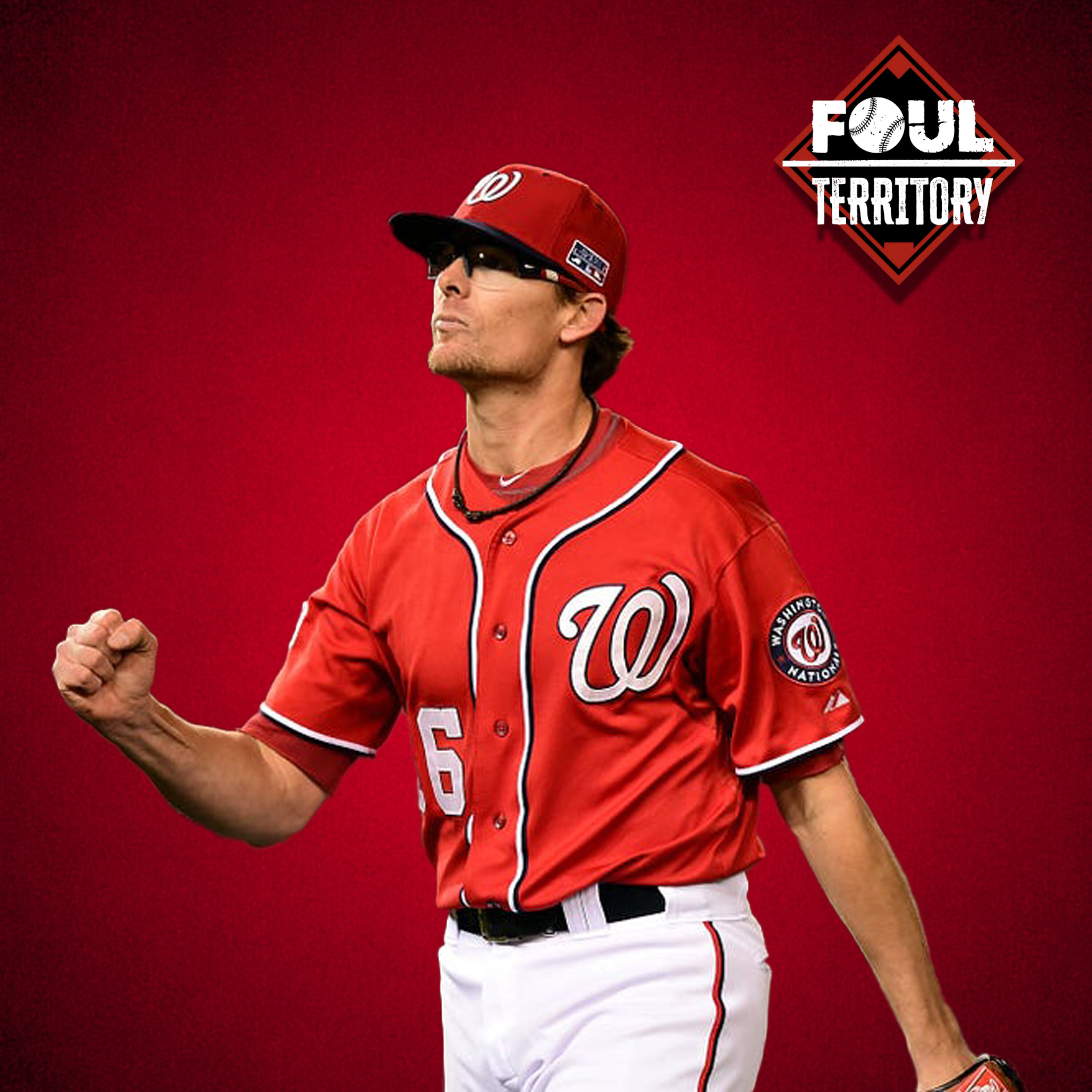
Tyler Clippard talks hand licking, Last Nats dance, WBC pitcher ideas
Former two-time MLB All-Star Tyler Clippard reveals the reason he used to lick his hand when pitching, and his key to longevity in the big leagues. He also answers whether he used spider tack, how to get more starters in the World Baseball Classic, and how he played minor league ball to get one last call up to the Bigs.
Hosts: A.J. Pierzynski, Erik Kratz, Scott Braun
Get 20% off your first Slab Pack or card purchase by going to ArenaClub.com/FOUL and use code FOUL
See omnystudio.com/listener for privacy information.
2025-08-27
17 min
Transcript
Available Results
Generated results are saved to the knowledge database for reuse and search.
No generated results are available for this episode yet.
Extract Knowledge
Pick what you want extracted first. Model, scope, and chapter options appear after a template is selected.
Generated results for public episodes are saved to the knowledge database so they can be reused and searched later.
Transcript
00:00:02
Speaker 1: Former Big League pitcher Tyler Clifford with us on FT Do you remember how many innings you locked in the bigs or in a range?

00:00:09
Speaker 2: Oh?

00:00:09
Speaker 3: Man, I want to say it's over nine hundred something, wrong along those lines. I know my appearances. I think I had eight hundred and seven appearances because as relievers, you know, that's what we take pride in, is our appearances more so than the innings.

00:00:24
Speaker 2: But I know, I know accumulated quite a bit.

00:00:27
Speaker 4: That's why I'm asking.

00:00:28
Speaker 1: So what was the key to longevity for you? In a world right now where it's so tough to keep arms.

00:00:33
Speaker 4: On the field.

00:00:35
Speaker 3: I didn't throw hard enough to get hurt, I think was the biggest thing. No, I just had a good routine. I think routine in baseball is huge, and I was very structured and you know, the timing of my off season throwing program, off season workouts, and just really stuck to that routine for almost, you know, twenty years, and my body knew what to expect, when to expect it. And it's the formula seems to work because I stayed pretty healthy. So, uh, it was a fun ride. I was glad to, you know, as a competitor you never want to be hurt. You want to be out there competing, And so that was like a huge driving force and why I put all the work in that I did because I didn't want to be hurt. I wanted to be out there with the boys and try to strike people out.

00:01:16
Speaker 2: You know, you think, you think.

00:01:19
Speaker 5: They have a shot at teaching a kid that hasn't been in the big leagues that yet, because everybody just wants their shot. They just want to touch the big leagues. And so they're going to throw the heavy ball as hard as they can and they're like, uh, well, I don't want to play fifteen years in the big Oh wait, no, everybody wants to play fifteen years in the big leagues. But they're taught throw it as hard as you can.

00:01:39
Speaker 2: Yeah.

00:01:40
Speaker 3: The the new you know way of the world in professional baseball, especially like the entry point for all the amateurs is they feel like, what's going to get them drafted, what's going to get them to the big leagues the quickest is to throw the hardest. And so it's a tough thing to teach because you know, these kids are stubborn, they're they're they're competitive, just like I was, and they want to they want to maximize their stuff, but at the same time, they might like you to your point, it might be a detriment to the longevity.

00:02:10
Speaker 2: Of their career. So, uh, could I teach them to do that?

00:02:14
Speaker 1: Yeah?

00:02:14
Speaker 2: I can try. I don't know if they would listen though.

00:02:17
Speaker 1: Well, you mentioned the routine part, right, and a lot of guys you talk to will say, hey, I figured out a routine. You know during my time in the big leagues, did you pitch around guys that didn't have one, whether they were young guys or just guys around where you'd just be like, hey, you need to like kind of harness things to make sure that you're taking care of yourself.

00:02:34
Speaker 2: Yeah, yeah, oh of course I'm kidding.

00:02:37
Speaker 4: But what did they do?

00:02:38
Speaker 3: Well, I mean, you definitely see you know, you're you're in different you know, I was on ten different teams, you know, I've been in you know, a hundred different clubhouses with different dynamics, and guys have certain things going on that that will help them that at least they think that it will, or worth work, ethic or you know, circumstances with their home life and all these all these things that go into that. But yeah, certainly if there was, if there was somebody with a ton of talent that I thought was a little bit behind the eight ball as far as their you know, their preparation, or they were just you know, dumb things that we were gonna hurt them, you know, maybe hurt their arm or not progress them on the mound.

00:03:17
Speaker 2: I would step in and try and try to talk to them.

00:03:19
Speaker 3: And and that was really the most enjoyable part of the longevity of my career. And then and towards the back end, being a veteran guy having a voice to to be able to kind of have those conversations with some of the younger players, and you know, maybe I made a difference, maybe I didn't, but it you know, it was it was been, you know, it felt you know, I got a lot of a lot out of that for myself, just trying to be that guy. So it was enjoyable and and I hope I helped some guys along the way.

00:03:48
Speaker 5: All right, part of your journey. I don't remember you as a national first. I remember you as a Trenton thunder great. We used to play against each other in double A. You were a starter at that point. One of the things that even back then, and maybe I just put it into my memory of something back then. You would always lick your hand like I'm not like some guys would be. Like if watching a video, just like a little little on the fingertip, you would hammer. I mean you would go full tongue way out whole hand. Was that something you knew you were doing in the moment or was it like something after the inning and you watch the video you're like, holy crap, no wonder my mouth.

00:04:28
Speaker 4: Is so dry. Yeah.

00:04:31
Speaker 3: Well I did have a mouth dryness occur at times because of the extreme licking of my hand. But I was always a moisture guy because I had real dry hands, so I needed that moisture to create a little tack. Where you know, a lot of guys use the rosin bag because they're they're sweating a lot, and the moisture kind of drips down on their hand and the rosin kind of creates tack in that way. I never had that issue. I wasn't really a high like, I didn't sweat a lot, so I always needed the moisture. So yeah, I was constantly trying to find moisture in my tongue and doing.

00:05:04
Speaker 2: It that way.

00:05:05
Speaker 3: So it looked funny and all my teammates called me out on it all the time, but I didn't care. I needed I need a good grip on the baseball. So that's just kind of how it all went down.

00:05:15
Speaker 5: You were looking, you were looking for moisture in your throat. That's how that's.

00:05:21
Speaker 2: I was sticking it. Yeah, you were, you were, you were.

00:05:24
Speaker 5: Way back there. Did you ever get into the spider tack because you were still around you were using it? Never did it? Did it ever work when you tried it? In a sense of.

00:05:33
Speaker 3: Mine, So I certainly, yeah, I certainly I would mess with it in like throwing sessions in bullpens and stuff. But it was because I was a change up guy, so having that tacky sensation on my hand with a change up, I mean, I would spike this thing straight into the dirt.

00:05:53
Speaker 2: So I needed that pitch. So for me, it was it was zero.

00:05:57
Speaker 3: Benefit to to try to put tack on my hand, and I I couldn't spin the baseball anyway, so it wasn't something I really needed. And that was pretty much the pitch that it was probably gonna help with the most, and I just you know, would sacrifice my breaking ball to keep the good change up and just roll rolled like that for my whole career.

00:06:16
Speaker 1: Were you glad when they kind of cracked down on it, just like, hey, it's not helping me anyway, and this could this could keep going down a weird direction.

00:06:24
Speaker 2: Well, yeah, I guess I was in a way, you know, I don't know.

00:06:29
Speaker 3: Sometimes I felt like certain climates dictated there needed to be something, because like if you pitch on a dry day in Colorado or Arizona and I you know, you ran into it sometimes maybe in Cincinnati, and then and then the inconsistencies.

00:06:46
Speaker 2: Of the way the ball was rubbed up.

00:06:49
Speaker 3: I mean, you could get a baseball in your hand and it just felt like I had a coating of baby powder all over it, and it just was super slick and almost dangerous to the point where like I don't know where the ball's going. Man, this thing, you know, fly out of my hand because it's so slippery. So from that standpoint, I wasn't I was like, I get it, I get why guys need it, But yeah, it was starting to get a little out of hand, and you were definitely starting to see, you know, some some ticks up and guys of stuff that you know, like two years prior, like you didn't have that pitch man like you know.

00:07:19
Speaker 2: So, but I never got that benefit.

00:07:21
Speaker 3: So I was like, you know, kind of even the playing field for me because I never needed it. But I don't know, And I also think it's good because it might put a little more torque on guy's elbow because they'd be they're able to rip breaking balls harder and maybe more torque on the elbow. I don't know, but like, at least in my mind, that makes sense. So I think overall it's it's beneficial that it's not around anymore. But you know, as a pitcher, you messed with it, but I never I never never could figure it out.

00:07:47
Speaker 1: Well, like you mentioned, you were a changeup guy. So have you seen, for example, Tommy Cainley last year?

00:07:53
Speaker 2: Yeah, yeah, forty one straight change ups or something crazy?

00:07:56
Speaker 1: What did you think? And do you think that if you were pitching now, a team would have been like, hey, let's up that by like double that's some guys do that now.

00:08:06
Speaker 3: The relievers are they're just like, yes, hey, I saw it when I was on the Astros. In twenty seventeen, Lance McCullers came in relief for us in a playoff game, and he threw like thirty six straight sliders or something or.

00:08:19
Speaker 2: What else his breaker, his breaking ball.

00:08:22
Speaker 3: And then I saw Kinley do it, and I'm just I don't get I could never do it. Like I was always a guy who wanted to mix and match and and I you know, I'm watching Kaylee do this.

00:08:31
Speaker 2: I'm like, dude, just mix in a heater. You know, it has to have to be a strike. Just mix it in.

00:08:35
Speaker 3: And you know, it worked, which is the most most amazing thing. Like every time I see a guy do it, I'm like, how is this working? You know, because I was always in my mind like, you know, throw the two of the same pitch and then go to something else and play that chess game.

00:08:47
Speaker 2: And these guys are just like, screw it, I'm throwing it. So uh it was.

00:08:51
Speaker 3: It's fun to watch if he can execute it, but I never understood it.

00:08:57
Speaker 1: Okay, KP, this is your first arena club experience. We're going to open a slab pack together. So first off, we're gonna buy one of those twenty five dollars slab packs and we get to see what is.

00:09:06
Speaker 4: In the pack there.

00:09:07
Speaker 1: It is the Grail, which is the best card in the pack and worth the most. There are some other cards that we're chasing, and you can see the entire lineup so that you know what you're in the running for. There's the Yamamoto signed card. Now let's open up our pack and see how we do we have ourselves a really cool graphic and then a show Heyo Tani fifty to fifty card from last year. What do you want to do? Should we sell it right back to them for sixteen or should.

00:09:37
Speaker 4: We keep it?

00:09:38
Speaker 2: You should give it to me, I'll keep.

00:09:41
Speaker 1: Good answer, fine, I will give it to you. Since the Blue Jays didn't Ghetto Tani, you can get this fifty to fifty card instead and use the code foul foul to get yourself twenty percent off your first slab pack or card purchase. Yes, you get to keep that card if you want it. They send it to you foul at Arena club dot com slash foul.

00:09:58
Speaker 5: Favorite baseball moment.

00:10:02
Speaker 3: For me it was the gold medal with the WBC team in twenty seventeen. I think was just being around those guys, having a series of three weeks to be on the same team with it was basically an all star team, and you know, we traveled to three different locations and it felt like a unit, and we won the gold and just the whole all encompasing experience of winning that gold medal was probably the highlight of the things that I accomplished.

00:10:32
Speaker 1: How do they get more American starters to get involved, because, yeah, you guys won.

00:10:37
Speaker 3: But yeah, I think it's I know, I think I think it's a you really got to plan it out, and I think I think the d RO is doing a good job of trying to get his starting staff set so they can kind of build up their off season programs, maybe a little sooner than they might they might you know, during like a regular regular season. But that's the biggest thing because you have to plan it. As a player, you have to work up to that workload quicker and that that is the biggest going to be the biggest thing to prevent injury and have guys on their on their game sooner.

00:11:14
Speaker 2: So it's just you just got to plan it out really good, because I think guys want to do it. I mean, it's such a it's such a cool thing to do.

00:11:20
Speaker 3: Uh, but you got to really plan it out properly for guys to prepare the correct way.

00:11:25
Speaker 5: All right, at thirty seven years old, you put you got forty innings in Rochester, New York. Going back to a obviously you had you know, you had a couple of rehab assignments before. But forty innings at thirty seven years old in the bushes? Is that because you love the game where you were hanging on because you put up numbers a year before. Did you feel like you were kind of pushed out of the game for no reason other than you just didn't throw hard anymore.

00:11:56
Speaker 2: Yeah, I mean a little bit of that.

00:11:58
Speaker 3: I think you know, once you once you put so much work into an off season and you feel like, you know, my arm was feeling good, I was still getting out, still able to compete and do it. If I didn't think I couldn't get out, then I would have just shut it down. But I think it was a product of knowing how much work I put in and if I had to spend some time in Triple A to get back to the big leagues, and I really wanted to end my career in Washington, So that was like kind of part of it.

00:12:26
Speaker 2: Also, So I wanted.

00:12:28
Speaker 3: To get back to the big leagues at least to say I finished my big league career as Washington National So all those things were at play, and it was a fun experience.

00:12:39
Speaker 2: It was tough at times.

00:12:40
Speaker 3: There was times where I called my wife and I'm like, just tell me, just just just say the word and I'll come home. Like one of those kind of things. Is it. It grinds on you. But I'm glad I stuck it out that last year because to get back to be in the big leagues with the Nationals run out of that tunnel for a few more times, with them playing my walk out music and having the fans interact with me one more time.

00:13:00
Speaker 2: It was it was totally worth it. But yeah, I was that year in Rochester.

00:13:06
Speaker 3: It was the first implementation of the pitchclock, and I was a guy who was real methodical, real slow. Had six pitches at that time, so I'm sitting there shaking four times, getting pitchclock violations in triple A and like it was a circus for me to figure out the pitchclock. So once the season was all said and done, I was happy to hang them up because I'm like.

00:13:25
Speaker 2: I don't want to deal with this pitchclock thing anymore.

00:13:27
Speaker 4: But it was it was.

00:13:29
Speaker 2: It was a fun experience to have.

00:13:31
Speaker 4: And then you're coming up to the bigs where you didn't have to deal with it.

00:13:33
Speaker 3: No, it was it was in the wait. Actually, you're right, I don't because that's right, they didn't have the pitchclock in the big leagues.

00:13:39
Speaker 2: Yeah, that's what year was this, twenty twenty two, right, So twenty came.

00:13:43
Speaker 4: Yeah, that last year where it's like cool, do this up until this point.

00:13:47
Speaker 3: And I had to completely completely change my pitching style and triple A and then you know, figured it out, had some bumps in the road figuring it out, and then got the big leagues.

00:13:56
Speaker 2: I'm like, okay, no moren pitchclock.

00:13:58
Speaker 4: Yes, right, and then twenty three a tier. Yeah, good time.

00:14:02
Speaker 2: He was great timing.

00:14:03
Speaker 4: Yeah, it was a great time, all right. So then let's finish with this.

00:14:05
Speaker 1: So now, I mean you are a marked man at a place like this, at the pro rivals open, Like when we talk to John Smult, who's the commissioner, for example, I'll use that that name he goes. Tyler Clippard's on my hot list of guys to follow that could win this thing.

00:14:23
Speaker 4: So what does it feel like to be.

00:14:25
Speaker 1: One of the top former pro athletes in North American sports to now be confident in a tournament like this.

00:14:31
Speaker 3: Well, I mean, I'm so thankful for John because I think we share the love of golf. Like I'm a golf psychopath, Like I know everything about the PGA Tour.

00:14:41
Speaker 2: I watch it religiously. It's the only thing I really watch at home.

00:14:44
Speaker 3: I'll throw on a baseball game every now and then, but golf is really like the forefront of my life now and it keeps that competitive side fed for me that I know I need moving forward for the rest of my life, because that's not going anywhere. You don't change. You want to you want to compete, and golf facilitates that for me. And you know, I'm still playing and uh you know, local local am stuff and and trying to do US mid am stuff and and so like I'm really I really take it seriously. But getting into this environment around you know, all the some of the best golfers in the world sports here, Yeah, they're they're in for it because I don't know if a lot of these guys are playing the caliber golf that I am.

00:15:23
Speaker 2: But listen, I got to back.

00:15:24
Speaker 3: It up, so you know, but that's what this event's all about, you know, talking some some smack and backing it up.

00:15:30
Speaker 4: So you want that.

00:15:32
Speaker 2: I'm gonna do both of those things.

00:15:33
Speaker 1: There's definitely some guys are gonna come here that are fresh off the field baseball. I feel like the community they know who's good and all of that, but maybe from one of the other three sports where they're like, oh, I'm I'm pretty good and then they show up to an event like this and they're like, I'm okay.

00:15:46
Speaker 2: Tournament.

00:15:47
Speaker 3: Tournament golf is a little different animal. So yeah, it'll be interesting to see how guys hold up. And when you get a pencil in your hand, it's, uh, it's it's a totally different world. And uh, putting everything out making those two three footers that you just rake away on on your normal Saturday is you can't do that here. So uh, that's that's really the separator. And especially in a three day event like we have here. So I like my chances.

00:16:09
Speaker 1: Okay, so last one top former MLB player now golfer, but you can't say so. Besides, you're like, who who is the top competition these days of former players, former you know that you've played with or that you know people have mentioned.

00:16:24
Speaker 3: Yeah, I mean the Aaron hicks Is is up there. He's We played together in New York for about a year and we would play a lot of golf together and he always always mentioned him when I talk about people that I've played with in my career, because Hicksy is by far the hits the ball further than anybody I've ever played with, along with a good short game and can putt.

00:16:45
Speaker 2: And you know, you you're.

00:16:47
Speaker 3: Around guys that can hit the ball far a lot because I mean these athletes are strong and fast, but Hicksy's got the full package. So uh, he's he's going to be one to look out for for sure.

00:16:58
Speaker 4: He played when he was five years old.

00:17:00
Speaker 3: Yeah, me and him had a junior golf background too, So me and him, you know, did some a J g A stuff growing up. So he's got the competitive golf background like I do. So that helps a lot to see.

00:17:09
Speaker 1: To me, that's the difference the short game, right where some of these guys are big, strong, you can hit the ball consistency.

00:17:16
Speaker 3: Yeah, I mean, it's just finding the way to get the ball in the hole and not make double bogies exactly.

00:17:20
Speaker 1: Yeah, well, hey, good luck, thank you, great to have you on, good to see in person, Thanks for having me, appreciate it, and we'll be right back.
Chapters
No chapters available.