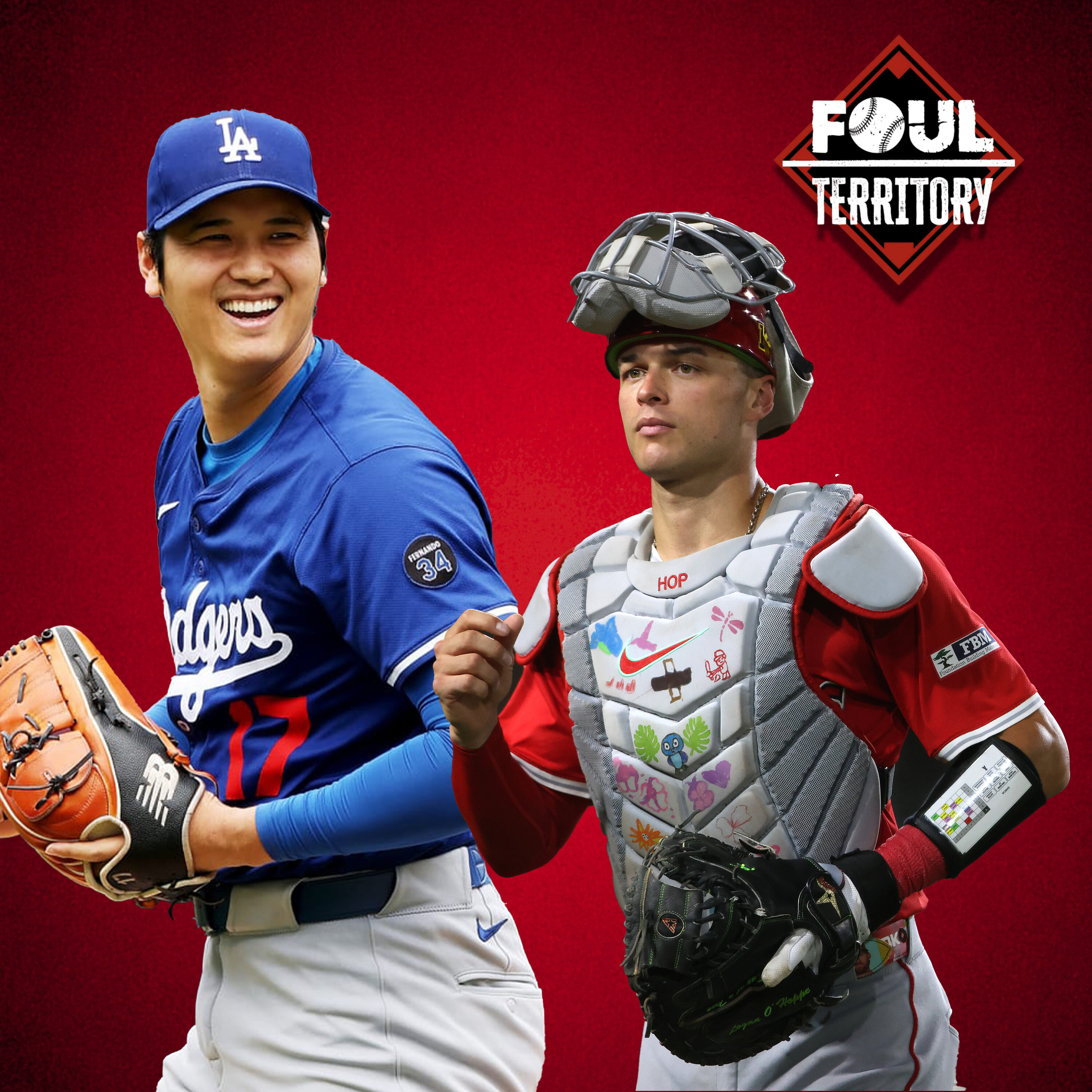
Ohtani reliever rules? + Logan O’Hoppe talks Pitch Tips, Sweeping LA
Is it true that the Dodgers are exploring Shohei Ohtani as a reliever in the postseason? (top of show) Will there be another Ohtani rule for 2-way relief pitchers?
(7:10) Are fundamentals being stressed enough to the modern ballplayer? We ask Angels catcher Logan O’Hoppe and we cover the Angels having the secret potion to beat the Dodgers this season.
Hop also addresses pitch tipping concerns and his unique gear from Players Weekend.
Hosts: AJ Pierzynski, Erik Kratz, Scott Braun
Rula patients typically pay $15 per session when using insurance. Connect with quality therapists and mental health experts who specialize in you at rula.com/foul! #rulapod
See omnystudio.com/listener for privacy information.
Available Results
Generated results are saved to the knowledge database for reuse and search.
Extract Knowledge
Pick what you want extracted first. Model, scope, and chapter options appear after a template is selected.
Transcript
00:00:02
Speaker 1: October's edge.

00:00:04
Speaker 2: Could it be sho, Hey Otani, I like the pumpkins number too early for pumpkins, pumpkins spice latte anyway?

00:00:11
Speaker 3: Could a Giants or Orioles fan?

00:00:14
Speaker 1: True, neither of which will be in October.

00:00:18
Speaker 2: But this article in The Athletic refers to a conversation yesterday on The Dan Patrick Show with Mark Pryor, the pitching coach for the Los Angeles Dodgers. The headliner is, could show Hey Otani pitch in relief in October and here's what it would take good article. Fabi and Ardaia writes about it, and prior told the Dan Patrick Show absolutely about the possibility of him being a relief pitcher in the playoffs. He did clarify after that the discussions the organization has had about him in a relief role are limited solely to clarifying the language of the rule book and Otani's ability to rem ain't in the game as a hitter in such a scenario. AJ, we just did the Otani rule for eligibility the other day. Do we need another Otani rule for everything to work out? From a reliever point of view, Well.

00:01:13
Speaker 4: It's gonna be different because you can't just bring a guy in and then pitch him and then put him right back at DH. So I don't know how it's gonna work. Someone's gonna have to clarify this. We're gonna need a rules official, an umpire, Rob Manfred, somebody to come out because this is an interesting point. I don't think you can do this, but we'll see. I don't know if anyone's ever tried this. So does you have to go in the outfield after he pitches to stay in the game or something?

00:01:36
Speaker 5: I don't know.

00:01:36
Speaker 4: I want to know the rule. I want to know the answer to the rule, because nobody seems to know the answer, including Mark Bryor and the Dodgers.

00:01:41
Speaker 1: So wait real quick, KP. I'll just read this.

00:01:45
Speaker 2: So MLB's Otani rule, and this isn't for the eligibility, which we covered the other day. This is for game by game. It was written in twenty twenty two. It specifies that a starting pitcher can remain in the game as a DH even after being removed from the game as a pitcher. That's what Otani does now when he's starting. That does not apply the same way if the pitcher entered in relief if Otani starts a game as DH then enters the game to pitch, removing him would mean taking him out of the game entirely, and you lose your DH. And the Dodgers don't want to do that. So do we need to quickly create a rule?

00:02:16
Speaker 1: Otherwise? How are you using Otani as a reliever in this postseason?

00:02:21
Speaker 6: Hey, maybe maybe they need to you know, have a sacrificial land, maybe just rake in relief and maybe lose him for the rest of the game, and then they'll have a complaint and you know, more than likely they'll probably you know, cater to him and change the rule. But in addition to the rule, I was thinking, logistically, how does that work? You know, it's already complicated enough for him to you know, have to go into the bullpen warm up. You know, he has his time to walk across the field, sit in the dugout. You know, we've seen the videos of him when he's starting at home. You know, bat boy brings him out of stuff. He never even goes and sit down. But what is he going to do if he's at you know, say he hits a leadoff double and they need him to go get three big outs. You know, what do they do? Can he are we gonna have a ghost runner? Like where does the rule kind of stop to kind of cater towards him and the Dodgers. But you know a lot of these bullpens are out in the outfield. A lot of these bullpen or a lot of the batting cages don't have mountds in them underneath, So that's another thing they would have to try to figure out logistically.

00:03:20
Speaker 5: It's not gonna happen. It's not gonna happen. It's not gonna happen.

00:03:25
Speaker 4: It can't happen with the rule the way it is, and it can't happen with what KP just said. Let's say he hits a leadoff single and he's on first, and like, hey, we really want you to pitch the eighth. You're oh go steal second, score the go ahead run, and pitch the eighth. They won't happen because he won't have time to warm up and his routine is too long. So he's gonna have to be a starter or nothing, or they're gonna have to put him in the They're gonna have to figure this out in the regular season because you can't go into the postseason and be like, oh, hey, guys, we're changing the rules for one guy can do this.

00:03:48
Speaker 3: No, the rule's not gonna change. He's not gonna be able. Yeah, it's cool they said that.

00:03:52
Speaker 4: But if they're willing to let him go out there and maybe close a game in the ninth and if he gives it up, they lose him in the lineup, and that's gonna be what they're gonna have to do.

00:03:58
Speaker 5: But it's not gonna happen.

00:03:59
Speaker 6: I mean, I like that point too, is even if they don't change the rule. I mean, you can roll the dice and gamble a little bit too, and you know, if the opportunity presents itself where you know, maybe he had hit in the inning before and he has the proper amount of time to go warm up, he could pitch in the eighth or ninth inning at the risk if the game is tied or they give up the lead, you may have to lose him. Or like you said, maybe he learns to you know, maybe go stand and left or right field and you'd probably be really good at it if he got a chance to play the outfield.

00:04:32
Speaker 2: Yeah, if you're running out of arms like the Dodgers were, last year in the World Series, and they're like, I know he told Walker Buehler, no way, but now, okay, that could be Hero Tani moment in a scenario like that. But I'm with you this year, AJ, if the league tried to change a rule now, it would be a difficult luck. Now, AJ, do you think that they should change this rule going forward, not just for Otani, but should they try and figure out a way to promote that we could have more two A players as relievers and not just starters or kp What do you think?

00:05:03
Speaker 6: Yeah, I mean, I don't think it's a bad thing. I mean, I think there's a you know, a couple guys that may have the ability to maybe pitch one inning, but since there's not really a rule in place, they haven't really kind of figured out a way to use those guys. I know. You know, there's been a couple players recently that were drafted as two way players, and you know, ultimately you get into the minor leagues and you realize, one it's incredibly difficult to be successful as a hitter or pitcher. It's almost impossibly to be successful at both. But maybe a change in rule does allow some of these organizations to at least flirt with the idea of, like, man, this guy's got a really good arm. Maybe he could pitch like, you know, a seventh or eighth inning, you know, every once in a while, and maybe it can lead to more guys, you know, kind of finding their path as a two way player.

00:05:51
Speaker 4: What you mentioned it yesterday though Scott didn't. We didn't we talk yesterday about the rule?

00:05:56
Speaker 5: Was it yesterday?

00:05:57
Speaker 3: We talked about the rules?

00:05:58
Speaker 5: How it limits two way guys.

00:06:00
Speaker 4: Yeah, limits even more because you can't use them as You can't really use them as a starter at the big league level because you basically have to eat it for a year of playing a player short and if you want to use them as a bullpen guy or in a position player, you lose them as soon as they come in. So yeah, I think some rules need to change. I don't know when, and won't. It's not gonna happen during the year. If it had, let me say this, if it happens during the year, you will have every fan base except the Dodgers clamoring that the league is trying to help the Dodgers win another World Series.

00:06:30
Speaker 6: Yeah, I think you just got to if you're the Dodgers. You just got to go out and do it, like I said, sacrifice him missing, you know, and at bat, maybe in the eighth or ninth inning of a single game, and then you can kind of just bring attention to it, and you know, maybe the league has a you know, a discussion about it in the offseason. But to your point too, I wouldn't want to be a rules committee part of MLB Major League Baseball right now, and you know, kind of bend the rules to a team that was already considered a super team and a team that's supposed to win the World Series, and a team that won the World Series last year that are already kind of playing with a unique set of rules because they have the one and only guy who does both.

00:07:14
Speaker 1: Logan O Hoppy Angels Catcher joining us right now. How you doing, man?

00:07:17
Speaker 7: Doing well? Thank you doing well. Good to see you guys. Appreciate you. Yeah, yeah, it's been good.

00:07:23
Speaker 1: Good to see you two.

00:07:24
Speaker 2: First off, I just want to carry a combo we were having from the previous segment. Where are we at with fundamentals and how they're taught both at the minor league level, and let's even go further back right. As soon as you become a prospect, you're on the prospect map. How are fundamentals and development taught to players right? How do they develop players versus balancing a player having to actually get to MLB right and prove that he's got the tools, the numbers that are people are looking at the metrics. This discussion is related to how you know the Brewers are playing a different brand of baseball for many other teams.

00:08:06
Speaker 1: Your thoughts, I.

00:08:09
Speaker 8: Think I would have a different answer than the kids that have gotten drafted in the past couple of years. I came up with the Phillies and I was in twenty eighteen. I was a late round pick out of high.

00:08:19
Speaker 7: School, and.

00:08:21
Speaker 8: I was taught then, if you're gonna play in the big leagues, then you're gonna be out at the lower part of the order, and you got to learn to do these things, you know. So it was something that I was taught, not even in professional baseball, back in high school. My two high school coaches were and still are really I consider them family and some of the best baseball people still that I've ever been around. So they were implemented at a pretty young age. Bunted yesterday for the first time in my big league career. So this qussion comes at a perfect time. I think it's really important. Part of me misses that brand of baseball, you know, and I'm always trying to find ways to be better at it. And but the game is changing, obviously, is as we all know, So it's definitely a tricky thing to balance. But I know, coming up in the minor leagues with the Phillies then it was harped on quite a bit.

00:09:13
Speaker 9: Do guys talk about you're in the big leagues now, not in the minor leagues They're saying the conversation was, Oh, you got to learn all this stuff in the minor leagues. Do you feel like when you were asked to bunt or you bunted, that your value is now going down arbitration value? Is that kind of stuff discussed in the clubhouse or is that like a hush hush thing that a team that wants to win gets this done.

00:09:39
Speaker 8: No, we don't talk about that at all ever in the clubhouse.

00:09:41
Speaker 7: It's it's been.

00:09:43
Speaker 8: A lot of football lately and everything in between or laughing the netto whatever it's been. So no, we don't really talk about that. A lot in the clubhouse. But selfishly, I think that fundamentals are what makes the game great. And I know that I'm probably pretty outdated with that take, but I think so it makes the game awesome.

00:10:01
Speaker 5: Logain.

00:10:02
Speaker 3: First of all, your hair is on point, but that's when you can get into that later.

00:10:05
Speaker 4: Their hairs fresh, thank you, thank you, very nice, very nice, fresh cut. But my whole thing when we were discussing this is is teams and agents. It's not in amongst the players, but teams and agents will go to you and say maybe more agents and teams because teams don't want to give away their secret. But your agent says, man, you got to hit more home runs. I remember when I was going through arbitration and they were like, you got to hit twenty homers if you want to get paid. And I was like what the team told me that, And I was like wait what And I'm like, but I only you know, I hit ten or eleven or whatever, and they're like, nope, you got to get to twenty if you want to really get paid.

00:10:39
Speaker 3: Right.

00:10:39
Speaker 4: So that's kind of where it's gone now is guys look at it and they started it at such a young age with their agents or advisors as they call them. Now, you got to hit for more power, you gotta walk more, right, you got to throw harder as a pitcher. And that's why some of the people are saying that the bunting and the stealing of bases and some of the other stuff isn't pushed as much because they're totally young. Hey, you want to get to the big leagues, you got to hit homers. You gotta walk, and it's okay to strike out.

00:11:05
Speaker 8: M I I would say that I don't think arbitration has a lot to do with it.

00:11:10
Speaker 7: I think that no matter I mean, you guys know when you played.

00:11:13
Speaker 8: Like I think, no matter what, you're gonna want to walk more, strikeout less, and hit more homers. Like I think anyone that's playing the game will tell you that they want to do more of that, you know, And that's that's money arbitration for you to see whatever aside from all of it, just because it makes sleeping a lot easier when you do those things more often, you know. So I don't think that money is a driving factor for a lot of guys. I think that they just want to impact the game as much as they can and be the best player they can be, And I I can truthfully say, like, I really don't think that if you ask guys around the league that there's there's an agenda like that because they want to get paid more, because they want to maximize arbitration or whatever that is.

00:11:54
Speaker 7: So I think it's just guys want to be the best.

00:11:58
Speaker 5: All right. So you're saying players want to be competitive, right.

00:12:01
Speaker 7: M hmm. Absolutely, they want to win.

00:12:04
Speaker 5: They want to win.

00:12:04
Speaker 9: Anybody ever questions that you know guys on the field don't want to win or don't care, they're just trying to get their numbers. I think is a lie. Probably ninety nine percent of the time. I think ninety nine percent of guys want to win. Who's the most competitive person on your Angels team right now?

00:12:21
Speaker 8: We got a bunch of guys. I would say Tyler Anderson is the most competitive, and not so much off the field. We were really we don't we don't do too much competition off the field with one another. But Tyler Anderson that guy. I mean, that guy's a bulldog and he wants at every pitch and I always like catching t I know he's going to give everything.

00:12:43
Speaker 4: Yes, what's it like in angels Land right now? What's it like in in I'm Anaheim. It's not Los Angeles.

00:12:51
Speaker 3: I don't know.

00:12:52
Speaker 5: I bet game is still I don't care.

00:12:54
Speaker 3: But what's it like in Anaheim?

00:12:56
Speaker 5: Right now?

00:12:56
Speaker 3: You guys are kind of.

00:12:57
Speaker 4: In that you're still in it, right so you're fighting to win every every day. You guys play great against the dog I mean, you guys swept the Dodgers year.

00:13:04
Speaker 3: Yeah, okay, then you'll have like a lower you loose two out of three.

00:13:06
Speaker 4: What's it like because you guys, it's like, you guys played great against the really good teams and then all of a sudden it's like, oh no, what happened against the other teams?

00:13:14
Speaker 7: Yeah?

00:13:15
Speaker 8: Yeah, I mean the vibes are good. We still love playing with each other. We know, we know what's in front of us. It's been the focus every day and obviously last week was a huge step for us and just awesome for for everybody and everything to know that we're capable of doing that. And like you said, tough weekend, but we've overcome obstacles before. You know, it's nothing we haven't been through, So looking forward to a good week this week.

00:13:45
Speaker 9: FT fan, when you're playing in games. You kind of have some stress anxiety. Teammates need somebody something to help. Now it's at your fingertips with RULA.

00:13:55
Speaker 7: That's right.

00:13:55
Speaker 2: Telehealth has been a huge help for millions of people, but it can be time consuming and expensive to find the right therapist. Rula is on a mission to make this process smoother, and make sure you go to rulea dot com slash file for more details. They take most major insurance plans, and the average copey is only about fifteen dollars per session. Every provider on Rula is carefully vetted and chosen for their expertise. Thousands have already trusted Rula to support them on their journey toward improved mental health and overall well being. Head on over to rula dot com slash foul to get started today. After you sign up, they ask you where you heard about them. Please say that ft sent you there to support the show, but also worry about yourself here at rulea dot com rula dot com slash foul and take the first step towards better mental health today. You deserve quality care from someone who cares. Hey, tell me about that Dodgers series and really the season series against them, what's the recipe to beat the Dodgers, because a lot of teams would like to know it. I know they haven't played as well the last couple months up until this weekend where they swept the Padres, but this is the defending champs, and I think this was the first time ever we had this occur where the Angels swept the season series.

00:15:07
Speaker 1: So what happened?

00:15:09
Speaker 7: Mm hmmm. We played our game. That was it.

00:15:13
Speaker 8: We didn't get outside of doing what we knew we were capable of doing. Back in a little bit to our first question about worrying about different numbers and stuff, I forgot to mention, like those games against the Dodgers are really any big of a game, even if it's a Monday Tuesday night game with only a couple thousand people there. Like, the environment's too hostile to think like that. Like if you think like that environments like we just played in, then you're gonna get eaten alive, Like you don't have time to think about the outside stuff. So those games were fun. They were really fun. Obviously the result plays a huge part of that, but I think I could speak for a lot of guys in the clubhouse, like it took me a while to go to sleep after those games each one, and it was it was a pretty cool atmosphere for sure.

00:15:59
Speaker 9: Some of the they're talked about with the Angels are, Oh, it's all these guys that get drafted and they come right up to the big leagues and you have a lot of dudes. I mean they're they're everywhere. You got netto, You've got Christian Moore was playing a lot recently, Shana, Well, some of your pitchers. You know, obviously Joyce's out, but you know, you sit there and you go, all these guys are getting called up. Is there any way to simulate or get them ready for a Dodger series when they're in the bushes? Because the best, to me, the best way to learn is in the big leagues, But the hardest place to learn lessons is in the big leagues.

00:16:34
Speaker 5: M h.

00:16:36
Speaker 7: Yeah, you're spot on with that.

00:16:38
Speaker 8: There's no way you can replicate that like nowhere in the minor leagues. In my opinion, I always said I heard that there were big jumps in the minor leagues, whether it was from high to double A or whatever, it was low way to triple A, whatever was I think the biggest jump is to the big leagues. I don't think you could replicate anything like it, and environments like that. It's good for all this young guys to be in those environments as early as we can, you know, because I was picking Travis's brain about how that compares to a playoff atmosphere.

00:17:04
Speaker 7: So all those experiences.

00:17:07
Speaker 8: Are great for us, And kudos to to all those young guys and all of us that that did it and we're able to compete and keep her composure that week.

00:17:17
Speaker 5: What about what about tipping pitches?

00:17:19
Speaker 9: You guys got the you got the little you know, the little now, so there's no more signs unless you're kershaw Kershall was given signs against you, guys.

00:17:28
Speaker 5: How much of your not how.

00:17:31
Speaker 9: Much of your day, but how much does that consume you in the sense of like looking at the first base coach, third base coach, are they move and how much are you in your Is that in your constant thought when you're playing certain teams or is it just always and you always think somebody's trying to trying to pick signs or pick a tip from a pitcher live in game.

00:17:58
Speaker 8: Yeah, you're you're always anticipating it just because you know the information that's out there. You know, you know that guys are studying you see it. So it's it's been something I've been learning with behind the plate, especially of not going too early or whatever it may be. But yeah, I mean it's it's I wouldn't say it's in the forefront of my mind, but it's always a thought in the back of your head on are we keeping everything secure? And are we are we keeping anything neat and tidy how we need.

00:18:26
Speaker 7: It to be.

00:18:26
Speaker 8: So I would say it's a thought throughout the game for sure, but it's definitely not a main focus at all.

00:18:32
Speaker 9: I don't know, maybe you won't answer this, but I had a tip as a catcher one time in September. Every for like two weeks, every breaking ball that I called with a runner on second, I would touch my chest protector. And one of the guys on our on one of the guys on our team are one of the coaches, one of the video guys, was like, Hey, you're doing this every single time on a breaking ball, never on a fastball. Is there a tip that you had when you first came up early that you were that you were told about that you were doing.

00:19:07
Speaker 7: I haven't gotten one like that.

00:19:10
Speaker 8: I know that this is a frequent thought of mine, Like if if we get hit on a pitch, especially if it's executed, I'm thinking, like I'm looking back at like what what did I do? Like I had to be given something, I had to have been doing something at some point, So I look at it as much as I can, And I mean, I'll be transparent with you guys. I'm sure there have been times where I've had something that another team's had.

00:19:34
Speaker 7: You know, But I do what I can to stay on top of it.

00:19:37
Speaker 8: And that doesn't help me sleep a night by any means, but I know that that's a part of the girling process.

00:19:44
Speaker 4: Do you guys self scout? Do you self scout yourself? Do you guys have someone to watch the video you look?

00:19:51
Speaker 5: Yeah?

00:19:52
Speaker 4: Okay, okay, So then did it look different this weekend when you had that awesome catching gear with all the signatures and stuff on it?

00:19:58
Speaker 3: Did it look any different when you checked it out? Because that was awesome?

00:20:01
Speaker 7: So no, that was that was a cool one.

00:20:04
Speaker 8: It came out way better than last year's And uh yeah, that's always a pretty a pretty special day and a pretty cool thing to do. So grateful that those kids who were not only eager to help, but but had smiles on their faces doing it, and they were helping me as much as hopefully we're helping them a little bit.

00:20:25
Speaker 5: Should you be able to do more of this? Should?

00:20:28
Speaker 9: Should Major League Baseball allow more of this? Like not just one weekend? Because I mean, look at this pictures. If you put those pictures up of the kids smiles and then you put them next to your smile that you just had, like you know, that puts a smile on their face. And yet it feels like sometimes it's like pulling teeth to be able to have something special like this that's in a game that that makes that changes lives for these kids.

00:20:57
Speaker 7: Mm hmm. It's a it's a tougher question for me to answer. To be honest with you, the only thing I don't like.

00:21:07
Speaker 8: About moments like this are the cameras and the notoriety gets. I want to make it clear to those kids that I'm there to see them when I'm in the in those hospitals, and a lot of times I tell them to leave the cameras out, Like I don't.

00:21:21
Speaker 7: I don't like that part of it, you know.

00:21:23
Speaker 8: I want to be a human before I'm the baseball player that's going to visit a hospital, you know, because I saw it firsthand with whether it's friends or family. Like, the last thing you want when you're going through that stuff is cameras in your face, you know. So you just want people to talk to and sometimes you just don't want to be a patient in the hospital, you know.

00:21:43
Speaker 7: So, I it's a tough thing. I don't know. I mean, I'm grateful that the league gave us the outlet to do it.

00:21:49
Speaker 8: Don't get me wrong, I don't want to don't come off ungrateful about it, but I mean, if they if they did more about it, great. But I think that as players we can all I'll do a little more. I wish our schedules gave us more time to do more things like that, you know. But I know there are plenty of guys around the league that doing as much as they can that no one sees, And I think that that's that's the sauce for sure.

00:22:11
Speaker 4: Hey, hey Logan, we had the Cardinals game and Pozo had a bat that he did the same thing. He went around and he had a bunch of children that were in the hospital and going through stuff and put their hands on the bat and he used in the games and all that stuff.

00:22:26
Speaker 3: It's amazing what you guys are able to do.

00:22:28
Speaker 5: Now, how much.

00:22:30
Speaker 4: Do you think it means to the kids, right like you, but also like the kids when they turn on the TV they say, hey, that's my blue handprint or look at Logan's chest protector.

00:22:39
Speaker 3: Like, to me, that's what it's about. It's not about the cameras. But it's a cool moment.

00:22:43
Speaker 4: You know, the kids are in there and they get their picture taken and then they get to tell their friends, Oh, Logan o'hoppe came to see me.

00:22:48
Speaker 3: But then they turn on the.

00:22:49
Speaker 4: TV and you're catching and your chest protector has Sammy or David or whoever signed Liz or whoever it was, it signed your chest protector. They can see that and they call mom and dad and it puts that to me is what it's about. It's not and I wish we could do more of this, obviously, but I mean, that's what it's all about. The smile that the smile on your face, the smile on their face. How emotional you get, How emotional Poso was, and we talked to him about it, like, those are the moments that make this game special, forget.

00:23:13
Speaker 5: The other stuff.

00:23:15
Speaker 8: Yeah, no, absolutely, Ultimately that's the that's the whole reason why you do it, you know. So Yeah, I mean you hit the nail on the head with that. It is a pretty cool moment. Like I said, they were helping me more than then they even thought. You know, so, just trying to bring smiles to their faces as much as we can because I know that they're going through some pretty tough days.

00:23:37
Speaker 7: So I hope we accomplish that.

00:23:42
Speaker 4: Okay, all right, So last thing, I think we got to let you go. Fantasy football is a huge deal in the baseball community. Okay, don't let anybody you know. That's why that smile came out. Have you guys done your draft yet?

00:23:54
Speaker 3: How did you pick the order?

00:23:55
Speaker 5: Okay?

00:23:55
Speaker 3: Well, how are you going to pick the order?

00:23:57
Speaker 4: Because you saw the Blue Jays that their little guy thing falling down, that whole.

00:24:00
Speaker 7: Deal I did.

00:24:02
Speaker 8: We got to talk to the commissioner about that because we got it in a couple weeks too early in preseason right now to draft.

00:24:07
Speaker 3: So okay, who's the commissioner?

00:24:10
Speaker 7: Uh trouty?

00:24:12
Speaker 3: Oh oh boy.

00:24:16
Speaker 8: It's a big buy in is what you're saying, all right, and then split a team with Joe Adele.

00:24:21
Speaker 3: Yes, okay, there.

00:24:22
Speaker 1: You go, There you go, makes sense, Tommy Fan's not on the Angels.

00:24:26
Speaker 4: But then the last thing is is if you get the first pick, who are you taking Chase.

00:24:32
Speaker 8: I'm gonna have to talk to Joe about that. It's a team effort, so we're gonna have to have a couple of meetings about it and sit on the plane flight.

00:24:38
Speaker 4: So are you a book Are you a book guy? Are you like a magazine guy? Or you a print out guy? Because some guys had books, some guys had printouts that they would, you know, go through and keep track of everything.

00:24:49
Speaker 3: Do you just do it on your iPad? How do you keep track of you know?

00:24:52
Speaker 4: Then god forbid you draft somebody who already got drafted, because then everybody just wears you out.

00:24:57
Speaker 8: Yeah. I actually like, I'm I'm not a huge like. I don't get too into it. I'm not a huge fantasy football guy. But one thing I do know from listening to friends or whoever was in the years past is that usually the people that do the most homework don't end up too well. So I'm gonna prepare a little bit, not over prepare, and hopefully bother a few guys on the team. You have my lack of preparation and the record that will come out at the end of the year, so we'll see how it shakes out there.

00:25:29
Speaker 2: You go over prepping is a detriment if you go too crazy.

00:25:33
Speaker 3: Draft at draft at drill a lot.

00:25:36
Speaker 8: Of draft, but that would be a good idea for sure.

00:25:41
Speaker 2: Well, Logan, awesome to catch up with you, man. We always appreciate having you on. Fans love it too.

00:25:45
Speaker 1: A lot of Angels fans always check it in. Thanks for the time, dude. We'll catch you soon.

00:25:48
Speaker 7: Okay, thank you guys, appreciate it.