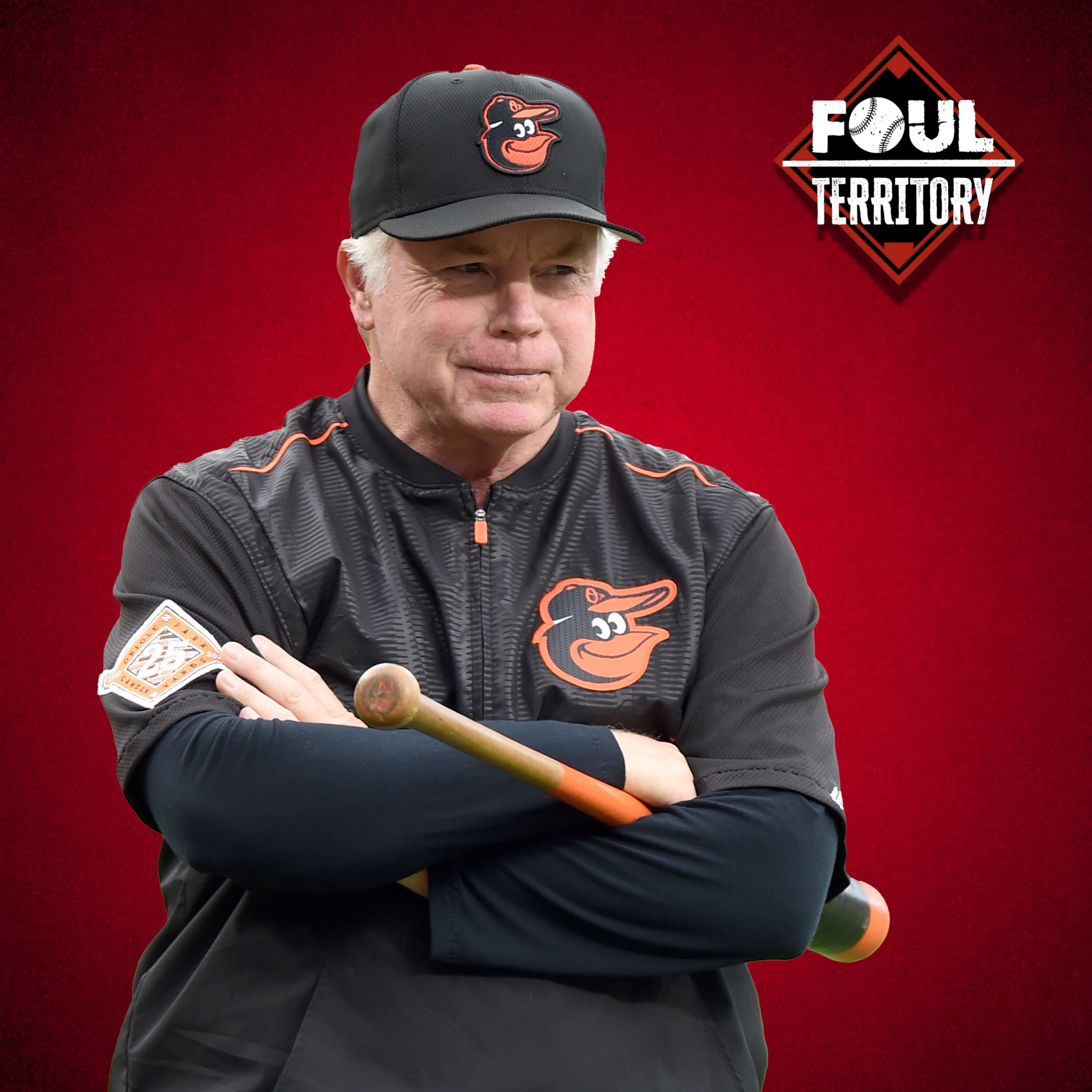
Buck Showalter’s BIG MLB realignment plan, Ohtani 2-way strategy, Managing hurt players, Bananas cameo
Buckle up! 22-year MLB manager Buck Showalter tells fun stories about his Savannah Bananas appearance and interactions with Ichiro. Plus, Buck discusses issues with the Minor Leagues and how managers should handle injured players who play through pain.
Upgrade your wardrobe and save on @trueclassic at https://trueclassic.com/FOUL! #trueclassicpod
(14:17) KP gives his thoughts on MLB realignment plans.
(15:19) Buck reveals his realignment plan and delves into schedule realignment as well.
Hosts: Kevin Pillar, AJ Pierznyski, Scott Braun
Rula patients typically pay $15 per session when using insurance. Connect with quality therapists and mental health experts who specialize in you at https://www.rula.com/foul! #rulapod
See omnystudio.com/listener for privacy information.
Available Results
Generated results are saved to the knowledge database for reuse and search.
Extract Knowledge
Pick what you want extracted first. Model, scope, and chapter options appear after a template is selected.
Transcript
00:00:09
Speaker 1: Buckle up, Buck Show Walter joining us right now. Buck, great to see you. I love that intro. It's one of the best that we do. You've got AJ, Me and Kevin Polar.

00:00:18
Speaker 2: Kevin Plar, it's another guy. I wanted to get on a club many times, but AJ and both these guys, I couldn't get a GM to go along with me.

00:00:27
Speaker 3: Buck, I gotta start this often because we talked about this in the production meeting. I got a chance to compete against you a ton. First of all, it's an honor to meet you. It was a big fan from AFAR. But I got a question for you. All those years we played against each other, I'd always see you out early VP guys taking early ground balls. You'd be leaning on your fung go. I never once came up to you and said hi. I always heard that you didn't like to talk to the quote unquote the enemy, so I never took that opportunity. You also never went out of your way to come say hi to me, So I just kind of solid as that's just Buck. You know, he doesn't necessarily want to associate with the other team. But like I said, it's honored to meet you, and I probably should have taken that chance.

00:01:10
Speaker 2: Well, that's both our faults. You know. It's funny is that I grew up in an era where all a product of our upbringing, where we used to get fined in the minor leagues and in the major leagues they would have one umpire sit in the stands and if you were seen talking to the other team, you got fined. And in the major leagues they used to take the youngest umpire of the four man crew and they would sit in the stands early on, and if you were what is the word. You guys helped me fraightnizing, and you would actually get fine because they wanted to keep the sanctity of the competition for the fans for some reason. That's another rule that you know whatever. But I didn't do it by on purpose. I was probably very I was leaning on that to keep from falling over most of the time. But I'm miss being able to hit fungos and throw batting practice. That was to get away from the media. Kevin, Oh, sorry, I got to go through the VP. But it's great, great to be on with you. I've always admired the way you played. People always wanted you on your club. You had a not You didn't play with an anger. You just played with a edge. That's what I liked.

00:02:18
Speaker 4: Appreciate that, Buck for me.

00:02:21
Speaker 1: I mean, couldn't you tell that Kevin was a football player? We talked about this at the top of the show.

00:02:25
Speaker 4: Of course, he.

00:02:26
Speaker 2: Lives in Argyll, Texas. That's not far from me. Kevin. We got to get together.

00:02:30
Speaker 3: Let's get together.

00:02:31
Speaker 5: Where are you at.

00:02:33
Speaker 2: I'm in Dallas. I've been there for twenty something years.

00:02:35
Speaker 3: Oh okay, yeah, I'm new out here. I'd love to get together with you.

00:02:39
Speaker 2: Ay, Jay, how you doing this? Will love fest?

00:02:42
Speaker 5: But by the way, Buck, I don't know where you are, but I'm in Baltimore. The weather here sucks. The weather sucks. It's sixty degrees and cloudy and crappy. It's always twenty first. Where the hell is the hot Baltimore weather that I came ready for.

00:02:59
Speaker 2: I'm in Maryland to AJ right now. I'm going home on a few days. But my son lives up here. But you know, uh, I played golf for the first time in the year the other day and the weather was just fine. AJ.

00:03:11
Speaker 4: That's good golf weather. Yeah, sixties, you'll take it. And by the way. Yeah.

00:03:15
Speaker 5: When I came in a T shirt shorts, though, I got off the plane and I was like, WHOA, I should have brought a winter coat.

00:03:21
Speaker 2: What are you doing up here?

00:03:22
Speaker 5: Aj There's a there's this team Buck that used to work for called the Orioles. They have a game tonight against the Astros and it's on TV.

00:03:30
Speaker 2: You're working it. Yeah, God bless you. I was out there first time and I don't know how long for the Savannah Bananas, and then I did the Adam Jones Hall of Fame induction ceremony. It's uh, it was kind of emotional. It's cool. You guys been a Savannana's game. Look at this. Have you just been one of these games?

00:03:49
Speaker 5: Buck buck Listen? You know how you just said that we were never teammates. We are teammates because I was a last Friday I played.

00:03:59
Speaker 2: I don't know.

00:03:59
Speaker 5: I'm just pointed. I'm disappointed you didn't play. I'm very disappointed that you didn't play. I know, I am just like Ozzie didn't play. But I caught I hit, and then I caught an inning on the bananas. It was one of the best experiences I've ever had on a baseball. You call it. Why do the acts surprise like you caught?

00:04:19
Speaker 2: Well, I gotta tell you so. I was with Sean Casey at the Scotty Combine. My whole thing's falling apart here and he goes, hey, buck, I gonn believe this. He's having surgery for snapping a hamstring off the bone play in one inning for the Bananas.

00:04:37
Speaker 5: Well, yeah, but Sean Casey, Sean Casey's dumb buck because he ran hard. I hit a ground ball and ran about fifty percent, and I was and then and then Paul Knerko who did it. The next night text me and goes, man, you really gave a crap when you ran that ball out. And I go, okay, when you get your back tomorrow, you let me know how it goes. And he had into a double play and he didn't exactly run his best either a j I've.

00:04:59
Speaker 2: Told a bunch of people, if you don't get the Savannah Bananas, you need to go to a game. I now get it. Behind the scenes. I got to see how the whole thing works. I mean, the next morning, I've got a video from the guy in full yellow tuxedo. They get it, and they put ninety thousand people in Camon Yards over two days, and it's like and they play. You know, they lost six in a row. This isn't the Washington Generals and the Globe trotters. I mean, they're getting after it. And I was not surprised. But these kids are talented, They've got some skills, and it got my attention. I now get it. I get why they're successful now, and they work at it and they surround themselves with good people.

00:05:38
Speaker 3: Yeah, I'm very surprised the two of you being such a big fan of it. But I mean I haven't had a chance to be a part of it. I hope, you know, one of the thousand teams I played for, I get a chance to go out and you know, put on a uniform and play. You know, I flip it on TV every once in a while when it's on, and my kids love watching it. I get it. You know, as long as you're you see it as a not competition in the Major League. It's just another avenue to promote baseball. I think it's great what they're doing. It's fun, it's fast, it's entertaining, the fact that they have the fan engagement, the fan you could bring. You can actually bring a glove to a game that really matters because you can make an out. I think it's awesome.

00:06:17
Speaker 2: You'd be great. You're very athletic. These guys work at their trade and they interact with the fan. I mean, they get what they're there for. It's I I'm a fan now I am. My grandson loved it.

00:06:31
Speaker 5: He buck. So I don't know what team was there when you What team did they play against when you were there?

00:06:37
Speaker 2: The Firefighters?

00:06:38
Speaker 5: Okay, so that was the same team that they played against. So we brought Mark Burley in the pitch against him. He got an out and that was why I caught. So I caught it in and he was the last out. Okay. Well, the guy who was pitching was like ninety to ninety three. And you're right. They're good players. Like they're all played. Most of them either played in the minor leagues or high Division one baseball. It's not like these guys are off the street. They played good. So the guy was ninety to ninety three that I had to catch, and I'm scared to death back there. I haven't caught ten years, and I'm like, oh boy, just don't hit me in a certain area. Okay, but then we bring in Burley who was throwing seventy five and the guy swings and missus and I looked at him and said, yep, that's how hard Mark through when he was pitching too exactly. But you, I'm telling you right now, if KP gets a chance, everything you said, Buck is one hundred percent. Right now. They entertained the fans. The two hour clock is amazing. It runs, and the two hours it's over right. But the best part is the foul balls that the fans can catch because they're engaged on every play. And the hitters hated. There was a guy on the Firefighters that told me, he goes, I fiuled out six times this year. It's killing my average. First pitch, I go up there, swing foul ball, and I'm like, if someone catches this, I'm gonna kill them. Luckily, they bobbled it, so I got another pitch. But I was like, if that's the way I go out, then that's the worst. Then I would have hated that rule. But since I didn't, I love that role.

00:07:55
Speaker 2: Now that they just don't know, I think baseball could take something from them. It's just non stop action, you know. They have tryouts around the country, and if somebody's a bad egg and it's not the type of person they want, they're not there very long. They are constantly looking for talent. They're gonna have a Savannah Banana League next year, I think in Savannah. I heard so anyway, I was impressed, and I'm not easily impressed.

00:08:20
Speaker 3: Hey, how the hell did they get Mark Burley to do something like that? That is I mean, that's how That's how you know that this league is doing something right because you know, Aj when we talked when we were in Vegas, You're like, the guy barely wants to show up to his statue unveiling. You know, he doesn't want to be in front of people, doesn't want to talk in front of people. And I got a chance to play with him. You know, he's a super behind the scenes cool dude, but doesn't like the spotlight. The fact that he went and played for the Savannah Bananas was was crazy.

00:08:50
Speaker 5: Yeah, it was all his family. His family got him to do it, his kids kids. That's kind of how I got pushed into it too, is my kids were like that if they asked, you have to do it. And I was like, oh, let's make.

00:09:02
Speaker 2: This so Aja, tell me why he was good. Tell me why he was a good pitcher, because he didn't light up the gun. But I always wanted to talk to somebody that really knew.

00:09:11
Speaker 5: Why was he good? Well, he threw four pitches for strikes, four Seemer sinker change, actually five curveballs. Cutter could throw him to both sides of the plate. He worked fast, so every hitter was.

00:09:21
Speaker 2: Like time out, time out.

00:09:23
Speaker 5: Every time that a hitter would look at the umpire and say time out, I'm like, we got this dude right. And then the thing about him is because he didn't throw hard as hard as the guys that most guys do. People tried to cover the whole plate because they thought they could hit everything. So he would just throw pitches that weren't strikes. Really they would just start as strikes and they end up his balls. But guys would say, oh, I can hit that. It's seventy two on our curve ball. Let me get out. You know I can hit that. I can hit the little Cutter. The guys who were successful against Mark Burley just picked one side of the plate and said, all right, we're looking in or we're looking away, and we're gonna lay off the other one because he was. He never shook off, so whatever I called, so it was great. You go in one pitch, go away and away, and everyone's while I double up on one or the other right, And guys that got super aggressive he would just destroy because they would get out over the plate and swing a pitches that they normally wouldn't swing out because it's only eighty miles an hour.

00:10:13
Speaker 2: That's interesting because you know, he didn't shake off because he didn't want to disrupt the temple which he was pitching. So because of that, he threw a such a confident front because he was constantly coming at you and you never saw him show any indecision in what he was gonna throw. And I think he would rather throw a pitch he didn't particularly like, but throw it quickly and confidently. Is that fair to say?

00:10:40
Speaker 5: Absolutely? I'll tell you this book. He shook me off one time, and you'll love it. You'll love the story. Kp who loved the story too. We're in Japan two thousand and two. I was on the Twins. He was on the White Sox or still in the White Sox, and we're facing Hideki Matt Suey when he was still on the Yo Murray Giants on the Japan All Star Tour. He shakes me off and he throws a change up and he hits it off his head or no, sorry, I hit his shoulder and he couldn't pitch the rest of the series. And he was like, that's why I never shake anybody off. And sure enough, and then when I went to the White Sox, he never shook me off except what he would goof around. Like there were times where Jermaine or Kanerko would say shake him off, just to make him mad, so he'd go out there and but then I just put the same pitch down he'd throw it. But there were times like three to zero he'd shake me off.

00:11:21
Speaker 2: Yeah, I went over to Japan to try to get an agreement when I was with the Diamondbacks, and I saw Matsui and Ichiro at their apex, and I tell people all the time, you know, Itchiro was bigger over there than Michael Jordan was here. I'd never seen anything like that. But I made the mistake of having him take a picture of a Diamondback uniform and we all Jersey and we almost didn't get out of the country. It's like I was trying to steal the national flag or something. But people didn't realize that those two guys were like this and the next position player was like this. There was such a huge separation, and everybody thought, well, if we get the third or fourth best position player, he's still going to be pretty good, and that those two guys were so much better than anybody else over there. They stuck out like a sore thumb, did you think? So? Do you guys see him?

00:12:08
Speaker 5: Yeah? I saw him both. I saw him Matt Suey and I got to go with each row and play with him in that team. So that was the first time he was back, and he was on our team and we had Barry Bonds and some of the biggest names Bernie Williams, I mean, some of the biggest names in the game. And all the Japanese media wanted to do is follow around.

00:12:25
Speaker 2: I got one I got one InChI ro story and I'll shut up. So his first year, Hank Blaylock's playing third base with the Rangers and he didn't know what to say this guy. And Hank just loved this guy. And he had a triple A in Arlington, and he slid into third base and Hank almost lost it because Hank was trying to say and broke in English hello Itchiro to him, and Itchiro just turned to Hank and said what's up, my bitch? And Hank just lost it completely. He came running the dugout after him and he goes, fuck, You're not gonna believe what Itchio said to me. He said what's up, my bitch? And I was like, yeah, okay. He knew more English than people thought he did.

00:13:04
Speaker 5: He would always say my dog. He'd always say dog, you say what's up dog? That was his big thing. You know, when he first came over. Every time he coach did he go what's a dog?

00:13:18
Speaker 6: FT fans, you want to have confidence when you go out in public. Absolutely, we can't all wear a backwards hat like me, but you can get some true classic fit shirts. It almost looks like, oh wow, this shirt was tailored for me. Nope, it's every true classic. This John is soft, it is smooth, and it makes you look a little jacked.

00:13:39
Speaker 1: I'm just saying, and Crats, you are jacked and you are spot on. True Classic is the spot to go if someone's like, where do I get shirts?

00:13:47
Speaker 7: True Classic. The colors are fantastic.

00:13:49
Speaker 1: They've sold over twenty five million shirts to more than five million customers. Their shirts just win the feel, the tailored look, the price. We all wear True Classic on FT. I mean, cam Maven literally can't say enough about them too. Next time we have cam on hit up True Classic dot Com slash foul, give it a shot, upgrade your wardrobe and save on True Classic at True Classic dot Com slash foul.

00:14:13
Speaker 7: That's True Classic dot Com slash fo u l.

00:14:17
Speaker 1: All right, we're back for two minutes and then we'll bring Buck back and we'll go over his realignment plan. We've gone over a couple other plans this week, KP. Where are you at on the realignment conversation? You know, Manfred spoke about it on Sunday. That's not news if you're following the game on a daily basis. They've been talking about this for ten plus years. But it's going to happen when expansion teams come into play, and there are a lot of different theories on how it should look.

00:14:47
Speaker 3: Yeah, I mean I get with with expansion. You know, you have thirty two teams. The math is a little bit easier to break up. What is the ultimate goal, though. Are we trying to reduce travel? Are we trying to increase TV ratings by you know, put teams in certain time zones so you know, maybe there's a premiere game every night of the week. I don't really know. I mean I got a chance to play in both. I got a chance to play and what was like the traditional where you played your in division teams, you know, seventeen nineteen times a year, and then I got to play in this new schedule where you got to play every team, And I kind of liked them both, but I'd like to know the thought behind, you know, what they really are trying to accomplish, and then I can have a little bit more of an educated opinion.

00:15:30
Speaker 1: Yeah, I mean I can tell you what they're trying to accomplish. And this is just good training in general for your media career. Now, money first, everything else comes after that. So money wise, travels, no doubt, no doubt.

00:15:47
Speaker 3: Travel less time in the air, you know, maybe less you know, hotel time, longer road trip, stuff like that. But you know, obviously TV ratings are a big part of it too.

00:15:56
Speaker 2: They are.

00:16:00
Speaker 1: Show Walter is back with a bold new realignment plan. And uck, we put it on paper, So we're gonna let you look at it and run us through what you think could or should happen, because most scenarios involve four teams in pods or divisions, and some people are discussing how much we should break up what is traditionally there already here's bucks.

00:16:25
Speaker 4: Plan with divisions one through four. What do you have for us?

00:16:30
Speaker 2: Well, first of all, you know, if you look at the AFL and the NFL, you look at the NBA and the ABA, even hockey you look at they've all kind of okay. Tradition is great and I love it, nobody in bra you know, but at some point you got to figure out a way. You know, I don't want to hear that all of a sudden they're more concerned about the player's health because of travel, Okay, And that's that's a great point. You know, if they want to do that, they need to create the number of games they play like they do in the minor league, but and have a certain scheduled day off. That's a subject for another another day. But you're trying to regionally get it done, and there's tweets here. I did this at ESPN a long, long time ago when there were twenty eight teams and they gave me like two minutes on the eras four seven team divisions, and I said, it will never work out because it makes too much sense. And we got to call the next day from thefiser's office. They wanted to see the tape. And there's a lot of tweets here. You know, I'm assuming that Salt Lake City and Nashville, it sounds like they're the leading candidates. Who knows who you talk to. Is Oakland going to end up in Vegas or not? You know, sometimes you do Does baseball really work in Florida where you have spring training? That's the subject for another day. You know, with Tampa and Miami, ever make it? You know, when you can pay ten dollars for a ticket and all of a sudden you've got a team there playing eighty one home games. There's baseball really work in Arizona. You know, there's some debate about that because they have spring training there, so you know, this can by the time they get to it. Who knows what the landscape is going to look like. Now, you guys, go ahead and tear it apart.

00:18:08
Speaker 3: No, I like the idea. But I guess my question, you know, you had mentioned some stuff is the tradition of the game. Obviously, if you're expanding the league and you're adding teams, you're kind of changing the traditional league. Do you think a realignment could also lead to a realignment of the schedule in terms of what you were mentioning creating an off day for these guys, you know, maybe you play. I'm not a big fan of the sixth day consecutive against one team like they do in TRIPAA, but I do like the idea of having one off day a week with the ability of having like you pick a Monday night or a Wednesday night, and you have where every other team has an off day. Maybe there's four teams that play that day, and then you have like a premier game of the week kind of bring back, like an addition to like a Sunday Night Baseball sort of thing. You do have this premiere matchup two games a week. You get a lot of viewership on those, you know, for teams. I think it would be great for the game.

00:19:03
Speaker 2: Well, if you know, I actually thought about Monday being a makeup day for instead of staying away from double headers because double headers are killers for a pitching staff and a team. He's just trying to survive them. You know, if most people they say, hey, you can split and not play the double header, you sign up for it in goal because the sweep is what kills you in your pitching staff. It takes them a week to recover. So maybe you play those makeup games there. But anything that decreases the number of games, which has already been said here is money. They're going to have a hard time embracing that. And I just you know, there's a way to do it. But you know there's people smarter than me. When I was on the competition committee, I would find out reasons why things couldn't be done. You know, there's some factors behind the scenes that I'm sure we're not aware of. Most of it comes from TV, and you know, like you guys said, it's a money related thing. But you know, we got an opportunity with expansion to look at things differently and see if you want to tweet some things.

00:20:03
Speaker 5: All right, a couple of things on what was just said. First of all, KP, there is a game of the week. It's on Saturday night, or actually it's tonight it's Red Sox Yankees and Astros at Orioles. So there's two games of the week tonight. Tune into your local Fox stations to see them.

00:20:17
Speaker 3: But they're not They're not the only they're not the only two games. That's my point is if those would.

00:20:21
Speaker 5: Never do that, you can never.

00:20:22
Speaker 3: You can never those are the only two games of the week. Would they probably get a lot more viewership because you know, although they are the premier games of the week and they're on national television, fans of their own team are probably going to watch their own games if they're on. At the same time, I'm trying to figure out a way to create like a Monday night football for baseball.

00:20:40
Speaker 4: Well two teams, yeah, yeah, we have Sunday Night Baseball.

00:20:44
Speaker 5: And guess what, the company that wanted to broadcast that didn't want to do it anymore, and now they're out, So there's a there's a thing. But then but then here Buck, here's my here's my thing. I love this. I love the four team or the four Division eight team for for Division eight team thing that you came up with. I love it because then you could still keep a traditional National league American league. The problem is you're gonna have to make it like an East versus the West or something if you want to cut down on travel. And I've had this argument, So do you only have the East teams go to the West teams once every other year? Do you have to still make a trip because that's the same schedule they have now where the American League has to go to every team in the American League at least once a year. Right, So you see that's where like, so you have an East basically Division one, the Southeast, Midwest, and then you have a West, Southwest, and the division four. So how do you divide it and make it like you know, East and West? Is that what we're going to do? Then? Does the East always play the West? You see? So like in the NBA. In the NBA they have an East and West, but teams still make a trip to each team every year. So that's why that's where baseball gets confusing. What does it really change?

00:21:51
Speaker 2: Well, I was thinking that everybody plays everybody. I'm big about the integrity of the schedule. I want to know that you face the same competition. I get home and away. If you do the math, you know, six games whatever. Hey, by the way, I've been willing to ask you, guys. So you look in the minor leagues you mentioned they're playing each other at Kevin, I think six times in a row or five times in a row. Could you imagine early on in y'all's career. I don't know about now, if you played a team five or six times in a row, how many fights would there be? In game four? Probably?

00:22:21
Speaker 4: Good?

00:22:23
Speaker 5: You know I'm fighting.

00:22:25
Speaker 2: Can you imagine getting that familiar with all the things that? How do I've asked minor league manager, I go, how do y'all stay out of skirmishes or fights or confrontation? He said, they're just not wired that way anymore.

00:22:37
Speaker 3: They yeah, buck, how many? I mean, what if you had to have the same umpar and crew for six street days? How many games?

00:22:44
Speaker 2: I got no chance unless unless.

00:22:47
Speaker 3: The best thing that happened to you is after I was gonna say, the best thing that happened to you is after three or four days you're getting a new crew.

00:22:54
Speaker 2: Yeah. But you know what's funny, did you guys find the guys that you came up through the minor leagues with you got along with better in the big leagues like minor league umpires that you you had bounced around in different leagues and they had worked their way up. There was a different there was a different people skills. You know, back then umpires had to have people skills, and you know they it would all set the fact that they weren't a very good umpire if they knew how to handle people.

00:23:21
Speaker 6: Ftfan when you're playing games, you kind of have some stress anxiety. Teammates need somebody something to help. Now it's at your fingertips with.

00:23:30
Speaker 2: Rula, that's right.

00:23:31
Speaker 7: Telehealth has been a huge help for millions of people, but it can be time consuming and expensive to find the right therapist. Rula is on a mission to make this process smoother and make sure you go to rula dot com slash file for more details. They take most major insurance plans and the average copey is only about fifteen dollars per session. Every provider on Rula is carefully vetted and chosen for their expertise. Thousands have already trusted rul it to support them on their journey toward improved mental health and overall well being. Head on over to rule it dot com slash fal to get started today. After you sign up, they ask you where you heard about them. Please say that FT sent you there to support the show, but also worry about yourself here at RULEA dot com r u LA dot com. Slash foul and take the first step towards better mental health today. You deserve quality care from someone who cares.

00:24:21
Speaker 5: Look the minor leagues and we're so far off topic, but let's just roll with it. Okay. Here's the thing. The minor leagues are part of the pitching pitching woes that we have because they only pitch one day a week. They pitch one day a week in high school, they pitch one day a week in college. They pich one day a week in the minor leagues. And no, by the way, when they get to the big leagues, they're supposed to pitch every fifth day. They've never done in their life. So by eliminating, first of all my biggest problem with the minor leagues, you eliminate the teams, okay, which saves money. It always goes back to money for Major League Baseball. Okay, But then they also eliminated players. So if you're there's only twenty rounds in the drafts, you have less players. Therefore you have less opportunities for guys. And if you don't go in and you don't perform right away, teams are like, yep, you're out. You got one year, you didn't perform, You're out. You know, there's less chance to develop guys. And then also got the pitchers. They never pitched five days, They never pitch on five days rest. So how do you expect to call him up to the best league in the world and say, hey, Buck, Hey, uh whoever, Uh, let's we'll use I don't know whoever you want to use. Pick a guy, Jacob deGrom, Jacob b Gram. You only pitch once every week for your whole career, and then oh, by the way, you get to the big leagues, you got to call him his Obviously you're pitching every fifth day and the guy's going ow ol out. I've one of the biggest problems, it's crazy, one of the biggest problems.

00:25:34
Speaker 2: With taking a Japanese pitcher. And you get a Japanese pitcher, they're pitching basically on Friday night. And you know, we had that issue with sing with the Mets and the other part of it a j and that's along the lines of what you're talking about. Another day, some guy got called up. You know, it was a big prospect, so I kind of looked at his pitching log and look in the back. He didn't pitch more than four or five innings in his starts, and they were talking about how he was going to come up and save the staff and help their bullpen. Well, if you're pitching four innings out of the bullpen every time this guy pitches, you're not saving a bullpen. And you know, I think where our issue is that we're not I know what I started with the minor leagues, and I hate saying that, but as a manager, we were not allowed to take our guys out of the game before they threw one hundred ditches. They said, hey, let them learn how to get out of the stuff they should throw between the ninety and the hundred, and you leave them out there. I remember going out there and going, hey, you notice I got nobody having a bullpen. You better figure this stuff out. But yet we don't train them for what we expect them to do in the big leagues. So it doesn't make a whole lot of sense to me. What are you all thoughts on that?

00:26:38
Speaker 5: Agreed? Agreed?

00:26:40
Speaker 3: Agreed, Yeah, I agree to you to your point, agent, I mean, I would have been a victim of the system. You know, I was a thirty second round draft pick. I don't even get drafted today, so you know, maybe it doesn't happen all the time, but you know, I hate the fact that they cut the minor league system because there's a lot of guys out there that, you know, maybe our late bloomers, maybe it took them a little bit to develop. And in my case, you know, I got drafted where I got drafted, but I moved quickly. And you know, without having those extra you know, twenty twenty five rounds, maybe I don't get an opportunity. Maybe I'm not sitting here. My life's completely different without the fifty rounds that there used to be used to be.

00:27:18
Speaker 2: But you know, Kevin, though I guarantee you and I don't even know the background, I'll bet you're somewhere along the line in your minor league career, some coach or manager got you, or a farm director, somebody got you. They didn't care where you were drafted, and they kept saying, hey, don't forget about polar because they watched you on their team compete and help their team win. You know that voice of the boots on the ground, guys, guys like you, that's how they would get overlooked because some manager didn't stand up. Go hold on a second. I know he wasn't drafted first, but this guy's a baseball player. Was that true me?

00:27:54
Speaker 5: Yeah?

00:27:54
Speaker 4: I mean it.

00:27:56
Speaker 3: It happened multiple times in my career. I mean, you know, my my first hitting coach in the minor leagues, when I was in rookie ball, I got with him. He helped me develop routine. You know, he pounded the table for me to go to the next level. You know, my managers in low way fought on the table. We got to promote this guy. I don't care what round he was in. And you know my Double A manager the same thing. You know, I'll never forget a story. It was my first at bat in Double A. I'm in New Hampshire, Manchester, New Hampshire, freezing cold, my first at bat, guy hit the lead off doubles the first game of the year, and I do everything in my power to move this guy over. I'm fighting balls off in the dugout and I remember someone telling me like a year later, they said, that's how I knew you were going to be a big leaguer. And that guy stood up for me. And you know, when he had an opportunity to, you know, talk to the manager of the team the front office, he said, this is the type of guy you want. And you know, I think that's missing in today's world, is the manager actually of your minor league teams having the ability to go out and be like, forget about what the stats say, the exit velocity, you know, the saber metrics. This guy knows how to win. This is the type of guy you want on your team. And I was very thankful why I came across a lot of managers in the minor leagues that would pound the table for me.

00:29:08
Speaker 2: We know happens when your butt's on the line as a manager to win games, you are drawn to players like that and you're in those meetings. And we used to minor at least, we used to have to fight over players like you. You know, we want this guy in double because we do think could help us win. When we left minor league camp with the Yankees, if mister Steinner told us we had two jobs, win your league and developed players, and that was one and the same, he felt like players learning how to win was part of development.

00:29:37
Speaker 5: Agreed, Agreed, all right, Buck, I got to ask you, we got to get a little bit on task here because you always I weren't Kevin when you came on that you were going to get us off task. And you're a tremendous set and we love it. We love you for that, especially when you're driving around and you're convertible around Saint Lucy like you do when you come on. But here's the question. Shojeo Tawani has rules made for him as far as starting and then you can stay in the game as a D. But if he is a reliever, he can't be the DH. Coming as a reliever and then go back to DH. What are your thoughts on this and do you think Major League Baseball will change this so he has an opportunity to be a reliever in the postseason.

00:30:13
Speaker 2: Yes, you know. To me, you gotta be careful. I talking to some people that everybody loves this guy, unbelievable talent, but talking to some people that when he was with other club but what must be the Angels. It creates some issues on your pitching staff because the starters don't know when necessarily he's gonna pitch when he's gonna slide in. Is he gonna pitch on four days? Is gonna pitch on five days? Are we gonna give him an extra day? Because of this? I always thought that he would have been a great closer where he would just d h him and when it came time for the eighth or ninth inning, he just went over and pitched. And you know who cares if you lost your DH because he's still hitting. Now you tell me I'm not brought up to speed on it is that no longer the case, aj Am I missing something.

00:30:57
Speaker 5: You lose the DH if he comes in as the pitcher, so you lose the deal. So let's say he blows the game. But then the other problem you have, Buck is what comes if you're in the bottom of the eighth and you're winning two to two or you're tied two to two. He hits the go ahead single with two outs and he's on first base, and then you got to get a pincher run. You can't pinch run for him, So how does he get loose? That's the problem with him being a reliever, right so, because especially as the closer, how fast have you had to ever had to get up your closer and say, hey, go get him. Right when Zach Britton was your closer, you're tied or you your down run and Adam Jones pop's a two run homer for you, and you're like, hey, Zach, get up, you got you got one minute to get ready, right. Otani can't do that if he's on base.

00:31:36
Speaker 2: Yeah. I would try to do everything I could do to make Otani being able to perform, as long as the competitive competitive balance for the other team's not warped, you know. I So I would try to do whatever I could do to make Otani be able to do what Otani does. Does that make any sense.

00:32:00
Speaker 5: Totally?

00:32:01
Speaker 3: Hey, I want to go I want to go back to the previous conversation. I mean, I think it's kind of fitting for you know, changing maybe the integrity of the game in terms of divisions, adding two teams. We're going to go back to the Savannah Bananas. Realistically, from your experience there, you said there's things that major League Baseball could adopt. Is there a rule or a certain thing that you think major League Baseball could potentially learn from the Savannah Bananas that would you know, help the game out. Obviously, keep the competitiveness, the integrity of the game, but something that stood out to you that would just improve the overall quality of the game.

00:32:39
Speaker 2: No, I think it's two different entities. I think Major League Baseball and the way they do it. Keep in mind, they do this twice a week. Let's see how they would be if they did it seven days a week. We're traveling around the countries and they've got two or three different traveling teams. Now it's not the same team, you see. I'm not sure if physically the pitchers could stand up if they were doing it seven days a week. It one or two days a week. And they'll be the first to tell you. And they come in and they barnstorm. They hit a city and they get after there, it's Starbucks, next day, sign an auto rest. They just basically, you know, barnstorm a whole city for two days. I don't think a lot of the stuff that they do would play long term. I love the fact that they got two hours on the board. Like AJ said, but you know what, they know how to speed the game up. I said, what happens if you're in the third inning and two hours up? He goes, oh, no, that won't happen. We know how to speed the game up. I go, really, wow, that's pretty cool. But some of the things they do on the field, the behind the backs and the spins and what have you, it's pretty impressive, guys.

00:33:40
Speaker 4: I gotta tell you it's good product. It's a great product.

00:33:44
Speaker 5: Hold up, hold up, Scott. Before I know where you're going to go, but I want to I got to say this to book. Yeah, it's pretty impressive until JJ Hardy your shorts up, goes behind the back and makes an error and then you go grab them by the throat and say, like they said, don't ever do that again? Would they say in Major league to him? Right? I mean, yeah, it's impressive because it doesn't matter and it's not affecting people's livelihood. That's but as soon as it goes to livelihood, then you're like, don't ever do that again. JJ.

00:34:10
Speaker 2: I saw two guys in my whole career. I gotta tell quick JJ's story. JJ was looking for. He was the best tager I ever had. JJ could get a ball down on a guy faster than anybody, and he would wait at the bag and let he said, the ball can travel faster than my glove. You see these guys go way in front of the bag to take the ball and then chase the runner. I know it would really piss off the catcher j AJ like you, but JJ would let the ball travel. He was starting in front, and he would go to the straddle, but he would catch a short hop this way instead of this, instead of up, because he felt like going up and then coming back down cost a half account. He and omrvis Kell are the only two guys that ever saw catch a short hop this way. Think about it. Try that at home sometime. Okay, that was my AJ story, JJ story.

00:34:59
Speaker 4: That's good. Like it all right? Last one.

00:35:01
Speaker 1: I'll try and get us back on a popacarea. And this has been great. I'm sitting back having a great time. This is why we love our buckle up segments. But I want to get to something that's pressed this week from a manager situation. It's two stories, and I want to get your take on how this works. Take us inside. Yesterday, Aaron Boone said Judge isn't going to be one hundred percent throwing the rest of the year. Judge was like, Nah, he's not watching me throw the last couple of weeks. And then we also have Kyle Tucker's situation where you know, the team finally kind of admitted that he's been playing hurt. So the question is just about injuries, where the manager stands, where the team stands, on how much they're monitoring players, what's the communication process like on the Yankee side, of course, you know Yanks fans buck, they're.

00:35:46
Speaker 4: Like, oh, he doesn't know what's going on with the team. He's not paying attention.

00:35:50
Speaker 1: So so clear this up on what's happening here and what gamesmanship goes on in the press.

00:35:56
Speaker 2: Well, first of all, I'm not there. I don't know everything's going on behind this and what said and he said. But I've always said, why don't we just try telling exactly what's going on so we don't have to worry about who said this and who said that. And you're always sitting down with the player, Hey, I'm getting ready to say this. Is this going to be okay? And are you going to say this? Because they're going to ask me this. I always try to, you know, make sure that we were all on the same page. And sometimes there's so many people pulling you know, they're never going to let the truth get in the way of a good story. And I used to tell writers all the time, if you care about being right, I'll never let you be wrong. And you'd be surprised how that kind of separates them. But you know, that's that's a simple thing. It's not as big a deal as they make it out be Aaron sits down with him in days as tell me what it is. Because Aaron's talking to the medical people and the trainers and the doctors, you know, and they have a certain take on it. Now that may not. You know, the last thing Aaron Judge is going to do is present himself as somebody that you know can't go play right field. He doesn't want to do that. The players don't want to have that look, especially the captain of the team. So you know, that's pretty normal. What's going on with Tucker again.

00:37:06
Speaker 1: So Tucker's been struggling the last six weeks or so. Oh's got a hairline fracture. They addressed it. Counsel though initially was like now he's finding he's healthy, he's good, although maybe that's what they meant now and that you know, he sufferated.

00:37:21
Speaker 4: I think back in June and then he was.

00:37:23
Speaker 1: He was hitting okay, but eventually got off kilter, and then you know, maybe he's feeling better, but the swing is still off. So that whole deal of like what you actually share and also how you communicate with that that with the player that Kyle Tucker is not a very open book. You know, he's a quiet guy. So he might have said, Hey, I just want to play through it.

00:37:42
Speaker 4: Don't tell anyone anything.

00:37:44
Speaker 2: Yeah, you know, it was all expression. Be careful, careful about telling truths that hurt innocent people. And what happens is if you if you made public exactly everything that guys were playing with. I mean, this is what's different. I used to get on John Harball about it. In Baltimore. Played once a week. Man, he's got an off week. I said, these guys play through things, not as much as maybe they used to. But if you do every little thing that was going on. I had a cracked thumb. I played the next sixty games with I didn't ever brought it up. It was just the way you were raised. I remember, I aja one day I got my feet cut up, I mean high school basketball ball, and I laid on the ground too long. I got home and my dad said, Hey, were you hurt or injured? I said, sir, were you heard or injured? If you're hurt, get up. If you're injured, let's go to the hospital. So you got to know the difference between the injuries. Some things you can play through, but if they made public every little thing somebody was playing with, you'd be shocked at some of the things that people would look at and go, oh my god, he's playing through this.

00:38:47
Speaker 5: Huck Buck. I gotta tell this story. I played middle school basketball back, you know, a long time ago, and if you would fall down, the coach would have the other guys come over and literally try to kick you to get you back up, like they would wouldn't actually do it, but they were. They would. It was like a competition to see if we could actually get not hard kick, Scott, so don't get excited, but like a little soft kick just to get you up. I mean, that was the way it was. That's right. That's what you always ask people, are you hurt or are you injured? Because there is a major difference.

00:39:18
Speaker 2: Yeah, I scored my first touchdown. I held the ball over my head for two seconds. My dad was waiting on the front porch. He said, congratulations on the first touchdown you'll ever score? You ever scored? I said, no, I didn't. He goes ahead it sure acted like it and went inside. I never did it again.

00:39:35
Speaker 1: Well, this took us everywhere as expected for KP's first experience with Buck Showalter.

00:39:41
Speaker 4: This was a true buckle up time. So Buck, you know we love you. This was great.

00:39:45
Speaker 1: Uh, save travels when you get back to Texas and then of the Kevin Pullar Buck show Walter matchup on the links. But yeah, also, I guess no, he doesn't want to go to the game. He wants to listen to you.

00:39:56
Speaker 4: AJ coming get him on.

00:40:00
Speaker 2: Hey, j I made my two trips over to cam It's kind of emotional for me over there. I know all the ushers and the parking attendance and the people. You know, we my wife and I. We had a lot of great memories there. So you're on your own, but I'll listen to you.

00:40:14
Speaker 5: Okay, there you go. That's the game of the week, and it's the game of the week. Kevin, just letting you know.

00:40:19
Speaker 3: I'm tuning in. It's gonna be on.

00:40:22
Speaker 1: For ratings are gonna hit. We've been talking about it all day. Thanks Buck, We'll catch you soon.

00:40:26
Speaker 4: Okay.

00:40:27
Speaker 2: So you guys, thanks for having me.

00:40:29
Speaker 4: Thank you, appreciate you.

00:40:31
Speaker 5: All Right, So, uh, I gotta ask Kevin. I know we're gonna go, but how was your first buckle up? Because that was what I told you. Yeah, I start asking questions. You're just gonna hup all over the place.

00:40:42
Speaker 3: That's everything, and I thought it would be in more. I mean, that's a that's a great guess. That's just a segment. You have to, you know, block out of time, and there's got to be really no agenda. You just got to let kind of buck take the lead. Maybe that's what that little him driving in the car kind of symbolizes. Just hop in that book, take this thing where it needs to go, and you're gonna get some great content out of it.

00:41:04
Speaker 4: It's exactly what I expect.

00:41:05
Speaker 1: If you're on a drive home from work or a road trip and you just let that thing run. That is the perfect time killer. When you've got a ride that you're not looking forward to. You do that for twenty five minutes and you're like, damn, that felt like thirty seconds.

00:41:21
Speaker 4: So yeah, that was fun.

00:41:22
Speaker 3: Yeah, it's good. It's kind of interesting. When you get to like meet him, talk to him, you know, you'll have this idea of what he is from the other dugout. And I always thought he was kind of a dick, you know that maybe his players didn't like to play for him. But he seems great. He seems like he would love you, care about you, care about your family, you know, want to put you in the best spot to succeed. I never got that sense from him, you know, playing against him, because like mentioned, he was out for blood. He wanted to win. You know, I wouldn't even go up and try to approach him, even though I wanted to talk to him.

00:41:53
Speaker 4: He deeply, deeply cares.

00:41:56
Speaker 1: That There are some people that I've been fortunate enough to work with after they're playing or Man, and he is on a short list of guys that, like we'll call text even anyone they're working with, just to talk about the game. Right, Like he's sitting at home and he'll reach out to me aj anybody else, right and just want to chat about the game. Those are the best ones, the lifers that really have like such a grip on the sport and passionately care and and this is the conversation that we would have aj on the phone with him for half hour, so we bring it onto the show. Yeah, yeah, that the front that you saw KP is not what he is.

00:42:31
Speaker 5: Yeah. He'll reach out to you and just say like, hey, I was watching this the other day, what do you think about this? And I'm like, Buck, like, I'm in the middle of doing something. You don't have five minutes for me. I'm like okay, Buck, Yeah, And then the twenty minutes later you're like, crap, I was in the middle of something.

00:42:46
Speaker 4: But it's great.

00:42:47
Speaker 3: There's also there's also the flip side to it. There's been you know, managers on the other side that seem like, oh, they're so cool. They'll come up talk to you during the VP, and then you talk to the players and like, we hate playing for this guy. He's the worst. So I guess it's a lesson on not judging your book by its cover. And you know, I feel like, now getting to know him, just in that short segment, maybe he's you know, won that gut away I would have loved.

00:43:10
Speaker 4: Yeah, I think you guys would have jelled