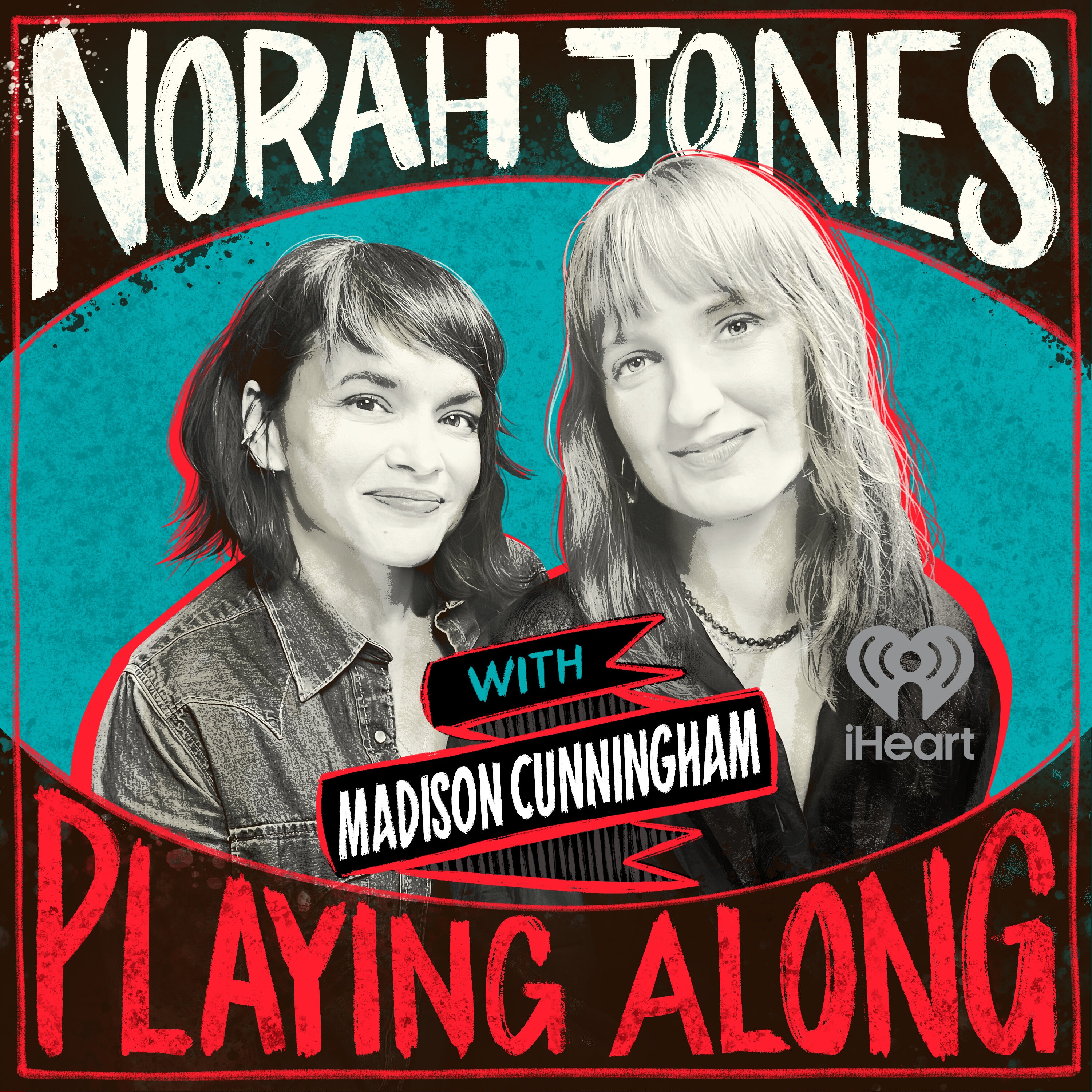
Madison Cunningham
GRAMMY-winning singer, songwriter, and multi-instrumentalist Madison Cunningham joins Norah for a thoughtful hang and a set of striking duets on Madison’s songs. They talk about writing authentically and the artists who helped make songwriting make sense. Recorded 10/15/25.
See omnystudio.com/listener for privacy information.
2026-04-21
56 min
Transcript
Available Results
Generated results are saved to the knowledge database for reuse and search.
No generated results are available for this episode yet.
Extract Knowledge
Pick what you want extracted first. Model, scope, and chapter options appear after a template is selected.
Generated results for public episodes are saved to the knowledge database so they can be reused and searched later.
Transcript
00:00:00
Speaker 1: This episode is also available as video on YouTube. You can visit Nora Jones channel and be sure to subscribe while you're there. Hey, I'm Nora Jones and today I'm playing along with Madison Cunningham. I'm just playing lo wey. I'm just paging.

00:00:20
Speaker 2: Loon we you.

00:00:25
Speaker 1: Hey, welcome to the show. Thanks for joining us. I'm here with Sarah Oda.

00:00:30
Speaker 3: Hello, Hello, welcome to our show. We have an awesome episode today. We have the Grammy winning singer, songwriter, guitarist and pianist Madison Cunningham. She has collaborated with tons of people including Lucy Dacus, Remy Wolf, Mumford and sons Lucius and Andrew Bird, a lot of our podcast homies. She's an incredible songwriter. Her lyrics are very emotionally sharp, and she's a real storyteller.

00:00:59
Speaker 1: I love her music. It is something about it. It's just like arresting and it's very very beautiful and heartfelt. But also she's an incredible musician and it's complicated, so it's all the things wrapped up and you feel perfect Vessel. Her voice is incredible too, so beautiful.

00:01:23
Speaker 3: Yeah, you're going to hear her beautiful voice. You're going to hear kind of how she became such a poignant lyricist, and also some of the musicians and artists that inspired her along the way. And Yes, amazing music as always from across Madison's catalog, including her latest album Ace that came out last year in twenty twenty.

00:01:44
Speaker 1: Five, a very beautiful album. Yeah, come join us with Madison cutting head. There is some spicy language in this episode, so listener discretion is advised. It's not that bad, but just so you know it's there, Okay.

00:02:02
Speaker 4: Okay, saying you could do me harm in saty.

00:02:41
Speaker 5: Of your arms while you had a red of bombs dropping my fool of sunder clouds, keep been a craft on the ground, winds.

00:03:01
Speaker 6: Sliping round, suffering, turning in.

00:03:09
Speaker 7: And turning out the line and old.

00:03:13
Speaker 8: Deep stops in the carphone on your drive, whether you're drowning.

00:03:24
Speaker 2: A fall.

00:03:32
Speaker 1: In wa.

00:03:40
Speaker 9: In your ivy lie.

00:03:59
Speaker 8: Who bearing no resens to an agent innocence of.

00:04:19
Speaker 2: The audience. Good now.

00:04:25
Speaker 8: As the grand lous phase.

00:04:29
Speaker 2: It hits me as a drive away a.

00:04:34
Speaker 10: Loveacy hair, go gray.

00:04:44
Speaker 1: Far in.

00:04:52
Speaker 9: Where in in Mela Way.

00:06:26
Speaker 10: I have chills. That was amazing, amazing, That was the hardest Why I know we got it got You're so good. That voice is just.

00:06:35
Speaker 1: Oh your voice has been making me cry all week. Oh man, it's so beautiful.

00:06:40
Speaker 10: I just felt like music. That's how it should feel.

00:06:42
Speaker 1: That is what it is. Yeah, wait a second.

00:06:46
Speaker 10: It was music.

00:06:47
Speaker 1: Oh that was so beautiful. I feel is so beautiful, your feel. That was amazing. Compliments salad, Yeah, it.

00:06:55
Speaker 10: Is a compliment. Salad, coming right up.

00:06:58
Speaker 1: I love your guitar playing. Thank you, it's so amazing.

00:07:01
Speaker 10: Thank you so much.

00:07:02
Speaker 1: How do you do it?

00:07:05
Speaker 10: How do I do it? I don't know.

00:07:07
Speaker 1: When did you start? When did you start?

00:07:10
Speaker 10: I started playing guitar when I was about four or five.

00:07:14
Speaker 1: Oh wow, okay, that makes sense now.

00:07:17
Speaker 10: Yeah. My dad was a He played guitar, He played acoustic guitar, and like as a as a kid, I I was told by my parents that I wanted to play kind of immediately, and I think I just really wanted to be close to my dad and wanted to share some sort of like a language with him, with him and subconsciously, you know, and that's really sweet. Yeah. I was almost like picking up a baseball bat or something and being like, let's go play catch. You know. That was that was the feeling of learning to play, which was Yeah. I mean, my love for it has grown changed and morphed over the years, but I think watching his passion for it also was just naturally going to be in.

00:07:59
Speaker 1: Facts Okay, Yeah, was he professional or.

00:08:04
Speaker 10: Was within h church circles?

00:08:07
Speaker 1: Cool?

00:08:08
Speaker 10: Yeah? Yeah, and he's still he's still doing it and still performing and writing his own music, and he's yeah, he was. He's been a big support.

00:08:18
Speaker 1: That's great. Yeah, that sounds really sweet. Yeah, yeah, very sweet. Did you take lessons when you were little?

00:08:25
Speaker 10: I started taking piano lessons first, okay, and my uh piano teacher was very quickly caught onto the fact that I couldn't, like, I couldn't read music and she was trying to teach me and I couldn't. Like it never stuck.

00:08:42
Speaker 1: So she was like, because you remind was too fast with the music part, and you've already kind of knew what you wanted to hear by ear.

00:08:49
Speaker 10: I think it must have been that I was like, just I could, like I could replicate what I heard pretty quickly.

00:08:56
Speaker 1: By just.

00:08:58
Speaker 10: Yeah, by just memory. And I think she was like, let's just focus on your training. And I do regret not having learned or I wish that that would have kind of settled into do.

00:09:10
Speaker 1: You really really really It hasn't really come up, I guess, but like it was exactly and it's not gonna it's like map, It's like, yeah, I don't know, I really really needed that.

00:09:26
Speaker 10: But yeah, anyway, that was kind of the that was where the love for it started.

00:09:32
Speaker 1: That's cool.

00:09:33
Speaker 10: When did you start playing?

00:09:34
Speaker 1: I was seven. I started taking lessons, Okay, yeah, wow. I didn't want to practice though, so I wanted to quit.

00:09:41
Speaker 10: Yeah did you hate it? You must have hated it.

00:09:43
Speaker 1: My teacher was really nice. I wanted to take lessons. I wanted to play piano. My teacher was great. I mean, it was just the classical programs and it didn't really vibe with my brain, I guess. And then I quit after five years because my mom said I could after five years. Wow, only after five years? So I quit. And then about a year later I got into jazz and that that worked with my brain.

00:10:08
Speaker 2: Could you do?

00:10:08
Speaker 10: Were you reading? Were you how were you ingesting it?

00:10:12
Speaker 1: I was just listening to it. And then I had this great teacher. I started playing saxophone, and then my saxophone teacher turned me on to this great teacher in Dallas named Julie Bonc who taught me how to read chord changes and she encouraged me to write, even though I was a little shy with that, but she taught me how to outline chords instead of reading like staff paper, you know, write just chords.

00:10:34
Speaker 10: She was like teaching you the sketches of learning how to write songs.

00:10:39
Speaker 1: She really was, And yeah she was school. I mean she still is, she's still around. But yeah, sometimes you just need another way in, you know.

00:10:51
Speaker 10: Yeah, right, Like the I was actually homeschool, and I feel like I used this paraly like the whole way through, never ever went, never stepped foot in the classroom.

00:11:02
Speaker 1: But I have so many questions.

00:11:04
Speaker 10: Man, I'm opening it was you know, it's all I know, and so I don't have a lot to compare it to. But like I feel like every kid is like needs to learn differently. And the beauty of being homeschool was I think my mom was my teacher. She was able to kind of curate the curriculum for what worked with my brain. And I think that's how music's always been too. Like I grew up kind of thinking like I was like slow or something. Not because my family made me feel that way, but because I was like, oh, the way that people learn, I'm not learning that way.

00:11:43
Speaker 1: It's different.

00:11:44
Speaker 10: Yeah, it's different. And you realize that, realized it later. Yeah, in the moment, I don't think I had language for I just was like, I just I just know that I enjoy this and I want to throw out all of the rule books that come with it, and yeah, I think I love that music is that it's like any one of us can find our own entry point into it, and it's almost it's the most necessary. Also, if you're writing songs to find your throw the rule book out, throw the Yeah, it's like, yeah, it's almost not worth learning the rules.

00:12:20
Speaker 1: Yeah it's not. Well, it's not because you don't want to follow a formula. Yeah, because what what's so magical in your music is that it's I felt kind of transformed when I was listening to all these songs. I mean, it's just your way of writing. It does. I was going to ask you how you how you got so good with lyrics, you know, like are you into poetry or maybe it's just the way things form in your brain with your background, and like it's just so beautiful, these words everything. Yeah, your writing is amazing.

00:12:58
Speaker 10: That's so fun. Lyrics are the thing I'm the most insecure about.

00:13:01
Speaker 1: Really, do you work a lot at them?

00:13:04
Speaker 10: I work very hard at them. This last record was such a weird. It was kind of the exception to the rule. Like usually I take a year to write a record, and this one was written basically and within the lifespan of like two months, and it was just I think it was the first time I'd ever really experienced heartbreak, and so everything was really.

00:13:31
Speaker 1: Clarified hard in fact, right, yeah, exactly.

00:13:35
Speaker 10: And what was so scary was leading up to that, I was feeling all of it and had no way to articulate myself, and it felt like a trap and I like lost the power of language, and I felt really distant from music and just distant for myself the whole thing, you know. But these lyrics were like I definitely edited them, and I'm really really cared about it, but I just I felt like it was the more that I messed with it, the more it put up a fight with being messed with. And usually I've found that it's like, uh, for the better when I've really sat and toiled with lyrics and editing. And it also almost come from like because I was homeschooled to have a stigma about just naturally not being good with words.

00:14:26
Speaker 1: Really it's very silly, but it's you're so good with words.

00:14:29
Speaker 10: Maybe it's just a way. Maybe it's been my way out or my way of like finding my my footage or value and myself. And I'm always, like again, very unsure that I'm being understood or that really they're good or it's an interesting thing.

00:14:48
Speaker 1: I think we all kind of feel like that. Yeah, but that's interesting because your lyrics are pretty jaw dropping to me. I just find them really they're so that you think or I think coming from this as a as a listener, I think, wow, she must really like work at these. But at the same time, they're so heartfelt and it doesn't feel like you're they're overworked. Does that make sense?

00:15:15
Speaker 10: That makes that which is a really nice place to be.

00:15:18
Speaker 1: Yeah, because when things just come out, I feel like it's the most emotional. You really just want to capture the emotion, right right.

00:15:25
Speaker 10: There's like so there's such a fine line between it like coming out as your first attempt at a thought, forming a thought and then and then you and then the like you know, you don't want it to ever feel like you're being a scholar.

00:15:40
Speaker 1: Someone exactly, You don't want to feel like you've made it perfect, but there's no emotion in it.

00:15:45
Speaker 10: Like yes, exactly, someone, I bet you get this. This asked this question a lot, but someone recently was like, how do you know when a song is finished? And I've always just had the worst answers for that, and just recently I feel like the answer that I actually get behind, and it is the most true for me, is like, I don't know when a song is finished. I just know if it's alive or is like has something that will continue to percolate and need to be said as the years go on. Beautiful, And that's the thing. It's like, as long as the conversation feels like it's fluid and alive, even if it's like a little bit clumsy, and even if it's a little bit like elementary, it's worth saying.

00:16:29
Speaker 1: And it's a sketch that you can tell what it is, and yes, you can show it to people.

00:16:34
Speaker 10: That's it's language. It's like the thing that communicates what is happening in your heart space to like you know, strangers and to people that you love, and like it's the most that's all we got.

00:16:45
Speaker 1: That's it's beautiful. You're coming at it from the right place.

00:16:49
Speaker 10: Try and the motives get skewed, but try.

00:16:52
Speaker 1: I know it's beautiful.

00:16:53
Speaker 10: And you're still good with lyrics too.

00:16:55
Speaker 1: Oh, I appreciate that things. I came to it much later, and I've alway always felt kind of not good at it as well. But the last five or ten years, I feel like I've kind of hit a stride where I I'm proud of the songs from the last like ten years from a songwriting perspective, and I'm happy about that. But I also feel like I'm a little bit opposite where I I'm really excited when I feel like a song is done, and I just like I don't want to mess with it anymore.

00:17:24
Speaker 10: Totally. Yeah, there's no yeah, you know when it's like But also, do you ever rewrite songs from stage? And by that, I mean like after they recorded and you get to two of them, do you ever go, oh, that was the lyric I really wish I would have done. Why don't I just correct it?

00:17:41
Speaker 1: Now? There's a few lyrics that I have done that too.

00:17:44
Speaker 10: Yeah.

00:17:45
Speaker 1: I think it's maybe one or two where I just the old lyrics make me cringe. Yes, And then there's one or two where the situation was very specific and I just want to rewrite that story a little, yes.

00:17:57
Speaker 11: You know.

00:17:58
Speaker 12: Yeah.

00:17:59
Speaker 10: Is it usually in this the ones that make you cringe? Is it usually the songs that people really want to hear?

00:18:05
Speaker 1: No, luckily, but it is. It's just older songs that I think were written before I really found my stride as a songwriter, before I learned that putting my heart out is okay, and I would try to take all the US and me's out and like clean it up from the casual thing. But really the you and me is what it's about. So when I would clean it up, it would just kind of fall flat.

00:18:30
Speaker 10: You know, what did you think wasn't okay or acceptable? And just to put in a song like what felt to bear to you? Was it just that use and me's.

00:18:41
Speaker 1: Or was it I think it was more like just cliches. Yeah, And now I realized that cliches, if you mean him are they go right to people's hearts, and it's like, that's what it's about.

00:18:53
Speaker 10: It's the same reason that like, I will want a steak for the rest of my life.

00:18:58
Speaker 1: A steak, A steak.

00:18:59
Speaker 10: It's a classic, exact cliche. But it's like it is for a reason. It is exactly and like cliches are so important, and I think the best songwriters are the ones who recognize that and get how do I just reframe it? How do I redish it, replait it?

00:19:18
Speaker 1: Yeah, Like, I'm never looking for a cliche, but if something comes out and it happens to be pretty simple and like universal and maybe used before, maybe in a different way, but I'm like, I'm fine with it.

00:19:28
Speaker 10: Are you a Friends fan?

00:19:30
Speaker 3: Yeah?

00:19:31
Speaker 10: The classic sitcom do you remember the episode where oh my god, I'm forgetting his name. He's like, he's like the dumb one, Joe Joey. He writes this letter of recommendation or something, but he's or like a birthday car. It was something. He's like tasked with writing this letter, and he goes to the thesaurus and punches in every single word and it's just like this unreadable letter with the same words. I feel like, the more profound that we try to be, we sound like that, Yeah, and totally the less that we try it's all about just making the veil as thin as possible. Yeah, and that's that's the key to I think relatability obviously, but also like true poetry.

00:20:17
Speaker 1: Connection and connection. Yeah.

00:20:19
Speaker 10: Yeah, It's just funny that we always think that we have to find the craziest ingredients, you know, to make it worth somebody's time. And that's usually the thing that people they don't really have time to listen to. It's too rich.

00:20:33
Speaker 1: I see if they can see through it, I think I give them. You got to give them a lot more credit.

00:20:37
Speaker 2: We have to.

00:20:38
Speaker 10: Yeah, I know, why do we Why do we make our audiences so dumb in our minds? But we do.

00:20:43
Speaker 1: I think we're I think we I think we're doing it the right way. I think we're just trying to be you just try to be vulnerable and hope that people can latch onto something.

00:20:53
Speaker 10: Maybe it's like the people around the people who like talk about music so much like people in the industry that go like, let's dumb it down. Let's yeah, let's prepare a meal, a happy meal for the people, and a stake. And I want a fucking steak, and I want you to make it really well.

00:21:10
Speaker 1: Sometimes I don't want a happy meal, but.

00:21:12
Speaker 10: No shade, I want a burger? Are you kidding?

00:21:15
Speaker 1: Yeah?

00:21:15
Speaker 10: With the toy exactly, absolutely not above anything.

00:21:19
Speaker 1: This is already so fun.

00:21:22
Speaker 10: This is the best day I've had in a long time.

00:21:23
Speaker 1: Yeah, where do you live?

00:21:26
Speaker 10: I live in Frogtown? What is that?

00:21:31
Speaker 11: Is that here?

00:21:32
Speaker 2: It's so fair?

00:21:32
Speaker 10: Yeah, it's here, Okay, backed up to the Los Angeles River and on the bike path. Actually, most people in LA when I when I say that name, like, I don't know what you're talking about.

00:21:45
Speaker 1: Is it an old Did you grow up here?

00:21:46
Speaker 10: I grew up in Orange County, which is, you know, forty five minutes south from here. But we it's such to such different worlds and cultures.

00:21:54
Speaker 1: That's not that close.

00:21:56
Speaker 10: I have to clarify. Yeah, I would love to claim Los Angeles, but it's yeah, it's Orange County. And so frog Town is like this little island of Silver Lake, I would describe it. And it used to be back in the forties fifties infested with frogs, so it got dubbed that name. And the frogs are no longer there, which is kind of sad.

00:22:17
Speaker 1: Oh, I know they got magnolia.

00:22:19
Speaker 10: Yeah, because they migrated they croaked, so speak.

00:22:24
Speaker 1: Boy, well, do you want to do another song from your new record which is so beautiful? Thank you? I really love it. Thank you so many congratulations. It's it just came out a few days.

00:22:36
Speaker 10: Ago, right, yeah it did, it did.

00:22:38
Speaker 1: Yeah, Yeah, it's really beautiful and you play a lot of piano on it. Yeah, and I love your piano playing.

00:22:45
Speaker 2: Thank you.

00:22:45
Speaker 10: That means a lot coming from me. I I kind of just it was just out of interest and love. It wasn't meant to be like a a statement. Really, it just felt like it was the right uh sound and shape for the music, and is how you wrote the song some of them, I mean some of them my full name, the one we're about to play was written on guitar first and interesting.

00:23:11
Speaker 1: Yeah yeah, well what.

00:23:13
Speaker 10: I was doing when writing those songs, there was a lot of just like me testing the strength of the song, and I'd feel like kind of switching instruments is really helpful to be like, oh yeah this this still stands without like the branding of an instrument or that, because that has been the trap I think I've I've found myself in, which is being like, oh I'm a I'm a guitar player, So I write riffs right, and I very quickly like this record was never going to be a riffs record. There was no there was no room for it. But I was also growing out of the I was changing anyway. So but piano felt like this interesting, like way forward and it's still it's just it's fun to me. That's like one of the first instruments I started on, and it's just you know what it's like. It's just a beautiful, fluid instrument that has everything's laid out for you. Yeah, just so nice.

00:24:13
Speaker 1: But I think it's fun to switch and it's important. It's really fun. I love playing guitar. I'm not great, but it's it's like I didn't know you played, Yeah, I mean I write more on guitar. I feel like it opened up writing for me. In my early twenties, I had a hard time writing songs on piano because I was used to jazz chords and then when I stripped back the sevenths and stuff, it just sounded like a square piano chord and I didn't know how to make it sing yet, right, So I when I started playing guitar, I would write. It opened up songwriting for me.

00:24:48
Speaker 10: Who are the people that made songwriting makes sense to you, Like, who are the north Stars that made you go? Could I try and write a song like that?

00:24:58
Speaker 1: I mean all the probably the ones, all the one. Yeah, probably Willie Nelson because his songs are deceptively they sound simple, but then they always have like a little twist. Oh you know, it's absolute perfection. It's pretty great.

00:25:15
Speaker 10: Yeah, it doesn't get better.

00:25:16
Speaker 1: Dolly doesn't hurt.

00:25:18
Speaker 10: Dolly doesn't hurt. I was just thinking about her today, Yeah, as I always am.

00:25:22
Speaker 1: Yeah, me too.

00:25:23
Speaker 10: That song, Uh here you come again? Oh god, it's it's so good, all the twists and that. I mean, there's some really bold key changes, but you don't feel it.

00:25:34
Speaker 1: That's that's the thing, that's the mastery part.

00:25:37
Speaker 10: Yes, it's the slight of hand.

00:25:39
Speaker 1: What about you when you grow up loving?

00:25:42
Speaker 10: I grew up with nothing. I mean I was like me and my parents laugh about this now because they're they're such different like music consumers now, But at the time they were they were really young, and they were just really worried about what we were listening to. And there was just a lot of rules.

00:26:00
Speaker 2: Were listening to.

00:26:01
Speaker 1: Was it a lot of religious music?

00:26:02
Speaker 10: Yeah? It was, I mean, and there was, there was some there're some bands I still really get behind. A band called Isley. Uh, it's these sisters and I met them recently, and I just I think they still had such wonderful music ideas, musical ideas even though they're not a band anymore. In a band called Mute Math I loved and like that was kind of still within I don't know if they would align as like Christian bands with the adjacent to that world and so acceptable. Yeah, and those are those are the things that I was like into as a teenager. But I didn't hear the Beatles till the day I like the actual day I graduated high school. Really didn't. Yeah, didn't grow up with it. Didn't grow up I mean really with a lot of the people who are like who changed music for me and changed the way that I related to it. And it's all about permission too, you know. It's all about like finding the artists that allow you to be yourself and to like give way to your strangest impulses, like and I Think or Bravest or whatever it is. Like Joni, I had a real obviously I mean everybody has, but had an awakening with her when I was eighteen years old. Was like I ended up in Portland. It's a really long story, but I just someone let me their car and I'm just driving across all this the bridges and listen to New Court and Spark and I just was like, this is what it means to be a woman. She's singing about who I want to become.

00:27:39
Speaker 1: Yeah, that's a good moment when you can just you can remember that moment.

00:27:45
Speaker 10: I can still smell it, like I remember what the car looked like, it felt like, and just how it came through the speakers. And I ended up at this like mansion with all of these roses, and I just just think, Okay, it was insane. It was psychedelic experience. Truly.

00:28:02
Speaker 1: That is another story.

00:28:03
Speaker 10: Yeah, that's another lifetime. We were about to jump into a song. But anyway, probably our heroes are probably similar. It's like just the the grandmothers and grandfathers of everybody.

00:28:17
Speaker 1: Yeah, it's such a good thing to have that moment with the record.

00:28:22
Speaker 10: Yeah, I know, like especially in.

00:28:24
Speaker 1: The car, it's a real special place to have a listening experience.

00:28:28
Speaker 10: Yeah, you don't do you have a car?

00:28:30
Speaker 9: Do you do?

00:28:31
Speaker 1: You drive into very little but I had I had a seventy one Cadillac Sa Dan Deville when I was in high school in Texas and it had no a C one summer, which sucked. Yeah, yeah, in Texas and I but I still just wanted to get out of my house and drive around at night. And I just remember listening to Otis Redding in the car damn over and over on my and this cassette, and it was the best thing ever. That's my my moment in a car. Car.

00:29:01
Speaker 10: Yeah, there's always going to be one, especially given that like you tour and I tour. It's like are it was always in our bingo cards. Yeah, do you want to try my whole name switch? Okay? Can we do? You just keep going all right? This is the easiest thing. This is so wonderful.

00:29:44
Speaker 6: I love it when you say the full name and the way always speak your mind, when the needle fisly fast the vein and all you little sayings become mine.

00:30:03
Speaker 10: Your brother only shared a family shame, but he doesn't really know you.

00:30:12
Speaker 5: I've been spitting out on too many big woods.

00:30:17
Speaker 10: He could do with that.

00:30:20
Speaker 6: And everything we dare not say along are written on all.

00:30:28
Speaker 2: Faces.

00:30:37
Speaker 6: There's water like the side of Burlin coming from this vessel that we're in, running from my.

00:30:49
Speaker 2: Eyes to your chair. There's a kind of sorrow save when a part of me and the saying the case has never opened.

00:31:05
Speaker 13: I've been keeping gown of all the wildflowers where the plane went down, in every living soul that I've found written in these.

00:31:19
Speaker 7: Words persons, I'm fine enough that I am allergic to.

00:31:45
Speaker 2: Every living thing that.

00:31:48
Speaker 11: Is on you has a saying now I noise true who I don't want leave this town, but you know very well I can't wait around.

00:32:17
Speaker 2: But since it's getting too light, the change.

00:32:21
Speaker 9: Less might as well em pray.

00:32:30
Speaker 1: Said.

00:32:41
Speaker 2: I love it when you say my fall name.

00:32:51
Speaker 10: Amazing.

00:32:53
Speaker 1: That's a beautiful song.

00:32:54
Speaker 10: Thank you, Sorry, yeah, I appreciate it.

00:32:58
Speaker 1: Start crying, man.

00:33:00
Speaker 10: I hear you play. Whirly reminds me of this record that I love so much by you, And I'm forgetting the title of the record. But it has that song Goodbye on it.

00:33:10
Speaker 1: Oh say goodbye?

00:33:11
Speaker 10: Yeah.

00:33:11
Speaker 1: Yeah, yeah, that's that's got wirly I forgot.

00:33:14
Speaker 14: Yeah, yeah, do.

00:33:19
Speaker 3: Do do do.

00:33:20
Speaker 12: It's got weird chords, yeah, is it not the same, Yeah, it's got a weird chord structure, you know.

00:33:35
Speaker 5: Days.

00:33:38
Speaker 2: Will you let me miss behave nice.

00:33:44
Speaker 1: Always did and less blood if.

00:33:47
Speaker 2: You stand again?

00:33:51
Speaker 11: Yeah?

00:33:54
Speaker 2: Do that?

00:33:55
Speaker 6: Yeah?

00:34:06
Speaker 1: I mean it's all right and it's okay, that's not right, leg it's.

00:34:13
Speaker 3: Not is it?

00:34:16
Speaker 10: Is it a different key?

00:34:19
Speaker 1: No?

00:34:19
Speaker 8: No, no, it is right?

00:34:24
Speaker 10: Whoa well it.

00:34:25
Speaker 14: Ay if you can't, but I'll just don't have to.

00:34:37
Speaker 2: Say say good.

00:34:54
Speaker 10: Yeah case, I love that. I fucking look. I when I made my first that was it is that madding myself? But that was like a big reference track for me.

00:35:04
Speaker 1: I was like, Oh, that's cool.

00:35:05
Speaker 2: Do we make it sound like this?

00:35:07
Speaker 1: That album sounds so specific because I made it danger Mouse and those chords specifically on that song. I mean those were his chords.

00:35:17
Speaker 10: Okay, he wrote that together.

00:35:18
Speaker 1: We wrote all the songs on that record together. And he's an amazing songwriter. And I had never written with someone in the studio before.

00:35:25
Speaker 10: Really you would you were doing it on your own. And then bring would well or.

00:35:29
Speaker 1: I also sang a lot of songs up to that point by band members and did covers the album before that, I did write all the songs kind of. And then but yeah, I brought him in. I didn't write him in the studio.

00:35:42
Speaker 10: Did you feel scared to write in a studio or yeah? Was it liberating?

00:35:49
Speaker 1: Yeah, Brian and I were friends at that point, so that was good. But I was still kind of freaked out, like what if I can't come up with anything?

00:35:57
Speaker 3: Yeah?

00:35:57
Speaker 10: And it was a huge.

00:36:00
Speaker 1: It was like one of the turning points in my songwriting, I think, because I realized he said the best thing. One day we were kind of tooling around with something and I couldn't figure out a bridge and we didn't have any ideas. He's like, it's fine, we'll figure it out and maybe tomorrow or the next day or the next day whoa. And I was like, oh, you can do that. I mean, I don't have to worry about it. He like took that off my plate and we did.

00:36:23
Speaker 10: That's actually that's so magical because that is how the creative process should be, is that you're taking things off of your own plate and trusting that that it will roll out when it's ready. Yeah, when it's ready, and then and it will be the thing that you want to say.

00:36:40
Speaker 1: That was the biggest lesson and ever since then, I don't force anything.

00:36:44
Speaker 10: Yeah, And so I know it's easy and it's.

00:36:48
Speaker 1: Not that it's easy. It's that I'm not. I'm not trying to pull something out that's not there.

00:36:53
Speaker 10: Well, right, it's never easy, but you're not deliberately getting in your own way or making it sad.

00:37:00
Speaker 1: Thing it has to be comes when it comes.

00:37:02
Speaker 10: It's so sad. So it's so like, there's so much surrender in it, and I love it so much. It's probably the thing I'm the most like I'm learning to be more loose with because it's true I have I've had the same experiences with people. I've been lucky enough to be around musicians who are so good at that and they know time management and they know that morale is the biggest thing. It's like the you know, it's the thing like my my dearest friend Mike Viola, like his whole thing when we've recorded together is very much like, are we not feeling it, then let's walk away.

00:37:45
Speaker 1: Yeah, exactly.

00:37:46
Speaker 10: It's not because of apathetic. He is not apathetic. He is not. He just knows when it's gonna like soil and idea for good.

00:37:55
Speaker 1: Yeah. That's also anytime I've recorded something and it's not feeling right, but we still finish it, that's bad juju.

00:38:02
Speaker 10: It's bad it's bad. It's mistrust. Sorry that.

00:38:08
Speaker 1: I'm like, what is in my throat? Yeah, the throat coat is loosening, portraying you.

00:38:13
Speaker 10: It's me.

00:38:14
Speaker 1: But yeah, yeah it's a rural thing.

00:38:16
Speaker 10: Yeah, that's a yeah, that's a good that's a good way to put it. Like, if it don't strangle something into existence, that's not gonna I won't do it.

00:38:25
Speaker 2: Yeah.

00:38:26
Speaker 1: But at the same time, you know, we've put in the work and we know we know the language. Yeah, and that's that is work. It's not like, you know, it's so easy. It's just we've already done that part. You know, we've learned the language so that we can shake it all up and then like let it just come out.

00:38:43
Speaker 10: Yeah, learn unlearned kind and learn it a little. So I guess maybe I'll take back my previous statement where I said, like the rules aren't worth learning. I think they actually are. But so is flexibility, and so it is like you have to do it all at once, Yeah I used to. I mean I think I'm a recovering perfectionist for sure. Yeah, that's yeah. I wonder if you have a similar thing just because of coming from the classical world, like that must have been. You don't know, I'm lazy.

00:39:15
Speaker 1: I'm the laziest.

00:39:17
Speaker 10: Ever know that.

00:39:18
Speaker 1: Okay, I work. I work hard because I'm always working, but I don't practice well, Like I won't sit at home and work. Yeah, unless I have.

00:39:27
Speaker 10: Something to work for. I think that's good.

00:39:29
Speaker 1: So that's kind of why I like to stay busy. Yeah, yeah, busy.

00:39:32
Speaker 10: Enough to keep yourself sharp.

00:39:36
Speaker 1: Yeah, that's why classical music didn't work for me, because I I was too lazy. Yes, it's yeah, it's hard.

00:39:44
Speaker 10: And I mean also like you must have had back issues from practicing for that many hours.

00:39:51
Speaker 1: Like I know, I didn't practice.

00:39:53
Speaker 10: I see, you didn't even go through face.

00:39:55
Speaker 1: I didn't. I never went through a face. I failed my college piano jury because oh I know, I'm getting the sweats just because I didn't practice because it was classical because I was in jazz school and that was great with the classical part that you had to do. I failed and then I dropped out.

00:40:14
Speaker 10: I mean that's badass. I don't do that.

00:40:18
Speaker 1: Kids at home. Did you go to music school or anything like as a as a after homeschool.

00:40:28
Speaker 10: I really thought about it and and I had a few months in my senior year of high school of stress because I just was, like, I have not been planning for where I'm going to go or I you know, always knew that I wanted to do music, but like I didn't know that you could actually, you know, very possibly make a career out of it till I was sixteen. So I don't know. I'm still trying to even figure out what it means to make a career out of music. It's very strange.

00:40:57
Speaker 1: Well it's a lot harder now than it.

00:40:59
Speaker 10: Yes, yeah, in a way, it's harder, and it's stranger. It's getting weirder.

00:41:04
Speaker 1: It's weird, and in a lot of ways it's easier if you're good at social media.

00:41:09
Speaker 10: Yes, which I am not. Most artists are. It's not my time, yeah, yeah, most arts aren't. Like it just feels like this this secondary job obviously that nobody wants to do it, almost to do it. No one is killed at it. Yeah, and that's probably why like the younger generation of artists are doing very well or like selling out tours.

00:41:31
Speaker 1: And thirty geconds, because yeah, they've figured out they know how to be themselves on it too.

00:41:36
Speaker 10: You know that that's what it is.

00:41:38
Speaker 1: It's not that we can't do it that. We have to find a way to just be true to ourselves and do it. Yeah, that's the only way to do it.

00:41:45
Speaker 10: And people don't always like there's not a lot of it's not immediate to people. If you're like, well, this is how I relate to it, like the platform, or this is how I want to use it's like it's not never going to be probably or most likely won't be in fase of metrics. Yeah, metrics, metrics?

00:42:03
Speaker 1: Where do we go? Where do we just go?

00:42:05
Speaker 10: I don't know. Have you use that word before metrics? Yeah, I've never.

00:42:11
Speaker 1: I don't think I've ever used that word.

00:42:12
Speaker 2: It's because I.

00:42:16
Speaker 10: Like when you when it's time to release an album, all this stuff gets tossed around, all this language, and you're like, huh that word and then then I just said it.

00:42:28
Speaker 1: Then it's in your heads in my head.

00:42:29
Speaker 10: I I'm actually not going to tell the story. I was going to tell a story that I'll just tell you off air.

00:42:36
Speaker 1: Someday tell I told a story about depends in the last podcast, so so permission. Yeah, we're going to delete it.

00:42:44
Speaker 10: Though I love it. I love it very much. Yeah, basically, moral of the story is I just I don't social media hurts my feelings?

00:42:54
Speaker 1: Oh yeah, and you read it, you read it?

00:42:56
Speaker 10: Yeah, yeah, I mean, I guess. I mean that in less of like a like a actually hurts my feelings. It's more just like the idea of like technology and trying to get good at it, that kind of technology. I'm just like, that's not my bag and I will get left behind. That's fine. I don't want to. I don't want to like try and compete and on TikTok.

00:43:17
Speaker 1: I'm not gonna do it until you want to sell a tour. Yeah right, that's when that it's like there's all these if thens, so don't count it out.

00:43:28
Speaker 10: Yeah no, I know it's it's toxic and I'm gonna talk the talk the tick.

00:43:35
Speaker 1: I don't know. I don't know. I don't even know. I do videos and sometimes my manager posts them and it's great because I don't know how. Yeah, I love that I don't have my login info.

00:43:48
Speaker 10: When did when did it become a parent that you were like, oh shit, that Instagram and everything is a I have to like play this game.

00:43:57
Speaker 1: I'm still pretty I still come from the four times, so you know, I had like a built in audience in a lucky way. But I think I you know, I think during the pandemic, I started doing these live streams and those were fun, Yeah, because I was just playing interactive Yeah, and I was just playing Yeah. So that was cool.

00:44:21
Speaker 10: That was my way. I love that.

00:44:23
Speaker 1: But I don't do that anymore. Yeah, I probably should.

00:44:27
Speaker 10: No, you should, like I don't believe it should. If you want, you.

00:44:30
Speaker 1: Can do it exactly. It's hard.

00:44:33
Speaker 10: Yeah.

00:44:33
Speaker 1: At the time, it was good for me because it was the only time I played music all week.

00:44:37
Speaker 10: Yeah.

00:44:38
Speaker 1: I would do once a week, and it was the only time I touched any music.

00:44:42
Speaker 10: Did you have a kid at that point?

00:44:45
Speaker 1: I had two little kids?

00:44:46
Speaker 10: Wow? So you have two more than that? Oh? God, more?

00:44:50
Speaker 1: That would be hard.

00:44:51
Speaker 10: No, you're done.

00:44:53
Speaker 1: I'm done.

00:44:54
Speaker 10: Let everyone know you're done. So done.

00:44:56
Speaker 1: Did you grow up with siblings?

00:44:58
Speaker 10: I'm the oldest of five girls?

00:45:02
Speaker 1: What?

00:45:02
Speaker 10: Yeah, which is wild?

00:45:04
Speaker 1: Excuse me? I know, all homeschool all homeschooled.

00:45:09
Speaker 10: My mom is in the last year of she's still doing it. Yeah, she's in her senior year.

00:45:14
Speaker 1: Hats off. Well. Interesting.

00:45:16
Speaker 10: Megan's a badass, she really is. She's and like has remained kind of in love with it, and it's it's it's really cool. All my sisters are awesome. Like in a big family, there's usually room for someone to get lost in translation, or for there to be one kid that you're like, I'm worried about. Yeah, and all of them are just like they're so intelligent and funny and beautiful. They're like the people that I would probably want to be friends with if we weren't related, which is really like, that's that's great, not a given, that's really sweet.

00:45:50
Speaker 1: That's amazing.

00:45:51
Speaker 10: Yeah, it's it's a fun. It's a It was a crazy household to grow up, and as you can imagine, it was a little crazy. There was a lot of like fights over clothes. That was the only tension that we had among us as well, at least like the three oldest, because we started to like, I have the same shoes side, oh yeah, point, and.

00:46:13
Speaker 1: I can't relate. I grew up and only yeah, yeah, did you want siblings or were you like I did? No, I did, and I grew up an only child with a single mom. Okay, but then I have a half sister and we met when we were grown pretty much and we both wanted that, so it was good. Now I have like a grown up sister and we're pretty close because we met when I was eighteen, So at this point we've won each other a pretty long time. Yeah, and that's like for those are such formative years, Yeah to me, I mean we missed the main formative years, but yeah, still had some.

00:46:47
Speaker 10: That's so sweet.

00:46:48
Speaker 1: Yeah you want to switch back more? Yeah, just do one more song, so you use a lot of different tunings, right, a lot.

00:46:59
Speaker 10: Of different tunings. I was in this like strange suspended tuning for the first song we did Wake. It's cg DFAC, and I like found it online and wanted to, like at the beginning of the new year of twenty twenty four, I wanted to do something that felt like I was stretching myself, and I was at war with it for like a week straight, just kind of like almost like bang my backets all going like I don't understand how this works. And I love songs for this reason because you can find like a tiny little pattern of chords and then just or like a thing that works you and you go, I think I understand where to put my fingers, and you understand, like you figure out where else on the neck or in the tuning, there's there's more possible. It's just it's so it's really fun. But this song is an open d oh, it's pretty that's just a classic. This is a steak of a steak of ak Okay, the open.

00:48:12
Speaker 1: And you always play an acoustic through an amp.

00:48:15
Speaker 10: If I'm playing right now, I am, yeah.

00:48:17
Speaker 1: But do you usually on stage?

00:48:19
Speaker 10: Yes?

00:48:20
Speaker 1: I didn't know you could do that until I realized that Willie Nelson plays his acoustic through his nylon triggered does he plays it through an amp? That's why it sounds so specific.

00:48:30
Speaker 10: Have you ever sung with Willie?

00:48:32
Speaker 2: Yeah?

00:48:33
Speaker 10: Oh, I would love to hear that.

00:48:34
Speaker 1: He's so fun to sing with because he phrases weird. But then when you're singing with him, he's kind of following you, but you're also following him.

00:48:43
Speaker 11: Wow.

00:48:44
Speaker 1: Yeah, it's like a fun chase, a wormhole, but a good one.

00:48:50
Speaker 10: Spiral staircase exactly, Uh, Tom and Jerry episode exactly. Okay, h.

00:49:04
Speaker 1: M hm m hm hm h m hmm.

00:49:20
Speaker 6: Once you girl, I'm always your girl when I'm here, when I'm there on a plane headed somewhere, you were staring down the car.

00:49:39
Speaker 1: Was hoping it would be one of ours.

00:49:44
Speaker 6: Children and grandchildren riding your cars.

00:49:50
Speaker 10: But how you way in for me.

00:49:58
Speaker 2: To make a left down on your street? M m, it's not.

00:50:11
Speaker 11: Iftns win.

00:50:17
Speaker 6: There's a way something lift said, were your high screen?

00:50:30
Speaker 2: Were they blue? Wosy that I forgot to adsscue busy hand said all to see I.

00:50:52
Speaker 11: Love you, lu.

00:50:57
Speaker 2: Oh, but you're.

00:51:00
Speaker 6: Making heaven laugh. But it feels like cheers and memories are all.

00:51:13
Speaker 10: We have.

00:51:22
Speaker 2: One son knew it. I was always an it all too busy to stress, die to take the call. Dollar would always find me there sitting in your TV chair. Well time is it a bar having a laugh somewhere? Then less.

00:51:55
Speaker 10: Than for me?

00:51:58
Speaker 2: Mm hmm two, I go.

00:52:06
Speaker 1: To let it be.

00:52:09
Speaker 2: It's not.

00:52:11
Speaker 1: It not.

00:52:13
Speaker 8: In sway there's away something left time say.

00:52:25
Speaker 10: W your.

00:52:27
Speaker 2: Squeen?

00:52:29
Speaker 5: Were they?

00:52:33
Speaker 2: What was it that I forgot to excu busy hands up sidon.

00:52:49
Speaker 10: To say, of you here?

00:52:57
Speaker 2: Did God need a nws in hiss been? When this word? It's people all.

00:53:12
Speaker 10: We had.

00:53:30
Speaker 2: Once you girl, I'm always.

00:53:37
Speaker 1: Girl.

00:54:08
Speaker 10: That's perfect.

00:54:10
Speaker 1: That song makes me cry. Thank you, it's so beautiful.

00:54:14
Speaker 10: Thank you the man I just got lost playing with you. It's you. It's funny that you just said about yourself that you're like, I'm so lazy, like everything, everything about the way you just played is like proof of someone who's put in so much work and also to be free. Yeah, and everything you've played just works. It plays around and within the rhythm so beautifully that I feel overwhelmed. Thank you me too.

00:54:45
Speaker 1: I'm glad you changed a key because you were also very free with the song. You must have played it for a long time. Yeah, yeah, yes, it's much different from the recording, So I'm glad I got to throw my notes out and we just got to play. It's always better that way.

00:55:00
Speaker 10: It's always better to just, yeah, play music. That's what it's for.

00:55:04
Speaker 1: It was beautiful. Thank you so much for joining me.

00:55:07
Speaker 10: Thank you so much for having me today. This made my whole week more. Please let's hang, Let's hey, I'll see you in New York.

00:55:14
Speaker 1: Cool. Yeah, yay. I knew we'd be friends.

00:55:17
Speaker 10: I knew it. I've belt it in my bones.

00:55:22
Speaker 1: Incredible. I loved playing with her.

00:55:24
Speaker 3: Those songs are so just use the perfect word arresting.

00:55:29
Speaker 1: They aren't those three songs we did specifically are. They're all good though. Everything I've listened to of hers, I'm always like, what is that? I hope we could do more together because she's so good.

00:55:41
Speaker 15: If you want to know which songs we played in this episode, the first song was Wake from the album Ace, which is from twenty twenty five. The second song we played was My Full Name, also from the twenty twenty five album Ace, and the third song was called Life according to Rachel from her album Revealer recorded in twenty twenty two. Links to Madison Cunningham for joining us today and we'll be back next week with Jason Moran.

00:56:05
Speaker 1: Nora Jones is playing along as a production of iHeart Podcasts. Visit Norah Jones channel and be sure to subscribe while you're there, I'm your host, Norah Jones. This episode was recorded at Westlake Studios in Los Angeles, California, by Thomas Warren. Assistant engineer was Danforth, Webster backline tech Jason Moser, mixed by Jamie Landry, Audio post production and mastering by Greg Tobler. Additional recording by Matt Marinelli. Creative consulting by First Three, artwork by Eliza Fry, Photography by Shervin Lenez. Produced by Nora Jones and Sarah Oda. Executive producers Aaron wan Kaufman and Jordan Runtogg. Marketing lead Alison Kanter Graber, thanks for listening watching, and tell your friends. I don't know why I said that. I don't know.

00:56:51
Speaker 2: We're keeping it.

00:56:52
Speaker 10: Tell your friends, all right,
Chapters
No chapters available.