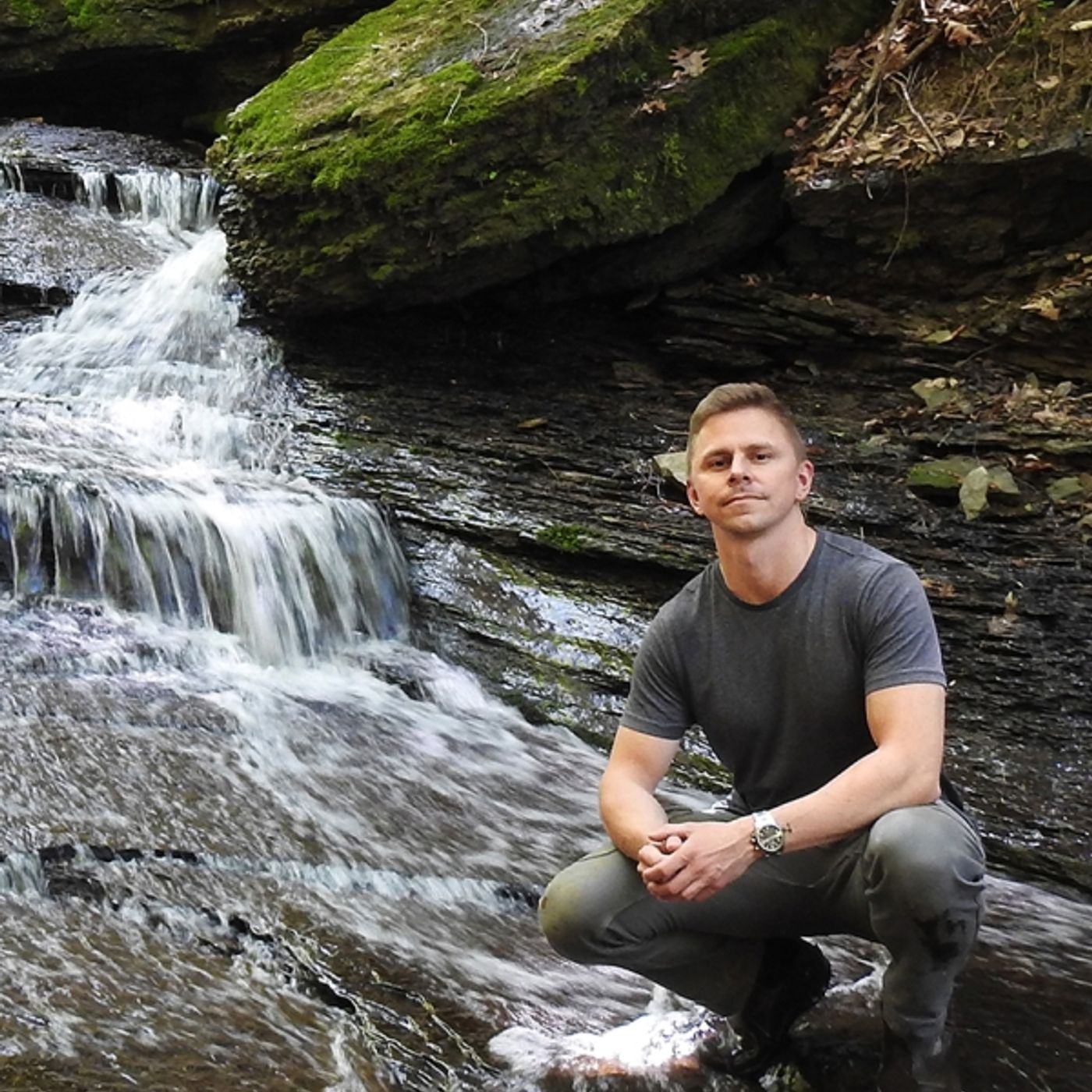
Adam Haritan from Learn Your Land
This episode is a conversation with Adam Haritan from the youtube channel Learn Your Land, which covres a diverse variety of topics related to the ecology of Eastern North American Forests - Fungi, Plants, Insects, & more. In this episode we talk about how fire suppression has caused an explosion in tick populations, along with a multitude of other factors. We also discuss medicinal mushrooms of Eastern North America, surviving stands of American Chestnuts, the importance of geology, and how Paw Paw trees might be neurotoxic. We also talk about how humans having a connection to (and knowledge of) the land that they live on is a matter of existential health, almost more so than anything else.
Adam's been producing the Learn Your Land youtube channel for ten years and has an extensive library of videos about a diversity of topics, and unlike me, he doesn't curse like a madman so his videos are appropriate for all ages. Please check the youtube (especially the tick episode!) and go down a wormhole. Also check out www.learnyourland.com for more info on what he does, a link to his onlince courses, and a list of the videos he's done.
All episodes of the Crime Pays But Botany Doesnt podcast are available Ad-Free on the Patreon at :
https://www.patreon.com/CrimePaysButBotanyDoesnt
Adam's been producing the Learn Your Land youtube channel for ten years and has an extensive library of videos about a diversity of topics, and unlike me, he doesn't curse like a madman so his videos are appropriate for all ages. Please check the youtube (especially the tick episode!) and go down a wormhole. Also check out www.learnyourland.com for more info on what he does, a link to his onlince courses, and a list of the videos he's done.
All episodes of the Crime Pays But Botany Doesnt podcast are available Ad-Free on the Patreon at :
https://www.patreon.com/CrimePaysButBotanyDoesnt
2025-08-26
120 min
Transcript
Available Results
Generated results are saved to the knowledge database for reuse and search.
No generated results are available for this episode yet.
Extract Knowledge
Pick what you want extracted first. Model, scope, and chapter options appear after a template is selected.
Generated results for public episodes are saved to the knowledge database so they can be reused and searched later.
Transcript
<v Speaker 1>There we go. All right, Welcome to the crime Pace
<v Speaker 1>A bond he doesn't podcast. I'm stoked for today's guest.
<v Speaker 1>It's Adam Hareton, who does the Learn your Land YouTube channel,
<v Speaker 1>which is a much better quality production than me and
<v Speaker 1>than crime Pace and also covers areas that crime Pace
<v Speaker 1>doesn't normally go, which is eastern North America. All all
<v Speaker 1>facets of ecology are covered in these videos. Stuff about
<v Speaker 1>American chestnuts, how fire suppression causes, you know, explosions, and
<v Speaker 1>tick populations, Morrell mushrooms. It's it's really yeah. I mean
<v Speaker 1>you got a lot of good stuff here.
<v Speaker 2>Man.
<v Speaker 1>I've been watching your channel for a while, so Adam Hereton,
<v Speaker 1>welcome to the podcast.
<v Speaker 2>Thanks great to be here. Finally, I mean I've been
<v Speaker 2>following your stuff for a long time, and I would
<v Speaker 2>say that probably the most recurring comment I get on
<v Speaker 2>my videos is you have to do something with Joey.
<v Speaker 2>You got to do something with crime pas. So finally
<v Speaker 2>we're here. I appreciate it.
<v Speaker 1>Yeah, totally, man. Yeah, I mean I learned so much
<v Speaker 1>watching your videos because, like I said, I mean I
<v Speaker 1>spent I was spending time on the East coast, you know, Pennsylvania,
<v Speaker 1>New York, et cetera. But long before I was in
<v Speaker 1>the plants, like a decade before I got into any
<v Speaker 1>of this stuff, and I was mostly just going through cities,
<v Speaker 1>and this is kind of an area. I always get
<v Speaker 1>people saying, Oh, you should come out east, and I'm like, yeah,
<v Speaker 1>I'll make it there at some point, but I haven't really.
<v Speaker 1>I dipped into Pittsburgh for a little bit last year.
<v Speaker 1>But but yeah, anyway, the the these videos are put
<v Speaker 1>together fucking great. I mean, like you could tell you
<v Speaker 1>spend a lot of time editing and putting them, you know,
<v Speaker 1>organizing them. They're fucking yeah. I love them. I was
<v Speaker 1>watching a bunch yesterday too. The one that really got
<v Speaker 1>me excited was the tick video, and I guess we'll
<v Speaker 1>just talk about that first. We'll just jump right into it.
<v Speaker 1>Explain to everybody, because this what was It was like
<v Speaker 1>a thirty minute video on basically how uh you know
<v Speaker 1>all the facett to the ecosystem, earthworms, fire, you know, predators,
<v Speaker 1>et cetera, have influenced this explosion in ticks, which is
<v Speaker 1>when I think of the East coast, that's fucking terrifying
<v Speaker 1>to me, Like that's what scares me the most. Is
<v Speaker 1>that there's just ticks everywhere. And it's like this in
<v Speaker 1>Chicago too, because the deer population is so big. So
<v Speaker 1>explain to everybody. I guess how how this all started?
<v Speaker 1>Like what is this? What's going on with the tech
<v Speaker 1>population in eastern North America.
<v Speaker 2>So there's a lot going on with the tech population
<v Speaker 2>in eastern North America. And I can't speak on behalf
<v Speaker 2>of all of eastern North America because although a lot
<v Speaker 2>of my videos are filmed here, it's mostly in the
<v Speaker 2>mid Atlantic northeastern portion of the United States. So I
<v Speaker 2>live in western Pennsylvania, a bit north of Pittsburgh, so
<v Speaker 2>most of my videos are filmed here. But I have
<v Speaker 2>traveled a bit around the East Coast. And when you
<v Speaker 2>talk to people who have been around a bit and
<v Speaker 2>you learn about their back ground or their childhood and
<v Speaker 2>maybe them hunting in the woods or fishing or foraging,
<v Speaker 2>you learn that they didn't really experience the tick abundance
<v Speaker 2>that we're experiencing right now. A lot of people say
<v Speaker 2>that when they were growing up, they didn't see a
<v Speaker 2>single tick, They never got bitten by a tick, they
<v Speaker 2>never heard of lyme disease, they didn't know anybody getting
<v Speaker 2>sick from it, and then all of the sudden, it
<v Speaker 2>seems like people as they got older started hearing more
<v Speaker 2>about ticks and seeing more ticks and pulling ticks off
<v Speaker 2>of them and knowing friends or family members who came
<v Speaker 2>down with the tick born illness, or even they perhaps
<v Speaker 2>came down with the tick born illness. So it seems
<v Speaker 2>like there was something that happened in the past couple
<v Speaker 2>of decades, and nobody is quite sure exactly what happens
<v Speaker 2>or what happened over the past couple of decades to
<v Speaker 2>lead to this explosion. But if you look back at
<v Speaker 2>the history of land use changes in the United States
<v Speaker 2>and how people have treated forests and have treated farms
<v Speaker 2>and have left farms and abandon them and let forest grow,
<v Speaker 2>and then you see what's happening with development and explosion
<v Speaker 2>and all these housing developments near cities away from cities
<v Speaker 2>in a rural areas, and you start putting things together,
<v Speaker 2>and then you start studying a little bit about ecology,
<v Speaker 2>you start to make sense of perhaps what might be
<v Speaker 2>going on, and it seems like fire suppression could be
<v Speaker 2>one of those factors that's driving the explosion in ticks,
<v Speaker 2>and it's not probably the only thing that's going on.
<v Speaker 2>But a lot of people are saying, especially acologists, they're
<v Speaker 2>saying that this is a big factor that's often overlooked,
<v Speaker 2>and a lot of people aren't really talking about it
<v Speaker 2>because they're not quite sure to what extent this is
<v Speaker 2>the factor that's causing it. But if we go back,
<v Speaker 2>perhaps let's say, six hundred to seven hundred years, in
<v Speaker 2>the Eastern United States, I don't think a lot of
<v Speaker 2>people realize, and I didn't for a long time, and
<v Speaker 2>it still kind of boggles my mind to learn that
<v Speaker 2>a lot of eastern North America was burned, and it
<v Speaker 2>was burned pretty frequently. And maybe that surprises a lot
<v Speaker 2>of us because we think of maybe fires occurring in
<v Speaker 2>the West Coast or the Pacific Northwest, but surely not
<v Speaker 2>here in eastern North America because things just seem too
<v Speaker 2>moist or too wet, and we don't have a lot
<v Speaker 2>of fires wildfires here, at least in the Eastern United
<v Speaker 2>States because of something called fire suppression, which was a
<v Speaker 2>big cultural and political and social movement pretty much starting
<v Speaker 2>in the early nineteen hundreds. But before all this, a
<v Speaker 2>lot of fires did occur in the Eastern United States,
<v Speaker 2>and throughout eastern North America, and they weren't just caused
<v Speaker 2>by lightning. And a lot of people think, well, if
<v Speaker 2>there's going to be a fire, it's going to be
<v Speaker 2>caused by lightning. But it seems that a lot of
<v Speaker 2>people were burning forests as well all over eastern North America,
<v Speaker 2>even in some areas that maybe people wouldn't expect, For example,
<v Speaker 2>the Great Smoky Mountains. I don't know if you've ever
<v Speaker 2>been there, but it's a pretty rich music area with
<v Speaker 2>a lot of big trees. There's some old growth left
<v Speaker 2>in there, and it seems like fires might not have
<v Speaker 2>been common there, But if you look at the historical
<v Speaker 2>record around there, there were clear you know, when settlers
<v Speaker 2>came here, they saw big grassy areas, they saw maize fields,
<v Speaker 2>and the reason that these areas were so open was
<v Speaker 2>because of fire set by indigenous human beings. And so
<v Speaker 2>this was a common practice to open up the land
<v Speaker 2>to travel much more easily, to hunt more easily, to
<v Speaker 2>foster the growth of certain berry producing plants, to clear
<v Speaker 2>the land, just to open it up for a lot
<v Speaker 2>of utilitarian purposes. And so this was a common practice.
<v Speaker 2>And then whenever indigenous people started getting pushed more westward,
<v Speaker 2>or being put on reservations, or just being decimated by
<v Speaker 2>European diseases. Interestingly, throughout the seventeen hundreds eighteen hundreds, fires
<v Speaker 2>were actually still common, so it was a common practice
<v Speaker 2>for early European settlers to set fire to the landscape
<v Speaker 2>for pretty much the same reasons, but interestingly, a lot
<v Speaker 2>of these fires were actually more severe. So when we're
<v Speaker 2>talking about indigenous burning practices, in a lot of cases
<v Speaker 2>in eastern North America, these were low to moderate intensity fires.
<v Speaker 2>There were surface fires, they weren't necessarily catastrophic fires, and
<v Speaker 2>they really couldn't be in many cases because if you
<v Speaker 2>set low to modern periodic fires routinely, then you kind
<v Speaker 2>of reduce the fuel load and you don't have a
<v Speaker 2>lot of fuel to climb up into these canopies and
<v Speaker 2>cause these catastrophic fires. And then when Europeans came here,
<v Speaker 2>they kind of started setting fires as well and burning
<v Speaker 2>the landscape. But then something started shifting around the mid
<v Speaker 2>eighteen hundreds into the early nineteen hundreds with new technology,
<v Speaker 2>with the railroads, with the logging crews and the logging
<v Speaker 2>industry that came through, and just massive clearcuts occurring throughout
<v Speaker 2>eastern North America. You had force that were essentially decimated,
<v Speaker 2>but you had a lot of slash as well. You
<v Speaker 2>had a lot of branches, you had a lot of
<v Speaker 2>trunks down, you had a lot of stumps, and these
<v Speaker 2>either caught fire intentionally or unintentionally through sparks for locomotives
<v Speaker 2>going by from the railroad industry, and so you had
<v Speaker 2>these catastrophic fires. Interestingly, this actually favored the reduction of
<v Speaker 2>ticks all these fires, because when you have fires, of course,
<v Speaker 2>it can burn up ticks, but that's not necessarily the
<v Speaker 2>major reason that ticks can see a reduction in populations
<v Speaker 2>if there's fires. But you have open landscapes and ticks
<v Speaker 2>at least in eastern North American, specifically the black leg
<v Speaker 2>at tick, which is probably the most common one here
<v Speaker 2>in the northeast. These ticks don't really like open environments
<v Speaker 2>because if you know anything about ticks, ticks really like moist, humid,
<v Speaker 2>kind of wet conditions. They thrive in these conditions, and
<v Speaker 2>that's why you see a lot of ticks in the spring.
<v Speaker 2>You see them in the fall as well, and sometimes
<v Speaker 2>when it's very very dry and very very sunny and
<v Speaker 2>just very hot, you don't see a lot of ticks
<v Speaker 2>because desiccation is one of the causes, one of the
<v Speaker 2>major causes of their mortality. And so when you have fire,
<v Speaker 2>even low to modern intensity fires, you open up the woodlands.
<v Speaker 2>And even if you have savannahs or open oak woodlands
<v Speaker 2>or savannahs, you still have trees, of course, but you
<v Speaker 2>don't have a lot of leaf litter for ticks to
<v Speaker 2>hide under. You have more wind coming through, you have
<v Speaker 2>more solar intensity coming through, and these all reduced tick populations,
<v Speaker 2>and so this was kind of kept in check until
<v Speaker 2>about the early nineteen hundreds. And then interestingly, even with
<v Speaker 2>the reduction in chestnut trees American chestnut when chestnut blake
<v Speaker 2>came through, that favored the reduction of ticks as well,
<v Speaker 2>because whitefooted mice were reduced, or Eastern chipmunks were reduced
<v Speaker 2>through the decimation of the American chestnut and Eastern chipmunk
<v Speaker 2>and whitefooted mice, these are reservoirs for lime disease, and
<v Speaker 2>ficks really liked these animals. But then things started changing
<v Speaker 2>with fire suppressions. So fire suppression came around early nineteen hundred,
<v Speaker 2>specifically in the nineteen thirties, and then because of this,
<v Speaker 2>people stopped fires. And interestingly, it wasn't necessarily because people
<v Speaker 2>recognized how infrastructure could be damaged, or is maybe it's
<v Speaker 2>not too aesthetically pleasing to see fires burning in the woods.
<v Speaker 2>It was mostly the timber industry. They were worried about
<v Speaker 2>their products. They didn't want their trees being decimated because
<v Speaker 2>they were valuable, and so fire suppression would allow these
<v Speaker 2>trees to grow. So the timber industry was behind a
<v Speaker 2>lot of this, and it stuck, and it sticks even
<v Speaker 2>till this day. Because a lot of people, not necessarily
<v Speaker 2>colleges or foragers, but people who don't necessarily spend a
<v Speaker 2>lot of time in the woods, they'll think that fires
<v Speaker 2>are always a bad thing, and it's not true at all.
<v Speaker 2>But because of fire suppression, a lot of our forests
<v Speaker 2>are regrowing right now, which is a good thing in
<v Speaker 2>many instances. But they're different because there's a process called
<v Speaker 2>mesofication which is taking place, which is the conversion of
<v Speaker 2>these formerly dry, open zero ecosystems with a lot of
<v Speaker 2>oaks and pines into closed canopyed moist, humid maple tulip tree,
<v Speaker 2>black dumb American beech woods, which ticks love because they're moist.
<v Speaker 2>The humid there's a lot of moist leaf litter. It
<v Speaker 2>takes are just thriving right now in these kinds of conditions.
<v Speaker 2>So that's a brief history of all the things that
<v Speaker 2>I kind of talked about in that video. That was
<v Speaker 2>fucking t aout it.
<v Speaker 1>But that was pretty much. That was so articulate. Seriously, man,
<v Speaker 1>thank you. That was like a I don't know, did
<v Speaker 1>you didn't? You should put a book together at some
<v Speaker 1>point if you haven't already. I didn't check if you have.
<v Speaker 1>But yeah, I'm sorry, I'll get off your jock. But
<v Speaker 1>the fucking diversity is I'm looking through the website right now,
<v Speaker 1>learn your land dot com, which is this is very
<v Speaker 1>nice for interviewing you too, because it's got all the
<v Speaker 1>topics you've done, all the videos. But but yeah, that
<v Speaker 1>was fucking do a book. It do a book sometime, please.
<v Speaker 2>Okay, but uh, I'll think about it.
<v Speaker 1>But anyway, Yeah, the thing that when I saw that
<v Speaker 1>video with I think the thing that really I always
<v Speaker 1>connected like burning and texts because you know, out West,
<v Speaker 1>I've spent twenty years living in California, I've still got
<v Speaker 1>some PTSD from certain parts of it. But now I'm
<v Speaker 1>getting PTSD from Texas where I live now. I had
<v Speaker 1>to move here for family. But when I was in California,
<v Speaker 1>you know, burn. It's a Mediterranean climate. In northern California.
<v Speaker 1>Burning is talked about all the time there among the colleges.
<v Speaker 1>It's like, we need to burn all the plants are
<v Speaker 1>so many of the plants are adapted to burning. There
<v Speaker 1>are arctostapflos, the manzanitas, won't they a lot of them
<v Speaker 1>won't germinate without smoke treatment, like you literally to germinate
<v Speaker 1>the seeds. People at the Native Plant Garden were literally
<v Speaker 1>using stubs liquid smoke in a you know, warming it
<v Speaker 1>up with water in a concentration and soaking the seeds
<v Speaker 1>in it for a day or two. So you know
<v Speaker 1>it's and there's cypresses hypericiprus that the cones don't open
<v Speaker 1>unless they get a low burning fire and it melts
<v Speaker 1>the resin between the scales like you know, pint. Some
<v Speaker 1>lot of pine species out there like that too. So
<v Speaker 1>I knew that fire could have a beneficial, you know,
<v Speaker 1>effect on plant life. And it's especially out west if
<v Speaker 1>you don't get those low burning fires you know, ever
<v Speaker 1>so frequently. Then that's when you get those maps of
<v Speaker 1>infernos that turn the sky red for five days, which
<v Speaker 1>is terrifying anyway. But coming out east, I mean, you know,
<v Speaker 1>seeing I was the friend in Alabama a few months
<v Speaker 1>ago and seeing, God, damn, I mean, you've got so
<v Speaker 1>much rain there compared to when you move west that
<v Speaker 1>you just get this explosion of growth every year, even
<v Speaker 1>though the winters can get really cold, and with all
<v Speaker 1>that growth, it's all that biomass. You got to get
<v Speaker 1>rid of it somehow or else you're just gonna have
<v Speaker 1>these forests that are just thickets, especially with invasive species,
<v Speaker 1>like that's what all the forest reserves in Chicago looked
<v Speaker 1>like when I was a little boy growing up. It
<v Speaker 1>was just European buckthorn everywhere. It was fucking horrible. And
<v Speaker 1>they're finally starting to masticate. They haven't burned in some
<v Speaker 1>of the forest preserves because I think some of the
<v Speaker 1>suburbanites are still a little too freaked out by it.
<v Speaker 1>But they'll go masticate, which is better than nothing, But
<v Speaker 1>that doesn't deal with the ticks. But when I watched
<v Speaker 1>that video that you did, and you talk about the
<v Speaker 1>layer of hummus humus I guess right, not the fucking
<v Speaker 1>peda ingredient, but hummus on the ground. It got me thinking,
<v Speaker 1>I'm like, oh, yeah, this whole like micro climate of
<v Speaker 1>humidity that's kept intact by all this duff that's not burning.
<v Speaker 1>That's got to be paradise for the nymphs, for tick nimps.
<v Speaker 1>And so it really got me thinking like, oh, there's
<v Speaker 1>this whole other element that I thought of that I
<v Speaker 1>didn't really think about with that microclimate of humidity that's
<v Speaker 1>removed when you burn, you know. And then also, you know,
<v Speaker 1>for indigenous burning practices, you think, if you don't have
<v Speaker 1>widespread metallurgy, what's the you know, but you need to
<v Speaker 1>prune force so that you can walk through them. What's
<v Speaker 1>the easiest way to do that? Just burn it right
<v Speaker 1>time of year, you know, when it's not going to
<v Speaker 1>blow up, but it's still you're able to get it going.
<v Speaker 1>That's like the most practical easiest way to do that
<v Speaker 1>to clear out the understory. So it's good for hunting
<v Speaker 1>and walking through, et cetera. What about because the video
<v Speaker 1>is about earthworms though, what effect have tell me that angle?
<v Speaker 1>I guess what's the angle of the earthworms for affecting
<v Speaker 1>tape populations.
<v Speaker 2>Yeah, so earthworms, I mean they're interesting because here where
<v Speaker 2>I live in Pennsylvania, supposedly there are no native earthworms
<v Speaker 2>to the state of Pennsylvania currently, although I think some
<v Speaker 2>researchers just saying, yeah, there's actually a couple, but they're
<v Speaker 2>not that common. But by far, the most common earthworms
<v Speaker 2>that you're going to see are non native earthworms. And
<v Speaker 2>pretty much all the native earthworms in this area were
<v Speaker 2>wiped out by the most recent ice age with the
<v Speaker 2>glaciers coming down. And I mean a lot of people
<v Speaker 2>have good things to say about earthworms, and I'm not
<v Speaker 2>here to say that there's nothing good about earthworms around here,
<v Speaker 2>because a lot of gardeners like them, a lot of
<v Speaker 2>composters really like earthworms, and I'm sure they're doing some
<v Speaker 2>okay things in certain conditions, but for native forest health
<v Speaker 2>in Pennsylvania in the Northeast, in these formerly glaciated areas,
<v Speaker 2>earthworms actually cause significant changes to forest ecology because they
<v Speaker 2>consume the duff layer, they consume that humanus layer, they
<v Speaker 2>consume all that organic material, which is why composters, people
<v Speaker 2>who like the compost food and work on that kind
<v Speaker 2>of stuff. They really like earthworms because of that activity,
<v Speaker 2>but unfortunately that kind of destroys a lot of native
<v Speaker 2>plant populations because a lot of that duff layer, that
<v Speaker 2>like spongy layer. I don't know if you've ever walked
<v Speaker 2>through like a really intact of course you have for
<v Speaker 2>people listening, if you've never walked through a real spongy forest,
<v Speaker 2>maybe an older growth forest, but there's just like so
<v Speaker 2>much not necessarily plant growth, although that can be the case,
<v Speaker 2>but just a lot of leaf litter, a lot of debris,
<v Speaker 2>and you kind of feel like you're just like walking
<v Speaker 2>on a springy material. It's very different than walking in
<v Speaker 2>a very degraded forest that was recently cleared for agriculture
<v Speaker 2>and then left to grow up again into a forest
<v Speaker 2>that's very dense and very hard and very compacted. But
<v Speaker 2>the earthworms consume that leaf layer. And the angle that
<v Speaker 2>I was presenting in the video is, well, isn't that
<v Speaker 2>good then for tick reduction? Because if ticks hang out
<v Speaker 2>in that leaf litter, which they do because remember ticks
<v Speaker 2>don't like to be desiccated, that's probably the number one
<v Speaker 2>cause immortality. And so if they hide in that leaf
<v Speaker 2>litter even in the winter months, they'll stay alive even
<v Speaker 2>with several inches of snow on the ground six inches
<v Speaker 2>twelve inches of snow on the ground. As long as
<v Speaker 2>they're in that leaf layer, it's warmer in there and
<v Speaker 2>they'll survive. And so with earthworms coming in, and they
<v Speaker 2>came in many many centuries ago, well in the areas
<v Speaker 2>that are heavily infested with these earthworms, wouldn't that be
<v Speaker 2>better for tick reduction? And could that be a strategy, meaning,
<v Speaker 2>if there's a force that has just so many ticks,
<v Speaker 2>should we bring earthworms in and let them go and
<v Speaker 2>just let them consume that leaf litter. And I guess
<v Speaker 2>some researchers are looking at this, but I don't think
<v Speaker 2>any ecologist is seriously considering releasing more earthworms into intact
<v Speaker 2>ecosystems as a tick production strategy. There has been research
<v Speaker 2>on it, and it seems like it can work, but
<v Speaker 2>to me, it doesn't seem convincing enough, and I don't
<v Speaker 2>think many people are advocating strictly for the release of earthworms.
<v Speaker 2>There's a populations. Yeah, so that's where I thought, well,
<v Speaker 2>maybe fire, how about fire? Because what else reduces leaf litter?
<v Speaker 2>We're not going to rake the woods. We're not going
<v Speaker 2>out there with our rakes or leaf flowers. That's not
<v Speaker 2>gonna work. Yeah, And so I thought, honestly, I wasn't
<v Speaker 2>seeing this in the research with the earthworms. People would
<v Speaker 2>just talk about earthworms and the research, and I thought, well,
<v Speaker 2>what else reduces leaffltter? Oh? How about fire? So I
<v Speaker 2>was like, well, let's see what fire does. And sure enough,
<v Speaker 2>fire seems to be a much more viable strategy, and
<v Speaker 2>it's got so many other benefits as well, because it'll
<v Speaker 2>help halt this nissification process, which a lot of ecologists
<v Speaker 2>say is not necessarily a good thing, because it seems
<v Speaker 2>like oaks and hickories and chestnuts and pines might be
<v Speaker 2>more valuable and that's a subjective term, but according to ecologist,
<v Speaker 2>might be more valuable to wildlife populations and to humans
<v Speaker 2>as well, compared to red maple and tulip tree and
<v Speaker 2>black gum and all these other miso. Yeah, vibess.
<v Speaker 1>Pittsburgh gets forty inches of rain a year, man, that's
<v Speaker 1>fucking crazy. And then you go to like, you know, Maryland,
<v Speaker 1>and they get like fifty inches of rain. That's so
<v Speaker 1>much water. That's I mean Chicago, I think is like
<v Speaker 1>at thirty where I live now in the Payote Gardens
<v Speaker 1>of South Texas, we get like twenty two inches of
<v Speaker 1>rain a year, maybe twenty five I don't know. But
<v Speaker 1>it's humid as balls down here. But you know that's
<v Speaker 1>so with that much rainfall, you're going to get so
<v Speaker 1>much biomass. Like so it's great for the plants obviously,
<v Speaker 1>but then after a few years it stops being so great,
<v Speaker 1>and that's when you get those you know, just overcrowded
<v Speaker 1>forests that need to be burned. I mean, that's what
<v Speaker 1>if you had, like I'm not sure you know, if
<v Speaker 1>you what you're living setups like, but if you had
<v Speaker 1>a patch of land with forests, then I mean, would
<v Speaker 1>you you would be what would you do to limit ticks? Obviously,
<v Speaker 1>try to keep deer out to some extent or at
<v Speaker 1>least maybe call them if they get If there's too many,
<v Speaker 1>you could take like little cotton balls with the permethron treatment,
<v Speaker 1>give them to the field mice. Right there, wasn't that
<v Speaker 1>something they were doing for a while. They bring them
<v Speaker 1>to the nest and then it kills any you know,
<v Speaker 1>I'm not sure, how do you how do you dose
<v Speaker 1>a mouth mouse with permethron without killing it? You know,
<v Speaker 1>so it's not toxic for the mouse. I don't know.
<v Speaker 1>But uh, and then burning, Like what what can people do?
<v Speaker 1>I guess too, because that's something I get, you know,
<v Speaker 1>because I'm with the killer lawn stuff. I'm always promoting.
<v Speaker 1>I'm like, I just plant the native plant card and
<v Speaker 1>people are always like, oh, taxs, ticks. I get ticks
<v Speaker 1>and just keep the deer out. And you got to burn,
<v Speaker 1>you know. Jerry Wilhelm, the author of Flora of the
<v Speaker 1>Chicago Region, who lives in fucking suburban Chicago, sets fire
<v Speaker 1>to his yard every years. It's fucking hilarious. He's like this,
<v Speaker 1>He's this badass, like seventy five year old man. You know,
<v Speaker 1>there's maybe seventy I don't know, no offense, Jerry, but
<v Speaker 1>he's out there like burning. He's got like suburban neighbors.
<v Speaker 1>He lives in a cul de sac and you know,
<v Speaker 1>his house at first looks abandoned because it's all these
<v Speaker 1>beautiful prairie plants, but he burns it every year. And anyway,
<v Speaker 1>I'm rambling, but what would what would you recommend for
<v Speaker 1>people to limit ticks if they live in the Music East.
<v Speaker 2>Yeah, it's funny because a lot of times when I
<v Speaker 2>post something about ticks and what to do in forests,
<v Speaker 2>like large scale solutions, a lot of people say, oh,
<v Speaker 2>just get chickens or guinea fowl. It's like, okay, yeah,
<v Speaker 2>that'll work in your backyard. But I don't think it's
<v Speaker 2>going to work in like the Alleghany National Force.
<v Speaker 1>What do they do to eat?
<v Speaker 2>Now? How people are going to release solve it with that?
<v Speaker 1>The chickens are going to eat all the tip really, like,
<v Speaker 1>how do they get some possible they're gonna miss?
<v Speaker 2>It's actually yeah, to eat all of them for sure.
<v Speaker 2>I mean going back to the benefits of fire, I
<v Speaker 2>think I mentioned in that video that one of the
<v Speaker 2>benefits of restoring fire is that you support certain predators
<v Speaker 2>of ticks like bob boy quail, which drive in fire
<v Speaker 2>dependent ecosystems. So I mean that's the thing where people
<v Speaker 2>get the chickens in the guinea fowl, and I bet
<v Speaker 2>it work. I can't say it doesn't work because a
<v Speaker 2>lot of people say it does work in their backyards.
<v Speaker 2>I just don't think as a large scale solution it
<v Speaker 2>would work. But if I mean, I don't own property.
<v Speaker 2>So I've never done this before. But when I see
<v Speaker 2>woodlots or I explore people's properties and they're asking me, like,
<v Speaker 2>what would you do to this landscape? First I tell
<v Speaker 2>them that this isn't going to be a solution that's
<v Speaker 2>gonna occur in your lifetime. It might take multiple generations
<v Speaker 2>in order for something significant to occur, because you have
<v Speaker 2>to remember, it took a long time for this to happen.
<v Speaker 2>It's not like it just happened in one year. It
<v Speaker 2>would just happened in ten years. There's so many things
<v Speaker 2>that took place in order for the forest to start
<v Speaker 2>looking like this in the east, and so it's something
<v Speaker 2>that's like it might take multiple generations in order for
<v Speaker 2>the biggest benefits to a crew. But I would open
<v Speaker 2>up the woods as much as possible because opening up
<v Speaker 2>increases dryness, it increases solar radiation, and it prevents a
<v Speaker 2>lot of those questing environments for the ticks. And questing
<v Speaker 2>just means whenever the ticks climb up grasses or Japanese
<v Speaker 2>barberry and they're trying to sense for any kind of
<v Speaker 2>animal walking by. But yeah, yeah, I mean you could
<v Speaker 2>see them. Sometimes A lot of people think you can't
<v Speaker 2>see them, but if you look closely enough, you'll see them.
<v Speaker 2>But I would select for more fire dependent or zero
<v Speaker 2>species on a landscape, meaning oaks and hickorys and chestnuts
<v Speaker 2>and pines over maples and tulip trees and beaches and
<v Speaker 2>black gums and other trees like that, because those lead
<v Speaker 2>to a pretty quick closed canopy forest. It leads to
<v Speaker 2>more moist conditions in the forest floor. Those leaves stay
<v Speaker 2>wetter longer, and it's a positive feedback loop where the
<v Speaker 2>longer you let that go, the harder it is to
<v Speaker 2>reverse that. So the sooner you could start I mean
<v Speaker 2>replacing those trees or getting rid of them, or if
<v Speaker 2>you have oaks in your woods and you have maples
<v Speaker 2>as well, I mean, I know a lot of people
<v Speaker 2>don't like to cut trees down because they think every
<v Speaker 2>single tree is valuable, and I get that, But if
<v Speaker 2>you're looking to reduce take populations in your woods, maybe
<v Speaker 2>start cutting down some of those maples and giving those
<v Speaker 2>oaks a chance to live. Because oaks require certain All
<v Speaker 2>species do, but oaks in particular, they're pretty finicky to
<v Speaker 2>get them to grow because they need a lot of light,
<v Speaker 2>not a lot of oaks are super state tolerant. They
<v Speaker 2>need a lot of light, which is why they like fire,
<v Speaker 2>because it reduces competition and it keeps them away and
<v Speaker 2>it opens up the canopy. But sometimes it's not enough,
<v Speaker 2>and you need to get mechanical treatment in there, like
<v Speaker 2>cutting down some species in order to let the oaks thrive.
<v Speaker 2>But once you have oaks and hickory's in there, if
<v Speaker 2>you've ever been in an oak savannah or even an
<v Speaker 2>oak forest dominated by these species, you know that the
<v Speaker 2>canopy is much more open compared to a beach forest
<v Speaker 2>or hemlock forest, or a red maple forest or tulip tree,
<v Speaker 2>because those canopies are so much denser and they just
<v Speaker 2>create those cooler moisture conditions for ticks. But even if
<v Speaker 2>you have a lot of oaks in an area, the
<v Speaker 2>canopy just isn't as dense, and so it dries out
<v Speaker 2>the undergrowth so much more quickly. But I would just
<v Speaker 2>keep in mind that it might not happen in your lifetime,
<v Speaker 2>but you could take the steps and set this process
<v Speaker 2>in motion so that hopefully the next generation will care
<v Speaker 2>enough to keep it going.
<v Speaker 1>Yeah, and burn if you can, I would say, definitely
<v Speaker 1>burn you guys, don't really you're in you're near Pittsburgh, right,
<v Speaker 1>there's not many. There's a couple prairies there, but as
<v Speaker 1>you go further east, you don't. Prairies aren't really a
<v Speaker 1>thing too much. Prairies and savannahs or what it's mostly
<v Speaker 1>woodlands or what is it?
<v Speaker 2>Yeah, I mean there's debate whether that tallgrass prairie peninsula
<v Speaker 2>ever came into Pennsylvania. I think the latest Reacher research
<v Speaker 2>said it didn't. But we do have I think you've been.
<v Speaker 2>There's the Jennings Prairie. Yeah, in western Pennsylvania, which is yeah,
<v Speaker 2>it's a prairie remnant, but it's not really dominated by grasses.
<v Speaker 2>It's dominated by forbes, which is why some people say
<v Speaker 2>that it's not a true prairie. But regardless, we do
<v Speaker 2>have some open habitats. I mean, we have barrens in Pennsylvania.
<v Speaker 2>We have serpentine barrens, we have shale barrens. So we
<v Speaker 2>do have open dry fire somewhat taller an ecosystem. So
<v Speaker 2>it's not unheard of to have these kinds of habitats
<v Speaker 2>in Pennsylvania.
<v Speaker 1>Did you did you? You guys? There's there's timber rattlers
<v Speaker 1>out there, right? Is that Crotalus horridus? What is the
<v Speaker 1>timber rattlesnake? Do you get? Do you get? There's rattlesnakes
<v Speaker 1>are endangered in Pennsylvania, aren't they? They're they're not very common.
<v Speaker 2>I don't know if they're officially listed as endangered, but
<v Speaker 2>they're definitely not as common as they used to be.
<v Speaker 2>But I mean you could still. I believe I should
<v Speaker 2>check this out. But people still go out and trap rattlesnakes,
<v Speaker 2>like with your I think you're well, you're hunting. I
<v Speaker 2>don't know if it's your hunting license or your fish license.
<v Speaker 2>Meaning I don't think they're so endanger that you can't
<v Speaker 2>go out and trap them.
<v Speaker 1>Uh yeah, yeah, but I would.
<v Speaker 2>Definitely fact check that before something goes out and does that.
<v Speaker 2>Having said that, there are rattlesnakes around here, I've seen
<v Speaker 2>them certainly not as common as they used to be
<v Speaker 2>because of people. There's just too many people and they
<v Speaker 2>like to hide. Yeah.
<v Speaker 1>Oh you get massive sagas out there too, right.
<v Speaker 2>Yes, including in the Jennings Prairie.
<v Speaker 1>Oh it was so cute. I love those things. Yeah,
<v Speaker 1>it with the snake hate again. You know, I've been
<v Speaker 1>to Australia, where the snakes aren't nice enough to warn
<v Speaker 1>you when you're close, and they're a lot more aggressive,
<v Speaker 1>you know, the the lapids, the cobra relatives. And I'm
<v Speaker 1>just like, fuck, man, we've got it. We're so spoiled
<v Speaker 1>in North America with these these generally kind and courteous
<v Speaker 1>pit vipers that let us know when we're too close.
<v Speaker 1>I was with my daughter the other day and we
<v Speaker 1>were at this little coastal area near U near Brownsville,
<v Speaker 1>and this thing just rattled at us. I didn't even
<v Speaker 1>see it. It was like six feet away, and I was like, oh,
<v Speaker 1>thank you, thanks for the heads up. We'll just you know,
<v Speaker 1>go around. But uh, yeah, I don't know. I just
<v Speaker 1>I remember seeing something about how there the populations are
<v Speaker 1>declining out there and timber rattles next. I guess they
<v Speaker 1>do blend in very well. They can. If they don't rattle,
<v Speaker 1>you're kind of fucked. But uh, you know, it's all
<v Speaker 1>the more reason not to kill them. And the ones
<v Speaker 1>that rattle let them live. They what do they mostly
<v Speaker 1>do They trap them and just move them, or they
<v Speaker 1>trap them and kill them and use them for the
<v Speaker 1>skin or what?
<v Speaker 2>No, I think I mean, you should fact check this
<v Speaker 2>because I'm not entirely sure and I'm not going to
<v Speaker 2>look it up while I'm on this call. But I
<v Speaker 2>know people that go out and trap them during there's
<v Speaker 2>a season for them. Like, you can go out and
<v Speaker 2>I think you can keep one, meaning I think you
<v Speaker 2>can kill it. But I would definitely google that or
<v Speaker 2>look online first before anybody goes out and does that.
<v Speaker 2>But you definitely there's regulations for it. You can't just
<v Speaker 2>do it any time of the year.
<v Speaker 1>Yeah.
<v Speaker 2>Yeah, I've never done it. I have no interest in
<v Speaker 2>doing it at all. I just know there's people that
<v Speaker 2>go out and do it in Pennsylvania.
<v Speaker 1>Okay, So moving on to there was you recently did
<v Speaker 1>another video too about Parkinson's and golf courses, and I
<v Speaker 1>remember seeing that that coming up in the news, Parkinson's
<v Speaker 1>disease being linked to I presume just all the shit
<v Speaker 1>they spray on golf courses. What's going on here?
<v Speaker 2>Yeah, I mean there could be a lot going on there.
<v Speaker 2>I mean, there could be a lot of variables. There
<v Speaker 2>was a study that came out earlier this year showing
<v Speaker 2>a link between living within a few miles of a
<v Speaker 2>golf golf course and the risk of developing Parkinson's disease,
<v Speaker 2>and it seems like what the mechanism is is not
<v Speaker 2>necessarily brief in the toxic chemicals, like if you live
<v Speaker 2>nearby and they spray the golf course with all these
<v Speaker 2>chemicals and you're breathing it in, although that could be
<v Speaker 2>the case, but it's infiltrating into the water supply. And
<v Speaker 2>so if you're in an area where you get your
<v Speaker 2>water from a water supply company, whether it's an aquifer,
<v Speaker 2>whether it's a well, whether it's from the river, but
<v Speaker 2>there's also a golf course in the area as well,
<v Speaker 2>the risk seems to be greater for developing Parkinson's disease
<v Speaker 2>compared to if you don't share water supply source with
<v Speaker 2>that golf course. And the risk is even greater if
<v Speaker 2>you live in what's called a vulnerable ground water region,
<v Speaker 2>where the land might be even more porous, meaning there's
<v Speaker 2>probably limestone in the area or kars geology, so that
<v Speaker 2>these chemicals can infiltrate much more quickly into the water
<v Speaker 2>supply or even more mineral based soils as well. But
<v Speaker 2>if you live in an area with maybe a lot
<v Speaker 2>of sandstone or maybe a lot of shale, maybe not
<v Speaker 2>so much. There's definitely no cause that's linked in this study.
<v Speaker 2>It's all causation and association. But I mean to me,
<v Speaker 2>it kind of makes sense. It doesn't seem too alarming.
<v Speaker 2>I think golf courses have been linked or at least
<v Speaker 2>pasticize I should say pasticides have been linked to nerrod
<v Speaker 2>degenerative diseases for many years. And so this is just
<v Speaker 2>like another study that maybe makes a stronger link to
<v Speaker 2>that connection.
<v Speaker 1>Yeah, and you think, how you think how absurd it
<v Speaker 1>is to maintain this closely mode turf that you know,
<v Speaker 1>it wouldn't occur anywhere in nature. I guess some you know,
<v Speaker 1>in alpine areas, some sedges and cushion plants can kind
<v Speaker 1>of take that form, but like, no, no grass species
<v Speaker 1>grows to a height of half an inch or an
<v Speaker 1>inch and then stops growing with you know, and doesn't flower.
<v Speaker 1>Grass species all flower of course, So because it's such
<v Speaker 1>an anomaly in nature, it's it's and also because you're
<v Speaker 1>keeping it so closely prune, it's like in a perpetually
<v Speaker 1>stressed state, it's going to take a lot of fluffing
<v Speaker 1>and extra babying and nurturing normally in the form of
<v Speaker 1>chemicals and fertilizers and pesticides to keep this thing alive.
<v Speaker 1>So it makes sense that, you know, as fuck man,
<v Speaker 1>it's it's I see him trying to do golf courses
<v Speaker 1>here in South Texas. It's like in a it's nice.
<v Speaker 1>They all look you know, they look dead even with
<v Speaker 1>all the irrigation because it's one hundred and five degrees
<v Speaker 1>for six months. It's kind of insanity. But but yeah,
<v Speaker 1>it's it's.
<v Speaker 2>Uh.
<v Speaker 1>I thought that was an interesting link when I saw
<v Speaker 1>that story come up in the news a few months ago.
<v Speaker 2>So anyway, yeah, I mean it seems like I guess
<v Speaker 2>some people might think, oh, what does it have to
<v Speaker 2>do with nature or ecology, But it's like if you
<v Speaker 2>do study groundwater and geology and you learn how water
<v Speaker 2>flows through the earth before it gets to you, you
<v Speaker 2>could see kind of where the areas are that might
<v Speaker 2>be more vulnerable because if you have a lot of soil,
<v Speaker 2>you have a lot of porous material that kind of
<v Speaker 2>filters out some of the toxins, like I said, sandstone,
<v Speaker 2>maybe then you might not be as high of a
<v Speaker 2>risk as somebody who lives in an area with the
<v Speaker 2>water just rapidly gets into the aquafa super quickly without
<v Speaker 2>going through a stage of being filtered over time.
<v Speaker 1>Yeah, I think that's.
<v Speaker 2>Where like the limestone and the cars comes in.
<v Speaker 1>It's got everything to do with with with ecology, and
<v Speaker 1>I think it's I don't know, man, it's definitely. I mean,
<v Speaker 1>it's it's in the ecosystem. It's affecting the larger living machine.
<v Speaker 1>You guys don't get. You guys don't get much. I
<v Speaker 1>guess you get some granite out there, you don't get
<v Speaker 1>many many igneous rocks, like whether volcanic or intrusive stuff.
<v Speaker 1>Do you in the Pennsylvania In Pennsylvania, yes, but not
<v Speaker 1>in western Pennsylvania.
<v Speaker 2>So I mean a lot of geologists make the joke
<v Speaker 2>that it's just sandstone shale coal in western Pennsylvania. But
<v Speaker 2>once you get into like the Ridge and Valley Province
<v Speaker 2>out east, where we've got a lot of metamorphic rock,
<v Speaker 2>then you start getting into some interesting things. You've got
<v Speaker 2>diabase in your Gettysburg as well, which is really interesting
<v Speaker 2>because if you study Gettysburg in the Civil War, it's
<v Speaker 2>intimately linked the geology and a lot of people might
<v Speaker 2>not make that connection, but it really is so we
<v Speaker 2>have all kinds of rock in pensylvand western Pennsylvania, mostly sedimentar.
<v Speaker 1>You can't say that and just move on. Let's get
<v Speaker 1>into that a little bit. Get Okay, what's the.
<v Speaker 2>I'm not an expert on it. That's why I moved
<v Speaker 2>on through.
<v Speaker 1>Okay, all right, Okay, I'll let it go. Sorry, but man,
<v Speaker 1>you're just okay.
<v Speaker 2>So some of the soldiers would hide behind diabase, like
<v Speaker 2>if you think of Devil's I don't know if you
<v Speaker 2>know anything about Gettysburg, but Gettysburg is basically just massive
<v Speaker 2>farmland and it's open, but there's these massive boulders scattered around.
<v Speaker 2>And these boulders are diabase, which is idaneous rock. And
<v Speaker 2>what's interesting is that, you know, sometimes in warfare, you
<v Speaker 2>would dig down into the earth to find or to
<v Speaker 2>make trenches for yourself to hide from enemies. Well you
<v Speaker 2>couldn't do that in Gettysburg because diabase was right underneath
<v Speaker 2>the soil, like a small layer soil. There's not much
<v Speaker 2>soil there because diabase was so close. Oh, so they
<v Speaker 2>had a hide behind boulders. That was basically it. It's
<v Speaker 2>like the only place you could really hide or in
<v Speaker 2>road cuts created by the railroad that was going through.
<v Speaker 1>Yeah, that's fucking fascinating.
<v Speaker 2>So a lot of the soldiers just hid behind diabase.
<v Speaker 2>If you search Gettysburg on the internet and you look
<v Speaker 2>at those photos and you see these massive boulders, it's
<v Speaker 2>all just igneous rock diabase.
<v Speaker 1>Yeah, which is it's it's like a yeah, it's like
<v Speaker 1>the equivalent of the salt, but you normally get diabased
<v Speaker 1>and like dykes, like intrusions and stuff. They call it
<v Speaker 1>something different in South Africa. What is it called? They
<v Speaker 1>call it? Oh god, I was down there. They were
<v Speaker 1>calling it the dolrite. Yeah, they were like, oh, there's dolaright. Uh.
<v Speaker 1>I can't do the South African accent, but it's it's
<v Speaker 1>super common out there. But yeah, that's wild. Man. The Yeah,
<v Speaker 1>when me and Al came out the Pittsburgh we were
<v Speaker 1>doing shows there last year, there were so many fucking
<v Speaker 1>road cuts I wanted to stop at.
<v Speaker 2>Yeah.
<v Speaker 1>When we got the Pittsburgh. Pittsburgh is a fucking great city. Man.
<v Speaker 1>We had an it's really cool. It's old. It's like,
<v Speaker 1>you know, bike friendly, pedestrian friendly in certain parts, which
<v Speaker 1>I like. And then thee Carnegie Museum was fucking dope too.
<v Speaker 1>That's like the geology stuff they have there. The geology
<v Speaker 1>exhibits are amazing.
<v Speaker 2>Yeah, And I mean we've got so many road cuts
<v Speaker 2>because they're kind of necessary because there's so many hills
<v Speaker 2>and valleys, and not necessarily because it's mountainous here. I mean,
<v Speaker 2>if you look at the road cuts, everything is pretty
<v Speaker 2>much horizontal throughout western Pennsylvania. But there's just been so
<v Speaker 2>much erosion from the rivers and the streams and the
<v Speaker 2>creeks that over time it kind of looks mountainous in
<v Speaker 2>western Pennsylvania. It's interesting because a lot of people who
<v Speaker 2>hunt will say, oh, I'm going up into the mountains,
<v Speaker 2>and it's like, no, you're not. You're just going up
<v Speaker 2>in the northwestern Pennsylvania. It's actually a plateau geologically speaking,
<v Speaker 2>but it's just been so dissected that it kind of
<v Speaker 2>looks mountainous. But unlike mountains, all the peaks are the
<v Speaker 2>same level. Like if you look if you stand on
<v Speaker 2>top of one ridge in Pennsylvania, just look out across.
<v Speaker 2>It's not like you see all these peaks of different heights.
<v Speaker 2>They're all the same because it was all raised together
<v Speaker 2>and then it was cut by.
<v Speaker 1>S so it's like Colorado Plateau action, Like the uplift
<v Speaker 1>created this basically big ass mesa that was then relieved
<v Speaker 1>worked on by water. And there were glaciers there too,
<v Speaker 1>weren't there.
<v Speaker 2>Yeah, northwestern Pennsylvania and northeastern Pennsylvania. The cutoff was north
<v Speaker 2>of Pittsburgh. They never made their way down here to Pittsburgh,
<v Speaker 2>but of course it was heavily influenced by glacial activity
<v Speaker 2>in Pittsburgh. Like our rivers used to flow north to
<v Speaker 2>the Erie Basin and after the ancestral Saint Lawrence seaway
<v Speaker 2>and now they all go down to the Gulf of
<v Speaker 2>Mexico pretty.
<v Speaker 1>Much, which is a result of just massive glacial melt
<v Speaker 1>I assume.
<v Speaker 2>Huh, yeah, just massive glaciers coming down, blocking the north
<v Speaker 2>flowing rivers and then creating these massive glacial lakes that
<v Speaker 2>had nowhere else to go but south. They just kind
<v Speaker 2>of reversed their course.
<v Speaker 1>Yeah, okay, So next moving on, next topic, I want
<v Speaker 1>to talk to you about two. I saw that I
<v Speaker 1>watched the Passenger pigeon video last night, which is, you know,
<v Speaker 1>it's hard to it's hard to not almost shed a
<v Speaker 1>tear every time you you know, read about this or
<v Speaker 1>think about it. I mean, such a widespread and beautiful
<v Speaker 1>bird species being wiped out, which the last one died
<v Speaker 1>with like nineteen fourteen in a zoo in Ohio or something.
<v Speaker 1>But how did they affect the ecology? I mean these
<v Speaker 1>obviously had a massive effect on the ecology. There was
<v Speaker 1>a huge population. It's kind of unthinkable that humans could,
<v Speaker 1>you know, wipe out a species that was this this abundant.
<v Speaker 1>But what was their effect on the ecology and how
<v Speaker 1>did it change when they were gone?
<v Speaker 2>Yeah, so passenger pigeons, I mean that's an interesting topic
<v Speaker 2>and a lot of people don't get into the ecology
<v Speaker 2>of them, but it is really really fascinating because when
<v Speaker 2>we study you know, forest change and why forests look
<v Speaker 2>the way they do today and what they might have
<v Speaker 2>looked like. When we think of big forces that have
<v Speaker 2>shaped the landscape, of course we think of you know,
<v Speaker 2>modern human activity like logging and clearing the land for agriculture, burning.
<v Speaker 2>Of course, we think of flooding, we think of wind storms,
<v Speaker 2>we think of ice storms, but we usually don't think
<v Speaker 2>of birds, especially pigeons. So it's like, well, how could
<v Speaker 2>pigeons influence the landscape? Well, when there are literally billions
<v Speaker 2>of them, they really can. And so when passenger pigeons
<v Speaker 2>would get together and roost or migrate, they migrate that far.
<v Speaker 2>But when they did, they would roost sometimes in the
<v Speaker 2>millions or hundreds of millions, and travel together. And of
<v Speaker 2>course we've probably all heard these stories of them darkening
<v Speaker 2>the skies and for days, you know, just looking up
<v Speaker 2>and just seeing these massive flocks of birds traveling. So
<v Speaker 2>of course, when you think about that, and then you
<v Speaker 2>think of what effect they might have in the landscape,
<v Speaker 2>you think, well, maybe they did have a significant effect.
<v Speaker 2>And one of the most significant effects was just breaking
<v Speaker 2>things and destroying what was there in the forest goes
<v Speaker 2>through mechanical action, literally just roosting on these branches and
<v Speaker 2>literally just breaking them, just knocking them off. And also
<v Speaker 2>they're done just covering the ground and killing everything underneath.
<v Speaker 2>And if you walk around some of the woods today
<v Speaker 2>in the northeast, wherever the lantern flies are, you could
<v Speaker 2>see this exitate that they excrete, and it's all black underneath,
<v Speaker 2>and it kills a lot of the vegetation underneath. And
<v Speaker 2>it's not on a big scale whenever you see this stuff,
<v Speaker 2>because it's not like you walk through the woods now
<v Speaker 2>and see, oh my gosh, everything's destroyed because of the
<v Speaker 2>lantern flies. Despite what a lot of the media says,
<v Speaker 2>you just see a lot of black, gooey stuff underneath them.
<v Speaker 2>But I imagine that almost times a million when I think
<v Speaker 2>of passenger pigeons just excreting all this done and literally
<v Speaker 2>the understory, but also breaking things and opening up the canopy.
<v Speaker 2>So this is almost similar. In early accounts would describe
<v Speaker 2>this almost like a tornado coming through that kind of
<v Speaker 2>power and just clearing essentially these areas and opening them up.
<v Speaker 2>And of course a lot of people didn't like that
<v Speaker 2>because they wanted the trees to grow, they wanted to
<v Speaker 2>make money on them. They didn't like all this black
<v Speaker 2>stuff underneath on the ground or this rotting material. But
<v Speaker 2>that's one of the effects that the passenger pigeons would
<v Speaker 2>have to open up the forest. But there's other smaller effects,
<v Speaker 2>maybe not necessarily smaller, but maybe not as easy to prove.
<v Speaker 2>A lot of the collegists say that one reason that
<v Speaker 2>red oak became more dominant in the early nineteen hundreds
<v Speaker 2>and white oak decreased was because passenger pigeons became extinct
<v Speaker 2>and they used to feed on red oak acorns, and
<v Speaker 2>then once the passenger pigeons would when extinct, all these
<v Speaker 2>red oak acorns could grow and grow up in the
<v Speaker 2>bigger trees, and they kind of outcompeted the white oaks
<v Speaker 2>because they grow much more quickly than white oaks. But
<v Speaker 2>fire probably also has something to do with it as well,
<v Speaker 2>But the effects just don't stop at destruction of forests.
<v Speaker 2>It also relates to what tree species might be present today.
<v Speaker 1>Yeah, it's it's so like a frequent and reliable disturbance event.
<v Speaker 1>And would these would they did they migrate? Did passenger
<v Speaker 1>pigeons migrate or they were they year round or what?
<v Speaker 2>Yeah, they did, but I don't think it was like
<v Speaker 2>from South America all the way after the United States.
<v Speaker 2>It might have been almost from like one broad city
<v Speaker 2>area to another broad city area, although they weren't like
<v Speaker 2>major cities. Just that's kind of where they would migrate too. Yeah,
<v Speaker 2>not necessarily across large swaths of the continent. Although interestingly,
<v Speaker 2>whenever they want extinct, a lot of people thought they
<v Speaker 2>just went somewhere else. They just all went to a
<v Speaker 2>different continent because they didn't see them anymore and they
<v Speaker 2>didn't fat them that we actually killed them all.
<v Speaker 1>God, that's crazy.
<v Speaker 2>They just traveled. They're over in Europe right now, are
<v Speaker 2>they migrated all?
<v Speaker 1>And it was just hunting. I mean, it was primarily
<v Speaker 1>just over hunting.
<v Speaker 2>Why it was hunting, it was land use changes, but
<v Speaker 2>it was a lot It was very much tied into
<v Speaker 2>the technology of the time to get food to markets.
<v Speaker 2>So the railroad industry had a lot to do with
<v Speaker 2>it because before the railroad industry, basically what you hunted
<v Speaker 2>how to be sold pretty relatively close to where you were,
<v Speaker 2>and without any way to store like dead carcasses somewhat
<v Speaker 2>long term, you had to sell it pretty quickly. But
<v Speaker 2>with the new technology of refrigeration, refrigerated railroad cars and
<v Speaker 2>the railroads, you could get these pigeons into different markets,
<v Speaker 2>and so people just hunted them to oblivion and ship
<v Speaker 2>them all across the United States. But not all these
<v Speaker 2>birds were actually sold. A lot of them did just
<v Speaker 2>rot because they weren't sold. And it wasn't just hunting
<v Speaker 2>with guns. A lot of it with clubs. A lot
<v Speaker 2>of it was nets as well, just trapping them with nets.
<v Speaker 1>So it's like it's market hunting. Basically, it's taken more
<v Speaker 1>than you can actually eat so you can sell it.
<v Speaker 1>And it's fucking crazy. I mean, it's such a yeah, man,
<v Speaker 1>it's wild to think about. But the other thing that is,
<v Speaker 1>I mean that that's so cool to think about. And
<v Speaker 1>that's one thing I love about the videos you do
<v Speaker 1>is it's just looking at just ecology as a whole,
<v Speaker 1>just looking at the whole ecosystem as a whole, as
<v Speaker 1>this this kind of living, breathing organism or machine. I
<v Speaker 1>always say machines. Some people don't like it, but it's
<v Speaker 1>your body's a machine, whatever you gets. Just it's just
<v Speaker 1>the terminology some people don't like. But this looking at
<v Speaker 1>this living machine where each species is a different moving
<v Speaker 1>part and seeing how they all are tied together, and
<v Speaker 1>you take one of these moving parts out and the
<v Speaker 1>machine might still function, but you're gonna it's gonna it's
<v Speaker 1>not gonna function as if efficiently, and it kind of
<v Speaker 1>breaks down a little bit. And I mean, obviously seeing
<v Speaker 1>what we've done in the last you know, a couple
<v Speaker 1>of centuries, especially with this anthra percentric landscape, this anthrapericentric, ungrateful,
<v Speaker 1>somewhat entitled ideology that our civilization tends to espouse sometimes
<v Speaker 1>to make an understatement. You see what we've done, you know,
<v Speaker 1>I mean, like I was telling you before we started recording.
<v Speaker 1>I mean, a fucking guy I know in Vermont was
<v Speaker 1>telling me we used to not get ticks up here,
<v Speaker 1>and now we do. It's it's wild and seeing how
<v Speaker 1>just how everything is so connected. I mean, I know
<v Speaker 1>it's such a cliche to say, but everything's so connected,
<v Speaker 1>and you start tinkering with one thing and it has
<v Speaker 1>ripple effects that affect ten other things, some of which
<v Speaker 1>might directly and immediately affect us. You know. The thing
<v Speaker 1>I wanted to talk to talk about before too, was
<v Speaker 1>when we were on a subject to Parkinson's There was
<v Speaker 1>another video you did about every about which and this
<v Speaker 1>is this was tragic because I fucking love papas, but
<v Speaker 1>how papause might be linked to certain neurow degenerative disorders
<v Speaker 1>too because of chemicals in the whole family and a nacy.
<v Speaker 1>And there was another thing I remember reading about a
<v Speaker 1>few months ago. But uh, and my friend Damon Tyer
<v Speaker 1>is always mentioning that too. He's like, yeah, be careful,
<v Speaker 1>just you know, eat it and moderation. What what's going
<v Speaker 1>on there? I mean, research kind of pointed to it,
<v Speaker 1>but again, nothing's a definite or what.
<v Speaker 2>Yeah. So, I mean I did a video I think
<v Speaker 2>it's called Our Our Popause Neurotoxic, and I did it
<v Speaker 2>because I just wanted to look into the question very objectively.
<v Speaker 2>And I like popase. I mean, I live in an
<v Speaker 2>area where papas grow. I like forging pa pause. I
<v Speaker 2>eat pop pause pretty much every year if I do
<v Speaker 2>find them, and it's been a good crop. And I
<v Speaker 2>think somebody came up to me a couple of years
<v Speaker 2>ago at an event and they asked me, what you know,
<v Speaker 2>what are my top like three wild foods, and I
<v Speaker 2>think number one, I think I said popa And she's like, really,
<v Speaker 2>have you heard about you know, their neurotoxicity and like
<v Speaker 2>you still feel comfortable eating them? And I said, yeah,
<v Speaker 2>I mean I've heard that, but I didn't think it
<v Speaker 2>was actually like a.
<v Speaker 1>Real thing happy to buzz kill you. She's like, hey,
<v Speaker 1>did you hear it isle for you?
<v Speaker 2>Yeah? Well, I mean you hear things like sasafras you
<v Speaker 2>really want to drink sasafras tea, don't you know it
<v Speaker 2>has that carcinogen in it? And I just thought of
<v Speaker 2>it as something like that and I'm just thinking, well,
<v Speaker 2>I know that papas have been eating for a really
<v Speaker 2>long time in North America, like a really long time,
<v Speaker 2>And I thought, well, how could it be bad for
<v Speaker 2>you then if it's been eating for a long time.
<v Speaker 2>And so I just looked more into it, and then
<v Speaker 2>I started seeing videos put up by people that say, like,
<v Speaker 2>don't eat popas. Here's why, like never eat another papa again.
<v Speaker 2>I thought, Okay, it seems like an extreme take. I
<v Speaker 2>don't think that's necessarily true, but I'll look into it.
<v Speaker 2>And I mean, it seems like the answer to this
<v Speaker 2>is it depends are they neurotoxic? Well, it depends how
<v Speaker 2>many are you eating? Are you eating a lot? Is
<v Speaker 2>this like the main food you're eating all year round?
<v Speaker 2>Are you putting it into every single food that you eat?
<v Speaker 2>Are you preserving it? Are you baking it? Are you
<v Speaker 2>cooking it? Like? How are you treating pop? Pause? Because
<v Speaker 2>it seems like members of that family, So pop pop
<v Speaker 2>belongs to a family called an an Ace, which is
<v Speaker 2>mostly a tropical family, and it seems like there's some
<v Speaker 2>epidemiological research linking in an ac consumption to neurodegenerative diseases,
<v Speaker 2>not specifically or necessarily Parkinson's disease. They call it atypical parkinsonism,
<v Speaker 2>and Parkinson's disease is a kind of parkinson ism, but
<v Speaker 2>their neurodegenerative diseases. And what it seems to be the
<v Speaker 2>case is that there are certain groups of people that
<v Speaker 2>eat a lot of this stuff, not necessarily popause, but
<v Speaker 2>soursop and cherimoia and custard apple. These are all members
<v Speaker 2>of the Papa family, which is Annace, and there's an
<v Speaker 2>elevated risk or incidence of atypical parkinsonism. And this was
<v Speaker 2>discovered I think in the late nineties, and then researchers
<v Speaker 2>started wondering, well, what could the mechanism be here, and
<v Speaker 2>then they isolated a compound known as an nacine, named
<v Speaker 2>after the family Annace, and they found that, oh, yeah,
<v Speaker 2>it is neurotoxic in laboratory studies. So if we have
<v Speaker 2>rats and we give them purified annacine, it shows neurotoxicity.
<v Speaker 2>Even if we have human cultured cells and we doast
<v Speaker 2>these cells with annacine, yeah, there's some neurotoxic effects there.
<v Speaker 2>But it wasn't known whether or not Papa even had
<v Speaker 2>this compound, or whether or not it was in any
<v Speaker 2>kind of like physiologically relevant concentration. But then in the
<v Speaker 2>early twenty tens, yeah, it was found that papa does
<v Speaker 2>contain anna scene and some research even showed that the
<v Speaker 2>levels in popa are so much higher than the levels
<v Speaker 2>found in soursop and these other tropical fruits associated with
<v Speaker 2>these degenerative conditions in certain groups of people. And so
<v Speaker 2>people are worried about this, and they're wondering, well, is
<v Speaker 2>this causing any kind of issues in me if I'm
<v Speaker 2>eating it? And then a case study was published in
<v Speaker 2>twenty twenty showing that a man who ate popas I
<v Speaker 2>think for ten years and eventually died from a neurodegenerative
<v Speaker 2>disease I think they called it super nuclear palsy. And
<v Speaker 2>he didn't know why he was getting sick. His wife
<v Speaker 2>didn't know, but the wife told the doctor, well, he's
<v Speaker 2>been eating poppas for five years, and he continued eating
<v Speaker 2>them for five more years until his death. And so
<v Speaker 2>the paper is titled like super nuclear palsy and pop
<v Speaker 2>pok consumption. So right there they're making the link and saying, yeah,
<v Speaker 2>it might be this, but it might be something else.
<v Speaker 2>In all these studies, I mean, if you look at
<v Speaker 2>all these studies, though they're also saying genetics player role,
<v Speaker 2>that's the side exposure could play. These fruits are heavily
<v Speaker 2>sprayed with pesticides, especially in some of these areas where
<v Speaker 2>these fruits grow, like in the French West Indies, and
<v Speaker 2>there hasn't been any study looking at pop pak consumption
<v Speaker 2>and human beings and making any kind of link to
<v Speaker 2>neurodegenital diseases, so that doesn't exist at all. The thing
<v Speaker 2>about poppas compared to these tropical fruits found elsewhere is
<v Speaker 2>that poppas usually aren't available year round. And I say
<v Speaker 2>usually because I mean if you're going to forge plopause,
<v Speaker 2>you only have about a month to do it. Really,
<v Speaker 2>they don't store well, they don't ship well, they don't
<v Speaker 2>commercialize well. Soursop is available year round in some countries.
<v Speaker 2>Charamoia is as well. In these areas where you're seeing
<v Speaker 2>a lot of neurodegeneration within certain groups of people, people
<v Speaker 2>are consuming herbal teas made of these products as well.
<v Speaker 2>They're not just eating the fruits, and sometimes they're doing
<v Speaker 2>it on a daily basis. I don't know many people
<v Speaker 2>that are consuming pop on a daily basis. I don't
<v Speaker 2>know anybody drinking keys made out of pop pause. But
<v Speaker 2>because papas are becoming more popular, people are trying to
<v Speaker 2>commercialize them more. They're trying to fit them into the
<v Speaker 2>market today through all these value added products. They're trying
<v Speaker 2>to figure out ways how can we extend the shelf life.
<v Speaker 2>And I'm not convinced that's a really good idea. I'm
<v Speaker 2>wondering if this is a fruit that just needs to
<v Speaker 2>be respected, created as digital food when it's fresh season,
<v Speaker 2>and maybe that will resolve any kind of issue associated
<v Speaker 2>with NeuroD the generation. But I don't know because I've
<v Speaker 2>never done research on this myself. I haven't talked to
<v Speaker 2>these researchers. But there is a long history of consumption
<v Speaker 2>of papa in the United States. I don't think too
<v Speaker 2>many people can argue with that. We don't see in
<v Speaker 2>cultures in North America that consume papas any strong link
<v Speaker 2>to nerve the generative, to nerve degenerative diseases. So personally,
<v Speaker 2>I think I ended the video by saying I'm gonna
<v Speaker 2>still eat them. I just.
<v Speaker 1>Moderation. Yeah, yeah, said what a buzzkill though, damn still
<v Speaker 1>you know, but a lot of those it's a it's
<v Speaker 1>you know, those basil angiosperm families. They got some weird
<v Speaker 1>phyto chemicals in them.
<v Speaker 2>You know.
<v Speaker 1>It's one of the magnoliads. It's a order Magnolia alies
<v Speaker 1>and an ac and uh you know, yeah, there's I
<v Speaker 1>guess it's not surprising because there there is some weird
<v Speaker 1>there's some weird chemistry in that hole in all those
<v Speaker 1>four orders Cannialales, pipeer Ales, magnolia Alies, and lore Alies,
<v Speaker 1>the Bay Baytree order. But uh yeah, still what a
<v Speaker 1>drag though, man, I think as long as yeah, don't
<v Speaker 1>drink tea out of it, don't boof it, just once
<v Speaker 1>in a while, eat it when it's you know, when
<v Speaker 1>it's in season. Yeah, that was surprising to me though,
<v Speaker 1>Uh to to learn about that anyway, Yeah, that was
<v Speaker 1>That was a fucking great another great video I saw
<v Speaker 1>of yours. I guess, I mean, I love talking about
<v Speaker 1>all this stuff, but I'm curious too, just about your
<v Speaker 1>personal story. How did you get into all this? How
<v Speaker 1>do you start making videos? What's your background?
<v Speaker 2>Like? What?
<v Speaker 1>Yeah, I don't know, I guess did you just learn
<v Speaker 1>for the video stuff you just learn as you go
<v Speaker 1>or what were you, I guess, Yeah, just tell me
<v Speaker 1>how you got into into making this and how learned
<v Speaker 1>your land came to be.
<v Speaker 2>Yeah, I mean that's a good question. Sometimes I don't
<v Speaker 2>even know, because sometimes I wonder, you know, how much
<v Speaker 2>influence did I have on this or how much am
<v Speaker 2>I just being influenced, because sometimes I don't know how
<v Speaker 2>much of control I have over my life. But that's
<v Speaker 2>like an existential, existential thing I'm working through for growing up.
<v Speaker 2>I mean, I wasn't raised like a wild chot or anything.
<v Speaker 2>It's not like I forged a lot or I hunted
<v Speaker 2>or fish or anything. I mean, the more that I
<v Speaker 2>speak to people who know things about nature today, not
<v Speaker 2>like I like to divide people into group, but you
<v Speaker 2>have groups of people that were raised this way, like
<v Speaker 2>their family. They were hunters, they were fishers, they spent
<v Speaker 2>time in the woods, they flipped stones in the creeks,
<v Speaker 2>and they look for salamanders that kind of thing. And
<v Speaker 2>then there are people that just got into this as
<v Speaker 2>an adult. And I'm definitely the latter. I was into sports,
<v Speaker 2>I was into music, I was into playing in bands, academics,
<v Speaker 2>all that stuff growing up. But I think in my
<v Speaker 2>late teens early twenties. I got into nature because I
<v Speaker 2>got into health and nutrition. I didn't feel very good
<v Speaker 2>at the time, and I thought, rather than going to
<v Speaker 2>the doctor, I'm going to try to figure it out
<v Speaker 2>to the best of my ability. And fortunately I started
<v Speaker 2>hanging out with people who knew a thing or two
<v Speaker 2>about health, but they are also interested in forging. So
<v Speaker 2>it's kind of foraging that got me into it, and
<v Speaker 2>I was pretty much just interested in forging for the
<v Speaker 2>health benefits of it. I was looking for medicinal plants
<v Speaker 2>and mushrooms. But soon, you know, I hit that point
<v Speaker 2>where I thought, well, I want to know everything, Like,
<v Speaker 2>I don't care if it's that war medicinal, I just
<v Speaker 2>want to know what it is. And it just became
<v Speaker 2>so it became so fascinating to me, and over time
<v Speaker 2>I realized that there was a limit to just identifying
<v Speaker 2>certain organisms. And you know, I belonged to a lot
<v Speaker 2>of nature clubs and there's a lot of fantastic nature
<v Speaker 2>organizations out there. But two things I think that kind
<v Speaker 2>of limited my education at the time was that a
<v Speaker 2>lot of these organizations just focused on one group of organisms,
<v Speaker 2>whether it's plants, birds, mushrooms, lichens, and that's all they
<v Speaker 2>would talk about. And they just talked about the identification
<v Speaker 2>of it. Maybe they said one or two things about
<v Speaker 2>the ecology, but that was about it. And I thought, yeah,
<v Speaker 2>but I want to know how all these things have connected.
<v Speaker 2>And I don't just want to know about birds. I
<v Speaker 2>don't just want to know about plants. I want to
<v Speaker 2>know why is this plant growing here? And why is
<v Speaker 2>it not growing over there? And does it have anything
<v Speaker 2>to do with geology at all? Or the rocks or
<v Speaker 2>why why are the mountains over in eastern Pennsylvania and
<v Speaker 2>not in western Pennsylvania. Does that have anything to do
<v Speaker 2>with ecology? And I soon realized that I needed to
<v Speaker 2>learn ecology and I needed to learn geology as well,
<v Speaker 2>and that's kind of where I am right now, studying
<v Speaker 2>those things. But yeah, because I love.
<v Speaker 1>Just curiosity, man, Just fucking curiosity.
<v Speaker 2>That's so important. Yeah. I mean, it's it's asking questions
<v Speaker 2>and it's being very curious. And I just feel blessed
<v Speaker 2>that I'm curious about this in life, Like I'm not
<v Speaker 2>that curious about cars or airplanes or like the economy.
<v Speaker 2>I mean, those things are fine, and people are into them.
<v Speaker 2>I think it's fantastic but for me, like what really
<v Speaker 2>lights me up is like knowing why the rivers in
<v Speaker 2>Pennsylvania changed course, or what's the fourth River all about
<v Speaker 2>in Pittsburgh, Because in Pittsburgh there's this myth of the
<v Speaker 2>fourth river even though we supposedly only have three around
<v Speaker 2>the point, It's like, well, what's the fourth river and
<v Speaker 2>what does that mean? Like why is that even an issue?
<v Speaker 2>And a lot of it has to do with geology,
<v Speaker 2>and that's why I just had to keep going deeper
<v Speaker 2>and deeper and deeper. But the interesting thing is, you know,
<v Speaker 2>I hang out with geologists and I go to some
<v Speaker 2>geology conferences and they're just into geology. A lot of
<v Speaker 2>them are like everyone, and it's like they don't talk
<v Speaker 2>about ecology. They they just talk about geology and they
<v Speaker 2>love it. And I really appreciate them for that to
<v Speaker 2>them a little bit bounce back and forth between worlds
<v Speaker 2>in order to try to piece it all together, because
<v Speaker 2>that's what I'm interested in seeing, like the whole, not
<v Speaker 2>the individual components. Like I want to see the whole.
<v Speaker 1>Yeah yeah, you like connecting as well. Yeah, man, you
<v Speaker 1>like connecting the dots and you like you like look,
<v Speaker 1>you like zooming out I always mention that zooming out,
<v Speaker 1>like literally, just if you're looking at like a satellite
<v Speaker 1>image of your backyard and you keep hitting the minus
<v Speaker 1>button and you zoom, zoom zoom, you get further and
<v Speaker 1>further out, and you can suddenly see the whole picture
<v Speaker 1>and start connecting the dots and seeing how everything is connected,
<v Speaker 1>how everything works. I wish more people did that, because
<v Speaker 1>shaking out of that myopia, whether it's just you know,
<v Speaker 1>looking at the human world or whether it's just looking
<v Speaker 1>at this one thing, is so so critical and people
<v Speaker 1>will people will write me and they'll be like, what
<v Speaker 1>book should I get? What book? And I'll say this, yeah,
<v Speaker 1>there's books out there. But really the most important thing
<v Speaker 1>is going into with the right mindset and wondering why
<v Speaker 1>does this do this? Why does like being able to
<v Speaker 1>ask those questions and being curious, like having that hunger
<v Speaker 1>for answers and for information, and being able to think
<v Speaker 1>it's it's the way you think it's not. You don't
<v Speaker 1>just pick up a book and oh, I'm going to
<v Speaker 1>just absorb this by osmosis and and just just memorize it.
<v Speaker 1>That's what American schooling teaches us to do. It's no
<v Speaker 1>it's thinking like why does this do this? And what
<v Speaker 1>effect would this have on this? And what's the cause
<v Speaker 1>that this reason does this? And you know whatever it is.
<v Speaker 1>Or it's like why does nitrogeny enzymes need a low
<v Speaker 1>oxygen environment? What is you know, why is atmospheric nitrogen
<v Speaker 1>inaccessible to plants? You know that kind of thing. Like
<v Speaker 1>that's what I think is really remarkable. And that's what
<v Speaker 1>I love about the videos you do too. They're fucking
<v Speaker 1>all over the place. Man, they're so broad. It's like
<v Speaker 1>such a but it's all shit, that's interesting, and it
<v Speaker 1>all it's all related, you know, as hopes. So yeah,
<v Speaker 1>it is. No, man, it's fucking great. You have a
<v Speaker 1>fucking great thing going. It's but it's it's those asking questions,
<v Speaker 1>that's what's so, that's what's so important. So that's that's
<v Speaker 1>cause you've been trying to get into more geology or
<v Speaker 1>you're in a great spot for it.
<v Speaker 2>Yeah, I mean I remember back in maybe twenty fifteen
<v Speaker 2>to sixteen picking up a few geology books from the library,
<v Speaker 2>like real old books, real old geology books. Even before
<v Speaker 2>like the theory of play tectonics was like wisely accept it,
<v Speaker 2>like we're all geology books, but about like Pittsburgh, and
<v Speaker 2>I remember opening it up and not really understanding most
<v Speaker 2>of it, like seeing all these huge words and concepts,
<v Speaker 2>but seeing a couple pictures and like arrows pointing, and
<v Speaker 2>realizing that I just opened something that is going to
<v Speaker 2>have such a profound effect on I'm what I know
<v Speaker 2>about the land or will help me learn something that
<v Speaker 2>nothing else can help me learn. It was almost like
<v Speaker 2>opening up sacred text that you're not allowed to read,
<v Speaker 2>but like you get access to it. And I know
<v Speaker 2>it sound so weird to say it, but it just
<v Speaker 2>felt like I was holding something that could tell me
<v Speaker 2>so much in piece all these things together, but it
<v Speaker 2>would take me many, many years to kind of do
<v Speaker 2>all that. And that's what geology books feel like to me.
<v Speaker 2>It feels like if I have a geology book, even
<v Speaker 2>if it's like so over my head because I didn't
<v Speaker 2>attend like a geology program in school, it just feels like,
<v Speaker 2>if I can eventually understand this, it's going to make
<v Speaker 2>me feel so much better about what I know about
<v Speaker 2>the land and ecology and everything else. It just feels
<v Speaker 2>so important and it's I don't think it's a surprise
<v Speaker 2>that we call rock like bedrock. You know, I really
<v Speaker 2>think it's the bedrock of nature education to understand geology.
<v Speaker 1>Oh it is one hundred percent man, it's it's the
<v Speaker 1>substrate that all of life, that all terrestrial life depends on.
<v Speaker 1>I mean, and you know marine life as well, from
<v Speaker 1>all the dissolved, weathered bits of rock that end up
<v Speaker 1>in ocean waters. But that, you know, that's what That's
<v Speaker 1>what the geologic timescale and and understanding of taxonomy, like
<v Speaker 1>just the phylogenetic tree of life did for me. It
<v Speaker 1>was like, this is the fucking roadmap to everything. This
<v Speaker 1>explains everything. This is amazing. You know, we can prove
<v Speaker 1>it with radiometric dating and DNA bar coding. So yeah,
<v Speaker 1>that's that's fascinating stuff.
<v Speaker 2>Man.
<v Speaker 1>When you get into Appalachia, like east of where you are,
<v Speaker 1>it's just a fucking paradise for geology. But it's also
<v Speaker 1>like a giant Rubik's cube, which is huge puzzle on
<v Speaker 1>it is it's I wish I knew.
<v Speaker 2>Yeah, a lot of geologists say like, oh, you got
<v Speaker 2>to go west to learn geology because like that's all
<v Speaker 2>the exposures are, and they joke that we have geology here.
<v Speaker 2>But it's buried by ten feet of biology. But to me,
<v Speaker 2>that's amazing to have both, to have so much of
<v Speaker 2>both as well. So I don't feel like I need
<v Speaker 2>to go out west to just learn geology, like I
<v Speaker 2>think you can do it anywhere. And honestly, that's that's
<v Speaker 2>why I named the thing that I do learn your Land,
<v Speaker 2>because it's about learning where you are, like your backyard,
<v Speaker 2>your city, your town, your region. I love traveling as well,
<v Speaker 2>and I love learning about those areas when I'm there
<v Speaker 2>and before I get there, and a little after as well.
<v Speaker 2>But wherever I am, I want to learn that. Wherever
<v Speaker 2>I am, wherever, it's so important.
<v Speaker 1>It's so important. I mean you think about the number
<v Speaker 1>of people that that's what bombs me out is and
<v Speaker 1>people just take things for granted. And and I don't
<v Speaker 1>mean like entitled to take them for granted. I mean
<v Speaker 1>like they just it's just it is what it is.
<v Speaker 1>It's and that's all I don't need. There's no reason
<v Speaker 1>to think any deeper about the ground beneath my feet,
<v Speaker 1>or the plants growing on the side of the road,
<v Speaker 1>you know, next to the chain liing fence, or any
<v Speaker 1>of that. There's no need it's just it is what
<v Speaker 1>it is. It's just there. But when you start, i mean,
<v Speaker 1>when you start looking closer, you realize there's a whole
<v Speaker 1>fucking world. There's a whole universe right there underneath your nose.
<v Speaker 1>And again, everything's connected. It all, everything's interacting. And so
<v Speaker 1>it's you know, the plants. The plants are affected by
<v Speaker 1>the geology, and then the pollinators and whether it's vertebrates
<v Speaker 1>or insects are affected by the plants, and then you've
<v Speaker 1>got the atmosphere. Everything's interacting. It's all tied together. There's
<v Speaker 1>so much there. I mean, people always say, oh, it's
<v Speaker 1>you know, I remember growing up, especially too in Chicago.
<v Speaker 1>People are always like, oh, yeah, you know, it's the
<v Speaker 1>nature's boring here. We've you know, it's it's you got
<v Speaker 1>to go to like Central America or the tropics for
<v Speaker 1>it to get interesting. I'm like, fuck, no, it's not.
<v Speaker 1>It's amazing here. It's just where it's still intact, where
<v Speaker 1>it hasn't been cleared, you know, the tall grass prairies,
<v Speaker 1>the Devonian limestone all that. It's Chicago area that has
<v Speaker 1>amazing ship right there. You know, it's it's just learning
<v Speaker 1>about it being able to access it. That's why what
<v Speaker 1>you do is so important. So yeah, man, it's it's
<v Speaker 1>fucking great. Do you use that? Uh you use that
<v Speaker 1>rock step at all? R O C K D.
<v Speaker 2>I only started a couple months ago actually, but I
<v Speaker 2>don't use it that much. Do you use it?
<v Speaker 1>I use it all the time. It's amazing. It's because
<v Speaker 1>it's just like a geologic map. It's essentially a geologic
<v Speaker 1>map for everything. Like I found. I was in New
<v Speaker 1>Mexico and I found these coal deposits like nothing, you know,
<v Speaker 1>nothing uh that high quality coal for human burning, but
<v Speaker 1>it was you know, still lithified uh carbon. It was
<v Speaker 1>with trace fossils in it and little you know, bits
<v Speaker 1>of fossils he couldn't really decipher, and it was, Yeah,
<v Speaker 1>it was amazing stuff. And I looked it up and
<v Speaker 1>I found the age and some papers on it, like
<v Speaker 1>it's got links to like papers written on that exposure.
<v Speaker 1>It's yeah, it's it's fucking it's a really helpful app
<v Speaker 1>at least if you want to learn learn about things.
<v Speaker 1>It'll get into like what the lithology is, you know,
<v Speaker 1>coal with some shale and then you know the age
<v Speaker 1>is always really cool too. It's like, oh, this is
<v Speaker 1>you know, early early to mid Cretaceous. Well, and then
<v Speaker 1>you can think about, well, what the fuck was going on?
<v Speaker 1>Then you know it's lots of conifer diversity, dinosaurs were
<v Speaker 1>still around. It's yeah, it's it's cool. It's cool stuff.
<v Speaker 1>I like it. But I think with you know that
<v Speaker 1>geology being buried beneath ten feet of biology, you know,
<v Speaker 1>you just got to go to the road cuts, and
<v Speaker 1>there's a lot of road cuts between between where you
<v Speaker 1>are and like, say New Jersey. I mean John McPhee
<v Speaker 1>wrote that fucking book, one of the Open Afrigat which
<v Speaker 1>one it was. I know it's an analyst in the
<v Speaker 1>former world, but you know he's like it's him standing
<v Speaker 1>at a road cut in New Jersey looking at like
<v Speaker 1>four hundred million year old rock. It's fucking out. You've
<v Speaker 1>read John McPhee.
<v Speaker 2>Huh, Yeah, I have. I have read all the books
<v Speaker 2>in that series, and interestingly, my brother just gave me
<v Speaker 2>one of them the other day. I read. I read
<v Speaker 2>that one, the New Jersey one in New York. I
<v Speaker 2>think I forget the title that one as well.
<v Speaker 1>Yeah, I haven't. I've read bits and pieces. I can't
<v Speaker 1>sit through the whole thing. I just my my fucking
<v Speaker 1>eighty ds too too bad. But but yeah, it's it's
<v Speaker 1>man that dude has written some very inspiring, wonderful bits
<v Speaker 1>about geology. You did one in California and then Basin
<v Speaker 1>and range. But but anyway, you got time still and
<v Speaker 1>we got what's your time on me here? When you
<v Speaker 1>got to dip out?
<v Speaker 2>No, I got time?
<v Speaker 1>Okay, cool? All right?
<v Speaker 2>Cool? I mean the interesting thing about geology also, it's,
<v Speaker 2>even though it can be very difficult to learn because
<v Speaker 2>of all the like terminology used, it's so accessible because
<v Speaker 2>it's still like something you can do with your life
<v Speaker 2>as a major in school and as a career that
<v Speaker 2>the culture actually supports this time, meaning it's very difficult
<v Speaker 2>to getting to botany. It's difficult to be like am
<v Speaker 2>I cologists and make a lot of money doing it,
<v Speaker 2>but as a geologist, it's like there's actually money in it.
<v Speaker 2>So there's actually a lot of resources available, like a
<v Speaker 2>lot of free PDFs online. There's a lot of books written,
<v Speaker 2>much more than there are books written on plants and
<v Speaker 2>especially mushrooms today. And it's because I think of just
<v Speaker 2>all the money tied up in geology with coal, with oil,
<v Speaker 2>with natural gas. I mean, nowadays, it's like not many
<v Speaker 2>people are making a lot of money on plants. They're
<v Speaker 2>certainly not making too much money on mushrooms unless you're
<v Speaker 2>getting into psychedelics. But with geology, it's like it's still
<v Speaker 2>a career path. And because of that, there's so many
<v Speaker 2>materials out there that are easily accessible and free. Like
<v Speaker 2>if you just want to learn the geology of your area,
<v Speaker 2>do you just type in your city or your region
<v Speaker 2>like PDF in a in a search bar, you'll come
<v Speaker 2>across all this information and all these maps and detailed information.
<v Speaker 1>Yeah, that's true, that's totally true.
<v Speaker 2>Yeah.
<v Speaker 1>People ask me, like, what's the good book for geology.
<v Speaker 1>I'm always like, uh, John McFee. And then you know,
<v Speaker 1>if you can get into it and then just get
<v Speaker 1>a fucking geology textbook and don't read it start to finish,
<v Speaker 1>just pick it up wherever and start looking at stuff.
<v Speaker 1>And but again you got to ask questions. You know,
<v Speaker 1>you got to be like looking at the text, you
<v Speaker 1>don't just take it for its word that it's basalt.
<v Speaker 1>Go to the internet and look up like pictures of basalt,
<v Speaker 1>how does it form? Whatever? But you know, learning the
<v Speaker 1>three major rock types and then you know the two
<v Speaker 1>two sub designations of igneous rock and all that ship
<v Speaker 1>is just you know, like basic play techtonic, subduction zones,
<v Speaker 1>all that ship it's it's you know, That's That's where
<v Speaker 1>I always tell people to to start. What did you
<v Speaker 1>What did you major in in school? What was your
<v Speaker 1>main focus?
<v Speaker 2>Well, I started out as a music major, classical piano,
<v Speaker 2>uh jad, guitar, piano. Yeah, well I'm used to a lot.
<v Speaker 2>I don't. I haven't played in many years.
<v Speaker 1>Yeah, but that ship doesn't. That ship doesn't leave you.
<v Speaker 1>Fuck that. I would love to. I would love to
<v Speaker 1>fucking be able to play a piano.
<v Speaker 2>I'm just so piano. Piano is awesome and there's death
<v Speaker 2>only a connection between piano and nature. And I only
<v Speaker 2>made this connection a couple of years ago. But I
<v Speaker 2>encourage people to pick up an instrument and study music.
<v Speaker 2>It's fantastic. And I'm so glad that my dad basically
<v Speaker 2>made all of his sons, including me, study music and
<v Speaker 2>push us into the musical field, like to the point
<v Speaker 2>where we went to college for music and you know,
<v Speaker 2>try to make a career out of it. I stopped
<v Speaker 2>that and then I went back to school for Nutrition
<v Speaker 2>at the University of Pittsburgh. And that benefited me because
<v Speaker 2>it allowed me to have access to all these research papers,
<v Speaker 2>and it taught me how to read research objectively as
<v Speaker 2>well and actually get through all the different parts of
<v Speaker 2>it and not just read like the headline or the conclusion.
<v Speaker 1>Yeah, what what do you mean by sanna read research?
<v Speaker 1>Hold that thought really quick? I want to ask to
<v Speaker 1>read research because I think that's important for people to hear.
<v Speaker 1>What do you mean, like to sort through stuff and
<v Speaker 1>not just take it, well, this is the results and
<v Speaker 1>this is the way it is, but actually think about
<v Speaker 1>it and kind of quantify for yourself what's true. What
<v Speaker 1>might be bullshit, not bullshit, but maybe not the best
<v Speaker 1>conclusion to arrive at. Is that what you're talking about?
<v Speaker 1>Or what do you mean?
<v Speaker 2>Yeah? Exactly, just that I mean knowing what you're getting into.
<v Speaker 2>Because when you read like a well published scientific article,
<v Speaker 2>it doesn't read like a book, it doesn't read like
<v Speaker 2>an article in a magazine. I mean, there's a strict
<v Speaker 2>formula from how people write papers, right, and sometimes people
<v Speaker 2>just skip over a lot of it. They'll read the
<v Speaker 2>abstract or they'll read the conclusion, and I can't say
<v Speaker 2>I've never done such a thing because sometimes in the middle,
<v Speaker 2>you know, it's very dry or very detailed and abstract
<v Speaker 2>for me to understand. But like when you want to
<v Speaker 2>present something like popause are neurotoxic because certain cultures around
<v Speaker 2>the world have neudegenitive diseases. But if you just read
<v Speaker 2>the abstract or conclusion, you'll miss what they say there's
<v Speaker 2>probably a genetic component. Yeah, you'll miss where it says, well,
<v Speaker 2>they spray a lot of pesticides on these fruits in
<v Speaker 2>those areas. You might miss that while these people are
<v Speaker 2>drinking lots of teas from these products as well, and
<v Speaker 2>those might be left out of the two book and
<v Speaker 2>parts of the article. So just being familiar with the
<v Speaker 2>layout of an article and how to read it in
<v Speaker 2>a search for them as well. Yeah, just critical kind
<v Speaker 2>of what like college toppy.
<v Speaker 1>Yeah, man, that's I think. I started reading papers. I
<v Speaker 1>was working for the railroad and I just couldn't find
<v Speaker 1>enough information on the plants I was interested in, and
<v Speaker 1>it would be like bullshit websites or you know, Wikipedia
<v Speaker 1>would only go so far. And so then I started,
<v Speaker 1>you know, coming across scientific papers, and then then I
<v Speaker 1>learned about sy Hub and that changed everything. It was
<v Speaker 1>like now you could just download them for free. And
<v Speaker 1>then I got to the point where like that was
<v Speaker 1>primarily what I was reading was you know, research papers.
<v Speaker 1>So anybody that's my hope, is it like for especially
<v Speaker 1>like people that are into what I do or whatever,
<v Speaker 1>just you know, have no connection to academia, aren't interested
<v Speaker 1>in it, maybe didn't even go to college, just start,
<v Speaker 1>but they're interested in plants and ecology. They start you know,
<v Speaker 1>stealing papers on SI hub and reading research papers and whatever.
<v Speaker 1>I think it's really it's really fucking, you know, helpful
<v Speaker 1>in the end. That's just getting into science. And I
<v Speaker 1>think especially the more that our society defunds science, the
<v Speaker 1>more important it is for just lay people to start
<v Speaker 1>getting more into it and learning how to do it
<v Speaker 1>and taking the information. You know. Yeah, absolutely sorry, Okay,
<v Speaker 1>if you can remember your thought that you were making
<v Speaker 1>the connection to piano, go back to that. If not,
<v Speaker 1>I apologize.
<v Speaker 2>Yeah. So when I was growing up, I played piano
<v Speaker 2>a lot, and I didn't like it, but I played it.
<v Speaker 2>And I also played other instruments like trumpet and uphonium
<v Speaker 2>and guitar and bass guitar and drums and I could
<v Speaker 2>kind of pick up his instruments pretty quickly, and I
<v Speaker 2>didn't know why, but I just could. And when I
<v Speaker 2>got older, I remember older people than me, like professional musicians, saying,
<v Speaker 2>you know what, the hardest instrument to learn is piano.
<v Speaker 2>Really but that makes me feel good because I mean,
<v Speaker 2>I wasn't the best at piano, but I wasn't bad either,
<v Speaker 2>and I guess I was pretty proficient at it. But
<v Speaker 2>what I realized was that it helped me learn all
<v Speaker 2>those other instruments pretty quickly. And you can't really say
<v Speaker 2>the same thing all the time for everybody. For something
<v Speaker 2>like the flute, Like if you pick up the flute
<v Speaker 2>and you start on flute, will every other instrument comes
<v Speaker 2>easy to you? Maybe, but probably not as quickly as
<v Speaker 2>if you would had started on piano. There's just something
<v Speaker 2>about piano. It's reading two lines of music at the
<v Speaker 2>same time, using both of your hands, using your feet.
<v Speaker 2>You're using a lot of parts of your body, including
<v Speaker 2>your brain when you're playing the piano. So what does
<v Speaker 2>it have to do with nature? Well, when I started
<v Speaker 2>learning plants and mushrooms and learning ecology, and this is
<v Speaker 2>before I actually really appreciated geology, I didn't realize how
<v Speaker 2>important tree identification actually was and learning all the things
<v Speaker 2>I can learn about trees, and I realizes that trees
<v Speaker 2>actually made me a better ecologist. It made me a
<v Speaker 2>better plant hunter, it made me a better mushroom hunter,
<v Speaker 2>and it made me see so much about the lay
<v Speaker 2>of the land in ecology, more so than if I
<v Speaker 2>would just head learned insects or just head learned ferns,
<v Speaker 2>or just had learned grasses. I mean, these are all
<v Speaker 2>important things, for sure, and I think it's very important
<v Speaker 2>for people to get into the all different components of
<v Speaker 2>nature and see how they're related. But when I started
<v Speaker 2>really paying attention to trees, especially where I live, because
<v Speaker 2>it's a very treed landscape. I mean, if you're living
<v Speaker 2>in an area it was not a lot of trees,
<v Speaker 2>maybe the analogy doesn't apply. But being able to see, Okay,
<v Speaker 2>there's a lot of basswood here, and there's hackberry as well. Well,
<v Speaker 2>I'll bet there's limestone in the soil. And because there's
<v Speaker 2>limestone in the soil, I'm probably going to see some
<v Speaker 2>golden seal. I might see some Virginia penny wart, I
<v Speaker 2>might see a lot of calcareous species. I might see
<v Speaker 2>walking fern and so the fertility actually might be higher
<v Speaker 2>in this air. And just knowing that thing, Oh, because
<v Speaker 2>of that, I might find moral mushrooms here because morel
<v Speaker 2>mushrooms tend to like lime in your area. Damn Compared
<v Speaker 2>to if I would just learn how to identify moral
<v Speaker 2>mushrooms and just focus on moral mushrooms and just look
<v Speaker 2>for moral mushrooms without ever asking the question why are
<v Speaker 2>they even growing here? And whenever you hunt mushrooms, a
<v Speaker 2>lot of people will say yeah, but then you learn
<v Speaker 2>tree identification, and that's true. But I wouldn't just stop
<v Speaker 2>at those two connections, because just learning the trees as well,
<v Speaker 2>and learning a bit about them their ecology, and then
<v Speaker 2>learning how that's tied to geology, it really just opens
<v Speaker 2>up your whole world. It just makes you better naturalist.
<v Speaker 2>And the thing about trees is that they're there all
<v Speaker 2>year round, unlike a mushroom, unlike an in rebaceous plant,
<v Speaker 2>and they're big, they're tall in many cases, so you
<v Speaker 2>could just see them all year round. I mean, you
<v Speaker 2>could be driving on the highway, and especially if you
<v Speaker 2>pay attention to phenology, like when things change or when
<v Speaker 2>things appear like the timing of things. And you see
<v Speaker 2>like a hillside turning red be in October, and you
<v Speaker 2>know it's maybe a ridge and you might say, oh,
<v Speaker 2>that's all scarlet oak over there, and then what does
<v Speaker 2>that tell you? Well, maybe it's a dryer area. Maybe
<v Speaker 2>there's probably black oak in there as well. Maybe I'll
<v Speaker 2>find an American chest and that I'm not sure. But
<v Speaker 2>you start to make all these connections because you know
<v Speaker 2>how to identify trees, and you paid attention a little
<v Speaker 2>bit to ecology as well, So how piano kind of
<v Speaker 2>makes you a better musician overall. And it's kind of
<v Speaker 2>like that one thing that if you if you learn,
<v Speaker 2>it'll really help you and everything else. I think trees
<v Speaker 2>are that way as well, if you live in an
<v Speaker 2>area where forests occur.
<v Speaker 1>Yeah. Yeah, it's the mental exercise to play an instrument,
<v Speaker 1>especially piano. Like the sheet music thing. I used to
<v Speaker 1>know how to read it twenty fucking years ago, it's
<v Speaker 1>I don't anymore. I've I started playing drums and that
<v Speaker 1>was like my that was easy, just bang on shit
<v Speaker 1>and you know, keep it in time. But but the
<v Speaker 1>piano thing is, I mean, it's it's great fucking mental
<v Speaker 1>exercise it's it sounds really nice, it's very pleasant, it's calm.
<v Speaker 1>Other people will enjoy it if they can hear it. Yeah,
<v Speaker 1>I want it. I definitely would love to get back
<v Speaker 1>into that. But that's a really cool take on it.
<v Speaker 1>On its connection again, it's just having a it's being versatile,
<v Speaker 1>and it's having knowing, knowing many topics, many aspects of
<v Speaker 1>the subject matter to look at, and taking a broader,
<v Speaker 1>zoomed out perspective, so that I mean, you're basically you know,
<v Speaker 1>you're basically a great ecologist. How did you get into
<v Speaker 1>ecology from from foraging? From getting from just initially going
<v Speaker 1>out there and foraging was never something I was really into.
<v Speaker 1>I mean I was into it a little bit at first,
<v Speaker 1>and the mushrooms and stuff, but but I guess for me,
<v Speaker 1>it was just being able to, you know, get seeds,
<v Speaker 1>study something, gets seeds, and then grow the shit out
<v Speaker 1>of that and make more of it, plant it around whatever.
<v Speaker 1>But you know a lot of my friends have my
<v Speaker 1>friend Josh and Alabama and other people I follow are into, uh,
<v Speaker 1>really into foraging. That was like their gay way to everything.
<v Speaker 1>It gets a lot of people into this stuff, which
<v Speaker 1>I think it's great for how did that lead you
<v Speaker 1>to ecology?
<v Speaker 2>I think it's because I just wanted to know why.
<v Speaker 2>Like the question was always why, not necessarily what, but why.
<v Speaker 2>I mean with identification, it's a lot of what what
<v Speaker 2>is this? Or how? Like how do I process this?
<v Speaker 2>And I don't honestly, I don't even know why. So
<v Speaker 2>like my question in life right now is well, why
<v Speaker 2>am I even into this at all? But what I realized,
<v Speaker 2>you know I do. I do ecology outings now, So
<v Speaker 2>I take people out and we spend maybe five or
<v Speaker 2>six hours together as a group, and we talk about
<v Speaker 2>these things. We go around, we learn about connections, we
<v Speaker 2>point things out, we study geology. But I think and
<v Speaker 2>I only started doing these again this year after taking
<v Speaker 2>a couple of years off. But when I started planning
<v Speaker 2>for these, I started asking myself, well, what's the point
<v Speaker 2>of this, Like why am I even doing this? What
<v Speaker 2>do I want people to actually learn? Because myself included
<v Speaker 2>like facts don't always stick, like dates of things or
<v Speaker 2>exact numbers or even sometimes the taxonomy of things, like
<v Speaker 2>sometimes I need to refresh my memory.
<v Speaker 1>I do it all the time.
<v Speaker 2>Yeah, yeah, it makes me feel good, But I think
<v Speaker 2>that I always say you know, a successful day for
<v Speaker 2>me would be whenever I lead these events is if
<v Speaker 2>all the participants come away feeling like they actually know
<v Speaker 2>the place better than they knew before coming there, even
<v Speaker 2>if they had been there a hundred times before, and
<v Speaker 2>that they feel more connected to it. And I know
<v Speaker 2>it sounds like kind of woo woof.
<v Speaker 1>That's the connection. That's what fills the fucking void in
<v Speaker 1>the soul.
<v Speaker 2>That is. And you know what, we so many naturalists,
<v Speaker 2>including myself, it's like we're so good at categorizing things
<v Speaker 2>and saying this belongs to this genus or this belongs
<v Speaker 2>to this family or this subfamily, and that's what this
<v Speaker 2>thing does. This is its niche. But it's like, yeah,
<v Speaker 2>but what about you as a human, Like where do
<v Speaker 2>you belong? Like do you belong as well to nature?
<v Speaker 2>Are you nature? Do you belong to a place or
<v Speaker 2>is everything else outside of you and separate and you're
<v Speaker 2>just the observer, paying attention and learning all of it.
<v Speaker 2>And so when I say connect to a place, I
<v Speaker 2>actually mean, yeah, you are connected to this place as well,
<v Speaker 2>this forest when you're here, Yeah, because you're here physically,
<v Speaker 2>you're paying attention to it, you're touching things. You're smelling things,
<v Speaker 2>you're breathing things, you're tasting things, and because you're here,
<v Speaker 2>you are connected as well. And I honestly think one
<v Speaker 2>of the most severe existential crises of our time that's
<v Speaker 2>not often talked about, is that humans don't feel like
<v Speaker 2>they actually belong to a place at the name of
<v Speaker 2>a city or like an alma mater. Absolutely, like I've
<v Speaker 2>belonged a college brand. It's like they belong to land.
<v Speaker 1>They belong to a brand or a sports team. Oh,
<v Speaker 1>I like to go to Chick fil A. That's my restaurant.
<v Speaker 1>You know what, I don't even fuck know anything about sports,
<v Speaker 1>but I you know, I'm a fan of this team.
<v Speaker 1>Blah blah blah. We're gonna kick your kick, you know.
<v Speaker 1>But the fucking and that works. That gives people a
<v Speaker 1>little bit of sense of existential fulfillment. But I think
<v Speaker 1>I've watched this happen in so many people too. Is
<v Speaker 1>when they when they you know, if they're just they
<v Speaker 1>planted a native plant garden, killed their law and they
<v Speaker 1>got the chance to see a new cool bird come by,
<v Speaker 1>or if they're going out, they went on a hike
<v Speaker 1>and they learned a little bit and it actually stuck
<v Speaker 1>like they got it. You could tell they got a
<v Speaker 1>dopamine release when they learned it. You can see the
<v Speaker 1>excitement in their eyes that that shit affects people. That
<v Speaker 1>really changes people, because it does. It's we fucking evolved
<v Speaker 1>on on on earth. We evolved on land. We evolved
<v Speaker 1>having these connections to plants and mushrooms and other living things.
<v Speaker 1>And that's kind of one of the great crimes of
<v Speaker 1>modern civilization. It doesn't need to be like this, but
<v Speaker 1>this is the way it's turned out, is that people
<v Speaker 1>have been disconnected from that. They've lost that, and you
<v Speaker 1>can clearly see it and the biological and ecological collapse
<v Speaker 1>that's happening around us. It's people stopped caringly and they
<v Speaker 1>got this disconnected from the land. And so it's that's
<v Speaker 1>why it's so imperative to bring people back to it.
<v Speaker 1>And that's what I think it does for people. It's
<v Speaker 1>you know, it's yeah, what's the point of it is
<v Speaker 1>that it fills the void and the soul, and it
<v Speaker 1>really does, and it gives people a sense of belonging
<v Speaker 1>and like, holy shit, a timeline to place themselves on
<v Speaker 1>geologic timescale, how to think, you know, just knowing recent events.
<v Speaker 1>By recent, I mean the last few million years, and
<v Speaker 1>just spatially too, like, oh, this is the landscape I
<v Speaker 1>live on, This is the climate that goes with the landscape,
<v Speaker 1>This is the geology that goes with the landscape. These
<v Speaker 1>are the pollinators that go with the landscape, and the
<v Speaker 1>plants that go with the landscape, and et cetera. Man,
<v Speaker 1>it's really it's really good stuff. It's it's so fucking important.
<v Speaker 1>That's cool. You've been doing those so you're like leading forays.
<v Speaker 1>Can people learn about that on the website or what?
<v Speaker 2>Yeah, they're posted on the website learnoland dot com. I
<v Speaker 2>do a couple of year, or at least I started
<v Speaker 2>doing it a couple of year again, But yeah, I
<v Speaker 2>mean that's the point of it. I mean, I do
<v Speaker 2>advertise we're going to learn tree identification, mushroom identification, plant identification.
<v Speaker 2>But there's also ecology, there's also geology. And honestly, it
<v Speaker 2>is my way of helping people connect to a particular place.
<v Speaker 2>And I like using that wordplace because honestly, I think
<v Speaker 2>I think the word nature doesn't mean a lot when
<v Speaker 2>you really think about it to people, because it's too big,
<v Speaker 2>it's too broad, too abstract. I I mean I use
<v Speaker 2>the term all the time. I do because a lot
<v Speaker 2>of people kind of understand what when you say nature,
<v Speaker 2>people picture in their minds, Okay, that's what nature is. Interestingly,
<v Speaker 2>it's always outside of people. It's never them, which goes
<v Speaker 2>to show that people actually don't feel like they belong
<v Speaker 2>to nature, because if you did, you wouldn't use phrases
<v Speaker 2>like I want to go into nature. I like to
<v Speaker 2>study nature. It's like, well, then study yourself, right, because
<v Speaker 2>aren't you nature? Orways say things like things humans do
<v Speaker 2>aren't natural, It's like, yeah, but were they ever natural?
<v Speaker 2>I mean, when let's say the charoite set fire to
<v Speaker 2>the southeastern forest, is that natural or was that not natural?
<v Speaker 2>And if humans do it today, is that natural? Or
<v Speaker 2>is that not natural? And I don't have a good
<v Speaker 2>answer for it. I don't know anybody who really does.
<v Speaker 2>I mean, it just depends on your worldview and what
<v Speaker 2>you believe in what you know. But whenever we say place,
<v Speaker 2>it's much more tangible. There's limits around it, and I
<v Speaker 2>think humans thrive with limits. And it sounds so contrary
<v Speaker 2>to what we're told today to be unlimited and be
<v Speaker 2>global and worldly and like think far and wide and
<v Speaker 2>all this stuff. It's like yeah, but for a long time,
<v Speaker 2>it's like we lived in smaller groups. We had kind
<v Speaker 2>of boundaries. I know we were nomadic. I know we
<v Speaker 2>migrated as well, but it was much smaller, much more intact.
<v Speaker 2>And I think when you want somebody to connect to nature,
<v Speaker 2>a good place to start is just pick a place
<v Speaker 2>and help them learn that place and connect to that
<v Speaker 2>particular place, because I think humans are place based creatures.
<v Speaker 2>I think we thrive when we feel like we belong
<v Speaker 2>to a place. It's much easier to take care of
<v Speaker 2>a place than to take care of nature.
<v Speaker 1>That word natural drives me fucking nutsy. It doesn't mean anything.
<v Speaker 1>I mean they put it on like you know that
<v Speaker 1>we're seeing natural skippy peanut butter, natural scent, you know,
<v Speaker 1>natural scent, and it's like filled with chemicals you know,
<v Speaker 1>produced in a lab. Yeah, it doesn't, you know, it
<v Speaker 1>doesn't it's natural. What what people with this is natural
<v Speaker 1>for this to have. It doesn't mean anything, you know,
<v Speaker 1>whereas if you use the word yeah the living world
<v Speaker 1>or involved in this place, or or you know that
<v Speaker 1>there's actually a connection there, it's more it's articulate. Yeah,
<v Speaker 1>but I think that's what Yeah, that's what I try
<v Speaker 1>to do with the killer lawn stuff is because I mean,
<v Speaker 1>I fucking always hated lawns. But you know, once I
<v Speaker 1>got into botany and learning native plants, that's when I
<v Speaker 1>really was like, holy shit, this is amazing. Like I've
<v Speaker 1>observed so many different life forms in my front yard
<v Speaker 1>because I planted all the native plants that evolved here
<v Speaker 1>in that those life forms evolved with. And I'm learning
<v Speaker 1>so much just by encountering it because it's all coming
<v Speaker 1>to my yard, because my yard's an oasis and a
<v Speaker 1>sea of shitty turf grass and pavement. Yeah. Man, it's
<v Speaker 1>it's fucking great. I can't believe we didn't talk about
<v Speaker 1>American chestnuts yet, Like they were mentioned a little bit,
<v Speaker 1>but this you've done a lot of videos on American chestnuts,
<v Speaker 1>and you know, they were one of the I think
<v Speaker 1>what it was, one out of every four trees it's
<v Speaker 1>commonly said, was an American chestnut out east, I mean,
<v Speaker 1>they were fucking everywhere and you could still see stump
<v Speaker 1>sprouts everywhere. I just saw some in Northwest Georgia in April.
<v Speaker 1>Remember seeing them in Pennsylvania, just passing through driving to
<v Speaker 1>New York. Once I got off the interstate to piss
<v Speaker 1>and there was like a little chestnuts sprout. You know,
<v Speaker 1>as everyone knows, they were lost or became functionally extinct
<v Speaker 1>because of the introduced blight that had evolved with their
<v Speaker 1>close relative, the Chinese chests.
<v Speaker 2>No.
<v Speaker 1>Two species are estimated to have diverged like nine to
<v Speaker 1>twelve million years ago, and Chinese chestnuts resistant to the blight,
<v Speaker 1>Americans not. But with this, I mean, you did a
<v Speaker 1>video on you know, the how the size was over exaggerated,
<v Speaker 1>which I pretty much wholly agree with. Hold on one second, okay, anyway, sorry,
<v Speaker 1>but that dogs were barking at the mailman. So anyway, okay,
<v Speaker 1>so back to but you know you've done quite a
<v Speaker 1>few videos on American chestnuts. What's the status with American
<v Speaker 1>chestnuts where you are right now? I mean, I guess
<v Speaker 1>it's the same and much of the range you just
<v Speaker 1>see stump sprouts. Are there any large ones that you encounter?
<v Speaker 1>And yeah, what do you have to say about that?
<v Speaker 1>You know, the current status of the species out there
<v Speaker 1>and whether you're hoping or what you think of possibilities
<v Speaker 1>for reintroduction.
<v Speaker 2>Yeah, so American chestnut. I really like finding the tree,
<v Speaker 2>and I think it probably comes from the fact that,
<v Speaker 2>you know, I started forging mushrooms, like getting into nature
<v Speaker 2>and like finding things that might not be there. And
<v Speaker 2>with trees, it's like, well, trees are usually always there,
<v Speaker 2>you kind of know where they are. But finding an
<v Speaker 2>American chestnut is almost like finding a morele mushroom for me,
<v Speaker 2>because when I explore new areas, I'm not quite sure
<v Speaker 2>if I ever see it. Sometimes I'm not looking for it,
<v Speaker 2>but then it appears, and you know, sometimes you find
<v Speaker 2>a decent sized one, and I say decent. It's all
<v Speaker 2>relatively speaking, because I don't think in eastern North America
<v Speaker 2>you'll ever find a mature one today. But I think
<v Speaker 2>elsewhere where it's been planted where the blight isn't found,
<v Speaker 2>then you can find some bigger American chestnuts. It's certainly
<v Speaker 2>not incredibly common where I live in western Pennsylvania to
<v Speaker 2>other species, but I know many spots where I can
<v Speaker 2>reliably find them. They're always on the smaller side. Although
<v Speaker 2>up in northwestern Pennsylvania there's an area where there's just
<v Speaker 2>hundreds of living American chestnuts, and I didn't measure. The
<v Speaker 2>biggest one I found, but it's not a small tree.
<v Speaker 2>It was of living ones. Yeah, and some of them
<v Speaker 2>are producing fruits. And I don't think too many people
<v Speaker 2>are aware that they're up there, other than foresters and
<v Speaker 2>people who manage this area, because there's a campground around
<v Speaker 2>there as well, and I don't think people understand that
<v Speaker 2>when they're camping they're literally under living American chestnut trees.
<v Speaker 2>And they're not saplings either, but they're not massive trees.
<v Speaker 2>I mean, I'm not trying to tell you that these
<v Speaker 2>are like full grown American chestnuts or even considered mature,
<v Speaker 2>but for decent sizes, and I've shown some of them
<v Speaker 2>in some of the videos that I've done, so I
<v Speaker 2>am hopeful that given enough time, American chestnut will be okay.
<v Speaker 2>And it's kind of like the thing that I said
<v Speaker 2>with the ticks and fire and well, what can we
<v Speaker 2>do today for a landscape? And there's a lot that
<v Speaker 2>we can do, but I don't think I would be
<v Speaker 2>under the impression that I can do everything today and
<v Speaker 2>see the results next year or even in my lifetime.
<v Speaker 2>It's gonna be something that I think over generations, you'll
<v Speaker 2>eventually see the results. Same thing with American chestnut. I'm
<v Speaker 2>not even sure. There's a lot of things that we
<v Speaker 2>can do other than just protect areas where American chestnut
<v Speaker 2>might be growing. Don't log these areas, and then over time,
<v Speaker 2>maybe resistance will be a thing with some of the
<v Speaker 2>younger trees because some resistance mature trees are there, they're available.
<v Speaker 1>There is some resistance. Yeah, I'm looking at this video
<v Speaker 1>now finding dozens of American chestnut trees and yeah, that's
<v Speaker 1>a fucking I mean that thing is that's a foot
<v Speaker 1>diameter of breast height. Probably that's a large tree. And
<v Speaker 1>I didn't see this one. You gotta watch this video now,
<v Speaker 1>not now, but you know, when we're when we're through
<v Speaker 1>with the podcast, maybe later today with my kid. That's
<v Speaker 1>the nice thing about your videos too, is I can
<v Speaker 1>watch them with my kid. Like my videos. People always
<v Speaker 1>write me like, I love your videos, but I kid
<v Speaker 1>watch them because you curse too much, And I was like,
<v Speaker 1>you know what they're not. They're not insults. Well sometimes
<v Speaker 1>they are, but anyway, you know, I need, I need.
<v Speaker 1>I've thought about maybe doing a kid friendly channel at
<v Speaker 1>some point, which sounds hilarious for me, but and not
<v Speaker 1>even bleeping words out, just not using them. You know,
<v Speaker 1>I've I've learned since I retired from the railroad to
<v Speaker 1>not curse anyway. But this is I mean, this is
<v Speaker 1>fucking wild. What's what is going on? Why do they
<v Speaker 1>not have the blight like these these? And I haven't
<v Speaker 1>watched the video yet, but feel free to spoil it
<v Speaker 1>for me. Why do they not have the blight? You
<v Speaker 1>any idea, any guesses what's going on here?
<v Speaker 2>Yeah, I'm not sure. It's a remote it's a rather
<v Speaker 2>remote area, meaning it's not a lot of developments that area,
<v Speaker 2>not a lot of infrastructure. The area was logged for sure.
<v Speaker 2>I mean, I'm not filming in an old growth area.
<v Speaker 2>I'm not entirely sure. I mean, it's kind of at
<v Speaker 2>a limit of its range. It's not the extreme limit
<v Speaker 2>of the range, and usually you see differences at extremes
<v Speaker 2>of ranges, and so maybe this is just an example
<v Speaker 2>of that where you still find some available but the
<v Speaker 2>blight is there. I mean, I said I found dozens
<v Speaker 2>of American chestnuts, and I did, and there's also dozens
<v Speaker 2>that have the blight in that particular forest as well.
<v Speaker 2>So maybe it's only a matter of time before some
<v Speaker 2>of the bigger ones to come to it. I wouldn't
<v Speaker 2>be surprised if that happens, But just the fact that
<v Speaker 2>it's still holding on after a century of decimation, I
<v Speaker 2>think that's good news. I mean, it's certainly not as
<v Speaker 2>common as it used to be, and it's not reaching
<v Speaker 2>the sizes that it did. But I don't know if
<v Speaker 2>you're familiar with what happened to eastern hemlock thousands of
<v Speaker 2>years ago. I mean, it seems like eastern hemlock populations
<v Speaker 2>almost collapsed completely. When ecologists study the pollen record, they
<v Speaker 2>see that eastern hemlock and they make the deduction that
<v Speaker 2>eastern hemlock was nearly wiped off the entire North American continent,
<v Speaker 2>just an extreme drop in the pallen record of eastern hemlock.
<v Speaker 2>And this lasted for over two thousand years. Two thousand
<v Speaker 2>years that eastern hemlock was nearly wiped out of the
<v Speaker 2>North American continent, and then it rebounded, it came back.
<v Speaker 2>And so if something could happen like that in the
<v Speaker 2>past that we know of at least once, imagine how
<v Speaker 2>many times that must have happened. And Eastern hemlock came
<v Speaker 2>back as a really dominant significant tree. Now today it
<v Speaker 2>has its threats of course, with hemlock wully indelged and
<v Speaker 2>the logging industry in eighteen hundreds early nineteen hundreds. But
<v Speaker 2>that's just one example of a tree that was almost
<v Speaker 2>wiped out completely for nearly two thousand years it still came.
<v Speaker 1>Back and not know why.
<v Speaker 2>I don't imagine if that might happen with the chestment,
<v Speaker 2>what was it?
<v Speaker 1>Were there any hypotheses why it took it?
<v Speaker 2>Yeah?
<v Speaker 1>Beating back then?
<v Speaker 2>Yeah, you have to watch the video now, I'm just kidding.
<v Speaker 1>I'll tell you, Okay.
<v Speaker 2>So I mean, of course it's not proven, because I
<v Speaker 2>don't it's very difficult to prove things that happened that
<v Speaker 2>long ago. But they think it was drought, an extensive
<v Speaker 2>period of drought. They looked at insect insect damage. That
<v Speaker 2>was a plausible hypothesis, but they landed on drought a
<v Speaker 2>significant warming drying period, and eastern hemlock doesn't really like that.
<v Speaker 2>Eastern hemlock likes cooler moisture conditions. So the significant warming
<v Speaker 2>drying period, which favored oak trees, which favored hickories, which
<v Speaker 2>favored chestnuts, wasn't very good for eastern hemlock. But it's
<v Speaker 2>not to say that this also didn't stress the trees
<v Speaker 2>and lead to an insect outbreak. So maybe because it
<v Speaker 2>was drought stressed, it was also prone to fungal infestation,
<v Speaker 2>which is very difficult to prove today because fungi don't
<v Speaker 2>preserve well.
<v Speaker 1>In the fossil record.
<v Speaker 2>Yeah, but yeah, they think it was drought as opposed
<v Speaker 2>to some kind of pathog and outbreak.
<v Speaker 1>Yeah, but it could have been tied to it invasive.
<v Speaker 2>All is to say I'm hopeful about American justice.
<v Speaker 1>I always point out to people too, like on the
<v Speaker 1>topic of invasion biology, and I don't know where you
<v Speaker 1>stand on this, but you know, for me, invasion biology,
<v Speaker 1>I see it. It's very real. It's all over the place,
<v Speaker 1>and it's just a simple concept of you know, the
<v Speaker 1>oceans having kept you know, not just plant species, but
<v Speaker 1>entire ecosystems and continents isolated from each other, and so
<v Speaker 1>you know, they you take one piece from one ecosystem
<v Speaker 1>and continent and move it to another one because the
<v Speaker 1>worst invasives always tend to be from other continents. It
<v Speaker 1>makes sense, you know, and they're often very important species
<v Speaker 1>where they're native, but they you know, run rampant when
<v Speaker 1>they don't have any ecological checks and balances. But I
<v Speaker 1>always point out to people, you know, almost every major
<v Speaker 1>pathogen or insect past of North American trees, it's causing
<v Speaker 1>massive declines right now in North American forests is from
<v Speaker 1>another continent, you know, and recently arrived from human transport.
<v Speaker 1>And that's that's like the chestnut is like the classic
<v Speaker 1>case of that happening. But what's interesting is you can
<v Speaker 1>see it seems like they're a lot more resilient out west,
<v Speaker 1>or they're because you get into more arid places with
<v Speaker 1>arid summers, which to you know, wester North America has,
<v Speaker 1>they can grow, they can grow relatively blight free because
<v Speaker 1>the blight just can't get established there and it needs
<v Speaker 1>those you know, humid, humid, humid, warm temperatures. So and
<v Speaker 1>I've seen some really large ones out west at least
<v Speaker 1>that's what that's what I assume, because they seem to
<v Speaker 1>just really take off out west. But then of course
<v Speaker 1>you're limited by having to irrigate them because a lot
<v Speaker 1>of places in West just don't get enough summer range,
<v Speaker 1>so they've either got to be riparian or I remember
<v Speaker 1>seeing like a giant one on the Klamath River in
<v Speaker 1>northern California that was planted by some gold miner from
<v Speaker 1>Virginia in like the eighteen fifties. Was fucking huge, very stout,
<v Speaker 1>not that tall, but massive trunk. So I wish someone
<v Speaker 1>would set up like an ex sit to, you know,
<v Speaker 1>grove of them out west so they just to keep
<v Speaker 1>producing seeds. But do you know for that one in
<v Speaker 1>the grove that the video is on and again it's
<v Speaker 1>called finding dozens of American chestnut trees on the Learn
<v Speaker 1>Your Land YouTube? Does ACF know about that? Does American
<v Speaker 1>Chestnut Federation? I assume they probably do?
<v Speaker 2>I think I think so. Yeah. I mean it's if
<v Speaker 2>you look online that area. I mean, I think I
<v Speaker 2>can give it. I won't give it away specifically, but
<v Speaker 2>I think one of the ridges around is called Chestnut Ridge.
<v Speaker 2>But there are a couple chestnut ridges in Pennsylvania. But anyway,
<v Speaker 2>it is kind of public knowledge that that area exists
<v Speaker 2>because some people lead walks to see the American chestnuts there.
<v Speaker 2>So I think the American Chestnut Foundation doesn't know about it.
<v Speaker 1>Yeah, I wonder if that'd be good to test for
<v Speaker 1>blight resistance genes. You know, it's it's wild. I did
<v Speaker 1>two podcasts on that, one with someone from Sunni State,
<v Speaker 1>University of New York who helped develop that blight resistant,
<v Speaker 1>you know, genetically modified one where they took the gene
<v Speaker 1>from wheat that produces an enzyme that breaks down oxalic acid.
<v Speaker 1>And then I did another interview with someone from ACF
<v Speaker 1>that said, oh, there were problems with that, you know,
<v Speaker 1>they were that, you know, problems with what they were
<v Speaker 1>doing and it's not as simple as just this one gene.
<v Speaker 1>But it was really interesting. It really shed light on
<v Speaker 1>the whole subject. It's fucking so tragic what happened out there,
<v Speaker 1>because you know, it was just such a keystone species.
<v Speaker 1>And yeah, the fucking fruits are delicious, the seeds are delicious.
<v Speaker 1>Does just you get European and Chinese chestnuts like planted
<v Speaker 1>in agriculture you're out there or like at homesteads in
<v Speaker 1>your area.
<v Speaker 2>Yeah. And what's funny is that anytime I post something
<v Speaker 2>about American chestnut, and usually I'm standing next to not
<v Speaker 2>a massive tree, and I still call them decent sized
<v Speaker 2>trees because for an American chestnut today, they are in
<v Speaker 2>decent size. But I'll always I always, always, always get
<v Speaker 2>emails or comments saying that was a bigger one in
<v Speaker 2>my yard. We've got a massive one in my yard,
<v Speaker 2>and I like, okay, let me see it. And it's
<v Speaker 2>always a Chinese chestnut or European chestnut or another chestnut.
<v Speaker 2>It's never the American chestnut. But yeah, we do have
<v Speaker 2>them around here. I have seen them in woods like
<v Speaker 2>wooded ecosystems, but for the most part, they're just planeted
<v Speaker 2>in people's yards. They might be in cemeteries, they might
<v Speaker 2>be in planet orchards. If they're in woods, it's because
<v Speaker 2>somebody tried to establish them and then died or abandoned
<v Speaker 2>the land, and then the forest grew up around it.
<v Speaker 2>So you still see them, and they kind of take
<v Speaker 2>on more of the tall, trunk straight look that an
<v Speaker 2>American chestnut would. But one way to tell the difference
<v Speaker 2>is that usually those non native chestnuts have more of
<v Speaker 2>what's called an orchard look to them, where they kind
<v Speaker 2>of grow more short and stout like an apple tree
<v Speaker 2>mite compared to just super tall and straight like an
<v Speaker 2>oak miight. But of course if it's growing out in
<v Speaker 2>the open, that changes for American chestnut.
<v Speaker 1>Yeah, what about just leaf texture is there. The American
<v Speaker 1>chestnuts are like a little bit more scabbard, like sandpapery
<v Speaker 1>or what.
<v Speaker 2>So. American chestnuts very smooth and it's thin, thin leaf
<v Speaker 2>and the teeth around the margins they kind of curve
<v Speaker 2>upward towards the tip the apex of the leaf, whereas
<v Speaker 2>the non native chestnuts are typically thicker, they're more leathery,
<v Speaker 2>they're shinier, and they sometimes they have like a scurfy
<v Speaker 2>feel to them as well. So that's one way, but
<v Speaker 2>usually I'm looking at the ecosystem like it's one of
<v Speaker 2>the best ways to do it. If you're seeing other
<v Speaker 2>native trees around and you're not seeing a lot of disturbance,
<v Speaker 2>and you're seeing a tree that's probably not massive and
<v Speaker 2>it's not doesn't have that orchard look to it, but
<v Speaker 2>it's probably American chestnut. It's usually when you get into
<v Speaker 2>areas where you see planted crab apples or apple trees yea,
<v Speaker 2>or non native oaks thrown in there like a saw
<v Speaker 2>tooth oak, and then you see a chestnut there, it's like,
<v Speaker 2>it's probably not American chestnut.
<v Speaker 1>Yeah, hints that it was a former homestead and that
<v Speaker 1>it was probably planted and the forest just grew up.
<v Speaker 2>Yeah, yeah, exactly. But they're fun to find. I mean
<v Speaker 2>I encourage people to look for them. They're not that
<v Speaker 2>hard to find either. It's as you have to know
<v Speaker 2>what you're looking for.
<v Speaker 1>Yeah, yeah, yeah, I remember, like the ones I saw
<v Speaker 1>in Georgia. They were only three feet tall and they
<v Speaker 1>probably working to get any bigger because it was they
<v Speaker 1>were in the shade. It was there just wasn't enough
<v Speaker 1>light up there. But you know, maybe some disturbance event
<v Speaker 1>or a forest fire or you know, something opens up
<v Speaker 1>the clearing bed storm I could see. You know, if
<v Speaker 1>suddenly they're able to get light, they can grow to
<v Speaker 1>whatever height they normally grow to when the blight can
<v Speaker 1>finally hit on you know, because the blight is still
<v Speaker 1>I mean it hits other trees, right, That's why it
<v Speaker 1>persists in the environment, So even without chestnuts, it still
<v Speaker 1>is there.
<v Speaker 2>Yes, what is that? That's my understanding.
<v Speaker 1>It's oaks probably or closely related trees it grows on.
<v Speaker 2>Yeah, I mean it's been a wall since I've looked
<v Speaker 2>into that, but I have heard that oaks also can
<v Speaker 2>like host that fungus. I don't think it's I could
<v Speaker 2>be wrong, but I don't think it seriously affects the oaks.
<v Speaker 2>But maybe I'm wrong in that. Yeah, but yeah, there
<v Speaker 2>are the trees that can also host the fungus.
<v Speaker 1>Okay, you got how you got some time to talk
<v Speaker 1>about the fungui really quick? Well not really quick. I
<v Speaker 1>want to do like twenty minutes, but you know what
<v Speaker 1>I mean, let me know if you got to go
<v Speaker 1>and I can, I can we cut?
<v Speaker 2>I have exactly I have exactly twenty minutes. Twenty minutes.
<v Speaker 1>Good, okay, great, perfect, all right, So let's talk about
<v Speaker 1>you know, medicinal mushrooms. That's like a great that's a
<v Speaker 1>great way to get people interested in going outside. You know,
<v Speaker 1>the foraging aspect, especially with mushrooms is fucking wonderful, especially
<v Speaker 1>because mushrooms are you know, analogous to fruits of a plant.
<v Speaker 1>They need to be picked there how they need to
<v Speaker 1>be picked. The spores need to be dispersed. That's how
<v Speaker 1>the fungus reproduces and disperses. What are some of the
<v Speaker 1>what are like the top three medicinal mushrooms in eastern
<v Speaker 1>North America and the ones that you're I guess and
<v Speaker 1>you can list more than three, but the ones that
<v Speaker 1>you're really stoked about that like you're always amped to
<v Speaker 1>find that. You know the benefits, you know, you're a
<v Speaker 1>firm believer in name like three or four.
<v Speaker 2>So my relationship with medicinal mushrooms has changed, I would say,
<v Speaker 2>a lot, over the past fifteen years or so. And
<v Speaker 2>I agree with what you said. It's a great way
<v Speaker 2>to get into four and just to spend more time
<v Speaker 2>in a wild place. And I think it's that way,
<v Speaker 2>And I mean there's such like a there's so much
<v Speaker 2>enthusiasm around mushrooms right now, and it's been that way
<v Speaker 2>maybe for the past five six seven years, much more
<v Speaker 2>so than when I got into it maybe fifteen years ago.
<v Speaker 2>And I think part of the reason is more and
<v Speaker 2>more people are understanding the benefits of spending time outside
<v Speaker 2>and connecting to wild places and nature. But with hunting animals,
<v Speaker 2>there's a lot of regulations involved, and you got to
<v Speaker 2>learn how to use weapons like firearms. With foraging mushrooms
<v Speaker 2>and plants, there's less regulations around it, and so people
<v Speaker 2>literally can just go into the woods like today and
<v Speaker 2>start looking for mushrooms and thinking that you can't do
<v Speaker 2>that with deer. You can't even do that with fish
<v Speaker 2>like you need licenses. These things are heavily regulated. Now.
<v Speaker 2>I understand that mushrooms are regulated in certain areas and
<v Speaker 2>in Pennsylvania and in many states they're regulated to a
<v Speaker 2>degree when it comes to commercial foraging. But all this
<v Speaker 2>to say, it's a very easy thing to get into
<v Speaker 2>because the bar is pretty low, like the barrier to entry,
<v Speaker 2>it's not that great, and there are clubs associated with
<v Speaker 2>these that will help you find these organisms. All is
<v Speaker 2>to say, I think this is one of the reasons
<v Speaker 2>why mushrooms are so popular today. And I got into
<v Speaker 2>the mushrooms specifically for the medicinal benefits, but over the
<v Speaker 2>years less into making the tinctures and the teas, and
<v Speaker 2>maybe I should get back into that. But I like
<v Speaker 2>eating them. I like eating mushrooms. Not every day, not
<v Speaker 2>even every month. I mean when they're available and I
<v Speaker 2>find a lot, yeah, I mean I'll forge some and
<v Speaker 2>eat them. And so the medicinal mushrooms that also are
<v Speaker 2>edible mushrooms, those are the ones that excite me the
<v Speaker 2>most because I think it's it requires less processing initially
<v Speaker 2>as well, and it doesn't take as much time. I
<v Speaker 2>mean with a tank, sure it could take many months
<v Speaker 2>in order for you to see the results of that
<v Speaker 2>so that you could take it, because you just have
<v Speaker 2>to extract it for a significant length of time in
<v Speaker 2>some cases not all of course, both eating. I mean
<v Speaker 2>you can come home and just throw that thing in
<v Speaker 2>a pan and cook it and eat it up, and
<v Speaker 2>you'll probably get some of the benefits as well. But
<v Speaker 2>I mean, I like hand of the woods at the
<v Speaker 2>my taki mushroom, yeah, which is one that grows an
<v Speaker 2>association with oak trees. Yeah, yeah, I mean it just
<v Speaker 2>it tastes good, it's needy. You get a lot out
<v Speaker 2>of it. Like if you find one of those, like,
<v Speaker 2>that's a lot of food. If you find one morale mushroom,
<v Speaker 2>that's not a lot of food. That's why I like
<v Speaker 2>finding my taki mushroom. It's a good time to be
<v Speaker 2>outside as well.
<v Speaker 1>They're huge. They're mostly in the faller. Can they be whenever?
<v Speaker 2>I would say the seasons typically, and these are the extremes,
<v Speaker 2>but mid August through about mid November, that's like the
<v Speaker 2>two ends of when I've ever found them, But usually
<v Speaker 2>it's September through October. Yeah, and usually don't see it
<v Speaker 2>any other time of the year. At least I've never
<v Speaker 2>seen it any other time of the year. But there's
<v Speaker 2>some good medicinal research on that one as well. There's
<v Speaker 2>a compound and is defraction that's in there. It's a
<v Speaker 2>polysach and it seems to have immunosupport of benefits, which
<v Speaker 2>sounds so generic to say, but with immune to support,
<v Speaker 2>you're talking about something that can regulate the immune system
<v Speaker 2>in a dual directional way, either stimulating the immune system
<v Speaker 2>or suppressing inflammation associated with an overactive immune system. Now,
<v Speaker 2>how much of that compound do you get when you
<v Speaker 2>eat it? I'm not exactly sure. If you make a
<v Speaker 2>soup out of those mushrooms, maybe you're probably getting a
<v Speaker 2>little more compared to than if you eat it. But
<v Speaker 2>at this point in my life, I've been focusing a
<v Speaker 2>lot more on just diet, not so much medicinal herbs
<v Speaker 2>and medicinal mushrooms, because I've gotten to a place where
<v Speaker 2>I feel pretty good with my lifestyle choices. Yea, and
<v Speaker 2>I don't think, at least at this point in my life,
<v Speaker 2>I really need to rely on a lot of that stuff.
<v Speaker 2>What is to say that's where I'll always be? What's
<v Speaker 2>my diet?
<v Speaker 1>Yeah, like by the way, like like just you know,
<v Speaker 1>it's it's always good to hear like friends talk about
<v Speaker 1>what they eat. Mostly it's well, there some friends I
<v Speaker 1>don't want to know what they eat because they have
<v Speaker 1>horrible fucking diets. But but yeah, I mean it's you know,
<v Speaker 1>like like what do you try to limit? What do
<v Speaker 1>you eat a lot of et cetera.
<v Speaker 2>So at this point in my life, it's a lot
<v Speaker 2>of protein, some carbs as well, some fat. But you know,
<v Speaker 2>I did the vegan thing. I did the vegetarian thing
<v Speaker 2>for a while. I tried raw food for a while,
<v Speaker 2>and I lost a lot of weight doing that stuff.
<v Speaker 2>I probably damaged myself doing a lot of stuff as well.
<v Speaker 2>But I found that eating good quality meats that's pretty
<v Speaker 2>good for me. So I eat a lot of meat.
<v Speaker 2>I eat a lot of eggs. Yeah, I mean stuff
<v Speaker 2>like that. I do eat carbs as well. I try
<v Speaker 2>not to eat a lot of junk food. I probably
<v Speaker 2>don't eat a lot of it at all anyway. Yeah,
<v Speaker 2>I drink a lot of water, I drink a lot
<v Speaker 2>of tea. I have coffee every day. I move my
<v Speaker 2>body every day. I get good quality sleep. But it's
<v Speaker 2>a lot of like the most boring things that you
<v Speaker 2>hear are actually the most beneficial, which is why like
<v Speaker 2>a lot of health YouTube channels and social media, whenever
<v Speaker 2>they counts like the new latest thing, it's like, yeah,
<v Speaker 2>it's probably not as good as just like getting good sleep. Yeah, man,
<v Speaker 2>drinking more water. It's limiting your intake of ultra processed food.
<v Speaker 1>It's in a consumer society. It's always like some big
<v Speaker 1>new thing. You take this thing, it's going to improve everything,
<v Speaker 1>but there's never any focus on just long term like
<v Speaker 1>getting adequate exercise, not eating shit, getting good sleep, you know,
<v Speaker 1>not eating a lot of processed sugary bullshit. There's an
<v Speaker 1>Asian grocery store just to open up near my house,
<v Speaker 1>which I'm fucking oh my god. It's you know, it's
<v Speaker 1>like a I was in heaven. When I go to
<v Speaker 1>they've got my talkie like you can get you can
<v Speaker 1>get cultivated head of the woods. It's not it's nowhere
<v Speaker 1>near as big or as tasty as the ones you
<v Speaker 1>can you know when you find one. But uh, they've
<v Speaker 1>got that there. They got like buckwheat noodles, all this
<v Speaker 1>shit that I love. It's fucking great. But but yeah,
<v Speaker 1>I think just like eating healthy and cooking and avoiding
<v Speaker 1>a lot of you know, bullshit that's just produced for taste,
<v Speaker 1>you know, like a lot of fast food is especially
<v Speaker 1>it's good. But anyway, okay, So going back to mushrooms though,
<v Speaker 1>what about ray sheet you get? What's the Gandoderma species
<v Speaker 1>that you get out there? And do you you make
<v Speaker 1>tea out of it? I mean, what's what's your whole
<v Speaker 1>take on on its benefits and how do you how
<v Speaker 1>do you how do you administer it?
<v Speaker 2>Yeah, so we have we have a couple of Ganoderma species.
<v Speaker 2>I think probably the most popular medicinal one is the
<v Speaker 2>one that grows almost exclusively with hemlocks, which is Ganoderma suge. Yeah,
<v Speaker 2>this is probably the most popular one in this part
<v Speaker 2>of the world. And I used to make a lot
<v Speaker 2>of tinctures out of it, not really teas, because it's
<v Speaker 2>incredibly bitter, and some people are like, just add honey,
<v Speaker 2>it'll taste good, Like, yeah, I believe that. I'll just
<v Speaker 2>stick with the tinctures. Some people eat it when it's
<v Speaker 2>really young, like they'll just cut off the outer margins
<v Speaker 2>and eat it and cook it up. I've never done that.
<v Speaker 2>It's been actually probably a couple of years since I've
<v Speaker 2>consumed that one, surprisingly, but there were many, many years
<v Speaker 2>where I would forge it and consume it. These days,
<v Speaker 2>I'm kind of cautious about it in some areas because
<v Speaker 2>a lot of our forests are being treated for hamilag
<v Speaker 2>wooly adelged and they're injecting a lot of insecticides into
<v Speaker 2>the forest, and sometimes you don't know where they're doing it.
<v Speaker 2>Sometimes you know exactly where they're doing it. But I
<v Speaker 2>always wonder about people who forge these mushrooms and sell
<v Speaker 2>them if they're disclosing where they're getting them from, and
<v Speaker 2>if they should tell people, yeah, I got in this forest.
<v Speaker 2>It's being treated, and I'm ensuring that it's not coming
<v Speaker 2>from a tree that was treated, because not all these
<v Speaker 2>trees live even if they are treated, and that insecticide
<v Speaker 2>just doesn't get absorbed by one particular tree, even though
<v Speaker 2>it's injected at the trunk of a tree. I mean,
<v Speaker 2>it's in the soil, so it's in that immediate vicinity,
<v Speaker 2>and I don't know. I mean, if it's strong enough
<v Speaker 2>to kill awful lot of insects, it might do something
<v Speaker 2>to my body. So I'm not interested in consuming that.
<v Speaker 1>In second one, ingesting it. Yeah, it's just a stemic.
<v Speaker 1>I take it it's a systemic insecticide that they probably
<v Speaker 1>some nicotine analog or something.
<v Speaker 2>Yeah, I'm not exactly sure, but that sounds good. It's
<v Speaker 2>not to say that every forest is treated like that,
<v Speaker 2>and I'm sure there are many forests that are clean,
<v Speaker 2>but it's just something that I'm mindful of more today
<v Speaker 2>than I was many years ago, because more of these
<v Speaker 2>trees are being infected and more people are injecting those
<v Speaker 2>insecticides into the tree, and people are forging these mushrooms.
<v Speaker 1>Do they grow? They only grow on hemlocks out there.
<v Speaker 1>Are there any other conifer species that the Ganaderma species
<v Speaker 1>hits or what.
<v Speaker 2>I've never seen Ganaderma suga on another conifer, but I've
<v Speaker 2>seen it on America Beach, I've seen it on yellow birch,
<v Speaker 2>and I think I heard it can grow on red
<v Speaker 2>maple as well.
<v Speaker 1>Oh cool, I'm surprised there's nobody. I wonder if there
<v Speaker 1>is anybody cultivating it, like just growing in mass, like
<v Speaker 1>mushroom farm, the forest understore or something, but with natives,
<v Speaker 1>with the native North American species, not the Asian one,
<v Speaker 1>it'd probably be a good you know, they could ensure
<v Speaker 1>it was organic and everything, they'd probably be a good
<v Speaker 1>market for it. But I love I love racie, man,
<v Speaker 1>it's fucking great. I would get them from like the yeah,
<v Speaker 1>the Asian grocery store and make this fall tasting tea.
<v Speaker 1>But it's you could tell it's got a lot of
<v Speaker 1>good shit in there. I mean, the bad taste. This
<v Speaker 1>is probably all the all the beneficial compounds. Whether it's
<v Speaker 1>whether it's placebo or not. I'm fine with that. I
<v Speaker 1>like making raciy tea. When you make tinctures, how do
<v Speaker 1>you do it?
<v Speaker 2>Typically with vodka? I think it's an eighty proof that
<v Speaker 2>I typically use, and yeah, I let it steep in
<v Speaker 2>the alcohol for about minimum six weeks, sometimes longer, and
<v Speaker 2>then I would do a dual extraction, which then you
<v Speaker 2>take that material or you take fresh material. I think
<v Speaker 2>it's controversial, like if there's still any medicinal compounds left
<v Speaker 2>in that original material, but then soak that in water
<v Speaker 2>for a couple hours, so you're making the hot water
<v Speaker 2>extraction and then you combine the two and that's what
<v Speaker 2>people typically call it dual extraction.
<v Speaker 1>Oh okay, So you do a six weeks in alcohol
<v Speaker 1>and then and then how long in water?
<v Speaker 2>If you're using hot water, I don't think you need
<v Speaker 2>a lot of time. So you can do that in
<v Speaker 2>a couple hours, and you basically let that reduce in
<v Speaker 2>concentration almost to where it's almost like a syrupy mix.
<v Speaker 2>Because if you add too much water back into the
<v Speaker 2>alcohol tincture, you dilute it too much, Yeah, and you'll
<v Speaker 2>lose the preservative qualities of it. So you want to
<v Speaker 2>get it down pretty low so that you don't dilute
<v Speaker 2>your final.
<v Speaker 1>Product, and you keep it on like do you then
<v Speaker 1>put it on like a low heat so that the
<v Speaker 1>water evaporates to a certain concentration.
<v Speaker 2>Yeah, yeah exactly. Yeah, just a low simmer essentially, or
<v Speaker 2>a little below, and just let that go for a
<v Speaker 2>couple hours. But don't forget about it, because if you
<v Speaker 2>forget about it, then you lose it.
<v Speaker 1>All, yeah, and then you have to start again. Yeah,
<v Speaker 1>then you've just got this crusty, burnt paste. So but
<v Speaker 1>I guess the thinking there is that the alcohol bonds
<v Speaker 1>with certain compounds and then the water other things will
<v Speaker 1>just come out in the water that may not have
<v Speaker 1>bonded that the alcohol wasn't.
<v Speaker 2>Yeah, exactly, yeah, yeah, And I mean there's a lot
<v Speaker 2>of people selling the stuff today, and it's been a
<v Speaker 2>while since I've actually looked into the market on the
<v Speaker 2>stuff because people ask me, like, which products do I recommend?
<v Speaker 2>And I don't know because I don't really pay attention
<v Speaker 2>too much these days. There's so many people doing it,
<v Speaker 2>and I'm sure there's a lot of great products. It's
<v Speaker 2>just it's been a while since I've looked into it.
<v Speaker 2>But I would just make sure the product you're getting
<v Speaker 2>isn't being harvested from an area it's being treated with
<v Speaker 2>any kind of pathticide or insecticide.
<v Speaker 1>They're always so expensive too. Man, it seems pretty it
<v Speaker 1>seems pretty fun to just go down the wormhole of
<v Speaker 1>trying to learn to do it yourself. What about lions
<v Speaker 1>main do? How common is that in Pennsylvania in the
<v Speaker 1>East coast? The herasium, Yeah, lines means a good one.
<v Speaker 2>I mean, that's another one that I like because not
<v Speaker 2>only is it medicinal, but you can eat it so
<v Speaker 2>it's edible as well, and it's a beautiful mushroom. I mean,
<v Speaker 2>as far as how common it is, honestly, I don't
<v Speaker 2>see it that often at all, so I rarely see
<v Speaker 2>enough to make a tincture out of it. I think
<v Speaker 2>I did it once because I think it tastes really good,
<v Speaker 2>So in any cases, I would rather just eat it
<v Speaker 2>than preserve it in a tincture. But yeah, there's a
<v Speaker 2>lot of good research on that one, not research that
<v Speaker 2>I've looked into in a while, so I can't really
<v Speaker 2>quote too many studies on Lion's made right now, but
<v Speaker 2>I mean for mental clarity, for cognitive benefits, that's typically
<v Speaker 2>why people would look into lions made, and it does
<v Speaker 2>seem pretty promising. I mean, there are studies on human beings,
<v Speaker 2>like randomized controlled trials, so that's always something good to
<v Speaker 2>look for when you're looking at the medicinal.
<v Speaker 1>Yeah, there's good data on that one's pretty legit. I
<v Speaker 1>mean I taught like my friend Alan, you know Alan
<v Speaker 1>arcke Fella, he was in You did a video with him.
<v Speaker 1>He was. He's always like that, he goes back. If
<v Speaker 1>I'll ask him one time about it, he's like, oh, yeah,
<v Speaker 1>this is medicinal, and then like six months later I'll
<v Speaker 1>ask him the same thing and he's like he says
<v Speaker 1>something completely different. He's like it's a placebo blah blah, blah.
<v Speaker 1>I'm like, okay, we fuck whatever. It's yes, that's what
<v Speaker 1>I get for asking that my college just about you know,
<v Speaker 1>medicinal mushrooms whatever. But but I yeah, I mean, I'm
<v Speaker 1>I'm in't all that shit. I think it's pretty fucking Uh,
<v Speaker 1>it's pretty interesting and I can definitely you know, I
<v Speaker 1>had friends that had like a medicinal mushroom company. One
<v Speaker 1>of them just gave me like twenty bags of racie
<v Speaker 1>spawn and he kind of neglected and he's like, just
<v Speaker 1>take it man, whatever instead. Yeah, anyway, but well, cool man,
<v Speaker 1>I really appreciate your time. We did two We just
<v Speaker 1>did two hours. You were very patient, and uh yeah,
<v Speaker 1>it's he got a great fucking channel. And where can
<v Speaker 1>people learn about it? You've got to learn your land
<v Speaker 1>dot com and then of course to learn your land
<v Speaker 1>YouTube channel and uh what else.
<v Speaker 2>Yeah, I mean that's pretty much. I mean, I'm on
<v Speaker 2>Instagram and Facebook. That's about it. But learn your land
<v Speaker 2>dot com. And I have an email list if people
<v Speaker 2>want to stay in touch, and that's probably the best way.
<v Speaker 1>You got online courses email list. And then what about
<v Speaker 1>the tours that you're doing or just like Foray's like
<v Speaker 1>walks that kind of thing.
<v Speaker 2>Yeah, I mean you could find that on the website.
<v Speaker 2>I think all of them for the rest of the
<v Speaker 2>year fully booked, unless I decided to schedule another one
<v Speaker 2>in November. But at this point, I mean, you can
<v Speaker 2>get on a wait list, or you could just keep
<v Speaker 2>that in mind for next year because I'll probably leave
<v Speaker 2>more next year, or you just reach out to me
<v Speaker 2>and if you think you want to tend one of these,
<v Speaker 2>and if enough people reach out, maybe I'll just host
<v Speaker 2>more at the end of this year.
<v Speaker 1>Yeah, how long has learned your land? But you've been
<v Speaker 1>around for what like five or seven years? How long? Exactly?
<v Speaker 2>This is actually the tenth year. Got wow, this is
<v Speaker 2>the tenth year anniversary. Yeah.
<v Speaker 1>So extensive library. So there's an extensive library covering a
<v Speaker 1>diversity of really interesting topics. Uh, so everybody go check
<v Speaker 1>it out, please, Adam Hareton, thank you so much. And
<v Speaker 1>if I ever, when next time I come through Pittsburgh,
<v Speaker 1>I'm buying you a burrito. We're gonna go out.
<v Speaker 2>Yeah, okay, just make sure make sure there's a lot
<v Speaker 2>of protein in it.
<v Speaker 1>Yeah, I promise, brother. All right, thank you, thank you
<v Speaker 1>so much.
<v Speaker 2>Man.
<v Speaker 1>I love what you're doing.
<v Speaker 2>Yeah, thanks, it's great to thank you.
<v Speaker 1>Have a good one.
<v Speaker 2>Bye bye.
Chapters
No chapters available.