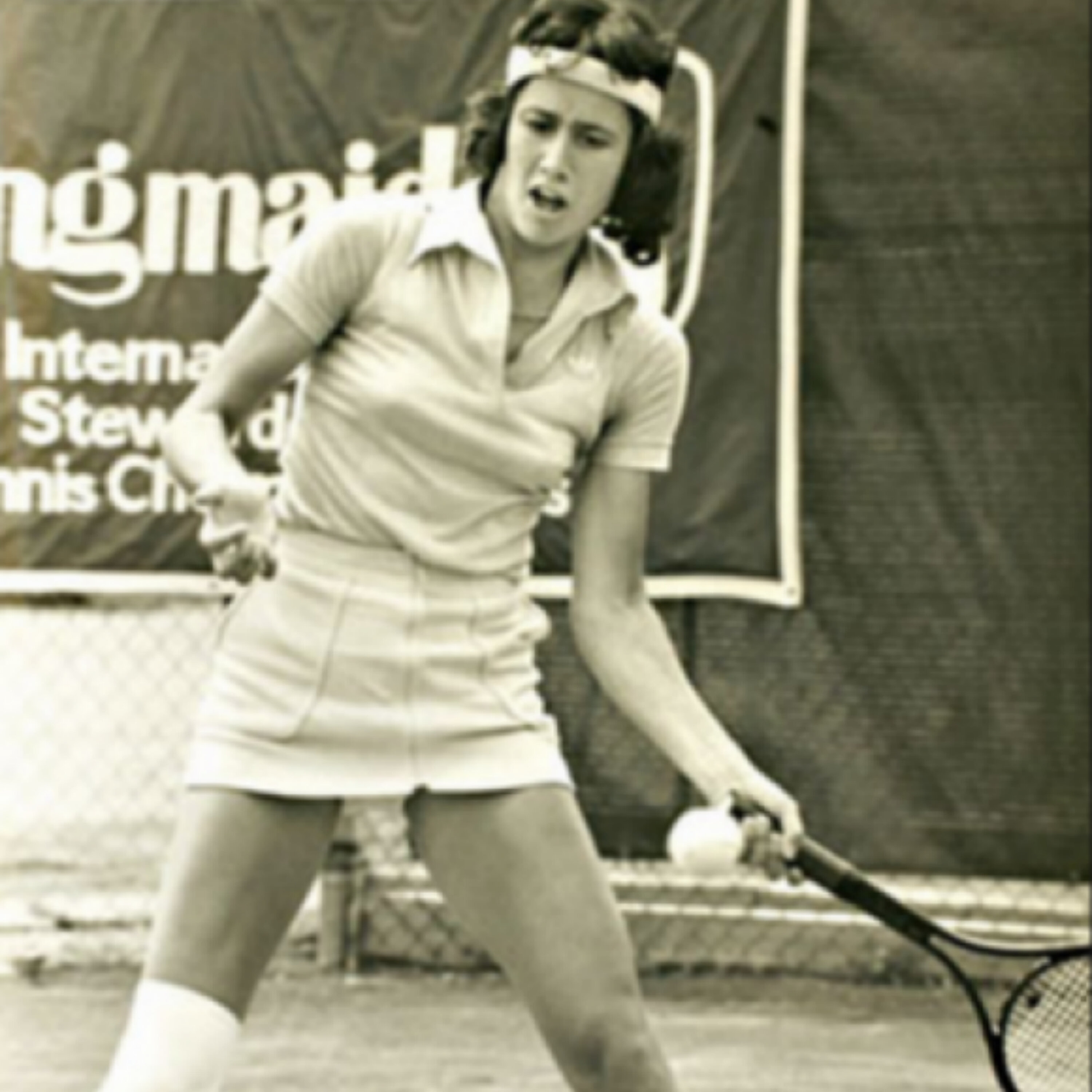
Mary Carillo
The broadcasting legend joins us to talk about her illustrious career, that controversial interview with Margaret Court, and her insane segment ideas that never made it to air—picture Billie Jean King egging Henman Hill.
Hosted on Acast. See acast.com/privacy for more information.
See omnystudio.com/listener for privacy information.
2018-07-18
53 min
Transcript
Available Results
Generated results are saved to the knowledge database for reuse and search.
No generated results are available for this episode yet.
Extract Knowledge
Pick what you want extracted first. Model, scope, and chapter options appear after a template is selected.
Generated results for public episodes are saved to the knowledge database so they can be reused and searched later.
Transcript
00:00:01
Speaker 1: We never got past the title who's on Hardcore.

00:00:14
Speaker 2: RENEE Today?

00:00:15
Speaker 3: On the podcast, we have one of my favorites, one of your favorites, and most importantly, you went on Twitter and solicited who are podcast listeners would like to hear from? Mary Carilla.

00:00:26
Speaker 4: Yeah, it was amazing when we asked everyone, who do you want to hear from? And we still want to hear those so keep them coming. But Mary Carillo was the number one person that people want to hear from, and I think the reason that people wanted to hear from her is exactly what.

00:00:38
Speaker 5: You're going to get today, stories about tennis.

00:00:42
Speaker 4: She'll tell you this story about Billy Jean King Wimbledon that ll just I mean had us in tears because it's so funny, and it also just depicts her as a human being that she loves the game of tennis so much, but her passion to make things fun and informative, and you know, just I mean, she's really is my champion when it comes to media and who I want to emulate. She's liked by everybody, She's admired by everyone and respected by everyone out there on the tour, and I just I love it so much and She's the reason I'm doing television is because of Mary Carilla.

00:01:15
Speaker 6: She pushed me to do the job. I mean, I can't even talk because I adore so much. Yeah, no, same goes here. I say it in the podcast, but it's true. I am a student of Mary Carilla's. I've watched what she's been doing for years. Her Olympics coverage is amazing. You were going to want to listen to this episode.

00:01:28
Speaker 3: Because I literally have told people the Villaging King story probably four times since I heard it, and you now get to do the same. So listen up to our episode with V one and only.

00:01:38
Speaker 5: As I liked Acola Carilla.

00:01:46
Speaker 2: So here's what I want to talk about.

00:01:48
Speaker 1: Three things can Can they be yes or no answer? Well, my first answerest is twelve. All right, that's my first answer, no matter what your question is, Well, twelve I like it. And then sorgum. That was always a good answer I thought, like in high school, like favorite additive sorghum.

00:02:06
Speaker 4: Is this going to be a nightmare for me because I'm sitting in between two people that are waste way way smarter than me and way more well read than me. So they're going to pull out question they're going to pull out words and stories.

00:02:19
Speaker 5: That's my point.

00:02:20
Speaker 2: That's it's my problem today.

00:02:26
Speaker 5: This is my problem today.

00:02:27
Speaker 4: I want to know how you got into broadcasting outside of because what people don't realize about you is that you were a very good player in your own right.

00:02:35
Speaker 1: I have a photos, a nice way to describe my pointy headed career.

00:02:39
Speaker 5: No, but I mean a lot of people don't realize.

00:02:41
Speaker 4: You know, there's a lot of people in broadcasting and they think they just because you have this great broadcasting voice and sound.

00:02:47
Speaker 5: But I mean, what happened? I mean I sort of know.

00:02:51
Speaker 1: But yeah, So I was at the Year End Championships used to be in New York at Madison Square Garden, and I was there one night, and of course it stubbs, you knows, I will watch any tennis match, and so there are all these famous people that were getting interviewed in between matches. You know, Billy Jean was there. Virginia Wade lived in New York and she was there. Well, now it's the end of the night and there's one match left, and it's Tracy Awson against Avangoligan. I'm hanging around for that, and of course I've already blown the sluds off a few, you know, I'm just hanging around.

00:03:21
Speaker 5: You know, meaning you've had a few drinks, just.

00:03:24
Speaker 1: I mean, just to be sociable or whatever. I wasn't I mean, I was unemployed. I was just I was there watch sentence and someone from the WTA for Virginia Slims maybe said, hey, they need somebody. They need to get an interview for this, you know, And so I said sure, and I started talking about why I think this is going to be a great match. By the way, it was, it was seven six seven six. Tracy also wow. And what happened is after they interviewed me, the two guys who were calling it from Madison Square Garden Network. One of them was Bill Talbert, who said, why don't we let her sit in on the call. They didn't even give me a headset. They gave me a They put a microphone in front of me, and I just started talking about this match. Wait a second, but it was the first time I was ever on TV.

00:04:04
Speaker 2: Did they know you were did they they?

00:04:09
Speaker 5: Hey, didn't they know what they were getting?

00:04:10
Speaker 1: Did they know what they were getting into? Absolutely not? No, I mean i'd.

00:04:14
Speaker 7: Three hours later my batteries ran out of the microphone.

00:04:17
Speaker 5: They decided I said, I think she should be on me.

00:04:19
Speaker 1: There was a guy from USA Network named Mark Stolberger who heard me that tonight and half a year later, this is in nineteen eighty. So I Wimbledon was my last first round loss ever. I lost the Panta.

00:04:32
Speaker 5: I said, you lost match my last loss.

00:04:35
Speaker 1: I lost in about fourteen minutes over on court four hundred and twenty seven. I knew I had to stop playing. I was trying to figure out what I was going to do next. And this guy who had seen me that night at Madison Square Garden said, USA Network's going to start doing some tennis matches. You know, do you feel like doing so? So I did a couple. It wasn't a real career I was. I had to I had knee surgery again. I had to re I was teaching tennis, and then it got to be more the next year, and then eventually they put me on men's tennis, and then there we go, all of a sudden, I had I had something Michauld do. But so it was a very fortuitous. It was, it was very lucky. It was very haphazard, pretty random.

00:05:14
Speaker 3: When you look back, renee because as you know, she's the mirror. She's a wallflower. We call her retiring. You know, she's she's very quiet, doesn't share opinions.

00:05:22
Speaker 1: So she Wait, do you call her Renee?

00:05:25
Speaker 2: I don't call her Stubbdy, You don't call her subject. I don't believe the nicknames Mary?

00:05:29
Speaker 1: Wow?

00:05:30
Speaker 5: Why use that? Can I ask?

00:05:31
Speaker 2: I don't know, I'm Canadian? Like, do you given people their actual name?

00:05:34
Speaker 3: Hi?

00:05:34
Speaker 2: Mary, Hi, Renee Stubbs.

00:05:36
Speaker 1: Oh see I called Canada America light. No, we call it America's hat, American's at. Oh so you do believe in country nicknames?

00:05:42
Speaker 2: Yeah, okay, it's just it's just it's a great place.

00:05:46
Speaker 1: Before I want you, I want you to answer questions. But can I tell you that, uh, Stubbdy and I were doing the Olympics. I was in Rio, she was in Stanford, Connecticut. Somehow we made that work.

00:05:57
Speaker 5: We're calling a match.

00:05:58
Speaker 1: We're calling a match, and so first, first up, whatever I say. So it's Angelae Kerber against you know, Monica puig So stubbsy and a sudden my year, someone yells it's Renee, and I'm who the Hell's Renee? Yeah? I don't think I'd never called it.

00:06:12
Speaker 3: No.

00:06:12
Speaker 4: Actually, actually it started in London when they told you when we had we were doing the final here in London for NBC and we had cherup overt and they said to Mary before they said, now listen, Mary, it's the final.

00:06:26
Speaker 5: We need you to call Renee Renee and not Stubbsy. And so we started.

00:06:31
Speaker 4: We started it, the camera came on, you know, we had the the music, everything was great, and then Renee that by the third yeah, sorry, what's that?

00:06:42
Speaker 5: What's the NBC?

00:06:44
Speaker 1: We got that big lush But did I get did I call you Stubs?

00:06:51
Speaker 3: Oh?

00:06:51
Speaker 5: There you go, you got it? You got it?

00:06:52
Speaker 4: Okay, So for the first three games, it's Renee. It's Renee. By the third, about the middle of the third game, it was all gone. Stubbsy was back into the me and NBC just thought there's just absolutely no point in me trying to tell Mary.

00:07:06
Speaker 1: So we digress.

00:07:07
Speaker 3: What what was the question you were trying to ask? There's there's a couple questions I want to ask. But while we're on the subject of the Olympics, badminton, the rant Rant Classic, the rent Uh slightly less known, but my personal favorite.

00:07:20
Speaker 2: You making egg bread and so cheap with Maria Sharapova.

00:07:24
Speaker 1: That was terrific. How did that? That was terrific?

00:07:27
Speaker 7: When what's our next one?

00:07:28
Speaker 2: Can we expect our next the French open accordion music.

00:07:32
Speaker 3: When you're comparing Frencesqua Skiovoni to a painter, I mean, I'm a.

00:07:36
Speaker 2: Studient Mary Carilla.

00:07:37
Speaker 1: Clearly, yeah, clearly like where that's fun stuff. I like doing that can talk.

00:07:41
Speaker 3: Me through the balance of when do they say that's too crazy and you can't do it, and when do you just insist?

00:07:47
Speaker 1: Anyway, Well, I say both. I have no real juice. I mean I I the power I have is is minimal. I'd like to think I have influence every now and then, but you know, sometimes you can sell an idea and they're not always my ideas. Anyway, I played croquet here most mysta all your ideas, but the wackadoodle ones tend to be tend to come out of my head. Maybe.

00:08:12
Speaker 5: But Chicks on Bricks didn't last long.

00:08:14
Speaker 1: So here's what happened. Yeah, So we were working together subs on Tennis Channel, and so we I wanted to do a bunch of stuff with her, and so we and they allowed us to do something called chicks on bricks for the French Open. It was outstanding, and then we came here to Wimbledon and we did Babes on blades. We we did a couple of bits and then it was all over. I think one of the reasons stubbsy is because for the US Open, I think we never got past the title hose on Hardcore.

00:08:43
Speaker 5: Yeah, that was the biggest problem.

00:08:44
Speaker 4: We couldn't get that cleared with either the USDA or with Tennis Channel. And then so so we bring it back for the way, the whole point of a podcast is you could do dumb ship like this, Let's see how people respond to it on Twitter, and bring on hose on hard courts.

00:09:01
Speaker 3: Well, what I was going to say before we got into the Olympics is Renee tweeted who do you want to hear from?

00:09:07
Speaker 2: And the entrance really ranged.

00:09:08
Speaker 3: Obviously the greats La La umpires the single most popular response Mary Carla.

00:09:13
Speaker 1: Oh, that's nice because they realized.

00:09:16
Speaker 4: That you've been you've been rained in on television and in a podcast, you're allowed to do whatever the f you want now and say and come up with some great ideas. What's if you had one choice to do here because we're in London, we're Wimbledon.

00:09:33
Speaker 5: We're on the grounds actually here on the roof, on the roof of the media center. Looking if there was one thing that you could do that you were allowed to do here at what would you do?

00:09:42
Speaker 1: Well? Do you know what I did? And it never aired, It got censored, it never aired too hot for TV. So you see those two towers there, as you know, buildings behind right off of Henman Hill is where I've been staying for many years with Billy Jean.

00:09:56
Speaker 2: King and Cloths, just a gals roommate.

00:09:58
Speaker 1: It's outstanding, Trea. It's outstanding and it's very community to just kind of roll down the hill in the morning and you're at work, which I've done once or twice. Anyway. So I was working for TNT HBO, I had been I had been doing covering Wimbledon for HBO Sports uh and then they lost their contract. T and T picked it up for three years and I said to them, I've got this great idea we get we show Billy Jean King because we had a balcony right off of that, right off of that building. I said, how about we get Billy Jean King egging Henman Hill. So of course Billy Jean said, yes, of course, and we shot it. We're we're right here. We shot it.

00:10:40
Speaker 2: That film exists.

00:10:41
Speaker 1: That film exists somewhere. And the beautiful thing is, I'm like on a walkie talkie talking to Billy Jean, and I'm saying, all right, Billy, and she has a bowl of eggs, okay. And the idea was that she was going to throw them and obviously not aim at Henman Hill. But then I was gonna edit it and shoot people getting hit with it by eggs, right, I mean, depending exactly right. She could maybe get it could have happened. This was this was comedy gold Caitlin, Okay. And I'm saying to Billy. I'm on a walkie talking talking to Bill. I said, all right, Billy, uh, make it look like you're warming up. And here's Billy Jean King who's won twenty Wimbledon titles.

00:11:18
Speaker 5: Most of anyone doing arm farts.

00:11:20
Speaker 1: Whoa wait, like she's going so anyway, So I got this whole thing going, and I've got a crew and I bring it back. We can't air that.

00:11:29
Speaker 2: What all? This is an Emmy Emmy, daytime Emmy.

00:11:32
Speaker 1: Why this is crackling good television.

00:11:34
Speaker 5: But why they just said it just.

00:11:36
Speaker 1: They thought I was clinically insane. I think that was part of it. Yeah, but yeah, but Billy Jean King went along with it. That was the great glory of it all.

00:11:43
Speaker 3: Well, it's interesting because I sat down with Alana, her partner of a long time, and the CEO currently outgoing of World Team Tennis, and you know we were talking about, oh, the seventy fifth birthday is coming up.

00:11:53
Speaker 2: Let's do something incredible to celebrate.

00:11:55
Speaker 3: I want to I remember recipient a title line, I'm a child ten tonight.

00:11:58
Speaker 7: Journalism degree paid for by a tennis.

00:12:00
Speaker 3: Scholarship because of her correct Like, I guess here's thinking about it, truly, I know, but you know she's talking to me about how we have to get.

00:12:08
Speaker 2: Her out of the amber.

00:12:09
Speaker 3: Right, people my age and younger I'm thirty seven, only remember her. It's this legend is the statue is the thing, and you know the balcony and the waving.

00:12:17
Speaker 1: Why the can't we you know, we're throwing eggs.

00:12:19
Speaker 5: Yeah, I mean that that would bring her the part and the on fought.

00:12:24
Speaker 1: I'm telling you what I was, what I brought back, what we had already shot and then we need to find that. I know these are like the we need to find is there some a V?

00:12:34
Speaker 5: Is it a D?

00:12:34
Speaker 1: And it was? And we didn't. They stopped me once I got Billy doing our whole thing with the eggs and the thing and the warming, and then they said we can't. This is I think they were afraid that T and T was new to the All England Club.

00:12:48
Speaker 4: The Great God Pretty Channel seven haven't got that film. We can show it this year because we're gone off.

00:12:52
Speaker 1: The great bed. Middler one said, I have standards. They're low, but I have them at the Only England Club. The standards are high.

00:13:00
Speaker 2: Yes, and TNTs.

00:13:01
Speaker 1: They didn't want to upset the I get it. I get it. I just feel it was a real lost it is it is my objective.

00:13:09
Speaker 3: We have to do. We have to find that somewhere in a vault. One of the my favorite things you've done recently HBO Sports Margaret Court serious for a second as a gay person me.

00:13:25
Speaker 2: I'm watching that thinking you.

00:13:28
Speaker 7: Gave her a very fair shake.

00:13:31
Speaker 1: I had to. I mean when I asked to do the piece. My the executive producer of Real Sports, are really a brilliant fellow named Joe Persky. He said, Mary, you know we don't do agenda journalism, because obviously he had an inkling of where I landed on this thing. And I said, I promise you it will be balanced. And we spent a week in Perth, Australia with Margaret, and I was actually there when we shot this. I was there on the day that gay marriage pass in Australia.

00:13:59
Speaker 5: Wow.

00:14:00
Speaker 1: And I said to Margaret, how do you feel about this? Because I knew how she felt about it. I said, are you surprised by this? I think that was my question and she said I am because I know that I am part of the silent majority. And when I brought that to I interviewed. I only interviewed three people. I interviewed Margaret, Billy, Jean King and Martina.

00:14:19
Speaker 5: No big deal.

00:14:19
Speaker 1: And when I said to Martina, she said, she's part of the silent majority, Martina, of course said, the majority is never silent.

00:14:26
Speaker 2: Yeah, that's a very very interesting counterpoint.

00:14:29
Speaker 1: Yeah. Yeah.

00:14:31
Speaker 4: The great thing about that in Australia actually was for me, obviously being Australian and having to sort of get a few questions and knowing that I was gay.

00:14:40
Speaker 5: You know, I always go to Billy.

00:14:42
Speaker 4: I often go to you Mary because you're sort of my I don't know, Guru, calm me down, no' Well, Billy's my touchdown well, and Mary's often mine as far as you know, she's been my biggest champion as far as getting into media. But I asked Billy, I said, well, you know, I sort of wanted to know what Billy said about that.

00:14:59
Speaker 5: And Billy's reaction if you get.

00:15:00
Speaker 4: Your name put on anything, and hers was, of course the USTA National Billy Jean King National Tennis Center, and Margarets has a name. She said, if you have your name on.

00:15:08
Speaker 7: Any Murger Quaderina at Melbourne Park.

00:15:11
Speaker 4: You have to understand that there are people coming into that arena, into that court that.

00:15:17
Speaker 5: Are not like you, and you have to be accepting of everybody.

00:15:21
Speaker 4: And that, to me was the best answer that I heard on that was from Billy Jean.

00:15:25
Speaker 1: Well, when the UFC National Tennis Center named after Billy Jean, remember that great moment where she said, Mick. But I don't know if I told you this story, but the d before the Australian that Craig Tayler, the tournament director refused to talk to us. We tried multiple of.

00:15:38
Speaker 4: Times, which is unusual because I'll give Craig a lot of credit he's.

00:15:41
Speaker 1: I was very disappointed. I'm sure there are things to give him credit for, but I think he should have spoken to us anyway. But Craig listen to this. So the d before The Australian started this year, I saw Casey de likewi.

00:15:52
Speaker 5: Australian player who's gay.

00:15:54
Speaker 1: Open open has been criticized by Margaret Court.

00:15:59
Speaker 3: And let's just say for the record, Margaret Court is not shy and retiring in her opinions, It's not like I mean, she leads a congregation. She writes op eds and most sort of incendiary was the op ed where she wrote about gay people having children. And again, like, I'm not an agenda journalist either, but that felt like it was open season after.

00:16:17
Speaker 1: That, right right, I mean she she and Mike Pence fall in line, are vice president fall in line in a lot of important ways that could be difficult for someone like me anyway. So I see case and she's playing doubles and mixed doubles at The Australian and she still can play. Obviously, she was playing with Ashbarty and she was playing mixed with John Peers, so you know they're going to get on some show courts. And so I saw her and I told her that I was doing this story about Margaret Court. And I told her that I'd been in Perth and she'd spend a lot of time as a kid with Margaret. Margaret helped her get she's from Perth. So so she said, Craig Tiley talked to me this morning and he said, look, I agree with you, case but it's a lot harder to take a name off of an arena than to put it on. That's what he told her. And I said, well all right, I said, but in case, there's no way they would put you on Margaret cort Aerina. And here's how cool Casey Deloque is. She said, I want to play on Margaret cort Aerina. Yeah. I want to walk on that court in front of my friends and my family and my fans to let them know I belong here.

00:17:25
Speaker 2: That's amazing.

00:17:25
Speaker 1: How cool is that?

00:17:29
Speaker 5: All we do is cry here with Kitline. That's what she does.

00:17:32
Speaker 3: Who knew you guys tough exterior, but yeah, exactly, we've cracked you open like a walnut.

00:17:37
Speaker 1: So anyway, it's interesting.

00:17:39
Speaker 3: But the last thing I'll ask ye again, I my honestly, my intention is not piling on because it's kind of an easy target.

00:17:44
Speaker 7: But I mean Margaret Court was also on the side of.

00:17:46
Speaker 1: Apartheid, correct, correct is this back in the day? She yes, she thought that she made a statement when Arthur ashe had gone to South Africa and his point was, and there were plenty of blacks who didn't want him to go there, and he went anyway because he said he wanted to. He wanted to walk among young black kids and let them know that people like him were exactly and Margaret back in the day. And look, I have a deep respect from Margaret. She's on my Heroes growing up record? Are you kidding me? But she back then she said she thought South Africa got it right with apartheid. You know, I mean so that this is a woman. Look, and a lot of people have you know, single issue all right, people, you know they're either anti abortion or anti and so that's why, and it explains why they could support someone like Donald Trump, right, who doesn't seem to share other values. But for them, for them, that's all they care about. A lot of them just care about one thing or two things.

00:18:43
Speaker 4: Yeah, so everything else doesn't matter, and everything else they can get it.

00:18:46
Speaker 3: Yeah, I don't personally agree with it, but I get it. We talk a little bit about you know, records and Serena and obviously Serena Williams going for twenty four is you know, hugely momentas don't you feel I grew up with Stephie being all time greatest Grand Slam champion at twenty two?

00:19:05
Speaker 2: Do you feel like the goalposts moved a.

00:19:06
Speaker 3: Little bit for Serena? Is there a racial thing going on there? Because honestly, when I was a kid, it did not matter. Margret was not part of the conversation, not in any sort of diminishing way.

00:19:14
Speaker 2: It was just seen as a different thing.

00:19:16
Speaker 5: You know.

00:19:17
Speaker 3: The Australian opens that she racked up came at a time when people, you know, I'm not sure planes.

00:19:21
Speaker 7: Flew that far, so not that many people played it.

00:19:23
Speaker 3: So I'm just asking because I feel like I should ask, and you seem like the best person I could possibly ask, short of maybe Margaret.

00:19:29
Speaker 1: Who court herself.

00:19:30
Speaker 2: Are the goal posts moving? Did they move?

00:19:32
Speaker 3: Did people all of a sudden think twenty four was more important or was it just another thing that Serena could then conquer because we want to.

00:19:39
Speaker 1: Well, I mean, look, no one's ever gonna touch Margaret's Grand Slam record. She's got sixty two titles, sixty four if you count the fact that in two of them it got rained out, so they split the title, all right. So she played singles, doubles and mixed doubles. No one is ever, no tennis player who plays now is ever going to play singles doubles a mixed Yeah, and when is bunch as Margaret Court. So that's that's untouchable, and that's fine. And yes, she played at a time when a lot of a lot of players, a lot of the draws were soft because she played a lot of fellowality's whatever. But when people talk about about Serena, you know, I think Serena's getting plenty of credit, frankly, and and I think she's still got a couple more major wins in her I mean, I really, I'd be surprised if she didn't win more majors. I'm not convinced she can't win this and we're only in the second round. So but honestly, the greatest match player I ever saw ever was Monica Sellis. Monica Monica Sellis was the greatest match player ever. I thought she was going to be the greatest of all time.

00:20:41
Speaker 3: Tell me what match player made just in terms of she never took off one point.

00:20:46
Speaker 1: Yep. She had an unbelievable ground game. She had an incredible mind, and she she had to. She stopped with an I major. She got one more after she got stabbed, and of course Sephi off one a lot of majors in her absence that I'm going to assume Monica could have won. So I think she is lost in the mists of history more than just about anybody. She was a good here and I love watching Serena play. I love watching her compete. Even when she's not playing well, she competes well. It's a lot of fun. But I used to do Monica Sellas matches. I mean, I I'm lucky.

00:21:22
Speaker 4: I didn't we did her, which we did come back, man, We certainly did with ESPN in Canada.

00:21:29
Speaker 1: Yep. It was a rotten match, unfortunately for UTS because it was I think it was the first time we ever worked together, and it was over in twelve.

00:21:37
Speaker 5: She bit no. That was the Mary, that was matches mixed up. We haven't had crappy matches entertaining enough.

00:21:48
Speaker 1: Well, we tried. But all I'm saying is when I would do a Monica Sellas match, the first set stats would come up and it would say nineteen winners one hour from Monica Sellace. I mean, Serena can hit a lot of winner shoe everybody getting a lot of winners. But they also hit a lot of their Yeah. But that was what was absolutely amazing about Sellings was how big she went on every shot she took and it was like Camilla Georgie with no errors and.

00:22:13
Speaker 2: It seems crunchy.

00:22:14
Speaker 4: Hold on a second, tell me tell me the where Tennis lost out because obviously you know, you know through the periods because.

00:22:25
Speaker 5: No, no, because I've sat I sat.

00:22:27
Speaker 2: Let me just note for the record, neither of these leaders I'm sitting next to. It looks good day over forty, Thank you very much, I'm sixty one.

00:22:32
Speaker 4: You tell me how Tennis lost one of the truly great rivalries because I sat through a lot of those matches with Stephie and Monica. When when the stabbing happened, and that was going to be amazing, I was standing there the day that that happened.

00:22:47
Speaker 1: Actually, oh, you were there in Germany.

00:22:49
Speaker 4: I was playing doubles with Stephie in Hamburg when that happened.

00:22:53
Speaker 5: So that's a memory the day I will never forget. I was a part of that. I spoke to Monica in the morning of that.

00:22:59
Speaker 4: We'll get into that at a different time but on a different podcast. But Monica sell us to me, Like you said, Mary, one of the greatest, truly greatest matches I ever watched was the ninety two French Open final and to me, Stephie was one of, if not the greatest match players I ever saw, as far as every point was next point, next point, next point. They never worried about now when he went for the towel. I mean, watch that match. No one went for a towel, no one took time outs, stubbs, it was point by point.

00:23:29
Speaker 5: Tell me how great that rivalry was and what we missed out on.

00:23:33
Speaker 1: Well, that's what I'm saying. That to me, that would have been, that would have been right up there with with with Christia Martinez and Rapha and Roder. I just thought that was that was an absolutely tragic glass shows that that that that got stopped. Can I tell you though, I called a lot of graph matches and the I loved how quickly she played, and no nonsense, it between points to the and it got but it gets to the point where we couldn't get in replays she was It was like, yeah, it was, there was something awesome about it. But then she'd hit this ridiculously huge forehand with her feet flying out of her shoes, and there we got to show that we didn't have how great was Here's Ralpha taking forty seconds between points of time out.

00:24:19
Speaker 4: We're implementing a time clock in tennis to stop the rafi on the dolls forty seconds and the Maria Sherripov is going back and fiddling with the strings and getting.

00:24:28
Speaker 5: The towels and all this, and back in Stephian Monica's.

00:24:31
Speaker 1: Day, you could't get it.

00:24:32
Speaker 5: You couldn't get in the replay. So don't tell me you can't play quicker in all of your areas of watching Stuffy play.

00:24:38
Speaker 3: How many times did she come over her back hand?

00:24:41
Speaker 5: Oh, she hit one to win a Grand Slam against Martina.

00:24:44
Speaker 4: I believe at Wimbledon she she hit over her backhand when someone came into the nan and she was under the pump, and I'll tell you she very rarely missed it.

00:24:53
Speaker 5: She very rarely missed her over backhand.

00:24:55
Speaker 4: But slice backhand would be on in these day and age, with everyone's grips the way they are her, her slice would be a nightmare. There's a reason why Robert ta Vinci could be top, you know, fifteen in the world because no one sees a slice anymore.

00:25:11
Speaker 5: Yeah, it's underutilized shot.

00:25:13
Speaker 1: Yes, Mary had one, That's all I had.

00:25:16
Speaker 4: Who was your favorite player other than you talk about Monica? Because I mean, who's.

00:25:21
Speaker 5: Your favorite player? First of all? Commentate?

00:25:23
Speaker 4: Second of all, who who is someone that you would like to see do really well?

00:25:30
Speaker 5: Now that we could see more.

00:25:32
Speaker 1: Of I can't pick a favorite player because normally it's the matchup that that gets you.

00:25:39
Speaker 5: Gets your favorite match up, then let's go with that because I feel the same way. Well, women's tennis.

00:25:43
Speaker 1: Mentone women's tennis matchup I need, I like someone I love power going up against variety. So give me that matchup any day of the week.

00:25:51
Speaker 2: Yesterday, Osaka Klaska.

00:25:53
Speaker 1: How was it?

00:25:54
Speaker 2: Amazing?

00:25:54
Speaker 1: Tremendous rightness, You've got.

00:25:57
Speaker 3: A nineteen year old you know, boss machine trying to hit on hours in Asaka, and she's got slice Porians.

00:26:05
Speaker 4: And then you've got Nikolaisaku who's just driving you nuts. The most annoying tennis play in the world to play against.

00:26:11
Speaker 1: Julia put and say that, can I can I put in for her? That is? And I love watching Putsi as you can. I watched her play last night we finished up. She is, I mean put how annoying she wins like ten eight in the third matches and throws herself on the ground and it is jumping up colossal pain in the cayster, but plucky and annoying. N corn An the drama queen. Yeah, we have a lot of those. We have a lot of those.

00:26:36
Speaker 2: Can I tell you who I watched last year?

00:26:37
Speaker 3: Actually, just right down here, Georgie Corney, Ah.

00:26:41
Speaker 2: You got the dad coffee on the serves?

00:26:44
Speaker 5: You got?

00:26:45
Speaker 1: Was he really coughing during the Stars? I know he was accused of that.

00:26:48
Speaker 3: He was accused of it two matches later doing it against.

00:26:50
Speaker 1: Corner hocking up Loogi's you got you got?

00:26:54
Speaker 2: Cornee appealing to.

00:26:57
Speaker 3: All about the matchups. Anybody, It's all about anybody falls follows an individual player. Sure find have your favorites, but the matchups are really.

00:27:04
Speaker 1: Well, that's why we haven't had great, necessarily great Serena Beinus matchups. No, you know that. And they're fraught anyway, obviously because they're so close.

00:27:13
Speaker 2: And playing your sister's got to be such a that's got to be crazy.

00:27:16
Speaker 7: But Justine Anna, we had a whole story in the second or third issue.

00:27:19
Speaker 1: About what I love watching her.

00:27:21
Speaker 3: What it could have been and because those matches were compelling and they were close, and I got more than a few.

00:27:27
Speaker 1: Which she knocked out. I remember I seem to remember a year where Enna beat her, beat Serena in like three straight Grand Slam quarterfinals. I think you're right, Yeah, I think that. I think that happened. That would have been great and flies back in.

00:27:40
Speaker 4: Yeah, you know her ability to come in variety is so important. Do you think variety will ever come back into tennis?

00:27:46
Speaker 1: I do. I'm optimist. I'm optimistic, Okay, I really am. Why because because it's gotten to the point where you can kind of It's why I love tennis. You can play anyway. You can be short, you can be tall, you can be powerful, you could be handsy, you could you know, let's not be hands down, hands down and under the right very good. No, I mean you can. You can play any kind of game you want. And I would like to think that at a certain point, power does not dictate everything. And I think we are at a certain point. I think people will realize how beneficial it is to get to the net. Again. I blame I have a theory. It's half baked that what's our favorite kind. My theory is that the two handed backhand killed certain volutis. I agree. Do you really want to know something?

00:28:32
Speaker 3: I played college Tennessee one with two hands a year ago. I switched to one just for fun. And my game is I'm in the net. She's played with me constantly. I just want to get in and my grip's right there. And you see these young guys. We were just talking about t pass team love him. You know it's coming back. It is coming back. I'd like to see it more on the women's side. I don't know if that's ever gonna happen A bit different. The problem with the women is they don't have the strength when they kids. But I think that's on coaches to say a stick with it, you're gonna lose and get your ass kicked for a year. But when you finally figure it out, you're gonna have that slice.

00:29:08
Speaker 5: You're gonna have that.

00:29:08
Speaker 4: It's also a gay theory. It's my gay theory.

00:29:13
Speaker 5: It's not a it's not all.

00:29:14
Speaker 4: I don't want to put a blanket statement on it, because when I want everyone out there freaking out, here's probably some parents out there.

00:29:18
Speaker 1: The kids.

00:29:19
Speaker 5: Their daughter's going out eating one hand and oh my god, she's gay.

00:29:22
Speaker 4: Like it's not, but it's a two handed back man.

00:29:27
Speaker 1: Oh and she's coming to the net to well.

00:29:28
Speaker 3: No, Well, you were on one of my favorite podcasts, No Challenges Remaining for the podcast with Recket contributors Courtney When and Ben Rabinberg, and you had this incredible and I think this should be adopted.

00:29:47
Speaker 2: Maybe it's like a political platform.

00:29:48
Speaker 3: Tell me serving involving as a religion, as a as a political viewpoint, serving.

00:29:54
Speaker 4: As a How about a request for serving involving once every game.

00:29:58
Speaker 1: As a must kid? No, that's no. My whole point is you can play it anyway you want. You can't make somebody servant bally. My point is that my point I'm convinced I have one somewhere, is that like I'm a lefty. The late great Harry Hoptman coached me for many years, and his whole point was, it's much under pressure, it's much easier to hit a volley than to pass. That made utter sense to me, and so I had a lefty servant volley game.

00:30:28
Speaker 5: When you had backhand.

00:30:29
Speaker 1: It's just pretty No, it was my forehand that was even donder. My forehand was just shocking, shocking, shocking. But anyway, so the whole point was he would basically say, you take your lefty serve, you serve into their backhand. You come in, you pop and knock off the volley, hide your groundstrokes at all costs.

00:30:47
Speaker 3: Yeah.

00:30:47
Speaker 1: Fine, And then two handed backhands got big, and for so many players, their backhand is that's the last place in the world you want to aim and try to get tonta, especially in the women's game, especially in the women's game, and that, to me, has just kept so many people from wanting to come in. And I think that's a pity as well.

00:31:05
Speaker 4: And also, let's not forget the speed of the courts. They've slowed them down a tremendous amount.

00:31:10
Speaker 5: I mean, look at Wimbledon here, you know this year is going to play.

00:31:13
Speaker 4: It is playing from what I've heard, faster, but the ball's bouncing higher. I mean, back in our day, Mary, we'd come in on a great slice back and it would be.

00:31:21
Speaker 1: Come in on anything.

00:31:24
Speaker 4: We talk about bluff jeez, chip and bluff, chip and charge and chip and hope.

00:31:29
Speaker 5: You know. But the ball stayed low, so it couldn't you couldn't really generate.

00:31:32
Speaker 4: You had to still hit up over the net first, which if you're at the.

00:31:35
Speaker 5: Net, it's a volley down.

00:31:37
Speaker 4: Nowadays, with the spin and the ball being high, the ball is actually getting below the net. As a volleyer now you have to be a defensive volier or hit a great volley. So the court speed and the rackets and everything, let's changed the game.

00:31:50
Speaker 1: But here's here's the other point. And I used to teach a lot. Now every now and then I'll give a clinic. But what I try to tell people is, especially with all the power in this game these days, with men and women, you don't have to be a great volume. You have to be a good voluyer. So you have the you can come in, well, no, you can come there, you come in. And so many people have such weight to their shots, approach shots to get in like I wasn't.

00:32:15
Speaker 5: I didn't.

00:32:15
Speaker 1: I came in on bluffs, So I actually had to be My hands were the best part of my game. If if I had a huge approach game, I would just need to be a serviceable voluer, right because you get and I watched so many of the men and the women. I'm thinking, how can you not come in on that?

00:32:33
Speaker 5: Oh god, all right, all that I told you and I do it in the ground in.

00:32:40
Speaker 7: Caroline.

00:32:41
Speaker 4: They don't, but you can, but again they don't.

00:32:45
Speaker 1: You don't have to be a great voluer at these days with this game, with the power, you have to be just a smile and and and and especially with the way people can hit. It's a one volley deal. It's not like you're you know, you're you're you know, you're not a goalkeeper. Hit one Bali kid and huge shot and hit one Ballei.

00:33:05
Speaker 5: Yeah, yeah, I mean.

00:33:07
Speaker 4: Radwanska is a typical sort of you know, she's got through her career really doing that, and she.

00:33:12
Speaker 5: Doesn't even come in on anything big.

00:33:14
Speaker 4: She just comes in and understands that there's middle of the court is where people want to play on a big point and somebody who I really.

00:33:21
Speaker 5: Always respect was Hingus.

00:33:23
Speaker 4: If you watch Hingas play big matches, and it cost her one slam, which I'll never tell her this story because she'll probably have nightmares about it.

00:33:31
Speaker 5: But she used to do what so.

00:33:33
Speaker 4: Many players should do and some do, serve that flat wide serve on a big point meaning set point, break point, match point, because every single player is going to most of the time hit that return through the middle of the court, take away the line, take away the error, and they're going to go big through the middle, which is the right shot to hit under pressure. But if you're coming into the net, that's right.

00:33:55
Speaker 5: At you as a volley.

00:33:56
Speaker 4: And she used to hit that flat wide serve and come in and hit that inside little Scooper volley into the open court point over, and players would be like, where did that come from? And she only did it five or six times maximum a match, but she always did it on a big point. And if she had done that against Jennifer Capriarti at the Australian Open when she had her one match point and Lisa Raymond and I were watching the match and we said, here it comes becomes the flatty wide with the scoopy inside out back and.

00:34:22
Speaker 7: Volley glady scoopy, flatty scoopy, flatty scoop.

00:34:25
Speaker 4: When she did scoopy and she didn't do it, and Jennifer's return landed a foot from the baseline and she ended up getting behind in the point and she lost the point. She lost the match. So that is that if she had done it on that point, she would have won. And there's players need to develop that on one or two times, and Radwanska does it from time to time.

00:34:44
Speaker 2: And Wanska has some of the best hands in the game.

00:34:47
Speaker 1: It's just great concept, you know, great imagination. I like players who Actually it's why I heat on court coaching. That's an entirely different podcast that would take fourteen hours.

00:34:56
Speaker 5: Yeah, okay, but here's give us a nutshell on why.

00:34:58
Speaker 1: Because if you are not smart enough to win a match, I want you to lose it. But how's that counterpoint?

00:35:05
Speaker 2: Counterpoint?

00:35:05
Speaker 1: I know you like on court coaching, I do, and I'll tell you why.

00:35:08
Speaker 2: I want to watch the very best points.

00:35:10
Speaker 1: I want to watch multi millionaires, the very best players, and we won't figure out a way to win their own Manchester.

00:35:15
Speaker 3: That's the most compelling argument i've ever heard.

00:35:18
Speaker 5: Here's my argument for it.

00:35:19
Speaker 1: And when they look vulnerable and weepy and you like that, I think that makes them look The whole look of it is awful to me. The optics are talk about putin.

00:35:32
Speaker 5: We'll give you some great volume on her her. Have you seen her on care coaching? Just go to YouTube of course type and just turn the volume up.

00:35:42
Speaker 3: She just practically having a dialogue. Here's my thing called coaching Internet. That's not a gift, but for some it is my thing with her. The on care coaching is I didn't have a lot of power, but I had a brain. Some players had unbelievable power. Okay, yeah, I mean I have a brain sometimes not.

00:35:59
Speaker 1: All these together every now.

00:36:03
Speaker 4: I didn't have a lot of power, but out of brain, and some players have all power.

00:36:06
Speaker 2: So you're saying, no, break the advantage.

00:36:07
Speaker 4: It's taking away one advantage I had because you're using somebody else's brain to help you be better.

00:36:13
Speaker 1: You know.

00:36:13
Speaker 4: So when you come off the court and you go, you know, you actually could have hit this ball there and there, and they go, oh really, oh that's right, Well next time, okay.

00:36:20
Speaker 1: Or you do it before the match.

00:36:22
Speaker 3: Here's what you should do You just want to won that Grand Slam on a on a flat a scoopy.

00:36:27
Speaker 5: Well, but she was smart enough to figure it out on.

00:36:29
Speaker 1: Her own, which is won so much you're making a point.

00:36:33
Speaker 4: No weapon, with not one Martina Hingis literally had not one weapon. She had an unbelievable solid everything and a great brain.

00:36:43
Speaker 1: Here's it. Here's it.

00:36:43
Speaker 2: Reflect my mind has been changed.

00:36:46
Speaker 3: July fourth, twenty eighteen, in the year of our Lord on the roof, I now agree with you.

00:36:51
Speaker 5: Independent study.

00:36:52
Speaker 1: Here's here's what I Here's another thing I used to when I when I taught, when I a couple of years ago, when I could actually they are I'm running on I'm riding on rims. Yeah, it's not anyway. But what I would tell anybody about and and this is really globally in sports, the whole point is to put your opponents or the other team, if it's a team in a state of emergency, that's it. That's the that's what's great about sports. We've been watching World Cup. Here you put them in Okay, so how do you put the other side in a state of emergency? You can use power, or you can use guile, or you can you rush them right, you make them do things, or you grind them down. There are so many ways to do it. But that is the whole point. And if you are not clever enough, smart enough, strong enough, patient enough, fit enough to put the other person in a state of emergency, you don't deserve one. You're not supposed to win. The other team is supposed to win. The other player's supposed to win. That's my whole.

00:38:03
Speaker 3: That's what's great about sports, right, here's what's great.

00:38:06
Speaker 4: Mary's in TV, and TV love it. That's why we won't ever get rid of it.

00:38:12
Speaker 5: What on Cote coaching? Because TV love it?

00:38:15
Speaker 1: That's they say. How do who says they love it? Who's where did that?

00:38:19
Speaker 5: A lot of people?

00:38:20
Speaker 2: Okay, I'm gonna say something controversial. I'm gonna throw a bomb because I can.

00:38:22
Speaker 3: Okay, I'm talking to two veteran broadcasters, best in the biz. One of the things that I think us at home pleaves like about NCUOT coaching is it's doing some of the work that some of the commentators should be doing. Right. Yes, I hear a lot of color, I hear a lot of oh it's nerves. I hear a lot of you know, D D graphics and the stuff and talk at me wrong. It's nice and I like it, and I watched the ship out of it right every streaming shows.

00:38:45
Speaker 2: You can imagine that said.

00:38:47
Speaker 3: I love both of you guys truly because you are explaining to me things that I do not see. When somebody says, oh uh, Muka Rutha is well coached at this Wimbledon final against Venus because she is using this tactic and watch her to do this cross court backhand. I'm thinking, I'm playing the grass Court Nationals at west Side Tennis Club next week and I'm going to be hitting on grass against some really really good players, and I got a six foot partner.

00:39:15
Speaker 2: What do I need to do?

00:39:16
Speaker 3: How can I translate that into something that means something to me, not just oh she's pretty nervy, huh, and so to me. If you get rid of on court coaching, which I'm now convinced maybe we can do it, then what needs to happen from a spectator, from a Plebes point of view, is we need more tactics.

00:39:32
Speaker 7: Talk to us like we're smart and if we're not smart enough, we'll get there.

00:39:35
Speaker 5: We'll learn.

00:39:37
Speaker 3: Every other sport, you know, football, they want to tell you, well, look for this route and that you know and da da da da. In tennis, it's you're dumbing it down to the to the middle.

00:39:46
Speaker 2: And I don't say you too specifically.

00:39:47
Speaker 5: It's not you too, sadly some sadly some it's good networks.

00:39:51
Speaker 4: Sadly, some networks that I've worked for, we'll say, we're not catering to smart tennis fans. No, we are catering to to an overall audience. So don't talk to them like they're really tennis centric fans and understand tennis.

00:40:07
Speaker 5: So we do get abroad.

00:40:09
Speaker 4: I mean, I would say in NBC would be a little bit be a bit more broad, Channel seven, be a little bit more broad Tennis channel ESPN Tennis. Go for it, man, get the skills, get the disc to get it all in there.

00:40:22
Speaker 5: So it depends on what network you work for, of course, yep.

00:40:25
Speaker 4: I mean, okay, so Mary, you also work for HBO to do these great great One of my great best shows on television is Real Sports.

00:40:35
Speaker 5: Favorite story from there that you can.

00:40:38
Speaker 1: Bet that I've done or that the show. The show is far more I mean, I've been I've been out, I've been on it for over twenty years. I know, I know, I'm elderly. I keep telling you I and I tend to do the profile stories, you know, Richard Lovely and I've been lucky enough to meet all kinds of tremendous athletes. But the show itself, they can you know, they follow, you know, they'll go after. The great thing about HBO is they have boxing, but that's all they've got. They don't have any other sports. They know the rights any other sports. They don't have to protect their relationship with the NFL or the DA or the NCAA or the IOC. So we get to we get to cover the waterfront and and and tell those kinds of stories and money trails, and again I tend to do the softer stories, you know, the quieter stories. I'm very happy, for instance, that they allowed me to do the Margaret Court Store because we haven't had that many we haven't had that many tennis stories on air, but I like doing There have been so many remarkable stories. The nice thing about HBO Real Sports with Brian Coumbos there's no commercials. It's an hour long show. There's no commercials. We only tell three, maybe four stories, so it's layered. It's texture. You're patient. You get to tell a story and you get to explain all of it and all the different parts.

00:42:06
Speaker 4: Of it, all right, explained playing with John McEnroe to win a French Open mixed doubles tottle, which people don't realize, Mary, Grand Slam, you are a Grand Slam champion.

00:42:15
Speaker 5: We know we knowed to, you know.

00:42:17
Speaker 4: Get out of the way kind of thing. But give me, give me one or two fun. Because you grew up with John.

00:42:22
Speaker 1: I grew up with John. We grew up a couple of blocks away from each.

00:42:25
Speaker 4: Other for the mixed doubles partnership.

00:42:31
Speaker 1: We grew up in a sweet little town in Queens, New York called Douglaston, and we played together. I mean back in the back in when we were kids. We'd play fourteen sets a day. I mean the courts were pretty empty. And then John became John McEnroe all of a sudden. Tennis getting a court at the Douglas Club is a lot harder, but I mean I was also the I swam for the Douglason Club team. I bowled every Saturday morning for the Douglason Club. I mean, that was my whole life. What do you mean bold, bold, boom, bone balls, long bowls. It was indoors, it was bowling into a bowling bowling. And I worked at the snack bar. I was a waitress at the Douglason Club. I mean I used to wait on the mace and rose. You know. So this was this was my whole life. And so John and I I I think I've told you this story. Stubbsy. I we were playing one day. Sorry forgive me on this fine, fine, I can. I can work with that. So anyway, stubsy, Uh, I was hitting John and I played. We were I was probably ten and he was eight. Uh. He and I used to be able to hang with him for a while, and then all of a sudden one day he just he knocked me down and I and we're drinking water at a tennis can room when we used to do that out of the metal.

00:43:48
Speaker 5: Have to worry about the bull fluff, yea exactly.

00:43:51
Speaker 1: And I said to John, you are going to be the greatest tennis player in the world one day and he said to me, this was that was my first ever commentary and my first ever review. He said, shut up, you don't know what you're talking about we both love Labor because we were both lefties and Labor was our guy at the time. So that's how far back John and I go. So we decide John is an amateur at this nineteen seventy seven French Open, he's there to play the junior event and the USCA had given him. He was skipping his last month of high school. The USCA gave him. The USCA gave him five hundred dollars for the entire swing of French Open and Wimbledon, so he was staying in some incredible dumps we were eating and it was my rookie year, so I had no money either, and so we decided to sign up. It was during the team tennis day, so a lot of good players weren't there. So we sign up for the mix and John is looking over the mixed doubles list and said, oh god, we're going to win this thing. Said, what the hell are you talking? Where are you going to win this thing? I was twenty and he was eighteen.

00:44:55
Speaker 2: Oh my god.

00:44:56
Speaker 1: Yeah, And then we end up winning it because basically is puking on my shoes by the by the final and he said, just just kick the ball over on your servant, I'll do the rest, which is pretty much. That was our strategy, and it was a winning strategy.

00:45:10
Speaker 5: What was match point? Do you remember it?

00:45:12
Speaker 1: I have no idea. I'm on, I'm not kidding. I don't remember anything about my professional career. But then, so now now we're in the French trobat.

00:45:20
Speaker 5: Now you think he's a shit No, I know I'm not, but I know he is.

00:45:25
Speaker 1: So we come here to Wimbledon, and you know John is John has figured all right, we can win Wimbledon. What the hell we get to the quarters? John. This is the year that John goes through the qualities and gets himself to the semis before losing to Jimmy Connors and our other great friend from childhood. We all grew up in Queen's Vitas. Garrolitis was in the semi the other semi against Borg. So John loses to Connors and now Vetus is going to play Borg, and John did. He was Connor's intimidated him. It was the first time he'd ever played, and he was upset because he'd been playing well to get to the semis. So now instead of us watching Vetas play Borg, we've got to play our quarter final. Mixed doubles match over on Core two against Dennis Rawlson and Martine and Ubertlova.

00:46:09
Speaker 5: Oh my god, got a big deal, not big deal.

00:46:12
Speaker 1: And we end up. My knees were already shot. I'd had I think I had, Yeah, yeah, yeah, I'm telling you. I'd run out of him in my teens. So I had a brace on my leg and at eight all in the third set, Dennis Rawlson and I hit some ridiculous shot to try to get in on and he nails me in the knee, in my bad knee, and I go down and John. I had already dragged John McEnroe to a Christian meeting that my friend Betsy Nagelson. They had won. They could already see that John needed some guidance. We had to bring him into the world of Christendom somehow. So yeah, so I had dragged him early at Wimbledon too, and Dennis Rawlson spoke, and Stan Smith spoke, and Betsy Nagelson spoke. There used to be this whole community of religious players. So I had dragged him there. He was not happy.

00:46:56
Speaker 5: Was that started by Margaret No?

00:46:57
Speaker 1: No, no, but so anyway, so now it was and Dennis Rawson who we heard speak a week earlier, gets me in the knee and I go down drill and it's kind of late, you know, it's kind of slippery, juicy courts whatever. And John looks over the net and first he says, are you okay? And I was, I was just but he said he points to Dennis and said, and he calls himself a Christian. And for the next two games, the third, we're on our way to the semis of Wimbledon. And for the next two all he tries to do is head hunt Dennis and we and we missed out on the board.

00:47:33
Speaker 5: So you lost, it.

00:47:35
Speaker 1: Was and he had lost in the singles. Yeah, anyways, so that's my story. That's incredible.

00:47:41
Speaker 2: That actually is very redeeming for John.

00:47:44
Speaker 1: Do you think so in that one.

00:47:46
Speaker 5: In that one moment actually that one shining moment by the music a.

00:47:51
Speaker 1: Little bit, yes, can you add music to this? This is this is the swelling there going.

00:47:56
Speaker 3: When the one shining moment comes in Aaron Copeland fanfare for the And when.

00:48:00
Speaker 4: Everyone thought John was just all about himself, John was amazing him is amazing.

00:48:05
Speaker 1: Yeah, and then he became John mackin and I went back to you quit Mary Carome and then he became legendary. Yeah, exactly. Anyway, there's so many stories we could tell. This could be an unusually long podcast.

00:48:16
Speaker 3: Renee Philosopher that she is servant Valley. You can tell a lot about a person by the way they play tennent And I think, so what I was trying to get to earlier is servant Valley as a as a personality type.

00:48:28
Speaker 1: Yes, explain that to people. I think, here's my theory another half bases.

00:48:33
Speaker 2: We absolutely hope everyone's writing this down.

00:48:37
Speaker 1: I happen to like like I think if you if you are a servant vallier, it means that you want to create, you want to instigate, you want to be in charge of the point one way or another.

00:48:49
Speaker 5: Or your ground strike suck.

00:48:50
Speaker 1: But carry on, that's the subtext.

00:48:53
Speaker 5: Carry on, let me color it in for you. This is what we do.

00:48:58
Speaker 1: I my favorite announcers are servant volleyers. I think if you have played the game from the baseline, you'll probably call matches from the baseline. That's why I like servant volley.

00:49:10
Speaker 2: Life from the baseline.

00:49:11
Speaker 1: Maybe you know. And that is a broad generalization, which is something I traffic it great too.

00:49:18
Speaker 5: And you go side to side, not up, down and side to side.

00:49:21
Speaker 3: No, but I think it works as a I think it works as an analogy for life. I think if you're somebody who wants to buy you somebody who wants to give them, let's let's get this going here.

00:49:30
Speaker 1: What do you think.

00:49:30
Speaker 4: Well, I'm gonna I'm gonna save all the people that are listening to this that run side to side and think, well, what about me? I said, Well, there's the one that say I want the ball and I want it earlier. And then there's the ones that say I want the ball and I want it to come back and I'm going to get it.

00:49:43
Speaker 1: That's fine too. So there's you know, no judgment. No, no, it is not.

00:49:47
Speaker 2: Serving players are the best.

00:49:51
Speaker 5: And all right, we're gonna end the podcast on this.

00:49:54
Speaker 4: Three of us are servant volleyers with one handed back ends. Now that you've discovered your one handed back in.

00:50:00
Speaker 1: People, it was.

00:50:03
Speaker 4: There's never been a servant vollier, one handed lefty that I love more than Mary Carillo as a human being.

00:50:11
Speaker 1: No.

00:50:11
Speaker 4: No, On a serious note, Mary, Mary has literally been the biggest champion of mine to get into broadcasting than there ever has been. She literally would go into the production trucks at ESPN back in the day and they'd ask her, can you what do you think we need someone?

00:50:29
Speaker 5: You know? Is there any player?

00:50:30
Speaker 4: She's like, she'd just call me out and go, let's go Renee Stubbs. And she would literally, like, without anybody hearing me or knowing anything about me, would grab me and had me go and do matches with her on ESPN, and has pushed me, got me the job at NBC for the Olympics. She's just been my biggest, biggest champion, and I just there's not many people that I love seriously more in my professional life than this woman's.

00:50:58
Speaker 1: Okay, that's stree incredibly generous. But the other part of that is that I want to sit next to her calling a match. I mean I wanted I wanted to be smart and quick and thoughtful and in the weeds. I mean, I'm doing it. I'm doing it selfishly subject I mean I'm not. It's not like I'm fond of viewer anything. I mean, clear to that's.

00:51:21
Speaker 5: They're off the Christmas list.

00:51:24
Speaker 1: She calls herself a Christian, also herself a Christian. I'm being how I feel about you. I am I'm enjoying your podcast, Caitlin. I'm enjoying this podcast. Thank you, Good luck to you, thank you.

00:51:37
Speaker 2: You could look to you please.

00:51:38
Speaker 1: I mean, it's still in diapers, right, but it's.

00:51:41
Speaker 5: Not sure what's in the diaper.

00:51:44
Speaker 2: Could be bad, could be good.

00:51:45
Speaker 1: It doesn't matter.

00:51:46
Speaker 7: We're having fun.

00:51:48
Speaker 5: It could be mixed on this.

00:51:49
Speaker 1: Can I just say something about tennis and life in general? Fun is a good thing to happen.

00:51:54
Speaker 5: You know what? Kim thing to have on our podcast.

00:51:57
Speaker 4: Her biggest word I'm turning to tennis, no, no, leave it. The biggest word in tennis and life for her is passionate. And if you want to be good at something, you have to have passion, whether it's being a professional tennis player.

00:52:09
Speaker 5: Whatever else.

00:52:10
Speaker 4: And there is no doubt that the single most passionate person in tennis when it comes to broadcasting and showing the best production is you, Mary Cry And so that is so.

00:52:23
Speaker 1: Another reason.

00:52:25
Speaker 4: That would be nice, but it's truly that's the biggest thing about you.

00:52:29
Speaker 1: It's passion.

00:52:30
Speaker 4: Every day comes into the production meetings, comes at the tennis courts.

00:52:34
Speaker 5: It's always about what can we put out.

00:52:35
Speaker 4: As a tennis broadcast or real sports or whatever it is. It's passionate and that is you live and die by that, and Mary, you will live forever because of your passion in this sport.

00:52:45
Speaker 5: Last thing said, thank you, We're out, and.

00:52:51
Speaker 3: That's it for this episode of the Racket Magazine podcast.

00:52:53
Speaker 1: Thanks for listening.

00:52:54
Speaker 2: Our host is Renee Stubbs.

00:52:56
Speaker 1: Our co host and.

00:52:57
Speaker 2: Producer is me Keithland Thompson.

00:52:59
Speaker 3: Music so I internationally renowned DJ Stretch Armstrong, thanks to Timber, Jerry Taylor Dalton and the team at ACAST. Find us at racketmag dot com, slash podcast and subscribe to us at any of your favorite podcatchers
Chapters
No chapters available.