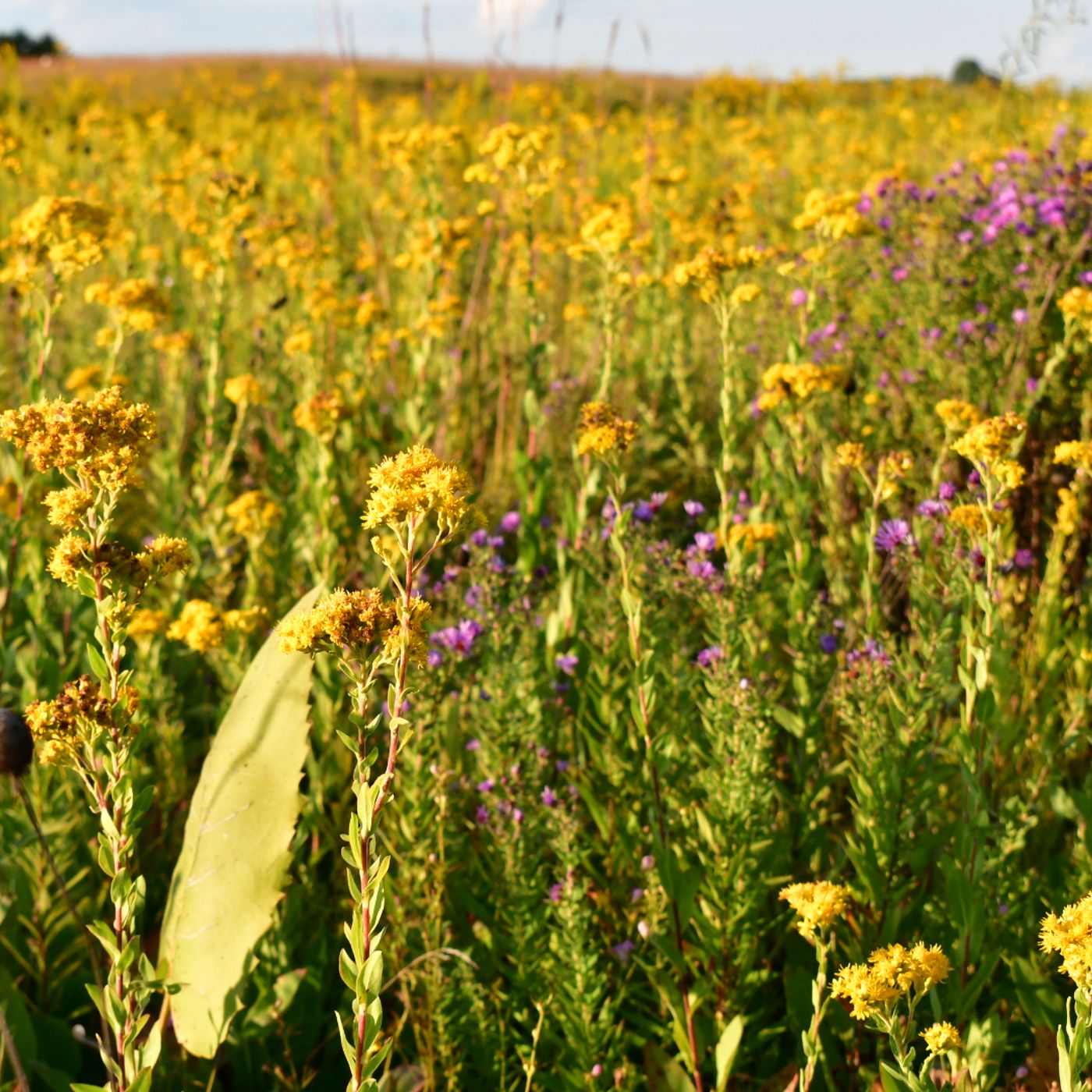
Prairie Rants & the Herbaceous Perennial Habit
A rant about how prairie soils get built, what exactly a "herbaceous perennial" is and why this habit is so relevant and important to remember when talking about the prairie, how important prairie grasses like big bluestem (Andropogon gerardii) and indian grass (Sorghastrum nutans) are to building rich top soil (hunt: it's the roots), etc.
Other included rant subjects are cigars, killing 16 lawns during the month of September including 4 for a revision series, issuing a fatwa against Midwestern Landscaping and horticultural atrocities, and more
Other included rant subjects are cigars, killing 16 lawns during the month of September including 4 for a revision series, issuing a fatwa against Midwestern Landscaping and horticultural atrocities, and more
2023-09-16
57 min
Transcript
Available Results
Generated results are saved to the knowledge database for reuse and search.
No generated results are available for this episode yet.
Extract Knowledge
Pick what you want extracted first. Model, scope, and chapter options appear after a template is selected.
Generated results for public episodes are saved to the knowledge database so they can be reused and searched later.
Transcript
Welcome to another episode of Crime Pays, But Bodany doesn't podcast. We use
my code switching voice. Hi, Thank you so much, Thank you for
listening. Today. We're going to be talking about a number of interesting topics,
including primary and secondary growth and angiosperms, as well as the herbaceous perennial
habit in the prairies of the Midwest. Yes, I would be delighted if
you would stay with me for the entire duration of the podcast, because we
got a lot of interesting shit to talk about. I gotta get the funk
out of Chicago. At some point that I scare you that did I spook
you? Huh? I bet some of you actually listened to the podcasts like
that, don't you. I was listening to this, Uh god, what
was it? It was. I'm not even going to name it because I
don't want to offend anybody, but it was a podcast. It was interesting,
and it was narrated by someone who kind of talks like that kind of
reminds me of someone who's like when you see that that guy pop up in
your neighborhood, you know the show's over. You know. It's like it
goes from being like a fun just mellow working class neighborhood. Oh, I
wouldn't say fum. He's like a mellow working class neighbor with a good variety
of people in it to being you know, a spot where there's gonna be
cupcake shops and boutique coffee roasteries. But we're not judging anybody to each of
their own anyway. I gotta get out of Chicago, you know, I'm
just becoming the stereotype. I'm over here drinking bottles of mar and R sauce,
drinking non alcoholic beers, smoking fucking stogies. I smoked a cigar the
other day. It was part of a gag for Kill Your Lawn when we
were filming it, and uh, and I really liked it. Surprisingly.
You don't, of course, inhale. Those things you just put them in
your mouth, you know, you just you just you breathe it in.
But you don't inhale, just like Clinton did in the nineties, you know,
when he was doing pot. Can you imagine how different it would have
been if he was like he got caught and he was like, yeah,
I smoke pot. Fucky, who cares? It's harmless? Uh? And
I'm not even a big pot gey. But you know, he could have
could have sped things up by two decades instead of having two decades of people
getting arrested for stupid shit and all the drug war hysteria. Anyway, but
I'm becoming this, this caricature of myself, you know, and it's time
to go. It's it's why I could never live here again. I just
come to visit and like if I stayed too long, I start to turn.
You know, God, we were me and Al did this. One
of the bits for Killier Lawn was this like Mafioso sleez bit. And Al
went to the thrift store and got all the costumes and shit, he did
a really good job. We borrowed his friend vivs Buick, which you know
is in the inside is like pretty tore up, like the lights don't work
and it's but from the outside it looks like some sort of like you know,
Mafioso sleeze car. It was all too real. I'm talking like nineties
eighties and nineties Area mafia, not like the corny you know in suits and
shit. We're talking like the used car salesman look of ma Fio So.
But but you know, anyway, it just started to feel weird. Like
after that, after we did that bit, I was just like, I
gotta get this fucking polo shirt off me. And uh, these these khakis
and the fucking pointed shoes, like the pointed leather shoes. It was just
gross. God. Anyway, you know, they got the gaming machines everywhere,
Like we were like driving up then stopped at some like some little uh
some some restaurant and some like you know, late night restaurant. The fucking
waitress was so annoyed by us too, was hilarious because we were just recording
bits in there. But anyway, yeah, welcome to another episode of Crape's
Body Doesn't And uh today we're gonna talk about the prairies, all the cool
shit out there, because you know, most of these prairie plants are herbaceous
perennials, which if you live in the Midwest, I mean, I guess
a lot of people who are just not in the body don't know what that
means. But if you live in the Midwest, that's the normal state of
things, right because it's still fucking coldier in the winter, just like in
the desert, you know, really cold winters, and well, I guess
not everywhere, but at least in the Midwest, you know, producing woody
growth as secondary growth, which most monocots don't leave. All monocots don't.
Wow, there's exceptions to it. It gets a little hair. You gotta
talk to Jim mall Seth about that. But but monocots don't produce palm trees,
you know, grasses, et cetera, don't produce agaves, don't produce
secondary growth. They don't produce wood. Then it's tenderly and I would it's
it's pith. It's it's all primary growth. You got the apical mirrors stems,
which is where active cell divisions going on, and the roots and in
the at the you know, actively growing shoots. Uh. And then you
have you got secondary the secondary growth, the lateral mirror stems, and that
that can be. I'm like trees get you know, which are all they're
not conifers, then they're angiosper We're talking about angiosperms like pines and spruces obviously
have wood, but they're they're conifers anyway. So most angiosperms, flowering plants
that is, don't produce you know, things that you know evolved in the
tree of life. We're talking one hundred and twenty five million years or later.
You know, whereas land plants evolve four hundred and forty million years ago,
and then you get conifers, where you got lycopods, seed ferns,
all that interesting shit, most of which has gone on, and you get
conifers, which really had their big heyday in the Jurassic. The mesa is
soic, and especially the Jurassic which is a lower division of the Mesa soic.
And then you get the flowering plants after the Jurassic concludes. That's when
angiosperms involved one hundred and twenty five million years ago, kat extinction, dimess
go extinct sixty five million years ago, etcetera. So anyway, the fucking
point is the herbaceous perennial habit where the top dies. It's an herb no
no no secondary growth, no woody to issue, and then the roots stay
alive. That's what we're talking about. We're talking about a lot of prairie
plants. There's there's you know, you get some woodies in there, some
shrubs like the dagwoods or some of the fucking hawthorns, or you know,
there's a sex humilists, the little dwarf willow, really cool dwarf willow,
prairie willow. But most of what you're looking at all those all those cool
composites, and you know, basically everything there Arringium, yucafolium, the routstick
master, Baptisia alba cool member of the bean family, leggum family. Those
are all orbaceous perennials. The roots stay alive and continue to grow, building
carbon and building soil underground stashing carbon or ground building soil, but the tops
die. That vege dies every year, and that's why you know the prairies.
Eventually that stuff would just build up and build up and build up,
and that's where the prairies need to burn because there's no woody tissue. It's
just all that vege gets produced massive amounts of growth in four months the growing
season. Here, A little I was here, May, a lot of
this, a lot of stuff in the prey wasn't even popping up yet early
May, and then you know, it starts to take off late May,
June blows up, and then you know, basically by early October it's just
starting to die off, and then you get start getting the frost and shitting
mid October and uh, and then it's gone. It just dies, dies
to the ground, and so that stuff builds up. That's how that soil
got so rich in the prairies. That's why they were so desirable for agriculture.
That's why the soil here man I was digging in people's yards in Chicago
and where it wasn't where it hadn't been regraded to build a building, where
shit hadn't been dumped. You would look at this soil and it was just
so black. And people were commenting on videos till they're like, God,
that soil is incredible. I'm like, oh, I know it is.
It's like this, it's kind of clay, but it's got a lot of
black organic material in it, super just super rich. Looks like worm composts
in some places. And yeah, it's just you know, that's thousands of
generations of plants growing and dying, and both the vege up top dying,
the vegetative material, and then the roots as well. And that's the roots
are what a lot of people don't realize is going on. These prairie plants
send roots down fifteen twenty feet in some cases, and once the plant dies
whenever. I don't know how long lived some of these fucking things that I've
heard of sylfium, terrabin and acium and get one hundred years old. Jerry
had said in our last podcast that maybe they get his old as prisonal companies,
and that is obviously not I don't think that's possible, but I would
love to see. That's like forty five times what the estimated age of silfium
is, which is one hundred years some of these. But I you know,
I don't know how I mean, how long can they live silfium?
You know, the prairie docks, the compass plants, the cut plants,
they send roots down a fucking long way. They're like fifteen twenty feet again
all right, Indian grass or gas from the tent sends roots down twenty feet,
so you know it's it's and the roots don't die. The top dies,
the roots don't die, so the roots keep continuously growing while the you
know, the solar panels up top are just seasonal and then just storing all
that energy underground. Of course, versus turf grass, which is Kentucky blue
grass, which isn't even native. How deep those roots go like eight inches
if that not even fuck the lawns. I've killed a lot of lawns in
the last month. The lawns I've killed that the roots don't even go down
more than I don't know what three inches if that. But that's like a
mode grass. If you let Kentucky bluegrass get get taller, maybe the roots
would go go down or I don't know, but it's fucking nuts. But
I just I've been triggered, I've been traumatized by the horrors of Midwest landscaping.
It becomes ideological for me too. It's funny. I think of,
like, you know, growing up, I hate kind of a problematic child,
all the all the fucking authority figures and stiffs and just fucking judgmental asshole
adults, and tell me I'd go to jail and I was a fuck up,
you know, just got and they just their value systems sucked too.
They were just kind of shitty people, shitty, unhappy, judgmental people.
And I feel sorry for him to an extent too, because you know,
they were they were victims of a system that indoctrinated them early on as well.
But uh, but I associate I associate all that landscaping with the places
where these people resided or or the the institutions they inhabited or whatever. Just
the lawns with the curvy landscaping beds and everything even les spaced, and the
boxwoods and that that shitty that one shitty clone of Thuia occident talent. It's
probably the only native plant they actually use. But it's this mutant form that
stays you know, quote controllable. It doesn't get big like a large you
know, actual uh Thuia does and harborviti and uh and just looks the folios
looks all fucked up compared to the actual species. And it was that,
And it was that Japanese barber, that barbarous and the daylylies and you know,
all that filler shit, Oh god, the fucking hostess to death by
hosta. That's the Midwest condition. Just this filler plants, you know,
and you plant fifteen to the same thing all together, no mixing. It's
just it's fucking deranged. And I realized that's why I didn't know what a
native plant was till like, you know, it was like thirty five,
and why I just I really wasn't interested in plants until I actually got out
and saw wild habitats. I mean those are controlled plants. Those are plants
that are that are kept in these you know, these controlled fucking obedient,
conformist settings. So which it was really we'll get we'll get to that later,
but that was that was hard for me to fucking stomach, you know,
because I just we were this isn't really a landscaping show. This is
a bring nature home show. Kill your lawn what we were filming out there,
but seeing but being exposed just driving around. I mean I should I
could do a whole video on ship gardens at a Midwest ship gardens of the
Tristate area of Chicago, because it's still so abundant. But you know,
you see a lot of these, you know, you see a lot of
people in Chicago killing their killing their parkway lawn, killing the lawns in front,
you know, the parkway between the sidewalk and the street. Fair game.
Fair game City technically owns it, but I think they put the responsibility
of quote, you know, taking care of it to the to the landowner
or the property owner whoever the fuck. So it's fair game, go out
there, kill it. So I was just I was walking out. I
was seeing all these parkways just getting mrked and just planted with you know,
sometimes just like quote flower gardens, it's either word wild flower that doesn't really
doesn't mean anything to me. Oftentimes it's not even native species. But there
were a couple really good just prairie gardens where it was you know, most
if not entirely native, you know, northern Illinois prairie plants and uh and
just getting fucking just yeah, just spilling over the sidewalk. I loved it.
God, it felt so good to see. And I was like,
this is the fucking uncontrolled wild setting that mimics, is attempting to mimic the
places that I love being in the Midwest that you know, point zero four
percent if that, of native prairie that's left in this state where they turned
everything into just massive oceans of now corn and soy, like shitty corn and
shitty soy. Gotta put that shitty in there, shitty corn and shitty soy
not to feed people, but to feed pigs and cows, which they didn't
evolve to eat. So you're getting shitty meat when you everything is shitty about
it, shitty corn and shitty soy to produce shitty meat for shitty people.
I'm just kidding. No, it's not their fault, you know what I
mean, the whole system's tainted. But anyway, I can't I just I
can't get over man. I when I went out to visit Pizzo Wholesale Nursery
over there in Leland, Illinois, shout out the pizzo, Jack Pizzo,
who I accidentally called Joe Pizzle. But I don't know. I think I
was just rolling with the Pizzle thing. It sounds like Rizzo, you know.
It just sounds like this abrasive Italian. It sounds like someone who's going
to be shouting at you. But he was such a That guy was fucking
cool. I would love to have him on here. Actually, Jack Pizzles
fucking cool guy. But when I was driving out there, I couldn't get
I couldn't get over it. Just how I forgot how terrible it feels to
just be surrounded entirely by corn fields. Then you think about it, I
mean, these are all these are not family run operations. These are huge
monocultures, you know, where I don't know how the system actually works.
I think that maybe if their family run or family owns that are manages to
land, they lease it. There's something from a larger company, whatever the
case is. They're spraying this shit with horrible stuff that then just washes into
the ground and the water supply and ends up yet going on down towards the
Mississippi and over to New Orleans. It ends up in the watershed and then
washing out into the gulf. It's still so poisoned, you know, it's
still so so it's just such a fuck system. I hope we eventually get
past this. But anyway, you know, I think that's that's the thing
that I wanted to talk about first though, going back to this herbaceous perennial
habit because you know, just like the desert, you know, you don't
see a lot of woody growth in the deserts. You see annuals, you
see you see herbs, you see soft tissue quote unquote that dies back everybody.
I mean, there's some places, I mean, but you know,
in the Mojave Desert, for instance, there's the driest desert North America.
But uh, I guess it kind of reminds me of that in that sense.
There's you know, in a prairie, it's all flat, man,
it's all the winter. It's it's just died back. It's just mush.
It's all that veg if you don't burn. But you gotta think about what's
going on underground. It's these extensive roots systems, just like a literal forest
of roots underground, and it's it's kind of incredible because you go to these
prairies, you can't see the fucking ground in them. And that's what was
killing me about the landscaping we were you know we I think I talked about
this earlier, is we have you know, one of the landscapers we were
using was just fuck. He was spacing shit out. They were spacing shit
out like three feet. Man, it was brutal, three feet of space
between these I feel bad going more than a foot if I'm if I'm trying
to, you know, mimic nature and mimic the prairie and just killed someone's
parkway lawn for him and planting stuff in the ground. In the last three
days, I was doing that because we had left over donated plants. I
was just going around, you know, just finding people on an intergram or
whatever and finding people who who would take some plants and just like, you
know, i'd tell him, Hey, I'm gonna fucking I'm gonna check on
you, you know, six months or the next growing season. I want
pictures. I'm gonna, you know, I'll remember these addresses. I'll drive
by him. If you're not taking care of it, I'm gonna send you
a message. I'm gonna, you know, be like, what the fuck,
because I'm out there breaking my ass. I mean to dig up like
a four by eight section of parkway. It takes me like forty five minutes
an hour. It's I guess it's kind of fast, but I've been you
know. You got to use the right shovel, one of those sharpshooter shovels,
and you gotta know how to do it. You just kind of chop
a dotted line around the parcel you're clearing, and then you just go in
there at a low angle, get on your knees, going there at a
low angle, and just start just stabbing it, you know, just just
just cutting it, you know, disconnecting the roots from the side beneath.
In the case, a lot of the grass that's used here, which I
think is Kentucky blue grass, if the roots don't go that deep anyway,
so it's easy to to tear up. You just tear up the side.
You don't even need a side cutter, and uh, you know, but
it's just you got to protect them, steak them, put a steak in
the ground, occupy some visual space so that it seems intentional. Can put
up like a little fence so people don't their dogs piss on it that the
plants can take dog piss once they've been there a year. Because all this
stuff again is you get this massive explosion to growth, These these plants to
shoot up to some cases twelve fourteen feet tall, but then of course they're
gone in the winter, they just dive back to the ground. But I
mean, think about that orbasious this the herbaceous perennials here, perennial roots stay
alive, orbaseous vegetation up top dies these things. You get this massive explosion
of growth here from like June first on, and it's just it's always it's
just such a wild phenomena when you think about it. I mean, so
much, so much biomass is is produced in such a short time, Like
where I live in South Texas. If you go you know, especially if
you're west of the hundredth meridian that's on that's you can't imagine what that's like.
I mean, because you don't have you don't have the water for it.
East of the hundredth meridian, we're of course looking at a satellite map
of the United States. Everything starts to green up. You get drastically more
precipitation in the summer. Uh, that's what an a was this? You
know, the rain, but it's just it's got it's so great that yeah
again this to be in a prairie, it's sunset. Can smell those turpenes
and volatiles leaking out of the leaves. You can the sound of the insects.
There was this guy, what was it Someone gave me as someone gave
me the down law on how I figured who it was. Someone someone said
you email this guy and he'll send you his PDF of singing insects. It's
like it was like it was an underground you know, like like the old
Crew change or something like. You gotta get hit this guy up. Tell
them the secret passo. It'll send you the PDF of Illinois singing insects.
Anyway, this guy just said it to me, email them. Next day
he sent it, and it was it's like an in depth it's like one
hundred and fifty pages or something. I wish there was a way to link
it to a website so you could hear, actually hear what these things sound
like. But you know that that background noise is so pleasant, that that
subtle cacophony, that pleasant cacophony. The sensory overload of these these noise making
insects and the prairie, you know, plus the cicada's up top in this.
You know, if you're like near a savannah or near a tree,
it's just intoxicating. Man, prairies are so cool. One of my one
of my favorite landscape and ecosystem types right up there with you again, like
I said last podcast, and the Maybian fog that's are Resilian sahato. You
know, it's part of the dry areas of Western Australia, those those sandy
areas a little cool terrestrial orchids in Western Australia just so just so fucking rich
man. But anyway, so uh yeah, I mean that's the thing,
these these prairie grasses. If you if you're not into the grass family,
the prairie is the spot to go if you haven't been been bitten by the
bug of grass yet to find out why the actual family is important. Many
of these bunch grasses, prairie grasses, et cetera. You've got to hit
up a prairie, you know, either in Midwest or the South or wherever,
but anywhere you could see where the grass is one of the dominant species
there. You know, you got all these cool flowering plants, but he
got grass is composing, you know, in some cases up to seventy percent
of what's there. When we were at Pizzos restoration site two days ago,
it was all Indian grass or gas from the tans. And Andrew pogon Garartia
the big blue stem, well, I should say a section of his restoration
site was all just Andrew pogon Gararti and store gas from the tans. But
it was weird. It was this one part because I think it was all
like shitty overgrazed cattle pasture, which I'm sure smelled great. You know,
you still get the nice whiffs of the pig farm down the way. And
then there's a cattle feed lot too. I think is it a feed lot
or they got him grazing out there. I don't know, it's all fucked
up, man, it's the pig lott itself, that's you know, that's
the main reason I don't eat meat. I would eat meat if I could
afford, you know, that the healthy shit, the grass fed stuff,
and I would still only eat it once in a while, you know,
like you know, the way Americans eat it like burgers every day, especially
when you're spending most of your day hunched over, sitting down or you know,
trapped in a car, so fucking unhealthy for you, hello colon cancer.
But uh, but you know I would the main one of the main
reasons, I don't know, because so much of the meat is just fucking
gross. It seems like poison, you know. But there's one section of
pizzos was all uh, just dominated by store gas from the Tan's Indian grass
and uh and big blue stem and then in you know, interspersed in between
was a couple of iatris and a couple other you know, Baptisia prairie plants,
but it was mostly grass is. And then it was cool when you
got up on this glacial came which I don't know if I talked about this
last podcast, but you know, as the glacier slowly melts, Think of
the glacier like a chocolate chip cookie. The ice is the dough and then
all the you know, the gritty shit, boulders, sand all particle sizes,
okay, diversity of particle sizes get caught up in these mile high,
uh moving rivers of ice, gradually moving rivers of ice. All that stuff
is the chips, you know, the chocolate chips. And as the cookie
starts to melt, you're like you put it in an oven, all the
chips. Well that's this is kind of where the analogy falls apart. Fuck
that, forget about that. But just as the glacier starts to melt,
as the ice starts to melt, you know, it goes through these holes.
You'll get these these you know points where it's the glaciers compromised, these
holes and uh you know where they're it's a vertical hole where the water,
glacial melt water starts to go through and that's where it deposits and drops all
these particles. So you get these little hills and they're they're spursed, interspersed
throughout the landscape. It's really interesting. And so they're a little bit higher
and dryer, especially since they're mostly rock well and also because they're higher so
they drained buttter. So you go on top of the cane and the prairie
is stunted, and you've got the more drought tolerant species like Erringium, yucka
Folium, the rattlesnake master. And then at the gentle slope, you know,
there was this area where it's all mostly the grounds down below, and
then like further away from the came it's like the wet prairie. You get
the prairie crayfish. Nice. You know, they actually dig. You know,
you see these holes everywhere. It looks like someone put one of those
stupid soil narrators you see in suburban lawns in the Midwestern times. You know
where it pulls out the thing that looks like a dog turd. There puts
holes in the grass everywhere. God, they should people do for grass out
here. It's just nuts too. I forgot about that because I haven't been
living in an area where you get enough rainfall to have Kentucky blue grass for
a long time. Even in South Texas, the dominant species is either bermuda
grass. If you're poor or if you're if you're a rich fuck, you
got Saint Augustine. So these massive Saint Augustine, which is really weird.
The walk on it's a really weird grass. It's a native closer to the
coast, but when you've got it growing in Central Texas, you need all
this fucking irrigation for it. But it was either way that the lawn whole
lawncare thing is just so fucking nuts man. It's just you know, when
I went to of you, Jerry Wilhelm, it was just his whole driving
through his neighborhood. It was just armadas of long care landscaping crews going out,
you know, mostly Hispanic going out and hitting the yards, you know,
hitting the yards of the mostly Caucasian suburbs. Very weird dichotomy. The
fucking even Chicago is still like so so segregated. It's so weird. It's
so weird, like willfully segregated. You know, like people just stick to
their own, you know, based on how much fucking melanins in their skin.
I mean not you know, there's exceptions, but I mean that's historically
been the Chicago thing, this one phenotypic trait that has only evolved due to
what latitude a population of humans spent the last few thousand years at. That's
what people willingly grouped themselves by. Still it's so fucking weird. Be like,
if you know, all the brown haired people stuck together and then the
blond haired people lived in one neighborhood, you don't get much, you know,
but with the younger generations you get more mixing, which is good.
That's what we fucking neat. Anyway, how the fun did I get?
Oh we were talking about pizzows nursery. So you go to the top of
this glacial came and by when I say hill, it's laughable by any sort
of West western North American standards, just like fifteen feet, you know,
but it's noticeable on an otherwise flat plane. And uh, you get all
these you know, rocks up there. There's antennaria up there that get the
ridiculous name pussy toes ridiculous common name pussy toes antennaria. I think it was
neglect that was up up on top of this h this glacial came, which
is of course a more drought tower. And plants, especially when you see
those leaves, you see how hairy they are. How her suit said,
I was kind of cool to see, you know, a dryer sight based
on you know, glaciers melting fifteen thousand years ago. I god, I
would have loved to see the fucking glaciers here. Can you imagine how weird
that it? I mean, just the prairies. That's why it's been weird,
you know because normally when I'm in what we're doing killer line, I'm
talking about don't you want the plants there? This is the talking point I
was doing about the plants that have been there for thousands, you know,
hundreds of thousands of year, millions of years before you know, your shitty
suburb was built, your you know, all this hideous human infrastructure generally hideous,
right because it's I mean it's the twenty first century. It's all stealing
glass and concrete was built I'll say millions of years. But when you know,
saying that here, it's always hard to because it's not It's like,
you remember, these glaciers were here, everything was covered in ice. If
you say that, it's not really it's not really that true. You know,
how did plant distributions shift like before, when the last round of glaciers
was here? When was the last time there was prairie or was it prairie?
What was the plant community like before the glaciers? Would have been so
curious that you ever wish you could just watch like a a forty million year
time lapse video of your region and just see what was going on there.
You know, you could you know, slow down the rate at certain times
so you could get a better nap shot. Such an interesting shit to think
about. But anyway, going back to the herbaceous perennial habit, which no
one actually calls it that out here. You know, I've never heard I
don't think I've heard a single person we talked to it, or kill your
lawn or anywhere else say those two words together, abaseous perennial. But that's
what all the prairie plants are. Top dies every year get a big burst
of growth up top of vegetation, roots stay alive. Got perennial roots or
baseous vegetation, no secondary growth. And if you want to read about that
secondary growth versus primary growth thing the ease, I mean, you could look
it up online, but the easiest thing to do is, you know,
get a tablet download Libra texts, which is like an open source learning.
You can download their biology textbook just type of libre L I, B R
E texts Biology and there should be a pdf download and it's selling there.
It's chapter thirty dot four. It's like a two hundred and fifty six megabyte
PDF file. It's like fucking twelve hundred pages. But you know it's good
to have on your tablett just for reference. But chapter thirty point four,
you know, gets into primary and secondary growth in stems, and it's good
stuff. You know. They talk about the primary growth versus secondary growth,
like primary growth you'd see in monocots, grasses, palms, and gove's secondary
growth like you see in all the dike coots, both the magnolias and you
dike coots and uh, you know cork cambium. You got the growing point
at the tips and then you got that at these where you got secondary growth.
You got those growing points in the bark too, in the cambium and
at the bark you know what I mean, in a ring around the center.
That's why you know trees are only alive on the outer a few inches.
The inside is is just the structural support, just heartwood. That's why
trees can almost entirely run out, So forgive me if you know it's already,
but you know, some people don't. This is for the people that
don't, you know, try to get them jazz. But it's a nice
two page read on that. If you need a refresher, it's good.
So uh anyway, yeah, I just it still just blows my mind because
I'm used to seeing annuals or woodi's, you know, woody shrubs, even
in like the time of leap and thorn scrub. Where I live. He
got cacti, which don't have I mean, the cact i don't really have
fuck you know I would have. I gotta ask. I gotta get Jim
mossed out on the fucking podcast at some point, you know, but he
don't want to. He's a little shy, but uh, because he studies
cacti especially. You know, he's talking about fighting growth rings in lofafra,
which I'm sure there are, but I don't think they're annual growth rings.
I don't think it's like a I don't know. I'd have to ask him,
but you know, where I live, it's all it's all shrubs,
it's woody growth and then under you know, beneath it you have this,
uh a lot of legumes. Uh. You get a couple other yet,
a couple other plant families, but the dominant, at least in woody growth
is legumes. And then of course you've got the understory of all those cool
likings and cacti and little annuals or you know, some, you got some,
you get. You get a lot of ambracious perennials down there too,
nowhere nearly as much as in the prairie, but that's what the prairie is.
You know, that that explosion of growth during that short growing season,
that four month growing season still just I don't think I don't think enough people
in the Midwest appreciate that. I mean it literally just it's such a massive
amount of biomass produced in such a short time. But how would they,
because you know, the prairies are all gone. It's like ninety nine point
nine percent destroyed. So, you know, like I said, I didn't
know what a native plant was in Illinois. I didn't know what many of
them were, any of them were, really I had no idea what silphium
was, et cetera. Until it was fucking thirty three thirty four thirty five
somewhere around there. I came back started actively seeking out native plants just from
knowing, you know, having the concept introduced to me in California. So
but anyway, the fucking thing we kept hearing to the Midwest landscaping is uh
just blows my mind because you get people out there using native plants, but
they're still stuck in this archaic Midwest landscaping shit, which is it's East Coast
too, you know, you get on the East coast. But I wonder
what we're gonna see in in DC, you know, in DC Baltimore area,
because we're gonna be there in October film and kill your lawn. And
I told the production company too, I'm like, I want to talk to
these fucking landscapers. I want to vet them. I want to make sure
that they know I kind of hate most landscaping just because it's stuck in this
Victorian era, you know, English aristocracy garden shit of equal spacing, and
you know, at least if you're in the eastern half of the country,
we actually get enough rain to have a lawn, they still keep the fucking
lawn and the landscaping beds just become islands. They're just islands of plants,
islands of interest in an ocean of lawn. So you still got a fucking
mo You're still having the non native turf grasses that don't do ship to build
soil or seguest or carbon. That was a really cool thing to talk with
Jerry about. Two is just how grasslands, you know, sequester such exponentially
larger amounts of carbon than forests because of those roots, because of that herbaceous
perennial habit. They're just the solar panels go up in May, they come
down in October, and that whole time they're just boom, boom, boom,
just pump in energy into those roots. Those roots are growing just fucking
massive, and the roots stay alive. When the plant finally dies, the
roots still there. It's buried, it doesn't get decomposed and let back into
the atmosphere. That's what you know. All that that rich prairie soil is
sequestered carbon. So those grasslands are immensely important. And the fact that you
know we don't value them that I mean, so many people have the idea
of a forest. Do you want to stop climate change, plant the tree?
What about if you want to stop climate change. Convert an acre on
your fucking land and back into prairie, you know, and burn it.
Even when you're burning this stuff, you burn the vege up top. Yeah,
you're releasing CEO two. But you've already stored so much in the ground
in the form of those those that thick network of roots, such an immense
amount of biomass in the form of roots in the ground. That's you're still
sequestering more carbon than's actually being you know, let loose, whether you're burning
it or whether it's just decomposing by bacteria and they metabolize it and produce CEO
two whatever. So yeah, it's just this whole element of how the ecosystems
function here that so few people are are familiar with. So but you know,
we would still we would still see that in the landscaping. So that's
why you know, we're doing these calls now where I was like, I
want to talk to the fucking landscapers. I want to let them know if
you if you're doing this ship where you're planting fifteen of the same thing in
a clump with no nothing intermixed, if you're doing this thing where you've got
everything you know, in these orchard like lines or evenly spaced we're gonna go
in there and we're gonna fuck up and change it. It's not gonna last.
So don't even put it into your plan because that's not what we're doing.
We're trying to mimic nature. We're not mimicking the fucking hoity toity botanic
garden. You know, where some like rich dentist's wife goes to fucking housewife
goes whatever. You know, like that's a thing. That is a thing
out here. It really is. It's not so much anymore. It's changing.
But you know, you compare botanic gardens. I've said this is a
million times, you know, in the Midwest and the East coast with botanic
gardens. You might see how west where they're you know, at least like
you see Berkeley Science based, ecology based they've got like one little section a
lawn that's like a holdover from the fucking nineteen fifties when they had a rose
garden there, or like a you know, it's like a little like spot
to lounge and throw out a fucking picnic blanket or something. It's not it's
a it's an immensely small part of what the overall garden is like. The
overall garden is a science based botanic garden, all right. It's grouped geographically
by region, everything's close together. It mimics nature. The fucking botanic garden
mimics the natural habitats that these plants come from, whether it's South America or
South Africa or the Mediterranean or whatever. It's a phenomenal fucking garden. Same
thing with the San Francisco Boutanic Garden. They've got they've got like a little
bit of section a lawn, but they're doing a lot of just mimicking nature
so that when you go to this certain section of the garden, it's like
going to that that area of the world of the globe where you're going to
see all the plants that compose the dominant ecosystems in that region. It's so
fucking cool. It's such a great approach to it. Obviously, you can't
do that in places where it freezes. You know, you're going to be
limited. But uh yeah, I don't know. It's just it's a whole
different So I gotta I gotta meet these landscapers and fucking talk to them,
and you don't filter them out right. See, who's gonna get turned off
not only by the approach and the sometimes crass language, but also by the
fact that we're not This is not landscaping. You're not landscaping some rich fox
house. We're mimicking nature, all right, that's what we're doing. This
is habitat restoration in your fucking front yard. And that's what kill your lawn
is. It's not just about kill your lawn and plant some fucking pretty flowers
out of context, all in a line, in a nicely manicured bed.
We're not doing that. I'm not doing that. I'm not being part of
some shit like that. That's the same mentality that got us the lawn in
the first place, just a variation on it. I don't want it.
I want nothing to do with it. So, yeah, we see these
people. You know, I planted a fucking super tight garden, like super
dense like plants that are gonna get big in three or four years and be
you know, right up as to neck packed packed in there, you know,
against each other. At my friend John and Caroline's house, there was
one of their they were one of the people whose yards we killed, and
I got these people comment, I think something's like the planted way too close.
That'd be great if you could just move them to the other side of
the walkway to their house. And you know, I was like, well,
we're not doing that, and they're not ready for that yet. This
is a simple thing. We're just gonna take out this small section between their
neighbor's property and the fucking walk away to their house, which is two feet
wide max. We're gonna fill it thick with a bunch of shit because the
growing season here is only four months four months long, all right, so
it's still gonna be three years before these things are butting up against each other.
And we want it dense. And these people aren't fucking stiffs. They're
friends, you know, like John Jonathan has like a silk screening company,
Caroline does tattoos. Like they don't want to fucking nicely manicured ship. You
put all this space between your plants. I mean, it's up to you.
If you want to wait four years until you've actually got a garden to
look at, fine, go ahead, But you know, fuck, you
can always just move shit during the dormant season two when everything's frozen. Anyway,
they get up. It'll survive, right, especially a plant like selfium.
You'll you'll fucking shock it. You might lose some roots, but you've
still got that big you know, the center of the road is still that
big caughtex. You can move to another section of the yard or whatever.
It'll be fine, you know, so anyway, But it's just it's this,
this fucking insistence. And that's what's funny too, is people in the
Midwest, and I'm sure the East Coast where I've seen this ship too,
they don't realize that this is like a regional thing, like they don't realize
that it's not everyone does this. You know, you go to like the
Southwest, you go to the West coast, even down in Texas, like
native plant gardening doesn't. They don't do this. Man, this Why do
you want to evenly space shit out? It looks weird. It looks fucking
weird, it does. It looks like you're stocking shelves at wallfart, you
know, like stocking shelves at a drug store or something. It's just like
just like products, you know, and then then the not mixing things.
What the fuck is that? God damn it, if I would have seen
the plans that one of these landscapers had on this show. I'm not trying
to go dude it out too much. He was kind of an arrogant guy
anyway. But you know, whatever, people could change. But if I
would have seen one of the plans, you know, two months ago,
I would have been like, no, fucking wait, tell this dude,
we're gonna change it. This isn't gonna this isn't gonna stick. Uh,
you know, and if he doesn't like it, he can like go,
you know, do something else. He doesn't need a word with us.
So it's just the I just can't get over that. Though it's so weird,
it's just but I guess it's what you know, It's what you do.
When you there's not much nature left to enjoy, you don't get you
know, there's not much wild habitat left to enjoy. You don't you're not
able to get out there and actually enjoy it and see it. And also
I think, I mean, obviously this is the biggest thing the landscapers have
to provide for a market. You know, no one could do the shit
I'm doing and make a living off of it. There's you just can't make
you wouldn't be able to make money. I mean it's people want people still
want this specific type of landscaping where everything's you know, looks controlled and obedient,
you know. So I think it's it's kind of what the industry demands.
It's it's like, uh, you know, it's like much the entertainment
industry in this country. It's it becomes its own negative feedback loop where the
public wants the unthinking, hideous, lowest common denominator shit, and the industry
is forced to respond and comply because that's what sells. And so the industry
starts to produce even dumber, uglier, more unthinking shit, and the public
eats it up, and so that becomes the new standard of what is normal
and acceptable, and being that, you know, ninety nine percent of what
you're going to interact with in the world, if you live in this region,
is human made. There's very little wild habitat left. You start to
think that's what things should look like, that's what nature should look like,
you know, Whereas if you've never actually been to a prairie, because they're
all gone and experienced, you know what it's like that you can't see the
ground. It's rich it's diverse, it's chaotic, it's alive, it smells
incredible. It's not really it looks chaotic to us. When you look closer,
you realize there's a very specific, complicated order to things. You know,
if you never experienced that, you're gonna think. You know, yards
that are going for that look weedy and out of control. Whereas that's what
I love. I love it when the plants are spilling over the sidewalk.
You know, you cut them back once they get like a foot out beyond
the boundary, maybe more. You know, you don't want to obstruct people's
way, But you get smacked in the face with a flower head from a
selfium terment and asium once in a while, it's not too bad. So
uh, you know, I don't know why why does this all matter?
Right? Because these are just we're just talking about fucking landscaping here. But
again, this is the scenery that you end up interacting with, just like
the buildings and the infrastructure that we surround ourselves with that we don't have a
choice. And you know, all this glass and steel and sterile shit versus
look at the architecture that was commonplace one hundred years ago. You know with
with ornamentation or art deco shit or whatever, I mean our deco. However,
to fuck you pronounced that, you know what I mean versus the sterile
bland uh bank like alright, like the seventies, the nineteen seventies was a
horrible period of architecture, at least in America. That that bank architecture concrete
and just beyond the human scale. It was dwarfing. It felt brutalist and
just awful to look at, you know, concrete fucking walls with no windows
and just I mean look at the way like a lot of college you know,
campuses, look college dorms and fucking banks and post offices you know,
built in that time period. It's brutal. You know, if you live
in a landscape that breathes sterility, blandness and ugliness, you're gonna emulate unthinking
sterility and blandness. That's gonna be your life. That should affects you subconsciously.
The same way if you live in like a cluttered, dirty house where
nothing's in order and there's fucking you know, bits of food and shit and
snotting on everything, and you know, just greasy, fucking what it's gonna
affect you. It's going to affect the way that you live, it's going
to affect the way that you think. It's just gonna become. It'll be
there in the background and you won't notice it, but it'll start to mess
with your psychology. Whereas, if you live in a landscape that exhibits,
you know, the beauty and the intricacy and the diversity and complexity of biology
and nature, you too will exhibit creativity, diversity of ideas, intellectual agility,
and at least for me, that beautiful cast. So in the end,
it all comes down to this. You know you want it. You
want to walk down streets in a visual landscape that emulates nature, in the
natural world and all that, all that you know, beautiful richness and life
that's evident within it. Or do you want to walk down streets that emulate
the homes of the rich you know and are in our modern society's materialistic race
to nowhere, our deranged ideas of what makes someone successful. This just this,
this feudal, fucking sisifician task of just you know, mindlessly trying to
please your neighbors or outcompete them, or or make yourself seem more successful than
them. You know, what do you want? What's going to be more
what's going to be more fulfilling in the end. You know, these things
matter, far from being trivial inconsequential things that are simply a matter of aesthetic.
The plant life that surrounds us, in the ways in which we bring
it into our lives determines our collective ethos as a society. So that's why
this shit is importan. And that's why the fucking landscaping you're beating over the
head with if you're just going to the fucking drug store matters, you know,
think about that, especially like with the prairies, man, I mean,
imagine if just like every every one out of every four homes in the
city of Chicago put you know, prairie gardens in their their parkways. What
if like the parks had a lot of and a lot of them do now
they've got these prairie gardens, these diverse, rich gardens that mimic what is
nature if you live in this region, what existed here? What the native
plants that evolved here? And then of course all the animals and invertebrates that
that show up to pollinate them or eat the seeds or feed on the leaves,
or have host plant relationship with them, et cetera. So, you
know, I don't know this shit. Just it's the stuff I think about
it it starts to fuck with and affect me. You know. I think
of the places that I always hated having to go to or walk through or
or you know, my mom. I'd be in the car with my mom.
We'd have to drive into this section of town because she'd go get some
at the store, and it was just this hideous death landscape of you know,
big gass wide streets, no sidewalks, plastic signs, endless parking lots,
the manicured lawns with the retention pond to this side. And it's just
how bad it just felt to be in those places. I don't know,
maybe I'm a little more sensitive than most, but versus going to like a
cool fucking forest preserve or a prairie, or even just a really dense and
diverse city, diversity of ideas and all the cool shit to look at,
and everything catches your eye, everything's visually interesting. You know, I don't
know stuff to think about. Another thing that kind of drove me nuts.
I guess I guess I was just amazed, but it just drove me.
It kind of blew my mind to see how many people fucking drive in Chicago,
because it's just it's such a thing I used to always love about Chicago.
Was I used to bike a lot, you know, that was what
I did before I worked for the railroad. I would work for a bike
messenger company, which I don't even think they have any anymore except for food,
probably maybe weed, depending on where you are. But I was a
bike mester. I worked for like two months quit. I liked it because
they had a high turnover rate. You know, it wasn't it wasn't a
commitment. You know, if you worked for a company h for two months,
you just go get hired another company. It used to be a bunch
of different messenger companies. It was easy work out the work outside, wouldn't
have to interact with the public too much. It's especially not in any like
customer service sense. And yeah it was great. It was fucking dangerous,
but it was fun and uh and generally healthy. So you know, biking
in Chicago was great, especially during the warm I mean when it was warm
out, when it wasn't you know, negative twenty because the blocks are so
big and it's flat and you can just haul ass. And oh god,
I used to love it. Man, just get a nice road bike with
those those thin tires and just take off. But and now there's so many
fucking bike lanes too. You know. It's uh, they've really you know,
accommodated bicyclist. But but you know, the infrastructure here just isn't big
enough to accommodate how many people want to drive, and just seeing you know,
we had to drive by default. I don't have a bike here.
The production company rented us this ridiculously oversized truck to move plants in. It
was like a Ford I think it was like a F one fifty or something.
But so that was how we were getting around, and it was just
god, it was a fucking nightmare. I mean, you just it take
you forever during rush hour to go anywhere, you know, morning or night,
and uh, and I just was like God, I felt like such
a sap, such a sucker, you know, I was like, God,
I would love to just be fucking biking. You can you know,
you can go so fast, you can fucking you know, especially during rush
hour, You'll get there half the time it'll take you to drive, even
if you're going five miles away, you know, five miles down Western.
And that was that was part of what I loved about, you know,
because I haven't lived in Chicago since I was seventeen, but I would come
back to visit and stay for a while and alternate between like visiting my ma's
house and then staying with friends and whatever. You know. Often like what
neighborhood was it back then? It's like two thousand, like early two thousands,
like Pilson, you know, uh, places in Humble Park, west
Side, north Side, whatever anyway, and it was always such a great
place to bike and uh and I would bike to my ma's house, you
know, where she lived in the suburb because it wasn't too far out.
It was it was, you know, a few suburbs outside the city limits.
You know, I could make it their forty five minutes just biking along
the fucking metro line. And so to just finally finally be stuck and try,
I mean it was my first time really having to deal with that,
like really, you know, my car. I wasn't driving my car obviously,
but still it was like I was experiencing Chicago, Chicago streets through the
car and it, uh, I felt so weird. It was fucking goofy.
But then, you know, it got me back to thinking about how
I what I would do when I was here, and I had such a
nice routine. I was probably early twenties, mid twenties, come back,
stay for a few months. I'd bike or around in the morning for you
know, an hour or two, just looking for shit to get into,
get some good exercise. Then go look at the library. Just get a
bunch of books, put them at the table. This is before we you
know, smartphones, so use the internet. Look up some shit, research
some stuff, writing my journal a little bit, write some notes down,
draw pictures, go to the stacks, get a bunch of books on different
subjects I wanted to read, send them at the table, and then just
uh, you know, during like the the neon the noon hours of the
day, I would just be inside and then i'd you know, go out
again once it started to cool off. If I was here in summer,
and uh, it just had such a nice routine. Every day was new,
every day was a new experience. You know, it's a dense,
diverse city. There's a bunch of shit to get into cool play. I
had like my spots I would go to, like you know, abandoned railroad
bridges, train tracks, making you know, spots that were kind of like
nature in a city, just via neglect and abandonment and uh, you know,
play bridges over the river were certain. You know, there was a
spot where you could actually get into the bridge house and go under the bridge.
It was like near Ashland and Ashland and Webster. Let's not right,
forget where I fuck it was. Anyway, it was a spot we called
at the bridge house, you know, and you get in there. It
was actually it was technically illegally trespassing, but it was this empty spiders graffiti
all over there. You could just go hang out. It was. It
was so nice. It feels so lucky to have had had that in my
life versus you know a lot of people grow up maybe in more suburban areas
or rural areas, they don't they don't get that experience. And I feel
like it made me a better person too, Just a diversity of experiences and
being able to get ample exercise, not you know, we're not having to
go to a gym, just is like a part of your day. I
mean, that's the thing, that's why so many Americans are a beast because
we've we've basically made made walking obsolute, made exercise absolutely you just drive everywhere
and sit down. So and I know I've said all this shit on the
podcast before, but I guess just being here reminded me of how insane it
is to do the driving thing. And I understand it's you know, I
understand it's dangerous to bike, but also like the public transit here is pretty
good. Like riding the CTA was good. You know, when I was
here with my daughter, you know, a few months ago, we would
just I would just fucking park the truck, get on the train, and
then not drive for a week. You know, just walk everywhere, take
the train. It was so nice, man, it was. It's and
I think about that because you know what we have right now, this car
obsession, is We're going to have to let go of it at some point
or not. We could just continue sucking the land into a coma and and
building these totally unsustainable cities that are also just miserable to be in because so
much space is given over to parking lots and freeways. But yeah, I
don't know, you know, just something, just something I was I was
thinking about being here because I had never I had never had to drive every
day just from you know, when you when I was spending time in the
actual city. You know, it's kind of the benefit of I mean,
that's a great thing about New York. It's like you can have a kind
I've got to bring my fucking truck there. I'm not looking forward to that.
I'm just gonna park it at someone's house and a friend's house in Brooklyn
and just fucking leave it and not touch it, not get into a pay
the forty dollars toll or whatever it is to get into the city. And
that should be fun. But uh, you know, it's a great thing
about New York. It's like it's it's good subways. You just learn,
you learn how to get around, you can walk everywhere. It's I mean,
it's now it's totally outrageous to live in to pay renting, but uh,
you know, I wish they were just I just wish there were more
cities like that. And it's so different from where I live now. I
mean, all of Texas is basically a giant parking lot, like a giant
car slim at least Eastern Texas, West Texas is they haven't quite developed it
that much yet. You know, I'm sure that'll come at some point if
people don't have to move because climate change makes it unbearable three months out of
the year, six months out of the year. Really you get oh man,
you get a you just the grid collapsing, the deregulated, privatized,
state run electric grid that's not connected to either the Eastern United States grid or
the Western United States grid, so it's totally vulnerable. You get that grid
failing during a heat wave where temperatures don't drop below you know, one hundred
and five degrees during the day for thirty days. Who people are gonna die?
It's you know, you'll probably get some people will probably look at start
to look at leaving. So anyway, all right, well that's I'm gonna
end it there. And it's enough. I'm spent. I'm fucking exhausted from
nineteen days straight of shooting and of film and kill your lawn. And we
got another nineteen days in October in a Baltimore, DC area. If you're
in that area, hit me up. If you're in that area and no
native plant nurseries and have a good familiarity with the landscape and the different ecosystems
and habitat types. Hit me up because it's totally new to me. So
yeah, it's just gonna be learning as I go. I gotta start reading
up on it actually before we get there. And I'll be speaking at Cornell
when's the eighteenth surprise they're having me and uh, And then I'll be doing
a cactus store. I think it's at seven pm in Lower Manhattan on the
twentieth. So I'll have a couple of books and shirts and ship stickers and
stuff. Anybody would like to purchase some. It'll help fund the fund me
being on the road, you know, need money for gas and in food,
you know, for all that fucking Carl's Junior. I'm gonna oh,
I'm just kidding. I don't need that shit. I just wanted to see
what could say, you know, got the road foot, I'm gonna have
to, like stop, I love the fucking Trader Joe's. I'm just gonna
pack up on dry mangoes and forties of green tea and Trader Joe's snacks.
You know, maybe get a stoke, you know, one of those nine
dollars cigars. It's absolutely ridiculous, but kind of tastes like chocolate, you
know, Drink it with a non alcoholic beer and a forty ounce of green
tea. Anyway, hopefully you got some out of this. And it was
pretty disjoint that I realized I wanted to have a more structured conversation about their
baseous perennial habit and prairies and more of a better, more structured lesson on
primary secondary growth. But I got kind of you kind of went off the
rails, you know, all over the place like a ping punk ball like
I tend to do. Anyway, that's all I got. Have a grocery,
they go fuck yourself. Bay. Oh, it's time to start collecting
seeds till you better get on it, you know, it being fallen whatnot,
especially if you in the Midwest, Gotta go out there and start collecting
seed. I just did a video on it yesterday. Go collect some seeds,
preferably from already established native plant gardens and uh, you know, put
them in your pockets, somon cracks, in the sidewalk, vacant lots,
wherever the fuck you think they could get in fence lines, et cetera.
Or better yet, just gross them at home, so him in a flat
and I let them cold strat outside and just start growing your own. But
either way, trying to be collecting seeds, all right, Really, that's
all I got Now, I have a garrest evening, afternoon morning. Whatever
the shack will fix. Sub Bay
Chapters
No chapters available.