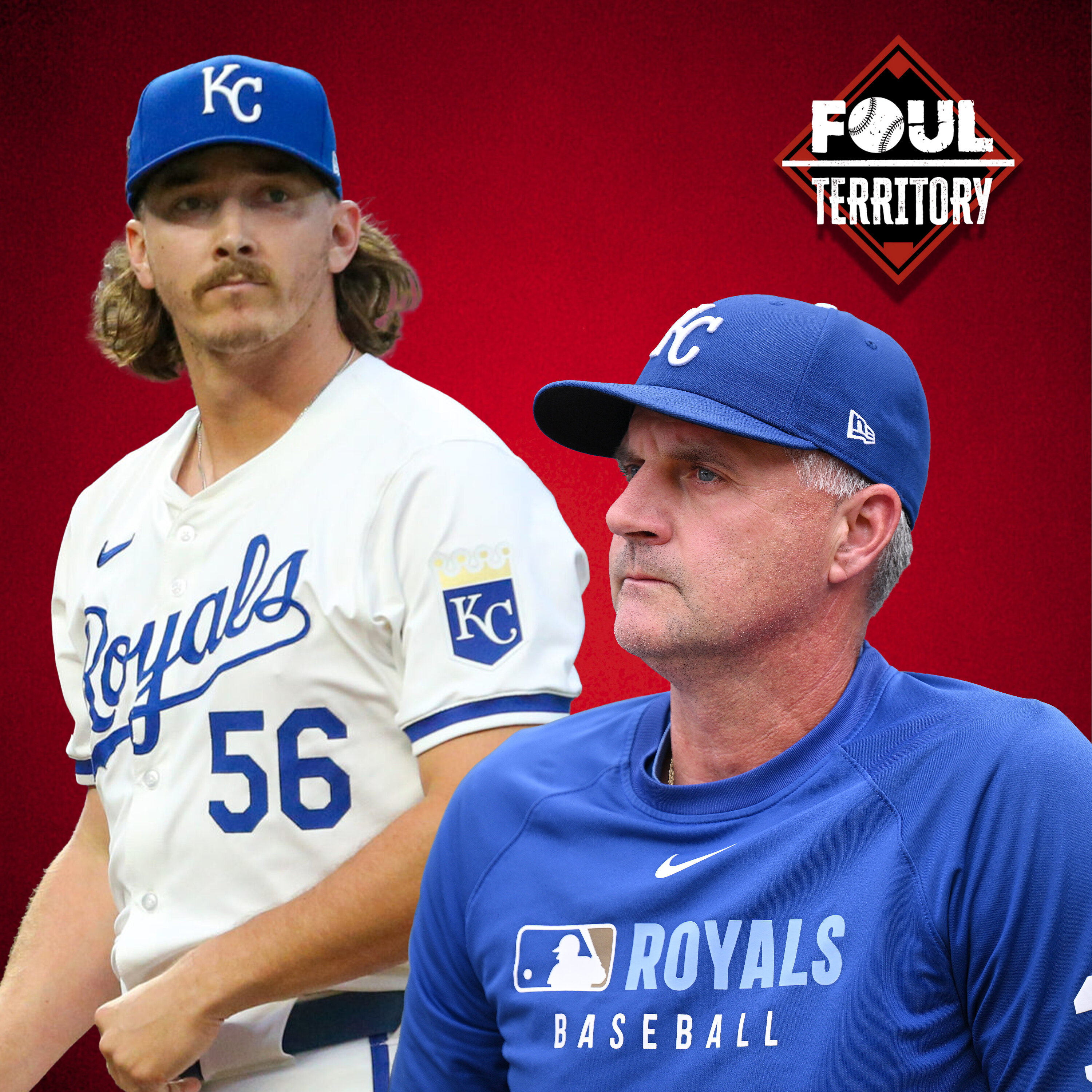
New Cubs pitcher Hunter Harvey + Royals manager Matt Quatraro
After signing an extension earlier this offseason, Royals manager Matt Quatraro joins FT to tell us how the deal went down and how he celebrated it with his fam.
Q also hit reviews his club's offseason additions and chimes in with ABS challenge strategies lurking.
(17:49) The Cubs recently added Hunter Harvey to their bullpen. Harvey hopped on FT with real talk about the strong interest he received from teams and how he is going to stay healthy.
Hosts: Todd Frazier, Erik Kratz, Scott Braun
Catch more VIP MLB interviews on FT every weekday LIVE on YouTube
See omnystudio.com/listener for privacy information.
Available Results
Generated results are saved to the knowledge database for reuse and search.
Extract Knowledge
Pick what you want extracted first. Model, scope, and chapter options appear after a template is selected.
Transcript
00:00:05
Speaker 1: Dataway.

00:00:07
Speaker 2: Matt Quatraro is the manager of the Kansas City Royals back on foul Territory and Matt, it's great to talk to you. Happy offseason to you for a little bit more time, I'll say now future longtime manager of the Kansas City Royals after your extension, congratulations on that, and of course we want to start there. Tell us how it all went down and how excited you are to lead the next great Royals teams.

00:00:29
Speaker 3: Yeah, I appreciate it. Thanks for having me first of all, you know, and happy new year to everybody. But yeah, I mean, I don't know if I could be more excited, you know. I mean, you get you get an opportunity like this to to manage the Royals, and you know, when you when it's your first job, you're not exactly sure that's going to go. And our first year went pretty badly, I would say, And but you know, just the relationships especially, you know that I've been able to build with JJ and Scott Sharp in the front office and obviously with the players, and it's just a great place to be. I love living here. My family, we moved here, we've enjoyed every minute of it. And uh, I feel very fortunate for the opportunity to get to stay for a few more years.

00:01:10
Speaker 4: Everybody loves Kansas City. There's just no Overland Park. Wherever you live, the whole area is just it's great. Even though you're gonna get a new stadium soon, but we won't talk about that. You are so like even keel. You're You've always been a very even keel person, even when you know you were you were the raise when I was over there, very even keel. When you get this extension, and obviously it's not just like you pick up the phone and they go, hey, we're giving you an extension, you go, whoa. But when it finally gets pen to paper, when it finally happens, how do you celebrate? What is your reaction? Who is more excited or who is the most excited because you got to I know I've seen you laugh, so that's cool. Like, but you're very stoic and just you know, everything's fine. We lost fifty we won fifty games, or we won ninety games in the same queue. What how did you guys celebrate?

00:02:02
Speaker 3: You know, I'll be honest with you. I mean, the first thing that goes through my mind is my parents. You know, obviously my wife and I are going through this process talking with JJ and stuff. But you know, my parents are are gone now. But when I think about just all the you know, like every like all of us, right, our parents bring us to these to the to the field all the time, and they dedicate all these hours. And you know, I always had a dream of making it as a player, which I didn't do, but you know, to hear my dad's voice and about you know, when you when you get there, when you get there, and you know, it was never a doubt for him. I mean he thought it would be as a player, so he was a bad scout, but just the opportunity to get to the big leagues as a coach and now to manage I just think about them and obviously my family. I mean, so what did we do to celebrate.

00:02:50
Speaker 2: We did.

00:02:50
Speaker 3: We high five. My kids were excited. They they've told me prior to this, you know, they've they've said, hey, Dad, we don't want to move again, you know, because they moved three times in three years or four years, whatever it was. And I said, well, I mean some of that's out of our control, but you know, they love it here, and so We were all excited and we talked to them about it. They're a little young to understand all of it, but I mean, you know, asking them if they wanted me to keep doing this and all those kinds of things and just making them part of the process. But my wife and I are really excited about it. You know, we celebrated, we went out to dinner. We tied it in with her birthday, so we went out to dinner and we had a good time.

00:03:28
Speaker 5: Let me ask you this. I mean, at a lot of coaches managers when they first come up, they have everything in their mind what they really want to do, and there's certain philosophies. Is there something that you really rely on on the philosophy wise coming into spring training or is it kind of the same message every year? Is it the same? You know, we're a World Series team, this and that. How do you strive to get these guys better? And what are what are some philosophies that you have as a manager that you know not many people know about you, about the whole situation of being a manager.

00:03:58
Speaker 3: I don't know if there's anything that different than the other managers that you know, and I think you know, I've learned from some good managers. I was around Joe Madden and Tito and Cash and those guys a lot, and I've taken a lot from them. And but beyond anything else, it's all about you guys as the players, right. I mean, I don't have this job, I don't have this opportunity. I can't coach any baseball, regardless of the level, without the players. So the thing I try to do better every year is learn the learn about the players more on a deeper level and and encourage them to learn about each other as teammates, because I really believe in that. I believe that the more you care about the people that are around you, the more you're willing to go to battle with them.

00:04:39
Speaker 1: And I think those are the things.

00:04:41
Speaker 3: That we're trying to improve on here because I think those are things that help us win on the margins. So no, I don't have some philosophy that if we, you know, achieve this many doubles or this many homers, whatever, because you see game teams every year that they win different ways, and I think that's our goal is to win whatever it takes every night.

00:05:02
Speaker 4: All right, So the best to get the most out of players, how can we give vinp to think April is July because we just had vinnip on And he goes, if I can figure out this whole April thing, I think I could do pretty well, and he also, I'm gonna, I'm gonna. I'm gonna couple that with he said he's coming, You're coming to see him in Nashville. Is that because you want to go to Nashville because Nashville's fun? Or is that because you want to lift weights with vinnip and hit with Vinip?

00:05:31
Speaker 3: Well, I'm a little smarter than that, Cratzy. I challenge him to a race. That's the one thing I'm not lifting, not swinging, none of the things that I can't do. So no, I that's one of the ways that we're talking about, like trying to get to know players better. And I'm you know, I've been around Vinnie a few years now, but it's not just me, it's our our whole staff tries to get out and see a lot of guys. You know, we don't, by any means get to everybody, but I think that's that's one of the ways they get to know us better, we get to know them better. We can talk about things when it's not the heat of the moment and you know, I'm giving you a day off today and everybody's mad and you got reason with what's going on. But when things are, the pressures not on as much and you can just get to talk about stuff that's baseball or life, and I think that's what's important.

00:06:19
Speaker 4: All right, Well, you said it yourself, you're not going to visit Arikrats in the offseason. How do you deal with the fact that you're not going to get to everybody? How do you deal with those hurt feelings when all of your players are watching and you see that you're going to visit Vinnie p. But you're not going to see you know, you're not going down to see mikel Garcia who just got some extra cash. Like, how do you deal with that? Because I love what you're doing. I think the connection part is what you dominate with and that's the best way to be the best manager, mess man, best you know brother out there on the field.

00:06:56
Speaker 3: Well, I mean, I think some of it is logistics, right Mike Kel. I don't think any of us are going down to Venezuela right now to check things out. But you know, we also talk to the guys like, hey, do you do you think it's important for us to come see you? Like, especially on the pitching side, some of the guys are so into their routines, you know, Brian Sweeney and those guys. They talk to all of them like, I don't know. I think of a like a Michael Waka, like he's been doing this for fourteen years or however long. He's got his routine and we know we're going to see him, and you know he doesn't It's not something that moves the needle for him as much, so to speak. But so we're somewhat calculated in it. But also there's plenty of guys that aren't our everyday guys that we're going to see.

00:07:42
Speaker 4: Talk about Mikeel talk about Michael Garcia. I brought him up there and he got an extension. Is this the only way that America was ever going to see how good MIKEL Garcia was by the fact that he got an extension? And then people start looking at his stats and go, I mean, Baseball Show, we saw it. I We've seen it for a little while. But is this really the only way they would have seen it? And is there more.

00:08:07
Speaker 1: Well?

00:08:07
Speaker 3: I hope it's not the only way, because I mean the playoffs. A couple of years ago, he showed out pretty well on a big stage, you know, playing the Yankees, So hopefully people were were paying attention, and hopefully we get to get more opportunities like that. But I don't think that's the only way, and I don't and I do think there's more. I mean, I think that's the beauty and locking a guy up at the beginning of his career, because you do think there's more. If if we thought he had hit his ceiling, I'm not so sure that would be the kind of guy that you're that you're trying to tie up. I think I think he's you know, he's I think two years now, playing a new position. Gold Glove winner, you know, he saw the jumping offense last year, and I think that goes with the physicality that he's dedicated himself in the in the weight room, and like a lot of guys, you grow into your power, but also growing into learning how to be a big leaguer and take lumps and come back the next day and be the same guy. And we're seeing that right in front of our eyes, and it's it's a lot of fun. So I think I think we've kind of scratched the surface, but I think he's there's a lot more there.

00:09:13
Speaker 5: Another pickup you had Matt Strom left hand or with the Phillies, Can you talk a little bit about why he's a good fit for your organization and what you guys thought and saw there as his career most forward.

00:09:25
Speaker 3: Yeah, I mean he's an original draft from the Royals, so that they knew him well here. Obviously we've seen what he's done the last few years in Philly. You know, you got to have a deep bullpen. You got to have guys that he's left handed, but he's gonna have to face a lot of tough right he's we know how that goes. Right, He's gonna come in games in high leverage, whether that's the sixth, seventh, eighth, wherever it is, and we got to we got to be able to get the key hitters in the middle of the lineup out and we think he can do that. You know, he's a guy that we have a good culture in our bullpen and he's a guy that from everything we know about him that he's going to fit right in there and be a key piece for us.

00:10:01
Speaker 5: I want to go back to the management part a little bit. I love, I just love you know, the game within the game. What do you as a manager, what do you think is one of the hardest things to manage? You know, during a game, Like what is the hardest process? You know, you're going through the situations in the game. You might have a clear position when you will use this guy here, Uh, we got this guy at the bat in case this goes, this happens, or they bring this guy in. What do you think is the hardest thing as a manager to face, you know, when you're within the game.

00:10:31
Speaker 3: For me, it's it's no question, it's taking the starter out and when to do it or when to give him that extra hitter, you know, especially with the veteran guys we have, like the Wakas and Lugos and Bovich and those guys, and Cole Reagan's a little different, little different animal. But like to me, it's when when when you go to the bullpen. That's the toughest thing every night because you can you know, they're generally, especially the guys I'm talking about their strike throwers, so their pitch counts aren't generally really high at those key leverage moments, and if they do get through it, they might go two more innings. And if they don't, then you know, it blows up on you. And so you think about every there's so many factors as you're saying the game within the game, you know who's rested, who's thrown two out of three, you know who we playing tomorrow, and what's their lineup look like, and all those kinds of things, And so just trying to balance that one decision is generally the hardest thing for me every night.

00:11:25
Speaker 1: Well, you worked with Cash.

00:11:26
Speaker 4: You work with Kevin Cash, so we can totally see you didn't agree with him by how you handle your bullpen. So I'll make sure cashy Cash's never come on the show. So he's not a big show guy, I guess, not like you. But anyway we can tell how you use your bullpen. You didn't quite agree with the way that Cash used Blake Snow in the World Series.

00:11:47
Speaker 3: I was wondering where you were going. I was wondering where you were going with like decision making there. All right, all right, I see where you're going.

00:11:54
Speaker 2: As he's been on the show. He's been on the showy, Yeah, everybody's been on the show. It's for years and three guests.

00:12:01
Speaker 4: That I haven't. I wasn't on. I wasn't on when he was on.

00:12:03
Speaker 3: So that's there. He was ducking you.

00:12:07
Speaker 4: That's probably what it was, all right. Last last one from me, the ABS Challenge system. How are you going to or how have you guys as coaches talked about deploying it throughout your lineup or even your pictures. I'm just gonna say, I prefer no pictures challenge anything, but or even with or even with Salvey behind the dish, or if you have to bring up a young rookie catcher behind the dish who may have more experience with the ABS system than like, how are you guys or what conversations have you guys had about it?

00:12:40
Speaker 3: A lot, you know, and they're going to be ongoing. I mean, we're going to rely a lot on the experiences of the guys that have been in Triple A the last few years, because you know, we saw it briefly in spring training last year, and we get to look at the the iPad, you know, between innings and all that kind of stuff, and we generally know, you know, speaking to Salvey that he's really aware of what the strike zone is, so we're going to trust him. But to your point, yeah, I think it'll be tough to really rely on the pitchers to you know, there'll be a couple guys that you might feel good about. But we're going to do a lot of talking with the R and D department the leverage and understanding when to use it. And I mean, I think it's one of those things there that we're not going to know who's good at it until we really get into it. So we're going to try to simulate as many things as we can in spring training on the backfields that he looks at it as we can so guys can get comfortable with it. I mean I remember last spring the big league guys like Salvey in particular, when he was hitting, he was very like sheepish about even trying it, you know, like, well should I really do I want to make the umpire mad or you know, like nobody knew what to do. But now that it's here to stay, we have to get good at it because there's going to be some advantage to be had there and understanding the right time of game to use it. So yeah, great questions we don't know exactly how it's gone unfold, but we're spending quite a bit of time trying to figure it out.

00:14:00
Speaker 2: Are you gonna be mad if there's someone low in the lineup that uses their last one in a game and then an inning or two later, Bobby's up and you're like, he just got squeezed.

00:14:12
Speaker 1: This is not well.

00:14:12
Speaker 3: If that guy low in the lineup gets Bobby up one more time by winning that challenge, I think I'll be all right with it.

00:14:19
Speaker 2: Right, you can do it right. I know you're gonna say you can do it, but you better be right.

00:14:24
Speaker 1: Yeah.

00:14:24
Speaker 3: Well, I mean that's it's interesting. I mean, you guys that have stood in the box and the big lees, you know, I mean, you just know it's just a matter of whether it's gonna click that you know that one scene hits that one corner and it's it's a fine line. I mean, that's why it's so hard to umpire. I mean, those pitches are are so close all the time with that nasty movement. So I wish I had a great answer of like we're gonna do this, but I don't have that answer.

00:14:52
Speaker 4: You still getting thrown out this year. I mean, they have taken everything away from you to have a chance to get thrown out because you can't argue balls of strang ikes. You can't argue you know, replay is there? So is it going to be a foul to what? How are you going to get thrown out this year? Besides the.

00:15:09
Speaker 3: Somebody brought it to my attention. I'm not exactly sure how many I have, but of the injections I have, like eighty percent of them are on the blocking the base, the obstruction calls, on the slide and and I guess I just it's it just flips my switch. Man, I get out there. I know I'm going to be gone. But it's like you know, when you see Bobby or Tolbert or somebody sliding into second. That's what gets me going.

00:15:38
Speaker 2: Hey, I wanted to ask you about the off season. So what do you think held you guys back last year? And do you feel like it's been accomplished so far with the additions?

00:15:50
Speaker 3: Well, I mean, I think there are a couple of things. Last year, you know, we got bit by the starting pitching injury bug, and then that even trickled down to the guys that we were expecting to be the guys to re place the guys that got injured, so that that was tough the offensive side, you know, I think we have addressed some of it. I mean, you get you get a guy like Collins that is an on base guy, uh, a switch hitter. We get you know, a healthy version of of Jonathan India, I think is going to be a big boost for us. You get a Laine Thomas who can help spell Izzy in center field at times and both and play other play both corners above average and and provide some thump in the lineup as well. So I think those additions in the outfield and plus you know, we're looking forward to full seasons of of Carter Jensen and and cag Leo and and those guys you know, in healthy seasons too from guys you know like Michael Massey. We're hopeful that he's he's back and and those guys can can really supplement what's going on with the middle of the order.

00:16:53
Speaker 4: All right, again, my third to fourth last question, that's case barbicue.

00:17:00
Speaker 3: You man, it's I gotta go with Q thirty nine. I've really started to like that one.

00:17:07
Speaker 1: Boom there you go, and.

00:17:08
Speaker 4: For you free, free for you now for the rest of the year. Yeah, and a commercials Q Q is here, like yeah, like it fits.

00:17:18
Speaker 3: I should have gone with that jersey number when I came.

00:17:20
Speaker 2: On thirty nine Q thirty nine.

00:17:25
Speaker 1: That's right. Yeah, Q loves Q and Q.

00:17:28
Speaker 2: That is really the last question there from Kratz, and we did give him some leeway since he did play for Casey, so the alum gets a little bit of a pass, right.

00:17:36
Speaker 4: All right, I was here, I didn't play. I was there, I.

00:17:39
Speaker 2: Didn't play either way. Thank you so much for joining us, Matt, really appreciate the time. Congrats on the extension, and we will see you in spring training.

00:17:48
Speaker 3: Thank you, guys.

00:17:49
Speaker 2: Hunter Harvey joining us right now, fresh off signing a contract with the Chicago Cubs, part of a bullpen that's actually really been rebuilt with a number of signings this offseason. Hunter, great to have you on the show. Thanks for the time, Man, congrats on the deal. Tell us how it went down.

00:18:03
Speaker 1: Thank you. I appreciate you having me.

00:18:05
Speaker 6: It was it was definitely a different process for me used to just doing the arbitration stuff and all that, so having all the teams reach out it was definitely different, but it was fun, It was exciting.

00:18:16
Speaker 4: Well, you said all the teams, I love to hear that we.

00:18:20
Speaker 1: Had a couple, not all, we had a few. We had a couple of we had a couple.

00:18:24
Speaker 4: So was it so was it like Todd and Todd and high school? What problem when all the girls were asking him out?

00:18:29
Speaker 3: Or was it like.

00:18:32
Speaker 4: Okay, okay, so he didn't have anybody asking him out?

00:18:37
Speaker 2: So hey, what did the teams tell you? Hunter? Sorry, real quick, crats, what did what did some of the teams tell you? Just to like kind of generalize, it is cool, like you said, to get calls of teams that are interested in working with you versus just talking to one team and going through arbitration, which is kind of the opposite of that where you're kind of battling over your price. So like, what what kind of things did you hear? And is it cool to hear the complements?

00:19:01
Speaker 6: Yeah, I mean I was super surprised. I mean after last year, I mean I threw ten innings, so I was not expecting as much interest as I had, So that always was fun. But yeah, you know, just a lot of teams showed interest and it just kind of, you know, just built the confidence a little bit knowing that you know, people still wanted you after after not playing, so it was fun.

00:19:25
Speaker 4: And how does that how does that process work for you in the sense of U and the season, You're like, dang, I could have I could have had a couldn't have had a not a worse, but like, I couldn't have had a couldn't have played less in my platform year to become a free agent than I did this year. At what point after the World Series ended that you were like, wait a minute, Okay, okay, they do think I'm good.

00:19:50
Speaker 1: Well, it was I don't know when exactly, maybe later November.

00:19:56
Speaker 6: My agent told me he'd had, you know, quite a few teams reach out, and I was like, oh, hey, I'm surprised, because, you know, once again, once it ended, I was like, well, we're going to to just you know, get what we can get here and try to come back this year and be healthy. And then obviously, you know, we had a lot of interest shown. I mean, I was completely surprised, to be honestly, I didn't think we're gonna have that much. But uh, yeah, it was probably late in November my agent started saying they had a lot of calls so it was, and then after the winter meetings it really started heating up.

00:20:26
Speaker 5: Let me ask you this. You were throwing ninety six in twenty twenty two, and then eventually you're hitting ninety eight the year after. We see these stories all the time where guys all of a sudden developed faster fastballs and velocity, and I'm just curious, is like, what were the steps to make that faster? Was there anything you did or just you going out there and all of a sudden, I'm throwing ninety eight. Now, watch out, average watch.

00:20:50
Speaker 6: I used to start and I didn't throw as hard as a starter. I remember well the first time I threw hard, I was in double A and a guy named Zach muckinhearn. He told me, because I was trying to figure ot what to do down there, I've never been in the bullpen, he said, you grab that little white ball and he said, you throw it as hard as you can. And I said, all right, well, I can give that a whirl and see what happens. And I eventually tried that and I just all of a sudden started throwing hard. I said, I had this the whole time as a starter, and I'm out here throwing ninety two.

00:21:18
Speaker 1: I said, this is crazy.

00:21:20
Speaker 6: So yeah, it was just I didn't do anything different. I just tried to throw hard and threw harder, So it was kind of crazy.

00:21:27
Speaker 2: Are you into pitch metrics? And I mean, hey, you should be into it even if you're not paying too close of attention to it, because it's part of why you get a lot of phone calls like this. I mean, it's no secret. We also could just talk in normal terms. You've got stuff, right, You've got big stuff.

00:21:41
Speaker 1: You know that.

00:21:42
Speaker 2: I mean, you were a top pick while back. So how much does that come up in a conversation when you're talking to teams during free agency or even just now right like with KC, Hey, we love what you have. Of course you got to work on making sure that you're on the field to be able to do it. But how much does that come up? Because the modern stats really help your case, like we look and go, Okay, a full season of Hunter Harvey in a bullpen could mean basically a high leverage reliever closer type.

00:22:09
Speaker 1: Yeah, we I don't.

00:22:10
Speaker 6: I don't think many of the meetings I had we talked about stuff as much as I think. Obviously the battle is, you know, keep me on the field. So I think everybody it's, you know, trying to give me ways to keep me healthy. And you know, the Cubs kind of stood out for me when I had my meeting with them, because I wanna be honest, I never I didn't think I was ever gonna end up in Chicago. I'm not big on living in the city, and they kind of won me over, so it was nice.

00:22:37
Speaker 4: How are they going to keep you on the field. I want to hear this stuff because that's that's what we just talked about it earlier.

00:22:44
Speaker 1: Hey, I don't know yet.

00:22:45
Speaker 6: I know I've been talking a lot with Tyler's Ombro and he's, uh, I mean, he's a really good mind. I mean he's He's already thrown a lot of good stuff at me just from a pregame routine.

00:22:56
Speaker 1: Any all my routine.

00:22:57
Speaker 6: He wants to add some stuff, and then I told him, anything you got, hey, I'll give it a whirl at least. I mean, the worst case is we don't like it, so I mean, we'll try whatever we can do to stay healthy. So we'll see. I'm not sure what all they got they got lined up for me, but I'm excited.

00:23:15
Speaker 4: That was gonna be my next question, how far will you go to stay healthy? Because honestly, all that stuff, all that stuff, if you believe it, it will work. If you don't, you know, people were like, oh, you know, I played with a guy Chris bout Check. He would ice his arm before the game and he was our closer and by the ninth inning he was like, my arm felt great, he said, So I iced my arm before every game. I'm like, dude, that's crazy. Obviously I'm not You're not gonna do anything like that. But do you believe this stuff that Zambro was telling you? Because if you do, to me, I think that's where you take the next step and you're out there for sixty appearances. Yeah.

00:23:54
Speaker 1: Hey, I told him.

00:23:56
Speaker 6: He actually came up and watched me throw a bullpen yesterday and I told him, I said, after a meeting with you, I said, I. I said, y'all jump well up my list. I said, I wanted to work with you. I wanted to work with everybody y'all have in Chicago because I just felt like it was gonna be a really good opportunity for me to just maximize everything and stay healthy. So I mean just I don't know, you know, maybe it's just a way he said things. I don't know, but he he won me over pretty quick.

00:24:22
Speaker 4: All right, talk about living in the city, because honestly, nobody's everybody can listen on the This is podcast and video, but for everybody's own podcasts. We got a real no real tree. We gotta we got a hunting hat, we got some catal on like there, the accent, they can hear you're not from Chicago. I'm just I'm not going to go from there. Everyone else can make their own judgments based on you know, everything. But what is that? How are you going to navigate that? Because you played you played in Kansas City, correct, Baltimore?

00:24:54
Speaker 1: Yep, Yeah, well both Baltimore and Casey.

00:24:57
Speaker 6: I was able to get outside of the city a little bit, so it's not a lot of people, but it's a little bit different.

00:25:04
Speaker 1: Obviously in d C.

00:25:06
Speaker 6: We didn't get out of We stayed outside the stadium, so we we just had to grind through it for a couple of years.

00:25:12
Speaker 1: But it's the same thing here, you know, it's part of it. It's part of the job. You gotta just gotta just gotta.

00:25:17
Speaker 6: Grind through living around all them big buildings and all the people.

00:25:21
Speaker 1: So we'll make it work. It'll be fun.

00:25:23
Speaker 6: So I've heard nothing but good things about playing for the Cubs, So I'm I'm pretty excited, to be honest with you.

00:25:29
Speaker 4: But like, but there's there's always a place. I mean, you know in d C. I I used to live in Virginia. You get outside to northern Virginia a little bit, you can get into some hunting, you can you know, you could have called in Baltimore. You could have called Josh Hater up. He's got some landing in Maryland. It's got some of the biggest, biggest buck you'll ever see stricken outdoors. But like, so in Chicago, what does that look like for you? Do you say I don't want an apartment near the field, Like, I'm fine dry thirty minutes in if I can live in a place that has a yard. What does that look like for you as a player?

00:26:07
Speaker 6: I'm fine driving in now my wife and the two kids. I don't know if she wants to drive in every day, So more likely we're gonna end up being right beside the stadium, just like we were in DC. So she likes men in the country as well, but she ain't too big on traffic, so we're gonna stay close where she can get to the field easy.

00:26:26
Speaker 2: Probably they have a ton of nice apartments, like walking distance to Wrigley and if you're gonna be there for a season, and then of course you'll hit free agency again after that. That's what I recommend, right That DC actually built that up a ton. I mean I remember going there ten fifteen years ago and there was like nothing, and now I mean there's probably twenty apartment buildings all around that area, and you see most of the players just walking to the park. I mean, that's the dream for during the season, because you maximize the time at home.

00:26:53
Speaker 1: Right. Yeah, it made it real easy there, especially.

00:26:56
Speaker 6: I think our airport in DC was like an hour away, so if we were coming back from the West Coast, we're getting in at freaking four and five in the morning. Like you, I don't really want to drive anywhere. It's when I walked two minutes and I was in bed, so that made it easy.

00:27:10
Speaker 2: I like it. Hey, can you give us more of a glimpse of your story. I mean, you know, we got a little time, but I think it's important. There's so many young pitchers that listen to our show. We got a lot of college kids and even before that, who will listen and say, Okay, Hunter Harvey, good story. We have a lot of the guys on who will say, hey, I came out of nowhere. You're twenty thirteen first round pick. But it's not like everything came easy for you. So can you kind of describe some of the highs and lows of what's gotten you to this point.

00:27:40
Speaker 6: Yeah, it's been a it's been a it's been a journey. That's a that's a fact. Obviously, coming up with Baltimore, I had a lot of injuries there. It felt like everything I did I heard something. So that was a that was a grind. The crazy thing is I think it was I popped my shoulder out of place in twenty eighteen. I just in the dugout line driving there, I jumped out of the way, popped my shoulder out. Pretty much ended my season. And then I remember telling my dad that Austin I was like, I think, I'm I think I'm just gonna be done. Like I don't even want to I'm.

00:28:11
Speaker 1: Tired of it, you know, I don't I don't really want to do this anymore.

00:28:13
Speaker 6: I'm hurt every two months, like I think I'm just done. And he told me that Offting's like, hey, just give it, you know, give it another year or two, just see what happens. He's like, he's like, we're close. He's like, just keep trying. I was like, all right, I'll give it a whirl. And then obviously the next year I ended up getting moved to the bullpen. I got moved to the bullpen, and it, you know, just changed my career. I went from my velo jumps. I was in the big leagues a month and a half after going to the bullpen, like it just and obviously just from there, I hadn't really looked back.

00:28:45
Speaker 1: I've battled injury still, but.

00:28:47
Speaker 6: I've been able when I'm healthy to pitch decent enough to stay in the big leagues. And that's just kind of it's been a that's probably been the highlight is you know, just going to the bullpen just completely turned my career around for me.

00:29:00
Speaker 5: Really, let me ask you this, all of a sudden, your dad doesn't tell you that, and you're like, boom, I'm done with baseball. What would be your next step? I mean, do you have anything in mind or was.

00:29:12
Speaker 1: It just I got no clue.

00:29:16
Speaker 6: We would have we would have figured something out. I'd have started a land cleaning business. We'd have done something here in a figured out. We've been working outside for sure, But uh, I got no.

00:29:26
Speaker 1: I don't know about truck driving. Just point out.

00:29:32
Speaker 5: I know, but he could stop wherever he once and then you know that looks like right there, you know.

00:29:38
Speaker 1: Yeah, it worked out.

00:29:39
Speaker 6: I'm just glad he told me to try another year or two because it ended up working out real good and we didn't have to get another job.

00:29:44
Speaker 1: So it worked out.

00:29:45
Speaker 5: Give him a big hug every time you see him.

00:29:47
Speaker 1: Yeah, oh yeah, Well he doesn't let me live it down.

00:29:50
Speaker 4: So what about a playoff team? All right? You had all these teams calling the fact that the Cubs were in the playoffs last year, You saw the Royals in the playoffs in twenty four. How much does that go into it, especially since you know you were with the O's then you were the Nats, Like, how much does that go into it? Or is that something that you're kind of like, well, I'll experience it when I experience it.

00:30:20
Speaker 6: I mean that was for me one of the I mean it was pretty high up on my list and stuff I was looking for.

00:30:26
Speaker 1: Obviously, you know, I needed to be somewhere.

00:30:28
Speaker 6: It was a good opportunity, but you know, I didn't want to go somewhere where I knew for a fact I was going to get traded in you know, four months. I wanted to be somewhere that we were winning, cause, I mean we had we made the best of each season in Baltimore and inn you know, DC. We had a good group of guys, so we just you know, tried to enjoy it as much as we could.

00:30:50
Speaker 1: But obviously, when I got traded to KC and they.

00:30:52
Speaker 6: Were winning and then we got to go to the playoffs and experience it, there's nothing. There's nothing like it, Like that was a blast. And then even last year, you know, we were around five hundred, but it was just exciting all year.

00:31:04
Speaker 1: We were in the push the whole time. It was just it's fun.

00:31:06
Speaker 6: It's way more fun to go to the field knowing you got a chance to keep on going. So I mean one of the Cubs, I mean, my couple of teams I was looking at. That was one of the main things, Like I wanted to be on a good team I luckily had enough teams that reached out.

00:31:22
Speaker 1: I was able to choose between a few.

00:31:24
Speaker 6: Good ones, and I just felt like opportunity wise, just all the people there, and then obviously they're good.

00:31:30
Speaker 1: The Cubs was just an easy choice.

00:31:33
Speaker 2: Yeah, you're gonna have fun there, and they had a really fun bullpen last year and some talented guys that ended up actually going elsewhere. They got paid in free agency. But then they've put another I think it's thirty some odd million into five or so relievers this offseason. So you got some big boys joining it. You'll have some help, but they're not gonna call you every day, which also helps the costs. Right, That probably part of the combo. Hey, we invested in our bullpen, so we are not going to overuse the arm.

00:31:59
Speaker 1: Yeah, that's part of it.

00:32:01
Speaker 6: I done told him if he as long as I'm out there, you can call as much as you need to.

00:32:05
Speaker 1: I'll be ready. I like that. I like that. All right.

00:32:08
Speaker 2: Question for you, I think I have this right from your Baltimore days. Mountcastle was one of your buddies there, right, you were in his wedding. Yeah, yeah, did you see see his news today? Do you send a guy a text when I mean he settled in arbitration too, so he got himself I think, like a cool seven million bucks today.

00:32:26
Speaker 1: Yeah, yeah, yeah, I'll text him later.

00:32:28
Speaker 6: Maybe we're uh, we're that's why, you know, that's you know, another reason I decided just to stay in the National League. I only got to play him once. That's a I think it's more luck than anything. But yeah, he's he's gotten a few times so.

00:32:44
Speaker 1: And he'll let you go. Last year.

00:32:46
Speaker 6: I finally got him last year and I let how war him out about it. So yeah, the first couple of times he got me pretty good.

00:32:55
Speaker 4: That's good. That's good. Is there? Do you try to find a way to mimic the adrenaline rush You've talked about the bullpen ringing, and I'm like, I have to ask this. The adrenaline rush of that phone going.

00:33:12
Speaker 1: I'm fine until my name's called.

00:33:14
Speaker 6: Once they call my name, it's a it's like you just you turn into a whole different animal. You see, You're ready to run through the wall once it's your time. So that for me, that's when I went to the bullpen and started hearing that in the big leagues, that's probably like one of the most fun things for me is just getting caught, especially obviously late in the game, games on the line, something like that, any kind of situation where you got to stop the other team from pretty much beating you, because I mean it's the end of the game. That for me, that's the there's just nothing more fun than that.

00:33:44
Speaker 2: On our way out here, Hunter, can you give us a twenty to eighty grade on Kratz's bullpen phone noise because he loves to throw that out there?

00:33:52
Speaker 1: Hey, that's that is that's top tier right there. That's pretty good. Sure, right like, yeah, that's up there. It's pretty good.

00:34:01
Speaker 2: Best weapon exactly as a broadcaster like Kratzy is very good at mimicking things.

00:34:08
Speaker 1: Yes, yes, he's pretty solid.

00:34:09
Speaker 2: That one day we can do the South well he played for k C the Salvey do you want to say by and Salve.

00:34:14
Speaker 4: Kratz or I could have a whole conversation of Hunter Harvey talking to Salvage on Paris at the Mound and goes fla baseball luga because you know Harvey Harvey Oh is good. Hey man, Salve, I don't understand any words that you're saying ever coming out of you. Why are you even coming to the mound. Man, I'm just gonna throw the absolute snot out of the ball. My dad told me a million dollar arm one time. God, million dollars, but it's okay.

00:34:45
Speaker 1: Yeah. One funny thing about k C.

00:34:47
Speaker 6: When I first signed over there, our PitchCom was Salvey's calling the pitches in the PitchCom like his voice and yeah, and it threw me off. The first time. I had no clue. I thought I was gonna throw the long pitch. The first down was there, so it was. It was funny, but we figured out.

00:35:05
Speaker 2: It's like, you don't want to be that guy, right because you're not the only one and you just got there. But you're like, I don't know which she's saying.

00:35:13
Speaker 1: First out it come off. It came over and his in his accent, and I was like, oh man, this art. This is gonna get interesting here. But we made it through it and it was all uphill from there. Yeah, it was good. After that fastballall what.

00:35:30
Speaker 6: You're like, Yeah, yeah, we got through it. We might we might work ended up being good.

00:35:35
Speaker 1: So that's good. That's good story.

00:35:38
Speaker 2: Hunter. Thanks for joining us. Congrats on the deal. We'll see you in spring training to appreciate the time.

00:35:44
Speaker 1: Yeah, thank you. I appreciate y'all have