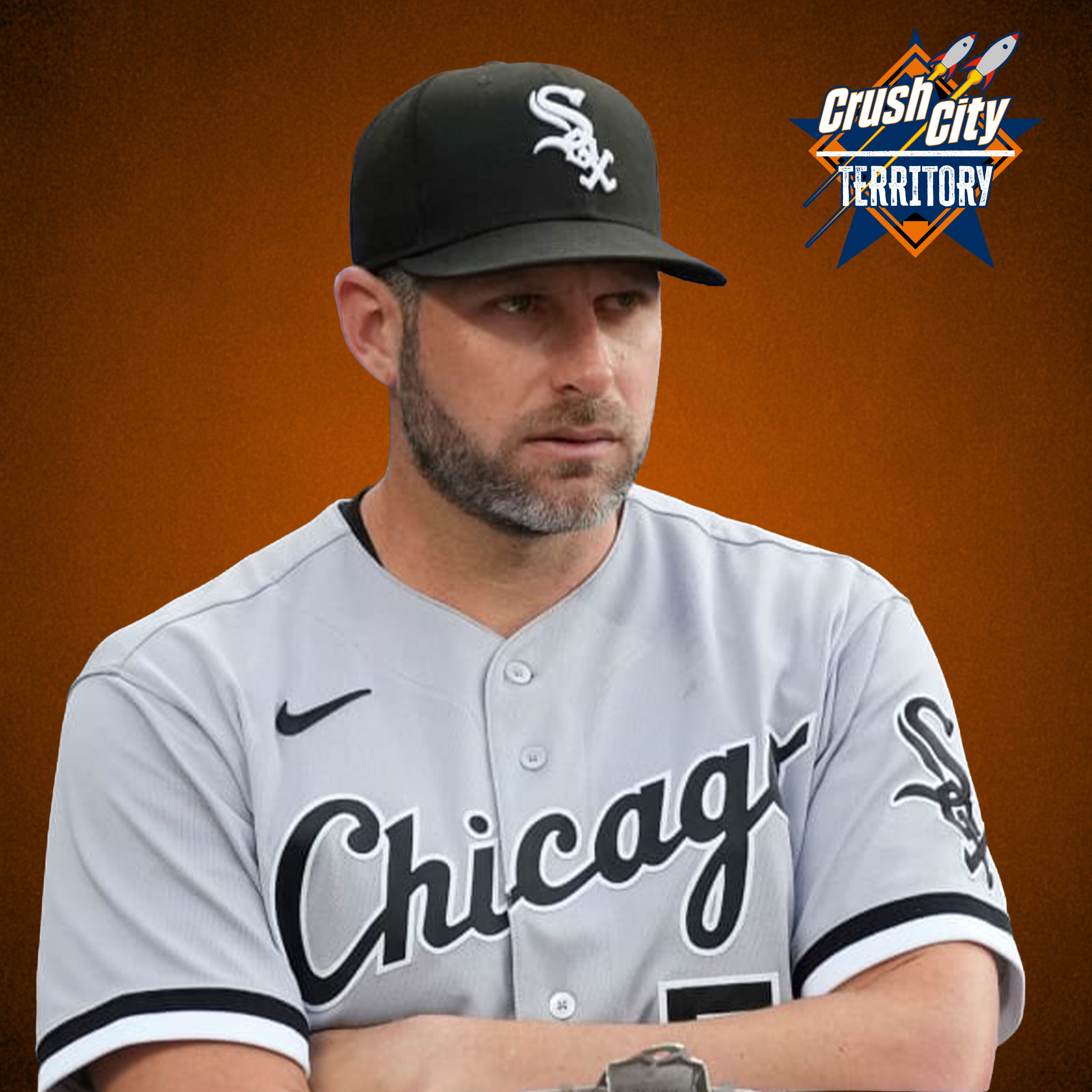
New Astros Assistant PC Ethan Katz joins Crush City Territory
New Astros assistant pitching coach Ethan Katz joins Tyler Stafford and The Athletic's Chandler Rome to discuss his new role in Houston, his initial impressions of the Astros' pitching infrastructure and how he got into coaching high school pitchers Jack Flaherty, Max Fried and Lucas Giolito.
Follow Crush City Territory for the best Astros coverage in the biz!
See omnystudio.com/listener for privacy information.
2025-12-07
22 min
Transcript
Available Results
Generated results are saved to the knowledge database for reuse and search.
No generated results are available for this episode yet.
Extract Knowledge
Pick what you want extracted first. Model, scope, and chapter options appear after a template is selected.
Generated results for public episodes are saved to the knowledge database so they can be reused and searched later.
Transcript
00:00:06
Speaker 1: What's up, everybody? Welcome into another edition of Crush City Territory. I'm chandeler Rome, joined as always by Tyler Stafford, and today a very special guest, new Astros assistant Major League pitching coach Ethan Katz. Ethan, I know you're in snowy Chicago right now, but I hope you're staying warm. How are you and thanks for being here?

00:00:25
Speaker 2: Yeah, I'm great.

00:00:26
Speaker 3: Thanks for having me. It's uh, yeah, it's kind of cold out here, but we're making most of it.

00:00:33
Speaker 1: I think a lot of people are eager to get to know you, eager to get to kind of put a face to a name. You're a name that's been in baseball for a while now. A lot of people know about you, but maybe haven't heard a ton from you, and especially Astras fans certainly want to put a face to a name. Can you just kind of give us a little bit of background of how this offseason has been for you and kind of how this opportunity with the Astros came about and what intrigued you about coming to Houston.

00:01:02
Speaker 3: Yeah, I mean the you know, the off season was kind of care I talked to a bunch of teams and you know, Joe reached out one night I was cooking dinner, reached back out and he wanted to give me out to Houston and got a chance to meet everybody, which was great.

00:01:19
Speaker 2: It was a really good experience for.

00:01:21
Speaker 3: Me when trying to make it a really you know, tough decision for me in my future, but getting to meet everybody from Joe, Josh, Dana, like, it was great and I really got to see kind of like, you know, the inner workings upstairs and how everybody communicates well along with you know, interviewing with you know, eight various panels. So it was really good from my standpoint just to kind of get to see the organization, understand the organization. It's much better than doing a zoom and you know, obviously that's part of the process doing that, but like when you get to meet somebody face to face and talk to it, it really was like, this is a great place. And it really wasn't on my my Ingo card because I know the astros of Ventorisi done great job developing pitchers and you know, the people within, They've always kind of promoted from within, So it wasn't something that I really thought that that was an option or opportunity really and then when when they called, it was like, this is this could be a great opportunity for me, and you know, obviously this is where I'm at.

00:02:23
Speaker 2: So I'm very excited.

00:02:24
Speaker 4: I know, with any sort of coaching or you know, things like that, there's a line of industry secrets that we we don't want to let out. But do you do you have a sense of what made you so valuable to Joe, Like what what is it about you or your coaching style that you think you bring to the Astros that they were looking for?

00:02:49
Speaker 3: Well, I know, you know one thing that you know, a lot of teams do. They do a lot of homework, right, like, so they talked to various players, front offices, coaches, So I think they got to learn a lot about me before I even walked into the building and got to talk to them. So I think they got you know, they had to hear about how I connect really well with players, like all the different aspects I've been able to really help players while connecting with them. So I think that really was probably something that was very intriguing. That's something that's been you know, I'm very blessed that a lot of people have talked well about me in.

00:03:23
Speaker 2: This game, and players have vowed for me.

00:03:26
Speaker 3: So I think that was like a starting point, right, So, like they kind of had an idea about what I was about how I go about my business every day. So I think that that really helped me getting the opportunity to talk to the Astros.

00:03:40
Speaker 1: You have a lengthy list of players that you have coach and the players that have really really succeeded under your watch, and I want to get to those in a minute. But something you did say is that you talk to a number of teams this offseason. I'm sure you were very highly sought after because of the work you did in Chicago. I'm curious what made the Astros the team that of you're talking all these teams. What made the Astros the place that you thought? You know, all right, these other teams are great and all, but I want to be.

00:04:11
Speaker 3: Here, well, I mean playing against them in twenty one in the playoffs. I mean I can't be in to join them, right, So it's like it was. It was something that has always been intriguing to me. I've always like watched them, even in the minor leagues, watching kind of the innovation of the astros right, Like I remember being in low way and and there's you know, we're our guys are hitting, we have they have a shift on. We're grounding into double plays when I'm thinking it's a base hit, I'm like, what's going on here? They're just the head of the curve, right, And it just was really something that for me, it was just kind of I wanted to challenge myself a different opportunity, and it was, you know, just everything they've done, they're winning.

00:04:51
Speaker 2: You know, that's that's important to me. I want to win.

00:04:54
Speaker 3: I want to be able to see, you know, help guys along the way. But also they're they're very good pitching development program, which I thought, you know, would be exciting for me to kind of get on board and trying to help.

00:05:07
Speaker 1: I wonder what your conversations were like with Josh Miller, the lead pitch For those that are not listening, those that don't know that are listening, Josh Miller, the lead pitching coach has been is one of those guys Ethan that you mentioned has been in the Ashers organization forever and just worked his way up. He's one of those kind of internal promotion guys. That every time somebody left, Josh just kept getting going up to hierarchy. I wonder what you guys's conversations were like during this process and whether there's some commonalities in the way you guys view pitching and view pitching development.

00:05:40
Speaker 3: Yeah, I mean, I think, you know, me and him have kind of a very similar background in a sense of like he's done a lot throughout the system to kind of get to where he's at. I've done it through various different organizations to get there. But you know, we both have pretty much worn every single hat and so like. But just like, his personality was very warming when I talked to him and I was able to kind of talk about what I've done, you talked about what he did, and it was kind of like, Okay, this really gels really well because you know a lot of things where I've been and sometimes in the minor league seing it from a different view, like if the cohesiveness of the two that are three nowadays is not there, it really suffers on the field and for the players as well.

00:06:24
Speaker 2: But we really meshed really well.

00:06:25
Speaker 3: I kind of talked a lot about It was more obviously I was being interviewed, so kind of explaining.

00:06:30
Speaker 2: My process and stuff that I did. But we seem to really mesh with.

00:06:35
Speaker 3: Everything we've talked about and really looking forward to continuing our conversations and working together with this process.

00:06:44
Speaker 4: When I hear the word mesh, I think there are two possibilities. There's like, we're exactly the same, right, and so we mesh because we do things exactly the same, we think along the same line, so we just divvy up task. But there's also mesh in the sense of like, well, you do these things really well, and I do these things really well, and together we kind of create that. Do you have a sense of with y'all sort of I mean, I know it's been a week, but you know, do you have a sense of kind of which category you would say you guys fall into.

00:07:19
Speaker 3: I think it's a little early right now, because my part of my job is I need to kind of help him out right and kind of figure out what he needs and kind of not you know, they talk the world about Bilmur I'm taking over for right, and so like kind of figure out what did he do to kind of support Josh or how they work together, right, So you know, we'll have deeper conversations right now, it's just trying to like, hey, let's get you situated with the organization, let's get you your computer, let's kind of get you up and up and running. So we haven't had those conversations just yet, but like you know, obviously I want to do whatever I can to take things off his plate from my experiences, try to help him in any way possible. You know, I do have a relationship with Bennett Susa, so he got to talk to me. We talked yesterday and we were talking a little bit about everything about the Astros, and he talked about Josh and how great he is and his personality, and it's like we have it seems like a very similar personality the way he was describing it is how we go about our business. So I think from that standpoint, it should be very, very beneficial to the players.

00:08:19
Speaker 1: Was there any part of you that, as you're going through this and the ad and Joe calls you, you mentioned like you've played against this team for a very long time. You've been in the other dugout in the minor leagues and the major leagues. You have seen how they have taken pictures that maybe some other teams couldn't unlock and they have unlocked. Was there any part of you that was just curious as to like how they're doing this and maybe you wanted to to to see, like maybe see under the hood and kind of how how this all works. Was there any party that was just curious about how they keep doing this?

00:08:54
Speaker 2: Yeah, I mean I think definitely.

00:08:55
Speaker 3: Right, that's that's kind of like you want to put your put your going to a place where you feel like you could help, but also like there's an opportunity to kind of see what is different here, right because I've done it, you know, running it for the White Sox for five years, Like you know, that's you know, now you're getting to go to a different organization and kind of see what's different. Like when I went from San Francisco to the White Sox, it was a completely different situation just from you know, the infrastructure, how they communicate and stuff like that. So learning a different organization is always new, but it's also exciting too at the same time because it gives you a chance to kind of give it an opportunity to kind of grow and kind of spread your wings and try to maximize your coaching talents to help the players even more so it's something that I'm looking forward to and kind of seeing, yeah, because I mean there's been a lot of successful pitchers, There's been a lot of deep playoff runs, and you know, being a part of that, I'm excited to see what goes on to kind of help support that.

00:09:48
Speaker 4: Real quickie. So I am a former teacher and coach. So I do want to talk about high school baseball here? And did you teach it all or were you just coach?

00:10:00
Speaker 2: No? I was just coaching.

00:10:03
Speaker 4: Had they had a full time pitching coach at a high school that didn't have to teach?

00:10:07
Speaker 3: Yeah, I mean I I honestly fell into coaching by accident. I was The intentions were to continue playing, and I was playing after I got released from the Rockies, playing pin a ball one year.

00:10:19
Speaker 2: I wanted to go back again.

00:10:20
Speaker 3: But I was working out at the school because I knew the assistant pitching coach and he was just like, hey, do you mind helping some of these pitchers? And I was like, sure, no problem, Like I enjoy talking to a lot of them. I'll hang out and you know, I'm gonna go play. And so they hired me for like basically a half of a semester, I guess you could say, and then it was like, you know what, I really enjoy this, and I just walked away.

00:10:46
Speaker 2: So I didn't.

00:10:47
Speaker 3: I just I came into coaching by accident. So I was like, once I got into coaching, it was like, you know, part time job, and then I was doing like club ball, to private lessons, to kind of supplement it everything else, and then it just kind of grew after that.

00:11:03
Speaker 4: So when I was coaching, I coached for like five years. Now. Granted, Baytown, Texas is not the hotbed of talent that the greater Los Angeles area is, so I'm aware that we're on a little bit of a different playing field. But in my five years of coaching, I had one kid who went on to play D two college basketball, and that kid was so much better than everyone else in seventh grade it was laughable, Like we could tell day one of practice like this kid is special. You had three big leaguers on your high school baseball team, for those of you that don't know, even coached Max Freed, Lucas Gilito, and Jack Flaherty at the Harvard Westlake High School. Just what did that look like? As like fifteen year olds and sixteen year olds are facing off guys who not only made the big leagues but are like legitimate, staying power, big leaders. What what did that look like on a on a Friday night.

00:12:11
Speaker 2: It was you know, first of all, when I started coaching.

00:12:14
Speaker 3: Him, I had no idea, Like I loved really kid like Lucas's, but he was a mess when I messed. When I first met he was doing bullpens. He was falling down as a sophomore. I mean, he's come a long way, but there was high upside. The arm talent was through the roof. So it was like, you know, Jack was a lot more polished. He was a great strike thrower, but the villa was a tick down. But he could throw three pitches really well. We were able to add a slider, which is like, you know, was staple to get to the big leagues. And then Max was you know, a big time left He with that same curve bolly he displays today. So it was like I had no idea I knew what really good players look like then guys going to pro ball based on my time playing, I had no idea they were going to be like, you know, there's me World Series All Star appearances. Like I had no idea that that was going to be kind of like the end result. And they're still, you know, writing their book, but it's kind of you know, it's exciting. But they were, I mean, they were dominant. They were dominant. I mean it was it was, you know, pretty special. Like we actually did not we won a national championship after Lucas and Max left with just Jack because Jack was two years younger. So it was it was I and I didn't know from there that I would be coaching in Pro Bowl and all the you know, various stops I've had throughout the I just was enjoying the moment and thought I would like coaching, and you know, we developed some guys and we still have very very close relationships to this Today.

00:13:50
Speaker 4: They have national championships for high school baseball.

00:13:52
Speaker 1: Oh yeah, oh yeah.

00:13:55
Speaker 4: I'm missing out again. Yeah, So, although I did, it's the Yankees legend Brett Marshall pitch for my high school team. That's that's the only big leaguer I ever saw growing up.

00:14:09
Speaker 1: Ethan another big leaguer. You've been fortunate to be around a good bit and Dylan Cees, you know, I remember opening day. I believe it was twenty twenty three. I believe it was the I believe it was the opener when the Ashers got their twenty twenty two World Series rings. Yeah, Dylan went out there and absolutely shoved against fromber on opening day in twenty twenty three. You worked with him obviously extensively with the White Sox. It became official yesterday that he is going to be a very, very very rich man for a very long time. Seven years, two hundred and ten million dollars at the Blue Jays. How happy are you for Dylan to get that deal and to secure what you know, he's been working toward his whole life and maybe through your eyes kind of how he evolved to get to that point.

00:14:56
Speaker 3: Yeah, I mean I'm a static when they can really secure uh years and financial stability like that for lifetime generator. It's it's amazing, right, But it was, you know, it was a process that was like one of my biggest challenges when I took on the job with the White Sox. It was a very talented picture that you know, let's identify what he does, well, there's a strike zone and just try to get as many you know, strikes out of him and but then really understanding that, you know, there was a slider that was underutilized.

00:15:29
Speaker 2: I could really help him and it got better as time went on.

00:15:33
Speaker 3: You know, we made some changes with his delivery, We challenged him day to day, and to his credit, he worked extremely hard to get to where he's at today. You know, we we had a great relationship.

00:15:45
Speaker 2: We're still where.

00:15:45
Speaker 3: He called me right after it happened to tell me that, and I couldn't be more happy for him. But it was it's something he worked extremely hard. If you watch the evolution of Dylan to like where he is today, kind of watching even like where he was in the minor leagues, it's it's credit, it's a great story. It's it's it's something that this guy was like like Lucas when I met him, extremely talented, just needs some polishing, right, and you know when you have talent and you're just a coach, is just a little bit of a support system. But it was like something that we really gelled really well together, and the time was right in his career and we were able to kind of send him on his way after we traded him, and now he's up in Canada, and he's done very well from stuff.

00:16:28
Speaker 2: I'm very proud from him.

00:16:30
Speaker 4: I know the answer to this is all of the above, So I'm taking that answer away from you preemptively. So you got to you got to pick one of these. But when you're when you're evaluating a picture, when you're trying to help them, you know, improve, there are a lot of different ways to do that, whether it's watching them in person, kind of seeing them there, watching on video, looking at mechanical stuff, and then also the analytics side of things of looking at you know, spin rates and arm extension and those types of things. Of those three, which one do you feel is like closest to home to you where you feel like most comfortable helping a picture out?

00:17:09
Speaker 3: It is all I would say, it is all the above, and I know that's not the but it's something like you know, there's always like I'll give it an example, like when I got the job with the White Sox, right, like Carlos Rodin was a guy that was he wasn't in the best spot. Let's just say, like just watching where he was, the vello had declined, the mechanics had changed, and you know, so I went back and I had to watch like YouTube of him in college and kind of see where he was to make him a top pick and kind.

00:17:39
Speaker 2: Of okay, now let's try to restore.

00:17:41
Speaker 3: That, right, whether it's you know, Dylan tapping into a slider more like along with mechanics. So there's like there's different avenues where you you know, you can up usage, you can fix mechanics, you can change mechanics, like Lucas completely we changed his arm actually completely from where he was because an adjustment was needed. So there's different variations of what a player might need at the given time. So it's just like I feel comfortable with anything. It's just kind of understanding what's what's needed in the incerta mode.

00:18:12
Speaker 4: So were you involved in the the arm slot for Giulido with the kind of short arming that that we talked about it in our last episode of that has seemed to be a little bit more in vogue recently. Was that something specifically for him or is that more of a league wide thing? You know, what's the thought process behind kind of that shorter arm slot.

00:18:33
Speaker 3: Well, he had a terrible eighteen I think it was eighteen, right, eighteen, and it was like offseason came we at that time, it was you know, him, Jack and Max were all in LA so we always worked out together. But he was like, that's cool, Ethn give me everything he got.

00:18:51
Speaker 2: I don't.

00:18:51
Speaker 3: I something's got to change or I'm not going to be a big leaguer anymore. Like that, That's kind of where he was. And literally I just I handed him applyileball and I was like, I throw this ball and he was like out on my shoulder. I said, that's my point, like you're not getting in good spots. And then like literally ten minutes, there was an arm change, and it happened fast, rapidly. You know, he had a great offseason then was an All Star in nineteen and that was like, you know, his descent to who he is today. So yeah, it was it was basically a one day process and then obviously there was like maintenance throughout the whole off season to get to that point.

00:19:29
Speaker 2: But yeah, there was that, there was a change.

00:19:34
Speaker 1: I know there's a ton of people listening right now that are begging us to just go down the Astros roster and ask you your thoughts on all these pictures. I'm not going to do that to you, because, as you said, you're trying to get your laptop, you're trying to get onboarded, you're trying to.

00:19:48
Speaker 4: Take an email phishing HR training right right.

00:19:52
Speaker 1: Like, let's I want to I want to give you some time to really digest what you have here. But I do want to ask about one guy because I think he I think what he did last year certainly resonated around the league. And he's certainly a guy that maybe from the other dugout you saw evolved as his career is going on. But Hunter Brown, obviously top three al Cy Young final is finished in the top three in Cy Young voting. Just from afar, what have your impressions been of watching Hunter Brown? And how excited are you to now, you know, get your hands on him and be able to work with him day to day and be able to see what he's like in person.

00:20:26
Speaker 2: Yeah, I mean it's impressive, right like it.

00:20:30
Speaker 3: He's able to do so much with the baseball along with like plus plus stuff and kind of just watching you know, the year he had obviously not the same division, so I get to see him as much. But obviously there's a lot of highlights of him over and over again, but extremely talented. Arm you know obviously the year he had the evolution of him, it kind of does remind me a little bit of Dylan, just kind of like how he's really stepped to the scene and kind of really stepped up over the years. So it's I'm really looking forward to, you know, Like I said, I talked to Bennisuza. He gave me like a little bit of rundown of each guy and stuff like that. And you know, I from Afar like just watching him and how he's a bulldog, he's a competitor, which you that's what you.

00:21:14
Speaker 2: Want from the top dog on the mount.

00:21:16
Speaker 3: So getting looking forward to meeting him and getting to know him a little bit more.

00:21:20
Speaker 2: But like he's he's everything he wanted in a number one. It's pretty impressive.

00:21:25
Speaker 1: He will be that. He will be the Astros number one, presumed opening day starter, ace of the staff heading into twenty twenty six, a staff that Ethan Katz will help to guide through the twenty twenty sixties. And Ethan, we really appreciate you taking some time. I know I told you i'd keep you for ten or fifteen minutes. We're crossing the twenty two minute marks. I want to be a man on my word and uh and let you get on. I know you've got a busy day, maybe have some HR stuff to do. I don't know, but we appreciate this. This was great. Thank you so much for your insight and look forward to seeing you in West Palm Beach in a couple of months for spring training.

00:22:00
Speaker 3: Yeah, looking forward to it. Thanks for having me, guys, Thank you.

00:22:02
Speaker 1: Thanks Ethan M.
Chapters
No chapters available.