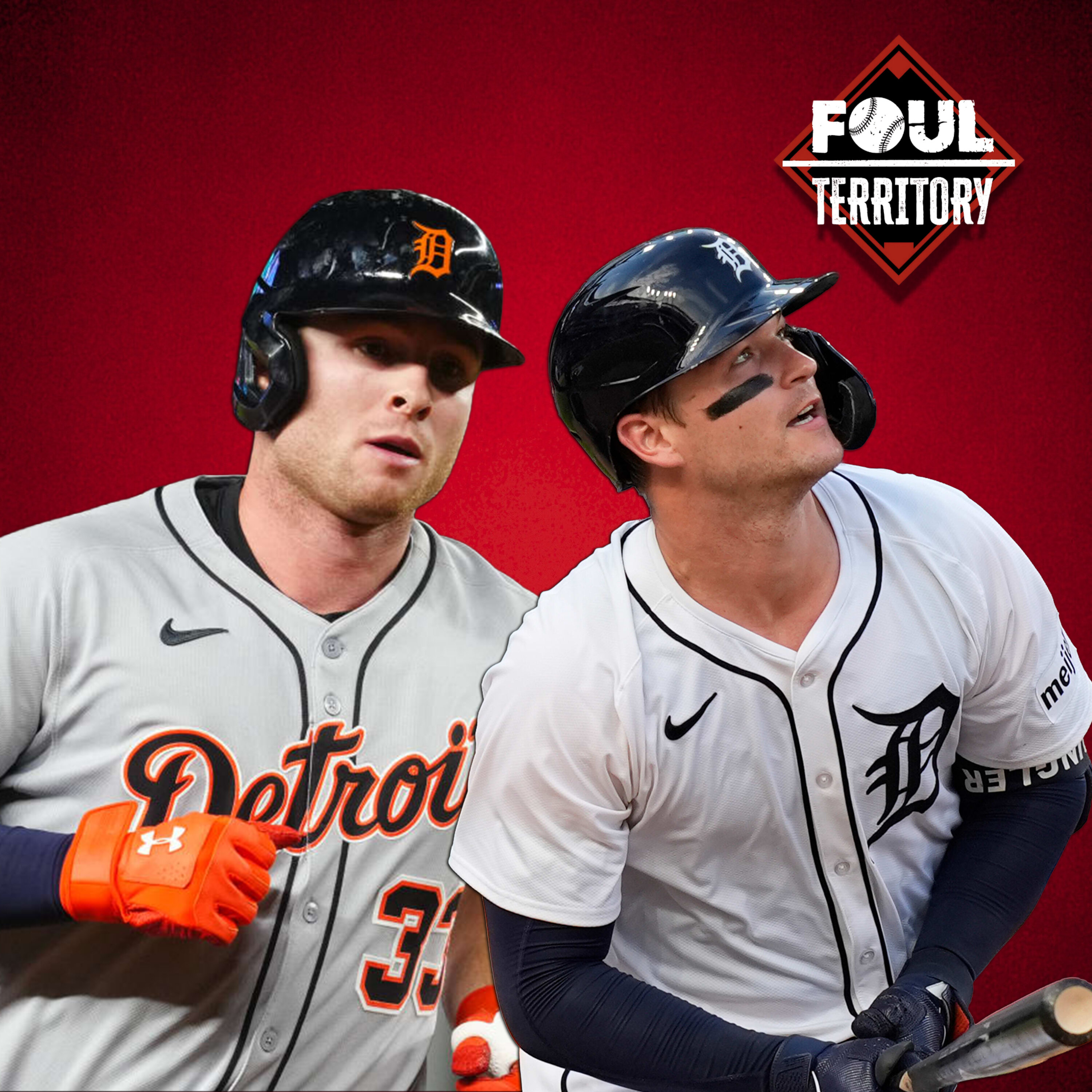
ABS Challenge System ripple effects, Tigers rollercoaster run
Tiger Territory co-host and The Athletic’s Cody Stavenhagen joined FT to break down his article on an in-depth look at the ABS challenge system. He also discussed the Tigers’ rollercoaster season and Colt Keith’s rise.
Hosts: Kevin Pillar, Erik Kratz, Scott Braun
Tiger Territory Shop has new merch! Check it out!
See omnystudio.com/listener for privacy information.
2026-04-18
19 min
Transcript
Available Results
Generated results are saved to the knowledge database for reuse and search.
No generated results are available for this episode yet.
Extract Knowledge
Pick what you want extracted first. Model, scope, and chapter options appear after a template is selected.
Generated results for public episodes are saved to the knowledge database so they can be reused and searched later.
Transcript
00:00:04
Speaker 1: Hey, it's Tiger Territory host Cody Stapenhagen joining us right now from The Athletic. But first we're going to talk about an article that hits all teams. Cody, great to have you on, and I wanted to spend some time on the homework that you did and put into a great article on what's going on with the strike zone and how the ABS system affects that. So can you lay it out and then we'll also get our guys and just turn this into more of a discussion like KP and crats to reply.

00:00:30
Speaker 2: Yeah, for sure.

00:00:32
Speaker 3: I mean everyone in baseball is obviously talking about the ABS right now, and I feel like a lot of the discussion has just gone to is this good?

00:00:39
Speaker 2: Is this bad?

00:00:40
Speaker 3: How do we feel about the challenges? How are we using the challenges? And almost overlooked is something that was kind of laid out in the impetus of MLB going to the ABS, which is that the strike zone has changed. The rule book strike zone and the ABS strike zone are two different things. Most notably, we now base the strike zone on a percentage of player's height, which has several interesting ripple effects. Number one, how our umpire's supposed to know what the bottom or top of the zone is. How do you look at someone and know what twenty seven percent of their height looks like? And to some degree, pictures are dealing with the exact same thing. They no longer have those set easy visual cues just below the shoulders or the hollow of the kneecap to know the top and bottom of the zone. Now a lot of pitchers are basing their cues more off the catcher anyway, but some are doing some homework to know in advance what zones look like on certain guys. Now with this, the top of the zone is smaller, and the walk rate has risen quite significantly. It's nine point nine percent. To some degree, MLB expected that they saw a very similar trend in triple A. But nine point nine percent now, I know it's early, I know it's April. That'd be the highest walk rate in more than seventy years, guys, And if you exclude the short and twenty twenty season, the walk rate hasn't been nine since the year two thousand, So let's say pretty shit rise and walks. There may be some more ripple effects to come as everyone continues adjusting to the abs and basically, what's a new strike zone In.

00:02:09
Speaker 4: The research, have you seen any numbers that would indicate, well, this is going to be the norm or will there be a regression back to the mean of the amount of walks with that walk rate spiking? Obviously we don't know. You're not not a fortune teller, but is there something that would indicate, Okay, well, everyone will figure it out, including the pictures, including the umpires, and we'll get back to it. Or is this the new norm?

00:02:37
Speaker 2: Yeah?

00:02:37
Speaker 3: I think to some degree it's the new normal. Will it be this extreme? Who knows. But right now, the best evidence we have is what happened in Triple A last year, a full ABS challenge system from start to finish, and the walk rate jumped, you know, more than a percentage point. So there's reason to suggest this is what happens. Triple A has experimented with different iterations of the ABS over the past few years. Walker right is stabilized a little bit as this has gone on, but it's still much higher than it was pre ABS. Some of the trends we're seeing at the MLB level right now kind of reflect what's happened in Triple A, where the overall percentage of pitches in the zone is lower. As a result of that, the swing rate from hitters is lower. I think as everyone comes to know the zone, whether that's catchers, batters, pitchers, umpires, they might there may be some adjustment, but in at least the short term, it could mean even more walks as hitters increasingly learn to lay off the high pitch, that high fastball that can be unhittable from certain pitchers. And so maybe the question that's still unanswerable is if hitters really learned to lay off that pitch, what does that mean for the art of pitching. Or I think we're already seeing slide up tick and sinkers and change ups, pitchers going a little more east west, and what will that look like for the game. I think these are some of the many questions that kind of come up and that it's going to take some time, probably multiple seasons to fully answer.

00:04:01
Speaker 5: Yeah, these are more comments than I'll ask Kratzy a question. But I feel like the strike zone was always defined in the rule book, right, but it was very arbitrary to what the umpire decided to call. So I'm a huge fan, I'm also pro hitter that there is a defined strike zone. Now, even though you know, when you're sitting back there catching crats, you can't really, you know, estimate what's you know, twenty six point seven percent of their body height. But I could also imagine you're probably not back there Kratzy setting up a target right at the hall of the knees. It becomes more of a feeling when you're back there. But I also think this just kind of highlights how good umpires are, you know, and I think for a long time, when we talked about this in our production meeting, I think they're just finally being held accountable. There's a repercussion for them to kind of just call whatever they feel like to strike, but when they have a defined strike zone that they can actually lock into, these guys are pretty good. And I think it's been great for the game. I know it's a little bit more challeng for pitchers and maybe there's an adjustment for pictures, but I love the fact that it's implementing the game. I think it's added a layer of entertainment. I've been at a couple of games covering the Blue Jays, and when that happens instantaneously, you can kind of feel this people holding their breadth in the stadium and anticipation of what the call is going to be, whether it's for the team or against the team. But it's just added this extra layer of entertainment. But Gratzy, maybe you could speak on it when you're back there as a catcher. It's it's more of a feeling you have catching than actually setting your glove at you know, like measuring the top of the zone or the bottom of the zone. You're kind of just setting up a target.

00:05:36
Speaker 4: Yeah, you're setting up a target. But I also want to know, like are some catchers like setting the hitter up like given like a I know that was I know that was in the zone, but I kind of caught it bad to set the hitters up. There's there's a lot of gamesmanship. And I love how Cody you you highlighted the fact that the walk rate is up, but the fact that how are you so supposed to know? How are you supposed to know what that percentage is? And through the different stuff that you looked at, is it still the top of the zone? You talked about the top of the zone. But we've had three or four catchers on the show and they've all said the same thing. I just don't know where the top of the zone is. And did you hear that or have you heard that from umpires too?

00:06:24
Speaker 3: Yeah, I personally haven't spoken to any umpires based on the sense that's out there Ken Rosenthal what some others have reported, I think umpires certainly share the similar feeling. The top of the zone was seemingly altered a little bit more than the bottom of the zone. There have been some mysteries at the bottom of the zone two. But if you look at the data of just what pitches are getting challenged the most, it's pretty interesting. The bottom of the zone is where the most challenges are. So does that tell you no one knows the bottom of the zone, or does that tell you everyone's pretty confident in the bottom of the zone, so they're going to challenge Where the least challenges have occurred is up top, which actually I personally tend to think means batters aren't quite sure what the top is. Catchers aren't quite sure where the top is. There's still a degree of mystery up top. I think talking to pitchers for sure, that's what got mentioned the most, just the uncertainty of that how batters are reacting the pitches up top. I think I think that's what everyone is kind of talking about the most. And to be clear, these things weren't necessarily complaints. I think the large consensus in the game, as you point out, Kevin, like, people tend to like the ABS. But I do think it's important to note it's not just like, all right, the ABS is here, people tend to like it. It's good like there are small little ripple effects that are that are coming out. When you fundamentally change the strike zone, you fundamentally changed the game.

00:07:43
Speaker 4: You talked about the areas. Is there a pitch that has been challenged more often?

00:07:49
Speaker 2: Like?

00:07:50
Speaker 4: Is there are more sliders challenged or more fastballs challenged splitters? Is there one pitch that sticks out as an outlier that's challenged more ya right.

00:08:00
Speaker 3: Now in terms of just the sheer volume, it's forcing fastballs, But that makes sense. Forcing fastball are still the most commonly thrown pitch. So I'm not a good enough mathematician to break down each percentage of pitches they're game challenge, but I think it's probably telling. The second and third most commonly challenged pitch are the sinker and the slider pitches kind of with later horizontal movement that maybe that are going, you know.

00:08:23
Speaker 2: Out of the zone.

00:08:25
Speaker 3: I think that's selling sinkers for sure. I mean, again, a commonly thrown pitch, but some of these sinkers these days that are moving the width of the plate and have hard late movement. Combine that with pitchers, they're using sinkers a little bit more often. I think maybe that's been kind of the toughest pitch to pick up for batters, umpires, pitchers, catchers alike.

00:08:46
Speaker 5: What have you seen with the Tigers in terms of how successful they have been. Are they using it more offensively defensively? And have you had conversations with players or even aj about kind of the strategy that they've actively come up with how to use their challenges.

00:09:03
Speaker 3: Yeah, for sure. I mean the Tigers, I think, like most teams but maybe not quite every team, are pretty focused on using it in leverage situations. Right if there's a chance to flip account big time, to go from a strikeout to a walk, or if they're runners on base, that's a good time to use it. Is an oo pitch in the first inning with no one on base really the best time to deploy your challenge. Look, you better be sure, and that's probably the overwhelming point, like you better be sure or if you're not quite sure, you better be using it in a situation where there is something at stake. The Tigers have been pretty good at challenges, I think most notably Dylan Dingler has been phenomenal. He was entering yesterday I think nine for eleven, so he's been really accurate behind the plate. He's flipped a big count this past week at the plate, going from a walk to extend an inning. So Dylan Dingler has actually been one of the stars of the challenge system so far.

00:09:58
Speaker 4: Must be the American League Central because I think Ryan Jeffers at one point had ten successful I think out of twelve or something like that, but eight of them were for strikeouts. So just to your point, they want to do it in leverage counts. Do you see obviously, April seventeenth, we are very new into ABS, but based on the success of it, or based on the how it's been taking, do you see a tweak that or what your what's your nostradamus tweak that you think might happen with ABS. We had a guest on the other day that was like, they're going to go to full robo umpires at one point, and I'm forgetting who it was, and I was like, what, No, I don't want that.

00:10:38
Speaker 3: Yeah, it is interesting that, given there's been a positive response so far, does that make like full robo bumps more likely.

00:10:46
Speaker 2: I don't know.

00:10:47
Speaker 3: I mean, I think maybe, But I also think it's worth noting that right now, fans seem to like the Challenge system. Players seem to like the Challenge system. Even umpires don't totally hate the Challenge system. So if you have something that's working pretty well and adds that little extra element of strategy and suspense even to the game, I'm not sure they should touch it. And I say that as someone who's kind of been like, well, if you have the technology to get calls right, why wouldn't you use it all the time. But right now, the Challenge system has been kind of fun, kind of interesting, Like the strategy behind it that we were just talking about. I almost wonder if they should leave it there now. I don't think they're going to change anything mid season, but some of the strike zone stuff we were talking about, I wonder if that will eventually change previously or in the rule book, the strike zone is still defined as a three dimensional object and the ABS zone is like a pane of glass, two dimensional, hung in the middle of the plate. So can they perfect this technology where they can implement the three D strike zone and it's a little different, Or if the walk rate really becomes a problem, is it as simple as to say, all right, let's raise the top of the zone a little bit, get it back a little bit more like it used to be. That might be the most obvious solution if they were to tweak things down the line.

00:11:58
Speaker 5: You laid out your research and you you talked about the top of the zone, and obviously the research shows that. But have you had conversations with pictures within the organization kind of expressing their frustration with not really knowing where the top of the strike zone is? Or is this all based off.

00:12:13
Speaker 3: Of research, Yeah, based on conversations with Tiger's pictures, some other pictures around the league. My colleague Zach Miselle spoke to a a couple of pictures with the Guardians, with the Royals, and I wouldn't frame it so much as frustration, but it's more just like kind of talking out the uncertainty. Yeah, players definitely said like the top of the zone is the one that everyone is still figuring out.

00:12:37
Speaker 4: What about the fear of time of game pace of games? Have you heard that? Because I think we had the number from the minor leagues and I think it's still on par with that. But is their fear of pace of game?

00:12:52
Speaker 3: Yeah, no one told me that on the record, but just conversation ends I've had since the start of spring training, that thought has definitely come up. Walks are up, which again MLB kind of new walks we're going to raise a little bit. Is that going to impact the pace of play? Which improving the pace of play has been such a good thing for the game over the past few seasons. I do think that's a real question. If the pace of play right now is pretty stable, or at least close to where it was before, then maybe it's not an issue. But if the walker rate continues to be a concern, if hitters start laying off more pitches and the walker rate keeps going up, at what point does that become an issue. I certainly think that's a really important thing to keep an eye on.

00:13:31
Speaker 5: So over the last couple of years, the Tigers have kind of been the alpha of that division, and we've come to expect a certain thing from the Detroit Tigers. Is there a reason to panic or is this just kind of some early season not playing their best baseball right now?

00:13:47
Speaker 3: Yeah, it's fine to say alpha of the division. They haven't won the divisions in ten years. They've been a playoff team in the past two years. But you know, fumbled away of the division lead last year, and then in terms of their start to the season, it's kind of have been all over the place. They had a really rough road trip in Minnesota. They lost four in a row. They started four and nine. They weren't really playing a clean or good brand of baseball. They weren't pitching that well. And then they got back home and they won six in a row. They beat the Royals in three consecutive one run games, terrific comeback. A long day at the park yesterday that had multiple delays. They won that on a col Keith walkoff single. So a really good home stand. Now they're ten to nine. Now everyone is feeling a little bit better, I think most notably to pitching. The starting pitching in particular starting to come along strung together really six consecutive really strong starts. I think pitching and a clean brand to play is huge for the Tigers. They have enough offense, but it's gonna take elite pitching, I think for them to win this division, And at least over the past week we started to see more signs of that.

00:14:51
Speaker 4: Who do you think makes the next step for the rest of the season. Do you think it's Flairty or do you think it's Kaider Mantaro who I thought was going to take the next step and then he kind of you know, they got Framburgh, so it kind of not that he took a back seat. He's still in the rotation, but you saw what he did in the WBC, you know, and then you're like, oh no, Like obviously it's all small sample size, but one of those two guys really needs to step up for this team if they want to make the run that they're planning on making, and that's why they're keeping Trek Scrugle to win the World Series. They need a third guy to step up.

00:15:27
Speaker 3: Yeah, for sure. You know this in spring when people are saying, well that the Tigers have the best rotation in the American League, that conversation was less dependent on Trek Scougle and from Rivaldez, who are really good, you have a pretty good idea what you're gonna get, and more dependent on Jack Flaherty, Casey Mize, even justin Verlander. Verlander's on the il right now. Montero's been really impressive in his place. If and when Verlander gets back healthy, what does that even mean for Montero? Like, I don't know if these things tend to figure themselves out. All it takes is someone else tweaking a muscle and maybe Montero's in the rotation for another month. He's been really good. He's been really impressive. He's commanding his stuff better than ever. Flaherty's coming off a really good start after a couple of rough ones. But I would throw Casey Myes in that conversation too. Myes has looked pretty good so far at this season. He's had one start where his splitter was terrific and good as ever. He had a little bit of a rough start in Minnesota, and then this past homestand had had one where he was pretty good. His fastball command was good, he made some big pitches and big spots even with runners on base. He pitches tonight against the Red Sox. I actually like what I'm seeing from Casey Mice and I would throw him at the top of that list.

00:16:38
Speaker 2: Hey, quick question, Cole Keith.

00:16:43
Speaker 1: So I saw the tweet about you know, sitting in front of his locker, talked about breathing.

00:16:48
Speaker 2: Can you elaborate on that?

00:16:51
Speaker 3: Yeah, Cole Keith's soft to be a really good starts the year his third MLB season. We've seen flashes of good play from Cole in his first couple of years, but also some pretty long, prolonged droughts, most notably really bad starts to the season in both twenty twenty four. In twenty twenty five, he's hat a goal to correct that, to come out the gate hot, and he's done that. He's hitting above three hundred, had the walk off single yesterday. Talking to Colt about it, he kind of attributes the mental work more than the physical. He got big into breathing exercises, kind of inhaling through the nose, doing some things that you think can send more oxygen to his tissues. And so he's actually crediting that breathing exercises for why his swing speed is up and his average exit velocity is up. You guys can read a little bit more about that on the athletic But it's been kind of interesting. You see these guys, you know, their physical profile starts to change or their stat cast page starts to change, and sometimes you go talk to him and it's as simple as oh, yeah, like I started doing breathing exercises.

00:17:52
Speaker 2: Quick reply before we drop KP or kay. Any thoughts on that.

00:17:57
Speaker 5: Well, I mean it just reminds me of Loriano. Just loosen the grip in his fingers a little bit and he starts hitting the ball harder. So yeah, I mean from an educational standpoint, like grats he touched on, sometimes less is more and it sounds exactly what he's trying to do. When you breathe, you're a little bit more relaxed, the tensions off the bat starts to go through the zone a little bit more. So Yeah, I love when guys are open and honest about talking about that, because we spent a lot of time talking about these physical changes that need to be done in the cage and hitting your way out of it. Sometimes you need to step away from the physical aspect take some time mentally to work on things like that and you're seeing, you know, him reaping the benefits of it.

00:18:36
Speaker 4: I was definite I was breathing when I played, but it sounded more like this, Oh man, they're gonna send me down. Cole Keith doesn't have to worry about that, so good for him. He's he's he's locked up now. He possibly could have been going if they had changed in positions again, but fortunately they have. They haven't done that, so maybe those breathing actually sizes will continue to help him.

00:19:03
Speaker 1: Look for more on Cody's Twitter and and I think it would be a cool topic to bring up on Tiger Territory coming up on the next one too, So Cody, appreciate the time and great article and the athletic on the the abs.

00:19:14
Speaker 2: I love the combo. Just now and we'll catch you soon, Bud sounds good.

00:19:18
Speaker 3: Thanks for having me, Gus.

00:19:19
Speaker 1: Thank you, Cody s David Hagen, and Kieren Stackley part of Tiger Territory, part of the FT Network all over Tiger's coverage all year long.

00:19:29
Speaker 2: Go check it out.
Chapters
No chapters available.