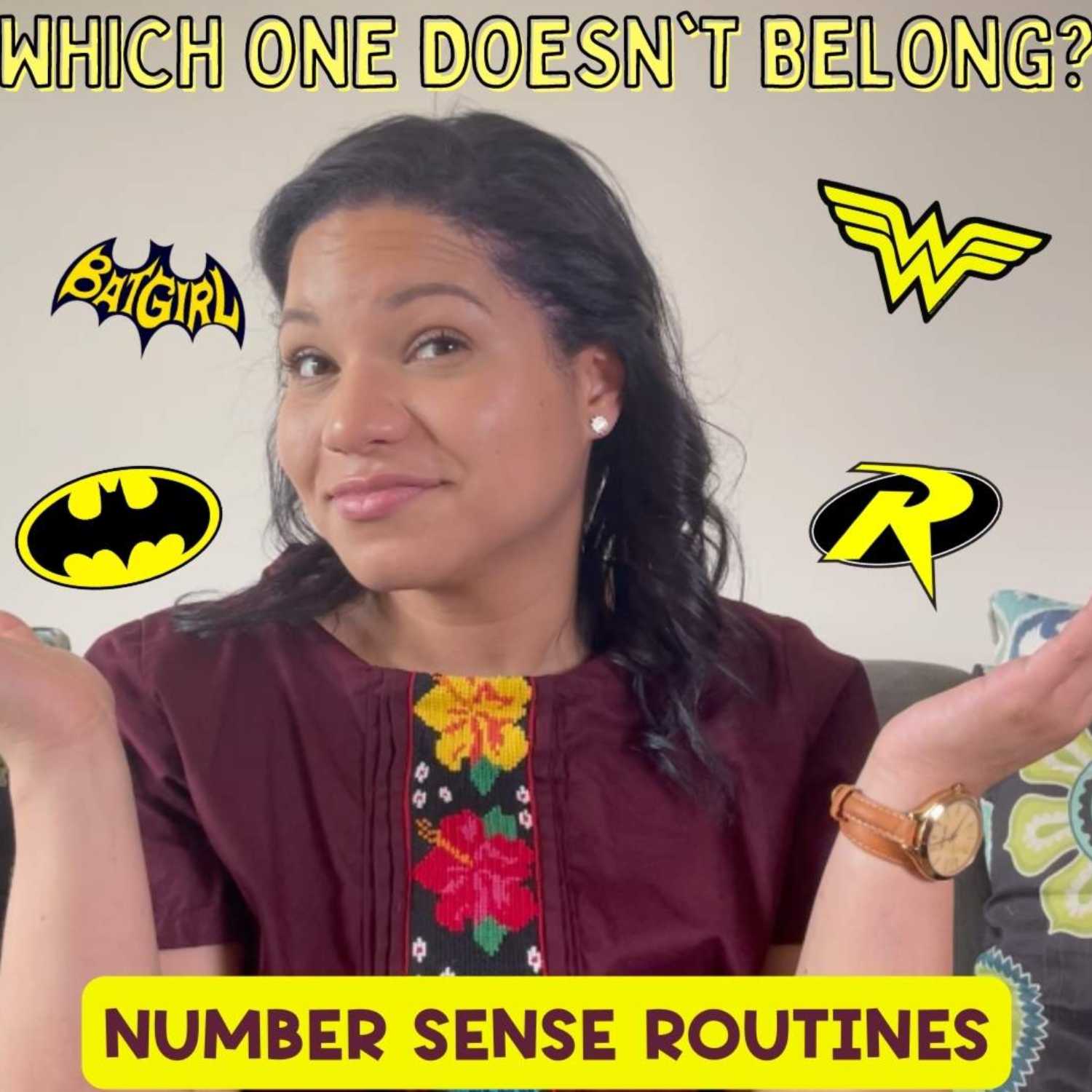
Ep 12: Which One Doesn’t Belong: Number Sense Routines Series
Making Number Sense Make Sense: A Math Podcast for Early Elementary Teachers
This episode starts a series on the Podcast about Number Sense Routine you can implement in your classroom today! If you’ve seen Sesame Street, you may recognize this number sense routine. In this episode, I talk about why you even need a number sense routine, how to do the Which One Doesn’t Belong routine, and the benefits this powerful 5-minute routine can have in your classroom!
Helpful Links
Which One Doesn’t Belong Slides
Which One Doesn’t Belong Blog Post
Which One Doesn’t Belong YouTube Video
Get the Number Sense Routines Bundle!
Let's Connect!
Available Results
Generated results are saved to the knowledge database for reuse and search.
Extract Knowledge
Pick what you want extracted first. Model, scope, and chapter options appear after a template is selected.
Transcript
1
00:00:00,000 --> 00:00:12,120
With the start of the year coming around, for the next few episodes, I'm going to talk to you all about number sense routines, especially how you can add them into your math block really easily and really quickly and make a big impact.

2
00:00:12,120 --> 00:00:30,680
Hello and welcome to Making Number Sense Makes Sense, a podcast for elementary teachers, specifically early elementary teachers, looking to really make an impact in the number sense of their students.

3
00:00:30,680 --> 00:00:39,240
In all honesty, I might be dating myself here, but do any of you remember watching Sesame Street and they had a little song like which one of these is not like the others?

4
00:00:39,240 --> 00:00:40,600
Which one of these doesn't belong?

5
00:00:40,600 --> 00:00:43,880
That is the number sense routine I'm going to talk to you about today.

6
00:00:43,880 --> 00:00:45,800
Which one doesn't belong?

7
00:00:45,800 --> 00:00:57,040
Now, the reason I really like this number sense routine is that it is not strictly math related and there are no wrong answers.

8
00:00:57,040 --> 00:01:09,400
So since there are no wrong answers, it's perfect for the beginning of this school year to get your kids really into the habit of talking about their thinking without the pressure of oh am I right or oh am I wrong?

9
00:01:09,400 --> 00:01:22,040
So the way that which one doesn't belong works is students are given four images and they simply have to decide in their mind which one of these four things does not belong with the others.

10
00:01:22,040 --> 00:01:37,920
This one for the beginning of the year is a great way to get your students thinking critically and creatively, to get your students talking about their thinking, to have them practice academic conversations, taking turns listening to their partner, being able to agree or disagree respectfully,

11
00:01:37,920 --> 00:01:42,400
and then invites everybody to participate because there are no wrong answers.

12
00:01:42,400 --> 00:01:45,120
So why would you use a number sense routine anyway?

13
00:01:45,120 --> 00:01:50,720
Well number sense is one of those vague terms that you're like oh I know I should be doing that.

14
00:01:50,720 --> 00:01:55,200
Like I should be helping my kids develop number sense but how am I supposed to do that?

15
00:01:55,200 --> 00:02:05,600
A number sense routine is a really simple way to include some conversation and some critical thinking into your math block and it's very very quick.

16
00:02:05,600 --> 00:02:10,080
It really should not take very long but it's kind of a compounding effect.

17
00:02:10,080 --> 00:02:14,880
So the more that you do it the better that they get at it and the more it develops their number sense.

18
00:02:14,880 --> 00:02:17,440
So how do you do which one doesn't belong?

19
00:02:17,440 --> 00:02:24,880
So you would like I said show four images and your kids are going to have to figure out which one of those four things doesn't belong.

20
00:02:24,880 --> 00:02:31,600
Now if you've been in a classroom you know that there's always a few kids who raise their hands right away, they're ready to participate, they already thought of it,

21
00:02:31,600 --> 00:02:36,000
and there's others who usually don't want to participate, they're not the ones to volunteer.

22
00:02:36,000 --> 00:02:43,840
So something that I try to do whenever I'm doing a number talk is make sure that all of my students understand that there is going to be some think time.

23
00:02:43,840 --> 00:02:52,000
Like you might raise your hand, you might already know the answer but I'm not going to call on you for a good 20, 30 seconds and it can feel like an eternity.

24
00:02:52,000 --> 00:03:00,160
But some kids really need that time to think especially if they're language learners or if they're just shy in general or not used to participating.

25
00:03:00,160 --> 00:03:07,360
They're going to need that time to really think and look at the problem and also to understand that you're going to give them that time,

26
00:03:07,360 --> 00:03:14,880
that they're going to have to participate especially if they have to talk to a partner, not necessarily to the whole group but might have to discuss with a partner.

27
00:03:14,880 --> 00:03:23,520
So one way that you can kind of get your students to all participate is instead of having them raise their hand when they're ready to share,

28
00:03:23,520 --> 00:03:27,040
they might do like a simple thumbs up in front of their chest.

29
00:03:27,040 --> 00:03:34,800
So the effect of that is that the people who are ready quickly can show you that they're ready so you can see, you know, you have a signal,

30
00:03:34,800 --> 00:03:40,640
you have like a secret signal that you know that they're ready to participate but that you're not going to call on anybody.

31
00:03:40,640 --> 00:03:44,800
And also since they're not seeing hands in the air, the students who might need a little bit more time,

32
00:03:44,800 --> 00:03:49,840
it gives them the time without feeling the pressure of oh he already knows the answer so I'm just not even going to think about it.

33
00:03:49,840 --> 00:03:54,400
I think this was in the number talks book like the specific number talks bunk that I'll link below.

34
00:03:54,400 --> 00:03:57,680
They talk about having your kids maybe put a thumbs up if they have one answer,

35
00:03:57,680 --> 00:04:01,600
maybe put up another finger if they have two answers so that way they can keep thinking

36
00:04:01,600 --> 00:04:06,400
of their few answers while the other students are thinking of their first answer.

37
00:04:06,400 --> 00:04:10,560
So at this point you could have your kids just share out which one do you think doesn't belong,

38
00:04:10,560 --> 00:04:17,120
which one do you think doesn't belong or you can take this opportunity to practice like turn in talks or academic conversations,

39
00:04:17,120 --> 00:04:21,840
giving your kids a sentence strip or sentence frame if they need to frame their thinking.

40
00:04:21,840 --> 00:04:26,000
So in this way you have your kids do your turn and talk and this might require some practice too.

41
00:04:26,000 --> 00:04:29,680
If you're going to have your students always have the same partner that they're working with,

42
00:04:29,680 --> 00:04:34,000
if you're going to have them find a partner or just kind of turn to the left or turn to the right,

43
00:04:34,000 --> 00:04:38,880
it might require some thinking about where you want your kids to be and where you want them to turn

44
00:04:38,880 --> 00:04:41,600
and that becomes part of the number sense routine.

45
00:04:41,600 --> 00:04:46,480
Which which way are you turning to whom are you talking and who is going to talk first.

46
00:04:46,480 --> 00:04:49,040
At this point you can have your kids discuss their answer.

47
00:04:49,040 --> 00:04:56,240
Which one of these things do you think does not belong and a big big part about which one doesn't belong

48
00:04:56,240 --> 00:05:01,280
is you're going to have to have them or maybe prompt them to discuss with their partner at least

49
00:05:01,280 --> 00:05:05,040
why they think this one thing doesn't belong.

50
00:05:05,040 --> 00:05:07,840
So let's do an example of something that the kids might really enjoy.

51
00:05:07,840 --> 00:05:12,800
Let's say that you have your four pictures are a picture of Batman, a picture of Batgirl,

52
00:05:12,800 --> 00:05:15,760
a picture of Wonder Woman and a picture of Robin.

53
00:05:15,760 --> 00:05:20,320
So your kids might say oh Wonder Woman is the one who doesn't belong

54
00:05:20,320 --> 00:05:24,560
and then you're prompting them why why is Wonder Woman the person who doesn't belong.

55
00:05:24,560 --> 00:05:28,240
Well they might say because she's a girl they might say that she's not in the same

56
00:05:28,240 --> 00:05:34,880
universe as the other ones etc etc but they might say well Robin doesn't belong because all of them

57
00:05:34,880 --> 00:05:41,200
are their own superhero and Batman is like or sorry not Batman Robin is like the side

58
00:05:41,200 --> 00:05:48,480
he's the sidekick he's not the main superhero or they might say that Batman is the one who

59
00:05:48,480 --> 00:05:52,640
doesn't belong because XYZ whatever maybe he's rich and the other ones aren't I don't know.

60
00:05:52,640 --> 00:05:58,000
But the idea is that they are justifying their answer in this context that's not that's low

61
00:05:58,000 --> 00:06:02,640
pressure so that way when you get into something that is more difficult something that is more

62
00:06:03,200 --> 00:06:09,920
strictly math related they'll have the habits of talking about their thinking and why they think

63
00:06:09,920 --> 00:06:15,040
that. A way you can extend the which one doesn't belong is you can have your students come up with

64
00:06:15,040 --> 00:06:20,720
their own which doesn't belong if you have like recording sheets or something around the classroom

65
00:06:20,720 --> 00:06:24,240
like if you have early finishers you could say why don't you try and think about which one doesn't

66
00:06:24,240 --> 00:06:28,960
belong and if they get really into it you can take pictures of their work and put those in your

67
00:06:28,960 --> 00:06:33,280
slides and then that way instead of having a which one doesn't belong that's pre-made that maybe you

68
00:06:33,280 --> 00:06:37,600
made or you found somewhere it can be what the students think and then I think they'd really

69
00:06:37,600 --> 00:06:42,480
get a kick out of talking about oh this person did this one for me and they thought about this

70
00:06:42,480 --> 00:06:46,640
so they're taking it a step further instead of just responding really thinking about ooh how can

71
00:06:46,640 --> 00:06:51,600
I make a really tricky which one doesn't belong for my classmates and see if I can really stump them.

72
00:06:51,600 --> 00:06:55,840
This is a great opportunity to remind your kids that there are ways to disagree respectfully

73
00:06:55,840 --> 00:07:01,360
and ways to disagree that might make somebody else upset. So in this might be practicing well I

74
00:07:01,360 --> 00:07:06,480
disagree because this this this and remember in this context there's not really a right or wrong

75
00:07:06,480 --> 00:07:13,520
answer so disagreements are not necessarily something that would be detrimental but just getting them

76
00:07:13,520 --> 00:07:18,880
used to thinking that everybody is going to have the same thinking but valuing what other people

77
00:07:18,880 --> 00:07:23,760
have to say and really taking it in really listening to what they're saying and be like oh

78
00:07:23,760 --> 00:07:27,520
maybe you're right maybe it could be this or maybe it could be that. At this point you've

79
00:07:27,520 --> 00:07:31,680
shown them they're which one doesn't belong they've had a chance to think about it like really get

80
00:07:31,680 --> 00:07:37,280
some quiet think time to discuss with a partner or partners if you have a trio for some reason

81
00:07:38,080 --> 00:07:44,480
and now it's time to share out. So you can just have kids share out like oh I thought this I thought

82
00:07:44,480 --> 00:07:49,440
this I thought this have some students explain to you why as well so that other students are

83
00:07:49,440 --> 00:07:55,280
hearing the model of how to say I think this because or this one doesn't belong because or I thought this

84
00:07:56,320 --> 00:08:00,960
and he thought this so they could be comparing and contrasting if they had a differing opinion

85
00:08:00,960 --> 00:08:08,320
from their partner so they're hearing other students model the type of responses that might be helpful

86
00:08:08,320 --> 00:08:12,800
in the future which one doesn't belong. Also when you're sharing out you could have them tally you

87
00:08:12,800 --> 00:08:16,800
could have every single student say like oh I think it's this one oh I think is this one oh I think

88
00:08:16,800 --> 00:08:21,920
is this one and look at it as a group and say oh well most of our group thought that Robin is the one

89
00:08:21,920 --> 00:08:26,320
who didn't belong but we did have some people who think that Batman doesn't belong and again

90
00:08:26,320 --> 00:08:32,240
reinforcing that all of these answers are valid and everybody had their own thinking and everybody's

91
00:08:32,240 --> 00:08:38,560
thinking is valid. Wrapping it up I will have a blog post with all of this written out linked down

92
00:08:38,560 --> 00:08:43,840
below and I really hope you give which one doesn't belong a try it's one of my students favorite

93
00:08:43,840 --> 00:08:47,920
number sense routines at the beginning of any time really but at the beginning of the year it just

94
00:08:47,920 --> 00:08:53,680
has a lot of powerful side effects I would say to get your kids started and thinking and talking

95
00:08:53,680 --> 00:08:58,240
about what they are thinking. If you're enjoying the podcast I would love it if you left a review

96
00:08:58,240 --> 00:09:03,520
and always I'm always taking suggestions of things that you would like me to talk more about so until

97
00:09:03,520 --> 00:09:26,160
then I will see you next time.