Quantum computing and AI join forces for particle physics
This episode of the Physics World Weekly podcast explores how quantum computing and artificial intelligence can be combined to help physicists search for rare interactions in data from an upgraded Large Hadron Collider.
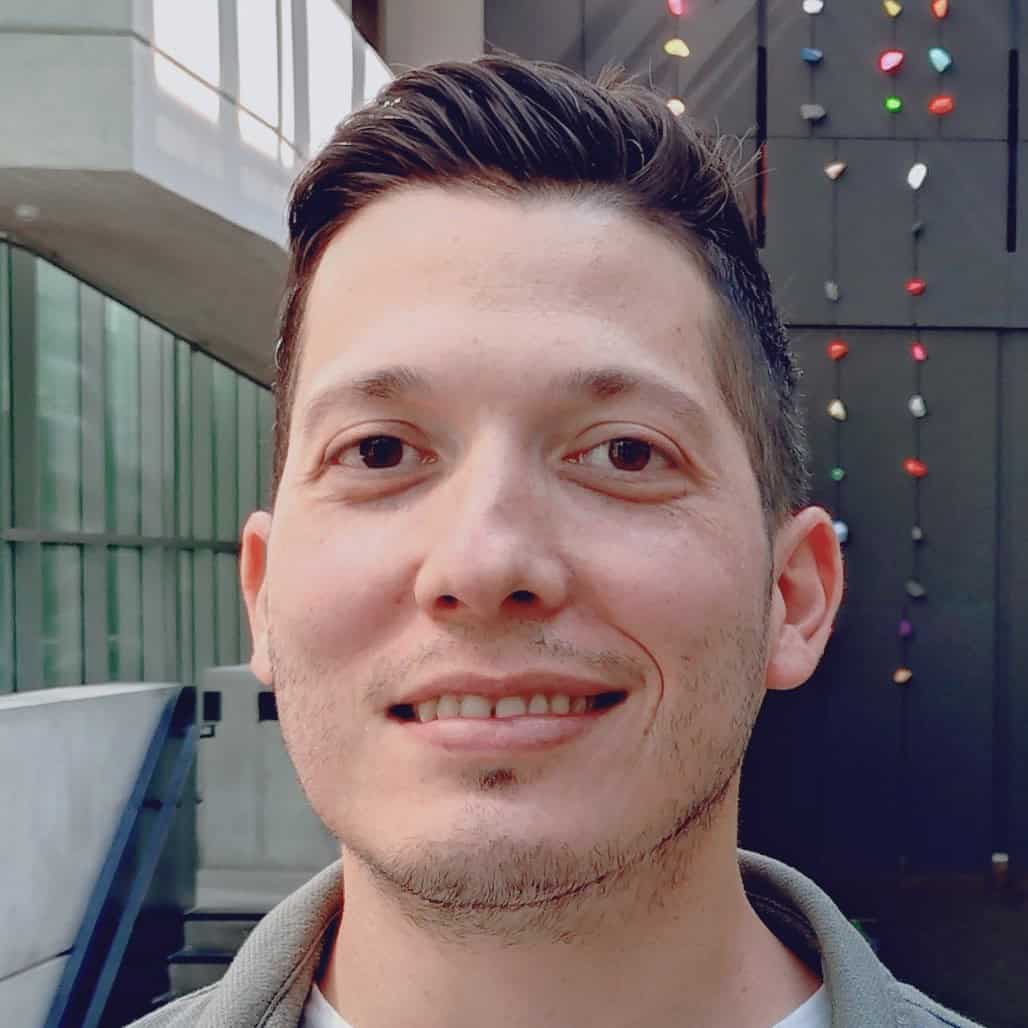
My guest is Javier Toledo-Marín, and we spoke at the Perimeter Institute in Waterloo, Canada. As well as having an appointment at Perimeter, Toledo-Marín is also associated with the TRIUMF accelerator centre in Vancouver.
Toledo-Marín and colleagues have recently published a paper called “Conditioned quantum-assisted deep generative surrogate for particle–calorimeter interactions”.
This podcast is supported by Delft Circuits.
As gate-based quantum computing continues to scale, Delft Circuits provides the i/o solutions that make it possible.
Available Results
Generated results are saved to the knowledge database for reuse and search.
Extract Knowledge
Pick what you want extracted first. Model, scope, and chapter options appear after a template is selected.
Transcript
1
00:00:08,000 --> 00:00:10,960
Hello, and welcome to the Physics World weekly

2
00:00:10,960 --> 00:00:12,900
podcast. I'm Hamish Johnston.

3
00:00:13,724 --> 00:00:14,544
This episode

4
00:00:14,925 --> 00:00:16,864
explores how quantum computing

5
00:00:17,244 --> 00:00:18,785
and artificial intelligence

6
00:00:19,324 --> 00:00:20,304
can be combined

7
00:00:20,684 --> 00:00:21,664
to help physicists

8
00:00:22,204 --> 00:00:24,304
search for rare interactions

9
00:00:24,925 --> 00:00:26,864
in data from an upgraded

10
00:00:27,244 --> 00:00:28,945
Large Hadron Collider.

11
00:00:29,989 --> 00:00:32,810
But first, I'd like to thank Delft Circuits

12
00:00:33,190 --> 00:00:35,929
for their generous support of this episode.

13
00:00:42,804 --> 00:00:45,545
This episode is supported by Delft circuits,

14
00:00:46,004 --> 00:00:48,184
a key enabler in the evolution

15
00:00:48,564 --> 00:00:49,945
of quantum technologies.

16
00:00:50,964 --> 00:00:54,824
While annealing quantum computers are already demonstrating

17
00:00:55,204 --> 00:00:56,265
practical value,

18
00:00:57,070 --> 00:00:59,869
Gate based systems are still on their way

19
00:00:59,869 --> 00:01:01,729
to large scale implementations.

20
00:01:02,909 --> 00:01:04,530
One of the biggest challenges

21
00:01:04,829 --> 00:01:05,810
is IO,

22
00:01:06,590 --> 00:01:09,329
reliably connecting thousands of qubits

23
00:01:09,734 --> 00:01:10,555
without compromising

24
00:01:11,015 --> 00:01:11,515
performance.

25
00:01:12,694 --> 00:01:13,674
Delft circuits

26
00:01:14,135 --> 00:01:16,715
addresses this bottleneck with a fundamentally

27
00:01:17,174 --> 00:01:19,275
different approach to cryogenic

28
00:01:19,975 --> 00:01:20,475
connectivity.

29
00:01:21,415 --> 00:01:22,234
Their flexible,

30
00:01:22,935 --> 00:01:23,435
multichannel

31
00:01:24,180 --> 00:01:25,240
planar cabling

32
00:01:25,859 --> 00:01:28,600
integrates filtering components and delivers

33
00:01:28,980 --> 00:01:29,480
exceptionally

34
00:01:29,859 --> 00:01:31,319
low heat load,

35
00:01:31,700 --> 00:01:34,760
paving the way to kilo cubit architectures

36
00:01:35,859 --> 00:01:37,640
because advancing science

37
00:01:37,939 --> 00:01:38,439
requires

38
00:01:39,204 --> 00:01:39,704
infrastructure

39
00:01:40,084 --> 00:01:42,185
built for the quantum age.

40
00:01:49,765 --> 00:01:53,340
In mid twenty twenty six, the Large Hadron

41
00:01:53,400 --> 00:01:56,859
Collider at CERN will shut down and undergo

42
00:01:57,079 --> 00:02:00,219
the final stage of the high luminosity

43
00:02:00,760 --> 00:02:01,260
upgrade.

44
00:02:01,959 --> 00:02:04,920
The aim is to increase the number of

45
00:02:04,920 --> 00:02:06,060
particle collisions

46
00:02:06,439 --> 00:02:07,340
in the LHC

47
00:02:08,055 --> 00:02:10,314
by about a factor of 10.

48
00:02:11,254 --> 00:02:12,635
By 2030,

49
00:02:12,854 --> 00:02:14,314
this should allow physicists

50
00:02:14,935 --> 00:02:16,715
to study rare particle

51
00:02:17,014 --> 00:02:17,514
interactions

52
00:02:17,974 --> 00:02:19,915
that are not visible today.

53
00:02:21,439 --> 00:02:22,340
These interactions

54
00:02:22,719 --> 00:02:24,580
create showers of particles

55
00:02:24,959 --> 00:02:25,939
that are detected

56
00:02:26,240 --> 00:02:27,780
by huge LHC

57
00:02:28,159 --> 00:02:28,659
experiments

58
00:02:29,280 --> 00:02:29,780
including

59
00:02:30,080 --> 00:02:31,539
ATLAS and CMS.

60
00:02:32,974 --> 00:02:34,914
These showers create distinctive

61
00:02:35,215 --> 00:02:35,715
patterns

62
00:02:36,014 --> 00:02:37,634
in the detector data

63
00:02:38,175 --> 00:02:39,555
which provide details

64
00:02:40,014 --> 00:02:42,834
of the sought after particle interactions.

65
00:02:44,334 --> 00:02:45,875
The challenge for physicists

66
00:02:46,449 --> 00:02:49,110
is to isolate the desired signals

67
00:02:49,489 --> 00:02:52,209
within the plethora of data that will be

68
00:02:52,209 --> 00:02:54,069
produced by an updated

69
00:02:54,370 --> 00:02:54,870
LHC.

70
00:02:56,129 --> 00:02:58,709
To do this, they must know how showers

71
00:02:58,769 --> 00:03:00,069
from rare interactions

72
00:03:00,689 --> 00:03:01,590
will interact

73
00:03:01,915 --> 00:03:02,735
with the detectors,

74
00:03:03,594 --> 00:03:05,294
and this is done using

75
00:03:05,675 --> 00:03:06,175
computationally

76
00:03:06,715 --> 00:03:07,215
intensive

77
00:03:08,075 --> 00:03:08,575
simulations.

78
00:03:10,075 --> 00:03:10,575
Therefore,

79
00:03:10,955 --> 00:03:13,615
it's not surprising that particle physicists

80
00:03:14,075 --> 00:03:16,094
are looking to quantum computers

81
00:03:16,680 --> 00:03:18,139
and artificial intelligence

82
00:03:18,760 --> 00:03:20,060
to boost the performance

83
00:03:20,520 --> 00:03:21,500
of these simulations.

84
00:03:23,000 --> 00:03:23,500
Recently,

85
00:03:23,800 --> 00:03:24,860
I was at Canada's

86
00:03:25,240 --> 00:03:26,379
Perimeter Institute

87
00:03:27,000 --> 00:03:28,620
and spoke to Javier

88
00:03:29,000 --> 00:03:29,500
Toledo

89
00:03:29,879 --> 00:03:30,379
Marine

90
00:03:30,885 --> 00:03:33,305
about the use of quantum assisted

91
00:03:33,844 --> 00:03:35,064
generative models

92
00:03:35,365 --> 00:03:36,745
in particle physics.

93
00:03:37,525 --> 00:03:39,784
Javier is based at the Triumph

94
00:03:40,165 --> 00:03:41,224
Particle Accelerator

95
00:03:41,605 --> 00:03:43,224
Center in British Columbia,

96
00:03:43,750 --> 00:03:46,969
and he also has an appointment at Perimeter.

97
00:03:47,590 --> 00:03:48,889
Here's that conversation.

98
00:03:57,235 --> 00:03:59,974
So I'm at the Perimeter Institute in Waterloo,

99
00:04:00,034 --> 00:04:03,014
Ontario, and I'm joined by Javier Toledo

100
00:04:03,314 --> 00:04:03,814
Marine.

101
00:04:04,275 --> 00:04:06,455
Hi, Javier. Welcome to the podcast.

102
00:04:06,995 --> 00:04:08,614
Hey, Hamish. Thank you.

103
00:04:09,330 --> 00:04:12,129
So Javier, you've recently published a paper that

104
00:04:12,129 --> 00:04:15,509
describes how quantum assisted artificial intelligence

105
00:04:16,129 --> 00:04:18,769
can be used to simulate how high energy

106
00:04:18,769 --> 00:04:19,269
particles

107
00:04:19,889 --> 00:04:21,189
interact with detectors

108
00:04:21,704 --> 00:04:23,644
such as ATLAS and CMS

109
00:04:24,105 --> 00:04:25,805
on the Large Hadron Collider.

110
00:04:26,584 --> 00:04:29,324
Why do physicists want to do these calculations,

111
00:04:29,785 --> 00:04:32,444
and why can't they be done using conventional

112
00:04:32,584 --> 00:04:33,084
computers?

113
00:04:33,544 --> 00:04:35,544
Yeah. So that's a great question. That's, I

114
00:04:35,544 --> 00:04:37,084
mean, that's the starting point.

115
00:04:37,649 --> 00:04:38,149
So

116
00:04:38,610 --> 00:04:39,830
as you might know,

117
00:04:40,449 --> 00:04:43,410
the Large Hadron Collider is closing. It's shutting

118
00:04:43,410 --> 00:04:43,910
down,

119
00:04:44,449 --> 00:04:47,430
for a few for some time now,

120
00:04:47,810 --> 00:04:50,629
because they're updating upgrading some of their detectors.

121
00:04:51,795 --> 00:04:53,795
So, so the new run of the LHC

122
00:04:53,795 --> 00:04:55,735
is called the high luminosity LHC.

123
00:04:56,115 --> 00:04:57,814
And so it's called high luminosity

124
00:04:58,115 --> 00:05:01,254
because, fundamentally, they're increasing the collision rate.

125
00:05:02,915 --> 00:05:06,250
So it's being increased by tenfold, I believe.

126
00:05:06,389 --> 00:05:08,550
And so that means that when they do

127
00:05:08,550 --> 00:05:11,209
these runs, we'll be getting more data. Right?

128
00:05:11,669 --> 00:05:13,990
And so this data is important because if

129
00:05:13,990 --> 00:05:15,129
you're trying to

130
00:05:15,589 --> 00:05:17,529
look at rare events,

131
00:05:18,375 --> 00:05:21,675
like, for instance, the dye Higgs, self interaction

132
00:05:21,814 --> 00:05:22,314
prompt,

133
00:05:23,334 --> 00:05:25,334
well, you actually have to it turns out

134
00:05:25,334 --> 00:05:27,354
that the dye Higgs is 1,000

135
00:05:27,735 --> 00:05:30,074
times less often than just the Higgs.

136
00:05:30,694 --> 00:05:33,149
So you need a lot more data, and

137
00:05:33,149 --> 00:05:35,470
so that's why it's being upgraded. And on

138
00:05:35,470 --> 00:05:36,930
the simulation side,

139
00:05:37,230 --> 00:05:38,290
you also need

140
00:05:38,750 --> 00:05:40,209
similar amount of data,

141
00:05:40,750 --> 00:05:42,769
and so that is becoming increasingly

142
00:05:43,149 --> 00:05:43,649
challenging.

143
00:05:44,110 --> 00:05:46,129
And one of the reasons why it's challenging

144
00:05:46,350 --> 00:05:47,730
is because of the

145
00:05:48,254 --> 00:05:48,754
calorimeter

146
00:05:49,134 --> 00:05:50,435
pipeline in the simulation.

147
00:05:51,134 --> 00:05:53,555
So there's in the ATLAS

148
00:05:54,014 --> 00:05:57,694
detect the ATLAS experiment, there's a detector, which

149
00:05:57,694 --> 00:05:58,514
is the calorimeter.

150
00:05:58,894 --> 00:06:01,235
And so when particles go through this calorimeter,

151
00:06:01,949 --> 00:06:03,490
they deposit the energy,

152
00:06:03,870 --> 00:06:06,189
but they also create secondary particles. And so

153
00:06:06,189 --> 00:06:07,810
they create these these showers.

154
00:06:08,509 --> 00:06:10,689
And so when that happens in the simulation,

155
00:06:10,829 --> 00:06:12,910
you need to track all of these particles

156
00:06:12,910 --> 00:06:14,449
as they go through the detector.

157
00:06:14,774 --> 00:06:16,375
And so you can imagine that if you

158
00:06:16,375 --> 00:06:18,535
increase the number of particles going through that,

159
00:06:18,535 --> 00:06:20,074
then you're going

160
00:06:20,615 --> 00:06:23,035
to need be needing more data from that.

161
00:06:23,654 --> 00:06:26,455
And so that is where it's becoming challenging

162
00:06:26,455 --> 00:06:27,595
because with the current

163
00:06:28,360 --> 00:06:30,939
computational capabilities, it turns out that it's

164
00:06:31,800 --> 00:06:32,300
unsurmountable

165
00:06:32,600 --> 00:06:35,660
at this point, using the traditional methods.

166
00:06:36,600 --> 00:06:38,759
So that is why people around the world,

167
00:06:38,759 --> 00:06:40,939
scientists, they're looking to use,

168
00:06:41,480 --> 00:06:44,194
different tools like deep generative models

169
00:06:44,574 --> 00:06:46,194
to generate these showers.

170
00:06:46,735 --> 00:06:49,235
So in our case, we're combining deep generative

171
00:06:49,295 --> 00:06:50,175
models with,

172
00:06:50,814 --> 00:06:53,634
quantum computing or, in this case, quantum annealers.

173
00:06:54,654 --> 00:06:57,160
So I think that answers the question. Right.

174
00:06:57,160 --> 00:06:59,160
So so the idea is that you're you're

175
00:06:59,160 --> 00:07:00,779
gonna have so many collisions

176
00:07:01,400 --> 00:07:03,740
going on in these detectors

177
00:07:04,360 --> 00:07:04,860
that,

178
00:07:05,319 --> 00:07:07,960
and you need to or I I suppose

179
00:07:07,960 --> 00:07:10,199
the physicists at CERN will need to focus

180
00:07:10,199 --> 00:07:11,764
in on a specific,

181
00:07:12,944 --> 00:07:15,745
event. But, of course, they they probably don't

182
00:07:15,745 --> 00:07:18,324
know exactly what that event will look like,

183
00:07:18,384 --> 00:07:20,785
and that's where your research comes in. You

184
00:07:20,865 --> 00:07:23,345
you're you do your simulations and you say,

185
00:07:23,345 --> 00:07:24,564
well, we think

186
00:07:24,889 --> 00:07:26,430
the event you're looking for

187
00:07:26,810 --> 00:07:28,970
is going to look like this in the

188
00:07:28,970 --> 00:07:31,709
detector. Yeah. That that's correct. So so basically,

189
00:07:31,769 --> 00:07:33,769
like, you have your experiment and the way

190
00:07:33,769 --> 00:07:35,850
to validate your experiment with theory, you do

191
00:07:35,850 --> 00:07:38,669
these simulations and then you compare your hypothesis

192
00:07:38,970 --> 00:07:41,435
from your simulations with what you actually get

193
00:07:41,435 --> 00:07:44,495
from from this experiment. Correct? I see. Okay.

194
00:07:45,914 --> 00:07:49,774
And can you explain in relatively simple terms,

195
00:07:50,074 --> 00:07:51,534
I mean, that might not be

196
00:07:51,834 --> 00:07:53,615
that might not be an easy task,

197
00:07:54,089 --> 00:07:54,589
How,

198
00:07:55,209 --> 00:07:56,589
your quantum assisted

199
00:07:56,889 --> 00:07:57,389
generative

200
00:07:57,930 --> 00:07:58,910
model works?

201
00:08:00,490 --> 00:08:03,209
Sure. Yeah. That's, okay. So let me give

202
00:08:03,209 --> 00:08:04,029
it a try.

203
00:08:04,970 --> 00:08:06,655
So, I mean, let let me start with

204
00:08:06,655 --> 00:08:08,995
generative models. So generative models, they're,

205
00:08:09,694 --> 00:08:11,694
way older than the current revolution that we're

206
00:08:11,694 --> 00:08:13,235
living with, with AI.

207
00:08:14,014 --> 00:08:16,415
And you can think about it as the

208
00:08:16,814 --> 00:08:18,814
like, they come to solve the task of

209
00:08:18,814 --> 00:08:19,314
generating

210
00:08:20,360 --> 00:08:24,220
data, generating samples from specific probability distributions.

211
00:08:24,600 --> 00:08:27,899
Right? So sometimes, like, many years ago when,

212
00:08:28,360 --> 00:08:31,500
you didn't have all these, programming languages, like,

213
00:08:31,639 --> 00:08:34,759
when you wanted to generate, Gaussian distributed random

214
00:08:34,759 --> 00:08:35,259
numbers,

215
00:08:35,815 --> 00:08:37,274
you would normally use,

216
00:08:37,654 --> 00:08:39,975
the Box Mueller method in which you would

217
00:08:39,975 --> 00:08:42,855
generate uniformly distributed random numbers, and then you

218
00:08:42,855 --> 00:08:45,834
would give those random numbers to a function,

219
00:08:46,054 --> 00:08:48,074
and then you would get your Gaussian distributed

220
00:08:48,294 --> 00:08:49,080
random numbers.

221
00:08:49,639 --> 00:08:51,240
These days, you you I mean, you just

222
00:08:51,240 --> 00:08:53,639
use your whatever. If you're using Python, it

223
00:08:53,639 --> 00:08:55,799
already has a a package that does that

224
00:08:55,799 --> 00:08:57,960
for you. So in that way, it's like

225
00:08:57,960 --> 00:09:00,040
we're trying to generate what we're working on

226
00:09:00,040 --> 00:09:03,160
is generating these showers, which come from a

227
00:09:03,160 --> 00:09:04,299
probability distribution,

228
00:09:04,695 --> 00:09:06,934
but we don't know that probability distribution a

229
00:09:06,934 --> 00:09:07,434
priori

230
00:09:08,134 --> 00:09:09,975
rate. So what we're doing is that we're

231
00:09:09,975 --> 00:09:12,075
sampling from an easier distribution,

232
00:09:13,014 --> 00:09:15,174
and then we pass it through some function.

233
00:09:15,174 --> 00:09:16,855
In this case, this function is a neural

234
00:09:16,855 --> 00:09:19,960
network, and then it gets converted to the

235
00:09:19,960 --> 00:09:20,460
shower.

236
00:09:20,840 --> 00:09:23,080
Now the way we are doing it is

237
00:09:23,080 --> 00:09:25,879
that we use quantum annealers as the initial

238
00:09:25,879 --> 00:09:26,379
sampler.

239
00:09:27,000 --> 00:09:29,160
So we sample from the quantum annealer. We

240
00:09:29,160 --> 00:09:31,340
get a a random vector.

241
00:09:31,664 --> 00:09:33,264
We pass it through a neural network, and

242
00:09:33,264 --> 00:09:34,164
we get the shower.

243
00:09:34,865 --> 00:09:36,865
Now that's the way once the model is

244
00:09:36,865 --> 00:09:39,105
trained, we we use it. Right? To train

245
00:09:39,105 --> 00:09:40,565
it, it's a bit more complicated.

246
00:09:41,345 --> 00:09:42,084
But, essentially,

247
00:09:42,464 --> 00:09:42,964
it's

248
00:09:43,424 --> 00:09:45,184
you can think about it as a data

249
00:09:45,184 --> 00:09:48,149
driven machine learning problem in which you have

250
00:09:48,210 --> 00:09:50,290
a data set that you feed to this

251
00:09:50,290 --> 00:09:52,629
model and you try to reconstruct it.

252
00:09:53,009 --> 00:09:55,570
And by reconstructing it, then you're you're, fine

253
00:09:55,570 --> 00:09:57,590
tuning these parameters in your neural network.

254
00:09:58,049 --> 00:10:00,129
And then you use this sampler, the quantum

255
00:10:00,129 --> 00:10:01,889
analyzer, to to sample from it and pass

256
00:10:01,889 --> 00:10:03,304
it through the through the neural

257
00:10:03,684 --> 00:10:05,284
network. I see. And and the data that

258
00:10:05,284 --> 00:10:06,504
you're using, is that

259
00:10:06,965 --> 00:10:07,784
data from

260
00:10:08,164 --> 00:10:10,264
scattering experiments that have been done

261
00:10:10,725 --> 00:10:11,465
in detectors?

262
00:10:12,004 --> 00:10:12,504
Or

263
00:10:13,125 --> 00:10:14,264
do you also incorporate

264
00:10:14,884 --> 00:10:15,384
physics

265
00:10:15,759 --> 00:10:17,519
into that as well, or is it purely

266
00:10:17,519 --> 00:10:19,919
just the the data, or is it both,

267
00:10:19,919 --> 00:10:20,579
I suppose?

268
00:10:21,360 --> 00:10:23,679
So we started off by using this dataset

269
00:10:23,679 --> 00:10:24,899
called the Cayo Challenge.

270
00:10:25,759 --> 00:10:27,839
And so the Cayo Challenge is a challenge

271
00:10:27,839 --> 00:10:30,914
that started, it was launched in 2022,

272
00:10:31,394 --> 00:10:33,375
by a group of,

273
00:10:33,914 --> 00:10:36,834
scientists around the world. And so the the

274
00:10:36,834 --> 00:10:38,674
scope of this challenge is precisely to see

275
00:10:38,674 --> 00:10:40,995
if we can use generative models to,

276
00:10:41,794 --> 00:10:44,399
to to sample, to generate these showers.

277
00:10:44,860 --> 00:10:47,120
So it's a publicly available dataset,

278
00:10:47,740 --> 00:10:49,200
and it's a

279
00:10:49,899 --> 00:10:52,540
different dataset than what you would normally get

280
00:10:52,540 --> 00:10:53,679
from the simulation

281
00:10:54,059 --> 00:10:56,475
pipeline that they used in in ATLAS. Right?

282
00:10:56,554 --> 00:10:59,754
It's still generated from that simulation pipeline, but

283
00:10:59,754 --> 00:11:03,434
it's then processed in a way that you

284
00:11:03,434 --> 00:11:05,754
might say it makes it maybe easier for

285
00:11:05,754 --> 00:11:07,674
the neural network to learn it. Right? That

286
00:11:07,834 --> 00:11:09,269
I mean, very yeah.

287
00:11:10,470 --> 00:11:12,470
So that's the dataset that we used in

288
00:11:12,470 --> 00:11:13,529
this this paper.

289
00:11:14,149 --> 00:11:18,149
And so right now, we're now looking to

290
00:11:18,149 --> 00:11:18,649
use

291
00:11:19,509 --> 00:11:22,330
data that's actually generated for the ATLAS experiment,

292
00:11:22,389 --> 00:11:25,654
more realistic dataset. Right? Now this dataset is

293
00:11:25,654 --> 00:11:27,975
composed by like, you think think about it

294
00:11:27,975 --> 00:11:30,294
this way. So when the collision happens, you

295
00:11:30,294 --> 00:11:30,794
get,

296
00:11:31,575 --> 00:11:33,415
particles going through that. Right? And then these

297
00:11:33,415 --> 00:11:35,415
particles go through the detectors. Right? So the

298
00:11:35,415 --> 00:11:37,575
data that we're feeding through to to our

299
00:11:37,575 --> 00:11:39,720
model, it's the data in which you you

300
00:11:39,720 --> 00:11:43,100
have that an incident particle entering the calorimeter

301
00:11:43,480 --> 00:11:45,019
with a specific energy

302
00:11:45,399 --> 00:11:47,480
and a specific type. Right? So a specific

303
00:11:47,480 --> 00:11:49,899
energy in the order of of GeV,

304
00:11:50,440 --> 00:11:52,945
giga electron volts. And the type of particle

305
00:11:52,945 --> 00:11:56,384
that we've considered thus far is, electrons. Right?

306
00:11:56,384 --> 00:11:58,165
But we are also looking to consider,

307
00:11:59,024 --> 00:12:02,004
photons and pions in the near future.

308
00:12:02,625 --> 00:12:03,285
I see.

309
00:12:03,679 --> 00:12:06,579
So Javier, you've used a a quantum annealer

310
00:12:07,039 --> 00:12:08,740
from D Wave systems.

311
00:12:09,279 --> 00:12:12,000
What is quantum annealing? And how does it

312
00:12:12,000 --> 00:12:15,279
differ from the the gate based models of

313
00:12:15,279 --> 00:12:17,024
quantum computation that

314
00:12:17,425 --> 00:12:19,264
maybe some of our listeners will be more

315
00:12:19,264 --> 00:12:20,165
familiar with.

316
00:12:21,184 --> 00:12:22,644
Right. Yeah. So then

317
00:12:23,345 --> 00:12:25,045
okay. So you have

318
00:12:25,665 --> 00:12:28,945
basically two different types of quantum computing, which

319
00:12:28,945 --> 00:12:30,725
is, like you mentioned, gate based

320
00:12:31,160 --> 00:12:33,019
and adiabatic quantum computing.

321
00:12:34,120 --> 00:12:36,940
So in theory, both of them are universal,

322
00:12:37,480 --> 00:12:39,420
quantum tuning in the sense that you can

323
00:12:39,960 --> 00:12:43,240
do any quantum algorithm and and using both

324
00:12:43,240 --> 00:12:43,740
technologies.

325
00:12:44,575 --> 00:12:47,294
In practice, there are nuances. You have, like,

326
00:12:47,294 --> 00:12:50,174
decoherence. You have noise in it in both

327
00:12:50,174 --> 00:12:50,674
cases.

328
00:12:51,214 --> 00:12:53,615
And so in the case of gate based

329
00:12:53,615 --> 00:12:54,595
quantum computing,

330
00:12:55,375 --> 00:12:58,495
what you're using there are unitary gates that

331
00:12:58,495 --> 00:13:00,115
operate on the qubits.

332
00:13:00,550 --> 00:13:02,950
So you can think about it more like

333
00:13:02,950 --> 00:13:04,490
a in a digital way.

334
00:13:04,950 --> 00:13:07,290
Whereas adiabatic quantum computing, you're

335
00:13:08,070 --> 00:13:08,570
continuously

336
00:13:09,110 --> 00:13:12,790
evolving your quantum system with, what's called an

337
00:13:12,790 --> 00:13:14,090
evolution operator.

338
00:13:14,434 --> 00:13:16,054
You're you're evolving your system.

339
00:13:16,914 --> 00:13:20,514
And what this adiabatic quantum computing does, it

340
00:13:20,514 --> 00:13:24,214
finds the ground state of a specific Hamiltonian

341
00:13:24,434 --> 00:13:25,735
that encodes your problem.

342
00:13:26,514 --> 00:13:28,500
Now like I said, in practice, there are

343
00:13:28,740 --> 00:13:29,639
lots of nuances

344
00:13:30,340 --> 00:13:30,840
related

345
00:13:31,299 --> 00:13:32,039
to decoherence

346
00:13:32,500 --> 00:13:35,220
and noise and error correction and and error

347
00:13:35,220 --> 00:13:36,519
in your in your system.

348
00:13:37,539 --> 00:13:39,620
So in our case, we're not when we

349
00:13:39,620 --> 00:13:42,019
evolve this simultaneous to get the the ground

350
00:13:42,019 --> 00:13:43,779
state, we're not really interested in the ground

351
00:13:43,779 --> 00:13:44,235
state.

352
00:13:44,875 --> 00:13:46,654
We're interested in getting a

353
00:13:47,115 --> 00:13:49,375
sample that comes from a Boltzmann distribution.

354
00:13:49,995 --> 00:13:51,695
So it just happens that

355
00:13:52,714 --> 00:13:54,014
this quantum annealer,

356
00:13:54,394 --> 00:13:55,115
when you,

357
00:13:55,514 --> 00:13:57,534
when you do the annealing process

358
00:13:58,079 --> 00:14:01,360
in a specific time window, you're going to

359
00:14:01,360 --> 00:14:03,360
get a sample that comes from a Boltzmann

360
00:14:03,360 --> 00:14:06,399
distribution. Right? And so we use that because,

361
00:14:06,399 --> 00:14:08,879
basically, our framework is a combination of what's

362
00:14:08,879 --> 00:14:10,500
called a variational autoencoder

363
00:14:11,164 --> 00:14:13,584
and what's called a restricted Boltzmann machine.

364
00:14:14,044 --> 00:14:16,784
So this restricted Boltzmann machine is,

365
00:14:17,404 --> 00:14:19,644
like I mentioned earlier, where we sample from.

366
00:14:19,644 --> 00:14:21,024
We use it as a sampler.

367
00:14:21,564 --> 00:14:23,345
And and so that makes it,

368
00:14:24,049 --> 00:14:27,169
oh, like, basically a direct way to sample

369
00:14:27,169 --> 00:14:29,669
from a quantum annealer. Like, it's completely straightforward,

370
00:14:30,129 --> 00:14:31,750
sampling from a quantum annealer,

371
00:14:32,209 --> 00:14:34,370
and using it as a as a quantum

372
00:14:34,370 --> 00:14:36,850
version of a restricted Bose machine. I see.

373
00:14:36,850 --> 00:14:38,850
And so so is the is the idea

374
00:14:38,850 --> 00:14:41,355
that, you know, you've you've this electron has

375
00:14:41,355 --> 00:14:42,654
gone into the detector,

376
00:14:43,034 --> 00:14:44,414
and it's going to interact.

377
00:14:44,794 --> 00:14:46,414
And there's lots of different

378
00:14:47,195 --> 00:14:48,495
things that can happen.

379
00:14:48,955 --> 00:14:51,355
You know, this interaction can occur, then that

380
00:14:51,355 --> 00:14:54,090
interaction can occur. And, you know, it probably

381
00:14:54,090 --> 00:14:55,309
just blows up into

382
00:14:55,850 --> 00:14:56,430
a huge,

383
00:14:57,370 --> 00:14:59,629
I suppose, space of possible things.

384
00:15:00,170 --> 00:15:02,170
Do is the idea of the of the

385
00:15:02,170 --> 00:15:02,670
quantum

386
00:15:03,050 --> 00:15:06,269
annealer, does it give you the most probable,

387
00:15:08,100 --> 00:15:08,595
outcome

388
00:15:08,995 --> 00:15:10,534
of of that collision

389
00:15:11,394 --> 00:15:13,554
process? Is is that what you're looking for,

390
00:15:13,554 --> 00:15:14,914
or is it is it a bit more

391
00:15:14,914 --> 00:15:16,134
complicated than that?

392
00:15:16,754 --> 00:15:18,615
Well, I would say that it's not necessarily

393
00:15:18,754 --> 00:15:19,735
the most probable,

394
00:15:20,754 --> 00:15:22,929
event that we're looking for. We're just looking

395
00:15:22,929 --> 00:15:24,789
to be able to sample from

396
00:15:25,570 --> 00:15:27,730
from the manifold where these like, when when

397
00:15:27,730 --> 00:15:29,649
you mentioned this, you can think about, like,

398
00:15:29,649 --> 00:15:31,889
when this electron goes through this detector and

399
00:15:31,889 --> 00:15:33,029
generates the shower

400
00:15:33,490 --> 00:15:34,789
so that event,

401
00:15:36,004 --> 00:15:37,625
falls in some kind of manifold.

402
00:15:38,325 --> 00:15:40,004
And so we want to be able to

403
00:15:40,004 --> 00:15:42,485
sample from from those manifold from from that

404
00:15:42,485 --> 00:15:43,464
manifold. Right?

405
00:15:43,764 --> 00:15:46,884
And so this, this quantum annealer, this this

406
00:15:46,884 --> 00:15:49,620
framework of combining the quantum annealer with the

407
00:15:49,860 --> 00:15:50,839
variational encoder

408
00:15:51,779 --> 00:15:54,360
allows us to efficiently sample

409
00:15:54,740 --> 00:15:57,860
from that, from that manifold. Right? And so

410
00:15:57,860 --> 00:16:00,899
when I say efficiently, I'm thinking of mainly

411
00:16:00,899 --> 00:16:02,625
two things. One is

412
00:16:03,184 --> 00:16:04,325
accurately capturing

413
00:16:05,184 --> 00:16:07,504
the the physics or the properties of these

414
00:16:07,504 --> 00:16:08,325
these showers,

415
00:16:09,424 --> 00:16:12,384
for which we we we have metrics for

416
00:16:12,384 --> 00:16:14,485
that, and we can compare our

417
00:16:14,949 --> 00:16:17,350
framework with other frameworks, and we're doing well

418
00:16:17,350 --> 00:16:19,190
on that front. But, also, you wanna do

419
00:16:19,190 --> 00:16:21,350
it fast. Right? Because in the end, that's

420
00:16:21,350 --> 00:16:23,029
the the problem that we're tackling that. Can

421
00:16:23,029 --> 00:16:24,250
we generate those showers,

422
00:16:24,709 --> 00:16:27,225
and can we do it faster than, like,

423
00:16:27,384 --> 00:16:27,884
current,

424
00:16:28,664 --> 00:16:31,324
traditional methods are able to do so? Right.

425
00:16:31,544 --> 00:16:34,024
And the the I mean, these the the

426
00:16:34,024 --> 00:16:36,345
way that a particle will interact with a

427
00:16:36,345 --> 00:16:38,204
detector, that's, I mean, that's

428
00:16:38,904 --> 00:16:40,605
governed by quantum mechanics.

429
00:16:41,480 --> 00:16:43,740
You know, it's all probabilities, etcetera.

430
00:16:44,279 --> 00:16:46,679
Does the fact that you're using a quantum

431
00:16:46,679 --> 00:16:47,179
annealer,

432
00:16:47,720 --> 00:16:50,360
does that help you go faster in the

433
00:16:50,360 --> 00:16:52,120
sense that, you know, the system you're trying

434
00:16:52,120 --> 00:16:53,419
to simulate is quantum,

435
00:16:53,879 --> 00:16:55,980
your hardware is quantum?

436
00:16:56,725 --> 00:16:58,725
Therefore, you know, that that I suppose the

437
00:16:58,725 --> 00:17:00,264
old argument of Richard Feynman

438
00:17:00,644 --> 00:17:03,205
about, you know, why quantum computers could be

439
00:17:03,205 --> 00:17:06,724
useful for studying quantum systems. Does that apply

440
00:17:06,724 --> 00:17:07,224
here?

441
00:17:08,819 --> 00:17:10,919
Yeah. That's a very interesting question.

442
00:17:12,099 --> 00:17:14,339
I would say that at this point, it

443
00:17:14,339 --> 00:17:16,579
doesn't apply because we still like, when we

444
00:17:16,579 --> 00:17:18,119
sample from the quantum annealer,

445
00:17:19,220 --> 00:17:19,720
we're,

446
00:17:20,019 --> 00:17:22,419
I mean, we're doing a classical measurement, and

447
00:17:22,419 --> 00:17:25,945
then we're passing that through a classical algorithm.

448
00:17:25,945 --> 00:17:27,164
Right? So

449
00:17:27,625 --> 00:17:29,465
I would say that it doesn't apply here

450
00:17:29,465 --> 00:17:31,484
at this point, but that's certainly,

451
00:17:32,105 --> 00:17:34,664
like, the the scope of this project. Right?

452
00:17:34,664 --> 00:17:36,744
Because at this point, the the training that

453
00:17:36,744 --> 00:17:37,289
we do,

454
00:17:37,850 --> 00:17:38,750
it's basically

455
00:17:39,049 --> 00:17:40,190
a classical training.

456
00:17:40,970 --> 00:17:44,509
But we're certainly, like, we're looking forward to,

457
00:17:45,450 --> 00:17:47,869
getting more from this these quantum annealers

458
00:17:48,250 --> 00:17:50,250
and and using them for for this type

459
00:17:50,250 --> 00:17:53,204
of physics problem. Yeah. I see. And what

460
00:17:53,204 --> 00:17:54,025
does success

461
00:17:54,404 --> 00:17:56,565
mean? How how have you shown that your

462
00:17:56,565 --> 00:17:58,345
technique is useful for predicting

463
00:17:58,804 --> 00:18:01,065
how particles interact with the detectors?

464
00:18:02,724 --> 00:18:04,345
So at this point, what we're

465
00:18:04,884 --> 00:18:06,884
what we're using are it's a set of

466
00:18:06,884 --> 00:18:09,839
metrics that come from the kalo challenge and

467
00:18:09,839 --> 00:18:13,059
also metrics that are typically used by,

468
00:18:13,839 --> 00:18:15,059
high energy physicists.

469
00:18:15,919 --> 00:18:18,879
And so what we're basically doing is that

470
00:18:18,879 --> 00:18:20,419
we're comparing the

471
00:18:20,744 --> 00:18:21,484
the performance

472
00:18:21,785 --> 00:18:24,424
of our framework with traditional with the traditional

473
00:18:24,424 --> 00:18:27,484
method and also with other generative models. Right?

474
00:18:27,704 --> 00:18:28,444
So that's,

475
00:18:29,785 --> 00:18:32,505
how success looks like in at at this

476
00:18:32,505 --> 00:18:33,244
point. Right?

477
00:18:33,809 --> 00:18:34,549
By looking,

478
00:18:35,009 --> 00:18:37,089
how do we perform compared to to other

479
00:18:37,089 --> 00:18:39,169
methods? Right? And so at this at this

480
00:18:39,169 --> 00:18:39,669
stage,

481
00:18:40,049 --> 00:18:40,869
we're doing

482
00:18:41,409 --> 00:18:43,809
quite well in terms of quality and in

483
00:18:43,809 --> 00:18:44,549
terms of

484
00:18:45,089 --> 00:18:46,149
speed up. It's,

485
00:18:47,195 --> 00:18:48,954
as far as we we know, it's the

486
00:18:48,954 --> 00:18:50,095
the fastest method,

487
00:18:50,795 --> 00:18:53,035
compared to other What what what I mean,

488
00:18:53,035 --> 00:18:55,115
you mentioned speed up. What I mean, how

489
00:18:55,115 --> 00:18:57,055
much faster is your method than

490
00:18:57,434 --> 00:18:59,055
a method using a conventional

491
00:18:59,640 --> 00:19:00,140
supercomputer

492
00:19:00,440 --> 00:19:02,839
or what what whatever these calculations are done

493
00:19:02,839 --> 00:19:03,740
on at the moment?

494
00:19:04,839 --> 00:19:06,759
Right. Okay. So let me be nuanced here

495
00:19:06,759 --> 00:19:09,400
in this this question. So we've used the

496
00:19:09,559 --> 00:19:11,240
for the for the Caleb challenge, which is

497
00:19:11,240 --> 00:19:12,914
the dataset that we used for this,

498
00:19:13,555 --> 00:19:14,055
paper.

499
00:19:15,075 --> 00:19:16,295
And our results

500
00:19:16,755 --> 00:19:18,295
show that we're about

501
00:19:18,914 --> 00:19:22,434
1,000 times faster than the traditional method, which

502
00:19:22,434 --> 00:19:23,815
is called g e on four.

503
00:19:25,075 --> 00:19:26,055
Compared to

504
00:19:26,389 --> 00:19:28,950
other generative models that were part of the

505
00:19:28,950 --> 00:19:29,849
Cayla Challenge,

506
00:19:30,230 --> 00:19:31,049
we're also

507
00:19:32,950 --> 00:19:35,450
faster than than Dose Method, currently.

508
00:19:36,389 --> 00:19:38,710
I see. And are you are you at

509
00:19:38,710 --> 00:19:40,634
the point where you're sort of moving out

510
00:19:40,954 --> 00:19:44,315
from the research phase, let's say, to, you

511
00:19:44,315 --> 00:19:46,634
know, sort of letting this thing roll and

512
00:19:46,634 --> 00:19:50,315
doing calculations that you will then pass on

513
00:19:50,315 --> 00:19:52,650
to physicists working at CERN?

514
00:19:53,369 --> 00:19:55,369
Or is there more work to do before

515
00:19:55,369 --> 00:19:56,349
you can do that?

516
00:19:57,130 --> 00:19:57,630
Yeah.

517
00:19:58,170 --> 00:20:00,330
Great question. So that there's still work to

518
00:20:00,330 --> 00:20:01,869
be done because, like I mentioned,

519
00:20:02,250 --> 00:20:02,730
we've,

520
00:20:03,690 --> 00:20:05,690
we first used the Kalot challenge dataset, and

521
00:20:05,690 --> 00:20:08,349
now we're moving to ATLAS generated dataset.

522
00:20:08,865 --> 00:20:10,785
So now, like, we what we have to

523
00:20:10,785 --> 00:20:11,444
do is

524
00:20:11,904 --> 00:20:14,224
everything we showed for the kilo challenge, we

525
00:20:14,224 --> 00:20:15,444
now need to be

526
00:20:16,065 --> 00:20:17,984
we now need to show it for this

527
00:20:17,984 --> 00:20:19,125
ATLAS dataset.

528
00:20:20,144 --> 00:20:22,080
So that means we need

529
00:20:22,460 --> 00:20:23,600
to train models

530
00:20:24,220 --> 00:20:25,440
on multiple datasets,

531
00:20:26,140 --> 00:20:29,279
run these benchmarks, and show that we're actually

532
00:20:29,660 --> 00:20:31,740
as good as we should for the kill

533
00:20:31,740 --> 00:20:34,320
challenge. So I think that's still gonna take,

534
00:20:35,534 --> 00:20:38,194
a reason about a reasonable amount of time,

535
00:20:38,654 --> 00:20:39,714
but we're certainly

536
00:20:40,494 --> 00:20:41,794
looking forward to

537
00:20:42,335 --> 00:20:44,414
to pushing this to to a place in

538
00:20:44,414 --> 00:20:46,815
which it could be deployed. Right? Deployable, at

539
00:20:46,815 --> 00:20:47,315
least.

540
00:20:47,615 --> 00:20:49,474
And final question, Javier.

541
00:20:50,180 --> 00:20:52,119
Are there any sort of non

542
00:20:52,980 --> 00:20:53,960
particle physics

543
00:20:54,259 --> 00:20:55,960
applications to this technique?

544
00:20:56,500 --> 00:20:57,779
I mean, it could could it be used

545
00:20:57,779 --> 00:21:00,500
in other parts of physics or you useful

546
00:21:00,500 --> 00:21:03,220
to physicists working in condensed matter or, I

547
00:21:03,220 --> 00:21:04,440
don't know, even biologists,

548
00:21:05,054 --> 00:21:05,554
chemists,

549
00:21:05,855 --> 00:21:08,254
or I mean even, I don't know, a

550
00:21:08,254 --> 00:21:11,294
trucking company that wants to, you know, plan

551
00:21:11,294 --> 00:21:13,154
the most efficient route across,

552
00:21:13,774 --> 00:21:16,014
across Canada. Are there are there up other

553
00:21:16,014 --> 00:21:17,875
applications for this, or is it only

554
00:21:18,190 --> 00:21:20,049
sort of a particle physics thing?

555
00:21:20,750 --> 00:21:22,990
Right. Okay. So the the what we call

556
00:21:22,990 --> 00:21:25,549
the Cayo QVAE framework, which is the VAE

557
00:21:25,549 --> 00:21:27,950
with the using the the quantum annealer as

558
00:21:27,950 --> 00:21:28,609
a sampler,

559
00:21:28,910 --> 00:21:31,789
that you that you can use it for

560
00:21:31,789 --> 00:21:32,289
any

561
00:21:32,865 --> 00:21:35,365
machine learning problem generative model. Right?

562
00:21:35,664 --> 00:21:37,845
So you can use it either to generate

563
00:21:38,545 --> 00:21:39,045
pictures

564
00:21:39,744 --> 00:21:43,045
of people or of dogs or whatnot. Right?

565
00:21:43,664 --> 00:21:46,410
So it's not limited to to just physics.

566
00:21:46,410 --> 00:21:46,910
Right?

567
00:21:48,090 --> 00:21:50,090
However, you did mention, right, can you use

568
00:21:50,090 --> 00:21:52,830
it to optimize the routes of,

569
00:21:53,610 --> 00:21:56,250
no, like, delivery stuff like that. Right? So

570
00:21:56,250 --> 00:21:58,330
I guess that's a a good question. Right?

571
00:21:58,330 --> 00:22:00,430
So so quantum annealers, the

572
00:22:01,565 --> 00:22:03,884
the motivation is to to find this ground

573
00:22:03,884 --> 00:22:06,144
state. Right? So there are some problems

574
00:22:06,765 --> 00:22:08,924
that in principle you can map, like problems

575
00:22:08,924 --> 00:22:11,404
of optimization of routes that you can map

576
00:22:11,404 --> 00:22:13,750
to a quantum annealer. Right? So in that

577
00:22:13,750 --> 00:22:14,250
case,

578
00:22:14,950 --> 00:22:17,910
you wouldn't actually need the variational encoder. You

579
00:22:17,910 --> 00:22:20,730
would just use the the quantum annealer to

580
00:22:21,029 --> 00:22:24,150
to find that that, ground state of that

581
00:22:24,150 --> 00:22:24,650
optimum

582
00:22:25,029 --> 00:22:25,529
solution.

583
00:22:26,545 --> 00:22:28,785
That's the, I suppose, is that the famous

584
00:22:28,785 --> 00:22:29,765
traveling salesman

585
00:22:30,144 --> 00:22:32,384
problem, which I think is really difficult, isn't

586
00:22:32,384 --> 00:22:33,525
it? That's correct.

587
00:22:33,984 --> 00:22:34,484
Yeah.

588
00:22:35,424 --> 00:22:38,325
Yeah. That's correct. That's, that's the the salesperson,

589
00:22:39,105 --> 00:22:40,005
traveling problem.

590
00:22:41,710 --> 00:22:42,369
Of course,

591
00:22:42,829 --> 00:22:45,069
there you might have some extra constraints, like,

592
00:22:45,069 --> 00:22:46,829
in a real problem. Right? And that's where

593
00:22:46,829 --> 00:22:47,490
it gets

594
00:22:47,950 --> 00:22:50,829
really complicated. How how do you embed those

595
00:22:50,829 --> 00:22:51,329
constraints

596
00:22:51,869 --> 00:22:54,369
into the quantum in either? Mhmm. Right?

597
00:22:55,464 --> 00:22:57,704
Well, thanks so much, Javier. Thanks for speaking

598
00:22:57,704 --> 00:22:59,944
to Physics World about your research, and we

599
00:22:59,944 --> 00:23:01,944
look forward to, to hearing more from you

600
00:23:01,944 --> 00:23:02,764
and your colleagues.

601
00:23:03,384 --> 00:23:04,444
Thank you so much.

602
00:23:12,230 --> 00:23:14,730
That was Javier Toledo Marine

603
00:23:15,109 --> 00:23:19,130
in conversation with me at Canada's Perimeter Institute.

604
00:23:19,990 --> 00:23:22,970
The paper we spoke about is called Conditioned

605
00:23:23,744 --> 00:23:24,884
quantum assisted

606
00:23:25,424 --> 00:23:26,724
deep generative

607
00:23:27,424 --> 00:23:27,924
surrogate

608
00:23:28,305 --> 00:23:29,204
for particle

609
00:23:29,744 --> 00:23:30,244
calorimeter

610
00:23:31,025 --> 00:23:31,525
interactions,

611
00:23:32,224 --> 00:23:34,404
and it's published in NPJ

612
00:23:35,105 --> 00:23:36,325
Quantum Information.

613
00:23:37,099 --> 00:23:39,180
I'll put a link to the paper in

614
00:23:39,180 --> 00:23:40,480
the podcast notes.

615
00:23:41,340 --> 00:23:43,980
I'd like to thank Delft Circuits for their

616
00:23:43,980 --> 00:23:46,000
generous support of this episode,

617
00:23:46,619 --> 00:23:48,720
and also thanks to Javier

618
00:23:49,099 --> 00:23:49,599
Toledo

619
00:23:49,900 --> 00:23:50,400
Marine

620
00:23:50,714 --> 00:23:52,095
for joining me today.

621
00:23:52,474 --> 00:23:54,494
And as always, our producer,

622
00:23:54,875 --> 00:23:56,015
Fred Ailes.

623
00:23:56,714 --> 00:23:59,034
I'll be back again next week when I'm

624
00:23:59,034 --> 00:24:01,534
joined by a physicist and a sculptor

625
00:24:01,994 --> 00:24:04,875
to talk about the science and art of

626
00:24:04,875 --> 00:24:06,174
quantum steampunk.

627
00:24:07,039 --> 00:24:08,099
See you then.

628
00:24:14,319 --> 00:24:18,019
As gate based quantum computing continues to scale,

629
00:24:18,480 --> 00:24:21,380
Delft circuits provides the IO solutions

630
00:24:21,914 --> 00:24:23,215
that make it possible.