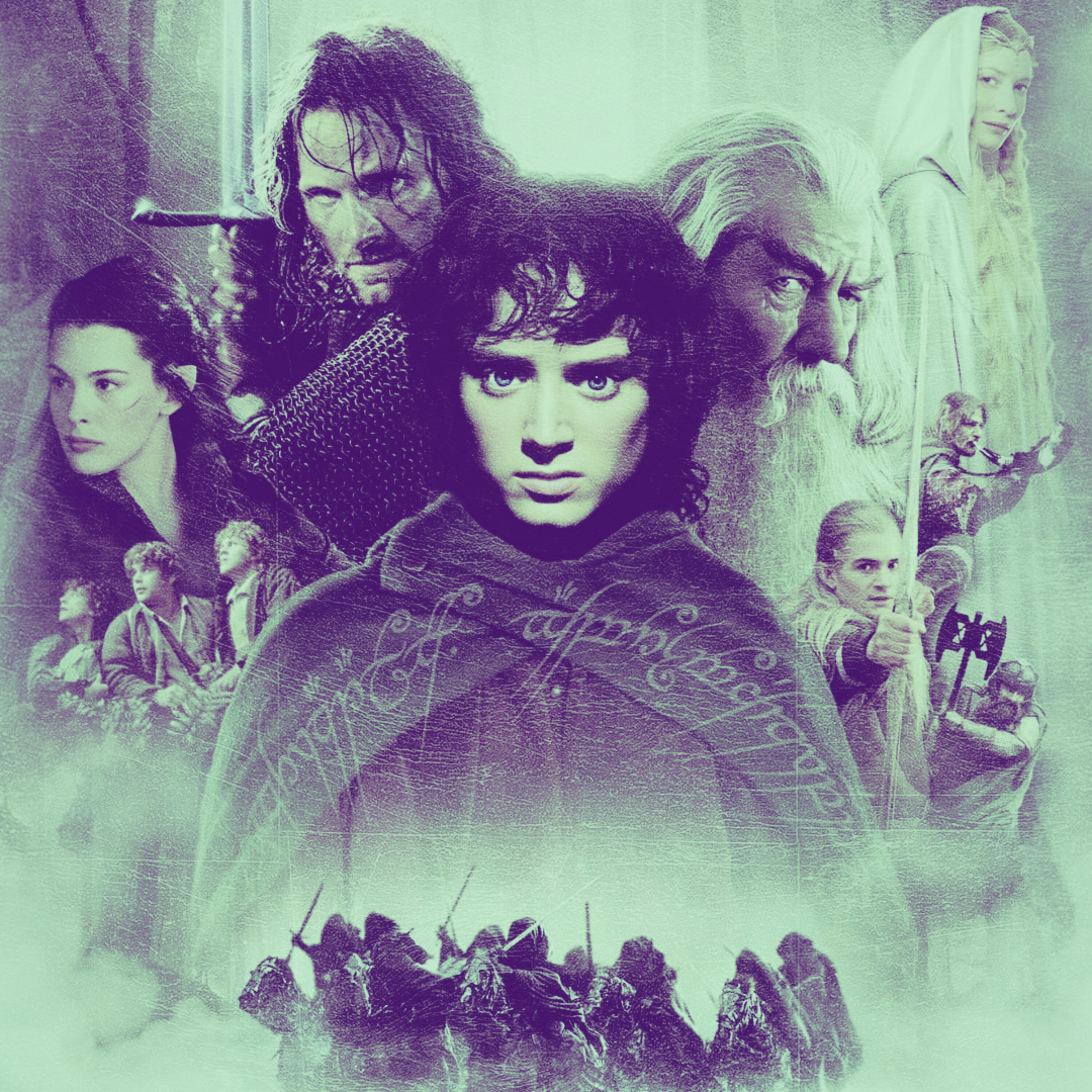
The Lord of the Rings Trilogy Review | Archive
This week’s Best Picture-winning archive pick takes us back to May 2018, when Adam and Josh returned to The Shire for a LORD OF THE RINGS reckoning. The original episode (#681) also includes a Top 5 Lord of the Rings Scenes.
For full access to the show archive, Filmspotting Discord, ad-free + bonus episodes, and more, join the Filmspotting Family.
See omnystudio.com/listener for privacy information.
2026-03-11
39 min
Transcript
Available Results
Generated results are saved to the knowledge database for reuse and search.
No generated results are available for this episode yet.
Extract Knowledge
Pick what you want extracted first. Model, scope, and chapter options appear after a template is selected.
Generated results for public episodes are saved to the knowledge database so they can be reused and searched later.
Transcript
00:00:21
Speaker 1: Film Spotting is presented by Regal Unlimited, the all you can watch movie subscription pass that pays for itself in just two visits. See any standard two D movie anytime with no blackout dates or restrictions. Sign up now on the Regal app or at the link in our description and use code film spot twenty six to receive fifteen percent.

00:00:41
Speaker 2: Off time for another archive drop. Josh, it's Wednesday, and I think we've got a good one. We're continuing our best Picture winners theme with our twenty eighteen reckoning with the Lord of the Rings trilogy. This was originally recorded for the fifteenth anniversary of the Best Picture winning Return of the King. And if I remember this correctly, somehow, even though I saw Fellowship of the Ring when it came out, really liked it in theaters when I saw it, I didn't see the next two installments in the series, and so this was truly my reckoning with the trilogy of films and spoilers. If you don't remember that and you're about to listen to it here, I will tell you that it's okay. It turned out well. I liked it quite a bit.

00:01:29
Speaker 1: Which that apprehension you're alluding to is what I felt at him because I treasured these movies and I know fantasy isn't always up your alley, and I just thought, oh, boy, are we doing this? Is this if you didn't bother to see these? Is you know even if he liked the first one, would it have been enough?

00:01:46
Speaker 3: Is he not going to?

00:01:47
Speaker 1: And yeah, it went well, And I do treasure these movies. I said a weird thing that made Debbie kind of look at me a little bit like pause and do that side eye to you that your spouse sometimes does. I don't know how this came up, but I just said the other day, you know, I think I can see myself as a very old man just being happy watching the Lord of the Rings trilogy on repeat.

00:02:09
Speaker 2: And yes, and she was wondering who she might be with at that point, or which she might be.

00:02:16
Speaker 1: You're so right at him because she's not necessarily the biggest fan. I don't even know why I said it. I don't think I've watched these movies since we did this revisit, so it's not like I'm an obsessive, but there's something about them that has this hold on my imagination. Maybe this review that we did will well a new illuminate for me what that hold is because I know that I didn't come to this review and say, actually they stink.

00:02:42
Speaker 2: We hope you'll find it illuminating. This Currently this year, twenty twenty six marks the twenty fifth anniversary of the first film in the series, The Fellowship of the Ring. It was December two thousand and one, Josh, when that movie came to theaters. And this episode did include our top five Lord of the Ring scenes. Lots of options to choose from. Apparently you'd have like fifty to choose from.

00:03:04
Speaker 1: Yeah, right, you could spend some real cutting.

00:03:06
Speaker 2: You could spend the rest of your life just choosing new scenes that might.

00:03:09
Speaker 3: Be might I might start tomorrow?

00:03:12
Speaker 2: Okay from May twenty eighteen, here is that sacred Cow review of the.

00:03:16
Speaker 1: Lord of the Ring strategy.

00:03:19
Speaker 2: Sure is this really happening, Josh?

00:03:25
Speaker 1: It's been what's happening?

00:03:26
Speaker 2: Fifteen years since Peter Jackson's hugely ambitious and hugely successful Lord of the Rings trilogy reached its conclusion over two billion dollars at the box office, thirty OSCAR nominations, seventeen wins, including Best Picture and Best Director for the final chapter, the Return of the King. Is that why we're devoting the entirety of this week's show to a discussion of the trilogy.

00:03:47
Speaker 1: It should be enough, It should be think it would be enough, But you needed a little more motivation.

00:03:51
Speaker 2: Yes, and I got that in the form of next year's film, Spotting Madness already planning. We know that at least one of these films is going to make the list best of the two thousands, and I had two blind spots here I have only seen up until now. I'd only seen The Fellowship of the Ring back in two thousand and one when it hit theaters. I needed to rectify that. So this is really more Blind Cow than Sacred Cow. We're mixing the Sacred Cow and Blind Spotting. You're gonna get that consideration of the trilogy, and later in the show, we're gonna share our top five scenes from Jackson's epic adaptation. I mentioned last week that I was gonna need some help with the setup, mainly more about timing. I knew, having watched over nine hours of this trilogy that I was gonna have very little time or energy leftover to craft something really brilliant. Just break down these three films and give you the perfect framing question. I needed listeners to help, and they came through, as they always do. They're my Sam Wise gamgee, See, Josh, I can play this game. We heard from it longtime listener Eric Rokee in Miami. He says, I'm browsing letterbox and I noticed that Josh is reviewing the Lord of the Rings films, and he mentions that you will be reconsidering those movies in the next episode. As a huge fan, this understandably got me excited, and not for wholly unselfish reasons. You may not remember, but years ago, there was an episode where Adam and Sam Our current producer former co host Sam van Holgen discussed the top five movie sidekicks. Sam's done a little bit of editing here to this Josh. Sam included redacted from redacted on his list, and neither had Sean Aston. Sam Wise gamgee.

00:05:28
Speaker 1: He's that embarrassed risk.

00:05:30
Speaker 2: Yeah, I'm gonna have to hide that top five list from the archive. Don't you do it? He swore me.

00:05:34
Speaker 3: I'm looking right now.

00:05:36
Speaker 2: Well, just don't share it. I shot off an email bemoaning this fact and demanding that the list be rechristen. The Samwise Gamgee Memorial list. I was excited when I had my email read on the show, but was nonetheless mocked for the suggestions. See jodsh you were missed. In the early days of Film Spotting, Eric needed an ally he didn't have one at the time. We fast forward to now and here I am still a loyal listener. I couldn't help but notice during Film Spotting Madness that redacted was conspicuously absent from the bracket. And yet it is already known that one of the Lord of the ringstilms will be represented next year. I call that vindication. No one remembers redacted, but Sam Wise lives on. I await the on air apology. Kidding aside, I'm really curious to hear your thoughts on the films. I already see that Josh really enjoyed the first two, and I also know that Adam will be watching Two Towers and Return of the King for the first time. If I were a betting man, I would predict that Adam will be less enthusiastic about each successive entry in the trilogy. They focus more on action and spectacle and seem to have less character moments and world building than Fellowship. That's the criticism I hear the most. While I think galam is an exception to that argument, I do think it is somewhat fair, and that is why Fellowship should be the movie representing the trilogy. In film Spotting Madness twenty nineteen, I would argue, however, that this trilogy is unique. It's really one long film, and that isn't just a marketing gimmick. They were filmed as one movie and the script was written with this in mind. Two Towers and Return of the King pick up right where its predecessor left off, and the year in between releases were akin to a long intermission, and Eric is certainly right on all those counts. So I would argue that all the important character work for parts two and three are there in part one, since they are in a sense the same film. Likewise, the off my line multiple endings of Return of the King are somewhat justified because they are wrapping up a nine point five hour epic, not just that third movie. But maybe Adam will say he liked all three. I eagerly away we're gonna find out how much I enjoyed or didn't enjoy these films In a moment, but a little bit more listener feedback here.

00:07:28
Speaker 1: First of all, I think Sam already got to the archives because I don't see it.

00:07:32
Speaker 2: You can't find out and I'm even on the old site and you can't find and O wow, yeah, Sammy works. He was that embarrassed he had to get rid of it. Peterson Hill in Atlanta sent us this.

00:07:43
Speaker 4: Hello, film spotting. This is Peterson Hill calling in from Atlanta, Georgia to share my thoughts on the Lord of the Rings trilogy. Series of films that I enjoy and appreciate, but I probably don't love as much as some other people. But I do think I understand why they're so culturally relevant. I think it's down to the heart that fell us about the Ring premiere just after September eleventh, when our country was really suffering through an identity crisis and a loss of faith, a loss of hope, and Peter Jackson's film comes along with a sense of moral directness and moral certitude that really red shirt with audiences then and now here we are seventeen years later, and our country's acts the same questions again, maybe amplified at this point, and there's a sense of chaos that we can't control anymore. When Peter Jackson's film states that the smallest of things can make the biggest differences, I think that people really latched onto that. So now the question becomes, will these films age so well because of that moral directness and that moral certitude or will they fall by the wayside at some point? I think they're going to age well, but I'd love to hear what your guys' thoughts are.

00:08:54
Speaker 2: Thank you Peterson for that. If you were a betting man, Josh, would you also guess that I got less enthusiastic about each successive entry? And how do you rank them? But more importantly, what is it about these movies that so connects and resonates with you personally but with so many others? Is Peterson wright that it has something to do with an appetite, a desperation perhaps for moral clarity post nine to eleven and today? Or is it in fact the timelessness of Tolkien's original material, the universe sality of its themes, and Jackson's sweeping, skillful rendering of the spectacle, This somehow manages to still often feel small intimately.

00:09:29
Speaker 1: So, yes, my expectation is you did grow weary as the series went on, though I also trying to watch it this time partly through your eyes. Think that there's a lot here that probably did resonate with you, and hopefully we'll get to that.

00:09:43
Speaker 3: That's my expectation, though.

00:09:44
Speaker 1: In terms of ranking, I think these are very even, partly for the reasons we've heard, the way they were envisioned, the level of control exhibited by all the filmmakers. So ranking for me is kind of a ridiculous exercise. I'll say this indulgently. When they first came out, I had put two Towers as my least favorite of the three. Again, I think all three of them might have made my top ten lists of those years.

00:10:11
Speaker 3: So you know this is.

00:10:12
Speaker 1: Quibbling this watch. I'd switch that with Return of the King, I think. I mean it was a matter of weariness for me. Just some other issues include that ending that was mentioned that maybe we can get to as well. For the larger question why does this resonate? I do think Peterson is onto something. I think you could attribute it to the particular timing, but really the themes explored here and these ideas of good versus evil are timeless. Right, this is going to be stuff that the Greek myths were interested in that you know, Homer was interested. I mean, this is stuff that does not go away.

00:10:50
Speaker 3: It's what we live with, it's who we are.

00:10:52
Speaker 1: I'd also argue it resonates because it's not quite as simple as that. And one of the most compelling undercurrents is this idea of temptation and evil being within and the same figure being capable of great good and awfulness. I think, you know, that's one thing that the Star Wars films aren't given enough credit for, even though that's the.

00:11:11
Speaker 3: Heart of them. With the sugar of Darth Vader. So they are very.

00:11:14
Speaker 1: Similar reasons why these movies hold a wide appeal for people, not only in that particular time, but going forward.

00:11:23
Speaker 3: I would argue that the.

00:11:24
Speaker 1: Quality of them is why they will hold up as well. It's not just that they have these universal, timeless themes, but that they're told so expertly. Yes, there are moments where you could tell these films are fifteen to eighteen years old now, but I don't think those were glaring exams.

00:11:41
Speaker 2: Mainly the special effects, Yeah.

00:11:43
Speaker 1: You know, special effects or even tone or things that and that varies right where what will register in one era as camp will register in another era as earnestness.

00:11:53
Speaker 3: I think these again, because they chose to go.

00:11:57
Speaker 1: Earnest with this material, I think that allows them to hold up a little bit better than if they winked at it more.

00:12:04
Speaker 3: But we'll we'll see what you thought.

00:12:05
Speaker 1: I am very curious to hear you know, knowing that you did like Fellowship.

00:12:09
Speaker 2: Yeah, I did. Why it came out in two thousand and one?

00:12:11
Speaker 1: Had your fill at that point? It seems otherwise you would have go to these other movies.

00:12:15
Speaker 2: Right, Rabbit movies, or at least the Hobbit, because I don't think.

00:12:17
Speaker 1: I ever watched the technod encourage you. They did not encourage you to go back to them. But now that you have, Yeah, what'd you think?

00:12:25
Speaker 2: How am I supposed to let go? For years, I've carried the burden of being the dull, unimaginative one, the lord of the rings hater. I wore it so long, Josh I came to embrace it. It became part of my identity forever, parodying my patron, Saint Clerk's Randall Graves. There's only one return, okay, and it ain't of the king. It's of the Jedi. Three movies of people walking to an effing volcano. That's been my mantra now for ten plus years. And what am I supposed to do now? Just forsake those jokes like dene Thor rebuking Pheromir. I'm not ready, Josh huh, I'm not ready for it. But I liked all three of these movies. Yeah, they're good. I liked all three of them quite a bit.

00:13:04
Speaker 3: Might we say they're great?

00:13:06
Speaker 2: They're close? Yeah, yeah, they're certainly close, if not great. And for the record, I threw out on Twitter just about forty eight hours ago at this point, which Lord of the Rings movie is the best? And I was kind of surprised. Maybe I put too much stock in Return of the King being the Oscar winning one, and I do think that's a case. And someone commented on this, but I think it's probably attributable to it being the culminating Femi. So it was an achievement. It was a crowning of all three of the films in the trilogy versus that one.

00:13:36
Speaker 1: It was like a career honoring Oscar a set of movies.

00:13:39
Speaker 2: But I thought, for whatever reason, I had it in my head that that was the one all movie geeks or Lord of the Rings Geeks pointed to as the best one, and at least among our listeners on Twitter, forty five percent had fellowship. Then they went next to thirty one percent the Two Towers and twenty four percent said Return of the King one of the real thrills for me watching these films. So few of the movies we get to watch her in the show I can actually watch with my kids, and I was able to watch this with my three boys. Sophie didn't really care. Sophie and listeners may remember this. It was a while back. She was only seven or eight, and I don't even remember what segment of the show I shared this in, but just proving that the apple doesn't fall far from the tree. She had to write in an analysis of the Hobbit, and at conference time her teacher shared that with us, and she was even more cynical and upbraiding than Randall from Clerks to us. So she wasn't on board. But I'm like, I'm gonna watch this with the three boys and we'll see if Connor, the youngest, who's seven about to be eight, if he is into it, because he's usually into anything that the two older boys are in Sure, he lasted about forty five minutes with Fellowship, and he'd pop in and out through other films, but I just think it was too much for him, a little bit overwhelming. Quinn and Holden, though, really also enjoyed these films, and Quinn finally fell asleep one night as Return was finishing. He was going to do it on his own the next day. So Holden and I finished that film. We finished the trilogy, and I said, okay, how do you rank them? Which one was your favorite? He said, well, it would have to be not best to worst, but best to least best. I said, okay, fair enough, because obviously he was also into them.

00:15:12
Speaker 3: I think that's how I think about it.

00:15:13
Speaker 2: He went the Two Towers, Return of the King, and Fellowship last, and guess what I with him, Okay, yeah, that's also how I would rank the three films. Fellowship for me, I think is obviously more exposition. It's more introduction. As much as I love Kate Blanchett's voice, and I know this is probably heresy, part of me really thinks the opening might have been a little bit more intriguing and successful overall. If that prologue actually didn't have that voice, and all of that talking and all of the backstory made it made it clear to us by seeing that play out, by seeing il Sidor, is that the King look at you? I think it's Ilsidor, right, And seeing that whole thing play out with Saarron. I don't know that we needed the narration to tell us what was going on as much. I think there probably would have been a way for it to be clear enough but also still a little bit mysterious, something we really thought about and haunted us as we watched the rest of the film. I do, I do recognize completely the challenge of that, yeah, right, the material and information they have to wade through.

00:16:14
Speaker 1: And that's one thing question I had, because I'm often critical of mythologies, right when when movies begin with the ornate mythologies that make me just kind of slump in my seat, and I thought, maybe that's something I've just gotten sick of, and is it going to strike me this way when I go back in its defense, Well, number one, it's drawing directly from a source material novel, so there's a richness there that it's drawing from. But also, and this is one of the things I thought might appeal to you. This is very much a story about storytelling, yes, and so that through line starting it that way made sense particularly for this tale for me.

00:16:49
Speaker 2: Now I can see that, I think as well. There is a certain redundancy for me in the journey where they just are consistently stepping out of one really terrible situation that they somehow manage to survive, and they get a little bit of a respite, and then they're back into another very similar type of terrible situation and fellowship, I guess, And I like the film quite a bit. I think though the reason I put it just behind the others is the way it handles that storytelling and the structure, and I guess the efficiency of it, for lack of a better word, Towers really was for me a little bit more satisfying, I think, and how skillfully we cross cut between the different quests we have Frodo and Sam obviously on their separate journey. I do note, however, that we go a long period of time about halfway through where we don't see Froto and Sam for a while.

00:17:36
Speaker 1: So that goes to my original ranking when I reviewed these, which I don't feel strongly about, but I basically knocked it down because I wanted more Frodo.

00:17:43
Speaker 2: Yeah, and I think I actually I like Eric, Gorn and the other characters more than Frodo, so that didn't really bother me as much from just a narrative structure standpoint. It did stick out to me and distracted me a little bit, But I think up until that point, until I really started to notice their absence, I actually really loved the way it was cutting between those stories, not only Frodo and sam er Gorn and Legolas and Gimli, but also Mary and Pippin. We get Gandalf's return, which is of course wonderful. The new characters we meet, I really enjoyed Feodin, Pheramir, and especially Aowen who Miranda Otto is just wonderful and we'll probably talk more about her, if not during this segment when we get to our top five. Yes, there are skirmishes along the way, but rather than following that exact type of structure, it all builds to that big battle at Helm's Deep. So for me, I think that's why I ranked two towers just a little bit fair.

00:18:35
Speaker 1: To say, of the three, it's the most Shakespearean or has the Shakespearean echoes, you know, the burden of Kings and the language plays are.

00:18:44
Speaker 3: Yeah, exactly, so I did.

00:18:45
Speaker 1: If I had to guess, I would have guessed two towers would be the one that won you over. So that's that's good to hear. So, yeah, I did you know I watched this. I don't normally do this. I wait till we get together and you know, find out what you thought. But I did watch these again, thinking now that I know you fairly well, I wonder how this is going over and it's it's like, you know, the ents, the walking tree guards at the oh boy, I don't know, conflicted, and we don't have to get into the ends, but there were moments where I was like, really, like, my kids loved the ends, Okay, yeah, I love so general rule I and this has to do with the special effects. They don't hold up well. Whenever a human is riding something, for.

00:19:27
Speaker 2: The most part, that's almost universally true.

00:19:30
Speaker 1: And the ents, if you just look at them, are intricately designed and really quite beautiful and spooky. But whenever Mary and Pip and are riding on true Beard's shoulders out. So anyways, I was I was thinking about, you know, how's Adam taking this, And I didn't want it to be, as you said, like the unimaginative guy who's But I do think it's it's revealing of what we're looking for when we go to movies and what stimulates us. And it struck me that, you know, why might fantasy in general not be your bag? Though it's great to hear that that you know you did appreciate these, it might come down to the fact that, you know, some of us go to the movies to have our intellect tickled. Some of us go to the movies too, have our imaginations ignited. And it doesn't have to be one or the other. And it's not a matter of what is the better art, right, It's it's more of how we're wired and what sort of art resonates with us. So maybe fantasy at a certain point doesn't do it for you. I think this is maybe why I have my limitations with Steven Soderberg, because he's forced and foremost intellectualizing cinema, right, and it's genres, it's it's forms, and at a certain point, you know that that becomes a little boring for me.

00:20:44
Speaker 3: So some of that's difference.

00:20:45
Speaker 2: That's a distinction between us.

00:20:46
Speaker 1: Yeah, I think that's fair. And so it's again, these lines aren't hard and fast. I don't mean to suggest here that Lord of the Rings is bereft of ideas. I think there's a lot here about power and temptation and that sort of stuff. I just think that above all, it stimulates the imagination. And when you take these all together, this is the first time I've I've really done something like this. I remember back when I was with a Naperville son, a colleague convinced me to try this in might have been one day, I don't remember.

00:21:15
Speaker 3: If we made it through all.

00:21:16
Speaker 1: Of them, this would have been not long after they all came out. But this is the first time in a long time I've sat down and watched them closely together. And I think, taken together, they really are a masterpiece of the fantasy art form. And if your brain is wired that way and imagination is what you want to experience, these are just really going to work for you. And I came looking at my old reviews of these, I came across this quote from Fellowship. This is Tolkien describing a character listening to elves sing almost it seemed that the words took shape, and visions of firelands and bright things that he had never yet imagined open out before him. And I think that's what Lord of the Rings. They do that for me beautifully in particularly cinematic ways. You know, things that I experienced reading those books as a kid, Now it's happening for me again cinematically. And so it was, you know, as much a relief to hear that you appreciated them, a relief for me to find out that they do still hold off. Yeah, because I love these when they came out.

00:22:16
Speaker 2: You know, this question that we started with about the universality or the timelessness of them, this is something that's come up recently, I know on a few lists I've done, And even going back to my review or our discussion of Paul Thomas Anderson's and Hero and Wece, I remember talking about how is very easy for us to look at any time period in American history we tend to glorify, maybe the loss of innocence of Watergate. We talk about the arrow we're living in right now, but really, when you think about it, every decade has its crisis, Every decade has its own version of conflict where I'm sure the people living through it felt like it was the end of the world, so to speak. And I do think, of course, you can make a case that the time we're in right now is maybe just a little bit up a notch, just a little bit crazier. But that said, I think we are always, to some extent going through strife and turmoil, and these conflicts are cyclical. And I have not read anything about these movies at all, or anything about the books. I really know nothing about the lore. I know that they were published all together in nineteen fifty four, nineteen fifty five, over that period, and you think about these movies coming. I was thinking about that as I was watching them, and thinking about them coming on the heels of World War Two, where you've got the world torn apart, you have these warring nations, and then the story comes along and says, this is a time for healing and unity and the dominion of men being a good thing after all of this turmoil and destruction. And I have to imagine that was a fairly comforting thing for people who were reading it, even if it wasn't totally conscious. And I think every generation is going to connect with that idea on some level, But every generation is also going to see themselves in Frodo. They are always going to be hordes of readers who think of themselves as small and insignificant, and who have these inner conflicts, and they want to be or at least want to have friends with the strength and the courage of Aragorn and Legolas, and they want to have friends who are as loyal to them as Sam and Mary and Pitbar. And wouldn't we all love to have the wise old figure with the staff to guide us, who seemingly has all the answers and knows the way. So I think that's always going to connect with people. And I'm watching it as well, thinking about World War two, and then I'm thinking about the end of the trilogy, the culmination, and we can talk about that a little bit. I saw your letterboxed comment, so I know you have some issues, and Eric touched on that with how Return of the King ends or ends multiple times, And we are going to spoil this if this isn't clear by now. We're going to consider these films in their totality. But they return to the Shire and the four Hobbits are sitting at the pub, and they all just share looks. We get those those glances, the cuts to the close ups, they don't say anything. They finally do cheers with their mugs, but otherwise they don't say anything. And you realize that in that moment they're almost not there. Life is going on around them. It went on without them there in the Shire. They're present in a way, but everything has changed inside them because of this crucible of this journey that they have gone through. And I'm watching it thinking of Vietnam veterans. I'm thinking of these people coming home from battle scarred. They don't get a heroes welcome, they don't get the heroes welcome. When they come back to the Shire. They have sort of that thousand yard stare sitting there drinking their beer and they're thinking where do we go from here? And I really loved the melancholy of that ending. That really did surprise me. And I've thought about it a little bit since seeing your post. No doubt that as I watched the movie, I felt like the movie had ended three times. But as I reflect on the movie, and I reflect on how much I really like Return of the King, I don't know how they would have done it differently. It would have felt false on one level for it to end with the coronation, as much as that does feel like a finale and it's a wonderful moment, and then them getting back to the Shire adds this other element, this kind of melancholic note that I just talked about. And then even from there, I think we'll get into it a little bit more. But that coda finally with them heading off and leaving Mary and Pippin and Sam wise back at the Shire, I think that adds its own other layer of depth and emotion that we really did need. I don't know how you would have ended it any other way than it ultimately did.

00:26:29
Speaker 1: Yeah, And to be clear, it's not that I think what the way they did it is ruinous or anything. I just felt the refusal to conclude more fully this time, and it's part of what you talked about. I do think the perfect ending was in the Shire. I love that it returns there. My recollection from the book is that is where it does eventually return to, and that note there's a strong thread of PTSD. We would name it now and maybe wouldn't have in early two thousands. Throughout these films, the recognition of the cost of all of this battling. It's for all the battle scenes. I don't think you could call it a war mongering film. People might debate me on that. Are there as certainly elements Legolas and Gimli counting their kills. Yes, really, it hits a bad note because it's at odds with this otherwise recognition of the cost of all this violence.

00:27:17
Speaker 2: Let me jump in real quick and say that one of the things that Tolkien managed to pull off, and so then Peter Jackson is the beneficiary of it is unlike so many war movies where even if we as viewers feel like they're killing the quote unquote enemy and we think that the causes righteous were hyper aware, I think most of us are anyway of the cost of those lives. And there is a lack of moral clarity in pretty much any war movie we can think of. There's no lack of moral clarity here. They're killing orcs. They're killing these creatures that were bred. They're not even they're not human, they're nothing, They're they're these creatures bred to be monsters to kill. So they get around that.

00:27:56
Speaker 1: Well, yeah, so that's an out But the attitude with which they do it. I think counting kills is at odds with the otherwise recognition of loss that these movies have. But getting back to the endings, I just think that Shyer moment was so nice because it did end on that note of melancholy. There was also the note of frodo again going back to this being about storytelling, adding to Bilbo's tail with his book, and for me, it could have ended there would have been perfectly that they went forward beyond that as fine. There's nothing terrible about those moments. I just do you feel that sort of like Lurch.

00:28:30
Speaker 2: I agree completely, but intellectualizing it later. The other thing that occurred to me is that maybe the most universal aspect of this film, ultimately, the broadest thing you can say about this film, of course, is that it is about identity, all these characters realizing their destiny, or it occurred to me, Josh honestly, to put it more simply, they're growing up. And you've got at the end of this film with that Codo, you've got the Wizard and the elves and a couple of the Hobbits saying you know what, I'm saying goodbye to this world of men. These fantasy characters are taking off on the boat and they're leaving the men now to rule and rule themselves and live hopefully in harmony. And we have Aragorn. I'm thinking about how he's accepting the throne and in the process a wife, and we know they're going to have a future son and Air. And even with Sam going back at the very end of the movie, he's accepted adulthood. He has the wife and the kids, He too has grown up. And it's ironic that if Tolkien's goal was to create this rich, expansive world in the hope that we'd traverse through it with these characters and come out the other side thinking it's now time to put aside childish things, well he failed, obviously, right, because everyone's just latched onto this mythology, and it's captured the imagination of so many kids and so many adults who don't let it go. And I swear it. As I was taking all these notes today, I put it aside for a little bit, and then I wanted to clarify something about how the movie ended, and I did a Google search, and I found a quote from the end of the book from Tolkien, and this is what Frodo says to Sam and the other Hobbits at the end of the film, and as I recall, this isn't in the movie. He says, you must settle the Shires affairs yourselves. That is what you have been trained for. Do you not yet understand My time is over. It is no longer my tasks set things right, nor to help folk to do so. And as for you, my dear friends, you will need no help. You are grown up now, now grown indeed very high among the great you are, and I have no longer any fear at all for any of you. So that goes back to everything that I was already tapping into about the ending of that film in terms of this idea of growing up, And that goes back to the storytelling element too, Josh, where he has written the book in that CODEO we get then the book being handed over to Sam. He wrote the book and literally closes the book on this fantasy chapter of their lives and says, you know what, now it's time for us to move on. So this whole idea of these books somehow being about this ushering into adulthood, and of course what's really universal about that is none of us want to go. None of us want to be ushered into adulthood.

00:31:01
Speaker 1: Right, And you know, so what's being referred to there is growth, maybe not so much of age, but of experience, yes, and of understanding. And I think, you know, I'm not an expert in it, but Tolkien wrote about myths and wrote a famous essay on fairy stories, and they're from what I remember, he talked mostly about using these fantastic situations to bring out deeper truth that then you can carry with you in your mundane life exactly. So that's you know, yes, people you know, latch onto these and in a way are revisiting their childhood. But I also think it goes back to what I initially said about igniting their imagination, and then you're also igniting through that a moral imagination, and those two things, those two things can be intertwined and lived out as an adult at its best. And this is somewhat related. One thing I really wanted to talk about is this idea. It struck me during the Two Towers, in particular, this idea of the ring itself that's driving all of this.

00:32:04
Speaker 3: As you could say.

00:32:06
Speaker 1: On the one hand, it's just a moral mcguffin right, that it's this thing of temptation. And how many times have we talked about, especially in these Mawerful movies, that there's always a mcguffin something at the center of it, just to drive the action. But the ring in these films it's more than that. It's more than just a symbol for things. It's really a character. And there are very cinematic ways that Jackson and his collaborators make that little thing a character. When you think about when we first see it, it has its own theme music, Yeah, by Howard Shore. Okay, so like a superhero gets a theme, here, the ring gets a theme. The cinematography, there's that moment where it reflects a shower of light across Frodo's face, so it has a presence beyond itself. The great sound effects of when it's dropped on the ground, it's this heavy thud, as if it had dropped Thor's hammer. And then when Frodo puts it on and he disappears, and we get these when we see him, the background is blurry, it's like this smeared Renaissance painting, but he's kind of in focus. I mean, all of this of course backs up the idea of I guess the thematic weight that the Ring does have as well. It's this character around which all these thoughts about power and corruption, temptation, addiction. Even it struck me we'll get to Gollum eventually. I'm sure as a figure of addiction in many ways, that this little thing is really at the center of it all and not just as a plot device.

00:33:37
Speaker 2: No, no, you're absolutely right. And I do have more to say about The Ring and how we recognize through some of the choices Jackson makes and the actors make, we really do understand the full weight and impact of it. But that's going to give them out top five, so to save Yeah, I've got a lot more I could say about this movie, but it's all going to come up when we get to our favorite scenes from the trilogy. So what else? What else do we need to dissect at this point?

00:34:01
Speaker 1: The other thing I wanted to make a point of that I didn't find a place for in my top five, but we can save it if it's in yours is that these really function as horror films. And I think, you know, Peter Jackson, Yes, he made heavenly creatures. I think that was his kind.

00:34:15
Speaker 3: Of art house breakout.

00:34:17
Speaker 1: But he got attention earlier than that for Dead a Eye, and then right before The Lord of the Rings, he made the Michael J. Fox horror comedy The Frighteners. I actually interviewed Jackson at a hunted Chicago bar for that movie.

00:34:31
Speaker 2: Why am I just learning this now?

00:34:33
Speaker 1: Not a great film, but an interesting one and certainly has horror elements, And think about all of the pieces here that are just pushed over into the horror arena. The makeup design, absolutely, the gorness that these orcs and other creatures are given. They're really awful and frightening. You mentioned Kate Blanchet when she when her elf queen here, oh yeah, myself into trouble. But at one point she imagines having the ring herself, yes, and she turns into this ghostly possessed specter.

00:35:09
Speaker 2: I mean that's and she says she passed the test, and I'll be honest, that's still the moment that on first viewing, I don't know totally how to process you what exactly I'm supposed to glean from that what test she passed? She she did have that element, but she didn't take it.

00:35:22
Speaker 1: She had the power to take it from Frodo. She managed to hold back there. Yeah, she might still let that beast out right, And that's a scary, scary beast. The eye of Soren. This recurring image is nothing short of demonic, and even little touches like when they're walking through the bog Frodo and Sam and Gollum and those faces of the corpses under the water. I mean, you could go on and on. The Ghost Kings of Return of the King. I know, the ghost Kings not you know, kind of a not a favorite element of many fans. They are reminiscent of some of the effects and the Frighteners though. I mean, really, if there's an a tourist case to be made for Lord of the Rings, I think it's looking at these horror elements that are clearly part of Jackson's stamp. Okay, one more thing to talk about. I'm sure this is in terms of the acting overall. I'm sure we're going to give time to Ian McKellen. Let we get to our top five as Gandolf, but I want to make sure that we also talk about Bernard Hill as theodin the King of the Horse Riders of Rohan. What a great character arc he gets as maybe like what the twentieth person introduced in this saga, but still he goes from this possessed king more horror there to kind of a reluctant warrior to eventually this valiant rescue get an exorcism, and yeah.

00:36:34
Speaker 3: No kidding.

00:36:35
Speaker 1: And as far as the Shakespeare stuff goes, Hill could probably make any line sound Shakespearean. But I think here he's given some really poetic stuff. I don't know if this comes from Tolkien or if it's from the screenwriters. And at least on two Towers, there were four of them, Jackson fran Walsh, Philip A. Boyans, and then Stephen Sinclair. But there are of course those two famous speeches he gives at Helm's Deep how did it come to this? And then later so it begins. But I really like that eulogy he has for his son, where he's mourning the loss of his child and also this curtain coming down on his kingdom. I think that's another instance of you know, the movie pausing when it really doesn't have much time to spare for a significant scene of grief and loss. So, you know, I don't think there's a bad performance in this series. Maybe you disagree.

00:37:22
Speaker 2: Now I don't feel that way. I agree with you. I think they are all good, and in fact, we will talk about It's funny the last three things you've talked about in terms of the horror aspect, the ring itself, and the performances and the stature of some of these actors and the complexity they bring to the characters. It's all going to unify in one of my top five choices, So we will get to more of that. But I love Bernard Hill here. I agree with you. I considered his exorcism scene actually as one of my favorite scenes overall in the trilogy. And I mention complexity. I love the fact that we are never quite on firm ground with him in terms of we trust that he is a nobleman. Other people seem to think he's a nobleman. But he's fighting some of the same issues of jealousy that other characters are in terms of Aragorn and the stature and the status that he might have, and he's got some negative feelings about some of these other kingdoms, and rightfully so. So you want him to make a certain decision. Gandalf is urging to make a certain decision. He is maybe ambivalent, you understand though it's driving that and you do feel for his position. So that's where some of that that Shakespearean stuff comes through as well with his character.

00:38:32
Speaker 5: Simblemon, ever has it grown on the tombs of my forebears? Now it shall cover the grave of my son.

00:38:46
Speaker 3: Alas that these evil.

00:38:47
Speaker 5: Days should be mine, the young Pettish and the old linger, that I should live to see the last days of my house.

00:39:02
Speaker 3: Sadrew's death cause not of your own making. No Petters should have to betty that.

00:39:11
Speaker 1: Child access to the film Spotting Archive. It's just one of the benefits of joining the Film Spotting Family. You're also going to get bonus shows, a weekly newsletter, early access to events, and more. To join, go to Film Spotting Family dot com.
Chapters
No chapters available.