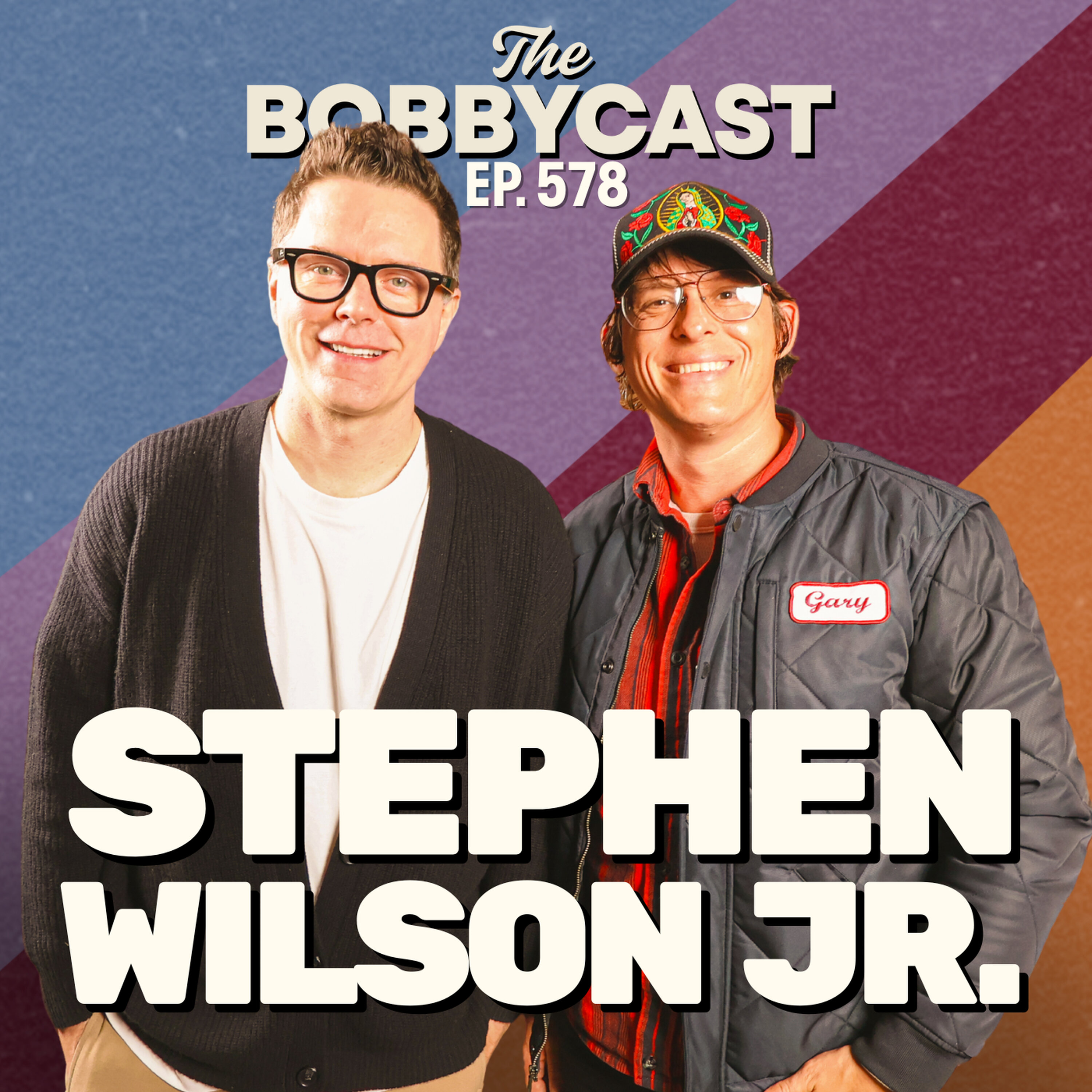
#578 - Stephen Wilson Jr. on Going from Scientist to Musician and Turning Tragedy Into Art
Stephen Wilson Jr. joins Bobby to tell the wild path that took him from the science world to writing songs for a living. He talks about what he did before music, why he finally took the leap, and how that analytical brain shows up in the way he writes, records, and builds a career. Stephen also gets into the grind of starting over, how the loss of his father fueled him, and what he’s chasing next as his story keeps getting bigger.
Watch The BobbyCast on Netflix!
Follow on Instagram: @TheBobbyCast
Follow on TikTok: @TheBobbyCast
See omnystudio.com/listener for privacy information.
Available Results
Generated results are saved to the knowledge database for reuse and search.
Extract Knowledge
Pick what you want extracted first. Model, scope, and chapter options appear after a template is selected.
Transcript
00:00:06
Speaker 1: My dad hates thieves. The Cardinal sin to him this theft, so I knew like, if I got caught, the most supreme feeding ever was gonna come behind it. I was like, don't care. I'll die for this. I got it. I'll go to jail for this. I'll go to boys' school. I don't care.

00:00:24
Speaker 2: Hey, guys, Bobby Bones here, today's guest. One of my favorites. It is Stephen Wilson Junior. He has been killing it lately. He was nominated for New Artist of the Year last year Cmas. He performed stand By Me. It was amazing. The crowd went crazy. We talk about that. His album Son of a Dad, came out last year, thirty four songs basically dedicated to his dad who passed away. We get into that here he's kicking off a whole new chapter with a single Gary, and he's gearing up for the Gary the Torch twenty twenty six tour, and go to Stephen Wilson Junior dot com for tickets there. He's also we talk about this way later. I'm married to Lee Nash. The leads up six pencent on the Richer, which fun fact, So we get into all that one of my favorite artists right now in country music. Here he is Steven Wilson Jr. When did you start playing music of any sort?

00:01:11
Speaker 1: Around sixteen? My dad got me my first guitar for my sixteenth birthday and he caught me picking out theme songs to sitcoms on one of those crappy little Walmart keyboards and he was like, well, how are you doing that. I was like, I'm just doing it. It goes like this, and he was like okay, And then he could he knew I was super into rock and roll and I was a real nerd. I like had piles of like these biology notebooks and I was a real quiet kid and super into science. And I think he was just kind of worried about me so than anything. He was like, this kid needs some help. And I was boxing. But boxing is a solitary sport. You know, it's very it's a lonely sport. It's one on one, it's not a team sport. And so you know, he got me a guitar because I think he could see that I had this natural affinity for it, and I mean I just started going. I just started playing it. It was it was like I just understood it. I don't know, it just made sense.

00:02:17
Speaker 2: Was it was there science and music to you? Like the math of it.

00:02:21
Speaker 1: Yeah, I wouldn't say the math, but the shapes of it and the alchemy of it, the chemistry of it, more fascinated me than the math. I learned the math later with some of the music theory. I didn't really get big into it, but you can quickly see how the numbers work within it. But I was more interested in the chemistry of songs, like the alchemy of and you know how they change emotions and the colors of chords.

00:02:46
Speaker 2: You see colors of chords.

00:02:49
Speaker 1: Uh, yeah, I think so in shapes like a lot, you know, that's kind of I kind of piece them together in that way, and.

00:02:59
Speaker 2: You would see a shape or color like if I just hit a G you would in your mind you see a color.

00:03:04
Speaker 1: Yeah probably yeah, brown and uh and then yeah, like a right triangle like yeah, I mean that's you're serious, very serious. Yeah wow, But you know that's kind of how you're it's your brains with allowing you to remember things. They're just I think it's how I I've always been pretty good at memorizing music, and yeah, I have a very visual memory, Like I've always had that ability to read things and memorize them fast. It's helped me a lot through science because science is a lot of memorization and regurgitation, and so, yeah, it helped me memorize music because sonically I had a harder time memorizing it at first. You know, it was the shapes helped me keep track of it all.

00:04:00
Speaker 2: When you would explain to people what you were seeing, would they understand meaning, yeah, I see a shape, but unless someone actually knows music or understand what you're talking about, or did you try to explain that.

00:04:10
Speaker 1: No, I never tried to explain it, and I've never really explained it it ever until now. I guess it's it's just a way from my own personal brain to kind of, you know, synthesize it and compute it. All. It makes no sense to anybody else.

00:04:27
Speaker 2: I say that, and my wife does this all months have a number and she can see any word. He can say any word to her and she can spell it backward because she can see it in her head.

00:04:36
Speaker 1: Yeah, do that too, Yeah, and I had ABC's all that.

00:04:40
Speaker 2: Yeah, I don't have the ability to do that, but I can say rumble Stiltskin and she can just look at it and spell it backward all the way through. Yeah, and she'd be like, I didn't even know people couldn't do this.

00:04:49
Speaker 1: Yeah, my dad could do that very well. He was like a genius at it. So I think I inherited it a little bit from him, even though he hated academics. He just had this weird like visual memory, so.

00:05:00
Speaker 2: He hated academics. You were extremely academic.

00:05:03
Speaker 1: It sounds like, yeah, I was really nerdy, and you know, in a different household, I think I would have been a really great academic. But I grew up with so much trauma with my mother. My mom and dad split when I was a kid, and she ran off with these these guys that were abusive and really abusive, and so I spent a lot of my time in fear of my mother's life.

00:05:28
Speaker 2: My old should she stay in your life?

00:05:31
Speaker 1: Yeah, she moved to Tennessee. So but we obviously stayed in contact and visited a good bit and we're very close now. But there was a time period in my childhood where it was just tough, and you know, I spent a lot of my childhood and just perpetual, like kind of a catatonic state of just fear, and it was really hard for me to be the student that I probably should have been because I was extremely distracted by that. But yeah, I think I a you know, and it took me a long time to realize that until I I kind of got past, you know, what was happening with my mom, and once I got to high school and I really realized what kind of academic I was. And then in college, it really became obvious because I my father imprinted so many things on me and I you know, he didn't mean to do this because he was a child with a child, but I remember him telling me as a kid, you know, because I got his name and I looked just like him, so I think he was under the assumption that I was going to be just like him. So I remember him telling me, like, you know, Steven, I'm you know, we're not good at school, Like we don't. You know, you don't You're not going to go to college because you know people you know, people like me. We we don't, we're not good at school. I remember him just kind of imprinting that on me as a kid, and I was like, but I but I liked school and I it's it's not hard for me. Most of it isn't at all, and but I just kind of, you know, it made me think that school didn't really matter, you know, early on, and then I shook that loose because you know, I kind of had to. I kind of had to prove him wrong. I was like, no, like as I got into like organic chemistry and ap classes, classes, he could have never even thought about going into it. Kind of it kind of challenged me to kind of disrupt perhaps that family, you know, in his mind curse like you you know, we don't you know, we work with our hands and are you know, and that's it. You know, schooling is not for you.

00:07:41
Speaker 2: Do you think his dad imprinted that on him big time?

00:07:44
Speaker 1: Yeah, you know, because they worked. They grew up in body shops and worked in body shops, and you know, the whole his plan for me was, you know, graduate from high school. Best you can go, get your job, get you some money, you know. And that was stability, rightah. I mean that was in a small town in southern Indiana, that that was the life, you you know, and he believed I could at least do that. And I'll never forget when I left for college. You know, I got into college on my own. I did everything completely on my own, like financial aid, saved up money. I took a year to save up money. And and like, you know, for about six weeks before I would, you know, I say, Dad, Mine, you know, I'm going to college and he'd be like, well, no, you ain't going to college, okay whatever, and uh. And then like four weeks until I left, and I keep talking about it, and and then the night I left, I was, I was, you know, it was late. I was gonna leave late at night so I didn't have to deal with morning traffic driving out. And so I left and I woke him up because he went to bed at like eight at night because he'd get up at four. And I said, Dad, I'm leaving. And he said where are you going? And I said to college. And I feel like in that moment, it just he couldn't believe it, Like he thought I was kind of making it up. He's like, oh, he's just gonna go to a hotel or something for a couple of days, like.

00:09:21
Speaker 2: A little kid running away. He'll come back.

00:09:22
Speaker 1: Yeah, like exactly, and he really it really and he got up and he got his wallet out and he pulled he had twenty dollars in it, and he was here like, I don't know to tell you, Like he gave me a hug and told me he loved me, and and I was I never lived in his house again after that.

00:09:41
Speaker 2: That's such a loving gesture though, of not knowing what to do, so doing the one thing that you can do to provide any sort of extra ability is handing over money.

00:09:48
Speaker 1: Yeah, and it was just twenty bucks, but it was that's it was a very meaningful twenty bucks. It was the only you know, and uh and that's what started my college career and I got a college degree with When I graduated from college, I couldn't have couldn't have seen a prouder father, really, because I think I defied so many things, Like I broke so many paradigms in his brain, Like it just I just took a sledgehammer to those walls. And he was like, okay, we we we aren't those people that I thought we were.

00:10:23
Speaker 2: Well, you taught him something, yeah, totally. Not only are we both wildly good looking guys obviously both of us, it's like a mirror like, hey, hey, you guys. I was I was the first kid to graduate high school in my family, and when I applied to college, nobody knew. I woke up and was like, hey, I'm leaving. I'm going to college. I didn't have a bedroom, still on the couch, yeah, my whole life. And so I grabbed all the clothes underneath my couch, which was like my closet, and I was like, you're just telling that story, and it's like it's in another that's me in another dimension.

00:10:55
Speaker 1: Yeah.

00:10:56
Speaker 2: And I got in my old suber route and left and they were like all right, see you later. And that was it. And I went to college. I mean it was the same thing. I just went to college, like there was no they didn't know anything about me. Taking at acts. I did it all, got everything, you know, covered, and then I just told him. I was like I'm going to college today and they're like okay. And then I just went to college. It's this, it's the same version of your story.

00:11:18
Speaker 1: Yeah that's wild. Well, well here we are.

00:11:22
Speaker 2: It's like two models sitting here talking about our academic careers. So if I chose this and you chose something a lot smarter.

00:11:31
Speaker 3: Let's take a quick pause for a message from our sponsor. Wow, and we're back on the Bobby Cast.

00:11:45
Speaker 2: And you get to college, did you you had an idea what you wanted to do, right, because you started to enjoy like some of those you said ap classes insights in high school.

00:11:53
Speaker 1: Yeah. When I first got into college, I was going to be a veterinarian. That's if you, if anyone want to ask me as a kid what you were going to be when you grow grew up, I would have been going to be a veterinary.

00:12:03
Speaker 2: You have animals at home, is that why?

00:12:05
Speaker 1: Oh? Yeah? And I just was obsessed with animal zoology, most likely like a you know, working as like a vet at a zoo, not like having my own practice like I would have been like probably some specialty vet or something drafts cheetah. And but I, you know, ended up working as a vet tech for a couple of years while I was in college and quickly switched gears after I realized what veterinary medicine really looked like. I had two great doctors I worked for and learned so much, and then I switched to microbiology and chemistry, and because I really found out that the microscopic world was way more fascinating to me because I felt like the microscopic world explained the macroscopic world or the macro world. Honestly, you know a little bit more, you know than the macro world could. It kind of like helped me understand the small things, helped me understand the big things. And I found, you know, under a microscope, a lot of the small things are just mirroring the big things. They're just they're like, you know, the worlds are the same, they're just scaled up differently.

00:13:20
Speaker 2: So where did you end up like it? How did you decide, like specifically, what you wanted to do for a career.

00:13:28
Speaker 1: Well, I didn't know exactly. When I graduated with my degree in micro and chemistry, I was going to honestly go get my medical doctorate or a PhD. That was my first my next step because in you know, the applied science is without a PhD, it's going to be tough. But I ended up finding a really good job with just a bachelor's I'll get to that, but that was my plan. And I ended up starting this indie rock band the last semester of my senior year of college.

00:14:00
Speaker 2: And what was the name of the band?

00:14:03
Speaker 1: And I was a lead guitar player played this green stratocaster that I still have today, and it's a Jeff beckstrat and we just started playing because I was playing music. I was playing in jazz bands and university, and I was a self taught guitar player, but I was a serious jazz nerd and rock and roll nerd, and people would hear me playing in dorms and stuff. And when I moved to Nashville, I met some friends that I knew from the previous college that I went to, and they asked if I'd want to just playing this band, and I was like sure, I had nothing better to do outside of my degree and I was almost finished. And anyway, we started playing shows, and before we knew it, we had like a manager and we made a record, and before we know we were on tour with these bands. So I went and played in indie rock bands right after I grabb situated from college, not really planning to do that. They just this opportunity just kind of came up, and I couldn't really say no to it. It was such a cool experience to have, and so I went and explored that and just to see what that life was like. Living in a van with you know, three of my best buds and traveling around the country and sometimes the world and playing shows for five people or five thousand, and you know, that's where I really learned how to perform. Besides boxing, Boxing was kind of my first stage, but this is where I learned how to be in front of people with a guitar and not boxing gloves on. And you know, because I was a weird, quiet dude, not necessarily someone you'd be like, you belong on a stage, so like, you know, you're going to be a store. No, that was not like being spoken to me. But I learned, you know, how to you know, handle a crowd. And I learned how to sing because I became a background vocalist in that band.

00:16:11
Speaker 2: Yeah, you said, you're playing guitar, you want the lead singer.

00:16:13
Speaker 1: No, I was kind of a shredder, playing too many notes, but singing a lot of backgrounds. And I was writing or co writing the songs with the lead singer. And that's where I really for the first time, saw a song that I'd written or co written and I'd see people like react to it or start singing it, and I was like, whoa, that's a that's a new experience, and so I really became enamored with that, you know, because I was super into poetry and songwriting. I was kind of like a secret songwriter, you know, outside of my science stuff. It was my own little secret. But I wasn't singing them or anything. I was just writing these poems and stanzas. I had books of them, and my mama did that. I used to find her like writing poems on junk mail and throwing them away, and I just kind of stole that little technique from her because she was going through terrible stuff, like so she would write all these poems. So I just picked that up and I channeled that into that band, and then kind of saw those poems come to life in that band, and I was like, this is a really special thing. You like music and being a creator of it. I'm not sure if this is is this my career path? I don't know.

00:17:25
Speaker 2: You have a job at this point. I was in nine to five.

00:17:28
Speaker 1: I was working as a contracted scientist.

00:17:31
Speaker 2: So you were doing that while you were touring. How did you I feel like you're a scientist, you're kind of stationary.

00:17:38
Speaker 1: Yeah, I was working contract to contract, so i'd work at one lab and I work at another lab for a week, and I kind of work around our touring schedule. And there is this company in town that is a staffing agency for scientists like chemists, microbiologists and engineers. Think of it like a staffing agency for anything, but especially for the applied sciences. So you know, some businesses and some laboratories would need a scientist, but not permanently. They just need it for like six months on this project, or six weeks or maybe six days. And there was the contracts could be as interesting as you could think of, as long as you could imagine, and you can take them or leave them, and they were hourly and they would get their cut and you get your cut, and you could just kind of walk away go on tour. Maybe another contract would come in. And I kept doing good work and kept doing contracts, and I eventually got one for this company, Mars, the food company, and they kept giving me contract after contract, and one day they just said, hey, we want to stop giving you these contracts and just give you an employment contract and like hire you for real. And they kind of that was like the first time I'd ever been offered a job like that, and I couldn't. I just married my wife and kid, and I had a kid, you know, a steps on through her, and you know, I was in that indie band still, and so I made a decision to kind of leave the van and tray their life and go into full time science. But I kept writing songs constantly through all of.

00:19:14
Speaker 2: That, thinking you'd get back to it one day at one point one day.

00:19:17
Speaker 1: Maybe it was always just kind of just personal fulfillming. Yeah, personal fulfillment. Is this something I could not turn off. That's really what it was. It was like it's almost like a tick, you know. I had to do it. And what are you doing?

00:19:33
Speaker 2: At Mars?

00:19:35
Speaker 1: So they hired me as a product developer and a food scientist, and so I started developing products for them. I developed this one product called Dentistics Fresh. I don't know, if you have a dog, it's like this green breath fresh. Yeah yeah, yeah, that's my baby. And it's still on the shelf doing well. And you know, I have a couple other products I got to help design or code or develop or co develop, and that was my life. And I was kind of doing the whole corporate thing and how long for three and a half four years, and I had a really great boss. Because I was writing songs the whole time. I could almost like work in a lab and do my work with one hand and write songs with the other. And I had a great boss that had been there for quite some time. And you know, he kind of saw myself and him, you know, some years ago, and I think he knew where my heart was. He knew I wasn't supposed to be there. In the weirdest way. I think he knew that. And he told me, Hey, they're about to put the golden handcuffs on you. That's what He was a really powerful metaphor. And I'm a word nerd, and he knew that I like words, and that he knew that was going to do something to me. And he said, take you know, do with that what you will. But you know, you're doing great here, but they're going to chain you to that desk, and your dreams of being a songwriter are going to die with it. And I said that to you. Yeah, And so I said, you know, it's going to be impossible to blow your world up. Then you're going to have a better car, a better house, maybe your kid in private school. Blowing up that world's going to be very hard, if not impossible. I I'd recommend you blow it up now, like while there's less pieces to pick up, and it's going to be terrible, But I think it's going to be way more terrible, if not impossible. And I fear that you know your inability to do that later would just be a heartbreaking situation for you. And I just want you to know that's kind of coming down the pike. I see it like ten years down the road for you, just saying, you know, cheers, have a good day. I put them in two weeks. Six weeks after that conversation, I walked out of there, and you know, everybody thought I was crazy, Like what are you gonna do? Like they all thought I was like going to Nestle or something, and I was like, Nestley get you And I was like no, no, no, Nashville did. And they're like, where are you gonna do? So you're gonna go write songs for somebody? I was like, no, like you got a publishing deal. No, someone's cutting your songs, right. No, have you ever sang a song before?

00:22:30
Speaker 2: No, so at this point you weren't even singing.

00:22:33
Speaker 1: No, I'd never sang a song for anybody in my life. And so that was you know, that was a lot to come to come to terms with. But you know, it was a real leap of faith. You know, I had this you know, what I call a great pestering with a capital P. It was like this feeling you could hear. I've spoke about it before, but when I first got into that company, like it was real quiet because it was such a comfortable job. It was this new world, but there was this quiet kind of feeling. But I could deal with it. It was it was something I could cope with. And then as a couple of years went down, it got quite louder. And if I could translate what the frequency was saying into English, it said you're not supposed to be here. That's only I know, That's what it was saying. Whatever that sound is. And I would hear it and I know it, and I'd be like, okay, whatever, but this job is, I'm doing well here and keep my head down. And eventually that feeling got louder, I mean honestly deafening towards the end, right around the Golden handcuffs conversation. So like, while this dude is telling me this, I got this like roaring feeling in my head. I think that he can even hear at this point or kind of sense, and which was so wild because when he said you're not supposed to be here, I was like, oh my god, he just literally said what I'm hearing. And so it really helped me make that decision. But what really did it? What made me like actually put in my two weeks because you know, I spent six weeks pondering at what if it's this, what if this happened? Scenario? Planning this and that. But the thing, the deal breaker for me was one day, what if one day you walk into this office and that sound, that feeling that you can hear is gone. What if it just gives up on you? And that honestly, I was like, that day would destroy me. I'm not sure if I'd recover from it. And then I was like, I'm out of here. So that was I'd rather blow up my world now than to go through that later. And so that was really that's really what did it. So there was like a kind of a bigger presence, a bigger influence that had a lot to do with it, and my dad being the cornerman that he is. He was always in my corner in the fights. He was my trainer from day one, and he became a trainer in that moment too, like a cornerman straight up. Like when I left that job, he was like my number one go to and uh for what? Just advice? Like am I crazy to quit this job? And he told me out never forget. He said, you're you're crazy not to quit that job, because you know, like and I could see that, you know, going back to his dreams as a boxer. I could hear that young fighter that you know, could have been something. I could hear that part in his voice, and so so that that helped a lot too. And then when I quit the job, I went and bartended and waited tables for three years and he was like in my corner the whole time. I got rejected more in one week than most people experience in a lifetime. You just get constantly told no, no, no, you don't write songs about trucks and beer. You're really weird, you're too old.

00:26:09
Speaker 2: You're trying to a publishing deal.

00:26:10
Speaker 1: And I was just trying to get a publishing deal. I was just trying to get other people to sing my songs. And I'd get meetings occasionally here and there, but I would just be told, like, you know, it was a pretty much a resounding no, like this isn't going to work here. You're not going to work here. And then this guy named Chris Oglesby at BMG Publishing, a thirty year veteran in the publishing industry. He's been through it all. Signed Craig Wiseman. He signed so many of my heroes. And he heard one of my weird songs at a guitar pool and I was on a Friday and he said, come into my office on Monday. I want to talk to you.

00:26:55
Speaker 2: You were playing it, Yeah.

00:26:56
Speaker 1: I was playing at this guitar pool. I just got it right now.

00:26:59
Speaker 2: You're singing, though, this is the first time you said you sang.

00:27:01
Speaker 1: No, I'm singing at this point, so you're you know, I've quit my job. You know, I've been waiting tables for three years. I've had to start singing. I've had to start learning how to sing during this waiting.

00:27:11
Speaker 2: Where did you sing first?

00:27:14
Speaker 1: The first time I ever sang was at Bluebird Cafe.

00:27:18
Speaker 2: Yeah, well that's a heavy place to sing for the really time.

00:27:21
Speaker 1: It really is, and it was. It was a big moment for me. I was like, you know you're doing this. You quit your job, told everybody you're going to be a songwriter. You're at Bluebird Cafe. It's time to go.

00:27:34
Speaker 2: What was that nice?

00:27:34
Speaker 1: It was like in their boxing terms, it was like ding ding ding, it's time to was it?

00:27:39
Speaker 2: Did you put your name in? Did where? Did you have friends that were there?

00:27:42
Speaker 1: They had a friend that invited me to be part, you know, not part of the round, but he like let me take his spot for one song, just invited me in as a guest.

00:27:53
Speaker 2: Nervous going into it.

00:27:54
Speaker 1: I'm so nervous. I was terrified, and you know, but I did it. And that was the first place I ever sang and then I found myself going After that moment, I would sign up for any open mic night at the Commodore. I played at the Commodore Grill, that holiday Inn place like a Debbie champion. She's my champion. She like had me in so many nights to come in and play, just to like start developing like some kind of confidence to perform in front of people, not to be an artist, but just to go to the listening room and play a song and have an impact on somebody. And then eventually I started getting you know, you know, I went to Puckets like every night and played their Writer's Night. I would sign up for everything I could, and while I was waiting tables and doing all that stuff, and that's where, you know, I really kind of learned to at least begin to sing. And I didn't. I still thought like, I don't have a voice. I'm just singing. I have a songwriter's voice. I have a voice that's just good enough to sell the song. In my mind, that's what I was telling myself. And I went to this guitar pool. I got invited to it at BMG through some mutual friends. I said, played that song. Chris invited me in on Monday and he said, man, that song you played. I just I was blown away by it. And I think you're seven years ahead of this town. And I've been around this town a long time, and I just I think you're you're making great music, but it's going to take a while for this town to catch up to it. And I believe like seven years. And I was like, God, that's so long. And He's like and I was like oh, well, thanks for the advice. And he was like no, seven, yeah. No. He was like, no, I want just to tell you how serious I am. And he pressed in aro on his laptop a publishing deal printed out from a printer behind him.

00:30:03
Speaker 2: That really happened, really happened.

00:30:04
Speaker 1: And he turned around, pulled it out and put it on the table and he's like, for the love of God, don't sign this right now. This is you. Take this to your lawyer, get this properly, broker. But I just want to let you know this is what I see in you. I think you're going to change this town. And this is how serious I am about it. And I don't know if you're getting a lot of these. I hadn't gotten zero and uh. And I was like, okay, cool, think about it. And he I was like, oh my god. Yeah. And you know, he's like, my plan is to put you in the rooms with the greatest songwriters in this town because I think you're you could be. He said, you're going to be a Hall of Famer.

00:30:49
Speaker 2: Did you believe he felt that way?

00:30:51
Speaker 1: I did be only because he was Chris Oglesby. Like, if anybody else told me that, I would have been like you are full of it, Like, but it's Oglesby, like he's seen all this, like he he signed and developed wise men, he's signing like he's all these writers that you know, I would have killed the gout in the room with so so I did believe him, but I was like, that's that's wild, but okay, and he's like, but it's gonna take a while that we're gonna get you there, and I'm gonna I'm gonna help you in any way I can. And he did, and sure, sure enough he just started. I signed that deal like a week or two after that.

00:31:28
Speaker 4: The Bobby cast will be right back. This is the Bobby Cast.

00:31:41
Speaker 2: Did him seeing that in you help you see that in you little more?

00:31:45
Speaker 1: Absolutely? Yeah? I Mean his belief in me, uh was like fuel, Like it was so much fuel. And he kind of became in a weird way of kind of a father figure for me in this town. He may not like to hear that, but you know, he became like family. He came to my dad's funeral, you know, he showed up right, you know, because this is twenty sixteen. My dad died in twenty eighteen. So I spent a couple of years writing with everybody writing two hundred songs a year doubles, you know, two songs a day, three songs a day sometimes. And I play my dad all my demos because he was like such a great you know, resource for criticism, like red light, green Light. It wasn't like he was going you should change this on the chorus. He's just going to be like it.

00:32:41
Speaker 2: Wasn't off any tips on the bridge.

00:32:42
Speaker 1: No, not at all, cut the bridge, dude. But yeah, he he was such a great resource for that. And I'd play him all my demos and and you know, he loved Chris because he took a chance on me. I remember him like, shake in Chris's hand and like, thank you for taking a chance on my boy. You won't regret it. I remember him saying that, like I was like, shut up, dad, and uh, because he had My dad had so much belief in me, Like it was like it was an an unhealthy amount of belief in me at the time, Like I I was like, you're just you're just my dad, and you're just very biased and it's very sweet of you, but it was really like an insane belief. He would tell me these things, and it turns out he was right like and Chris, when my dad died, you know, Chris kind of like swooped in and became the kind of like the coach in the corner after the cornerman died, like when my mickey was gone, like you still have to have somebody there to hold a bucket for you to spit in. And Chris was that guy. And uh and when he my dad died, like my dad used to, you know, tell me like, well, why don't you just sing these songs? Because I was so new to singing and so insecure about it. And I'd be like that, I'm a writer. I write the song, someone else sings them. That's how this works. You know. My publisher didn't sign me to sing songs. They signed me to write songs. He's like, okay, whatever, do you sound great? And I thought I sounded not great. And I had this song called I'm a song that I had written and I put it out, you know, a couple of years ago, and it's really changed my life as a song. And he heard me play that song like a week after I wrote it, and he recorded it with his phone and he told me, like, Steve, that's my favorite song I've ever heard, and I was like, I mean, once again, I think you're just being and biased and he's like, no, you really need to listen to me. That that song like changed me. It's like really, it's my favorite song ever. And I was, Okay, it's weird. And then he died like a little over a month or so after that conversation. He had a pulmonary embolism, a blood clot and his lungs and yeah, he was fifty nine years old. He wasn't supposed to.

00:35:25
Speaker 2: Die, and so there was nothing leading up to that reason.

00:35:28
Speaker 1: Well, he'd been diagnosed with pulmonary fibrosis about six months prior, and that might have been like something that helped was associated to it, but could have been. There's there's like three or four different factors that could have caused it, you know, the doctors say. But that was most likely an at least an attributing factor, and it was that's a very serious illness. And we had gotten that diagnosis about six months before he passed. And it doesn't kill people in six months by any by any means. But that that was like a freak thing, and he died quickly. It doesn't nobody dies quickly. From that it was and I said goodbye to him on an iPhone eight in the middle of Kentucky on the side of the road.

00:36:16
Speaker 2: What do you mean he called you?

00:36:19
Speaker 1: My sister did and my you know, I was writing in Texas on this artist writer's retreat, and my sister said, we're Dad's not he's having some serious issues. We're taking him into the hospital. He's got to get an operation. And uh, he went and got an operation. And he texted me that night He's like, Steven, I almost you know, I think, you know, I almost They almost got me. Last night. He was joking around about it and uh that he was feeling really good. And I was flying beelining at home to go spend the weekend with him in the hospital because he's supposed to be released in like two days. And you know, I was just gonna go out with him to make his weekend better. And I had just gotten in and it was nine o'clock in the morning, and my sister called me hysterically and she said, you have to get here now, and I don't think you're gonna make it. You'd better start driving, And you know, I started driving like one hundred miles an hour and it's in southern Indiana. It's about three and a half hours away. I thought, man, I can make it, you know, I didn't. I was in the middle of Kentucky and she called me and she said, answer your phone now or or you're not going to get to And I pulled over on the side of a highway, on the shoulder of the road, and we said our goodbyes. And it was terrible, obviously, it was like the worst day of my life. And his last words were write a good song for me, Stephen, and and he said four I love yous and he was gone, and and I just about tore my my steering wheel off the car. I almost like destroyed the whole car. Like I was so angry at God. I was so like angry at him, like like, how dare you die on me like that? How dare you like leave me in this moment, like, you know, which was so selfish, self centered of me to think. But he had no clue what he just did in that moment. I remember saying that out loud. I was like, you have no clue what you've just done, and and like and that's where all of this started. And that song I'm a song. My first performance as an artist, you know, really was at his funeral. I sang that song at his funeral, and I was That's when I knew everything was about to be different.

00:39:11
Speaker 2: And how hard was that to I had to speak of my mom's funeral and I broke down and it was hard for me to get through it. And I got I'm not a big son and from above guy. Almost if I can't touch it, it's hard for me to believe it. Almost. And I was speaking at my mom's funeral and I was having trouble talking as one would, and it was it felt a little more violent than crying because it wasn't My eyes weren't wet. I was really struggling. And I'm not an emotional guy, not generally. I you know, I've kind of killed the uppers and the lowers, you know, just being a trauma kid, you don't want to have to go through the crap, so you don't let yourself fall that low, so you can't get that high. So I just even lyne yep, but I it was really taking me over. I didn't expect to have it happen. And uh, I'm talking and I'm breaking down and I'm having to just pause. And there's a phone that rings in the audience. I guess it's not all. Everything's an audience to me, and that's that's so weird that called that an audience, because that's not weird. And so there's a there's a phone that rings, and it was a ring tone of Bad bad Le Roy Brown, you know, Bad Bad Lee Roy Brown Baddest Man in the Hold And that was one of my mom's favorite songs. And when that song hit, it just kind of zipped me up focused in a really organic way, but like something happened there. It was that song that guy. I didn't even know that guy. He was like a friend of an uncle or something. That song played out loud, and again, I'm just not a big sign guy, but if I were, that would have been a freaking sign. Yeah, and I got through it. It was one of my final performances, and but I remember just thinking, like, I don't know, man, like something happened right there. I don't know what happened right there, but something happened right there. Do you believe in that kind of stuff?

00:41:21
Speaker 1: Well, yeah, I have no choice not but not to At this point, like the evidence has become overwhelming. I think God knew I would need a real smack in the face with a two by four of evidence. I wasn't, you know. I'm kind of a natural born skeptic, as scientists scientists generally are, you know, that's why they become scientists. And but yeah, you know when I when I sang it at his funeral.

00:41:52
Speaker 2: Yeah, that's my point. Did you get through it without crying? I did?

00:41:56
Speaker 1: And I don't know, some kind of string from some other place showed up that moment, because yeah, there's no other reality in which I wouldn't have completely broke down in the middle of that song in front of that man. Yeah, and it's, you know, my song I wrote, and we had the lyrics on the program of the song just because of that's how much it meant to him, because he was a song. And but no, I I went up there and I spoke about my father, and I was the only one that spoke about and my siblings were just devastated, and so I kind of had to speak on behalf of all my siblings because they literally couldn't you know. So I had a lot of pressure on me as the big brother to be big brother. So there was that too, But you know I had some some kind of like an armor, like like some kind of emotional armor, just for a moment, not for long. I mean, that's what.

00:43:06
Speaker 2: I felt, like, an emotional armour. I didn't have the words to say it like that, but when I had heard that song, I had an emotional larmer.

00:43:11
Speaker 1: Yeah. And fast forward, like you know, quite a few years now, well, I'll just say fast forward. Two weeks after he died, I was playing this songwriter festival in Deadwood, South Dakota, And for about a year I'd been playing this cover of stand By Me in my living room in this weird way. It was just kind of you know, that song haunted me because of the movie as a kid, and I was always just like somehow attached to that song. So I started just playing it. And I didn't know why, but that song was kind of preparing me for I think something like the loss of my father. I think it was I was creating it. It's kind of creating a portal with a song. I didn't know it at the time. I was kind of inventing one. And you know, two weeks after he died, I get invited to the Black Hills of South Dakota to play, and they asked me to play a cover and I was like completely, I hadn't slept in like a week, and I was in terrible shape, but I went anyway just because I was like, had nothing to lose.

00:44:19
Speaker 2: I was.

00:44:22
Speaker 1: And really, really really bad state. And I played that song stand by me. I'd never performed it really in front of anybody, and the whole place went crazy. But the portal part of it was like it opened up this portal on stage, like it felt like my dad was a little kid on my shoulders. It was like this reversal of roles, kind of a weird energy exchange. And that's when everything changed. You know. I felt this crazy amount of emotion and I almost lost it during it, but I didn't, but you know I did and expected to have the effect on the people that it had. I just went up there to play it in it And then in that in that moment between singing at my dad's funeral and two weeks later singing at that festival, that's when I knew I was no longer just a songwriter. I was like this, you know, back to you know, the car, like you don't know what you've started here? Like you know, that's when it all became really evident, and I and I went on a mission to kind of keep him alive because that that did in the weirdest way for me personally, it literally resurrected him for a few minutes, and I kind of started chasing that feeling like a drug. And then you fast forward a few like back in November of last year, I played stand by Me at the CMAS and you know that song is It's changed my life.

00:45:59
Speaker 2: Do you think that'll be a song that you will always play or do you think that'll be a song that eventually you go, it's a cover. I think I'm gonna retire that one.

00:46:08
Speaker 1: No, it's h That song has transcended anything that I've any plans that I have. It's like it's been like a gift from God.

00:46:18
Speaker 2: I mean, the way that place erupted that night of the CMA's and it was it was special. And I'm so jaded. I've seen everything. But there have been a few of those over my you know, fifteen or so years here, like Stapleton doing that with Justin Timberlake, like you doing stand by Me. There are only a few of those, and that was one of those. Wow. Well, and I think you've probably heard that right from.

00:46:42
Speaker 1: Well I have from time to time, but it honestly, I don't remember the experience. Back to the emotional you don't you don't remember it, I don't at all. I don't remember any of it, and I still haven't watched it and I don't think I ever will. I've seen clips of it of course online.

00:46:57
Speaker 2: But is it because you want to remember it like you remember it?

00:47:00
Speaker 1: Yeah, not remembering it at all. And uh and I uh, back to the emotional shield like you asked about. I'm just kind of putting this together because you brought it up, you know, singing that song I'm a song at the funeral. Yeah, it was the same shield that night at the CMAS. Because there's no reality in which I should have not like just completely lost it on that stage playing that song with the history behind it and the the momentous nature of that particular opportunity and experience. So yeah, it really it was a lot, and I think that's the reason why I don't remember it. I don't really remember singing that song at my dad's funeral either. I know I did it, and but yeah, there's like I think your you know, your body or your mind or your spirit or something bigger, like a way to kind of protect you temporarily from it so you can just get through it. Because and that's what tells me and and and shows me that this is all bigger than me. Because the point wasn't for me to, you know, have this crazy reconnection with my father that night. The point was for my father to show up in that room and connect with everybody else but me, and I just was more or less the transmitter, and that's that was the goal. I knew he was going to show up, but I didn't know he's going to show up like that, all.

00:48:39
Speaker 2: Right, Final three questions. I love Gary. It reminds me of my hometown. Thank you people in my hometown. I just feel like that's a song for people to grow up, you know, around hard working, blue collar people. Yeah, when you write that song, what was the intention.

00:48:56
Speaker 1: Well, it's it was rooted in a tragedy, and the intention was to celebrate those blue collar people. That was that became the you know, the motive. But it started with a memorial sign on the side of the road of a highway. I was driving down and driving home and I saw this sign and it said in memory of Gary blank blank. I won't mention their name for their privacy. And there was a picture of a boy that couldn't have been maybe sixteen years old in high school. And I would guess that he passed away on that highway in a car accident perhaps, And you know, I couldn't help but think in that moment, like as sad as that was, and I really felt the heartbreak for the family, Like you see memorials like that all the time, but for some reason, that one just really hit me. And the way, like the true were growing around it and it was heartbreaking to look at. And I said, there ain't a lot of boys named Gary these days, like because it was a young boy like sixteen years old named Gary. And I was like, man, I bet that kid can fix anything, you know, I bet, like you know every And I started thinking about the Garys that I grew up with, and because I grew up in a body shop, a body shop full of Gary's not the name Gary, but you know, the metaphorical Gary. And I started thinking of Gary as like an endangered species or like how Jane Goodall studies primates, like look at it kind of from a naturalist perspective, and you know, what is a gary? What are the attributes of a Gary? And you know, it occurred to me, you know, if there ain't a lot of boys named Gary these days, that our Garys are endangered, they are going extinct, and you know, like what happens if there's no more Garys? Like I started thinking about that world, a world without Gary's, and like, you know, because technology is advancing very fast and it's very happy to perhaps leave the Garys behind. I don't think Silicon Valley cares about Gary. And at the end of the day, though, there's still electricity to be ran, and there's still septic tanks to be tended to, and there's still plumbing to be done, and there's still so many Gary's that actually make the world go round. Like you know, I mean, iPhones and all that are cool, but when life gets real, like you're going to need a Gary when your h fact blows in the middle of the summer in August, you know, chat GPT ain't going to do nothing.

00:51:51
Speaker 2: Hey I can't make a Gary.

00:51:52
Speaker 1: Yeah, but yeah, exactly. And I started to think about all of those scenarios, and then I got deeper into the Gary, the character so to speak. And you know Gary's are fixers. You know, yeah, Gary may be a mechanic, but I bet Gary also if a pipe blows in his house, I bet he fixes that too. And I bet you know, I bet he built his own shed. I bet you know. He can fix a lot. He can do a lot of things. And the reason why is because he's had to, not because he wanted to be a plumber, not because he wanted to be an electrician. He grew up in a world that was broken and he had to learn to be a fixer. And so you know, art, I think my favorite art comes from broken places. And fixers are products of brokenness because they've been around so much brokenness in their life that they just want to fix it. Like you know, you can get it. You can go even doctors or kind of like an advanced Gary, because usually something kind of affected, some kind of brokenness made them want to be a fixer. And but you know, you get down to the the under celebrated hero that is the Gary, the one that kind of shows up to your house gets you your life back on track when it's literally off track, like it's in a bad state. You know, if your septic tank blows. I don't know if you've.

00:53:22
Speaker 2: Ever known a state than that.

00:53:23
Speaker 1: Yeah, like you need, you're in a bad state. Sometimes two Gary, you go need more than one Gary. But the one Gary comes into your house and gets it done, he leaves and you pay Gary, and you never see him again and you probably don't think about him again. But that dude literally just got your whole world back in order. And Elon Musk did not nothing against Elon, but you know, and but we celebrate some of these other people that I feel like are over celebrated and don't really get people's lives back on track at all all. And you know, these Gary's are all over the world, you know, these little micro superheroes just getting everybody's life back on track and com with fear of being forgotten forever. And so if you can, you know, show me a ten year old Gary, we will bubble wrap him, we will protect him.

00:54:25
Speaker 3: Let's take a quick pause for a message from our sponsor, and we're back on the Bobby Cast.

00:54:39
Speaker 2: Something we do here is guests will bring an album that has really meant a lot to them and kind of talk about why. And I know you have one in front of you here if you want to, Yeah, pick that up and kind of tell me what it is and why you chose that one.

00:54:54
Speaker 1: Houses of the Holy Hope.

00:54:55
Speaker 2: Pull that mic back, pull that mic back to you there.

00:54:57
Speaker 1: You sorry, I'm doing Houses of the Whole. Yeah, this is some album, right, Yes, this is led Zeppelins. So you got one two through four. It has to be their fifth record, I think. So they put out a lot of records by then, so they were a very well established band. And you know, yeah, this this album, it's an eight song record, but it feels like a twelve song record. The songs are longer and it takes you on a journey. That's what I love about it so much. I love music that takes you on a journey like an odyssey. And Jimmy Page and the whole band like John Paul Jones and John Bonham as a rhythm section. Their rhythm section work on this record is is unlike anything I've ever heard. When I first heard this record, it blew me away.

00:55:55
Speaker 2: How old were you when you first started listening to that record?

00:55:58
Speaker 1: Probably fifteen or something like that, Yeah, as a kid, And I just remember, like, how was this made? Like like if this was made today, this would blow my mind. And you know, they didn't have a lot of the technology you know we had at our disposal then. Like this band, if I was paying, if I paid twenty bucks to see this band play this, this would have just destroyed me. And this album. What I love about it also the it pulls me into the room, like I'm in the room with these guys. When I listen to this record, I'm like at the show. There's not a lot of records that do that for me, And I feel like this is some of Roberts better writing to just you know lyrically, but just the arrangements, the musicality, the way the songs flow into each other. It is without dud It is dudlss it Michael Dudlass it is. It really is. And I just think it's really really special. You know, it's got kind of a weird cover.

00:57:01
Speaker 2: It does have a weird cover.

00:57:02
Speaker 1: Yeah, but you know, the the artistry that was put into it is just profound, Like like every song when you go you know, from song remains the same. I think it's the first one no no no no no no no no no no, And then you know the crunch Oh my gosh. By the time you get to the crune, you just like you're lost, and there's some like it's just over the hills and far away. It was what made me. Is one of the songs that made me want to be an acoustic guitar player. And really Jimmy Page, I don't think I've spoken enough about his influence on my guitar playing, because he played in a lot of open tunings and he had this crazy right hand, but he was also like an orchestrator on the guitar. He didn't just play guitar. He played like orchestrations on the guitar. And he you know, he was a composer, he wasn't a guitar player. And I feel like all that's really evident on this record, and I find, yeah, it's it's extremely listenable. That's what I love about it. Like I can listen to this record anytime anywhere, whether I'm getting my teeth cleaned, or whether i'm getting or I'm going on a drive, or whether I'm playing cards. There's not a lot of records that I can do that, you know. I love like sad song sad song records, but I just can't listen to them all the time, anywhere, anytime of the year, and this one is that it's like it's everything I'd ever want to be in a band. It's like, I think the highest bar. You know, if this band came out today, if you know, if this record was made today and came out today, I would it would you need a shovel to get my jaw off the ground. And and I just I think it's incredible that they made they made this when they ate it, which is you know, the four of them, and you know, they they set a bar for me as a musician and in bands and all my bandmates, like every bandmate I've ever been in with, in a band with for a long period of time, in my band now they are all obsessed with this record. It's like or this band especially, it's it's like this is this is the bar, and we are we're not even coming close to it. But I also see you got the Weezer Blue album, which is my record, my close second. Like I was, honestly, I was in a tough it was a tough little fight between these two. But I'm sorry, I think this kicks blues out ass. But Blue honestly changed my life. I heard My Name Is Jonas on the radio one time, and I like, I was so angry that I couldn't hear it again. I was like, where do I find this song? How do I find out who this band is? And and I started watching him TV incessantly just to try to see if they would come up again, and I never saw this My Name Is Jonah's song. And then this video for the song called the Sweater Song came on and I was like, I hadn't heard that yet. And I liked that just as much. It was so quirky, the video was so like creatively shot, and everything about the song was just amazing to me. And I told my dad I needed to get some notebooks from Walmart. And he was like notebooks from Walmart? And he's like okay, And I was like, you take me to Walmart. I had like no money, and back then, like CDs were like twenty five dollars and I had no money, and twenty five dollars was There's no way my dad was gonna give me twenty five dollars. I just knew that for a fact. But he would buy maybe a notebook or something for me. And I said, you know, can I have five books that buy a notebook? He took me there and we went to Walmart. And I don't care that Walmart knows this. I used to work for them at their distribution center. But they got their money's worth out of me. I'll tell you that. And uh, you got a CD. I went in there. I stole that CD. I went in there. I told my dad, I'm gonna go in and get a notebook. And I went in and I spent the next fifteen minute. I've never stolen anything in my life ever, Like my dad hates thieves, and I you know, it was always just like the cardinal send it to him was theft. So I knew like if I got caught, like the most supreme ass beating ever was gonna come behind it. And it was work. I was like, don't care, I'll die for this. I got it.

01:01:45
Speaker 2: I'll go to jail for this.

01:01:46
Speaker 1: I'll go to boys' school. I don't care. And uh. I went in there and I got like a magazine and I figured out a way to stick it in there, and I just like walked out of there like you know, like I owned the place and just walked right out with that seat you know, they had that long, little plastic thing on it, like just you know, just fearlessly and got out of there with it, walked to the truck. I couldn't believe I got it. I was like, and I went home and I wore that CD out like it just it changed my life, Like that was yeah, those these two records.

01:02:22
Speaker 2: Really, I mean, it's why wore my glasses like this.

01:02:24
Speaker 1: Yeah.

01:02:24
Speaker 2: I had a guy that I saw was cool but could also care about learning. And I was like, oh, he's cool, he's smart. Yeah yeah, and so but yeah, buddy Holly and Rivers Cuomo, and I finally met them. I was working on American Idol. I'd worked on there for four years, and uh, they had come to do a finale. I was, I don't really get nervous meeting people, but you get nervous meeting people that you loved as a kid. And they had parked the bus outside the sound stage and so it was a couple of hours they had done rehearsal, and so I went down to a record store and got this in case I was able to run into them. And so I was like, screwing, I'm going down to the bus because that's some time and I went knocked on the door. Rivers was nowhere to be found, and they were super inviting, but it was three of them, not Rivers, and they were like, come in. I said, I work on the show, and so I was like, I don't want to hold you guys, but you guys mind signing this, and you know, they all sign it, and there's but still above River's head there's no signature. And he's the guy that made me feel like I could be cool because he wasn't cool, but he was so cool. And I see the back of the bus. The door opens and Rivers is back there like the sink or something, and they're like Rivers and I'm like, oh, here we go. This is the moment and meet Rivers Cuomo and he walks up and goes walks back to the back and I was like, that's all I needed. That's all I needed. You know, I didn't expect much. I didn't get much, but it's all I needed. I was able to meet him in later, but it was super cool. So yeah, I love that record too, that's awesome.

01:03:54
Speaker 1: Yeah, that Pingerton right behind it was big too, but.

01:03:57
Speaker 2: It wasn't respected at the time. Now I like that, but.

01:04:04
Speaker 1: So much. I thought it was the most punk rock follow up record.

01:04:07
Speaker 2: I was like, hell, yes, we could do the Weezer Hour here if we wanted to. But I've kept you long enough. I was gonna good. I was gonna show you a picture because I'm a fan of your music just generally speaking. And I was telling one of the guys on my show. I said, hey, we've never had Stephen Wilson Junior in and he said, yeah, we have. I said, I swear to god we haven't because I'm fan. And then he showed me this picture of you playing in my studio.

01:04:32
Speaker 1: Oh, yeah, that's right. I've played with Lee.

01:04:35
Speaker 2: It's you and your wife.

01:04:36
Speaker 1: That is me.

01:04:37
Speaker 2: You played it my guitar. That's you playing with your wife on my stage in my studio.

01:04:42
Speaker 1: Yeah, so I have been here. Yeah, you're right.

01:04:44
Speaker 2: I was blown away. I was like what. He goes, yeah, that's Lee Nash's husband. I was like what, and he said he played with her.

01:04:51
Speaker 1: Yeah. I was her guitar player for for years. That's you know. I learned so much about performing from her watching her just at the best seat in the house. And yeah, we.

01:05:02
Speaker 2: Met before when you came in at first, we were like hey, I said, hey, good to see you. I definitely didn't say nice to meet you, because I didn't know if you would know we had met briefly. Then.

01:05:10
Speaker 1: Yeah, I mean I was in the same boat. I was like, he probably I remember doing that, but I was like I was, I'm kind of like a nope in that particular situation.

01:05:20
Speaker 2: I would ever treat anybody coming in like a nobody.

01:05:23
Speaker 1: Like I know my role in that experience though, Like I'm just kind of like, you know, side player, get your guitar, keep it in tune, and get out of here.

01:05:32
Speaker 2: And well, after that picture was really cool. I said, we've never had him in and he was like, he's been in and it turns out you were playing for your wife, playing guitar for your wife. That's super cool.

01:05:42
Speaker 1: Well, well you were really great to her then, And you know I was. That was before I was really doing much artist, Like I was really just starting the artist stuff. So I was those were you know, those were like the beginning days of of all this. So I was in a very I don't know, premature state as an artist, still incubating.

01:06:06
Speaker 2: I think I'm still incubating. I think I'll die incubating. Hopefully that's the goal. Never did not be incubating.

01:06:12
Speaker 1: Yeah, stay incubating.

01:06:14
Speaker 2: Stay. No, you didn't want that slogan. I asked him, if you like this one, that's a nine. I we don't like that one. Uh you guys, and we were talking before you came in. We you know, talked about the tour and talked about the record. So just a massive fan. Thank you for your time. And I have not seen you play live. All my friends have seen you play live and they talk about the boxing ring and how great you are live. A lot of them went with people that were fans and they came away massive fans because your live show is it is that moving? Like it's an experience?

01:06:43
Speaker 1: Well, yeah, it's so I've heard.

01:06:44
Speaker 2: I haven't been to a big show. I just saw I saw you with your wife. That's the closest I've ever been to it.

01:06:48
Speaker 1: Yeah. Yeah, man, it's a lot louder. Yeah. And yeah, they're are know, they're they're very emotional experiences because it's a two way street. The fans that show up or you know, they are there to you know, be there and you know, I feel like if there's anything that happens in those shows. There's a lot of Catharsis from me and from them, and it's like this mutual exchange and that's really all it is. And and I think maybe people are observing that kind of mutual exchange of catharsisism. And yeah, it's this kind of cyclical exchange of energy, and it's a lot of love. And it's kids from seventy from seven to seventy seven. I call them all kids because they are kids. And yeah, I think we're all kids or just some of us have been around longer than others.

01:07:47
Speaker 2: And well, thank you for coming in.

01:07:49
Speaker 1: Really appreciate it, Thank you, Bobby.

01:07:50
Speaker 3: Appreciate you, sir, thanks for listening to a Bobby Cast production.