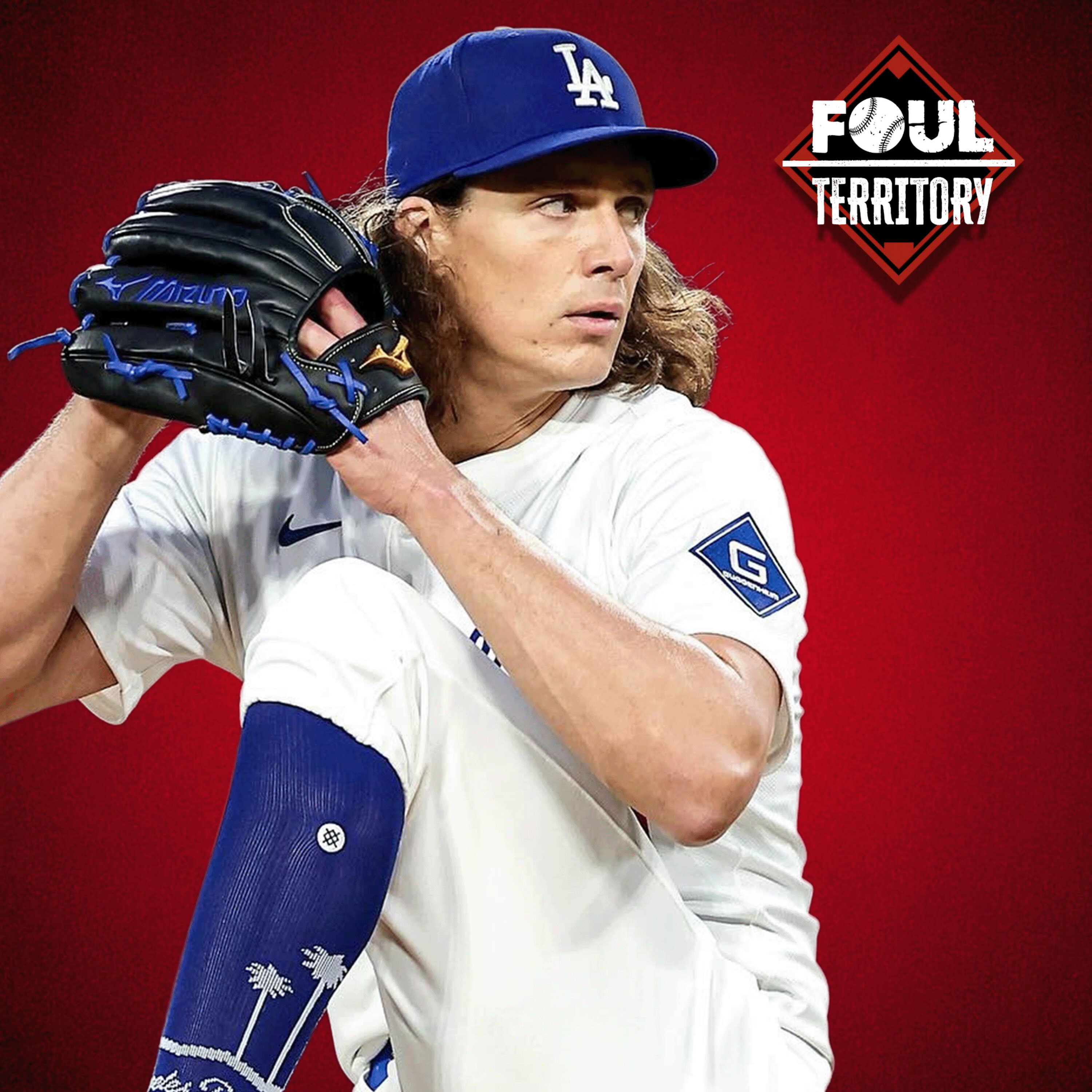
Nationals begin GM search + Dodgers starter Tyler Glasnow joins FT
We learned about some names on the GM search list for the Washington Nationals. Who are they and will the larger conundrum with the Nats be solved at the top anytime soon?
For 20% off your first purchase, head to FairHarborClothing.com/FOUL20 and use code FOUL20.
(12:05) Dodgers starter Tyler Glasnow is back on FT with inside word on those no-hitter close calls for LA, frequent PitchCom issues and the controversial Framber Valdez cross-up incident.
Hosts: AJ Pierzynski, Erik Kratz, Scott Braun
Go to Surfshark.com/foul or use code FOUL at checkout to get 4 extra months of Surfshark VPN!
See omnystudio.com/listener for privacy information.
Available Results
Generated results are saved to the knowledge database for reuse and search.
Extract Knowledge
Pick what you want extracted first. Model, scope, and chapter options appear after a template is selected.
Transcript
00:00:07
Speaker 1: Hot pointer time, I'll talk about the Nats General manager search KRATS. Mike Rizzo was let go in July and Mike to Bartelow is the interim GM. But Bob Nightingale first was reporting about it, and then the story came out in the Athletic. Ken's involved in that story and they are interviewing a number of candidates, which include Carter Hawkins, the Cubs current GM, Diamondbacks executive Amiel Sade, and Dodgers senior vice president Josh Burns. There's the article Carter Hawkins gets the picture on the page. What do you think?

00:00:47
Speaker 2: I think to Bartelow, from what I've heard from the Nats. From Nats people had a lot more to do with some of these massive trade halls at the brought in and why he's not the one that's up for it, I don't know. But whoever they bring in, whoever it ends up being, if Carter Hawkins is the guy, I need to build up this minor league system. And I don't mean with just people that are traded and brought over. I'm talking the staff needs to be able to produce more minor leaguers that have a big big league impact. Everybody that's had a big league impact was either the first pick, their first pick in the draft, which was not a lot of development with or traded and picked up from another team, which there's not a lot of developments, just like, hey, we're gonna give you two hundred bats in double A one hundle A and then you'll come up to the big leagues Like that's whoever they get that better be their specialty.

00:01:49
Speaker 1: For the record, or at least according to the article, to Bartelow, who's the intern JM is in the mix, so he is among the candidates. They're just listing other ones. They're doing their homework, which I will give them credit for. Wait. Wait, so they're going to hire a new GM and they're going to do at the very least what's called an info suck and find out information about how other teams are operating. Not every team does that, but good on the Nats for doing it. Let me give you a little bit more context on Carter Hawkins, since I think he's the highest position wise of the external candidates, and he's the face on the article there so he's the GM of the Cubs. And in the article they said with the Cubs closing in on their first playoff berth. Since twenty twenty, Hawkins has been involved in revamping the club's R and D research and development department and streamlining scouting on the pro, amateur and international sides, with a bigger emphasis on data and video rather than in person evaluations. He was hired away from the Guardians after the twenty twenty one Cubs have been developing much better lately. If I'm using that as a blanket statement, and so I Day Sharma somewhat agreed with that yesterday. So that would be a good sign and would play into what Kratz is talking about. If you're the Nats, you need to develop more players.

00:03:14
Speaker 2: Yeah, we also need people that are actually seeing players. I don't agree with just the full we're going to go full a's and go no scouts in the field because they haven't won anything.

00:03:24
Speaker 3: They have want shit.

00:03:25
Speaker 2: So let's also establish that you've got to have people out there watching guys that get to know the players. Just watching them on video doesn't give you anything on their makeup or any of that. You got to actually have communication with players and see them play and see them struggle and see how they react. When I ran into Carter Hawkins in the Guardians organization Indians at the time, he was part of the group there, the front office group there that really did a good job of weeding out coaches and front office who, without mincing words, weren't good people like the group of people that the Guardians have there now in the front office coaching staffs. Their exact wording was, yes, we want good coaches, but we want people who can really lead men. So if Carter Hawkins can bring that over to wherever he becomes a GM next, wherever he becomes a paid president of baseball operations next, I think he has a I think that organization will have a leg up. Look at what hein Bloom did with the Red Sox. Yes, he got the short end of the stick, as you know, they didn't give him any money to spend and he got fired. But you're seeing a lot of that come to fruition. That starts not just with the players that are picked, but with the coaches that are in the minor league system. So I know for a fact, because I saw Carter Hawkins in those situations with the Guardians, that's his background, and I hope he would bring that and not just the not just the like impersonal. Hey, we're gonna watch everything on video and never actually get our eyes on somebody.

00:05:08
Speaker 1: The other thing for the Nats is eventually they're gonna have to figure out what their plan is. From the tippy top, the ownership situation was they're up for sale. It sounded like they didn't get the price they wanted and they haven't been putting much into the team. So where are we at right now?

00:05:26
Speaker 3: Yeah?

00:05:27
Speaker 2: Are they gonna sell? Are they gonna stay? Or are they gonna buy some players? Because that was always a thing when they won, they went out and got players.

00:05:32
Speaker 1: Yeah, and they don't have to leave the league in payroll.

00:05:35
Speaker 2: But but they need to go out and get the Max Suers or is the Patrick Corbyns, those guys Jason Worth to come in and fill the right roles.

00:05:42
Speaker 1: The star power worked for them, the star power acquisitions, remember Max schers are At the time, people are like, what you're paying them? What he was worth every penny to you? Yeah, he gave you the individual, he gave you the World Series title, he gave you everything. And I thought this past season was gonna be the year that they made a little push Kratz. I was like, Eh, maybe they'll go get an ace. Maybe they'll go get a big boy bat to go along with some of the younger bats and show them the way they just didn't do it. So that's part of this and that's not going to be controlled by whoever they bring in next. I mean, whoever they bring in next, hopefully eventually is with you know, I would say either an ownership group that's recommitting, or they're moving on. I think they're moving on. I think they're going to sell. I'm pretty confident that they're looking to sell. They just want to wait until they get through the next collective bargaining agreement, which sounds like it's the case for almost all of them at this point. Doesn't it sound like many of the owners are pulling back because they think they're going to get more after the collective bargaining agreement gets settled. FT family, let's talk about fair harbor, and if you're listening, I hope that you watch this conversation at some point because we're doing show and telcrats short they can be used as a bathing suit, and the liner, which we call butter, is the game breaker. It's the playmaker because it's different.

00:07:12
Speaker 2: Your worn shorts that are not like this, and the liner sucks. They are buttery on your butt.

00:07:19
Speaker 1: I just came up with something for them. Your liner sucks. Get Fair Harbor Liner. Seriously give it a shot. I'm not just saying this. The butter analogy plays an ftfam. You know, we're hooking you up. Fairharbor Clothing dot Com slash fowl twenty percent off when you use the code foul on your first purchase. Once again, that's Fair harbo r Clothing dot com backslash foul for twenty percent off your first purchase and use promo code foul.

00:07:51
Speaker 2: Yeah, but they're not going to sell three teams in twenty twenty seven. You know you can't. There's just not that many people that have that much money just hanging around to purchase teams. I disagree, like you see because then also those guys are getting sucked up by the teams or the new expansion teams too, Like you're talking people in the billions.

00:08:16
Speaker 1: So yeah, but these are people in separate cities. I mean, AJ, where do you stand on this one? For me, let's use the Twins as an example. They said, we are selling this team for one point seven billion dollars plus you take on I think about four hundred million dollars of debt, and there were billionaires in the running, and it sounds like most of them valued it at around one point five and maybe that even felt generous, because really one point five is one point nine because of the four hundred million in debt. That's real money. And so they said, this is what it's worth, and the twins laughed and hung up the phone on them. That's a real story in the athletic. So I think there are interested parties, but there's a line, even for billionaires, where they're like, I have to pay an extra two hundred million dollars for something that I already think is mispriced, Like how much of a tax is there. Everybody has their limit. They don't have unlimited money, even though they're billionaires. So do you think that those three teams could get sold post CBA.

00:09:12
Speaker 2: I think I don't know if that's what they're waiting for. The Learners have been talking about selling this team forever, so I don't know.

00:09:17
Speaker 3: I don't know.

00:09:18
Speaker 2: I mean the Rays are going to about to be sold in the next I think it's going to become official, probably in the next couple of weeks here, the Twins or got to get sold at some point, the Nats, who else, the A's we'd like to be sold at some point.

00:09:32
Speaker 1: But yeah, the.

00:09:34
Speaker 2: White Sox are going to be sold at some point before twenty twenty nine, according to the agreement that was signed.

00:09:39
Speaker 3: So there's teams.

00:09:40
Speaker 2: People will buy these teams. You just have to find the right people to buy the teams, because there's been people that have bought teams also that haven't been the right people and they haven't worked out. Frank mccorr comes to mind of the Dodgers, right, he bought the team, didn't have the money, but he's still you got to deal the century. He still gets fair. He just still gets all the parking, even though he doesn't own the team. He worked out a deal to sell the team, but he keeps all the parking, which is valuable as because there's.

00:10:00
Speaker 3: No overhead on the parking.

00:10:02
Speaker 2: You just collect money. That's great, Frank, call me out.

00:10:04
Speaker 3: I want that deal.

00:10:06
Speaker 1: Well, from what I recalled, it was a minute ago. He was barring a ton of money. He was backed up in debt and some other issues, and they wanted him out and he had some letbridge and he's like, cool, I'll get out, like you're asking, but I want the parking lots. I mean, didn't we just hear about this with Stu Sternberg with the race where eventually the league's like, hey, dude, it's been twenty plus years, it's not working. You got to get us a new ballpark so we can move on here. And now he's selling the team and still gets to keep a little bit so he can prop it off the back end. But anyway, getting back to the point here, Nationals fans krats feel like the biggest problem is that the team has sat out, but it's going to be up to someone else to figure that out.

00:10:57
Speaker 2: I think there's a fundamental just personnel issue with with ownership, Like if ownership doesn't allow gms to go and spend money, you can't do anything about that. And as good as Mike Rizzo's been was like he probably you know, he's the one that came out of this unscathed because they won a World Series. But every year the organization, if you go there at the end of the year, they start cutting people. At the end of the year, they cut coaches from their staff, they cut minor league coaches out like it's a it's a fundamental it's an organization that lacks fundamental like employee satisfaction, because I don't think ownership really cares about what the product is on the field, especially after they got there their World Series, So fans should be pissed off when they don't make a move, especially with the young core that they have in place.

00:11:54
Speaker 1: Yeah, they were always famous for trying to low ball managers. Remember they almost had Bud Black they lowballed him. So anyway, you can look all of that up. But we'll keep everyone posted on the search here and see how it goes. All Right, here we go, Tyler Glass. Now back on foul Territory. Good to see you, Tyler, Crazy. Last few days we were excited to talk to you about the near no nos that are occurring. How you doing? And do you know how many no hitters we've seen in baseball this year?

00:12:23
Speaker 3: I'm good, first of all. And no, is there zero? Right? Isn't this like a like a no hitter season or something? Yeah? No, it's a normal five.

00:12:32
Speaker 1: Yeah, two thousand and five. Last time there was last time there was not a no hitter in a season was the year that the Chicago White Sox were led by aj Prazunski and won a World Series.

00:12:45
Speaker 3: Wait, how many an average year? Like two to one? Two?

00:12:48
Speaker 2: Is there around two?

00:12:49
Speaker 3: Two?

00:12:50
Speaker 2: Yeah, it's not two per year, but two the last fifteen they're averaging about four until this year.

00:12:57
Speaker 3: Oh damn, so well, way to go. Time.

00:13:00
Speaker 2: You almost got one, but we'll take us through it.

00:13:07
Speaker 1: Were you like please or were you like, I know you're gonna cab me. I'm already at what was it one oh five or something? Through seven?

00:13:14
Speaker 3: I think had one oh seven.

00:13:16
Speaker 4: Uh, the start before, I had no hit through six, and I had like a normal pitch count or like enough to do it, and then I my seventh innings sucked, so I didn't do it then, and.

00:13:25
Speaker 3: That time it probably felt a little bit more real. I think this time I.

00:13:28
Speaker 4: Had like fifty pitches in the first two innings, so I kind of figured just after seven, with one hundred and seven pitches, I figured they weren't kinna let me keep going.

00:13:37
Speaker 3: I would have loved to, but I just think, like with.

00:13:40
Speaker 4: Playoffs coming up, and I guess like my last few years of like injuries, I completely understand obviously to anytime you're in the game, and like someone asked you if you want to stay, and you're always going to say yes. It's kind of I'll always be like, yeah, just let me keep going. But I respect the decision to take me out.

00:13:56
Speaker 3: It's fine.

00:13:58
Speaker 2: What did he did he even give you the option or when you came off the mount was Doc?

00:14:03
Speaker 3: Like?

00:14:03
Speaker 2: Was Doc like, hey, good job, you're done?

00:14:06
Speaker 3: Yeah?

00:14:06
Speaker 4: More of that one, which I kind of expected him to a little bit. But yeah, I didn't really have like the option to go back out or anything. If I did, I would have tried to argue my case. But it is what it is. The decision was made.

00:14:21
Speaker 2: What you missed, you kind of got, you got scratched just a few days before. Does that go into the decision for Doc as Doc like, hey, you know what, your back was a little cranky. We're gonna definitely probably I get it's one hundred and.

00:14:35
Speaker 3: Seven, Yeah, I think maybe a little bit.

00:14:38
Speaker 4: I think just with that one hundred and seven pitch count playoffs coming up, I think it was like a factor of everything. I think too, it's kind of weird, like not all one hundred and seven is created equal.

00:14:50
Speaker 3: I guess like there's been some starts where I'm.

00:14:52
Speaker 4: Like eighty pitches in and it's like high stressed innings and everything like that.

00:14:55
Speaker 3: You can kind of feel it. But that game I didn't have.

00:14:57
Speaker 4: A ton of runners on or any like sort of high stress endings, and it felt like a pretty I don't know, I felt like I could have gone a lot more, But I just think it's it kind of depends on the innings and what the one hundred and seven pitches were, I think, But yeah, it is what it is.

00:15:14
Speaker 3: We ended up winning, which is good. So that's that's all I want.

00:15:17
Speaker 2: I was gonna say, what's the max you could go?

00:15:20
Speaker 3: What's the what do you think you could pitches? Yeah? I think a lot. I say.

00:15:25
Speaker 4: The thing that's weird about starting is like once you get to a certain limit, like you don't feel like you get into that like anaerobic state when you're at a hundred pitches, you don't feel like you need to stop throwing. There's certain games, maybe like a couple of year, where you're really fighting yourself all game and there's like stressful innings and you're feeling tired. But something around like eighty five ninety pitches, something happens. You get like that second wind, and in my brain, I feel like I can throw a ton of pitches. But I think that's more of like adrenaline and like that anaerobic thing kicking in. And I don't know if that's like the best measurement, but it just it feels like you can pitch forever.

00:16:00
Speaker 3: Certain point.

00:16:00
Speaker 4: I think a lot of starters would relate to that feeling. But after a certain amount of pitches, it just feels like you can just keep going and going and going.

00:16:09
Speaker 2: So how much more sore are you then? Once you hit that what'd you say, eighty to ninety pitch count on the next day, Like is it longer recovery or is it longer days of recovery or more sore the next day.

00:16:24
Speaker 4: It's kind of there's not like a formula to it, I'd say, I think the only thing I can really notice is if I have like I'll have some games where on four or five innings and it's high stress, like mechanics aren't as smooth. You're kind of fighting yourself, Like every pitch feels a little bit different. It's kind of a more of a mental grind to stay locked in, and it's just like a lot of effort to manufacture the same stuff, same velo, And then there's certain games like two days ago and I pitched, where everything is just kind of lined up, and I think, like the stressful innings is the biggest thing for me, I guess, so I think like this time around, I'm not I feel really good.

00:17:00
Speaker 3: I don't feel that sore.

00:17:01
Speaker 4: But there starts previously where I'll be at like eighty five pitches and like a ton of runners on in the stretch a lot doing all that, and then you feel a bit more sore. But this week I feel fine. I also had like being scratched like nine days, so I had a lot more time. But I feel totally normal, probably more on like the better end of normal after this one.

00:17:23
Speaker 3: That's good.

00:17:23
Speaker 2: That's good. You mentioned the key, though, and you're no hitter or almost no hitter that you guys won because not long ago, not many games before that, you guys had eight and two thirds.

00:17:32
Speaker 3: Yeah, Yamamoto, Harry was right there.

00:17:34
Speaker 2: Halliday hits the home run and then all hell broke loose. What were you guys thinking on the bench, because I can't even imagine eight and two thirds you're thinking, hey, y'amamoto, here we go, we got a no hitter, guys, and then all of a sudden everyone's walking off. It was It was one of the craziest games I've ever seen.

00:17:51
Speaker 4: Yeah, they actually that was when I had like the little backspats and they sent me home to get image and everything was fine.

00:17:56
Speaker 3: But I wasn't actually in the dugout that game. From what I could tell on it was pretty I don't know that would that would have.

00:18:03
Speaker 4: Been pretty rough to sitting there for that, But yeah, it just seemed like everything that lasting what went wrong could have gone wrong and felt bad for Yama I think like the ultimate thing that sucks as like ending not winning that game.

00:18:16
Speaker 3: But I don't know.

00:18:17
Speaker 4: He he pitched really well, he looked really good. I mean, yeah, that was a It was a tough loss for sure. That's probably one of the worst ones I've seen or been a part of, just the feeling of course, like just what could have been and then how it ended up happening, just like the full one eighty.

00:18:34
Speaker 3: I've never really been a part of anything like that.

00:18:37
Speaker 2: So was it your fault? Did you move in your hotel room? Like were you were you sitting there on the as of your bed, and you're like, crap, I got a pee, but I can't because got a Okay, it's the eighth inning, come on, let's go. So did you hear anything of anybody that moved during the during the eighth ninth inning there where I was like it was your fault?

00:18:57
Speaker 4: No, honestly, I was so I was back home. I was just watching the game, and then I went back and like, I didn't. I didn't even want to ask any questions. It was already like a few days past, and then I don't want to.

00:19:07
Speaker 3: Bring it back up. So I wasn't. I didn't.

00:19:10
Speaker 4: I didn't bring it up again or talk about it. It was one of those things where we all saw what happened and we were like, let's just get that out of our mind and just continue to play baseball.

00:19:21
Speaker 1: Let's talk about your virtual private network. Do you have one? You should have one, and aircrats take it away because you're someone that definitely had your fair share of protection when you were playing on the field, because you were a catcher and you did not want to get hit by a baseball, which I think surf Shark can help you do in the online world when you're on the road.

00:19:40
Speaker 2: It's a chess protector, face mask and shin guards for your network.

00:19:46
Speaker 1: Look at you with your baseball analogy krats. Go do surfshark dot com slash foul or use code falla checkout to get four extra months of surf Shark VPN. A risk free thirty day money back guarantee is there for you. Yea, And you can secure your digital life with surf Shark VPN by hitting that link below for an extra four months of surf Shark. Don't let online threats catch you off guard. This has been your tech update. Keep your data safe and take control of your online security with surf Shark today.

00:20:21
Speaker 2: Are you a no talk guy? Are you a no talk during a no hitter guy? Or are you like when you were in the sixth seventh inning, were you don't talk to me guy? Or were you It's okay to still talk to me and we can talk about me having a no hitter.

00:20:36
Speaker 3: That's fine.

00:20:37
Speaker 4: I don't think anyone would come up and talk about a no hitter just because, like there are certain people who maybe you can't put now. Not really, I'd rather just keep it normal, you know, Like I think everyone's already aware.

00:20:47
Speaker 3: Of what's going on. And I'm not a very superstitious person.

00:20:49
Speaker 4: So I do I believe that if you do or don't talk about it. I don't think anyone has that much power to like dictate a no hitter from like a supercision. But I'm a big like in between hitnings. I don't sitting a dug out of ton. I like, I'm a big pacer, Like I don't really like sitting down, and I like to do like keep my heart rate up a little bit.

00:21:09
Speaker 3: I don't like to just sit there.

00:21:10
Speaker 4: So I'm usually in the tunnel doing stuff like moving around whatever it is I need to do, like there a gun, whatever it is. So I'm kind of down there talking to like coaches will come in, but I'm not like pacing around in the dugout. It looks kind of crazy with me walking back and forth, so I just do it in the tunnel.

00:21:30
Speaker 2: All right, Well, we have two catchers on here, and there is one person that can dictate whether it's a no hitter or.

00:21:36
Speaker 3: Not, you know what I mean, not from words from I know it's of course, yeah.

00:21:41
Speaker 2: Hitch calling Ben roor fans out there. He was with the team for like one minute, like his uniform was still drying, like yeah, and he goes out and almost gets two no hitters in three games. How hard is it to make that transition to a new catcher, And how crazy is it that he came in and did this for you guys in these three days.

00:22:06
Speaker 3: Yeah, it's nuts.

00:22:07
Speaker 4: I actually met him last year at a wedding and he was with the Rays and I had some mutual friends with him, and I got to know him relatively well, like the night we talked.

00:22:15
Speaker 3: And he's like super engaging.

00:22:16
Speaker 4: I think he takes catching obviously very seriously, Like he's always been known for his glove and his pitch calling, and for him to come in and like fit in, he's very personable and like fits in.

00:22:26
Speaker 3: Well, it's hard to like jump around teams and stuff like that. But he came in kind of had the feeling of like.

00:22:31
Speaker 4: Oh, this guy's been here a while, he's very comfortable, got to talking to him, came in, caught a really good game for Yama, and then it was just not we got on the same page quick. Like first inning, we had some pitch calling, some setup stuff, and then like as the game went on, we got into a really good flow and we were on the same page the whole time. How my stuff was like leaking, Like early on, I was yanking four seams and sliders, so we kind of reverted to like a sinker. He started shifting int arieties with the sinker to try to get me more online, and that kind of started getting my slider back on. My four seemed sort of sucked the whole game, but he kind of navigated me back into his zone really well. And then last night she hand pitched and had a no hitter into the sixth. I guess that wasn't him, but like just.

00:23:16
Speaker 3: In general, like with the no hitters and stuff, it's kind of wild. But yeah, I really loved throwing him. He was He was kind of awesome. M that's good.

00:23:27
Speaker 1: Yeah, Hey, what do you haven't talked to him since he pitched in Tampa?

00:23:30
Speaker 3: Didn't you pitch in Tampa.

00:23:31
Speaker 2: Not that long ago?

00:23:33
Speaker 3: No, I pitched what the series before I was in Tampa. I didn't pitch that series, though, you pitch.

00:23:38
Speaker 2: What was it like back in Tampa in hot your old in your old stomping grounds, you didn't have to hitch?

00:23:44
Speaker 3: I guess that's yeah.

00:23:46
Speaker 4: It was the outdoor stadium in the summertime was crazy. That was the hottest game.

00:23:50
Speaker 3: I think any of us have played. But it was cool to be back home.

00:23:53
Speaker 4: And just to see everyone, like the staff and everyone walking around like I hadn't been.

00:23:57
Speaker 3: Back there in a long time. It gave me like a tribute. That was really cool. I got to go back.

00:24:03
Speaker 4: Home and sleep at home and see family and everything. So it's a good, like little reset. I think anytime you can go back and like sleep in your own bed during the season, it kind of gives you this nice, like at home feeling and you've just been gone for so long.

00:24:15
Speaker 3: But I enjoyed it. I like playing there or the town itself. All right.

00:24:21
Speaker 2: Every single freaking night we have some issue with a PitchCom every night, yeah something. Have you ever had an issue like you Darbis had the other day where he was like pushing sinker. He was like over here pushing sinker, pushing sinker, and Felix for me didn't hear it or something, and he called curveball and so you was like, sure, curveball and then gave up a ninger.

00:24:46
Speaker 4: Now I've had the only thing I don't call my own pitches or like, I don't have a like a plate or whatever the thing is called. I just kind of like will shake off with the catcher. The only thing that sucks sometimes is the pitchclock when there's like a guy on, and like I'll get a sign kind of late and you're trying to shake back to a sign you want and there's not enough time. And there's been multiple times where I'm like at three seconds and then like the last sign, I just.

00:25:08
Speaker 3: Go all right whatever, and I'll just throw it.

00:25:10
Speaker 4: And I'm like trying to get to like a slider, let's say, and I've got two seconds left, and it's like he just happens to be on sinker or fast by and just.

00:25:17
Speaker 3: Go find whatever, Like I'll get it out of the zone.

00:25:19
Speaker 4: Or I'll put it where I want to try to put it. But it happens kind of a lot. There's a guy on.

00:25:24
Speaker 3: You can step off, but there's no one on.

00:25:25
Speaker 4: There's been some times with like three two two two where it's like I can't. I just have to throw whatever I can throw. It just sucks too, because like hitters will get a time out in at bat and I always figured we'd get like one or two PitchCom things an inning, and like I think after a certain amount of time, you can't step off and be like my pitch COM's not working, or like it's not even it's you can't get to the sign in time. I wish we had like one of those an inning to try to get on the same page because it's so many times it's three two.

00:25:55
Speaker 3: With no one on and you're like, all right, now I gotta throw a pitch I don't want to throw, so there.

00:25:59
Speaker 2: Be a timeout, Like, is there is there a way to like say, oh, well, this could cause an injury, this could cause Obviously you could be like, oh I don't want to throw that pitch. That could cause a run. Majorly baseball doesn't care about that, But is there a way that you could as a player's union bring it up and say, hey, pitchers should have a timeout, which I think they should, but you know, from a starting pitcher it means more.

00:26:26
Speaker 4: Yeah, we've I think a lot of guys have talked about that, like if a hitter gets the time out in that bat, which I understand as well, Like I think we should be able to have a timeout. And there's a couple of different things I wish we could change, like the pitch clock, for the warm up in between innings. I wish it was a little bit longer, said, It takes you a little bit of time to get out there.

00:26:43
Speaker 3: You have time for like five or six warm ups.

00:26:46
Speaker 4: And I think for me, especially like my first couple of pitches are always slower in the inning just because I don't feel like I'm fully ready to go and I'm like in the tunnel doing stuff. I know a couple of guys have some issues with that, and like I do think we should get like at least a time out in that bat. And I think in the in the whole scope of trying to save time for games, like a little bit extra time and some timeouts, it is probably gonna add like a minute two minutes to the overall time.

00:27:10
Speaker 3: Of the games. I don't know, I think it would be kind of nice.

00:27:20
Speaker 1: Sorry, Krats, I thought you had another one.

00:27:22
Speaker 3: Uh.

00:27:22
Speaker 1: I want to ask you about uh a dude that just returned to the team who seems to have an impeccable record when he's playing for the Dodgers, and that's Max Muncy. Do you see it and our guys joking about it at this point because it's been going on for a few years now.

00:27:38
Speaker 4: When what are you saying, like when playing when we have like a good team record. I I agrea the guy like grinds out at bats, good ops, like he's good, he's a I always remember too pitching against him, Like he's a just a good hitter, like great on bass, grinds out at bats.

00:27:56
Speaker 3: Just yeah, I don't.

00:27:57
Speaker 4: I don't know if the I'm sure they're correlated a bit for sure, Like we've got a really good team.

00:28:01
Speaker 3: There's a lot of guys on our team that I'm sure if they play, our record is good.

00:28:04
Speaker 4: But yeah, like when he's in the lineup, it's a noticeable difference in my opinion for sure.

00:28:12
Speaker 1: Last one for you, this one popped up about a week and a half ago. What did you think of the Framber Valdez cross up situation?

00:28:22
Speaker 3: Yeah?

00:28:22
Speaker 4: That was that was pretty not really I don't think I've ever seen anything like that.

00:28:25
Speaker 3: I'm sure have you guys seen it more?

00:28:27
Speaker 4: I guess like maybe when you've played, was there more of that or like no, I don't know, and I don't. I also will say I don't know. I haven't talked to him. I don't actually know if it was intentional, like it potentially seems that way, but I don't have like definitive answers on.

00:28:44
Speaker 3: Any of that, so I don't know. But that was weird. I'd never really seen anything like that.

00:28:50
Speaker 2: Do you ever have you ever thought about doing that? Have you ever been like so mad at a catcher Let's say it was. I'm not saying you said it, I'm saying it was intentional in my opinion, Have you ever been that mad at a catcher that you're like, this is what I'm gonna do.

00:29:06
Speaker 3: No, not at all.

00:29:07
Speaker 4: I also think like my attitude towards ketchers just to be different, like because when I pitch, I'm a big like I'll throw some thirty eight foot curveballs, I'll spike some fifty four foot fastball like I'm more like my bad so I'm not really trying to It's hard enough catching me. I don't think I've ever gotten that at a catcher like any No, not really. I think there's been times I still would do anything like you get mad at an umpire. Used to see like dudes call curveball or whatever, like the catcher will drop down, the heater will be like a heater up at the at the umpire that makes more sense to me. Still not gonna do it, don't like it, but like that type of thing makes more sense to me than doing it to your catcher, for sure.

00:29:45
Speaker 3: I no, I've never wanted to do that.

00:29:47
Speaker 2: Ever, you summed it up and you said you would automatically be hey, I'm bad, I'm sorry, I'm sorry. I'm sure you've crossed a guy up somewhere along the way.

00:29:56
Speaker 3: And.

00:29:58
Speaker 2: Isn't to turn your back on the guy and walk walk off the back of the mount. It's usually hey, are you okay? That's what I generally what most pitchers do is hey are you okay? Not turn your back and walk away.

00:30:08
Speaker 4: Yeah, that's a rough one, especially being a catcher, Like there's a lot of stuff going on.

00:30:12
Speaker 3: It's a hard exposition.

00:30:15
Speaker 2: And when I was on the rays with you and Snell talk about your blocking practice, you too, Yeah, yard darts up there and just like look around like probably gonna do it again.

00:30:30
Speaker 3: Yeah, for sure, I'm good for like five a game. Absolutely, Like if I'm trying to tunnel a low heater with a curve ball, it's like that's gonna be a in front of the like on the dirt type of bounce.

00:30:39
Speaker 4: Situation like on the plate, so it's not gonna Yeah, it's it's tough. I can only imagine trying to catch me and like, I'm not exactly Greg Mannix out there, so it's our hearty hard enough and then having to worry about if I'm gonna like intentionally throw a ball at you.

00:30:51
Speaker 3: That might be kind of tough to handle.

00:30:53
Speaker 2: Kyle Snyder made it easy. Kyle Snyder was just like, Oh, you don't need to go on the edges, you just stay right down the middle. I was like, I was like, it definitely worked.

00:31:03
Speaker 3: But you're you're getting you're getting forty.

00:31:06
Speaker 2: Eight foot curveballs from Snell as he's calling like different pitches on different locations and times, and you're getting a ball in the neck. And then they're bringing in young Jose Alvarado Diego Castillo out of the bullpen and then Drake throwing that like whatever, that lefty, right handed change up ball. So yeah, there was some There are some dudes slinging some rocks up there.

00:31:28
Speaker 3: For sure. Yeah, that was a wild year. That was one of the craziest bullpens I've ever seen.

00:31:34
Speaker 4: And right Chaz the slider King was on that team, right oh yeah, yeah, Chazz, Yeah.

00:31:44
Speaker 3: We had some crazy arm angles on that year.

00:31:46
Speaker 1: It was not yes, young Jose Alvarado. That was scary even to watch as a fan.

00:31:53
Speaker 3: That was the.

00:31:54
Speaker 2: Most miserable, miserable four pitches I ever caught, because it was four fans bolts and they all went different directions. Thank goodness, it was ball four and Kevin Cash came walking out.

00:32:08
Speaker 1: Good stuff. Well, Tyler, good to see man, good to catch up. Keep doing your thing. We'll catch you soon.

00:32:12
Speaker 3: Okay, all right, thanks guys,