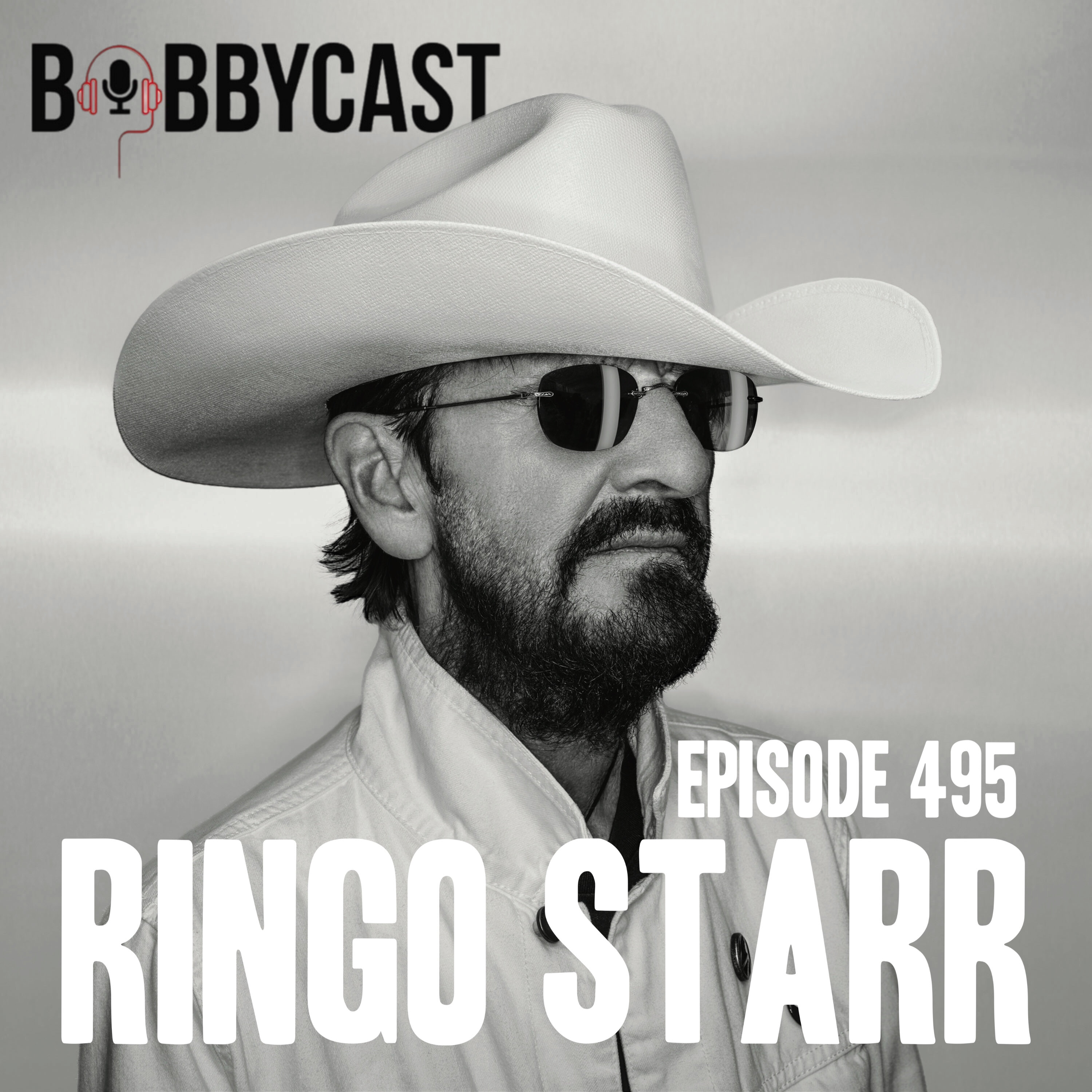
#495 - Ringo Starr on How He Got His Name, When He Was Introduced to Music, Stories About Playing All Night in Liverpool + Bobby, Eddie & Mike Discuss Most Influential Bands
On this episode of the BobbyCast, Bobby sits down with the legendary Beatles rockstar Ringo Starr! Ringo discussed how he got his name, when he was introduced to music, stories about partying and playing all night in Liverpool, and much more! Plus, Bobby, Eddie and Mike discuss the top 10 most influential bands of all-time!
Follow on Instagram: @TheBobbyCast
Follow on TikTok: @TheBobbyCast
Watch this Episode on Youtube
See omnystudio.com/listener for privacy information.
2025-02-25
62 min
Transcript
Available Results
Generated results are saved to the knowledge database for reuse and search.
No generated results are available for this episode yet.
Extract Knowledge
Pick what you want extracted first. Model, scope, and chapter options appear after a template is selected.
Generated results for public episodes are saved to the knowledge database so they can be reused and searched later.
Transcript
00:00:07
Speaker 1: While didn't the factory.

00:00:08
Speaker 2: That's when it came I want to play, I want to play, and we got this three month gig. So I decided I'm leaving the factory, and all of my family came to all house to tell me it's all right.

00:00:22
Speaker 1: It's a hobby Stone.

00:00:26
Speaker 3: Welcome to Episode four ninety five. Ringo star Ringo, Star of the Beatles, Ringo, Star of the Beatles.

00:00:33
Speaker 4: What it feels like? Give me just saying his name? That was? That was a little weird, surreal, really cool, all those things, right.

00:00:39
Speaker 5: Yeah, it felt like a dream until he was sitting down.

00:00:43
Speaker 3: Yeah, it just it didn't seem like real life because that's somebody who's been so wildly famous for so much longer than we've even been alive, which is pretty crazy. And so what was weird for me was the more that he was coming over. I think somehow word got out. Did I say outwardly that he was coming over to my house like on the show anywhere?

00:01:09
Speaker 5: I don't think so.

00:01:10
Speaker 3: I know I did in the studio, but there were executives even within our company that wanted to come to my house and meet Ringo.

00:01:18
Speaker 4: Did that get to you?

00:01:19
Speaker 6: No?

00:01:20
Speaker 3: I didn't hear about that, and usually I'll be pretty diplomatic and hey can't or occasionally okay, But there was no way I was gonna have anybody extra there for Ringo, just out of respect, because he's so famous that I'm sure that happens all the time, and so I just had to hit him with straight no period in texts. And then later I went back and was like, hey, sorry, I wasn't able to get to the text. We just couldn't have a lot of people in.

00:01:48
Speaker 4: But I thought I was.

00:01:50
Speaker 3: Courageous to text two hours out from Ringo. Also, I don't even really know these people that well, and they're like, can I come to your house and meet Ringo?

00:01:58
Speaker 4: Like both of those things felt a little weird.

00:02:00
Speaker 5: That's a wild ass.

00:02:01
Speaker 4: It's a wild ass. Yeah, it's a wild ask.

00:02:03
Speaker 7: And he came in with like security too, so you wouldn't want extra people around him.

00:02:07
Speaker 3: So I never saw security, and so you can tell me what happened. So they pull up to the house and like a was it a big black suv that.

00:02:15
Speaker 7: TV like fully tanted windows, and the first person who gets out is like this huge bodyguard and like a Navy seal hat.

00:02:22
Speaker 5: He looked hardcore.

00:02:24
Speaker 3: Now, he didn't follow Ringo down to the studio because I never saw that guy, no.

00:02:29
Speaker 7: Which I was surprised. I thought maybe he would escort him the entire way. But as soon as he saw that he was in the house heading back that way, he was good.

00:02:35
Speaker 4: Are you sure that wasn't just a really buff uber driver.

00:02:38
Speaker 1: No, he was not.

00:02:40
Speaker 4: He had a driver.

00:02:40
Speaker 5: And then the security guy.

00:02:43
Speaker 3: Well, it was kind of weird too because it had just rained, snowed, iced all things that got super cold. So my property is not like a real studio where people come all the time like we have. It's a building and we have our studio built. But Ringo's eighty four yep. And so we're like, oh crap, it's icy all through these different parts. Just to get back to the studio, Like there are stairs, there's like an entrance to the back of the property. It's a path that goes downstairs, goes through a gate, all for foot traffic. But it was pretty icy in places, and so you and I are trying to negotiate how to get him back there without stepping on the ice and falling.

00:03:23
Speaker 7: Yeah, there were so many factors going into that. Just the weather I was like, maybe he won't even come because of this, And then the ice on the stairs, I'm like.

00:03:29
Speaker 5: We gotta get him in here.

00:03:30
Speaker 3: We were going, anybody have a blanket we can throw on the stairs. I was just imagining what if we like broke the hip of a beetle like that had been terrible. So it ends up what we did was we walked him through the house, which is fine. I didn't even think about that because for the most part, we do no shoes at my house, and so now I don't walk anybody into the house just for that reason alone.

00:03:50
Speaker 4: I think it was he was like, wh don't we just bring up to the house.

00:03:51
Speaker 5: Yeah, let's just get him in there.

00:03:53
Speaker 4: I was like, great point.

00:03:54
Speaker 3: We got to make sure the dogs are up, because we don't need our My dog's jumping all over.

00:03:57
Speaker 4: Ringo Star.

00:03:58
Speaker 3: So I'm sitting down in the chair and it was just him and like two women, like a promo person, probably a pr person, and they walked right in and he sits down here like, hey, I'm Ringo or whatever the impression is. But you have told me don't try to shake his hand, which is awesome because I don't like shaking hands either.

00:04:15
Speaker 5: Yeah, they said, he's like you fist bump.

00:04:17
Speaker 4: So what was funny was I know that I love that anyway.

00:04:21
Speaker 3: Mostly that's how I'm attempting to touch people through fists or elbows or bow. And so he comes in a fist bump them. Read no one gave him the heads up, don't try to shake Ringo's hand. Yeah, And so he walks in and read those this big old six foot three hand at him, Hey, Ringo, and Ringo headed him with the turkey. Ringo puts the fist into the hand and so Ringo sits down. You're gonna hear the interview in just a second. And I felt like he was a lot nicer, softer, and more generous than I would have expected, because I'm sure everywhere he goes people are clamoring to meet him to get a picture. We also were a little worried, Hey, what can we not ask?

00:05:05
Speaker 5: Yeah, I thought there would be rules.

00:05:07
Speaker 3: Because he has this new record out which I spent time listening to, which I think it's really good because and I mean this in a way of it's a simple country record and it sounds like Ringo being Ringo, but it's probably not as simply made as it was to hear. Meaning the real brilliance of this is it feels like, oh wow, this is pretty simple record, but I'm sure there was so much that went into it. I really liked it, and I'm not just saying that because there are a lot of records I just go, hey, it's out. Because if I don't listen to it a or I listen to a couple songs, or I don't like it, it's not my thing. I just won't won't give an opinion on it. But I really liked it because it has Alison Krause on it, it has Larkin Poe on it. I'm big fans of the Larkin Poet sisters and Alison Kraus and Billy Strings. So he found kind of that Americana bluegrass feel, and I think that's from TiVo Burnett, who produced the record.

00:06:04
Speaker 4: But he came in, he.

00:06:06
Speaker 3: Sat down, and obviously you want to talk about the Beatles, but I need to give him a place to get to the Beatles, so then I can ask questions about the Beatles. But as soon as he sits down, before we even went on, he was like kids these days, they they don't.

00:06:20
Speaker 4: Have clubs to play in how are they supposed to get good?

00:06:24
Speaker 3: And so this is why we're like finishing cameras and you know, getting his people seated.

00:06:28
Speaker 4: And so I hear him say that, and you hear me go to it where it's hey.

00:06:33
Speaker 3: We mentioned that kids don't get to play in clubs and get good, and that kind of got us to Beatles stuff.

00:06:38
Speaker 4: But he never said, don't talk about the Beatles. No, so we definitely did.

00:06:40
Speaker 3: What I found crazy and he'll mention this in a second, is when he was playing two bands at once and he play for six hours and then you go play with the Beatles for six hours and play twelve hour days.

00:06:49
Speaker 4: That's wild.

00:06:50
Speaker 7: It was just wild to hear him talk about Beatles stories when we've only heard people talk about like stories of stories. But to hear from the source itself was I had a moment where it's like, Wow, this is an actual Beatle in here telling Beatles stories.

00:07:02
Speaker 3: Firsthand, I'm pretty jaded, not in a bad way, but because I do I do it, and we do it a lot where we talk to people that have made significant impacts on pop culture or country music or they're great artists. This was different because this is like a real life museum, like the most historical band of all time, like one of the four people, one of the two.

00:07:24
Speaker 7: Alive, and not only that, in your house, Yeah, my house, my house.

00:07:28
Speaker 4: I was walking a Beatle through your house.

00:07:30
Speaker 3: Yeah, thank god a dog didn't jump on him, because they would have because they don't know the Beatles. Stanley and Neller don't know the Beatles. Some fun facts about Ringo Star before we get to the interview. He joined the Beatles pretty late, meaning they weren't already famous. But you may have heard this before. He wasn't an original member of the Beatles. He replaced Pete Best as the drummer in nineteen sixty two, but that was before they became famous. So that's like Dave Grohl and Nirvana. Dave grohls a founding member of Nirvana and all of our minds for the most part, because when they got big, he was the drummer, like he was the drummer that did it with them, And so Ringo is that because they weren't the Beatles yet until Ringo got there.

00:08:10
Speaker 5: Yeah, like Travis Barker Bloken eighty two.

00:08:12
Speaker 4: Wait, I don't, I don't, I'm not there, help me. They had a drummer before him, see I didn't even know that.

00:08:17
Speaker 7: Yeah, a guy named Scott before they really got famous, and then Travis joined the band and they got huge.

00:08:23
Speaker 3: Ringo suffered from serious health issues as a kid. He had something called parent hmmm, parrotinidis at age six. He had tuberculosis at age thirteen, which kept him in the hospital for long periods. He did sing lead on some Beatles songs, mainly the drummer, but he's sang lead on very famous songs like I Get By With the Little Help from My Friends, Oh, Yellow Submarine, Octopus Garden. We talked about him being left handed here because he when he plays guitar now he plays it right handed and I was like, but you're left handed, so we get into that conversation. But he's a left handed rumber, but really wasn't able to play left handed. He was the first Beatle to release a solo album. His nineteen seventy album, Sentimental Journey, was the first solo album by a Beatle After the band's breakup. He's acted in several films, including Caveman and That'll Be The Day. Have you seen either one of those? As movie Mike no Is that before your Time, I think so. He's even narrated early episodes of Thomas and Friends.

00:09:23
Speaker 7: That's where I knew him from first. The Train that was my favorite show as a kid, and I remember him as the conductor and doing the narration.

00:09:29
Speaker 3: He's been inducted into the Rock and Roll Hall of Fame twice, once as a member of the Beatles and then as a solo artist the Beatles in eighty eight, a solo artist in twenty fifteen.

00:09:40
Speaker 4: He says peace and love.

00:09:42
Speaker 3: Peace and love a lot the picture we took because I don't only touch people in pictures anymore. Just generally speaking, you'll see that, not just with the Ringo, with anybody. It's gotten kind of weird too, where like even Dirk So I'm friends with, it's like or Matt Carney was up here, they're like, why you're not touching me? And they're like, put their arm over my shoulder. I'm just getting in the habit and not touching people for the one or two people that don't want to be touched. But what Ringo does is he doesn't like to be touched obviously. Same and he holds a peace sign up and so he's holding it up in the picture. So I do a peace sign. It looks at me and goes, yeah, that's the ticket, which is pretty funny. Coach is how nice he was. I'm telling you, I was so surprised. He was knighted by the Queen in twenty eighteen, officially making him Sir Richard Starkly. He inspired a drumming style. It's cool on TikTok now to see a lot of the young drummers kind of give Ringo credit for a bit of a like a avant garde type style within boundaries and they're like, check this fill out. Ringo doesn't get the credit. It's it became like a trending thing on TikTok in the last.

00:10:45
Speaker 7: Year and they're like, this is what he could have played, but this is what he decided to play. It was like so different, Like oh, that sounds amazing.

00:10:51
Speaker 3: As a drummer, he has a unique grip. Not a drummer, not really familiar with a matched grip or a traditional jazz grip, but he did. He'd write some songs. He was close with Keith Moon and John Bonham. Keith Moon from The Who, John Bonham of led Zeppelin. Those were drummers, his son to drummer all right. He nearly left the Beatles during the recording of the White album. Ringo briefly quit the band due attention, but was convinced to return. His bandmates even decorated his drum kit with flowers and to welcome on back. I have two more. He's a painter and his drums were stolen. His first Ludwig drum kit, which became iconic, was stolen in nineteen sixty. It surfaced decades later and was auctioned offer over two million dollars. The buyer Paul McCartney.

00:11:38
Speaker 4: We talked to t.

00:11:39
Speaker 3: Bone Burnett, who will be in a later episode, and t Bone said that when he was producing this record, he would go to Ringo's house. Ringo has the same symbols that he had when he played with the Beatles, and that he's never cleaned them once, so that dust and that dirt is from fifty sixty years of just music, including the Beatles, which is pretty crazy. T Bone Burnett episode, you guys a gonna like two because not only did he produce his Ringo album, but he did walk the line h Joaquin Phoenix. We talked about Johnny Cash. He did Old Brother, We're out there, Old Brother, We're out Now. I did that music won tons of Grammies for that. He produced the Counting Crows record August and everything after he did the Wallflowers. He brought up the Wallflowers and I'm like, I got an opening. I'm going in for the Counting Crows.

00:12:25
Speaker 7: You're just casually bringing up these huge and yeah, you're like, wait a minute.

00:12:28
Speaker 3: And then we get back to Ringo because he was a massive Beatles fan, so to him that was super cool. And so yeah, T Bone Burnette produced Ringo Star record, and we're gonna get to Ringo now, and we're gonna come back and talk about some Beatles stuff after the interview here because the interview is like thirty five minutes or so. The album is called Look Up. It's Ringo Star produced by T Bone Burnett. We talked about some of the artists that are on with him.

00:12:53
Speaker 4: I really like it.

00:12:53
Speaker 3: I think if you're a fan of country music, I would say a fan of like seventies and eighties straightforward country music, you will like this. I think that's it. Is there anything else need to say?

00:13:07
Speaker 5: I think that's it. Yeah, it's good.

00:13:09
Speaker 3: We'll come back after. But here is Ringo star Ringo. Good to see you, Nice to meet you. Pretty pretty exciting here.

00:13:18
Speaker 1: Yeah, thanksful.

00:13:19
Speaker 4: So were you?

00:13:20
Speaker 3: You were just over at the Ryman. One of my friends just texted me and said he saw you over there.

00:13:23
Speaker 2: I was over there hanging out with all those guys and some girls.

00:13:30
Speaker 1: You know.

00:13:31
Speaker 2: The gist of it I thought was that they're all like newcomers coming up and they got a chance to be on stage and the place was full, and that's great.

00:13:42
Speaker 1: So it's a great move. Well done radio.

00:13:45
Speaker 4: You know, I'll take the credit myself.

00:13:47
Speaker 1: Oh you did it, all of it.

00:13:48
Speaker 3: If that works, I'll take all the credit. So how long have you been in Nashville on this distin since Tuesday?

00:13:56
Speaker 4: And what do you do while you're here?

00:13:58
Speaker 2: Well, we don't do much because it's snow point, you know, walking around it's so damn cold.

00:14:03
Speaker 4: Snow. It's weird. Yeah, yeah, snow.

00:14:06
Speaker 1: Snowed last time I was here. This is.

00:14:10
Speaker 2: Like if I arrived, snows it coming. But you know, we're rehearsing and we're doing promos and we're doing radio chats.

00:14:20
Speaker 3: That's fun that you still rehearse because I would think why would you need to rehearse? I know you have all the new songs, but I just think you probably have it all figured out, Like is it how long have you had the band with you?

00:14:32
Speaker 1: Well, I don't have the band with.

00:14:34
Speaker 2: They're touring all from local guys.

00:14:39
Speaker 3: I didn't, So that makes sense as to why you'd rehearse. Then, So are you rehearsing to play like the opry or because I know you're doing all the dates.

00:14:46
Speaker 1: We're doing the Opry.

00:14:47
Speaker 2: That's why I'm here this time, and we're going to do one from the album and another song, so give it all the way. I did a track naturally book Owens, and you know, the story is so great. I love it because you know he did it. I found it in the sixties on the record and I just loved it. So I did it with the Beatles, and then in the seventies we did it together, you know, as far out that's cool.

00:15:19
Speaker 1: Yeah.

00:15:20
Speaker 3: I am left handed, but I played guitar left handed, which has been very very difficult for me because I can't play anybody else's guitar. Like in this town, everybody plays, and so if I want to play, I can never play anybody's instrument.

00:15:33
Speaker 4: You're left handed. Did you decide to play right handed because of that?

00:15:37
Speaker 2: Or just the chance to sit behind a don't kiss? In Liverpool? I sat behind the right handed kits and thought this is it. I didn't know any better.

00:15:51
Speaker 4: See, you had to play right handed. It was the only way that you could learn.

00:15:54
Speaker 2: Yeah, well I just did it naturally. Really, you know, it's just like, oh, okay, so it's this. If I played reggae, I have to turn the whole kiss around.

00:16:05
Speaker 3: What about if you play guitar? What do you play right handed?

00:16:07
Speaker 4: Left handed?

00:16:07
Speaker 2: No?

00:16:08
Speaker 1: Right? You do play every play golf right?

00:16:10
Speaker 6: Wow?

00:16:11
Speaker 4: So are you even left handed?

00:16:12
Speaker 1: Because well, I'm left handed.

00:16:14
Speaker 2: If I write my name, you know, and there's like it's like a mad left handed guy because it's some of it's right and some of it's left. And uh, you know, I played dolls with my left I feel.

00:16:31
Speaker 3: Like you're just deciding what you want to do with what hand. That's the great grandad.

00:16:34
Speaker 2: My well in a way, but my grandmother moved me from being left handed because I was righting as a kid, to right handed because she thought that would be better for me.

00:16:46
Speaker 3: My grandmother raised me for a lot of my life adopted me. You mentioned your grandmother. Did she have a big part in your raising?

00:16:52
Speaker 1: Oh?

00:16:52
Speaker 2: Yeah, I was brought up because my dad left when I was three and my mom and my grandma, my granddad wrote you, and so they had a big part in my life.

00:17:05
Speaker 4: Yeah, yeah, my my grandmother.

00:17:07
Speaker 3: My my dad left when I was five, and so my grandmother jumped in and adopted me, and thank god, what what uh.

00:17:15
Speaker 1: Well, we didn't go that fall. They just loved me.

00:17:17
Speaker 3: Well, she had to adopt me because my mom left too. So it was like I needed the last name and had to have somebody I understand now.

00:17:24
Speaker 1: Yeah, my mom loved me every minutes of my life.

00:17:28
Speaker 3: I was listening to the record over the past a few days or so, I saw you on the front of a magazine here in town. Yeah, you know, it's the cover. Yeah, and I was like, man, that's really cool. That's when I started.

00:17:38
Speaker 1: It's on the cover of Nashville.

00:17:40
Speaker 6: That's what it is.

00:17:40
Speaker 4: Yeah, that's what I saw. There was the cover of the big.

00:17:43
Speaker 3: National magazine, and so I was going through and listening to the music. But what I was drawn to are some of the artists that you brought along with you, like Molly Tutle Loves and Billy Strings, Yeah, Philly who's out of his mind?

00:18:00
Speaker 1: And good Rodneck Ronell.

00:18:02
Speaker 4: So why out of the blue.

00:18:04
Speaker 3: Like Lark and Poe, I've done like a songwriter. Think they're amazing. So I want to ask you, like, why Lark and Poe. Let's start there.

00:18:10
Speaker 2: Well, Larkin Poe is Actually I asked tvaon to get them on my record because I saw them they did a music care thing for Tom Petty and I think TVAU must have put the band together and they were playing and this is at least five years ago, and I love them then it was it just worked really well. And so I said, well, you know, whatever we're putting together, it'd be great if you could put the girls together.

00:18:38
Speaker 1: And he did and so they's so dynamic. Yeah, great, And.

00:18:44
Speaker 2: Well you know the lineup we've got for you know, the CBS TV show and next month it's coming out.

00:18:56
Speaker 1: It blows me away. It's just full of really incredible people.

00:19:01
Speaker 3: Alison Krass loved here. Yeah, and t Bone and her history working together. Okay, how did you enjoy Alison Alison Krass on the record?

00:19:11
Speaker 2: Well, who could ask for anything better than it was? Even greater because that's the one I wrote, you know, thankful.

00:19:19
Speaker 1: I wrote that with.

00:19:21
Speaker 2: The engineers a producer as well, Bruce Sugar, and we put that on the rest of the tabone and T Bones tea Bone's friends.

00:19:31
Speaker 4: What's your writing process now? Will you write?

00:19:34
Speaker 2: Give me a one line and we can hang out, you know, and write a song. That's how I did it for all my records.

00:19:45
Speaker 3: So if someone's like, here's a concept and we'll just hang out and work.

00:19:48
Speaker 2: We were to dinner Jim Keltner, Joe Walsh and I and the girls, and for some reason I had a I said, well, you've gotter get up to get down, and Joe watsh and I wrote a song cale You've got to get.

00:20:03
Speaker 1: Up to get down.

00:20:05
Speaker 2: That's fine, you know, you gotta get out the seat, you gotta do something to get down.

00:20:09
Speaker 4: How much how much time it took you around?

00:20:12
Speaker 3: I saw him walking, Oh yeah, yeah, this is uh, this is the coolest my house has ever been, like ever in the history of my house being alive.

00:20:19
Speaker 1: Which is the incredible T Bone.

00:20:21
Speaker 3: How long from when you have an idea until you need to record it before you possibly move on?

00:20:26
Speaker 4: All the day?

00:20:27
Speaker 2: I don't have any of those times. No, I'm blessed like that. I mean, Richard Mark's played here last night, and he's a good friend. He was in the Old Stars and he'd come over and write and we came to the conclusion that if it took more than twenty five minutes to write the song, we were failures.

00:20:47
Speaker 4: Do you still enjoy playing?

00:20:50
Speaker 1: I love playing?

00:20:50
Speaker 4: Is that still?

00:20:51
Speaker 1: I love playing? I love I'm in the band.

00:20:53
Speaker 2: I'm in the band, you know, and like with the Old Stars, Yeah, it's ringling the Old Stars, but I play everybody else's song, you know, I'm playing drums for them, and and then I do half of the show in the front, so it's a movement, you know, at the kid for them, I'm down the front for most of mine.

00:21:16
Speaker 3: Walk me through this album as far as one, why do it this style? Because you can do many styles? And then how how did you and t Bone get together?

00:21:26
Speaker 1: Well?

00:21:26
Speaker 2: T Bone and I have met many times, and I've told this story a thousand times over the last year, that he would, you know, I'd have a lot of parties in the seventies and eighties, and most nights he was there, and I didn't invite him once he come with one of the other musicians or whatever. I don't know he got there, but he didn't. He just stand around, you know, surveying. And but anyway, as we moved on to two years ago, eighteen months ago, I went to Olivia. Harris and George's wife had a reading of a book, the Poems for George, at the Sunset Marquee in La. I was invited. Fifty other people were there and T Bom was one of them. It's so great to tell the story and you're in the room and we said, Hi, hello, what's happening. You know, I was doing EPs through the pandemic. I only made EPs four tracks, and I said, I, by the way, you know, if you've got a track you feel it'll be good for me, why don't you send me the files? Anyway, it was like crazy, because you know, all the piece are sort of pop rock. You sent me this beautiful, beautiful country song and I thought, well, you know, life is good now. I thought, oh, I'll do a country EP. That was the instigator, and I got some other guys to write two songs.

00:23:08
Speaker 1: I wrote a song and we had that.

00:23:10
Speaker 2: Song, and then T Bong came into La and we were chatting about this, that and the other, and you know about songs, and and I said, well, have you got any songs? And he actually went into his pocket, and I love to do the action. I go to my top pocket and he pulled out the files of nine songs.

00:23:35
Speaker 1: And he said, I mean a song interviewer.

00:23:37
Speaker 2: He said nine, and we did three or four that moment I just got because I had the kit in the next room. I have a small studio, and I just you know, I'd like to play and play. I only want to play the track twice.

00:23:52
Speaker 1: It's more interesting.

00:23:56
Speaker 2: I think I'm not getting it right all the time, but getting it emotional, well, I think it should be.

00:24:03
Speaker 3: Do you think a lot of that is from when you recorded, you know, thirty years ago or more, when you didn't have nobody did because of technology, didn't have the ability to track things. And you're most comfortable in that scenario and you had really wonderful things that you had created that came out that way.

00:24:19
Speaker 4: So now that's kind of your style.

00:24:21
Speaker 1: I think.

00:24:22
Speaker 4: So yeah.

00:24:22
Speaker 2: I think you know, as long as you play, you'll find you where you're comfortable. And I was always comfortable playing with the singer. I've always believed they don't need me boot banging about. Well, you know, I always use the song yesterday, but I never felt they needed that.

00:24:43
Speaker 1: And that's just been the way I played from the start.

00:24:47
Speaker 2: I just I'm holding you down, I'm keeping you together, and you know, bring it up a bit or take it down a bit, but it's more of an emotion. And I can never do the same field twice. I can't play this track and put a fell in and a lot of people, oh, do that, Phil, you know, let's double it, especially the Beatle, especially John, and I can't do it because it's where I come off.

00:25:13
Speaker 1: Is is you know it's an emotional thing.

00:25:17
Speaker 4: Instinctual maybe yeah, well.

00:25:18
Speaker 2: And instinctual is a good witch, sure, And so you know I don't I won't be there next time we play it. I mean i'll get the track. I know where they you know, just rock on through. But the film can come there that And we actually have a couple of songs on this record where I do a piece change for the chorus and and then I'm playing away and then the next choor is I don't come in right away because I'm not feeling it this time. Oh halfway through I'll bring it, you know that whatever you know, imagine the first time and get the second half. So and t Bone is very good though, it's very cool like that.

00:26:03
Speaker 3: We were talking a little bit before you came in, just briefly, like how young artists are supposed to get good Now there really aren't a lot of clubs, not like they're probably used to because I'm assuming when you guys were coming up, there.

00:26:15
Speaker 4: Were a lot of club You could play a lot of club a lot of times.

00:26:17
Speaker 2: I was telling that to the kids in the rhymen waiting to go on and do it, you know, whatever they're.

00:26:23
Speaker 1: Going to do.

00:26:25
Speaker 2: Yeah, And Dave Steward and I one time, and this was a long time ago, two thousand and eight, we would decided we were going to do like go on tour purposely to then go around the country by clubs, just so you know, the new band would have somewhere to go. I'm disgusted with a big band. If you open for them, you have to pay them.

00:26:48
Speaker 1: That's crazy, you know, I think, where where's the give back here? You know?

00:26:53
Speaker 2: So one time to like drive them all crazy with the old stars, I had a local band and every gig we played the local band got up and played with one of them that they'd picked.

00:27:07
Speaker 8: The Bobby Cast will be right back. This is the Bobby Cast.

00:27:21
Speaker 4: Did you guys ever open for anyone early on?

00:27:24
Speaker 2: Oh yeah, we opened for Roy Orbison were opened for a lot of people. And in fact, the first tour we did with I can't even think of a name now because you've asked me about it. She was like a big hit. She was like fourteen fifteen in England. This is all in England, and we had three numbers at the beginning. The curtains opened, we did three numbers and that's how we to us.

00:27:51
Speaker 1: Was a step up from clubs to theaters.

00:27:55
Speaker 2: And then we kept doing that and we'd have tweeny low pairs and Roy was great. Roy was the hardest actor we ever had to follow. Why is that because he's great. He would just stand there with those shades on and not a lot of movement, but all coming out, and so we would be behind the curtain. We're next on you Don't, Don't, Don't don't. We beat playing on the guitar, little hints of our songs while he was on.

00:28:25
Speaker 1: But then we we closed the first half.

00:28:28
Speaker 2: We'd moved up and then we closed the show and we had a few problems with some American acts who came over, and you know, we were just rising in England really fast, and you know, they'd come in expecting to be top of the bill, and Tommy Rowe was great because.

00:28:49
Speaker 1: He'd realized right away.

00:28:51
Speaker 2: But we had another act that came over, who I'm American on top of the bill and said, okay, So we played to the halfway through, we played the break and uh, and we left and everybody else left left.

00:29:07
Speaker 1: He was on his own.

00:29:10
Speaker 3: When was music introduced to you as a kid.

00:29:12
Speaker 4: As far as the big.

00:29:14
Speaker 1: News, my stepdad loved.

00:29:16
Speaker 2: He had his little room with a little record player, but he was a big band and.

00:29:23
Speaker 1: You know, Billy Daniels.

00:29:26
Speaker 2: And a lot of old people, and he would play that. I think because of that, this influence of him playing all this music the big bands, even if it's straight rock, I sort of shuffled it.

00:29:42
Speaker 1: I swing it a bit.

00:29:43
Speaker 2: And I think that all came because you know, even when Little Richard came up rock and roll days, everything was swing like big band and so I you know, I've always loved him for I loved him anyway, but the music was great. And the last thing he said, I'd be playing my stuff and well have you heard this? And it was like like one of my biggest memory and he says, well have you heard this?

00:30:10
Speaker 1: And it was Sarah Bonn.

00:30:12
Speaker 2: You know, that's pretty far out for you my dad's stepdad to play and give you a hint about people out there. But the other good side of the story, my son Zach was like eight and he came running down from school and he's got a record under his own.

00:30:30
Speaker 1: He said, oh God, we gotta play this. So I gotta play this to you. I'd say, well, who is it? Son? He said, Rachels.

00:30:39
Speaker 2: So I followed my stepdad's attitude with my own kids.

00:30:44
Speaker 1: Oh well, let's play it and see what it's like.

00:30:48
Speaker 4: You know, my grandma.

00:30:50
Speaker 3: It was a lot of Johnny Cash, was a lot of modern sounds of country music from Ray Charles, and that was what I was kind of introduced to his music. And then I kind of found my own music, right, and so that was like your stepdad and that music, like, that's what I remember first. But then when I found my own music, it was a bit different. What was your own music first?

00:31:09
Speaker 2: Well, you know, I like the blues and I love country and they were the first two and then pop records of the time. And the Lightning Hopkins the blues player.

00:31:24
Speaker 1: Out of all of the blues players. I just loved him.

00:31:28
Speaker 2: I looked it because he didn't really finish the lines of it, I'm going down to He didn't bother singing, but he just got to me. He was like, so, you know, it's a well known story now, but my friend, one of my friends in Liverpool and I decided we wanted to go to Houston, Texas to be where Lightning lived. And we went down to the embassy and we asked for the American embassy in Liverpool and we asked for the papers that we could billion to, you know, emigrate to Houston, Texas, and they gave us these papers. But we both worked in the factory, and they gave us a list of factories we could apply to to get a job. And uh so we filled those forms in and then we took him back like we're ready, and they gave us a lot more forms and we're teenagers.

00:32:23
Speaker 1: We ripped them. The Bogger's up.

00:32:27
Speaker 4: Did you ever go ever? Even later?

00:32:29
Speaker 1: No?

00:32:30
Speaker 4: No, I played that, Yeah, but you never went to the house like, well.

00:32:32
Speaker 1: No, no, I never did that. You know, things have changed.

00:32:36
Speaker 3: I feel like when this record, I feel like it's so naturally you, and I think that speaks to both t bone.

00:32:45
Speaker 2: You know, it's absolutely speaks to t bone. But but he put me together in a great space.

00:32:54
Speaker 3: So and I think my point is it didn't feel like you were doing anything unnatural at all.

00:33:01
Speaker 2: Well that's what he figured out. He pointed that out to me, and I love. They say, well, you know what about the song? I said, every song was in my key. You know, sometimes people send you songs and the key of f demented, and they say, why haven't they never heard me?

00:33:18
Speaker 1: But he and since we got to.

00:33:21
Speaker 2: Know each other a bit better and we actually spoke to each other, he always felt he thought about me many times, but he felt and when I listened back to like on the Beatle tracks, out did the Carl Perkins record.

00:33:37
Speaker 1: From there it started.

00:33:38
Speaker 2: Mine always had sort of a country ish feel, and and then the ones I wrote it. The first songs I wrote were sort of country songs, and so he put all that together, and then he put the tracks together. He wrote the songs. As I said, he had nine and for everybody on them. And I did the drums in LA in my little studio because the sound is so great there out of the blue.

00:34:10
Speaker 1: We didn't do anything to it. It just was a bedroom.

00:34:13
Speaker 2: But now we just put the drums in and for some reason, the drums sound great there and uh and the vocals and I'd send them back to him or then he'd come into LA and that's how that's how we did it. And yeah, I love to listen to it, you know, I'm really thankful to t Bone for what he did.

00:34:39
Speaker 4: I love as far as the sounds of the record. I love the.

00:34:46
Speaker 1: Keys, the keys in my key.

00:34:49
Speaker 4: I love the whistle.

00:34:53
Speaker 1: Oh yeah, there's just.

00:34:56
Speaker 3: The sound of the record sounds so organically you while still sounding like a country record, but not like you're trying to do a country record.

00:35:04
Speaker 1: It is.

00:35:04
Speaker 4: It's the perfect balance.

00:35:06
Speaker 1: You know. I'm the whistler.

00:35:08
Speaker 4: No, I didn't know that. Are you a good whistler?

00:35:10
Speaker 1: Well, I'm on the record.

00:35:12
Speaker 3: Well, but you got to put yourself on the record though. I mean, it sounds great, but can are you a good whistler?

00:35:16
Speaker 4: In general?

00:35:17
Speaker 1: I was?

00:35:18
Speaker 2: And then I had some dental work and the mouths moves.

00:35:25
Speaker 1: I've got to train my that's pretty good though, that's still good. No, but no, that's no, that's me the record. Oh no, I can happy radio.

00:35:39
Speaker 2: See that's it's still a plus.

00:35:42
Speaker 1: Well yeah, but for me it was a It was just a bigger than an a.

00:35:49
Speaker 2: My whistling that's on the record because I could get a little deeper. But as I said, I had dental work done and the so that the lawers changed. It's mad, but that's how it is.

00:36:05
Speaker 3: I want to ask you one more question about your grandparents because that resonates with me so much.

00:36:09
Speaker 4: Did they get to see your success.

00:36:11
Speaker 1: No, I was in the band then, and sort of I was in.

00:36:22
Speaker 2: And we were playing in Germany. I was with Rory by then Rory's some of the Hurricanes.

00:36:27
Speaker 1: And.

00:36:29
Speaker 2: I was there when my granddad went, and I was doing the gig in Germany when my grandma went, so I couldn't come home because everyone would had to play. But no, they didn't see it like unfolding. I mean, they knew I played, but they never came to a gig and we went big time.

00:36:50
Speaker 1: We were local bands.

00:36:52
Speaker 3: What was your in your mind, your ceiling when you were starting out and you're playing clubs, You're traveling around, like how big did you think?

00:36:59
Speaker 4: How party did you think you could go?

00:37:01
Speaker 1: In music? I didn't.

00:37:06
Speaker 2: I don't remember, like thinking of one of my mom's best friends, Annie Maguire, she would say, you know, I'd be hitting them in the house. I can see you on the London Palladium one day, son, and she gave spirits, So a lot of people in Liverpool gave your spirit. Anyway I played, I only could take the snare because we were a skiffle group. And Eddie Clayton, the guy next door, and he was in the factory. I was in the factory and Roy the you know, it.

00:37:38
Speaker 1: Was just a.

00:37:40
Speaker 2: Wooden box with a pole and that was the base. And I had a sur and that's how we started. And we had no sense of time. And I remember that once we played some sort of dance and.

00:37:55
Speaker 1: Oh, Maggie, Maggie May. They are taking her the wagon, each other out and the dancing they're dancing. Can you sew it down?

00:38:05
Speaker 2: So I'm amazed because I have really great time, you know time, and I'm good at that. I mean, it's just God given gift that I can keep time.

00:38:14
Speaker 4: What was your job in the factory.

00:38:15
Speaker 2: My job was to be an apprentice engineer. At first I worked on the railways as a delivery kid boy. I was sixteen, and then I was on the coastal boats, like party boats, where like four or five hundred people would go from Liverpool to Wales and all they did was drink all the way and drink all the way back. And and I lasted five weeks on the railway, five weeks on the boats, and then my mom, you know, I've been fired, and by Monday she'd me in a new job and she got me this job in the factory. But while in that factory, that's when it came I want to play. I want to play. And then I joined this other group, Rory Storm and the Hurricanes, and we got this three month gig in a holiday camp in England. So I decided I'm leaving the factory. I was just twenty ish, and all of my family came to our house to tell me it's all right as a hobby soon. But they wanted me to keep that job, you know, and I said, no, no, I'm going, And you know that's why I changed my name. Also, we went to this gig three months. We were going to be there in the Rock and Calypso ballroom.

00:39:41
Speaker 1: And.

00:39:43
Speaker 2: I changed my name fully ter Ringo then because in Liverpool, if you do something, you know, if you're limping, that you'd probably be called Limpi. But I started wearing rings that sort of a take on my mom. She loved flashy stuff. And so some people were starting to say, hey rings, what's going on? You know, like gang members, we would be hey rings and uh. And we got to Buttland's holiday camp and we all changed our name of the guitarist called himself Tyle Brian and Johnny guitar was great and the.

00:40:26
Speaker 4: Name was Johnny Guitar. His name I assume he played guitar.

00:40:29
Speaker 1: Called him Johnny Guitar really because he changed his name to that.

00:40:34
Speaker 2: Really his name was Johnny, but it's you know, it was another name, family name.

00:40:39
Speaker 1: And uh. I put like ringo Stocky.

00:40:43
Speaker 2: I thought that Stocky doesn't look you know, didn't look right, so I put Ringo star.

00:40:50
Speaker 4: Did you two rs the first time?

00:40:51
Speaker 1: You have two hours to make it star?

00:40:55
Speaker 2: And uh. And it's been that ever since. Baff of the family who called me dad to a granddad.

00:41:02
Speaker 4: I've got two final questions for you.

00:41:04
Speaker 3: Yeah, when you made the record and it was complete and you're able to hear it all back, did you like and do you like to listen to your own projects?

00:41:13
Speaker 4: And what did you think about this one when it was all the way done? Your own thoughts of your own project.

00:41:16
Speaker 2: When it was finished. Yeah, I thought it was great. No, I really loved it myself, and it was very to me. I like to be The vocal was great, as I said it was. They were all in my key and it's like in a way though you know, we didn't never live together.

00:41:36
Speaker 1: It was put together by a man who knew me.

00:41:41
Speaker 2: And and I'm tired of thank you.

00:41:45
Speaker 3: To my final question, something again we alluded to earlier was playing in the clubs and a lot of artists miss out on that now and they kind of get famous before they're ready.

00:41:56
Speaker 1: Oh yeah, I think they.

00:41:57
Speaker 2: You know, they have a hit in January, like those TV shows for the singer, and the singer wins has a number one in January and you don't hear from him after May.

00:42:08
Speaker 3: It's all over, and they're not really able to they don't know how to deal. Yeah, and they're not able to develop even as a performer, right because they don't do the clubs.

00:42:16
Speaker 1: They're own clubs.

00:42:17
Speaker 3: They got so famous so fast. You know, the kind of the legendary story about you guys. You'd be in a club in Germany and play for like six hours a night.

00:42:23
Speaker 4: Is that accurately?

00:42:24
Speaker 1: Do two bands? Okay?

00:42:25
Speaker 2: When I was there with Rory and the Beatles were there. When we were the two bands, we were on separate clubs at the beginning. Then kush me to the guy owned the clubs for us both on one club and we would battle each other for the audience, you know what I mean.

00:42:41
Speaker 1: It would stomp in and stuff.

00:42:43
Speaker 2: And but at weekends we did twelve hours between us. And you know, I love it because we're in our book ten thousand hours, and they actually mentioned we actually put in our ten thousand Now.

00:42:57
Speaker 3: I think that's where I first knew of the story reading that book, that you'd put in that whole time.

00:43:02
Speaker 2: We'd play anywhere, and Saturday night in Liverpool whatever, the gig was one of the clubs that have an all night and it was so cheap they dontly ever hire a trio. The custom less and or all of us would go to these clubs and just play all night. Any chance we had to play, we would play.

00:43:25
Speaker 3: Well, now you can put your iPhone on a little stand and read the lyrics. You didn't have iPhones back then, you had to remember or guests.

00:43:31
Speaker 2: Well, yeah, now I can't work without my little lyrics sheets. It's like, oh it is well, I love the album. Oh great, Well it's great being good talking to you.

00:43:43
Speaker 3: Yeah yeah, real easy for that.

00:43:46
Speaker 4: Thanks, really easy to talk to you too.

00:43:48
Speaker 1: Yeah.

00:43:48
Speaker 3: You never know whenever Ringo star is coming over? Yeah you know, well, and did sit on that star? And now I know they.

00:43:55
Speaker 1: Are more Yeah.

00:43:57
Speaker 2: Well maybe because I've told these same stories since I've been here nineteen times.

00:44:03
Speaker 4: What story did what story? What story did you tell here?

00:44:07
Speaker 8: That?

00:44:08
Speaker 1: Sorry, I told that story.

00:44:09
Speaker 4: Well, no, it's a good one.

00:44:10
Speaker 1: Yeah.

00:44:11
Speaker 3: Anybody ask you about your grandparents the whole time?

00:44:13
Speaker 1: No, only you, That's all I want. This has been the best.

00:44:16
Speaker 3: You're saying that, ever, No, I look best.

00:44:21
Speaker 4: Ever, don't say ever, because then I know you're lying. But if you were safe and.

00:44:24
Speaker 1: Nearly the best, Okay.

00:44:26
Speaker 4: I'll take it. Ringo. It's been a pleasure, Thank you very much. The record's awesome.

00:44:30
Speaker 1: It's good.

00:44:31
Speaker 8: Let's take a quick pause for a message from our sponsor and we're back on the Bobby Cast.

00:44:46
Speaker 4: All right back. The Ringo interview was super cool. I'm sad you can't be there ready.

00:44:51
Speaker 6: I'm jealous. I understand though, I get it completely understanding well, And it's not like I knew you were doing the interview and I thought like, okay, at some point he's gonna say like, oh right, we're doing at one o'clock, come to the house. But you never said anything. And to me, I'm like, I get it. I totally understand what's going on here.

00:45:07
Speaker 3: Just didn't want to have anybody extra that we didn't say was going to be there there. I don't think looking back that they would have cared if it had been like one of our immediate crew.

00:45:17
Speaker 6: But you also know me though, I would have grabbed a light and been like suah for sure.

00:45:23
Speaker 3: So I don't think if there was like one other person that was on crew, because we have such a small crew, it's just me, Mike and Reid and Read writing multiple cameras. But I didn't know what the vibe was going to be, so it was nobody's in. But it, dude, it was wild.

00:45:34
Speaker 6: I mean, how crazy you had a beatle at your house.

00:45:38
Speaker 3: There's two left, dude, he he seemed he's eighty four. He didn't seem eighty four. He seems sixty five.

00:45:45
Speaker 6: Well, when you send me the picture to the first thing I noticed is like, he looks good like Ringo. I mean, and Paul looks good and they're both older, right, but but Ringo looks healthy.

00:45:55
Speaker 3: I think Ringo either has really great hair color genetics or dyes his hair a little bit, which eventually I'll get to that stage too.

00:46:04
Speaker 4: Keeps him looking rot starish. I think that's a big part.

00:46:06
Speaker 3: But he also wears sunglasses, which I mean, when I wear my glasses, it keeps seven years off my age because you don't see the age in the eyes.

00:46:15
Speaker 4: So and he looks he dresses super trendo.

00:46:17
Speaker 3: It was smaller than I thought, although I guess if you asked me, I would have thought he was small because old British.

00:46:23
Speaker 6: Dudes are usually I figure all the Beatles were small. Yeah, me too, So yeah, it so real, it's great, it's amazing. Just and my wife, who.

00:46:32
Speaker 3: Really isn't impressed by anything, like I think her theme is that don't reppress me much, just general.

00:46:36
Speaker 4: Yeah, and she was like, uh, Oh, that's really cool. You have a beetle coming over? Like, are you excited? And I was like, yeah, I think I'm a little excited, just to see how it goes.

00:46:43
Speaker 3: And I said, I'm gonna be excited before it because it may not go as well and I may not be excited later, but I'm gonna go out and have this moment and think it's cool and not be jaded. And she was like, that's cool. And then after he left, she was like, how is the beetle? I said, Sam Ringo.

00:46:55
Speaker 6: The Beatle?

00:46:56
Speaker 4: I said it was great.

00:46:57
Speaker 3: It was great, and so they had this story. Science has determined the most influential bands of all time. There are ten most influential bands of all time. You do not know the story. So I brought you on to.

00:47:09
Speaker 4: See how many you could guess ten of all time.

00:47:13
Speaker 1: Go.

00:47:13
Speaker 6: I think the first would be the Beatles.

00:47:15
Speaker 4: Number one, by a large margin is the Beatles.

00:47:18
Speaker 3: And obviously I have brought this up after I'm talking about Ringo. I bring it on and I'm like NoP's wallflowers.

00:47:24
Speaker 6: Yeah, number one, but that would have made sense too, Okay, go ahead, I would go led Zeppelin number two.

00:47:32
Speaker 3: That's not where I would have gone for number two. I would have guessed them. I would have thought they were a little lower, but you nailed it. Number two, led Zeppelin. I think if led Zeppelin existed today, they would be relevant totally. They're one of those few bands, led Zeppelin, Queen, notorious, big, not a band but artist whose sound was so different is still so different that I think if they came out now, that would still be fresh and new, because what they did wasn't even able even to be mimicked, like people couldn't even copy it and do a bad version of it because Robert Plant was so unique and Jimmy Page was so good.

00:48:05
Speaker 4: Due, all right, go ahead, that's number two.

00:48:07
Speaker 6: Is where it gets tricky.

00:48:08
Speaker 3: It doesn't, it doesn't. Don't think too much right now, just go right down the middle. Rolling Stones number three. Now you have to get a little tricky. But I knew those three of you get I'd probably guess the Stones it too, Okay, So the eternal debate is the Beatles.

00:48:21
Speaker 4: Versus the Stones? I think the answer is the Beatles.

00:48:24
Speaker 6: Yeah, But although the Rolling Stones did have a longer career and they what was cool about them? But they Beatles died, well, they did they broke up before they died?

00:48:33
Speaker 3: Yeah, but the Stones, who knows how long if they like hated each other and didnt announce an official breakup.

00:48:38
Speaker 4: Sure, when John Lennon died, couldn't come back. Yeah, you can't come back.

00:48:43
Speaker 6: Yeah, but the but the Rolling Stones continued to make music and evolve with music.

00:48:48
Speaker 4: And be pop.

00:48:50
Speaker 3: Like in the eighties they did some stuff that was right down the middle pop again.

00:48:53
Speaker 6: Yeah, they weren't doing I can't get no satisfaction for like thirty years.

00:48:57
Speaker 4: It's a good points.

00:48:58
Speaker 6: It's really cool. You mentioned Queen, so I'll throw them in there. But they may not be on the list though.

00:49:02
Speaker 4: Coins a number eight, okay.

00:49:05
Speaker 3: An indie rocker named Chris Dalla Reva investigated which bands have been more influential. He used Wikipedia's list of four hundred and seventy nine mainstream rock performers to see which artists they named as influences. So we're looking at a large sample of bands that are semi known to very known. The Beatles at one, Zeppelin at two, the Stones at three, Queen at eight.

00:49:25
Speaker 6: How about Nirvana. I feel like they taught a lot of especially people that are playing in bands now.

00:49:30
Speaker 3: No Nirvana did not make it. You'll get three strikes that strike.

00:49:35
Speaker 6: One, okay, strike one, so it can be solo artists too. Okay, I didn't know about that.

00:49:39
Speaker 4: Yeah. So it's just who's the most influential.

00:49:42
Speaker 6: Is it all music or just rock? All mute?

00:49:44
Speaker 4: Well, I mean.

00:49:45
Speaker 6: Mostly rock, because I would put Michael Jackson in there.

00:49:49
Speaker 3: So okay, let me just say I think it's all white people, right. I know it's not all white people, but it's mostly white people. So it's mostly rock.

00:49:56
Speaker 6: Okay, all right, right Mike, Yeah, yeah, so then Elvis p on the list. Nope, no, already think of it. Let's say think rock though, Okay. Beach Boys no, what?

00:50:09
Speaker 8: Oh?

00:50:09
Speaker 6: I would have thought the Beach Boys were very influential.

00:50:12
Speaker 3: You know what's weird about the Beach Boys, I think people, and I don't think it's unfair because it's definitely the road they walked people down later in their career to where they were just literally the guys, Hey, we're just singing fun songs about the beach. But like pet Sounds, was so experimental like no other Yeah, and they really were revolutionary, But I think they fell into kind of the character they created where they didn't get the credit for their robust artistry, and we just think of them as beach shirts, you know, singing roun yeah, yeah, yeah.

00:50:45
Speaker 6: What's crazy though, is that we didn't we weren't alive for this. But there was a big feud between the Beatles and the Beach Boys, and it was us versus Britain.

00:50:53
Speaker 4: Was it a manufactured feud?

00:50:55
Speaker 6: It was just kind of what was happening at the time, like you know as East Coast, West Coast, it's Tupac Biggie. Because people were in America were like, well, we love the Beach Boys, but the Beach Boys like we are the American band. But you guys are listening to the Beatles too, and the Beatles are like, no, no, no, the whole world loves us. So there was that feud, which is I mean, we weren't there for that, but I heard I hear about it.

00:51:15
Speaker 4: Yeah, that was Biggie and Tupac for ye number four? Is you too?

00:51:19
Speaker 1: Oh wow?

00:51:20
Speaker 6: I mean I don't. Yeah, I fear more.

00:51:22
Speaker 4: Hate because they got you so big.

00:51:25
Speaker 3: I would say, it's because they got so big and they became Bono became a character. Because Bono turned into a preacher Now, Bono is always a preacher, but once you get so big, more people hear the preaching that aren't there for the preaching because they were just brought there by the massively popular songs.

00:51:40
Speaker 6: Man, his preaching's pretty awesome, though.

00:51:42
Speaker 3: It's awesome if that's your thing. But his songs are that yeah, right, but at least are catchy. I would think you too probably started though in like the late seventies, if I were dassing right, they did, but we know them from the the early massive success that we would know them from his the very late eighties into like the mid nineties. Correct, But you two at number four, David Bowie at number five, I can see a lot of extremely artistic, sure, aesthetically driven, meaning David Boye was a great songwriter and singer, but he did things that you would see and go what is he doing? Yeah, wow, that's crazy, Like the ziggy stardust stuff.

00:52:24
Speaker 6: Yeah, what's really cool. I saw a TikTok where they kind of went through all the phases of David Bowie and just the different looks that he did, you know, from like yeah the makeup to a regular good looking dude to like what is this too?

00:52:38
Speaker 3: It was really really cool and drogen it. I mean, yeah, you were like is he gay? Is he straight? Is he anything? Is he a woman?

00:52:44
Speaker 6: Is? Yeah? And the music followed all that too, because it was all over the place. Bob Dylan at six, of course, surprise you didn't guess that. I know I didn't think about that mostly, and I was thinking Paul Simon more than Bob Dylan.

00:52:56
Speaker 4: Or is Paul Simon Bob Dylan part two?

00:52:58
Speaker 6: Yeah? Yeah, because they were both you know, little protesters, you know, folk protesters at and during their prime. But I think Bob Dylan just hated the protesting after a while, like that's not me, Like I'm not a protester. I'm not the voice of America. I'm not the voice of protesting. So he kind of just went off and been like I'm just gonna go play regular music, leave me alone. But Paul Simon always just like he just has an acoustic guitar man and made his amazing music.

00:53:25
Speaker 3: Elton John at seven, yeah, Queen of eight, Hendrix at nine. That's the one non white person.

00:53:31
Speaker 6: And that's good because he did change. He did influence a lot of just guitar playing tone in general.

00:53:37
Speaker 3: Just like raw just tone like I can think of Jimmy Hendrix's tone and his guitar.

00:53:41
Speaker 4: I can hear his guitar.

00:53:43
Speaker 3: I don't know if I'm good enough to hear his style of like how he plays a guitar like his fingering. Yeah, but I can hear his tone. And you know he's lefty right but he yes, but not the.

00:53:52
Speaker 4: Same he played it. He played a right handed guitar upside down.

00:53:55
Speaker 6: That's the right The strings were upside down.

00:53:56
Speaker 4: Instead, because he could to take any guitar and flip it.

00:53:58
Speaker 6: Yeah.

00:54:00
Speaker 8: Make a quick pause for a message from our sponsor, and we're back on the Bobby cast Red Hot Chili Peppers at ten.

00:54:15
Speaker 6: Oh interesting? Do you hear a lot of Red Hot Chili Peppers in any band? I feel like they're so unique that no one has taken their style.

00:54:25
Speaker 3: I think that reggaeish type rap talk. I think that kind of lived through the No Doubts Who was it was a ska punk band, but I think had the Chili Peppers not existed a bit in that space, and Anthony Ketis could not sing when they started, he was just a rapping, yelling guy. I would even say that some of the rap rock stuff was influenced by that and was actually allowed by that.

00:54:52
Speaker 4: So like the corn the limp.

00:54:53
Speaker 3: Biscuit, I think without the Chili Peppers, had they not walked, those bands would have not been able to run. So yes, in that, I think it opened the door to where rock band. But we're also going to do some stuff that's not traditionally. Yeah, that would be my answer to that. I don't know that's tried to made the whole thing up.

00:55:09
Speaker 6: How long has it been since you've gone back and listened to the Red Hot Chili Pepper songs yesterday?

00:55:14
Speaker 4: Really? Yeah, I'm gonna have playlists that have four or five six songs.

00:55:18
Speaker 6: I did it like two weeks ago, just to kind of and I'm just in the mode of just showing my kids music that I grew up with, and we went through Red Hot Chili Peppers. Oh my goodness, dude, you just forget about all the jams that they had, from like Californiication to like Aeroplane. I forgot about Aeroplane.

00:55:34
Speaker 3: They have different decades where their music sounded different as well, like they were able to shift a bit the last five I know we did talk ten, but Springsteen I get only because I hear and know a lot of people that worship him that are really great. I don't personally get it, but I get that a lot of people love them and feel so I will respect that.

00:55:57
Speaker 4: Not for me.

00:55:58
Speaker 3: I do like some of his stuff, but for me is like he's my top. I just I'm not from the Northeast, not enough of like a songwriter to appreciate what he's done. It's like an architect looking at somebody who's a freaking awesome architect. I can look at a billion but that's a cool building, but I can't understand it. Right Alright, green Day, for sure, Yes, all pop punk, all punk that I ever hear, is mostly because Green Day existed. There's a lot of punk that existed before Green Day. There's punk I've not heard since. But Green Day was the thing that said, hey, we're punk. Here's a road to get the actual people's ears. It's not as pooping on people and spiting on people in the crowd. Sure, Mike, your punk guy thoughts.

00:56:35
Speaker 7: Yeah, I mean they made it mainstream in the nineties, which influenced everything that came into two thousands, which is what I was more influenced by.

00:56:41
Speaker 5: But without them you wouldn't have even had it on the radio.

00:56:44
Speaker 4: Aerosmith the who in Metallica wrap up the list there.

00:56:47
Speaker 6: Did you know Aerosmith was from Boston?

00:56:49
Speaker 4: I did.

00:56:50
Speaker 6: There was a trivia at Olive Garden, like and I didn't know that I got it wrong. They said what band was known as the Boys from Boston.

00:56:57
Speaker 3: I don't know that I would have got Boys from Boston though as a title, but I knew they were from Boston. But if that was a trivia question, I would have guessed probably Boston.

00:57:05
Speaker 4: I don't know.

00:57:06
Speaker 3: I'm gonna go with Boston. One final story here, and this happened about a week ago. This country artist named Max McNown. I don't know him, but now you can just be good and people find you. So he hasn't come across some algorithm. I listened to him. He's really good. But he was about to make his headlining debut two sold out shows. It's the Bowery Ballroom in New York City. So he has two shows and he got bumped, and he's like, what do you mean? I sold the shows out? How did I get bumped? It's not like I'm a mid act or, a comedian and Dave Chappelle's coming in, Like, I sold these shows out and they're like, nah, sorry, we have to like remove your shows. It was because Paul McCartney wanted to play there.

00:57:40
Speaker 6: Oh these were pop up shows during SNL fifty.

00:57:43
Speaker 3: No, I think they were actual there. It was for Paul, yes, Paul, I thought it man for MAXI mc Now it's like, I don't think he was on there.

00:57:49
Speaker 6: Dude, I heard about these shows.

00:57:50
Speaker 3: Yes, yes, so I saw them on Paul mccarney's Instagram without knowing the story.

00:57:55
Speaker 4: So a bit awkward. But I'm telling you.

00:57:58
Speaker 6: If it's Paul McCartney, it's just understand, it's okay, and you tell the story forever and ever.

00:58:03
Speaker 4: That's the right one.

00:58:04
Speaker 1: Man.

00:58:04
Speaker 6: I used to play. I had this gig in New York, like right when I started, but I got bumped? What by who? Paul McCartney.

00:58:09
Speaker 4: It would have been cool if Paul would have met him.

00:58:10
Speaker 3: I don't think they ever met, right, I don't think so that had been a cool picture.

00:58:14
Speaker 6: Could you do, like, all right, you bumped me? Fine, could you give me like ten tickets to the show for me and my friends and family?

00:58:19
Speaker 4: I think they're playing the same night that's why you get bumped. I know, I know Paul McCartney show.

00:58:23
Speaker 3: Yeah yeah, like so this artist but he's playing the same night as Paul McCartney.

00:58:27
Speaker 4: Why would you do a ticket to him?

00:58:28
Speaker 6: So they get bumped and like bumped as in like canceled.

00:58:31
Speaker 4: Yeah you can't play there, right, Oh yeah canceled.

00:58:33
Speaker 6: Yes, so he gets to go to the show, right.

00:58:35
Speaker 3: I know he got a new venue. Oh oh, I didn't get to that part yet. Sorry, he found They did find a new venue to play.

00:58:41
Speaker 6: They helped him find it.

00:58:43
Speaker 4: Not sure if they helped. Oh man, he did find a new.

00:58:45
Speaker 6: Tricky situation because yes, Paul McCartney has bowed down to Paul.

00:58:49
Speaker 4: It's like real money.

00:58:50
Speaker 6: This is light, yeah, this is your living.

00:58:52
Speaker 3: He they did find a new venue and he's able to play. Okay, good, he got a bigger place too, I think, I think so.

00:58:59
Speaker 1: Yeah.

00:58:59
Speaker 3: Yeah, so great story because it ended up well. I'll give you a quick story of this happened to me once. Not for Paul McCartney though, but I was doing a stand up show in Las Vegas at the Win and have a really nice theater and it was always cool for me. I always thought, man, if I could play the win's that's really cool in Vegas because that was to me the fancy theater.

00:59:21
Speaker 6: Oh absolutely, and it paid.

00:59:22
Speaker 3: Really well and Vegas pays really well. Vegas and corporate events pay the best not always the best crowds, but the money's massive, and so I'm like, this is awesome the win. We put the show up, it sells out in three hours, so I didn't have to like stress over the show being sold out. We're like two weeks out from the show and we get a call going, hey, they have to bump you from the night. I'm like, the whole night, they'll canceling my show, and they're like, yeah, like in your contract there is an option to pay you out completely. You don't even have to work, and they'll refund everybody tickets. And I'm like, no that I feel bad doing that to like people of the WoT tikes its even though they're getting the money back, because people may have flown to Vegas or they have plans to go to Vegas course more than just a ticket. And the wind was awesome about it, but they were like, it's not really something we can control. Like, what is it like if we pay you is that cool, and I'm like, I don't like it. Can we find a different plan? I'm like, what's happening? Apparently, I don't know if it was Steve Wynn or if it was one of like that, a CEO of different kind was really close with Taylor's shared and they wanted that to do like a Yellowstone premiere.

01:00:30
Speaker 4: It's funny how it all comes back around. I can doing stuff with Yellowstone.

01:00:33
Speaker 6: Yeah, full circle.

01:00:34
Speaker 3: And They're like, we don't really have control over We're so sorry. Can we pay you a show and a half? And you don't do the show?

01:00:42
Speaker 4: And I'm like, well it was a lot of money, and I'm like, I don't know. I feel bad.

01:00:49
Speaker 3: I'm like I would rather not, like, let's find a different plan. Because they also didn't want to be going on bad mouthing, which is not even what I'm doing now, because it ended up working out and they said, oh, okay, what can we do? I couldn't do a different weekend because I was already and I also had we had listeners coming in, and I said, well can I do because it was a Saturday night show? I was like, can I do Sunday Night? And then maybe seventy percent of the listeners can stay and we'll refund everybody. And also you offer me one and a half times, but now my travels different and they're like done one and a half times. We'll send the wind plane to pick you up and take you home, and you do it Sunday night, and I was like, I'm in. And so we got bumped, not for Paul McCartney, but for the Yellowstone premiere, maybe like season two or something. Sason, Yeah, yeah, So is that why they were all there? Because I remember we got there on Saturday. That's exactly why they were all there. Harrison Ford was there, and we.

01:01:39
Speaker 4: Saw some of them, like the tables. Yeah, we saw Taylor at the bar.

01:01:42
Speaker 6: We did see him at the bar. I didn't know what he looked like, but you guys said that that was Taylor.

01:01:45
Speaker 4: I never saw him.

01:01:46
Speaker 6: You were there with me and you Oh, okay, you act like I do stuff.

01:01:50
Speaker 4: I was just in my room.

01:01:52
Speaker 6: I think we were found a bar to watch UFC or something.

01:01:55
Speaker 4: Yeah, that's when I got bumped.

01:01:56
Speaker 6: Wow, I do remember that. Yeah I didn't. I guess I didn't know the whole root of that story.

01:02:00
Speaker 3: I never told I never told it because it was the Wind was so cool about it, and I was like, I'm gonna respect this. And they didn't really have a choice. I mean it was big people and big friends. Sure, Okay, that's it. Thank you guys, uh ringo, you're awesome. Check out the video if you want to watch the interview, it's pretty crazy. It's on YouTube. Just go over to the Bobby Bones channel. Is the YouTube page.

01:02:27
Speaker 4: All right, thank you guys, and we'll see you next week.

01:02:29
Speaker 5: He's in love.

01:02:29
Speaker 4: He's in love.

01:02:31
Speaker 8: Thanks for listening to a Bobby Cast production
Chapters
No chapters available.