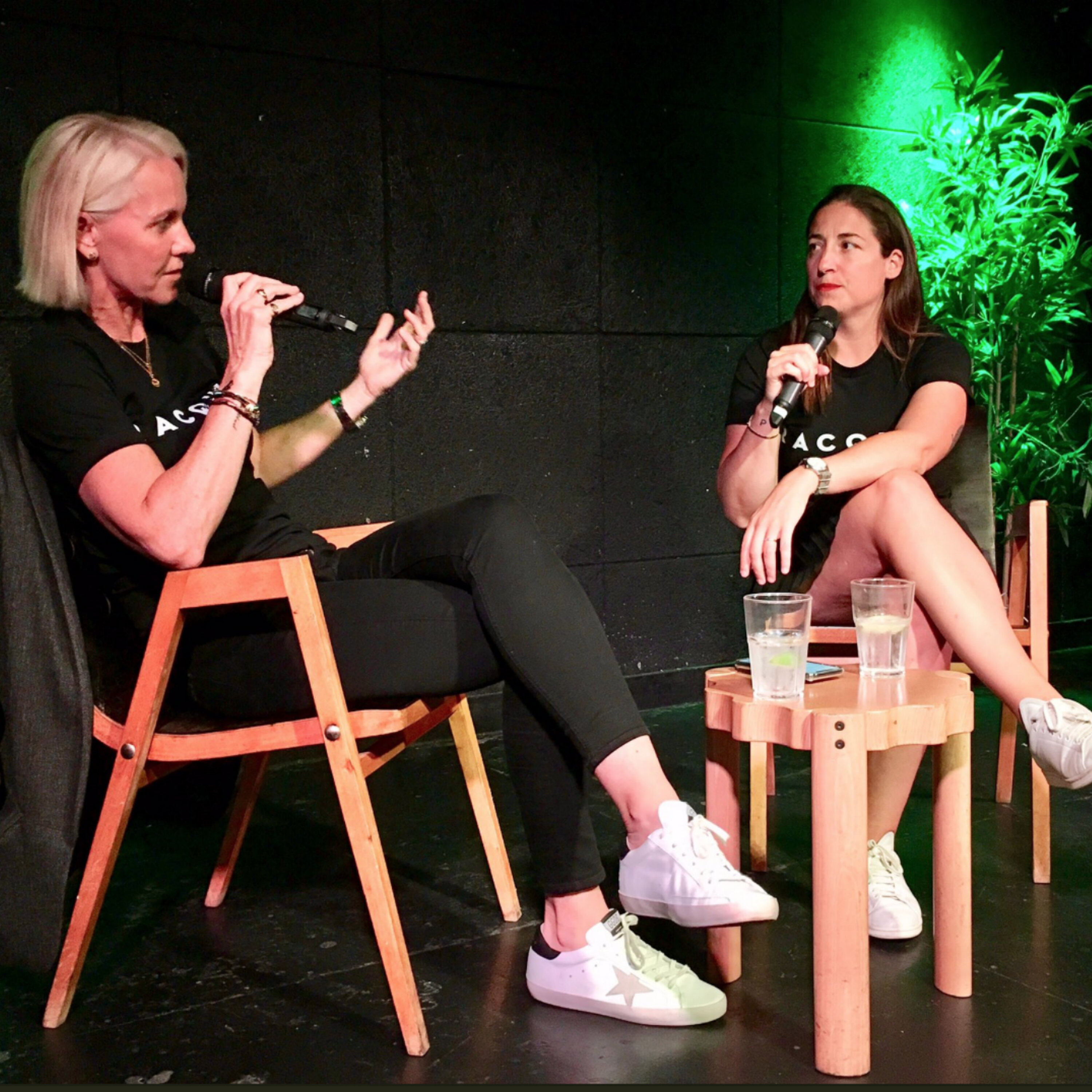
Between two Ferns, Tennis Edition
We hit up London's Ace Hotel in Shoreditch for our first ever LIVE SHOW where we talked some serious Wimbledon nerdery, trivia and talked about which of your faves are on a celebrity dating app!
Hosted on Acast. See acast.com/privacy for more information.
See omnystudio.com/listener for privacy information.
2019-07-10
61 min
Transcript
Available Results
Generated results are saved to the knowledge database for reuse and search.
No generated results are available for this episode yet.
Extract Knowledge
Pick what you want extracted first. Model, scope, and chapter options appear after a template is selected.
Generated results for public episodes are saved to the knowledge database so they can be reused and searched later.
Transcript
00:00:06
Speaker 1: Hello, Oh wow, okay, it's definitely on now.

00:00:09
Speaker 2: Hi. Hi, welcome to.

00:00:14
Speaker 1: The Racket Magazine Live, first ever live podcast recording. Very exciting and it's in London, which is nice. As you can probably tell, I'm British, so I'm neither one of the hosts. So my name is Roe, and very kindly, Caitlin just said, please take the mic for a few minutes and tell people what you do, because that's the.

00:00:35
Speaker 2: Kind of woman she is.

00:00:37
Speaker 1: So I run a women's sport platform called Slow, which is actually for Super Tennis History Nerds, is named after a tennis player, Lucy Diggs.

00:00:46
Speaker 3: Slow.

00:00:47
Speaker 1: Don't know if anyone knows her anyone, No, She's.

00:00:51
Speaker 2: Little known but worth researching.

00:00:54
Speaker 1: So that is why I called Slow Slow because she her story really resonates with me. And she was the first African American women to win a major sports title in the US. And her story really resonated because she had a whole other career in education and tennis was just her side thing. And I started Slow one hundred years after this, and I thought, wow, how much has actually changed in one hundred years.

00:01:21
Speaker 2: Not that much.

00:01:21
Speaker 1: A lot of female athletes still do that and still have full time jobs, and so that's what I started. I started to try and kind of change change this kind of scene of women's sports media coverage and really produce something that I wanted to see, really produced, like women's sports coverage that I wanted to read and see. So you can find us online and we do a monthly radio show.

00:01:48
Speaker 2: And really the.

00:01:51
Speaker 1: Very tenuous link here is that I think for me being able to just chat to you guys very briefly is a really nice thing because I think a lot on the podcast, there's been a lot of chat about how and most recently been a Jin King was talking about kind of lifting up younger athletes and lifting up you know, making space for the new gen. And and for me, that's kind of what these independent publications and independent people are doing. They're kind of making space, making the space that they want to see. So yeah, I feel really lucky to tell you guys about what I'm doing. And I've been here all day, been screening the Women's World Cup upstairs, so Ace Hotel have been like a very sweet kind of host to us all day, all sorts of women's sports stuff going on. But yeah, I will let you guys get to the main event what we're all here for. So love to welcome to the stage. Renee Stubbs and Caitlin Thompson.

00:02:49
Speaker 3: Thank you, Roal, thank you guys, thanks so much for joining us on a Sunday in East London. How many of you guys are here for the tennis? I heard some American accents, so thank you. I know this is not close to Southwest nineteen am I correct in assuming that.

00:03:04
Speaker 4: It's an hour. I just did it.

00:03:07
Speaker 2: We're thrilled we're here, you're here.

00:03:10
Speaker 3: We have some smaller tokens of our appreciation for you guys being in the audience, and then to end the night, we'll give you some more meaningful tokens of our appreciation, but you have to earn them and we haven't quite decided how you're going to do that, but trust us.

00:03:21
Speaker 4: Yeah, if you listen to our podcast, you realize that we do a lot of things on the fly. So but but I did decide that I was going to give something pretty cool to six members of our audience.

00:03:34
Speaker 3: Six members, so clear just a preview of that. Clear your schedule for tomorrow, That's all I'll say.

00:03:39
Speaker 4: But I think it doesn't have to be tomorrow. It's when they want to go, oh, really, well, tomorrow or Tuesday. I'm gonna, let's be honest, maybe Wednesday. But it depends on what kind of job you need.

00:03:49
Speaker 3: Anyway, Okay, we'll make it work and we'll make it happen, and six of you guys will be lucky. And before that, let me count how many items of merch we have, because I'm going to throw some things at you, guys.

00:03:57
Speaker 2: I've got a tote, I've got some teas.

00:04:00
Speaker 3: I think you can all tell that these t shirts look fucking amazing.

00:04:05
Speaker 4: Right, totes and not a tote, I mean totally.

00:04:09
Speaker 3: Jesus got me off the stage.

00:04:11
Speaker 2: So we have how many? Would we have?

00:04:12
Speaker 4: Four?

00:04:13
Speaker 2: We have four?

00:04:13
Speaker 3: Three totes and te's and we're gonna start with some tennis trivia. How many guys would say you're sort of like die hard, die hard tennis fans. I know there's some of you guys, yes.

00:04:22
Speaker 4: All right, usually the ones in the front, there you go, the ones on the back, you're here for the drinks.

00:04:26
Speaker 2: Drinks? How many just just drinks?

00:04:28
Speaker 3: Yeah, okay, And so everyone else is sort of like tennis adjacent, Tennis open, tennis sexual, but tennis curious.

00:04:37
Speaker 4: It's kind of like the LGBTQ plus movement. It just keeps every single letter starting to be added to, like LGBTQ P.

00:04:46
Speaker 2: You're all welcome here.

00:04:47
Speaker 4: Okay.

00:04:47
Speaker 3: So we're gonna start with some trivia and I'm gonna try to throw them at you.

00:04:50
Speaker 2: So get ready.

00:04:52
Speaker 4: You throw the T shirt all the question.

00:04:55
Speaker 2: You're gonna throw the question.

00:04:56
Speaker 3: I'm gonna throw the teas for people who shout out things, I can't see what you're pointing at.

00:05:01
Speaker 2: Yes, just you?

00:05:03
Speaker 4: Oh okay, wow first yeah, wow, okay, okay.

00:05:06
Speaker 2: This may be kind of heard.

00:05:07
Speaker 4: Where we start with what we're going We're going with the easy one. Yeah, everyone who played he's playing mixed doubles with Francis Tiafo.

00:05:18
Speaker 2: Oh Jesus, jesus.

00:05:20
Speaker 3: All right, let's bring enough prises. I say it was over here, so maybe all right, just got a little bit.

00:05:25
Speaker 4: Hurt just this is this? It was yes, yes, yes.

00:05:31
Speaker 3: Green black. I don't even know who I'm throwing this to get excited. It's a.

00:05:38
Speaker 4: It depends just mom, actually depends on the size of you.

00:05:41
Speaker 2: There you go, empty chair, great off to.

00:05:44
Speaker 4: Should we go with the hashtagh Okay, okay, so that.

00:05:48
Speaker 2: Has to be the last one for reasons I'll explain skip that one.

00:05:51
Speaker 4: Wow, that's abusive.

00:05:53
Speaker 2: I just think telling you, I just you have to be direct with you.

00:05:55
Speaker 4: Okay, you strit out a question?

00:05:58
Speaker 3: Okay, where did Nick Curios attempt to peg?

00:06:05
Speaker 2: Kind of salty pressy Raphael?

00:06:08
Speaker 4: Yes, Oh that was quick.

00:06:10
Speaker 2: That was really quick.

00:06:11
Speaker 3: Good like the confidence with with Jess and I got Yes, two more prizes with an extra bonus price.

00:06:19
Speaker 4: I don't know what do we discuss?

00:06:21
Speaker 3: Oh, the highest rated tennis match, which we're going to talk a lot about tonight because those of you who will be lucky enough to go to one tomorrow we'll see her. What is the highest rated match? But it's not It is her, you know, because you're saying Australia. But I'm saying, of all who whose match I'm looking for one name and you'll know what I mean in a second, whose match was the highest rated of all of the Fortnite thus far? Yes, I'm gonna give it to you because I think you answered it. Okay, last late tote bag. Okay, this is a great trivia question. By what time on day one do Wimbledon's bars break even?

00:07:04
Speaker 4: Oh? This is a good one. If you know this. I there's no way you know this.

00:07:13
Speaker 3: Five five o'clock, five pm, Day one, Wimbledon's bars have broken. Even that's for the entire fortnight of the tournament. And if you've been to Wimbledon you'll see why. Pims cups by twelve pm.

00:07:27
Speaker 4: Champagne.

00:07:28
Speaker 3: There's some lady and Luba TAM's who's passed out in the bathroom.

00:07:30
Speaker 2: It's pretty cool, it's pretty like.

00:07:33
Speaker 4: It's pretty much like for Americans out there, it's like Kentucky Derby every single day after five pm at Wimbledon, particularly in the PIMS tents.

00:07:40
Speaker 3: So PIMS is disgusting. Sorry guys, but I mean I'm around.

00:07:45
Speaker 4: Not after the third one.

00:07:47
Speaker 3: You don't even taste them anymore. Just so smooth, gone down. Okay, this is a very deep insider. How many of you guys have listened to our podcast before, just like our friends who we've pressured.

00:07:56
Speaker 4: Love you guys, thank you so much, thank.

00:07:58
Speaker 2: You so deep cut.

00:08:00
Speaker 3: Whoever answers this question wins the shirt off my back, the shirt of my back.

00:08:04
Speaker 4: Just for all right, I'm gonna preface this by saying Caitlin has an under armed sweating problem. Okay, so it's most been my back. But okay, take it home and wash it first.

00:08:16
Speaker 2: Okay, definitely wash it all right.

00:08:18
Speaker 3: On the back of our matching T shirts is a phrase that we are trying to launch as a movement to make men empathize with what female I mean females of all stripes, but female athletes go through when they get their periods when they are playing sports.

00:08:34
Speaker 2: Do you know what that phrase is?

00:08:35
Speaker 4: Oh my god, we love you guys. Right there you go?

00:08:39
Speaker 2: Should I monel it? Dick kicks?

00:08:41
Speaker 4: There we go. We're gonna hashtag dick kicks.

00:08:44
Speaker 2: Dick kicks.

00:08:47
Speaker 4: No, no, no, well that's true, But that's true. We really want men to understand that what women go through on a monthly basis is quite intense and awful, and the only way for men to really understand that is if you go at their own anatomy. So we decided to hashtag dick kicks so men would truly understand. So, therefore, you're getting this T shirt that.

00:09:09
Speaker 3: You're going to have to it's a women's extra smom Okay, so yeah, okay, cool.

00:09:15
Speaker 2: Maybe you can just shred it and wear it as like a muscle teach.

00:09:17
Speaker 4: It needs to be on a woman anyway, an FYI with that on a back, No, I.

00:09:20
Speaker 2: Would appreciate a man wearing it too. Maybe they'll just.

00:09:24
Speaker 3: Have to report back about what kind of feedback you get from that shirt. We're also going to be taking some questions from the audience.

00:09:30
Speaker 2: Mark where are you? Mark?

00:09:31
Speaker 3: Mark, our trustee, Australian stalwart tennis partner I'm gonna be playing with tomorrow morning if I don't get too drunk, has offered a sort of filter questions, so he'll be I might be handing the microphone, but think of obviously topics you would like to ask.

00:09:45
Speaker 2: We're going to start off with Coca Goth.

00:09:47
Speaker 4: Yeah, I mean we want to talk a little bit about the first week Oneberling because we're here and I'm sure all of you or most of you is certainly watching the tennis and so I guess, Caitlin, we want to talk a little bit about Coca Gough and the hensity that we've seen. I'm working for ESPN here, and I can tell you, as a working for an American broadcaster, the anticipation of her matches every single day in production. All we can do is talk more and more and more about Coca Goff which also brings into the subject of you know, age eligibility. Is she going to be continuing to be able to play? Where is she going to be able to play now that her ranking's going up, Because she's fifteen years of age, She's only going to be able to play a certain amount of events. And the reason for that is because of what we're seeing, the amount of press, the cameras. I mean, her parents. Literally every time I turn around, they're doing an interview. It's unbelievable. And then the nicest people in the world.

00:10:40
Speaker 3: Well, and also that kind of greasiest comebag, Patrick mortaglu Is Has.

00:10:45
Speaker 2: I mean he's a.

00:10:46
Speaker 3: Good coach though now I mean, but he's kind of really attached himself to this whole train ride. I mean these are my words, not yours, because you can get fired and I can't. But what do you think about his sort of opportunistic you know, present in her box?

00:11:01
Speaker 4: And well, he's a great advertiser for his uh has his academy. I mean, she hasn't spent a ton of time there. She spends a lot of time really in Florida. But you know, having said that, he kind of attached himself to her and He's really made her believe in herself. And you know, when you grow up as Coca Goff and your idols are Venus and Serena, and you get attached to Serena's coach and his entourages and his training facilities, of course it's going to make a difference for her to be thinking that she can live in that world. But one of the things I want you guys to look at.

00:11:36
Speaker 2: You think that's a good thing.

00:11:37
Speaker 4: I think it's a good thing. The most important thing for any kid of that age or any kind of you know. I mean, she's going to be a superstar. She is so good at what she does as of Chennis Slams. Calm down, I'm calming down. But you know, she did say she wanted to be the greatest player of all time. I mean that means you have to win twenty four Grand Slams. I don't think that's going to happen. I mean I hope it does, because that means we're going to have a superstar for twenty plus years. You know, I did bump into an unnamed player who said, Wow, I couldn't believe she said that, because that's just never going to happen. So you know, some players of that age are going to say things like that, are going to you know, let's face it, piss a lot of really good players off. But at the same time, you have to have that belief in yourself to be that good. I mean Venus and Serena, but I said they want to be number one, and well, when they were the same, they were younger, when they were ten. So if you don't say that, you're not putting it out there.

00:12:36
Speaker 3: Let me take a controversial It's not an anti cocoa GoF statement before anybody gasps. But one thing that I always sort of get troubled by, and I also feel is a little bit it makes me anxious, is just the idea of anointing a prodigy tennis in particular because of the age rules. And we should probably talk a little bit about what those are and why. But tennis has had a icee history with young champions coming out in their teens, and a lot of them have sort of spiraled into super self destructive places or.

00:13:09
Speaker 2: They've achieved a great height early on.

00:13:12
Speaker 3: I'm thinking of Tracy Austin or Andrea Jaeger and then so you know, and then on the other end of the back room, you get a Jennifer Capriotti who kind of embodies a little bit of everything. She was fourteen, yeah, when she made her superstar she actually, I think I believe made the quarterfinals here, younger than Coco.

00:13:30
Speaker 2: Yeah, she was fourteen, I think.

00:13:32
Speaker 4: Yeah.

00:13:33
Speaker 2: And then you know she was nose ring. I like a nose ring.

00:13:36
Speaker 3: But she was busted for shoplifting, stoned in community Floridy.

00:13:40
Speaker 4: It looks in her life so despiraled, you know, and then the shoulder surgery took her out of the game. But yeah, I mean, those are the people that you think about that we need to protect, and she is certainly someone that we need to protect. I cannot imagine growing up as a superstar now. And she's become a superstar, let's face it, in the matter of five days. But I can't imagine being a superstar in the day and age of social media now. I mean, there's something on her on Instagram today and she talks about all the people that have written to her.

00:14:08
Speaker 2: Beyonce, you know, the list is endless.

00:14:11
Speaker 3: All you had to say was beyond yeah, well this is I went with it.

00:14:13
Speaker 4: I went with the queen first upright, But you know, I mean, can you imagine like you're fifteen years of age and being able to refocus back on actually playing tennis and not get carried away in this limelight of you know, look who knows me and blah blah blah.

00:14:26
Speaker 2: I mean, I don't know how you do that.

00:14:28
Speaker 4: You have to be surrounded by such great, amazing people that literally like ground you.

00:14:32
Speaker 3: Well, let me ask you a question, because even though I was not a very good tennis player, I was already like spending my millions planning my sort of you know mounts and yeah, so you were what at what point did you realize you were good? And then did you have anybody around you being like, calm the fuck down, keep your head down, do the work. Was that something that you experienced or.

00:14:51
Speaker 4: No, people were telling me, fucking get your arsen to gear, like practice arta with me, I mean in my singles.

00:14:58
Speaker 3: Yeah.

00:14:58
Speaker 2: So, I mean, I don't know.

00:15:00
Speaker 4: There are times so that you do have to the most important thing is to manage your emotions, and it's really really difficult, which is why you see players when they win, like Roger or whomever. I mean, they're so normal when they get a little bit excited after matches, but when they win, when they finally win a slam, they cry. They you know, there's just that blubbering massive a human being on the court because they're finally after two weeks allowed their allowing themselves to actually feel I know that sounds weird.

00:15:29
Speaker 2: But yeah, I always kind of figured it was pretend. No, it's it's the it's the one moment.

00:15:34
Speaker 4: I always say this, if you ever look at you know, tennis players when they win a slam or whatever it is and singles or doubles, and it's the one moment of your life that you cannot control your body movement, you know, no matter how much you're like, if I win, I'm gonna do this, No you you don't. I never practice like if I win, I'm gonna I'm gonna put my hand up and I'm gonna throw my leg out and no, none of that. It's just one that's spontaneous. Which, oh, but that's different. He can't control the moment that he wins. I'm talking about the moment can control this? Well, this.

00:16:11
Speaker 2: Should everyone knows who we're talking about.

00:16:13
Speaker 4: Correct, Well, the after celebrating is something that is completely choreographed.

00:16:18
Speaker 2: You get to decide.

00:16:19
Speaker 4: I mean, Ashbardy I think is the greatest is she literally walks out in the court and she's just like claps a racket like yep, thanks by. But that's her personality. She doesn't want to be this person that's like kissing to I mean the kissing to the four corners of the court drives me bonkers because Maria did it to start, okay, so Andrea Angasi did it to stir well, but Andre, like, you know, the people love it, but don't follow him.

00:16:47
Speaker 2: Don't follow him.

00:16:47
Speaker 4: So you're saying it's it's is the guy, Yeah, don't follow him, you know, go out be blah blah blah. But there are two or three women's players that do the almost the exact same thing.

00:16:58
Speaker 3: And I'm like, can I you a pantomime no names named, and maybe if somebody guesses them.

00:17:04
Speaker 2: It's so obvious. I mean, come on, it's so easy. Can I say who it is?

00:17:13
Speaker 5: Yeah?

00:17:13
Speaker 2: I have Venus Williams.

00:17:14
Speaker 4: Oh, Venus, Wait, this is Venus. I mean Venus just doesn't No one does a twelve like V and then that's it.

00:17:23
Speaker 2: Clearly.

00:17:24
Speaker 4: Now I don't want to kick my drink over. I mean it's only water. No Venus just does the twelve. No one does. It's a pretty control like v other than Serena, Trina does one.

00:17:35
Speaker 2: Marea does the kiss to all four corners?

00:17:38
Speaker 4: Wasn't the Aki all four Corners? I mean, I listen, I'm friends with Cara, so she's gonna hate me for me saying that.

00:17:46
Speaker 2: But it's true.

00:17:46
Speaker 4: I'm like, come on, like why anyway, we're totally getting off the subject of Wimbledon here.

00:17:51
Speaker 3: We are, but we started with Cocoa go a prodigy, and just to move before we move on the idea of a prodigy, My parents are classical musicians, and one of the things that sort of frequently comes up is these, oh can you believe this, like pro player who's coming out of you know, Taipei, who's already memorized Shasta Covid And it's like, yeah, but they technical proficiency at an early age doesn't necessarily connote, you know, emotional maturity.

00:18:17
Speaker 2: And my parents who are you.

00:18:19
Speaker 3: Know, they they're their own people, but they that is not how you describe them to me. Well, OK, give me a couple more of those and we'll have a different sort of psychotherapy podcast experience.

00:18:28
Speaker 4: But my sort of I think, do you spend on therapy a lot?

00:18:32
Speaker 2: One hundred and eighty dollars a week?

00:18:35
Speaker 4: Okay?

00:18:35
Speaker 2: Is that a lot?

00:18:36
Speaker 4: But you have insurance, so go on.

00:18:37
Speaker 3: Yeah.

00:18:37
Speaker 4: True.

00:18:39
Speaker 3: My parents would sort of say something like, you know, just because you can play the notes doesn't mean you can feel them and sort of express them with emotion. And I don't know if that's a good corollary for athletics, but you know, it does strike me that you you do you don't necessarily know how amazing what you're doing is, and that therefore that allows you to do it, but it also maybe makes it less meaningful.

00:18:59
Speaker 2: Is that is that my own nurse.

00:19:02
Speaker 4: Too smart for me? I can't even get into this. You don't even know my question. You go out in the court, you see the boy, you hit the boy. You are you know? I mean, she comes from.

00:19:08
Speaker 2: A stock of athletes.

00:19:10
Speaker 4: You know, her mom wasn't a track athlete, her dad was a basketball player. But I did say this the other day on ESPN, I said, there is no way, no way that Cocoa Golf will be playing tennis if it wasn't for Venus and Serena Williams.

00:19:23
Speaker 2: Zero chance that she plays. But do you think that's just because they're because American ro models.

00:19:28
Speaker 4: I mean yeah, because her parents saw Serena and Venus playing tennis and said, this would be a great sport for my kid to play. You can make money, you can make a life for yourself. Get out of, you know, any kind of socioeconomical problem.

00:19:42
Speaker 2: I feel good.

00:19:43
Speaker 4: You know, you become a track athlete, which is what her mom was, or a w NBA player in the US and be a basketball player. You can get a scholarship for sure to college for education, but that's not necessarily going to set you up for life. So if it was not for Venus and Serena, this phenom at fifteen of age would not be doing what she did, which is why I just you guys saw the match against Venus, and if you didn't go to the replay, but she when she shakes hands with Venus, I just I that moment where she literally and you.

00:20:11
Speaker 2: Know, VIA's a presence. Okay, he's a presence.

00:20:14
Speaker 4: And when you go and shake her hand, it's not like you want to piss her off, but to actually grab her hand and pull her towards her and say, I just want you to know you are the reason I'm doing this. So I mean she took the opportunity to actually say that to her at that moment, and you know, Venus doesn't want to get into a conversation they're like, oh, you're so cute. No, she wants to like kill her at that moment. But there was that moment where you did see Venus turn into this you know, amazing you know, hear about her ambassador, older sister mother mentor moment where she she kind of stops herself for a second and she smiled at Corey and she just kind of took it upon herself to be like wow, like yeah cool. You know, she smiled, and it was a really for me, it was a really beautiful moment in the passing of the torch of these of this you know, young generation of black tennis players that come from the United States. So it was a really amazing I.

00:21:14
Speaker 3: Think, you know, like Roe was saying, which is why I asked to sort of, you know, introduce us and sort of tie our worlds together. You know, it's about making space and creating visibility, which is why you know, as a person of color, as a woman, you know, et cetera. You know, it's important to see it so you can be it.

00:21:30
Speaker 4: And she's the third generation of black young American players. You know, you think about Madison Keys and Sloan Stevens, and now we're getting the next generation of fifteen. I mean, Sloan and Madison are in their mid twenties and now you're getting these fifteen fifteen year olds that are coming along. So you know, I really it's not It's very difficult for Venus and Serena to look at it that way because they want to still compete and they want to still win. But their legacy is completely you know, cemented. It's in cemented in gold with what we're seeing, particularly in American tennis.

00:22:01
Speaker 3: Let's talk about legacy a little bit. How many people in this audience are English. I don't want to use the wrong terminology.

00:22:07
Speaker 2: British, British.

00:22:08
Speaker 4: Okay, okay, great, it's all right, it's all right.

00:22:15
Speaker 3: I mean at one point I was pining at you quibble, but you didn't sound that British.

00:22:18
Speaker 2: So I'm just like, Okay, maybe if.

00:22:19
Speaker 3: I said English, she would have said, yes, she's just Canadian kidding. Yeah. One of the most exciting things. How many of you guys watched at all at all.

00:22:28
Speaker 4: Andy and Serena, Yeah, amazing, right, I.

00:22:32
Speaker 3: Mean, what an incredible moment. I had tears in my eyes.

00:22:37
Speaker 4: Three times that she was crying watching the match. I'm like, you need to get a life therapy. We're watching a movie the other day and I am a crier, like I'll watch movies and anything sort of like meaningful. I'm like, you know, I'm I'm right there on a plane like embarrassing myself with my hand, you know, but this one cries it like everything.

00:22:57
Speaker 2: I was like, wow, you really have a problem.

00:22:59
Speaker 3: I think I'm just in touch with my emotions.

00:23:01
Speaker 4: Okay, Deck, all right, okay, but we want this is a stick.

00:23:05
Speaker 3: I have been sleeping on Renee's couch in Wimbledon because it's really hard to get to Wimbledon. And we watched a documentary called Knockdown the House I've been we guest seen that. It's about the female wilemakers inspired to run after Trump's election, and the one who breaks through out of four is Alexandria.

00:23:22
Speaker 2: She's a badass. Yeah, you know, I'm bawling from minute one, which you know, come on.

00:23:26
Speaker 4: Actually, Tap wants her wife to run for the mayor of New York. But anyway, that's a whole different story. But I just want to say something about Andy and Serena. So, walking the I'm always on the grounds very early, and I was walking to the media area and I see Andy Murray come walking in, kind of shuffling in to the courts.

00:23:45
Speaker 2: No, no one's around, that's just how he walks.

00:23:48
Speaker 4: And he's shuffling in and he's got looks like it might have been pajama pants, but I think they might be were track pants. And then he definitely had his ugs on. He had ug slippers on.

00:23:57
Speaker 2: Oh that's embarrassing.

00:23:58
Speaker 4: And I'm like and I'm like, he's coming in and I'm like, what are you doing?

00:24:03
Speaker 2: Are you seriously what are they?

00:24:06
Speaker 4: I go, are you in slippers?

00:24:07
Speaker 2: Were my exactly way? I go those slippers?

00:24:09
Speaker 4: He goes yeah, he goes, I go, what are you doing? He's like, I gotta go sign in for Mixed I was like, that's amazing because every one of the doubles, one of the Mixed Doubles players has to sign in. You can't have your coach do it. One of the players actually has to physically go and sign in. So I said, well, we just found out what totem pole you're on, which is the bottom in this gird? Your ass is out of the house going to sign in.

00:24:31
Speaker 2: Yeah, and Beta, he's the beata. I mean nobody, he.

00:24:34
Speaker 4: Said, I'm going to go sign in and then go back and play with my kids. Because it was early. It was like maybe nine eight thirty nine o'clock in the morning. No one's around. But it was so I mean, the irony that I happened to bump into him, which was fantastic.

00:24:45
Speaker 2: That's amazing.

00:24:46
Speaker 4: He knows I'm going to tell the whole world, which I did twice. I've told it now in here.

00:24:50
Speaker 2: And I told them on ESPN the third time.

00:24:52
Speaker 3: Here I am uh oh hello. I'm an Indy Mry fan for a number of hiss but his support of female athletes, his support of equality. He was famously asked Andy, what does it feel like to be the first tennis player to win two gold medals?

00:25:08
Speaker 2: And what did he say?

00:25:10
Speaker 3: Oh?

00:25:10
Speaker 2: Boy, I believe that William's sisters did it first.

00:25:13
Speaker 4: And you're just like I was having a bike, I've had two drinks, like come.

00:25:15
Speaker 2: On, yeah, and just you know.

00:25:17
Speaker 3: The quick command of including women in his mind space is just so inspiring and amazing. And you know, Serena famously said, when faced with the news of Andy's potential retirement, you know, obviously he's had his hip resurfaced.

00:25:30
Speaker 2: It's unclear if he's going to.

00:25:31
Speaker 3: Come back to playing singles, but at least we have him in doubles, which is amazing. Australia did not look like he was even going to come back, you know, and so everyone was sort of doing the retirement tour, you know, kind of obituaries about Andy's career and just honestly, you know, what does it feel like to lose Andy Murray? And you know it was hard. I mean, listen, I know him personally, you know.

00:25:52
Speaker 4: Really we've had Judy Murray on the podcast, who was fantastic, and I love Judy. And the reason both Amy and Andy because I don't want to forget about Jamie, but that they are the way they are is because of the way they've been raised and they are truly just tow the nicest and he's my favorite, honestly. I mean, I love Roger walks By always as low, he's always so gracious, Raffa as well, but Andy was always the guy that always had.

00:26:19
Speaker 2: It is he there? Yeah, he's always so slow.

00:26:23
Speaker 4: He always love.

00:26:26
Speaker 3: You know, I you know, give physical physical comedian until to night. No, you can't do like a just like a butt pick or something. No.

00:26:36
Speaker 4: Well no, I'm wearing a thong so I can't get in it. Well you asked, no, listen. Raffa is a great guy. He's very sweet, he's very kind, He's nice to everybody. But Andy's the funniest of them all. I mean, he's just he's kind, he's funny, he's self deprecating. You know, he's a bit of a nightmare on the court, but that's his personality.

00:26:56
Speaker 2: I mean, was a nightmare on the court.

00:26:59
Speaker 3: The microphone mark, who I know has a question. I'm gonna also solicit one or two more questions from the audience before we keep going, because we have a few more topics we don't want to get to. But I want to make sure our episodes where we have sort of question and answers are our most popular.

00:27:13
Speaker 6: I don't know why.

00:27:13
Speaker 2: Maybe just people want to feel included.

00:27:16
Speaker 3: Here's the place Mark, I believe you had a question, Mark from Australia.

00:27:19
Speaker 2: Everybody, do I have.

00:27:24
Speaker 5: To ask a question first? Or do I get it from the audience. Okay, can I do the dating app.

00:27:31
Speaker 2: Question or no? Go ahead? That sounds interesting.

00:27:36
Speaker 5: I hear that professional athletes have their own dating app. Do you want to explain that a bit more?

00:27:40
Speaker 4: Their dating app? No, they don't have their own dating app. But there is a dating app called Rayah. So I don't know if anyone's ever heard of that, But.

00:27:50
Speaker 2: Has anyone heard of Raya?

00:27:52
Speaker 4: Oh it's a couple. Are you on Riya?

00:27:55
Speaker 3: Weill?

00:27:57
Speaker 4: So Riya is like the Soho House of day being apps. So you know, if you want to get into the Soho House, for example, you have to have people that allow you, they nominate you and whatever. It's bitwanky, but you know, you've got to be artie and you've got to have certain amount of Instagram followers and et cetera, et cetera.

00:28:14
Speaker 2: And so there are a number of tennis players on Riya.

00:28:19
Speaker 3: Last year, this time last year, we were in Wimbledon Village with our fashion correspondent Andrea Pekovitch, who at the time was single.

00:28:26
Speaker 4: Yes, you don't, like, you don't even know where I had to think about that. What month was that?

00:28:32
Speaker 3: Yeah? No, she was like, and she turned on Riya and it turns out the profiles you can set it to location based sort of searching, and so I will. I think it's worth a grounds to Wimbledon if anyone can guess one of the.

00:28:50
Speaker 4: Oh okay, one ground, okay, two grounds busses for you and a friend.

00:28:55
Speaker 3: Wow right courtesy of Stephan Graft for the Stephan Grass courtesy of all right, okay, okay.

00:29:01
Speaker 2: Courtesy of my Steffie's booklet of tickets.

00:29:05
Speaker 3: All right, you will get his touch paper that Stepie Graf has also touched and incidentally reor nice steps if you guess one of the four tennis players that were on Riyah last year looking for hookups in Wimbledon village.

00:29:22
Speaker 2: Not curious, curious? Married?

00:29:26
Speaker 4: Yeah, but yeah but Fonani, yes, married to Flavia who will?

00:29:31
Speaker 3: She should be a little more active in this. He's such a piece of work, No flabio Fanini. He told everyone that Wimbledon should be bombed. Well that's but that's different to cheating on your wife. Also, he called an umpire at the US Open a cocksucker whore and got kicked out. I think is that the only time an active singles tournament entrant has been kicked out of a Grand Slam for dumb shit, they've said to an umpire, I did not have to look. I'm not an expert, but I'm pretty sure that's up there. It was some good he was It wasn't great, okay, so but Greg okay, So two men and two women. I know it's very obscure, but go with us because this is probably gonna be worth description anybody, not not Gugenie Bouchard was one of them. You take it to you better come up and get them, just so we don't forget, because I feel like everyone will be like.

00:30:24
Speaker 4: That's the criteria to get into Wimbledon.

00:30:28
Speaker 2: Who's on, Riah? But I guess what's your name?

00:30:31
Speaker 4: All right, I'll get your I'll get.

00:30:33
Speaker 3: Your name, and we'll get your name or number, all right. Uh So, to be clear, Riyah, from what I've seen, I am a happily married mother of a five year old. But from what I've seen, you cannot take a screen grab of Riya. Your phone is David to give you a warning, it's real experience thing. They kick you off if you if you so, I've heard breaking in the rules and instead of writing anything about yourself, your interests, your hobbies, your sign.

00:31:01
Speaker 2: It's just a photo, one photo that you've You've got a whole story music that you pick us.

00:31:08
Speaker 3: What you see is a song and a story, a song and a picture. So Eugenie's was pictures. Sure, Eugenie's was you know, and uh, what is that?

00:31:20
Speaker 2: You know what that is? Everybody knows what that?

00:31:22
Speaker 4: What are you smoking?

00:31:22
Speaker 2: A badly dancing?

00:31:25
Speaker 3: You know.

00:31:25
Speaker 4: It's like she's in a beginning and they follow her on Instagram they know.

00:31:29
Speaker 3: So it's about what you'd expect. There was one American man, no Jack Sock, he were giving tickets. No, no, okay, sorry, oh my bad. I'll think about it. Maybe for the maybe for the most obscure last one that we're gonna say. So Jack Sock's on there like this.

00:31:54
Speaker 4: Caitlin to serve everybody out there on podcast world is showing some sort of white gangs.

00:32:00
Speaker 3: Yeah, like that's embarrassing for everyone. And his song was Drake. I think it was like started from the bottom and you're just like this guy, come on, Jack Tawk.

00:32:11
Speaker 2: I'll skip to the end. The most obscure but amazing one was a Canadian looking forlorn pensive.

00:32:21
Speaker 3: This is definitely for women. In scrous passes because it's very it's gonna be hard to guess. And his song sort of pensive outside of a balcony on a sort of a European street, and his song was lady in red brownich who guessed that please come up?

00:32:41
Speaker 2: Because that is the.

00:32:42
Speaker 3: Silliest, saddest, most insane thing to guess.

00:32:46
Speaker 2: You just kind of feel for him.

00:32:47
Speaker 3: You're like, I hope he gets a date because that's that's he's lonely. He's lonely, and he's a Canadian and he's I don't.

00:32:54
Speaker 2: Know, he Caitlin feels sorry.

00:32:56
Speaker 3: He's too earnest for this world, clearly because he's got lady.

00:33:00
Speaker 4: Are we doing two? Two tickets?

00:33:02
Speaker 2: I can't see who?

00:33:04
Speaker 3: Oh?

00:33:05
Speaker 2: Well, can you guys go together?

00:33:06
Speaker 4: All right?

00:33:07
Speaker 2: Can you? Does that split families and break heard?

00:33:10
Speaker 3: No?

00:33:10
Speaker 2: I can do six.

00:33:11
Speaker 3: It's fine to to to give me your name and Brian, you've got two and are the gentleman?

00:33:17
Speaker 2: Wow? Okay, should we take one more audience.

00:33:20
Speaker 4: Question or no more tickets left?

00:33:22
Speaker 2: No, I'm just saying, but ask questions. Okay, one more more.

00:33:29
Speaker 4: Shy ask whatever. You listen to our podcast, there's a lot of bullshit that goes on.

00:33:35
Speaker 2: M I have a question Title nine.

00:33:41
Speaker 6: People over here don't appreciate what it is, and it may be worth explaining it because what effect has it had. The parents of both Madison Keys and Cocoa Gough both parents were collegiate American collegiate athletes where the mothers were serious athletes, and I have a feeling Title nine has played a role. You know, most of these tennis players have not gone to college, so it's not that necessarily, but they're being raised by mothers that were athletes.

00:34:20
Speaker 2: I'll leave that one to Caitlin because she's the smart one.

00:34:24
Speaker 4: I'm just kidding.

00:34:24
Speaker 2: It's because she's a Title nine baby. Actually I am a great question.

00:34:28
Speaker 4: So wait, wait, wait When we interviewed Billy, I just need you to know that. Literally, as she is talking about this again crying with Billy Jane, I'm like looking at her like, are you kidding me right now? Billy, of course, is.

00:34:40
Speaker 3: Like, it's only the most important female go on symbol and ambassador.

00:34:45
Speaker 2: I did get weepy.

00:34:47
Speaker 4: I know, no, it was great.

00:34:49
Speaker 2: So Title nine, thank you.

00:34:50
Speaker 3: A great question is a law that was passed in the seventies that guarantees equals spending on men's and women's sports in all schools.

00:34:57
Speaker 2: But the most sort of notable.

00:35:01
Speaker 3: Manifestation of that is equal spending in men's and women's athletics, because prior to that, women basically had no representation in sports budgets whatsoever and anything. Anybody who knows anything about sports in America knows that the main sports that are funded by collegiate athletics and paid for by very lucrative broadcast rights are football, American football, and basketball, and American football has about one hundred people per team. So to achieve parody in spending, you need to fund a whole lot of women's sports. And so all of a sudden in the seventies and eighties there was a whole class of people women really excuse me, engendered softball teams, soccer teams, tennis teams, volleyball teams, basketball teams. Through this law, and interestingly, Title nine has also sort of morphed and Renee's friend and presidential candidate Kristin Jillibrand is actually very on the forefront of this, using Title nine as a camp to event campus sexual assault, because again it's a way to sort of prosecute and safeguard the equality of.

00:36:06
Speaker 2: Women as human beings.

00:36:07
Speaker 3: Who knew that that was important on campuses, and so it's a law that has been stretched to really sort of fill a lot of gaps in our society. So instead of just treating women equally, we have thankfully codification, largely in part to Billy Jean King and the Original Nine, who also founded that women's tennis Tour when Jack Kramer don't celebrate Jack Kramer in those beautiful old Wilson rackets, because he was the one, notably who kept them out of the tour and told them they could keep making twenty dollars per appearance. I'm exaggerating, but something along those lines. Instead of being paid something close to what they were worth. Billy Jean and the Original Nine broke off created the Women's Tour, she Tests Fund in front of Congress, and Title nine.

00:36:47
Speaker 2: Became a thing.

00:36:48
Speaker 3: The last thing I'll say about it, other than being a personal beneficiary. Having had parents who didn't really know to save money for.

00:36:54
Speaker 2: College, so I handspeck to the therapy. Yeah, they were like, you on, I go to college.

00:37:00
Speaker 3: What? So I got a tennis scholarship and study journalism And it was obviously sort of a change, a huge stage breaker in my life personally, which is why I feel so sort of impassioned by it.

00:37:10
Speaker 2: But one of the things I was thinking about it, I can tell I know you.

00:37:19
Speaker 3: One of the things that I think is super interesting about Title nine is we did a story in the magazine last year about the Super Senior Tour. These are people around the world who play competitively in the age divisions of sixties, seventy eighty, and there are even a few entrants who play in the nineties. And the story we did focused on the women instead of the men, just because there's fewer of them and you can kind of get to know some of the characters. And the most interesting detail from that story was the difference between the fifties and sixties. As a matter of fact, there was a single year that separated the levels and the abilities of these women and how seriously they had sort of trained and been taught in in this case tennis, but sports generally, and it was the year that Title nine was passed. There was a huge jump and skill level because for the first time women were having access to real coaches, real equipment, real locker rooms, and it was profound and all of the women knew about it and talked about it, and they even referred to themselves as like, yeah, but she was a title nine kid, so like, look how good she is. She's winning this tournament. And so it was just sort of you know, activism and action in a way that was really sort of both for me personal but also sort of it was you know, born out in what you could see. And so for me telling the story of Title nine meeting Billy Jean crying kind of for name.

00:38:36
Speaker 4: Weping, weping, It wasn't weeping, it was weeping.

00:38:39
Speaker 2: It was one of the things I had to pull you together.

00:38:43
Speaker 3: She was like, get your shit head of your ass and ask the question. But basically she told me to buck up and not celebrate her because there was lots of work left to be done.

00:38:51
Speaker 2: So that was the spirit in which I sort of take that question. So thank you. But also, yeah, like making laws on books is important.

00:38:58
Speaker 4: I don't know if a tall nine the impact on tennis professionally, I think it's more at the WTA founding was really the Bennet. Again, again, Billy was so prevalent in that and making that happen.

00:39:10
Speaker 2: Yeah, don't you think coaches and sort of the end.

00:39:13
Speaker 4: It's certainly possible in that respect, in a border, in a broader picture, and the parents, there's no question about that. But yeah, I mean, we're very lucky that we had someone as amazing as Billy Jean that stood up and really and one of the things I want to tell you about Billy is that, you know, if you noticed in the podcast what we did with her when she weld, you know, I asked all the stupid questions and I said, well, how how well, how did it come about that? Elton John wrote the song Philadelphia Freedom was for Billy Jean King and a lot of people don't know that.

00:39:41
Speaker 2: But when he said I'm going to write.

00:39:44
Speaker 4: A song about you, let's call it Philadelphia Freedoms because that was the name of her World Team tennis team that she was playing on. And Billy didn't react like, oh, how cool, I'm so amazing You're writing song for me. Billy said, what a great gift to give to the people of Philadelphia, you know, And I just and I literally saw her yesterday and I don't know, we got onto another subject about somebody else yesterday and I said, you know, Billy, she said, I just wish they would she would be a little bit kinder with the things that she says, etcetera, etcetera. And it was someone near pretty well known, and I said, Billy, that's a difference between you and her is that you are just a genuinely good human being. And I said, and I told her that story about the Philadelphia Freedoms. And I said, that's when I knew that about you, because I know Billy very well.

00:40:29
Speaker 2: But I said, that's moments like that that I realized that that's why you are the way you are.

00:40:33
Speaker 4: It was always the game title nine, women's equality. Everything about you know LGBTQ, right, everything about Billy is for the betterment of everybody else and not herself.

00:40:45
Speaker 3: So yeah, she's our sheiro And she's also been known to throw eggs off of the balcony. Yeah, but she said she couldn't remember that, so I don't know.

00:40:53
Speaker 2: I know about that.

00:40:55
Speaker 3: It was a good story at the time, it was a good story. Mary Carilla told the story. I think we had one more question, and then I think we have Is that true?

00:41:00
Speaker 2: Did we you better? You better still have your question, hopefully remember it.

00:41:04
Speaker 7: I guess Wim Wooden has always been you know, I guess the key sort of a venue where people sort of focus on tennis fashion and.

00:41:14
Speaker 2: We need a Yeah, I've kind of gotted that, and here today she decided to go on a vacation. So you can blame her for that. Okay, shame, but I guess.

00:41:25
Speaker 7: For I guess if if your name doesn't start with s in in arena, most of tennis fashion these days doesn't necessarily seem to be that memorable.

00:41:36
Speaker 2: So I want to know what do you think.

00:41:38
Speaker 7: Tennis, the tennis world can do to create some more, you know, memorable fashion moments.

00:41:44
Speaker 4: Like Anne White's one piece, one piece suit at Wimbledon.

00:41:48
Speaker 2: Tiny shorts. Tiny.

00:41:50
Speaker 3: Oh.

00:41:50
Speaker 4: I've said that I want the guys to go back to tiny shorts.

00:41:53
Speaker 3: Fucking sure, gay men women would love that, it, would love it.

00:41:58
Speaker 2: Their legs are incredible. Listen, you like to wears.

00:42:01
Speaker 3: I do. It's a It's been called vulgar and inappropriate, but that's Fred Perrys today.

00:42:08
Speaker 2: Yeah, tiny shorts is my answer.

00:42:11
Speaker 3: I completely agree with you. Tennis fashion is quite boring and I would like to see anybody, really, but especially the men, in very, very very tiny shorts. I was at the Fred Perry headquarters two days ago and they were showing us the original line after sort of Fred had sort of passed the torch and it became a fashion brand, and they were like, this might be a two American reference, Daisy Dukes.

00:42:32
Speaker 2: Does that sound yeah?

00:42:34
Speaker 4: We got, we got, we got Dukes of hazard great.

00:42:38
Speaker 2: Just making sure that I'm being remember they were they looked like they would chafe.

00:42:43
Speaker 3: But I think the tiny, tiny shorts is certainly what I would sort of recommend.

00:42:47
Speaker 2: And I also feel like, you know, Wimbledon did not always have the color restrictions that it has now. It got you look more conservative.

00:42:54
Speaker 4: But the Pat Cash, you know, headband that he wore back in the day and that he's sort of still pumped away.

00:43:00
Speaker 5: With now.

00:43:03
Speaker 2: You know, it's out there.

00:43:04
Speaker 4: He walked into Wimbledon the other day with a backpack on and on the bottom of it was his trademark. He's like, that's what I'm saying.

00:43:11
Speaker 2: It's fine.

00:43:12
Speaker 4: But if if in today's day and age, that would not be allowed at Wimbledon, that headbang would not be allowed if you look back at the years of you know, Boris winning, talk about weepy.

00:43:24
Speaker 2: She saw Boris the other day.

00:43:26
Speaker 4: I took a photo with her and Boris and I got one photo because I thought it was a great picture already and I was like, I don't need any more, and then we got it into the Yeah, so I just said she was stoned by the end of the night. That's it.

00:43:38
Speaker 2: That basically, I happen to be. No, But there was so much color on the players back in the day.

00:43:43
Speaker 4: So I don't know where the analness came from with Wimbledon, because you know, even it got to the point where your swoosh was too big, it was color on your shoes. It was like, you know, obviously remember the famous pants that Venus wore that year. That was just like, wow, what's going on under the skirts?

00:43:59
Speaker 3: Didn't you tell me a story about you getting wearing non white tennis undies or something like that? Was that something I hallucinated? Somebody had to go run back to the locker room because they had a sports bar or some sort of under thing.

00:44:11
Speaker 4: Yeah, I don't know if it was, but it was. Even I always appinted by the rules, but no, but yeah, it just got it got to the point where it got ridiculous.

00:44:20
Speaker 2: It's ridiculous now.

00:44:22
Speaker 4: Yeah, and I see ashbody has the little tiny stripes now, and I was thinking, is that too much?

00:44:26
Speaker 3: You know?

00:44:27
Speaker 4: So, yeah, it's got I don't know. I mean when it comes to fashion in tennis.

00:44:30
Speaker 3: I'm ready to make some bold pronouncements though on the back of my shorts, my calling for short shorts, tiny shorts.

00:44:36
Speaker 2: I want to see return to more natural fabrics. I think performance where is boring.

00:44:41
Speaker 4: I mean that like linen, like linen, sure, yeah, I mean if you have to change linen when it's sweats.

00:44:48
Speaker 3: Yeah, I sweat and linen. I'm a very sweaty person. You've already established I have. Yeah, But my point is natural fabric, like the original peak polos. The problem with tennis clothes is you can't wear them off the court and back again. And I think that we should all be embracing a look that's a little bit more, you know, from the streets to the courts to the boudoir.

00:45:08
Speaker 4: And that to me would be that's why you have your magazine because you can put all that in there. Why don't you write a story about that next next edition?

00:45:16
Speaker 2: Great, this is how we get all of our great ideas.

00:45:18
Speaker 3: Right.

00:45:18
Speaker 4: That's a great question. But I think that you know, you know, Nike and added Us and all of them. They're always trying to sort of think they're pushing the envelope, but really they don't.

00:45:28
Speaker 3: So I don't know.

00:45:29
Speaker 4: I mean it's crazy, okay if you do have a few players like Venus and et cetera.

00:45:34
Speaker 3: Trying to do their own lines as well, we should talk before we go because we have time and two more tickets.

00:45:39
Speaker 2: Is that true? Oh no, I already gave them out because ye have no more prizes. You guys might as well leave right now.

00:45:45
Speaker 4: I want to talk a little bit about a situation in Australia that happened last week when Ash Barty got put onto an outer court and as world number one French Open champion. But you know you're having to deal with seven time world and champions and the English flavor like tomorrow contes on the court against a two time champion and Covet on center court and ashes again on court two. But Australia Channel seven decided to show Kirios's match his first round against Jordan Thompson over Ash Barty. And I do some crosses for Channel seven. Still at explain what a cross is? So when I'm doing at ten twenty at night, I do across to our morning program so in the US the Today Show or whatever, and here all right anyway, so I do my thing, and it's all been about ash Barty, ash Barty, ash Barty, ash Barty, ash Bardy, can't say it enough, world number one and America first body ash Barty. And then all of a sudden, you know, the first day of play that she goes out into the court and we're just we've been talking about her for three four days NonStop. And then Nick Kurios is on at the same time, and Channel seven chose to go with the five set match with Jordan Thompson, who was another austrain and there was a lot of people in Australia that were pissed off that ash Buddy wasn't getting sort of like she wasn't the one on TV getting her due. Then the numbers came out for Channel seven on that match, in particular a round one Jordan Thompson, who's not really well known in Australia playing against Nick Curios.

00:47:20
Speaker 2: It's all because it's Nick.

00:47:22
Speaker 4: It had the most numbers that Channel seven had from the last year's men's final.

00:47:29
Speaker 2: So people got up to watch.

00:47:30
Speaker 4: At the crack of crack at like three or four o'clock in the morning in Australia. That's just crack of crackers, like really early in the morning. With more people watched Nick Kurrios's match than the men's final last year at Wimbledon. So that's the problem that you face as a producer and a network is that he brings in numbers.

00:47:49
Speaker 2: And the reason he does is because he's he's nicked quick.

00:47:52
Speaker 3: Paul, before we go on about Nick Curious and I think we have time for one more question than they're going to kick us out of here. How many of you guys like Nick curious but round of a sort of plaus meter because I can't really see hims.

00:48:02
Speaker 2: Yeah, yeah, well a lot of in the front.

00:48:04
Speaker 3: And then how many people are like, do you that a scraze D'artanna's he should be kicked out?

00:48:08
Speaker 2: Wow? Okay, this is what we're dealing with.

00:48:11
Speaker 4: So and we do have this conversation in our production meetings for television when we do talk about Nick and every producer, which.

00:48:20
Speaker 3: Just for maybe the uninitiated, Ni Curious twenty five bad boy of Australia, he's got a lot of savings into his bas not as many anymore.

00:48:30
Speaker 2: I'm into it, but I'm just saying he's known for you know, and I will say I will tell you guys.

00:48:35
Speaker 4: Nick was actually going to come here tonight, but he ended up flying home because he lost his mixed doubles the other day. Nick does those things. He does, step out of his combasign. He does things for you know, friends, other journalists. You know, he's he's here children, charities for children. He's a very mixed bag of chocolates fruit. I was gonna say, but I don't know.

00:48:59
Speaker 3: Yeah, you eat the crack of crack. I'm pretty sure I like Nick.

00:49:02
Speaker 4: When you get in one on one.

00:49:03
Speaker 2: He's actually very endearing.

00:49:04
Speaker 4: He's very shy, but he has this bipolar personality when he gets on the tennis court. He doesn't love the sport. He I think he has a fear of failure and I think that stops him a lot. But he brings in numbers. You guys, like, you cannot just you cannot take your eyes off Nick curious when he's playing a match.

00:49:23
Speaker 2: And that match the other day with Raffia and Nadar was just it was unbelievable.

00:49:27
Speaker 4: I mean, he tried, he really tried and he not a particularly big lover of Rafa as you can, as you know from things that he said in the press, and he really tried, and you saw how good he could be if he can put it all together. I just don't know how much he wants it. I don't know how much he wants to be that guy every week. But we should have, you know, without the antics. I've said to him, I don't care what you do on the tennis court. Just try all the time. And if you're not going to try, I have a problem with that. That's the only thing I don't care about. The antiques, throwing, the throwing, the chair on the cord and the ball, the stands and the carrying on like fan in Miami, like that stuff doesn't truly I mean I kind of cringe sometimes, but it doesn't really bother me. I mean, I was a hothead and a nightmare in the court as well. Shut up and we'll take this outside. But you know, I can understand the sort of juxtaposition of where he is mentally on the court sometimes, But you know, I think underneath he's just a bit lost sometimes and we need him in the sport. We just hope that he stays in the sport for a lot longer, and he can get himself together.

00:50:29
Speaker 3: Because I just want to add something because I think, you know, when you talk about his ratings and you talk about why certain people, not everyone, but certain people in this room are obviously super excited about him. What I like about him and what I am so excited by as somebody who sort of sits adjacent to the tennis world but not totally in it. Having this independent magazine is just the idea that what he does and how he plays and how he sort of treats the hallowed ritual of the sport as something like the sort of silly and sometimes arbitrary thing that it is, feels and looks a lot like other sports.

00:51:02
Speaker 2: He makes a ton of sense.

00:51:03
Speaker 4: He would like to do his own clothing line, for example. You know, he'd love to have basketball clothes out there.

00:51:08
Speaker 3: Stuff. He makes sense as a basketball player, He makes sense as a footballer, he makes sense as a as a hockey player. Because he's truly somebody who you know, uh, sort of likes the jawing, likes the kind of shit talking, but also you know, is tremendous a gifted.

00:51:22
Speaker 4: I can tell you I saw him the next day and he was not happy that they lost that match. He really really wanted to win badly, And I mean, you know the conversation in the press conference about you know, did you why didn't.

00:51:32
Speaker 2: You say sorry?

00:51:33
Speaker 4: He's like, why would I say sorry? It didn't even hit him. It didn't hit him.

00:51:36
Speaker 2: If you look at the replay, it actually hit Ruff as racket.

00:51:38
Speaker 7: He was just.

00:51:40
Speaker 4: I would imagine too, when a ball comes at you that hard, it is very scary. As a player. You don't see it come at you that often. And Nick can produce a ball like that. It's just insane. It's insane. It's like a rocket. So you know, it's sort of jarring to you, and you kind of expect someone to just go sorry. But he's not going to get a sorry from Rough from Nick in that moment. So that's why he was so ticked off. In the postmatch interview, he's like, why would I say sorry? The guy's got a million dollars, millions and billions and millions of dollars in the bank, he's got eighteen grand slams. Why am I feeling sorry for him?

00:52:11
Speaker 3: So I think the only thing he did wrong was not going up and following up with like you ever been to peg City? You have? Now?

00:52:18
Speaker 2: I mean that's like that's you wanted him to say that.

00:52:20
Speaker 4: But you know, if you look at the handshake, Rauffa was way saltier in the handshake.

00:52:24
Speaker 2: What did it look like?

00:52:24
Speaker 4: Nick actually went in to give him a little bit more love, but Rafa was not having it. But you know what, I that's exactly what it was, just an ignorance of us. But you know what I loved about that? I said that was seriously mana oh mano that match? It was it was old school. It was like Connor's playing you know, not John. It was like Connor's I guess. It was like Connor's and Macnroe and some yeah, and you know, Borg and McEnroe. It was just two different personalities and I love that. I wish Tennis was more like that. I wish we had more personalities that weren't afraid to show it.

00:52:58
Speaker 3: Last question and then we're getting the up signal. Mark is on the microphone.

00:53:04
Speaker 2: He can ask Gosspy questions as well. You know, I really yeah, yeah, yeah.

00:53:08
Speaker 8: Well I'm not prepared for that. So what do you think of Tomic being fined? His first round win ins. I mean, did he not come through qualifying any way?

00:53:19
Speaker 4: Another polarizing Australian.

00:53:22
Speaker 2: Don't we love them? Another polarizing question as.

00:53:26
Speaker 4: Well, because some people are like, look, he played the three sets, he didn't give it his best. He might consider that that was just the best that he could do that day.

00:53:32
Speaker 2: Okay, time out.

00:53:33
Speaker 3: Bernie Tomic tremendously talented, very he was fining his entire first round prize money for not giving not giving a.

00:53:45
Speaker 4: Tanking, not giving a good enough effort in.

00:53:48
Speaker 2: His find fifty six thousand pounds. I don't think it's that much.

00:53:53
Speaker 4: I think it's in the forties forty five thousand pounds in maybe fifty six thousand dollars, which is a lot of money.

00:53:58
Speaker 2: But yeah, I mean again it's the same thing. I just try. Just look like you're trying.

00:54:05
Speaker 4: If you if you're losing a three set match in under an hour, that's there's some problems there. And this is the second time now that he's done that here at Wimbledon, So the eyes are on him and he has to understand that.

00:54:17
Speaker 2: He has to understand the eyes.

00:54:18
Speaker 4: Are on him.

00:54:19
Speaker 2: So you know, here's my question, why does he keep turning up. I don't know. Do you think it's money? Do you think it's just you know, it was a tough draw. I will say that, but I don't know. I don't know why these guys do what they do. I really don't.

00:54:34
Speaker 4: I mean, it's nothing that I can even remotely think about. I mean, if anyone ever saw me play, there was never a point that wasn't that I didn't try for, you know. I mean, as crazy as I was, the sport meant more to me when he meant more to me.

00:54:47
Speaker 3: You know.

00:54:47
Speaker 4: So I don't understand how the mentality of these guys sometimes is. And I don't know if it's just I don't know. I'm not a psychologist.

00:54:55
Speaker 2: I don't get it.

00:54:56
Speaker 4: I don't get it.

00:54:56
Speaker 2: I'm gonna take this to my therapist and see what do you think?

00:54:58
Speaker 4: Can you ask him about because I don't want to pay him.

00:55:00
Speaker 3: He's yeah, it's near your prices.

00:55:04
Speaker 2: I want to ask answer that question.

00:55:06
Speaker 3: And then the question was how do we get people to sort of participate in the podcast?

00:55:11
Speaker 2: And I think Rene's rolodex, her credibility, her.

00:55:17
Speaker 3: Friendships, her relationships on the tour speaks to themselves because I think She's somebody who tells it straight and is fun and jovial and invite invites a sort of wide range of players and thinkers and athletes, and that's a total asset.

00:55:32
Speaker 2: I also think I.

00:55:33
Speaker 4: Tackle them, I give them a drink, and I say, if you don't do this, I'm gonna do that's terrible things to you.

00:55:39
Speaker 3: But I also think, and this ties into what we're trying to do with the magazine as well, which is, you know, I think the truest gift you can sort of give anybody is to see them and to sort of acknowledge who they are. And maybe it's positive or maybe it's negative, but I truly think that there's some you know, uh, privilege and sort of interesting empathy that comes with trying to truly understand people. And I think athletes are often, especially in the tennis space, are not often very well educated. Some of them are very very smart and very worldly, and some of them are very self aware, but they're not often given a platform to be understood in any sort of meaningful way. And if you go into the press room at one of these tournaments, it'll fucking depress you, because these are people who don't leave their desks.

00:56:22
Speaker 2: There are people who are filing on deadline.

00:56:24
Speaker 3: Some of them are great, most of them are just ossified, bored, sort of antagonistic headline clickbait writers, And truly it's depressing in there because the sport deserves better. And you know, that's no small reason that we started a magazine that sort of challenges the notions of what storytelling in tennis is. But I think what attracts subjects is obviously the idea of having fun and having a real relaxed conversation. But it's something we talk about all the time, which is and this is true of the magazine in its pages as well. We're really trying to truly see people for who they are, tell the stories. Some of them are famous, some of them are head cases. Ben wil Peir is one of my favorite stories that we've done because he's fucking lunatic.

00:57:01
Speaker 2: But that's interesting.

00:57:03
Speaker 3: Farder for digestion and the tomic question that nic curious interest all sort of speaks to the same thing, which is, these are people who do spectacular things with their body on a regular basis, and it's incredibly entertaining way, but they're very fragile, interesting confused multitudes containing human beings.

00:57:20
Speaker 4: And I think that to me is so I'll answer this a little less education English and say my goal when I do postmatch interviews, which I've done for a number of years now, and I see people in the in the locker room, I know these players. I see them in the locker room. I know what they're going through. I've had conversations with them about their life. They're upsoit the downs, their depressing moments, the hard times, the times that they've cried.

00:57:44
Speaker 2: Why they're crying.

00:57:45
Speaker 4: Could be a boyfriend, could be a girlfriend, could be parents, could be anything that they go through in their lives. And I think that what you see is then play tennis. You see that one and a half minute postmatch interview that I may do with them or whoever does with them, and you think you know them right, You're like you pull for them or you hate them, and it's the way they are on the court. And it's like so many players that you probably hate are the probably the best people that you don't know. And it could be the ones that you love the biggest assholes. And I can tell you many of them, not tonight. But my goal was and when I talked to Caitlin about doing this podcast is that? And I too do honestly say this to them when I do talk to them about wanting to do the podcast. It's forty five minutes to an hour of your life or less, whatever you want it to be. Tell people your story, let them know the little things about you that they'll never know about watching you play tennis and doing a one minute clip on a TV that you know gets edited, like you cannot imagine from ESPN. You can do a ten to fifteen minute and it was somebody and it's amazing, and you'll hear thirty seconds of it on a broad a broadcast and the narrative is from the editor, the music whatever it's not from the player. So my goal with them is I want them to hear.

00:59:01
Speaker 3: You know.

00:59:01
Speaker 4: The sam Stows are one, for example, like the story that she told. It gave me goosebumps when she said about Serena, When Serena clapped that one shot at the US Open, and she said it calmed her so much that she was able to focus and refocus on playing the match. She said, I didn't care about the crowd yelling and screaming and booing at me. But when I looked and I saw Serena clapped me, I knew that she wasn't mad at me. And I said, literally, when she told that story, I got goosebumps. I'm like, oh my god, because she said, I've never really told that story to anybody. And so those are the moments that I want these players to tell me when they and asked when they're doing the podcast, because you would not I didn't know that. I know Sam really well and she'd never told me that story. She never told me the story about I want to be a party puopert tomorrow. So it's like, and if you haven't listened to that episode of Sam's, it's really really good because those are the stories we want people to understand.

00:59:53
Speaker 2: These people.

00:59:54
Speaker 4: They're athletes, you love them, you hate them, but they're human and maybe this part of them that you actually go that's like me, you know. So they're human and they go through really tough times. And so my goal is to actually make them be what I see in the locker room or when I see them as a normal people, which you don't get to see, which is what I want you to see. I want you to hear it and I want you to see it. So that's that's always my goal.

01:00:18
Speaker 2: When I do when we do these, and on occasion we let them drink, we do Pam.

01:00:24
Speaker 4: Oh yeah, well I will tell you Pam Shreiver's podcast got edited big time, mainly because she called me the next day and she's like, hey, Stuvesy, you know that story I told you about so and so.

01:00:35
Speaker 2: Can you cut that out?

01:00:36
Speaker 4: And I's like, damn it, yes, because we do tell them, we do edit it, and so if you we Caitlin I do the talking, she does the editing, thank god.

01:00:49
Speaker 2: But yeah, so.

01:00:52
Speaker 3: Amazing tip of we have bloopers. Yeah, it's amazing. That should actually probably blackmail her, so don't releast it's a good one. Anyway, you'll have to take your ord for it. We have to wrap this up, you guys, Thank you, thank you.

01:01:06
Speaker 4: So much for.

01:01:08
Speaker 2: We really appreciate it.

01:01:08
Speaker 3: Thank you for the questions. And if you happen to be at Wimbledon, uh in the next couple of days. I'll be there tomorrow. Renee is here through the fortnite, she'll be there every day. Right, Thank you guys, thank you again, thank you, And.

01:01:29
Speaker 2: That's it for this episode.

01:01:30
Speaker 4: Of the Racket Magazine podcast.

01:01:32
Speaker 2: Thanks for listening. Our host is Renee Stubbs. Our co host and producer is me Caitlin Thompson.

01:01:37
Speaker 3: Music by internationally renowned DJ Stretch Armstrong.

01:01:41
Speaker 2: Thanks to Tim Or Jerry and then the team at ACAST.

01:01:43
Speaker 3: Find us at racketmag dot com, slash podcast, and subscribe to us at any of your favorite podcatchers
Chapters
No chapters available.