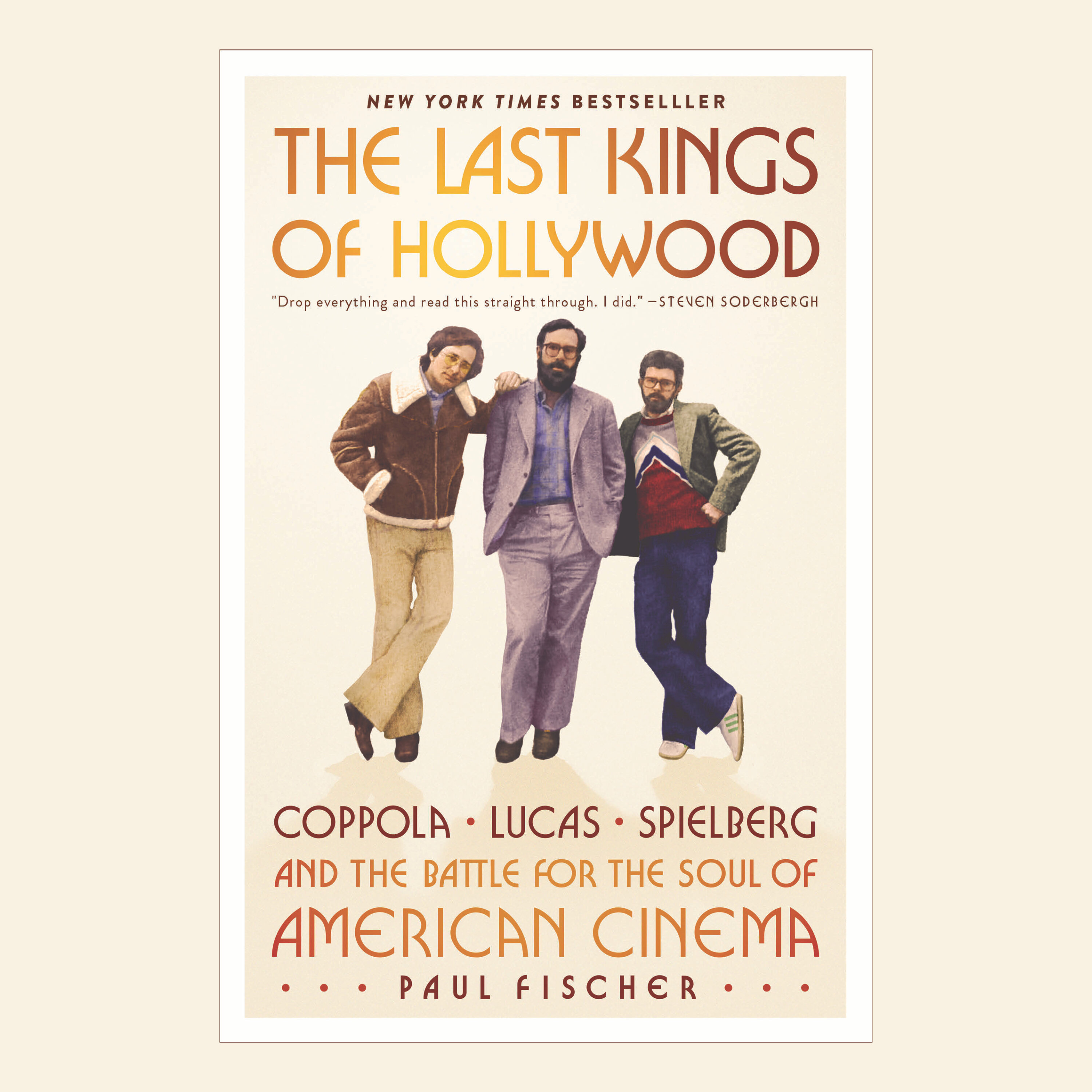
Coppola, Lucas, and Spielberg: How Success Changed the System — and Them
Michael Phillips talks with author Paul Fischer about The Last Kings of Hollywood and the fragile, collaborative moment that brought Coppola, Lucas, and Spielberg together before success hardened into mythology. From near-misses and rivalries to the system they helped build—and later found themselves up against—the conversation asks what was possible then, what was lost, and why none of it happens without people pushing one another.
Feedback:
-Email us at feedback@filmspotting.net
-Ask Us Anything and we might answer your question in bonus content.
Support:
-Join the Filmspotting Family for bonus episodes and archive access.
https://filmspottingfamily.com
-T-shirts and more available at the Filmspotting Shop.
https://www.filmspotting.net/shop
Follow:
https://youtube.com/filmspotting
https://instagram.com/filmspotting
https://letterboxd.com/filmspotting
https://facebook.com/filmspotting
https://twitter.com/filmspotting
https://instagram.com/larsenonfilm
https://letterboxd.com/larsenonfilm
https://facebook.com/larsenonfilm
https://bsky.app/profile/larsenonfilm.bsky.social
See omnystudio.com/listener for privacy information.
Available Results
Generated results are saved to the knowledge database for reuse and search.
Extract Knowledge
Pick what you want extracted first. Model, scope, and chapter options appear after a template is selected.
Transcript
00:00:21
Speaker 1: Film Spotting is presented by Regal Unlimited, the all you can watch movie subscription pass that pays for itself in just two visits. See any standard two D movie anytime with no blackoutdates or restrictions. Sign up now on the Regal app or at the link in our description and use code film spot twenty six to receive fifteen percent off.

00:00:45
Speaker 2: What kind of a show you guys putting on here today?

00:00:48
Speaker 3: You're not interested in art?

00:00:49
Speaker 2: Now?

00:00:50
Speaker 3: No, Look, we're going to do this thing. We're going to have a conversation.

00:00:55
Speaker 2: Hey, film spotters. Adam here can't wait to share this conversation with you between Michael Phillips, longtime friend of the show, longtime contributor to the show, and author Paul Fisher about his book The Last Kings of Hollywood about the collaborative relationship and occasionally the rival risk relationship.

00:01:16
Speaker 4: Is that a word?

00:01:17
Speaker 2: I think it's a word between Coppola, Lucas and Spielberg, how they completely upended the Hollywood system and changed it forever, for better or for worse. You can be the judge of that as you hear Michael and Paul discuss that and much much more here.

00:01:38
Speaker 4: It is lots to talk about with this book, The Last Kings of Hollywood. I have to say I had, I had, I had about fifteen different reactions to it, because it's such a fairy tale moment for these three giants of contemporary cinema, and we'll call it contemporary cinema, even though the cinema that George Lucas, Francis Scopola, and Steven Spielberg came up in seems like a long time ago in a galaxy far far away, you know now, but here that you know, luckily we have all these three filmmakers with us still. But I also had and at the end, it's so many kind of wonderful, amazing, bizarre anecdotes going on, and yet I was sort of in the end, I was left with a pretty complicated sense of what was possible then, what was exploitable then maybe from the studios point of view, and what is long lost to me now. And I just wonder if any of my feelings chimed with anything you had going into this project in the first place.

00:02:51
Speaker 3: Yeah, it's kind of a bittersweet thing. I think part of the reason for writing it. There were a few, but one of them was that idea that kind of like, okay, we' there's been stuff written about the seventies kind of sex, drugs and rock and roll in New Hollywood kind of vibe, but a lot of it's either twenty or thirty years old, or it takes the conclusions of stuff that was written twenty or thirty years ago. And this felt like a really interesting moment that we kind of live in this world that they unwinning created and not a world that's left them behind necessarily. But obviously Lucas doesn't make films anymore. Coppola is doing the megalopoliss and taking the giant swing, so everybody kind of makes fun of and Steven Spielberg, you know, he's still putting out bangers, but who cares because there's a Spider Man movie coming out next week, So you know, they kind of all been swallowed up by this environment that they created. And I like that writing it in a human sense, because it's like a monkey's pausing of like they come in very deliberately. That was another reason to write the book, you know, where people sort of we kind of treat these filmmakers in the seventies like they were just kind of wild and crazy irrational, irresponsible, overspending, over schedule geniuses who then had to be kind of rained in. But I like the idea that all three of these guys came in going, no, actually, we know what's wrong with the system. We have an idea of how to fix the system. We have a deliberate plan to fix the system. And it worked in a way that not fully backfired, but you kind of get the good and the bad with it. And I thought, that's kind of an interesting fifteen year journey to kind of track.

00:04:29
Speaker 4: Yeah, yeah, let's get into some of that in a little bit. I think for people who are new to, you know, the book, which is most people will be new to the book because it's a new book, it'd be useful to just sort of talk about where you start and then kind of what the fifteen years we're talking about really really sort of involved in where we find these three guys as they all kind of converge in this deeply unlikely way but sort of inevitable way in film school right in southern California or in and around the USC ucla kind of ferment which of that first generation of film school. But the anctdote that you start with is fantastic. They're on the plane flying to the White House. It's nineteen seventy seven, November. I think Lucas has just scored a tiny little hit with Star Wars. Okay, Spielberger is coming off Jaws from two years earlier. Coppola has had the remarkable streak beginning in the seventies with the first Godfather, then The Conversation, then Godfather Too, and then Apocalypse now, which is at the moment in nineteen seventy seven consuming him right. And they are on this private plane. Eleanor Coppola is writing in her diary and what she's overhearing, talk about what she's overhearing and kind of why that anecdote became for you. This is the starting point. This hits something I want to start with.

00:06:07
Speaker 3: Yeah, while she's overhearing, they're going to it's kind of like a presidential gala thing at the White House and have all these luxurious kinda pays and everything on this plane and Lucas is talking about how, you know, I'm getting the numbers wrong or whatever. But oh, by next Friday, Star Wars will be the biggest film ever, overtaking Jaws, which it would have been the best film ever, which overtook The Godfather, which previously was the best film.

00:06:33
Speaker 4: Ever in terms of grosses, in terms of and.

00:06:38
Speaker 3: She's basically overhearing the three of them, Francis Coopla, Steven Spielberg, George Lucausho. We're like very close friends, close to best friends, on top of the world, really kind of bitching and moaning about success and freedom and what to do next and what you have to do next, and like it's not really a celebratory mood, but it's also kind of all their personalities. There's a short exchange where, you know, you get the sen Spielberg's kind of giddy, Lucas is almost like an accountant. Copola is talking about, like, well, whatever you do, you just got to take a big swing and like do something big and be true to yourself. And it just felt like an exchange of like a it's talking about the stuff that the book concerned itself about, which was you know, kind of like success and commercial success versus personal filmmaking and what you do with that kind of success, and then this friendship and then what success does to you and what feels like success Because they're kind of at the peak at their powers then, and it kind of in the American edition of the book, there's a picture of the three of them together kind of leaning on one another that was taken the day after that conversation in Washington, and I thought, okay, so I can open with a scene that kind of expresses something about then top of the world. It's that exact moment you've just seen on the cover. It's kind of witnessed by one of the women, who is their ecosystem that you know, all these women they take for granted, who are kind of flies on the wall overhearing these men complaining about how successful they are and how unfree they are. And so it kind of had everything in it as a great kind of starting point to start there and go back to, you know, the book kind of starts in like the sort of six month period in summer sixty seven to January nineteen sixty eight, where the film industry is kind of dead and there's this guy called Francis Coppola who's a film school legend, went to UCLA, left early, made a feature film, brought it back as his thesis, worked for Roger Korman, became a staff writer for Warner Brothers, he's now directing his first studio film, first film school kid ever to direct the studio film, so obviously, up to that point, directors tended to be employees who work through the ranks. And he's making this film and his young kid from the Crosstown University USC comes to shadow him, called George Lucas, and they kind of hatched this plan to go, you know what, the system's broken, We're going to do our own thing. We've had all these new little cameras, editing beds, we've seen how Europeans can do it. Let's just like break out and take advantage the system and do it our way. And while they're hatching all the plans, Lucas kind of screens his own thesis short film at this kind of national film student show. Then, and there's a guy in the audience who didn't get into film school, who's a bay younger than all of them, who's very desperate to be a filmmaker by the time he's twenty one, called Steven Spielberg, who's watching these short films, going, oh man, everybody's so far ahead of me. I don't know how I'll ever catch up. And he goes and seeks Lucas out, and so I kind of start it there and it's kind of, you know, this is then at the top of the world. Let's go back to when they meet up and see how they get there and beyond.

00:09:58
Speaker 4: Yeah, it almost sounds like it's already a highly fictionalized version of the true story. But it was the true story.

00:10:06
Speaker 3: It's a true story, and it's one of those where you're like, Okay, I've got to be as strict with these facts as possible, and it's beautiful when they line up and you go, oh great, now I've got chapters and scenes and it feels, yeah, like fiction.

00:10:16
Speaker 4: What's your point out that the short film we're talking about that Lucas made was I'm going to paraphrase and shorten it, but it was a.

00:10:25
Speaker 3: THHX eleven thirty electronic labyrin THHX eleven thirty eight four eb.

00:10:31
Speaker 4: Right fifteen minutes short dystopian future, and then Lucas then turned that into his first feature a few years later.

00:10:40
Speaker 3: Yeah, which is I think it's the first record I could find someone turning their student short film into a feature, as I kind of like using the short film as a calling card for a longer thing. But you know, to put yourself in Spielberg's shoes, people are making a little black and white, kind of mostly silent, little films that are all derivative of other things. And then this version of THHX, Lucas was the guy who kind of like he wrangled his way into the USC department that trained like Army and Navy reporter guys, and so he got film stock off of them and extras off of them. And so in terms of a short film, it's both like really good and like a blockbuster basically like if you can imagine a world where like he was in the La Times for this paper, he got internships for his short film, internships and job offers like it was like, you know, National News, best student filmmaker in the country kind of thing. That was George because.

00:11:35
Speaker 4: And this is the one where Spielberg later said, this is this basically makes me so sick with envy. I can barely stand.

00:11:43
Speaker 3: Exactly He's disgusted. So he's actually got to seek this guy out.

00:11:47
Speaker 4: Yeah, we should also mention that he had this equally unlikely situation with a colpless film that he's making at that time on the Warner Brothers seven arts a lot is the is the film version of the nineteen forty seven Broadway musical Finian's Rainbow. And if you really wanted to pick a young director who would be a crazier mismatch to that material, you know, I don't know how you'd find it, but that's that. It certainly sparks this conversation between the guy shadowing the director on the set, the clearly overmatched director on the set, but also just disinterested in the material. You know, you had Lucas getting the know couple and we're like, this is not for us, as you say, it's a you know, this is not Let's go somewhere and make Hollywood, make our studio, make our utopian situation a reality somewhere else. And that just you know, that takes some up to San Francisco.

00:12:46
Speaker 3: Yeah, it kind of speaks at tension. They kind of like, you know, the studio mainstream studio film industry had peaked in the late forties and then for various reasons, stuff kind of goes downhill. And by nineteen sixty seven there is this thing of like the Warner Brothers as one of those studios that's getting taken over by smaller companies. Older executives are still around. They don't really know what to do. They're like, we need films that young people are going to watch, but we don't know what that is. We don't understand young people. I guess the last huge hit we had in this industry was the sound of music. Let's keep on making musicals, but let's get young filmmakers because they'll maybe know how to make them jazzy. And so you get this weird hybrid of Lucas wins this scholarship and he gets the shadow Or Project and Warner Brothers, and he thinks, you know what and Lucas, You know, we all have this imisage of George Lucas, but as a twenty something year old coming out of USC. You know, he's a cool kid from the Bay Area who loves fast cars, hates narrativest, hates corporations, hates his dad, and thinks, I just want to make experimental poems, no narrative, no characters. It's all about like kinetic movements. They're for the underground. So he comes to the studio and he thinks, the only thing I want to do really is go to the animation department. That's where people make films. I'll get a camera, I'll do something. And he's basically told the animation departments shut down. We're not making any cartoons. So he goes, all right, well, maybe I can find another more insting film, and he's basically there's only one film getting made, and it's you know, musical about a leprechaun guy chasing a pot of gold, five hundred year old fretistaires in it. And he's so, this is everything I hate about studio filmmaking. But obviously he reads the call sheet and it says Francis Coppola, who's again like a legend. Like there's a handful of film schools in America at the time. Everybody thinks they're going and getting away from the drafts and never getting a film job and just kind of wasting three years, except this one guy, Francis Coppola, who managed to turn it into their career already. And he's got you know, gold watch and a portion in a family in a big house, and so he thinks, so kem and go check him out. And it's on this you know, a'mound a plastic tree at the bottom of the Warner Brothers jungle doing this terrible musical that Coppola doesn't understand. No one understands. Jack Warner is still sending notes. They yeah, they essentially first thing, you know, we got to find a way to get away from the studios. And at this point they're kind of torn between do we do it on the go, which eventually becomes The Rain People as a kind of attempt, which is a Copola film that they really shoot like a road trip. They put everything in a van and around.

00:15:22
Speaker 4: There's like a twelve that was a twelve person crew, just person in a couple of cars, right, I mean, like, for yes.

00:15:29
Speaker 3: We're going to start on the East coast, drive across. We'll have the editing over here, the thing over there, will make up the script as we go along, and we'll prove it that we don't need a studio. And then through that process they kind of go, Okay, we need a studio, but one that's kind of our own. And so they figure out this plan where a couple of wrangles a few grand out of Warner Brothers by telling them, Hey, you don't understand the kids. I'm one of the kids. I'll bring you this whole generation of film school filmmakers. If you just pay for us to write the scripts, you get first look a basically a whole new generation of people, including me, including this kid George Lucas, who's got the hottest short film in the country. All these different people. And they rent the warehouse up in San Francisco, which feels close enough to La but far enough that executives aren't going to drive up every day. You know, splash the money on expensive German editing machines and cold French cameras and a giant expresso machine and a pool table, and you know, kind of like a startup that like, Okay, let's get going. We're going to change the industry from this little warehouse on Fulson Street.

00:16:34
Speaker 4: The book does not proceed strict chronologically, you know, there's there's a bit of back and forth, which gives it an interesting, you know, kind of tension in that we're always dealing with who they were and what they dreamed of just a few years before, wherever they are at the moment. And well, I'll tell you one thing. To kind of have the stories of these three filmmakers first huge hunk of success Copla with the Godfather not as first film obviously, but you know a couple with The Godfather, you know, Lucas with American Graffiti, which was made for under a million but grossed I don't know, fifty times at or something like that. It was a huge success. And then Spielberg of course with you know, a duel on television and seventy one but Jaws all that. It's amazing to me the stories that kind of like talk to each other in your book about how damn hard and how nerve rackingly closely were to the projects falling apart The Godfather. You know, it's kind of been told a lot by now Coppola constantly in fear of justifiable paranoia about being fired off his own movie. You know, Spielberg that Shark didn't still doesn't work, you know, but somehow the movie was better for it for it not working the way they originally planted and less endless, no faith from the studio really and how it's going to turn out. Same with Star Wars and that is and you also get this great portrait out of the book of the different types of temperaments you're dealing with here. You couldn't get, you know, a wider gulf between two people Coppola and Lucas and then Spielberg maybe somewhere in the middle. Is that a fair triangle, do you think sort of?

00:18:32
Speaker 3: I think there's it's kind of a fair triangle. Yeah, And it's they have that great thing too of like because they're young men at this time in their lives, they kind of have no self awareness the way people in their twenties have no self awareness, and so it makes some great characters quote unquote because they keep saying things that they believe or want to do or are going to do and then acting in the opposite kind of way, which is really interesting and compelling. But that thing you were talking about, that was one of the things I was aware I had the combat right, like you say, Coppola, Lucas, Spielberg. People have an image in their mind. We know who they are. They're almost brands, and so you kind of take the success for granted. And I kind of thought, like I called them by their first names in the book, and that wasn't really a way to like set up fake intimacy, but more kind of like, how do I get the reader to see them as just like regular dudes when it starts, because they are regular dudes, And how do I get to in an experiential kind of way, get to really engage and involved in Francis is going to make this film called The Godfather. I know that your brain knows it's a giant success, so I know you already know the ending to the story. But how do I kind of quiet that down so you're actually in with this guy when he's you know, there's a moment early in the shoots where he's literally like hiding in the bathroom while his crew come in and like talk about how crappy is what he's doing. You know, how do I get you to relate to that so you can feel like, Okay, I'm in this moment with early thirties father of two with another on the way, broke in debt has never been really all that successful yet Francis as opposed to, oh yeah, that's Copela doing The Godfather. It's all going to work out. They don't have to, you know, feel involved or engaged, because you know they were. We talk about I asked people questions about like what makes this guy a genius to that guy a genius, and you get different answers. But there's so many times where they're so close to failing. There are so many times where the fork in the road is such a narrow kind of there's like a really big difference between crashing over here and having the biggest thing ever over there. There's there's forks in the road where they are successful against their own better judgment. You know, Coppola doesn't want to do The Godfather, and Lucas doesn't want to do American Graffiti, and Spielberg, you know, up until Dual and even Jaws, he's trying really hard to be someone he isn't. And if you know, if someone green lights young Steve Spielberg's sex comedy in the Chinese launderette spin off version of Snow White and the Seven Dwarves, we never hear about that guy.

00:21:13
Speaker 4: Again, I couldn't. And that's that's true. I mean, that was one of his proposals, right.

00:21:17
Speaker 3: That women adapt Snow White and the Seven Dwarves as offensive sex comedy, like purposely offensive edgy sex comedy in San Francisco where she's you know, running away from who knows what, and the Seven Dwards that he's seven Chinese guys in a londerette who are super horny for her like terrible, terrible, terrible. That guy makes that movie and you know we have no Steven Spielberg's the Cornice moment at that time, he's complaining that no one's green lighting this amazing movie I have.

00:21:46
Speaker 4: Yeah, Yeah, And he he is the guy who came off nineteen forty one saying, you know, I don't really know if I know how to do physical comedy right, which is actually not true because I mean he's got a very good he's got an astoundingly kind of like good instinct for visual with and some visual gags. But anyway, we'll talk about nineteen forty one another another interview for.

00:22:10
Speaker 3: You, No, and it's in there, And that's when you talk about them kind of as a pole like I think Coppola, you know, big guy who jump off the cliff and figure out a parachute on the way down, and Lucas is much more kind of like uncompromising and tightly wound and maybe a little bit kind of pretent a bit are pretentious in different ways and you know, under control and very opinionated and doesn't even love people, whereas Copela is the guy who you know he wants to have a dinner party every five minutes, and Spielberg, I think, is in between the two in a sense that you know, that's a guy who, as a very young person, it is like, I really want to be loved and accepted, but not for who I am, and be loved and accepted for being like you are, right and so right up until nineteen forty one. Nineteen forty one to me is one of those films where like he's still trying to be John Meelius or Bob Zamechis or Belushi or and that's not who he is. And it's not so much that he can't do comedy. It's anything you do you're not really authentic. It's especially comedy. Yeah, it's going to be a bit of a cluster cust.

00:23:09
Speaker 4: Yeah. So it's a real object lesson and I'm not even sure exactly what that is. Maybe you can tell me when you have you have this this uh, someone like Lucas who who makes his name as a college student with the fifteen minutes short THHX one one three eight, which is non narrative, nonlinear, as you say, kind of just an experimental visual poem and the kind of thing you know, you wouldn't be an unusual sort of thing to attempt. I think at that, you know, on the college level, and it you go a few years later and he's the guy on the set of Empire strikes back somehow, worrying about finances because it's all kind of falling apart all around him, and the shoot's taking forever. He's not directing it because he's really already become much less interested in not just writing but directing, you know, and it's kind of a it's kind of a peculiar lesson, I guess, and just I don't know. I mean, he became the filmmaker he was meant to be, you know, he somehow had the instinct. This sounds kind of harsh, maybe dismissive, but in my view, you know, you know, he focused so intently on getting the merchandising rights and the sequel rights that left him astoundingly rich. I mean, he's worth five billion today. I think Spielberg's worth four billion Copola. Nobody knows because he might be broke, he might have a few hundred million. It's hard to say, but I mean the money is like so astounding. These figures are so astounding you can't even get your head around them. But I don't know. I always struggle, and you know, the film Spotting Gang certainly knows this. I struggle a lot with the influence of Star Wars, not just the film industry, but popular culture in general. But I think I get I think I get evidence for my argument in your book.

00:25:06
Speaker 3: He's so hard to pin down, right because he's kind of like, again, you talk about what makes a genius of something, and people will tell you, Oh, they love what they do, They're obsessed with what they do, they're really good at what they do. And then okay, well, George Lacs hate it directing, really hate it, basically hated the experience, hated writing, and if you've read any of his actual drafts for stuff, was bad at writing, not a people person, which is a huge part of being a director, and not great under pressure making decisions, and and and so you go, Okay, what makes him who he is? And and the thing I like about that period is I don't really have an answer, right, Like, there's a there's a way to read it where he kind of falls into filmmaking by accident. He wants to race cars. He has this terrible crash, he gets scared off racing cars, and through Hasco Wexler realizes, oh, I can film and get a bit of a thrill of again kinetic movement through a camera.

00:26:01
Speaker 4: This is why people are shooting American graffiting as well.

00:26:04
Speaker 3: You're saying eventually, but they kind of meet very early when Wexler, who also loved cars were a cinematographer, kind of took a shine to him. And so you know on on race car tracks, how you can film stuff, take photographs. I'll put in a good word for you to come down to La whatever, and like, very early because kind of goes, I'm not a director, you know, I'm a filmmaker. And this is one of those very kind self important sixties seventies debates of like you're a film director, you're a filmmaker, And very early on he's like, I'm a filmmaker in the way some want to be a toy maker or a car maker. And so he thinks in very mechanical kind of ways early on, and so you can kind of see like, okay, maybe then the thrill transforms into something else, which is building this empire quote unquote, or you can read it the way Copla reads it, where he has told people repeatedly. You know, George could have been an amazing filmmaker and it's a shame that all he's done is Star Wars and he should have made other films, or you could read it the way Lucas himself sometimes says, where he's like, oh no, when I'm done with all the Star Wars stuff, I'll go back to making small, experimental PHX kind of films, which he's never done. And you know which other friends of theirs will go. You know, let's bs he never wanted to do that, he would never do that. That's just George telling himself that he doesn't feel like a sellout, and you know, he doesn't feel like the guy he became, which really was he's in his twenties complaining about the executives and the interference and the producers in the studios, and then by the time the Star Wars films will come around, he's that guy. He's Irving Thalberg hanging over your shoulder, going even though I'm not the writer or the director or I'm the creative impulse behind this, because I pay the bills and so I get the final say, and then you have that exprair to mention you're also talking about of you know, like I think, I don't think it's super controversial to say the first Star Wars film, which just called Star Wars like, it's a good movie and it's a cinema literate movie, and you know, references slash rips off a bunch of world cinema, but at least in those movies, and the more it goes, the more those films. But come about just selling the toys, welld.

00:28:15
Speaker 4: The the Ewoks was of course, well the e Wok is a notorious example in the Return of the Jedi, the third.

00:28:20
Speaker 3: Film exactly and where you know, Lucas will tell you all, no, that's the way I had to be. And really the people who turn into the merchandising or the executives who came after me. But you get people like his producer Gary Kurtz and other people who working on them, who went that we never planned on the third film just being a commercial for stuffed animals. It was meant to end a different way. And it's all very compelling stuff because there's no clear answer. There's no straight answer as there would be. You know, if you were talking about a friend of yours, you might have an opinion. Your wife might have an opinion, your cousin might have an opinion about what makes them who they are. But there is that kind of thing through it either way of I can't remember who said this, and now I'm being potentious. It might be good or something, but this idea that whatever you fight within yourself comes back to you as kind of fate. And George Lucas's little trajectory there kind of has that. You know, he kind of fights the system, fights the man, claim he's everything opposite of that, fights his dad and then become his dad, becomes a system, becomes a man to it. You know. Now you know he's that guy people protest because he wants to like raise buildings and build a museum to his collection of art. He's put behind glass.

00:29:34
Speaker 2: Right.

00:29:34
Speaker 4: So, if the studio system was falling apart during the period you're writing about in the Last Kings of Hollywood where is it now? It was falling apart, then yeah, or changing changing would be the two week a word. But we are I mean, I mean some things have changed. It's not necessarily entirely one hundred percent the story of today. We're not retelling exactly the same, hopefully demographic story about who has any power to make a movie in Hollywood. It's maybe eighty nine percent ninety five percent white male. Now, it was probably closer to ninety nine point nine back then. Yeah, you know, it's a certain time, and I mean it's everyone else is shoved to the margins. I mean, and you do read and hear certainly a lot about the women, especially who didn't get the shot, who might might have gotten the screenwriting gig, like Mulislam Athieson or something like that, But it's really more through who they knew first and being you know, either the you know, the wife or the partner or the mistress of some of the famous you know director. It's just not you know, it's a time that you just it's there's a lot of a lot of mind fields that make it a hell of a lot more complicated than it Wasn't it wasn't it wonderful? What was possible back then? Would you agree with them?

00:31:06
Speaker 3: Yeah? I think so. I think there are parallels in the sense that, you know, like you can kind of simplify it where you kind of go, Okay, late sixties, these guys are coming in. There's new technology that no one really knows how to highness. The industry is kind of playing cat chuck with like rival models like television, foreign films, whatever. Don' understand young people. The young people don't think there's any way they can get a job in the industry. You know, there's bloody, illegitimate foreign wars above, there's a guy in the White House. Everybody feels this corrupt. Everybody's quite depressed, and there's protests on the street and law enforcement shooting people. And you're like, Okay, this sounds verite familiar. I know what this is, and there are parallels to and that thing you're talking about of you know, Okay, if we're going to try something new, maybe we'll just try a slightly different or slightly younger brand of white dude, not as far as we'll go, and like trying to reach all this stuff that we can't reach, even though being daring would pay off. I think the difference between then and now a little bit is I get the feeling now almost every time I hear something about the film industry where I go, oh, this is an industry that really really hates filmmakers, like really hates them. You know, like, if you've got the nerve like a Ryan Kugler to go, I don't want to own my film in a little while because I made it. Then the pitchforks are going to come out to call you entitled. And you know this is not how it works, and to and again there's a whole extra dimension as well of this, being an African American man who wants to own his own work rather than a Tarantino whatever. But you know, and there are filmmakers who will go, you know, we've got ideas. You want a Star Wars, I'll give you something like a Star Wars, but you got to trust us to make something new like a Star Wars. And the industry's default is to go, no, how about we'll make a deal with like the AI companies that have pillaged the other stuff so users can make their own little videos of Star Wars. We're just going to go back and rob all the graves and all the past stuff instead of trying anything new, because we'll do anything before we actually go, Hey, filmmaker, I'll trust you. And if by accident, trusting a filmmaker gives you something that work, whether it's you know, at the time we're recording Project tail Mary, that worked, it's a great, you know success, everybody likes it. You know, should we make other original films that are different that people are going to see. No, let's try and make Project Tail Mary two and three and four and five. So it's kind of everything to not trust the director. Whereas I think the opening these guys had at that time, these older executives didn't understand the market, but they kind of went, I mean, if we spin the wheel on enough of these young filmmakers, something's going to hit. So the approach was kind of different, and I think tied to that. There's a risk aversion now. I think you know, if seven Arts or a small company back then takes over Warriner Brothers, or if Ge takes over Paramount, the guy comes in going, I know better than you. We're going to shake everything up. We're going to make big films. I'm going to hang out with beautiful women. You know, there was an ambition to it, whereas now people take over and you know, this is not a new conclusion. But you're not in it to make films. You're in it for the you know, board members meeting in six months, twelve months. You know, you get stuff like you know, Zaslav can drive Warner Brothers into the ground, but half of his constituency will tell you great success because we all made money on.

00:34:39
Speaker 4: The way down right right.

00:34:40
Speaker 3: It was brilliant and I don't know if that was so much of a thing back then. And so yeah, and that risk version again also means, well, you know, let's get films that are like the films that work before. Let's get filmmakers who are white dudes who like the filmmakers that worked before. Let's assume that those things are the default kind of less risky choice. Yeah, And so like, I hate being fatalistic. I hate feeling like, oh, everything's worse than it's ever been and there's no way out, because I'm sure there is a way, but it does feel more depressing. Yeah, and it does feel you know, And it's also that thing of like, you know, I went to film school that kind of last generation years ago, where people went, oh, the Internet is going to be great. You know. You can get a small camera, you can do whatever you want, and you can put it on the internet and anybody can watch it. And we hadn't quite worked out yet that that would just be a lot of white noise that you would just be like throwing a rock into the ocean and going someone watched us, which is what it's become now. And so I think the distribution thing, you know, that was the thing back then, where you know, Coppola, Lucas, as rich as they got with the Star Wars as the Godfathers, they still had to go, hey, twentieth century Fox, will you put this in cinemas for me? Will you get this out to people? And now that still exists, but in a different way, right because like I make a masterpiece at this great festival, it's going to go on Netflix for five minutes, and then there's another Mormon Wives season that everybody's talking about. Yeah, or there's another Marvel film, or there's another and I don't know how you deal.

00:36:15
Speaker 4: With that, yeah, same, I mean, yeah, in the book, you're dealing with, uh, you know, a great wealth of sort of archival material where because these guys gave a lot of interviews and all that, and and uh, you know that that's got to be a weed out process. That's uh, that takes a long long time. I also wonder who if you could talk a little bit about that just how the book, you know, when when you actually started it. When was the first interview for it you did? And and who would you have loved to get for your own interviews but couldn't.

00:36:54
Speaker 3: Well, there's a few, so I kind of the first interview I did was with Matthew Robbins, who co wrote The shriland Express with hal Bar Woods, all the stuff for the Kid and Clus encounters. That's Matthew Robins. He writes with deer Me Deltara Now went to film school with George Lucas and Walter Merchant, all those guys. And I remember reaching out to Matthew and I said, I'm writing this book. It's about this time period, and part of where it comes from is you know, I know you spoke to Peter Biskin for Easy Writers Raging Bulls, and I kind of hate that book because it doesn't feel like an honest book. We how so well, like there's stuff in Easy Writers. I think biscun By Zone and ad Mission is a very kind of like print the Legend rather than you know, find a truce kind of guy. And I think there's a lot of truths in that book. There's also a lot of Hey, if that sounds good, put it in and there's also a lot of if there are times in that book when I was writing my proposal, because I'm that guy who writes one hundred page proposals for publishers when we sell the book, where you go, oh man, his timeline's kind of all messed up to suggest causality where there may not be, you know, where a chapter kind of goes to April seventy four and then goes X chose to make that film because of this, and then two chapters later you go, wait, but he accepted that film in like January seventy four, so four months before you said the reason for mix up thing it was. And it just gets sloppy, and it's also about these three guys. That book is very kind of like, you know, sex and drugs and excess, and you go, well, these are the guys who didn't do any drugs and they're kind of sexless Copla accepted. So they kind of get swallowed up by the scope and the scale of that book. And so I kind of mentioned that, and Matthew was one of those people who's like, Okay, great, because I'm one of those people who I spoke to Biscund and I lost friendships and there's you know, stuff there was in context that didn't agree with whatever, So can we talk? And so we talked and we got on and he's a lovely person. And then it went from there. And then I spoke to Walter Merch pretty soon after that, who Walter is one of those people not only no one has anything bad to say about, but you mentioned his name and everybody has a ten minute speech about how great he is. So Walter was lovely. And then it kind of spread out and I spoke to four hundred ish people, and I really wanted to talk to kind of crew members and people in the offices, and you know, I've been on film sets and I'm often like, you know, the thing that gives you the vibe of making a film is the people who are there by crafty. It's the people who were there wondering if they're going to have time to drive home. It's the people who are there when all the stuff's not working day to day, six days a week. It's not the agents and it's not the headlines and it's not so I was like going to speak to a lot of those people, and then people who you know, knew these guys before they were these guys people who knew them all the way through that kind of thing.

00:39:53
Speaker 4: Yeah, I wonder how early on did you make a run at Coppola and Spielberg and Lucas and and how you.

00:40:02
Speaker 3: Know what was really early, really early. And Matthew Robbins was one of those people who was like, you know, I still see George every week, you know, I like you you get it. It seems like you get what happened. Then I'll talk to George. I'm sure he'll do it. And I was like, I don't think he ever does these. And he's like, I'll talk to George, and then we spoke a week later or something. It's like, yeah, George isn't doing it, and so you can't. I tried very hard from the beginning repeatedly, you know, you do that thing where you got to push ja beyond politeness kind of thing. And Spielberg's one of those where you kind of know from the starts he's very controlled. You know, lan Bouzo does his books and his DVDs and his behind the scenes, and you know he only goes to Sert of Mouthless for a certain reason. And Lucas is understandably that guy who's like, I'm a billionaire. Why would I wade out into any of this and make my life more difficult. There's no upside for me. And in Coppola we were very close to speaking, I think, and everybody in Copola circle is very, very welcoming. There were people I had to speak to who were like, well, let me ask Francis first if it's okay, And it would always take ten minutes for an email to come in from Francis or Roman or someone going yeah, do whatever you want. And then eleanor Coppola passed, Fred Ruce passed like ten days after we spoke for the last time, that kind of thing, and it became well, you know is going to be in Canon and he's going to be in London for a couple of months. And then I was like, I'll go to London. I'll find them. And then I was like this, and then my publishers like, you know, it will publish, it happens. And the thing with those guys is you're kind of like, Okay, they're super media trained. They've told these stories for fifty years. It would be lovely to have them, But how much actual mileage am I getting out of someone who's very very media trained, telling me stories they've already told. And so I was I never grieved over it all that much. And and and to their credit, they were all export them to people representing them, like very helpful with like photos, fact checks. You know. If I'm especially at Zootrope, if you're like, hey, I'm trying to reach this guy, does anybody still know them? They'd be like, yeah, here's a phone number. You know. No one at any point was like three.

00:42:09
Speaker 4: Yeah, interesting. Yeah.

00:42:11
Speaker 3: Yeah.

00:42:11
Speaker 4: So now that now that you're a little apart from the writing, you know, it's been a while now since since you actually lived with this thing as a writer, right a little while. What's the one thing, Paul that kind of sticks in your mind about the story of these three and story of others too. There's much about Scorsese, Brian de Palmer, Paul Schrader, a lot of people with big careers, different careers, you know, in and out of their own stories the stories of these three. But well, what's the one thing you think that it has to say to us right now where we are as moviegoers.

00:42:53
Speaker 3: They don't do it without each other, you know. I think that's the thing that I really took out of it that kind of competitive collaborative ambition. You know, you read film history or art history, any of those things, and it tends to be like, you know, this is a book about Francis Coppola and that part or like George Lucas or you know, Mike Nichols, whoever, and that person becomes the main character of that life of the narrative, and over and over writing this, you go, none of these successes happen, you know, if Copola doesn't have Lucas pushing him in this way, or Lucas doesn't have Copola pushing him in that way, or Scorsese doesn't have this thing hanging out. And sometimes they're negatives, right. Sometimes it's something you did that you regretted at your hiding, or that you did somebody else, or you know, Spielberg doesn't have the career if he doesn't have Lucas and Coppola to kind of look up to and feel sick watching their stuff and kind of rethink. You know, it's that thing about the THHX he also has with The Godfather where he goes to see it when he's about to make like a Burt Reynolds action film, well, it's right.

00:43:59
Speaker 4: Spielberg was about to make McClusky, which turned into Gator right. No White Lightning, I guess was the first.

00:44:05
Speaker 2: Yeah.

00:44:05
Speaker 3: Yeah, And he comes out of Godfather going what am I doing with my life? Basically? Yeah? And that happens over and over again, this thing of even in small ways, if they don't have Margot Kidder and Jennifer Salt, who have that house where they can all, I'll go hang out in LA and feel.

00:44:22
Speaker 4: Malibu Beach house, right, Melbourne.

00:44:24
Speaker 3: Beach House and meet kindred spirits and not feel like, you know, scorsees. The first couple of years there is like I just want to go home.

00:44:31
Speaker 2: Man.

00:44:32
Speaker 3: So if you don't have each other and all these different support systems from your wife to you, in Coopola's case, the person you're sleeping with who's not your wife, to your friends, to your Bibles, to your to that one film executive as an Alan Ladd, who goes, I don't get this the Star Wars thing, but I like you, so I'll go to bath for you. You know, none of these things happened because one guy went it alone, and it all kind of builds because they did it together. And that feels relevant to now.

00:45:04
Speaker 4: Yeah, right, I really appreciate the time, Paul.

00:45:07
Speaker 3: Thank you. Yeah, I likewise, I have a lovely chat.

00:45:10
Speaker 4: Yeah, and good luck with the rest of whatever you're going to do to you know, in support of the Last Kings of Hollywood.

00:45:17
Speaker 3: Thanks appreciate it very much.

00:45:19
Speaker 2: Thank you, Thank you, Michael, Thank you Paul. We will link to more information about the Last Kings of Hollywood in our show notes. And yes, I have confirmed that rivalrous is indeed a word. We would like to encourage all of you, if you are not already a member, to check out the Film Spotting Family. Where As a member, you get lots of benefits like monthly bonus shows, you get ad free episodes. You also get complete access to the Film Spotting Archive. That means you can check out lots of episodes featuring the great Michael Phillips. And here's what you have coming to you this week, all listeners, not just family members, coming to you this week in the Film Spotting Feed the debut I suppose the re debut of Film Spotting SVU.

00:46:11
Speaker 3: Yes, HiT's back.

00:46:12
Speaker 2: That's coming to you Tuesday, and then Friday a new episode will be out. We're going to pay tribute to Robert devall. This has been a fun one to put together our top five Robert Duval scenes.

00:46:24
Speaker 3: Look forward to.

00:46:25
Speaker 2: All that content and more coming your way, and you can learn more about us at film spotting dot net.

00:46:31
Speaker 3: Thanks for listening. This conversation can serve no purpose anymore. Good Bye,