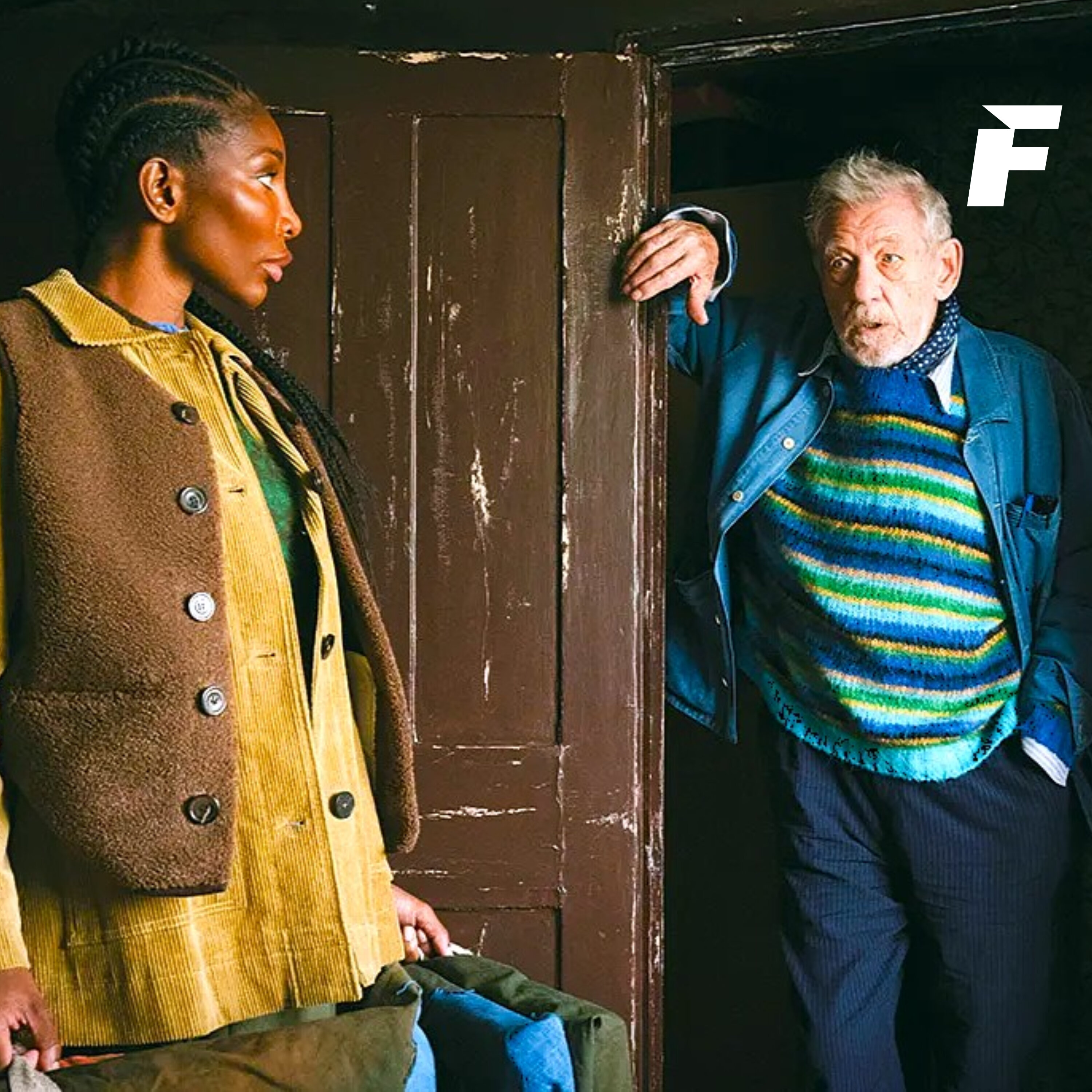
The Christophers: Art Is Hard. People Are Harder.
Adam is joined by critic Chris Klimek to discuss Steven Soderbergh's latest, The Christophers. Starring Ian McKellen and Michaela Coel, the film centers on the uneasy power dynamic between a once-celebrated artist and the forger drawn into his orbit. The conversation focuses on McKellen’s bracing late-career performance, Coel’s controlled counterpoint, and Soderbergh and screenwriter Ed Solomon’s refusal to resolve the film’s ideas into sentiment.
Links:
Follow Chris: Instagram | Bluesky | X
Feedback:
-Email us at feedback@filmspotting.net
-Ask Us Anything and we might answer your question in bonus content.
Support:
-Join the Filmspotting Family for bonus episodes and archive access.
https://filmspottingfamily.com
-T-shirts and more available at the Filmspotting Shop.
https://www.filmspotting.net/shop
Follow:
https://youtube.com/filmspotting
https://instagram.com/filmspotting
https://letterboxd.com/filmspotting
https://facebook.com/filmspotting
https://twitter.com/filmspotting
https://instagram.com/larsenonfilm
https://letterboxd.com/larsenonfilm
https://facebook.com/larsenonfilm
https://bsky.app/profile/larsenonfilm.bsky.social
See omnystudio.com/listener for privacy information.
Available Results
Generated results are saved to the knowledge database for reuse and search.
Extract Knowledge
Pick what you want extracted first. Model, scope, and chapter options appear after a template is selected.
Transcript
00:00:03
Speaker 1: What kind of a show you guys putting on here today?

00:00:06
Speaker 2: You're not interested in armed now?

00:00:08
Speaker 1: No, look, we're going to do this thing. We're going to have a conversation.

00:00:13
Speaker 2: Hey, film spotters, Adam here with someone you're definitely used to hearing end of year time on the show. You maybe have heard him on NPR's Pop Culture Happy Hour, read him on the Washington Post, read him over at Slate. You do, Chris, always contribute an end of year number one film of the year voicemail, and you have going back to at least two thousand and seven. It is Chris Klimak. It's great to have you on.

00:00:42
Speaker 3: I'm very happy to be back, Adam. I've been doing the end of year voicemails at least long enough to now be kind of embarrassed that I did one for Midnight in Paris, whatever year that was.

00:00:52
Speaker 2: M I had forgotten about that, and you just didn't need to say anything. We all would have forgotten.

00:00:58
Speaker 1: I'll see myself out.

00:01:00
Speaker 2: Yeah, I wanted to talk about the Christophers. I wanted to see it, and then I knew I wanted to talk about it. It's one that Josh couldn't get to in Scotland. So I figured if I'm going to talk about it with anybody, had to be with a Christopher.

00:01:13
Speaker 1: And here we are.

00:01:14
Speaker 3: I mean I might be part of the Christopher's Two. If the Christopher's Three are from the nineties, right then the schema of this film. But yes, I have my birth certificate. I'm a Christopher assigned at birth.

00:01:26
Speaker 2: Well, let's unpack that a little bit and explain it for the audience. The Christophers of the title not a reference to any of the main characters in the latest from director Steven Soderberg, but a series of paintings by Ian McKellen's washed up but still quite famous painter Julian Sclar, cantankerous painter.

00:01:45
Speaker 1: Can we call him that?

00:01:46
Speaker 2: The Christopher's One end two made him famous? The third set started but unfinished, sitting up in the attic, locked away, and that's where Sclar's wretched children, one of them played by James Gordon men. They hire MICHAELA. Coles Laurie to forge the Christopher's Three. They see that as their only chance. Added an inheritance.

00:02:13
Speaker 3: Other.

00:02:17
Speaker 1: You said this was a restoration, Joe.

00:02:19
Speaker 2: It's a forgery, Joel.

00:02:21
Speaker 1: We know why you hate him. Think of this as a way to get revenge. This isn't about the unfinished Christoper quil is it?

00:02:29
Speaker 2: These? Don't eve them?

00:02:30
Speaker 1: Speak of them? Everybody knows what one original Julian scar from that period is worth lied. Do you want to speak of the once when you told me they are normal.

00:02:41
Speaker 2: And then bring me the evidence. It's not that I don't trust you Light, just as I don't trust you.

00:02:48
Speaker 1: Have you ever been befread? Lauri?

00:02:55
Speaker 2: So? How do you feel about Suderbergh? Josh like Suderbergh and a fair number.

00:03:01
Speaker 1: Of his films.

00:03:02
Speaker 2: I'm the guy who really loves Soderbergh on the show. Are you more in my camp or Josh's Chris? And what did you make of the Christophers?

00:03:11
Speaker 3: Well, just so I can needle Josh a little bit, I want to ask if it's okay for the purposes of this conversation, can we refer to the Christopher's Three as the prequels, like the things that you thought you wanted to see until you actually saw them.

00:03:23
Speaker 2: Yeah?

00:03:24
Speaker 1: I think I won't needle him.

00:03:26
Speaker 3: You know he loves the prequel sure, of course, of course, No, I mean, how can you hate on Sodabergh?

00:03:33
Speaker 2: You know?

00:03:33
Speaker 3: It's like, I feel like people who don't like Soderberg, it's like, oh, he's only made ten movies that you really enjoyed, and I think this is him firing on all cylinders. I mean, the guy you have to go back, really, really far. We might disagree on how far to find a bad movie in the Soderbergh uva, But as much as I enjoyed Black Bag and Presence last year, I'm really really high on the Christophers. I feel like the issues that this film is bringing up and explore are things that are close to him. The filmmaking just seems really energetic and sprightly and fun. There's a clear point of view and intentionality to everything.

00:04:12
Speaker 1: Very little to be displeased with in this movie.

00:04:14
Speaker 2: On my end, I agree with you, and I want to start with the performances. This is effectively a two hander between Mikaela Cole and Ian McKellen. James Corden and Jessica Gunning occasionally interrupt and there were two discoveries for me. We'll get to Cole, I promised. I think that's where a lot of people are probably starting, and you might be thinking, wait, Ian McKellen is a discovery Adam, you were surprised somehow by this performance from Ian McKellen.

00:04:46
Speaker 1: He of eighty five years old.

00:04:47
Speaker 2: I think when this movie was made, he's been around a while. Well, yeah, sort of. I was Chris, and I want to get your reaction to this. But I went to his IMDb. I was trying to remember the last time I could recall him in a feature film, and I'll ask you. I'll post to you that question and not give you time to go to IMDb. Sure, what's the last feature film.

00:05:10
Speaker 1: You can remember?

00:05:11
Speaker 3: You're really going to show me up as a fraud here because I'm trying to stay at a franchise bill. But when he's not Magneto or or Gandolf, you know, yeah, like what is he?

00:05:21
Speaker 1: Was he in a Twelfth Night in the nineties? Maybe did he play the Nazies at some point? I'm reause this.

00:05:28
Speaker 2: Here, No, this is my point. I didn't see Katz in twenty nineteen. Apparently, boy he was in that. There there's a lot of theater, of course, there's some shorts. There's assorted film projects on the list. Otherwise you have to go back in terms of what I've seen and major film projects. You have to go back to Days of Future Past in twenty fourteen X Men, and then Other than The Da Vinci Code in two thousand and six, a performance I have no recollection.

00:05:57
Speaker 1: I have not seen The da Vinci Code whatsoever.

00:05:59
Speaker 2: I did see it. I think we were reviewed it on the show. Don't recall him in it whatsoever. His on screen output over the last twenty plus years has consisted almost entirely of the long, white beard and armored headgear variety. You have to go back to the late nineteen nineties to see Ian McKellen play but a Man. So yes, Watching someone of McKellen's prodigious talent play this cranky old bugger with such nasty vigor but also depth, real emotional depth was a treat and was a bit of a discovery for me. On screen, This guy, Julian Scalar is an egomaniac. He's hyper talkative, he's impatient and squirmy. This performance could have been quite annoying. Instead, there's a line reading in the movie that caught me so genuinely off guard that I am now I'm trying. I'm trying my best. Josh is really good at this. I always say I'm going to do it and then I fail.

00:07:07
Speaker 1: Every year.

00:07:07
Speaker 2: I'm trying to keep a running tally of moments from movies that will help me at end of year time when we're preparing for the rap party. Okay, I actually have three moments from this movie that I've added to my list.

00:07:19
Speaker 3: I think we're gonna get McKellen line reading.

00:07:22
Speaker 1: So let's see if.

00:07:23
Speaker 2: I've got I've got a funniest moment contender, it's not from McKellen. I've got a Scene of the Year contender, and I've got a Moving moment contender. And the moving moment contender is this line reading from McKellen that I never would have imagined halfway through this movie, and yet there's a scene where he and Laurie have finally connected, but now he's turned on her again and she's about to walk out of the room, and he says, don't leave me, even me, even me right here delivering no performance whatever and being utterly incapable of delivering any kind of performance. It's just hard to imagine those words being said no matter who the actor is in and not sounding way too forced or too saccharin. And McKellen just he just threads it perfectly. There's just enough desperation, but there's still just enough dignity to it where he's not begging or completely falling apart, and in that moment you do realize that, above all else, this is someone who is just terribly lonely.

00:08:29
Speaker 1: It slayed me.

00:08:32
Speaker 3: Absolutely, And I mean this is I don't mean to diminish McKellen's great achievement here in any way. I mean there are you know, he's always been a magnificent actor, of course, but there are this experience of really finding yourself moved by actors we've been watching for decades as they age. I mean there is something universal about that. I mean, I feel like I've had a lot of you know, Harrison Ford has been working so much lately in his eighties. Right, although I mean he is in the same cohort as McKellen, right, he doesn't look like it and we don't think of him that way, but but these guys are both octagenarians, and uh, you know, I hear from a lot of people like, oh, you know, Ford always does the same thing, which.

00:09:10
Speaker 1: I don't really agree with.

00:09:11
Speaker 3: But one thing that has been kind of striking is even even if you kind of just play your usual star persona with the weight of age, just the experience of life, with the biling regret it. It does just just give it a resonance and a depth that makes it's a vulnerability to a little more.

00:09:29
Speaker 2: Yeah, yes, I agree to Harrison Ford. You're right, who is an actor. He can play that, of course he's Ford. But there is also a certain muscularness or muscularity to Harrison Ford, a machianist to him that you don't equate that vulnerability to And I agree with you. You see that now in his performances. I think that's a that's a really astute point.

00:09:50
Speaker 3: While we're talking about this, I want to since we see the photograph of the young Julian scar when when he was the you know, the hot thing in the art world in the sixties or seventies, like whenever he was you know, the enfanti Although well, I'm getting ahead of myself here, because there is also a reference to an exhibit of artists childhood work that I think that's actually the title within the movie of the where there's a painting by a six year old of Julian Sklarr. But yeah, we see young Sclar clearly, it's just a you know a headshot of McKellen from Whenever, But because this is Sodaberg and the way that Sodaberg used the footage of young Terrence Stamp from Billy Budd in The Limey for those flashbacks, I was momentarily like, we you know, you see young McKellen and he's such a hotty adam. I'm like, wow, I wonder what movie is that?

00:10:39
Speaker 2: From that is you're killing me? Because of course it's there.

00:10:47
Speaker 1: I was from Expel one. No, I actually know the answer. It was Brian Singer's X Men.

00:10:53
Speaker 2: Yes, so I mentioned this kind of threading this needle that I think McKellen this performance, and I give credit, of course as well.

00:11:03
Speaker 1: We're going to get to Cole.

00:11:04
Speaker 2: I give credit to Soderberg and to the writer Ed Solomon, And speaking of IMDb, I knew they had worked together before. No Sudden Move, I think is a pretty good movie too. But I never get the title of that one right, But yes, I can see that. But talk about screenwriters whose IMDb isn't necessarily littered with amazing credits though I like some of them for sure, But it is interesting if you read the description for No Sudden Move, we do know that Soderbergh's got some heist films in his past, and this too is its own kind of heist movie, or at least it starts out that way. But the No Sudden Move plot synopsis even says a group of criminals are brought together under mysterious circumstances and have to work together to uncover what's really going on. And do you remember the key scene in this movie is a scene where we even get McKellen saying, what is really going on? What's really going on here? I mean, that's at the core of this film. But maybe Soderberg and Solomon deserve better than what I'm about to say, receiving what could be seen as faint praise where I'm applauding them for not misstepping the way others might have with this material, because you wouldn't expect Soderbergh to do this.

00:12:21
Speaker 1: But I still want to say, Chris.

00:12:23
Speaker 2: That if I described this plot to you or just picked fifty people on the street and you knew nothing about who was involved, and you just said, here's this movie about a crusty, canceled, formerly great white artist who meets his match in a talented young black woman, and both come to learn lessons about life and art. And there are other reasons I won't get into that it could get even more Maudlin. Yeah, you'd run away from this as fast as you possibly could, and they just they never, of course, let it even even remotely step into that territory.

00:13:00
Speaker 1: Yeah, no, I am.

00:13:01
Speaker 3: You know I've heard tell of the legend of Bagger Vance. I haven't actually watched the legend of Bagger Vance, and you know I've been steered away from said legends. So so yeah, you're right that. As Julian Sklar says to the of the recipient of one of his cameo videos that he has reduced to making now to support himself, he tells the birthday boy, whoever it is, that their actual name is quote unpronounceable and does violence to the ear.

00:13:30
Speaker 1: As well said, there are great moments like that.

00:13:32
Speaker 3: Yes, so it is with that plot description, Adam, it does violence to my ears.

00:13:37
Speaker 2: I can see that, And I'm glad you mentioned that, because that's another nice Soderburghian touch that we've come to expect, those those details and the attention to things like class, right, the fact that at this point he's paying for his dinner, as he says, he's paying the bills because he's not really an artist anymore. He's paying for his supper by doing cameos. And in the open scene we see this very talented artist, Mikayla Cole's character who is sketching. But then when the camera pans and it might be a cut. Actually I can't recall a cut where we get a wider shot. What do we see now?

00:14:13
Speaker 1: In the shot?

00:14:14
Speaker 2: It's the food truck that she's working at. She can't go to the meeting right now, we understand after the cut because she's got to work, right, That's how she pays her bills. It's not as an artist, it's not at a as a as a restorer. It's it's working in that truck.

00:14:29
Speaker 3: Yeah, and I mean that that seems like a pretty labor intensive side job. I got to say, right, I mean, she's an art restorer. We come to find out. I don't think this is too much of a spoiler that she she is also a forger. She has she has done that in her in her past, which connects this to a small but very interesting candadate movies like f for.

00:14:47
Speaker 1: Fake the a Lot. Yeah, but yeah, that was a question.

00:14:50
Speaker 3: I was like, wait a minute, running a food truck that actually seems like a whole lot of work.

00:14:54
Speaker 1: Is it someone else's food truck? And she's just like ust to shift.

00:14:58
Speaker 2: She's not working at a lot in this movie. Right right after that shot, we don't see her back in it. I mentioned though, that they don't go down that path or it never gets Maudlin even when you think that they might here again, I want to make sure we don't get into spoilers, and I'm not even when you think they might be heading for this redemptive path, this really redemptive path. And there's this nice moment like that, there's the moment that follows where Julian could have another really nice moment with an aspiring artist where you can tell that aspiring artist really wants, of course, like anybody would, a compliment from the Great Julian Sclar, and I'll save it, but you can kind of see it coming, of course. But let's just say that the Great Julian Sclar does not give that aspiring artist any any encouragement.

00:15:52
Speaker 3: No, And I actually wondered about what the like was that was that little kicker put into that scene as like just insurance, and like anyone who feels like this, you know, the preceding sixty seconds, you know that we're a little bit more syrapy than the tone that we've been said. And I and I didn't feel like it was. I felt like everything that happened there was was earned to the point that that that was actually that that one little you know, the way he dismisses the work of the other artists on his way out, that was one note where I was like, you know, he didn't have to do that.

00:16:25
Speaker 2: Like, so, yeah, actually, I'm with you, Chris that I think I think I would have enjoyed it more without it. But I think it speaks to this movie's tone in overall point of view that it just couldn't it couldn't let the audience have that, It couldn't let the audience sit in that approach to to Julian.

00:16:45
Speaker 3: Yeah, and I mean one of the things I really appreciate by about this this Ed Solomon screenplay. And since we talked about this earlier, for for some reason, the credit of his that sat in my mind before I looked it, would you know, because he gets his own title card on the poster here, right, he is recently successful as that. I was like, oh, men in Black. He wrote Men in Black, which you know, which is a good movie. That's it's a good movie, good block but very funny. The jokes, the jokes hit, you know.

00:17:09
Speaker 1: But the just.

00:17:11
Speaker 3: The extent to which things are explained and not explained here, I feel.

00:17:15
Speaker 1: Is perfectly judged.

00:17:16
Speaker 3: Like it's sorta to the extent that I initially I was like when Julian Sklar says he has been canceled and he and Laurie have a conversation about that, I'm thinking, you know, so has he actually been or is just just this, you know, someone who resents the fact that they're they're not at the center of the culture in the way that they once were. I mean, I think we we come to under again.

00:17:39
Speaker 1: I'm being cagey.

00:17:41
Speaker 3: Here because some of this is spoilery, but I inferred that it was really just his his public nastiness, you know, to the kind of caricature of a snob that he played on this reality show that eventually turned on him and made the public bluse interest.

00:18:00
Speaker 1: But nothing, nothing darker or worse than that.

00:18:03
Speaker 3: And I bring that up because he does have a line early on where Laurie shows up and he's in his dressing gown and he asked if she minds and he says, yeah, I do, and he says Weinstein ruined the bathrobe for all of us or something.

00:18:17
Speaker 1: See I miss that.

00:18:18
Speaker 2: Sometimes there are lines like that, especially whatever it is with my ears when British people speak that, I just don't always catch it.

00:18:26
Speaker 1: I didn't catch that one. But yeah, yeah, yeah, I would say.

00:18:30
Speaker 3: It's nothing like, there's nothing Weinstein level in his sins, and you know, it really becomes again I'm being very cautious here about how much to but as we learn, you know, the origins, why why these paintings are called the Christophers and who that that was? Sklara starts when he eventually lets his guard down and confides in Laurie. You know, he talks about this, this failed relationship, and he says, I ruined his life. I think I ruined his life. No, I know, I ruined his life. And I mean, you know, breakups are painful, but ruined his life? Like what you know, what do you mean? How bad can it be? And we really don't get any more information about the dissolution of this relationship than that we don't.

00:19:21
Speaker 2: But I think what you're potentially getting at here and how you started this point is that we get enough, We get enough of the sense the movie tells us as much as we need to know, and it's there not only in the writing but in the performance. And that brings me to Cole. We're going to get a double dose of her here. And in fact, it may be back to back for me because I haven't seen Mother Mary yet, but it was back to.

00:19:47
Speaker 3: Back for me because I saw The Christopher's a second time the night after I saw Mother Mary, and the way these two movies are accidentally in conversation with one another fascinates me.

00:19:59
Speaker 2: Okay, I can see that based on the trailer for Mother Mary, which I saw for the first time right before I saw this film last night. I haven't seen Chewing Gum or I may destroy you. This This movie was my introduction to MICHAELA.

00:20:13
Speaker 1: Cole.

00:20:14
Speaker 2: So it was a discovery and it was if there was ever a face, a face that feels like it, it was somehow like ripped out of a portrait gallery into real right, it's Mikaela Cole's.

00:20:28
Speaker 3: It's so cannot imagine there being a bad angle from which she cannot be photographed. She just has this perfect bone structure that, yes, you have to adjust to it for a moment, like it's so new, yeah, like a luminous like for it to stop. And then she starts speaking, and she's such a great actor that then you just lock into the character.

00:20:47
Speaker 2: Or not speaking. And that's the wonder of this performance. I think it's the it's the silences where maybe she's even doing her best work, and that's what makes her such a foil for McKellen's jew here. She is so composed, she's so still, she's so observant, and she studies Julian not like a painter, which he is right or was, but like a painting. That's how I feel like she is looking at him. And it makes sense as we learn more about her character that she actually would observe him that way and be almost scientifically examining him. And we know a little bit, as I was saying, we know a little bit about what she thinks of him coming into their first meeting and why she's doing this. As more information gets revealed, though, that gets so much more complex, and so that that does increase our interest in watching her watch him because we're more and more wondering what she's thinking, how she's judging him or not judging him, how how she's actually interested or not interested in all of the things he's revealing, what she agrees with or maybe doesn't agree with, and also just what level of a mindscrew that it is.

00:22:07
Speaker 1: Here.

00:22:08
Speaker 2: I'll say the disclaimer about not revealing too much, but I think we can say when someone that, to borrow a phrase from the movie, when someone you've both revered and reviled is not just interacting with you, but revealing their true self to you. And I think that I think that soderbrookh does something really smart in their first interaction, which is this interview, when this faux interview where she's trying to get the job of being.

00:22:37
Speaker 1: A sister, interview where she is barely allowed to speak.

00:22:40
Speaker 2: Yes, she basically says nothing, and he because he just pontificates the entire time. He finally leaves the room after this whirlwind of five to seven minutes of just talking the whole time, asking her questions, not letting her answer. When he leaves the room, finally she lets out this sigh and she kind of goes to the floor. Almost you know, her head almost goes into her knees, and it's this exaltation that speaks for the audience too, like this whirlwind has finally left the room. But what it does, Chris, what I remember feeling in the moment, was it told us that, Okay, that composure at least here was that was at least in part a performance that she was. And of course it was because she's acting like she's interested in being an assistant, but she was having to steady herself and put on a face to meet to meet his face. And so then after that, every time she's looking at him, every time, at least up until there's there's a little bit more connection between them, we have to wonder is this real Laurie who's looking at him or is this assistant Laurie who's looking at him? And so it keeps us on our toes.

00:23:54
Speaker 3: Yeah, and I mean the fact that, again, in true Soderberg fashion, you know, Laurie is a little bit of a of a rath school too. I mean, we do come to find out that she she has particul you know, she's certainly not the most conniving character even in this movie, you know, but I mean she's Uh, she's got some ill gotten gains, you know, she she comes to having forward some paintings and you know, and that that's kind of as you know, as is also discussed in the aforementioned f for fake Like, uh, you know, that's that's sort of justified in the sense, well, the entire art world is inflated and fraudulent, and the you know, the dealers and the galleries and like everybody knows that it's it's this you know, ridiculous kind of kind of rigged system, and we're just trying to allow the people who actually create art to keep as much as as they can. Without getting too much into Mother Mary, since I know you you haven't seen yet, I just want to point out that everything that you described Cole and the character of LORI of doing is kind of the part that Anne Hathaway has in Mother Mary, which is why I am so fascinated by this. I mean, they're both movies where MICHAELA. Cole is playing so someone who is in the orbit of a of a once great artist has fallen on hard times. Yes, but this is the film. The Christopher's is the film where McKellen gets most of the great speeches. Although although Cole does does get a very good one that I want to talk about, and she's mostly reacting, and that dynamic is entirely reversed in Mother Mary, where Cole does more of the talking and there's a lot of Van Hathaway, who you know then in the concert sequences, gets to be the focus, but she's she's mostly just just reacting to what col is doing. So just having these movies out at the same time is telling yeah, yeah, no, I can now that you're saying all of that. Think about as I said the trailer, and I can see that dynamic at play where she Hathaway is studying the Cole character the way I'm describing right, So now you've got me even more interested in seeing Mother Mary been very divisive. I heard from a lot of people after the screening.

00:25:59
Speaker 1: We thought it.

00:25:59
Speaker 3: I mean, I again, we can cut this if it's not relevant. But I was higher on it than a lot of the people I.

00:26:05
Speaker 1: Saw it with.

00:26:06
Speaker 2: Well, that's promising. Let's talk about or at least talk around the scene that you were alluding to there. I said, there were three scenes that may get a mention at the end of the year. We have a lot of year left, and one of them was the moving contender, don't leave me funniest moment.

00:26:23
Speaker 1: This is a.

00:26:23
Speaker 2: Comedy, after all, there are a lot of potential offers. You said one of them that went by me. Do you have any idea what line? And really it's three words might be my contender for the funniest moment. This might be a hint if you know the three words, I'll let you say them because I'm not going to say them on air.

00:26:43
Speaker 3: And I know, just just because Midnight Run is still in the pantheon, you know, I want to say, here's three words for you, shut the fuck up, but I'm not going to No, I don't.

00:26:53
Speaker 1: Yeah, you won't. Of course, it's a three word candidate.

00:26:58
Speaker 2: It's the moment I'll tell you the even if I'm not going to use the words exactly. It's the moment when the children again played by James Corden, and I want to make sure I get the daughter right. Jessica Gunning. It's a ligne by Jessica Gunning. They're very frustrated with Laurie at this point, and Gunning calls her a three word phrase. The middle word is pig yep. The words around it are a certain C word that is forbidden for us as Americans to say that the British people have no problem being very good.

00:27:38
Speaker 3: There's actually a joke about that in the previous season of Hacks where a character says, you know, I don't like that word when we're not in London.

00:27:46
Speaker 1: There you go.

00:27:47
Speaker 2: The way, just the fact that it's deployed at all, how it's deployed, that the way she delivers it, it's it's it's perfection. So the scene of the Year contender, though of course we're two critics, you know, we're going to love this scene. The scene that potentially validates everything we're doing, or I should say everything we aspire to do, criticism in its highest form potentially is this scene that for now I'm gonna call critiquing the Christophers. There is a scene we'll just say all will divulge where she Laurie finally gets to really discuss how she feels about the paintings and how she feels about his work and dissect it. Those big questions that come about in that scene. And this is something you were getting at earlier too. This is another case where I think Solomon with the script in Soderberg too. I think they give us just enough where the movie, at the end of it chrys still feels to me like it cares about the characters more than it cares about these big questions art and creativity. But it gives us enough of these questions to hang our heads on a little bit, to give us something to think about in the moment, to give us something to think about walking out. And the scene that I am most curious to rewatch, to go back and revisit is that scene to really process it, to really process what they're saying, what those questions that they're posing really are all about, because I think there are big questions it poses and plays with that are fascinating. She says this line at one point, you know, or the question around it is where does the art come in? You have the tools, you have the sensibility, you can mimic effectively, but where does the art come into play? That's fascinating. This idea of legacy that the movie really gets into, how you're regarded as an artist both while you're an artist, while you're alive but no longer an artist, and then when you're gone by by fans, what role you have or don't have in trying to serve them, in letting their expectations define you. And this phrase that is uttered a couple times in the movie to last in the mind of others speaking of I can't believe this is going to be a second reference to him speaking of aging canceled artists. Wasn't it Woody Allen who said I don't want to achieve immortality or I don't want to achieve immortality through my work. I want to achieve immortality through not dying. The way the way this movie concludes on that issue, I think is interesting. And this does it matter question that will make sense to anybody who's seen the movie around forgery, the f for fake dilemma Does it matter? I also think is less intellectually stimulating and more emotionally at the end, is more emotionally satisfying than intellectually satisfying. And that's a pretty good trick.

00:31:00
Speaker 1: And I mean it's a great trick.

00:31:02
Speaker 3: All the more so for the fact that this this movie kind of prods you to think about AI without ever mentioning AI. I mean, I know that's something that's that's Soderberg has been talking about on the on the press trail a little bit. But when we're doing you know, the entire premise of this begins like we we know someone can can copy Sclar's style convincingly, and we you know, we have his brushes, we have his canvases, we have these paints that are no longer made, like it'll it'll pass any physical test to verify, you know, and so what if it's not his actual hand finishing the there's actually the the cordon uh line reading where Laurie says like, oh, so you want me to by forge them? And he says, by forging through them until they're completed, And yes, uh, you know which I mean. I feel like people who are are higher on the potential and utility of AI than I am. Certainly I feel like they're making those kinds of winging distinctions to me all the time. And so you know, again, when when a movie can can direct your thoughts in that direction without being explicit or clumsy about it, I mean, at least one extra star for that.

00:32:08
Speaker 1: I agree.

00:32:08
Speaker 2: What about the fact that the kids are such a fundamental part of this story, and when we're talking about legacy and quote unquote things that you're responsible for creating as an artist, isn't he the creator or at least co creator.

00:32:30
Speaker 3: When he them as a train wreck and a shipwreck. And I blame their mothers, he says. And that's the only hint that they're half siblings, right, is if they have different He says, I blame their mother's.

00:32:42
Speaker 1: Good catch, good catch. And that's the thing.

00:32:44
Speaker 2: He puts all the blame completely on them, And he says something to the effect that you can't blame me. I had nothing to do with them. This is entirely the point that they're the way they are, probably because he had nothing at all to do with them, And that idea of legacy, your children being your legacy as an individual, and like art, something you actually did create, you had a role in creating, and unlike your art, though he could have dictated to some extent through nurture, right, he could have dictated to some extent their outcomes, how they are received in the world, and the role the impact they have on the world in a way he can't with his art. He can create his art and then it goes out into the world and it's received by the world however it's received once it is though ultimately, this is the complexity of it too.

00:33:42
Speaker 1: Right.

00:33:43
Speaker 2: Ultimately, you can't control your children and how they behave once they're adults anymore than you can control how your art is received and what's done with it, including with in the case of the Christophers, he talks about and you mentioned this early, are how your creation impacts the alter ego of that that that was the inspiration your muse. All all of that is is something that is conjured by this film.

00:34:15
Speaker 3: Yeah, right, And I means as you're saying this, I'm I'm it's it's not at all difficult to imagine a version of this that is far more sympathetic to Barnaby and Sally. These these ne'er duell kids, you know then to to Julian, right, I mean, they do kind of like it's not like they're trying to steal his home and throw them out on the street. They're like, these are canvases that are rotting in your attic that we can hoodwink someone into paying a lot of money for.

00:34:43
Speaker 1: You neglected us. You've never cared about it, right, clearly this true.

00:34:47
Speaker 3: No, And I mean you also, you know there's we we have so much discussion about NEPO babies in the entertainment industry now, right, But I mean they're like one of the best visual gags in this is when when we see Sally's attempt.

00:34:59
Speaker 1: To completely Christopher and it's just a visual joke.

00:35:03
Speaker 3: It's like there practically googly eyes on this on this canvas. So you know, talent is not is not hereditary, it seems.

00:35:10
Speaker 2: But here's you know, Chris, as you say that though here again to the movie's credit, how smart the script is. I think I think that explains in part Julian's response to his children. He also understands that he does to some extent, even though he didn't express it there, I think he really does add it. He's a very self aware person. He will ultimately come back to in his quiet moments, in his profound moments, he'll express his self awareness. And I think at his core he understands that his kids are the way they are due to his treatment of them, and that's why he lets them get away with the horrible things that they are doing to him. He doesn't whenever when he finds out from from Laurie what they're really up to, he doesn't respond like someone who he can't believe he's been betrayed by his children. He's like, well that makes sense.

00:36:04
Speaker 3: Yeah, yeah, I mean I did find myself thinking a little bit about the Christopher Plumber character from Knives Out from the first one, which clearly he's been a more generous and providing and present father to as many kids, right, but he is more reflective and open about the fact that's like, you know, maybe.

00:36:19
Speaker 1: I spoiled them too much.

00:36:20
Speaker 3: Maybe he's more openly accepting of blame that he does have some responsibilities as a parent, has a degree of well not an a degree of insight that's beyond what Julian has. But he's just just willing to be more public about it. Although you know, now that I think about it, the relationship that he has with Marda right his his nurse like, is not all that different from what evolves between Laurie and Julian in this movie.

00:36:47
Speaker 2: The Christopher's is out now in limited release. If you have seen the film and have thoughts on it, we would love to hear them, especially if you didn't like the movie, because obviously this is a dual rave. You can email Let's feedback at Filmspotting dot DT. You know who will be it will be Josh. Josh will see it and he'll be the one who decides Nope, I don't get all the Soderbergh love here, and he'll he'll rain on our parade.

00:37:11
Speaker 1: Yeah, well, what do you think?

00:37:12
Speaker 3: No, I mean, if I can misquote art restorer slash forger Lorie Butler, like I mean, by by episode nine, he was cooked.

00:37:20
Speaker 1: It was, it was, it was all over there you go. Thanks so much for doing this, Chris. It was super fun. Adam, thank you.

00:37:27
Speaker 2: This conversation can serve no purpose anymore. Good Bye.