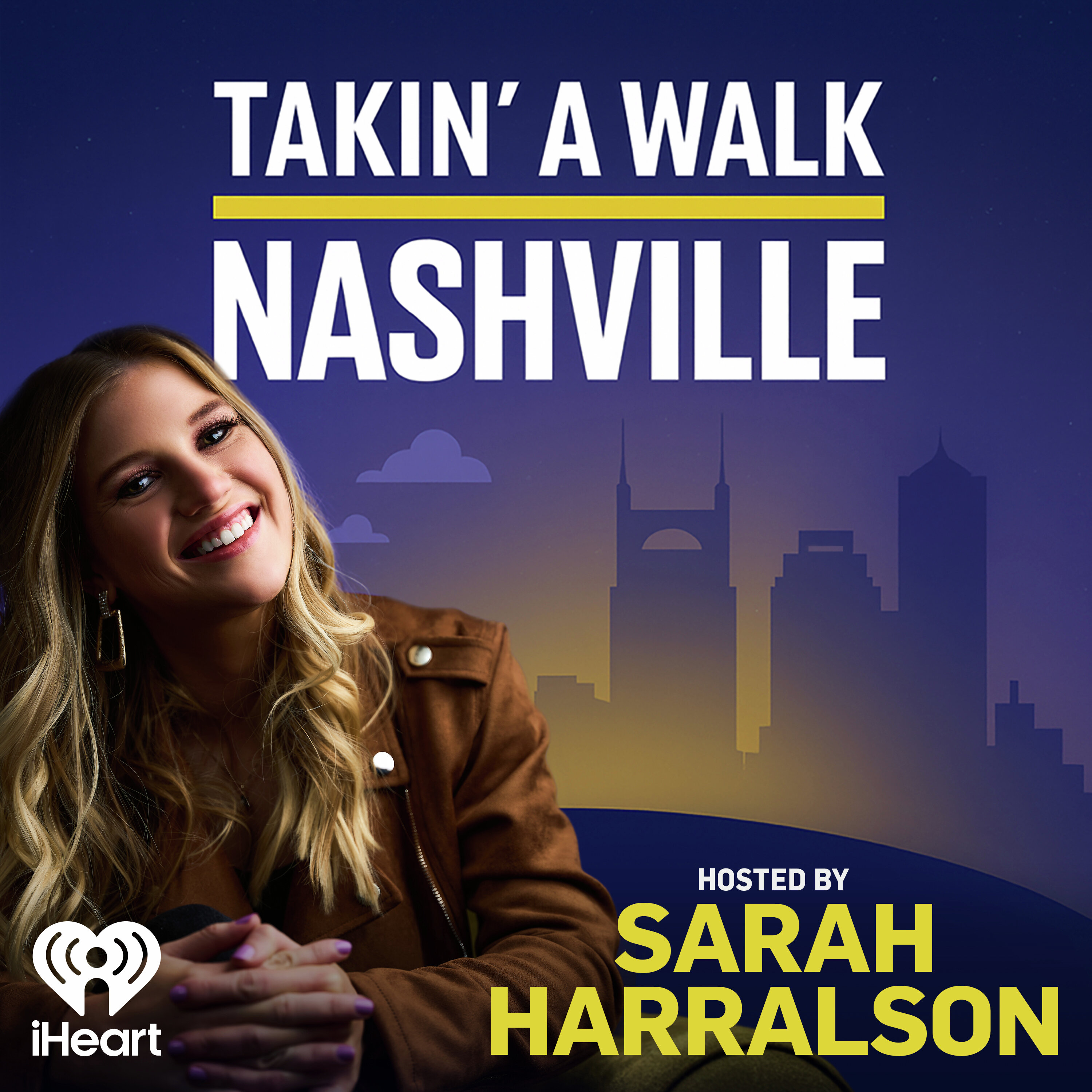
Exploring Nashville Music History: William Lee Golden and his Journey with the Oak Ridge Boys and Family Legacy in Music
What does it take to become a legend in the country music scene? Join us on this episode of "Takin’ A Walk Nashville" as host Sarah Harralson sits down with the iconic William Lee Golden, a member of the Grand Ole Opry and a Country Music Hall of Famer, who has left an indelible mark on Nashville's music history. With a career spanning decades, William Lee Golden shares his incredible journey through the music industry, revealing the passion that fuels his artistry and the personal stories that have shaped his life.
As a celebrated member of the legendary Oak Ridge Boys, William Lee Golden reflects on his early experiences with music and the pivotal moments that led him to join this iconic group. How did the lineup of the Oak Ridge Boys evolve over the years, and what role did family play in this journey? Golden dives deep into these questions, emphasizing the importance of family in music and how his children and grandchildren are now carrying on the family legacy within the vibrant Nashville music scene.
Listeners will be captivated by Golden's insights into his recent projects during the pandemic, including his autobiography titled "Behind the Beard. " What inspired him to share his life story, and how does this book encapsulate the essence of Nashville's music legacy? The conversation also explores the group's iconic song "Elvira," unveiling the backstory and unique elements that contributed to its phenomenal success. Are you curious about the magic behind this classic hit?
Throughout this episode of "Takin’ A Walk Nashville," William Lee Golden emphasizes the significance of following one’s vision in the music industry. He highlights the importance of surrounding oneself with supportive, visionary people who can help elevate your craft. This episode is more than just a conversation; it's a celebration of Nashville music, its rich history, and the emerging artists who continue to shape its future.
Whether you’re a country music aficionado or simply curious about the stories that define Nashville, this episode offers a treasure trove of music industry insights. Tune in for an engaging discussion that captures the spirit of Nashville's music scene, showcasing the incredible talent and passion that continue to thrive in Music City. Don't miss your chance to hear from one of Nashville's music industry leaders, and discover how the legacy of country music lives on through artists like William Lee Golden.
See omnystudio.com/listener for privacy information.
Available Results
Generated results are saved to the knowledge database for reuse and search.
Extract Knowledge
Pick what you want extracted first. Model, scope, and chapter options appear after a template is selected.
Transcript
00:00:01
Speaker 1: Taking a Walk Nashville.

00:00:02
Speaker 2: Hi, everyone, this is Sarah Harrelson, your host of Taking a Walk Nashville, and today I am coming to you live from Country Radio Seminar.

00:00:10
Speaker 1: The energy is high here and the history of this genres everywhere you look.

00:00:14
Speaker 2: And today's guest with me as someone who truly needs no introduction, but his list of accolades is a masterclass in American music history. He's a member of the Grand Ole Opry, a Country Music Hall of Famer, and a member of.

00:00:27
Speaker 1: The legendary Oakridge Boys.

00:00:29
Speaker 2: But he's also a photographer, author, and patriarch of the musical dynasty with his family group, the Goldens.

00:00:36
Speaker 1: William, thank you so much for being on Taking a Walk in Nashville today. How are you.

00:00:40
Speaker 3: I'm doing great well.

00:00:41
Speaker 1: Thank you for being here.

00:00:43
Speaker 2: You know you spend decades seeing the world through a tour bus window. What was a specific moment or landscape that first made you want to pick up a camera and start.

00:00:54
Speaker 1: Documenting these golden memories in your new.

00:00:57
Speaker 3: Book, Well, it was a I guess back in two thousand and eight, I got my first digital camera my wife at the time, and by young Sawn, they gave me one a camera for Christmas sun Rud. Anyhow, that was opened up a whole your world for us. I was trying to paint, you know, learning how to paint, do landscape paintings, and I would use a camera to take shots of the landscapes that I loved across the country. And so I never liked any of my film shots that I made, or you know, you take them and didn't you have to get them developed, and when you get them back, you didn't like any of them. So that's kind of what I did for a long time. But then what I got a digital camera that opened up a whole in your world. I could see immediately what I was doing. And then I bought a computer actually to put all my photographs arms travel with. Instead of sitting in a hotel room, I would maybe get one of the guys in the crew and one of the band members i'd like to take photographs. We'd get a car and go out somewhere to like if we was in Vegas, Retherid sit there and listen to slot machines all day. We'd go out to Red Rock Canyon, so about fifteen minutes outside of town, and it's a beautiful drive around Rock Canyon about fifteen mile, drive around that canyon and take photographs. And then one day we may go north of there about forty five miles up to Savalley Fire, which is another beautiful landscape place to go take photographs. That's what I did instead of sitting in a hotel room doing nothing and watching bad TV. I would get out, go take photographs wherever we're at, bring them back home and show my little boy, you know where I'd be and photos. So I was doing an autobiography with Scott England back during the pandemic. I actually did five major projects at the pandemic. After I've turned off negative hate on television news, got my family together and we started reporting old songs, songs that had inspired us he individually, you know, throughout the years. I took them back to where it all started with me and we harmonized with these old songs that my sister and my mother told me when I was real little. So that's what we did as a family during the pandemic, and we went out and did several shows together with a family, and when the Oaks were not out on the road, I would go out and do shows with by kids.

00:03:49
Speaker 2: And grandkids, yeah, yeah, you mentioned all these projects you did during the pandemic. Besides Golden Memories you mentioned you have an autobiography. It's titled Behind the Beard, talking about your career, your time with.

00:04:02
Speaker 1: The Oakridge Boys.

00:04:04
Speaker 2: How did you first get introduced to the members of the oak Ridge Boys formerly the Oakridge Quartet.

00:04:11
Speaker 3: Well, like I said, you know, I learned to play and sing when I was six and seven and eight years old, played with a guitar and singing harmonies with my sister, and she was a talented one in our familis. You could play any instruments she picked up or sit behind. Basically she plays piano, mandolin, the guitar. It was in high school and when I sang in my first quartet, I sang in the FFA Quartet Future Farmers of America, and that's when I fell out of love with four kart harmony singer. Then after school I got a trio together. It had a trio. I didn't have a good bass singer, so if you didn't have a good one, you didn't use one. But that's where I met the oapi Is Boys. Was doing concerts and open shows for different people, and they played at an all night singing. It was a sundown to set up singing. They would have every year in Bonifay, Florida, and that's where I got to meet him and talk to him. And then in Mobile, Alabama, they were playing a stadium there and I got to talk to him. But I got to know them, and they made a change in the group. I didn't quite think that it fit the group, and I went to Nashville and talked to the guys. I knew they were playing in Nashville that weekend, so I drove up from South Alabama to fought to him. I told them that I would like to try out to the group because they ever decided to make another change. A couple of months later, they called me and said, we're in the market for a Barretts. I'm a singer. He's still interested in try now. I said, yeah, So I drove on to Nashville from South Alabama and got to the Tennessee line of you hit a snow blizzard coming in. First time I'd ever driven in a blizzard. You know, growing up the South, we didn't see snow. So yeah, I drove through a blizzard to get up to their house and to the spey Gatlet's home and uh, and we tried out. We get a few songs and they said, man, we'd love to have you join our group. I said, well one do you want me to go? They said, well this weekend, So I said okay. So I had to drive back to South Alabama to repack my suitcase and fell back up and that's where it started. That's how I got rid over s born.

00:06:44
Speaker 2: Well, it was well worth it, and you still have many upcoming performances with them at the Grand Old Aubry. You recently did the American Made Christmas.

00:06:55
Speaker 1: Farewell toward Together.

00:06:57
Speaker 2: What's it like being on stage together after fifty years?

00:07:01
Speaker 3: Well, you know, Dwayne and I have been singing together for sixty years. This year. He joined sixty years ago. This year, about a month from now is when he joined. But I joined the year before Dwayne did. But we've been singing together, and it was we were together here almost ten years when Richard joined our group, and then when Joe joined the group in eighty three. Richard joined us in seventy two and Joe joined us in seventy three. So that particular lineup is the one that had all the big treachery hit Records, and we were together with that lineup for fifty years before Joe passed away two years. Joe and Richard's been struggling this whole past year with pancreatic cancer, and so we've had another bass singer out with us. We've had two young bass singers out. They're incredible. Man, I've never heard nothing like He's young guys, but our young tenor that replaced Joe. He's been with us over two years now. I got grandkids older than Ben. James Tony Brown heard Ben saying two years ago and after hearing insane, you walked up said, man, your brand new generation with a Vince Gill voice. You got that high, alsome sound. He said. I've not heard another person of that voice put Vince Gil in the past thirty five years. But Ben is he was in his late twenties when he joined us. We were in our twenties when we joiced. So I've been here sixty one years ago.

00:08:51
Speaker 2: Would I join well, even though the lineup has changed, is going to be so special performing together on stage, singing those songs. And as you mentioned earlier, you've been busy performing and also recording with your family. The Goldens recently releasing a music video for Old Country Church.

00:09:10
Speaker 1: I love the video. The song is deep sentimental value.

00:09:13
Speaker 2: Reaching back to when you and your sister saying on your granddad's radio show, what does it feel like to now hear those same harmonies coming from your sons and your granddaughter?

00:09:25
Speaker 1: Now?

00:09:26
Speaker 3: Well, it's great math. Our granddaughter Elizabeth, she plays violin and she's also a great singer. And my grandson Eliza, he just graduated Brown University and he's also a great singer. So being able to play years of your sing with the owners, there's a real freel bad. It's there's a whole nother generation of our family, and so we go out play shows at Brufans is a family. We take three generations out with us. It's kind of like what the Oaks are now with our young singers Tenner sing, Ben James and then the young bass singer Aaron Lee mccinern is out with us. It's exciting to have these young kids come in of a brand new generation of singers that could help keep the Oakridge Boys going forward. None of us started the Oaprish Boys and started back in World War Two and Oakridge, Tennessee, you're in the development of Victoric Bah that's where they perform for all the scientists and engineers that were not allowed to leave. They were segwesterned there atge during their development. The Oakridge became their favorite group have in through the Oakridge Facility there to sing on the weekends and they would come every weekend. There's a theater in Opridge, Tennessee there through by the Atomic Energy Place where the Oaprish Foyers used to play. The original Oapris Quartet play there and that theater was basically to build for them to travil Clay. What's a week for the weekends? We go way back to there far as our name, but then he's one of us joined the brute, it was already going and uh so this configuration that we've had for fifty years was Dwayne and I and Richard Servant and Joe Bonzel. That's the ones that had all the big success for record recording country music. We had our first country album and nineteen seventy seven with the y'all Come Back Saloon Owl. Jim Halse who managed the Olkridge Boys, he still manages. He's in his nineties now. He was a top manager and rookie agent, and so he played a major part of us having the recording contracts to Reford Country Music and if he put all those contracts together for us and helped book card dates for years. But Jim Haws was one of major players and helped us. He was a man that opened the door to get us on network television. For years and years, he was a topic getting people on TV. He had an LA office for the TV agent that run his office out there. Dick Cowards was a guy that brought his Hollywood office out there, but he also had a Tulsa office. Jim managed Roy Clark throughout his whole career, and Belle Chillis and many Pearls. Some of these people he managed. There's several of his artists in the Hall of Fames. But he was a top manager in country music book he worked with it. He's still up there with that Lee.

00:12:51
Speaker 2: Yeah, it's such special history to mean too, because I'm from East Tennessee. You know, I have friends that work at the Atomic Energy Planty twelve. So I love the history and I love that. You know, all of your family is very musical too, and on tick and Walk Nashville, I love to give our listeners, various Nashville music history, and a lot of people don't know that the song el Vira was actually inspired by a street sign in East Nashville when songwriter Dallas Frasier was looking for a place to eat lunch.

00:13:28
Speaker 1: Elvira Avenue still exists. William take us back in time.

00:13:32
Speaker 2: What made the Oakridge boys want to cut this song that Dallas Fraser wrote?

00:13:38
Speaker 3: It was one of the publishers here with Tree Publishing, was out in Texas one weekend and he heard a band out there at a club play at El Viral. He come back, Joe ron Chancy, our record producer. He said, Man, you know that song el Viral that Dallas Fraser wrote? We said, do you old to cut the onfers year. I was out in Texas this weekend. There was a band playing that in a club out there. They said, band they had the crowd going wild without old song. Uh. Dallas had it on an album. It released it as a single. Charlie Rich had the song on Behind Closed Doors album, Rodney Crowd had it on an album. Kenny Rodgers at the first Edition had it on Something's Burning Out. So they had all cut Elvira, but no one had a bass saint. It was ron chanted idea for us to let the tenor singers sing the lead on it, a high voice singing the lead. And then he also wanted to do it different than everybody else did since we had a harmony group. He wanted the bass singer to do the step out lines over the novel Cow Cow and uh. So that's what we did with a song. First time we ever did it in concert was in Spokane, Washington. We rehearsed it for the band in the afternoon. We dropped it in the middle of the show. We didn't sof thing about it. We just dropped it in the show and sang us, all it's the end of that. That crowd exploded like I'd never heard. They went wild and would not stop, kept on and off. We backed up, said what do we do? Said sing it again. We did it again. It was the same response. We wound up singing it three times and it was the same response, so we had to keep going on. Nothing got them that exciting for the rest of the show, and at the end of the show we threw it one more time at him and it's still it was the same response. Every time we did it. It happened the next night in Seattle the same way, and the next night in Portland, Oregon, it was the same thing. Right in the middle of the show. It stopped the show. So we called the record label on Monday and say, hey, we don't know what you got in mind to release off this album, but this is what's happening with a Salt Elvira out here, so you might want to consider that. So they released it to the top of the chart, said record time. It's spilled over at the Puff rock and roll.

00:16:20
Speaker 2: Yeah, it's definitely a crossoverhead that's so timeless, especially with that based up outline. William, I have one more question left for you today. Thank you again for being on Taking a Walk Nashville. Looking back at your career walk so far, what is the one piece of advice you would get to someone who is taking their first steps of their career in music city.

00:16:44
Speaker 3: Well, the main thing is following your visions and don't be distracted. People will pull you one side or the other. You know they'll pull you off from where you're headed, but don't lose sight of your goals and your vision. Keep following your visions and just always remember a lot of people quit. And there's one thing for sure, if you ever fit, you know you won't make it, which keep going. We went through all the negative. Everybody tell us all you can't make it. We'd share our visions. No one could see it but us, and so we got with Jim Halsey. We shared our visions what we could see. He could see it, but yet he could see it even bigger. So that's who you want to surround yourself, where there's people that are also vision errors, people that can take your visions and propel them in to be in much more than you could avy yourself.

00:17:45
Speaker 2: Now, that's such wonderful advice and so true.

00:17:48
Speaker 1: William, thank you again for being here today.

00:17:52
Speaker 3: Thank you.

00:17:54
Speaker 1: Thanks for listening to Taking a Walk in Nashville with Sarah Harrelson.

00:17:57
Speaker 2: Please check out our other shows produced by Buzznight Media Productions, Comedy Save Me and Music Save Me hosted by Lynn Hoffman, and Taken a Walk hosted by Yours Truly Buzznight.

00:18:11
Speaker 1: All shows are available on Apple Podcasts, Spotify and are part of the iHeart podcast network