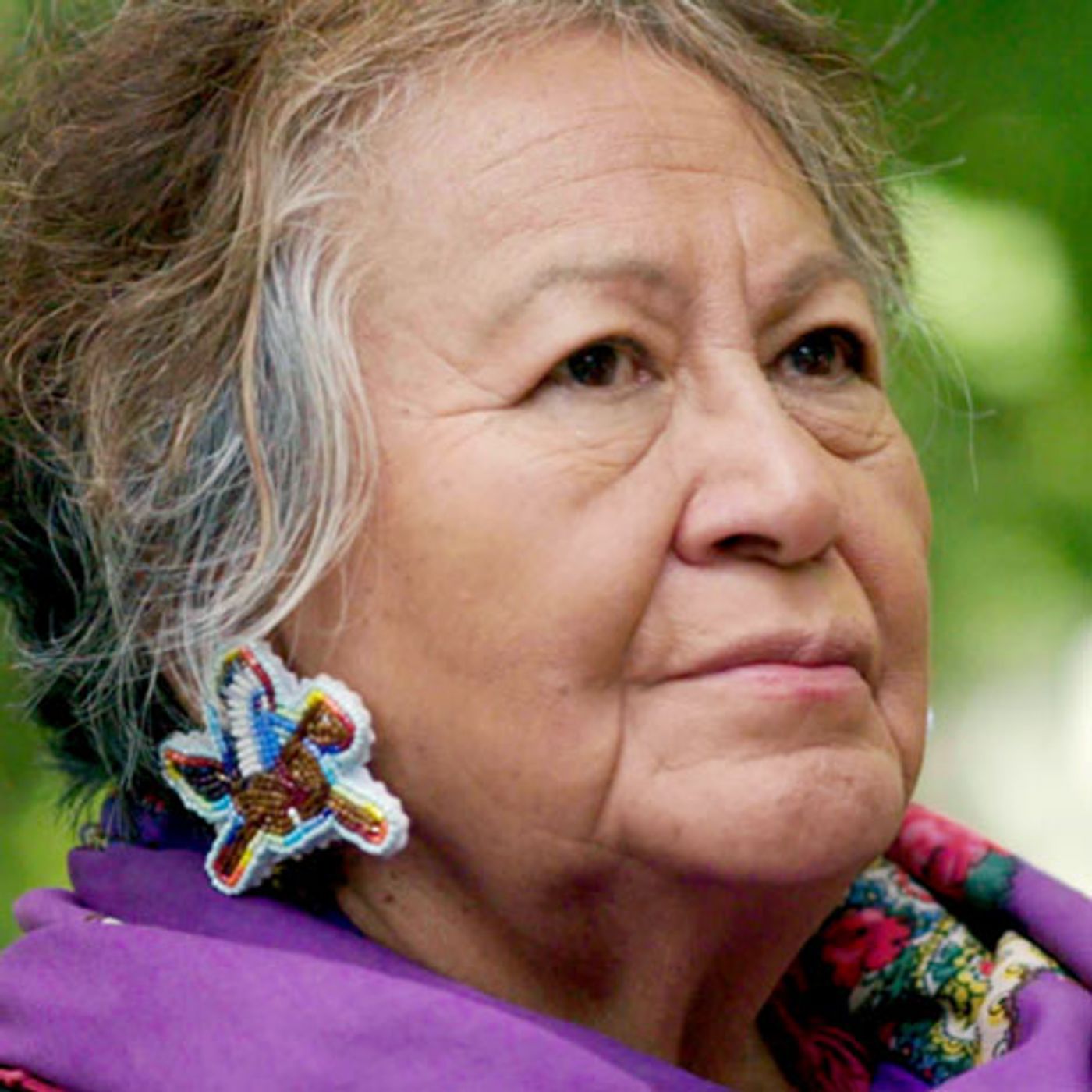
A Conversation with Margaret Behan
Margaret Behan is an Arapahoe/Cheyenne member of the Native American Church, as well as one of the "13 Indigenous Grandmothers". In this episode we talk about Peyote Religion, people wanting a connection to plants and to the land they live on, hope for the young generations & the future of Lophophora williamsii and its connection to the Native people of North America.
2023-04-05
45 min
Transcript
Available Results
Generated results are saved to the knowledge database for reuse and search.
No generated results are available for this episode yet.
Extract Knowledge
Pick what you want extracted first. Model, scope, and chapter options appear after a template is selected.
Generated results for public episodes are saved to the knowledge database so they can be reused and searched later.
Transcript
Good afternoon, Welcome to another episode of the Crime Pace. But Bodeny doesn't
podcast. I'm using my Botanical Research Institute of Texas coaster. I think it
was a mouse pad, but I'm using as a coaster because no one uses
no one uses sucking mouse anymore. Huh. Like for a computer, you
just use that track pad that you only works half the time. At least
that you've got a PC because Windows is a virus, or so I'm told
by computer nerd friends. Oh no, the snicio Radelia I just germinated.
Some of them are Diane. That's a bummer anyway. Today's conversation is with
a woman I met during a meeting here in South Texas concerning lfaf A conservation
Payote conservation because, as I've mentioned many times before on this podcast, populations
are dwindling habitat clearances on the up and up, and you know, something's
got to be done. So I've I guess been involved with that just you
know, just from my work with photographing and documenting wild populations and then working
with people from Native American church who are preserving it, growing their own seed,
etc. Some pretty cool stuff being done in Arizona as well with Morning
Star Conservancy and my friend Leo and UH as well as some cool stuff down
here in South Texas among NAC members down here who are trying to preserve it
and uh save populations from being destroyed. So anyway, this, uh,
this woman had some really wonderful things to say during that meeting, and I
was pretty struck by them, and I was I realized it would probably be
a good you know, probably be a good conversation, probably someone that would
be worth talking to and in listening to. So that's what today's episode is.
It's a conversation with Margaret Bihan, who is one of the thirteen Indigenous
Grannies, the thirteen Indigenous Grandmothers, which was an organization. You can look
it up. You could look it up on a Google I'll tell you to
do a Google search, because I'm not gonna be able to sum up exactly
how that organization got started and what exactly it was. But there's some good
stuff there. I think it's grandmother Wisdom dot org or something. I was
just type in thirteen Indigenous Grandmothers, you know. But she's one of the
thirteen Indigenous grandmothers. She's Cheyenne and Arapahoe and her family has been using lofafra
for a long time, and we listened to her say some pretty pretty remarkable
things about it, and yeah, it was just it was a really pleasant
conversation. So I hope you get something out of it. I'm gonna I'm
gonna just keep the ads at the beginning. I'm not gonna put you know,
because this was such a nice conversation. It would be kind of obscene
to hear like a fucking ad for our insurance fifteen minutes of the add.
I don't know what these fucking ads are. I don't you know. Obviously
I don't pick them. I hate all I hate ninety nine percent of the
forms of advertising that are out there. It's a really just really grotesque and
revolting. But obviously it makes me money for the podcast, not much,
but you know, it's nice to be incentivized to make more of these.
So but anyway, I'm gonna turn them off for this episode because it would
just be it's just obscene, you know, here a fucking ad for like
a toothpaste or car commercial or symtemshit. So anyway, enjoy this podcast.
It's about forty minutes it'll be short. It's not too long. It's uh,
except for the ads you probably just had to listen to now before my
silly ass spoke, it will be add free. So uh, enjoy this
conversation with Margaret Bihan. Look up the thirteen Indigenous grannies and have a good
rescue. They go about part distruction. You know, I mean, I
think they're shock. They got a nice shocker, so they started tagging the
shutter and quash come out. You know. I've seen a couple of night
things in that room before. Get a bunch of hippies for each others to
Coomer schol starting to get down th night for eight these they're about to go
back, but they're not paging, okay Margaret b and you there, yes,
okay. UM, So, first off, thanks a lot for taking
the time today. I really appreciate you being willing to do this, and
I guess I just you know, for the brief moment we met and some
of the things I heard you say, um, I was quite taken with
it. So I wanted to have you on the podcast and have a little
conversation with you and ask you some questions and just give you a chance to
uh to say some things. So I guess I don't know where where should
we start? You want to give everybody a history of I guess introduced us,
tell us who you are, give us a little bit of history.
Uh that sort of thing. Okay, my name is marg um Yan and
Rapha are have another name. My original name rid spider woman. But not
they say okay and um and so I guess tell us you know, I
want to ask you. I guess primarily about you know, Lofafra, Williams,
I peyote uh or medicine is it's as it's known, it's I guess
what you've because that those were the circumstances in which I first met you,
is at a ceremony. And um, I guess some of the things you
said, the ideologies you'd expressed during that that ceremony really impressed me, and
I really I felt I felt them. I you know, I felt a
large I could tell by the way you seem to view the world. Really
took a struck a note with me, you know. So I guess do
you want to give give me a history? I guess like your experience with
with peyote and how you feel about it and what you think, what you
think of the whole kind of ideology and worldview that goes along with it.
Well, I grew up and my um understand my mother was pregnant where she
she ain't medicine and I it was surrendered with the ceremony, and every part
of this ceremony was about our development and growth in this world. And all
the elements, the elements were are the main rooms that we were using prey
with, you know, the ceremony floating uh growth from the earth and UH
we're using the water to grow the air, you know. And so the
understanding of UM using it and the way they were the language grows uh son
is that it's a person, that it's a it's it's a living and they
understanding of that the experience for healing, it was healing and growth of UH
eating medicine, eating the pilote, and it was revert to understanding from my
grandparents was that it was like the pulpar glen, that it's always growing and
that physically we Cheyenne repper. We fought the comment was the first that we
used the ceremony. They based their their basic ceremony is UH that we used
today and their song, and then each tribe when it was founded in Oklahoma,
Mini tribe Comum developed the foundation of it when it became so local law
making it legal, and there was a lot of uh uh spirituality, ainry
and I love after a song Like now it seems like it's more political.
So that's my short understanding of this medicine. Along with this ceremony, they
weaved together or together, and it's all fitting to me, you know,
on my growth, my own experience of growing up with it is where I'm
at today and being able to express the uh I am example of this medicine
and the ceremony to understanding the teaching method. Mm hmm. So so it
was it was. I guess it's it's a way for self betterment among the
indigenous people of North America, and it's also a way to connect with the
land. It sounds like it's a way to express reverence for the living things
around around oneself. And this contrasts deeply, of course with you know,
European Christianity, which kind of views the land as as if it was just
put here for us. I don't really want to talk about that part.
You're not short? Is that really emphasize that we just go around it through
it, you know, uh, the different life and it's the obstacles.
And it's a great teaching to me that I see this, this uh Native
American church, and people think that I see them. I don't. I
don't think they do. They treat it like it is a really organized um
religion church, you know, and they wanted to have enough sometimes to me,
I said, I don't understand it that way because in our history of
ceremonies, they were erected immediately and they were erected to the nature process of
nature. So I really love that part, you know, I understanding that
part. And today the guoty you know is yes, it's concerned me because
of the conversations I've been hearing and the way that this medicine is uh being
preserved is necessary. Um Um. It seems like the um the pod has
um has its case and the way that we the way it was talked about
it from when I was growing up, Yeah, it has its place.
And um, I guess in the in the European it's like you're chosen or
you're the one that's the style language. But too you just this individual just
is moved to do what it's uh showing or calling the ceremony or the medicine,
you know, and that's how we're all come together. And and like
I was moved to say something about this positions of prayer in the ceremony,
like the one that just saying the main prayer, the purpose of why we're
there in the circle, and then the position of the firement his prayer.
You know, That's what I commented on at the present, what was in
front of me, and wanted just to remind that those positions were created for
prayer directly to at that time and begin the prayer of the purpose while we
were there. I think that's that's what strikes me about it, though,
is that it's a this this connection I guess for me, just especially the
way I view the world, it's this way of viewing the world that everything
else has, you know, everything else, whether it benefits us as humans
or not, has a place and deserves respect and reverence. And and that's
something that I'm struck with, you know, daily when I see because I
realized that the larger society I'm a part of doesn't view things that way.
They so easily discard and get rid of things that they don't think benefit us,
that there's there's no use. You know, it's very shortsighted and silly.
Yeah. But from my position, people come to me and tell me,
you know these things, and I say, well, I myself,
you know, don't have the authority or you know this law you know it's
uh written for these purposes. M hm. And my people, especially my
grandfather in his generation UH got this first chapter going on this foundation in Oklahoma.
They were Opo Kiowa commanches STA's thirty nine different tribes or the punker on
the old sage. They all these uh tribal people that knew and found it
came to the highway was founded in their lives. They came together and they
formed this um law or really to have this um organized chapter. Mm hmm.
You know I'm hearing after rosing, I'm speaking, what is that that
might be? You know what that might be? Because I've got let me
see if I can get rid of it. Hold on, Yeah, it's
not a wife. It was. It's when I sometimes when I put it
on a Wi Fi connection, it does that it gives an echo. Is
that better? Yes, it's a lot better. Okay, Okay, great,
No, I know that's it's it's annoying. Yeah, sorry about that.
Um well, I wanted to ask you too, I mean being that
being that you know, and I think most people have agreed. I mean,
populations of the of the plant are declining in habitat um and there's very
various people, you know, saying, oh, we need to we need
to grow from seed, we need to establish we need to start growing it.
Um. You know. I think Leo, who you know, is
he's doing that in in an Arizona. Um. What is what's the typical
what's the consensus on that? I mean, is it do the plants used
in ceremonies need to come from habitat or is it permissible to have ones that
have been grown and planted in the ground or what? Well? I have
some pots and they I just copy mouncles and my ants. You know,
the generations before me they always had plants, um, you know. And
also everyone had their own medicine. Uh, always prepare for a ceremony.
I'm having medicine. And and then now at this time I believe it's uh
it's it's uh necessary we have to you know, grow the guilty we have
to sign. We're at that door where we have to have the seeds.
We have to learn more, you know, how to how to grow this
medicine. And in return, I believe that it teaches us. It's teaching
me right now to question myself about these things. You know, well,
what did what would our ancestors do? They were always looking for a better
way of life a Cheyenne and Arapaho, always looking for forum continuance of life.
So so these uh plants and medicine have their heart too, and their
purpose and the way that we it's natural, you know, pray with the
medicine, because the medicine as you're thinking about amazing things when you are praying.
I know, when I'm praying, I see I see water, I
see earth. You know all this, uh this whole planet like and that
and the medicines and and how how we got here, the evolution, you
know, the changes that we got here. And you were continually praying for
this medicine to continue to grow, and it is. It's growing, and
it's even showing us about feet. It's showing us you know, now we're
going to have to grow, have grow more in our homes, you know,
and have it at value. That's that's something not in you know,
because we're we're stuck, stuck there, we're not developing, you know alone.
So this medicine is is at this time showing us and and even me,
you know, accepting as a Native American, accepting growing up in this
this Native American church, that there are changes that are going on, you
know. And and I remember my uncles and aunts and my mother's generation,
they were saying the same almost the same words. You know. There there's
roles you know, the life. There's there's a way we have a way
of shining the light and and those things are are where the different English and
we're the people have different perceptions and ideas. Some of us, my family
on natives us, oh, we don't want anything to change. Things are
changed into saus or they change and we don't like it. It's not the
same, you know. But my understanding as preten uh Indigenous grandmother on this
consulate, I've had to open my mind, expand my vision and seeing other
indigenous in this on this planet. And went to many visit many indigenous countries
where people practice and they welcome us, they shared with us, and I
was amazed to you know, being in going to New Zealand and Australia thinking
you know, they're not really it was unal for me to think about them
in a button ti. I was there in Japan, you know, and
in Tibet and India. Oh my gosh, these their religions or their practice,
I should say, And I said, I have a practice through and
I was shown that growing up with the grandparents when they started this Native American
church, because they were put on a reservation. And had to do my
own questioning research why did this Native American church come to be? Because it's
a melting pot of many ceremonies. I had to ask questions and figure out,
you know, from my own family, and some of them were reluctant,
some of them didn't know, some of them were just and we're so
glad you're asking, you know, because this needs to keep thriving, this
needs to keep going, and you're interested, and so that way, my
mother even said, so that way you can teach your kids, you can
teach your your family. You know, this prayer is amazing. When you
take the medicine, when you you're with the miss and brilliance comes out,
your humbleness comes out. Tapping into amazing parts of this living being that we
are. And I thought she's talking, just talking, you know, And
when it was my time to really get involved in this ceremony and understand each
part. Why they're bringing the water at midnight, why they sing these songs
at this time, you know, and it's telling the story you know,
or it some people used to say it's the holiest stool, it's creator.
So all of that to my understanding, you know, why I was there,
why it's individual as I am. And they say the woman found the
medicine, the the comenche, the Cheyenne rapper, they say. I've heard
them say that a woman on the medicine. She was looking for her lost
in that medicine, upon the medicine and brought it to our people. So
there are stories, you know, around that are are really amazing too to
understand, even in each individual or the experience of thir ceremony for the first
time, or a sponsor a ceremony for a reason of usually of ill,
being sick and wanting to be well, and it's all about healing, and
healing goes along with growth, and this growth, you know, I think
about that Flatlitary glend it's always good and nobody's going to stop it, and
I can't stop it. And the way it sho you know, it shows
me, I mean, the medicine shows me sort of these beings or helpers
and and here I am and then figuring out of my own my own shart
feeling in my own mind and putting it together as the wow, and you
have earth fire burnings and we we'll see the air, we feel the air
when the seed or the instance on the polls, and then we are in
all convening with the creator that create all of these medicine uh elements, and
with ourselves nature. Yeah. That was what. Uh That's something for me
that I that I've found really really wonderful about, uh, you know,
witnessing that was this was the connection and the love for this, for this
plant and also for each other and for the larger landscape, for everything,
you know, and especially me being someone I mean it's easy for me to
love plants. I get I get a little crazy about I get obsessed about
it. But just to see so much, you know, so many people
and so much time devoted to just talking about having respect oh you there,
yeah, yeah, so many people having respect for this plant and for the
land that it grows on. Uh, you don't often encounter that, you
know in society. It was it felt really good to see into witness focus
on that because there's a bigger collective people smart, and they are coming around.
You know. I look around. I'm sitting a strangers and used today
and I say, wow, I'm seeing something, you know, really amazing
for the first time in evolving. And who brought them here? Who who
said this that they could come here? And they are here, you know,
and so from one person it can It's like a pod that can create
pods and salves, and that that is what I'm seeing with this medicine.
There are selves, you know, people wanting to help and grow medicine and
by land getting involved in how to organize. That is amazing. That is
extraordinary. Even it's not the way you see here or I will see anybody
is organizing in this country. No, but it is happening, you know,
and I can be and able to be am called to be. I'm
guided up. Do yeah, I see. I think a lot of people
want to connect to land, to land into plants, and they know they
can sense avoid you know, in the society. They grow up and they
can feel avoid within themselves. They can feel avoiding the things that were taught
and so they they're learning that the way to feel that is to connect to
other living things, to growth things, you know, not just right now
in this time of this world. What my understanding is people are coming back
to connecting, like what you said, connecting with each other. We're communicating,
having to to communicate and me together like my grandchildren. You know,
I got one grandson out of eight boys, he's the one that drums and
sings. And the risk are you know, are just watching him. And
that's good. At least they're watching him and they're listening to him. You
know, they could be off, you know, you know, just leave
him, you know, but when he starts drumming or singing, you know,
they listen to him. And it's part of that amazement as a living
human being when they can show something like that dream eating the dream that we're
the that it connects with the human being and how that um implifies into the
spirit. Also the singing the song, you know, and yeah, there's
a lot of English words explaining, you know, I'm finding um. I
can't take for ground up anymore that you know, one word in my language
will cover cover everything the way the grandparents and my parents did, but they
we would already know part of it. You know English. Now I have
little deta what is insects. It's the theater and the theater as the story
the creator. Uh, this person being meant to the creator and said to
the creator, I let people don't I don't want to do something for them,
and you helped me do something for it. And the creators send them
up to the wilderness. So I will taking a tree, and you will
ever change color in the seasons. You will stay the same courts, and
you become the instance. And when people burn you and the fire the combination
the formula, they can be forgiven, you'll be standing for forgiveness. And
that's just one story that I love. Yeah, that's I want. I
wanted to ask you, um, about the thirteen Indigenous Grandmothers and your your
work with that, and I guess you know how you felt about it,
how much you enjoyed it, what you learn from it. You touched on
a little bit. But I guess I want to explore that man with you.
Well, Um, I I was called to in the two thousand and
three, and um, we became a council in two thousand and four and
the Senate for Sacred studison out sixteen letters, and thirteen of us answered,
so we became the Council of thirteen. That was the indication in the in
our the women the feminine, that was a sign that that was the prophecy
when the grandmothers speak, When the grandmothers speak, that we're not living according
to original instructions, which was to teplay over our home, this earth,
and that we were had had to live a colding to care for each other
and this um plant, you know, our food and sustain ourselves. So
the behavior, I guess too is the value honor each other, the armor
cold for each other, you know, respect and behavior, behavior for each
other, and um a lot. It's it's loaded, you know, even
now telling them about just picking a few things, um, and then so
that came to be and then that they're being each one has the teaching as
the process of life like the the sekey Uh tripples for the shan rapper,
there's a development of life. Also these scenes come are in the front of
us, and now to understand them. The teachings and so that we can
refer to mark or we're at the seventh generation. They talked about the seventh
generation. Here we are in the seventh generation that the worst gonna change takes
place and take seven generations. And then so here's the mark where everything is
coming. I guess at once on the surface of life on this earth,
you know, issues and the way we are conditioned, this condition we find
ourselves in life. So here we are and I think about these our emission
statement and the thirteen grandmothers with world peace, healing mother earth and or inhabitants.
And from myself, I question myself, how is peace? What is
peace to me? Well? Coming along, you know, serving ten years,
thirteen years, and I said, peace, have to be peace,
no peace within myself, live it, understand it, and then it gets
you know, contagious. And then we have to be a peace of my
own family, my outer circle, and then my tribe tribal people. And
I come from two tribes, you know, to Tryane and the Rackle.
So I had to be with them to tackle with them, and so we
can be together. And that is that's creating peace right there, and my
understanding and then mothers and all the pollution, and the Lakota Grandmothers they stopped
the uranium mind. They wrote letters and we're always our first issue is water,
and there's water on the reservation that has um natural springs, and that's
what I was concerned about. I didn't want any of our water to be
to be sold. So I would educate the leaders of our tribe and say,
please don't sell our water. It's a medicine, you know, it's
continually moving and point and it's a yeah, there's water that needs it needs
to um be sold so we can have money to do other projects to sustain
us. UM. I didn't go anymore, you know, into that conversation.
M so. So that's how I understand this. And then the healing,
of course, the healing was the medicine and the ceremonies. Yeah,
I'm looking at that understanding that the teams. Yeah, I mean it says
here. I'm looking at the website. It says Grandmother's Wisdom, reverence for
all creation and uh, and it says we are committed to supporting all people
reclaiming their relationship to Earth, calling for a profound transformation and heart minded spirit.
That's pretty beautiful stuff. And I think it. The larger question too,
is that in that word reclaiming, it kind of indicates that as a
society we're a little off track right now. And I think most people would
agree. What do you think? What do you think happened? I mean,
in the way how do we get here? In the way that that
larger society maybe views things or views its relationship with the land that we live
on. What happened do you think? Well? Each individual, you know,
with development growth, they have ideas and it's it's part of the environment
that they live and we live in. I want a betterment and they have
ideas. You know, even my brothers had ideas. My father and I
was a chief, he had his part. He knew he had to take
care of the people who was the wealthfare system. And my mother, you
know, as an activists for the Native American Church. And I have all
our papers, so I have the remnants, you know, of all this.
So I just sit with it and I'm in wonder times. How did
they do this? My sisters they were just really kind of rebellious thinking,
but they never acted on it. You know, they they had children and
they would coming, don't have any children right away? You know, don't
get married is because look what I'm going through. And so you know,
this development, they process the steps that we're taking in each family, each
you know, environment that we grew up in has a lot of m has
a lot of influence on our growth and not understanding. So I think about
people that, you know, the politicians. I hear them guys that wow,
they're really daring, you know, they're coming going up there and wanting
to be changed or make laws, you know, for me and for everybody
else, you know, and these rules. And some of them face it
out and some of them get over rualized, said, wow, what is
that about? You know? So I think it really is about the creators
still had that holding on too, creators ideas or thoughts or uh giving of
me to have this experience to live and come to this planet. And there
are stories about it. But you know, my time is running out here.
M hmm. Okay, well we can we can finish up. We
can finish up soon. I guess in closing out, what do you think
the future is uh for for medicine, for the payote, what do you
think the future is for? You know, it's spot inhabitat down here I
mean, what do you what do you what do you foresee? And uh,
what do you hope for? I don't think it's for any It's particular
place I as a Native person and Native American church member. UM. The
knowledge that I have is as a Native American practicing UH citizen the Native American
Church. I believe that each it started up when they were all the tribes
were came together to build a foundation. There's always a foundation, you know.
UM. So this time thou together and made that. And I believe
that's what I want. That's what I I see and I want and I'm
I'm praying all this and putting my heart into it and talking like this and
that my um, my Native American UM people would come together for this medicine
because they are the ones that sort of have initiated this with their with their
belief their own belief systems as the mountain cot of of their ceremonies when it
came to resolution times. So so how reveilient that they could um collect in
ceremonies and put them all in one circle. That is amazing And that's what
I'm well, that's what I wish for, that is what I pray for
not each each tribal knowledge would come together to m then then we can we
um uh re rolled could re robed or redirect or re assess where we're at
and begin this uh next chapter, this next part for our our generations to
come. Because as an under I'm asking out prouble people, what is the
what is the gift you're gonna leave the next generations? Mm hmm so yeah,
so like that? So can I close out like that? Yeah?
Absolutely, yeah, Yeah, thanks a lot for your time, and um,
yeah, I thought it was good talking to you. I think I'm
I'm hopeful too. I think that's why organizations like Leo's, like morning Star
Conservancy just you know, growing, growing a lot of this plant and putting
it, trying to put them in the ground. Um, you know in
places like Arizona where it's it's legal to for n ac members's. Yeah,
I'm really hopeful about it. And I just I think that's what struck me
about it was just the reverence in their respect for this, for this plant
and also for the habitat that it grows. And so, um, thanks
a lot. I really really appreciate a short prayer here in my language.
Oh that would be wonderful. Thank you for talking about what I love too
much. That would be wonderful. Yes, thank you. My home is
too hot. The mosque mat test to Mata TV. Mosque should test dust
I naha. Thank you all right, Margaret, thank you so much.
That was great. I really appreciate you. Okay, okay, be well,
have a good rest of your day. Thank you, thank you,
Chapters
No chapters available.