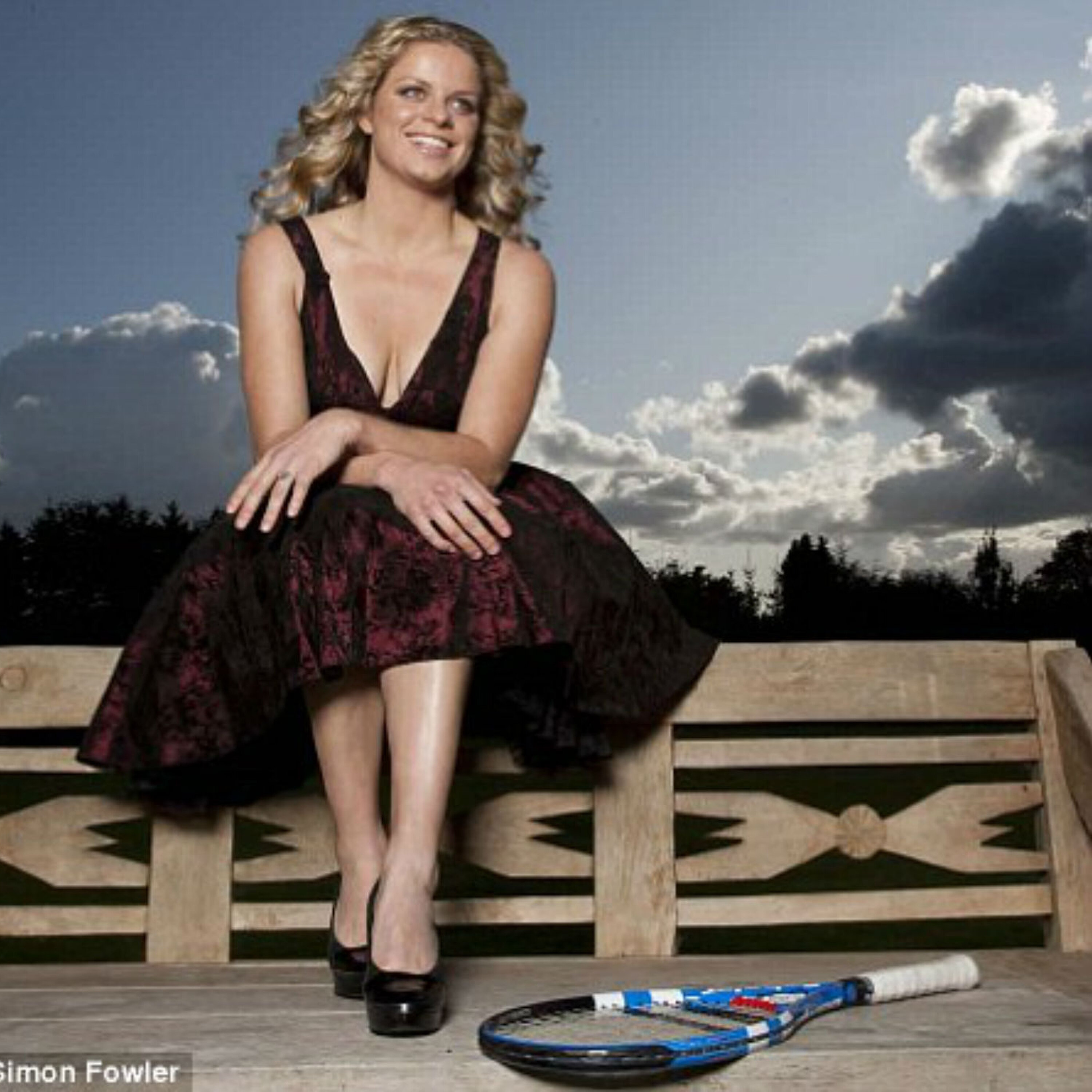
Kim Clijsters, Pt. 1
We sit down with everyone's favorite Belgian, and she was so fun to talk to we had to make two episodes. Here in Pt. 1, we talk the Winter Olympic sport she's going to conquer, a moving memory of her late dad, and the time Svetlana Kuznetsova let her pigs loose.
Hosted on Acast. See acast.com/privacy for more information.
See omnystudio.com/listener for privacy information.
2018-07-04
41 min
Transcript
Available Results
Generated results are saved to the knowledge database for reuse and search.
No generated results are available for this episode yet.
Extract Knowledge
Pick what you want extracted first. Model, scope, and chapter options appear after a template is selected.
Generated results for public episodes are saved to the knowledge database so they can be reused and searched later.
Transcript
00:00:00
Speaker 1: Yeah, the fence muzzle and I look you cozy.

00:00:13
Speaker 2: Hello Renee, Hello Cablin.

00:00:15
Speaker 3: We're here at Wimbledon.

00:00:16
Speaker 2: We are, We're in a beautiful Wimbledon and the weather's amazing.

00:00:19
Speaker 3: The weather's amazing. We had a sit down on the roof of the media Center at the All England Lawn Tennis Club with the incredible Kim Cleisters.

00:00:28
Speaker 4: The amazing I just I love her to death.

00:00:31
Speaker 2: Kim Cleisters, what a personality. Four time Grandslame champion, actually six because she won two doubles Grand Slams as well.

00:00:37
Speaker 4: And you played against her in doubles, I did, thankfully.

00:00:40
Speaker 2: I never lost to her, which I've never ever led.

00:00:42
Speaker 4: Her lived down of course, why would you you guys?

00:00:44
Speaker 3: Our interview was so long, Kim was so generous, So we've decided to do something special and we're going to chop it in two. Yeah, it's like a five setter exactly. So the first half of this match, if you will, is going to include some incredible stories. Kim an athlete who.

00:01:01
Speaker 2: Really would have been a great athlete in whatever sports she chose, whether it was winter sports, summer sports. What would she have done if she hadn't played tennis.

00:01:08
Speaker 3: And then we had a moment where I cried, did you cread just me?

00:01:12
Speaker 2: No, because I'm also doing television over here, and I tried to not get my makeup running down my face. And I also knew some of the story and I wanted everybody to know this story and also Kim a little better.

00:01:24
Speaker 3: And then lastly, my favorite part is she's basically running a farm in her house in Belgium and Svetlana Kuznetzeva let.

00:01:31
Speaker 4: Her pigs out. Do you really want to say that?

00:01:34
Speaker 3: I mean, that's what happened. You'll have to tune in for more, So you just shwine Part one of our Kim Kloser's interview. Stay tuned.

00:01:45
Speaker 4: Almost one and a half.

00:01:48
Speaker 5: One and a half.

00:01:48
Speaker 4: My husband is in the States with the dream and I'm like, I send them pictures. I'm like reading my book. You send him a picture of you reading reading my book, like this is the life.

00:02:00
Speaker 2: I'm sorry, honey, no, not even I'm not even sorry, no no, because he's ten months out of the year, he's with his basketball and I'm like driving and doing everything.

00:02:10
Speaker 4: For the kids. And then I'm like, okay, he's like in joy lads, I'm like, thank you? What being out numbered? How is that? Because going from two to three, I've heard of data's ten. So she's she's, yes, she she can do a lot to buy herself. But it was hard, you know. Still the little one takes naps and the other ones have to kind of. And your middle one is going to be in elementary school, so kindergarten, and.

00:02:30
Speaker 3: Is that a thing I'm asking You're you're talking to someone who's going through New York City public preschool.

00:02:36
Speaker 4: It's a lot different where I live, a very small.

00:02:41
Speaker 2: In Belgium, Belgium, basically getting whatever she wants.

00:02:45
Speaker 6: No, not no, no, really no, we just do the normal school, the small school, small community.

00:02:55
Speaker 4: I love it because you guys were in Jersey for a while, right when I was still playing and Jada didn't have to go to school yet. We were and then yeah, yeah, so we and Brian started working for basketball and he coaches the first division basketball team and busy with that, and I'm to tennis.

00:03:14
Speaker 2: Store and now she gets to come to Wimbledon and play with me and hold me up.

00:03:19
Speaker 4: Yeah, I know. That's the legends. Prep doubles. What kind of have you talked tactics? Who's playing. What's every day? Every day? You're already mind? We talk every day, Oh, tactics.

00:03:34
Speaker 2: We don't talk at all until we see each other at every occasion.

00:03:38
Speaker 4: All we do is talk. We don't ever talk about tennis. And we tease each other, of course constantly. Usually teaches me about how bad my groundstrokes are. That's not at all. I don't tease about that kind of stuff because she can't do anything about it. It is what it is. She told me. She told me last week that she was really working on her form. No, no, what, no, Actually.

00:04:00
Speaker 2: What happened was that I was in Barcelona and I was hitting tennis balls because I stayed and went and visited Conchita Martinez. So Conchie is playing in the Legends, and she's playing with Barbara Schette and excuse me.

00:04:12
Speaker 4: She's playing with yes, Barbara, and I'm playing.

00:04:15
Speaker 2: With Kim and so Kanchie and I sent pictures to Kim and to Bubbsy, our partners, and they made a group chat. Yes, that we were practicing, and we wanted them. We want to make sure that they were practicing. I was, but she practices all the time. But Kim was told by Conchitah that Concida was trying to work on my forehand, and she said, that's a loss.

00:04:36
Speaker 4: It didn't work.

00:04:37
Speaker 2: But I told Buzzy that I'd worked on Conchie's bollies and they were outstanding.

00:04:40
Speaker 4: I saw counties in the French rop legends. She looked pretty good. Well, they're better now because I worked on them with her. And do I need to work on you? I don't need to work on yours. You always had great bollies. I was just allergic to the net. I didn't like running for Why was that because you had such good bollies. I know.

00:04:56
Speaker 6: I just felt more comfortable with my groundstrokes to hit and try to finish off a point like that, or would drive.

00:05:02
Speaker 4: Volley or something.

00:05:04
Speaker 2: So I want to know, okay, so let's go back, like I want to know, Like, okay, so prior to having your kids, because we talked about this on the phone, and I found it so interesting about Serena and how you think that she would react to.

00:05:16
Speaker 4: After having a child and how different it makes you. What difference did it make for you. I didn't think I was going to come back after I had Jada. Yeah, I was done with tender's. I had enough of the lifestyle and the injuries, and just I was excited to start a normal kind of routine life. And and you know, we.

00:05:34
Speaker 6: Got married and my father got sick, so that was a tough year, but I had Jada as well. And and then I think a month after my dad got sick, I got invited to play here at Wimbledon with Steph. I played with Tim Henman Againstephane Graf and on your agacy.

00:05:48
Speaker 4: So I got this leather like an official, cool invitation in the mailbox and thick paper, beautiful the stamp. People like, yeah, they're all nice and.

00:05:58
Speaker 6: You had no idea this was coming, no, And I felt very like, obviously, very honored.

00:06:03
Speaker 4: Sure, so I was like.

00:06:05
Speaker 6: Tennis to me has always been I called tennis at times also my psychologist, you know, it's been, yeah, a help when my mom was sick, when I was twelve years old, when my dad was sick. I've always enjoyed playing tennis because I was able to get my mind of whatever bad stuff or negative things that were going on, you know, in my life outside of tennis. And yeah, yeah, so I started hitting and started playing and.

00:06:30
Speaker 4: For Wimbledon and then I was like, hmm, maybe I'm too young, because I was only twenty four or twenty five at the time. He went too young to just play exhibition.

00:06:38
Speaker 6: Still, and the hunger and the passion grew stronger and stronger, and I kept it quiet and I didn't Yeah, I didn't want to share it with anybody because you know, a week, a year before or a year and a half before, I had this big fur well in Belgium and you know, there's thirty thousand people, you know, in the in the arena.

00:06:57
Speaker 4: That's all, that's all that you gety it was crazy bactically all of Belgium.

00:07:01
Speaker 6: Well yeah, yeah, but so I was like, yeah, maybe I feel different and if you know, in a week's time or so, But it just grew stronger and stronger.

00:07:10
Speaker 4: And then I told my fitness coach and and went from there.

00:07:14
Speaker 6: And in the beginning I felt really guilty, really guilty towards Jada. I felt guilty that I was leaving her to practice, to do things that I enjoyed doing. You know, we're because she started to kind of notice that, you know, when.

00:07:30
Speaker 4: Mommy was leaving, and she would cry, she would stand up. We have this glass back door and she would stay.

00:07:35
Speaker 2: But honey, you know, if you want the car later on, Mommy is gonna go.

00:07:38
Speaker 4: Back to work.

00:07:40
Speaker 6: I didn't Who was Jada home with Brian No, because he was coaching. So we had the nanny who traveled, who traveled with me for a while. She she was helping out a lot at the time as well. It was you know then it.

00:07:52
Speaker 4: Was a few hours a day, nothing, still saying goodbye. Yeah, it was hard. I felt bad. And how old was Jada a couple of months?

00:08:00
Speaker 3: She was ten months, so yeah, in the States, most people will have gone back to work, most mothers after her.

00:08:07
Speaker 4: But I didn't have any work.

00:08:09
Speaker 2: So, but how did like the perception of you playing because knowing you fairly well, some of the things that sort of stopped you from winning slams or more slams or was that you know, there were times where you've got a little bit nervous in certain moments and either overplayed or overthought.

00:08:27
Speaker 4: Did it change your mentality a little bit? I got really nervous. Yeah, I think, I mean there's it's not just having.

00:08:33
Speaker 6: Jada, but also I think going through that year with my father, you know, seeing it pass away, like there's a lot of things in life that make you become I guess, more mature and able to deal with moments like that, you know on court where you're dealing with pressure and nerves and you're able to keep your focus on ten as well as in the past. When I was younger, I didn't know how to you know, when my arm all of a sudden weight. Yeah, like I don't know how to control it and how to get back to you know, where I was, you know, a couple of games before that, And.

00:09:05
Speaker 4: How did you do that differently then.

00:09:08
Speaker 6: When I was feeling upset, you know, when when my dad was taking those kinds of situations, like I started doing a lot of yoga, big cram yoga, breathing exercises, and I think in my in my second career, like I call it, I enjoyed that, Like I felt like I was able to go back to me when I felt like my brain was wandering off and on court, I felt like if I turned back to the to the back.

00:09:33
Speaker 4: Of the court and I did my for for counsel six als like that really helped me to get back.

00:09:41
Speaker 3: So that's what you were doing back there, Yeah, yeah, but you were centering you were meditating.

00:09:45
Speaker 6: Yeah, I felt like I was able to get back my mind back to where it had to be, you know, and not like go off like oh my god, like the score and then you know those kind of things.

00:09:55
Speaker 4: So maybe I can I ask you about commentating. Okay, sure I wasn't.

00:09:58
Speaker 3: It was good.

00:09:59
Speaker 4: Is it new? Is it it's new? I never thought I would commentate it because I felt like, I think, as a player, you hear people commentated about commentate and say things about you, and you feel like they're so off. I was like, I would never do that because you don't know what's going on with I feel like when.

00:10:18
Speaker 6: I talk now, I tried to put myself in the player's situation, and I think I'm capable of.

00:10:25
Speaker 4: Doing that more than I think you know somebody who hasn't been in that situation. So I tried to to do it. And I don't talk, you know, about how I would do this or I would do it that way, but just like to share experiences that I had and obviously now in the situation, you know, with Serena and Victoria Azarenka being you know, a mother coming back via Juana Rava who qualified here. You know, she has a has a daughter.

00:10:48
Speaker 6: They asked me a lot of things about the other mothers, like I'm the expert.

00:10:51
Speaker 4: I'm not.

00:10:53
Speaker 6: I'm not the expert. It's just I had to figure it out too. I had to figure out what balance worked for me. And it was a constant juggle from looking, you know, at hotel rooms, I didn't have the whole I guess Serena has a lot of people around, or you don't have no, no, but you know, I did, you know a lot of stuff myself and which I enjoyed, like.

00:11:14
Speaker 4: I enjoyed, you know, I cooked, and the hotel rooms for data.

00:11:18
Speaker 3: I think what's interesting for me. Before you're a parent, you're like, oh, I'm gonna learn how to do it. And then you realize everyone's just making it up as they go along.

00:11:25
Speaker 4: Everyone's just figuring it out. At least when I was pregnant and after I just had data. Everybody comes with advice and they mean, well, and you know.

00:11:35
Speaker 6: And then first they talk about birth and what you have to do and what you know, what you don't have to do with this.

00:11:40
Speaker 3: And they and everything and eat that, breastfeeding this or no, and you're like it's so much.

00:11:46
Speaker 4: And people send you books, and I had I got, you know, pregnancy books. No I did. I started.

00:11:52
Speaker 6: You feel like there's so much to catch up on, so much to learn, that you almost feel pressured into doing that stuff, Whereas then I one time I went over with my grandparents live next door.

00:12:01
Speaker 4: They're still like my My grandfather's ninety one, my grandmother's ninety. I was talking to her. I'm like, Grandma, I don't know how you know I'm gonna do this. She's like, kim stop. Like I had six children, there was no books, and you know, when I was pregnant, and you just you'll feel what's right, and and and and then I thought to myself, yes, I've always played tennis with my feelings, never one who followed statistics too much or if I'm gonna just follow how I feel. And I mean there were things that I knew. I knew I was going to breastfeed.

00:12:32
Speaker 3: I knew, you know, yeah, just like on the court, you knew you would try to return a place press word.

00:12:39
Speaker 4: Yeah, you play with your emotions.

00:12:40
Speaker 5: Yeah.

00:12:40
Speaker 3: I remember somebody said to my wife, who carried our child, people have been giving birth in caves for millennia exactly.

00:12:47
Speaker 4: You'll figure it out. I mean even for me, it got really confused, confusing because you know, they say you can't eat this, can't do this when you're pregnant and do this, and everybody like all of a sudden treats you like you're made of glass. You're like to professional, and I couldn't even carry it, Like the bag. I was like, I got you know, don't worry about Yeah. And then by the third does anybody even.

00:13:07
Speaker 6: Ask No, there was like, yeah, she's got it all figured out, and you don't have it more figured out.

00:13:14
Speaker 4: You're just able to like go it easier. Yeah, No, I've heard that. Second kids, you're like, the kid's still alive, and sort the.

00:13:20
Speaker 6: First one, Like now, when I'm here at the tennis, like, you know, people like, oh, I can I see pictures of your third kid?

00:13:25
Speaker 4: Do you even have pictures? Like? And I'm like, jeeson, I'm scrolling, I'm scrolling. I'm like where is it?

00:13:29
Speaker 6: And then I get to like when Jada was a little and there's like one every day, you know, like do.

00:13:33
Speaker 4: You want to picture my first kid? Yes, I've basically forgotten about it.

00:13:37
Speaker 2: You and I talked in the locker room about coincidences and the one in particular, I believe that that you were sopain about that you knew your dad was in the presence.

00:13:46
Speaker 4: I believe it was the first one you want out to having China.

00:13:49
Speaker 6: Yes, I we talked about it with my dad when he was sick and he knew he wasn't going to be able to get better, and we talked about like how you know, he asked like, how.

00:13:58
Speaker 4: Am I going to be able to leave signs like when I'm not around? And and he actually said that to you did cool?

00:14:07
Speaker 6: Yeah, And we kind of joked and thought and about it and him and I always had this thing when I even when I was little.

00:14:15
Speaker 4: My dad was a soccer player, football player, and a very good, very famous one.

00:14:19
Speaker 6: Yeah, he didn't know a lot about tennis, but he was always he taught me little things to pick up on, little things here and there and then and there was always a moment like if we got in the car and let's say we turned on the car and it was eleven past eleven, he would be like, You're gonna be number.

00:14:34
Speaker 4: One one day. Like little things like that, like.

00:14:37
Speaker 6: I could whatever it is, you know, turning something on or the time like or there was a one or so. I had a moment when I was driving to the US Open after my dad had passed away, I think eight months prior to winning the US Open. I'm driving and it was all see a big moment. It was before my final and and I'm driving to the stadium and obviously it's it's hectic. You're in you know, we were in this van where there's a lot of people in it and it's kind of not quiet.

00:15:11
Speaker 4: And everybody it's different.

00:15:13
Speaker 6: They're trying to make you feel relaxed, but at the same time they would try to give you your space. And so I'm sitting there kind of within myself and my cocoon.

00:15:23
Speaker 4: I think and and I see.

00:15:26
Speaker 6: Like we're getting closer to to the to the stadium, and I'm looking at the stadium and I think, what, like.

00:15:32
Speaker 4: Is it here we go?

00:15:33
Speaker 6: And I've started to feel the nerves and all of a sudden, like I'm sitting right next to the speaker. But the music wasn't on loud, and I hear a song and it was my dad was a huge Barry White fan, and we played the song on the feud like on his you got a kind of shy and the song that we played. There was three songs that we played, and one of the songs was from Barry White, and that song started playing right there with you know, I it too, and I like, actually, like I didn't cry.

00:16:03
Speaker 4: Hard, but I was like okay, like he's here. Yeah. It was a nice feeling and like you'll be okay.

00:16:08
Speaker 5: Yeah.

00:16:08
Speaker 6: I didn't link it to like yeah, I didn't link it to I'm going to win, but I it was.

00:16:15
Speaker 4: Like he's with me, you know.

00:16:16
Speaker 6: And it made me feel like because I always called him before. Yeah, sorry, I'm gonna I always called him before, like literally three minutes or four minutes before.

00:16:26
Speaker 2: I just want to reference it by the Kait lenn and Kim pretty Cy I'm holding it together, everybody.

00:16:30
Speaker 4: My eyes are just sweating. But three or four minutes before.

00:16:32
Speaker 6: I would walk out on court, I would call him and it was like a ten to fifteen second like I love you, you know, like just you know, have fun, like like a little thing like that.

00:16:42
Speaker 4: And and I hadn't had that.

00:16:44
Speaker 6: That was the first time that I was playing without having that, and it just yeah, and I felt like right, it felt so right. And I didn't tell anybody yet, you know, like until afterwards, like, yeah, because I didn't want.

00:16:57
Speaker 4: To make a big deal and actually lose my but I focused just for you. It was just a moment for me.

00:17:17
Speaker 7: I want you to talk about the night and the match against Serena when you got the default and just everything, just everything about that moment and after what you said to her, when she said to you, and and how you felt afterwards, just because I.

00:17:31
Speaker 4: Mean, it's a pretty crazy moment, and it was crazy. I mean I was very confused, you know.

00:17:37
Speaker 6: I felt like I was playing great tenors and I felt like I was focused. And one of the things that actually happened I didn't know about was she already got a warning after losing the first set, I think, but I didn't pick up on that. It's so loud when you're in the stadium and and so, and you try not to focus on the other side, like I always felt like, I, yeah, I looked like that. I didn't want to get distracted from people, from noise, from whatever, so I didn't pick up on that.

00:18:05
Speaker 4: And then obviously, when when the situation happened with the foot fault, I also tried to not focus what was going on on the other side of the court. So I turned back and I was with my back to the sad and yeah, probably or just trying to stay in my in my focus. And because you know, I went to match point, I think, yeah and uh, And so I told myself, look, just don't get distracted, because I felt like in the past, like I I, I could get distracted pretty easily when.

00:18:39
Speaker 6: When especially also when I was younger, if my opponents would you know, if I was up five to two or something and my opponent decided to go take a toilet break.

00:18:47
Speaker 4: I got a noise. Yeah, it was like a two three minute like where I had to get my my shit shit together. Yeah that's the good news, Okay, where I had to get it together because I felt like I could lose eight in a row.

00:19:00
Speaker 6: I started thinking, I was like, I started to get worried, what if I don't have my rhythm anymore, you know, like negative?

00:19:06
Speaker 4: And I didn't want to do that. So I just really I learned how to stay in my focus.

00:19:09
Speaker 6: And through the little you know, breathing exercises and and and that's what I did. And then all of a sudden, like I'd turn around because I thought, Okay, you know, it's probably gone over, like and I'm going to the line, to the line to be ready to return, and I see that it's still going on. All of a sudden, I see Serena walk over to me, and I walk up to her, and she tells me.

00:19:31
Speaker 4: What do you What do you think she's gonna say to you? I'm like, well, but.

00:19:33
Speaker 6: First I thought that she was so like pissed that she didn't want to deal with it, like she was off, like she was going to walk off court, and and I was like, yeah, like what's going on? And she's like, yeah, I got disqualified. I'm like no, And you didn't even realize no. I mean, it was so surreal the whole situation. Also, because I didn't see what happened, I didn't hear what happened. I so she kind of told me that she got disqualified, and then I walked through my chair and yeah, just confused. You know, it's just very confusing.

00:20:05
Speaker 4: And then obviously when you walk off court, you're tried to hear from people what happens. I'm sure everyone had a lot of thoughts about Yeah, everybody, yeah, I mean everybody. And then I had to go into press. I tried to do press pretty quickly and yeah, yeah, I mean it was you know, everybody wanted to know my situation and what I heard. And it sounds like you didn't hear anything. No, I mean, I'm on the other side of the court. It's loud, people are booing. You know what Serena was doing, what the linesman did?

00:20:34
Speaker 5: You know?

00:20:34
Speaker 4: Both like there was different reactions and yeah, so let me ask you a.

00:20:40
Speaker 3: Question, just because you know, for me, I would have felt maybe a little sad that I didn't get to have the completion of the.

00:20:47
Speaker 4: Match that occurred to you. Yeah, yeah, I mean I think also like through my parents, I've learned to not like wonder about the ifs.

00:20:56
Speaker 6: You know, like like you can always keep what if this or what if that? And then like it's that was the situation that I was in, and I tried to just deal with it as good as I could.

00:21:07
Speaker 4: And I also didn't want to get distracted because then I had to play, you know, my next round, my final, and I didn't want to get or to lose my rhythm because of what happens.

00:21:22
Speaker 3: Well, it's interesting because that story is so famous, especially to us in America, and the fact that it didn't really involve you that much at all, even though you were there.

00:21:29
Speaker 4: And I felt like it didn't involve me.

00:21:31
Speaker 6: I mean I had I had nothing to do with the situation, just but but I was playing against Serena.

00:21:36
Speaker 4: So it also strikes me as you guys are actually decently friendly. Yeah. Yeah, I mean, it's not like I don't think I know her well.

00:21:45
Speaker 6: I mean probably one of the longer conversations I had with her was was actually when I retired, she actually came over and like gave me a hug, and I felt like it was sincere and and so.

00:21:55
Speaker 4: I mean, I was it was nice.

00:21:57
Speaker 6: I think I got to see a Serena that I hadn't seen before.

00:22:02
Speaker 3: How do you now relate to some of the other players now that you're making this you know, you're now in the career of journalists.

00:22:08
Speaker 6: Yeah, I mean, I what I like when I talk to journalists who I liked, who I enjoyed talking to, is they made me think it wasn't the same question over and over again. They actually gave me something where I was like, hmm, interesting, something I could do something with as well, you know, to try to figure figure something out.

00:22:27
Speaker 4: And and so I mean, because we can't.

00:22:30
Speaker 6: I mean even now, like you get the same question over and over again, and and I get it, you know, but then once in a while it's there's journalists.

00:22:37
Speaker 4: Where you know, yeah they there, they can go further deeper, and those are the ones. And I think even now, like when I talk to a player, like I actually want to talk. I don't want to ask them the normal questions I would like to know. I don't know how they think, how they you know, to go deeper than the than the surfaced information that we see on court.

00:23:01
Speaker 3: Well, it's amazing when you talk to somebody and you get the sense that they're actually really listening to you because you feel seen and heard, and then all of a sudden, you know you actually want to engage.

00:23:08
Speaker 4: Okay, So I have two sort of related questions. How many ink how many pieces of make do you have? Me? There we go, I see one, I see one. This is the bee from Brian on my t Yeah. Yeah, So Jada is very proud that she's the only kid on my child little it's a little sad for your other kids. I doubt that, Jada. So maybe mommy should get rid of your name. If you know you're like you can just stack them up, you know. Yeah, I know. When I first got these, I was like, I want more and.

00:23:37
Speaker 6: I have I have a drawing of because my father's name was Leo and.

00:23:42
Speaker 4: When he played football, you know, he was like a lion, like he.

00:23:45
Speaker 6: Was a defender, and so I have like a lion's head laying around and he always used to buy me roses when I yeah, so I had Yeah, I have ideas, but I don't know.

00:23:59
Speaker 4: I'm I feel like I'm done with it. I don't know for some reason, but I'm worried that if I do want again. I've had moments with friends.

00:24:07
Speaker 6: I'm like spontaneous, yeah, crazy, whatever you want to go.

00:24:12
Speaker 4: I do yeah, out of things like when I get it, I'm like, okay, let's do this. Like I'm friend started taking tattoo studio. Once I started getting them, I couldn't stop. I know, I had that very away.

00:24:26
Speaker 6: But like my friends and I went to Australia last year and we were like, let's find a tattoo shop and get something, you know, because we had such a good time and we got like really closed and we were able to talk like we are like about you know, issues like with my dad and and like you know them and their life stuff that they were struggling when we felt like we were really like connecting on a different level than being in Belgium and and so we were like, we need to find something to remind us.

00:24:50
Speaker 4: And we wanted to get a tatoo. And I actually looked up at that too show and they were all closed on Google or wherever I you are, soap in twenty eighteen, I got two tattoo shops. You can pick one. We're not getting master tattoos, but you've got lots of options. Okay, here's my thing. Maybe I'll get one with you and we will do it together. You have got one, yes, I do on my toe. Okay.

00:25:13
Speaker 3: The second thing I want to tell you, and this is my wife is not a tennis fan, but she's a sporting fan.

00:25:18
Speaker 4: You are her favorite tennis player. True story, because she told me. And then when I met Renee, she told me the same thing.

00:25:24
Speaker 3: Kim Class is the most athletic tennis player who's ever played the game.

00:25:27
Speaker 4: Now here's my question. There's no question.

00:25:32
Speaker 2: There's no question that Kim I would say, look at you looking back like tell me, oh, I'm curious.

00:25:38
Speaker 4: Good question.

00:25:39
Speaker 2: Kim Is the top three athletes I've ever seen by tennis.

00:25:43
Speaker 3: Okay, so here's what women tennis, flies, the Winter Olympics.

00:25:47
Speaker 4: What sport do you want to go?

00:25:48
Speaker 2: Medal life, speed skating, speed skating, speed skating.

00:25:53
Speaker 4: Yeah, it's close enough to Holland.

00:25:55
Speaker 2: I mean that, you know the Dutch when every bloody speaking Belgium, Belgium not go to space getting in talk.

00:26:01
Speaker 4: About football, But that's not it. Let's talk about normal and winter sports. The thing is, I started skiing when I read tired it is. I love it, but I'm so scared. That's a crazy thing.

00:26:16
Speaker 6: I'm not scared of a lot of things, but for some reason on skis, I've just I am scared.

00:26:22
Speaker 4: Is it mortality or is it more just like you're literally scared of injuring yourself. No, I'm I'm scared because I think, yeah, I don't have control of what I'm doing yet. Yeah. So are you bad at skiing? I mean, yes, you're not bad at actually, But the thing is I wanted I want to do it well, and I look at YouTube videos and I try to do yeah, and then I I took like three or four skiing lessons and I went up the mountain and yeah, just really cramped. I feel really cramped.

00:26:57
Speaker 6: On skis and my feet hurt, my sh ins hurt, and then I'm like, oh no, like I don't there's no enjoyment on skis.

00:27:06
Speaker 4: I love being in the mountains. I loved taking the ski lift up and you know you like the attendant stuff yep, the place. Yeah, yeah, the opresky. I only did up rescue for the first time this winter. That's the best part. Yeah, where did you do it? I don't like to feel like tired in the morning. No, after you hangover like that part, I'm like, it's not worth it. No, No, but skiing, skiing is I'm.

00:27:31
Speaker 3: From Montreal, so it's my favorite sport by a lot. So I'm really impressed when people become skiers because a lot of time played on ski because they will. It was like in my contract to you were not scale, So.

00:27:41
Speaker 4: How'd you start?

00:27:41
Speaker 6: And when I stopped playing, so I was like I wanted I want to ski, and my husband and I went to Switzerland dos yeah the first time and literally rented skis.

00:27:54
Speaker 4: I had never taken a lesson. He's like, I got this, you know. I skied when I was twelve, I'm like, okay, I trusted yeah, blindly Yeah. And I was like, okay, you know, I see these little kids three four years old going up the skill it's in front of me. I'm like, if they can do it, I mean, how hard can it be? And then I see the you know, I'm on top of the mountain trying to go down these kids without even thinking go whoop. Yeah, and I was like, I can't do it. Yeah, I can't do it. I think if you get once you get the fear in your head, it's actually quite hard.

00:28:22
Speaker 3: It's harder to learn as an adult because when I was a kid, it was just you're this far up the ground with a giant helmet.

00:28:27
Speaker 4: But I felt better at the end of that trip. I felt better. But then there's another year that goes by before you ski again.

00:28:32
Speaker 6: And we have actually an indoor ski slope where I am where we live, yeah, fifteen minutes from our house. So our kids, like Jada and Jack the are our first two kids. They've taken ski lessons. And it made me so proud when Jada skied down by herself. I'm like sitting at the window, Oh my god, i'meel so proud. You know that she's able to do this just because I don't. Yeah, I can't do it.

00:28:54
Speaker 4: I was very proud when my son skied for the first time. He was too yeah, and you know again, he didn't have any fear and he just you know, pizza. But I felt so proud like he was you knowing it, he was doing it and he was leaning forward. You really have to. That's why. That's where I'm scared. And I cramped, like I'm so tight on my legs and I mean it's a good workout, you know, for your legs, but I feel like, come lunchtime, I'm like, okay, I'm like really like there's too much acid in my legs. I need to I don't know, go to the spars or the ice pas. Okay, So are you gonna get back on the slap sir? Sounds like no, I this isn't every year. Like when we come back, I think him, don't do it anymore because yeah, there's no I don't enjoy it. But then you know, there's always friends who you know. In Belgium were close to a lot of like great skiing areas and they're like, oh, you want to come for a ski trip and they convince me, and then I go and then and then you don't like it. Okay, so you can be I like moments, but you can be a speed skater. Maybe Bob's lay. Oh my god, that would be so fun. Let me, I will do bobs. You would not have fear of that. No, you don't have fair No, I don't think so speed. I've never done it. Maybe they're, oh, you did it on like the concrete where you like around roller skates. That's fucking scary. Yeah, I'm sure this is Jesus. Yeah, but I think that I don't know.

00:30:11
Speaker 6: Well, that's why I asked you that I want to be that the one who what's the name, the one at the back who pushes.

00:30:15
Speaker 4: To Yeah yeah, the car. Yeah, they get the sprinters. Yeah yeah, okay, so I guess it's the engine. You'd be the engine.

00:30:21
Speaker 3: I feel like I asked you about winter sports because I feel like it would take you out of your comfort zone because like, you know, not true, Yeah, play soccer.

00:30:28
Speaker 4: What else are you teaching your kids to? Jada plays basketball. My husband was a basketball player. He's now a coach. He's a very good one. Yeah. Yeah, And and does she like it. She loves basketball, she likes she thinks tannas is the most boring sport in the world.

00:30:43
Speaker 6: She asked me one how long did you play. I'm like, you know, I was five six years old when I started. And she's like, oh my god, mom, it's like the most boring sport in the world.

00:30:51
Speaker 4: I don't know how long. Why you know how you could do it for that long?

00:30:54
Speaker 5: Yeah.

00:30:55
Speaker 6: It was funny, like because I have an academy in Belgium and she was, you know, with a coach and she had a couple of like lessons with like a girlfriend of hers that she was in school with, and she wouldn't even she wasn't even listening to the coach like she had like she was holding the racket, was like leaning on her shoulder, looking at like birds that were like in the trees, and while the coach is explaining like the next thing that they had to do, and I'm sitting on the side and I'm like, Jada, please like pay attention to the coach at least do that, And she didn't care, and she was sighing, and I'm like okay, And then you know, the next day she had her basketball practice and she's diving to the ball, comes off like sweating red cheeks, like okay, obviously you know it's she's no point.

00:31:36
Speaker 3: In like pushing or what is your husband pumped or is it the kind of thing where he he's pumped?

00:31:41
Speaker 4: Yeah, okay, I mean he's away a lot, like with his job, but we try to.

00:31:48
Speaker 6: Go to you know, most of his games and and you know, we in find you know a lot of the players over and and yeah, Jada loves it.

00:31:55
Speaker 4: She loves like there in the States right now. She yeah, she is so yeah, yeah, I mean not that you can't be no, no, yeah, she is.

00:32:04
Speaker 5: Yeah.

00:32:05
Speaker 4: And Jack Jack is for he turns five at the end of September.

00:32:10
Speaker 6: He is so, I don't know, he's the type of kid I have to keep away from the iPad and he gets very hooked on that stuff. And he's very good at imitations, yes, like he'll say things and you know, I mean, my husband speaks, you know, with an American accent, but for some reason, our son speaks with an English like great British, like a British accent.

00:32:30
Speaker 4: Because he listens to Papa Peg and he's like, Daddy, can I have your phone? Like I'm like, so, yeah, we have like with him. Jada is an outside kid.

00:32:41
Speaker 5: She likes to go.

00:32:42
Speaker 4: You know, we have a lot of animals at home. And actually a very funny story. We have pigs. Pigs.

00:32:49
Speaker 6: We have pigs I got from my coach for our thirtieth For my thirtieth birthday, I got two pigs.

00:32:56
Speaker 4: As a president.

00:32:58
Speaker 6: He drove his van up to my backyard, opened the sliding door and out like like you know, like two pigs like walk out and and when as a little girl, I wanted to have pigs, like he remembered, and when I turned thirty, he was like, yeah, it was.

00:33:14
Speaker 4: I was excited to see them, but I was like, oh my god, like my garden is not ready for peaces. So you know, we had to kind of like put some fences in and and and a little ship for them. So you have pigs. I have pigs. And three of them names specs get which means bacon and Dutch. We don't need them, but we don't need them. So but kuzin Atsiva was actually over. She had she was seeing a doctor for her wrist surgery in Belgium and.

00:33:49
Speaker 6: Was came over to the Academy because the guy that I worked with for my rehab for my risk is a part of my academy, and so she she came over to see him reach out and you know, I still had to go to the house, but my husband was playing a game that night, and she was leaving the next day, and you know, she loves.

00:34:05
Speaker 4: Basketball, and so I was like, yeah, come with me, you know, and so she we. I took her with us to the game. It's not an hour and a half drive. Like.

00:34:15
Speaker 6: The game is like in the in the second quarter and I get a phone call and it's like, kim by someone you really I think one of.

00:34:25
Speaker 4: Your pigs is out on the street. I'm like what, I'm like, how is that possible? He goes, yeah, how the fence was open, and I look cozy. She left. She left it like the game like, but it wasn't locked, so I couldn't get back in time. Obviously. To you know, the pigs are smart.

00:34:42
Speaker 6: They're very smart and very clean, very clean. You would think big is like a dirty animal, would think that they're not. I mean, they stink, you know, but they go to the bathroom in the same corner. They keep their like their ship very clean. Yeah, so but they're very nice.

00:34:59
Speaker 4: And your neighbors have to capture the pig, like do they Yeah, that one escape is a very big pig.

00:35:08
Speaker 6: It's a hairy pig as well. It's called the cooney Cooney pig, which is like a New Zealand kind of breed.

00:35:15
Speaker 4: So you have Bacon, you have a hairy pig. What's the harry pigs name? That's Bacon. Yeah.

00:35:20
Speaker 6: And then we have Luna Jada. Jada names all our animals. We have random names.

00:35:27
Speaker 4: Luna and the third one, I don't know what she calls it. Actually, how many animals do you have? We have I don't live on a farm, but it kind of looks like a petting zoom in our backyard.

00:35:39
Speaker 6: We have now, I mean we had four ducks, but we had just a couple of days before I came over here, six little ducklings came on, so we have them.

00:35:50
Speaker 4: Yeah, great, And then we have four chickens and a dog and that's it. Now we have one dog.

00:35:59
Speaker 6: At one point we had five dogs, which was a little bit too much because it was like a factory in the morning, trying to feed everybody.

00:36:05
Speaker 5: Yeah.

00:36:05
Speaker 4: Wow, and you have like a house that's a normal sized house with a giant yard. I have a big yard.

00:36:10
Speaker 6: I live in a normal street, you know, with the houses next to me and on both sides. But I have a big backyard because it was like a piece of land from farmers. But in our area, they started putting.

00:36:22
Speaker 4: These communities like a plant yeah, development, and.

00:36:26
Speaker 6: I kind of didn't feel like having them facing my backyard, like right against it. So this is I think when I was eighteen, so a long time ago, and my dad tried to talk with some of the people who owned that piece and we ended.

00:36:37
Speaker 4: Up buying it. So that's why I have a bigger piece of property in my backyard. That's smart.

00:36:44
Speaker 3: Yeah, but let me just count three kids, three pigs, one dog, seven ducks.

00:36:50
Speaker 4: I mean now that's four or six, no, twelve dogs.

00:36:54
Speaker 5: Or so many?

00:36:54
Speaker 4: Do you have like people helping you take care of all these animals? No, you should see me in the morning. It's like I wake up and you know, in between feeding and.

00:37:02
Speaker 6: The kids and getting breakfast ready for them and like ready for school, I run off and you know whatever, if it's raining, put on my raincoat.

00:37:12
Speaker 4: And did you think having growing up you would have a farm. I've always loved animals that my grandparents had. You know, a lot of ducks and a lot of rabbits, and ducks do, but rabbits. I always had rabbits, And I know I've heard rabbits are very mean. I've heard they're mean.

00:37:29
Speaker 8: They can like like whatever and attack each other. I haven't seen that happen, but yeah, I'm sure I always love it. They love it, they love having Yeah, that's so cool.

00:37:42
Speaker 4: Yeah.

00:37:44
Speaker 3: Okay, So again that was part one of our Kim Cloisters interview. But remember it was so long and so good that we've got part two coming up very soon.

00:37:53
Speaker 4: So stay tanned.

00:37:54
Speaker 5: And that's it for this episode of the Racket Magazine podcast. Thanks for listening. Our host is Renee Stubbs. Our co host and producer is me Caitlin Thompson. Music by internationally renowned DJ Stretch Armstrong. Thanks to tim Or, Jerry Taylor Dalton and the team at Acast.

00:41:00
Speaker 4: Dick Dick Thick
Chapters
No chapters available.