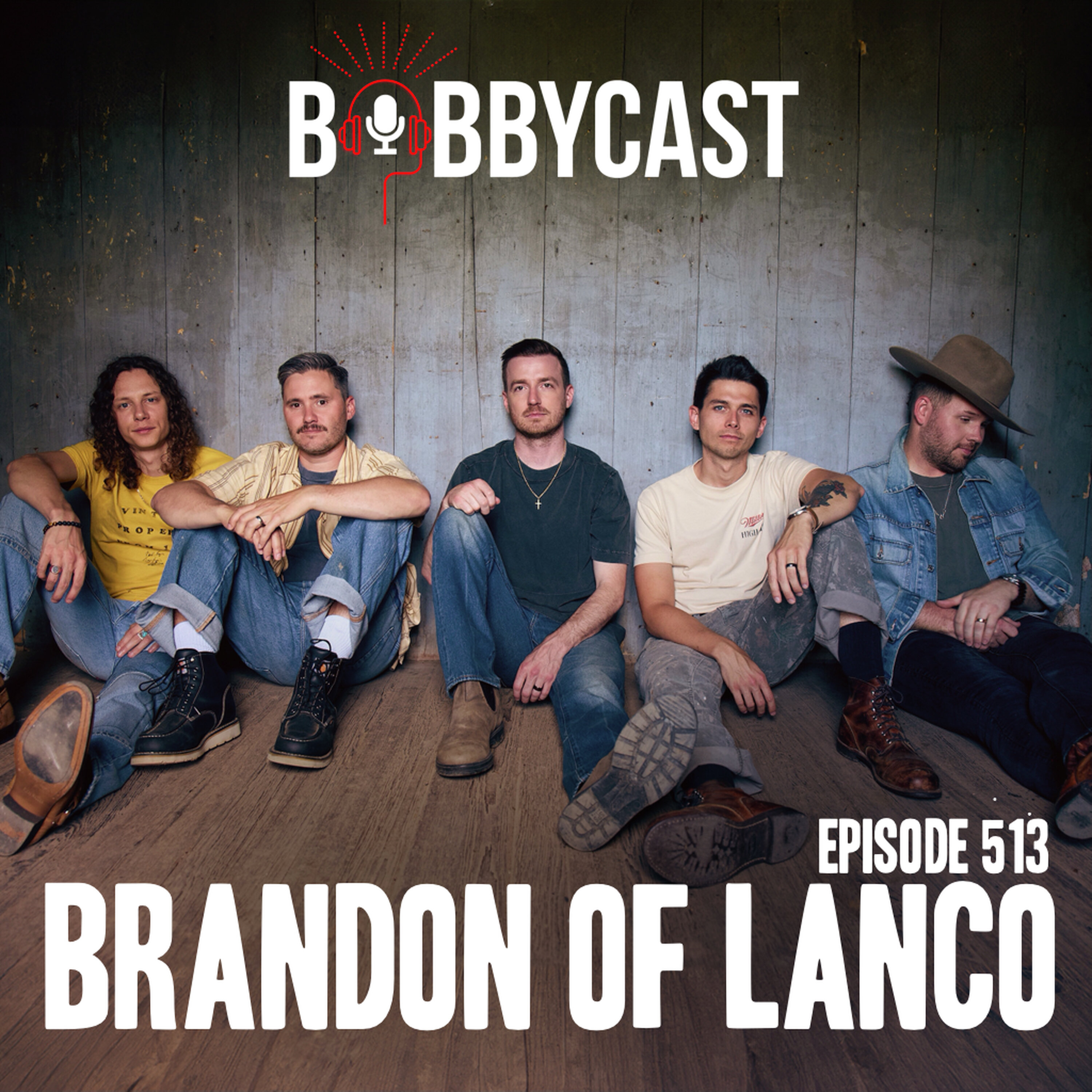
#513 - Brandon Lancaster of Lanco on Coming Back After Losing Record Deal and Management + Fishing Competitions with Morgan Wallen + Writing ‘Greatest Love Story’
Brandon Lancaster of Lanco stopped and opened up about how the band went from having their first No.1 and selling out shows to having the rug pulled out from under them as a result of the pandemic. Brandon shared what life was like after losing their record deal and management but how now they are back with new music and a new perspective. Brandon also talks about what he does for fun, competing in fishing competitions with Morgan Wallen, and what year felt the scariest for him in the last 5 years.
Follow on Instagram: @TheBobbyCast
Follow on TikTok: @TheBobbyCast
Watch this Episode on Youtube
See omnystudio.com/listener for privacy information.
Available Results
Generated results are saved to the knowledge database for reuse and search.
Extract Knowledge
Pick what you want extracted first. Model, scope, and chapter options appear after a template is selected.
Transcript
00:00:06
Speaker 1: Episode five fourteen. It's Brandon Lancaster of Lanco. So it's a great story of do you want to say redemption? I mean, these guys were crushing it and then basically COVID hit like it did a lot of other artists and I lost the record deal, change management. They had to kind of start over, and Brandon talks about that a lot. I really like Brandon, and it's crazy because they've been nominated for so many awards like CNA's American Music Awards ACMs, where they won New Duo Group of the Year, and then just a couple of things went wrong that snowballed, but now they are back. It's a really great story here he is Brandon Lancaster, which is how the band name Lanco came about. Of Lanco, Brandon, good to see again, Buddy, good to see you. Although it doesn't feel like I haven't seen you, because social media exists in a way that you know, you kind of feel.

00:00:57
Speaker 2: Like you do CP.

00:01:00
Speaker 1: Yeah, it's weird because I don't know that you and I have spent any time together in literally years at this point, right.

00:01:08
Speaker 3: I think, Yeah, I think it'd be years. But yeah, it's same thing. I feel like I know your life.

00:01:12
Speaker 1: Because like when I walked down, I was like, oh, my wife was like, who's down? It said, uh, Brandon, this a friend of mine sings. She's like, I never met him. And I was like, I don't even know that I've seen you since I've been married.

00:01:23
Speaker 3: I don't think I don't think that's crazy.

00:01:25
Speaker 1: Last time we did this, we did it up in a tiny bedroom yep of a house across town. And for you, that wasn't weird because I knew you. But sometimes it'd be people that would come over to the house and they have to like come into the house and go upstairs.

00:01:40
Speaker 2: Yeah, looking back, that's a lot invasive, Mike.

00:01:45
Speaker 3: It's our fault.

00:01:47
Speaker 2: It was our fault.

00:01:48
Speaker 3: Yeah, it was weird.

00:01:49
Speaker 1: Right by your bedroom, yeah, walk by the bedroom.

00:01:52
Speaker 2: Yeah, it's first thing Brandon said.

00:01:53
Speaker 1: He was like, yeah, we did. Last time we did this was in a small room. That's when it hit me. I haven't I haven't seen you in a long time. But welcome to the new studio.

00:02:00
Speaker 3: Yeah, it's great. Thanks for having me take a.

00:02:02
Speaker 1: Dip in the pool if you'd like after it. A lot of guests that what they say is if.

00:02:06
Speaker 2: It's been a good interview.

00:02:07
Speaker 1: They like to jump in the pool, so you let me know at the end and you can jump right in.

00:02:11
Speaker 4: How warm is the pool?

00:02:13
Speaker 2: You know, it doesn't matter.

00:02:14
Speaker 3: Really, it might all right, it has to be a really good interview.

00:02:16
Speaker 1: If it's a nice plunge, it always is. All right, let's see where do I want to start. I feel like you've because I asked you how you been? You said good bad in between. I feel like that's kind of been. I don't know if you're talking about personal or professional, but I know professionally. You know, you guys come out and you have the big hit it's going to be.

00:02:39
Speaker 2: Or forever you're going to be.

00:02:42
Speaker 1: And then did you did you'd lose your deal and management?

00:02:49
Speaker 4: Yeah? I mean, how much do you want to get into this?

00:02:53
Speaker 1: No, I mean as much as you want to know we can because the reason I want to get back into it is because it's not like that anymore, because it's been the complete op. Actually we have the same agents sort of now. Yeah, so, but I kind of wanted to go. We saw each other, it was going good. And this is a testament of sometimes things don't go right for a long time, but if you just keep on going and you have the heart determination you're putting in the work. I'm just gonna tell you where the whole timeline of this interview is gonna go with me that you push hard long enough eventually the rock moves.

00:03:25
Speaker 4: Yeah.

00:03:25
Speaker 3: Absolutely, And that's and yeah, it's funny because seriously coming here and like last time I did this was just forever ago, and it was at your house, and I used to see you more often back then, just run in the same circles. And it's just been anytime I see someone that I haven't seen a long.

00:03:41
Speaker 4: Time, and there there, you know how you've been.

00:03:43
Speaker 3: It's like, oh, since I last saw you, I've been everything and the highs, highs, lows, loose and everything in between.

00:03:48
Speaker 4: Beause that, you know, so kind of being funny.

00:03:50
Speaker 3: But also yeah, I mean since I since I've seen you last, since we've kind of done this, I mean, yeah, I had had a huge hit.

00:03:56
Speaker 4: With Love Story.

00:03:57
Speaker 3: It's like I don't know five it's a a hundred quadrillion times spots or something. But uh, and then we had Born to Love You after that and and really sing that one. Uh it was born to Love You. I could serve from South and North Born to love you.

00:04:11
Speaker 1: Uh the do the Course melody though, Uh that's don't don't sing it hard, but do it again. But you were going to swirl from south north, but are found well.

00:04:22
Speaker 3: Looking for wherever I go, whatever I do. It was born to love you, was born I love you.

00:04:29
Speaker 2: Got it, got it, got it, got all right.

00:04:31
Speaker 3: We actually sang that on Dancing with the Stars. Uh what the season you were on? Yeah, you didn't dance.

00:04:38
Speaker 2: To I didn't dance I danced to Jansen, But you played that.

00:04:42
Speaker 3: Yeah, that episode the country thing with like the plastic cows and hey, we did a.

00:04:47
Speaker 1: Whole group dance with Platt and I remember getting so frustrated at that because they were like, it's country night, bringing the cows and Haybell.

00:04:53
Speaker 3: Guys, It's really not what it is.

00:04:56
Speaker 1: But yeah, yeah that was That was That was cool. You guys do that, Okay, walk me through it.

00:05:02
Speaker 4: So we do that. We put out that album.

00:05:03
Speaker 3: That album debuted at number one on the album chart Billboard Album Chart, and we were the first band to debut with a number one album since Alabama, So we were we were crushing.

00:05:13
Speaker 4: And then toured us sold out our headline tour.

00:05:17
Speaker 3: Then we toured Luke Holmes, Dirks Bentley and Miranda Lambert just in you know, and then it went overseas, sold out, a bunch of shows in the UK headlined austral Well, we were going to headline Australia. We're on the Miranda tour. We have a single at radio number one most added. We're like, here we go. We're about, you know, about to get two buses, about to do that thing. And we were doing like a headline tour and Miranda's thing at this like alternate weekends and we were about to go to Australia and our management was like, hey, you're not going to Australia. There's this thing going around. I think we're going to stay home this week. And you're like what And we that night we were in Minneapolis, had a sold out show at Fillmore and yeah, I thought we were going home for a two week break. And that that's the beginning of Act two.

00:06:01
Speaker 2: Really COVID that started the unraveling.

00:06:04
Speaker 3: Oh dude, like, honey, and I hate here's the thing I hate, especially in the season of my life.

00:06:09
Speaker 4: I hate being woe is Me and I hate.

00:06:11
Speaker 2: I don't take that as what was mean. Yeah, but I literally asked you the question.

00:06:14
Speaker 4: Yeah, but it's a thing where it's.

00:06:15
Speaker 3: You know, we were we were going and but we the thing that we were we were, we had our live thing has always been such the way that we sell what we do if you come see us live, and if radio and comes see us live, and if people the fans, and when that went away, we're now sitting at home and we have this single. But you know, no one's in their cars, no, like radio engagement is just and so that kind of that single it just wasn't It was like nearly impossible because we're still technically a newer artist. You know, we're like in the thirties, we're like top forty.

00:06:44
Speaker 2: But it's just.

00:06:46
Speaker 3: Uh, yeah, you get the And then we started getting the call like hey, this this thing, you got it, download this app, this TikTok thing. Uh, and we do that and it just but it's it's just such a long story and how much you want to get to do whatever. But that that was kind of the beginning of like okay, and that song ended up not working.

00:07:04
Speaker 4: It orge the it just.

00:07:04
Speaker 3: Got pulled from radio. Really it was just too uh it was it was a hard season. And so then after that you are kind of in. We had a whole second album ready to go with Dan huff and Jay Joyce and fully produced. Yeah, fully produced, like gonna go to mixing. And if you don't have a single that's promoting that album and you're not on the road from that album, that album's.

00:07:25
Speaker 4: Easy to just kind of stop being paid attention to.

00:07:28
Speaker 3: And then before you know it, you're kind of in the wilderness, which I'm where everyone I mean, you're we're small business. Everyone was in the wilderness trying to pivot and trying to adopt these new times. But it was Yeah, that was kind of the beginning of the unraveling of when did you.

00:07:41
Speaker 1: Start to feel like because a lot of people went through either well, I would you say, not being paid attention to because there wasn't much attention to be paid, when did you start to feel like, hey, we're kind of not getting the same amount as compared to the other folks.

00:08:00
Speaker 4: Yeah, I'd say not long after.

00:08:01
Speaker 3: So we had a single called what I See and that was produced by Dan Huffman that Yeah, it's like in the thirties. It was top forty. And once you can just tell the calls start becoming less and and you know, also the standards for where we were at was just so was so high. You know, it's I mean, because we're we're a label with other just huge artists, and we're still working our way up that mountain. You know, we're still in the if we're playing a festival slot where like not the last ones, maybe second last or third to last, you know, but you're climbing that mountain. But once that single got pulled from from radio, then the calls start becoming less, you can just feel.

00:08:41
Speaker 4: And then they really did.

00:08:42
Speaker 3: They kept hitting us with the social media thing, which for us it was always like on the road and just our lives and really you have to remember the time. It seems like everyday life now, but the time, people weren't just like I remember the first time I saw lip syncing on on an app and being like, what now, it's just like a music video. But it was just someone like in their bathroom and it's like where they're like with their guitars singing there.

00:09:04
Speaker 4: And it was just so different than what we had been doing.

00:09:07
Speaker 3: And we would try, we'd try to make it work, but at the time, you know, we weren't going like super viral we weren't.

00:09:12
Speaker 4: We weren't just having this moment that was during like Olivi.

00:09:15
Speaker 3: Rodrigo and these things that were just and you're like, and you're now becoming content creators, which is something different than we had ever done before.

00:09:24
Speaker 4: And it's really not our expertise.

00:09:25
Speaker 3: We're a band. We play music and write songs, and so then we started feeling you could just kind of start feeling the attention wasn't there and talk to management and it's like, hey, you know, it's it's just a tough situation.

00:09:38
Speaker 1: And yeah, everybody was losing money and nobody wanted to spend the equal amount of money when they were pulling in less money.

00:09:44
Speaker 2: Yeah, so there had to be decisions made.

00:09:46
Speaker 1: It happened across a lot of entertainment platforms, and I think, yeah, it suck because you guys were new.

00:09:53
Speaker 2: Yeah, you had to hit.

00:09:54
Speaker 1: But when they start having to go, well, if we only have like seven people we can fit in this nest.

00:10:00
Speaker 2: You know that the small birds are kicked out first.

00:10:02
Speaker 3: Yeah, and we were still in a place where we needed that support. We still needed we had our fans, but uh, the the what you need to impact on that like global level, that is competing against the artists that are headlining the arenas and the you know, that's where the focus is going to be during that time and I and I haven't understood that then, Like I wasn't even back then. I really wasn't bitter about it because I'm I'm practical and I get it. I'm like, it's just so unfortunate because we were just in that you know, when you're I mean it, people don't arnesery.

00:10:32
Speaker 4: It is hard to move tickets. It's hard to sell tickets.

00:10:34
Speaker 1: Oh yeah, it's hard to sell hard tickets.

00:10:36
Speaker 3: Yeah, and we were selling hard tickets and selling out venues like in different countries, I mean, which would for us.

00:10:42
Speaker 4: Was just so mind blowing.

00:10:43
Speaker 3: But uh but yeah, it was. It was a tough time.

00:10:46
Speaker 1: Did they give you the call like, hey, we're gonna move on, discontinue the deal, Like what what do they say?

00:10:51
Speaker 3: So, actually what happened was our management called and was like, hey, I had a meeting, I've had some meetings. This is you're in a place in the building where this could be tough to win them back, you know, I mean, it's just you might be better off going to a new building and igniting a new fire, getting new people excited, you know, just kind of a new partnership.

00:11:13
Speaker 4: And so it really started there.

00:11:15
Speaker 1: I feel like a very euphemistic statement to say like new building, new fire, and you're like, okay, well, appoint me to the new building.

00:11:22
Speaker 2: What new building wants to talk?

00:11:23
Speaker 1: But no new buildings wanted to talk to anybody new because nobody had money, especially yeah, especially at that time that they were.

00:11:29
Speaker 2: Willing to throw out because COVID had wrecked everything.

00:11:31
Speaker 4: Trust me.

00:11:31
Speaker 3: That was and I mean, this conversation all happened. It's like, well, okay, but it's kind of it's like do you repair a kind of broken relationship or a relationship or do you go pursue a new relationship? And yeah, which one's going to be more difficult? How broken is the relationship? And yeah, and it was a time that yeah, but it was still so early. It's still I don't know if everyone had the knowledge that it's like are people signing new acts? Because people were signing new acts, but the new signings were Okay, this label just signed thirty five artists that are like blowing up on this app that based.

00:12:07
Speaker 2: On like streams like yeah, TikTok that type stuff.

00:12:10
Speaker 3: Yeah, and so when we weren't we were doing fine there, but just you know, we weren't. That's never been like where we crush and because that is a skill in its own right, that is its own art form, and we've gotten better at and we've learned. But the time, you know, it was but yeah, it was a that was kind of how that process went. And then you are in the wilderness, and that was wild to be like literally independent, I mean independent.

00:12:33
Speaker 1: Are you the one having these conversations or is like a party line of you and all the band members?

00:12:39
Speaker 2: Like or do you take the information back?

00:12:41
Speaker 3: So I take the information back? But it happens. I mean, we're on the bus having these conversations. We're going well the time that we weren't on the bus because weren't touring, but we would go like we all kind of have like little home in home studios. Jared's like the biggest and best one, uh because he's like truly a producer, and so we go to his studio and we would have these talks, these discussions, and then I would make the phone call with me. It's not like all five of us on a line and anything, Ay this is made, I would call each person into visualbik. Hey, I think this is a conversation I just had and literally have one on one with each guy and then if it, you know, maybe all of us get together and have a band meeting.

00:13:16
Speaker 2: Yeah.

00:13:16
Speaker 3: It was a weird time too, because we were supposed to be doing this social stuff and we posted a few things and started getting ripped for not quarantining and it's like, what on earth?

00:13:25
Speaker 1: No, when how many guys in the band? Five five? Did you ever think about not being a five person band? Yeah?

00:13:37
Speaker 3: Man, you know that was a really interesting time because especially when you leave the label, it's like, hey, what, like we're starting fresh no matter what we do, and creatively we all write and all that stuff.

00:13:47
Speaker 4: But really, man, we really relied on it.

00:13:51
Speaker 3: This sounds like kind of cheesy, but we rely That's where you realize like, oh, we're friends because we don't have a tour schedule, we're not in the studio, but we're just like in Jared y are chipping off balls, run in our mouths about stuff because we are friends and you're.

00:14:04
Speaker 2: Choosing to spend time together.

00:14:05
Speaker 3: Yeah, and so it's like, well, if we're going to get this back and we're going to do this, I'd rather do it with this group of guys. And so that that actually ended up. It really did end up. It can want to be one of those make or break things in it. I think it made the band really a solidified like oh oh.

00:14:21
Speaker 4: Yeah, because we started as friends.

00:14:22
Speaker 3: We started his friends jamming and trying to pursue this dream and then you're just in the dream and it's this whirlwind and then you're literally back to no record deal at There was a moment there where like didn't know what management was going to I mean, it was scary and we we still was like, well, you guys want to go hit some balls and.

00:14:40
Speaker 4: I mean, I don't know, you guys want to hang out.

00:14:42
Speaker 1: What was the scariest When did it get the scariest.

00:14:46
Speaker 3: The scariest was I'd say going like towards the end of going like twenty twenty one was the scariest because it wasn't like we're back, everything's back.

00:14:54
Speaker 4: It was we were living in a new day and age.

00:14:56
Speaker 3: I had also just bought a house with my wife and all, so it was having a baby. I had a baby the end of twenty twenty September twenty twenty. So I don't have a baby, I have a mortgage that I like didn't outprice myself. But it's like I did if I don't have a job, because we make our we really make our money on the road. That's how selling those T shirts and playing those shows is how we really make our money. That's gone and that's what inspired a song on the Records called Honey I lost my job today because I remember walking downstairs and my wife is in the kitchen. I told her, hey, I don't have a record deal anymore. And it's not like we can just go out and tour. I'm I'm essentially unemployed. And we now have a new baby and a house, and that was that was a scary time.

00:15:40
Speaker 2: Yeah, that's tough.

00:15:42
Speaker 1: Big overhead there now Yeah, no, not big new overhead, more important overhead than ever before.

00:15:48
Speaker 3: Yeah, because we had twenty nineteen is when we went and like started building the house and you know, we were on the Miranda tour.

00:15:54
Speaker 4: We did our headline thing.

00:15:55
Speaker 3: We had a top forty ath radio number one most added like all the it was like, oh, I've plan this perfectly, this is great, and then you know when that hit you're faced with real life stuff where it's it's a lot of uncertainty, it's and a lot of unknowns, but it really and it's what inspired that song was saying, Okay, you know what, at the end of the day, it really you know, I had this. I had a baby girl born in September twenty twenty, and when I I remember after that conversation though, I just went like got on the floor and played with her, and you know, just and realized like, oh, she doesn't care as long as I'm a good dad, I'm a present dad. My wife she's yes, maybe a little nervous, but she knows we're gonna be okay because we've got each other and we've got this family and we're gonna make it through whatever that is.

00:16:38
Speaker 1: Did all the guys feel like they were going to continue on or did it go in shifts? I feel like with five people are the personality is different, Like you'd have to like talk one person into one out of just a different person.

00:16:49
Speaker 3: That's exactly what was. Someone would be having a bad day and then thankfully someone helps me out, and sometimes three of us will be having a good day too. Us to be having a bad day and you'd kind of get in arguments we did. Eric, we're down one original member now, so Tim Avan is our is our guitar play. He's beene of those few years now. But Eric, he was there a guitar player. He left the band a couple of years ago. And what's interesting we made it all through the pandemic era together.

00:17:13
Speaker 4: But then after that that's a new thing.

00:17:15
Speaker 3: You go back out on the road and you're restarting, you're with a new label, and you're and it's I want to do all this again, you know, because you kind of figured out this new life at home and.

00:17:26
Speaker 1: Then you kind of have to start over again to and it's not fully but it's mostly yeah, you know, in in the fickle world of entertainment in general, and it doesn't matter what version of entertainment people forget quick, yeah, because there's a lot coming at the oh yeah. And so when do you start to get interest again from a label or does management happen first to say, like what what starts to what the waves start to come back in?

00:17:52
Speaker 2: What comes first?

00:17:53
Speaker 4: Yeah?

00:17:54
Speaker 3: So first was getting getting a point person our management, a new point person our management that uh that could help lead a lot of these conversations. Be on the team, be the sixth member, you know, be that kind of thing, and so I find them honestly through so I was working. I had a publishing deal with Jay Joyce, who's a producer in town, and the person that used to run that publishing company. We're still in touch and I still write. Melissa's Spilman, Jeremy Spilman's husband, still right with him, and she knew we were looking for management, and so she actually reached out to these to uh, this guy and and actually based out of Austin, but partnered with Nashville, and so flew in to Nashville and just got really I liked that there was kind of a perspective outside of Nashville, but also there was still roots in Nashville because it's like a partnership. And so found that relationship and then we did I mean we had because we have a name, like if you people know Lanco, Like that's one thing I've learned that's just crazy, you know, moving out side of the city and just kind of living a normal life.

00:19:00
Speaker 4: My daughter's and.

00:19:01
Speaker 3: Like a little school, you know, and we talk to parents. You're like, oh man, people like people know Lanco, and so the industry knows Lanco. So there were labels like even from day one that were kind of intered that you go get coffee, you'd go to the meetings, you go. But then finally we played a show and Jennifer Johnson from Riserhouse was there and just jumped on, I mean just all in pretty much immediately, and so that was really exciting.

00:19:29
Speaker 2: I was a new.

00:19:30
Speaker 3: Team, more on the independent side, which was fun, but not so independent that it was independent because there's some success there. Oh yeah, absolutely, yeah. And so that's the thing that's always and that's like a perfect medium for me, is if you can find it's not this huge corporation you know, controlled by New York or whatever. You know, it's like if it's it's it's in house, but there's also connections and it's big enough there can be there can be movement and all the connections there, all the relationships are there that are important, and.

00:20:02
Speaker 1: There can be leverage with other successful acts.

00:20:06
Speaker 2: Who else is on Riserhouse.

00:20:09
Speaker 3: So Mitchell tim Penny is with has A has a joint partnership with with Riser and then uh Sony and then Megan Patrick Deal and Carmichael and then they're also a publishing house too, so they have they've got writers that have written I mean Landy Wilson, John Party and Luke Combs with you know, just so they're they're in the game for sure.

00:20:28
Speaker 1: And that's the benefit of having somebody that has some leverage because they have other artists that they can for lack of a better term, trade in and out, meaning they could also use you, right, they have new artists like, yeah, we can get Chu Lanco, but you have to take on Jimmy Johnson here and let him do so that that's part of the part.

00:20:46
Speaker 2: Of the business as well.

00:20:48
Speaker 1: So, okay, you have this hungry I won't say new but new ish but semi established label. You have a manager. Do you have an agent?

00:21:00
Speaker 4: Yes, we have an agent.

00:21:01
Speaker 1: Did you have an agent?

00:21:02
Speaker 4: We had an agent we yes.

00:21:05
Speaker 3: Now we have a new agent, yes, all new.

00:21:09
Speaker 4: Did you get all new team?

00:21:10
Speaker 3: Did you get dropped by your agency?

00:21:12
Speaker 1: No?

00:21:12
Speaker 3: It was another it's an I don't know how in the weeds I want to get It's another thing where it's those it's those conversations where it's like, you know, maybe another relationship, just you want that hunger that fire, and you want to be kind of it's nice and entertainment if you can be.

00:21:30
Speaker 4: It's sometimes it's nice to be the shiny new toy.

00:21:32
Speaker 1: Yeah, it's nice to also feel wanted and feel like there's a tension being put on you. Like I was at CIA for a long time and it was great. And my first agent was a new agent when I was getting my first agent, and that was awesome because we came up together and I was like one of her first clients and we were together for like twelve years. But she started to get really successful in like the news political space, and she was out of New York. She was amazing, but she was growing so fast in that area that really wasn't the area that I needed to have my work done.

00:22:09
Speaker 2: I didn't need in Nashville. I was fine here.

00:22:11
Speaker 1: My was in LA. So they had like a secondary agent at CEA and I was not paid much attention to.

00:22:16
Speaker 2: Is this kind of an afterthought?

00:22:17
Speaker 4: Yeah, and it's tough.

00:22:18
Speaker 3: I mean, we kind of had the same situation where you're almost starting with someone and you're growing, but then the reality is as you're kind of going down this mountain and you're trying to figure it out and pick up the pieces their career. They're still yeah, they've now got other things. Yeah, sometimes they don't match, yeah, And it is what it is.

00:22:36
Speaker 1: So I left. I left CIA, yeah, because I wasn't I didn't feel like I was being prioritized enough and it was a difficult decision to make. And I remember I did a thing where I was talking to a bunch of agencies and you know, for a second, it's fun because everybody's like, I want to have a meeting and telling you what they can offer you. And but I ended up and you'll see where this this come back around to you. I ended up signing with an agency that was one of the big agencies, not as big as CAA, CIA and William Worse were like the monsters, right, they're the big ones. But I signed with an agency that was big but not as big, but felt hungry because they were not as big.

00:23:10
Speaker 2: And that was UTA.

00:23:12
Speaker 1: And so for that reason, it kind of like when you talk about signing with the Riserhouse. That's why I signed with my agent now, because could I have picked a bigger agent out of New York in LA That for sure, yes, But I also felt like at times I was getting lost in the mix because I wasn't always in front of their eyeballs. So but my relationship with Uta has been excellent. Yeah, so that's and I saw a picture the other day with view of Lanka with Uta.

00:23:37
Speaker 3: Yeah I didn't.

00:23:37
Speaker 4: I didn't.

00:23:38
Speaker 1: I didn't know you're at Uta any talk about that more. I'm already I'm now getting mad. They're not telling everybody.

00:23:42
Speaker 3: I mean, hey, that speaks to them that they're Their pitch is like, hey, this is what we really want you to want to work for you, and this is this is our plan and our strategy. And we're excited about two thousand tickets sold as opposed to wea, you did two thousand tickets, but these people did twenty thousand.

00:23:58
Speaker 4: Twice last night.

00:24:00
Speaker 5: You know.

00:24:00
Speaker 4: It's like and so yeah, I love it over there.

00:24:02
Speaker 3: And it's been but no, I love We have a new team and new energy and we are it is kind of a version two point zero, but it's been.

00:24:09
Speaker 4: It's it's been fun to tackle this again.

00:24:12
Speaker 3: But even with different perspective, different life perspective, different even sitting here doing this right now, I remember doing this ten years ago.

00:24:20
Speaker 4: I remember my feeling.

00:24:21
Speaker 3: I remember how I felt about I remember, and I remember back then being nervous about everything because I so felt that like every moment, my entire life was hinging on it. Where now that's true, it's very important, but it's also my career. I also have, you know, like right now, my family's at the zoo and I'm like, oh, yeah, I don't know what I'll finish it. It might meet you all there, because that's also important to me. So a little healthier perspective now, and yeah, I've just grown up a little more a little.

00:24:49
Speaker 1: But you also know what you want, what you don't want. Yeah, you also know what worked and what didn't work. It doesn't mean to won't working in a different time, but at least you have gained what is kind of the most expensive to gain, and that it's perspective. You said the word perspective is the hardest thing to get because you don't get it because it's fun. Yeah, you get perspective because it was kind of forced upon you. But it is also the most valuable. So once you have a like, cool, I got it, man. Sure we shouldn't have to go through that to get it, but you have it, right, and so you treat everything differently some things are more precious, some things aren't nearly as precious, and you learn not every single little thing can take your whole world down. Yeah, that's what so reminds me of Like as a new artist, you're like, oh my god, I gotta make sure that I could get this exactly right, get that exactly right.

00:25:34
Speaker 5: Yeah, hang tight, The Bobby Cast will be right back, and we're back on the Bobby Cast.

00:25:42
Speaker 1: Your record is called We're not Gonna, We're gonna, We're gonna, We're gonna make it. Yeah, I think we don't think. I'm thinking Marry telling Moore first time I saw it, because that theme song goes.

00:25:52
Speaker 3: We're gonna make it after.

00:25:56
Speaker 1: So we're gonna make it. I'm assuming that's kind of about that.

00:26:02
Speaker 3: Yeah, I mean it's you know, it's the title track the album, because really this album, this is you know, years in the making, and it's our life. Like our first album, Halle Andights was so autobiographical. It's so where we were and where we were headed, and you know, and it was even like the biggest song on that record, Greatest Love Story, and the even Born to Love You. It's this coming of age discovering love and what that means and then this you know, as much as social media as a thing and and all of that, there is an aspect where with your fans, the way that you communicate to them is through your music. That's how they get to know you, and that's how they have this relationship with you. And so we wanted the different pieces of our lives to be on this record. And when you know we we're gonna make it, actually the last song we recorded for the record, and when you listen to the record, you realize there is this theme of ups and downs and trial and tribulation and good times but also some really hard times, and through it all there was this theme in our personal lives of we're going to make it out of this valley. We're in a valley right now, We're gonna make it to that hilltop, and we're gonna look back and be better because of it. And so that's a yeah, it kind of summarized the whole album.

00:27:05
Speaker 1: Reminds me of the story of the king that had this too shall Pass ring, and when times are really tough, he would look at the ring and he'd remind himself, this too shall pass.

00:27:17
Speaker 2: Hang in.

00:27:18
Speaker 1: But when times were amazing, he would look at the ring and go, this too shall pass, So treasure it because in the future it will not be like this, and so this too shall pass. Was always the theme, and it wasn't to not appreciate and value what's happening now. It was to have an understanding and perspective of how quickly things can change, but when they change, and if they do change, they can change back. Based on as I mentioned at the very beginning of this, like if you work hard enough and long enough and smart enough, you can move the rock.

00:27:48
Speaker 2: Yeah, sometimes the rocks heavier. Yeah, sometimes the.

00:27:51
Speaker 1: Rock's not very heavy at all. But if you work long enough, hard enough and smart enough, you can move the rock. I think about you guys when riding. Do you guys pull many outside writers to write with you? And why I asked that is because that's a lot of people, that's a lot of cutters. You gave to cut a song like five or six different ways?

00:28:08
Speaker 4: Yeah, no, we do everything everything in between.

00:28:12
Speaker 3: So like we have a song called Low Class Lovers on the record, that's a solo right that. I just wrote that one by myself after going out with my wife on a date night and fell out of place. In the environment that I was in and wrote a song about it, and then like Honey, out's my job today. I actually wrote that one by myself, but then Jeremy Spilman. It was such a heavy topic to discuss unemployment, especially when yes, it was scary for me and I didn't know the future, but there also were people that were in way worse situations than me, so kind of like being a poster child having a song like that, I felt like a heavy responsibility. So I brought Jeremy into make like, hey, you help me work on this song and word it right. Then there are times where it's the whole band, and you know, we bring in one writer and we may just start jamming in the studio literally just having like band practice and come up with a vibe and so on, that's a cool idea and we just start singing. So it's everything, everything all in between.

00:29:05
Speaker 1: What about other guys, Do they write themselves for other artists?

00:29:09
Speaker 4: Yeah?

00:29:09
Speaker 3: Yeah, so Chandler's actually it all right right now, and yeah everyone Chandler trip and Jared all right, and then Jared's like a writer.

00:29:17
Speaker 1: Producer and that's never caused any sort of issue. No, you do, do you encourage that.

00:29:22
Speaker 3: Yeah, oh yeah, I mean, I you know, Lanco's a Landco's a thing. It's a specific thing. And it doesn't mean that there's a lot of songs that I hear on the radio or whatever that I'm like, oh that could Landco could have sang this, So you know, there's but it's a specific enough thing that we know the goal we're trying to achieve, and we're together and working on a Lanco thing. And and if they're working, I think they like it too because it gives them an outlet because there are things that we just wouldn't sing or they're just not our vibe, even sonically, and it gives everyone an outlet to be able to do that.

00:29:51
Speaker 1: Do you ever think about doing even a couple of songs by yourself and its sounding completely different than Lanco? That'd be the only reason you would do it. Yeah, But it's like I want to do this garage rock, Yeah, a couple of songs. Do you ever think about that?

00:30:04
Speaker 3: Yeah? Yeah, yeah, And that's something I'd like to do and I think would be cool just to see because I love love love, I mean, it's literally the I have. There's one reason I fight so hard for is because I have the best job in the world because I get to be creative and I get to go with my best friends and create with them, and it's really fun. But there's a thing where I have my own a cool thing about land because we all have different influences and sonic influences and we can all throw that into kind of the pot, and that is Lanco. But yeah, it'd be interesting. I've definitely thought about and I've talked like it. You know, it's not like a secret. At some point, I could see myself just you and I just recorded in like my little home studio and just throw it out, you know who you know, just this is me?

00:30:43
Speaker 1: Uh like if you like a trip onto a hip hop album, yeah, or hip hop couple of tracks?

00:30:47
Speaker 3: Yeah, And I could see that like letter rip right, Yeah, yeah, I don't if any I mean, you know, we're land Co's a thing, but we also are all artists in our own right. We all have our own creative outlets and if yeah, I mean, yeah, whatever, just create.

00:31:00
Speaker 2: What are you doing for fun?

00:31:02
Speaker 3: What am I doing for fun? I'm trying to raise two children, which is the most fun thing but also the hardest thing.

00:31:11
Speaker 4: I've ever done in my life.

00:31:12
Speaker 3: If not that, I don't know, man' pretty basic all. I used to fish a lot. That's gotten harder, trip and I used to, like seriously fish, Like tournaments.

00:31:21
Speaker 2: Don't get you that, you guys tournament fish.

00:31:23
Speaker 3: Yeah, that's specially due that was a big thing during the pandemic. We like got it was us. Morgan Wallen was out there like these little fishing tournaments.

00:31:30
Speaker 2: So is it one because I've early earlier version of my life.

00:31:34
Speaker 1: I used to fish the tournaments and all the boats would lunch, are on the same It's just like go and all the boats launched. So that kind of you guys were fishing in real tournament.

00:31:41
Speaker 3: Oh yeah, bass tournaments. Oh yeah, we we came in second. We never we never won, never brought it home.

00:31:46
Speaker 2: To put the little weights in. I know, puts in the f man.

00:31:49
Speaker 3: There's that's there's some sketchy stuff that started frustrating me. It's kind of like golf too. It's the thing where it's like, all right, I know that I'm not the best, but I know some of y'all are not beating me. But no, I go.

00:32:01
Speaker 4: I try to golf and then man, just real basic stuff.

00:32:04
Speaker 3: I mean, well, you know, I still try to have friends over, like just have fires and and but golf is a is an outlet for sure, not good at it, but try just get out. You haven't gotten pickleball yet, no, so I actually man, pickleball is tough though, because it's it's like golf. You can go, you can get with the group buddies, but you also can go and do it by yourself or just go to the driving something pickleball. I love pickleball. I've had a hard time coordinating getting.

00:32:29
Speaker 2: People together to do it.

00:32:30
Speaker 1: Okay, fair, I would meet that with because I used to play a lot of golf, but I I don't want to be that guy. But I'm a bagga for a second. I don't have four hours anymore. Yeah yeah, it sucks.

00:32:41
Speaker 3: Yeah yeah.

00:32:41
Speaker 1: And I'm a member of a club and I haven't been to the club in eight months. Yeah yeah, And so I'm paym a DU's and I love it, but I don't have four hours. Or by the time I drive fifteen minutes to the club and I get on the range and hit thirty minutes, then I drive back that that hour's gone. Where I can just I have a court here at the house. If I get I get an hour workout at and play pickleba. Yeah, we have to play with who do you play? Like?

00:33:03
Speaker 2: Great point.

00:33:03
Speaker 1: That's why you hire people that are your friends and then you go so like today Reid and I are gonna play, Uh, asked Brandon, and Brandon was already away over here and he had closed. He's like, I'm in jeans and but yes, I could see where coordinating the other person.

00:33:19
Speaker 2: I guess my thing was time. I just have the time.

00:33:21
Speaker 3: Yeah, I like man if I could get I I literally I went through a pickleball phase like the end of last year, and I'm like, this is my new identity. I'm gonna I'm gonna be one of those guys. But yeah, it was just tough fun with people I love. I also like pickleball because golf is fun, but I do like I was like to play basketball. And there was a game that was going on a lot with a bunch of like songwriter and artists stuff in town like Gordon as.

00:33:44
Speaker 1: Yeah, we played over there once together there Travis that pandemic. Yeah, oh it's for Travis's video. It's for like a content shoot. They always played like nine o'clock I'll get a call, Hey we're playing again?

00:33:56
Speaker 2: Okay, what time?

00:33:58
Speaker 3: Nine pm?

00:33:59
Speaker 2: Like as don't you know?

00:34:00
Speaker 1: I wake up? But like butt whole o'clock. Yeah, there's no chance.

00:34:02
Speaker 2: So you're not playing basketball anymore.

00:34:04
Speaker 3: And that game, I you know, I just texted, uh texted one of the guys in that in that group, and I don't know. I lose, Like is there a new game? I texted the John Chris goes out there and plays. I text shandals like is there do I get kicked out of the chat? Like is there a game? I don't know about? But it seems like it's it's just now that you want to talk about coordinating people, that's a lot of you need like fifteen people because unless yeah, so that's tough. But I like pickleball because it's active. I like, you know, you're breathing hard, you're sweating, you endorphins are going.

00:34:32
Speaker 1: How far do you live from here?

00:34:33
Speaker 3: Uh? It took me thirty minutes.

00:34:35
Speaker 2: Oh that's too far for what to invite you?

00:34:39
Speaker 3: Dude, I drive here, I gotn't. I drive every day and that's that's pretty far. We'll move if it means having a pickleball got yeah, And we're moving out for sure.

00:34:52
Speaker 1: Yeah, I'll invite you to come play because we I mean, we're always looking to.

00:34:57
Speaker 2: Have people over to play. Let's do it.

00:34:58
Speaker 3: That's been the heart is just finding if if but no driving thirty minutes. That's that's kind of I did it on because I used to live in East Nashville. We moved out and I live like a half hour outside of the city. But it's very it's very normal to me to for rights and I'm gonna come to town a lot.

00:35:12
Speaker 2: So I got thirty minutes is forever.

00:35:15
Speaker 3: I can tell you, Yeah, I can tell you you You get to bring people to your world.

00:35:19
Speaker 1: That's for the most part. We all still go into the studio, the downtown studio. But you're talking about I George work and nobody's on the road. So it's nine minutes, yeah to get downtown. And then I mostly don't leave unless for anything, Yeah, unless I'm traveling to go somewhere. Yeah, because we'll work here out of here. I got a gym trainer comes here, like pick a ball back there. Vet comes here. That's our friend though, that's our close friends.

00:35:48
Speaker 3: So that way you just need to have So what you're saying is I need to you to make sure all your friends.

00:35:53
Speaker 1: Oh, that's true. My Vet is my friend. However, she was a VET before a friend. I think I didn't. I wasn't our friend walk she went to VET school. I met her, my wife actually met her. But she does a podcast now for us too, doctor Josie. But yeah, that's right, all my Yeah. Somehow I either hire all my friends or people that I work closely with, I make on my friend.

00:36:11
Speaker 3: That way I never have to leave my I get that. I try to that I'm in a band. I yeah that too. Well you're saying I need to hit up our crew and get them to play.

00:36:20
Speaker 1: Or hire new crew that you would like to play sports with. That's that's the thing. Like Brandon for example, Brandon Ray who's over there, and Brandon has been one of my closest friends for a decade and one of those friends where you don't have to see them every week. You know. I have friends like that from college who I would be like, you need a kidney. I'm still here with you, but you don't talk. But you do have those friendships. But Brandon is a plus singer, a plus player, players with raging idiots. When we do our charity stuff, plays guitar, and Reid has been my guy doing all my digital for five years. Like Reid was a pup and emailed me and was like, I like to do some videos for you.

00:37:03
Speaker 3: That's his voice, Yeah, it's pretty much.

00:37:04
Speaker 1: Yeah.

00:37:04
Speaker 4: Well I haven't heard him talk yet.

00:37:06
Speaker 1: But he doesn't.

00:37:06
Speaker 2: But when he does hit, I was like, dudn okay.

00:37:09
Speaker 1: And so I didn't know him, but he was a kid from Arkansas, and I was like, I'll probably related, So I go ahead and hire you. You're from Texas, you get it. Yeah, And so my cousin, Yeah, I hired him, and he's been here for five years, right, and and everybody going travels with me, but he's does photos and videos and we go and we do shows and like he's just been like at my hip for for the last five years. And so Read's like, Read goes, well, I gotta move, Like where you move? Are you?

00:37:39
Speaker 3: What are you talking about?

00:37:40
Speaker 1: You gotta move.

00:37:40
Speaker 2: I gotta move to Saint Louis. Saint Louis.

00:37:44
Speaker 1: His wife's about to be a doctor, got to a medicool. So Reads leaving, I'm looking for a new person right to run the digital operation, which has become big, you know how this sometimes it just grows and you look down and you're like, oh man, this is actually quite robust. And if that person's gone, we're So. I was interviewing a bunch of people and Brandon, who was writing all this sync music for like TV shows and commercials, hits me up and he's like, hey, would you ever think about me for that job? And I was like, no, sure, what, No, not at all. I never thought And so ended up hiring Brandon. And so now Brandon's doing this, So I guess I just hired another friend.

00:38:19
Speaker 2: I guess I perfect keep it. That's I'm just giving you.

00:38:21
Speaker 3: Yeah, keeping the family your friends. Yeah, I love that.

00:38:24
Speaker 1: Yeah, then they come over you. My wife is always like, who are you hiring now? And I'm like, don't worry a friend, you already already know them.

00:38:32
Speaker 5: The Bobby Cast will be right back. Welcome back to the Bobby Cast.

00:38:39
Speaker 3: Did your wife ever while with you on the road? Yes? Yeah, two kids. Yeah, we bring the kids too. We're we're traveling circus, man. We yeah, like just a few weeks ago, and especially we'll work it now. Like they do seem to go places like they came on the road.

00:38:54
Speaker 4: A few weeks ago because we were in Florida.

00:38:56
Speaker 3: Uh so like Sarasota and Tampa and like that bus road or they fly so both so they so they flew let me think how they Okay, So they flew the Florida one.

00:39:07
Speaker 4: They flew to Florida.

00:39:08
Speaker 3: We have family in Florida, they say with and then they just like met us there and then a few and then the last week of the tour Northeast, they flew to Boston fam or she has my in law or my sister in law's family is from Boston area. So it flew up stay with them, then hopped on the bus with us, went to Buffalo, and then busted down to Nashville with us. And yeah, my, my, we have some bunks open, so my daughter just jumps in a little bunk and then we set up like a pack and play thing in the back and my wife sleeps back there with it. It's yeah, make it work, just carnies.

00:39:37
Speaker 1: Whenever you decided to go back on the road, which inevitably you knew what you would do, a bit nervous put tickets back out there.

00:39:44
Speaker 4: Oh yeah, terrified and what was so weird at that time?

00:39:48
Speaker 3: That was still we went out, start going out, and like end of twenty one, twenty and then twenty two that was still the whole country handled that whole thing differently. So we might play in like Montana and it'd be like thousand people like, oh we're back baby. Then we'd go play a show and there's like seventeen people at tables cause it was just the vibe was still, and people like, I'm not going out to a shit and so, and then that we would play shows like is it us? Is it the world? Is it the We just couldn't get a because here's a thing that was really weird about our career. Everyone, unless you're like George Straight, there are some that get to hack this and don't, but everyone does. Eventually you do have that last and even George Straight, you have that last hit, that last single, and then you start you do get a phone call like, hey, it's not you know, they're not biting, it's not reacting. You know it's and then you get to if you're huge, you get to choose like are we going to be legacy? You know, what are we going to do? Or for most artists, you have this career and then you have a song and it doesn't any You try again and it and you go from say you're doing five thousand tickets to them maybe you're doing thirty five to two and you it.

00:40:53
Speaker 4: But it's years of this, like you're seeing it.

00:40:56
Speaker 3: We went from like top of the world selling out in different cun trees.

00:41:00
Speaker 4: Two we play a show and there's fifteen pe and like, wait, is.

00:41:04
Speaker 3: This because of us or the world or did we fall off that hard or what is it? And it was a really weird whiplash because it wasn't a fair representation.

00:41:12
Speaker 4: We didn't know where we were.

00:41:13
Speaker 3: We didn't know like do people do we have fans out there? And so that was a that was definitely a really scary process and and what'd you find out?

00:41:21
Speaker 1: What was it?

00:41:21
Speaker 2: Then?

00:41:22
Speaker 3: I think it was, I mean, we definitely found we found that we still i mean we sold out shows on this We have not had like a hit, like a number one song in like eight years, and we still can go to certain markets and you know, clear thousand tickets and sell out and we go to a lot of these you know exit in type venues and sell it out. And that was honestly, even at the time, that was still like around. You know, we're kind of we somehow do have this fan base that really a lot of people know it's for Grace Love Story, but like our fans, they'll sing the other songs and they'll talk to us about how these other songs have impacted them. And so we still have this fan base. We can go out and do our thing. Now it's just trying to capitalize on that and grow from there and kind of relaunch.

00:42:04
Speaker 1: Uh. Yeah, you talked about a song you wrote on this record by yourself, which was Low Class Lovers. So first I'm gonna ask you about that. Where were you with your wife where you're like, we don't belong?

00:42:16
Speaker 4: Why I don't everyone it's called it.

00:42:18
Speaker 3: It was a restaurant in Green Hills and part of the not belonging thing too. That was our first time going out after having a baby and with the COVID, so we had been like living in sweatpants and like it was the first time we'd like seen society went out, so we already felt, you know, it's like, oh okay, like out in the world. And then also, yeah, we'd been like living in sweatpants and just chilling, and now we're like a you know, white tablecloths, whatever, and it was it was really nice, but it was you know, things on the menu. You're like a kind of a cheeseburger, like I don't know. I'm sure it's good, but I don't know if I want the whatever type of eggs as a garnish on that thing.

00:42:55
Speaker 1: When you write a song by yourself, that one specifically, when you done, you really can't send it and have somebody give you critiques or changes, right, because then they.

00:43:07
Speaker 2: Co wrote it.

00:43:09
Speaker 1: Yeah, yeah, I mean you know fine line.

00:43:11
Speaker 3: Yeah, and uh, you know, I think that my process of that is if I write a song that I think is cool, I'll take it to the guys and be like and then they're they generally don't yeah, they don't try to like get in on it and be like, you know, well maybe if the second verse, it's like this is when I wrote yeah or nay, because I do bring like a pretty much completed thing and it's like is this cool or not? And that one was cool like on guitar, And then we got in the studio and I told Jay he produced that one. I was like, I want this to be like a Bohemian rhapste like this up and down and in and it just this kind of this. He kept calling it my opus. And so once we start in the studio attacking it like that, it.

00:43:51
Speaker 4: Just became really fun.

00:43:52
Speaker 1: And yeah, will they ever say nay, Yeah, if you bring in the song by yourself, you're like, this is it, they'll go and naw, I don't think this is it.

00:44:00
Speaker 3: They never say that. They'll say that could be cool. But now you know what that means exactly. So you know, God, what about Greatest Love Story?

00:44:09
Speaker 2: When you wrote?

00:44:09
Speaker 1: You wrote that by yourself?

00:44:10
Speaker 2: Yeah?

00:44:11
Speaker 1: What was that?

00:44:12
Speaker 2: Did you? Did you write that before them? I wrote that around.

00:44:16
Speaker 3: The time we'd start as a band, but I had a bun I'd written all the songs like and had these songs I wanted to put a band around it. And so that was one I wrote right as it was forming, and we had finished rehearsal and we were on this back patio and I was we were like, what do we do you know, cause we kind of practice the songs, and uh, I was like, I kind of I wrote this little thing and I wrote it played like the first chorus, and everyone was like, yeah, that's cool. And so we just went right in and started putting music to it. Yeah, they liked that one.

00:44:47
Speaker 2: What do you chase now?

00:44:48
Speaker 1: Meaning there are like eight versions of finger quote success, There's lots of streams, there's viral, there's radio, there's and one or two of them without the others is great. Yeah, because it cut right. There's many ways to cut, but you almost have to pick your lanes that you chase because if you're chasing all day, if you're chasing eight rabbit, you're not going to catch any of them. Yeah, Like what are you guys as a band, Like, what are you chasing?

00:45:14
Speaker 3: Well, I'd say I'd say, you know, for the for the past few years, we've been focusing on like building socials and then and streaming and that's you know, and that's how people consume music. Uh, Like they're not buying CDEs as much anymore, you know, if at all. So that's part of it. But I would say, I mean, right now we really are.

00:45:31
Speaker 4: We have an.

00:45:32
Speaker 3: Opportunity to be at radio and go because that does take I mean, that takes a team of people around you as far as like the industries, because like you have to have a radio team and stuff, and right now we have that and they're really great, and it does get to put you out in front of an audience, and it does put you in a lane of when you're looking at those festivals and you're looking at these tours like that is kind of a qualifier.

00:45:52
Speaker 1: It is an investment though, when I say Chase to do that version, to do the radio version, you got to be places. Yeah, And that's time and effort and money.

00:46:00
Speaker 3: Yes, So okay, the thing is so the thing is with us, Like I wish that I was a talented enough content creator that I just knew because it is an art form, like they know the lighting, getting the back, like they just know. Like I know artists that are so good at that and they don't feel silly doing it. I also know artists that honestly feel a little silly on stage, and they where I don't I feel silly like pointing to nothing and then putting captions over it. They don't. I don't feel silly on stage. I don't care if it's at some event where there's twenty people. This is like, this is my home, and so I don't mind. Like I like going out on the road and playing shows and even going into a station and playing some songs I like talking. I like hanging out. So for me, that's a that's a I don't mind at all investing my time there and even you know, going to these cities and playing shows and partnering with with radio. H it's I like, it's a partnership. Hey, you give us some you know, like you we give each other attention, and we work together and you're playing our music and we, you know, come out of the show and let's hang and meet your listeners or you know, whatever it is.

00:47:07
Speaker 1: You're right about qualifiers in the way.

00:47:10
Speaker 2: Of their different qualifiers for the different rabbits.

00:47:12
Speaker 1: I'll just use rabbits as you know, the analogy here that's chasing rabbits. Like if you have a top ten, top five, number one song on radio, that is a qualifier for festivals, that is a qualifier for award shows. If you have one hundred million streams, if you have there's a number, there's a qualifying number. If you have this many followers, but you don't have the radio, like, that's a qualifier. And it's like the more qualifiers you can have, the more qualified the people that are making the decisions think you are right right, yeah, and so and if I and I have friends of mine that have chosen to try them all at once, and it never works when they try to do them all with the ut most priority, because priorities aren't doing everything the same. Yeah, but you can literally just be a streaming artist and crush and do everything anybody else can do, if that's what you have dedicated, if that's the rabbit, you were totally into. Same thing with being viral, if you're like you're talking about a social media artist and I'm not even saying that as any sort of slide, No, of course not. If that's your thing and you have four and a half million followers and you have videos that are doing three four hundred thousand every time, that's a freaking qualifier as much as anything else is. So it's interesting to see the roads that people go down. But what's crazy about you is most people that would talk like you would be older. You're young. You just did it way early and you got to go through a lot of trials and tribulations young, so you have the perspective of someone that's a lot older.

00:48:40
Speaker 4: Yeah.

00:48:40
Speaker 3: Yeah, And I mean that's the thing where for me, it's everything you know, you don't they're all opportunities like social media's a opportunity, it's a marketing opportunity, put yourself out there. You get to communicate and use it as a way to communicate with your fans. Streaming is, you know, a big way that people invest in music and consume music, and that's great. And then yeah, radio it's it's it's still a platform that that people really invest in and pay attention to. And and especially you know, I think even you know, a country music demographic a lot, it's still getting their work.

00:49:14
Speaker 4: They go, they can still get in.

00:49:15
Speaker 3: Their car and go to work, and more so than any other formul Yeah, and turn that on and I even find myself there's times where yeah, I can like I'm in the driveway trying to find something, but it's I end up doing this with TV. I'm just scrolling trying to find something. It's easier for me to just turn on all right, you know, and what's on the radio, and and it definitely has an impact and it's a yeah, but I don't know, it's it's I've we've we've pursued it all. We've had success and all I mean, we've had some songs of and it's interesting too This is a hard thing too. There's songs that stream really well that will not work at in the country music space at radio, you know, and and vice versa even and so it's it's a crazy puzzle that that I know a lot about. I don't have the crystal or the magic answer it, and I don't think anybody does what they did then they would be uh, yeah, I don't know.

00:50:06
Speaker 5: Let's take a quick pause for a message from our sponsor.

00:50:10
Speaker 3: This is the Bobby Cast.

00:50:13
Speaker 1: Who do you look at? And I give you an example as I asked the question to give you time to think. This is an interview technique called I will ask you a difficult question, then I will talk for a second to give you time to think about an answer. Yeah, who do you see? And you go, man, how they strategize that. That's pretty freaking cool. I give you an example. Drew Baldridge, who who had it all fell off, like it all fell off for him and really with no options, dude's playing backyards. One social media video blows up and he's like, well, crap, I'll just do this over and over again. Well, I really don't know how to do a label. And since no label will sign me off, figure it out, creates his own label, hires his own independent and did it and did it and is doing it again. Like I said, got another. So I look at Drew, who I didn't really know. I'd seen him around, and he had just turned into it.

00:51:00
Speaker 2: Uh. I don't think he would care, and I would actually don't care if he thinks if he cares.

00:51:03
Speaker 1: But he was just another guy that had a second was gone, which there's one hundred of them in town, yeah, every year. And he was like, oh yeah, that guy people kind of believe thought he was a shiny toy for a second, not anymore. But he like figured it out through necessity.

00:51:16
Speaker 3: Yeah. So I look at Drew.

00:51:17
Speaker 1: When I say, man, this is the guy who strategized it and never had it figured out. Still doesn't, but like didn't stop figuring it out right until he had some success. He kept chasing it. Who do you Who do you see that does that?

00:51:28
Speaker 2: Well?

00:51:28
Speaker 3: Man, there's there's a few. If you wouldn't have said you can say Drew too. I'll just say if you wouldn't have said Drew deaf because we played dude, I've played shows with him ten years ago.

00:51:37
Speaker 4: You know, he's open for us.

00:51:38
Speaker 3: We've over him, like and I've just known him, and yeah, just the it's there's it's never a straight line, and his story is definitely an example of that. But you do just figure it out, I would say him. I'd say Walker Hayes, like we knew Walker years ago, years before the Applebee's thing, and and you know, good, I love his music, like I thought it was so honest and raw, but uh, just actually continuing to do that kind of real left of center thing until you just catch the right wave, right. I'd also say, like a Muscatine bloodline right now they've done it from a non terrestrial radio side, but really just engaging a fan base and continuing to just uh you know, be a you know, a unified small business that is music and continuing to put out music for your fans.

00:52:26
Speaker 2: But yeah, and those are three people that did it completely different.

00:52:29
Speaker 1: I know that's what I was because completely they'd all chase different rabbits.

00:52:32
Speaker 2: And made it in their own way. Yeah, what do you listen to?

00:52:37
Speaker 3: Oh podcast?

00:52:40
Speaker 1: Now what about music?

00:52:42
Speaker 3: Yeah, we could do both. No, I with music like true, it's funny. That's probably why I say the top of mine is mustling. I was listening to their stuff. I listened, man, I listened to competitors. I hate giving them such such a what are you out out? But like Flatland Cavalry, like I like that stuff. I also like like Jason Isabel and and some like Americana kind of Americana folk type stuff. But then even like then like bumping this guy Forrest Frank, who you know is a great dance party for the family, and uh, trying to think I have to get on my Spotify. I music consumption is weird for me, to be totally honest, Like I sometimes it's very hard for me to to not listen to music critically, like I have like a steam son it sure you're in it, yeah, And so like if I'm if I like getting my son and I'm trying to chill, I literally put on a spa music playlist because there's no uh, there's no tempo, there's no time signature, there's it's just ambient noise, and that helps me like and then that's like podcasts too. It's at least I'm critically thinking about words people are saying as opposed to like why did they do that? Why did they and the chorus there, well you know like that. So sometimes music is honestly tough to listen to.

00:53:57
Speaker 2: What podcast do you listen to?

00:53:59
Speaker 3: Oh? Uh, I listened to this one. I listened to like, I mean just pretty basic stuff. Listened like Joe Rogan.

00:54:07
Speaker 1: But then I'll listen what's your number one listen to podcast? If they did a rap as of whatever? Today is April May, like so far this year, you probably listen to what podcast the most?

00:54:17
Speaker 3: Oh man, I'm gonna sound real weird. Sorry, there's a podcast called Blurry Creatures.

00:54:23
Speaker 1: Shut Out.

00:54:24
Speaker 2: I don't know them, tell me more.

00:54:25
Speaker 3: Yeah, it's so, it's called Blurry Creatures. It started as a big Foot podcast because every photo of Bigfoot is blurry?

00:54:33
Speaker 1: Do you know it? The podcast, Oh you just love Bigfoot? I was like real read also listens and no, no read love Bigfoot? Got it? Yeah, it's like you're in a city Bakersville.

00:54:44
Speaker 3: Yeah Bigfoot. Okay, we got to see they're Bigfoot fans.

00:54:49
Speaker 4: I'm not even a Bigfoot guy like that.

00:54:51
Speaker 3: But it's called Burry Creatures because there is you know, it's like, okay, every but does he exist? So it turned but what it is now it's like a super natural podcast from kind of like a religious perspective, like a worldview of like Okay, they're really weird things like in the Bible there, like do the aliens, you know, do these things.

00:55:11
Speaker 4: It's the weird. It's a weird podcast, but it's fun.

00:55:13
Speaker 3: They like I'll just listen to a guest I was talking about near death experiences, so they'll have really interesting, like qualified people on there that just that once again from my mind, like near death experiences I have no I can't really analyze that or critically. I can just turn my brain off and like clean the house or do something around the house and listen to a guy talk about studying thousands of people who have had near death experiences.

00:55:34
Speaker 1: Yeah, that's good because it's so different than what you do all the time, so you're not comparing it to what you do, or you're not comparing it to other things that are like what you do. That's why I what sucks is I now do a lot of sports, but that's why we listen to all sports podcasts. Yeah, yeah, yeah, because it just took me away from this place completely. Not that I don't love the place, but there gets to be a point where I've had enough for the day. Yeah in every way. Yeah, and so but then, like I typically do, I just started was like I think I'll do it now too. And so now I got like two sports podcasts. I can't even listen to them and enjoy them like I used to because now I'm either thinking about, man, this guy's really good.

00:56:12
Speaker 2: This guy I like how.

00:56:13
Speaker 1: He does it, or this sucks or what a terrible guest, or now I'm thinking I never booked this guest.

00:56:17
Speaker 2: So now I've kind of run that for myself.

00:56:18
Speaker 3: Yeah, no, that you you're a person. I'm like that you turn your you take your passions and then turn them into something, and then your passion them becomes I even got like that with golf, Like in same fish, I'm in fishing, I was in fish tournaments, got into golf, joined a golf league, and like was trying to be the number one ranks in.

00:56:34
Speaker 4: My little dumb league. And I'm like, I can turn things into like.

00:56:41
Speaker 3: Yeah, I get a little serious.

00:56:42
Speaker 1: My wife will tell me to stop turning hobbies into things that I'm monetizing. Yeah, And I tell her I don't start them to monetize them, but I do them and get so obsessed. And I also can go, I can monetize this while also loving it. But then it gets to the point then I have to create the product. Then then it becomes obsession with product creation, and I kind of lose what I originally got in. So every hobby I've ever had, I've turned it into content and then not loved it as much.

00:57:12
Speaker 3: Well, and it's hard for you because your career is like you're a facilitator of conversation and ideas and people, and so if it's if you get you could do that with anything, Like for a musician, no matter how much I'm into golf, Like I'm not gonna write golf songs, you know, And so where I could see that being a challenge for you because it's it's definitely anything you get into you could take this format and you could use the tools and the resources that you have to I think golf.

00:57:40
Speaker 2: So pretty good, man, What I think golf's long be pretty good?

00:57:43
Speaker 4: Yeah, I mean there is one out there if we get the artists.

00:57:45
Speaker 2: I started listening to Blurry Bigfoots or whatever.

00:57:49
Speaker 3: It's coloring creatures, dude, it's a it's an out there. It's just literally when it's just top my mind, I was listened to it last night. But I will listen to things that are not I love sports too, but I'll like watch I was like Sports Center, you know, something like that on no sports podcasts don't really listen to cause I kind of I'll like watch high. I get on social and like look at like what's if Niko's wanting four million dollars whatever, Like I'll go down a rabbit hole of that. But sometimes I'll listen to like sports radio, like in the car, but I don't a lot of times intentionally cigret that.

00:58:21
Speaker 4: But yeah, I don't know.

00:58:23
Speaker 1: Yeah, you're always writing songs in your head? Is there always something you're going, Oh, that could be a concept, that could be a that could be a yeah.

00:58:29
Speaker 3: So I actually am I've discovered this in my life the past few years, is that I am a seasonal writer.

00:58:35
Speaker 4: So I'll go through seasons of that.

00:58:36
Speaker 3: I'll go through now now there's it's always kind of there because they like even today, I could get my car like, oh you know what, and I will write it down. But when I'm in like a season of writing, then everything the faucet is always on it, everything is a song at the point where it's like obsessive. I can roll down my window and roll everything is something that could be in a song.

00:58:57
Speaker 4: But sometimes I don't want to.

00:58:59
Speaker 3: I don't want to be the too long because then everything nothing really sticks out Like I don't I'm not actually captivating. I'm just like in that obsessive mode where everything's a lyric, where right now something stands out to me. It's like, oh, in the midst of everything that stood out, that's probably pretty cool.

00:59:16
Speaker 1: The album, We're gonna make it. You guys still have dates all the way till I see end of August, still doing shows, right, Yeah.

00:59:23
Speaker 3: Yeah, We're headed into like kind of that summer festival season thing. We're all over the place and then gonna do like a fall winter tour.

00:59:32
Speaker 2: All the seasons you just said all the seasons.

00:59:35
Speaker 3: Well, summer for anyone listening, Spring and summer for a lot of artists. There are summer tours, but for a lot of artists it's it's not routed.

00:59:42
Speaker 4: It's just a crazy festival season.

00:59:44
Speaker 3: You're flying all over the place because if Charlotte's gonna have you on Saturday, and then San Francisco, you know LA's gonna have you on Wisconsin. Madison you're just all over the place because you're going where the festivals and fairs are. But then like fall, winter is more where you're like routing theaters and clubs and you're like go, like.

01:00:01
Speaker 4: We're gonna go to Chicago.

01:00:02
Speaker 3: We're going to Cincinnati, Chicago, Madison, Minneapolis. It's a little more organized, but some are literally is like a thrown a dart darts of a map.

01:00:11
Speaker 2: What's good to see again?

01:00:12
Speaker 1: Man? Yeah it is again. I don't feel like I haven't seen you. It's the weird thing. It hasn't been. I mean, it's been a long time since we've actually spent time together. But yeah, I find that sometimes because somebody will come over and I haven't seen them forever, and I don't even make a big deal about seeing them again because it feels like I've seen them because of what socials.

01:00:29
Speaker 2: I'm quite social media.

01:00:32
Speaker 3: I can't, though I would say I can't either.

01:00:34
Speaker 4: I just had a social media meeting yesterday.

01:00:37
Speaker 1: How'd that go?

01:00:38
Speaker 4: It never goes well.

01:00:39
Speaker 1: What I find problematic about those meetings, especially if I talk to people about the algorithm, is they never really know. There's never any actual knowledge backed by data they can give you that will be the same next week. So it's always this is what it was, but based on what we know about algorithms, it will not be this way next week. So uh yeah, good luck.

01:00:59
Speaker 3: Yeah yeah, that could be a whole winding trail we go. But it's tough because for me, I just want to put out I want to showcase our music and our our shows and our lifestyle whatever. But a lot of things at work it's like, hey, this trend is happening. Can you do this trend? It's like, well, yeah, it's I can.

01:01:17
Speaker 4: I don't know.

01:01:17
Speaker 3: It's always a it's a it's a dance that never ends. But and when I say it didn't go well, it's not it doesn't go well. It just is like for me, it's way more fun like writing a song or the show. So it's hard when you're not like I don't love it, and so it's just trying to find what I love about it and what excites me to put on there. But a lot of times what excites me may not be the trendiest, most captivating. I don't know, it's a I just want to do blurry bigfoot. Yeah, just to start talking about bigfoot.

01:01:48
Speaker 1: All right? Follow at Lanco Music for Lanco and Brandon Lanka. That's just it.

01:01:54
Speaker 2: It's Brandon lank renan out of characters.

01:01:56
Speaker 3: Yeah, that's uh. Yeah. I'm never on my personal but you are.

01:02:01
Speaker 1: No, that's why it was lefted second here. But I thought I would just know Brandon Linka out there because it looks weird.

01:02:05
Speaker 2: Yeah, it's not your whole name. There were two any characters.

01:02:08
Speaker 3: Yeah, I should just get a new page now, I know. I like run all the Lanco stuff, so I'm always on there.

01:02:13
Speaker 1: And it would have just made did you do Brandon Lanka before at Lanco Music?

01:02:20
Speaker 3: Dude, I made Brandon Lanka before Instagram was even It was like a photo editing because I would have said, you could have just.

01:02:25
Speaker 2: Done Brandon Lanco instead of Brandon Lankab.

01:02:27
Speaker 1: But your name is Lancaster but yeah, yeah, well I was Bob Man seventeen for a long time.

01:02:33
Speaker 2: Yeah, that's it's like a.

01:02:35
Speaker 1: It's an old screen name from like high school, Brandon Lanka.

01:02:38
Speaker 4: That they just like automatically a sign don't.

01:02:40
Speaker 1: Worry about Brandon Lanka. Go follow at Lanco Music and you guys check out the music and tell all the boys it said hello, I will it'd be awesome.

01:02:48
Speaker 2: There is Brandon lincash

01:02:49
Speaker 5: Every Thanks for listening to a Bobby Cast production