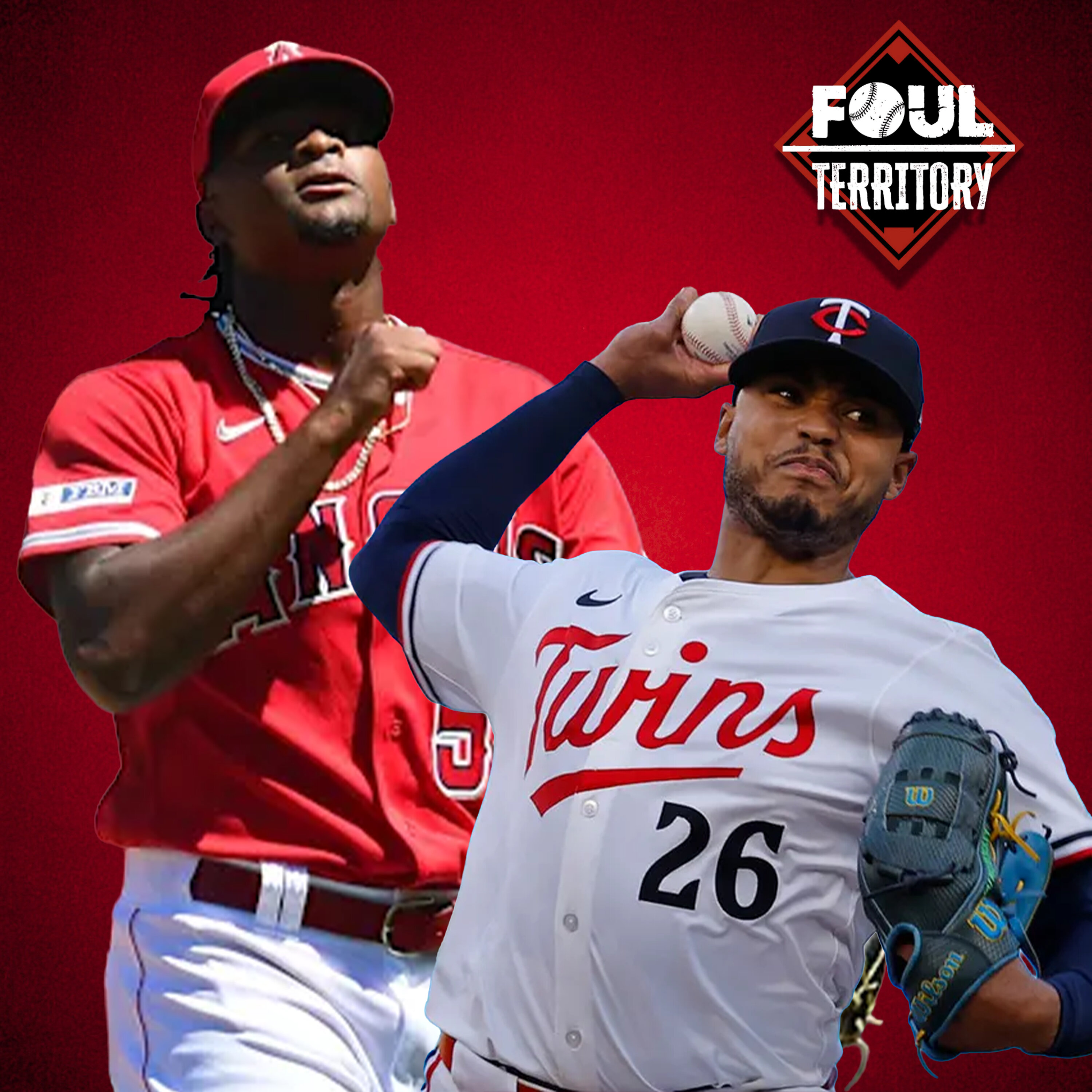
Eno Sarris identifies top pitching stuff+ & bat speed trends in MLB
Eno Sarris of The Athletic joins the show to talk about his latest article identifying the biggest trends in stats to kick off the season. He talks about which pitchers have improved their stuff the most from last year and why it's more important with ABS. Eno also discussed bat speed and its evolution.
Hosts: Trevor May, Erik Kratz, Scott Braun
Use our code TERRITORY10 for 10% off your next SeatGeek order* seatgeek.onelink.me/RrnK/TERRITORY10 Sponsored by SeatGeek. *Restrictions apply. Max $20 discount
See omnystudio.com/listener for privacy information.
Available Results
Generated results are saved to the knowledge database for reuse and search.
Extract Knowledge
Pick what you want extracted first. Model, scope, and chapter options appear after a template is selected.
Transcript
00:00:03
Speaker 1: Hey, look who we have, you know, Sarrus joining us right now from the Athletic and also Rates and Barrels. You can hear Trevor on there weekly too, you know.

00:00:10
Speaker 2: Great to see you.

00:00:11
Speaker 1: And I saw the fresh article out from the Athletic. Four numbers from MLB's first week of the season that matter, So I want to start there and then we'll see that Trevor. May you know cyrus chemistry that we get every week. But let's start your first in that article. If I was sitting with you and I was like, you got one minute, what do you think is the top trend that you picked out?

00:00:33
Speaker 2: Well, I think actually the two things that are really important early in the season are bat speed and stuff plus. And I think that this season we're actually seeing a little bit of trend. I didn't really cover this in the article, but we're actually seeing a little bit of a trend in both of those, which is that with the strikes all, with the abs kind of shrinking the strikes all a little bit. It's good to be a high stuff pitcher. You know. The more that you can just throw nasty stuff into the zone, the better off you're gonna be. It's gonna be hard to sort of pick the corners in this abs time, I think. And the other one is that we're seeing you know, so you know this the stuff plus surgers here, these are the guys who are going to do well with it. And Tod Bradley's the type of guy I'm talking about, you know, Todd Bradley is his stuff is up, and he's never been a guy with good command, but he's throwing this stuff to the middle of the zone and trusting it. It's he's up in Velo. So he's ninety seven miles an hour now and he's thriving because of it. So Bradley was a big a guy who went up.

00:01:40
Speaker 3: You know.

00:01:40
Speaker 2: Jack Khanowitz is captures another trend, which is changing your arm angle to get more out of your stuff. One of the things we found out of stuff research was that your arm angle, your release point, is hugely important. Batter see your release point, your arm angle, and they expect certain types of movement. If you can upset that expectation, you can do well. Kohanowitz used to have a little bit of a lower arm slot and throw a sinker and everyone said, oh, I see the armslot. I think sinker he throws sinker, everything's normal. He's raised his arm slot and made that sinker more deceptive, and we're seeing the best strikeout rate out of Kuwanowitz's career. Now, he hasn't turned it into on field success completely yet, but I am more upbeat about this version of Kohanowitz than I have in the past. The other one that's big is bat speed. And bat speed can tell you as much as barrel rate. It's one of the most barrel it is one of the most predictive stats in terms of rest of season power. And bat speed can tell you as much as barrel rate in as much as ten swings, and it has a tremendous predictive power. What we're seeing, though, is a little bit like what we're seeing on the velocity side, which is the bottom bat speed. Guys are raising up, and I think we're going to see a lot few. You were sixty six, sixty seven, sixty eight mile an hour bat speeds than we did in the past. Guys like Luke Kishel, he was sixty seven percent last year. He's coming back at sixty nine miles per hour, seventy miles an hour. You have Matt McClain who had the shoulder surgery. He was at seventy miles an hour. He's up to seventy two. So I think that we're seeing the floor come up, because it's really hard to homer on a pitch if you don't swing at least seventy two seventy three miles an hour. And you know most of the baseball is about homery now, I mean to be honest, it's the best thing a hitter can do. So I think we're seeing the bottom come up. We're also seeing at the top more guys swinging at eighty. It used to be Stanton was the only guy swinging the bat eighty miles an hour. Now Junior Camignaro's up there, Nick Kurtz is up there, Jack Kaglianoon is up there. A bunch of guys swinging nearly eighty miles an hour. So I think, now that we're measuring bat speed, we're going to see an increase in bat speed, the same way that when we started measuring velocity pitch velocity, we saw an increase in pitch velocity over time.

00:04:05
Speaker 4: You know, you mentioned about stuff plus being a big indicator and the guys improving. I noticed a thing on TAJ also, and that's going to be great to get into and raids and barrels. But what I want to do is actually maybe introduce to people at home to another stat that I think is being used a lot more at csw percent, So I want your opinion on it. That's called strikes plus fifth percent. So it's just like total strikes, how much are you in the zone and then also getting whiffs? How important? How does that correlate with stuff plus like those higher numbers the ability to get swings and misses or get strikes in the zone. Just throwing a lot of a lot of strikes in the box and also getting lots of swings of misses. How does that correlate to guys with higher stuff.

00:04:51
Speaker 2: No, it's a complicated relationship there because obviously being in the zone is command and stuff, right, Like you can have the confidence to throw stuff into the zone, or you can be you can have that pinpoint command. So that's that's a complicating factor. What I would say is that called strikes swift is a really good stat because it gets to are you getting strikes. One of the other most popular predictive stats is strikeouts minus walks. So with csw you're getting it. Are you getting the strikes? You're focusing on getting strikes, and it's really powerful. One thing that is interesting is that in the early going, in you know, the first few games of a season, in a smaller sample called strikes, are you know, less predictive than swinging strikes. And so you're putting the two together, and that's fine. It's it's still a really powerful thing. But early season calt strikes depends on the umpire to some extent, so there's noise there from the umpire. Swinging strikes is a little bit more. That's stuff, right, So calt strikes is going to take a cult strikes a little bit more command, and swing strikes a little bit more stuff. Putting them together gives you a little bit of command and stuff. That's great. But early season and swing strikes are more predictive because that's just the pitcher versus the batter. The batter swung and he missed.

00:06:07
Speaker 1: With over thirty five million downloads, what is the number one ratted ticketing app?

00:06:12
Speaker 4: Todd Father, it's simple Man seek geek.

00:06:14
Speaker 5: As we know, man. They have a lot of things that helps you out along the way. They have green dots meaning good and red dots meaning bad. And it's on a scale of one to ten, showing you, Scott, how good the seats are. And sometimes you want to sit in the nosebleed theer's sometimes you want to sit in really good seats and Scott, you know the code, right, yeah, I do.

00:06:31
Speaker 1: And also I know that you always like a good deal. Oh so seekk helps you out all the time with that. They also help you out with the exclusive FT code, which is Territory ten for ten percent off your next set of tickets at sea Geek. That's ten percent off any tickets with promo code t er r it r Y one zero. Make sure you click the link in the description to download the app and you can have that code automatically added to your account so that you can use it later. There are regular season MLB games going on right now. There are hot tickets across the country, so it make sure you go to seat Geek. They will take care of you.

00:07:07
Speaker 2: All right.

00:07:08
Speaker 3: We're at the beginning of the year and this is pretty new stuff stuff. Plus even casual fans might not have heard about it before, like a year or two ago. Of the data that you found in the first ten games month of the season. How many people have spikes of stuff plus early on because people rarely, I mean normally people just be like, oh's velocity's up or oh no, his velocities down. This is bad. Like that's the like, really minute, junior, look at everything, and now is stuff plus compared to other years? Do we have spikes in the first month that then that stuff plus goes down for whatever reason?

00:07:50
Speaker 2: Well know, you have guys who just have a better VIEWO at the beginning of season, maybe peter out. You know, guys who used to be relievers, that'll that'll be something. But generally stuff plus the reason that it's so effective in being predictive is that it stabilizes really quickly. Whatever your stuff is early on, that's generally what you have the rest of the season. What I like about it, in case anybody listening doesn't know that much about it, is that it's not just VILO. So Todds Bradley is a stuff plus surger. He did it with some the low ninety seven miles an hour, but his splitter also has a different shape, and so you know that splitter is upsetting hitter expectations. Another stuffless surger Will Warren a little bit of v low. But really what he did was he changed where he is on the mound, and you know that might not You're like, why does that change of stuff? Well, it changes release point and it changes the way his pitches look, and especially to left handed hitters. So Will Warren's spot on the mound has made his four seamer and his and his curveball play up, and his change up play up. So you know, he's a better pitcher now because of it. You have somebody like Jansen Junk who not only he upped his v loo, you know, but also change shapes. He has three inches more ride on his fastball and he's kind of a lower slot guy, so that's going to be really effective to add that movement. So what I like about stuff plus is it adds movement and velo and generally speaking, I could I bet you Trevor can speak to this. Yes, your your shapes and your velo go up and down a little bit, but generally speaking, if you can shape a ball to do a certain thing, you pretty much do that the rest of the season. Am I getting it right? Yeah?

00:09:33
Speaker 4: About right? I mean yeah, yeah, once you figure it out, usually it's kind of hard to lose it in any meaningfully way that's gonna hurt your stuff. Plush clicking. It's funny something clicking is once you get it, it's actually harder to lose it than actually find it. So uh that that is a that is a a common thing. And I that's why I love looking at suppluts or at least it's a great indicator to point you in a direction. Uh to say, like you said earlier, when you find something that's interesting with for wil Warren, moving on the on the mound, you find that because you see a increase in stuff plus you're like, okay, so where's this coming from? And then you get to find those interesting major changes that you probably wouldn't have found any other way because who's looking at where they are on the rubber? Like, no one just looks at that by itself. So it's it's that's what I love it for. I think that's what what SAT's like. Stuff plus are great at is is finding these major adjustments that guys are making before they tell a you know, a reporter or something. After a game.

00:10:35
Speaker 2: Yeah, Joe, Joe, Ryan's got a new curveball and Kyle Harrison's got a new kick change. I mean those things they will tell a reporter and you can see them pretty quickly, but they those are all big stuff plus surgers as well.

00:10:46
Speaker 3: I actually have a question for both Ino and Trevor because you might have a different opinion on this question. Stuff plus wise regardless of velocity, because everybody says with every you know, mile per hour or whatever, adding average and sloting go down regardless of velocity. What is the one superpower the best stuff plus increase that you could have. Is it vert is it sink? Is it the splitter? Is it the is it the rotational the splitter, whether it's rokies. If you could increase something, what would be the greatest superpower you could increase that would show up in stuff plus.

00:11:27
Speaker 2: I'll say vertical movement. And then I just want to add in that arm angle expectation. So you know, some guy it's not raw. So like some guy who's like at a lower arm slot, he might only be throwing fourteen. So you hear vertical break or something, right, you hear fourteen IVB And that's not a great number by itself. You'd be like, oh, that's not good. But if he's like a side armor and he's throwing a fourteen IVB. That's great. So I would just say vertical movement above expectation. So if you can drop, you could throw something that jumps above what people expect giving your arm angle, or you can throw something that drops more than people expect. That's the death ball or the you know, a big like a really high spin curveball that just drops off the table, or you have a four seamer that just pops a little bit off of your arm angle. Those are the two ways, those two best ways to get whiffs I think with your stuff.

00:12:20
Speaker 4: I was smiling a little bit when you ask the question because Ino has told me this many many times that one of the biggest ways to increase your velocity is throw it harder or sorry, increase your stuff flus throw it harder. But if we take that out, yes, like if you really think about it, just to put it simply, every you can you can take a stat like an arm angle, and then you can find, based on other guys within a range within that arm angle, what the normal movement on a pitch type is, and then that's arranged too. And then outside of that one way or the other is makes it look more different than others, so like that subverts expectations. Josh Hater is the guy we talked about last year with the Unicorn fastball. It's listed as a sinker. He throws kind of way low, he's way across his body, and he's left handed, and he throws hard. All those things help, but it spins like a sinker and rides like a fastball. He throws a pitch that, as far as we know, no one else can throw like the spin that hit or see see something that's going to run away from him as rieties and then it doesn't. And now he's added his slider, which is like slower than a lot and kind of goes down and doesn't break as much as other sliders that move that way. So it's a different way. But he's got two really unique pitches and that's what's made him effective for a long period of time, even if neither one of them really if you just take it into a vacum, you're like, this is kind of weird. I wouldn't teach anyone to do this. Maybe maybe the fastball I would teach you god to do the fastball. I coun figure out how to do it, but the slider. I wouldn't teach anyone to throw the slider. It just worked for him. So it's like, that's what stuff plus does well. It does a really good job of pointing out those things. Even if stuff doesn't traditionally look either good or bad. It doesn't. There is no really good or bad. It's just outside of expectations.

00:14:02
Speaker 1: Hey, you know, I've got one for you. I'm going to bring in a fan question. And this is good because I wanted to mix this pitcher into the show today. So here's how we'll do it. Jose Soriano off to a nasty, nasty start for the Angels and this fan Tom is specifically bringing up his knuckle curveball. I mean, we're seeing it upper eighties, he said, why is it only one oh two? Stuff Plus? And I know I'm putting you on the spot a little bit here, but is there anything that can help explain why the pitch doesn't get even more credit for what it's doing right now in terms of swinging swinging miss in the zone.

00:14:36
Speaker 2: Yeah, I think that. I think that it's not crazy to say that if you watch him, that the sinker is his nastiest pitch, you know, if you were just using your eyeball test, like it's a ninety nine mile an hour bowling ball sinker with great movement, and I think, you know, stuff loves that pitch. And you know, a thing that I would do to kind of explain what I've been trying to talk about with like the arm angle expectation is if you go to their page on baseball Savant, so that's the league stat page, they have like a movement profile thing, and then you can if you click on their arm angle, it shows their arm angle and anything that's like on that arm angle is expected movement to some extent. Right, so his curveball moves exactly like you would expect if you saw his arm angle is basically what I'm saying. So when you try to assess how good that curveball is, you take movement out to some extent because you say that movement is exactly what you'd expect. You see that arm angle here and it goes down like you could see it, right, You could see it come out of his arm and it goes right along his arm angle and it goes down. What it is good for is it's eighty five miles an hour, So it gets benefit of being eighty five miles an hour, but it does not get benefit for having a weird shape. So that's how you end up with a slightly above average pitch. Good stuff.

00:16:04
Speaker 1: Okay, last one for you here on the bat speed front. Is there anyone in particular that you've seen so far that makes you really concerned? I know you cover a lot of fantasy baseball too, so maybe this helps fans like that, or maybe it scares a fan of a particular team, But you know, is there one player on your list? We brought up Peter Anzo yesterday for our discussion because it was down quite a bit, and you know, he just has become a highly debated player based on how the Mets evaluated him and then how the Orioles picked him up. But feel free to go another route.

00:16:38
Speaker 2: Yeah, so I went on this show last year and you asked me a similar question, but it was about a specific player and it was Juan Soto, and I famously on the show set that I thought, you know, the fact that his bat speed was down might mean that his up end power was gone, and then he might not hit forty homers. And of course, when he did hit forty and forty one and whatever. I got lots of messages all year, and so what I've tried to add into my analysis. Because we've only had bat speed for like three four years, I know it's really predictive. I but once you have a track record from a player that's a veteran, it's something that I care about more With young players, so like Cam Smith, you know, seventy seven miles an hour, Colts Keith seventy four miles an hour, Mark Vento's getting back to his old bat speed. I care about that. I care about it in a positive way. But when I go to the minus side and I see Rando Rosarina down four, or you know, Pete Alonso down three miles an hour or Brandon lou down three, what I've decided to do is not worry as much about that. With veterans, what you'll see is that they can figure out how to succeed with a little bit lower batspeed. They've added plate discipline, contact anticipation. I think Wan Soto is the smartest player in baseball, right, so could his batspeed go down a little bit, and yet he still knows the exact pitches to swing out to Helmer on yes. And the last thing I would I'll say is bat speed is not only a process metric, but it is an outcome metric as well. So what I'm saying is the pitcher has an effect on your bat speed, and if the pitch is down the pipe, you're going to have a better batspeed on it than if it's a breaking ball that fooled you, or pitch outside the zone or whatever. And so I would say, preach patients with Pete Alonzo. It might still come around. I'm not as worried about the minuses as I am more excited about the pluses, especially when it comes to older players with a track record.

00:18:59
Speaker 1: Okay, so for the record, I just wanted to be known I did actually did not remember that. You know, I'm glad you brought it up. I did not remember that. I'm sure Pierzinski did because he takes receive mentally on everything and probably brought it up five more times.

00:19:14
Speaker 6: You know, story said that soda has never been forty again. But I'm glad he brought it up because part of learning these new stats is evolving with the stats in terms of how you can predict what's going to look forward and also sometimes there's outliers.

00:19:29
Speaker 2: And by the way, it's actually similar with stuff plus. I care more about stuff Plus with young pitchers i've never seen before coming up the first time in a small sample than I care about if like Chris Sales, stuff plus is down, you know, like you're you're like, I think Krisale will figure it out, Like is this stuff down a little bit? Maybe, but like do you think he'll still strike out thirty percent? Probably? Yeah, So yeah, it's the same way, like these tools are best used for younger players without a track record early on in their careers than they are. To tell you that Pete A. Lance, I'm not going to say. I'm not saying. I am not saying that petere A Lonzo won't hit forty homers this year. No, don't cut that up to say that I said it clip.

00:20:08
Speaker 1: Our social team was like ready for the endpoint and they can't find it.

00:20:12
Speaker 2: I'm not doing it. Won't hit.

00:20:17
Speaker 3: Mute to you again.

00:20:18
Speaker 2: Sorry, you know, piece together together?

00:20:23
Speaker 3: Well, I loved it.

00:20:24
Speaker 4: I loved it.

00:20:25
Speaker 1: Great segment. You know, thanks for popping on much more for you know in the Athletic with these articles and on rates and virals. His show that also includes Trevor every week. Appreciate you, you know, great catching up ma'am.

00:20:36
Speaker 2: Thanks guys,