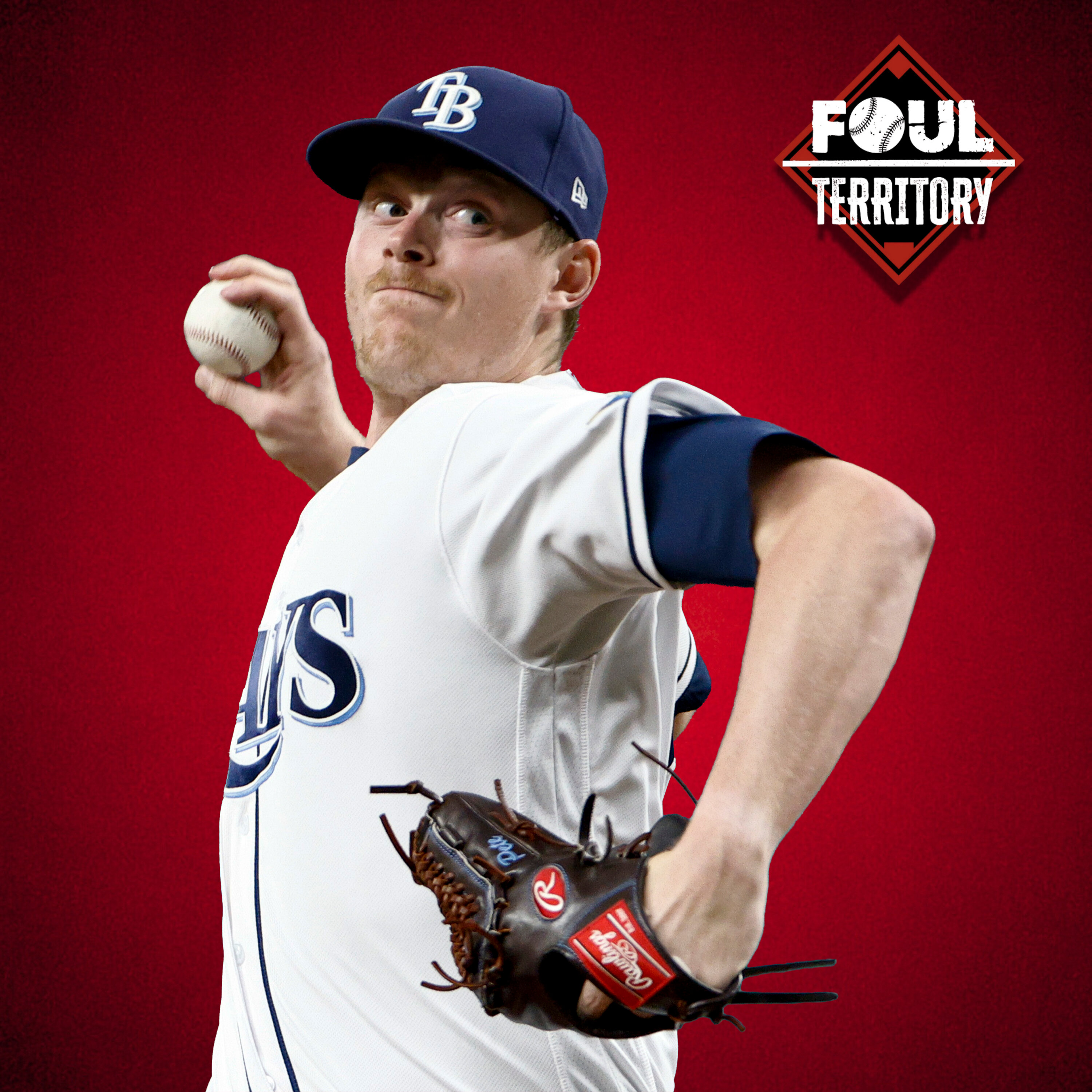
Marlins RP Pete Fairbanks joins FT
The newest member of the Miami Marlins bullpen, Pete Fairbanks, discusses what led to his decision to sign, what his role will be, and reflects on his time with the Tampa Bay Rays.
Hosts: Todd Frazier, Erik Kratz, Scott Braun
The FT Network is growing up so fast!
See omnystudio.com/listener for privacy information.
2026-01-04
14 min
Transcript
Available Results
Generated results are saved to the knowledge database for reuse and search.
No generated results are available for this episode yet.
Extract Knowledge
Pick what you want extracted first. Model, scope, and chapter options appear after a template is selected.
Generated results for public episodes are saved to the knowledge database so they can be reused and searched later.
Transcript
00:00:04
Speaker 1: Keep Fairbanks is here, Miami Marlin's high leverage reliever closer joining us right now. Signed a big deal with Miami.

00:00:12
Speaker 2: Pete.

00:00:12
Speaker 1: Congratulations on the deal and tell us how it all went down, man, and how excited you are to stay in the Sunshine State.

00:00:19
Speaker 3: Appreciate it.

00:00:19
Speaker 4: Yeah, I told, uh, you know, I was talking to the radio guys the other day and I, you know, I met it letting me know that I could never play for a team that doesn't have a fish mascot in some capacity.

00:00:29
Speaker 3: So I figured that that was like my number one.

00:00:31
Speaker 4: I got to make it happen. I got two choices, and one of them didn't want me anymore. So uh no, look, we uh you know, had a lot of conversations with Bendetz throughout it, and you know, the biggest plus, you know, I think that they're going to be good and really for us being able to be close. My wife's were expecting our third kid, so you know, taking some of the burden off of you know, everything there by being a drive away versus a long flight.

00:00:55
Speaker 3: You know, the more we talked about it was a was a pretty big positive.

00:00:57
Speaker 4: And then you know, being familiar with Mendex and then you know, getting a first hand look at some of the good young talent they have.

00:01:04
Speaker 3: I think it was hopefully it will be a good fit for us.

00:01:08
Speaker 5: Two things before my question, congratulations, and I didn't know that a stingray was a fish.

00:01:14
Speaker 3: I didn't know tarlagenius fish. Eric, it's a cartilagenius fish. I had no idea.

00:01:19
Speaker 5: I had no idea, but thank you for that. I know it wasn't a mammal, but I'm like, what is it?

00:01:22
Speaker 3: Is it a crustation?

00:01:25
Speaker 5: Anyway, Take us through the pitch. Take us through the pitch to go to the Marlins. Everyone's gonna say, oh, who cares? You know, we got the money that it. As a baseball player, you don't ever look at your paycheck when you're out on the mound. What's the pitch that made you say, yes, I'm going to be a Marlin.

00:01:43
Speaker 4: I really liked Mastris and their director of pitching. I like both of them, you know, and Aaron and I Aarn my agent. We went in with no kind of expectations for you know, pitching departments, you know what teams had to offer, et cetera. Kind of went in, you know, blight Slate impressed us between those two and the conversations we had with them, I really liked McCullough and everybody. And then, you know, I'm decent enough friends with Calvin Fouchet, who was one of the relievers. I was able to talk to him a little bit about it, and yeah, I mean it just they really brought more to the table.

00:02:18
Speaker 3: Than than I had anything, you know, in going in with nothing.

00:02:22
Speaker 4: They definitely kind of set a pretty good, you know standard for me, and I think that they are moving in the right direction, right. You kind of saw the the start of it last year, and hopefully I can, uh, you know, help you know, lock down the back end of things and make a little make a little more noise and get on the right side of five hundred and and make a little bit of a push.

00:02:42
Speaker 2: Now, when you became that free agent, I know you picked the Marlins, but was there any other teams that were on your tail that you were looking like, Oh man, it's I could go one way or another here.

00:02:53
Speaker 4: Yeah, there was more than a handful that we had, you know, pretty good, pretty decent conversations with and then you know, kind of by the end we the more that my wife and I talked about it the more and more likely. You know, it seemed like that Miami was going to be going to be the right fit for us, and we were able to, I think, both get what we wanted out of it.

00:03:12
Speaker 5: Does being a closer matter to you? Does being the guy that is the high leverage inning guy? Does that matter when you're going through free agency for your first time?

00:03:24
Speaker 4: I mean, I think it matters in some regard, right, Like I think that you know, when you do it for you know, however many years, you definitely you know it, definitely you hold a little hold on to a little bit of that. But I think, you know, sometimes the most important outs are in the ninth inning, right, they could be earlier, right, those the your eight, your twenty four, twenty five, twenty six, twenty seven, those are still, in my estimation, the hardest out outs to get, but they might not be the most important ones.

00:03:53
Speaker 3: So you know, wherever wherever.

00:03:56
Speaker 4: It is to to get those outs, you know, I'm excited to be up to that challenge again after you know, doing a little bit of it for quite a few years with Tampa.

00:04:05
Speaker 5: Yeah, you did a little bit of it, that's for sure, in some big spots and you were pretty pretty successful. Here's my question. I'm going to put you in a scenario. Okay, Game one, you guys are winning four to three, and you get out on the mound, you do your you know, your stare where you're not blinking at all, and you look into the dugout or you're listening. I mean you look into the catcher's mitt. You know, he's looking for his sign and you're listening, and your catcher's going like this, looking over and then he hits the button and you're like, what, wait a minute, nobody's on and he looks over again for the next pitch. Oh wait a minute. Are you okay with the guys from the bench calling the pitches for you? And did that come up when you had this conversation with the pitching guy, which with Clayton McCalla of the manager.

00:04:51
Speaker 4: Yeah, I mean we definitely talked about it right as one of the one of the things that was addressed. And for me, you know, catcher versus dougout, they're almost kind of the same in my eyes. It's not me that's making the initial decisions. So where it comes from isn't as big a thing, right because I know they get theirs as long as I get it and plenty of in enough time to be able to shape to something that I say I disagree with, Say it's fastball, I want slider, whatever, as long as I have enough time to get to that still be able to do my little, my little rock back and forth antics come set and throw.

00:05:26
Speaker 1: Then you know that's that's no issue to me. H, pete, I'm going to do this in like really basic just fan looking at how players make a lot of money terms. It was a unique situation. Raise didn't pick up your option like you mentioned earlier. Hey, Raise didn't want me. You hit the free agent market. You did make more money. So do you look at that part of it? At least I know you get to join a team that does want you and say, okay, if I got traded, let's say to the same team, I would have made less money. I know it's sounds like kind of simple, and I know some guys don't love talking about the financial components, but you did actually benefit from the race saying you know what, meh, we don't want you back and we're not gonna kind of take you on and work on the trade winds for the next month or so.

00:06:16
Speaker 3: Yeah, I'd say it worked out.

00:06:20
Speaker 4: You know, I think Aaron and I had an idea that it could be headed towards the you know option decline and and you know, be able to kind of go out there and figure out.

00:06:30
Speaker 3: A spot that would be best.

00:06:34
Speaker 4: You know, had it been a trade or whatever, I would have been perfectly fine with however it played out. But you know, I'm excited to be staying in the state of the state of Florida and getting to traverse across Alligator Alley so I can go back and see my family and hopefully get some wins for the fish down there.

00:06:51
Speaker 5: You know, there is a there's a stopping point part way through Alligator Alley now, so in case you get sleepy, or you're afraid, or you want to see alligators, there's like a lookout tower that you can stop at.

00:07:00
Speaker 4: It you need perfect perfect That would be my number one spot to want to view an alligator was halfway through my drive back home.

00:07:11
Speaker 5: If people haven't done the Alligator Alley drive, my suggestion is don't but to see to see a newborn, to see your family, that's a that's a big change. You had said in your Remind me if if I'm wrong. Maybe I heard it wrong, but in your radio interview, I think it was a radio interview, you said your relationship or the way you talked to Peter Bendex, did you have a relationship before from when he was.

00:07:33
Speaker 4: Yeah, well I always called him, I always called him my fellow Pete. Okay, yeah, you know you always see those guys around right, you're you know, and then I'm a talkative guy for the most part. So I try and try and build whatever relationships you can, whether it's you know, front office guys, your teammates, staff members, et cetera. You know, they're all all people that matter in an organization and you ought to, you know, do your best to to form those relationships. So I definitely say the familiarity definitely makes things easier right when you're you know, looking for for a landing spot, Knowing what you're going to get from the people in charge, definitely, you know, can make a transition that much easier in my eyes.

00:08:17
Speaker 2: How does it feel you know your free agent? This year you finally you know, got your deal or whatever. How does it feel now next year you're going to be free agent too? Does that change your mindset on anything? Or is it the same kind of focus you have, same outcome, same kind of goals that you have going on into this year.

00:08:32
Speaker 4: Yeah, I mean it's all it's all the same, right, We're still trying to not give up any runs and win baseball games, and now you know we're doing it with with a different color steam on. But you know we're gonna approach it just like we did last year and go out and lock some games down and then hopefully repeat the whole process again next December.

00:08:53
Speaker 1: So you spent seven seasons, including that your first season, I know, a little Texas and then Tampa Bay seven seasons with the Race. Brandon Lau spent eight seasons with the Race. Both are now gone over the last few weeks. That's a really really long tenured Ray. What is the key to longevity with the Rays? Like for a player on the Rays right now who's like, you know what, I just got a sick house on the beach.

00:09:18
Speaker 3: I love it.

00:09:20
Speaker 1: How do I stay here for a team that basically turns their whole roster over every three years aside from one or two guys.

00:09:28
Speaker 4: Yeah, that's that's I'm not sure how I figured out of all the people that I expected to stay there for a long time. I didn't expect myself to be on that list just given uh, you know, the bullpen arms.

00:09:39
Speaker 3: We typically are the ones that are the most have the most turnovers there.

00:09:44
Speaker 4: So yeah, I don't know, find some success and hope for the best is typically what we were doing.

00:09:53
Speaker 1: I have the answer, you sign an extension if they offer you one and get a no trade clause in there. But they don't really do that, so otherwise I don't know. But I mean, actually that does make sense, right because Bilaud did do that.

00:10:07
Speaker 3: I forgot.

00:10:07
Speaker 1: He did actually sign an extension really early on in his career and then kept getting the club options picked up. So that would be the answer, right, Hey, yeah, those early extension offers be.

00:10:17
Speaker 3: Cost controlled, be cost Yes.

00:10:22
Speaker 1: That is the way exactly I like it.

00:10:25
Speaker 5: All right, go ahead, rats, So you're leaving the American League East. I kind of have a two part question here, but it kind of coincides which stadium are you're gonna miss the most and which one are you going to miss the least.

00:10:43
Speaker 3: I would say everyone to miss Boston both the most and the least. Oh, go ahead, explain because you get outs that aren't outs there. But it's also like a great ballpark in.

00:10:59
Speaker 5: Atmosphe nothing to do with nothing to do with the fact, Oh right, what were you just say? Oh, nothing to do with the fact that when you put your arm up that a fan can actually touch your arm when you're warming up. It has nothing to do with that.

00:11:14
Speaker 3: Yeah, knocking to miss the bullpen.

00:11:17
Speaker 4: Or hitting my head in the dugout whenever I would walk down the steps and i'd like go to like the bench, and it's so short that without fail, I was either fired up in a positive or negative way. And I hit my head on that so many times. But yeah, I mean it's a great atmosphere, fun place to play. The bullpen suckers, So you know it's positives and negatives.

00:11:39
Speaker 5: That's fair. So I'm taking you to your new stadium. What do you think about the home run statue that's now outside? Should they move it back inside?

00:11:50
Speaker 3: You know I'm always down for a home run gimmick.

00:11:55
Speaker 4: However, I think the statue serves a great purpose on display outside where I don't have to see it as much.

00:12:05
Speaker 5: What if it was a strikeout statue and.

00:12:08
Speaker 3: Let's bring it right back inside, right back inside.

00:12:10
Speaker 4: If it goes up every time somebody punches a ticket, let's get that back in there as soon as possible.

00:12:16
Speaker 5: Anything for k Dogg's I like it.

00:12:17
Speaker 3: I like it. That's right.

00:12:20
Speaker 5: Hey.

00:12:20
Speaker 1: Last one for me, Pete. Have you spoken to anybody on this team? Did anyone reach out, whether it's from a coaching or player perspective, and if so, can you give us any unique insight that you learned so far? We know it's a very young team and you have the Peter Bendix connection, who was in the front office with the Rays and now is trying to make his raise version of the Marlins here.

00:12:43
Speaker 3: Yeah, has some people reach out. I talked to Calvin vasche He.

00:12:48
Speaker 4: I actually talked to him earlier today about living situations, and he was mad that I didn't give him any credit in helping me make my decision on my last media session. So I'd just like to reiterate to Calvin that I still give him no credit with decisions that I've made.

00:13:08
Speaker 6: He thinks he was influencing what like wing, that he that he had some sway on me in this in this whole process, and I'd like to tell Calvin that that's not the case.

00:13:18
Speaker 3: But I'm very excited to see him.

00:13:20
Speaker 5: I love that you people don't know who Calvin is, but that you call him Calvin. That makes me laugh.

00:13:27
Speaker 3: Yes, his name is Calvin, and a lot of people don't call him Calvin.

00:13:35
Speaker 1: Is his real name Calvin, and it's and we're going.

00:13:39
Speaker 3: No, no, no, no. Calvin is a different person than Colin Poche.

00:13:44
Speaker 6: Oh oh okay, these are to These are two separate individuals.

00:13:50
Speaker 1: Yes, yes, good job, crats Uh did you have one more or no?

00:13:57
Speaker 5: I'm good you're.

00:14:00
Speaker 1: That we've made Calvin feel even worse. Gee, don't show him this. Happy New Year, dude, Congrats on the deal, Thank you.

00:14:09
Speaker 3: For joining us.

00:14:09
Speaker 1: Appreciate the time, dude, and we'll talk to you in spring training.

00:14:13
Speaker 3: Chris, guys, appreciate it. Happy New Year.
Chapters
No chapters available.