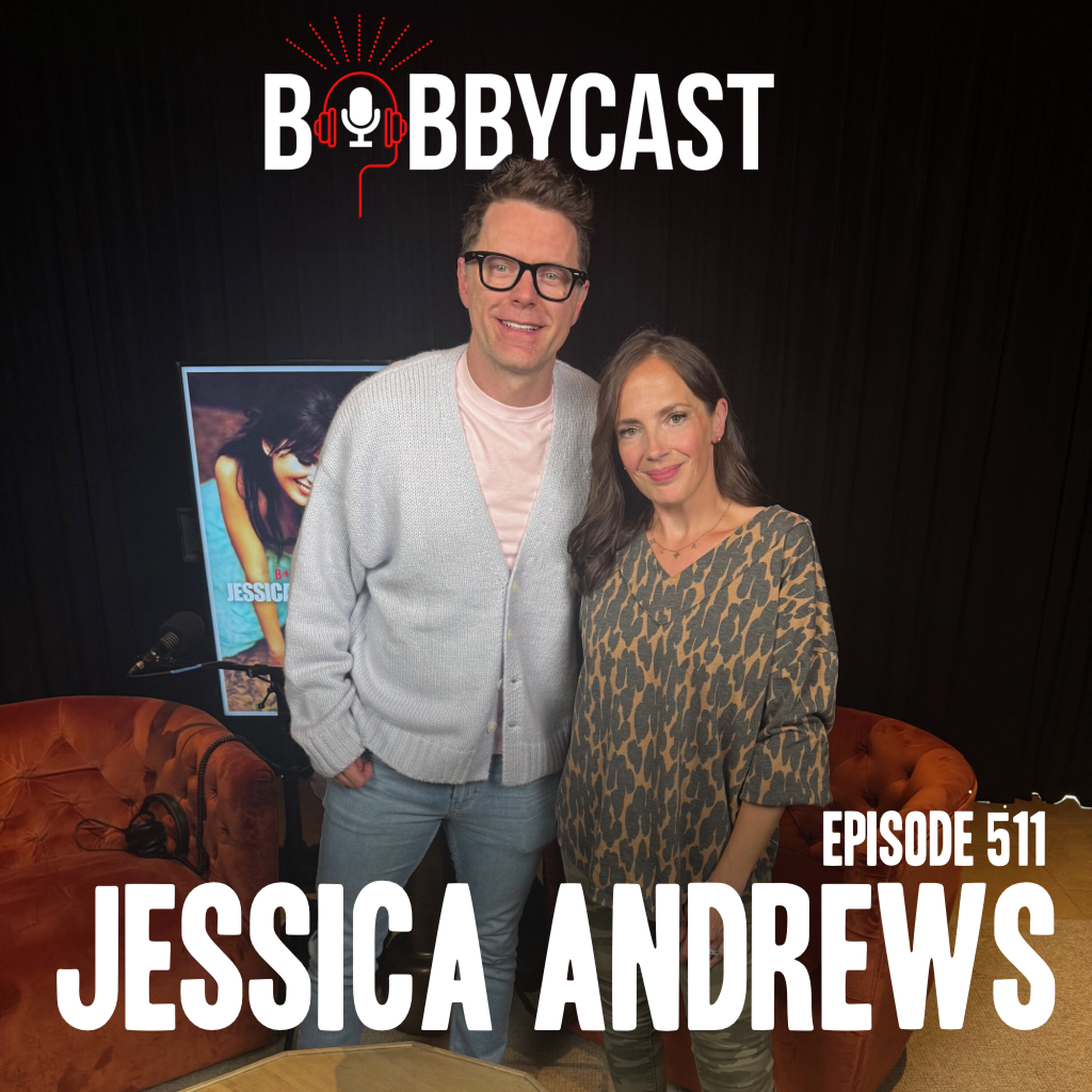
#511 - Jessica Andrews on the Success of Her Song “Who I Am” + Signing Her First Record Deal at 13 Years Old + Having Her Life Ruined by an Imposter + Her Connection to Taylor Swift’s Career
On this episode of the BobbyCast, Bobby sits down with singer/songwriter, Jessica Andrews. Jessica is most known for her song "Who I Am", so she discusses the success of that song and how Martina McBride wanted to cut it before she ever put it out. Plus, Jessica told Bobby about signing her first record deal at 13 years old, how an imposter ruined her life, and her connection to Taylor Swift's career!
Follow on Instagram: @TheBobbyCast
Follow on TikTok: @TheBobbyCast
Watch this Episode on Youtube
See omnystudio.com/listener for privacy information.
2025-05-13
55 min
Transcript
Available Results
Generated results are saved to the knowledge database for reuse and search.
No generated results are available for this episode yet.
Extract Knowledge
Pick what you want extracted first. Model, scope, and chapter options appear after a template is selected.
Generated results for public episodes are saved to the knowledge database so they can be reused and searched later.
Transcript
00:00:06
Speaker 1: They took a chance on me giving me that song because when I was in the studio about to record it, Martina McBride was on the phone begging for that song. I really believed deeply that that was not the right song for her, and that it was the right song for me.

00:00:24
Speaker 2: Episode five to eleven, Jessica Andrews. What was cool about this was that, you know, she hasn't done a whole lot in the past few years. She's been focusing on being a mom, and she still was able to come and sit for about an hour and talk. I did feel I didn't want to be disrespectful and even mentioned the term one hit wonder because I feel like that could be taken in a derogatory way, and sometimes it is. I never was going to say that she brought it up.

00:00:53
Speaker 3: Yeah, you want to know something that she sent me, because the thing is that Fodabad, well, she didn't really have a whole lot of like we always asked for, like, hey, your bio, what do you want to promote? She didn't really have a whole lot of that. And she sent me an article. She's like, this is the most recent thing written about me, and it was an article about her being a one hit wonder, and I felt a little like, oh man.

00:01:13
Speaker 2: Yeah, I didn't want to do that. If she wanted to say it, then we talked about it. But I wanted to be so respectful because I was just interested in her story of being a very young artist, a teenager and making it and then kind of why she fell off. And then you learn, yeah, like all the dynamics of why someone loses a record deal, why someone doesn't have So I thought it was super cool to spend this time. I learned a lot about her. That song who I Am rose Mary's Granddaughter, the Spiting Image of my Father. That's a massive song. Still, I remember seeing that music video all the time on CMT. So a few fun facts about Jess Andrews her Instagram is it. I will also say this, I wasn't as knowledgeable about the weirdo stalker that she has. Dude, that sucked. She talks about it. Yeah, that's socksy. It's crazy.

00:02:12
Speaker 3: It just sucks, like searching her music and the other stuff fubbing up.

00:02:16
Speaker 2: At the age of seven, she underwent a surgery for a spinal condition with a fifty percent chance of causing paralysis. By age eleven, she had formed her first band was performing locally at age fifteen. She released her first album, Heart Shaped World, in nineteen ninety nine. She made her debut at the Opera in ninety nine. She tore Trish Yearwood. In two thousand and here she is, Jessica Andrews, Jessica, thank you for coming. This is cool for me. Oh my gosh, because this happened so weirdly. So I was doing this show and Brett James was playing your song wow, and I thought, I know she lives around here. I've never met her, though, And so we were doing this like a TV show and Brett was playing it and my manager was with me, and I was like, do you know her? And he said, no, I don't know her, but i'll see what's up. Then he the next night he's at the Opera and you're singing at the opry and he goes, we just talked about this, and she's here. She was it a private was it a private showing? The last month or so?

00:03:20
Speaker 1: It was the Bob Kingsley Living Legend Word. They were honoring Scott.

00:03:23
Speaker 2: Worshette for it, and I was like, well, all these worlds are kind of coming together. That's so cool, Like is there anyway, like she still lives here, I think. And so how did they get in touch with you? Because we haven't met. That's crazy. We we've never met.

00:03:36
Speaker 4: That is cool. That's a really cool story. Who is your manager? That's what I love. Tom.

00:03:42
Speaker 2: Everybody knows Tom.

00:03:43
Speaker 4: Everybody.

00:03:44
Speaker 1: Yeah, I worked with him briefly, but they got in touch with me. It is like Tom call, not Tom John Zarling who works with closely with Scott. And he called and said that they were going to be doing the he was going to be one of the recipients or the recipient for this year for the Bob Kingsley Living Legend Award, and they were going to have a few artists, you know that were kind of instrumental throughout his career. And then they asked me to come and sing.

00:04:19
Speaker 2: And how quick of a yes is that?

00:04:21
Speaker 1: Oh my gosh, Well, I mean, of course, I mean, I'm I'm not really doing a whole lot these days as far as you know, getting out and doing my thing with singing. But that was you know, that's just a no brainer because I mean, for one, that's just something that is so important for Scott.

00:04:44
Speaker 4: But also you know, that that was.

00:04:46
Speaker 1: My only like one big song, you know, and he was the person who made that happen.

00:04:51
Speaker 4: He's the reason that was a big, big hit.

00:04:54
Speaker 1: And I always I seem to think that when when I was at tree Works, which was that was the label that I was with for you know, most of my career, Scott started to and behind the scenes, I didn't know this at the time, but he was starting to make moves to leave and start up his own thing. And I've always felt like, if Scott was still there and we were still working other I probably would have had, you know, more more songs.

00:05:26
Speaker 4: That did better.

00:05:27
Speaker 1: But he just because he just there was just nobody like him as far as radio promo and stuff.

00:05:33
Speaker 2: So when did you meet Borchetta for the first time.

00:05:36
Speaker 1: I met him probably when I was thirteen, maybe even younger, because I signed my record deal when I was thirteen. I think my first album came out at fifteen, and he was he was there, you know, he was the head of promotions at DreamWorks when I was first signed.

00:05:55
Speaker 2: That's crazy that those numbers exist, thirteen and fifteen as far as like and hardest now, I.

00:06:00
Speaker 1: Know, when I look back on that now, I'm like because I have a seven year old son, I'm thinking, oh my gosh, you know, could he be like ready for what I was doing at you know, twelve and thirteen.

00:06:13
Speaker 4: And it's really like astonishing.

00:06:15
Speaker 1: I mean, I know there's kids out there that are like doing it, you know, and it happens all the time, but it's it's it's remarkable to think about the level of you know, the game, what you're doing at that age.

00:06:28
Speaker 2: You know, different environment though, I would say then as to now, because now I kid can get on a phone and do it right. Yeah, you've got to be so different and special and the right person's got to find you ten twenty fifty years ago, depending on anybody from like the kid actors the Black and White days to the young singers all the way up until probably the early two thousands, Like you had to be really special, yeah, really good, and have be really lucky at somebody who can see that that they find you.

00:06:56
Speaker 1: And so yeah, to be so many stars have to align and back back then as opposed to now with technology and everything.

00:07:03
Speaker 2: What was like the luckiest thing like a star? What was that star aligning for you way early on at thirteen fourteen, even up to sixteen or seventeen then aligned and you look back and you go, man, if that wouldn't have happened, I don't know if anything would have happened.

00:07:15
Speaker 1: There was quite a few of those moments for me that were just, I guess meant to be. At that time, I was twelve twelve years old singing in a band that my parents had put together in West Tennessee. I kind of grew up around music. My mom always had bands and she was always singing and stuff. So I was around that a lot. And so at some point we've formed a band for me, and I had a woman that was singing with me at the time in my band, and she grew up with Byron Gallimore, who's an amazing producer.

00:07:55
Speaker 2: Yes I know, I'm from Tim McGrath producer.

00:07:57
Speaker 1: Yeah, all these years later, he's like he's produced a lot of people, but tim'spen his like number one, like from since the beginning, and she got in touch with him somehow. They grew up together and she's like, I work with this twelve year old and I'd love to for you to hear.

00:08:14
Speaker 4: So we we came to Nashville.

00:08:17
Speaker 1: He was I think he did her a favor obviously he's like, okay, you know, sure, I love you and you know we grew up together, but okay, we'll do we'll do that. And I sang for him in that in an office and he was very dismissive at first, you know, he was just like, okay, you know, it's so nice to meet you. But then I started singing and he just stopped me right there in the room and he's like stop. You know, let's I'm in, let's do this. That was a moment, you know, I was just like, oh my gosh, you know. And I had a few of those, you know. I and in those early days, Byron was also producing Faith Hill. They had just started to work together, and Faith kind of took me under her wing and was just like, hey, I'm doing a tour and come out and open up for me.

00:09:03
Speaker 4: And so I did. That was awesome.

00:09:05
Speaker 1: But yeah, Tim and Face were really big champions of me in the in the beginning, and and Byron, you know, he was he was like he did everything for me. We lived with him, he got me, took me to record companies, and ultimately, you know, he.

00:09:21
Speaker 4: Signed with DreamWorks.

00:09:22
Speaker 2: Who's we?

00:09:23
Speaker 1: I say we just because it's yeah, it was like a you know, my parents and all of us, you know, if we all felt like a family, he felt like family, you know.

00:09:33
Speaker 4: But it was James Stroud.

00:09:35
Speaker 1: He was the he was the president at the time, and yeah, signed pretty quickly, and we did spend a while making that first album. Like we didn't just rush out and put it out.

00:09:47
Speaker 2: Did you shop other places once you felt like they liked you or was it just hey, we like you and you signed with them.

00:09:53
Speaker 4: There was a.

00:09:54
Speaker 1: Little bit of that, But I think that James was was really vocal about like, you know, we want to do this, this is where you belong, and so we didn't. There wasn't a whole lot of that. I just think he just made a really compelling argument like be here, this is where to be. And so we did that fairly quickly.

00:10:17
Speaker 2: Your mom saying, what's her story? When did she start singing? What were her career ambitions?

00:10:23
Speaker 1: You know, she just always was probably musical her whole life, you know, saying, and loved to sing as well. My grandmother, but and she had bands, like she was always having bands, and my dad would run sound and stuff like that, and I was always around that. It was just something that she did, I think for fun. I don't think it was ever a like, you know, a career and try to make it. No, No, it wasn't anything like that. It was just she loved it. It was a passion, so she did it. At least not that I've ever known, you know, I don't think she's ever wanted to do that. But it was just a passion and that kind of got passed on to me a little bit. Although I was very shy in the beginning about it.

00:11:10
Speaker 2: Would you sing with her ever, like get on stage? Yeah?

00:11:12
Speaker 4: We did, We would sing together.

00:11:13
Speaker 2: Yeah. Would you ever feel not so shy while on stage?

00:11:17
Speaker 4: I used to hide behind her, Like that.

00:11:18
Speaker 2: Was so you were so shy on stage?

00:11:20
Speaker 4: Yeah?

00:11:21
Speaker 1: Yeah, yeah, I'm kind of shy by nature. Really, yeah, big time. But you know, over time you kind of you have to have to adapt a little bit, I think. But I was just, you know, so young too, Like it was awkward a little bit at times, so you know, that was part of it for me.

00:11:39
Speaker 2: Yeah, all the awkward years though you kind of did hear. The awkwardest years are like eleven to sixteen and a half or like right when you're fifteen and a half, sixteen years old, like all.

00:11:49
Speaker 4: That, I'm going through all of it in front of everybody, you know.

00:11:52
Speaker 2: Yeah.

00:11:52
Speaker 4: Yeah.

00:11:53
Speaker 2: So you say the record took a little bit of time to make, why, Like what were you guys doing? Were you just finding songs? Right?

00:12:00
Speaker 4: Like I wasn't.

00:12:01
Speaker 1: I was not a writer back then, Like I didn't even have any aspirations to do that. But Byron has always been a song guy, Like he is just a you know, find great songs. His wife, Missy Gallimore, who's an amazing A and R person, they both just are known to be really really good people A and R and that was just very important to him to have, you know, the right songs, and you know, I would, I'll admit I was slow out.

00:12:31
Speaker 4: The gate as far as my first album.

00:12:33
Speaker 1: It came out when I was fifteen, and we took a long time to make it. But there wasn't really anything that, you know, worked from that record. I think my first single was was from a movie soundtrack, Prince of Egypt.

00:12:46
Speaker 4: It was an animated movie.

00:12:47
Speaker 2: Did you go to school here or did you do homeschool?

00:12:50
Speaker 4: Homeschool?

00:12:50
Speaker 1: I went to school like up until eighth grade and then were to homeschool and no it was in West Tennessee, where I'm from, and then at some point when we started making all the trips to Nashville back and forth, we were like, Okay, we're going to have to domeschool.

00:13:04
Speaker 2: Now, so we what age did you to just moving here?

00:13:08
Speaker 4: Well, it's funny.

00:13:09
Speaker 1: We lived with Byron for probably a year, kind of off and on through the week then we'd go home on the weekends. And then by fifteen fourteen probably was when we got an apartment, I think, but fifteen it was permanent.

00:13:22
Speaker 4: Yeah, so I've been here a long time.

00:13:24
Speaker 2: Well that's a big move for a kid, like you're really going to go and do this, but you may not even understand what's happening. I mean, at fifteen you kind of understand. But your mom, everybody moved with you, right with you.

00:13:33
Speaker 1: Well, I have a sister. She didn't at the time. She didn't move because she's seven years older than me, and she was she just I don't I think she was.

00:13:43
Speaker 4: I can't remember.

00:13:43
Speaker 1: She had no she was getting married, didn't have a baby yet, but she.

00:13:47
Speaker 2: Was old enough though, Yeah, make her own decisions exactly. Your parents must have really believed though, if they're going to move with you.

00:13:54
Speaker 4: Oh oh, they were all in.

00:13:55
Speaker 2: That's support.

00:13:56
Speaker 1: Yeah, yeah, everything. They give up everything, like so our house that you know I was born and raised in and well not born in, but it was our my childhood home and we just left everything, you know. I think about that now, I'm like, oh my gosh, you know that that is so uprooting, you know, like uprooting your entire world. And I guess you know, they just knew it had to be done, like this is this is the new the new chapter we're in.

00:14:23
Speaker 4: Let's do it.

00:14:23
Speaker 2: Wow, that is quite sacrificing.

00:14:25
Speaker 4: Yeah, I know.

00:14:27
Speaker 2: So were you as a eleven twelve year old? Were you so much better than everybody not in Nashville, because like for someone here, you know, because here now you're here, I'm here. I go to other places, people will be like you got to hear this person sing, and I'm like, yeah, that's pretty good. But now she Felle's kind of like the land of Giants right where everybody is good.

00:14:49
Speaker 4: The bar is like, yees, so much different.

00:14:51
Speaker 2: It's like a good ballplayer at a single layer double a high school, like most of the time, it's a good ballplayer at a small school. Every once in a while there's somebody who's a But for the most part, it's like, well if they played in the bigger leagues. But it must have been something special, super special about you to not be hearing someone from here see you and go, oh, you're awesome. Did you feel awesome?

00:15:12
Speaker 1: Gosh, I'm such a terrible person, Like I'm the wrong one to ask because I hate to, but I ask.

00:15:19
Speaker 2: You're not ragging. That's the difference, because you must have been because Byron. Byron has everybody to choose from the lives here. Yeah, everybody is from fifteen year olds to thirty five year olds.

00:15:32
Speaker 1: I mean, I would say that he has great ears. He knows he has a knack for weeding through that I guess and finding the things that I'm asking.

00:15:45
Speaker 2: You don't talk about you like, were you just crushing it as like an eleven year old, you know?

00:15:50
Speaker 1: I mean I was probably to a degree. Yeah, when you're younger, you don't get in your head. You're not thinking, You're just like doing it, you know, And I did. I would just I'd show up, open my mouth and bam, like things started happening.

00:16:06
Speaker 2: Did your mom work with you on singing or was it pretty natural.

00:16:09
Speaker 4: Yeah, she did.

00:16:10
Speaker 1: Yeah, we had vocal lessons all those things that you want to do to try to cultivate your craft, you know, and learn how to take care of it, those kind of things, and she was very helpful with all that and putting me with the right people for, you know, for how to take care of my voice and things to make it better.

00:16:29
Speaker 2: Your band were they older? They were?

00:16:31
Speaker 4: Yeah. I was always around.

00:16:33
Speaker 2: Older, older folks in a small town or not even just smallish town. I'm sure you have to find older people that know how to play. There's not a lot of eleven year olds. How old were the people in your band the twenty thirties older?

00:16:46
Speaker 1: Probably yeah, now that I'm thinking about it, they were probably older my parents' age probably probably gosh, well, if I'm thinking about it back then, so yeah, it was probably forties, maybe thirties, gosh, something like that.

00:17:00
Speaker 2: When you're a kid, that feelts like a hundred I know exactly. Yeah, Like I will never be old.

00:17:04
Speaker 1: And so when I'm done with this, I'll go back and I'll think about it, and they're probably like, no.

00:17:08
Speaker 4: They weren't. They were like thirty two. I don't know, but they do.

00:17:13
Speaker 1: They did seem like a lot a lot older at the time, but they were they were so awesome. They were great, you know, like I could see like when you have this kid, you know, like, oh gosh, I'm gonna I'm gonna go play an instrument in a band for a kid, you know. But they were so respectful. I've been so blessed to have a lot of people around me that always respected my opinions about things and and just didn't treat me like, you know, they didn't shrug me off like you don't know anything. It was never it's never been like that for me. Even Byron was just always asking me, you know, this is this is you, your career, your name, everything, Like what do you think, how do you feel?

00:17:52
Speaker 4: What do you want to sound?

00:17:53
Speaker 5: Like?

00:17:53
Speaker 4: What kind of songs do you want to do? You know?

00:17:56
Speaker 1: So because because you're not only just doing going through the motions, I mean, I'm learning, I'm the go you know, I had no experience with anything and as a kid, So that's kind of what it's like, is you're just you're just figuring it out as you go and learning, and you have all these hopefully you have all these people around you who are really good and helpful, you know, and are are guiding you in all the right ways.

00:18:22
Speaker 2: The first record that you put out you said at fifteen, that was did that feel successful? Because again it was later until it really hit for you. Yeah, did that feel successful to you?

00:18:34
Speaker 1: It was a good well, well, I'll say in hindsight, it was a good start off point for me, I feel like, But it wasn't until we started to go in and make the second record that was the one that I found.

00:18:46
Speaker 4: The song who I Am?

00:18:48
Speaker 2: Was it because you knew more of what you were looking for because you just did it, so now you had a better idea of what you wanted.

00:18:54
Speaker 4: I do think, so I do. I really do.

00:18:56
Speaker 1: And you also have to remember too, when I came out nineteen ninety nine, two thousand, this was in an era with leanne rhymes that was like the big phenomenon of that time in country music. There'd been no one since like Brenda Lee, you know all of that. You know, Tanya Tucker, So there had not been any kind of child star in the mix in decades in the industry in country music. So I came out like I was kind of a little bit in her shadow in those early days, like LeAnn Rhymes was was doing really well. So I feel like that first record, I just think we were we might have overthought it, trying too hard figure out what I was. And I think the second record we just we knew a little bit more about what to do.

00:19:46
Speaker 2: Did it come together quicker? It?

00:19:48
Speaker 3: Did?

00:19:48
Speaker 4: It did?

00:19:49
Speaker 1: And I think we just made a point to make it quicker too, not to spend so.

00:19:53
Speaker 4: Long, not to record a thousand songs.

00:19:56
Speaker 1: You know, We're like, we've done this, we know, you know, let's just let's move it, move it along.

00:20:01
Speaker 2: Did they give you confidence and saying, hey, we're sticking with you for another record.

00:20:04
Speaker 1: That was the other thing too, is DreamWorks was committed, you know, they were. They were in it for the long haul for with me, which was great. And during that process of finding songs, looking for songs for that album, was was when the little old song who I Am came along, which was you know, Brett James Troy Vergess, two writers. It was Troy's first cut, first song you'd ever gotten cut by an artist, not Brett. Brett had had some other you know, success, but but they took a chance on me giving me that song because when I was in the studio about to record it. I remember Martina McBride was on the phone begging for that song, and I remember at the time thinking like, I.

00:20:55
Speaker 4: Don't really feel like, you know, she's a mom, she's got children.

00:20:58
Speaker 1: This song seems more like a a song that is somebody who's like trying to find their way, they don't, you know, and Martinez more settled, you know, got I just didn't feel like I really believed deeply that that was not the right song for her and that it was the right song for me. And thankfully, you know, Brett and Troy agreed they could have they could have given it to Martina, who's you know, it was so successful.

00:21:21
Speaker 2: Did you feel like that was the song as you were recording it or was it once it was recorded you were like you knew that was the one.

00:21:29
Speaker 1: Yeah, I mean the even just listening to the demo, we knew that was a great song. Than recording it all the way, I think everyone knew throughout the whole process, like we have a single, we have a first single, you know, this is it. It just it just became clearer, you know, through every phase of making that record that that was going to be the lead off.

00:21:49
Speaker 2: Did that song hit different, meaning when it came out you felt it quicker than any of the songs prior.

00:21:56
Speaker 4: Oh yeah, if you're.

00:21:58
Speaker 2: From outside, you just like wow that it was well received.

00:22:02
Speaker 1: Yeah, that that song it was just super special and it was so it's like a song. In fact, to this day people ask me if I wrote it, you know, because it sounds personal. It sounds like a like a song that I would have written, because it is so personal sounding. And to this day people still will ask me, is your grandmother Rosemary?

00:22:23
Speaker 4: You know that?

00:22:24
Speaker 1: Which it's not right, which it's not, No, it's not, but but uh yeah, I just feel like that song was is so special. And in Scott Burshetta at the time, who was the head of promotion at DreamWorks, he just put together this super amazing campaign at radio.

00:22:44
Speaker 4: At that time and worked.

00:22:46
Speaker 1: I think I told the story that night when I was honoring him that he was like, Okay, we're gonna go do a radio tour for this song, and we're gonna It came out in like late later in the year, and so we had to do a radio tour right up until Christmas.

00:23:03
Speaker 2: How old are you at the time, sixteen, Yeah.

00:23:06
Speaker 1: Sixteen because I think it went number one when I was seventeen, but it came out the end of the year the prior year, and so we just we we did a strong radio game with it, and you know, nobody does it better than Scott Like he just had a he felt like, man, we got a great song.

00:23:23
Speaker 4: Let's go.

00:23:25
Speaker 1: Yeah.

00:23:25
Speaker 2: What was the biggest and craziest it got with that song? Well, I mean, did you play the award shows?

00:23:32
Speaker 1: I did, Yeah, won an award. I I always think this is funny, Like I was nominated for Horizon. It used to be called Horizon Award, right alongside Brad Paisley and Keith Urban. And it's funny, like those guys have gone on to have such amazing careers and I was like right there with them at the time, like we were all three like doing all the same things together. And I won Top New Female Vocalist at the ACMs all the things.

00:24:01
Speaker 4: Yeah, it was, it was. It was life changing for me.

00:24:06
Speaker 2: What did your grandma's name, Her name's Patsy. I am pet of syllables, I know, right. Did you try to say that like pat miss Patty? Then I'd be like, I am miss Patsy.

00:24:18
Speaker 1: On third streets grand It just didn't fit, it didn't work.

00:24:23
Speaker 4: It was cute.

00:24:23
Speaker 1: I remember her saying like people would come up to her and say, are you Rosemary? And she used to say, well, you know what, if this song's a big hit, then I'm gonna I'll be Rosemy.

00:24:32
Speaker 4: I'm gonna change my name to Rosemary. It was so cute.

00:24:35
Speaker 6: Let's take a quick pause for a message from our sponsor, and we're back on the Bobby Cast.

00:24:49
Speaker 2: The label one of the labels that you're on, they didn't even put out your record because they folded. Oh yeah, it was later, but I have friends it's said that's happened to as well.

00:24:57
Speaker 1: Yeah, I've had the worst craziest luck know, I will say this.

00:25:02
Speaker 4: So after.

00:25:04
Speaker 1: After we had you know, my really good run at DreamWorks and behind the scenes, things started shifting with Scott Burssetta wanting to leave and start his own thing, which I didn't know any of this at the time, but I remember thinking like, man, if he leaves, like it's going to be different for me because we have such a connection. He really was, and it was really him and Jimmy Harnan, who now has gone on to be you know as successful as Scott. But those two guys, they were just magic and they were in my corner. And so once he left, I you know, I did do another album after the Who I Am record, but that was the after nine to eleven. Nine to eleven had happened and everything shifted very patriotic, and so it was different. The tone, the tone was different, and I think, had that not happened, you know, well who knows. So then DreamWorks folds becomes under the umbrella of Universal. I get moved over there, I do a record there and it doesn't come out. We parted ways, got dropped, so they say, or you know, you know the words, we get dropped. And then years later I signed with Disney Lyric Street which.

00:26:32
Speaker 2: Music though, by the way, on that record, what happened to that music?

00:26:34
Speaker 1: That music never came out officially, although you can probably find it online.

00:26:41
Speaker 4: Someone got a hold of it and you know, released it.

00:26:44
Speaker 2: Themselves, so they never put it out.

00:26:46
Speaker 4: Never put it out now, Yeah, and that funny.

00:26:48
Speaker 2: Seems like a lot of work to just not put it.

00:26:50
Speaker 4: Out, I know. And that was that was a fun record to make.

00:26:52
Speaker 1: We went down to Miami to do that album in a really cool studio like a famous studio called Criteria. I think Missy Elliott was doing an album in the room next to mine, in the studio next to me. So yeah, it's you know, at the time, it's like a heartbreaking, but you as over time you learn, like, man, this happens to so many people. It's just like the age old story of you know, falling in the cracks of music business, you know, shuffling and whatnot. And for me that just seemed it kept happening.

00:27:24
Speaker 4: And you know, I moved on.

00:27:25
Speaker 1: To Carrol Wood Records, which was like an imprint of Disney.

00:27:29
Speaker 4: Same thing happened there.

00:27:30
Speaker 1: We made a record really with Jada Marcus from Rascal Flats. He's such a great producer. We did an album together. It was awesome, and it never never saw the light of day.

00:27:43
Speaker 2: Yeah, that's a lot of music that people didn't get to hear it.

00:27:45
Speaker 4: I know, Yeah, it's crazy.

00:27:47
Speaker 1: Thankfully, though, that album has not made it into the wrong hands, like I have an imposter person that somehow gets these unreleased songs, they'll put it out, but that album remains untouched, thankfully, So I don't know, maybe maybe I can get that, get.

00:28:07
Speaker 2: That and there's a posture you.

00:28:09
Speaker 4: Oh my gosh. Yeah, yeah, it's kind of brutal.

00:28:12
Speaker 1: I've had I've had a fan for years who just won't accept that I, you know, that I'm really not making music anymore, like not not actively putting out music. And so at first they found anything out there that they could unreleased, and they would try to find that and put it out. But then after they ran out of material, then they would just start singing themselves.

00:28:40
Speaker 4: But then yet they'll release it under my name.

00:28:43
Speaker 1: So if you like, if you go on Apple Music right now, you you can find all of this focus horrible, horrible sounding stuff.

00:28:52
Speaker 4: The quality's bad, and I'm like, oh my.

00:28:54
Speaker 1: Gosh, people, I really hope people don't think that the I'm putting out these you know, these songs, it's just terrible.

00:29:00
Speaker 2: That's so bizarre.

00:29:01
Speaker 1: And they and they've booked shows, no interviews.

00:29:05
Speaker 2: I've had you.

00:29:06
Speaker 1: As mean social media sites you are you you?

00:29:09
Speaker 2: Or are you the impostor No.

00:29:11
Speaker 4: It's it's they've duped so many people.

00:29:14
Speaker 2: That's because I've had stalkers and I've had really crazy people and we've had to get the FBI involved in oh really, but never that's a whole different I don't know how you feel with your safety, but the fact that people are impersonating you, I would say publicly as far as like someone's acting like you, I've never heard of that before.

00:29:33
Speaker 4: It's us. It's really frustrating.

00:29:35
Speaker 2: Do you know who it is? Oh? Yeah, have you been like a season desist and nothing?

00:29:39
Speaker 4: We haven't.

00:29:40
Speaker 1: Yeah? Oh yeah, yeah we did. We did the whole thing. We found out she has a criminal history.

00:29:47
Speaker 2: No surprising. Usually people that are crazy to do other crazy things.

00:29:49
Speaker 4: Yeah, yeah, pretty sure. She knows where I live.

00:29:52
Speaker 1: It's it's crazy, and I'm just like, why won't you move on to someone else?

00:29:59
Speaker 2: That she was singing And.

00:30:02
Speaker 1: I don't know if it's her that sings, but but I do know that she's the mastermind.

00:30:06
Speaker 4: That puts it all together. What about the interviews, same thing. I don't know.

00:30:11
Speaker 1: I think sometimes it's her and then sometimes it might be someone else. But I mean, she'll signed contracts, she books things. I've had people that will get in touch with me and say, you didn't show up.

00:30:20
Speaker 2: This is the crazy thing I ever heard, Jessie. I'll be honestly, I mean, I've been talking to a lot of people for a lot of times I never It is a crazy thing I ever heard. Like I feel bad, like I want to punch somebody, and I'm blown away at the same time that somebody would have the audacity not to just get on social media and scam people out of money, because people will do it under my name, and I'm like, if there's no blue check mark, it ain't me. You know that happens. Yeah, that's different because that's somebody in like South America that's just like grabbing. Anybody's trying to the fact that they're acting like you.

00:30:48
Speaker 1: No, they've been committed like for years with this and nothing really fazes her.

00:30:54
Speaker 4: I know that it's her.

00:30:55
Speaker 1: I mean, I know, like all the anything legal that you'll throw, She's just doesn't really care. So at this point, I don't really know what to do about it because we just kind of combat it as it as we see it, like get it down, take it down.

00:31:13
Speaker 4: You know, it's really big headache.

00:31:16
Speaker 2: Is she a fan?

00:31:18
Speaker 1: Yeah, that's how it started. And I believe that that at the root of it. She believes that she's helping sustain my name out there. I think that's what I think that's her endgame.

00:31:30
Speaker 2: Okay, you are not helping exactly. You are hurting. You're hurting me. I'm gonna start acting like you. I wanta find out who you are. I'm gonna put our stuff as you.

00:31:41
Speaker 4: I could give you her name.

00:31:43
Speaker 2: Melissa, I'm gonna put our stuff as Melissa, whatever the crap your name is. I'm gonna put out that stuff. I joke. But I'm also very very sorry to hear that, because we have dealt with mm hmm unfortunate circumstances similarly, and we'll move off of it. But I hate that, Like, I hate that for you, as crazy as it is, and I'm like, wow that I can't believe that. Yeah, that sucks, Yeah, it does. That just sucks.

00:32:07
Speaker 1: Yeah, And mainly you just don't want people out there thinking that you didn't show up for a show or you, you know, because she'll book things, you know that that kind of thing.

00:32:16
Speaker 4: I just don't.

00:32:16
Speaker 2: I don't like that you own you, nobody else owns you. Yeah, and it's like they're trying to take ownership of a part of you. Dang. I hate that.

00:32:24
Speaker 4: Yeah, it's frustrating.

00:32:26
Speaker 2: So I was watching you sing at the Opry and you sound you were there that night. No, but I watched a lot of tape. Really well, I didn't know you were going to be that. The whole thing was, I was talking about you because Brett Dames was playing the song we were shooting for.

00:32:39
Speaker 4: The show Love that he does that song.

00:32:40
Speaker 2: Yeah, and everybody's going crazy. And then again I'd asked Tom Lord, hey do you know her? I don't. I never met her. It's not a huge town. Never even bumped into you. And he was like, I don't. But then he went to the opry thing and sent me a video of you. He's like, this is the weirdest thing because she's here tonight and saw you singing. You sounded so good. Oh so do you still sing out of all to keep your voice in shape? You know?

00:33:03
Speaker 1: I'm there's things for sure, yeah, that that will come up, like I've had friends that we do you know, writers write around type things and yeah, for sure, yeah, I mean obviously if things come up here and there, I will do it.

00:33:18
Speaker 4: It's not like I'm completely.

00:33:20
Speaker 2: I don't know because you said you like not no, no, done. I didn't know if you just were like, I'm I'm not saying it's true.

00:33:25
Speaker 1: I mean, i I'm I have been in like mom, mom Land for the last seven years. But but no, I'm not like Anti's I'm not singing anymore.

00:33:35
Speaker 4: But it just.

00:33:37
Speaker 1: I will definitely say yes to things that you know, like make sense and that are fun to do and things like that. So writers things that I love to do, and I've done several of.

00:33:48
Speaker 4: Those in the last few years. And it's funny.

00:33:51
Speaker 1: I'm I actually try to say yes because my kids are getting to the age where I do like for them to see that side of me, Like I.

00:33:59
Speaker 2: Was gonna have about that because they probably obviously they didn't get to see that as you were doing it, but do they understand it now? How was your oldest My son is seven, so maybe just starting to kind of yeah, yeah, he's.

00:34:11
Speaker 1: Seen me sing and and he was there that night at Auprey, so yeah, And it's important for me too because I want, you know, I want him to know, you know, like, hey, you know, if I'm always going to be your cheerleader and telling you to go after things, you know, I also wanted him to see that, you know, mom has has done a lot of cool stuff and I'm not your just you know, the one Megan snacks.

00:34:36
Speaker 2: All the time, you know, is your mom still alive?

00:34:39
Speaker 4: Uh huh.

00:34:39
Speaker 2: Yeah, so she was able to see your success.

00:34:43
Speaker 1: Oh yeah, she was. She was with me, traveled with me everything. Oh my gosh, yes, oh yeah, oh yeah.

00:34:51
Speaker 4: She was amazing.

00:34:53
Speaker 1: She was never one of those like stage moms that you know, try to control everything behind the scenes. And you know, you hear so many stories of people who had success as kids and then they have some kind of falling out with their parents.

00:35:05
Speaker 2: Because of they stole their money.

00:35:07
Speaker 4: Yeah, all kinds of stories like that. Never the case.

00:35:11
Speaker 2: So then I guess she wasn't a mom that was just living vicariously through years.

00:35:14
Speaker 4: She was in a way like because she just was enjoying.

00:35:18
Speaker 2: It all and it wasn't like dominating her not at all. Now, Really it was full and rare for a parent of a child that gets really successful.

00:35:27
Speaker 1: I know, yeah, it is because that can boy that can really end. Lots of divorces happened because of it. And I will tell you, like that could not have been easy because we were traveling so much, and my dad but he would he would come, you know, as much as he could, but there were times when he had to hold it down and you know, have a job and we weren't making money in the beginning, and so that had just been so hard, you know, to keep a marriage together, my oldest and my older sister and so but yeah, they we came through it, and there weren't easy, Like it wasn't always super easy, but yeah, they were the best as far as support and just loving the opportunities that we were given.

00:36:13
Speaker 4: You know, we knew that this was a ride of a lifetime.

00:36:16
Speaker 2: I have a very close friend whose daughter is doing music. His daughter's about the age that you were when you were starting music. And he's a great dad and she's a great kid. And she played at the Rhyman with me a few did a few weeks ago. I guess she's so good, right, and one of the land of giants. But she's so good, such a great songwriter. Wow, But she's a kid. How old they're twelve thirteen?

00:36:44
Speaker 4: Yeah, that's a kid.

00:36:45
Speaker 2: That's a kid. That's a kid.

00:36:46
Speaker 4: To me, it's like a baby.

00:36:48
Speaker 2: Yeah, but it's so weird that she's a kid. But then when she's on stage is like a movie something that just isn't a young child. It's like she has she's more mature on stage than I would ever be doing it one hundred more years. There's just something that is.

00:37:06
Speaker 1: What that is you asked me that earlier. That is something that people used to say about me. They wouldn't have never guessed I was that young when I was on stage doing you know, singing.

00:37:17
Speaker 2: There's an irrational confidence that she has. And I tell that, like I told her during sound checks, like you shouldn't be this confident, Like right, yeah, like you you should because you're that good. But you're young, you know it? Yeah, they don't.

00:37:28
Speaker 4: Kids don't get in their head. They're not overthinking.

00:37:30
Speaker 1: They're not worrying about who's watching me, what I needed to you know what I mean? Like adults, do we care too much about all of the other stuff.

00:37:40
Speaker 4: Kids just get up there and do it.

00:37:42
Speaker 1: You know, it's fun, they know you know, hey I can do this, so I'm gonna do it. So there's not a lot of overthinking for them. And that's what it just comes. It's so effortless in that way.

00:37:53
Speaker 2: What advice would you give a kid if they were like, hey, I'm twelve, got because she's got like big managers now like all just but also what advice would you give the parents? Like two different sets of advice, and so talk to the kid first, because you were the kid in that, like, what would you say to.

00:38:07
Speaker 1: Them, Well, I would, I would say, first, have so much fun with it, because while it is a business and it can get really crazy and hectic, you can lose sight of that sometimes you can, for you can easily forget and the exhaustion and the and the schedule and all of that. You can forget about the part of I'm a kid, So I need to be making sure I'm enjoying this and for the parents as well.

00:38:38
Speaker 4: Make sure of.

00:38:39
Speaker 2: That, you know, make sure the kids enjoy me.

00:38:41
Speaker 4: Make sure that.

00:38:42
Speaker 1: You can whatever however crazy and hectic it can get, you know, try to try to make it fun.

00:38:48
Speaker 4: And and then also is I mean.

00:38:53
Speaker 1: Who you surround yourself with is so important too, Like if you've got really great people around you, I mean, that is a game change, I feel like. And I was so blessed to have the best I mean, I think all you know, the Byron Gallimore and Scop Shudd and Jimmy Harnen, I mean, Scott Simon was my manager who's still to this day, Ti McGraw's manager.

00:39:16
Speaker 4: You if you.

00:39:17
Speaker 1: Really and I always felt like I had good instincts about people even I guess yeah, and I think my parents did too, And so I think that's important if you are if you've got a good, good instinct about people and who this person?

00:39:32
Speaker 4: This kid? Is it a girl? You said? Girl?

00:39:34
Speaker 2: Yeah?

00:39:34
Speaker 1: Yeah, who you need to work with? And that's that's crucial. I think what about the parent, what would you tell the parent? Well, since they are the parent, I mean they're going to be instrumental and who surrounds her and that's just important.

00:39:51
Speaker 4: I mean that's so.

00:39:54
Speaker 1: It just it matters. I mean not just on a level off that's a child, but just someone that, like I said, they always respected my opinions and including her in the mix, you know, not just everybody making decisions, you know, make sure she feels a part of it, you know, even though they're so young.

00:40:13
Speaker 4: She's so young, I mean, she's maybe.

00:40:16
Speaker 7: The Bobby cast will be right back, this is the Bobby Cast.

00:40:29
Speaker 2: Was there ever an imbalance because you start to have success and get famous and your mom was your mom before you started, your mom is still your mom, but now you're kind of famous. Yeah it was. Did the balance ever change? Where You're like, but you're also like a teenager and you're already questioning what your parents do. Anyway, it's such a war.

00:40:47
Speaker 1: I had such a node, like nothing was normal with mine. It's funny my my husband now, I met him when I just turned eighteen. He's a songwriter too, and I just turned eighteen when I met him, and we joked about it then and we still joke about it about how I nothing about my teenage years were normal. He went to college, he did da DA, I didn't. I didn't go to high school, none of that. And so I think years years later, I would I started to unpack a lot of that, you know, about just how non typical everything was for me. But it but it felt normal. I didn't know anything different. So I guess it's just relative to what you what you know, and that's all that I knew. But there was never any kind of imbalance with my family, nothing like that, probably because they I had people that took care of things. I had a business manager, a manager. No, they weren't ever involved in that. They were just parents. And you know, I will say that that was that was important to me, that they just remained parents.

00:41:55
Speaker 4: That was it.

00:41:56
Speaker 1: And I would say the same thing for the young girl. You know, make sure you're parents are just your parents. They'd let them just lovingly adore and admire and so that all those other things don't get blurred. Do you know what I mean, all the business stuff. Sure, yeah, that's it because it can.

00:42:13
Speaker 2: Yeah, mine gets blurry now I'm an adult.

00:42:15
Speaker 1: Yeah, I mean I can't. I would never ever want to blur those lines.

00:42:20
Speaker 7: You know.

00:42:20
Speaker 4: I wouldn't want my parents to manage me or I just.

00:42:24
Speaker 2: If you're your kid in five years, like I want to go do music.

00:42:30
Speaker 1: You did, Oh, oh that would be great. I would that would be encouraging. It's not like I would be like, no.

00:42:38
Speaker 2: Seven year old boy, right, is he like to sing?

00:42:40
Speaker 4: He's an amazing drummer. He's very he can sing.

00:42:44
Speaker 5: Because the other from both sides, you and his dad. Yeah, so he's drawn to the drums. Yeah, he's great. He's really really good, and he actually can sing too. But you know, he's just he's going through like a little shy thing right now, very similar to how I was at that age when.

00:43:00
Speaker 2: When you were seven that were you singing though at all?

00:43:02
Speaker 1: I know your mom, but like around the house, I was loud and all of that. But the minute you would put me on the spot to do it, then I would I would clam up and want to hide.

00:43:12
Speaker 5: You know.

00:43:12
Speaker 2: But did you ever come into like a windfall of money?

00:43:16
Speaker 4: No, it was like.

00:43:17
Speaker 1: A gradual thing, you know, and and with who I am. I mean it's still to this day, I'm like, gosh, I didn't write that. I wish I did, because I know, you know those Brett and Troy still see, you know, good money from that song. No, it was it was never like a oh you know, cash is flowing now.

00:43:34
Speaker 4: It was it was. It was gradual.

00:43:36
Speaker 1: I mean, I did a good tour one year that was really successful and great.

00:43:41
Speaker 2: Are you ever somewhere and people are singing it like either a karaoke place because I heard sing it, or at the grocery store and it's playing over the top of you.

00:43:48
Speaker 1: Yeah, that's happened for sure. But I would say lately it's it's had a few little TikTok viral moments. I think a few years ago it did, and then literally just like a month ago, I started getting all these videos and tags from like people and I'm like, oh my gosh, you know, it's having a little moment again and it's it's so funny. I'm not really on TikTok by choice just because I I probably I would just become too addicted to it. But it's it's it's on there and I see all the videos and it's crazy.

00:44:22
Speaker 4: My son, you know, like gets I think that's that he gets a kick out of that.

00:44:28
Speaker 2: Did anybody ever see it on the shows like The Voice or yeah, because I was on American Idol for a bunch of years, But yes, I feel like it was saying by like in the audition.

00:44:36
Speaker 1: And Daniel Bradberry the Voice did that song on the Voice.

00:44:42
Speaker 2: That's pretty cool.

00:44:43
Speaker 4: Yes, she did an amazing job.

00:44:45
Speaker 1: And then she went on to actually sign with Scott Worshetta, which is kind of funny. But yeah, it's done. Yeah, that song's done. And I'm telling you that song is just it's gonna continue to have a life. I think as as newer generations you know hear it. Do you get tired of singing it one of those timeless songs? No, I don't, because you know, you'll figure out ways to sing it and make it, you know, like like I did at the Opry, I kind of slowed it down and it did probably didn't sound very much like how the recording does, but you know you kind of reinvent well County Crows.

00:45:25
Speaker 2: I was watching them sing yesterday. It's my favorite band, and he it counting. Yeah, he sings. He sings different the whole time, and I love him, but it's like, man, it's hard to sing along. I heard yours. I could sing along with yours with the tempo was just slowed down. But he like sing mister Jones. I'd be like mister Jones me. Oh, like, dude, there's nothing like the one. How much sing along to that?

00:45:45
Speaker 4: Right? Oh?

00:45:45
Speaker 1: So he's making it a point to like it not be a sing along type song.

00:45:49
Speaker 2: Yeah, yeah, the times and he's just kind of like, man, I can't do it again exactly.

00:45:52
Speaker 4: That's exactly what that is due.

00:45:55
Speaker 2: If you sing the song, it's so branded to you. And I think I try to put myself and shoes of somebody who had something that was so they were known for. Did you ever have a bad relationship with it for a while afterward or was it always positive?

00:46:13
Speaker 1: You know what I think about that is in recent years, I think that people don't really know they haven't made the connection with who sings that song because of social media. Social media wasn't around when the song was a hit, and so now these days I feel like it's they know the song, you know, but they're like, oh, I did not realize it was so and so, and then they'll have to kind of do a little bit of digging or connect the dots somehow and then figure it out that way. But I think that's just a time thing because its social media.

00:46:50
Speaker 2: Were you ever like twenty two or twenty three and you were like just kind of over it for a minute.

00:46:54
Speaker 1: No, I don't think so. No, I've never felt that way about that song. It's such a great song man. When you have a song that is connects with people and it continues to do that, I think I just always knew and felt lucky to have had a song like that.

00:47:13
Speaker 2: Your husband, now I was reading about him, but he's still he's still active in the industry kind.

00:47:20
Speaker 4: Of yeah, kind of.

00:47:22
Speaker 1: I mean he's kind of in the same boat as me as far as like when we have kids your world.

00:47:26
Speaker 2: Kind of does he right?

00:47:27
Speaker 4: So yeah, he does. Right.

00:47:29
Speaker 1: He's not actively writing for a publisher, but he does write. I mean, he's a writer any writer will probably tell you that you're those.

00:47:37
Speaker 2: Yeah, creative is always creating regardless.

00:47:40
Speaker 1: So that's him basically, yes, do you guys? He wants to though, he really does want to get back and like write, right.

00:47:46
Speaker 2: What about you? Do you want to get back? I think, well, I mean not right, just you just want to get back and sing more? Do more shows? Be more? I don't know what do you want? Because obviously you love being a mom?

00:47:58
Speaker 4: I do.

00:47:59
Speaker 1: That's that's a really great question, and that's one I ask myself a lot. I really do, because I think that probably for every woman who has kids and becomes a mom is going to probably wrestle with that a little bit. You know, got men don't really have to think of it in that same way. But you know, there's just a lot more thought that goes behind. If I would ever really want to I'm always gonna sing, But if I ever wanted to like jump back into like doing it as a as a you know, get back in the game kind of thing, I don't know, because I just there's a lot to consider and think about when you're raising babies, you know, And I think about when I was fifteen and when I went out on tour. My first tour was Faith Hill and she was probably in her early thirties and she was raising babies too, man on that too or she had two little ones, I mean little the whole time on the road. So you know, I know it's like possible, and people do it. You know, you do what you gotta do. I guess it's just a bigger question for me is if what kind of balance would I want to? You know, you have to strike a balance somehow, and how can you do that? I think I wrestle with that, I'll be honest. I mean I don't I don't know what the real answer for that is. I you know, it would it would have to be something that some some bigger thing would need to give me the answer to that. You know, something would have to feel great, feel right. But I'm always gonna sing, you know, it's we'll just we'll see how things align.

00:49:39
Speaker 2: How was Faith Till toward you?

00:49:41
Speaker 4: She was so awesome. She was like a big sister.

00:49:43
Speaker 1: I mean she gave me clothes, took me out on tour, really just told me and like whatever whatever I can do, you know, to help, and and she did.

00:49:57
Speaker 4: I mean she was really.

00:49:58
Speaker 1: Great to her and in both they were just.

00:50:03
Speaker 4: They were they've done that for a lot of people.

00:50:05
Speaker 1: I think Taylor Swift would in the beginning of Taylor's career too, she said the same thing they've faced. Just all would always say that Riba did the same thing for her when she was getting started. So I think she just felt that, you know, that's that's what you do when when there's up and coming artists, you just kind of you have to show them that same you know, support.

00:50:27
Speaker 2: Well, this has been really awesome for me. I'm so happy you came and sat and oh my god. Again it was all just kind of random, and I.

00:50:34
Speaker 4: Was like, may really really is yeah.

00:50:37
Speaker 2: And then it went from really cool to like, wow, that's twice in like twenty six hours.

00:50:41
Speaker 1: That's one of those things where things line a line, and you know, so.

00:50:45
Speaker 2: I really appreciate you coming over and thank you sitting and talking.

00:50:49
Speaker 1: I've enjoyed this so much. I'm so glad you asked what.

00:50:52
Speaker 2: Did you think about during this that maybe you haven't thought about in a while, because I don't happen on me sometimes if someone's talking about something like oh, I kind of forgot it right because you know, I talked about early records and some buyer and stuff anything come to mind. You're like me, you know, I don't really thought about that in a long time.

00:51:07
Speaker 4: Oh well a lot. I mean, you know, it's funny.

00:51:09
Speaker 1: I I mean, I think the Scott thing is funny because when I was asked to do.

00:51:14
Speaker 4: That a month ago, it was just a month ago. I mean, everyone.

00:51:18
Speaker 1: Knows the the career that he had, he's had because of, you know, signing the biggest artist on the planet. But I think when I was singing that song and talking about him on stage a little bit, it just got me thinking, like, whoa, this is crazy, you know, like he he went on to to sign another young female, you know, and people have asked me that a few times.

00:51:42
Speaker 4: They're like, oh my gosh, how did that make you feel?

00:51:44
Speaker 1: You know, to know that he left and then went on to do something, and it's never I mean.

00:51:50
Speaker 4: I understood he I got the pick the big picture.

00:51:53
Speaker 1: I mean, I hate the circumstances of you know, falling through the cracks and album getting shelved and things like that. But I you know, I never really had thought about it all that much until until I was on that stage, Like, oh my gosh, you know. And it's funny I had run into him. I didn't tell this story when when I was honoring him. I would I wouldn't have done that. But like one year at the CMA's backstage, I ran into him on the red carpet and he was he gave me a hug.

00:52:24
Speaker 4: He's like, and I think.

00:52:25
Speaker 1: Taylor had her Fearless album was just getting ready to come out, and he came up, gave me a hug. He's like, oh my gosh, great to see you. And and I can't remember exactly what we said, but he he's I feel like he.

00:52:39
Speaker 4: Kind of was.

00:52:41
Speaker 1: I don't I don't want to say he was apologizing, but he said, you know, yeah, you know, I feel great that I got to, you know, start up my own thing. And goes like I got to do everything with Taylor that I never got to.

00:52:51
Speaker 4: Do with you. And I was like, oh wow, you know, like you know, but I think that.

00:52:57
Speaker 1: Was his way of saying that he he got the creative control he always wanted, you know, and to do his own thing, and he had all those big ideas with me.

00:53:06
Speaker 2: But that's what it felt like to me. And you said that they felt like he that you had the situation been a bit different, that could have been you because you had the talent to also do that with him.

00:53:18
Speaker 1: I think Scott wished he was at the helm, you know of dream Works, so that he really could have, you know, made all the decisions. I think that was ultimately what he was saying was and that's how it came out. And when he said I got to do all these things with her that I never got to do.

00:53:33
Speaker 2: With you, because he thinks he could have done it with you because of what he saw on you and what you did while you were with him.

00:53:39
Speaker 1: Yeah, I mean because he was he was a big champion of mine. So yeah, I thought of you know, that story did play in my mind when I was up there talking about him. I was like, wow, but you know, we had a moment, you know. And and when I said my little thing about that we had we had one you know, one hit, I said, I'm all right, all these years later saying I was a one hit wonder, you.

00:53:59
Speaker 4: Know, I think it's you know, I don't. I don't.

00:54:02
Speaker 1: That doesn't hold any kind of like stigma for me, Like I think it's great. I'm I'm honored that I had like an amazing song that is finding new audiences still to this day. So I kind of I kind of own that a little bit, you know, like nobody knows what the future holds, you know, you never know, but for a for a moment, you know that that was for me, like my like my one hit. So but it was just an honor that we got to do that together and we did some good stuff.

00:54:31
Speaker 2: Well, thank you so much for being thank you, and I would do like, hey, follow, but you know what, you're smart. Your Instagram's private. What's that? Your Instagram's private? You're smart? Yeah?

00:54:41
Speaker 3: Is it?

00:54:41
Speaker 4: Yeah? It is private?

00:54:42
Speaker 1: Right, That's that's That's the thing with me too, is I kind of like, yeah, secluded myself because of because of ye all that craziness that's I did.

00:54:51
Speaker 4: I'm like, I'm hiding everything.

00:54:53
Speaker 1: I don't want to share anything because I don't want them getting a hold of it.

00:54:56
Speaker 2: Yeah, it's crazy, that's crazy.

00:54:59
Speaker 4: I know.

00:55:00
Speaker 2: We had a Yeah, we had the FBI. It was a whole situation. I had to kill him. No, I'm kidding all right, and that we're gonna go.

00:55:08
Speaker 6: Jessica, thank you, thank you, thanks for listening to a Bobby Cast production.
Chapters
No chapters available.