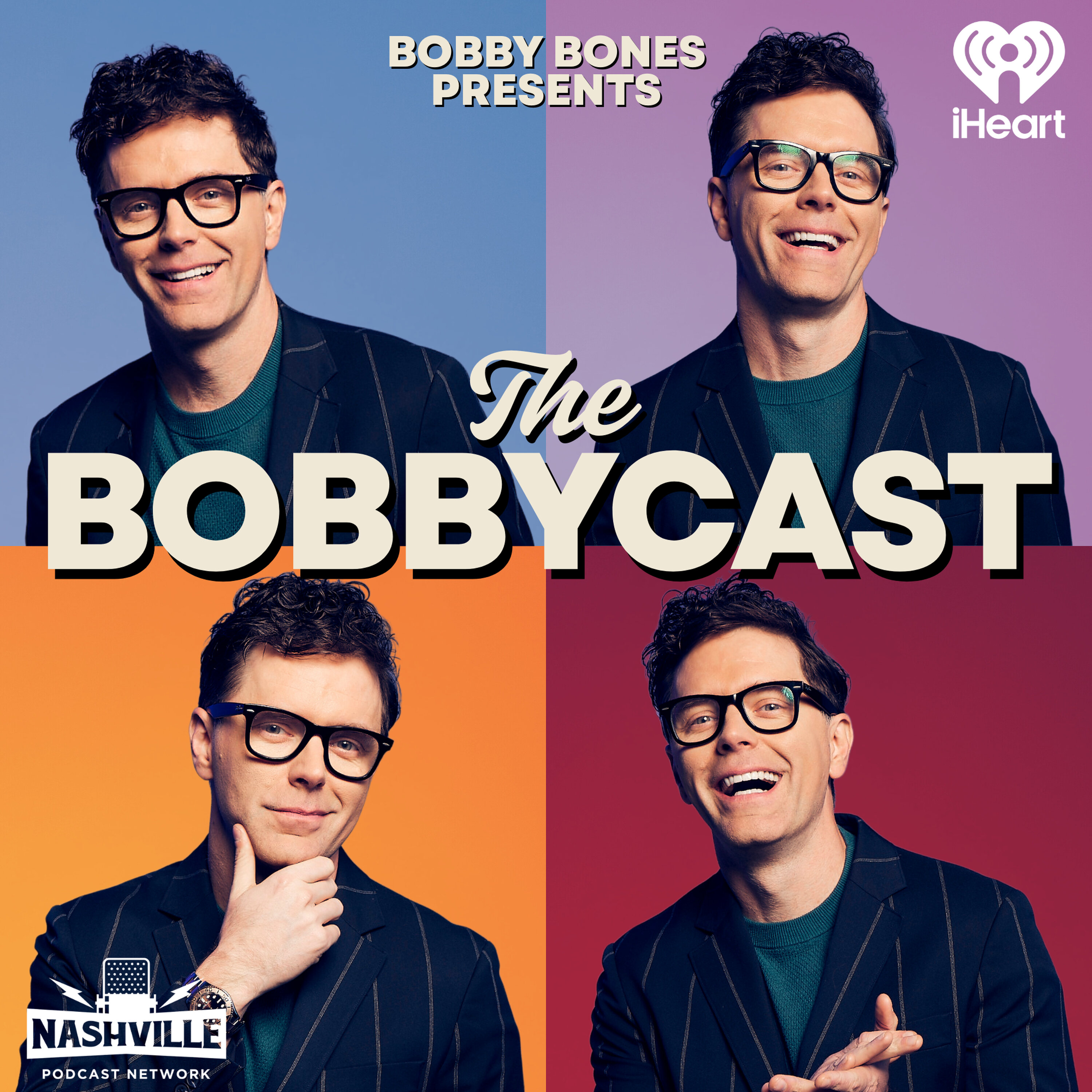
#362 - Rod Phillips Head of iHeartCountry + How A Song Gets on the Radio! + The Role He Played Getting Bobby to Nashville + Why You Hear ‘the Same 3 Songs’ on The Radio
Ever wonder how radio works? Then this is the episode for you! Rod Phillips is the head of iHeart Country. More specifically he is the EVP of Programming at iHeartCountry which means he oversees what songs get played on the radio all over the US. Rod also played a big role in getting the Bobby Bones Show to Nashville. Bobby and Rod talk about how their relationship started over a decade ago, how Rod accidentally got into radio and what his job duties include on a daily basis. Rod breaks down how a song gets on the radio and the role an artist’s record label has in the process. Bobby and Rod also discuss how new artists get featured on iHeartCountry stations and what the future of radio looks like.
See omnystudio.com/listener for privacy information.
Available Results
Generated results are saved to the knowledge database for reuse and search.
Extract Knowledge
Pick what you want extracted first. Model, scope, and chapter options appear after a template is selected.
Transcript
00:00:02
Speaker 1: I think, as far as behind the scenes goes, this could be a real good one episode three sixty two. Rod Phillips, he's basically the biggest thing in country radio as far as his decisions, hold the most weight and half for probably the last five years and probably will for a couple more years. I don't know what's happening all around, you know, I don't know what. But he's still the king daggling. There are other dinglings that have grown there, I mean honestly, but he's still the king dangling. Like he could make somebody's career with a couple of decisions. So we had him on and I feel like I asked him some I'm gonna say tough questions, but I just wanted people to hear the real answers to things. Would you agree? Like people complain, why don't this is single? Why don't this song make it? This is a real country Like I hit him with some of that stuff, and I think this is good. And maybe it's not the sexiest radio guy on on the header here, but I think it's a really good one. And so Rod Phillips, Uh, just the guy. I He talks a bit about his radio career, but you know, it's partially that, but mostly it's about, you know, kind of his goal when he programs national country music and even how he doesn't program all national country music. Like some companies have blanket playlists. We do not, um, but you can. He talked about it and listen. Yes, Rod and I are close by challenge and I've we've always challenged each other on things, and I think that's what's great about us. But Rod and I've been together for a long, long long time. He is the guy that really convinced me that, hey, Nashville will be awesome. I know you think you want to do it, and you also think and then I hope you get him over here. So it's awesome. So check it out. This is Rod Phillips, his official titles the VP of Programming for I Heart Country. UM, I think that's all. It's like I'm putting a cousin on here, like a really close cousin on here. All right, here you go, thank you and episode three, which, by the way, let me say this, go check out last week's all the stories about first number one. Great great, great episode. If you missed that one, wonderful job Mike on that one. Thank you. All right, here's Rod Phillips episode three sixty two. My wife called me a second ago. She said, why didn't you tell me? I said, tell you what She said, Well, if Keith Urban comes over or Reeba comes over, you go, hey, Keith Urban, Reeve's coming over, And I go, that's cool. She said, you didn't tell me Rock and Rod was coming over. I swear to you. She just called and was like, I was leaving, and I looked at because she has my calendar. She goes, Rock and Rod's coming to do an interview. And I didn't even get to be part of this. And so is this how she makes fun of me when I'm not around? I think I've not heard her referred to me as that. When did we find out your name is rock and Rod? Was it your wife that told us so? No, we were. We were playing basketball and somebody my memory is bad? Who's from Paduca? Nick? Nick? My friend Nick? That's what he listened to you growing He freaked out because he listened to you growing up. Yes, I've never heard Rod on the radio. It's ever Nick has and I do want to get to your radio days, but I think first we should establish that Rock and Rod if you're listening now, if you're one of the rock and Rod fans, Rod is now like, if not, the one of the king Dinglings of country music. Because what you decide determine so much about an artist's career. Now you don't go it's now my fingers. Your career is now made, but you affect a lot of things that affect their career. Is that fair to say? That's fair to say? What is your title now? Because all the titles always change. It's actually even more complicated than what I'll give you, but it's basically my Heart. Programming executives have an e v p P title Executive vice President of Programming for I Heard Country, So there's other e v p ps. My e v PPS status, if you will, is over I Heard Country. Heart Country means a hundred and fifty country radio stations, shows like The Bobby Bones Show, the Top thirty Countdown Women of by Her Country, all the things that go under the umbrella of anything we do in country at I Heeart Media and I Heart Radio. You're the head of country, head of country at the biggest company. That's the way to say it. Yeah, Because they always changed the letters and I don't know the other's letters. And so there's an e v p P of rock, Yes, an e v p P of hip hop yes. Okay, so youll spanic top forty and with that power comes great responsibility and yeah that's spider Man, but that's that's also your job. Correct. As much as I'm like, hey, this guy's King Dingling, like, you really have to spend a lot of time, even you know, probably going over your decisions many times before you make them, because it does affect an artist or a label or a manager's career just by you going yes or no. Would that be accurate? That's also accurate. Word King Dingling. Come by. When I see you walk in, I'm like, there's King Dling, And somehow I like that better than rock and Rods. I like them both, rock and ron King. You're king rock and rod You're King Dingling here come and so. But now we'll come back to that because I do want to talk about your early radio experience. You started radio on what town? Oh, started in little old Elizabethtown, Kentucky, tinytown, well near what about thirty miles south of Louisville. It wasn't a Louisville station. No Am Am radio. You know how far those go. So you're in Elizabethtown, Kentucky doing what on an AM station? Man, I was hired to do to host Solid Gold Saturday Night, which was the oldies show six A six pm to midnight they did. They did music on AM. Yeah, we were an a C station. Basically AM played Fleetwood Mac and Gloria Stefan. How crappy did that sound? Oh? Probably really bad, just because AM doesn't have the texture of the depth that. Yeah we had. We had a C on A on the AM and a country station on the FM. Wow. So how did you get hired as a host if you had and then that's your first job. I was seventeen, had never been on the radio. The I knew the news guy through some other stuff I was doing, so like the voice of the town Ron Boone, because oh, you should get a job in radio because there's a lot of radio jobs, and I'll hook you up with my program director. So I called him. You didn't have like a lifetime desire to be in every minute a radio station. Never thought about it. Some random dude, Damn Ron Ron Boone told you should be in radio, and now you're running country music. I wanted to be a sportscaster like every other you know, seventeen year old dude. Um. And we did high school basketball, football, wrestling, soccer. We did all that on the local cable TV channel. I did that with Ron Boone, who was sort of the voice of radio in the area, and he got me the job with the program director. I called the p D and he I have no idea why he hired me, literally hired me over the phone. Never met him before. I have that voice, seventh year old rock and calling. I do you know. I do wonder not to get sidetracked on. I do wonder, especially the way we used to try to sound on the radio, if you sort of train yourself to sound, you know, would I would have had I not been on the radio, would have the exact same voice, you know, at my age now. I do wonder if we sort of trained ourselves to to have that, If that makes sense. Hey, Mike, the movie you watch on Netflix where it goes back and forth from the two scenarios look both ways, so it's like she meets a dude, they hook up. One scenario, she's not pregnant, and it's her living her life not pregnant. She's pregnant. Yes, okay, So we're gonna do that with not to one fictional scenario, but I want to walk through your career now and flashback to your career is in to go back and forth, and so just so you know why I'm bouncing around. That's kind of my vision for this. When you look back at your time here, when did you become the head of country at I Heart Radio? What year was that? The summer of two thousand fifteen, two years after your show started. So from two thousand fifteen to now, what artists have you seen catapult the fastest after Luke Combs? Because I think comes the answer, right, Combs is the answer, and Morgan is trying to catch him. And and as on fire as Morgan Wallen has been really statistically speaking, number of songs fastest on the chart, number of hits, he hasn't gotten to that level of number of songs that are hits. But but he's trying, right, He's he's getting there. So Combs, Morgan Wallen, if I'm playing the game too, who do you put next? Like a Sam he kind of came out of nowhere all of a sudden. He was a star pretty quickly, Uh, Sam, But he started before Luke and then he's actually Combs comes right, Yeah, he started before Luke Combs, and then he sort of has taken more breaks. Most of the country artists don't take a break. Talking about breaks, so I'm talking about how quickly they're here and then how quickly it's like, oh, we gotta play them because they're a star. I think that happened before the first break when you agree, yes, oh yeah, yeah, Sam was on fire. Sam was the hottest new country artist into Luke Combs. In my opinion, Marion Morris is in there, and came Brown is in there. I can Yeah, that's a five really strong ones strong Legit gonna be around for a long time. So when Luke Combs appeared on our scene, I remember I used to do a little thing where it was like, all right, let's pick five artists who we believe in, and you're also at the same time going, let's pick one artist that we believe in, meaning the on the verge artist, and you have the power of that. So that is such a significant part of country music. Explain what the on the verge artist is and what goes into your reasoning and who you pick on the verge of a program where we get all of our program directors onto a project at the same time, and and that matters because you said earlier, we're the biggest radio come we're the most number of radio stations, and fifty program directors could go get fifty different songs, So we ask everybody to agree on one song at the same time, so we can have sort of that consist and push and escalation onto the radio, get to the most ears as possible at the same time, and then evaluate the song. And why that matters too when you say there are so many stations, there's a chart that's monitored, right, It's not just as a bunch station so a lot of people hear it. It's there's a there's a literal chart that's monitored. And you know, if you have more stations that are monitored, you're able to move it up the chart monitor meaning literally electronically they listen to them and when a song is played, it a computer catches and says, okay, we played Luke Cohns, we played Mary Morris, and all those spins then determined spins, meaning all those plays of that music on those radio stations determine where they are in the chart. So I would imagine again, and I've only been ankle deep in this situationally that maybe dirty is not the world, But I imagine there's some politics and going on, because that's a significant thing for any art but the biggest thing in new artists can get. Yeah, politicking is probably the right way to say it. Um. And that's what labels are paid to do promote their artists. Um. But yeah, the politics in comes from, uh, you know, how do you how do you promote better than the other guy? How do you make your artists, your project, the song appear or seem like it's it's more relevant, going to have a better track to success than everybody else. Um, So politicking is probably right. That also, probably you started to say the word dirty. I mean it's I associate the industry with just being dirty in general, which you probably don't as much as I do. I just get angry at everyone all the time. Um. But so for me, I would say it's kind of sometimes it gets lazy. But politicking is a word that I would use because you have to deal with it every day. Yeah, so you just know it as the nature of you're here people want to get stuff. I have to figure out what strategy they can use to get their artists that they're paid to get on to get on. Sure, so with the on the Verge, they can't have a hit, right, isn't that a thing? For the most part, like it's not an established artist at all. It's not established. We've often thought, doesn't matter if they've had a hit or two, but but today you're right, no, no, no artists that we've picked has had a hit or even a half a hit. If you will, remember in the studio when we told oh yeah, legit he was on the air, he started crying. Well, it's always you know, we have a long list of on the Verge um folks, if you will, people that were part of the program. It's easy to look back and go, of course you pick a Loup Combs, but at the time it wasn't. Of course, it was like, we feel really good about it, and of course that's a lightning rod um. Most of them have been very successful in terms of the song we picked with that artist Marion. Marion was fantastic. There were some of the other big ones you can think of that you think on the Verge game a good goal. I think Dustin Lynch was the first. He was before you or I came to Nashville. I believe he was the very first on the verge that obviously worked well. Sam Hunt was on the Verge. Um, I shouldn't have the list because it's it's it's pretty fantastic. I mean again, the rate at which are programmers collectively picked the song. And you know, no, you put fifty people in the room. Fifty people are not going to totally agree on a song. But we tried to get the one that's got the most kind of action around it that everybody agrees is going to be a hit. Um. Yeah, I wonder who else is on the list. We should look at it. It's significant Cam she got it immediately, right. We did a couple of those right too, where we can run it together. In Grand Andrews Christians, I popped buy Me a Boat, Our listeners popped it, and you were like, well, we can't fight this moment, this momentum huge song Jansen and Cam and Burnie launched and literally launched a career. Yeah. So flashing back, You're in elizabeth Town, You're work in a day m station, you are hosting some Gold Show, right like solid gold Saturday night? Now? Is that like a disco or is it like old gold as in like big hits from the past. It was kind of everything we played, you know, all that motown from the sixties and some of the disco stuff from the seventies. It was basically a Saturday night party show. Did you develop a love for radio or did you go I can't leave a get to do this and get paid? Uh? Both we in the business. We talked about catching the radio bug. People probably catch different bugs their industry. But I had never been to a radio station and walked in, got trained, and was on the air the next night, which is still crazy. I don't care how small of a town it was. Somebody somebody put me in charge of our radio station, which was weird, um, but it worked out. And from really, from very early on, I realized, this is the only thing I want to do. I mean, I caught that bug being a music It definitely wasn't the music. I've never been like a music officiated auto. I mean, it's always interesting to me how much you know and how how many lyrics you know? And yeah, and I'm not even in it for music. Yeah, you know music at a much deeper, you know, level than I ever have. Again, I wanted to be the sports guy. I just want to talk about sports. Um, So it was more about the the exciting part for me in a studio with a microphone and we played music that didn't matter to me as much what the music was is you know, you get into it and you're you're the DJ. I mean, there's kind of an ego thing about that. I liked doing. I liked being person It's funny, I've never thought about the fact that I don't really I still seate myself with doing this job for music at all. But I freaking love music. I think I would anyway even if I didn't work in this because I don't do it because the same with the same with you. I don't do it because the music. I'm surprised that wasn't the start for you though, just with your zero music knowledge, none, absolutely none. I have things to say and I want people to hear them, and I want to compel folks. I was always it. Yeah, just have a love from music like I do sports. Is that why you are so open to to switching from being a host that played top forty music sort of. You didn't really play music that much on your show, but it was on a top forty station, and to me, you were you were super open minded to go into country that's very different in our world. I may not mean much to a listener, but is that why you're okay? Because you were able to have a bigger voice. Yes, and also you were like, you don't have to change your show. Yeah. I mean, honestly, that was a big part of it because I was when I was in Austin, and you know, I built from one station, and just the quick version of this is, you know, I had hustled and got a couple of the stations, but you were the first person ever put me on anywhere in another company, and so it was the first stations I don't have to pay pay money out of my own pocket to do. Honestly, where you put me on in the market, Yeah, and Georgia somewhere Alabama's it was it was yes, I do all we need Georgia Tuscaloosa, Alabama. Um. I think those were the first too, though, I mean, but there were several they came yes and soon after that, But you were the first person to ever tell me that Hey, you're you're good enough to do this, and we should be using you because we can also get better by using you. The first person ever and I've said this many times, but that's why you spoke when I got put in the Radio Hall of Fame. Who else am I gonna ask? My friend and also the first person who ever believed in me? That that was literally it. And so I remember, and you weren't running the format, and I wasn't in the format, but they obviously knew that. I don't trust anybody but probably you, and you said, hey, you don't have to change the show, like there'ld be some little corners in some places. You'll have to kind of, you know, manipulate how you do things, but you do your show. We wouldn't hire you. And I was like, all right, cool, then let's go. That was my pitch to John Hogan was who was our CEO at the time, was Hey, we're looking for a country show. We have a top forty show that eighty five percent of the content it could be on country morning radio right now, and the other is maybe a little too aggressive for the people who listen to the country and a little more of a family atmosphere. That we had to protect and it probably wasn't. Let's be honest, you didn't have a Top forty show that was talking about sex and no hard words, and yeah, yeah it wasn't. It wasn't edgy for Top forty, but it was obviously crazy popular and successful. So the fact that we could take that content and keep it similar, because the whole point was not to change the Oh it's too it's too natural, so we don't want you. We didn't want anybody to play a part to be the country guys. I think my edge came from authenticity and technology, white technology, because I was doing crap before anybody else was. We were we were investing in podcasting before it was even a thing. We had somebody sitting right notes on every big bit of the show so we could load it up so people will go podcast it. And so whenever it became a thing, we were already sitting there going we're here, We're ready for you, you know, come on with it. And so yeah, I felt like you said, hey, you know, I got to change the show much, and I had to change a couple of things, but for the most part, I'm gonna do from Arkansas sensibilities their sensibilities here and I was probably too country to do pop realistically, and so here we are, moved here. It's crazy, crazy part of my life. And then you weren't here. That was the weird thing too. Yeah, I move here and you're like, let's go. You can do it all right? So where are you gonna? Are you gonna meet me? No, I'm not. I was like, what the crap? And so and you you end up coming later on, But back to Kentucky and solid Gold. You're on the air, and when do you leave and where do you go? Well, I was seventeen, got hired as a senior in high school. So then I went to college and my goal, and happened fairly quickly, was to go to Kentucky, UK in Lexington and then just start hitting the I don't know why I decided then or how I even knew I needed to talk to the top forty program directors. But there were two radio stations, and I pitched both pds on putting me on the air, and the smaller, less successful station agreed to hire. So you didn't get a job before you left, Like you didn't go I'm going there, I gonn start sitting tapes over and beg for a job. Now, I was going to go to college, and my and I had other part time jobs, but I wanted to continue this cool radio thing I was, you know, in my mind, I'm like, oh that's cool. I I want to keep doing that. So he moved to Lexington Moodle Lexington. Uh, you know, I got a degree in communications. Um really just because that was the closest thing too broadcasting. Um, they didn't have a a dynamic broadcasting school thing to go to. But that was just kind of checked the box. I was always going to go to college, Go to college, check the box. Um, it was more important to me to get the job of the radio station. So I had a full time job in college. The whole time is doing nights on the top forty station. Your day to day now different than when you were programming individual stations. Do you have any sort of music log? Like what do you do? I mean, I know what you do macro and like what you oversee, but like what are you Because it's it's weird when a position gets so high up, like what do you do every day from nine to five? A lot of people probably wonder what to do? The people who pay me. Maybe I do program some stuff via music directly every day. So I program the I Heart Country channel that that means other things. But there's an iHeart Country channel on the I Heart Radio app. That is last I checked, the most listen to channel on the app, which is cool. So of all the app, the I Heart Country channel more than anything else yet the most not most different people listening to it, but probably I mean, our show is on the morning there too, right, your show is on Big Factor hopefully a h your show is the morning show. UM. We have other hosts through the day that um are across the country, and then we build So that's a that's a radio station like any other radio station. You're used to hearing when you get in your radio and turn when you get in your car and turn on the radio. So I programmed that that has some influence across the country in terms of our other radio stations. There's pieces of it the play elsewhere. So it's a sort of a big piece of the puzzle that impacts the chart, which that's the day to day that I personally program that has an effect. And then I work with literally every program director we have, and we talk about music and we we think about, you know, where can we expose new music in different places so we're not all playing the same music. Will you go, okay, Midwest, we're looking at Michigan, Wisconsin, Iowa. Will you take a section of the country and go, okay, we're gonna do Bailey Zimmerman here and see how just what the research says. Literally, he's who I was picturing as you're asking the question. He's from central Illinois, so it would make sense that it could start out the Midwest. Now he's had an amazing start from streaming perspective and a lot of stations are paying attention across the country from coast to coast. But absolutely we we I feel like there's certain music that pops in different parts of the country. First, you know, Midland was able to do more in Texas. They were from Texas. Granger Smith came out of Texas and had had, you know, easier access to radio stations playing music there. Um for the most part, once you're Luke Brian and Blake Shelton, everybody's just adding the music. But we encourage more and more. Let's find the people who make sense in an area to give it its best shot. There and obviously you're not gonna put on eighteen new artists all from Minnesota in Minnesota, but there possibly could be someone who is getting their first radio shot. Maybe they wouldn't get it on a national brand, or maybe they only get it on one station. But instead you can go this is section of the country we feel good about, and we're gonna give somebody a shot that probably wouldn't get a shot Minnesota. Noah Schnacky is from Minnesota. So our program Jerector in Minneapolis. Greg Spudberg, you know him, put him on that radio station and played it a lot. He gave it a shot out of out of Minnesota. That's much more and I won't call it local, but localish than I actually imagined it, being that you're making decisions based on regions and people from regions and the tastes of people in those regions or relationships they have with artists because they've been local for a while. I think he I don't think I knew that. Yeah, well, I think even if a couple or a few years ago, we realized that that we had gotten away from it, meaning the industry of radio had gotten away from it. And we've had this conversation with our our programmers across the country to to you know, for those folks, to let us know who who's coming out of Fresno, California or wherever, and really encouraging them. I think I think too many programmers have has sort of gotten caught in having to play the I mean, we want to play the biggest hits, and we want our pds, pds meaning the program juctors to know that they have absolutely green light. And beyond that, it's like, bring that music to us that we should be paying attention to and let's try it. So you're saying, you don't hand a piece of paper down everybody. This is a national piece of paper. You must adhere to it, line for line correct. Some radio companies do. I always thought that was some urban legend. No, that's true. That's true because I knew we one company in particular, and I don't really want to call names. It's just not a beneficial enough nobody will know who we're talking about. But there's a big radio company that has done it and then stop doing it, and they're doing it again. So and they do it in country. The country stations are sent to list here's here's what you'll play and how often you'll play it. I think I gets a bad rap as the one doing that. Yeah, because I as just the biggest company, most influenced, But I didn't really know that was the thing. And we do things again sort of commonly when it makes sense. If Luke Combs put out the song, you just put out, we want to. It's only we have talking anybody into playing that. We all play at the same time. So yes, it's easy to to appear that you're all doing it at the same time because somebody's telling you to, but we we really don't. I spent a lot of my time reiterating back, you're you're right, that's easy to get that perception. And even our closest business relationships with people who work at labels who promote music, I think sometimes they question it, not in a bad way. They're like, okay, so you're sure that you don't just tell them what to play, and we we assure them. So educate me on if somebody calls and goes, why don't you play track seven from Blake's album called Kicking Fish. That's a good one. Once you play that one on radio, I wouldn't know it if I wasn't in it, and I that we get I get that call a lot, and every six months I'll explain, so I'll do it on the end, be like, okay, here's that kind of how it works. But educate me on how a song ends up on the radio, because it's gotta go through a lot of steps before that. Well, it really starts outside of our industry, being the radio industry. It starts from the artist and probably the manager working with the label, meaning the folks that run Universal Records or Warner Music Nashville. They go to their label and they've got people who work in A and R who are picking what they think are the best songs in terms of we think this sound has the best chance to be a hit, typically on the radio or wherever else they're pushing music. So songs come to you already like this is the song, correct, I'm not. Here's eleven songs. Pick whichever want to play in the radio. It's a single song from an album or the next single from the album, and they say we think this has the best shot. We hope you agree because we're gonna push this now. As a program director, you're they're on a national or local level. I can go get a different song. But if I'm gonna be the only one playing it and everybody else is playing the song that a bunch of people who are experts in their own field have picked, then you're always sort of just gonna be an outlier and you're not participating in the song that's most likely going to be a hit. It's hard to change a single songs trajectory about being one or two or just five stations. Correct. It almost has to be a unified front as proposed by the record label. Correct. So they come to you, they say, this is a single, Kicking Fish. Just made that up. So they bring you Kicking Fish, and you're a radio you're the guy. But does every single get pitched to you, like, every single one of them from every artist? Yeah? Yeah, so they all every song comes to But then what do you do, especially if it's a new artist. Well, I mean that's a loaded question. Um, you know we we at any given time there are probably seventy five to nineties songs being pitched, all new songs. Yeah, well let's just say let's say thirty of them are are are are already solidly on the chart. But you play on your countdown. So now there's what there's forty five, call it fifty sometimes sixty songs, and you're choosing from those songs to decide one or two to put on a playlist that week. I mean, you might put three or four on in a week sometimes, but that's usually don't have that much room. I mean, there there's usually the thirty songs you have to play because they're they're solidly on the chart. Some other stuff you're playing in a new category, and now you're deciding from the rest what you think has the best chance. Now, if I know that Dirk Spentley is coming out with a song he just released gold, I think it's fantastic. Suddenly that kind of goes to the front of the line, if you will, from a selection process. Um, but all all of them are available. And then to the point we made earlier, if Noah Shnacky has got a song in Minneapolis and Greg thinks that's good, he may go and get that one, and that might be the sixty six song being pitched. Um. So it's that's why it's not easy. I mean, you know, Luke Hombs emerging and becoming a superstars is is not the norm. So if kicking Fish is presented, somebody calls me and goes, no, man, I like that song, my, but where's the cowboy hat? And if you don't play that, you and country that's not on us because it wasn't presented to For the most part radio, it wasn't even an option to because anyone in radio knows if they play it there by themselves, and if they're going to create a story, it's gonna take forever because it's one station. So it isn't the person's fault at the radio station. It isn't the person's fault that's running the radio company. It's not anyone's fault. It was just a song was chosen by the record label in the artist. I think there's and I would be confused about that too if I hadn't worked inside of this for a long time. But also I'm I'm almost starting to be a bit disconnected from the radio part of it because I don't do that really as much anymore. Which I like that because then I get feedback from you on other stuff. That's yeah, that that that I even heard about. Yet I like that too, Yeah know that It's it's a good thing. People be like, why does radio, But I don't know. I don't know what's going on, you know, And I'd be like, well, let me call a rod and ask a question or two, but I really don't know anymore. So, Okay, you have a song that goes and you're picking up, you're putting in new music. Is there like a national new music category? Because the national that's that's quite the big word with a lot of if it's playing national, get a lot of spins. Not on the verge. But where would you put a song that you like, it's a it's a song You're like, I think this has got a lot of potential. Do you put it every station at two pm? Do you put it? Like? What do you do? As soon as the song's new artists, new song? You believe in it, but it's not beyond the verge? Well, I don't put them in at every station in terms of the the stations that I heart owns UM. But again I have influenced in terms of when when you say national, we have some programs that do go out nationally. Your show Women in My Hard Country. You obviously picked some music for that. We pick some music for that. So when we picked the songs, they go on that show it plays you know, that weekend on a hundred and fifty different radio stations or really UM. But you know, because we're sort of the net, we control the national pieces. We're not taking as many out there, out of left field chances as individual stations or regions of the country might be that taking up it's not going to hurt bad, right. We're taking the best of the best, if you will, UM, and then the ones that are going to be the best, it's okay that we don't go with them immediately because I always say that that I do believe the hits rise right to the top. I mean, it's hard to hold a real hit down. I'm sure there's a lot of great music that never makes it, because it's like there's great basketball players who the NBA never discovered. UM. But for the most part, the best hits, I think do make it through the clutter. If you will have a lot of really good music. UM. But from a national standpoint, we can sort of wait and see what pops out of the you know, Southwest, or UM out of Florida, or something that then shows itself that wasn't already obvious. Do you get at your position people go on, what do you do a man in a country music Yeah, oh yeah, it's still that reaches you. Oh yeah, who would tell you that? Um? Well, so that's a good point when when when you asked it, I get the feedback because we also h big radio company. We still doing more research probably, but nobody comes to I'm saying because if somebody you don't have a face that people know and connect with country music because you're the guy making the decision and you the god's up front. Being like, I'm the guy I have that have the face that's up front, people can get to me are easily. They can call me, they can message me, and you know, they're like, you suck, You're not country, this music is not country. So I hear it all the time. Yeah, that's true. I guess it's not a one on one personal People are not contacting me personally, but I feel the feedback because we ask a lot of people and then we roll up under research teams. But what are what our country fans in total saying about, you know, the strength or lack of strength or what they like about country music. But they don't like about country music. So research, I don't know what is that. So research is like any company, they reach out to consumers. I mean, we find ways to find people who listen to the radio, who listen to the Bobby Bones show, who listened to country radio and don't listen to your show, Um, who consume country music on streaming but not so much on radio. We talked to all those people, you know, the ways we reach out to them, and we talk to them about why they're using things, and you collect that data, but you also reach out to those people. And and now it's online. They people go and listen to pieces of music online and find people like and go here's the link. Can definitely find people, We can definitely send them to. This happens in you know, the auto industry. I mean I get them all the time when you go and we want to ask you questions about four trucks. Um, so we do the same thing. How many people do you think is a good sample size for a week of making decisions about music? Well, um, I mean I can tell you that that that radio stations can can use a hundred people and feel good about it. Now that that's sort of over time too. You wouldn't want to go and have one research project for the year and talk to a hundred people in any town. It's it's too narrow. But if you're consistently talking to a group of a hundred and another group of a hundred, another group of a hundred over time, you can see what people's tendencies are if you will. So you most research companies don't talk to even when you you look at a gallopole, I mean, you would probably know better than me. But uh, they'll survey where the presidential racism they'll be talking to do nationwide? Couple of thousand people? Yeah? Nation wide? Yeah, like not a lot. So, but what you're saying is you do depend on people's opinions on the format, on the actual actual amusing. Yeah. We asked him what they think about Luke Brian as a persona versus you know, here's Luke Bryan song, what do you think of it? Um? We asked him what they think about their radio station, what they think about the morning show on that radio. So we asked him a lot of stuff. You make decisions on personalities as well, you know, that's part of your job. Say, also the people that are on the radio, who's good besides Mike d Besides Mike Dy, Who's glove Mike d Um, I only want like five though I know you're gonna get on the list. It just happens to you. I will tell you who I messaged and you can actually um talk about her and say her name the stuff. But I I hit you up the other day and I said, Hey, there's somebody that I really admire what she's doing on the air, and she's branched out into sports, and I was like, let me get I've only met her once, but I was like, let me get her number. I want to call her and tell her. I'm I'm jealous of what she's doing because it's super cool and she's inspiring a lot of folks. Like when I think people that's doing it, like she comes to mind. And she's had a couple of names. That's the weird thing about radio too, people and so well, I've had rock and Rod and head dangling or whatever that is your current name. So, Okay, where does she work? Not Madison, She's in Milwaukee, Milwaukee. It's in Shannon now Shannon Shanna. But what did it used to be? Quinn? Okay, I think I knew in my phone it's Quinn. It literally says Quinn or Shanna. I'm not sure why she has two names. I don't either. I would put her on that list for me, A people that I think is doing really great things right, and I think you not send that, don't get mad Shannon. I don't. Maybe wouldn't have thought of her, and then later I'd have been like, damn it, she should have been in the top five. You know. It's funny though I don't know what she sounds like, and it doesn't matter to me. So I know what I see people doing and and creative decisions, strategic decisions and always come a little risk, and I go that person is killing it. And I see her and I go, that's awesome that she's she's she's the first female on the Green Bay Packer broadcast team. Yeah, so she does afternoons on our country station. She hosts the afternoon show. It's amazing and now she's doing And by the way, that I mean, I'm a Packer fan, but I will say that broadcast team is really good. I think they're they're so you wanna tell me who's good they're they're amongst the top five in my mind for for the NFL anyway, and now she's on the team that, by the way, I'm jealous too, Like that's I told her. I was like, hey, it's I'm not never jealous of folks like I won't admit it to them because I'll be like, yeah, I don't know what you're doing, but like I am. I was. I was like, I'm openly jealous because that is so cool. The only other person. And I tell that to his Charlett Magne. We're dearest friends, and I'm like, I'm freaking so jealous that you get to do this. And I have that jealousy, but it's such a healthy, respectful jealousy that so I list her. Okay, give me somebody else that's good, that's doing things where you're like, okay, they could do this here on the radio. If they wanted to go and do it in the streaming podcast world, they could do it, like just like a talent that you go, there's something there and there always will be something there. Well. Uh, one of the first, one of the first that comes to minds was he does Mornings with Carletto. Was is the host, if you will, of the country morning show in Cleveland. You know, he was in Rally for a while Um, he's to your point of you know, besides radio, he does a good radio show. The ratings are good, it's successful. But he's also an interesting guy who can do other other things. You know. He does w z W A z Z Yeah, Bobby Bones. But I better say that, Better make that joke out loud, because people were like, why are you attacking what? Steve was his name? Steve was yeah, okay, alright. He just has cool stuff where he creates videos. I should say. You know, it was years and years ago that he was doing he would send out a video air check and it was a cartoon kind of like we've done with your show, but he was doing it early on, and I'm like, well, that's unique and different and people who find ways to you know, sort of express their talent in in different platforms. I mean you and I paid attention to that for a long time. So aside from what he's doing daily to do a morning show, I think he's interesting in today's world of multimedia. Yeah, I think. I think the cartenser quo, I didn't even know what they were happening. They'd be like, hey, check out the cart too. We made you Like how about that? Well, it's all Amy lunchbox. But it' still kind of cool. Yeah, they're cool. So do you ever make a decision and go dang, missed big time? And not because the decision you made, Maybe the person you didn't play that later blew up and you're like, I missed it, missed that one. Who would you miss on? I'm wondering if I'm missing on some now, But I gotta think about uh and who do I mean? There's definitely you know, your personal opinion only goes so far. And uh, yeah, I mean you know this as much as anybody. I mean, program directors who play music become very opinionated and think they can hear the hits and pick them. I mean I did. Uh. I think in country it's sort of exasperated. I think there's a lot of opinion going into the decision the decision make, meaning meaning personal opinion too much. We had to be careful of, right, what you personally like could and how many times have you heard it? Have you heard it twice or have you heard it times? Because your opinion changes as you hear music over time. That's anybody, right, Um, some people hear a song and they instantly like that. That's very very rare though. Um so the question is what did I miss? Man? I'm pro I'm sure of missing. Who did you miss? Where? Like I think when I look back, I was looking to see if Kine was on the Virgin He wasn't, and he was and we were no, no, no, he wasn't right, I mean, but it was close. I mean I remember remember the conversation. But he was making a lot of noise in the right way, meaning he was on YouTube with the videos that were interesting, and it was you know, it was a little more. Uh. I don't know if raw is the right word, but I mean it was when you're singing with the speaker on the ground, yeah, and you're getting three million views on Instagram of that. Raw is a good word because that's what I would. There wasn't a lot of money being put into Kane whenever he was first expected. He made noise. By the way, I'm the biggest Kane fan in the whole wide world, and I only say this guy. I love Kane, and he would not care if we talked about this. But raw is a great word because he did it from such a place where nobody scooped him up and said, here's millions of dollars dollars, Kid, We're gonna make you a star. Yeah, people started to pay attention, and slowly that team got bigger, and radio and I Heart Radio was certainly paying attention. But we we we almost couldn't decide when to pull the trigger. I think is what that was, right. It was a matter of which song was going to be the one to sort of expose him to America, and that was hard to find. Mine. With Luke Combs, it was a little more that time. Everything was lined up. He had record company ready to go. He had he had all all all of the bats ready to swing. At the same time with Hurricane, which again was an easy to hear, a song that had a you know, it was gonna sound great on the radio and probably be a hit. He's organized. Oh yeah, it was very organized. Was it was ready to go. Read d Do you get calls constantly from artists? Not constantly, but I do. I mean it is weird when it's weird when superstar artists call me. What do they say, Hey, Rod? It depends. I mean it's a pretty good intro, I mean the one the ones who call me, you know, it's a great question by the way, because this doesn't happen in in most formats now, I don't know. Maybe Drake calls Doc Winter, Doc does what I do you know, for the for this company, for for our urban and hip hop stations. Very possible they have that relationship. Doesn't happen in Top forty. As you know, it sounds like Justin Bieber was hauling program drivers. Justin Timber League might have back in the day occasionally, but it was still, like Tom Holman, pretty prevalent though here here. Yeah, you know, I mean it happened the other day. I looked down. I'm like, it still freaks me. It doesn't freakget it's it's still I still notice it when Keith Urban is calling him, Like, why would Keith Urban call? He's the best, by the way, right, So what he calls it's kind of just to catch up. I mean we we we uh made some noise around his new single, which means we we you know, played it on most of our radio stations to kind of launch it that day, and he was just super appreciative and called and thanked us for it. Keith Urban calls your phone, Do you answer it? Like, hey, man, are you like a little up. Do you have to be somebody? Or do you just like when I call you like it? What was up? I mean I'm a little a little more up than I mean you and I talk a lot my finger When someone says, why did the same three songs get played over and over again so that the most people in a given uh hour day or week have the best chance at hearing the most popular song. So if we play a song at one o'clock and you get in your car at one ten and we don't play it for the rest of the day, you you're like, why is in my stage room playing my favorite song? Um? So you obviously can't play a song every ten minutes. So there's this fine line between how you know, how many different songs can you play and how fast can you play it again? Because people who some people get in the car and they they're they they've got a long drive, or they listen to work and they listen for three hours, and if they hear the same song twice, they might say to themselves, so I already heard that song. That might annoy them. But but typically if it's a popular song, you don't mind hearing it again. Typically and probably played it a lot more. Oh, I feel like we oh really like every hour fifteen minutes almost. I felt like that's probably the math. Yeah, I mean that that feels like that's what I want. I know, the math, But yeah, that's probably the math. Do you do you graduate from Kentucky? Yeah? But the way I had a b s In communication b S and a communication skill journalism. I guess the BS is in journalism minor in sociology. Are your parents proud mmmm of that? Yeah, that's a good question, I'm telling you, like at that point your three are they like? Well? So at that point, I was full time in radio and it was just a matter of get the degree. I didn't go to my graduation. I was like, yeah, where't I go? So I was so focused on career and I was just getting college done to say that I had the degree and put it in a frame. And I couldn't tell you where that is now. But I'm sure that they were proud of it. It wasn't like, look at you, Rodney, you just graduated college. We're so proud of you. It wasn't about college that they were proud of it. I think at that point everybody was sort of into this radio thing, and what what's that going to be? And they were they were super proud of that, right, I mean that that's probably what they were. If my mom was telling anybody what's up with me, I'm sure it was a radio update, not that I was about to graduate your parents, if I'm correct, they met and then got engaged a few days later, three days, true story, that is not made up. It's weird. Three days. Now do you think? What do you think about that? I think it was weird, Like it's three days, man, they got married, So three days they got married within three months, and to get married, he was already over in Germany. So he had joined the army and he knew he was going overseas and he was going very quickly after after that to Vietnam. It's just a matter of time. So she flew overseas to marry him three months later. That's really I mean, your mom flew to a different country to marry your dad. Crazy. I mean, this is not like you know, flute and families that like fly across the world. I mean, I'm most of my I would say, most of my family still hasn't been an airplane, right, that that kind of distant cousins and aunts and uncles. A lot of them had never fly. She got on an airplane and went overseas to get married. It was crazy. Do you leave Lexington and go where? Uh? Left lex as sous I graduated. Um, one of the guys I worked with at the station in Lexington got hired in Paduca and the Paduca story begins. Is that a bigger market? No smaller, but a bigger job. What was the job? Uh? Mid days? So to host ten am to three pm and be the production director? Were you rock and Rod in Lexington? In college? So that's where it started because I was on the top forty station and then if well, you won't remember, but I admitted it was the second top forty station. In other words, there was a more popular Top forty station. So we weren't popular enough and we switched formats to oldies. So when it became oldies, I was still doing nights and the program director decided calling me a rock and Rod because we were playing the Jackson five. Do you go to Paduca as rock and Uh? Yeah? Because I got stuck with I wish it would you know? Looking back, Yeah, I wouldn't. Thankfully I didn't get stuck with I mean, but it's stuck for a while. I was Rock and Rod for I mean, I mean a long time, eight or nine years. You're in Produca. Okay from Paduka? Where do you go? So from why? I was in Produca for a long time. So the reason Nick had heard of a guy named Rock and Rod is um I started on that. I started doing that midday show, but I was doing sports. Remember, I wanted to be the sports guy. They let me do sports on the morning show. And that morning guy left and then I got the morning show. So I hosted mornings in Paduka for five years as Rock and Rod. Was that your dream to be a big national or just a big morning show? I thought it was big at that point, right, I was doing mornings in Paduca. Man, let's go because it was morning radio. I mean, you know it's still the sort of the premier spot on a radio station these days. Um, it was even more so. I would say, you know in the yearly nineties, you're a produca for a while doing mornings, have your first that you know management position. Yep. I was also the p D eyeballs are big. You're like, what's what's the next move. Next move was that I needed a break from being a manager. I mean, I was a program director at years old. It was crazy because I shouldn't have been. Probably I made a lot of mistakes. But I got an offer to go do mornings in Green Bay, which is basically my hometown, and it was mornings only. No program director, you just get to do a morning show. I was like, yeah, that sounds cool, let's do that. It uh it was. I mean, I love this guy, um no chance. Well I guess he could hear this, but lived him as a human. But he was a bad top forty program director. And I was like, man, this is cool and I'm having fun, but this isn't gonna work. So I didn't feel confident. Now I'm not the boss, and now I'm picking on the boss, right. It was. I just didn't think with the way we were structured, we we're going to be successful. So then I took a different job to be the morning guy and the program director again. So now I moved again, and I moved to Warsaw, Wisconsin. I mean the careers jumping right, we're I mean I'm hitting all the small markets and from Warsaw, you go where Warsaw I went to Yeah, we should escalate this. So then I go to Louisville. Okay, I'm pretty good. Yeah, that was a big job. But that was a big job. That's market, you know. So Wasaw was ranked one hundred and fiftieth in the country. Was there was a hundred and forty nine other markets bigger than where I was, and I went to market fifty. So that was a big deal. I mean, you're Kentucky and Wisconsin. You're married to those two states at this point. Oh yeah, whether it's where I'm from. I was born in Wisconsin. Looking for markets where you had DNA. No, No, it's just that's a really good question. In a way deeper story. It was really ironic that I got a job offer in Kentucky. It really had nothing to do with being there before. Random Louisville. You have success there to get fired. Uh, No, big success there, and we uh launched a top forty station in Cincinnati, and they pulled me out of Louisville quickly to big some movie to Cincinnati and now it's on now. From a radio perspective, things are going well. Pressure. Oh yeah, our company was based out of Cincinnati, so I was working in Cincinnati and the bosses lived in that town. Your pressure program director program director of a Top forty is it? Was it a kiss FM? Then just a kiss one of the first kiss fms. I mean there's kiss f M and l A. So then we started having other Top forty stations called kiss and it was one of the first new kiss station. How did Cincinnati go uh, worst to first? In eighteen months? We were ranked fourteen And you must have been a hero, the bell of the ball in the company. Well, that's why I went to Chicago. You went Cincinnati, Chicago. Chicago's the third biggest market in the coral United States. Correct. I'd imagine that's a again, a whole different ball game when you get there. But yes, I I didn't think so as thirty two and didn't care. Youngest p D in town by a lot. But I had it right. I was cocky and thought I it all figured out. Um. But similar to other jobs that I had because I was sort of young. You know, at the time that I first got it, I only knew about half away when I should have, and I probably made it what I did. I made a lot of mistakes, but I was I was it was good enough at the radio thing to create a radio station and a brand with people and personalities and shows to make it to make it work too. What happened to Chicago? Uh, Chicago was great for six and a half years, which for my career was a long time. Yeah, and then it wasn't because they fired me. How do you get fired? Uh? It was in general, my boss got fired. Don't recall the right So new boss comes in, and then there was one other boss, you know, between me and him, and they were ready to just do it different with people they wanted to hire. How do they tell you that you're fired? That's I mean, no, no, no, that's they don't just go you're fired? And this over like do you get a call going need to see at nine am? Do you go? I would like to see in what what happened? I mean, I got a call I found out I was getting fired, which was, oh yeah, well I found out I was getting fired. So then I waited. I waited to go back to work after the ratings came out, because I at least figured the ratings would be good. I guess getting fired though for not cause meaning you didn't p on the secretary and you had a good six and a half years there. That's not you're You're not black bald, You're not unhirable. No, you probably did the company want to put you somewhere else because they understood how important you were. After they fired me, yes, but right after, within a couple of days, they were talking to me about within a couple of days days jeez. And so where do you go Miami and what do you do there? So I went to Miami to UH to run primarily again the Top forty station. That's what I did it for a living, right, I was a Top forty program director, and I was in charge of a couple of other stations at that time. Ironically one of them was Hispanic um reggaetone at the time, UH and a couple of other formats. And then quickly after being there, I was put in charge of all seven stations in Miami and we sort of had an incredible run with the Top forty station there. When I first met you, you flew into Austin, Texas, I was doing mornings. I've never met an executive before. The executive have had ever talked to me before. I thought it was a big deal. I remember going to have dinner a true lux and not the one downtown with a lot of riff raff. We went to the one a little north in town. It's very nervous. You weren't nervous. I was a huge day. I've never met an executive before. I mean, of course, I was petrified. You were going into Waco, which was your market, which I got later on as well, which you gave to me. And so what was that job and where were you living then? So I was probably when I wasn't. I moved quickly to Cincinnati. The Miami job went so well that then I got this executive job you're talking about. So um but but but I gotta back up, because I don't think we talked when I was a program director in Miami. But I wanted to use your show or parts of it on Why one hundred, and I was trying to figure out how to do that in Miami. But what do you mean parts of it so much about me? Though, because I didn't know you until you came. What Michael Yo told me about it though, He's like, you gotta hear Bobby bones Man, And then I listened, and I'm like, oh, yeah, we get we we should use the Bobby Bones show other places like Miami, and I was trying to figure out how to do that. This is before the technology that made it easier and way more common. Um, I just couldn't figure it out. At the time. I didn't know how to how to get that ball rolling. I did not know Michael Yo had ever said anything nice about me. I know he didn't anything bad. He I never met him because he left Austin. He was the night guy. There was one other night guy that was quickly there and now and then I was doing nights in Austin before mornings, and I always thought Michael it was awesome. It sounded good, but I never sounded good, meaning you didn't listen once and go that guy's got a heck of a voice and heck of delivery people. You know, they don't say that now, and they'll say that then. So why would you hear, uh, twenty five year old with a Southern accent who really doesn't talk that well and go gotta have them somehow. So there was something about about my brain that turned. We used to all talk, you know, we used to have a voice, bringing down as eve as we could. I mean, it was everybody tried to be that guy. And there was something about unique voices to me, even when I was sort of young in in helping build radio stations that I thought was more interesting. I mean, I hired Java Joel. I don't know if you're familiar with Java, but if you think you don't have a radio voice, he definitely doesn't have a radio pretty solid delivery. Though his delivery is good, but I mean, it's it's a sound that's definitely is not acceptable if you will, to a lot of program directors who wanted everybody the sound higher pitch voice, very high pitch, and but yeah, I love, I love Obviously I loved it. I hired him, so I hired him. I heard Mac at Night twice. Um, I hired people who didn't sound like radio people because I thought that was different. So this will go way too nerdy into programming radio stations, but there are there are voices of radio stations right the big at you. So on the last couple of stations that I ran day to day, I took the voice guy off and said, no more of that. Let's just use people who talk like Bobby Bones to do our sweepers and our liners to say the Big ninety eight, and I thought early on something triggered in me that we needed to be more real and more natural. I don't I don't know why. I mean, maybe maybe visit research project and I noticed something, or maybe my brain just clicked that I should do that. So for me, when I went to listen to your show because Michael Joe said you gotta hear it, and Mark Chase knew about it at the time, and we talked about you in Miami, and I had no idea what we're talking about you, and I went to listen to it, and I'm like, yeah, that's cool, that's great. I just the vibe, the energy, the realness, the natural, the anti radio sound that was also then the content was compelling and interesting. I was all in. So I had that in the back of my mind. Then I get the executive job. I'm still paying attention to what you're doing, and you're self syndicating and you're on in which tall and the ratings are screaming huge, and I just wanted to reach out and be like, Okay, what are we gonna do here? Because you need to do more. It shouldn't just be you syndicating your show. Throughout Texas and kind of that area into Oklahoma and Kansas. UM. So then we started talking, why would the company looking back let me run wild? I mean, I know why they let me spend it all money because I did spend most of my year and a half checks I'm building. Why would they let me do that? I don't know. Like they it was almost like they were like, we don't care what you do because it ain't gonna work. And they were they probably were right most of the time. But they just freely said, you can go beyond whatever you want to be on as long as you can do the work, pay for it, and just get out of our hair. Why would they ever let me do that? It definitely wasn't normal. I mean, we we do that more and more as we go along. There are a lot of personalities on in towns across the country. UM. But I don't have the answer. It was sort of unique. I mean, or at or at least let us help you pay for it and we'll own part of But they didn't. They were just like, hey, kid, going well, I think you did the right thing in terms of you know, you weren't on in Austin and instantly trying to syndicate into Houston where people of you know, uh with much who get much bigger paychecks are paying attention. Right, it was you were able to syndicate into towns across Texas, very small towns, Beaumont, Lubbock, Tuscal, Loose. I mean it was those, but that's all. Who would have me? Trust me? How have been on Houston immediately been like for sure, But when you were doing it on your own and kind of like like sliding you know, into home under the tag like it was like, I agree, I don't know why, but it worked because you were able to get a really witched all was the game changer for me. Um still not the biggest market around, but great sized town. Game changer because the ratings even today, like it's it's like nothing you see. Why are you so? Why are you so popular there? That's the question. I think I'm as popular. I think I'm still loyal to the place that was very loyal to me. Nick. We still do a good show. I think as much as we've changed and gotten older and things have changed, and I think a big change for me has been trying to somewhat I use the word normal, be normal even though my life has completely abnormal now, it was nothing normal about you. Nothing, I mean there was nothing. People would always go, man, you just sometimes I worry you're not gonna be relatable. I was. I guess I've never been. I've always been nuts neurotic, like people didn't the ways people relate to me or how I got here, meaning how I grew up. But I'm bonkers in the head, and so I was never the guy just related to by listening to his thoughts. Yeah, it was always the guy you related to because he understood I'm using me as a third person here. He understood kind of what you're going through and what you've been through. I think that was always the way i'd create a relationship and then hopefully I would just be entertaining a compelling But I think Kansas in general, which talks specifically, I think I've just been super loyal to them. I go back, Yeah, I've I'm vocal about it. Same when I say it's popular, I mean it won't always be right, but it won't always be It definitely won't always. I mean, it's been fifteen years about the sixteenth is always the bad one. How do you get here to Nashville. I would say a lot of it had to do with your show. So that launched in two You know, you came in and the country world is like, what the heck is going on here? Yeah, exactly, You're not a country boy. What's happening? I mean, you were a country boy. I got trouble every week. But yeah, oh, I remember it was it was really really bad. Yeah, And I guess because it was largely my idea. I was sort of the executive and charge um unofficially for the most part, but if something was going on with the show, I got the phone call um because I trusted you, and I would listen to you. That helped, and I would listen to others, but I would listen with they don't know what they're talking about, so I'm gonna here. I appreciate that, But it's because we connected earlier, right, and at least had had trust in each other, uh, loyalty in each other, and then like, if you're gonna I never thought you were. You had alterio motives of me insane. Yeah, and I think that's probably it's a good point. So you got here in two thirteen show launches, and then two years later the job I do now to oversee country. Uh Clay was doing it and he got out of radio and went to a different field and it was an open job. And uh that close pretty quickly. I mean I at that point largely with my connection to the show, which was quickly becoming the most syndicated show in country radio and now country radio history. Um, I think that's the most syndicated now in music period. Yeah, probably music Base for sure. Yeah. Um, so that had the door open, and then it really only I could screw that up. I mean, actually never programmed a country station before because it was always Top forty. But good programming is good programming, and I wanted that, and I was into country music, like genuinely into it, and we had our connection in the show was growing, and so they made me and named me head of our Country. The timing was actually didn't exist Country launched in two dozen. I think it was extremely fortunate for both of us that the show had turned a corner and wasn't just growing but was then starting to be successful. Take it because then, as you know, leverage support it and I was and I finally had ears of people too, and I was like, this is the guy, like he has every this is the guy, this is the guy, this is the guy. And they brought you here and now you've been here seven seven local. I mean again, attached longer than that. But you were attached before I got here. Yeah, you and I. You and I played golf in Austin. You were like, man, we can't we get JO some country stations, even before this was even a thing, and it was like, yeah, I love it, but pie in the sky. And then then we're kind of in the pine. Now do you think this runs? What do you think about this run? Uh? To date? Or I don't know? Yeah, I mean, what do you think about it? Um? Well, it's funny you talked about the the Radio Hall of Fame. I can't believe those five years ago. I don't think I talked about that here today. Maybe we talked about it when I walked in. Um, you're in the Radio Hall of Fame. That's true. No, we did, because you said you. I don't think it was on the mic though, Sorry, because there's a picture out there, and you said that. We went to Chicago and you were inducted to the Radio Hall. I said he spoke at the Radio Hall of Fame. That's right. You did, you spoke, and I was inducted, And that's crazy that that was two thousand, seven teen, five years ago to that seventeen, So it's five years ago. You know. Part of it is I feel like we've been doing this thing in Nashville together for three years, and part of it feels like fifteen. Like anything in life, I guess it is supposed to be through COVID. I mean, our timing just got messed up in our heads. So you know, let's go on the On the longer side, it feels like we've been doing it for quote unquote a long time. But in the grand scheme of radio, um, you know, Scott Shannon did morning radio at a high level in New York for thirty years. Probably so is ten a lot or is ten the beginning? Or is ten in the middle. I mean, it's been an incredible freaking nine and a half, right, it's been pretty wild. And I luckily on the executive side because you know my show, they've been with me the whole time Amy lunch Box, except for you know, when I was still figuring out who I was, way back in Austin before I was able to hire Amy. But Amy Lunchbox. You know, even Eddie this point, him and I've been friends even before the radio show. Raymondo was an intern, Mike was an intern. It's just a whole like I like to keep my crew and like to see them grow, like to watch them get better and they make me better. But even on the executive side, it's been like me, you and Jin Lime grouper time. That's also I think, Well, I guess we have to compare how often does that happen? But for us it's been it's been awesome in terms of we do feel like we're in it together, right with you and Gin in the trenches the whole time. And even when I know I'm getting reprimanded for something, I know it's either you guys have to do it, or I let Jen do that, or it's for a reason I probably don't understand all the different parts. And I know that I'm not in a lot of times because I'm being protected by you guys. Well that's true. Good point. We uh, we will run cover for you sometimes, um, but that's fine. That's also part of our job. I mean, um, things can seem uh can have misperceptions outside of what we're doing. Daily, and sometimes we have to talk to the people that I report to and say, well, no, hold on, let me let me, let me reset this for you on what this feels like, it looks like. Um, you know, it's very important what I Heart does in Nashville. I mean, we have a lot of partnerships and business conversations that happen every day, and your show is a big part of that. Um, you know most people now and really for years and years and years, but as of now, if your country music, country music artist country music want to be a country music superstar, you want to be on the Bobby Bone Show. So that is I mean that comes up daily in my job, and you're not the only part of my daily job, right, Like, there's a bunch of other stuff going on, but um, nothing gets mentioned more than the Bobby Bones Show and some guy named Boby Bones. Well, what gets mentioned to me most is Rod never answers his phone. Yeah, it doesn't matter who it is, Like, we can't get ahold of Rod. And I'm like, well, listen, when Keith Urban's calling them three times a day, what do you expect I pick up keys call the future of the format, let's say the future in the next three to five years. Musically, what do you what are you thinking guessing it's pure guests is gonna happen. Pure guests is going to happen? Is that the the um, the sonic branding of country is different. Right. What I mean by that is is um whether it's Dan and Shay and the pop side or Chris Stapleton on the traditional side. The uh sort of amount of music and different kinds of sounds that are allowed in, if you will, is wider than ever, meaning we're sort of accepting a more different sounds. I think we've I think we've reached our limit and maybe even are gonna narrow it in the next five years. And I think country music will sound more like country music from five really ten years ago for the next five years. I do. I think that there's a just a more pure music. UM. You know, we've been dealing with beats on songs for a long time time now, and I hear I hear artists who were using those stop doing that and it's all real, real instruments and things like that. UM, and country is gonna be country as why as it can be. It kind of ebbs and flows in in sound I mean, Shani Twain probably wasn't very country right when she was when her big big hits were out, they were also top forty hits. Um, so we have that always in this format. But I would say for the next five years, it's gonna sound a little more like what country gets credit for sounding like. Three final questions. I don't think you agree by the way you looked at me on that. I don't care. Yeah, you know, the people, well we'll decide, even though you you have a big handed decision making. You make your decisions based off what the people like in their tastes and so so. Yes, and not that I don't care, It's just there's only so much that I can care and control, and so I'll never be the guy that nails the music exactly. I like what I like. Some of it I really like in country. Some of it don't at all. But any mean, it's not my thing. It's not my personal opinion that that makes these radio stations go. And as long as I can come on and be compelling, I don't care if they play a song or not. You can play Frank Sinatra records well even true true, But yeah, I mean, country music is my original that's my o G music. But I've never gone well, I should be the voice of country music, like as far as I should tell everybody what they like. Yeah, you know, but it's interesting you're seeing more of that. But because you see it on a macro level, the sonic parts of the instrumentation, that's it's pretty cool. I like, well and you and you see just the artists who have made the most noise and and sort of had a career launch. Whether it's Luke Combs, I mean, Caan Brown. He obviously also has pop songs, but he can get pretty country. I mean it sounds a country boy. He's very country. Is a country guy, right, Laney Wilson. I think people love well I don't think, I know they love her sound. So I think that sound is going to be more prevalent than it has in the last couple of years. Final three questions, quickly, Why did you hate the Morning Corny? I thought the Morning Corny the name or the I didn't. I don't I've never hit it. Hated the bit I don't know about that really came to and I said, hey, I want to do this thing. It's kind of too simple, mean, very quick exactly like, that's a corny name. It is. That's the yes. I said, Hey, we're gonna do something called the Morning Corny's throw Away very quick top of the hour. You're like, I don't know. I'm like, just trust me on this. You're like, whoa, okay, and then we did it and listen. I don't know if it's about to die or not, but it's had it quite a run. Oh yeah, no, listen, I don't remember uh not liking the bit. It's there's nothing to it. It's literally nothing. But I like but I like the execution. I like the Yeah, it actually makes me laugh even when it's not funny, usually because of the reaction of the room. What's the craziest slash dumbest, slash riskiest thing that I've done where you felt, well, that could be it? Oh man, we could probably do a list of those. I mean, and it doesn't start with the with the uh the e A s a million dollar fine? Fine was a million dollars, it would have been more. Thankfully there's a station in California that fix that for us a million dollars. That's crazy. Um, So you know, I think early on, I feel like, well, let me say this way, You've done um a really good job of processing the feedback because I know you personally, and it does personally bother you when people attack anybody, like I've seen it. You protect people that you're loyal to when they get attacked, and social media allows people to get attacked. And even the bit from your live show the other night, you know, was there was a bit about you know what all the comments on social media and I I was really worried that you would get pulled into you know, a Twitter at all, and and it was so personal to you that you couldn't let it go. And I'm like, it just needs to let it go. And you've learned as a human, if you will, how to take that understand it. A lot of it's just bs right. People are just throwing it out just to be just just just because they get another better to do. And you would take it so personally because because it is a personal attack, whether the person means it or not, now you feel it. And I think because you felt it, you understand that how the sensitivity over how Caitlin gets it, and you're fiercely protective of that like you should be. But I think you know and and I'm sure she's learning the hard way, but you have and your response to that. Now it gets harder as we go further along through life with social media, and I think you've overcome that in a very quick, powerful way, because that could have caused problems right by the way. It could have been Twitter war with not only listeners, but are this and want to be not fought with everybody? Right, no doubt, I fought with everybody. Final question, did you think I'd ever get married? Yes? But I don't know why. Let me think about that. You know, there's this piece of me that thinks you're way more normal than you are, right, meaning, uh, people are. It's part of why people are intrigued with you as a as a persona right, as a as a as a celebrity, as a host, because the rest of us are just too boring to be interesting every day. And that's hard to ground somebody. But I know you personally enough to know that there's a grounded dude in there too, And it's probably this dynamic of how you were raised and the way your life has gone, and the people around you and relatives and not relatives raising you and being integrated with you friends coming and going, but I know there's a grounded guy who can get married, which you have now. And now we've seen Mike deal tell me if he's like honest enough or maybe you said it like and we've seen her bring that it out in you when we're just hanging out, which is awesome because if I ever said anything along the way, I wondered if I'd ever get married because I never even met anybody who I thought there's a possibility to marry, so then I thought it was just me. So that probably is what I'm like, yes, and I'm like, well did I because yes, because I knew you to be a person who could be married. But yeah, if I go back in time, how would you find her like? And who would be who would fill that role the right way. Any conversation we had that was long in my office or at a if we'd go eat somewhere or whatever, because we were together a lot randomly would be how's it going? Like what you think you'll ever like? Relaxed, slow down, settle down, which is a bit the opposite. I think of a lot of managers to their subordinate, where can you do more? Yeah? Where it's like we need you to do more. We need to just slow down every time, we need you to make sure that you're getting this cup. I would think at this point there's you don't worry about that, But I think sometimes you worried that I was so much like that that I might burn out or pop. Well, for me, it was it was frustrating, but not in a negative way. It was frustrating for you that I didn't feel like you were um understanding the success along the way or feeling this never You're like, no, not good enough, gotta keep going. And now I'm like, hold on, stop and realize what you've built in a very short amount of time. And then two years later, and I've said to you a couple of times, and I think you said, I hope I mentioned Scott Shannon twice in this right. I've never even met him myself, but you met Scott Shannon once, a long, long, long time radio guy, and I think he reiterated what I said, which was enjoy the ride. And I think now it's it's Caitlin. It's meaning Caitlin getting married to Caitlin, being with Caitlin. You're enjoying the ride. In my opinion, watching you more than ever. And that's what I wanted for you, was to enjoy it so you don't have to look back on it like enjoyed the successes while the successes are happening. I was gonna give out your Instagram because we often wrap that, but I don't want people messaging you begging for spins. Oh, by the way, last time, I mean and I get it. We talked a little bit more about how to pick music, and I just got berated by the people who who are music fans. You can never play enough different music songs. But yes, go ahead, I said what you said. You miss said music snob, you said music fan, but yes, this is not Yeah, well it's people who who Yeah that the active music seekers didn't like anything what I said about picking music on the radio, which is understandable. It's just a different thought process. But yeah, that social media. So I'm just gonna leave you off this. I'll end with two things. One, you still use the name Rod Phillips, even though that's not your name. Is your on air name. You can't just hard to shake your name. If I stop being on the price still have to be Boby bones is on the industry because that's whatever is correct, But I just think you should go back to rock and Rod Phillips and combine at all. That's another one. Head dangling king ding king ling dinging king king dinging, got it? Yeah? And then secondly, it has been for me the greatest to have been able to do this alongside of you, because I would not be here without you engine. Frankly, and all those times you guys have had in my back, I don't even know it. Every time you say it, I promise you I appreciate it like the first time you said it, because I think that as driven as you are and as fast as you can go, you could have, you know, gone faster than that, and right by people who are helping you. The fact that you stop and pay attention to those folks and one of them is me, is appreciated. Um. So I'm just glad we're doing it together. Mike, anything you want to say, here's your boss. Thanks for replying to my text, coming by how fast? I replied that pretty quick. Well, look, I know you got a lot of stuff to do and we we've done over an hour. Thank you. We should do this every couple of years. In five and yeah, how long ago since the last one we talked to, you know, that was on the radio show what do you do it on? Here? Oh? Oh, that was just in the seat. Yeah yeah, this is the first time we've done it this long then. Oh yeah, and if it was an hour, that's interesting and I don't get bored talking about it. Thank you you guys. That that's that's Rock and Rod. You can find them on your in Paduca radio station. On the dial, what was your station? Maximum hits seven? Maximum hits maximum was in the title of station name. I'm like, what where? What maximum Hits FM? Al Right, I gotta work out. All right, there is Rod Phillips. Everybody