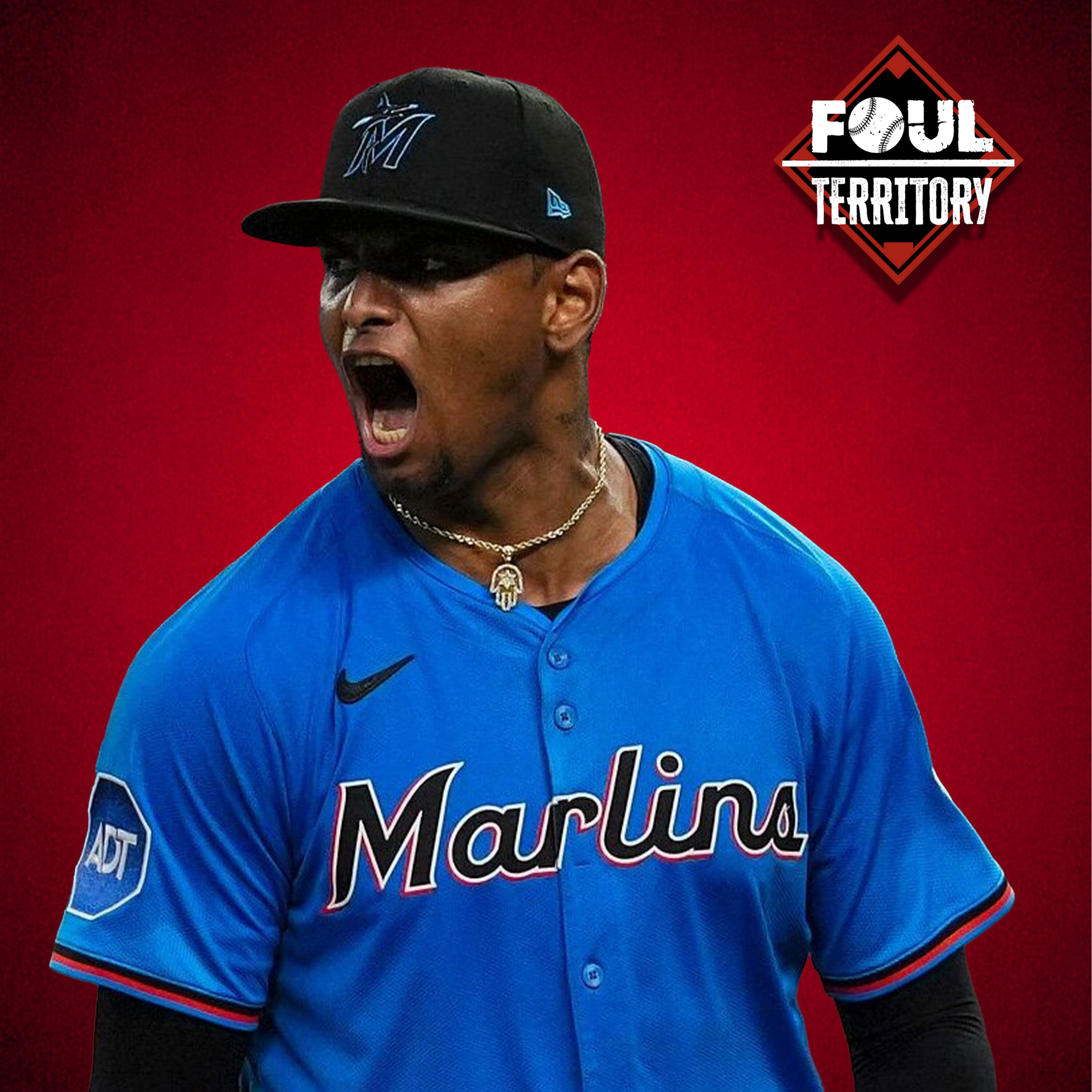
Lance Brozdowski: Next Cubs move, Scouting Edward Cabrera & Owen Caissie, Kyle Tucker’s future
We have fresh details on the Edward Cabrera trade to the Cubs. Marquee Sports Network's Lance Brozdowski delivers a scouting report on what to expect from Cabrera, what the Marlins are getting in highly touted prospect Owen Caissie, and the latest on Kyle Tucker. Lance also has great insight on the best and worst pitching development programs in baseball.
(26:32) What are the BetMGM odds for the Dodgers regular season win total?
Hosts: Todd Frazier, Erik Kratz, Scott Braun
We have a Chicago Cubs show called Northside Territory
See omnystudio.com/listener for privacy information.
Available Results
Generated results are saved to the knowledge database for reuse and search.
Extract Knowledge
Pick what you want extracted first. Model, scope, and chapter options appear after a template is selected.
Transcript
00:00:04
Speaker 1: Lance Brastowski joining us right now on FT player development analyst for Marquee. Excellent YouTube channel you should check out as well sizing up pitching as well as anyone in the game right now. Lance, Great to have you on the show. Thanks for joining us. Of course we give you the quick bat phone call when we see this trade involving Edward Cabrera moving over to the Cubs, and I know you know about the prospect return package too, So first off, I wanted to get your thoughts on the whole thing.

00:00:30
Speaker 2: Yeah, I like this trade a bit. It's the Cubs haven't really done anything in a while from an impact standpoint, so it's really nice to inject a bit of liveliness into the local radio here and have Cub fans be excited about adding a guy that is really electric to this team. I'd say that he's a little bit different than a lot of the pitchers the Cubs presently have. If you look in the last couple years, the Cubs have kind of sought these contact neutralizer, not big bat misser. You know, they had a bunch of forcing fastball usage last year relative to the league. I believe they were number one in the sport. Actually they prefer this kind of bat miss limit barrel ability, and they bring Cabrera in here, who is a guy that has insane stuff. His slot fell a little with Miami from twenty four to twenty five. I don't know if it was entirely intentional, but what I do know is intentional was their interest in Miami pushing him to a sinker, which finally allowed him to get in zone enough to pull down his walk rate below ten percent. And I think for the most part, we've lifted the tag of he'll never be able to throw strikes, which was persistent with his profile from like the second he got into the sport where he was running walk rates that were pretty much unsustainable. So he's a really fun arm I mean, the curveball sick. They adjusted a slider grip. I think there's room if the Cubs want to go towards like a sweeper and maybe even a cutter like this dude can be a frontline starter, and I think he's incredibly exciting for the Cubs to add to the rotation.

00:01:45
Speaker 3: All Right, before we get to the prospect pack is before we get to like your evaluation of too much you said electric, Okay, he's got electric stuff. Is it electric compared to the Cubs rotation, which you admittedly just said they're more you know, they're not quite on that. So does he become the smartest kid in dumb school because everyone else is just kind of going out there and doing their thing. Or is it something that they're getting a guy when you say electric and exciting and fun, they're getting a guy that has thrown over one hundred innings one time. Like it just feels like because I'm not even gonna shift to who they gave up to get him, but like, is this a sustainable thing? Because if that dropped arm angle is because he got tired from one hundred and thirty four innings? Or is it because like that's actually what's enabling him to get on top of his sinker and make it work. Like, there's so many questions that I have, and I love how you break down the pitching development stuff.

00:02:49
Speaker 2: Yeah, this is gonna be a long response because you layer it in a lot there. Yeah, I'd say it's it's electric relative to all pitchers in baseball. We could prove this just through looking at his raw velocity, also his ability to purely in the ball. There's breaking ball shapes he can create at the velocity he throws. So it's he's the smartest kid. This is the smartest kid at the dumb school, I guess. But he's also like the smartest kid when you then bring him to Stanford, you know he's not the best stuff in baseball. He's really good, and I think that it's just more I wouldn't say a shock, but it's just different. I think for Cubs fans to look at an arm that can strike out thirty percent of the guys he faces and go, yeah, like, this dude has that level of upside. Now you layered in something fascinating here. So I'd poked around a lot on this trade, and the big thing that jumps out to me is how little talk there's been that Cabrera sprained his UCL at the end of last season, and I understand he came back at the end of September. I believe wasn't through two times. But this is something that from my understanding and talking to people in the league and talking to teams who communicated with the Marlins about Cabrera, this was a hang up for other teams. I don't I think if you gave these medicals to thirty teams in baseball. I don't entirely know how many of them would have approved them. The Cubs approved them, And I think the Cubs are very sharp medical side, so I'm not saying they're incompetent in any respect, but there's a level of risk here they are accepting.

00:04:05
Speaker 4: Right.

00:04:06
Speaker 2: UCL sprains are tears. A sprain is a tear of a muscle, so it's not incorrect to say he sprained his UCL last season. Does that impact your innings projection going forward for him? I think it has to do to some extent, So there's risk. I think on both sides of this deal. The Cubs obviously got comfortable with the level of risk they were accepting with the guy like Elricrera, perhaps because this stuff is so good. They have multiple years of control with him, so this isn't like a ticking time bomb. Perhaps, But yeah, I mean I talked to people in the league who are like kind of surprised that he cleared medicals, and I wouldn't say I'm like concerned in that respect, but it did definitely like peaked my ears when I heard that.

00:04:42
Speaker 5: Let me ask you this, where do you see this is a quicker question than I'll get to another one. Where do you see him fitting in the starting rotation? What number slot do you see him? You know, one or two? Like, where do you see him at right now for this team?

00:04:54
Speaker 2: Yeah, I think he's right in that too area. I would say the interesting thing to see will be how they sequence him early in the I don't believe he's a guy with too much cold weather experience. The Cubs have a lot of home games in April, and it's cold in April and Chicago, So I'm I'm wondering whether they almost try to line him up to pitch road games and maybe, you know, maybe this is nothing. Maybe he loves pitching to the cold. I don't entitally know. I've never talked to him. I don't know, but I'm wondering whether they kind of sequence him in a way that doesn't push him as the ace, so to speak. But I think he's slocks in as like the number two guy. Matt Boyd is the innings eater. He just came off one of the best seasons of his career. Feels like he would get perhaps the opening day start, especially with Steele coming back mid season.

00:05:32
Speaker 5: That that was perfect answer you answer another one of my questions.

00:05:35
Speaker 4: But now for the Cubs too as well.

00:05:37
Speaker 5: Do you see any other particular moves coming through or is this the last one you think? I mean, Kyle Tucker is not there anymore. Do you see anything else coming into frushing for the Cubs this offseason?

00:05:48
Speaker 2: I mean, which side are you asking? Are you asking the brain here or the heart? You know what I mean? The heart lily like, yeah, breg Jimmy Bregman Man like they've been linked to him. I can confirm that. I mean, you don't need me to confirm Rosenthal has it than others, but they're definitely involved in that market. I think he's the individual player that they'd be most comfortable getting uncomfortable with. My read is that they don't want to get totally uncomfortable with, like the Baschets of the world. The Cody Bellinger union has already been rumored. My concern is more if you get into bidding wars, say on Bregman with the Red Sox or on Bellinger with the Mets, or the Cubs actually willing to go to the cost intervals that will be necessary if the Red Sox are pooning up money or Steve Cohen is pooning up money to challenge them on a godic Bellinger. So's that's where the brain comes in and goes, how aggressive will they actually be? You know, like, do you want? Says Azuki playing one hundred and fifty games in right field, which is something they tried to move off a couple seasons ago. They didn't like him out there in right field. Now he played great. I thought he looked really good up there last year in right field. So perhaps some optimism in that respect, But there's definitely some other move in here that I think makes this team a lot better. Cabrera makes sense in a sequence of moves to me alone, if this is kind of the last thing they do, I won't say it's a curious move, but it doesn't make the team like. It doesn't give me a ton of confidence that they will absolutely dominate the Brewers and outwin them by like six games. You know you had bregnant. Yeah, totally. We're talking like, I'm pretty confidence team's gonna win the division.

00:07:10
Speaker 3: Hi, Lance, I've seen you and Marquee. I'm just gonna make a comment. Let me hear the Cubs are a big mark. Can you say the Cubs are a big market. Just so that people that watch Marquee know the Cubs are a big market.

00:07:22
Speaker 2: They are. They're a huge market. It's one of the biggest, probably four or five in baseball.

00:07:26
Speaker 3: Great, perfect, thank you for saying that. Let's get back to the trade. They picked up this Edwar Cabrera. There's a lot of uncertainty with it. There's a lot of uncertainty with prospects. Owen Casey was talked about other offseasons like we cannot nobody's touching Oen Casey. Well, the Marlins got it. The Marlins got them. Is it a case that it's what had to get the job done? Is it a case of we saw what he did in the big leagues and now we're like, okay, we're fine with Saya Suzuki doing what he does in the feld, Like where does that go? And what are they giving up in this deal?

00:08:05
Speaker 2: Yeah, I'm a big fan of own Casey. He's a guy that we actually went down to Myrtle Beach and talked to first when he came into the organization from the U Darvish trade. I think he's a really cerebral dude. He really doesn't understanding what his body does well from a batted ball standpoint, and he absolutely crushes the baseball from an eggs velocity standpoint, And I think that's really what the Marlins are getting. He's a guy that I'm curious to see how much they let him face left handed pitching. He didn't do that too much in the minors, and I imagine if you kept him on the Cubs for this coming season, he would be get the Michael Bush treatment where he really wouldn't face a lot of lefties at all. But I thought he made a lot of sense from like a you're not getting Kyle Tucker back, so you know, maybe you have Kyle Tucker in the aggregate in right field, you know, with own Casey at another platoon right handed bat to face left handed pitching. Partially because Casey has the thump, he does not have the level of like low k rate discipline that a guy like Tucker does. But I like Casey a lot. I think he would be an impact bat for the Marlins in some capacity. Whether that's in a year or two, you know, we'll see, But I agree, like this was a name that I had heard, like we heard last offseason in rumors that this was a guy that the Marlins were interested in, and I think that's been mostly confirmed by variety of Cub be writers and Marlin beat writers in the last twenty four hours. I'm most curious on like, who changed with this trade. From a value perspective, you go back to the last deadline, Cubs were in conversation with the Marlins about Edward Cabrera and it seems like perhaps the piece that the Cubs weren't willing to give up in a lot of negotiations with Jackson Wiggins. This is one of their only pitching prospects. Really, they're very depleted in that respect, but he was the guy that I think they were very hesitant to give up. But the Marlins, I know, very much wanted. So I wonder whether the package of the deadline centered more around Wiggins and now it's flipped to Casey despite the fact I've heard that Casey was kind of the name the whole time. But my speculation is more everyone was trying to get Wiggins they couldn't. Now you have, you know, this injury stuff lurking around Cabrera that pushed some other teams often from my understanding, and the Cubs give up Casey, So perhaps the cost was higher at the deadline, and the Cubs maybe perhaps think they got a deal in disrespect given up Casey for him.

00:10:06
Speaker 3: You mentioned Cubs pitching development. We're going to get to some pitching development just to cross the league because I think your stuff is your stuff is electric on pitching. But anyway, Kyle Tucker, you got to watch him every single day in his one year, in his one year with the Cubs, and now he's still lingering out on a free agency market. What did you see and as going forward, what does that look like for other teams that are going to pick somebody up that in Kyle Tucker eight year contract, probably over two hundred million dollars. What did you see day in and day out from him?

00:10:42
Speaker 2: He's electric bat. I think I think he does a couple of things that you guys, obviously from the hitting standpoint, can point out better than me. But he has a really interesting if you look at like the side angle of his swing, how he like lays back his hands and how flat his back gets right like into his load and stuff allows him to cash balls pretty deep and still lift them. So if you really want to get nerdy, like balls close to his body and close to the back of the plate. He can lift and also hit hard. So I guess this is a weird way to say, like you can he can almost like delay his reaction time a lot. And you could maybe say a lot of guys in baseball do this, But if you look at the list of guys who actually lift those balls deep, it's like Carry Carpenter and Showeyo Tani, Paul Goldschmail. It's all very very good hitters. So no one needs me to tell you that you can validate the fact he's an amazing hitter. Now, is he a quiet dude?

00:11:26
Speaker 4: You know? Yeah?

00:11:27
Speaker 2: Yeah, Like I had a couple conversations with him. I enjoyed my coma was with him. I thought he was super insightful and stuff. But you know, he's he's not the clubhouse leader from like an Ian Happer Dansby sponsor Nicole Warner standpoint, who like those guys have energy and they lead the clubhouse. He's a guy that was the best player on this team from an offensive standpoint last season, and yet I wouldn't say he like carries the torchedge though in the clubhouse he is the alpha. You know what I mean, and I'm I'm not knocking him for that, Like he's not gonna change his personality, you know, like he is who he is. So I think another team would be getting a guy who's going to be a very good hitter. As to whether he fits, as you guys were talking about in New York before I popped on here, it's a great question. Chicago is in fact very different from a media standpoint than New York. I grew up on the East Coast. That very much can attest to that. But yeah, I personally think he fits with the Dodgers the most because he will not get a lot of media requests on that team, right, Like people go into that clubhouse and you want to talk to Atani and Freeman and Vets and everybody else, probably before you go to Kyle Tucker, and maybe that helps him kind of settle in. But yeah, I don't think he's gonna be like the alpha ra ra guy in the clubhouse. But I don't know how much you like knocked the profile and how much you're giving him from a monetary standpoint given that, because he's a great hitter, and I don't think there's any stats that could kind of back up. He's not a great hitter. The down months he had last season we're all injury based, and he played through him partially because yeah, he was going into a contracts year. Of course I would play through things too. I want I want my agent, a Casey close to Excel, to head to the market and go like this guy played one hundred and fifty plus games, Like, look at you want him on your team. You don't want him to be like, oh, he sat out two months. You know he only played one hundred and then people are like, well, two seasons in a row. He didn't play a lot of games. So you know, we see in contract years guys play through small injuries, and it's because the player incentive matters, and I totally understand that.

00:13:10
Speaker 5: Let me ask you this, do you think guy like Kyle Tucker would want to go to New York? And like, do you think he would want to be that star all of a sudden change in venues from Chicago to New York?

00:13:20
Speaker 4: Do you think you would want to go there? Don't.

00:13:23
Speaker 2: I don't know him well enough to say yes or no. My gut says no. I just think it makes more sense for him to go to a team where he's not getting hounded by the New York media when he's playing through like a broken hand or something like that or whatnot. So I mean, that's just my pure gut. I don't know him well enough to appine i'd say on that specific question, but I think wherever he goes, he's going to hit, and I really think that's what everybody's paying for.

00:13:45
Speaker 4: And one more question with the Mets along that line.

00:13:47
Speaker 5: Do you think the Mets officials saying they're an eighty seven win team right now?

00:13:51
Speaker 4: Do you see that happening or No.

00:13:54
Speaker 2: I haven't looked too much at pure win total projections. I do think, I will say, like as a concept, we get a bit caught up with win total projections, partially because baseball is like very random in a lot of respects. So if you're projecting a team to win like eighty seven games, you could usually add like a six win variants on that. So if that team wins eighty one or ninety three, which I imagine you guys, is like a massive difference, right Like if you're if you're leaving the clubhouse on the last day of the season with an eighty one win team versus ninety three win team, like you're a very different tenor I imagine among the team. But because of how things are sequenced, runs are scored, like, variance is huge, you know, So I could see them being an eighty seven ish eighty eight win team. Yeah, I mean I think they're in that window. Maybe it's more eighty five to six. And again, if they win eighty or they win ninety two, that's within like the range of probables such that you're not going, oh my god, this team insanely overperformed. So I think win totals are tough. I often like giving ranges, but I know it just throws out more numbers, and sometimes people are like a little hesitant to be like, why are you giving me three win totals? I want one? So I get it from like a marketing standpoint. I just say, like projections are a range of outcomes a lot of the time, and I think we get caught up in singular n is a lot.

00:15:01
Speaker 3: All right, I want you to get into some pitching development for us here. I want you because you feel like the Mets are doing a really good job. I think you mentioned the Naps and a couple of other teams are doing a really good What are you looking at? And then what are some of the teams also that are doing a great job of the pitching development in the big leagues right now?

00:15:22
Speaker 2: Yeah, I'd say one of the main things I look at, which isn't totally public info, which is why I think I've I've created a bit of a niche in this is is minor like aggregated minor league data major league totally Like, that's what matters, That's what you're getting paid for, That's what Cohen wants at the end of the day, you know, like that matters. But I think because the samples are often smaller and because you have a lot more monetary involvement from like we're going to pay this guy, and perhaps that suggests what a team values. I like looking at aggregated minor league do is so you can be able to triple a combine everything together and let me look at what a team is doing from like a usage standpoint, velocity standpoint, results standpoint A lot of that time A lot of the time, that to me indicates what their models in internally are bias towards. So look at a team like the Mariners, for example, they have one of the lowest release points in the minor leagues. They really prefer this like low sinker slider slot. You look at a team on the inverse side of that, for example, like the Dodgers and the Rais are in the same sphere where they prefer the more hoppy fastball, get in zona out throw really hard, not really large mixes, you know, really focus on four seam slider early. The Mets, I think, have struck a really interesting balance here where if you compare their results from twenty twenty three to now, they've shot up considerably and this is a direct byproduct. I think of the individuals they brought in, particularly Eric Jaegers and a bunch of other people they made. John de Verwhen from Arizona is a guy they brought in as a coordinator. He's incredibly sharp. They brought in Justin Willard from the Red Sox, like they know what they're doing on the personnel side, and they've combined that with a couple of years now of really good development in the minors. They have a ton of arms. We saw them trade from the depth of their arms and a couple of these moves they've made, particularly Ryan helsyone jumps out to me, and they do a great job. And I think they're really good and understanding like sem effects and held the ball interacts with the air and getting guys to shapes that will make them successful. And as a result of that, you're running into like the Noel McClain's, the Brandon Sprouts of the world. These guys who have really deep mixes, throw hard, really good breaking ball shapes, have the weapons to get lefties and righties out overall. And here's what I'm talking about, Like you go back to twenty twenty three, this team was basically like dead average. That was right around the time that Jaegers came in, and you jumped to twenty twenty five now, and this team from an underlying standward. So I'm looking at forcing velo K minus walking zone with. I'm not really looking at results because a lot of the time minor league parks will influence results pretty heavily such that you're not really able to get the best indication of like the skills occurring with the pitchers. But Kymniswaks, I think a great one. They're prizing Velo and they're getting a lot of zone with so I really like what they're doing. I to me right now, they are the number one team from a pitching development standpoint, and I don't know how many people agree with me. I think I've heard some of the industry nod their head and say, yeah, they have to at least be like top three or five. But I do think a team like the Dodgers has fallen off a bit. They had the highest walk rate in the minor leagues last year, and I think if you talk to people there, they'll attribute it to injury.

00:18:01
Speaker 6: You know.

00:18:02
Speaker 2: Their angle is like I've heard, like the golf metaphor of like just hit it really far and then we'll eventually get it on the runway for you, which I understand, like they're taking big risks. I think they have a very different approach to pitching development because they could go out and pay a start of thirty million million dollars. They don't need to develop like the fifth starter. There's no need for that basically in the organization based on the amount of money that they're able to spend. So they're the ones that didn't shop out to me and I know I'm going along here, But there's also like on this concept of personnel, a lot of teams. I made a YouTube video about this. There's a lot of teams that have changed personnel, Nationals, Rockies, Athletics, Cardinals and are pitching minded. Are the teams that I'd say, back in that twenty twenty three area we thought of as like deficient on the pitching development side and are now on the uptrend. So we're getting to a point where like a lot of teams are catching up on the pitching side, which makes me very interested to see what the future looks like. What's the next development? You know, in five years, what team is the best and why? And that's something I'm thinking through a lot.

00:18:56
Speaker 3: Right, I'll tell you exactly what team is going to be the best, the team that figures out the health of pitching.

00:19:03
Speaker 2: Holy health pitching.

00:19:05
Speaker 3: If you raise your organizational velocity by I don't know what percentage that is, but you went from fifteenth to third, but your health declines. Is that a negative from a pitching development standpoint? Because you're in on it, is that a negative? And should team? Should teams and can teams figure out how to keep that health? Because to me, that's the holy grail of pitching development.

00:19:33
Speaker 2: I agree with you, I think that My theory right now is what we see is velocity continues to climb and injury rates either stagnate or slightly decrease, which I would argue is a positive trend overall for the league. If you can pump Velo up and that's the strongest correlation we have to UCLs popping and all these injuries and such, but you can maintain the injuryator drop it ever so slightly, that is an overall positive to me from an individual team standpoint. If you push vela up and the injury rates spike, it's a great question. I think a lot of people publicly would say it's not good. I know a lot of people internally that say that is literally the risk necessary in order to create major league level arms. The goal of pitching apartments is not to keep people healthy, it's to create major league starting pitchers. And what are major league starting pitchers right now? They throw really hard with massive breaking balls and have deep mixes. So there's any correlation between what I just said alongside the injury route, I think personally there are a lot of teams that would be comfortable with a small spike or even a relative spike an injury risk if you could then convince your fun office that your team created the possibility of major league starters or increase, excuse me, the possibility of having more major league starters. And they'll never tell you this, like teams are never going to tell you like our goal is, you know, or oh, we're totally gonna make sure all these guys are healthy. Like that goes entirely against the current incentives we have in the game, which are too throw hard to have nasty stuff. But this is the topic I've been thinking about a ton and I'm fascinated to see how teams address it over the next couple of years. And I I would love to see guys throwing more in the miners. I think it is a bit counterintuitive what we're seeing from like a baby and guys in the min standpoint. And you hear this from sharp people as well. And this is also like a relatively old school concept of like guys need to be worked up more in the miners to then have success in the major leagues. I think we're getting to a point perhaps it's going to take like a league incentive where maybe they cut the schedule by like seven or eight games. There's less games and there's roster limits, and they limit some of this piggybacking from Triple A to the majors, where teams are literally forced to figure out how to get this guy to go deeper into games. And maybe that creates a subtle drop in velocity, But I guarantee you if that velocity goes down and teams figure out, it's just gonna go right back up, because velocity, for the most part, is one of the strongest predictive success.

00:21:44
Speaker 5: Last question here, you put out a tweet the other day about the Angels, and I'm gonna read it here.

00:21:49
Speaker 4: You said, actually, an interesting question.

00:21:51
Speaker 5: If there is a consensus you're one of the worst orgs of developing in the minor leagues Angels in frenzies. There is it optional to rush players up so they get exposure faster, relatively better coaches slash processes. Now, are you saying it's not optional for them to send them up. You think they should send them up so they can get better coaches because of the minor league development.

00:22:14
Speaker 2: Yeah, this is like the worst kept secret of baseball. But you talk to anybody in baseball about pitching development or development generally, and you ask them like who are the worst two teams or just the worst team, You're gonna get the Angels like eighty to ninety percent of the time. So this isn't like a thing I'm just coming up with. But like anybody in baseball is not confident what the Angels are doing from a development standpoint as to why incredibly layered question. They have some really sharp people there. They have Barton Smith, who's the godfather of seem Shifted Awake. They have Jared Hughes, who I think is one of the sharper minds in baseball from the development standpoint as to why those results aren't geting down to the field level in the minors, I really have no idea, but this is something like I can't a scared. So they go to the winter meetings that I'm talking about, people are talking to people about, you know, what their ord's doing or something along those lines, and like people just joke with me that at least we're not the Angels, and like, I don't know what to say. At some point, someone has to be the voice that's like pushing this stuff out there. Everybody rips the Angels from an ownership standpoint, but like they haven't done a good job developing guys, and I think their motto is literally just to rush them up, because I don't know if they have confidence in what they're doing in the miners, like they're just mitigating the risk of what the minor leagues will do with the guy. And sure there's definitely seizing and that needs to go on. But when you have other organizations in baseball think that they're actively making players worse than the miners, like, I don't know what to tell you. Just bring the guy up to the majors and you know, get them around Suzuki and these other guys who are clearly probably better coaches than those they have in the miners. I don't mean to rip them, but again, like I'm I'm realting what everybody tells me every off season, and I'm getting to the point where like everyone who dms me and is like, man, what are the Angels gonna turn it around? It's like, man, I don't know, like you tell me, like there's gotta be some kind of change there. Everybody's on a one year contract, so like, I'm fascinating to see what they do next off season with things I really don't know where the start is in terms of making this team better. But I'm eventually gonna do some kind of like who's the best pitching to have organ Baseball and rank all the thirty team and like, I can guarantee you the Angels are number thirty right now. Especially what what the Rockies did? You know, they're always behind the curve, they haven't been good for a while, but look at what they just did. They brought in a bunch of outside voices Matt Daniels alone, likemen from the Marlins, Rivas from Ugly the Tigers. Like, there's new minds in there, new blood that I think will catalyze some change where I don't entirely know. I've seen that from an Angel's bringing in sharp people from other Organs standpoint. So I'm waiting for something to crack there and them to get better, because they do have some fun arms in the miners, but for now, I'm not really projecting any of them to be impact until I see systemic change.

00:24:34
Speaker 1: Well said, and I don't even think you have to defend ripping right.

00:24:38
Speaker 6: You are not a.

00:24:39
Speaker 1: Hot take artist. You are a data analyst. Like everything you're saying has a lot of backing to it right with research and homework so well, said Lant. It actually means a lot, and hopefully when you're saying this stuff publicly, it ultimately leads to change or at least keeps the conversation going. We gotta jump to next guest, but this was awesome, dude. We love catching up with you for joining us. Much more from Lance. Actually, we'll look for that. Let us know when it comes out, and we'll plug it too. When he does rank those one through thirty pitching development programs in baseball, Lance Brostowski with us.

00:25:10
Speaker 6: Thanks Lance, good talking to you man.

00:25:12
Speaker 2: Thanks for having me guys, take care you too.

00:25:14
Speaker 1: And of course Lance was referring to a tweet on Halo Territory. So go check out that tweet because it features Mike d gi Ivanna our newest show that was announced this week, and Mark Trumbo is the analyst.

00:25:28
Speaker 6: On that show.

00:25:29
Speaker 4: He's good.

00:25:30
Speaker 6: You remember he would hit some fricking dangers.

00:25:33
Speaker 4: Especially in the home run Derby to one year, Holy cow.

00:25:35
Speaker 6: Which year was he in yours?

00:25:37
Speaker 4: No? Yeah, it was yours? It was I think it was in San Diego.

00:25:41
Speaker 6: You were at Derby with him?

00:25:43
Speaker 4: Yeah, I kim Yeah, I lost that.

00:25:44
Speaker 6: One Wow, but you got you got one.

00:25:47
Speaker 4: All good.

00:25:48
Speaker 6: But Trumbo, dude, he was a beast. Beast, had a nice career, had a nice little run.

00:25:54
Speaker 1: So anyway, he's part of the Ft network. Now he's on that Halo Territory show that just came out, so make sure you check it out out. We are just about ready to bring in our next guest, who is the manager of the Kansas City Royal.

00:26:06
Speaker 6: So it was just one second. I'll have him right from.

00:26:09
Speaker 3: Trumbo and Todd both had flat level swings. If you would talk to guys that were that, you know, oh no, no, you got to swing up. You know, you gotta have this launch. Trumbo and Todd both hit the ball like this, like they would hit the ball right here and it will go just hit absolute laser beams.

00:26:32
Speaker 1: We're doing win totals and that's gonna take us through really the next month or one.

00:26:36
Speaker 6: Team by team.

00:26:37
Speaker 1: The Dodgers are at a crisp ninety nine and a half for their over under.

00:26:42
Speaker 6: Remember last year nobody four.

00:26:44
Speaker 4: Did anybody hit one hundred? Last year? I don't think anybody did.

00:26:48
Speaker 3: No, I don't think ninety ninety seven was the highest by who. Milwaukee brewjas yes, I think Jays.

00:26:59
Speaker 4: These are so hard, man, they're so hard.

00:27:01
Speaker 6: Dodgers read ninety three wins, but they're.

00:27:04
Speaker 4: Saying everything and everything.

00:27:06
Speaker 6: Yeah, well, yeah, that's the whole name of the game. How do you think the health looks? But also the usage?

00:27:12
Speaker 1: Right, the Dodgers are really good at playing the marathon game of making sure that they're as close to full strength of the playoffs as possible. I think they did a really nice job of that this year, right, I mean Blake Snell and Tyler Glass. Now I don't know how many starts to but it wasn't a ton. But then I'll take it in the playoffs you can get there. So do they crack one hundred wins? Do you take the under? Or we've been adding this to the mix. Skip the bat. You don't want to deal with that.

00:27:36
Speaker 5: I would say under, just in the fact that you said that they're very smart when making sure their guys are healthy, and they're not afraid to go for a three or four game losing streak when they're up to sacrifice making sure their guys are healthy. So I would say ninety seven.

00:27:52
Speaker 3: I would say under. But to me, I want to look at how good is the division. Actually it was last year were making a run and Scott Brown's.

00:28:01
Speaker 4: Like here they come wat He just kept going.

00:28:10
Speaker 3: That division may not have been that good. So if the division is down a tick, can they raise that ninety three wins? Can they get can they get to one hundred?

00:28:20
Speaker 2: Yes?

00:28:21
Speaker 3: Will they? I don't think they care to I don't unless somebody in the division pushes them to win one hundred. I don't think they care to win one hundred. I don't think that matters to them. In fact, I would guarantee it doesn't matter to them. All that matters is putting a ring on that thing.

00:28:38
Speaker 4: Mm hmm.

00:28:38
Speaker 1: And they have one of the oldest position player groups, which is fine. There's a lot of benefit to that. But they're going to be a load management team.

00:28:45
Speaker 6: They are.

00:28:46
Speaker 1: They're trying to win back to back to back titles. I think they're going to do that with everything.

00:28:52
Speaker 3: Yeah, you know.

00:28:54
Speaker 1: A guy gets hurt, they double the time he's sitting before he comes back.

00:28:58
Speaker 6: If they feel like they're in a good spot.

00:29:03
Speaker 3: But are you Are you as confident as our one yesterday? Are you as confident? That's the thing, Like, I think the Dodgers can run off one hundred wins season. I think you know they're capable of it.

00:29:15
Speaker 1: I'm not dropping a lot. This is not one that I feel like I'm always a big no, I'm with you. I mean, technically it's a skip for me just because there'll be enough else that I like on win totals, so it's a skip. But if we're playing the game over under, I will take the under on this one, and let's skew it up.

00:29:34
Speaker 6: It's a big night, big big night. It's the Final four.

00:29:39
Speaker 1: Yeah, I mean, I even know what I'm talking about with college football since my alma mater is involved. So if you want a little boost, an odds boost token is there for you in your bet MGM account or on betmgm dot com on any college football playoff game, you'll get a bigger payout if your bet wins. Go check out what you can do there from more detail else at n m GM dot com.

00:30:02
Speaker 6: Cocaines