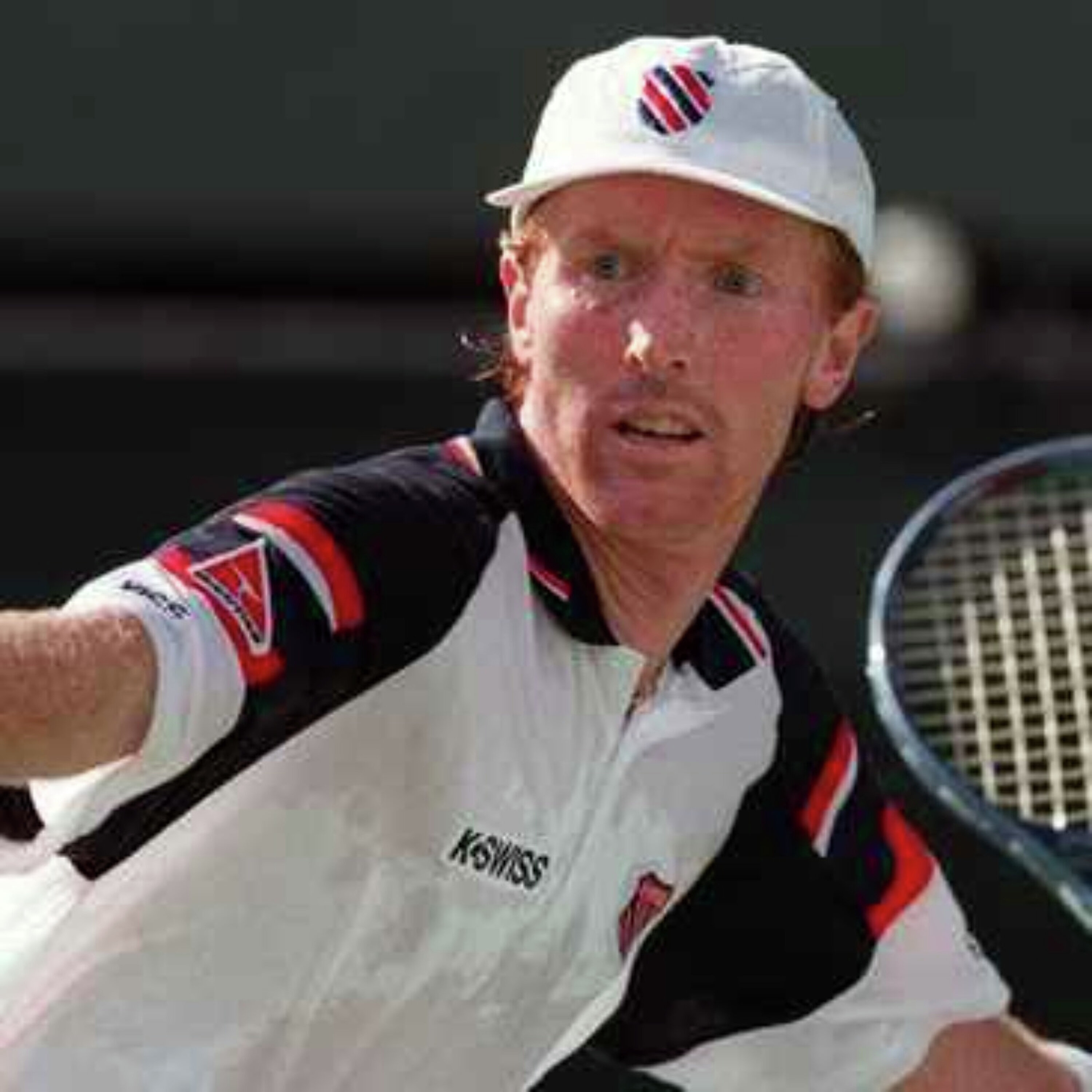
Mark Woodforde
The Aussie legend joins Caitlin in the BNP Paribas x Racquet Kisoque to talk about his storied career, the resurgence of Aussie tennis (from Tommo to Rinky Hijikata), the places his gold medal has found itself recently, and the great strides made by his home slam—and second home slam, the BNP Paribas Open at Indian Wells.
Hosted on Acast. See acast.com/privacy for more information.
See omnystudio.com/listener for privacy information.
2023-03-28
34 min
Transcript
Available Results
Generated results are saved to the knowledge database for reuse and search.
No generated results are available for this episode yet.
Extract Knowledge
Pick what you want extracted first. Model, scope, and chapter options appear after a template is selected.
Generated results for public episodes are saved to the knowledge database so they can be reused and searched later.
Transcript
00:00:14
Speaker 1: Hey, Renee Stubbs Senna's podcast listeners.

00:00:16
Speaker 2: This is our second of two interviews coming to live directly from the Racket B and P party by Aces for Trees tent during the incredible Indian Wells tournament known as the Fifth Slam. For good reason, I had a chance to sit down before Renee got to the desert with a fellow Assi, a fellow double specialist, and the other half.

00:00:35
Speaker 1: Of the Woodies.

00:00:36
Speaker 2: Keen listeners might remember we interviewed Todd Woodbridge in one of the early seasons of the show, and now we complete the collection with Mark Woodford, who in his own right was one of the greatest doubles players of all time. One every single Grand Slam has a gold medal, has a silver metal. We talk about all of it, including his daughter bringing his gold medal to school, which was awesome. He also lives out there in the desert, so it was really wonderful to get to talk to him and get some local perspective about what it's like to live near this incredible tournament and have access to it year round. I hope you enjoy, and our next episode will be with Renee's return. Thanks for listening and enjoy.

00:01:13
Speaker 1: Welcome to the podcast. It's so nice to have you on. We're gonna edit it. We're gonna edit it out most of that stuff. No, but it's truly a joy because now I have completed the Woodies collection. It is so nice to have you. Thank you for joining us.

00:01:25
Speaker 3: Thank you. I appreciate being having the invitation. And I mean it literally is tennis in Paradise and I had to tear myself away from watching Jordan Thompson.

00:01:35
Speaker 1: I'm going to keep this really brief so we can get back in there and watch Jordan Thompson, your fellow ASSI against Stefan Sisibas. That's a match.

00:01:41
Speaker 3: It's it's great to see him, you know, get out there against a marquee name SITSI pass and give it a shake.

00:01:50
Speaker 1: Come in.

00:01:51
Speaker 3: You know of no one Jordan, since he was sixteen years of age, actually was the junior Davis cupcaptain for Australia.

00:01:58
Speaker 1: I ask you all about that actually because Tom.

00:02:00
Speaker 3: I was a part of the team and just a neat kid. You know, look, generally teenagers that very impressionable. They're you know, a sponge for information and just it was. It was a good experience for me and I knew his dad. We played with it around.

00:02:18
Speaker 1: I didn't know his dad was a player.

00:02:20
Speaker 3: His dad used to play and kind of at the same time, when we were going through the early part of your journey, when you're just like traveling in Europe.

00:02:29
Speaker 1: And you're you know, it's your first time in your yeah, yeah, yeah.

00:02:33
Speaker 3: I mean you were. You try to all travel together because you know, you'd save a few.

00:02:39
Speaker 1: Butts on the breakfast buffet, load up so that you don't spend.

00:02:42
Speaker 3: More monde of Italian restaurants and wait for the families to leave their food when they left, you went over it.

00:02:47
Speaker 1: Wow, that's a scavenger level that I didn't realize. But it's good to know that that was it.

00:02:52
Speaker 3: That was what I was welcome to. But but yeah, his dad, so you know, you can look back with some fondness, but of course fondness seeing that his son is playing and he's just started to work with Marinko Matossovich, you I had worked with for a number of years. Amazing, So I've you know, I do take joy. I like to see Marinko do well. On the coaching side, he wasn't always the easiest of people to coach. When he was a player, din'd you say? And to see him working with Chris O'Connell and Jordan Thompson now, and and you know, luck, I think he's going to have a real positive impact on those guys. He has on Chris O'Connell already, he's just started with Jordan Thompson. And I think you know the way he blitzed mom Feasts the other night. Now, impressive, good shake.

00:03:44
Speaker 1: So you have won every title there is to win that really matters in sport. You've got twelve Grand Slams, you won the tour finals two times. Yes, you have a world number one next to your name. You also have a gold medal, which to me is one of the coolest things you could possibly I mean that that is such a cool thing. Just curious. Where do you keep your gold medal?

00:04:06
Speaker 3: It actually was out today out of the box.

00:04:08
Speaker 1: You're like, Oh, I couldn't possibly prepare it. Oh, it's in my pocket. I just happen to carry it around a case.

00:04:14
Speaker 3: I almost I almost had it here today. I was this morning, was doing an appearance. I do some some work with the Harper for kids. So Peanut, Louis Harper and her husband Tim, they have this a charity that they work with. It's called Based on John Wooden's Pyramid of Success. She's written a book, and so it's just these attributes that that John Wooden, I guess, you know, carved his career out and probably lived exactly and and I think it is very relevant for tennis players, but also for I think for just kids in general and human beings. That's it. I have a copy of it on my desk deal I've enlarged a frame from daughters to have in their playroom in our in our house. But it's just something that I, you know, I do look at. And this morning I just happened to be we were doing an appearance at one of the elementary schools nearby.

00:05:12
Speaker 1: That's good.

00:05:13
Speaker 3: Part of it is taking my gold medal and the silver medal. You forgot the silver metal.

00:05:18
Speaker 1: I mean, yes, you won aggle medal in nineteen eighty six at Atlanta, and then you want a silver medal and a silver medal.

00:05:24
Speaker 3: Unfortunately that was the last match for the for the Woodies. Actually that the silver medal.

00:05:27
Speaker 1: That's a great way to end it was you already had a gold anyway, you need something else.

00:05:31
Speaker 3: A couple of minute it would have been nice to have if we could have got the trio as well with a bronze, but we only played two Olympics. But I so part of that is taking those medals. And we talk about success. What is success and it's it's it changes, It changes changes for me now.

00:05:50
Speaker 1: But is it a feeling? Is it a trophy? Is a relation?

00:05:54
Speaker 3: Kids? We were saying it and these are you know, seven eight year olds at their school and saying, you know, success for you is turning up every day. Success is, you know, walking home with a smile on your Maybe your parents might think success is when you come home and you give them a hug. I know that. I feel amazing as a as a dad when my daughters come in the door and say hi Dad. Just hearing dad to me that success.

00:06:23
Speaker 1: When my son can have a conversation with another adult without me moderating it. I think to myself, Okay, I've done something that is scrid. He can be out in the world a little bit. So I know what you mean. And there's something about a gold medal that is a little bit tangible as a marker of that age is everybody, I mean, they have to their eyes wide and Atlanta Olympics was a special I love it.

00:06:46
Speaker 3: I love and I know even at the time when we won the gold medal and traveling with it to it the next tournament, going through security leaving Atlanta even bypassed many security guards. I just it was almost like you could just take that and got well. I have told the story my daughter did over here that they went to school locally and they had a paper bag, Dad. They had to have three it was three personal effects that related to your your family. And so my wife is part Italian, her mother is Italian, and so there was something from her from her grandmother, and my wife gave her I think it was a birth certificate because she was also born in Ethiopia. And so my daughter came into the.

00:07:36
Speaker 1: Office because was part of Italy at the time, right of course, pretty cool.

00:07:40
Speaker 3: And so she said, Dad, I need to take I'd like to take a trophy of yours to say that you show that you were a tennis player. Sure, I said, okay, in my office on a bookcase there.

00:07:50
Speaker 1: Well, you're like, well, I've won every Grand Slam there is, so why don't you just take your back. I will brag for you. I can tell you're not going to to.

00:07:58
Speaker 3: The gold medal, and she said, can I take this? And of course that the Atlanta one is in a box, and I said, well, the box is not going to fit in the paper bag around, so she said, well I can just and she lifted it up and just placed it in there. And I kind of smiled to myself and thinking, I wonder what the effect is going to be with the kids and the teachers, as she says, you know, and by the way, my dad won this, and kind of like we've got a call from the school from the principal like an eleven am saying, mister and missus Wifford, your daughter a lovely presentation, but she brought something that we think is of too great a value to be here at the school. Could you come and clean we can? It was It was quite funny. But but you know, to see even some of the teachers at the school today and I've been doing this for for years, they they hold it like it is.

00:08:59
Speaker 1: It is so special that it's like the treasure in Indiana Jones. There's something really special about that it is.

00:09:05
Speaker 3: And I think at the time I didn't I didn't really I mean, going through the throes of you know, match by match, you're marching towards.

00:09:14
Speaker 1: The jay is smaller, not everybody's there. It was only the third time that tennis was in.

00:09:18
Speaker 3: The Olympics, backs.

00:09:20
Speaker 1: Eighty eight and Saul and ninety two and Barcelona, so it was really not It's not always the biggest deal to tennis players, but it's the biggest deal to me because I love the Olympics so much and I love the fact that tennis is this global sport that participates in this thing.

00:09:31
Speaker 3: So that's why I was glad to hear it to me. I grew up watching all of the Olympics. I had those books that they would produce at the end. And you know, in Australia growing up, we have the Commonwealth Games, so every second year outside of the four year cycle, so I had, you know, the Olympic Games and then two years later the Commonwealth which Australia did even better at because they are less countries.

00:09:53
Speaker 1: And well also you beat the crap out of Canadians like me, very sportingly representative at the time. Now we're a little better, but at the time a.

00:10:03
Speaker 3: Much but it was a major part and for us to win, and I like I said this morning in front of the school that probably as they had a photo up on the screen, that probably the most difficult part of that day was for Todd and I not getting ahead of ourselves. We were we'd beaten the our longtime opponents. The toughest opponents for us were the Dutch pair Yaco Elting and Paul Purhouse. We've beaten them in the semi finals in the in the silver medal match and we had to play against a British pair, Tim Henman and abroad, so we really did start the favorites and all of a sudden, the Australian athletes so any I'm sure it happens people that when there's a gold medal match and all.

00:10:55
Speaker 1: Of a sudden, you're looking out in the crowd is yellow and green, and all of a sudden, this means a lot to everybody.

00:10:59
Speaker 3: And here hearing you know, you're seeing these great athletes that you've seen around the village and here they are. They're supporting you. And we were on the same floor as the basketball team who the Boomers, who were having a pretty good run at the games themselves. But I remember that these giants are standing there just so we felt ever so powerful because we had these giants you know, supporting us as well. But to actually remember the anthem, that was what we were conscious of that getting up onto the dais, I couldn't I couldn't wait to you know, you get the track suit on and the country colors, you see the dais being taken out. You know that, you know the anthem is going to be played in, the flag is going to go up, and you know, practically saying to Todd, how do we remember the anthem? You know, whilst we're kind of in tears breaking down because I just knew it was this is going to be emotional for course of us. So we had an agreement that I had remembered the first verse, Todd new the second verse. And there's our team work. That really is the epitome of Hoodies was that the team working had each other's back and singing not so gracefully. I just wanted to belt it out. See our flag share, uh, you know, kind of arm around, you know, my my best buddy, and just a huge achievement. And to see the other Australians singing along with.

00:12:27
Speaker 1: Us, Yeah, that's so cool.

00:12:28
Speaker 3: And then just trying to mouth it for the second verse, it's took over.

00:12:34
Speaker 1: Well, you've left me about four possible follow up questions because I want to ask you about a number of different things. Let's start with Australia. Australian tennis. We had a grade showing from de Monar this past two weeks. You've coached junior Davis Cup, You've coached Davis Cup, you've coached fed cup. Now that you've transitioned fully into coaching being a commentator, where is your head in terms of the Australian wave that's happening. It's so exciting to watch. I know Renee won't shut up about it on the podcast and she murdered me if if I did not mention it to you. So from where you sit, what's It's a breadth of talent. We were just talking about Jordan and Thompson. You know obviously Nick in Tanasi won the Australian Open last year. Just I mean it's a really really this year out of the Rinky Rinky and Jason Jason Coopler. What it's a really deep, deep field, especially on the men's after seeing you know, Ashberdy dominated.

00:13:25
Speaker 3: Finally, Yeah, you know it's and it's I think as as as any Australian that has has played in the last couple of decades. I mean you you you want to see that ongoing success and I think you know I was a part of along with Todd in a very successful era with Pat Rafter, Mark Philippusis. We had John Uke and Tony Roach as ou.

00:13:47
Speaker 1: Were your generational mentors.

00:13:49
Speaker 3: Right, yeah, there were, and I don't want to say fringe as in that they weren't up to our standard, but they were a part of the Davis Cups squad, So San and Stolly, Jason Stoltenberg. Whilelym Seu was hanging on there. He was a little older than the rest of us, and but it was such a fantastic era to be a part of. Of course, Late Surett was fast.

00:14:14
Speaker 1: Coming up, but he was young, he was the new He was around the corner, a.

00:14:19
Speaker 3: Little different from the way that generally we played as Australians. And then we went through a periods. As you said, I entered into some of the coaching arena. I first started out with the Fed Cup, which was the Fed Competition now the Billaging King Cup competition.

00:14:36
Speaker 1: Thank you for correcting.

00:14:38
Speaker 3: Probably probably look, I had to be introduced at some stage, whether you know, I felt like I could, I could do a good job coaching. I wasn't as confident. I think I was more assured of myself with being on the tennis court. Sure, but I had years under my belt. I mean I was going in fresher as a as a tennis coach. But you know, I had the luck of working with Evon girl Gone Cowley, one of my idols, and the girls on the team one of their idols as well. I wish I'd lasted a little longer. I would have liked it. It was I kind of I think when you're you're trying to be a leader and a guide, you know you're having to deal with all these personalities as well.

00:15:21
Speaker 1: And tennis players don't naturally convene around a team interest. And so that's why I asked you about it, just because you're so famously cohesive with TAD as a team, and then the FED and Davis Cup squads BJK Cup squads are it's a very different animal.

00:15:35
Speaker 3: And in our Davis Cup team, we were cohesive. We had our we had our moments like any team does. I'm not not here to say that we never none of us had an eye.

00:15:47
Speaker 1: I wouldn't believe you if you did, of course, so.

00:15:51
Speaker 3: But I think look overall, we worked well together. It was a team effort, so I was when I in in as as the coach of the fed Cup team at the time. It was just really different and having to actually I do have to pay attention to you know, how this person is waking up and what their needs are.

00:16:15
Speaker 1: And what's the chemistry today between these two and maybe they're not gelling or something. Yeah, you really have to be so much more externally focused, right.

00:16:23
Speaker 3: I had to be an open book and to be able to accept that everyone is a little different, but at the same time still hold everyone to a standard. I mean, to pride yourself as representing Australia and that you know, we could actually go deep in the competition. It was an experience. It's experience that I needed that I think I look back on and even though I would have liked to have stayed a little longer involved in it, it was it was. It was just a part of that pathway.

00:17:06
Speaker 1: I have to say, I think it's the toughest job in tennis. Maybe that's just me from where I said, which is kind of panned not having been in it, but the Davis Cup itself obviously, and I want to focus specifically on the Davis Cup just because you've played on it and also coached it. It's sort of in the wilderness at the moment, let's be honest, like it's a it's in a tough spot, and I think.

00:17:26
Speaker 3: Not both the team competitions, you know, have been such a massive part of anyone's career, but I think it's it's lost a little bit of its luster, it's position. But I also think that's the success of the tours that have overtaken. You know, the Slams have have increased, and they're always going to be the you know, the exception and what everyone's striving for. But the w t A tour, the atp to it, the rich riches that are available there, the financial bounty that is on offer has increased from boy twenty thirty years ago, and so some players find it more important to establish their career as opposed to playing for their country.

00:18:13
Speaker 1: Yeah, I get the tension, and I think, you know, it's unfortunate just because I know Australia has such a strong sportl you guys are really a different orient completely, and I think there's something special every Australian I've met who's an athlete, there's something's more connected about the way that your sports culture gets into your blood. To me, that is so evident and obvious. But I also think you're right. I think it's the success of the Slams that has sort of dwarfed it. But I wanted to ask you a specific question because here we are in tennis Paradise, we're in very We're at the BNP party about Open. It's arguably the nicest tournament, certainly in America, but arguably maybe on the One of the things that I love about coming here every year is the doubles. Watching the incredible double specialists we just mentioned, you know, Jason Kobler and Rinky Jakarta who won the Australian Open this year. They play against people who are maybe not double specialists in a way that is so dynamic and exciting. And I want to sort of ask you why you think that is here. I mean, other than you know, Larry Ellison cutting them a giant check to as an appearance fee, which.

00:19:16
Speaker 3: I'd actually that he's doing, not an appearance fee. I think you know Historically it has been probably the strongest doubles tournament throughout the year, more so than the Slams, which is a different dynamic, and you know talk about that at some stage as well. The Slams really should be the pinnacle out sport, but it's not all. It's not quite the case right now because we're not having the marquee singles. Players play doubles, play doubles because they're worried about the effects if it's the best of five sets doubles like they do at Wimbledon, even though they've.

00:19:51
Speaker 1: Reduced their chances in the single stripe.

00:19:53
Speaker 3: For chances, and I think we I feel disappointed by that. Agains Tradia were brought up. You're a tennis player, you play singles, doubles and mixed.

00:20:03
Speaker 1: The best record in my mind in tennis is Martina nebradelow Is overall titles because they're comprised of three exceptional records in mixed, doubles and singles.

00:20:14
Speaker 3: To me, she's a player in all three.

00:20:16
Speaker 1: You could make the case that, and you can make all sorts of cases about tennis, which is why it's fun to have that conversation sometimes, like who's the best on play. But to me, the fact that she excelled at all three disciplines is a complete tennis player. That's what I would aspire to be.

00:20:28
Speaker 3: It's a as we say in the cricket it's a you know, you doff your hat is you got it?

00:20:35
Speaker 1: That's I mean, it's a staggering achievement and I wish we had more importance on this idea. Tennis is the only sport where men and women are on the same field of play, and we only really get to see it on a rare occasion.

00:20:49
Speaker 3: At the well at the Four Slams, we have the mixed doubles. We used to have it in the early stages of my career key Bist game when it was playing there, they used to have a mixed doubles event and it was just it was an unusual time of the year to have one, but they elected to, I guess drop it out. But you know, the success of the Eisenhower Cup.

00:21:11
Speaker 1: Here, Yeah, it was nice to see it this year, really nice to see.

00:21:13
Speaker 3: I think I hope that has legs.

00:21:15
Speaker 1: Also, I like the fact that it's you know, a lot of times the SEO players play mixed in the Olympics or in some of the international competitions wearing the flag. It was really cool to see them from different nations right this year. Arena Sabalanca, who's playing right now, want it with Taylor Fritz. That's a cool you know, that's a cool dynamic compass.

00:21:31
Speaker 3: It is, it is, and so I think it is a look a reflection of players love coming here to the desert. I think they this really is the start of the season. It feels that season. Yes, the most of the players, after being in Australia, they're traveling, some go through the Middle East, some are back in Europe playing really cold climates, indoors, indoors. This is really like the welcome to outdoors and the summer season is about to begin. From here they move to Miami and then really they are playing outdoors. So I think players are really looking for matches still that this is a ten day event. Next week is a ten day event as well, so you know, if you do happen to lose early in singles, it's a bit of a wait until you actually play your next match. If you just playing.

00:22:22
Speaker 1: Maybe at the same point I said, this is why maybe they're incentivized to they.

00:22:28
Speaker 3: Well, I think generally The atmosphere here is one of it's relaxed. I don't want to say that it's it's fun party time, but it is a very relaxed environment atmosphere in the desert, and generally we have great weather. And I think the longer the players, they know they're going to be well looked after Red Larry overseeing the tournament. So why race off and head to Miami, Because if they're anticipating doing well, they're going to be there for almost ten days way, So you know, sometimes being at a tournament site for longer than say ten days, you know you're pushing it. If you're at a Grand Slam to be there for the full fourteen days, why not stay here and enjoy it. May as well play doubles and keep my hospitality going.

00:23:16
Speaker 1: And for sure and have crowds who are appreciating watching you play in all lives. The longest cues I've ever seen at a match here, I've only been coming here maybe seven years. The longest cues I've ever seen were they put Arena Sablanca Victoria Azarenka playing against Lund Stephens and Eugenie Bouchard on a court that was too small for decent names for personalities.

00:23:37
Speaker 3: Their lines were super long.

00:23:39
Speaker 1: It was right before Sabalanca kind of was a no known and you'd only really know who she was if you watched her play fed Cup sorry BJK Cup and get Belarus to the finals against US against the US, and the lines were out and they put them on too small a court because they didn't even appreciate how much people here appreciate doubles. And I feel like one thing that's so amazing about tennis is you play doubles for whole life and I would love so much for the sport to be embracing all of its forums more in a little bit more of a marketing sort of sound.

00:24:07
Speaker 3: But you see here it's they do a pretty good job and of of I think welcoming and enticing and embracing the guys that do that. There are some big names that are that are in the doubles and look, you could you know Rafa and Adal. I know that he's a big friend, close friend of Larry Ellison, and you know, I mean I'm not shying in saying that he quite possibly could be the best doubles player when he's out there playing.

00:24:39
Speaker 1: Coming from you, that is a that is a meaningful standment.

00:24:42
Speaker 3: He I would not want to be on his section of the drawer, but he plays here. You know, he is a heck of a player, full stop. I just wish you that he'd play more doubles, you know, year round. But yeah, look at to it is a marquee event here and I think back, you know, Todd and I we only were victorious here once and that was on the old side. I think it was a kind of a tough conditions for us as well. I'm not saying I mean I lived here and practice here, but it's not that we weren't through lack of trying. I mean, we were competitive here, but it just seemed we started to hit form once we got to key Biscain. Now win rate at Key bisc Gain was was quite phenomenal.

00:25:31
Speaker 1: But sometimes as a player, you feel like there.

00:25:35
Speaker 3: And I don't know whether I mean, look, I was never shy about playing in front of friends and family. I mean, I I think, you know, looking back my record playing at home in Australia, I won two singles titles in Adelaide and a few other events along the way. So I wasn't one that got nervous playing in front of it. But and here I don't think I got you know, nervous, but obviously you know, just have the same success on the doubles court at least here at this tournament, which is I would have loved to have one of you.

00:26:06
Speaker 1: Well, it's amazing because you live here, so you chose to live here, and I keep a skin right, And so what is it like living here? And what made you sort of command? I mean you're raising your family here, Like what is it about this place to feel so magical for you? I mean it's magical, so I get it. The light, the energy of the mountains.

00:26:22
Speaker 3: When I started to have some success, and time off was a commodity and a commodity that I needed to be able to maximize to fly back to Australia. If you had two weeks off, forget it catches up when you're young, you know, green rookie, make those mistakes a little older and you have good people around you.

00:26:46
Speaker 1: Four days of travel out of fourteen is a lot.

00:26:49
Speaker 3: Maybe it's going to build up if you do it a few times. So that was my a goal really was so that It's not that I didn't want to go back to Australia. But I wanted to conserve play the whole year without being too fatigued, so I came here. I looked at Florida first, but you know, as we're talking live, i' mean red hair, freckles, fair skin, you know, me and the sun and humidity just do not go well. I wilted in those conditions. But dry heat where I'm from in Adelaide, I'm very similar. So after having a look at Orlando, having a look at around Miami, different parts of Florida, thinking wow, I just don't think that's for me. Next stop was coming here to play the tournament. From the moment that I arrived and I saw the mountains snow capped as clearly, I mean, you really do feel like you can just reach out and touch them. I was really starting to get into golf. Todd loved his golf. Our coach at the time, loved his golf as well. Ray Ruffles. You go, and all I saw was this oasis of golf course.

00:28:02
Speaker 1: It's pretty magic.

00:28:03
Speaker 3: What got me over the line, though, was Rod Labor. He was a member of Mission Hills where I've I've had maintained a home there for the length of time. When I first purchased a property here. He worked out of there, and I'm thinking, well, rocket.

00:28:21
Speaker 1: Rocket Rod Lavers got pretty red.

00:28:23
Speaker 3: Hair, freckles left handed if it's working for him and working from at Woodford. Besides the fact that Mission Hills it was home to Martina Navradlova. Yeah, Chris Evett, Lloyd, Michael Chang, Pete Sam Press.

00:28:37
Speaker 1: Got some building practice, buddies. You got to check a few boxes, a few nuds, familiar nuds at the bar at the country club. Yeah, not a.

00:28:44
Speaker 3: Body close to La. A lot closer to La than where Florida was when I.

00:28:50
Speaker 1: Was LA means close to Australia.

00:28:53
Speaker 3: I mean, that's all. I didn't want to I didn't want to have to travel the thirty that it wasn't exciting to travel thirteen hour was to get to LA or San Francisco and then travel another five over to Florida. Yeah, you know, I just get into La, hire a car, drive out are and I was home. So yeah, I just I loved the conditions. I wasn't. I wasn't wilting in the hot.

00:29:20
Speaker 1: You don't seem to be wilthy, you seem to be thrown.

00:29:23
Speaker 3: And look. Eventually, you know, met my wife, and when I decided to, you know, call it a day, we had probably the choices of, you know, whether to make the base here Australia was an option. I did have a base in Europe at the time, and you know her family was was around here as well. When so we elected to. I mean, and I haven't lived I never felt like I've lived anywhere full time since I was seventeen. I mean, that is the life of touring professional. It's year round. I didn't take a whole lot of time off. Again when I had a place in Europe, a place here, place in Australia. If I had three or four weeks off, I would travel back home. But you know I had my hat laying here as well as Europe. But my wife in the end said, you know, if you're giving me the choice, then I would love to, you know, be able to raise our kids here. And I love the desert and it's looked. I mean, I go back to Australia every year, sure, of course, but this is this is our home.

00:30:28
Speaker 1: Well, I have one more question that I'm going to let you go because I know you want to see what ended up happening with that Tomo TITTI pass match, Yeah, we're here. Racket is about making culture, art, history connect with tennis a little bit more. That's kind of what we missioned number one for us and making it feel a little bit more accessible and for me seeing how much the support has changed, seeing how much more inclusive it's gotten, how much more diverse it's gotten, yes, and how much it's really embraced sustainability. You know, I'm just kind of curious from you, who has been for thirty years a stalwart in the sport in various facets, what do you see that's sort of encouraging about the sport and maybe what's one or two things you feel like we still have a lot of ways to go.

00:31:11
Speaker 3: Well. I think for me firsthand is you know, just being here in the desert in the Coachella Valley, and you know, I live at one of the nicest clubs I think in the area, Mission Hills Country Club. It's been home to one of the golf majors. They've had a number of tennis events that have held Davis Cup. They used to one of the early showings of the tournament here that is now at Indy Wells was actually played at Mission Hills.

00:31:43
Speaker 1: Of course, before this was Tennis Paradise.

00:31:46
Speaker 3: Yeah, so I'm you know, I love the fact that tennis has been you say about being inclusive. Our next door neighbors are a gay couple and he runs some tournaments for for people in the desert.

00:32:07
Speaker 1: It's real gay out here. I'll say that market. As a gay person, I feel like it's always coming home.

00:32:12
Speaker 3: It's a it's a raw rainbow city. But the fact that you know, Mission Hills and some of the other country clubs here, I'm not frightened of actually holding events for a variety of people, but they're you know, open arms and it's something that I've noticed certainly over the last ten years, those barriers are starting to come down, and I think it's fantastic. Even in Australia this year there was a particular day.

00:32:44
Speaker 1: That they did a great I have to say Tennis Australia has been on the forefront and a lot of ways, not only in terms of inclusivity, but just seeing their innovations for the tournament, for the Slams, for the connection to the city of Melbourne. I wish the US Open would take notes from them because it's so important.

00:33:00
Speaker 3: The four slams work together, and I think they do take a leaf out of each other's book. But you know the way that these tournaments are now evolved even here. Gone are the times where you would just come, buy your ticket and go watch the tennis. Now it is an event. It is about entertainment, and you know, we have tournaments that pride themselves on restaurants. On the eateries that they that they provide here is not too shabby.

00:33:28
Speaker 1: There's a number of bad but it's a whole experience.

00:33:31
Speaker 3: It's it's like a concert has been played at certain times, So tennis it's not just going out and playing our sport these days. Or you know, if you're if you're thinking that you're just buying your ticket, boy, there's a whole lot more that comes and buying a ticket when you come to these great events. So kind of feel, you know, you know, really part part of that scene that I'm commentating at some of the majors and I get a buzz out of that and just seeing the building process of these events that are putting out so much for the fan to actually have one of the great experiences of watching some marquee players. But hang on, I can get a good feed, you know, in between as I'm waiting for my next favorite player.

00:34:14
Speaker 1: That was such an Australian where freezing that I can get a good feed that was fucking like a true assic. All right, well, Mark, it has been a delight to have you. Now the collection of the Woodies is completed on this podcast. Thank you, thank you, thank you so much for making time. And let's let's get back in there and watching tennis.

00:34:27
Speaker 3: I'm looking for it. Come on, Tom, he's got to take on.

00:34:31
Speaker 1: As a as a sharer of the Thompson last name. I am rooting for the tom O's of the world. There going one. All right, a pleasure, Mark, thank you so much
Chapters
No chapters available.