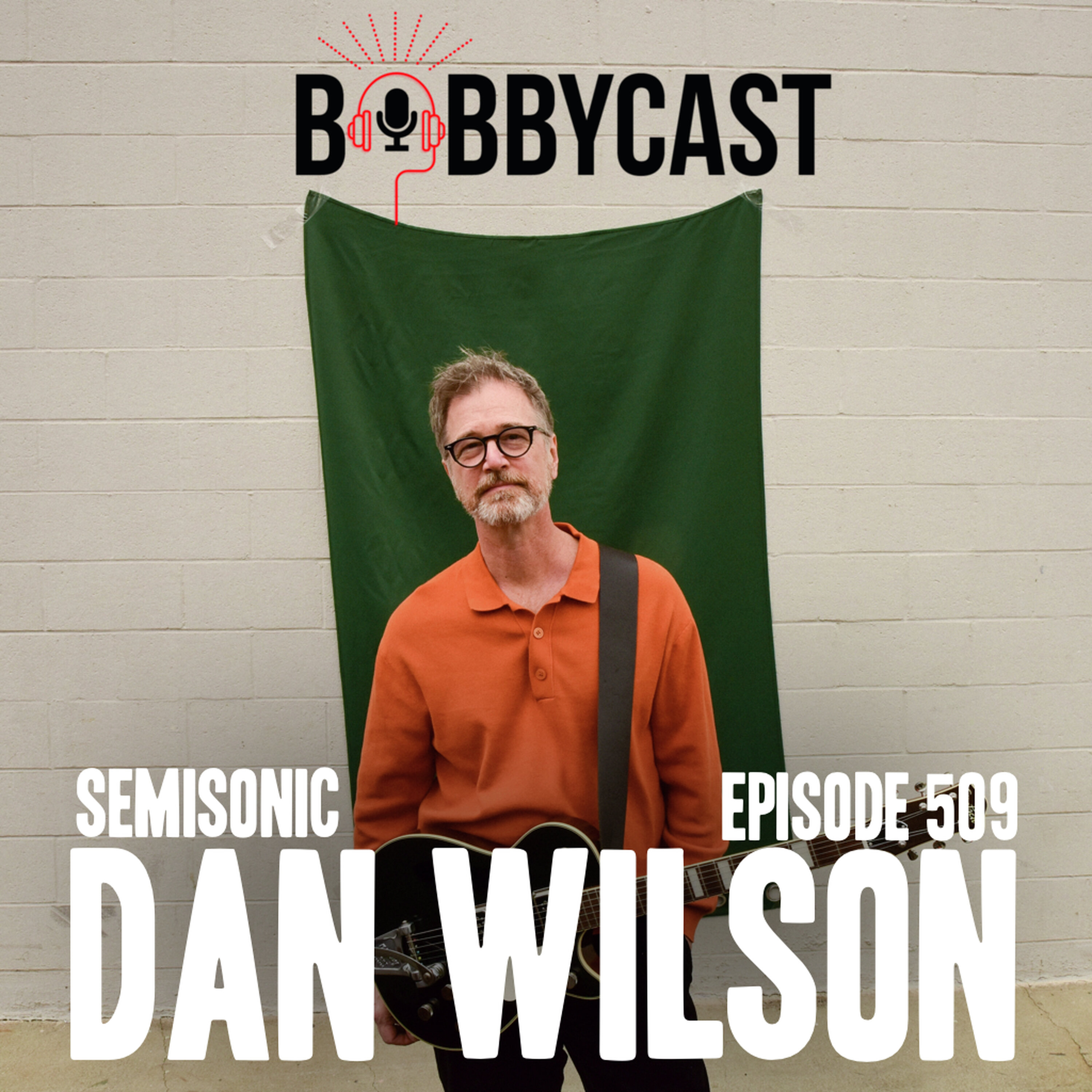
#509 - Dan Wilson of Semisonic on The Real Story of "Closing Time" + Writing with Adele + Splitting the Money Evenly in the Band + Bobby and Mike D Talk Famous Artists Who Wrote Songs for Other Artists
On this episode of the BobbyCast, Bobby sits down to talk with the lead singer from Semisonic and one of the best songwriters of this generation, Dan Wilson. Dan tells Bobby the real story behind "Closing Time", what it is like to write with Adele and splitting money evenly with his bandmates. Plus, Bobby and Mike D dive into famous artists who wrote songs for other artists that you may not know about!
Follow on Instagram: @TheBobbyCast
Follow on TikTok: @TheBobbyCast
Watch this Episode on Youtube
See omnystudio.com/listener for privacy information.
2025-04-29
58 min
Transcript
Available Results
Generated results are saved to the knowledge database for reuse and search.
No generated results are available for this episode yet.
Extract Knowledge
Pick what you want extracted first. Model, scope, and chapter options appear after a template is selected.
Generated results for public episodes are saved to the knowledge database so they can be reused and searched later.
Transcript
00:00:06
Speaker 1: And then I got one email from a sixteen year old girl after the song became really big, and she said, I have a theory about your song closing Time, and I know it's pretty crazy and if I'm wrong, just forgive me.

00:00:17
Speaker 2: But no way.

00:00:18
Speaker 3: Yeah, welcome to episode five oh nine. Dan Wilson of Semisonic.

00:00:24
Speaker 2: Closing Time, time to close the tours, and time to close the stores. It's kind of it, huh almost.

00:00:32
Speaker 3: Yeah, we've tried to get Dan. I've tried to get Dan for a long time. The problem is Dan doesn't live in Nashville, and I kind of didn't want to do it over zoom because Dan is not only closing Time, he's also a massive songwriter and has written so many songs. And I guess I'll set it up with that. First Semisonic has a tour, it's towed the Wet Sprocket Semisonic sick pensing on the Richer. That's pretty legit though, because sixpence on the richer.

00:01:03
Speaker 2: Has closing time.

00:01:06
Speaker 3: No, they have there she goes, you know what to cover by the way. There she goes again, it's about the laws. Yeah, La s Yeah, they'll let the accent confuse you. Not the laws, like the but the Las. But their biggest song is the one where kiss me yeah walks she walks down there?

00:01:25
Speaker 1: Right?

00:01:25
Speaker 2: Is that that one that?

00:01:26
Speaker 4: Yeah?

00:01:26
Speaker 3: Yeah, underneaths Bob Beautiful Barley. Yeah, you know the words better than I do. Uh yeah, that'd be a really fun show to go. I would go to that show. It sounds like you, yeah, the whole that whole show sounds like me, Like that's like right in my wheelhouse.

00:01:41
Speaker 1: Uh.

00:01:41
Speaker 3: Dan also has a new instrumental album called good Night Los Angeles, comes out May ninth. But again Semisonic for sure, but he's a seven time Grammy nominee, a four time Grammy winner, and then it's like a second life. It's like he was reincarnated into something else amazing, except it was the same person. And I didn't know why Semisonic stopped. I knew they were what some people would consider a one hit wonder because one song was massive. They'd other songs did pretty well.

00:02:09
Speaker 2: But because if.

00:02:09
Speaker 3: One song's massive and you really don't meet that with other massive song, you get labeled that even if you had other hits that did pretty well. But SIMMISONI does their thing and they quit, not because they weren't having hits anymore. But he'll tell that story. I did not know that, and it kind of sucks. It really sucked then, but it kind of sucks. But then it put him on this whole music thing where he's just writing songs. He wrote for The Chicks, Not Ready to Make Nice was that Song of the Year Grammys.

00:02:37
Speaker 2: It was at least nominated.

00:02:39
Speaker 3: Yeah, Album of the Year as a producer on Adele or twenty one. Do you know why all Adell's records are numbered her age?

00:02:46
Speaker 1: Yep?

00:02:46
Speaker 2: So you did know that? Or do you guess no?

00:02:48
Speaker 4: I knew that?

00:02:48
Speaker 3: Yeah, that's kind of cool. He won for Writing Best Country Song for Chris Stapleton's White Horse, Best Song Written for Visual Media for It Never Went Away. For Jon Batiste, I could keep going and I'll go quickly. He James Bay. These people he wrote with or wrote for, Celine Dion, Meghan Trainer, Noah Syris, Christina Perry, vance Joy, tan Neil Towns, Leon Bridges, Teddy Geiger, Jojo, the Chicks. Then it goes back to Lion Bridges slain Down. It's just it's two pages. It's of not Noah, Noah con James Bay Mike Posner, John Legend, Josh grob and Steve Perry, Jason Moraz, Lean Rhymes and Stevie Nicks, Nile Horn, Derk S Bentley, Weezer, the Dude rights like, oh, there's a third page and even that is like half of his Panic Panic at the Disco, Harry Connick Jr. Chris Stapleton again, Taylor Swift, pink Adele, I mean Adele, he wrote never mind that.

00:03:53
Speaker 2: Is someone like you. You can't closing time every song turds into that. Yeah.

00:03:59
Speaker 3: Anyway, He's awesome and I was super pumped to be able to sit down with them.

00:04:03
Speaker 2: This is what we waited for. We were super happy.

00:04:05
Speaker 3: Came to the studio and you can follow him at Dan Wilson Music and now Here. He is Dan Wilson of Semisonic Slash, one of the great writers of our day. Dan. First, you have been a bit of a white will for me as I've been trying to track you down for a long time because I your story to me is two different versions of what we do here is we talked to a lot of songwriters and producers and creators at times that people don't know unless somebody highlights them.

00:04:34
Speaker 1: Yep.

00:04:35
Speaker 3: And then also, you're the guy from Semisonic, which is a whole different a whole different story. Does it feel like two musical lives, like separated.

00:04:47
Speaker 1: In time? Really, most of Semisonic happened before I started earnestly writing songs for other people with other people. Even though the band is still together and we do things as much as we can, most of that happened before two thousand and two, and then the co writing and producing phase began around then and until now. So yes, it does feel like two different lives.

00:05:14
Speaker 3: I have a significant amount of friends, and I'm not sure who you write with when you're in town, because you're here, you're writing in town, right, Yeah. Yeah, that their careers had a similar art they didn't have the success that you had and the artist side, but they came to be an artist, a frontman, and in one way or another that IID realized they don't want to travel, right, that the touring part is such a grind, or they got dropped and they were like, you know what, I don't have the tenacity to do what some of the artists do and go get a third and fourth record deal, or they're just like, you know, I don't think I'm going to cut it as an artist. So I'm now going to focus on what I started doing first, which was songwriting. What version of that did your life play?

00:05:52
Speaker 1: Well, it's sort of an almost like backwards or upside down way. When I first came up, I played bass in jazz bands, and I played a classical piano, and I played guitar and thought about Carol King, but I really just wanted to be in bands. And once I had a band that was really good, I realized that it needed songs, and so I would need to really learn how to be a good songwriter. And that took a long time for me to do. But it was almost like got a band love to perform, I'm gonna need to learn how to write. It just seemed It's just seemed like the only way to go.

00:06:30
Speaker 3: And where did you live because a lot of people come here and there go oh, I'm not co written before because they're in Nashville. You're in a room with another person, sometimes two other people. Where did you learn to write or did you just start writing by yourself? And does it got better or worse?

00:06:42
Speaker 2: Well?

00:06:42
Speaker 1: I had I was really lucky because my brother Matt was super into music, and we're only two years apart, and he and I my parents gave us an acoustic guitar as a joint present, so we shared this guitar and we both learned all the chords together slowly, and we both started writing songs together when I was like fourteen and he was twelve or something, so we were co writing from the beginning.

00:07:11
Speaker 2: Was that in Minnesota?

00:07:12
Speaker 1: In Minnesota? Yeah, I grew up in Minnesota.

00:07:15
Speaker 3: And if your parents gave you a guitar, so music in the house, because if you're classically trying, did they have an influence on you learning to the next Because I can play guitar, but I'm not that.

00:07:26
Speaker 1: You know. My parents were loved music, but were not musicians. My dad had been in like a duop quartet in high school, so and they sounded okay. There was a record that they made, but it wasn't an aspiration and I don't think they thought we would become professional musicians or anything like that.

00:07:44
Speaker 2: At what stage of your life was it your thing and you knew it was going to be your thing forever?

00:07:48
Speaker 3: Like when I was like twelve, were you that kid? And I guess that would be junior high. Were you the music kid?

00:07:53
Speaker 1: Yeah? Probably, Although I always made a lot of I drew a lot of pictures. I got in a bunch of trouble for the picture is a never for the music, because I could make a really killer satirical cartoon of a teacher of your teacher teachers. Yeah. So I would sit in the back and draw pictures, and they eventually got wise to me, and they would like stroll back and see what I was drawing and pick it up and take it away. Then I found out later they kept them.

00:08:20
Speaker 2: Am I crazy?

00:08:21
Speaker 3: I think I've seen some of your lyrics sketches where you do lyrics and drawings in the lyrics.

00:08:26
Speaker 1: Yeah. Yeah, so that was I was either going to be. Somebody asked me once at a party, if this music thing doesn't work, what are you going to do with your life? And I said, well, you know, I'll probably be a painter and they said, you mean like paint houses? What do you mean? I said, no, like a fine art painter, And they laughed because that as a fallback career, that was a pretty dumb idea too.

00:08:46
Speaker 3: Yeah, the fallback is almost like as outrageous as the first career. You know, So when you are finished in high school? Did you again? If you're that trained, I'm assuming you went to college to do music.

00:08:57
Speaker 1: Yeah, well, no, not to do music. My parents got me into the piano lessons because they thought. My dad said, and this is kind of funny, my dad said to me, you know, if you take piano lessons, then you get good. You'll be at a party in high school and you'll be able to play songs on the piano and everyone will sing along. That was my dad's era. That was nobody did that when I was growing up.

00:09:22
Speaker 3: It still does feel like that though, Like I took piano lessons as an adult, and that was much harder. Yeah, And I was like, man, I'm going to just be somewhere, be piano. I had the same thought that your dad told you, and everybody's going to be so impressed. And I never got to that stage. But I don't think that theory actually has died yet. Does it happen? Almost never, unless it's like Paul McCartney was playing at a party when we hear how Paul and Taylor.

00:09:45
Speaker 2: Are singing Charlie along.

00:09:48
Speaker 3: I've actually never seen it now that I think about it, where just someone dominates a party by getting on the piano and surprising everyone.

00:09:53
Speaker 1: I know. I think there's a scene in Rear Window where one of the neighbors is a is a Broadway songwriter and he always has parties where he's playing the piano and everyone in the party is singing along. But that's a movie obviously.

00:10:03
Speaker 3: Yeah, that's much more of an even two and a half Men thing where Charlie Sheen's playing the piano.

00:10:07
Speaker 2: Yeah, and you're like, wow, look at that. Yeah. So you go to Harvard, Yeah that's pretty cool.

00:10:11
Speaker 1: Yeah.

00:10:11
Speaker 3: Well yeah, because I'm assuming you were just extremely studious. By even your actions the drawing and the music, I assume that effort went into learning as well.

00:10:22
Speaker 1: Yeah, I just you know, it was It was a dutiful first son. But also I was super enthused about things. So I had a job or kind of a freelance life in high school making cartoons for magazines around Minneapolis and Saint Paul's. That's pretty crazy, and some of them are pretty good, the illustrations. And my parents when I applied to colleges, they advised me to make a portfolio of the cartoons that I made, send it along with the applications, and so I think that's probably why I got into Harvard, because I had straight a's and high test scores and also was a crazy cartoonist.

00:11:05
Speaker 3: And like found a way to stick out as Yeah, it sounds like they're going to see ten thousand versions of The Perfect Student. Yeah whatever, those finger quotes are right, But it was a way to stand out. So you drew this stuff in the packet or on the application? What did you do the drawings.

00:11:20
Speaker 1: Made of sent a little Manila envelope full of xerox copies of the pictures that I'd published, you know, like twenty of them or something like that.

00:11:27
Speaker 3: Yeah, how to let you in even with mid grades if they were to come up. And dag good, that's super cool. Had anyone in your family been to Harvard.

00:11:35
Speaker 1: My dad had had gone to Dartmouth and he went to Harvard Medical School, So I guess I was a legacy to some degree.

00:11:45
Speaker 3: So to you, your dad showed you it could be done. Yeah, of course, yes, yes, that's cool.

00:11:49
Speaker 1: Yeah it was. It was It was a possibility that was real.

00:11:52
Speaker 3: And you get to Harvard and are you when you're I've spent a lot of time not actually at Harvard, but in that area of the country and you're up in your boss Are you playing? Are you learning to play up there? Are you playing shows? When do you start actually playing? When do you decide you're going to go out and do clubs and stuff.

00:12:06
Speaker 1: Well, when I was a freshman in college, I I met some guys and not from not from Harvard, who had a band that I thought was really cool, and they asked me to play bass. So I was doing gigs already, one or two weekend nights if we could do it in Boston.

00:12:26
Speaker 3: Were you like a kid looking to play bass somewhere? Did you have like a post like pill off?

00:12:30
Speaker 1: And I would have If I hadn't met those guys, I would have. I would have.

00:12:32
Speaker 3: How did you even get in the same situation as these other musicians you weren't school with.

00:12:36
Speaker 1: Well, I saw an ad that they put up. It was two guys who went to Berkeley and two other guys who were just musicians. I can't remember what they were set up.

00:12:48
Speaker 3: Was my assumption is if they went to Berkeley, they were high level musicians.

00:12:52
Speaker 1: Yeah, these guys were really good.

00:12:54
Speaker 2: And so for you to jump into that you had to also be pretty good.

00:12:58
Speaker 1: I was pretty good on the base, and I showed up rehearsal on time, and you know the basics. But we were gigging right away freshman year, and then I just really never stopped. And I remember, it's funny. I went to a ten year college reunion and maybe this point, yeah, maybe a fifteen year I can't remember what it was, but I already had a couple of medium hits with Semisnic and and all these people at my reunion said, so, how come we never saw you? Like, why did we never meet? Like this happened over and over and over again, and I realized that I was just never on the scene socially. I didn't go to any parties. I was always out doing gigs.

00:13:45
Speaker 2: Were you gigging you have to drive a few hours gigging?

00:13:48
Speaker 3: Or was it all since there were so many places in near Boston, Like, were you actually traveling a bit?

00:13:51
Speaker 1: We would we would get in a van and you know, a cargo van, and six of us drive up to you know, the on the coast. It was usually on the coast of Massachusetts. But we'd go, you know, an hour or two hours away.

00:14:04
Speaker 2: And what was this band?

00:14:06
Speaker 1: This this band was called Animal Dance.

00:14:09
Speaker 3: Did any of those folks and animal dance turn into any of the people in Semisonic.

00:14:14
Speaker 1: My brother Matt was in that band, and Matt and I started a band after that called Trip Shakespeare, and then I started Semi Sonic with the bassist of Trip Shakespeare and me and a drummer friend.

00:14:30
Speaker 3: What about Semisonic was different than Trip Shakespeare or the band before that, or was it people just attritionan like life, attrition of life and people were changing?

00:14:40
Speaker 1: Not really, Well, my brother was Matt was the leader of Trip Shakespeare, and we had traveled. We had toured for eight years or something like that, and everybody was medium burned out on it, I think, and he wanted to take a break from the band, so we just stopped playing. And we had been extremely like I don't know, we were like essentially a jazz a jam band, not a jazz band, a jam band, and we would practice every day, but you'd think it was aimless because we would just jam all day long, like five days a week, and so then at our shows we'd learn our songs and then we had just turned them into crazy, lengthy, druggy freak outs.

00:15:23
Speaker 3: Would some of those songs be writing sessions though? Like some of the jamming, would that be writing sessions?

00:15:27
Speaker 1: Then they would lead to songs. Yeah. Yeah, especially if something really really special happened and it felt like we all could remember it, then that would turn into a song, you know.

00:15:35
Speaker 3: And with Semisonic and you're the singer, it was just the first time that you said, Hey, I'm gonna be the guy. Was that a desire of yours to now move up front? I? I, yeah, I it was never my dream to be a celebrity or anything like that, but I did want to sing for people, and I.

00:15:53
Speaker 1: Trip Shakespeare was like one way, Like we were extremely dedicated and we worked really really hard. And also the music we made was kind of wild and especially live, and I had always wanted to do things that were more like aligned with the charts that were because that's what I always listened to, was like pop music. So when we started Semi Sonic, I told the guys John and Jacob that I had some principles I'd like to to use. And you know what, do you guys think? The principles were? Life is more important than music. You know, if we're having like a quarrel, or if we're if we're if someone's just really bummed out and can't play their instrument and wants to go to the bar. We're not going to rehearse. We're not going to apply ourselves. We're just going to go hang out. That was one thing. Second thing was if it's not good within an hour or so a song, if it doesn't sound great within an hour or some of us trying it, I'll go back and write another song. We're not going to torture ourselves to get something to sound good, because usually it's a song's fault. That's my opinion. And then the third thing was if I can be the last word on all things, I'll be collaborative, but we'll have a guiding principle and I'll and I'll be a decided the deciding vote, and we're gonna split everything we earn from the band equally three ways.

00:17:36
Speaker 3: Was that even the publishing the writing part, could you guys wrote everything together or even if you didn't. Even if you didn't, it was still gonna be split. Yep, their names were on it. Nope, so I would just pay I'll honor code big time.

00:17:49
Speaker 1: It wasn't. Yeah, we didn't really write it down, but I mean it did seem like I had agreed to it, and it's you know, it's when then. And also, I don't know, once once you start earning good money for music, you can say, yeah, I'm going to need three times as much as this, But I don't know, do you really like it? Doesn't it? I'd rather not burn two of the most important friendships in my life to have a little more money.

00:18:14
Speaker 2: And also a trio probably makes it a bit easier too.

00:18:16
Speaker 3: Yeah, well, if it was seventy five or six people person band, and if you're.

00:18:21
Speaker 2: Doing all the work, oh, I won't imagine that.

00:18:23
Speaker 1: Oh you're revealing me to have it. That's a line I would draw a lineup. Yeah.

00:18:27
Speaker 3: I was watching a story on something corporate at the band and they're touring now, and they were talking about ticket prices and the guy had he'd blocked out the show. But the lead singers on the corporate was like, look at this, this is where all the money goes. And he's like, okay, so our guarantee is this, And when it was all boiled down with all the added fees and venue and traveling, he's like, we're each making about seven thousand dollars a night on a one hundred thousand dollars guarantee fully sold out show because and they still they split the money least still, which that just reminded me of that because I still I liked that that the band still after their success and they're still touring really well. The bass player and the singer are making the same amount of money, and I think that's probably an agreement the head way early that they're still holding on to today, which I think makes the band fundamentally better too, right, I think everything is based so they agreed fundamentally that you are the guy and that's the reason that you guys are doing. So how was the band different than musically?

00:19:30
Speaker 1: Like then what happens, Well, it's a trio and it's me playing guitar, and it's and the things I liked at the time were kind of loud riff rock, and so we were much more focused on just sort of powerful loud rock all the time.

00:19:56
Speaker 2: Were you focused on like bigger hooks, like hookier songs.

00:20:00
Speaker 1: Well, I naturally would gravitate towards that anyway, But yeah, we definitely. I mean every band has a sort of range of you know, positions that people take, Like like I was always willing to do the hookiest, kind of possibly corniest thing you know musically and try it out. And then Jacob the drummer had usually was a pretty good barometer of taste. And then John, our bass player, has always been like the coolest guy in the room, and it is very as a real His cheese meter is very sensitive, so if it's cheesy, he's like, no, I refuse, we can't do that, or I hate this or whatever. So between us, I would probably be the one trying to write something that everybody can sing along to. And sometimes when you swing like that, you end up with something pretty hokey, you know, So I they would be there to kind of say, not not cool.

00:21:01
Speaker 3: Did you guys move to Los Angeles or like form ish in Los Angeles?

00:21:05
Speaker 1: No? We we. John grew up in Saint Paul. I grew up in Minneapolis. Jacob moved to Minneapolis several years before we started the band, and we stayed in Minneapolis. And the reason we stayed in Minneapolis, I'm pretty sure is because Prince was there at the same time and his whole empire was out in the suburbs in Minnetonka. He didn't move to La until I don't know it was the two thousands. Maybe you know he was in Minneapolis, bringing all the business to him, bringing the producers to him, bringing all the talent to him, and sending music out to LA from Minneapolis. And we just like you said about my dad at Harvard, Prince made it seem possible for us to stay at home and be part of a scene there and be with the people we loved and also have a chance at reaching a broad audience.

00:21:56
Speaker 2: When did you guys decide you wanted to pursue a record deal or did they come after you because you were againness in traction?

00:22:02
Speaker 1: Uh? Trip Shakespeare, the band before Semi Sonic, had been on A and M records, so we were a known and we probably that that Trip Shakespeare was a band. Where like if I even now, I run into musicians in LA who were at our shows at the time, even now, which is crazy to me, but I never run into a member of the general public who was at a Trip Shakespeare show. You know, it was all musicians. But that so the the industry is the same way, like they go to the people in the music industry go to shows they like, they love the stuff. So they had a lot of them had seen Trip Shakespeare and oh Dan Wilson studying a new band, you know, we're curious. So there was already there was. There was interest really early and us getting a record deal, and it was kind of a you could really be a band it only rehearsed in your garage and toured, you know, for four years or whatever, and get a big record deal.

00:22:59
Speaker 2: At that time time it was if the right person saw you, if the right.

00:23:02
Speaker 1: Person saw you, or if you just got some sort of regional radio. It's different now. What was like the way TikTok is now?

00:23:12
Speaker 3: So what was the first single that you guys? Did you cut a single or did you cut a bunch of songs?

00:23:16
Speaker 2: First?

00:23:17
Speaker 1: We did a tape of four songs and we sent it. We sold it to fans, and we sent it to radio stations, and a couple of radio stations played the I said tape on the radio.

00:23:34
Speaker 2: Any of the songs that ended up being big for you guys.

00:23:37
Speaker 1: Uh, yeah, one of them. There was a song called FNT Fascinating New Thing, and that ended up getting played by in its early demo form in Minneapolis and in the Midwest, you know, in different different stations and then that was Yeah, that song came out on our first album and ended up in a movie and it did a lot. It had a long life.

00:24:09
Speaker 5: Actually, let's take a quick pause for a message from our sponsor, and we're back on the Bobby Cast.

00:24:24
Speaker 3: So what's the story, because everybody there's always not always most of the times it's like, oh, it was a last song added, or we never thought it was gonna be good, or it wasn't. It was misinterpret what's the story on Closing Time? Like was it the last song? Was it the first song?

00:24:41
Speaker 1: Closing Time? So send me Sonic. We make our first album. It gets a lot of critical praise, major label, was the first major label. It gets a lot of critical praise. It's called Great Divide because we we did half of it in Minneapolis and half of it in Los Angeles, so we would always go over the Continental Divide to work on the record, back and forth. So we did Great Divide. It got a lot of great press that we got a lot of great reviews. All the museohs liked it once again. But I had thought it had hits on it and it didn't. It had some sort of songs that got on the radio, but the people, the general public didn't respond to it. Really.

00:25:27
Speaker 3: Do you think, though, not to interrupt you, but before you move on, do you think, listening back to that now, you still think it has hits on it? Or do you think the version of you then thought it because you had just done it.

00:25:36
Speaker 1: I think it was pretty wiggly. I think it had it had too much going on much of the time. So it was like because we had come out of Trip Shakespeare, which was like the ultimate band of too much going on all the time, So it was we were still kind of settling down into a kind of simplicity that I was seeking. So yeah, in retrospect, that first Semisonic album was not simple enough in the right way.

00:26:09
Speaker 2: And when you took that, what was that feed was that feedback to you that was no?

00:26:13
Speaker 1: Nobody told me that?

00:26:14
Speaker 2: Okay, then why this next record was different?

00:26:17
Speaker 3: Though?

00:26:18
Speaker 1: The strange part was that I had thought that Great Divide was full of hits, and then it was like a critical smash, but not a hit, and so I was kind of taken aback by that, and I decided that our next album was just going to be an art project and I wasn't going to think about hits. But at that at that point, I was like I was on fire as a writer. I was, so I wrote sixty songs for Feeling Strangely Fine the next album, and a lot of them were good, and there were a couple that everybody in the in the band just oh, yeah, we gotta do this, we gotta do this. We gravitated to our favorites pretty quickly, and Closing Time was kind of in the middle of the batch, when I had probably written thirty of the songs. I was doing a song every day, and I would once or twice a week, I'd go over to John's house, and John and Jake and I would make a really simple demo like what in Nashville you'd call it work tape, just acoustic guitar and singing. And in the batch of songs that we kind of weeded it down to like fifteen songs that just sounded like work tapes. So we didn't do demos really, and Closing Time was one song that people when they heard that demo, people would say, whoa whatever are you're doing there? You need to make more songs like that.

00:27:45
Speaker 2: Did you feel like that was a simple song, like what was your feeling about the song in comparison to the other stuff you were writing and the last record you did.

00:27:53
Speaker 1: I I wasn't really com I wasn't comparing, and I definitely didn't think that Closing Time was going to be an international smash that still is played twenty five years later. No, but I knew it was good and I thought it was going to be. And it's sort of it was about our lives, you know. It was about bar time. We had been I had been on tour at this point for nine years or ten years in the nightclubs of the Midwest and hopefully the coasts, you know, So it was it was just about our lives. So I didn't really have an objectivity about it. But I knew it was really really good, and I knew that it fit. I had this scheme. I told Jacob our drummer that what I really love is like Carol King, Paul Simon, James Taylor, like all the music that I heard when I was nine. I really still loved it, and I just wanted to write songs that could live up to that standard and then we would play them really loud, whatever they were. So I would try my best to write a Carol King song, and then in rehearsal we just play it as loud as we could, and some of them, you know, sucked in that form, and we just would drop those songs. But some of them sounded great in that form. And Closing Time is a really good busker song. You can play it on a street corner.

00:29:21
Speaker 3: Was it, you said, Barr? Because I've heard nine different theories of what the song's actually about. I feel like the two songs that have the most theories are ben Falls, Vive Brick and Closing Time, because if you just go in enough places, there are enough theories about the song, right, So what is it about?

00:29:35
Speaker 1: Another of my little I get on these kicks where I have something that I think is the guiding principle of everything. So, at the time I was writing for Feeling Strange to Find, I had this guiding principle that all the lyrics, every line of lyrics should have two kind of plausible meanings. I didn't want any lines of the lyrics to be just one simple, straightforward meaning. So when I was writing Closing Time, I actually thought I was writing a straightforward song. About halfway through, I thought, well, this is literally it's just about who were going to hook up with at the end of the night when they turn on the lights. And then I At the same time, my wife and I were expecting our first child, and so I was thinking about fatherhood, I was thinking about birth. I was thinking about that a lot. And halfway through the song, I was just like, oh my gosh, this could totally be about being born. This could totally be about getting bounced from the womb, you know. And at that point I didn't change any of the words, just all the words open all the doors and let you out into the world, turn all the lights on over every boy and every girl. Like there's certain things about it, boy and girl like these this is about a bar. Why are these boys and girls? You know? But it's because it's about little baby boys and baby girls. Also, I one last call for alcohol, finish your whiskey of beer. That seems like straightforwardly bar time related, but it's also about being cut off from the umbilical chord. You know, you got to you can't have this anymore, you know, you and you don't don't have to go home, but you can't stay here. It's like it's all about like emerging into the world. And once I realized that I was laughing and laughing, and I was like, everyone's gonna laugh so hard. This is this is gonna be really funny. So I finished a song I did throw one line into to just be straightforward, gather up your jackets, move it to the exits. That was just that was a straightforward bar time song. But I think every other line in the song had that to me magical double meaning. And then no one got it. My band didn't get it.

00:31:48
Speaker 3: Which part didn't they get the double meaning? Or birth or they just thought it was bar time only no one ever said it's about someone being born? Nobody, and I just made a funny decision. I'm a big explainer, as you could probably tell. You know, I'm always like ready to tell everybody why I did something or what. But I did decide with that song not to really talk about the double meaning. And then I got one email.

00:32:14
Speaker 1: From a sixteen year old girl in Utah after the song became really big, and she said, Dudean Wilson, I have a theory about your song Closing Time, and I know it's pretty crazy and if I'm wrong, just forgive me, but it sounds to me like it's about someone being born, no way. Yeah, one person, one person, And I was kind of I was so overjoyed, like okay, somebody got it. Then I just let I just let it lie for about fifteen years, and then I just started talking about it.

00:32:49
Speaker 3: So after Simisonic, I don't know, do you feel confident as a songwriter like a f Was there confidence or was there Okay, this is a new version of all its one hundred percent of me. Now you're just gonna you know, and not tour. Did you have to rebuild the confidence?

00:33:05
Speaker 1: Well, one of the reasons I stopped touring was because the baby in question spent a year in the hospital coco of my daughter, and we were driving back and forth to intensive care for eight months and then to this step down intensive care for four more months. And I just realized that when all this and the doctors told us this is gonna be a complicated life and very medicalized for a long time, and I just realized that there was going to have to be a horizon somewhere in sight for the touring. And I managed to like tour like crazy for another four years, three years, and then it had to kind of take a step back for me being a parent and I would say my confidence has always been very mixed. I can't say I'm always willing to go into something and try it, like I'm willing to go up on stage and sing a song with people that I only learned, you know, twenty minutes ago. I don't know if that's confidence or I don't know what that is, but I'm definitely ready to be worried and insecure at all times about what I have to offer. Every time I write a song and I think this is great, Okay, that's it, that's the last one. It's never going to happen again, it's like, and I have to tell myself, no, you think this every time. You always think it's the last one, but it's never the last one. But it's so Coming out of semi sonic and going into trying to write songs for people was interesting because I kept asking people, do you want to write a song with me? In Minneapolis, no one wanted to do it. No one wanted to like because everyone thought their method was really dumb and really embarrassing and they made it up themselves, which is true, they did make it up themselves. Nobody realized that they made up the same method as everybody else. Everyone is the same. Their method is acted together over years and then slowly refined, you know. So I kept asking people in Minneapolis, we write a song with me, and people are like, I've never done that, you know, no one wanted to do it. So one of the things I did in response to that is to is to organize some trips to Nashville because I had heard and I've always I had always listened to UH Country records, and when we were on tour, like our drummer Elaine was obsessed with Alan Jackson, so we'd always listened to the We listened to the Dead and Alan Jackson and Soundgarden and Nirvana and UH Flaming Lips and Liz Fair and Buick, you know. But one of it was A country was always in the mix. And I had a lot of reverence for the music that came out of Nshville. So I thought, Okay, maybe I can go to Nashville and like learn what it is that they do there that's that I admire so much. So I came here here a couple of times for like five or six years, and I wrote with people.

00:36:05
Speaker 3: One of the songs you wrote with Dirk's a good friend of mine. You wrote Home with Dirks, and to me as a songwriter, you guys were able to write a song that felt patriotic but not cliche and not nationalist. And there's a difference, right. I felt like, I don't know if it was on purpose, but I felt like, you guys walk that line. Were you purposefully walking that line?

00:36:31
Speaker 1: Okay, that's funny that you should ask that, because it relates to something I said before, and it's I love that question. When we can, I tell my version of how we wrote it, Yes, but it may not be reads or Dirks's version exactly, but the way I remember it, we all got together. I was really excited we had. I had insisted that there'd be a piano at the session, and apparently it was a kind of a pain in the butt to organize that. I didn't realize that you couldn't always just say I need a piano with the session. But there was a piano with the session. And we all showed up and we sort of were shooting the breeze before we started. And then Dirk's got a text or a call from his wife who's was a cold morning and her preus wouldn't start and so he hopped in his giant truck and drove away. He said, I'll just be fifteen minutes. I'm sorry, IM, I gotta jump start my wife's car. So he disappeared, and Brett and I were sitting there and we talked for a little while, and I was sitting at the piano while I was talking to him, and I turned to the piano and I literally just was like, you know, what's this thing like? And I played one chord with two hands, and Brett was holding on to his guitar at the time, and he played that the guitar riff from the song like instantly, like I was holding the note on the piano, and he just played the beginning of the song. And where did I? I said, what that come from? I was like, that's amazing. I love that. It's incredible, and he goes, well, I guess it came out of that piano chord and out of this, and he pointed to a cross that was on his guitar and he pointed and he said, we came from there. And so Brett and I kind of played around with a shape for the verse instrumentally. Dirk's come back in fifteen minutes and he goes, okay, so let's get started, and we said, well, we do have something, and we played in what we were doing and he was like, did you do this yesterday? When did you do When did you write this? And we said no, we we did this while you were off jump starting your wife's car. And he said, this is incredible, and I said, I have some thoughts about it. I feel it reminds me of it reminds me of a I don't know, it's almost like it feels like it's got to be a patriotic song and maybe it even has to have the word America in it. And they both went, h no, like so that's me going to the cheesy excess. But it did. It is what it was about. It just didn't it didn't need to say that word and that and that was their opinion and I totally agree. I'm really glad that we didn't do that. I'm glad we kept it more metaphorical. I think it's a beute. I love it.

00:39:21
Speaker 2: Yeah too. You wrote someone like You with Adele just you two.

00:39:26
Speaker 3: Yeah, to write Did she sing the I don't know, just the demo the work tape? Does she sing the work tape too. Yeah, because a lot of the times here, like my friends, if they're the artist, they won't sing the work tape because they don't really want the work tape of them singing that early version of it existing. So one of the writers that can also sing will sing the work tape in case it never comes, so that way it can't like actually be put out. Wow, that's what I wondered about the Adele, like, did she sing the work tape on? Was that even a thought where maybe you sing it? So if it does exist somewhere, it's not Adele singing a song that she never put out.

00:40:01
Speaker 1: When we wrote together, she wasn't she She had had some nice medium level success in America and she had played on SNL and it had gone really really well. But she wasn't hounded by photographers and whatnot. You know, she didn't was living that life. So that wasn't really in That wasn't really in the equation, you know, avoiding a leakable version of the song. However, we cut it in this small studio in La which had a piano in it, a really nice piano. So I often wanted to do like writing sessions there because it was this beautiful steinway there, and we wrote it there, she sang it there. I played the piano there. On the second day we got it, we ironed out some pretty bad kinks that had had on the first day, and we finished the song. And that's there's no work tape of it. There's just that demo of us. And there's no other version. Well there was. They tried to recut it a couple times with a full orchestra and band, and it didn't It wasn't cool. So they just contacted me at the last second and said, can you send the parts to the demo? Wow, we're going to mix.

00:41:08
Speaker 2: It for the record, And that's what's that's the record, that's what we hear.

00:41:11
Speaker 1: So really that was the first version of the song that was the work tape, because it was literally hurt and me hashing it out and me just being a perfectionist about her getting a real performance.

00:41:21
Speaker 2: Where do you keep your Grammys?

00:41:24
Speaker 1: There's a bookshelf in my living room that has three out of the four and the fourth one is still in the mail.

00:41:30
Speaker 2: Apparently, no way, you never got it.

00:41:32
Speaker 1: I haven't gotten it yet. It's always a long delayed thing.

00:41:36
Speaker 2: That's funny.

00:41:37
Speaker 1: It always takes a long time. Then you get it. You're like, what's this big square box that just arrived? You know you don't And it's often from some like I don't know where it's from, a publicy, publicity firm or a law officers. I can't remember how they do it. But it's never like from the Grammys, you know, so you get, oh, what's in this? Maybe it's a piece of music gear that I forgot I bought.

00:41:56
Speaker 3: I'm used by because I get a if it's like an acm orcma whatever, it'll be like fragile. But what I order it's fragile, Like why is there a fragile box on my porch? But the fragile thing throws me off more than anyth because I don't really order fragile things. And then I'm like, because you're right, it takes like three you don't get the award at the show.

00:42:11
Speaker 1: Did you get it when you've forgotten entirely about it? Yeah? Yeah, Well my CMA this year showed up in many pieces. It was it was in the mid it was busted. The fragile need to be bigger on that. It was really fragile.

00:42:24
Speaker 2: Yeah.

00:42:25
Speaker 3: The New Instrumental Album good Night Los Angeles comes out May ninth.

00:42:30
Speaker 2: You guys on Toward Toe the West Brocket.

00:42:33
Speaker 1: Yes, this summer.

00:42:34
Speaker 2: That's super cool. Yeah, that's fine.

00:42:36
Speaker 3: Yeah we saw them, Eddie and I saw Toad of the West Brocket a few years ago.

00:42:40
Speaker 2: Yeah, still got it.

00:42:41
Speaker 1: Oh, I love them. I love their songs. Glenn and I've been friends for a long time, and uh so I'm looking forward to that. And John and Jake and I if we can just organize some some way or reason to play a bunch of shows every year. We always feel really lucky.

00:43:00
Speaker 3: Put all the tour stuff down in our notes here on the podcast. But Dan, I'm a massive fan. It's super cool that you came by. I think I could go two hours, but I know you're writing today. You got a whole Nashville experience ahead of you, so I won't take up too much of your time. But thank you so much for giving me the last forty minutes or so.

00:43:17
Speaker 1: Bobby, thank you. This has really been fun.

00:43:19
Speaker 2: That's awesome.

00:43:20
Speaker 6: The Bobby Cast will be right back. This is the Bobby Cast.

00:43:34
Speaker 3: All right with Dan. It's pretty cool. As we mentioned in the intro, all the songs he wrote for other artists. What I wanted to do was take a second and talk about artists who wrote songs for other artists, either early in their career before they blew up, or they did it as they were blowing up, or they did it like Dan, after they already had their time as an artist.

00:43:56
Speaker 2: And so I have like ten of these. I have Seya, she wrote Diamonds. Did you ever hear this? Sia?

00:44:02
Speaker 3: Mike give us the podcast clips of them playing this where you hear Sea singing? I think Benny Blanco plays from his computer. Oh yeah, it's really cool when Sea sings it. But so she wrote Diamonds for Rihanna Titanium, which she's on David Getta, but it wasn't supposed to have her name on it at all. And Sia is like reluctantly famous because she hit her face.

00:44:24
Speaker 2: For a long time.

00:44:24
Speaker 4: Yeah with the wig.

00:44:25
Speaker 2: Yeah.

00:44:26
Speaker 3: So Cea was a songwriter first Ryan Tedder who's the lead singer of One Republic, so was already an in demand songwriter. Then has his artist vessel they blow up, but songs that he wrote other than One Republic songs, He wrote Halo Helo, Beyonce.

00:44:46
Speaker 2: I could see Helo Helo Ruma has it adel yep, and how do I sing this? I'm a sucker, I'm a sucker for you, I'm a.

00:44:59
Speaker 3: Suckerphe Yeah yeah, yah yah yah yea yeah. Jonas Brothers, Yeah yeah, So he did that Chris Stapleton, which we knew Chris a bit before he blew up as an artist. We had him on our show before he ever had a hit. He wasn't always a massive artist.

00:45:16
Speaker 6: Now.

00:45:16
Speaker 3: He was always trying to do the artist thing in different forms. But you know, he wrote Drink Beer with Luke Bryan. He wrote this song with Thomas Rhet that's like you know that that Yeah, I don't even know what that one was. Yeah, it kind of sounds like that's the sound of the Chain Gains song, but it was a Thomas Rhdd song. Yeah.

00:45:37
Speaker 4: I think he might have had some trouble with it.

00:45:39
Speaker 2: Oh really, I think so.

00:45:41
Speaker 3: Thomas Rhett written a bunch of songs, and with Thomas Rhett, I feel like he's always been a front facing artist. But they write so many songs that Thomas w write so many songs that he'll come in and talk about how he's written a song and he's writing it for himself, but the timing isn't right, meaning there's no album in sight, like they just had made an album, put out an album, and he's like, this song is so good, so I'm just gonna go ahead and give it away.

00:46:07
Speaker 4: And I think like starts like confetti right for Dustin Lynch.

00:46:09
Speaker 3: Yeah, like he liked that song, but he said the timing was so wrong and that he was gonna have to hold it for like a year and a half. So Dustin Lynch got it. That's it stars like confetti. Yeah, yeah, what's the noise it does?

00:46:21
Speaker 1: Yea?

00:46:21
Speaker 3: Yeah?

00:46:21
Speaker 2: Yeah.

00:46:22
Speaker 3: He did round Here, Florida, Georgia line nineteen ninety four. Jason Alden Thomas Red has a Bunch. I was watching a whole TikTok series on Julia Michaels. I say series. I've watched so much many Blanco content. And he talks about Julia Michaels because they wrote a bunch together, and so I'll do this first. Julian Michaels, before she was a singer, she did Justin Bieber. Sorry, I have too many songs in my head right now at this point singing that one?

00:46:54
Speaker 4: Is it too late now to say so?

00:46:56
Speaker 3: Right, yeah, and good for you from first Lena Gomez. But when they wrote I Got Issues, the label, according to Benni Blanco wanted to get that to like a big artist, and Julia Michaels, according to his story, calls and like, hey, I want that song for myself because I think I want to be an artist, and he was like awesome, and so that's really what launched her as an artist. That song was so good because.

00:47:19
Speaker 2: I got issues. Ed Sheeron.

00:47:23
Speaker 3: He this, oh man, I got like three Benny Blancos in a row. The story was that they were in the back of the bus and I think they were going to go through customs or something in the bus in a few hours. So it's like we can go to sleep now and just wake up in a few hours, or we can just stay up and write a song. And so they just stayed up and wrote a song, and they wrote that Love Yourself, and Ed Sheeron's got like the work tape and he's playing it on the computer. The tone of like Bieber Andsurant are similar ish to where it doesn't sound like Bieber did a whole other version of it. But yeah, they just kind of wrote that because they didn't want to fall asleep.

00:48:02
Speaker 7: Yeah, and I think he said he was going through a breakup. He's like, I didn't want to write a song about a breakup. He's like, no, we should write a song about you. Not wanting to write a song about a breakup.

00:48:10
Speaker 2: You should go and look.

00:48:11
Speaker 3: The whole Selena Gomez relationship has really taken me to love Bennie Blanco, not even their dating, but it's put him more again, him more front facing because he's a producer, but he's like the most likable guy.

00:48:21
Speaker 7: I mean, even the connection with that song because Bieber ended up cutting it about Selena Gomez and then he ends up with Selena Gome.

00:48:27
Speaker 2: Oh I didn't think about that later on it. Yeah, I knew that is weird.

00:48:32
Speaker 3: That's gotta be weird for all of them, because I saw where like Bieber and Selena's unfollowed or she unfollowed Benny, I guess was the big story. Bruno mars before just the way you are he wrote, now you're drying around town with a girl love and I'm like, knit you for Celo, which is fun. Casey Musgraves she co wrote Mama's Broken Heart from Miranda Lambert Lizzo was a session artist because Lizzo plays the flute, which is very interesting because nobody plays the flute in the pop world. But Lizzo worked as a songwriter and a session artist in Minneapolis before she broke through as a solo artist. But she wrote for some of Prince's proteges and doesn't have from me looking at that, doesn't have any massive fits that she wrote, but was like oddly behind the scenes, very relevant because against she was a session flute player and background singer.

00:49:33
Speaker 4: I almost played the flute and band.

00:49:36
Speaker 2: What kept you from doing it?

00:49:37
Speaker 7: I couldn't bring myself to play the flute. I was like, I can't see myself going.

00:49:41
Speaker 2: I led you to want to do the flute because you were you were in a punk band.

00:49:44
Speaker 7: Yeah, but I wanted to audition for band in sixth grade. So they did this thing where they brought all these teachers with all these instruments and said pick an instrument. And I wanted to be percussion, but everybody wanted to do percussion because I wanted to be a drummer, and they're like too many spots nobody's they're all filled.

00:49:58
Speaker 4: So then they wanted me.

00:49:59
Speaker 7: To play flute, and I was like, I can't do that, so I settled on clarinet.

00:50:02
Speaker 2: Oh, they wanted you to play flute.

00:50:03
Speaker 1: Yeah.

00:50:03
Speaker 7: They were like, it's totally open right now. We have a lot of slots over here. You should go to flute. And I was like, no, no, no, I'll do clarinet.

00:50:10
Speaker 2: I didn't know you played clarinet.

00:50:11
Speaker 4: Yeah, I was first chair man.

00:50:13
Speaker 2: If one was putting your hands now, I.

00:50:15
Speaker 4: Think I could figure it out.

00:50:17
Speaker 7: I played probably two to three years of clarinet, so I think I can still remember it.

00:50:23
Speaker 2: Did you enjoy playing clarinet?

00:50:24
Speaker 7: I loved it at the time, But then, like you said, I wanted to be in a punk band, so I was like, I got it.

00:50:29
Speaker 4: I just got to play guitar now.

00:50:30
Speaker 3: Man, it would be so punk to play clarinet in a punk band because it would be so not punked. It would be so punk.

00:50:36
Speaker 4: It would cut through so much in a punk song. Clarinet solo.

00:50:40
Speaker 3: How did you get a clarinet because one of the reasons I didn't do music was I couldn't afford an instrument because they were expensive.

00:50:44
Speaker 4: Yeah, you could rent it.

00:50:46
Speaker 2: Is that what you guys did?

00:50:47
Speaker 1: Yeah?

00:50:47
Speaker 7: I think we could rent it for like twenty bucks a month or something like that.

00:50:51
Speaker 4: So yeah, I rented a clarinet.

00:50:52
Speaker 1: Yeah.

00:50:52
Speaker 3: I was secretly jealous of the band kids because I really wanted to do music, but I couldn't.

00:50:58
Speaker 2: I don't know I did.

00:50:59
Speaker 3: There may have been rental options, but I couldn't afford the instrument in my mind, so I never even tried. So then I was like, nah, man sucks. But really, secretly, like in my heart, I was a little jealous that these kids got to play band.

00:51:12
Speaker 7: And the coolest part was like learning how to read music.

00:51:14
Speaker 4: Yeah, that's how I did it.

00:51:15
Speaker 5: Let's take a quick pause for a message from our sponsor and we're back on the Bobby cast. Neo started out behind the scenes. He wrote Irreplaceable for Beyonce, and then he became a star. He's from Arkansas.

00:51:37
Speaker 2: Do you know that.

00:51:38
Speaker 4: I think I've looked that up before. These people.

00:51:42
Speaker 2: He doesn't like rep it hard or anything.

00:51:44
Speaker 4: That's why I was like, is this true or not.

00:51:47
Speaker 3: Meghan Trainor and she has written even country songs. She's written songs for Rascal Flats, She's written for Sabrina Carpenter. I think in her earlier days, did you see I was watching to the Fortnite stuff with the new Sabrina Carpenter's skin. Yeah, and how they'll come together, Yeah they turn into a band.

00:52:07
Speaker 4: Yeah.

00:52:07
Speaker 7: I just saw them doing pretty suggestive things with them two coming together.

00:52:11
Speaker 2: Oh that's funny.

00:52:12
Speaker 3: I saw like six of them and they're fighting other people and other skins, and they didn't know each other. But then they all just decided to team up, and all of a sudden, there's six of them fighting everybody else. And then once there was nobody else around, it allowed them to have instruments and they start playing Espresso with the full instruments, drums, singer, the whole thing.

00:52:30
Speaker 2: That's funny. You played Fortnite, Yeah for about a year.

00:52:34
Speaker 4: Yeah.

00:52:34
Speaker 3: I'm just not much of a shoot them up like. It was fun, but it was so kid intensive mm hmm. Where I can play I have like three friends and we play Madden. I only need three friends total, and I can play a lot of that by myself. With Fortnite. If I'm playing by myself, there are also like other kids I'm playing against, and it was just too much. And so it also wasn't that good because I didn't care that much about it. Where I just I love sports, so I like dialed into make Arkansas win the championship. But yeah, I had about a year of Fortnite Charlie Pooth and he still writes a lot, but he co wrote slow motion portray songs even back when he was doing YouTube. Charlie pooths to me, I think of for just having perfect pitch because they'll pitch on TikTok. Yeah, because again identify pitch, but he can also make pitch, which is really interesting. I was watching the yacht Rock documentary on Max and what I didn't know about yacht rock, well there was a lot, but I didn't know that that term didn't exist when yacht rock was actually happening. Yacht Rock is actually a term that was made up by people on the Internet way later, referring to that music of like soulful mostly white people with beards that played guitars, and so yacht rock was the thing they did in like the early two thousands and identified it all way later. And so Kenny Logins was like the king of yacht rock. And Kenny Loggins is footloose, no no, no, no, do too. But he wrote what a Full Believes for the Doobie Brothers a song that won Grammy for Song of the Year, and this is that song here now that says yat rock like this song here because the Doobie brother has to me and I wasn't alive when they were massive. But they have like two versions. They have the hippie version, which we talked about, which is like whoa, whoa, whoa, China grow or I want to hear some funky Dixie lamp, Pretty Mama, go and take me by the like that, which is a whole blackwater keep on rue, miss won't you keep on shine and know me? And then they have this which feels like yacht rock Central. The documentary is pretty good, not my favorite. Have you watch any of those Bill Simmons. I think they're called music box documentaries.

00:54:53
Speaker 7: I think I've seen maybe was one of the Woodstock ones part yes, then yes, the Woodstock.

00:54:58
Speaker 3: Awesome And people would get there and look at the lineup and they look at it now and they were like, godly, look, it's so testosterone filled. Yeah, it ends up being just an s show because limbiscuit and Chili for everybody's like urging the crowd to go crazy, so they do and they burn everything down, but also just the full lineup, like that enough of that music over that amount of time probably just gets all the testosterra. Like Atlantis was like this is so weird, Like Joel, I think he played it.

00:55:25
Speaker 4: I think yeah, she had a terrible experience and she.

00:55:28
Speaker 3: Was like, this is not for me. There's another one that I watched. Okay, this is what it was. Jeel did that, but I watched the Atlantis one.

00:55:35
Speaker 2: It was awesome.

00:55:36
Speaker 3: That was really good, Like I forgot just how transcendent she was as an artist because she's been around for so long now. But that Jagged Little Pill album, that thing had like five singles on it, which was unheard of back then because it took a song forever to make it to number one on like Top forty radio. But the Atlantis one was really good. It made want to go see her. I think she's doing a residency in Vegas and that one made me want to go see Alanis.

00:56:02
Speaker 7: I think it was in that documentary where she said she didn't get recognized too much after her first music video because her hair was in her face the whole time.

00:56:08
Speaker 3: Oh yeah, because you ought to know. It's like written, yeah that it's like from far back and her hair's in her face. That's crazy, because I want you to know that I had and that was an alternative song. Now it feels like that's that's like soft pop or like mainstream for then. But that thing I believe launched on like the alternative station in Los Angeles.

00:56:34
Speaker 4: I just heard that as a pop song.

00:56:35
Speaker 2: Yeah it was.

00:56:36
Speaker 3: It was very, very and part of it is, uh, would she go down on you and not the ata? And that was in the song until they took it out. Yeah, Atlantis was awesome. But like we're talking about with Dan, a lot of these artists. Tyler Hubbard's a guy to who wrote a bunch of songs and is a songwriter aside from doing his solo work with Florida Georgia Lyon and even Tyler Hubbard now and he has a bunch of songs. But I just want to take a minute and talk about other artists who were songwriters, either before, during, or after their artist careers. Which I didn't know the story that Dan told. I didn't know that kid got sick and that's why they kind of stopped like touring.

00:57:14
Speaker 2: Did you know that I know that?

00:57:16
Speaker 1: Yeah?

00:57:16
Speaker 2: I didn't either, but I.

00:57:17
Speaker 3: Thought it was awesome, and thank you guys for listening, and thanks for hanging out with the Bobbycast if you don't mind share this with a friend if they love music, Like, for the most part, this is just a music podcast, and it was super cool to have Dan on. So I feel like I'm a bigger Semisonic fan than I was. I didn't know the guy was like a Harvard like music genius. Like that's pretty cool because I feel like they just see it different, like I'll never I can't. I don't think I would ever talk music and be able to understand what he's actually seeing in his head as he's talking about it like that level, like if you talk with like a really good comedian or somebody in art, you just can't see what they're seeing. And I feel like I would never be able to understand what he was actually saying.

00:57:56
Speaker 4: And on a scholar level.

00:57:58
Speaker 3: Yeah, like, so I appreciate him dumbing it down for us today. Yeah, thank you guys for listening. You follow the Bobbycast on social media. That would be awesome and we will see you guys next week.

00:58:05
Speaker 2: All right, by everybody, thanks

00:58:07
Speaker 6: For listening to a Bobby Cast production.
Chapters
No chapters available.