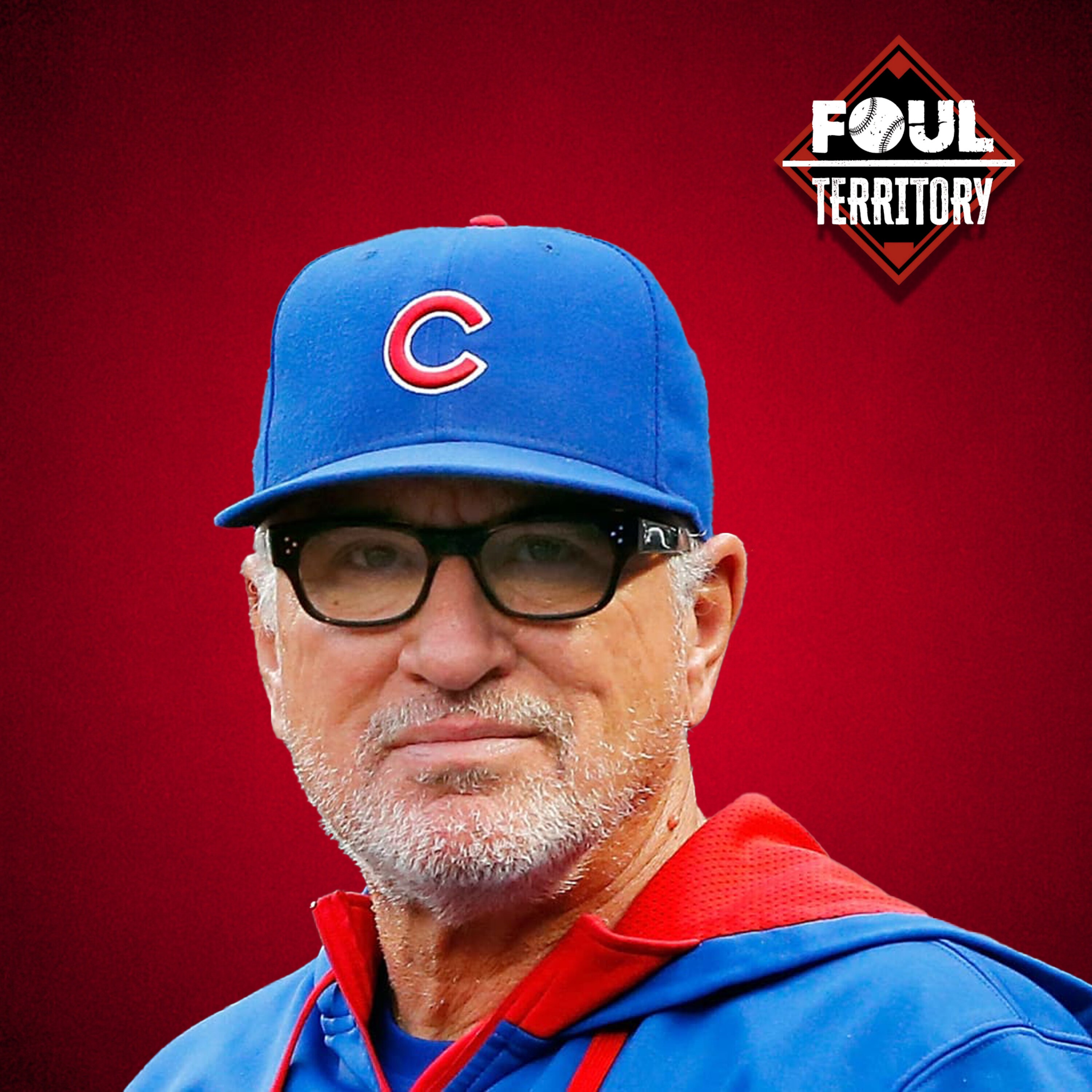
Joe Maddon on postseason intuition
3-time Manager of the Year Joe Maddon joins FT in the wake of eight MLB managerial openings. We dive into a mix of Joe hitting the key traits for a successful modern manager and how critical it is to develop a feel for moves to make in the postseason.
We also ask Joe about Shohei Ohtani's lil postseason rut that isn't hurting his team much.
Hosts: Erik Kratz, Todd Frazier, Scott Braun
Go to OmahaSteaks.com to get 50% off sitewide, plus an extra 20% off select favorites and more limited-time deals during their Early Black Friday Sale. Use Promo Code FOUL at checkout for an extra $35 off.
See omnystudio.com/listener for privacy information.
Available Results
Generated results are saved to the knowledge database for reuse and search.
Extract Knowledge
Pick what you want extracted first. Model, scope, and chapter options appear after a template is selected.
Transcript
00:00:02
Speaker 1: Hey, Joe Madden is here back on bout territory. Joe, good to see how you doing.

00:00:06
Speaker 2: I'm trying. Man.

00:00:08
Speaker 3: Technology is wonderful when it works, and it sucks when it doesn't.

00:00:11
Speaker 2: Right, I mean, yeah, but it's working fifteen minutes. Yeah, I couldn't.

00:00:17
Speaker 3: There was an issue, and it asked me to copy and paste into Safari and that wouldn't work either.

00:00:21
Speaker 2: So finally we figured it out. You're on my phone.

00:00:23
Speaker 1: Well, well, no one would know. Now, this is the beauty of v is that crazy stuff happens behind the scenes and nobody knows about it. And you look great, you sound great. It's all crisp with the connection.

00:00:36
Speaker 4: Yes, Joe, Joe, you can always just come right here and we can do the show right here.

00:00:40
Speaker 3: I'm only wait, wait, wait, do you guys located where you located?

00:00:43
Speaker 4: I'm only an hour and a half. I'm just right down right down the Northeast Extension. You're Quaker Town Landsdale Exit.

00:00:51
Speaker 2: Okay, that's not bad. That's that's actually not bad at all.

00:00:55
Speaker 4: Or I'll come up to you because you live in you live in God's country up there.

00:00:59
Speaker 2: I do.

00:00:59
Speaker 3: And actually you could play around a golf and then do the show afterwards, you play what deck?

00:01:06
Speaker 2: Any good?

00:01:07
Speaker 3: And as long as the weather's good, I'm I'm going out when we get done. I didn't go out this morning because it was like fifty degrees and a little bit rainy. So I'm gonna do this. I'm gonna jump out there for a couple hours and I got a Canadian show later today.

00:01:20
Speaker 4: Beautiful. All right, we'll put on chaw.

00:01:22
Speaker 1: Yeah, and we're a little further We're in Tom's River, Todd father and I but Cratken golf.

00:01:27
Speaker 2: Yeah, you do.

00:01:29
Speaker 4: It many good.

00:01:31
Speaker 1: So So, first off, Joe, there was a great article in The Athletic written by Rust and Dodd about you know, your experience, obviously managing post season experience, all of that, and one part that stood out was the saying that you plastered on a hoodie. And I think it's relevant as we crack open a postseason conversation. That's saying is feel is the gift of experience? Can you elaborate?

00:01:55
Speaker 2: Yeah? Absolutely.

00:01:58
Speaker 3: I think in today's world and general terms, I'll speak generally, I think that people have sent it to leadership positions without having hit all the stops. I mean, I listen, I'm not going to old school on you guys. And I'm not trying to be like the guy that's over fifty right now. But as I came up through the minor leagues, man, you had to hit all the stops in order to be considered competent to move to the next level. Gosh, I was the most wonderful experience I've ever had was being a scout, a free agent scout in nineteen eighty one to nineteen eighty four. Then they became a full time manager, but I still scout it. Scouting, to me is what all of it every aspiring baseball manager, major league manager should do in order to really understand what's going on on the field. So I did the scouting, and then from there I managed six years, and then I was a field coordinator, hitting instructor, catching instructor, based running instructor, outfield instructor. Then it became partly a farm director, and then eventually got to the big league as a bullpen coach, first base coach, bench coach.

00:03:03
Speaker 2: Then it became a manager.

00:03:05
Speaker 3: So I really, when I say that, feel when I do almost anything, and I think you guys could actually understand this two and I believe you do the same thing based on your experiences, your intuition, the knowledge you've accumulated, a situation will pop and you will just react to it.

00:03:23
Speaker 2: And I used to think I was concerned.

00:03:24
Speaker 3: I was like, am I reacting by the seat of my pants or actually actually have a basis to come to these conclusions that quickly? And finally I realized, yeah, I do. It's like the Blink theory if you ever read Malcolm Gladwell's book Blink about the pretty much intuition, the moment and making a decision, and you either thin slice it, which I like to do, which is quick, or thinck slice to take your time. But in order to feel good about those decisions or those what I thought formally was the seat of the pants, which really was intuition and feel based on experience, then I became more confident in those decisions.

00:04:01
Speaker 2: So that's it.

00:04:02
Speaker 3: And I don't think you could really say you feel something or felt something in a dugout or anyone else in your life if you haven't.

00:04:09
Speaker 2: Gone through some life experiences to get there. So that's it.

00:04:12
Speaker 3: And that's pretty much the reason why I concluded that I believe it wholeheartedly.

00:04:19
Speaker 2: I believe it to be accurate and true.

00:04:21
Speaker 3: And that's where I think that a lot of times with the analytical approach relies less on that, and analytics is the big picture, that is how you prepare for something in a quiet moment. It's all theoretical, it's all theory, and it's wonderful and I love it. But the actual game is the small sample size. That's where things have to change. Your turn on a fly, and that's where feel or the gift of experience shows up.

00:04:47
Speaker 5: That was absolutely phenomenal because I was part of my question was part of experience and understanding when to make decisions. Now my question, you'd be of a starting picture your decisions. You have all this laid out about what you would like to who would you like to face this person facing a lefty, this guy coming and facing already I think I got like aj Hinch, who's a mastermind that doing all that kind of stuff. Now you've got to starter or say Blake Snell for example, that is absolutely cruising one hundred and three pitches. Do you just throw all that out the window and say this is our guy, We're just gonna let it happen, or do you have to stick by this plan which some some managers have done before.

00:05:23
Speaker 3: No, I mean I would stay. I would stick with the pitcher that's in the game of Esus Cruise, and I did it with Arietta. It's in that article. I believe in the wild card game in Pittsburgh and Jake was just flying through this whole thing, and you know, conventional wisdom where baseball wasn't would say to bring in your closer.

00:05:42
Speaker 2: I think it was four nothing or something like that in the ninth inning. But why would I take Jake Area out of that, out of that moment.

00:05:47
Speaker 3: See, part of this is that we are we are legislating against greatness. That's part of my all. That bothers me too, baseball players whatever. I remember, we're talking baseball now. I think sometimes the analytical method gets in a way of the greatness of a player.

00:06:04
Speaker 2: I e.

00:06:04
Speaker 3: The time that Snow was taken out of the game, and it was a twenty twenty World Series, and like yesterday, I think the Dodgers having been on the other side of things, and no, no, we're gonna let this guy ride because we know how unhittable he could actually be. So Yes, I believe before every game, Toddy, I sit down, and I go through the whole lineup, and I write relief pictures names after every hitter, and I write little lines like little slots blocks. Today it's different because of the three batter minimum, which I hate. I think it's ridiculous. Any rule, new rule change that interferes with strategy, I think is wrong. If a time of the game pitch clock, that is fabulous, that is that is pure genius and actually the only rule that needed to be.

00:06:47
Speaker 2: Implemented in our game. That's it.

00:06:49
Speaker 3: But when you start messing with strategy, there's point of building blocks where relief pictures could fit into a block.

00:06:56
Speaker 2: Now it has to become a block of three.

00:06:58
Speaker 3: Much more difficult to you really decide on somebody there, So long story short, Yes, if my guy's cruising, I'll then continue to cruise. You know, pitch count might be part of it. How deep into the game it is, How how has contact gotten louder over the last couple at basses? You know, all those everything weighs into this factor. Who's the guy, who's the guy? What kind of heartbeat does he have? Every We treat everybody as though everybody's the same.

00:07:24
Speaker 2: And they're not. And that's the part that has to be interpreted better.

00:07:29
Speaker 4: Man, just clip clip that part. Everybody is not the same, and yet all the numbers look different. You go, well, okay, well that guy's like that guy. So but I'm just looking at your baseball reference page here, Joe. Okay, what would What would two thousand and six manager of a sixty one and one hundred or sixty one and one oh one Race team say about his feel was it, Man, I'm finally a manager because we have I think we're fifteen or ninety three managerial openings in the big leagues right now, and there's a lot of guys whose names are coming up that are like, oh, I'm so excited I'm going to be a big league manager. What did two thousand and six Joe say about his feel.

00:08:13
Speaker 2: Well, I felt that I deserved it.

00:08:16
Speaker 3: I felt that I had earned the right to be there because I had interviewed other times with the Angels, I interviewed with the Diamondbacks, I interviewed with the Red Sox when Tito got the job. However, if I did not get the job when I interview with the Race, I'd have been really upset because that job was perfect for me. So that the difference was that or the difference? For me, I felt at that point that I'd earned the right to be there, that I knew what I knew, you know, and that really makes a lot of sense to me. A lot of people don't know what they think they know. They just they hear stuff. The regurgitators, they don't really have this. It's not part of their their their makeup them, it's not part of their that caulsire of information they have.

00:08:57
Speaker 2: They don't really know. But you'd really need to know.

00:09:00
Speaker 3: Your stuff to have confidence to challenge norms in hot moments when you don't worry about answering questions because you really know you know what you know, you know what you're talking about. You've been there, done that before. And sometimes it works, sometimes it doesn't. And I've always believed even though some things don't work out, it doesn't mean the decision was wrong. It just didn't work out in the moment. After all, both sides are good. Brewers are good, Dodgers are good. Stuff's going to happen a guy to Dodgers, who is going to be the decision made by Merph. Okay, that doesn't mean it was the wrong decision. That just means both sides are good. You have to be convicted what you're thinking. You have to know exactly through experience and feel, intuition and yes information, what do I believe in this moment? You react to it. And so that's what I learned. And so two thousand and six, I felt like I had earned the right to be there, and I felt good about it.

00:09:52
Speaker 2: I love that KP.

00:09:55
Speaker 1: We both love Omaha Steaks. My latest order six I reserve Filet Mignon's. It sounds bougie because it is. They were fantastic and also one and a half pounds of jumbo cooked shrimp with a big initial discount and then an additional thirty five bucks off with the code foul. You have been a long time Omaha Steaks guy too.

00:10:16
Speaker 4: Yeah.

00:10:17
Speaker 1: Back in college, I would always order steaks. I'd put them in my freezer. And that's the reason I bulked up is because I always had fresh steaks in my freezer, ready to go, delicious, protein, Get after it. Okay, it is the best in the biz. If you're ordering steaks online, you can say big with Omaha Steaks. Visit Omaha Steaks dot com for fifty percent off site wide and an extra twenty percent off select favor during their early Black Friday sale, and for an extra thirty five dollars off used promo code foul at checkout. Terms apply see site for details. That's fifty percent off at Omaha steaks dot Com promo code foul at checkout.

00:10:55
Speaker 4: We're going to go to a future Hall of Famer who's looking to be a manager. But I'm going to wind it back. Ryan Samberg, who just passed away, was my manager in Triple A. Ryan Samberg is a Hall of Famer and I saw him come up through the ranks in the minor leagues. Whether people thought he was a good big league manager or not, I saw it, and he became one of my close friends even after he was a manager, and I saw him relearn every step and I thought, in a different situation, he would have been a good manager. Fast forward now to Albert Puhost being out there as a potential manager. Has he done enough steps like you said, because nobody's gonna deny his Hall of Fame celebrity status. But if you want to win in the big leagues, in my opinion, you need the guy like you said that has sat in everybody's shoes run, everybody's steps, gotten sent down, gotten called up, knows what it's like to pitch in triple A, then one day in the big leagues, then again in triple A.

00:11:55
Speaker 3: Well, first of all, let me just talk about Rhino, who I love too. When he went to managing the minor leagues. I called him, I got a texted or call him whatever, and I just told him how much I respected him for doing that and what it meant to me as a lifer, that this is a Hall of Fame player that chose the right way to try to do this. And I told him that exactly, and we became pretty good friends after that. I became manager of the Cubs, etc.

00:12:22
Speaker 2: But I've had.

00:12:23
Speaker 3: Such a mad amount of respect for Ryan O for doing that. Now, before you're talking about Albert, let's talk to there's other guys that have done the same thing that pretty much just went from playing to managing on a big league level. And quite frankly, I could have never done that. I would never have wanted to do that. But in today's game, it's different because I think front offices a lot of times would prefer that they would prefer having somebody with less. I don't want to say preconceived notions, but experience at the point where you're very opinionated, as oppost to the guy that doesn't have more innate information, experience that might interfere with their the analytical process because you're going to be loud about it. You're going to tell them what you think when you think it. You're not going to always accept a number blindly because you know better. Like I said before, the analytics is wonderful, and I was pretty much at the forefront of all that with Andrew and the Rays, and even before that, I did my own method of that with the Angels and my prep for my managers, whether it was Marcel, Terry Collins, Mike Soosha, I had my own method of doing that.

00:13:33
Speaker 2: I didn't have. It was just me.

00:13:35
Speaker 3: I didn't have like this these baseball ops departments. So I know what it's, what it's like, what it's all about. So I think my perspective is that leadership has taken on a different definition, where today leaders or people that are looking for leadership, they want to have somebody they could control as opposed to empowered. And that's the difference. So I think in today's game and the way things are done. Almost the less experience you have coming into the job, the more appealing you are.

00:14:07
Speaker 5: That's interesting. I know Kratzy's looking for a job too. You might have to give him a little boost and maybe find a way to get him. Yes, yes, and crazy, Yeah, I would. I want to get into show Hao Tany a little bit. You know him well, one of the most prolific hitters and you know, if not pitchers too have dare I say in the league in baseball, he's struggling offensively a little bit, but lo and behold, the Dodgers will still finding ways to win. Freddie Freeman too as well. Talk a little bit about show hey, and maybe you know, like what goes on in this guy's mind? How is he so good? But what what? Why do you think he's struggling right now?

00:14:43
Speaker 2: A little bit?

00:14:46
Speaker 3: He looks like he's pulling off the ball. I mean when he when he starts left center. As his friend, when I had him there and I used to he was struggling to be in the rocks and left center at at Anaheim, I say, show just the rocks are your buddy, hit the rocks. Go for the Rocks, because when his swing lines up that way, everything takes off for him, I for the in this moment, he might be trying a little bit too hard, which he normally doesn't do. The thing I love about him, I've often thought he's a lot like Ripkin Cal because I used to observe Cal a lot, and I've become friends with him since. But for me, for Ripkin, the game was a game always, regardless of his stature, what he did, the records, you know, iron Man, all this stuff, he still played a game, meaning that during the pregame he gets his ground balls and he tried to hit the fungos hitter circle, throw it in the circle. In between innings, he run out to his position. If Billy was playing, also, Billy would guard him and pal Merrero Whid try to hit him with the pass. Always playing a game, Show does the same thing I don't. Show doesn't let it get too let it get too big. Show is that talented. He loves what he does, and he's so in the moment, and he knows he's good, and he knows he playing it a little bit higher level, so he he's able to slow things down normally and do things that others cannot do because he is playing a game. He's not up there, he's not all up tight, it's not spinning too quickly. He's just got he's got a different heartbeat and athletically speaking, beyond this hitting, when you watch him pitch and the field that he has for that and I he's able to be creative on the fly as a pitcher, unbelievable. I watched it from the side. So you're watching a guy that really he's in that league above the league, the major leagues. There's you know, there's been guys that have been in that league, and he's in that there. You've always talked about the four A player, the guy that's in the big leagues, but it's pretty much four A. Then you got the big leaguers and there really good big leaders, and then you got the show a's of the world. So he is that good. I think it's his heartbeat, his ability to process, his self confidence, and just his skill level is ridiculous. I mean, the guy could be a gold glove outfielder tomorrow, any and any any spot. If you put him out there, he could be a gold glove outfielder. I've watched him chase down flyballs, whatever, his base running, his speed, his intellect for the game is way above way above average.

00:17:10
Speaker 4: All right, I'm going to go to a decision though. Around show Hey, the Phillies decided to walk him when he was one for eighteen. Last night, the Brewers decided to welcome. In both of those cases, it ended up bringing up Mookie Betts, who walked the winning run in When you see a elite talent what I would call the metaverse type of player like show Hey and Judge struggling, are you still afraid of him as a manager because that's what caused those moments, or are you able to go just like with a pitcher, I'm seeing it right now, he is pulling off and I think I like this matchup.

00:17:47
Speaker 2: Right, Yeah.

00:17:48
Speaker 3: I mean that's what we're talking about, either the large sample size, the whole body of work, or you're talking about the moment. You're talking about the field, the intuition, what's going on right here. So a lot of times you know that the decision like that probably was discussed maybe before the game, possibly at least the manager, among his staff, among his pitching coaches, whatever you discuss if this were to happen. However, I have and I believe that if I see a guy struggling, that's where the small sample size comes into play. That's where intuition, feel, wisdom comes into play for the game. That's one thing I've always asked analytical groups to do because they always talk about the big picture of the large sample size, always follow that it's going to play out.

00:18:33
Speaker 2: I get that.

00:18:34
Speaker 3: Okay, if're gonna invest my money, absolutely I want you to do that. But if you're managing a game on August fifteenth or in the playoffs right now, I need the small sample size. I need to know what's going on right now with this dude. Is he who he is right now? Or is he just not that fella? Or there's some guys like polonuncle who's just killing it right now right not that listen. He's a good player, but all of a sudden, Wow, he's superman. So do you treat him with more respect now or do you just say no, he's gonna come back to the mean, revert to the mean, and all of a sudden, he's going to go back to what he had been.

00:19:03
Speaker 2: You have.

00:19:04
Speaker 3: That's where I think, that's where the managerial seat comes in and you have to make a decision based on what am I seeing right now, what am I feeling. That's why I never sat down in a dugout. It's always on the top step. Always had to feel the game, how to feel the crowd, how to feel my guys, how to feel the other team, how to feel everything in order that I thought to make a good decision. So I guess to answer your question, yes, I probably listen. You never know what you're actually in that moment. I totally believe that it's easy to say what you would have done from a distance in the moment. I would like to believe, because I think I've done in the past. If a big dude is just not good right now, I'd go after him.

00:19:44
Speaker 1: Okay, Hey, great insight, Joe. And you know, we wouldn't want to keep you it too much longer because it's now what sixty two degrees, There is no rain in the forecast the rest of the day, and I do not want to be responsible for preventing a great day of golf that you know, we're getting close to that time where it gets a little chilly and and there's not as much time to do this.

00:20:05
Speaker 3: You'd been when I go to Florida, right.

00:20:11
Speaker 2: I'll be hitting down the Tampa at the end of the month. Brother, I'll be there. Oh.

00:20:15
Speaker 1: I love that. I love that snowbird life. I'm with you, well, Joe, we always really enjoy these. Yeah, Well, save travels. Hopefully we'll talk to you before then, but if not, save travels down there and have a great game today.

00:20:27
Speaker 3: I appreciate your your good questions, and inside I do. I mean, that's why I like to come on here. You guys are different, and I appreciate that you make me think a little bit, and I appreciate that.

00:20:36
Speaker 1: It's great. It is really really well appreciated. There's a good audience watching live right now too, so they're liking it as well. Thank you, Joe. And on the way out here, just a reminder to everyone, Joe's got a pretty still recent book, a book of Joe and a podcast with Tom Berducci that I love to listen to. So if you want more of that, you get this.

00:20:54
Speaker 2: I listen to all the episodes.

00:20:55
Speaker 1: Thanks Joe, We'll talk.

00:20:56
Speaker 2: To you soon. Thanks to have a great day. See you boys. Bye.

00:21:00
Speaker 3: I look a