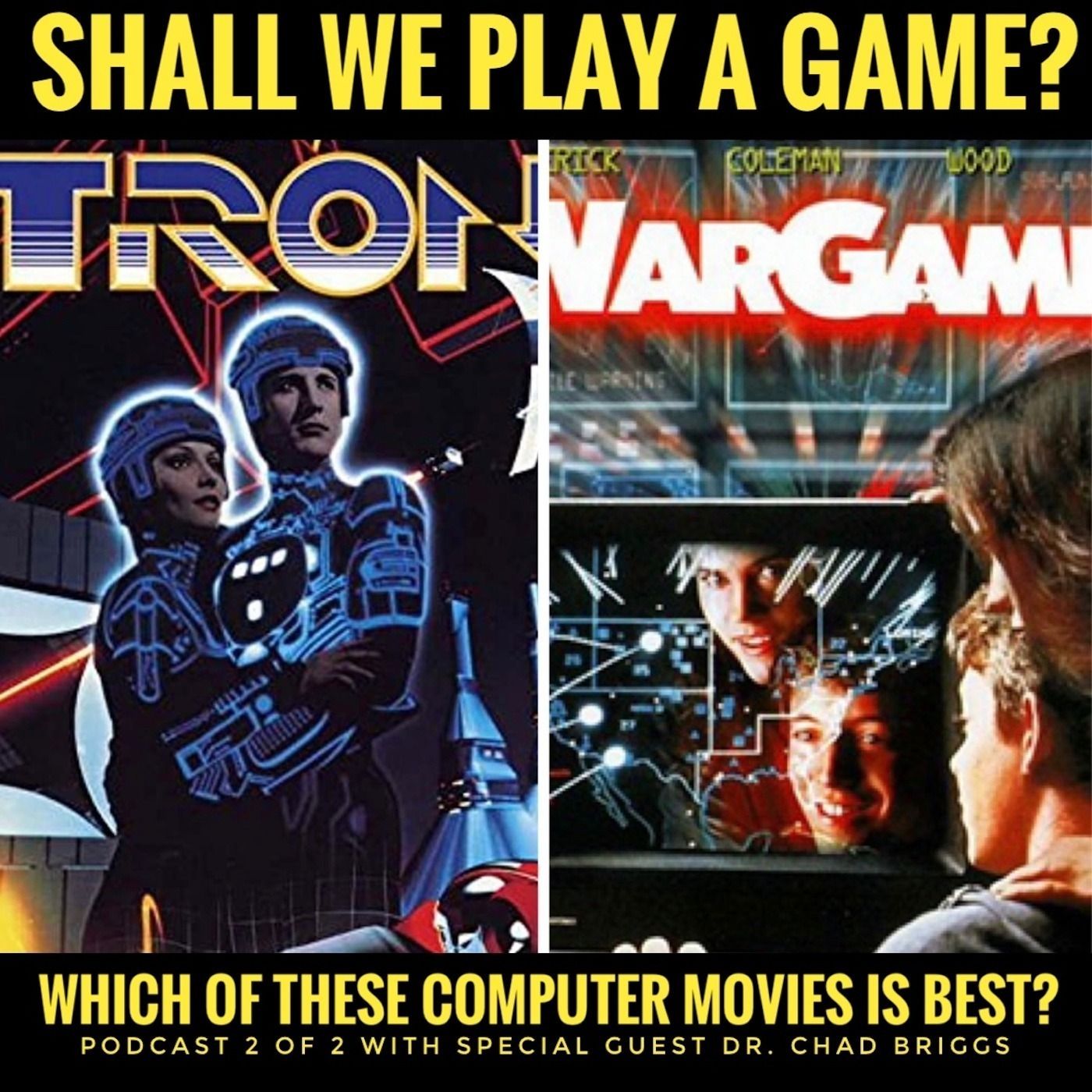
Tron (1982) vs. War Games (1983): Part 2
This week is the second of two episodes where we dive deep into the world of computers in the 1980s with Professor Chad Briggs. In this episode we discuss more domestic nuclear near accidents, the amazing Tron video game, the brilliant composers of each movie, random trivia, and our final judgement. Which movie is your favorite? Did we get our final judgment right? Grab your deadly disc, jump in your lightcycle and join us!
2023-06-13
48 min
Transcript
Available Results
Generated results are saved to the knowledge database for reuse and search.
No generated results are available for this episode yet.
Extract Knowledge
Pick what you want extracted first. Model, scope, and chapter options appear after a template is selected.
Generated results for public episodes are saved to the knowledge database so they can be reused and searched later.
Transcript
<v Speaker 1>Greetings. Yesterday's name was interrupted, although primary goal has not
<v Speaker 1>yet been achieved.
<v Speaker 2>Solution is near.
<v Speaker 1>Game time elapsed thirty one hours, twelve minutest seconds festinated
<v Speaker 1>time remaining fifty two hours, seventeen minutes, ten second.
<v Speaker 2>What is the primary goal.
<v Speaker 1>To win the game?
<v Speaker 3>Hello everybody, and welcome back to the Shirley You Can't
<v Speaker 3>Be Serious podcast. We are here with part two of
<v Speaker 3>our Tron Versus Wargames series. Shall we play a game?
<v Speaker 4>I've got Gallagher that I've been paid to train myself on.
<v Speaker 4>I've got Space Paranoids, I've got Matrix Blaster. Those are
<v Speaker 4>Flynn games. Are you sitting comfortably then we'll begin.
<v Speaker 3>Okay, guys, if you haven't caught the first episode, I
<v Speaker 3>introduced Chad. He is a guy who specializes in the
<v Speaker 3>intersection between environmental conditions and national security. He has advised
<v Speaker 3>various universities. He has consulted with US departments and military ops.
<v Speaker 5>He's a super cool.
<v Speaker 3>Dude who loves eighties movies and music just like us,
<v Speaker 3>which I think is why he's here today.
<v Speaker 5>Chad, welcome back.
<v Speaker 2>Man, Thank you very much appreciate being here.
<v Speaker 3>Okay, so, the last time we were here, I mentioned
<v Speaker 3>that Lawrence Lasker and Walter Parks had this monumental, pivotal
<v Speaker 3>meeting with a guy who said, hey, have you.
<v Speaker 5>Seen computer games.
<v Speaker 3>You notice how similar they are to the NORAD screens
<v Speaker 3>and how those things might intersect. And that was a
<v Speaker 3>huge moment for them. And that guy that I mentioned
<v Speaker 3>was named Peter Schwartz. Peter Schwartz actually turns out is
<v Speaker 3>a very famous guy futurist. But after the show, Chad
<v Speaker 3>told me, Hey, I didn't want to interrupt you, but
<v Speaker 3>I know Peter, so tell us, tell us what you
<v Speaker 3>know about Peter Schwartz.
<v Speaker 2>Peter Schwartz originally worked for Rand Corporation, which itself was
<v Speaker 2>attached to the US Air Force and was a think
<v Speaker 2>tank for the US military to try to think about
<v Speaker 2>things like what would nuclear war be like. So all
<v Speaker 2>the ideas of wargames started at the Rand Corporation, and
<v Speaker 2>then Peter Schwartz and a few others started what was
<v Speaker 2>known as the Global Business Network that was associated with
<v Speaker 2>my work at the Department of Energy. So when he
<v Speaker 2>wrote one of the first papers for the Pentagon about
<v Speaker 2>intersection of climate change and national security, he met me
<v Speaker 2>a little while after that. Actually apologized to me because
<v Speaker 2>I was about to point out to him I was
<v Speaker 2>just some young guy right leading leading the steam that
<v Speaker 2>I was like, even, mister Schwartz, you're got a couple
<v Speaker 2>of things wrong here. Oh I'm sorry, I'm sorry. Yeah,
<v Speaker 2>we're not experts on this. This is up to you. Now,
<v Speaker 2>this up to you. Now you take it, you take it, so,
<v Speaker 2>you know, really gracious. But yeah, we worked with all
<v Speaker 2>these futurists because I suppose that's part of my work myself.
<v Speaker 2>You know, we try to think of what will conditions
<v Speaker 2>be like in the future, what will technology look like,
<v Speaker 2>what will that effect have on the environment, and how
<v Speaker 2>to that all fit with national security and homeland security
<v Speaker 2>and just what people are trying to do.
<v Speaker 3>Yeah, I think I saw something that you had done
<v Speaker 3>a few years ago, where you were talking about how
<v Speaker 3>they had in the nineties they had developed all of
<v Speaker 3>these rejections about Arctic conditions, and everybody had relied on
<v Speaker 3>those predictions, and then by the early two thousands, everybody
<v Speaker 3>just kind of said, well, these were all wrong and
<v Speaker 3>we have to throw them all out.
<v Speaker 2>Right. The models will only tell you what you programmed
<v Speaker 2>them to tell you, So if you don't get the models, right,
<v Speaker 2>or if you don't have the data. Right. Yeah, with
<v Speaker 2>the Arctic, they were measuring the wrong things. They were
<v Speaker 2>you know, you can get satellite photos of how much
<v Speaker 2>ice there is in the Arctic, but that's just extent,
<v Speaker 2>doesn't tell you the volume. So we were making policies
<v Speaker 2>based on conditions that we were hoping it was going
<v Speaker 2>to be a linear sort of relationship. Right, Well, tomorrow
<v Speaker 2>will be pretty much like yesterday, just a little bit
<v Speaker 2>more so. But no, things just started changing a lot
<v Speaker 2>more quickly.
<v Speaker 3>Well, and we've we're only able to look at what
<v Speaker 3>we have the ability to look at, right. That's another
<v Speaker 3>problem is that they will focus on something that we
<v Speaker 3>have the capacity to see and completely ignore something that
<v Speaker 3>they know is out there, but they have no ability
<v Speaker 3>to monitor it or see it.
<v Speaker 2>So the rooms felled the unknowns, right. But that relates
<v Speaker 2>to these movies too, right, because when you're looking in
<v Speaker 2>at early warning. For movies like Wargame, they have to
<v Speaker 2>rely upon what the radars are telling them or what
<v Speaker 2>the satellites are telling them, and if they don't see
<v Speaker 2>things from other places, they're not going to know about it. Right.
<v Speaker 2>So there's even a scene in the movie where one
<v Speaker 2>of the aids comes up to General Bearinger Barry Corbin's character, right,
<v Speaker 2>and says, General, we have this new information that the
<v Speaker 2>Russians have developed a new stealth bomber that can project
<v Speaker 2>its radar image seventy five miles away from God and
<v Speaker 2>where Jason are shadows now, right. So yeah, it's all
<v Speaker 2>based upon what we know. Is just sort of what
<v Speaker 2>we know, and that makes it really tough to sort
<v Speaker 2>of simulate things that that can happen in the future.
<v Speaker 2>So we're sort of basing everything according to, you know,
<v Speaker 2>our own assumptions and our own understanding of everything.
<v Speaker 3>So I got a couple of practical questions. First, in
<v Speaker 3>the real world, do they call them war games?
<v Speaker 2>They do.
<v Speaker 3>They don't just call them simulations. They don't get offended
<v Speaker 3>at the term war games.
<v Speaker 2>Well, if you're working with people who aren't in the military,
<v Speaker 2>then they don't necessarily like war games as much as simulations.
<v Speaker 2>But simulations tends to suggest that it's computerized, whereas wargames
<v Speaker 2>can be pen and paper kind of stuff. And that's
<v Speaker 2>a lot of what I've done in the past is
<v Speaker 2>just really simplified sort of war games. But yeah, they'll
<v Speaker 2>call them war games. There's a lot of terminology that
<v Speaker 2>actually picked up from that movie. Even the term firewall
<v Speaker 2>was picked up from war games, that no one used
<v Speaker 2>that popularly until after the movie. Can we invade the
<v Speaker 2>deep logic?
<v Speaker 4>Keep hitting a damn firewall?
<v Speaker 2>Wants to play a game?
<v Speaker 4>Then play it? Do they call it whopper?
<v Speaker 2>Only a burger king.
<v Speaker 3>I just got to say this real quick, and I'm
<v Speaker 3>kind of going off. I'm going off topic, but I
<v Speaker 3>mentioned all I mentioned a great deal of your experience.
<v Speaker 3>You've also written some books. You've also got a role
<v Speaker 3>playing game.
<v Speaker 2>Well, I write for role playing games. This is what
<v Speaker 2>I did as a teenager. So for those in the
<v Speaker 2>real nerd world of role playing games. Yeah, yeah, I
<v Speaker 2>grew up in Wisconsin, so that's where gen Con was,
<v Speaker 2>which was the biggest and that's where Dungeons of Dragons created.
<v Speaker 5>Yeah.
<v Speaker 2>I got picked up when I was fifteen as a
<v Speaker 2>writer for one of these companies because they all thought
<v Speaker 2>I looked older. They all thought I was in grad
<v Speaker 2>school and I wasn't about to crack them and go guys,
<v Speaker 2>I you know I can work for you, but I
<v Speaker 2>haven't graduated in high school yet.
<v Speaker 5>I have to get a ride.
<v Speaker 2>Yeah, I'll show up to your party, but my mom
<v Speaker 2>will have to pick me up afterwards.
<v Speaker 5>So so how many of these?
<v Speaker 3>I mean, the one that I saw was the Broken
<v Speaker 3>Arrow Chernobyl. What other ones have you got out there?
<v Speaker 2>Well, that's for called Culu, Right, I'm really especialist from
<v Speaker 2>pen Dragon, which is Arthuriance King Arthur. And I will
<v Speaker 2>tell you guys that back in the eighties. Maybe it's
<v Speaker 2>different now, but if you were a real, real expert
<v Speaker 2>in Arthurian romance literature in junior high, it did not
<v Speaker 2>help you with girls at all. Years later, all that
<v Speaker 2>experience was worthwhile because, Yeah, a lot of the experience
<v Speaker 2>I got from role playing games worked into how to
<v Speaker 2>actually construct wargames, because the whole idea of wargames is
<v Speaker 2>can you make the scenario believable? And if you're basing
<v Speaker 2>it on something that's already there. So the first scene
<v Speaker 2>in the movie Wargames, right, it's a drill and they
<v Speaker 2>don't know it, but it's all based on what they've
<v Speaker 2>been trained to do already, right, So they take it
<v Speaker 2>completely seriously and are probably pretty shaken up afterwards when
<v Speaker 2>they realized that that was only a drill. Now, if
<v Speaker 2>you create something a whole clot that's a lot tougher because,
<v Speaker 2>just like you said, you take to a simulation what
<v Speaker 2>you bring with you. So it's just like you guys,
<v Speaker 2>remember an empire strikes back when Luke is on Degoba
<v Speaker 2>and just before he goes into the cave where he
<v Speaker 2>has this fight with a sort of Darth Vader that
<v Speaker 2>turns out to be himself. Right, But before he goes
<v Speaker 2>into the cave, he asked Yoda what's in there? And
<v Speaker 2>Yoda replies, only what you take with you. Right. So
<v Speaker 2>when we design wargames, it's always based upon what are
<v Speaker 2>the participants going to get out of this, What do
<v Speaker 2>they need to know, and what do they value the
<v Speaker 2>most so that they can suspend disbelief and then think
<v Speaker 2>that this is actually real. Right, They'll feel that it's real,
<v Speaker 2>they'll feel that it's consequential.
<v Speaker 4>So everybody wint a gun and another guy and say
<v Speaker 4>turn the key, sir.
<v Speaker 2>No. But I did have a war game. This was
<v Speaker 2>spring twenty seventeen in Kosovo. I had to cut it
<v Speaker 2>short because it was starting to get it was potentially
<v Speaker 2>getting violent, and students who normally would be really quiet
<v Speaker 2>and just really good students, but they were taking it
<v Speaker 2>so seriously, and partly because part of the scenario dealt
<v Speaker 2>with refugees, and if you were that age in Kosovo,
<v Speaker 2>some of your first memories were being a refugee during
<v Speaker 2>the ninety nine war. So it hit all the buttons
<v Speaker 2>for them, and then they took it completely seriously. That's
<v Speaker 2>what's really important, and they touch upon it in these
<v Speaker 2>movies too, Right, is that in wargames they take it
<v Speaker 2>seriously because there are consequences and because this already fits
<v Speaker 2>with what they believe and to think differently. Right the
<v Speaker 2>last scene in the movie where Joshua suddenly has to
<v Speaker 2>realize the futility of all this in reality, that can
<v Speaker 2>take decades, right to go through all the war games,
<v Speaker 2>a human war game to retrain your organization, you know,
<v Speaker 2>if it's like the US military, and there are examples
<v Speaker 2>of this in the past that can take ages and ages.
<v Speaker 2>But they're just hoping that maybe if you computerize that
<v Speaker 2>and say, you know, number of players zero, maybe maybe
<v Speaker 2>you can do it in a couple of minutes while
<v Speaker 2>you're working out all the all the potential simulated nuclear attacks.
<v Speaker 2>And I think Tron does it a bit too, although there,
<v Speaker 2>it's a little bit different because like when Flynn goes
<v Speaker 2>into the computer, he knows he's in the computer, he
<v Speaker 2>knows he's somewhere different.
<v Speaker 5>Alan, where did you hear that name? Well, that's your name,
<v Speaker 5>isn't it the name of my user?
<v Speaker 2>Right? And he's just trying to get the information about
<v Speaker 2>Dillinger and get back out, which is the kind of
<v Speaker 2>classic Disney fantasy, you know, quest and so forth. War
<v Speaker 2>Games was a little scarier just because remember there was
<v Speaker 2>that one line where Matthew Broderick asks is this real
<v Speaker 2>or is this just a game?
<v Speaker 5>Yeah?
<v Speaker 2>And the computer pauses for a second and comes back
<v Speaker 2>and says, what's the difference? And when it's computer controlled,
<v Speaker 2>that's that's chilling because the computer doesn't care. And that's
<v Speaker 2>why you always need the humans there.
<v Speaker 3>So real world, is there ever a situation where the
<v Speaker 3>participants do not know that it is a simulation, Like
<v Speaker 3>at the beginning of War Games, where I mean John
<v Speaker 3>Spencer's character, I mean he's sweating bullets.
<v Speaker 5>They think this is really happening.
<v Speaker 3>He's pointing, Michael Madsen's pointing the gun to get this
<v Speaker 3>job done.
<v Speaker 5>They had no idea that it was a simulation. Does
<v Speaker 5>that really happen?
<v Speaker 2>Yeah, that can happen, and sometimes it can have bad
<v Speaker 2>consequences too. So T eighteen, State of Hawaii carries out
<v Speaker 2>and emerges drill, unscheduled, unannounced drill about their emergency announcement system.
<v Speaker 2>But one of the guys working doesn't know that it's
<v Speaker 2>really a drill. He thinks it's real, right, And one
<v Speaker 2>of the supervisors had gone off script and even said, no, no,
<v Speaker 2>there's a missile in coming from North Korea. This is
<v Speaker 2>not a drill. So he actually doesn't do the drill stuff.
<v Speaker 2>He goes through the extra screens to send out an
<v Speaker 2>emergency alert, and the whole state of Hawaii everyone gets
<v Speaker 2>an alert on their phone saying there's a missile income
<v Speaker 2>in and of course they don't know that it's not real. Yeah.
<v Speaker 5>Yeah, wow.
<v Speaker 4>You know, you mentioned a couple of things there that
<v Speaker 4>I wanted to talk about when we got to the
<v Speaker 4>movie portion of this discussion. So you talked about how
<v Speaker 4>writing role player games is not great at getting girls
<v Speaker 4>in high school. The moment when Matthew Broderick and Ali
<v Speaker 4>Sheety are starting their relationship is such a really neat
<v Speaker 4>moment in the movie because it's that perfect moment where
<v Speaker 4>that you're shifting from the friend zone to the relationship zone,
<v Speaker 4>and it's that moment where you like touching hands but
<v Speaker 4>not really holding hands. Is this happening? Are we really
<v Speaker 4>moving this direction?
<v Speaker 5>You know?
<v Speaker 4>And they're feeling each other out for are we boyfriend
<v Speaker 4>and girlfriend? That type of thing, And to have the
<v Speaker 4>world go into disarray at the exact moment you're trying
<v Speaker 4>to figure out if you've got a girlfriend or a boyfriend.
<v Speaker 4>I just found that moment neat this time around in
<v Speaker 4>the movie that I'd kind of forgotten about.
<v Speaker 3>I'm I was going to be on TV next week.
<v Speaker 2>Whoops. It was such great chemistry between Ali Sheety and
<v Speaker 2>Matthew Broderick there, Yeah, because because it's it's just sort
<v Speaker 2>of unspoken, especially when they're when they're in the bedroom
<v Speaker 2>the first time, right and they start the game. Yeah,
<v Speaker 2>he scenes obviously trying to show off and change your grade. Yeah,
<v Speaker 2>I could be useful for you. But but it was
<v Speaker 2>more than that. Later.
<v Speaker 3>That was the first scene because obviously they were very
<v Speaker 3>nervous after Martin Bresk got fired. They were worried about
<v Speaker 3>their jobs as well, and so that was the first
<v Speaker 3>scene that John Badam filmed with them, and he said
<v Speaker 3>that we did take after take after take, and they
<v Speaker 3>were just so stiff. And he said, I realized in
<v Speaker 3>reading this that there was that if I was a
<v Speaker 3>kid who had the capacity to change my school grade
<v Speaker 3>by using a computer, and I was showing it to
<v Speaker 3>a girl I liked, I would be freaking out and ecstatic.
<v Speaker 3>I wouldn't be all dark and mysterious. And he said
<v Speaker 3>he had to shoot this thing over and over again
<v Speaker 3>to get them to finally relax and have fun. But
<v Speaker 3>once they once they broke through, they really did. They
<v Speaker 3>Their chemistry was spot on.
<v Speaker 4>Yeah, and then you mentioned the moment where she traps
<v Speaker 4>him with her legs. Yeah, there's some sexual overture there
<v Speaker 4>that I didn't catch in the fifth grade or whatever.
<v Speaker 4>It's just kind of teasing, you know, flirtation, but it
<v Speaker 4>catches that moment where you like, you're trapping me with
<v Speaker 4>your legs right around my crotch.
<v Speaker 2>Yeah, but then you mom intervenes to yell at you
<v Speaker 2>and come down. That's right, take out the garbage.
<v Speaker 4>Your little friend can stay for dinner.
<v Speaker 5>Her eye roll and laugh is so it is. She's
<v Speaker 5>so cute.
<v Speaker 4>The moment when they're in class together and the teacher
<v Speaker 4>says he's talking about asexual reproduction, and he leans over
<v Speaker 4>and tells her a joke and she starts laughing, and
<v Speaker 4>the teacher's like, all right, lightman, what is it? Can
<v Speaker 4>you tell me who had the idea first for asexual reproduction?
<v Speaker 2>All right, lightening, maybe you could tell us who first
<v Speaker 2>suggested the idea of reproduction without sex?
<v Speaker 4>Your wife. He delivers it spot on number one. But
<v Speaker 4>when you listen to the movie, you can tell there's
<v Speaker 4>tons of adults laughing in the background, and that was
<v Speaker 4>a spontaneous moment and a lot of people laughed out loud.
<v Speaker 5>In the crew. Funny moment.
<v Speaker 4>That's great, By the way, the moment at the end
<v Speaker 4>of the movie. I wanted to talk about the tic
<v Speaker 4>tac toe moment, the climax of the movie, the learning
<v Speaker 4>that is going on right there by Joshua. When I
<v Speaker 4>watched it this time around, you know, they put tick
<v Speaker 4>tactoe up and they hope that he'll learn quickly.
<v Speaker 5>Seems like he should have.
<v Speaker 4>If all he does all day long is play computer
<v Speaker 4>simulation games, wouldn't that be something that he would already know.
<v Speaker 5>He'd never played himself, okay, playing.
<v Speaker 2>But I had this idea. Why why didn't Falcon think
<v Speaker 2>of that? Why didn't Falcon at some point in his
<v Speaker 2>career think, hey, Joshua, you should play yourself.
<v Speaker 4>He thinks about about two seconds when the whole thing's on.
<v Speaker 3>The line, I'm gonna get on my phone and ask
<v Speaker 3>chat GPT to play itself a game of tictac Co
<v Speaker 3>and see what happens.
<v Speaker 4>Zero players.
<v Speaker 5>The only winning move is not to play. Yeah.
<v Speaker 2>I do want to mention for that last scene the
<v Speaker 2>computer graphics. I mean, that was sort of simple vector graphics.
<v Speaker 2>They're only using three colors. That still I think holds
<v Speaker 2>up today. I mean, the whole visual of seeing all
<v Speaker 2>the all the simulations suddenly play out all at once
<v Speaker 2>and all these sort of bright circles with nuclear impacts
<v Speaker 2>were that that really didn't age all that well. I
<v Speaker 2>mean maybe younger people look at it and they'll say, oh,
<v Speaker 2>that that looks really cheesy, right, But I think that
<v Speaker 2>was pretty remarkable. And I did want to give Badam
<v Speaker 2>credit for that because they spent so much money on
<v Speaker 2>that set. They spent like a million dollars on that
<v Speaker 2>nor Read set to the point where the Norrid officers
<v Speaker 2>when they saw the movie went back, why does an
<v Speaker 2>our control room look as good as that? But I
<v Speaker 2>also think Badam, I mean Badam had been in the
<v Speaker 2>Air Force, and he was such a big fan of
<v Speaker 2>Stanley Kubrick. And if you look back at a movie
<v Speaker 2>like two thousand and one, two thousand and one, you know,
<v Speaker 2>Kubrick was so good at again as a futurist of
<v Speaker 2>thinking what will computer interfaces look like? And if you
<v Speaker 2>go back at that movie and you'll see all these
<v Speaker 2>liquid crystal flat touch displays, you know, stuff that didn't
<v Speaker 2>actually exist for decades. And you compare that to any movie,
<v Speaker 2>any other science fiction movie up until about the mid nineties,
<v Speaker 2>right where you take like Mother from the movie Alien,
<v Speaker 2>which just like so antiquated nowadays, right, But I think
<v Speaker 2>it was part of that influence, and so he actually
<v Speaker 2>influenced what Norad. Nor Ad control room looks more like
<v Speaker 2>the Wargames movie today than it did back then.
<v Speaker 4>Hey, not only that, Not only that President Reagan watched
<v Speaker 4>Wargames at Camp David, like the day it came out,
<v Speaker 4>and the next day at the meeting with the chiefs
<v Speaker 4>of Staff, he's like, hey, guys, can people break into
<v Speaker 4>our computer system and they realized, hey, this is actually
<v Speaker 4>a vulnerability to the United States. This movie impacted the
<v Speaker 4>actual defense of the United States.
<v Speaker 2>Yeah, yeah, so the cybersecurity defense really really took a
<v Speaker 2>step up with this movie. I'm not sure if the
<v Speaker 2>whole hacking community was happy about that.
<v Speaker 4>But all they need to do is type in the
<v Speaker 4>word pencil and they can get ready.
<v Speaker 5>In no problem.
<v Speaker 2>Well, they were really relying upon a lot of the
<v Speaker 2>real hackers for technical expertise, but it's still had to
<v Speaker 2>be a movie, so they couldn't go through all the
<v Speaker 2>login screens and you know what it would actually take
<v Speaker 2>to get into the Heights Cool telnet. Otherwise it was
<v Speaker 2>it was fairly accurate.
<v Speaker 3>So I'm trying to think of situations that are similar.
<v Speaker 3>I don't think, I mean, and probably they would be
<v Speaker 3>kept secret at this point anyway, But I don't think
<v Speaker 3>that I've heard of a situation where someone is hacked
<v Speaker 3>into the government's computer system and caused some real trouble.
<v Speaker 3>I kind of remember a few years ago, maybe five
<v Speaker 3>six years ago, the movie The Interview, the Seth Rogan movie,
<v Speaker 3>where it was the idea was that Korea had hacked
<v Speaker 3>into something and was they were going to like bomb
<v Speaker 3>the theaters that were that were showing this movie because
<v Speaker 3>it was a strong anti North Korea movie. But it
<v Speaker 3>turns out it was just a disgruntled employee from Sony.
<v Speaker 5>Do you remember who had hacked into it?
<v Speaker 3>Now, that's that's the kind of big scale hack thing
<v Speaker 3>that I remember from the recent past. But are you
<v Speaker 3>aware of chat Are you aware of any like big
<v Speaker 3>hacks that have occurred? Well?
<v Speaker 2>Yeah, I mean the Chinese government hacked into the Office
<v Speaker 2>of Personnel Management for the US government and basically stole
<v Speaker 2>the identities of every American. I mean potentially every American
<v Speaker 2>who had a security clearance, which is not something the
<v Speaker 2>US government likes to talk about a whole lot, but
<v Speaker 2>I mean it's out there. It happened. So you're talking
<v Speaker 2>about digital identities, you know in tron it's also possible
<v Speaker 2>to go in and steal those and for people to
<v Speaker 2>have those information. The same thing happened with some of
<v Speaker 2>the credit agencies like Experience, right, and all that information
<v Speaker 2>had been stolen. But a lot of the back doors
<v Speaker 2>these days look a little different, right, It's not just
<v Speaker 2>the sort of one person sitting there hacking in and
<v Speaker 2>oftentimes these are done by worms or you know. So
<v Speaker 2>there was just in the news there was a Russian
<v Speaker 2>worm that was called Snake that was finally shut down
<v Speaker 2>and been operating for years. There was one called Solar Winds,
<v Speaker 2>which had compromised a lot of US government computers to
<v Speaker 2>the point where they don't even know exactly what was taken.
<v Speaker 2>A number of years ago, you had not Petya, which
<v Speaker 2>the Russians had written to try to take out hospitals
<v Speaker 2>in Ukraine. This is about twenty twenty eighteen, twenty seventeen,
<v Speaker 2>but turns out it spread because you can't exactly tell
<v Speaker 2>a worm where to go, and it ended up knocking
<v Speaker 2>out a lot of the global logistics companies for a while,
<v Speaker 2>so Federal express and ups caused billions of dollars of
<v Speaker 2>damage for those companies. So yeah, these things do happen.
<v Speaker 2>And a little more cinematically, just two months ago, there
<v Speaker 2>were hackers that broke into Russian state TV and basically
<v Speaker 2>started a nuclear alert, told everyone that a missile was
<v Speaker 2>in coming, take cover, and so a lot of TV
<v Speaker 2>viewers in Moscow and Stutlosk saw that, and then the
<v Speaker 2>Russian government had to quickly fall up and say no, no, no,
<v Speaker 2>that we were just kidding. We're just kidding, you know.
<v Speaker 2>And I didn't see who actually hacked did the hacking there,
<v Speaker 2>but a lot of creative hackers in Ukraine. A lot
<v Speaker 2>of Ukrainian hackers actually worked for the Russian FSB before
<v Speaker 2>the war, usually not willingly. FSB would usually come up
<v Speaker 2>to hackers and say, hey, guys, we know who you are,
<v Speaker 2>we know what you do. We're we're going to just
<v Speaker 2>keep letting you do what you do, but you know,
<v Speaker 2>just don't attack the Russian government. And sometime we're going
<v Speaker 2>to come up and ask you for a favor or two,
<v Speaker 2>and if you ever tell on us, we'll expose you
<v Speaker 2>to the Ukrainian authorities or the FBI or whoever else.
<v Speaker 2>So yeah, there's plenty of that that goes on. But no, no,
<v Speaker 2>the government and corporations don't like to talk about it
<v Speaker 2>very much because it's bad for business.
<v Speaker 4>It's awesome and scary all at the same time. We
<v Speaker 4>have doctor chadbriggs On here to give us the behind
<v Speaker 4>the scenes stuff on actual war games and these crazy
<v Speaker 4>incidents that happened in history and the time we almost
<v Speaker 4>got our titslit up by Russia in nineteen eighty three.
<v Speaker 4>And I'm here to tell you that the tunnel that
<v Speaker 4>they used in the movie War Games, they actually.
<v Speaker 3>Used in Back to the Future Part two. They also
<v Speaker 3>used it in Who Framed Rout Your Rabbit?
<v Speaker 4>There you go, that's what I'm famous.
<v Speaker 5>Famous tunnel.
<v Speaker 4>It's at a park in Los Angeles.
<v Speaker 5>Have you been there? Nope? All right, put it on
<v Speaker 5>the to do list, yep.
<v Speaker 4>Okay, can we talk about the Tron video game for
<v Speaker 4>a second?
<v Speaker 5>Do it?
<v Speaker 4>Okay, I've got some pretty cool stuff on this all right?
<v Speaker 5>Excited?
<v Speaker 4>So in nineteen eighty two, bally Midway released the Tron
<v Speaker 4>video game. But in nineteen eighty one, Disney went to
<v Speaker 4>bally Midway and said, hey, you want to make a
<v Speaker 4>game for this movie coming out. Here's the deal. It's
<v Speaker 4>fall of nineteen eighty one. We got to have it
<v Speaker 4>by summer of nineteen eighty two, so you better get
<v Speaker 4>on it right this second. Well, this guy named Bill
<v Speaker 4>Adams was the programmer. He almost didn't take the job
<v Speaker 4>because it was such a tight window. They wanted him
<v Speaker 4>to play six different games inside the arcade game, but
<v Speaker 4>because of the time crunch, we only got four.
<v Speaker 5>Right, So you get.
<v Speaker 4>The light cycles, which is super fun. You get the
<v Speaker 4>battle tanks, which is similar to like.
<v Speaker 5>Combat and Atari exactly.
<v Speaker 4>You get where you fight the spiders or the grid bugs,
<v Speaker 4>and then you've got the part where you destroy the
<v Speaker 4>MCU that's rotating through and each time you level up
<v Speaker 4>it gets a little bit harder, a little bit faster,
<v Speaker 4>a little more tanks, and is tremendous amount of fun.
<v Speaker 4>Another game you allude to earlier, the discs of Tron,
<v Speaker 4>came out in nineteen eighty three, about eighteen months after
<v Speaker 4>the movie came out, but that was during the great
<v Speaker 4>video game crash of nineteen eighty three, so it did
<v Speaker 4>not do as well. I remember playing this game like
<v Speaker 4>you're not even talking about. It was actually a like
<v Speaker 4>a full embodied game where you sit and you have
<v Speaker 4>a surround sound and playing a disc war against a
<v Speaker 4>different guy. The Tron video game made forty five million
<v Speaker 4>dollars in quarters, which was more than the movie itself.
<v Speaker 3>Yeah, well, they they did everything right. The outside of
<v Speaker 3>the game had all of the lights and lines from
<v Speaker 3>the movie that just lit it up more than virtually.
<v Speaker 3>I mean, you just think about games like that are great,
<v Speaker 3>like Galaga, Donkey Kong and mizpac Man and all of
<v Speaker 3>these other games. Great games, but the cabinet was all
<v Speaker 3>pretty much the same, with just a different picture posted
<v Speaker 3>on the side.
<v Speaker 5>Right.
<v Speaker 3>Yeah, but the Tron game, you had a backlit Tron
<v Speaker 3>logo up at the top. You had all of these
<v Speaker 3>computer lines going through. You had a very shiny display
<v Speaker 3>in front of a unique gaming system.
<v Speaker 5>Because what o their games?
<v Speaker 3>Did you get both aviator style joystick buttons and a
<v Speaker 3>spin knob?
<v Speaker 5>Yeah?
<v Speaker 3>I mean you got spin knobs on some and joysticks
<v Speaker 3>on the other, but not both of them together at
<v Speaker 3>the same time that you have to use in conjunction.
<v Speaker 3>Plus you've got a trigger on the joystick.
<v Speaker 4>I mean it was plus we talked about earlier the
<v Speaker 4>fantastic soundtrack. You're getting Wendy Carlos blown at your ears
<v Speaker 4>every time you play Tronto, and it was awesome.
<v Speaker 3>Okay, I'm gonna use that opportunity to segue into Wendy Carlos.
<v Speaker 5>Okay, So Wendy Carlos. You mentioned I think in.
<v Speaker 3>Our last episode that she had she'd have been involved
<v Speaker 3>with the shining, she'd have been involved what was the
<v Speaker 3>other movie, oh, Twork Orange. Yeah, so you remember the
<v Speaker 3>soundtrack from those movies all very heavy on electronic style music.
<v Speaker 3>She was a pioneer in the field. She put out
<v Speaker 3>an album I think in maybe in the sixties. Even
<v Speaker 3>it was a computerized synthesizer version of Bach music, which
<v Speaker 3>was unheard of at the time. I mean, people playing
<v Speaker 3>with computer music were making beeps and bops like you're
<v Speaker 3>surrounded by eighteen different computer games. She took it and
<v Speaker 3>played branden Berg concerto. I mean, it was amazing what
<v Speaker 3>she did, which is why she got involved with the
<v Speaker 3>Shining and why she got involved with blockwork Orange. You know,
<v Speaker 3>again Stanley Kubrick seeing the future of entertainment, but you're
<v Speaker 3>on it. But she had been trained as a classical composer, like, yeah,
<v Speaker 3>I'm good at making electronic music, but I also can
<v Speaker 3>create real music, and that's.
<v Speaker 5>What she got the opportunity to do with Tron.
<v Speaker 3>The only problem is they gave her two days to
<v Speaker 3>come up with both, and she had this intention to
<v Speaker 3>have of you know, living orchestra music for the real
<v Speaker 3>world with the electronic music or the computer world. And
<v Speaker 3>she's having a cram all of this into a couple
<v Speaker 3>of days. So ultimately you get a bit of overlap
<v Speaker 3>because she.
<v Speaker 5>Had to go in and fix problems that.
<v Speaker 3>Occurred with the live music by sampling in computer music
<v Speaker 3>to overcome mistakes where the microphone is too far away whatever,
<v Speaker 3>and what you get. I mean, it's just amazing that
<v Speaker 3>she accomplished this in such a short amount of time,
<v Speaker 3>because it is, I would say again one of the
<v Speaker 3>most memorable aspects.
<v Speaker 5>Of the environment.
<v Speaker 2>Yeah. I think the music with the visuals was just
<v Speaker 2>so intoxicating that I just didn't even pay attention to
<v Speaker 2>the story until I don't know, years and years later,
<v Speaker 2>and it was, you know, okay, well, evil guy in
<v Speaker 2>a three piece suit, I don't care about that, but
<v Speaker 2>wells to the music right, right, right right, and tying
<v Speaker 2>it into the arcade, right, because all the other arcade
<v Speaker 2>music up until that point was just sort of bells
<v Speaker 2>and whistles kind of stopped right and you'd get some
<v Speaker 2>things that you could remember, like the Donkey kongt I
<v Speaker 2>personally think that that influenced a lot of later computer
<v Speaker 2>games to this day. Where you get the music track
<v Speaker 2>is so important, you know, and computer companies invest a
<v Speaker 2>lot into making sure that they get the music right.
<v Speaker 4>And like I said, anytime I entered the arcade, but
<v Speaker 4>your ears out tron is in the back corner because
<v Speaker 4>I can hear Wendy Carlos.
<v Speaker 5>Following my ears yep to the soundtrack yep. Okay.
<v Speaker 3>So with War Games, composer was a guy named Arthur Rubinstein.
<v Speaker 3>He'd done a great many shows before he ended up
<v Speaker 3>doing Stakeout, which you know one of your favorites. Love Stakeout,
<v Speaker 3>did The Nick of Time and a few others. I
<v Speaker 3>told Jason when I was watching this. When I started
<v Speaker 3>the movie, I was like, Okay, this this movie is
<v Speaker 3>kind of going to be stuck in the eighties and
<v Speaker 3>it's going to be kind of forgettable because he's got
<v Speaker 3>a eighties style synthesizer playing. But what happens once they
<v Speaker 3>get into the full thick of the adventure he moves
<v Speaker 3>into frustration. And I told Jason, I think it's on
<v Speaker 3>par with John Williams. Just think about how many times
<v Speaker 3>you have a camera rotating around the whopper computer that
<v Speaker 3>I mean, literally nothing is happening except lights are going off,
<v Speaker 3>but because you have that intense music behind it, you
<v Speaker 3>are petrified that the bombs are about to fall, right.
<v Speaker 3>I mean, it is just so well done. Now they
<v Speaker 3>also enlisted the help of several music artists to come
<v Speaker 3>help them with this movie, but it ended up being
<v Speaker 3>bad timing because once they had developed their whole library
<v Speaker 3>of songs to pick from, they get a new president
<v Speaker 3>of the studio who meets with them and he's like, oh, no, songs,
<v Speaker 3>they don't ever help a movie. And John Badam's like,
<v Speaker 3>Saturday Night Fever. God, I don't know if you remember
<v Speaker 3>it or not, it's one of my movies and pretty
<v Speaker 3>important to have the beg's on the soundtrack on that one.
<v Speaker 4>First of all, that guy is dead wrong. Obviously, soundtracks
<v Speaker 4>in the eighties were humongous business, huge, but you're talking
<v Speaker 4>to the guy who directed Sadaight.
<v Speaker 3>Fever, right, we don't need any songs coslutely. So they
<v Speaker 3>had to scramble, and he Arthur Rubinstein had to come
<v Speaker 3>up with more music to fill the spots that they
<v Speaker 3>had planned to put popular music in. And so he's
<v Speaker 3>he's thinking, Okay, well what do I do here? You
<v Speaker 3>know what am I going to stick in this scenario?
<v Speaker 3>And he says, how about a harmonica? So the harmonica
<v Speaker 3>that's playing whenever you see John Wood, whenever you see
<v Speaker 3>Stephen fulcan flying the pterodactyl around. That is last minute,
<v Speaker 3>let's throw it together. Here you go, and it's one
<v Speaker 3>of the most memorable sounds from the movie.
<v Speaker 4>Hey listen, that guy did a great job, that composer,
<v Speaker 4>and the music is spot on. But I would like
<v Speaker 4>to visit the alternate universe where we get like the
<v Speaker 4>Jay Giles band playing a song called wargames or something
<v Speaker 4>like that. Yeah, you know, I get a couple of
<v Speaker 4>popular songs. Nineteen eighty three is MTV huge? Be kind
<v Speaker 4>of fun at least.
<v Speaker 2>Closing credit by Duran Duram.
<v Speaker 4>Yeah. Yes, let's let's talk for a moment about what
<v Speaker 4>doesn't work for you guys on these movies.
<v Speaker 2>If I could start with tron, I think, like I said,
<v Speaker 2>maybe I mentioned in the last episode, the story just
<v Speaker 2>was a little convoluted. Oh that is visible, let's grow
<v Speaker 2>beyond itself, extend into the realm of the invisible, right,
<v Speaker 2>And it was kind of hard for people to follow.
<v Speaker 2>And I think back then it was almost impossible for
<v Speaker 2>people to follow, you know, because you're talking about these
<v Speaker 2>abstract ideas of apps and users who are really the
<v Speaker 2>programmers and the sort of master control. And as a
<v Speaker 2>kid watching it, I'm just like what Glynn already lives
<v Speaker 2>in an apartment above a video arcade. What more does
<v Speaker 2>he want? Right?
<v Speaker 3>Yeah, girls taking his sweaty shirt from him and telling
<v Speaker 3>him they'll catch up with him later.
<v Speaker 4>It's all in the risks, Glynn.
<v Speaker 6>How'd you know.
<v Speaker 2>It the movie when he got the high score on
<v Speaker 2>his own video game? Right? And then one thing that
<v Speaker 2>just kind of bothered me when I watched it again
<v Speaker 2>was that at the end, you know, Jeff Bridges, he
<v Speaker 2>gets to Master Control and he gets the proof that
<v Speaker 2>Dillinger had stolen his programs, and he prints it out
<v Speaker 2>on a dot matrix back in the real world, and
<v Speaker 2>that's enough.
<v Speaker 5>What that's it.
<v Speaker 4>That's all the game over.
<v Speaker 5>There's no way to fake this.
<v Speaker 2>No no, of course, which completely goes against what we
<v Speaker 2>all understand now, which is if it's digitalized, you can
<v Speaker 2>fake it, right, and just having a print out doesn't
<v Speaker 2>mean anything. In terms of war games, I would say
<v Speaker 2>that a lot of it still generally holds true. I mean,
<v Speaker 2>the whole idea of war dialing, where you just sort
<v Speaker 2>of randomly dialing numbers to try to find computers, that
<v Speaker 2>was all that was completely real. The idea about possibly
<v Speaker 2>having a backdoor into the DoD that could happen, right,
<v Speaker 2>because there is this idea of remote work, so you know,
<v Speaker 2>they're always sort of backdoors, and it was good that
<v Speaker 2>they actually had the scene to kind of explain that
<v Speaker 2>to people.
<v Speaker 3>Those by the way to nerds, the two Hacker nerds,
<v Speaker 3>those guys were fantastic casting.
<v Speaker 2>Potato had.
<v Speaker 4>Hey, you remember when I told you you're being annoying?
<v Speaker 5>That was one of those times.
<v Speaker 2>I don't know how you would get from Colorado to
<v Speaker 2>some small airport in Oregon on whatever sort of salary
<v Speaker 2>that Ali Sheety's character had, you know, from from her
<v Speaker 2>high school. So that always kind of bugged me a
<v Speaker 2>little bit. It's like, wait, how would she afford that?
<v Speaker 2>But that was just sort of a minor thing, and
<v Speaker 2>I don't know, the tic tac toe of thing always
<v Speaker 2>bothered me just a little bit. I know it needed
<v Speaker 2>to be there for the story and it led into
<v Speaker 2>what was what was really visually and in terms of
<v Speaker 2>the music and the tension, everything striking where they're showing
<v Speaker 2>all the different simulations playing out. But there was just
<v Speaker 2>something a little hokey about playing tic tac toe and
<v Speaker 2>having the computer do that and then having officers say,
<v Speaker 2>don't put X in the center square. But he did
<v Speaker 2>a pretty good I mean, like I said, Adam was
<v Speaker 2>in the Air Force, so he did a pretty good
<v Speaker 2>job in representing what Air Force officers were like and
<v Speaker 2>what it would actually be like there. I mean, my
<v Speaker 2>grandmother used to work at NORAD, I should say, in
<v Speaker 2>Colorado Springs. She never really told me much about it,
<v Speaker 2>and I never got to go visit it, but yeah,
<v Speaker 2>it was. And missile command officers they're kind of a
<v Speaker 2>different breed and you kind of got to be. Maybe
<v Speaker 2>it's like some mariners, but if you if you spend
<v Speaker 2>twenty four hours down in a little concrete bunker with
<v Speaker 2>a key that can kill thirty million people, that takes
<v Speaker 2>a different psychology. I worked with some of them. They're
<v Speaker 2>great guys, but it's it's a different wow, They're they're
<v Speaker 2>different people.
<v Speaker 3>So are we talking like ice water in their veins
<v Speaker 3>or we talking about screws that aren't fighting all the way.
<v Speaker 2>It's more like the dark, dark humor that they have
<v Speaker 2>to have to survive their work. And so they will
<v Speaker 2>joke about like missile mishaps, you know, mishaps, which means
<v Speaker 2>that a missile exploded uh, and and and talking. Yeah, yeah,
<v Speaker 2>I remember when that when Atlas missile blew up and
<v Speaker 2>you know, the warhead got thrown off like three hundred
<v Speaker 2>meters and we didn't even know if it was gonna
<v Speaker 2>blow it. Yep, Oh my gosh, which actually happened? That
<v Speaker 2>did actually happen? And was it Missouri or Arkansas ran
<v Speaker 2>around nineteen eighty. There's a whole there's a whole TV
<v Speaker 2>show in Arkansas. Well, it's good, you're still here. But no,
<v Speaker 2>it's it's just the Gallows humor that they would have
<v Speaker 2>about things. And so I'm kind of glad that War
<v Speaker 2>Games at least inserted a little bit of humor, because
<v Speaker 2>the original idea for the you know, for the movie,
<v Speaker 2>at least from the first director, you know, Breast, he
<v Speaker 2>went to make it more like Faan Saite and it
<v Speaker 2>took Badham to come in and sort of insert a
<v Speaker 2>bit of humor in there. And I think it was
<v Speaker 2>the same thing with Doctor Strangers. Look, Kubrick wanted that
<v Speaker 2>to be a really serious movie. Although once you cast
<v Speaker 2>Peter Sellers and Slip Pickens, I don't know what you're
<v Speaker 2>expecting to happen.
<v Speaker 4>What in the wide wide world of sports, Well, what
<v Speaker 4>about you? What didn't work for you?
<v Speaker 3>I tend to agree with what Chad said about Tron.
<v Speaker 3>The dot matrix printer print out just did seemed I
<v Speaker 3>mean immediately I was like.
<v Speaker 5>What this is the proof?
<v Speaker 3>This is what that comes from the fact that I
<v Speaker 3>now know how all those things work. Back in nineteen
<v Speaker 3>eighty two, I had no idea.
<v Speaker 5>I mean I didn't. I mean I didn't get.
<v Speaker 3>The joke of that his little his yes no responder
<v Speaker 3>guy is named bit and that his yes no responses
<v Speaker 3>are binary.
<v Speaker 5>I didn't understand any of that.
<v Speaker 3>I just thought it was a cool little graphic and
<v Speaker 3>it said yes no, no, yes, yeah, positive and negative nine.
<v Speaker 3>You're a bit.
<v Speaker 5>Well, where's your pro isn't he gonna miss yet?
<v Speaker 3>I'm your program got a mouth sheet. So my big
<v Speaker 3>problem with Tron is that once Flynn defeats the villain,
<v Speaker 3>he becomes the villain. Like, the next scene is him
<v Speaker 3>in this high power business suit flying in on a helicopter.
<v Speaker 3>I'm like, what, this is what you did with it?
<v Speaker 3>You just took his place. You didn't like do something,
<v Speaker 3>you know, rebellious and exciting. You just became another suit.
<v Speaker 3>That was a little lame.
<v Speaker 5>For me, I actually very much.
<v Speaker 3>Liked the Tic tac toe storyline for War Games. I
<v Speaker 3>thought that was a brilliant way to segue the computer
<v Speaker 3>into determining that there are no winners when it comes
<v Speaker 3>to a global thermonuclear war. The one problem that I
<v Speaker 3>actually had with the movie was something that a whole
<v Speaker 3>lot of people liked, and it was this scene they
<v Speaker 3>thought they had to stick in there, and it was
<v Speaker 3>the scene where Ali Sheety is talking to Matthew Broderick
<v Speaker 3>about I was going to be on TV and he's
<v Speaker 3>saying I was going to learn how to swim, and
<v Speaker 3>this whole kind of you know, sad we are not
<v Speaker 3>going to see next week, We're not going to see
<v Speaker 3>our dreams come true because the world is about to end.
<v Speaker 3>And it was a last minute decision to put it in.
<v Speaker 3>And they had Tom Mankwitz Diamonds for Forever, the guy
<v Speaker 3>who probably really wrote Superman. They said, hey, can you
<v Speaker 3>come up with a scene and give it to us
<v Speaker 3>by tomorrow, and of course Macowitz delivers his payment. By
<v Speaker 3>the way, was a washer dryer set. But I don't
<v Speaker 3>think that that scene was necessary for the movie. I
<v Speaker 3>think they could have conveyed the same idea without having
<v Speaker 3>that scene in there. But other than that, I thought
<v Speaker 3>it was a wonderfully executed movie and I got really
<v Speaker 3>nothing bad to say about.
<v Speaker 5>It at all.
<v Speaker 2>By the way, none of us have mentioned yet the
<v Speaker 2>corner of the cop scene, which the staros brilliant in
<v Speaker 2>its own way. Yeah, it doesn't need to be in
<v Speaker 2>the movie, but I would not take it out because
<v Speaker 2>it's one of the most memorable scenes.
<v Speaker 3>It gives those two parents some personality.
<v Speaker 4>Okay, So for me, I have a little bit of
<v Speaker 4>problems with Tron because I know for sure when I
<v Speaker 4>was a kid and I saw it in the movie theater,
<v Speaker 4>I was expecting more Star Wars like action. The light
<v Speaker 4>cycles were amazing, but they're only in it for just
<v Speaker 4>a couple of minutes throwing discs, you know, having a
<v Speaker 4>disc battle like the Gladiator style disc battle I am
<v Speaker 4>all on board for, and they do it a couple
<v Speaker 4>of times. So for me, I just I wanted more
<v Speaker 4>of that action. I love the world that those guys created,
<v Speaker 4>but uh, less talkie talkie and more walky wucky. That's it.
<v Speaker 5>That's it.
<v Speaker 2>Did you ever try doing the disc fights in real life?
<v Speaker 2>You know with frisbees?
<v Speaker 6>Oh oh, yeah, brother, Yeah, yes, and war games everything
<v Speaker 6>works for me except for one thing, and it's kind
<v Speaker 6>of what you were talking about ched where there's a
<v Speaker 6>timeline and they're just wasting time blind.
<v Speaker 4>You know, here and she picks him up there and
<v Speaker 4>the whole time, the clock is ticking and I'm sure
<v Speaker 4>that there's enough time. But he escapes from nora Ad,
<v Speaker 4>you know, he outsmarts the US military, sneaks out with
<v Speaker 4>the bus people from Birmingham, you know, he takes a
<v Speaker 4>fly here, she drives in there, they go to talk
<v Speaker 4>to doctor Falkon. All of this is happening while the
<v Speaker 4>Whopper is getting ready and loading the launch codes, and
<v Speaker 4>I'm sure there's enough time. It just seems like there's
<v Speaker 4>a lot of wasted time there. But otherwise I thought
<v Speaker 4>these are both great movies, and Wargames especially strong. So okay,
<v Speaker 4>so before we get to final judgment, there's a couple
<v Speaker 4>of things I want to throw out to you guys.
<v Speaker 4>Wargames was nominated for three Oscars. They thought they had
<v Speaker 4>a pretty good movie. When they screened it in San Antonio,
<v Speaker 4>the audience stood up and cheered. You remember the last
<v Speaker 4>time we talked about a movie that was screened in
<v Speaker 4>Texas that had a very resounding audience approval.
<v Speaker 5>No Jaws.
<v Speaker 4>Jaws was screened in Dallas.
<v Speaker 3>The guy walks out, throws up, and walks back in. Right, Yep,
<v Speaker 3>that's right, that's right.
<v Speaker 2>Oh. I just wanted to mention with Jeff Bridges, like,
<v Speaker 2>not only was he so good at Bean Flynn just
<v Speaker 2>the sort of laid back big Lebowski stuff you'd see
<v Speaker 2>later with Cowen Brothers, but because the movie kind of
<v Speaker 2>portrayed this idea of reality and unreality and virtual reality,
<v Speaker 2>I think that he portrayed that in some of the
<v Speaker 2>later movies, like dealing either with trauma or with you know,
<v Speaker 2>just dealing with the reality of the world. So with
<v Speaker 2>movies like Fearless and Fisher Kank with Jeff Bridges is
<v Speaker 2>both in the lead and and I think those are
<v Speaker 2>brilliant movies in their own way. But I can also
<v Speaker 2>see when I watched Tron again, now, hey, that's the
<v Speaker 2>same Jeff Bridge we.
<v Speaker 4>Just did Big Lebaski not too long ago. He's great
<v Speaker 4>in that it's a completely different characters.
<v Speaker 3>Yeah, well, I don't know that I'd say completely different.
<v Speaker 3>I got the feeling that Flynn was smoking some ty
<v Speaker 3>Stick before before he started playing Man.
<v Speaker 5>Yeah, Lobatron or whatever the name of the game was.
<v Speaker 4>He has a rug that he likes to tie the
<v Speaker 4>whole rim together.
<v Speaker 5>Yeah. I was gonna say, did you see his apartment? Yeah,
<v Speaker 5>other than the big Tom Hanks's.
<v Speaker 3>Apartment from Big, that's the apartment that I would have
<v Speaker 3>wanted to have.
<v Speaker 4>Yeah, yeah, the one right above the arcade.
<v Speaker 3>Right above the arcade, all the hot girls with the
<v Speaker 3>Flynn's T shirts on. I would really like to have
<v Speaker 3>a FLYNS T shirt. Legitimately would Yeah.
<v Speaker 4>By the way, have you ever seen somebody get so
<v Speaker 4>sweaty playing video games? He literally comes in peels it off.
<v Speaker 4>It's like dripping with sweat.
<v Speaker 5>Gross.
<v Speaker 2>Yeah, come on, but maybe he did that. You know.
<v Speaker 2>They put actual video games, arcade games on the set
<v Speaker 2>so that they could practice with him. And apparently Jeff
<v Speaker 2>Bridges loved playing battle Zone, which was one of my
<v Speaker 2>favorite games.
<v Speaker 4>By the way, battle Zone really vector.
<v Speaker 2>Green, vector graphic.
<v Speaker 4>Yeah, all right, are you ready for final judgment?
<v Speaker 5>Let's do it.
<v Speaker 4>Who's going first, Chad? Do you get to go first?
<v Speaker 5>Man? All right?
<v Speaker 2>I gotta say war games, you know, Tron was inspirational,
<v Speaker 2>It was revolutionary. But it just didn't age or influence
<v Speaker 2>me personally in the same way. And there was so
<v Speaker 2>much to not believe about the movie when it came out,
<v Speaker 2>you know, because you're sitting there thinking, oh, come on,
<v Speaker 2>a talking computer, really, you know, I mean, that's not really.
<v Speaker 2>But now we've got phones that'll talk to us.
<v Speaker 3>You know.
<v Speaker 2>I've got alexisiting in my desk and she'll talk to me.
<v Speaker 2>So it's almost like the movie caught up to the
<v Speaker 2>real world. And like we discussed this movie, it didn't
<v Speaker 2>so much foreshadow because stuff was happening that we just
<v Speaker 2>didn't know about, right, but life was imitating the art
<v Speaker 2>in wargames.
<v Speaker 5>Yeah, I didn't.
<v Speaker 3>Honestly, when we started this project, I did not think I.
<v Speaker 5>Would pick what I'm about to pick, because.
<v Speaker 3>I think that it is a movie that of the
<v Speaker 3>two movies, it has just aged better. I love both
<v Speaker 3>of the movies when they first came out, but as
<v Speaker 3>a little kid, Tron was more fascinating to me because
<v Speaker 3>it had the light cycles, it had all of the
<v Speaker 3>cool games, it had the video game associated with it.
<v Speaker 5>I mean, it was all the stuff that I.
<v Speaker 3>Was completely into in nineteen eighty two, and war games
<v Speaker 3>was I mean it was really kind of more of
<v Speaker 3>a grown up movie that had a couple of teenagers
<v Speaker 3>in it. Now, forty years later, I'm a grown up
<v Speaker 3>and I'm going yes, not only is it a grown
<v Speaker 3>up movie, but it is better pacing, better written, it
<v Speaker 3>is better executed. The only thing that Tron wins out
<v Speaker 3>for me, hands down on is the soundtrack. Tron's soundtrack
<v Speaker 3>far and above warga soundtrack, which I still think is great.
<v Speaker 3>But movie to movie, no question. For me, war Games
<v Speaker 3>is better movie. Jayson, Wow, Well, I hate.
<v Speaker 4>To make it the hat trick, but for me, Wargames
<v Speaker 4>is better acted. It's a better paced, the plot is compelling,
<v Speaker 4>it's it's a better movie. I mean, war Games is
<v Speaker 4>just flat better Now. Tron is visually stunning, it's fascinating.
<v Speaker 4>The use of computer graphics early on is really cool.
<v Speaker 4>Soundtrack is amazing. I gave us all this great. It
<v Speaker 4>really gave me a great universe to play in with
<v Speaker 4>the discs and the tanks and the light cycles. By
<v Speaker 4>the way, no guns in this at the insistence of
<v Speaker 4>Steven Lisberger. That's why there's no gun of any kind.
<v Speaker 4>So I love the universe of Tron, but movie to movie.
<v Speaker 4>It is not even a contest. Wargames is far superior. However,
<v Speaker 4>Tron the video game number one, Wargames number two, Tron
<v Speaker 4>the movie number three.
<v Speaker 5>What about war games of the game game there was, dude.
<v Speaker 3>They came out Yeah, yeah, they came out with like
<v Speaker 3>a an Atari style really aims.
<v Speaker 4>Yeah you're not county, miss command.
<v Speaker 5>No, I am not counting miss Yeah. It didn't fare
<v Speaker 5>as well as the Trunk.
<v Speaker 4>I don't remember that.
<v Speaker 5>One at all.
<v Speaker 4>Chad, thank you so much for joining us.
<v Speaker 5>Man.
<v Speaker 4>I hope you had a great time talking about this
<v Speaker 4>with us.
<v Speaker 2>Yeah, this is this has been great, you know, And
<v Speaker 2>I do encourage all your listeners, you know, sign up
<v Speaker 2>for his Patreon and you know, become part of the project. So,
<v Speaker 2>and I will say my favorite episode that you guys
<v Speaker 2>ever did was the Dirty Dancing soundtrack. I still remember
<v Speaker 2>listening to that well well, biking through Anchorage and just thinking,
<v Speaker 2>oh my god, this is just crazy when I'm learning here.
<v Speaker 2>And so even the music that I don't agree with,
<v Speaker 2>you know, I never knew anything about White Snake or
<v Speaker 2>def Leppard or whatever. It just wasn't my thing and
<v Speaker 2>in junior higher high school. But I'll listen to those
<v Speaker 2>episodes because it's it's history, right.
<v Speaker 5>Thank you. Yeah, we truly appreciate that. Man.
<v Speaker 3>It has been such an incredible pleasure having you on
<v Speaker 3>the show. I knew that we were going to learn
<v Speaker 3>a ton and I was not let down at all
<v Speaker 3>that you have exceeded my expectations.
<v Speaker 5>Thank you very much.
<v Speaker 3>Do you have any parting words for the Shirley fans
<v Speaker 3>other than plugging us obviously? Is there anything that we
<v Speaker 3>can tell them to go check out of yours? I mean,
<v Speaker 3>obviously you're an entirely different world than we are, but
<v Speaker 3>does it help you at all if they're playing your RPGs.
<v Speaker 2>Yeah, you can look up my name under the uh
<v Speaker 2>miscotonic repository, so it's called Cthulhu. I have two scenarios out,
<v Speaker 2>but I offer them for free because I was I
<v Speaker 2>was getting paid handsomely by universities and US government, so
<v Speaker 2>I thought I'd just give those to the world. But yeah,
<v Speaker 2>I do have a book called Disaster Security, which talks
<v Speaker 2>extensively about wargames and how we create them and what
<v Speaker 2>goes into them. So yeah, I definitely look for that.
<v Speaker 3>If you want fantastic We've got to figure out another
<v Speaker 3>time to get you back.
<v Speaker 2>Yeah, hey, I would love to do Labyrinth.
<v Speaker 4>Labyrinth.
<v Speaker 3>Okay, interesting actually now that I think about it. Very
<v Speaker 3>early on Chad was suggesting the Peter Gabriel album so
<v Speaker 3>and I said, oh, hey, maybe we could compare that
<v Speaker 3>to Phil Collins and No Jacket Required and knows.
<v Speaker 5>Maybe that's the episode to have you back for it.
<v Speaker 2>Yeah, yeah, I mean anything related to Genesis, especially if
<v Speaker 2>you go back to the Genesis of Genesis.
<v Speaker 5>The Peter Gabriel days. They were weird.
<v Speaker 4>We talked about Yeah.
<v Speaker 2>Really, well, you guys saw my top five for nineteen
<v Speaker 2>eighty eight, right, so you know I'm living in a
<v Speaker 2>different world. If I put Susie in the band, she's
<v Speaker 2>right up at the top.
<v Speaker 5>That's right there, you go.
<v Speaker 4>Tatia what was the girl's name, Tatiana or something rather.
<v Speaker 2>Takarum.
<v Speaker 4>Yes, never heard of her.
<v Speaker 2>No American American audiences just don't know her. But she
<v Speaker 2>was in the top ten in the UK. Huge, huge,
<v Speaker 2>still in Norway.
<v Speaker 5>Awesome.
<v Speaker 4>Give us a song to listen to of hers?
<v Speaker 2>Yeah, I think her first album is still one of
<v Speaker 2>the best. So Valentine Heart Twisted My Sobriety was her
<v Speaker 2>best known but if you want something really soft and
<v Speaker 2>darkly poetic Valentine Hart has. That's really one of the
<v Speaker 2>most memorable for nineteen eighty eight.
<v Speaker 3>For me, I'm putting it on Spotify Q as I
<v Speaker 3>drive home today. Chad, thank you so much, man. It's
<v Speaker 3>been a great time having you on here. Love talking
<v Speaker 3>these things with another eighties nerd like us.
<v Speaker 2>Thank you, guys.
<v Speaker 4>Thanks Chad, good to meet you, buddy.
<v Speaker 3>Schirly fans, be sure and come and check us out.
<v Speaker 3>Our next episodes are going to be our Clint Eastwood
<v Speaker 3>episodes any which way you can, versus every which way
<v Speaker 3>but loose Karen Clyde, the.
<v Speaker 4>Clint and Clyde episodes in the seventies.
<v Speaker 3>Be sure and hit that subscribe button or that follow
<v Speaker 3>button so that you don't miss any of those episodes.
<v Speaker 5>We will see you guys next week.
Chapters
No chapters available.