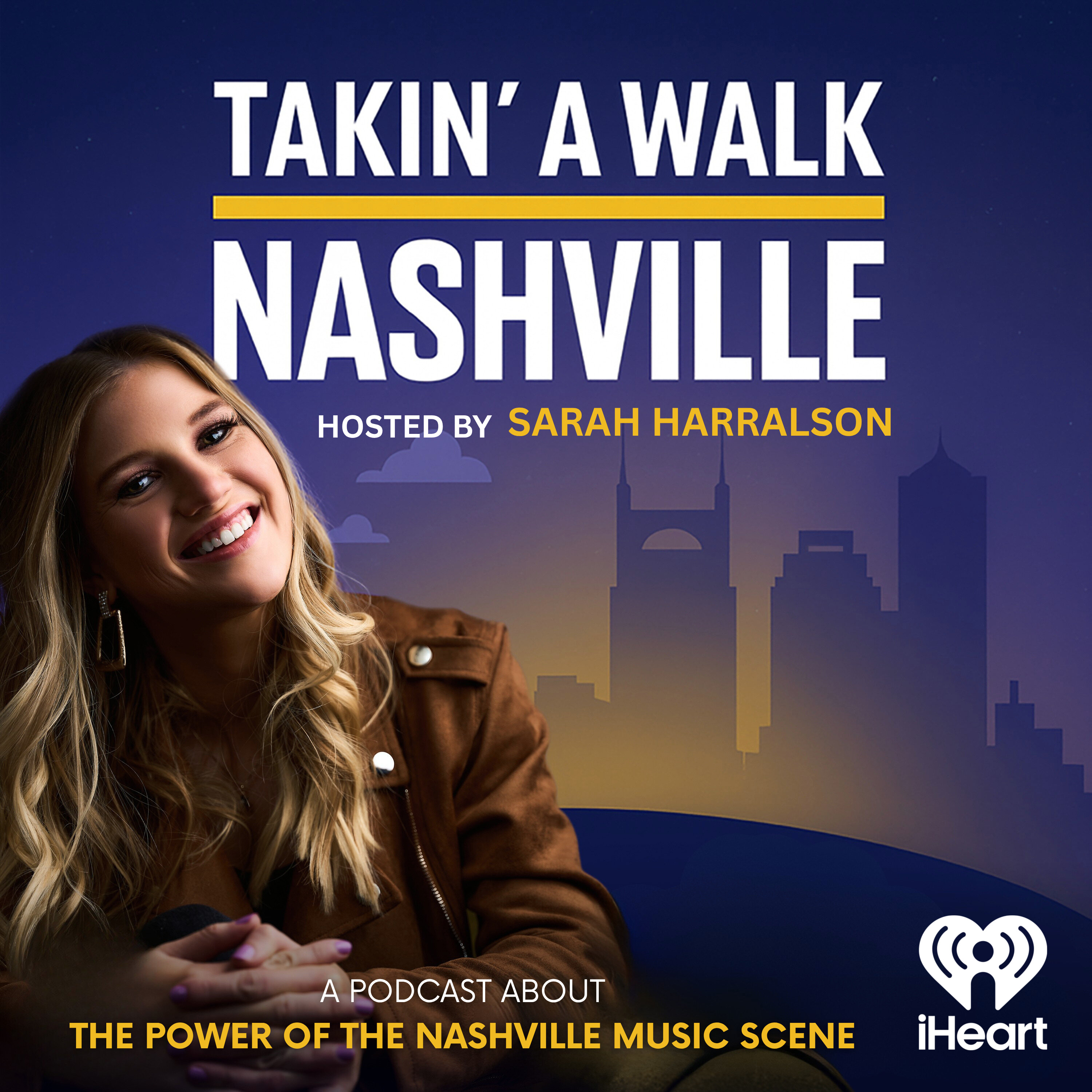
Kyle Clark Unplugged: Insights on Songwriting, Nashville's Music Scene, and Finding Peace in Creativity
Are you ready to dive into the vibrant world of Nashville's music scene? Join us in this exciting episode of Takin’ A Walk Nashville as host Sarah Harralson sits down with the talented Kyle Clark, an accomplished songwriter and independent artist whose new album, "Better on a Boat," captures the essence of coastal vibes intertwined with classic Southern storytelling. This episode is a true celebration of Nashville music, showcasing emerging artists and the rich tapestry of the music industry.
Kyle Clark reflects on the thrill of releasing his first fully cohesive album, sharing how the summertime energy and his personal experiences with water and the beach have profoundly influenced his music. As he discusses his clothing brand that aligns perfectly with the album's theme, listeners will gain insights into how authenticity plays a crucial role in both his artistry and connection with fans. This interview podcast is not just about music; it’s about the journey of self-discovery that every artist faces in the fast-paced music industry.
Throughout the conversation, Kyle Clark shares the story behind his viral hit, "Hope It's Hot Out," and his experiences writing for renowned artists like Blake Shelton and Lily Rose. His multifaceted approach to music and dedication to honing his craft make this episode a must-listen for anyone interested in Nashville's music history and the stories that shape it. Kyle’s insights on the lessons he has learned about authenticity and connection will resonate with aspiring musicians and seasoned industry leaders alike.
As we celebrate Nashville music and the journeys of emerging artists, this episode of Takin’ A Walk Nashville with Sarah Harralson offers a unique glimpse into the heart of an artist who is not just making waves but is also committed to creating meaningful connections through his music. Whether you’re a fan of Kyle Clark or simply love discovering new talent, this episode is packed with inspiration and valuable insights that you won’t want to miss.
So, lace up your walking shoes and join us for a stroll through Nashville’s vibrant music landscape, where every step reveals a new story and every note carries the legacy of Nashville’s rich musical heritage. Tune in now and experience the magic of Takin’ A Walk Nashville!
See omnystudio.com/listener for privacy information.
Available Results
Generated results are saved to the knowledge database for reuse and search.
Extract Knowledge
Pick what you want extracted first. Model, scope, and chapter options appear after a template is selected.
Transcript
00:00:01
Speaker 1: Taking a Walk Nashville.

00:00:02
Speaker 2: Hey everyone, welcome back to Taking a Walk Nashville. I am so glad you're out.

00:00:06
Speaker 3: Strolling with us today.

00:00:09
Speaker 2: And if you are looking for the absolute perfect.

00:00:12
Speaker 4: Soundtrack for the Lake, the Beach, or just sitting on the back porch this summer.

00:00:17
Speaker 2: Today's guest, as you covered, you already know his work behind the scenes as a platinum certified songwriter, pinning massive hits like Lily Roses, Villain, Cuts for Hardy and John Party, and Blake Shelton's current radio single Let Him In Anyway.

00:00:33
Speaker 4: But he's also a Bauer House independent artist in his own right, racking up over forty million streams with his viral hit Hope It's Hot Out. He just dropped his highly anticipated new album, Better on a Boat. It's a masterpiece of what he calls coastal country, blending that laid back, sun soaked island ease from his birthplace of Honolulu with the classic Southern storytelling he grew up on in Georgia. He wrote it, he produced it, and he mixed it himself. We are diving deep into this new record, his reputation as a studio Swiss Army Knife, and how he navigates being one of the most versatile young creators in town. Grab a cold drink, soak up the sun, and let's take a walk with the incredibly talented Kyle Clark.

00:01:24
Speaker 2: Welcome to Taking a Walk Nashville with your hosts singer songwriter Sarah Harrel. Soon great, Kyle Clark, Thank you so much for being on the Taking a Walk Nashville podcast today. Your new album Better on a Boat it just dropped this.

00:01:38
Speaker 3: Memorial Day weekend.

00:01:40
Speaker 2: How does it feel to have your first fully album out.

00:01:44
Speaker 5: Well, it feels great to have this record out. It's exciting to have a project that feels like fully cohesive.

00:01:51
Speaker 1: And just summertime energy.

00:01:55
Speaker 5: I feel like that's the thing that I've noticed that I've been gravitated towards just right, and then fans have seemed to enjoy anytime that I put any summertime feeling songs out.

00:02:05
Speaker 3: Yeah.

00:02:05
Speaker 2: I love a good summertime album, especially when it involves around the beach an ocean.

00:02:11
Speaker 3: And you even got your.

00:02:11
Speaker 2: Better on a Boat hat right now, So tell me more about that. You have a clothing brand coming out that correlates about.

00:02:20
Speaker 5: Yeah, so me and my wife it was back in April of last year whenever I had started this journey of Better on a Boat the album, and I think it was like a month or two after. My wife had always been interested in potentially starting like a clothing lifestyle brand, and we had like ideas over the years of stuff and it just never felt right. And then I just I think I came downstairs one day and was like, what if our brand was Life's just Better Better on a Boat?

00:02:50
Speaker 1: And she was like, Oh, I think that could be amazing.

00:02:53
Speaker 5: Like that it felt like it clicked, and she was like it made sense for like our lifestyle and what we love so much and like our dream of like living at the beach one day, and and so we started just kind of going down the path of like how do we actually make this like the brand that we want it to be, And slowly it's been since since then we have been working on products, like we have this hat, we have another hat that we've been working on, and then a boat tote bag. I don't know if you've seen those like Elbean type bags. It's similar, it's like built off of that idea, but it's like even more like designed, it's reversible. So we've done like a lot of like work to try to get this brand off the ground, and I believe we're trying to launch in June. It's it's just like getting the products in and everything. But it's been such a like fun process to not only work on the music that feels like it's my life, but also like a brand that I'm like, I want to wear that and like and they that was the thing I didn't want to make like Kyle Clark brand. I wanted to make Better on a Boat.

00:04:03
Speaker 3: Nice. That's so exciting.

00:04:05
Speaker 2: And what did you say is the launch date for the clothing brand?

00:04:08
Speaker 5: So we're looking at probably the end of June is whenever. I don't know the exact date yet, but we're trying to get the website finished and then once that's up, we'll have like pre orders and all that stuff start kind of rolling out.

00:04:20
Speaker 2: That's exciting people can get their clothes for their summer.

00:04:23
Speaker 3: Yea, and by the beach. The album itself Better on a Boat.

00:04:28
Speaker 2: It's centered on slowing down, finding joy and simple moments. Being an artist and songwriter can be very fast paced, from touring to writing songs to always working on the next project. So how do you remind yourself to stay centered. Is it finding time to be out on the water.

00:04:47
Speaker 5: Yeah, I feel like the album really brought a lot of I feel like peace to my creative like where I've fallen into at least, Like I feel like Nashville is so easy to you write a bunch of songs, and you write great songs, right, but like maybe they're not truly you. You're just writing for a Morgan Wallen Pitch or Luke Bryan or like name an artist and it's like you're trying to aim for them.

00:05:18
Speaker 1: And I felt like this, I don't know what I really like.

00:05:21
Speaker 5: I kept on coming back to I don't know who I am as an artist or it was like what is it that truly like speaks to me? And so whenever I started kind of going back through my catalog of songs that I'd written, I had found songs that were kind of themed in this like water boat beach lifestyle. And I've always like my family we always take a family beach trip, which will be going on in a couple of weeks down to thirty A and so we've been doing on that trip for at this point, probably over fifteen years or so. And for that we went to other beaches and stuff, but we just have like a tradition and so it's like I truly feel like when I'm looking out at the water, there's like this piece and there's even like a thing called like I think it's called like blue theory or something where it's like.

00:06:12
Speaker 1: Or ocean theory.

00:06:13
Speaker 5: I don't know what it is, where it's like if you're looking at something blue, like it calms all your nervous system. And so I truly I feel like that's an accurate like that's the that's the music, and in a sense, like it feels like a place of peace and like I honestly I feel like I have like total ownership over the sound too. I feel like I'm more invested in this project than I've been in any of my previous like EPs and stuff like that. That just feels like, you know, after seven years of being in Nashville, I've kind of found my lane, that makes sense, and found my voice.

00:06:51
Speaker 3: Yeah, well it also makes sense because.

00:06:54
Speaker 2: You were born in Honolulu, Hawaii and then raised in Georgia. Did you spend a lot of time and Hawaii growing up?

00:07:02
Speaker 1: Well, so I only lived there for like a year.

00:07:05
Speaker 5: My parents they were in the Air Force, and so they I'm like, I wish they would have just stayed, but at the same time, they probably would have gotten moved to another station, and they didn't want that lifestyle for me.

00:07:18
Speaker 1: And then my brother came along, so.

00:07:19
Speaker 5: They just were like they wanted to move back to Georgia, where my dad's from. And then after a year of living there, they moved to Texas, where my mom's from, to just like see if they wanted to live there, and they were like, they lived there for two years and they were like, Oh, let's go back to Georgia. But yeah, so basically we moved from Georgia to Texas, back to Georgia and then I grew up in Georgia until twenty nineteen when I moved to Nashville. So I felt like I had like a lot of like the small town life that I lived, but I always felt this pool back to I feel like the water in the coast. Anytime I was by the water there was just like I said, goes back to like that peace feeling and being on a boat and just like the breeze and you know what I mean, all of it.

00:08:07
Speaker 1: And so yeah, I.

00:08:08
Speaker 2: Think the good thing even though we're in a landlocked state in Tennessee. It's not a far drive from the beach.

00:08:14
Speaker 3: It's about I guess seven.

00:08:16
Speaker 2: Hours to Destin and thirty A area, so you don't have to go far to find water and beautiful lakes here in Tennessee as well to be on a boat.

00:08:25
Speaker 1: Yeah, oh, it's We went out on.

00:08:29
Speaker 5: Old Hickory recently and it was just it felt felt good to just be out on a boat, whether it was and then you know, like you said, it's only seven hours to the thirty A and that's kind of where we'll We were there like a couple like one week ago down there for writing retreat with Hardy and so got to write some songs at the beach, which was like a first to do that because I've never had a retreat down there.

00:08:56
Speaker 1: So it was fun.

00:08:58
Speaker 3: Nice. That's so fun. One of the songs on.

00:09:01
Speaker 2: Your new album, Meet God and the Ocean. You wrote that with James Slater. What does that song mean to you?

00:09:08
Speaker 5: It's a special song and I'm really glad that me and James it felt meant to be. The day that that session came up, it was like, so I wrote that back in twenty twenty one actually, and I just like had a morning. I was waking up a lot because we had just gotten a brand new puppy, and so he was like needing to go to the potty and stuff. So I'm waking up at like five or something in the morning. It was preparing me for whenever I had my own son, you know.

00:09:41
Speaker 1: But it was like basically just had this feeling.

00:09:47
Speaker 5: I don't know what it was that morning, but I just started singing that melody and those lyrics like just the me God and the ocean, Takobou this staff school, and I was like, there's something interesting, like it felt, and especially because like James connection with like Kenny Chesney. I was like, this feels like a perfect storm of a day to happen. And so I brought it into James and immediately he was like, yeah, let's write that. And once we finished it, I felt like it was always such a special song and even like it was actually he sent it to Kenny Chesney and Kenny loved it and put it on hold, and so it could have been a Kenny Chesney song. But after a while he just I think he had different records that he was putting out, and I don't know if it made.

00:10:35
Speaker 1: Sense for it.

00:10:36
Speaker 5: So I was like, well, I want to take it back and I want to put it on my record just because it was. It meant a lot to me, and I feel like I have such a deep connection in my faith as well that you know, I think it has grown over the years and I've like just like I feel like I've been more in the word than I ever had, and I felt happier than I've ever had. So it's like, uh, when I listened to that song, it reminds me, it like grounds me a little bit.

00:11:09
Speaker 3: Yeah, it's a great song. I love the album. I also listening to it this morning.

00:11:14
Speaker 2: I also loved the song on it at Doc in a Hard Place like me, I fit stuff collabor I.

00:11:19
Speaker 1: Love that thank You. Yeah, that one was another fun one.

00:11:23
Speaker 5: My son was I had a carrier on me and I think my wife was get I think her and her mom were like getting like a pedicure or something like that, and I was at the park and just like had him on me and he fell asleep on me and I was just on my phone. I was like think going through like just trying to think of new ideas, and I remember just like I was like, because I'd always heard rock in a hard place, and so I was like, all I gotta do is change one letter and it's a new it's a completely different idea. And I also when I when I saw I was like, Okay, this is amazing.

00:11:58
Speaker 1: It feels like the modern day.

00:12:01
Speaker 5: I'm gonna miss her Brad Paisley, and so I came into the room with Madison, Kozak and Griffin.

00:12:06
Speaker 1: After I'd thought of the idea, I was like.

00:12:09
Speaker 5: This is what I want to write today, this is how we should do it, and then we just like that day just nailed it.

00:12:15
Speaker 3: That's awesome. Yeah, a great song.

00:12:17
Speaker 2: And you also have an additional ten more songs coming.

00:12:21
Speaker 1: On the album I do.

00:12:23
Speaker 5: Yeah, it's exciting because with this record back in April, I started with six songs. Back in twenty twenty five, I was just like, maybe I'll put an EP out. This was like my initial thoughts, and then I just continued writing songs and then it became ten songs, and then I was like, well, I don't want to stop writing like this vibe. It makes me feel good, it makes me feel like energized and inspired, and so I just kept writing and writing and writing, and so then it turned into twenty songs, and then I was like, well, I started producing it, and I was like, it feels it would be cool to base it around the summer season, where it's like Memorial Day is the first half, and then all the way through summer there's still summer music coming out, and then Labor Day is like the final twenty songs combined. So it really like it puts you in the season, and I kind of like, I don't know, we'll see how it goes for.

00:13:27
Speaker 1: The next album.

00:13:29
Speaker 5: I'm already working on what's gonna come after this, But I almost like love the way that it felt this year of just like every like it felt.

00:13:38
Speaker 1: Like putting out Christmas music, you know what.

00:13:40
Speaker 5: I mean, Like every like when the season comes around, people stream it even more, and like it's just like a necessary like genre. Like I feel like part of the genre that I feel like has been missing for a little bit, or at least like in the sense of.

00:13:53
Speaker 1: Like where it used to be.

00:13:54
Speaker 5: It used to be like a much bigger thing and it was on radio, but I feel like the sound is sifted over the past few years. So I was like, well, that's what I loved so like, I just want to make that music and just put that music out in the world.

00:14:09
Speaker 3: Yeah, definitely as influences from Kenny Chesney and Jimmy Buffett all of that. So listeners can look forward.

00:14:16
Speaker 2: To not only your clothing brand, but additional songs literally Christmas in July, I.

00:14:22
Speaker 1: Know exactly, That's exactly it.

00:14:25
Speaker 2: And in addition to writing and co writing the songs on this album, you were also the mixing engineer of this album.

00:14:31
Speaker 1: Yeah. Yeah, so this was like a new I forel like new territory for me.

00:14:39
Speaker 5: I have always had a mixer and I remember saying to my like, I was like, I'm not a mixer, I can't do that. And then I think it was like one day I was like, it's so true. What they say is like our words are so powerful and so like what we tell ourselves is what we can be. And so I just finally made the decisions and say, you know what, I am a mixer. You know, it's like the same thing I said before that was I'm not a producer. I don't I'm not I can't do that. And then it just like as you continue to grow and like your knowledge of like what you're doing. You're like, well, like you know.

00:15:14
Speaker 1: I was.

00:15:14
Speaker 5: I asked the guy who was mixing my records prior to this, and he's like, man, these sound amazing. And I was like, well, do you have any critiques? And he was like, I would just do like this and this and that's it. And I was like, that's it and then and I just did that to the record and it was like, it feels great, it feels like. I also started thinking about, like, gosh, you imagine back in the forties and like fifties, you know those like old records where they're like mono and like they're the vocal is like so loud, and everything else is kind of just like distorted a little bit. But it like was a massive hit. I was like, now, it's like music. If it sound if you can hear the words to the song and feel the vibe and the impacts are in the right place and the chorus lifts and all that, like you're gonna have it'll it'll feel good no matter what the mix or the production.

00:16:09
Speaker 1: I feel like nowadays is yeah.

00:16:13
Speaker 3: Well, it can be so difficult when you're mixing and producing your own music because sometimes you feel like it's a never ending project. It's never finished.

00:16:22
Speaker 2: Yeah, mixing the music in the studio where you recorded it, or were you mixing it elsewhere?

00:16:28
Speaker 5: Yeah, so everything that when it comes to production and mixing, I have a studio in my house and so I'm basically I cut all my vocals there and then I just like I have my speakers set up, and I just really like I I've listened. I listened to this record. I mean it has to be over a thousand different times in different ways too, because like there were certain things that changed and like, oh I added an extra this into it or extra that, and so I feel like I know the songs better than than anybody else, but like it also creates. So the way I look at it is if it doesn't make me crazy after hearing it, or if it doesn't make me like hate it, I'm like, Okay, I think I've got a good I think I've got a good song if I've heard it a thousand times and I don't like I can listen to it again, you know, which I think for me in the past, like being not not having my hands on the production in any like and not to say that I'll always have my hands on the production. But like I think, you know, I've had things where I was like, oh, that could have been different, you know, And so I really I felt like it gave me a different kind of like it. It only increased my artist like self. I feel like to be like that hands on with it and truly understand my sound.

00:17:55
Speaker 3: Yeah.

00:17:56
Speaker 2: Well yeah, the mix on every song sounds great, it grows.

00:18:00
Speaker 3: You did a great job.

00:18:02
Speaker 1: We'll be right back with more of the Taken a Walk Nashville podcast. Welcome back to Taken a Walk Nashville.

00:18:14
Speaker 2: Was audio something that you were self taught?

00:18:18
Speaker 3: Did you go to school for a production?

00:18:20
Speaker 1: No?

00:18:20
Speaker 5: So I moved to Nashville in twenty nineteen and I was signed to Jordan Schmidt, who is a producer and songwriter hit like He's got hit after hit like God's Country, what IF's Trunk Me. So he had like all these like amazing songs and he'd produced a handful of stuff, and so having him in my corner, I could ask him questions. And then my roommate was Jacob Durrett for two years whenever I first moved here, and if you know his stuff, he's on produces Morgan Wallen alongside with Joe and Charlie, but basically having those two guys in my corner and I can ask them anything. I remember staying up till two am and Jacob was right there next to me, like teaching me how to tune a vocal and uh, and I was just like, you can't really like it was. It was so like priceless, you know what I mean. Like I think, especially learning from guys who are in the industry. I think you could like watch all the YouTube videos and that you want, and you could go to like there's so many like production courses and stuff that I know are in town and also around the world. But like just sit there and be like these guys are doing it. They're producing the people that I listen to, and they're they're getting the sound where I want to get my sound too, And so I just kind of kept on asking questions and just being a student. And I still feel like I'm a student. Like I know a lot now, or at least I know a lot more than I did when I first started. But there's always something to learn in production, so you're just never and those guys say the same thing too, It's like they're always learning something.

00:20:09
Speaker 2: New, right, audio is constantly changing, and that hands on experience with people is definitely invaluable. Speaking of Jordan Schmidt, before step into the spotlight as an artist, you built your reputation as a songwriter when you want Atlanta's one to one point by Kicks competition two years in a row, and that caught the attention of songwriter and producer Jordan Schmidt and he offered you that joint publishing deal with Sony Music Publishing into nineteen.

00:20:40
Speaker 3: So at that time.

00:20:41
Speaker 2: Were you trying to start your career as an artist or did songwriting come first for you.

00:20:47
Speaker 5: So I've always been like I've always been thinking like dream wise, I want to be an artist. That was like I feel like as a kid growing up five years old, my and have videos of me and it kind of connects to my last record was like it's called I Hope You Will Be Someday, and I had a clip that like is from the v VHS VCR like thing and my parents say, or my mom says, I run up and I say I'm Kenny Chesney, right, and then she's like, uh, oh you are well.

00:21:21
Speaker 1: I hope you will be someday.

00:21:23
Speaker 5: And so it just felt like this kind of like strange, like and again I didn't even know about that clip for a long time. Like it was like they pulled it out of the the you know, those the black tapes they got basically they had to convert them into like CDs and then you can put them on the computer and stuff. So they like pulled those out and it just was like so strange that like I had had this like fire in me. I feel like from such a young age to like I was standing front of the TV like with a plastic microphone and a plastic guitar or whatever, like watching Kenny Chesney on the on the TV playing a show and trying to mind what he was doing. And so it it felt like there was always that dream of being an artist and kind of like following the footsteps of like my heroes. And like I think that when I came to town, Jordan was actually trying to sign He wanted to sign me as an artist because he wanted he signed me as a songwriter, but he felt I guess, I feel like he really loved my voice and some of you know, again, there was all songs that I had written by myself, so they were they were okay, they were not great, but he saw the potential and he was like, I want wanted me to come here and potentially cut the songs that he didn't get like cut by you know, like Kane Brown or Morgan Wallen or Blake. Like it was like the songs that were just in his catalog that were also really great songs, they just didn't see the light of day. And so he wanted me to potentially be the like vessel for were those songs.

00:23:01
Speaker 1: And produced me.

00:23:02
Speaker 5: So I came here and like I started doing that. I started writing songs. I cut some songs that Jordan had had written, and I put those out on EP in twenty twenty. And then basically I feel like the pandemic kind of happened, and like it became a you know, I had a publishing deal, I didn't have a record deal, and I kind of was like, all right, well, I feel like I need to, you know, really like figure out what I'm gonna do because the artist thing isn't really going the way that I thought it was going to go. And so I just started really like all right, I'm gonna write songs and I'm going to try to get cuts for other artists and I did that for and I still am doing that, you know, I still write stuff for other people. But I think for a long time I wasn't focusing at all on myself, and I kind of put the artist thing on the back burner and in a way of just being like, oh, just cut. If there's a good song that I write that nobody else cuts, I'll cut it. And I think that like once I had a I feel like I've had a couple of conversations about this with other artists or just other individuals in the music industry. But the thing that really takes somebody from like just being a great voice or a great songwriter is like an identity, and like if you can somebody told me, like, if you could draw a cartoon of a famous whatever musician, right, and you could, like and if you knew who it was, then like clearly they have created an image, right, an artistry that's recognizable from outside, from like actually seeing who they are.

00:24:47
Speaker 1: So like if yeah, like I know.

00:24:49
Speaker 5: Morgan, I don't know if he has the mullet anymore, but like at one point he had the mullet and the cutoff shirts or whatever. So if you saw like a cartoon or a Halloween costume of Morgan walland you would know it's Morgan Walland same thing with Hardy, you know what I mean? Like and Laney, there's you can tell who they are and so I think that it just it's like finding a lot of this town. Has been finding myself and saying who am I?

00:25:15
Speaker 1: Who do I want to be?

00:25:18
Speaker 5: And then going after like in making myself more of that person every day.

00:25:24
Speaker 1: You know.

00:25:25
Speaker 2: Yeah, yeah, you've definitely heard your image with your Coastal Country brand, your single Hope It's Hot out that went viral on TikTok.

00:25:36
Speaker 3: And has to past forty million streams.

00:25:39
Speaker 2: Obviously coming here during the pandemic was hard as an artist. But when that viral moment happened, what did it teach you about your direct connection to bands and how did it change your trajectory as an artist?

00:25:53
Speaker 5: Well, I feel like it was such a powerful tool because it really kind of put the power were into the artist's hands where it's like you can kind of make your own make your own luck right in a way. And I remember that song specifically. It was a song that my manager and then Jordan like, not that they didn't like think it would be a good song, but they just were like, I don't think that one's like us worth us producing, Like they didn't see it as like a song that was in there, like there's like I don't know if the hook lands all the way and uh. And I remember just like posting a clip of that song up on the on the Internet and and just all of a sudden, it's like I look at my Instagram and there's like a hundred videos made, or like or TikTok look at there's a hundred videos made. And then it's like a week later there's now five hundred videos, and then there's a thousand videos, and then it just kind of kept on like going, and I think by the time that I put the song out, there was like ten thousand or more videos that had been made with the audio and that song. It just like it shows if you put out something that you believe in like and like people love it, like, it doesn't have to have a big like label putting.

00:27:18
Speaker 1: A bunch of money behind it.

00:27:19
Speaker 5: And so that was like the proof that I needed to say I can be an independent artist.

00:27:25
Speaker 1: And at least at this point.

00:27:28
Speaker 5: Like I I've had so many conversations with labels and A and RS. And I think at some point there'll be a right fit for potentially a label, because I'd love to go to radio at some point. But right now it's been awesome because I can connect with fans and just like make music that truly connects with them.

00:27:49
Speaker 3: Yeah, that's awesome.

00:27:51
Speaker 2: And in addition to your artistry, you mentioned you've had songs cut by other artists, and within a year of your first publishing deal, you co wrote your first platinum single, Villain by Lily Rose. After writing that song or any song, really, how do you know? And you touched on this a little bit earlier, but how do you know if the song is meant for yourself or another artist or sometimes when you're in a cool write, is there just a song you're drawn to right away?

00:28:22
Speaker 1: You know?

00:28:22
Speaker 5: It was interesting with Lily Rose, so it was like such a random We had ran into each other a whiskey jam and we were like, let's write together because we had gone to college together together at the University of North Georgia. It was so I think that's the thing about this town is you'll just like run into somebody and you're like, well, I haven't seen you in a long time. Or whatever, and then you'll get back together and write a song. And so I had a friend here at Belmont that was Mackenzie Carpenter, and so I was like, okay, well do you want to come, Like I set up the right base. I was like, okay, Like, well, I'll bring in McKenzie and maybe we'll write something, you know, And then sure enough we wrote wrote Villain.

00:29:10
Speaker 1: And it was one of those things too.

00:29:13
Speaker 5: Where you don't really know what you're writing that day, Like you may think that something's a hit, and you may think someone's not a hit, and it surprises you every time. The song it was the same thing. Lily just posted it on TikTok and then it started taking off and it was like, you know, number one on the Highway and all the like, and again being a platinum song is it's crazy. It's like it it's wild to have that accolade just because it's it's such a big feat. Like I mean, I from my own song Hope It's hot out, Like I'm like, I can't wait till it goes gold because that will be just like an awesome thing to be like my song went gold, you know, but you really don't know what you're working on in the moment, you just kind of have to show up and like just give it your best every single time, or at least because there's days where you don't want to and you're just like I really could just like stay at home and just like not write a song because I'm drained. But the instances where I've shown up, I feel like it always is it's paid off.

00:30:19
Speaker 2: Yeah, well that's a big part of it, just showing up because you never know what's gonna come out of the song, and I'm sure you're glad you set up.

00:30:26
Speaker 5: That, Yeah, totally, And like that's like not the only time that that's really ever happened I've had. I feel like with the Blake Shelton song, it was one of those instances where like I could have gone home and we were we had a writing retreat that we were on with It was with Hardy and and we we had written like four songs at that point, and I was like, I'm like really tired and went to dinner with my wife and then something in me was like I need to go back to the house and just like see if anybody's hanging out maybe like just I don't know, never know, and I showed up and it was Zach Abben, Carson Wallace, and Michael Hardy just sitting in there listening to music, just chilling, and I sat down and as soon as the song that Zach was playing because they were just kind of vibing out as soon as the stop party was like, so, y'all want to write a song or what? And so then we wrote the song led him in any way, and it was such a like it was one of those ones where like all those other ones I'd mentioned where it's like you don't know if you're writing something great or like you may think. It was like I felt like we were writing something really prolific and really unheard of. I feel like, and I'd never heard a song, and I never heard a concept in that world of things. So I felt like it was a powerful, powerful message, and I felt like if we did it correctly, it was going to land in the right you know, on the right ears. And sure enough, like Hardy, he sent it to Blake Shelton and he instantly, I guess, got chills, and and that was funny because he was sending like text to Hardy and it was like, because I can barely get Gwyn to like stop crying so and go to dinner.

00:32:22
Speaker 1: She was just like just like torn up over it.

00:32:26
Speaker 5: So it was cool to like hear that response, but also like proof of just like showing up even whenever you don't want to.

00:32:36
Speaker 3: I love that. Yeah, that's a great song.

00:32:38
Speaker 2: Blake Shelton's current single, You're also known as a Swiss Army Knife and writing rooms always contributing to Melody La Concept production. Did that versatility come from necessity when you were starting out independently or have you always loved each part of the puzzle creatively?

00:32:59
Speaker 5: You know, I feel like I truly do love all aspects of music. I love creating in any capacity. And I think part of the Swiss Army Knife thing because that's kind of what Jordan would call me, he would say that.

00:33:18
Speaker 1: It.

00:33:19
Speaker 5: It was really like I try to make myself more valuable, you know, because I think being one dimensional in anything, I feel like you're just whenever you think about this talent, there's so many talented people right in all areas, right the industry, there's talented people. There's like in the songwriting, the studio musicians, there's like so many the producers, the mixers, the mastering. So I was like, if I can learn as many skills as I can, that only increases my value as somebody in the room, right whenever I go to write with whoever it is, or if they if I write with an artist that day. So I just I saw it as like I'm only helping myself out if I go and I learn how to do these things and just kind of soak up all the knowledge I can from the people who are doing it really well.

00:34:14
Speaker 2: I think that's so important And like you said, that's how you get invited back.

00:34:18
Speaker 3: Well, Kyle, I have a couple more questions. It's left for you.

00:34:22
Speaker 2: So as we talked about your new album Better on a Boat and Channels Ultimate summertime Spirit, like.

00:34:28
Speaker 3: Can you chest me Jimmy Buffett, Zach Brown?

00:34:31
Speaker 2: As I mentioned, if you could spend a day on a boat swopping stories with any one of your musical influences, who are you picking and what's the drink?

00:34:42
Speaker 5: Oh my gosh, well, I mean, I guess just for the sake I feel like, I mean, if I was if I was able to sit down with Jimmy Buffett, that'd be incredible and probably would have a margarita just for the sake of it and either that or like a pin Cole. But it just like, yeah, I mean, if I could if I feel like just because I never got the chance to see him in concert, and I never I never got the chance to meet him or anything. So there's a lot of artists that did, and like with Zach Brown and Kenny Chesney and plenty of others, but that's probably he's kind of the one who did it. You know, he did the Coastal and he also, you know, I've read his book. He didn't care about what Nashville like. He he was like working, he was a writer for Billboard actually, like interviewing other artists and like doing album reviews, and he was trying to make it and he got a record deal. It didn't work out, and then he was like, all right, I'm going to the beach. And so he left Nashville and just started doing his own thing and not paying attention to whatever else was going on. And I just like, I think that's super mirable. Like I feel like, I I feel like the people who you know, carve their own lanes are the ones that make it. You know, they don't follow whatever, they don't follow the crowd.

00:36:12
Speaker 3: Yeah, I love that. That's a perfect choice.

00:36:15
Speaker 2: And my last question for you, when you're not out on the water or chucked away in a writing room, what's your favorite spot in Nashville to just slow down and catch your breath.

00:36:26
Speaker 5: Oh gosh, there's so many great spots.

00:36:32
Speaker 1: I feel like that.

00:36:33
Speaker 5: You know, we live in twelve South and so like Severe Park is right next to us, and so we'll walk there with the dog and the baby, and I think it's like peaceful, just going out on a walk and just kind of decompressing your day or just even like I've gotten a lot of song ideas just on a walk, you know, So I think which it's I think I think that's one and one of the ways other places would potentially be, like I feel like Old Hickory or just being out on the water there, just seeing the water. I think that, you know, that's where at least I feel like in Nashville I find or outside in Nashville, I find peace.

00:37:14
Speaker 3: Yeah, that's a great pick.

00:37:15
Speaker 2: Your twelve South in general has changed so much, but what hasn't changed about that area is Severe Park. It's that stayed the same, great place to walk and.

00:37:24
Speaker 1: Even have a picnic mm hmm, totally.

00:37:27
Speaker 2: Well, Kyle, Thank you so much for being on Taking a Walk Nashville. Today listeners can listen to your new album Better on a Boat and look forward to additional songs and your clothing brand that's coming out this summer.

00:37:40
Speaker 1: Thank you so much, appreciate you having me on. Thanks for listening to Taking a Walk Nashville with Sarah Harrelson. Please check out our other shows produced by buzz Night Media Productions Comedy Save Me and Music Save Me posted by Lynn Hoffman and Take It a Walk posted by Yours Truly Buzznight. All shows are available on Apple Podcasts, Spotify, and are part of the iHeart podcast network