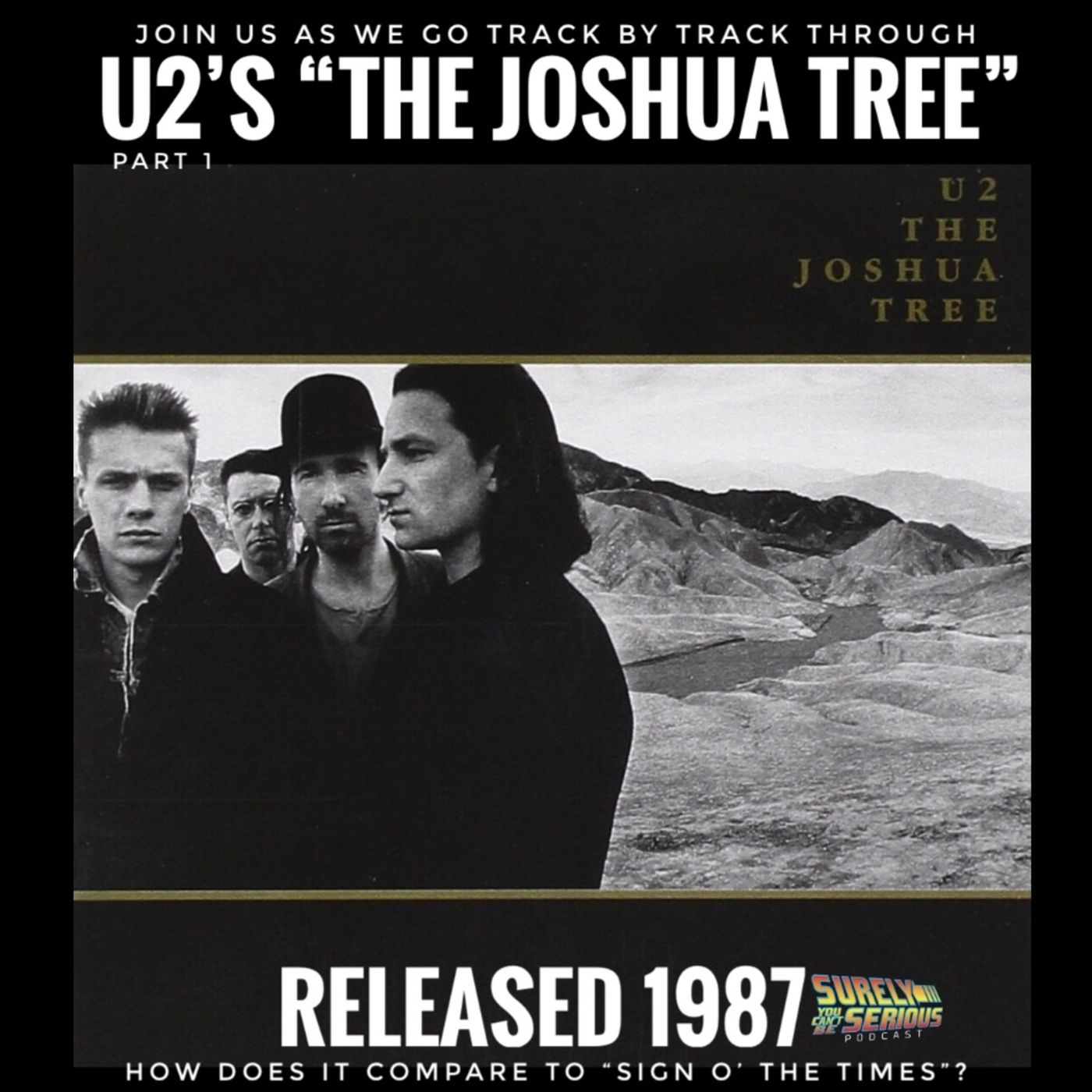
U2's "The Joshua Tree" (1987): Track by Track! (Part 1)
It could be argued that 1987 was the best year in the 80s for music, and in 1987, the album of the year was Joshua Tree by U2. It is without question one of the best albums of all time but was it really better than Prince's Sign O' the Times? Join us as we explore the fascinating stories behind U2 and the development of this iconic album. Don't miss the magic mushrooms story!
2020-11-24
38 min
Transcript
Available Results
Generated results are saved to the knowledge database for reuse and search.
No generated results are available for this episode yet.
Extract Knowledge
Pick what you want extracted first. Model, scope, and chapter options appear after a template is selected.
Generated results for public episodes are saved to the knowledge database so they can be reused and searched later.
Transcript
<v Speaker 1>What we're gonna do is gon We're gonna show up
<v Speaker 1>at about thirty thousand people. All right, everybody, Welcome to
<v Speaker 1>the Shirley you Can't Be Serious Podcast. Tonight, My co
<v Speaker 1>host D and I we are on top of a
<v Speaker 1>liquor store in downtown Los Angeles. We are broadcasting and
<v Speaker 1>podcasting tonight from that location.
<v Speaker 2>Okay, Jason, you you get to wrap it up. Man,
<v Speaker 2>the cops you're coming up here. We're shutting the location down.
<v Speaker 2>They're trying to shut us down. Man, they're trying to
<v Speaker 2>shut us down.
<v Speaker 1>They're gonna shut us down. Okay, let's go.
<v Speaker 2>Hello everybody, and welcome to the Surely you Can't Be
<v Speaker 2>Serious Podcast with your co hosts James D. Graves and
<v Speaker 2>Jason Colliban. Welcome back, everybody to the Shirley you Can't
<v Speaker 2>Be Serious Podcast. We are nearing years in with a
<v Speaker 2>fantastic comparison of YouTube's Joshua Tree versus Prince Sign of
<v Speaker 2>the Times, two amazing albums that we just lucked into
<v Speaker 2>deciding to compare. They both came out in nineteen eighty seven,
<v Speaker 2>they both are from March of that year. They both
<v Speaker 2>were up for Album of the Year. I mean these
<v Speaker 2>two are some of the biggest hitters of both of
<v Speaker 2>these bands careers and all of the eighties and all
<v Speaker 2>of music history really.
<v Speaker 1>And there was an actual rivalry between Prince and you two,
<v Speaker 1>so we know Prince is a competitive guy. When he
<v Speaker 1>met with Michael Jackson about singing on the Bad album
<v Speaker 1>flashback to our Michael Jackson episode, Prince sat cross armed
<v Speaker 1>and was intensely competitive with Michael Jackson.
<v Speaker 2>Okay, don't forget the ping pong games and the basketball
<v Speaker 2>games either. I mean he would beat him in any
<v Speaker 2>way possible.
<v Speaker 1>That's exactly right. King of pop my rear, right.
<v Speaker 2>Brent, your butt is mine? Whoa? Whoa? What what did
<v Speaker 2>you just say?
<v Speaker 1>You may be the king of pop, but I'm the
<v Speaker 1>king of ping pong. Prince's reaction upon hearing you two,
<v Speaker 1>he said, do you know what I would do if
<v Speaker 1>I had a voice like that? Become a janitor?
<v Speaker 2>Yeah. At some point, Prince compared these albums and compared
<v Speaker 2>himself to YouTube. He says, the difference between me and
<v Speaker 2>them is I could play every single one of their
<v Speaker 2>songs and they couldn't even play Housequake. That's right.
<v Speaker 1>Interestingly enough, I guess they softened over the years though,
<v Speaker 1>because while touring Dublin, Prince invited Bono to come on
<v Speaker 1>stage and you can actually YouTube Bono singing Prince's version
<v Speaker 1>of the Cross.
<v Speaker 2>Both Prince and most of you two have strong Christian
<v Speaker 2>backgrounds and that comes into play in a huge part
<v Speaker 2>in their music.
<v Speaker 1>Well, last week, if you missed it, we talked about
<v Speaker 1>Princess Sin of the Times album. We walked through the
<v Speaker 1>lineup of songs on that one. Today we're going to
<v Speaker 1>walk through the nineteen eighty seven album The Joshua Tree,
<v Speaker 1>and at the end of this we'll give final judgment
<v Speaker 1>on which one we think is.
<v Speaker 2>The better album. Yeah, for sure. It's interesting how one,
<v Speaker 2>you know, Prince has conquered rock and roll and is
<v Speaker 2>starting to move away from it, whereas you two is
<v Speaker 2>finding those roots and moving even more towards it from
<v Speaker 2>the punk scene. It's kind of interesting.
<v Speaker 1>I'm anxious to dive in with the history of you
<v Speaker 1>two and start comparing songs.
<v Speaker 2>Let's do this, Okay, let's jump in. So where does
<v Speaker 2>you two begin? I think you have to begin with Bono, right, sure? Yeah?
<v Speaker 2>So Bono his parents. This is in Ireland in the sixties.
<v Speaker 2>His mother was a Protestant. His father was a Roman Catholic,
<v Speaker 2>and I can see how that would as a youth
<v Speaker 2>having parents of differing denominations could be a really hard
<v Speaker 2>thing to deal with. In nineteen sixties and early seventies.
<v Speaker 1>Ireland, I mean these it was the basis for war.
<v Speaker 2>It was the basis for war, right, and so they
<v Speaker 2>had decided early on that they were going to raise
<v Speaker 2>their first child to take him to the Protestant Church,
<v Speaker 2>and that was of course Bono's older brother, and then
<v Speaker 2>the second child they would raise in the Catholic tradition,
<v Speaker 2>and by the time Bono came along and grew up,
<v Speaker 2>he had no interest in going to the Catholic Church.
<v Speaker 2>He ended up going to the Protestant Church with his
<v Speaker 2>mother and brother growing up. But with the trouble that
<v Speaker 2>came along with that position he had in life, he
<v Speaker 2>kind of got disinterested in school, would just not go
<v Speaker 2>to school to avoid the trouble of it. And then,
<v Speaker 2>very sadly, in nineteen seventy four, his grandfather passed away,
<v Speaker 2>his mother's father passed away, and then while at the funeral,
<v Speaker 2>his mother suffers an aneurysm and then she dies two
<v Speaker 2>days later. It's crazy and I cannot express to you
<v Speaker 2>how devastating it is. I lost my mom when I
<v Speaker 2>was thirteen years old. It changes your perspective on life.
<v Speaker 2>And obviously he had already had some turmoil in his life,
<v Speaker 2>and then this, this happens to him, and fortunately God
<v Speaker 2>looked with favor upon him. And just shortly after this,
<v Speaker 2>a new school open called the Mount Temple Comprehensive School,
<v Speaker 2>which was non denominational and had his co ed and
<v Speaker 2>a mix of students. Is really quite a good school,
<v Speaker 2>and so he ends up going to school there. And
<v Speaker 2>in nineteen seventy six he sees a posting that a
<v Speaker 2>fellow student has done saying hey, I want to start
<v Speaker 2>a band. And that fellow student was Larry Mullen Junior,
<v Speaker 2>who was a couple years younger than Bono. He had
<v Speaker 2>noticed him in the hallways. They hadn't really been close,
<v Speaker 2>but Bono says, hey, that sounds good. I'd like to
<v Speaker 2>be in a rock band. So he shows up with
<v Speaker 2>a few other guys to Larry Mullen's house. They have
<v Speaker 2>their first rehearsal in his kitchen, and among the guys
<v Speaker 2>that show up, you've got David Evans, who would later
<v Speaker 2>become the Edge, and of course Bono at that time
<v Speaker 2>was still known as Houston. And then you had the
<v Speaker 2>Edge's brother, Dick Evans, who was also playing guitar. And
<v Speaker 2>then Adam Clayton, who was a friend of the Evans,
<v Speaker 2>came in and really didn't know how to play bass guitar,
<v Speaker 2>but had talked a really good game and talked about
<v Speaker 2>fret boards and music production and stuff like that, so
<v Speaker 2>they thought he was cool enough guy to be in
<v Speaker 2>the band. And then there were a couple of well,
<v Speaker 2>for lack of a better term, couple of mark Stones.
<v Speaker 2>Among the guys that showed up as well, there's a
<v Speaker 2>guy named Ivan McCormick and a guy named Peter Martin
<v Speaker 2>who were friends of Larry's but they ultimately didn't last
<v Speaker 2>with the band.
<v Speaker 1>And Dick Evans, who was the older brother. You know,
<v Speaker 1>I can see this playing out. I'm eighteen, you guys
<v Speaker 1>are fifteen. I'm out of here. I'm gonna go chase
<v Speaker 1>chicks while you guys started around with your instruments. Oh,
<v Speaker 1>you guys became you two.
<v Speaker 2>Yeah. So on that first rehearsal, Larry said, I thought
<v Speaker 2>this was gonna be the Larry Mullen band for about
<v Speaker 2>ten minutes until Bono walked in and blew away any
<v Speaker 2>chance I had of being in charge.
<v Speaker 1>Yeah, I heard him say that he has been relegated
<v Speaker 1>to hiding behind the drums for the rest of his life.
<v Speaker 2>And that's an interesting dynamic. You know, both Adam and
<v Speaker 2>Larry have a great role in the band, but it
<v Speaker 2>is much more a foundational role. It is like you said,
<v Speaker 2>they stand in the background and they hold the band
<v Speaker 2>up right. You know, that's their job. They're not out
<v Speaker 2>there to put on some spectacular show. They are there
<v Speaker 2>to provide that rhythm section for The Edge and Bono.
<v Speaker 2>By the time they get rolling and they're actually people
<v Speaker 2>are starting to listen to them with the consideration of
<v Speaker 2>managing or recording or signing, these guys, Adam and Larry
<v Speaker 2>still don't really know how to play their instruments very
<v Speaker 2>well at the Edge. And by the way, you know
<v Speaker 2>they got these names, Bono and the Edge, they got
<v Speaker 2>these names after a list of nickname I'm sure you
<v Speaker 2>guys in high school too, people just got nicknamed sometimes,
<v Speaker 2>and usually it was you know, pointing out whatever the
<v Speaker 2>person was most insecure about and making that their nickname.
<v Speaker 2>And so Bono had to do with where he lived,
<v Speaker 2>and so did the Edge. But then the Edge ultimately
<v Speaker 2>got his because of how pointy his chin is. That's
<v Speaker 2>why it's called the Edge. So the Edge knows how
<v Speaker 2>to play the guitar. By the time people are listening,
<v Speaker 2>he is an accomplished musician. He has got his own
<v Speaker 2>technique and Bono he doesn't have an amazing voice, but
<v Speaker 2>he has a voice that you just kind of want
<v Speaker 2>to listen to. Right. It's not like you're amazed by
<v Speaker 2>the beauty of his voice, but the style of his singing,
<v Speaker 2>and of course his lyrics draw you in.
<v Speaker 1>What he does with his voice is he portrays emotion
<v Speaker 1>better than most singers that I can think of.
<v Speaker 2>Absolutely, he leans into it.
<v Speaker 1>It makes me want to weep. It is powerful.
<v Speaker 2>It's from the heart. Yeah, it's truly from the heart.
<v Speaker 2>And he said that very early on into the experience.
<v Speaker 2>He developed a Messiah complex and probably was very difficult
<v Speaker 2>to deal with. But just the idea that he might
<v Speaker 2>be able to have influence over the world from this
<v Speaker 2>thing that he loved more than anything else just got
<v Speaker 2>his juices flowing. I mean, it made him an incredible
<v Speaker 2>front man. You watch Old videos of this, you know,
<v Speaker 2>And we talked about how the band would freak out
<v Speaker 2>whenever Eddie Vedder would start climbing on the rafters. Well,
<v Speaker 2>Bona was doing that over a decade before him. Right,
<v Speaker 2>he was jumping into the crowd, a decade before Kurt
<v Speaker 2>Cobain ever thought about it. He was punk rock. They
<v Speaker 2>listened to the Jam I think Bono said his first
<v Speaker 2>show was the Clash. They listened to the Buds Cocks
<v Speaker 2>and the sex Pistols, and Bono had he would listen
<v Speaker 2>to Bowie and Dylan and Leonard Cohen and he also
<v Speaker 2>liked Mark Bolan from t Rex. They realized, hey, you know,
<v Speaker 2>punk rock is really at the forefront right now, especially
<v Speaker 2>here in Ireland. And it turned out you don't have
<v Speaker 2>to be a good musician in order to play punk rock.
<v Speaker 2>So they and the Police were on the same page
<v Speaker 2>with that, right.
<v Speaker 1>Hey, before you get too far, I was just gonna
<v Speaker 1>mention when they first got together they called themselves Feedback. Yes,
<v Speaker 1>that was the name of their band, Feedback, because that's
<v Speaker 1>what their rehearsals sounded like the entire time, right, okay,
<v Speaker 1>Neat just like Nikki six splashback to ar Motley Creue episode.
<v Speaker 1>The fact that these guys can't play their instruments does
<v Speaker 1>not slow them down from being rock stars.
<v Speaker 2>Right. It's a passion for sure. I mean, you know,
<v Speaker 2>like with def Leppard, they realized early on that Joe
<v Speaker 2>Elliott didn't have the best voice, but he had that passion,
<v Speaker 2>and that passion means a whole lot, right, that's right.
<v Speaker 2>I mean I can remember when I got together with
<v Speaker 2>a band for the first time. It was a guy
<v Speaker 2>that I knew pretty well, but in the hallway just went, hey,
<v Speaker 2>I heard you're playing guitar. And at that point I
<v Speaker 2>had maybe been playing for two years. I didn't know crap.
<v Speaker 2>I was terrible, right, And I was like, yeah, of course, yeah, yeah, yeah, Okay,
<v Speaker 2>he goes I was thinking about putting a band together.
<v Speaker 2>You want to meet up? And I was like sure,
<v Speaker 2>because hey, being in a band sounds cool, right. Nobody
<v Speaker 2>at fourteen, fifteen, sixteen years old is thinking I want
<v Speaker 2>to change the world with my music. They they're thinking
<v Speaker 2>it'd be really cool to be in a band. You
<v Speaker 2>probably get some chicks that way. So these guys when
<v Speaker 2>they very first got together, they had this passion. They
<v Speaker 2>did not, unlike a lot of bands, they did not
<v Speaker 2>cover a bunch of songs by other artists, and they
<v Speaker 2>said it wasn't because they thought they were better than
<v Speaker 2>the artist. It was because they weren't good enough yet
<v Speaker 2>to be able to cover those artists, right. So they
<v Speaker 2>in doing their own stuff, they really developed their own style.
<v Speaker 2>So they're playing all these original tunes and this TV
<v Speaker 2>guy from a show called Young Line, he's looking for
<v Speaker 2>artists to put on his show, and he hears that this.
<v Speaker 2>You know, these young teenage boys are doing original songs.
<v Speaker 2>They know he's coming over and they've they've got basically
<v Speaker 2>one original maybe two original songs that they know. And
<v Speaker 2>they're in the kitchen again arguing about how they're going
<v Speaker 2>to do the song. You know, they can't decide who's
<v Speaker 2>going to start with the music, and they get this
<v Speaker 2>big argument, and then there's the knock at the door
<v Speaker 2>and the guy comes in and he's like, so here
<v Speaker 2>you boys are playing original songs and they're like, yeah, yeah,
<v Speaker 2>we are, and he goes, can I hear one? And
<v Speaker 2>he says, sure, here's an original song of ours called
<v Speaker 2>Glad to See You Go, which is a ramone song.
<v Speaker 2>It's not you two song at all, and so they
<v Speaker 2>play him this Ramote song and he's like, oh, so
<v Speaker 2>that's your song, huh. And they're like, yep, that's us
<v Speaker 2>And they get on TV with it, right, they get
<v Speaker 2>on TV. They and when they get on TV, they
<v Speaker 2>actually play their own original song. But it was it
<v Speaker 2>was a Ramone song that got them their first TV gig,
<v Speaker 2>which may be the reason that they later wrote a
<v Speaker 2>song called the Miracle of Joy Remote. We have a
<v Speaker 2>great song that you might like to hear.
<v Speaker 1>It's called Bohemian Rhapsody. Like I said, they were called
<v Speaker 1>Feedback initially. They then changed their name to The Hype,
<v Speaker 1>and as the Hype they were playing around doing some gigs,
<v Speaker 1>getting in front of people. But in March of nineteen
<v Speaker 1>seventy eight, Larry spotted an ad for a talent contest
<v Speaker 1>and there was CBS Music was involved in it. A
<v Speaker 1>small cash reward for this thing when the five hundred
<v Speaker 1>pounds thank you when so they entered and thought, hey,
<v Speaker 1>you know, great exposure whatever. They were shocked and surprised
<v Speaker 1>when they actually won the talent contest.
<v Speaker 2>Yeah. And so by that time they had scored themselves
<v Speaker 2>a manager. His name was Paul McGinnis, and they realized
<v Speaker 2>that one of the things that they liked best about
<v Speaker 2>him was that he got them beer chicks and beer,
<v Speaker 2>beer and chicks. Yes. So Paul McGinnis had been involved
<v Speaker 2>in I believe it was Irish movies and had decided
<v Speaker 2>to get involved in the music scene, and so he's
<v Speaker 2>excited about you two. They're one of the first bands
<v Speaker 2>that he manages, but he ends up with several and
<v Speaker 2>after this talent competition, he goes to meet with this
<v Speaker 2>guy named Chazz Dewaaley and he's got this suitcase full
<v Speaker 2>of tapes for all these bands, and he pulls out
<v Speaker 2>the U two tape and says, hey, these guys just
<v Speaker 2>won the CBS talent competition. That might be a good
<v Speaker 2>band for you to go check out. And so Chazz
<v Speaker 2>Dewayey's listens to the tape. He's like, Okay, these guys
<v Speaker 2>are not bad. I'll go see them play. And so
<v Speaker 2>he travels up to a bar to watch them play
<v Speaker 2>and he says, I'll walk in and the bar is
<v Speaker 2>only half full because half of their fan base was
<v Speaker 2>too young to come in. And he said the band
<v Speaker 2>was good about a standard band for the day. You know,
<v Speaker 2>it was exactly what he would expect, but he said
<v Speaker 2>Bono was mesmerizing. He said he performed like a Shakespearean tragedy.
<v Speaker 2>And Dewayaley says, I was in university I had seen
<v Speaker 2>a young actor portraying Hamlet and Shakespeare and that actor
<v Speaker 2>was Ian McKellen. So that's pretty cool. He said. When
<v Speaker 2>he saw Bono on stage, it was though. Bono embodied
<v Speaker 2>those same dramatic techniques that Ian McKellen had used when
<v Speaker 2>he was performing Shakespeare. I was like, wow, I mean, yeah,
<v Speaker 2>how do you not sign that band? So Chas Dewayey
<v Speaker 2>ends up being the guy that produces their first press records.
<v Speaker 1>Wow, that's incredible.
<v Speaker 2>Yeah, Chas Dwaylley said that, you know, as there as
<v Speaker 2>he was trying to record that first album, he was
<v Speaker 2>kind of a jerk to him, specifically to Larry Mullen,
<v Speaker 2>because Larry mull at that point still couldn't keep rhythm.
<v Speaker 2>He couldn't keep a steady beat, and so he'd go, Nope,
<v Speaker 2>that was terrible, do it again, Okay, you're terrible, do
<v Speaker 2>it again, and so he could. He said, I understood
<v Speaker 2>why Larry would have been rather mad at me. He goes,
<v Speaker 2>I didn't even realize it until I read the book
<v Speaker 2>years later, but apparently Bono was so seething mad at
<v Speaker 2>me that he was just shy of punching me out,
<v Speaker 2>which I gotta say, I probably deserved the way I acted,
<v Speaker 2>but I had no idea. He contained it very well.
<v Speaker 1>Wow.
<v Speaker 2>So you got a list for ust of albums for YouTube?
<v Speaker 1>Okay, so just covering the chronology of YouTube. So that.
<v Speaker 1>They had an album in nineteen seventy nine called three.
<v Speaker 1>This is known as their debut. It was released in
<v Speaker 1>Ireland but not an international release. Then in nineteen eighty
<v Speaker 1>they had the album Boy Yep, and then in nineteen
<v Speaker 1>eighty one they had October. They hit Stuff that Fire
<v Speaker 1>and Gloria.
<v Speaker 2>October is kind of known as their Christian album as
<v Speaker 2>much as any U two album as a Christian album.
<v Speaker 2>In the interim, as they're soaring up their fame ladder,
<v Speaker 2>they start going to a charismatic church. The four of
<v Speaker 2>them and three of them everybody except for Adam, are
<v Speaker 2>enticed and become born again Christians. And this is a
<v Speaker 2>huge moment in the life of the band because they
<v Speaker 2>all become very strong in their faith. Adam is this
<v Speaker 2>twenty one year old guy who wants to live the
<v Speaker 2>rock star lifestyle, and so it's these things are at odds,
<v Speaker 2>you know, obviously, and so he's wanting to use the
<v Speaker 2>back of the bus for one reason, and they're wanting
<v Speaker 2>to use it for a place to do a Bible study.
<v Speaker 2>So it becomes very tricky and they almost broke up.
<v Speaker 2>A lot of they're born again Christian friends were saying,
<v Speaker 2>you can't lead a Christian lifestyle and be a rock
<v Speaker 2>and roll band. You have to give this up. You
<v Speaker 2>have to make the sacrifice. And it's a little scary,
<v Speaker 2>especially for Adam who's just thinking, Wow, you know, we've
<v Speaker 2>come all this way and suddenly these guys are just
<v Speaker 2>going to leave me. And ultimately, one by one Bono decides, no, what,
<v Speaker 2>I'm not listening to these guys. I'm not going to
<v Speaker 2>give up my band. I can be a Christian and
<v Speaker 2>a rock and roll star. And then Larry follows suit.
<v Speaker 2>He's like, no, I'm not going to do that either.
<v Speaker 2>And the Edge is the one that's holding out. And
<v Speaker 2>I mean the Edge really is the sound and the band.
<v Speaker 2>I mean it's that's a huge, huge thing. Yep. And
<v Speaker 2>so at some point Bono says, hey, let's go for
<v Speaker 2>a walk and the Edge says he fully expected Bono
<v Speaker 2>to say, stay in the band, don't leave us, But
<v Speaker 2>what Bono said instead was you have to follow your heart.
<v Speaker 2>You have to do what is right for you, and
<v Speaker 2>whatever you do, I will support you in it. And
<v Speaker 2>that was what caused him to stay with the band.
<v Speaker 1>That's a great story. And you know, the idea that
<v Speaker 1>you cannot be a Christian and being a rock band,
<v Speaker 1>I think has been somewhat dispelled because of the amount
<v Speaker 1>of good that this band has done internationally.
<v Speaker 2>Say what you will about And I remember hearing the
<v Speaker 2>joke way back when of you know, the guy dies
<v Speaker 2>and goes to rock and roll Heaven and he's like,
<v Speaker 2>oh look there's Elvis. He really was dead. And oh
<v Speaker 2>look there's Jim Morrison. He really was dead. And he's like,
<v Speaker 2>wait a minute, is that Bono. I didn't even know
<v Speaker 2>Bono was dead. And the other guy goes, oh, no,
<v Speaker 2>that's God. He just thinks he's Bono. But but for
<v Speaker 2>a guy who has done the philanthropic work, yeah he
<v Speaker 2>has done. I mean he's he is a guy who
<v Speaker 2>backs up what he says with what he does. When
<v Speaker 2>they finished with Live Aid, everybody else went back home,
<v Speaker 2>or went and had a party, or went on tour,
<v Speaker 2>and he and his wife went to Ethiopia to work
<v Speaker 2>with the starving people.
<v Speaker 1>And that's right, that's yeah, freak and awesome.
<v Speaker 2>So October was their quote unquote Christian album, and they
<v Speaker 2>weren't preaching, They weren't telling people how to live. They
<v Speaker 2>were talking about what their faith meant to them. And
<v Speaker 2>I think because of that, it was an album that
<v Speaker 2>everybody could welcome. They didn't see it as hypocritical or
<v Speaker 2>anything like that. It was an album that increased their fame,
<v Speaker 2>increased their popularity instead of taking away from it.
<v Speaker 1>Okay, after October in nineteen eighty one, they come out
<v Speaker 1>with the album called War in nineteen eighty three.
<v Speaker 2>Right, which has a picture again of that little boy
<v Speaker 2>that was on Boy and he looks a little angrier
<v Speaker 2>and a little bit more beat.
<v Speaker 1>Up on War, That's right. Songs off this one that
<v Speaker 1>you may know New Year's Day, definitely Sunday, Bloody Sunday.
<v Speaker 2>That was the first time I remember hearing you two
<v Speaker 2>was we're seeing that video on MTV of Sunday Bloody Sunday,
<v Speaker 2>huge hit.
<v Speaker 1>There was an album released at the end of nineteen
<v Speaker 1>eighty three. It's a live album. It's called Under a
<v Speaker 1>Blood Red Sky. Yeah, but really The Unforgettable Fire in
<v Speaker 1>nineteen eighty four was what really made them rock heroes.
<v Speaker 1>Hits off this album, Pride in the Name of Love
<v Speaker 1>one of their signature songs. They have a song called
<v Speaker 1>The Unforgettable Fire and then the song Bad that. If
<v Speaker 1>you've ever seen their performance of Bad at Live AID
<v Speaker 1>in nineteen eighty five, which again I'm getting ahead of
<v Speaker 1>myself a little bit, it is.
<v Speaker 2>Amazing. Right. Yeah, you mentioned Pride. I got a bit
<v Speaker 2>of a story on that one. So they have played
<v Speaker 2>Pride more often than they've played any other song. And
<v Speaker 2>it's a song about Martin Luther King, right, yep. And
<v Speaker 2>so when they were on tour with Joshua Tree right,
<v Speaker 2>the album that we're discussing today, when they were on
<v Speaker 2>tour with that, they had been campaigning for Martin Luther
<v Speaker 2>King Day as a holiday in Arizona. Just a quick
<v Speaker 2>bit of history there. Ronald Reagan had made Martin Luther
<v Speaker 2>King Junior Day a day to be honored, people get
<v Speaker 2>off work. It was a national holiday, and Arizona's governor
<v Speaker 2>had followed suit and said, yes, this is going to
<v Speaker 2>be Martin Luther King Junior Day. But then another governor
<v Speaker 2>got elected and he changed the day from a Monday
<v Speaker 2>to a Sunday, so that nobody was getting off of
<v Speaker 2>work it was this time, and so there was this
<v Speaker 2>big petition in Arizona to say, hey, no, this needs
<v Speaker 2>to be on the Monday that we said it was
<v Speaker 2>going to be on. And it was a pretty heated thing.
<v Speaker 2>So when they come through on their Joshua Tree tour,
<v Speaker 2>they're getting death threats from some people in Arizona because
<v Speaker 2>they've campaigned for the Martin Luther King Day. And the
<v Speaker 2>FBI comes to them and says, hey, you know, I
<v Speaker 2>don't want We're not going to tell you guys not
<v Speaker 2>to do the show, but we would really encourage you
<v Speaker 2>not to do Pride in the Name of Love because
<v Speaker 2>there have been people who said you will be assassinated
<v Speaker 2>if you do this song. And so Bono said, okay, well,
<v Speaker 2>we're not going to be intimidated by that. We will
<v Speaker 2>do it, and if it happens, it happens. And so
<v Speaker 2>in the middle of the you know, in the middle
<v Speaker 2>of the set, they're going to do that song, and
<v Speaker 2>they start singing the song and there's this line where
<v Speaker 2>very explicitly, you know, April four talking about the bullets
<v Speaker 2>ringing out at Memphis, and he knows, Hey, if I
<v Speaker 2>was gonna assassinate me, I would do it when I'm
<v Speaker 2>singing this these lyrics. So at this point he kneels down,
<v Speaker 2>you know, in almost like a execution style pose, ready
<v Speaker 2>for whatever is about to come. And just as he's
<v Speaker 2>doing that, he sings the lyrics. Nothing seems to happen.
<v Speaker 2>He looks up and Adam is standing in front of him,
<v Speaker 2>chest out, chin out, ready to take whatever bullets are
<v Speaker 2>gonna come Bono's way.
<v Speaker 1>That is awesome.
<v Speaker 2>You've got to love that. You've got to love that.
<v Speaker 2>That is amazing.
<v Speaker 1>A couple of things I want to mention T and
<v Speaker 1>D before we move on from Unforgettable Fire. Prior to this,
<v Speaker 1>in nineteen eighty three, YouTube performed at.
<v Speaker 2>The festival, of course, because as every band we talk
<v Speaker 2>about performs at the S Festival.
<v Speaker 1>Isn't that a crazy coincidence?
<v Speaker 2>Right?
<v Speaker 1>It's crazy in excess the police.
<v Speaker 2>Not only can Steve Wozniak make some dang good computers,
<v Speaker 2>he can pick some dang good bands to be in
<v Speaker 2>his show. I'll tell you Van Halen, You two, Motley.
<v Speaker 1>Cruze, Motley Crue I mean, what kind of awesome concert
<v Speaker 1>would that have been?
<v Speaker 2>Right?
<v Speaker 1>Okay, there's something I want to talk about, in particular
<v Speaker 1>regarding the Unforgettable Fire.
<v Speaker 2>Okay, go for it, Yeah, all right.
<v Speaker 1>On July thirteenth, nineteen eighty five, you two was involved
<v Speaker 1>in the Live Aid concert at Wembley Stadium. Okay, ye,
<v Speaker 1>Live Aid if you don't remember, that was to support
<v Speaker 1>and help with the Ethiopian famine, which was this huge
<v Speaker 1>thing in the eighties. And while they were there, You
<v Speaker 1>Two's on stage. They're kind of the up and coming
<v Speaker 1>band right right, not the big boys quite yet. They're
<v Speaker 1>singing the song bad off the Unforgettable Fire album, and
<v Speaker 1>Bono notices in the front road there's a girl who's
<v Speaker 1>getting crushed and he starts to gesture to the ushers
<v Speaker 1>and they don't understand what he's saying. And I think
<v Speaker 1>it's really cool. It's in the middle of this song
<v Speaker 1>and his bandmates just continue to play.
<v Speaker 2>Right.
<v Speaker 1>He stops singing. He's gesturing to this girl. She's hurt,
<v Speaker 1>she's getting crushed. He jumps like fifteen feet down from
<v Speaker 1>the stage, goes over pulls her out of the crowd
<v Speaker 1>and is like hugging her and like almost like a
<v Speaker 1>slow dance with her. She was there to see Wham,
<v Speaker 1>which I thought was kind of interesting. Right, she may
<v Speaker 1>not even know who these guys are. He pulls her
<v Speaker 1>out of the crowd, slow dances with her, and sort
<v Speaker 1>of saves her. Years later, she comes out and says, listen,
<v Speaker 1>if he hadn't have pulled me out, I'd have been
<v Speaker 1>crushed to death. And that performance of that song, if
<v Speaker 1>you can watch it on YouTube, it'll blow you away.
<v Speaker 1>And that performance resonated with people, and they saw how
<v Speaker 1>Bono connected with audiences, and a week later, all of
<v Speaker 1>their albums are in the charts.
<v Speaker 2>Even when they were doing small shows, he had this
<v Speaker 2>vision of breaking through the fourth wall. Like he never
<v Speaker 2>wanted to be a distant player from his audience. He
<v Speaker 2>wanted to end up in his audience's lap, which is
<v Speaker 2>why he was you know, he was stage diving back
<v Speaker 2>in the early eighties and climbing the rafters and jumping
<v Speaker 2>into the crowd because he wanted to develop a deeper,
<v Speaker 2>closer connection with the audience members. Right, So you're talking
<v Speaker 2>about you know this girl who was there for Wham
<v Speaker 2>who he saves and slow dances with and consoles her
<v Speaker 2>through this process. You two did a Joshua Tree concert
<v Speaker 2>three years ago. It was thirty years you know. Thirty
<v Speaker 2>years later they redo the Joshua Tree tour, right right,
<v Speaker 2>she comes to the show.
<v Speaker 1>That is how you know you've made an impact on
<v Speaker 1>somebody's life.
<v Speaker 2>Yeah, you talk about how that was a pivotal moment.
<v Speaker 2>By eighty six, they are headlining the Amnesty International Conspiracy
<v Speaker 2>of Hope Tour. They have been named by Rolling Stone
<v Speaker 2>as the band of the eighties. I mean they've gone
<v Speaker 2>from up and coming to the band of the eighties.
<v Speaker 2>And so in nineteen eighty six they headline this tour.
<v Speaker 2>The last show of the tour is at Giant Stadium,
<v Speaker 2>and for that show, it's being broadcast live on MTV.
<v Speaker 2>And who should come in for a reunion after not
<v Speaker 2>having played together for three years the band we talked
<v Speaker 2>about as the band the Police come in and do
<v Speaker 2>this is their last show of the eighties until they
<v Speaker 2>get together, I mean twenty something years later, their last
<v Speaker 2>show for a long, long time flash show. As far
<v Speaker 2>as anybody can tell, they do this reunion set. When
<v Speaker 2>they get done with their set, You Two comes on stage,
<v Speaker 2>they hand their instrument a passing of the torch to say,
<v Speaker 2>we were the band of the decade, and now you
<v Speaker 2>are the band of the decade. That is an amazing story.
<v Speaker 2>So that leads us to nineteen eighty seven and the
<v Speaker 2>release of Joshua Tree. Joshua Tree comes about because in
<v Speaker 2>their touring of The Unforgettable Fire, they tour America, right
<v Speaker 2>and so they're on a tour bus moving through the
<v Speaker 2>US and they see the parched desert as it comes
<v Speaker 2>up later on in the lyrics of the US, and
<v Speaker 2>they have this idea of the mythical America. You know,
<v Speaker 2>there's the idealistic America that we maybe even don't appreciate
<v Speaker 2>as much since we're from here. But it's this kind
<v Speaker 2>of notion of land of the free, home of the brave,
<v Speaker 2>this genuine idealistic idea, and that is the inspiration for
<v Speaker 2>what will become the Joshua Tree. So that's why on
<v Speaker 2>the cover of the album they have themselves standing in
<v Speaker 2>front of a large desert and why the album is
<v Speaker 2>named after Joshua Tree, which is a desert park in California.
<v Speaker 1>I'd love to go there sometime I think that's really.
<v Speaker 2>I've been there, have you. Yeah, I've climbed rocks and
<v Speaker 2>Joshua Tree. It's it's it was a long, a long
<v Speaker 2>time ago, long more than half a life ago. But
<v Speaker 2>is that when you sell movies for the first time,
<v Speaker 2>not that long ago? No, no, yeah, it was. It
<v Speaker 2>was more like first experiences with drugs as opposed to boobies.
<v Speaker 2>But yeah, I was nice and I went out there
<v Speaker 2>finding myself. Still haven't found what I'm looking for. So
<v Speaker 2>they've got this idea of the mythic America and they
<v Speaker 2>start talking to guys. They start meeting with musicians who
<v Speaker 2>have this rock and roll history. You know, I talked
<v Speaker 2>before about how they have come from a post punk
<v Speaker 2>or punk rock history, and that was kind of their sound.
<v Speaker 2>And with The Unforgettable Fire, they kind of moved in
<v Speaker 2>this sort of experimental, ambient music type of thing. And
<v Speaker 2>once they started meeting with guys like Bob Dylan and
<v Speaker 2>Keith Richards and some of these other guys, they realized
<v Speaker 2>that all of these guys had listened to traditional American music,
<v Speaker 2>and that they had been because of their punk history,
<v Speaker 2>had been kind of apathy for any kind of tradition.
<v Speaker 2>And so they start studying these old bands, and they
<v Speaker 2>start to become interested in this folk tradition. They start
<v Speaker 2>listening to blues, they start listening to country and honky talk.
<v Speaker 2>They become huge fans of Johnny Cash, which you'll see them.
<v Speaker 2>It's a pretty famous photograph of them for the Rattling
<v Speaker 2>Hum movie that came out, where they've got a picture
<v Speaker 2>of Johnny Cash up. But they they start adopting this
<v Speaker 2>kind of American traditional sound, but then also blending that
<v Speaker 2>with the Irish music, that kind of the indigenous Irish music,
<v Speaker 2>and so it gives them this I mean, they are
<v Speaker 2>they're already unique, they already have their own sound, but
<v Speaker 2>it really gives them a framework to build upon. And
<v Speaker 2>the Edge was kind of against it initially, but he
<v Speaker 2>started listening to guys like Robert Johnson, who's an old
<v Speaker 2>blues guy. He one of the main historical references in
<v Speaker 2>Crossroads with Ralph Montiel Nice. Okay, I bought the I
<v Speaker 2>bought the Robert Johnson tape. After seeing that movie. I
<v Speaker 2>was not as impressed as the Edge was. But you
<v Speaker 2>know that's probably because I was stupid. That's that's not
<v Speaker 2>any reflection on Robert Johnson. But he listens to Robert Johnson,
<v Speaker 2>Howland Wolf, Hank Williams, Senior, Lefty Frizelle, all of these
<v Speaker 2>guys that are getting played on public radio stations, and
<v Speaker 2>he becomes inspired by this. And so these guys they're
<v Speaker 2>always against kind of whatever is popular at the time.
<v Speaker 2>You know, Duran Durant is popular at the time, but
<v Speaker 2>they're doing stuff with synthesizers. They've got very modern clothes,
<v Speaker 2>and you Tube was trying to go the other direction
<v Speaker 2>from that, which is why you've got almost no synthesizers
<v Speaker 2>at all. I mean, it's it's really like a spice
<v Speaker 2>in their songs as opposed to a major facet like
<v Speaker 2>Duran Durant or like Prince in Side of the Time times. Right. Sure,
<v Speaker 2>So they start their recording, they were they did almost
<v Speaker 2>all of their recording in two different houses. They thought,
<v Speaker 2>we want to feel like we're a family, like we're
<v Speaker 2>living together, and so they decided to go to a house,
<v Speaker 2>huh to record their music, and they you know, they
<v Speaker 2>set up the drums in the dining room and then
<v Speaker 2>I don't think they even called it the sound room.
<v Speaker 2>They just had a different name for everything, was the
<v Speaker 2>living room. But it was really created.
<v Speaker 1>Room was called the Lyrics Room.
<v Speaker 2>Yes, there you go, thank you.
<v Speaker 1>They called it the Milbeach House and the Danesmote House
<v Speaker 1>danes Mote yep. But they rented it from this guy,
<v Speaker 1>and I mean it's just kind of out in the
<v Speaker 1>middle of nowhere and they're like.
<v Speaker 2>Hey, we're a rock band.
<v Speaker 1>We want to rent your house.
<v Speaker 2>Okay, Okay, go for it. Thank you, come again. Bono
<v Speaker 2>is changing the way that he's writing music now. He said,
<v Speaker 2>I used to think I think that writing words was
<v Speaker 2>old fashioned. So I sketched, I wrote words on the
<v Speaker 2>microphone for the Joshua Tree. I felt the time had
<v Speaker 2>come to write words that meant something out of my experience.
<v Speaker 2>And I have to think that his meeting with Bob
<v Speaker 2>Dylan and some of those other guys that we talked
<v Speaker 2>about before it had to have had a huge impact
<v Speaker 2>on that. He describes his talk with Bob Dylan in
<v Speaker 2>a biblical way. He refers to it as almost a
<v Speaker 2>bestowing of a blessing, sort of like the laying on
<v Speaker 2>of hands like Abraham did to Isaac. When he met
<v Speaker 2>with Bob Dylan, it was like so moving to meet
<v Speaker 2>with someone who he had idolized and then adopt and
<v Speaker 2>learn from his techniques.
<v Speaker 1>Bob Dylan sort of another spiritual Christian rock star, sort
<v Speaker 1>of a brother in that same spiritual area.
<v Speaker 2>Yeah, all right, so before we move into the album,
<v Speaker 2>one quick story to kind of be the flip side
<v Speaker 2>of that whole Christian thing. So in these houses, in
<v Speaker 2>these houses that they were living in, they had wild
<v Speaker 2>magic mushrooms growing out in like the field. And the
<v Speaker 2>Edge said that one night he goes to this party
<v Speaker 2>at the place that Adam is staying at, and these
<v Speaker 2>guys at the party offer him some magic mushrooms and
<v Speaker 2>he's like, well, I've never really done that before, but okay,
<v Speaker 2>it'll be kind of like a you know, a mind
<v Speaker 2>expansion experiment. Let's give it a shot, you know, right,
<v Speaker 2>So he takes a dose of magic mushrooms and then,
<v Speaker 2>you know, after forty minutes, he doesn't feel anything. So
<v Speaker 2>he does the rule one wrong thing to do. He
<v Speaker 2>doesn't wait, he takes more. He doubles down on the
<v Speaker 2>magic streussrooms, and then when he doesn't feel something immediately
<v Speaker 2>he triples down. He triples down on the magic mushrooms,
<v Speaker 2>and he said, and then I broke Rule number two
<v Speaker 2>which is, don't be in the dark. I went home
<v Speaker 2>and I went to bed, and then all of a sudden,
<v Speaker 2>I'm laying in bed in pitch black, but I'm watching
<v Speaker 2>a fireworks show that isn't actually happening. And he says,
<v Speaker 2>after quite some time of doing this, I start to
<v Speaker 2>ask the big questions of life, you know, asking what
<v Speaker 2>the you know, the secrets, the deep secrets of life are,
<v Speaker 2>and he says, and I figured it out. I figured
<v Speaker 2>out what the secrets of the universe were. And I
<v Speaker 2>thought to myself, oh my gosh, I'm not going to
<v Speaker 2>remember this in the morning. I've got to I've got
<v Speaker 2>I've got to get these down on tape. And so
<v Speaker 2>he goes to get his tape recorder, which is across
<v Speaker 2>the room, and it only takes him about twenty five
<v Speaker 2>minutes to crawl there, and he gets it back to
<v Speaker 2>his bed and he turns it on, and he says,
<v Speaker 2>and then I was captivated by that little red light
<v Speaker 2>for about another twenty five minutes. And so then I
<v Speaker 2>start describing all of the secrets of the universe, and
<v Speaker 2>then you know, I wake up the next morning. It's
<v Speaker 2>not until probably eight at night the next day that
<v Speaker 2>I went, oh, wait a minute, I recorded all the
<v Speaker 2>secrets to the universe, and he says, So I go back,
<v Speaker 2>and you know, the tape has it still has record down,
<v Speaker 2>So the batteries are completely dead. I go find replacement batteries.
<v Speaker 2>I put those in, I push play, and all I
<v Speaker 2>can hear is and so like whatever it was he
<v Speaker 2>had said, he talked into the battery and of the
<v Speaker 2>recorder instead of the microphone. So all the secrets of
<v Speaker 2>the universe were lost.
<v Speaker 1>Oh tragic, tragic. If only we could have had those recordings,
<v Speaker 1>how much further ahead would be in society.
<v Speaker 2>All right, with that, I say we jump into the album.
<v Speaker 1>Let's jump into the.
<v Speaker 2>Album next week. It's a cliffinger. Sorry to be continued.
<v Speaker 2>Let's talk about next week real quick. Yeah, next week,
<v Speaker 2>tune in and we will have the full track by
<v Speaker 2>track analysis of Joshua Tree, followed by our final judgment.
<v Speaker 1>We'll see you next time.
<v Speaker 2>All right, good night,
Chapters
No chapters available.