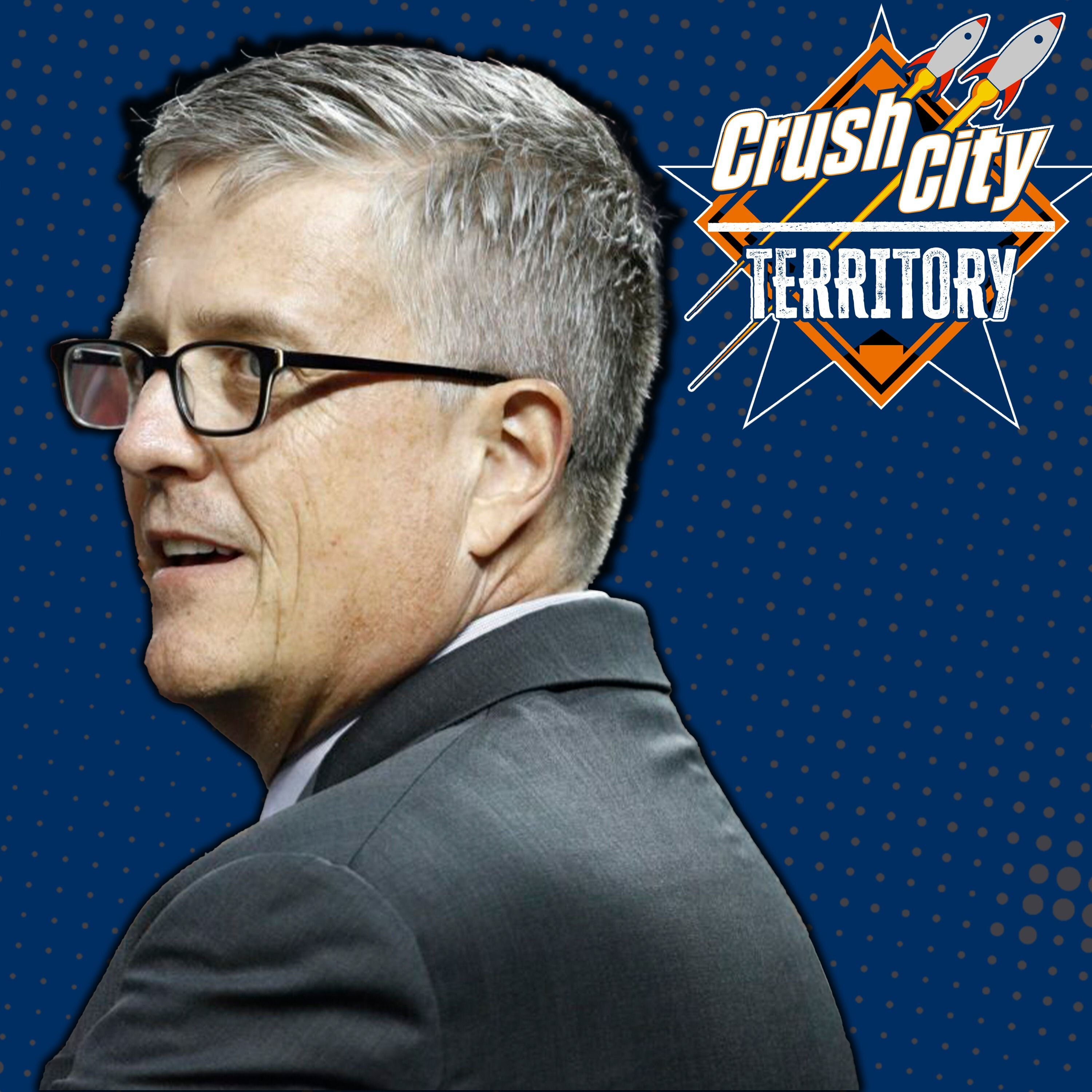
CCT: Former Astros GM Jeff Luhnow
Former Astros President of Baseball Operations Jeff Luhnow joins Tyler Stafford and The Athletic's Chandler Rome on Crush City Territory to reminisce on the trade deadlines of his Astros tenure, how a general manager functions this time of year, the regrets of some deadline deals he made and how close Bryce Harper became to being an Astro.
Get 20% off your first Slab Pack or card purchase by going to ArenaClub.com/FOUL and use code FOUL
See omnystudio.com/listener for privacy information.
2025-07-21
52 min
Transcript
Available Results
Generated results are saved to the knowledge database for reuse and search.
No generated results are available for this episode yet.
Extract Knowledge
Pick what you want extracted first. Model, scope, and chapter options appear after a template is selected.
Generated results for public episodes are saved to the knowledge database so they can be reused and searched later.
Transcript
00:00:05
Speaker 1: What's up? Everybody. Welcome into another edition of Crush City Territory. M Chandler roam along with Tyler Stafford and the most special guests that I think we could get any of you guys, former Astro general manager Jeff Luno. Jeff, Before we get into we want to talk to you a lot about what goes into a trade deadline, what a GM's life is like around this time of year, mid July, when the trade talks start to have them. Before we get into that, I think a lot of fans are wondering simply how you're doing, how you're doing, what's been up and for those that haven't seen you in a little bit, what you've been up to.

00:00:37
Speaker 2: Yeah, well thanks, it's great to see both of you. Miss I miss being around the ballpark and all that. I live in Houston. I'm in Houston right now. I never I never left, but I spend about half my time in Europe. I got into footboard known as soccer here in the States. And actually today's a milestone day because we just closed the transaction we've acquired. My group required to leak one team in France, so now we have a team in Spain in addition to team in Mexico and a team in France. So I'm actually in the middle of my own sort of trade deadline. It's different in football. You have a transfer window that's open until the end of August, but doing it for about four to five teams instead of just one. So pretty busy, but overall doing well and love and living in Houston and happy to be around, and obviously been watching the Astros success from from nearby, and it's really incredible what the organization has been able to accomplish. I'm pretty proud of everybody there and still know a lot of people there and still know a lot of the players, So pretty happy to see what's happening.

00:01:42
Speaker 1: How often do you watch how often? I mean I imagine not watching every game, but how often do you tune into the Astros kind of keep up with what's going on.

00:01:50
Speaker 3: When I can?

00:01:51
Speaker 2: It's not that often because you know, when I'm in Europe, it's the middle of the night. When I'm here, you know, I try and turn on the TV the background when I can, but I keep track. I mean mostly I go online and make sure that see what the results are from the night before.

00:02:08
Speaker 1: What so you said you're closing. You just closed a deal with a to acquire a team in France. Is that going to require you to learn French to move to.

00:02:18
Speaker 2: I downloaded a couple of language apps and yes, it's the words are one thing, the accent is something else.

00:02:27
Speaker 3: So the team we acquired is.

00:02:28
Speaker 2: In a town called Luov, which is Lejrve or the Aarve, depending upon where you come from.

00:02:35
Speaker 3: Texans would probably say Laharve.

00:02:38
Speaker 2: It's support city at the end of the river Senne and it's you know, first division team, historical team. It's actually the oldest team in continental Europe. It was founded in eighteen seventy two, so talk about history. It's pretty you know, a lot of responsibility taken over a team like that.

00:02:56
Speaker 4: So are you are you just purposefully buying teams and all the best vacation spots You've got Cancun, Madrid, France? Now, like, what are you doing? You just what's next?

00:03:07
Speaker 3: It's actually part of the strategy.

00:03:08
Speaker 2: You want teams in places where players want to go, shouts want to go see, you can hire coaches and I want.

00:03:16
Speaker 3: To go quite frankly, so it works out pretty well.

00:03:18
Speaker 2: And usually you know, at some point you're gonna end up selling these teams in the future, and the more desirable location you're in the better.

00:03:26
Speaker 4: So could I interest you in the Sacramento Athletics. So in Madrid, So you're spending a lot of time there. My wife and I went there a few years ago. What's the what's the Cheiro place with the dip chocolate? How often are you going there?

00:03:43
Speaker 2: Well, I mean the food in Madrid is amazing. It's everything, the food, the wine. Everything in Europe's.

00:03:50
Speaker 3: Healthier than the US. I got to tell you.

00:03:52
Speaker 2: So you don't feel bad having a glass of wine or a truro because you know that it's not made with seed oils and all that stuff that are American food is made with.

00:04:01
Speaker 4: Mm hmm. That's what I was thinking too, all the oils. That's what I'm concerned with.

00:04:08
Speaker 1: Jeff's you mentioned it is kind of around your trade deadline in football, you know when you were around, when you were with the Astros. Had they moved the draft yet? Had they moved the draft to July? Where it was all.

00:04:20
Speaker 3: Compact, no, no, and pretty intense.

00:04:24
Speaker 2: I mean, I still keep in touch with Mike and Sick and every draft week I talked to them a little bit. But and you know the guys around here, I see them in the neighborhood and so forth. But no, it's uh, it's you know, it's changed. I mean a lot of the rules have changed actually since, so I would have to do a refresher course to catch up if.

00:04:43
Speaker 3: I ever came back into baseball, that's for sure.

00:04:46
Speaker 1: So in your time, you know, trade deadline this year's July thirty first, we're recording this on July eleventh, twenty days out from the deadline. In your tenure, kind of where were you, guys as a front office at at this point where calls being made, where exploratory talks had or were you guys kind of still in every year you ran the team after maybe twenty fifteen, you guys knew you were going to be buyers basically every season. How did those conversations go. Was it exploratory right now? Were you guys still in kind of wait and cemo to see what you really needed?

00:05:21
Speaker 2: The challenge is you need to be prepared, and preparation is huge in every front office and every general manager, and I'm sure Dana's doing the same thing. You really start preparing in June once you have enough feedback on how the season's going and you feel like you kind of have an idea where you're going to end up. And obviously you know if you get off to a bad start like the Astros have a couple of times in the past few years, you kind of wait and see and make sure that you get back into contention. Obviously the Astros did that and are dominating right now, so really the only thing that they're probably thinking about is how do we improve this team to get back to making the longest possible run in the playoffs and getting back to the world. And so it all starts with the objective and being clear about what you're trying to accomplish. Now, that objective could change from from July first to July twenty ninth or thirtieth, and in some cases it did, but you're going to have to constantly think about where you're at, not react too much to short term injuries and stuff like that. But a big part of the preparation in June and early July is making sure that ownership, the coach, the manager, the coaching staff, the scouts, and your front office are all aligned in terms of what the goals are because if you have different goals and you're going to be hearing a lot of noise from the press, from the fans about what your goals should be, and sometimes that they're spot on, but sometimes the fans lack the perspective of, you know, some things that they don't know, like the budget that you've been allocated, the injury status, the maybe the psychological status of the players. Ones that would be okay, leaving ones that wouldn't be, and so forth. So you've got to have to really, you know, the month of July is intense because while it's the All Star break and you know there's some time off and all of that, you really have to be paying attention every single day to what's going on in the market. And the challenge is that a lot of the players that you would fit what you want don't really come available until their team either goes through a winning streak or a losing streak, or they have an injury or something else happens. So you know, you can have your list on July first of the players you want and start attacking them and try and do an early trade deadline.

00:07:33
Speaker 3: But if you're done by July.

00:07:36
Speaker 2: Fifteenth, you might miss out on the player that was perfect for you, that had you waited a little longer, you might have been able to get. So it's it's a little bit art, a little bit science, and it's a lot of work, a lot of preparation and also a lot of communication. The communication with you know, with all the stakeholders has to be there, including the other teams, and there's a lot of you know, touching base of conversations, a lot of bound calls for your your players, and then you've got to make outbound calls without appearing too desperate. And that's part of the art of it. You want them to think you've got options, and you want them to think that. You know, there's a lot of people after your prospects, so you know they're just one of like three, So stand in line and give me your best offer and we'll see what you can with what I can do for you.

00:08:21
Speaker 4: Is there like an unwritten rule of you know, you mentioned in July you're you're kind of waiting to see where these other teams end up. You know, if a teams like seven games out on July eleventh, right now, is there is there like a you know, is it rude to call the GM and say like, hey, are you are you selling? Are you by you know what? How do you how do you figure those things out with all these other general managers.

00:08:46
Speaker 2: Well, it's a great question. First, how do you figure it out for yourself? And you know, obviously fans can go to fangrafts and see the playoff probabilities and all that, and that became relevant for us in twenty sixteen because even after you know, we made the playoffs in fifteen, got to you know, five games with the Royals they went on to win the World Series, we felt like we had a team that could go deep in the playoffs. But we got such a horrible start in sixteen and even though we made it back and got into got into contention, you know, looking at the Rangers and the other teams that we were going to have to pass, and looking at what was likely to be in the playoffs, we realized that our chances of making the playoffs were remote, and our chances are.

00:09:25
Speaker 3: Going deep in the playoffs. Were sorry about that, We're remote.

00:09:30
Speaker 5: Busy guy, Frances calling, Yeah, you know, that's the year where really, even though you said we were buyers from twenty fifteen on twenty sixteen, we were sellers, and the fields for Avre has turned out to be one of the best investments we ever made, giving up a proven reliever for a young young man.

00:09:50
Speaker 2: But I think that's the key, is to understand what you think your chances are. And also in twenty seventeen, it wasn't so much are we going to make the playoffs? It was are we going to win the World Series? And that I mean, it was pretty clear to me we had a World Series caliber team, and so every move we looked at, you looked at it in the context of how much will that player improve our chances of winning a World Series? And that's how we valued those moves. And I think obviously the Astros have been in that mode since since twenty seventeen and probably have a similar mindset now in terms of no GM will ever be offended if you call him or her and say I'm interested in your player, you know, and they'll tell you, well, we're going to wait, you know, ownerships not doesn't want to sell quite yet, We're going to wait until right before because you have the most information right before. But the reality is, if you look at those playoff odds by mid July they're pretty well set and they're not going to change that much by the end of July, so you know, I think it's good to start having those conversations.

00:10:53
Speaker 3: At least let them know that you're interested, because you never know.

00:10:55
Speaker 2: There have been times when players get traded and you're like, Wow, I wish I had known that player was even on the market, because I would have liked to at least throw my hat.

00:11:02
Speaker 3: In the ring.

00:11:03
Speaker 2: So you don't want that to happen. So communication between gms is key. A lot of text messages and WhatsApps and phone calls going around, probably more messages than phone calls these days.

00:11:13
Speaker 1: Jeff. One of the code words that always makes me laugh around the trade deadline is untouchable. There were a lot of prospects in your day, some of which have matriculated to the astros and done very well, some of which have not that were I guess we, as media and fans thought of as untouchable. I believe you came out a couple of times and talk specifically about Kyle Tucker and Forrest Whitley as guys that you didn't want to move. Is there such thing as an untouchable?

00:11:40
Speaker 3: Truly?

00:11:42
Speaker 2: There can be and I think in the case of those two players, we weren't going to trade them. We felt like we had enough inventory in our system to acquire whatever players we needed. So I don't believe either one of them wherever in serious conversations. And I think think, you know, if you if you start to I mean, there's some gms that will just hound you, regardless of whether you say they're untouchable, and they'll just keep adding players and other things and calling you back. And that happens, and that's fine, But the reality is, yeah, I mean, you've got to decide who you're going to build around and take a chance. And you know, I think one of the things that build DeWitt told me back when he hired me in two thousand and three is that he had been studying the trade deadline quite a bit with the Cardinals and watching how all the teams do things, and the trade deadline, especially those last few days, is when you can really destroy value more than more than improve your team. You can really destroy value by giving away good young players that could help you for the next ten years.

00:12:50
Speaker 3: For short term, short term improvements.

00:12:53
Speaker 2: And that stuck with me and I always thought about that and you know, it's hard to know young players how good they're going to be. I don't think the Dodgers really anticipated Jordan Ovres, which turned out to.

00:13:05
Speaker 3: Be the way he was.

00:13:06
Speaker 2: And you know, we underestimated ti Oscar and ends. You know, we sent him away for a lefty reliever who got a couple out kiots for us down the stretch. But it was a rental and ti Oscar has had a great career, so that, you know, same thing i'd say with the uh, you know, the other lefty that we traded away, Josh Hader. You know, we traded for him, so obviously we knew he.

00:13:29
Speaker 4: I was going to say, you got to claim that part too, if you've got to claim trade.

00:13:34
Speaker 2: But he wasn't ours to start with. We traded for him, got him all the way up to double A. We really, you know, we're trying him as a starter. Didn't know if he was going to really be an e leade closer. Made a mistake on that one as well, And that happens. I mean forecasting a double A or triple A or even recently promoted major league player their entire career, there's a big error bar around that, and you've got to take your chances and force Whitley didn't turn out to be, at least so far, the player that we thought that would put him in that untouchable category. But Kyle Tucker, Yeah, I mean he's been He's been unbelievable in every sense of the words. So you know, you take your chances and see what happens. And you know, like like with the actual game of baseball, you're gonna you're gonna have a lot of wrong moves. You just got to help your batting average is better than you know, at least the teams in your division.

00:14:25
Speaker 4: I'm offended you didn't call me. I was working for the Hooks in twenty fifteen, and I would have told you you're insane for trading Josh Hader. So I don't know what you were doing there. I would I would have helped you out.

00:14:35
Speaker 3: Yeah. Yeah, I knew he was good and that it wasn't gonna happen without him, that's for sure.

00:14:42
Speaker 1: How much do you reflect on that trade, that the trade, the Carlos Gomez, Mike Fire's trade for for Hater and Brent Phillips and who else was in there, Domingo.

00:14:52
Speaker 3: It was good.

00:14:53
Speaker 2: I mean it was. You know, we traded a lot of value. We knew we were trading a lot of value. I think we didn't properly evaluate Carl Gomez. I mean, if you look at what he did prior to us trading for him, he was reaching status of being a superstar and was athletic and you know, filled a lot.

00:15:09
Speaker 3: Of needs for us.

00:15:10
Speaker 2: You know, I had had a nice home run in the wild Card game, but that didn't make up for the four players we sent away and Fires had. You know, Fires was really good for us at certain times. For sure, he was our most consistent pitcher, I think in twenty sixteen. But yeah, I mean that one if I could have that one back, that would be I would be probably number one on my list of trades I'd want back.

00:15:34
Speaker 4: I was at as no hitter, so you know, we at least have that going for us.

00:15:39
Speaker 1: Yeah, yeah, I believe that was the pinnacle of his Ashrews was that deadline though a couple things. So that was when you guys had just sort of ascended AJ in his first year, guys taking steps forward. Correa's up, but that was a year you guys were always in a contentious battle with the Rangers. For the division, and I wonder like, how much did you guys think that team was for real? And that was really your first deadline as a buyer, you how did that deadline differ from maybe the many that preceded it.

00:16:13
Speaker 2: Well, I think the ones before that, we were just accumulating as much talent as we could, and we were moving salary off the books and trying to get younger and really kind of get, you know, reset everything so we could we could make that jump. And twenty fifteen, I think with AJ arriving and the dynamic of the team, we felt like we could make the playoffs and that was really the only goals to make the playoffs, and we accomplished it. So, you know, there were other deals that we had considered in July, and I remember there were a couple others that I was more excited about that didn't end up happening. But we also had accumulated a pretty nice inventory of good young players that had interest. I mean the first couple of years, I was trading you know, players that were okay, but they were like second tier prospects or older veteran players like Brett Myers who could serve a role, but you know, weren't that sexy or exciting either, So you know, I was getting what I could for those guys. But by twenty fifteen, we had had some good drafts, we had some good inventory, had made some good trades in the years prior, and so it felt like we could you know, take some of that inventory and turn it into more security to get to the playoffs. And that's that's, you know, we accomplished that. I'm not going to say we accomplished it because we got those two players, because I think we would have made the playoffs without those two players.

00:17:30
Speaker 3: But and it came at a cost. I think, as you know, Kashmir is the other one. I think we got better. We needed a starter.

00:17:36
Speaker 2: So it was all about figuring out, you know, how we could, how we could make the playoffs.

00:17:42
Speaker 3: And that was so for us, that was successful.

00:17:45
Speaker 1: Since we're in that time frame you talked about you were trading veterans for for you were trading second tier prospect for assets. But one of your counterparts, Dayton Moore, went on a podcast with er Cosmer a couple of week a couple of months ago and claim that I believe it was in twenty thirteen. This is Dayton. This is Dayton Moore saying you offered him Jose Altuve for Eric Hosmer. Yeah, I'm going to give you the floor on that one.

00:18:10
Speaker 2: Okay, No, So he's not He's not lying. Dayton is a very honest, high integrity guy. We did have a conversation about it. It didn't go very far. You know, at the time, we weren't looking to trade Jose Al tub We were looking to acquire Eric Cosmer time and you know, Kansas City was on the rise and we we tried everything. We didn't have a lot of players that would bring you on Eric Osmer, so at the end of the day were like, well, is he going to trade him or not. Let's just throw our best guy out there, our best young guy, and see if you'll even react. It was not an official trade offer. It was one of those hey, would you consider it? And it was a very short conversation, so it didn't go anywhere. But also, yeah, we all have to remember jose Al Tube at that time was not what Jose Al Tuba became, and obviously we had a lot of confidence in him. We signed him to two extensions while I was there. He's been the franchise player ever since. But you know, he was a non a heralded prospect.

00:19:10
Speaker 3: He made it up.

00:19:11
Speaker 2: He was still kind of getting his he was a high batting average, low ops.

00:19:17
Speaker 3: You know, but boy, his career is really spectacular.

00:19:22
Speaker 4: Yeah, good call not trading him.

00:19:24
Speaker 1: I would say, I guess that does just I mean from how we started this segment, I guess it goes to how it goes to show like there really are no untouchables, like you'll just see what happens. I mean, you said you were not he were never going to trade jose Al Tuve. But I guess and there really is no such player that it can never be off limits. I guess in conversation, Yeah, I think that's right.

00:19:44
Speaker 2: And you want to know how rational the other team in is, how serious they are, and so you know, part of negotiation is seeing where you're at.

00:19:54
Speaker 3: Is there really a deal to be had here? And there wasn't for Osmer, So we moved on.

00:20:00
Speaker 1: Is there is there a trade kind of in that early in those early days that either I think people always want to know what could have been, what was on the finish line, what was what was some things were making.

00:20:12
Speaker 2: That was not those early days. Right, it was done, players were agreed to. The only thing left was ownership approval, and the ownership said no, even though they had kind of pre cleared the deal. So that was that was huge and that would have changed a lot of stuff.

00:20:30
Speaker 3: For sure.

00:20:32
Speaker 1: Bryce Harper would have looked pretty good. And and as you, I think we discussed. I think we talked before the Ashers played the Phillies in the twenty twenty two World Series, Jeff, you and I talked about what that package would have looked like with the players were agreed to. Yeah, it was I don't want to say you would have fleeced them, but you would have.

00:20:52
Speaker 2: You would have fleeced them, yeah, I mean it would have been in the Justin Berlander category of you know, players that all had value that they have shaded but but.

00:21:00
Speaker 3: Didn't end up hurting the Astros had they had they gone. So that would have been nice.

00:21:05
Speaker 2: And that would have been I mean, the day we thought we got him, you know, I called AJ and he's like Christmas in July.

00:21:12
Speaker 3: This is the most nice I can't even imagine.

00:21:15
Speaker 1: So do you have to be careful about that, like telling the clubhouse, telling AJ, like what you guys are working on as as just to maybe not get their hopes up, because like the learners can veto a trade at the last minute, how do you how do you have to balance that of not getting your clubhouse's hopes too high.

00:21:34
Speaker 2: Well, with Aj, it was different than with other managers because Aj was a general manager and he and I were so closely attuned and aligned in everything that you know, a lot of he would he was involved in a lot of the trade discussions in who we wanted, and you know, he helped negotiate the Verlander trade very much, so because he's very close. Obviously he's close with them, he got hired by them, but he was very close with al l Avila in the front office over there.

00:22:03
Speaker 3: So whenever we.

00:22:05
Speaker 2: Needed to do a bad cop good cop, I would be the bad cop and I'd say we're done, we're not going to do that, and then you know, AJ would call up Havila a few hours later and say, hey, you know he's serious, He's not going to do it unless we changed this out or the other.

00:22:20
Speaker 3: And so it kind of worked to our advantage.

00:22:22
Speaker 2: But yeah, I mean, I think with managers, they need to be involved, but they need to understand that this is out the front office's process, and you certainly don't want word to filter around the clubhouse. It does anyway, because rumors get out and conversations get leaked, but you know, you certainly don't want a ton of that.

00:22:46
Speaker 3: And you know, obviously I.

00:22:48
Speaker 2: Had my fill of that when we didn't make a big splash trade in twenty seventeen, and then Kikle went to the locker room and said, you know, he was disappointed in me and what we were doing. And but you know, that happens. That was sort of after the deadline. But yeah, I mean, managers are key, and I think more and more managers are heavily involved.

00:23:09
Speaker 3: In the process.

00:23:10
Speaker 4: Speaking of you know, Kaykle, that was obviously a big story in twenty seventeen. You mentioned, you know, your job is to try to tune out as much as you can outside of that. I have to imagine that that made its way, you know, to you that's a big deal in the office, Like when when a player has comments like that, Does that affect how you go about your job or are you like altering plans based on things like that?

00:23:42
Speaker 3: No, no, no, definitely not.

00:23:43
Speaker 2: I mean I went down to the clubhouse, and I spoke to Kaykele individually and explained to him, gave him a little bit more context about what we had tried to do and get kind of what the way we saw things, and he appreciated that at the time. But you know, I think he was seeing himself as the leader of this team, you know, having won the wild Card game and been sort of the cy young and been our ace for a long time, and you know, he had the right.

00:24:12
Speaker 3: To express his opinion.

00:24:12
Speaker 2: But it's really more the manager and the pitching coach that I think have to manage that to make sure that if there is some comments that they don't kind of negatively affect the team. That's really that was really more astronomy and AJ's role.

00:24:27
Speaker 1: Since we mentioned it earlier, I do want to for those that are listening and that haven't heard the package. The package that the Ashers had agreed to send to the Nationals for Bryce Harper in twenty eighteen was Randy Caesar, Abraham Toro, Josh James, JB. Bukalskis, and Kent Emmanuel. Abraham. Toro is still a very nice role player for the Boston Red Sox. Having to play a little bit more. He's carved out a very nice career for himself. Those other guys have had their fair share of struggles, So Bryce would have been a rental Jeff. But I think I asked this at the time. Do you think that Jim would have entertained the sort of money and years it would have taken to keep him in Houston beyond that expiring contract?

00:25:10
Speaker 2: Don't I don't know the answer to that, but I think had Bryce Harper come in and done what Bryce Harper normally does and we win the World Series with him, it would have been certainly something that the organization would have made every effort to try and sign him for sure.

00:25:27
Speaker 3: I mean that was a hope.

00:25:28
Speaker 2: It was not one of those you know, negotiate a deal before we trade for him. We knew it was a rental, but we also knew that, you know, we were a franchise on the rise and could afford to spend on a free agent like that.

00:25:40
Speaker 1: How much since we since we brought him up, how much did Jim get involved when you were I mean, he runs a budget, he has the money, he signs the check, so obviously he is involved inherently. But was he maybe more involved in some trade deadlines than I know, you've only worked for two owners, but maybe more involved in than some other owners in the game, and how he wants to be kept abreast of things and things of that nature.

00:26:03
Speaker 2: No, I mean Bill to it, Junior was very involved and wanted to know everything, every conversation that was happening and so forth with and with the draft as well. So I'd say de Watt was more active. Jim certainly wanted to know what was happening, and you know, certainly wanted to be asked if we were going to require any more resources, because a lot of times you're taking on extra salary or you're taking on a contract.

00:26:30
Speaker 3: Are you trying to move a contract?

00:26:32
Speaker 2: I'd say, you know, the trade that he probably got most involved in, sort of emotionally was the Granky trade because we were we were on the fence about the Granky trade, and there were other options that we were considering, but Jim did seem to want that player on our team and wanted the sort of sex appeal of of Granky and all of that, and so, you know, would we have made the trade without Jim's pushing us, I don't know the answer to that. To be honest, I mean, I think he was definitely excited about it. And you know, every time the trade would die, which trades die a lot, and that one died like four times in the twenty four hours before we did it, you know, he would say, well, what about you know, if we took on a little more of his salary.

00:27:19
Speaker 3: Well, in that case, yeah, I mean, you know, sure, we'll make another run at it.

00:27:24
Speaker 2: So that was one where he was he was involved. I'd say, you know, Verlander, he was interested in what was going on, and he had to approve the money and they were you know, we had had limits and the deal wasn't done because of those limits, not just players but money, and so he had to make a decision in the last few hours to approve more budget for that.

00:27:47
Speaker 3: And he did.

00:27:48
Speaker 2: So that was you know, without him, those two players certainly wouldn't have gotten to the astros.

00:27:54
Speaker 4: Yeah, how do you you know, when you're communicating with ownership about trading and things like that, Like it's hard enough to know all of the guys in your own organization, much less when you're trading outside of the organization. How do you present to ownership why you like a certain player or why you're comfortable moving one of your own guys. You know, like, how are you How are you presenting that to ownership?

00:28:20
Speaker 2: No different than the way we would talk about it internally. This is how much value we see in the player's career. This is how much we're going to have to spend to have that value on our team. And here's what the alternative looks like. So, you know, we had our own and I'm sure they still have some version of it today, our own way of forecasting player performance into the future based off of a lot of factors, including their past performance, and so you know, we'd look at that. And with the Verlander situation, it really came down to what's the additional amount probability that we're going.

00:28:52
Speaker 3: To win the World Series?

00:28:53
Speaker 2: And no one player in all of baseball increased our chances more than bringing in Justin Verlander at that point in time because of what he did, knowing he was going to pitch probably three times in a seven game series, knowing you know how he was going to probably help us get home field advantage. Those two factors were huge and it meaningfully changed. I mean, a one percent chance increase of winning the World Series is worth millions, and especially for a franchise that had never won a World Series, because then it propagates in branding and all kinds of other things that it's hard to value in a spreadsheet. But that's really the way we presented it. I forget the exact number. It was obviously low single digits, but it was meaningful, and we said, each each percent equates to this many millions of dollars. So whatever we're spending right now in prospects, I mean, the prospects are worth a lot too. You know, each prospect we valued it not just in career performance, but also how much value you would have to spend to get that same performance back from free agency.

00:29:56
Speaker 4: Did your spreadsheet take into account Verlander just yelling with hairy arms in the dugout in the World Series that that had to have added a couple percentage.

00:30:05
Speaker 2: Points now, but make up makeup matters a lot, obviously, and it didn't take into account gate Upton.

00:30:10
Speaker 1: And since you since you mentioned makeup matters, I want to take you to a deal you made in that that deal that did go through in the twenty eighteen deadline for Roberto Osuna. That deal was maligned very very much, by a lot of people that were uncomfortable with trading for a player that was under a suspension for domestic violence. Yeap, what made you comfortable executing that trade and what kind of backlash did you receive, maybe from maybe within your own organization and from the outside.

00:30:45
Speaker 3: Yeah, so, you know that was that was a challenging one.

00:30:48
Speaker 2: That's probably one that falls into the category if I you know, if I had to do it all over again, would I do it?

00:30:53
Speaker 3: The answer is no.

00:30:55
Speaker 2: You know, the talent was clearly I the first thing I wanted to do. You know, Jim Garcia pitched with him as a teammate and when we went to Toronto that year, he said, hey, by the way, you know, he talked to me about the whole situation, said the kids, really, you know, feels bad about what happened, and he's remorseful, and you know, he needs a change of scenery. I really recommend that you guys look at him. And that was the first time we even considered it. We you know, we did a lot of research. The research was really split into two camps. There was the talent and you know, I know that Kevin Goldstein and others have talked about the fact that they had objections to the trade, not because of the talent, but because of the other stuff.

00:31:39
Speaker 3: But I asked our scouts.

00:31:40
Speaker 2: Look the the the issue of whether or not the Astros should trade for a player that has, you know, has been suspended. I'm going to handle that with Jim and Anita and Giles and you know, the HR everybody else. What I need now from you guys, is is a clean talent opinion. How much will this player help us win? I mean, Ken Giles was imploding, We didn't have a closer. We'd come off a World Series win. We needed back end any you know. We knew Presley would be a good setup man, we didn't know if you'd be a good closer. And at that time Alsuna was the most successful closer of his age in the history.

00:32:17
Speaker 3: Of the game.

00:32:17
Speaker 2: I mean, really incredible what he had done. So I asked the guys to just look at that. And I know that got misinterpreted as I didn't want anybody's opinion. I knew that there was going to be differences opinion. I didn't want the whole room to be talking about whether or not we should, you know, bring in someone that's been suspended separate from that, had a lot of conversations about with Jim, with Anita, with Giles. We did our own research as to what we could find out about the situation, a lot of the information was not out in the public, and also spent time talking to the player, talking to his agent, talking to his teammates and so forth. And really the decision I was trying to make is this, Do I think this is a one time event that he regrets and is remorseful about, or do I think that this is a we're bringing ourselves a problem that what I didn't really take into account was and you know, I talked to a lot of people that had dealt with issues like this, and if you don't give people second chances, you know, there was that whole argument. You know, you're hurting their family, You're hurting the person that was the victim, potentially more so because they're losing income and all that.

00:33:33
Speaker 3: So there's a lot of issues going on there. I didn't really take into account.

00:33:38
Speaker 2: I didn't take into account as much as I should have the impact they would have on our fans, especially our female fans, and how they would feel.

00:33:44
Speaker 3: And that was a mistake.

00:33:46
Speaker 2: And you know, I did talk about it with female friends and family, but I probably should have spent a little bit more time thinking about it, but it wasn't you know, Yes, I made the decision to trade for him. I did not do a human Laterally, the talent checked the box for sure, and there were you know, everybody that was around me that I collaborated with was you know.

00:34:13
Speaker 3: There was nobody saying don't do it.

00:34:14
Speaker 2: Because if if someone had said don't do it, I mean, obviously we wouldn't have done it. So but you know, that's a tough one. I mean, I will say he you know, he's he's been a pretty good pitcher, got injured and he hasn't been really able to pitch in the US, but he's been a good picture. Did he you know, did he help us accomplish our goals on the on the field to a certain extent, he did. I still think he could have been better. You know, giving up that home run in Game seven against the Yankees was was not great. But thank thank goodness, we had all two there.

00:34:52
Speaker 1: Then goodness shed all to man, not Eric Cosmo.

00:34:53
Speaker 3: Right exactly. That's one that you know, it's a tough one. I learned.

00:34:59
Speaker 2: I learned a lot from that experience, you know, and I think I would I would do things differently today than I did that.

00:35:08
Speaker 1: Let's hear from our friends at foul Territory one more time before we continue with Jeff Luno.

00:35:12
Speaker 6: Hey, let's do a little player spotlight thanks to Arena Club AJ. Give me a player this season that you think is underrated and you might want to try and grab his card.

00:35:20
Speaker 1: James Would.

00:35:21
Speaker 7: I don't know that he's underrated, but Washington National's superstar in the making, and the first slab pack I ever opened had him in it, his rookie card, and the value is only going to.

00:35:29
Speaker 3: Go up and up and up. And I'm not going to sell it KWI yet. Scott.

00:35:32
Speaker 7: I'm going to hold on to because after he continues to hit big homers and put up the stats make All Star teams, it's going to get more expensive for someone to buy.

00:35:40
Speaker 4: For me.

00:35:41
Speaker 1: This is his.

00:35:41
Speaker 6: First full season in the majors.

00:35:43
Speaker 3: Keep that in mind.

00:35:44
Speaker 6: I think he's underrated, He's on a Nationals team that's may adding enough attention.

00:35:48
Speaker 4: He underrated.

00:35:50
Speaker 7: When he makes the All Star team this year, They're not going to be underrated.

00:35:53
Speaker 3: That helps.

00:35:53
Speaker 6: He's been intentionally walked four times in a game. Anyway, if you want to try and find a wood rookie card, go check out slab packs on Arena Club and right now you can get twenty percent off your first lab pack. Or if you just want to go with a card purchase, go to Arena club dot com. Slash foul, use code foul.

00:36:09
Speaker 3: If you buy, sell, trade, collect, go for it.

00:36:13
Speaker 1: We already talked about you mentioning Hosel Tuve in a trade conversation, so that probably takes the cake. But is there one trade or permutation of a trade that maybe advanced a little bit further than that one that included a player that Astros fans have come to fall in love with that would surprise them to know that you guys were considering moving on.

00:36:37
Speaker 3: I don't think so.

00:36:38
Speaker 2: I mean Gregman, Correa Springer, they were never really in any serious conversations. I think Kyko we did talk about trading a couple of times. I can't remember the exact context there, but because he was a high achiever with sort of marginal stuff, you know, we weren't going to get back return if he if he through ninety eight, and this is my young winner, that'd be different, but throwing eighty eight to ninety and having to rely on Finesse, I mean that, you.

00:37:08
Speaker 3: Know, he's a good pitcher, He's had a good career. But yeah, I can't.

00:37:13
Speaker 2: I'd have to think about that. Nothing nothing comes to mind, you know, Uh, catch your wise. Trading from my team Aldonato two years in a row is hilariously.

00:37:23
Speaker 3: I mean he was.

00:37:24
Speaker 2: He was good for us, you know, Jed Lowry coming and going like every every other year.

00:37:29
Speaker 3: That was interesting.

00:37:30
Speaker 2: But now you know, once you get good players that fit and are part of your clubhouse chemistry, like Springer and Korea and Altuve and Bregman, you don't want to trade him unless you unless you really do the math and figure, we're not gonna be able to resign this player. We're gonna have to trade them in order to do kind of the Herschel Walker thing and bring in a boatload of talent and you know, try and try and extend our window for another four or five years.

00:37:54
Speaker 4: I mean, speaking of Korea, when when you guys took him number one overall, it you know was not expected. Certainly, can you talk a little bit about, you know, the process leading up to the draft that at what point did you know you were taking Korea over Buxton or you know, whoever else you guys were looking at and the top of the draft. How close were you to not taking Korea?

00:38:19
Speaker 7: I guess we were.

00:38:20
Speaker 3: We weren't close at all.

00:38:21
Speaker 2: We were going to say, but the number of people who knew was limited to Michael ISAs Sig, myself, and Enis Cabell. That was it because the on our draft board he was like number eight or nine. And you don't want to go into your first year's GM and grab a magnet from our number eight or nine and PLoP them all the way at the top and say I'm the GM.

00:38:46
Speaker 3: You got to do what I You got to do what I want.

00:38:50
Speaker 2: So, you know, there was a lot of work behind the scenes, and the week leading up to the draft we were trying to figure out more importantly, we didn't want anybody to know we were going to take him because then team's number two and three would be like, well wait a second, you know, maybe we should be thinking more about him, and you cred to create demand that wasn't there. We knew the Cubs were going to take him, and that was really are you know, we knew we had to pay him more money than the Cubs were going to pay him at their position. I think it was five or something like that, maybe six, and that was it. Nobody above the Cubs was going to take him. And so we also knew we had an opportunity because he's the player we wanted. We thought he was the best player in the draft. He was the youngest high school player in the draft, and you know, everything, he checked every single box that we liked. We knew that we could also potentially get him at a discount relative to the one to one price and go and get a Las McCullers and a Rio Ruiz type player with the surplus, and so managing that meant we had to keep the information circle really really tight.

00:39:54
Speaker 3: I don't even think Jim. I didn't even think.

00:39:56
Speaker 2: I told Jim until a few minutes before, and the draft room didn't know. I mean we we walked in there because I didn't get the final okay. Carlos was in New York for the draft and his agent was somewhere else, and we didn't get the final okay on the you know, on the fact that we agreed to an amount until I mean I ran down the Hallway and basically Bobby heck was it was a great scouting director and did a good job managing the process.

00:40:26
Speaker 3: You know, he was kind of waiting. You know, we had.

00:40:30
Speaker 2: Appel and Austin, there were other players in the mix. Bucks Buckston was the other player in the mix. In fact, it had gotten to the point where I didn't hear back from Koreas, so I called Buxton's people five minutes before the draft or that if we took him we could get a discount on him as well, and that he was signable for us.

00:40:47
Speaker 3: But then Chris got back and we got it. We got it done.

00:40:50
Speaker 4: What would you have had to pay Buxton?

00:40:53
Speaker 3: It would have been more, ubstantially more, because he was going.

00:40:55
Speaker 4: To go I got six million second pick, so he was going to go number two.

00:41:00
Speaker 2: So you know, you can't really say, hey, we're going to draft you number one, and but we're gonna pay a lot less than you would get it the very next pick. So bux was a good player.

00:41:11
Speaker 3: But I think we made the right choice there.

00:41:14
Speaker 1: The Cubs picked six that year, they took Albert al Mora instead of that's a tough it's a tough loss for them to go out from Correa to al Mora.

00:41:23
Speaker 4: Max Fried went seventh to.

00:41:25
Speaker 1: Fed Di go seventh, and then who went after Max Freed Tyler?

00:41:30
Speaker 4: Uh? That was Mark Apell to the Pirates. He did not end up signing that year. He went back in the draft. I don't know if you heard Jeff, but he was available the next season.

00:41:42
Speaker 2: We were actually we liked Mark. We were trying to pull him down to our second pick, the Colors.

00:41:48
Speaker 3: You know, he got.

00:41:53
Speaker 1: Jeff. As as we're talking about all this, and and like you start thinking back and the memories start to fly back. I guess the natural question is, like, do you have the itch? Do you have the inches you have to get do you have do you do you have the itch to get back and work in baseball?

00:42:06
Speaker 2: You know, I have a unique UH perspective now because I'm actually I'm not the GM of my football clubs. I'm I'm more in the role of the owner. But I still, obviously I get more involved in your typical UH owner would. And there's so many interesting differences in the world of football and to baseball that I've been in and out for five years and I absolutely love it and I'm enchanted by it. But you know, to be honest, I don't think a lot about coming back to baseball. But but having this conversation with you guys and thinking about all this history and things that I did.

00:42:45
Speaker 3: Well and things that I didn't do well, and kind of.

00:42:50
Speaker 2: You know, it's it certainly would be fun, uh and interesting to go back into baseball. I know that my my teams and my investors and my partners probably not like that a lot at this point.

00:43:02
Speaker 4: Do you see Yeah, go ahead, Jane.

00:43:04
Speaker 1: Do you think that Pat's open for you, like if you'd ever want to?

00:43:07
Speaker 5: Uh?

00:43:08
Speaker 2: Yes, I mean I've had I'm not going to tell you who, but I've had two or three owners contact me and ask me if I was interested in either a role as GM or another role, maybe as a.

00:43:24
Speaker 3: Different role where where I'd oversee the sporting operation.

00:43:28
Speaker 2: And in all in all, in all cases, I said no because at the time I was raising money and starting my my company. But you know, it's I don't think I'm blackballed from baseball like some people think. And I know I could. I know I would do a good job. I mean I know that for a fact. But the reality is I've moved on. I'm very happy for the world of football is is incredible, and I think you know we're doing something incredible with not Uh. You know, a lot of investors in football have tons and tons of money.

00:44:00
Speaker 3: We don't.

00:44:01
Speaker 2: We have smart, young, aggressive people and enough capital to go buy teams and grow them. And that's and be smart about player signings and all of that. The biggest difference is a player has to agree. You can't just draft a player or trade a player without the player agreeing, and that changes everything. And you can also sell players and that changes everything too, So it adds two different dimensions to player acquisition and retention and roster management. And fans get used to the fact that you might have a Carlos CAREAUP, but in two years Carlos really should be playing for a bigger team. So they're happy to have him for two years, but they understand.

00:44:43
Speaker 3: That he's got to go.

00:44:45
Speaker 2: It doesn't happen in baseball because bigger team would be the Yankees, and no astro skin would want Carlos Crea.

00:44:50
Speaker 3: To play for the Inanks.

00:44:51
Speaker 4: No, I don't even say that sentence. What are you doing? I mean you mentioned not having a ton of money for soccer. Have you considered how I think some Hollywood A listers make a documentary about your team. I think that's worked out well for Wrexham.

00:45:06
Speaker 2: Yeah, it has, and those guys have done a good job. We actually did film quite a bit of content last year and we're in the process of thinking about pitching it as a documentary because I had I had three teams going for a championship, all within ten days of each other, and two of the teams won their championship. The other one fell a little bit short. But I hired a camera crew and they followed me around and we were in the locker rooms before the matches, we were celebrating after the matches. It was, you know, one in Czech Republic, one in Mexico, one in Spain. So it was a lot of great content and there's a lot of interesting storylines. We did release a documentary in Spain about the Leganes Championship last year and we were supposed to play Leganess is actually in the US today. They're currently in Chicago. They're going to Louisville. I'm heading up there tomorrow. We're playing match against Louisville tomorrow. We're playing against Richmond next week. We were trying to get a match against San Antonio because you know, the Spurs are friends.

00:46:06
Speaker 3: Of mine and they owned San Antonio FC in the USL.

00:46:10
Speaker 2: Had we been able to get that match, I was going to bring the entire team here to Houston and we were going to rent out the theater and show the documentary and invite Astros fans to come see it.

00:46:22
Speaker 3: Decide not to do that.

00:46:23
Speaker 2: I may do that in the future because it's it's it's really fun and the content around sports is huge, and I think both you know, there's obviously been a lot of documentaries. I haven't seen the new documentary on the Astros, and I'm curious as to how they can do an entire documentary about our dynasty and never even call me.

00:46:40
Speaker 3: But that's okay. I'll leave that to someone else to think about.

00:46:43
Speaker 4: Well if if if you need help making content over there, you know the story practice Condomyes, So you know, maybe if I live over in Spain for a little bit, I'll get a little bit better. That's all just from learning while while teaching junior high in Highlands, Texas. Why my students taught me quite a bit.

00:47:08
Speaker 3: That's awesome.

00:47:09
Speaker 1: So Jeff, you try to stay away from all the all the I guess content that's been created about your your your tenure, your tenure, and the dynasty that you that you helped to construct.

00:47:20
Speaker 3: I've seen it. I've seen it all, and.

00:47:24
Speaker 2: So it's not that I'm staying away from it. I see it all, but I don't dwell on it. I mean, I think, you know, depending upon who's producing it and what perspective they have, there's there's a lot of bias in any content production, whether you're trying to sell something or make someone look good or make someone look bad. So I don't you know, it's It's not something I spent a lot of time dwelling about.

00:47:46
Speaker 3: I am very.

00:47:47
Speaker 2: Proud of the fact that the Astros, I mean, there is no other dynasty in the twentieth first century that comes close at this point. So I know, I wasn't there for the whole thing. I was just there for the beginning, but put them on a good and very happy about what happens. Still know a lot of people, I mean I see people walking around my neighborhood that still work for the Astros, and I still in touch with people, so I'm very happy for them.

00:48:11
Speaker 1: Have you been back to what is now Dyke In Park. You have not.

00:48:15
Speaker 3: No, No, I have not.

00:48:16
Speaker 1: You think that will ever happen.

00:48:18
Speaker 3: I'm not going to just buy a ticket and go to a game.

00:48:21
Speaker 2: You know, if the if the organization ever felt like inviting me, I'd be I'd be more than happy to. You know, some of my investors at Lucrow are our Astros investors and season ticket over and stuff, and they've invited me.

00:48:33
Speaker 3: But no, I'm not.

00:48:34
Speaker 7: I'm not.

00:48:35
Speaker 3: I don't want to distract from what's going on there, and I think me being there would attract some attentions. So no, I don't.

00:48:44
Speaker 2: I've been to Rockets games. I've been to Texans games. I've been to I haven't been to a Major League Baseball.

00:48:49
Speaker 3: Game since left.

00:48:51
Speaker 1: Yeah, wow, really, But.

00:48:53
Speaker 2: I mean I've been to Champions League, I've been to you know, I've been a lot of I attend a lot of sporting events.

00:48:58
Speaker 4: Did you go to the Gold Cup Final?

00:49:01
Speaker 2: No?

00:49:02
Speaker 3: I didn't.

00:49:02
Speaker 2: I was I was flying back from We had our own match like and has played Pumas.

00:49:07
Speaker 3: In Mexico on Sunday in front of It was.

00:49:11
Speaker 2: A friendly match, preseason friendly. There were forty five thousand fans there for the Pumas.

00:49:14
Speaker 3: It was really incredible there.

00:49:18
Speaker 1: There was a large uh, there was a large rivalry in the Astros clubhouse in the semi in the Gold Cup semifinals with Honduras was playing Mexico. Paratus obviously a Mexican and was very into that. Mauricio Dubon the only player to ever play in the big leagues. Mauricio wore his personalized Honduras national team jersey to take VP in Colorado that day.

00:49:40
Speaker 3: So that was fun, that's awesome.

00:49:43
Speaker 1: I told him. They kept it close, they tried their best because it was an that was a real underdog story, right, Lewis was not supposed to be that far right.

00:49:50
Speaker 3: Yeah.

00:49:51
Speaker 2: Well, a couple of the players are are investors in Blue Crow. I'm not going to tell you who. But so there's there's some there's definitely some football.

00:49:58
Speaker 3: Fans in there.

00:49:59
Speaker 1: Oh yeah, I can. I can one hundred percent concur with that. Well, Jeff, I told you, we keep you thirty minutes, we capt you fifty one.

00:50:05
Speaker 2: Yeah.

00:50:06
Speaker 3: I enjoy it. I enjoy it, and that's all my fans enjoy it.

00:50:09
Speaker 2: And I hope the fans start checking on CD Leganes scores and l'hav scores in France and cancunec scores in Mexico. Because it's a it's a good sport and it's it's fun and I'm having a good time.

00:50:22
Speaker 1: You're so active on all social media. Tell tell people where they can follow you, if they want to keep up with your ventures, if they want to see if they want to get to know more about the sport of football through you.

00:50:33
Speaker 2: Yeah, I mean my my Twitter handle is the same as it's always been.

00:50:36
Speaker 3: Jay Luno and Blue Crow Sports Group.

00:50:39
Speaker 2: We don't we're not don't do a lot of social media, but actually legan S has a has a social media in English and Legans has probably some of the most compelling content in Spain for football, so you can find it on Twitter and Instagram.

00:50:55
Speaker 3: CD leg and S is the name of the club.

00:50:57
Speaker 1: I just just found them and I will I'll shoot them a follow. You can always our mascot.

00:51:02
Speaker 2: Our mascot is a super Cucumber and always dreamed of Super Cucumber and Orbit getting together and playing around. Orbit is the best mascot in Major League Baseball and Super Peppinos by far the best mascot in European football.

00:51:18
Speaker 4: On that big Poppy as your mascot over there. All right on.

00:51:23
Speaker 1: That we can agree that Orbit is Orbit is hands down the best mascot in uh in, in Major League Baseball, in Houston anywhere. Get Orbit and the Big Cucumber together. That that should be after right after Tyler goes to the zoo with Cam Smith, We're going to Cucumber.

00:51:39
Speaker 3: He's he's got a cape and he's a superhero.

00:51:42
Speaker 1: The super will end it on the Super Cucumber. You can follow Tyler on X at Tyler c Stabvage. You can follow me at Chandler Underscore Room. As always, please rate and review us on Apple. Please subscribe to the YouTube channel so you can get alerted every time we go h and post a new episode like the one we do with Jeff today. Jeff, again, we cannot thank you enough for your time, for your insight, and for getting us into the mind a little bit of a GM around these busy times.

00:52:07
Speaker 3: Well, thanks for having on guys. It was nice catching up with both of you.

00:52:09
Speaker 4: Thanks for not trading out to Bay.

00:52:11
Speaker 1: Bye bye.
Chapters
No chapters available.