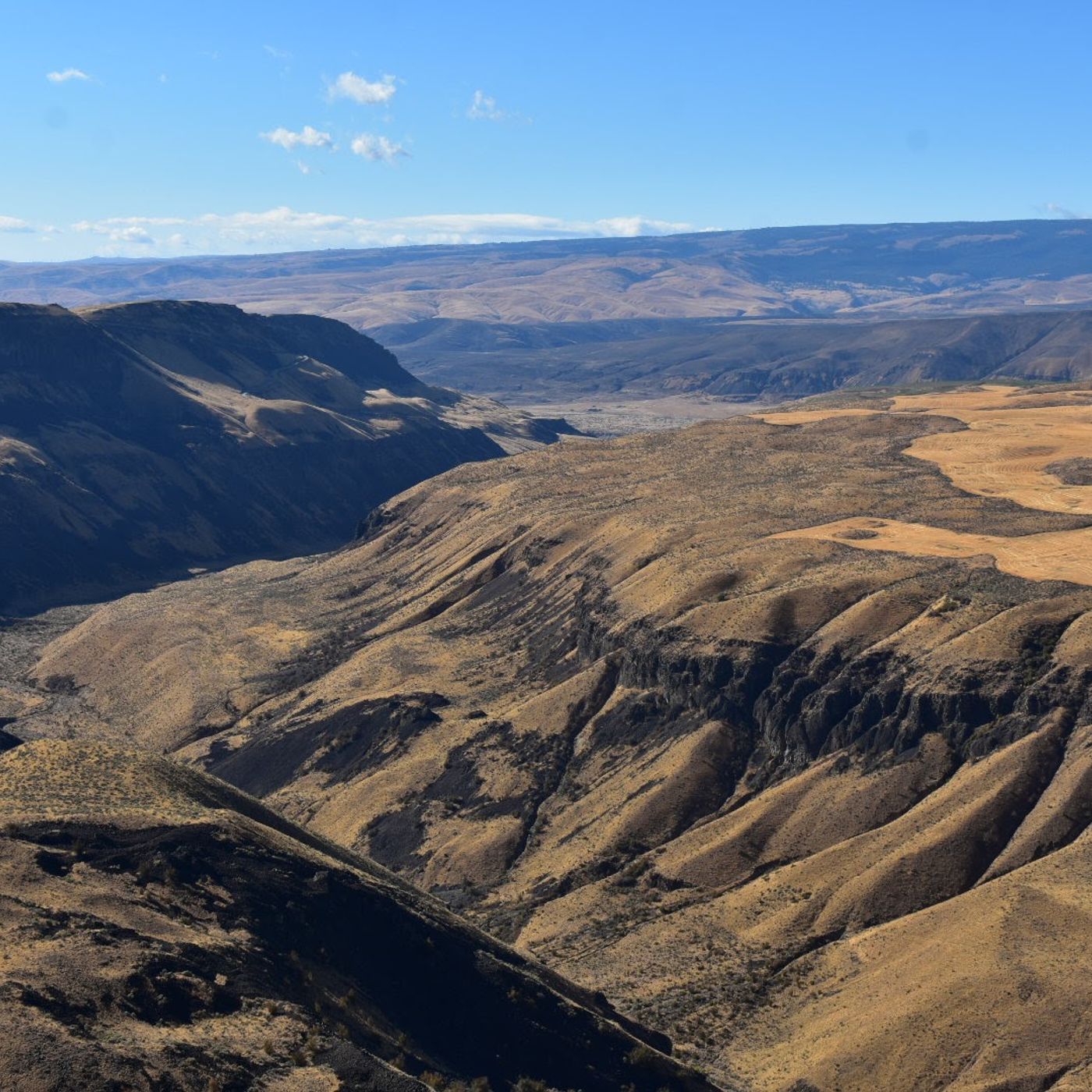
Geologic German Chocolate Summer Bash & Basalt Flows with Nick Zentner
Intro ends at 6:30
Nick Zentner is a professor of geology at Central Washington University and host of a in-the-field geology YouTube Channel. He has numerous lectures available online at www.NickZentner.com and is based out of Ellensberg Washington.
Nick Zentner is a professor of geology at Central Washington University and host of a in-the-field geology YouTube Channel. He has numerous lectures available online at www.NickZentner.com and is based out of Ellensberg Washington.
2023-06-23
94 min
Transcript
Available Results
Generated results are saved to the knowledge database for reuse and search.
No generated results are available for this episode yet.
Extract Knowledge
Pick what you want extracted first. Model, scope, and chapter options appear after a template is selected.
Generated results for public episodes are saved to the knowledge database so they can be reused and searched later.
Transcript
Good afternoon, and welcome to the crime pace. But buying me, it
doesn't podcast. How are you doing out there? Are you hanging in there?
Are you okay? If you're in Texas? Are you braving the heat
wave? All right? God damn, it's fucking I don't know. It's
unbelievably hot, and it's making me feel kind of nuts because I'm trapped inside.
It's just too hot to go outside. I've been having to water every
day, I've been having to I don't know, man, it's just brutal.
You know. The dogs don't want to they don't want to go for
walks no more. You know, everyone's just losing the will to live.
Would you rather live in a place where it freezes for five months or where
it's so hot for five months that it makes it really hard to grow things
and everything just kind of melts? You know? Do you like the way
that ultra violet light the grades plastic and metal and wood when it's one hundred
and five degrees constantly? People who selling Arizona are like, shut up.
It gets hot here South Texas. The house places where ever lived, you
know, and it's humid too, or it can be, but it hasn't
been this hot for this amount of time, this extended amount of time in
June. Anyway, today I got Nick Zentner on the podcast. For those
that don't know, Zick, not Nick pe Zick Nentner. Nick Zentner is
a geology professor at Central Washington University. He's got a YouTube channel. He
does a lot of great videos. He's got a lot of cool lectures,
really cool humble dude. And we have a ninety minute conversation about all things
geology, and it kind of turned into a two way interview in some ways.
You know, it was just a fun conversation, which is the way
I like to do things. I definitely wanted to put a lot of subject
matter in there so that people could get something out of it. It becomes,
you know, somewhat semi educational. But you know, he was asking
me questions as well, and you know, it was just kind of shooting
the ship, just kind of I guess we were kind of getting to know
each other as well over the over the course of the ninety minutes. But
we talk about a lot of good things. We talk about, you know,
what got us both into the phenomenon of doing what we do and how
good it feels to share things you know with other people and for me,
how good it feels to learn new things too, which is what I'm always
doing. So that's the that's the point of a traveling and seeing new shit
and uh exploring, you know. So Uh anyway, Um, I'll cut
right to the chase. But if you haven't checked out Nick's YouTube videos,
I recommend doing so. Nick Zentner, just look him up on YouTube.
He's also got a podcast, and uh, we talk about uh, you
know, basically he talks about, you know, this theory of of challenging
the this theory that challenges the conventional ideology about how the Rocky Mountains were formed
and what was going on tectonically with North America over the last two hundred million
years, and um, we talk about a lot of things that people.
I mean, there's a lot of shit in terms of how certain landmask is
form in North America that we just don't know. That geologists just don't know
yet. There's theories out there, there's dominant theories, but nothing is certain.
And sometimes I mean I've noticed this too when I read about because I'm
always asking questions, how the fun did these mountains form, you know,
what was going on at this point in time fifty million years ago, a
hundred million years ago. And in reading about this stuff, I mean,
I'll be reading research papers, I'll be asking geologists I know, and a
lot of people just don't know. They really don't. It's like there's theories
out there, but in terms of we know certainly, like that where's the
smoking gun? Like where's the where's where's the gravity? Readings that show the
crater using an analogy here in the Yucatan where you know, the comment that
caused the KT extinction? Where where is where's that? You know? For
where's the where's the you know, the analogy, where's the smoking gun?
That kind of smoking gun? For other land forms across North America that show,
you know a lot more conclusively how they formed, And that just doesn't
exist as uh as you slowly find out for a lot of land masses.
So but there's theories and there's a lot of fun stuff to think about,
and it's all about just slowly piecing together the way that you think of the
land that you live on and and the mountains you hike in and the deserts
you enjoy being in. And you know, etcetera. The other the other
land masses that you enjoy spending your time, and the road cuts you drive
by, the lakes you swim in, et cetera. So, uh yeah,
it's it was a good conversation and I certainly learned some new things about
it too. I did not know. Well, you'll you'll hear the conversation.
But I think this theory about Rocky Mountain uplift is pretty cool, and
we talk about that too. But we also talk about a whole bunch of
shit. So if you're not interested in Rocky Mountain uplift, you'll find something
else interesting. I'm going to Brazil in a week. I'm a little not
stressed out. I'm just packing. I don't like traveling as much. And
you know, without a break in between and and then I guess kill you.
We might be doing another season to kill your lan. What else do
I got going on. I'm gonna be doing a presentation in New York at
the Cactus Store again in late September. I'll probably going to Ithaca too,
surprised they're gonna have me. No, no, Cornell, I'm doing a
talk at Cornell. They're having my low browed slob ass do a talk in
Cornell, which is in Ithaca, right am I fucking this? I don't
even know what I'm talking about anymore. Man, I got too much stuff
I might play. I'm trying to get these illustrations done for a fucking children's
book. It's driving me nuts breaking out the brush doing brush and ink illustrations,
not just the pen anymore. It's been kind of a pain in the
ass. But either way, I'll be in New York in September and probably
Chicago in August and part of September, and then I think I'm going to
Lake Wales Ridge in Florida in October. So either way, Uh, my
schedule is gonna be a little pack for the next two months. But if
you're in those places, I want to say hi, shoot me an email.
Uh try to keep it short if you can, because I won't be
able to respond in depth at all. And yeah, I hope you're hope
you're enjoying our New Zealand videos anyway, that's all I got. Enjoy this
conversation with Nick Zetner, and uh, go fuck yourself by well, I'm
gonna showing you what it's like or I'm not gonna shure youttec, you know,
I mean, I'll think they're shock. They've got a nice shop,
liberal parts. So then you start to pack and shutter and quash come out.
You know, I've seen a couple of night things. Donail the fourth.
You're a bunch of hippies twelve each other. You can come with cholgetting
to hit left down. They're okay, Nick, are you there? I'm
here, Joey, thank you man. This is great. Yeah, man,
I got you know, I got a giant jug of green tea and
non alcoholic beer in a bottle to piss in, so I don't have to
leave the podcast. So uh so let's go. So I just I want
to just start off. I've been watching your videos for a while. I
mean, any video where a dude is talking to me about geology and you
know there's like a beautiful, you know, scape of mountains behind them,
uh is gonna woo me in. So this is like, and where you're
based out of You're based out of Washington and Pacific Northwest. Geology is fascinating.
I mean, we got volcanism, we got Missoula floods, we got
a cool fossil flora up there on chucking Nut Drive and the what is it
the racehorse formation up there, and where's that Bellinghammerson got it? I think
I think somebody chipped me off because your video's long go and you were up
here in the early days. Weren't you making a couple of like plant fossil
videos up here in Washington? Yeah, twenty eighteen, Yeah, and someone
I was up there looking at the escne fossil floora like fifty million year old
glip, the strobus and tex odium and ferns and all kinds of cool shit.
And then I went to a spot near what was it, I think
it was near Spokane or Nachi was we're near with Natchie, And then there
was like maya scene like twenty million year old, fifty million year old you
know, in volcanic sediments like an ash beautiful fossil flora. Man, it
was blew my mind. But uh, well it's been it's been five years.
You're welcome back anytime. There's all sorts of cool stuff. You're a
foreshore Yeah, no, I got I gotta get back there at some point.
I just I took a break from the West Coast because I had spent
so much time there, and I needed to see what was out in southeast
in Texas. Texas is weird, Texas is cool. Geology, lots of
limestone, the culture here's a little rough. I think it's just the Southeast.
I bitch about it all the time. It's just the car, Like
there's just this addiction with the car, like America has too much land and
it doesn't know how to use it responsibly. And we've just said it,
We've just everything is just driving like it's it's so bad for people's health.
You know, well it is. And I have been listening to your podcast
and I'm up on the latest, and so yeah, I mean you kind
of you kind of self talk. I mean, you head down those roads
and you want to kind of stay someplace else. But it does seem like
you're you're heading to that end of day's type vibe with some of these places
you've been experiencing. And you know, the beauty of geology is I can
do back millions of years in time and kind of be totally removed from the
whole fac totally. That's that, and that's anitie. What got me into
what I found so alluring about geology in the first place. When I first
got into it almost twenty years ago, was you know, here was a
way to zoom out and realize the bigger picture. And I think, you
know, it's really uh, that's kind of freeing for a lot of people
too, because especially people get caught up in the I mean, I just
like to complain. I worked for the railroad for fifteen years. That's what
we do. We complain about any you know, anything Like if there's not
something to complain about, we find it. And that's that's fine. I
just you know, as long as someone takes themselves with a grain of salt,
I think it's fine. And also, you know, get stalked on
some beautiful things. But when I first got into geology, that was what,
you know, it was like, Wow, there's this bigger thing,
and you know, people can get get kind of land locked in this myopia
of just oh, the human world everything sucks. It's like, there's a
lot of really cool stuff, and there's this really cool story out there that's
billions of years old, that's been you know it only I mean, to
be honest, it sounds like I really only got exciting the last billion years
or so. But maybe you could chose my mind on that. You know,
what was going on in those in those those oceans two billion years ago,
you know, just a bunch of cyanobacterias slowly making oxygen or what.
I have no idea. I mean, Precambrian has always bored me to tears,
and I you know, I grew up in Wisconsin and was taught some
of that stuff early on, and I'm like, I think I'm more interested
in kind of some more dynamic stuff out here in the Pacific Northwest. So
in part that's why I'm here. But yeah, we can talk geology.
But you know, I'm curious about you, Joey, and I don't know
how much your viewers and listeners know all the gory details about you. But
yeah, I mean you mentioned you wanted to talk to geology and maybe why
I got into making videos and other things for the public. But I have
the same curiosity about you too, So oh god, oh you don't want
to hear about me? I do. I do the self taught part,
Like, I have very strong opinions about universities and how they operate and how
they don't really serve the ideals that maybe existed a hundred years ago. Were
you're truly self taught with not only the botany but the geology, Like you're
literally checking out books out of a public library. Oh yeah, yeah,
I mean I've got I read textbooks, man, That's what got me.
I mean the geology I started, well, I had two classes. One
they were one was an oceanogriy class, one of geology class. They were
both kind of the same thing. The geology class was taught by this sweet
woman, sweet woman, but she seemed like she was on Quelus ninety nine
percent of the time. She was just you know, she just you could
tell she didn't want to be there. This passionate had a ton of knowledge,
monotone. She was like, you know, like that Ben Stein character
from that fucking eighties six kind of one of years. It was like that.
And then I had this The other lady was this butch lesbian who was
just fucking she was awesome. She was so just fuck, I don't give
a shit. I do you think I'm a betching. I want you to
learn the stuff. And I was just, you know, I was like,
oh my god, you're my hero, You're You're amazing. And she
just taught with such passion, and she loved it. And she was teaching
oceanography, which you know, I wasn't really clear as to what it was.
I didn't realize it was the study of the oceans. I kind of
had it confused with some sort of like study of marine biology, but it
was really it was essentially the same as a geology. Of course. We
talked gard ocean, a cross coindental crust, three different rock types, tectonic
plates, um. You know, the idea that I think everyone should have
a tectonic map in their classroom, you know, like any earth science because
that's really fuck the geopolitical boundaries. The tectonic map is really what shows you
what's going on in the world, you know, and and why mountains exist
and and and then it gets into the biological aspect of biogeography and why there's
these disjunctions of you know, the same family, same genus, uh,
you know, for example, all the Gondwanan stuff, these these families that
there's a there's you know, members in Chile and then there's members in a
you know, Australia and New Zealand and nowhere else. And why is that,
you know, because because of tectonics because everything used to be connected,
you know, And so that was you know that teacher, really, God,
I wish I should. She's someone I would love to like send a
fucking Christmas cards some because she was just so she had such an impact on
me. And I was only, you know, that was I wasn't even
going to school then, because I was like, I want to degree.
I kind of knew it was a joke. And I was like, I
got friends who have degrees who are making shit money and working in coffee shops
and miserable and kind of regretting that they got a degree, because I mean,
you know, so many things in America have just been turned into a
business, you know, privatization, there's the it's like the point of what
they're offering is not the point of why they do it anymore. It's the
point of where they do it is just to make money, you know,
whatever essential service. And so I love the idea of college. I love
the idea of university. I love the idea of schooling. But it's just
too tied to class and it's too tied to business in this country. And
that's what's a bummer. If it was you know, free open access to
all or like subsidized. I'd be all for it. But I think part
of the reason I tend to shit on higher education so much is one because
of the yeah, the kind of classist and elitist nature that it takes some
times. And I get that people spend all this money going to school and
they want validation, but uh, you know, and there's a lot of
ego tied. But also it's just the business as fact. I mean,
it's just it's been made to be such a struggle to afford it for so
many people that it's kind of like it's kind of seems like kind of a
scam. I'm not gonna you know, It's like it's like signing up for
a high interest credit card in many ways, like now, I'll just wait
till if I don't have the money, i won't get it. You know,
I won't buy that thing. I'm not going to pay twenty percent interest
for it. That kind of thing. So, yeah, well you're onto
some stuff here. What you're speaking about is real. And you know,
I've been teaching for thirty five years at a university, and I have seen
some trends that are not particularly great. And we can go there if you
want, but do me a favor, Do me a favor and find that
woman if you can. I mean, when people do take the time,
you know, years later, decades later, and say, hey, I
just want to let you know that you really left an impression on you.
It's corny, but it really does feel good. So oh, yeah,
you can find her, do that please? Yeah for sure, man,
Yeah, I know I really need to. So anyway, that was I
just went to college for two semesters at its City College of San Francisco,
then dropped out to work for the railroad, but then continued I was just
so fascinated by this stuff, continued to read about it, and then I
got into botany when I was working for the railroad, and and I just
went down a wormhole. I mean, I think it's the same way.
A lot of people find this stuff so fascinating and want to know more,
and and some people just can't sit very well with the idea of not knowing,
and so you know, and then you know, that becomes a nice
distraction from all the other stuff you know in life. So anyway, but
you know, you're you're a big part of that. And I think you
know this I'm guessing you know this. It's it's you're a genuine guy.
You're you're you're coming directly through that computer screen or however anybody is consuming what
you're doing. You're consistent and you're genuine, and that's what people need,
that that the information is there if you hunt for it on your own.
But you're you're a real person. You've taught it, You're you've taught it
to yourself, and you're communicating it in your own unique way. And there
needs to get a lot more of that, not just in universities, but
just in general. And so I'm really impressed by the tone and how you
do things, and I hope you keep going with that. No, well
thanks a lot, man. Yeah, that that means a lot, especially
coming from you. I just I think, you know, my goal at
this point just to share the stuff with other people so that you know,
just just I think just the average schmuck gets could get a lot out of
knowing this stuff and viewing the world through this way. And I think that
traditionally, you know, many human societies and you know, we're more in
tune with the land that they live on. Whether it was knowing the geology
or the plants or whatever, and that offers a sense of fulfillment that we
can't get in today's consumer society, where every place in the country is starting
to look the same, and people people everywhere it seemed equally miserable and depressed.
So you know, it's a it's a nice Yeah. It feels good
to have a connection to landscapes and to have that kind of perspective. So,
you know, geology did for me when I first learned about things like
the geologic time scale and plate tectonics. What it did for me what religion
probably does for some other people. You know, gives you a sense of
like, I understand my place. You know, so well, you're you're
breaking up just a little bit. I hope that's not in the recording,
but it's just let's keep going. Maybe it'll settle down. No, it'll
be in the recording. Yeah, that where if we if we have technical
difficulties, I could just cut it out and edit it. But um,
you know, where I live, the service isn't so good, so let
me know. Um good. Well, I want to ask you. I
want to start asking you. I guess how did you start making making these
videos? What inspired you to do that. Well, um, there's a
long answer and a short answer. I guess the short answers. Um.
I started teaching geology in nineteen eighty seven. That's a long time ago now,
and I was just focused on teaching geology one on one and geology two
ten and doing the traditional stuff. And I continue with that, you know,
thirty years later, I'm still doing that pretty much every day, and
I do enjoy it. But when my kids, three boys, and once
they became teenagers and didn't want to spend as much time with me, which
is thoroughly appropriate, and I had a little extra time, I knew that
there was an audience. I'm here in Ellensburg, Washington, and there's all
these amazing places that everybody's curious about, and so, you know, I
knew there was a real intense interest in specific places, whether it's Mount Rainier
or Grand Cooley or earthquakes or whatever, it's here, and so people were
calling my office. This is back in the day when you would call somebody's
office or you physically knock on their office door, and just folks from all
walks of life that wanted to know things. So, yeah, when I
had a little extra time, I started making TV programs just at the university
here, just like Waynes World, basically local cable TV to people in the
area. And one thing led to another where I started doing public lectures and
the nets fun into public field trips, and I was really interested in making
it all free for anybody who wanted to come, and it kind of grew
and grew, and so that eventually got me to YouTube and podcasts and everything
else. So it was just an incremental growth, but it was just an
intensely satisfying thing to take all this complicated academic bullshit and find some narratives that
work for different kinds of people. And they just kept coming back and word
of mouth and all that. So it's been really fun and I continue to
really enjoy just trying to communicate this stuff in my own way, similar to
the way that you're communicating stuff in your own way. So, but I
mean, you're obviously really passionate about it, because a lot of people who
teach geology, I mean a lot of teachers in general are not very passionate.
You know, they just know a lot that they're not inspired by it.
It's not what they go to sleep think and about. You obviously are
passionate about it, and it obviously feels good for you to share that with
other people, which is something I experienced too with plants. So and I
think what you said to about you know people, you know, people,
especially in an area we've got public land, which where I live right now,
just here temporarily, there's not a lot of public land in South Texas,
Texas in general. Man, but people get curious about these you know.
That curiosity is what I see that curiosity in people, and I'm like,
ooh, let me get at that, you know, let me let
me there's my end, you know, because I'm like, this is this
is you could this is that's the spark that could like, you know,
a passion for someone about a certain subject. And so I think especially with
geology. You know, we got public land. You're out hiking around,
You're looking at road cuts, You're looking at these weird rock formations. You're
looking at squiggly lines and cliff sides, and you're like, man, how
how did that? How can rocks bend? Like? How are rocks pliable?
You know? Why? Oh that's chirt? What is it's formed from?
You know? The microscopic bodies of these single celled organisms that make essentially
houses out of silica. How does that work? Like what I don't even
know about those? Oh they're still around, not that particular species, but
they're still around. Oh, micro fossils, what's that fossil pollen? Like?
Oh, this stuff? And then it kind of like blows people's minds,
you know. But but initially start seeing that road cut or that I
always love that John mcfeque quote. You know, road cuts are church to
geologists. It's so true, it's so true. But but you know,
so I guess that's is that where you see a lot of people coming to
you, they're just kind of like, I want to know. I'm hike
in or I'm driving and seeing this stuff, and I want to know how
it formed. Well, I've evolved in my thinking just in general. It's
not even geology. I just assumed once upon a time that everybody was curious.
I just assumed every every person walking down the street was just a naturally
curious person. As I get older, especially, I realized it's a pretty
small group of people. I think as kids. As kids, they are,
but as they get older and more defeated, they're not. They stop
being curious about the world. And that's a tragic moment when you're not curious
about the world anymore. Like I'll tell people stuff sometimes and they're like,
uh, and I'm like, I don't you see how cool it is?
Fuck like look at this, and they're yeah, yes, oh God,
so you're you're you're tapping into that, and so yes, when I when
I do have people kind of burning calories to come find me or email me
or whatever, like, Okay, there's curiosity there, and I am going
to feed off of that. But then the next step for me is is
not just giving them sex, but somehow showing them a way that you can
tell a story about these places. To me, I have found this this
way to communicate geology, which is just storytelling. I'm taking an road cut,
I'm taking these other places, but I'm I'm weaving these narrative threads.
That's just my style. And so instead of coming up with a bunch of
jargon for them or you know, giving them little factoids they can share with
their neighbors, I mean, I'm kind of bored with that approach. I
don't want to learn stuff just to learn it. I want to I want
to dig deeper and see how things are connected. I guess, yeah,
the context. Yeah, so even even in the geology research community, I
just see all these individual little postage stamps of knowledge and their their project,
their research project is, you know, maybe thirty five years of research in
this one little area and it's a it's a deep well of knowledge. But
come on, man, look next door, look at the next county over.
Isn't that the same shit? How come you're not talking about that?
Can't can't we can't? We kind of broaden things out, So I like
connecting dots as opposed to just spending all my time at one dot. And
it seems like in the research world that's the case. And my last thought
there is that I've been at some Penrose conferences recently where the leading research in
a particular field they're all in the same rule and half of those folks aren't
curious. They're just reporting their details and job, their job is done.
And I'm just sitting there like depressed, because like there could be so much
more instead of this little m biotic way to report their findings. And that's
the end of it. Yeah, sad man, It kind of makes you
want to slip a couple of tabs of acid into the you know, the
the coffee pot that they got over there at the at the table. But
anyway, so what do you So let's talk about because I want this to
be I want to ask you personal stuff. I want to not personal,
but like personal about your personal life. But I also want to I also
want to talk about, um, you know what in terms of getting people
into this, like good elementary, like someone who's got no concept of geology.
People will write me and they'll say what should I do? And I'm
like, man, just download you know, a PDF of Essentials of Geology
textbook on lib gen, or just buy the text book if you can.
And you know, but no one that sounds Buying textbooks doesn't sound fun to
people. They're overpriced, and you know, even reading one on like a
PDF on a tablet, which is a freeway to do it because a lot
of the stuff is on libgen now, which is like a you know,
way to pirate books, doesn't sound funny. They want that context. And
so that's what's really I tell people other things too, them, like get
download the app rocked roc KD. It's an overlay, it's a geologic map.
Overlay of the entire world. Essentially, some countries have more data than
others, but you know, and then that'll tell you and learn the three
rock types, learn about plate tectonics, you know, oceanic crust versus condental
crust, subduction zones there how they create vulcanism, that kind of thing.
What do you think is the best way? Like, what do you tell
people who are like I want to learn more? Like, what are some
essentials, essential principles that you that you try to communicate to people. Well,
that's a tough one. I think your philosophy is slightly different than by
to me. I think a rookie needs some sort of guide, some sort
of person. Somebody was the personality to to kind of put this menu together
for them. So I think you're a rare person in that case where you
have the patience and the dedication to sit down with these textbooks empower them through
on yourself. Well, someone guided me to had I had k weiss my
you know, the teacher. But after that I started kind of you know,
but yeah, it takes time, and you I kind of agree with
you. People really do need someone to show them the initial robes, you
know, right, So you know. In that case, um, you
know, if if somebody's interested in learning about geology, you know, yeah,
the default is come to our university or go to your nearest community college
and take a class or two. And if you're inspired that way to at
least learn the basics with that person, maybe you can do it cheaply.
I mean, I have all my YouTube stuff, all the geology one on
one classes are all online for free and all that sort of thing, So
there's ways to do it that way. But I can just answer it from
my own point of view, which is I did a whole undergraduate degree at
the University of Wisconsin, and I remember graduating. My family was there,
and I was thinking to myself, I think I screwed up. I think
I picked the wrong major. I was graduating with a bachelor's degree in geology,
and I'm pretty sure I picked the wrong fields. But then I went
to graduate school because I didn't know what else to do, and I came
out to Idaho and that's when it all clicked for me, and I became
very, very excited about geology because I had my own project. It was
personal. I was in charge of it, as opposed to just kind of
being on the receiving end of all these lectures. So for me, I
turned the corner when I could actually design a project, have an advisor that
was really good for me and understood who I was, what my strengths and
weaknesses were, and then I was often running and I'm still doing that forty
years later. But to me, it wasn't the content, It wasn't learning
the basics. That didn't turn it on for me. That it's connecting it
again that context and finding a way to make it work for myself. And
I think you've done the same thing with what you're doing, right, Yeah,
yeah, And I definitely think you got to have something in front of
you to look at, like a landscape or a mountain or a road cuts,
you know, because I think especially because you were you were originally in
Ohio, right, I mean that's where you were teaching. That's you know
shit, man, I mean from the Midwest. I'm lucky we had quarries
where I lived that where I lived, I lived southwest of Chicago, in
a suburb that was southwest of Chicago. My mom would drive me in to
the city because she was always going into the city a lot, and we'd
passed the quarries and she'd tell me about these limestone quarries. But everything there
was limestone, you know, aside from these occasional giant boulder that had been
dropped in the middle of a force somewhere by a glacier, you know,
a granite boulder brought from up north by a glacier. So it was all
limestone, I think the Silurian or Devonian or somebody. Either way, you
know, it was that was all I had. And if I didn't have
that, I wouldn't even be thinking about what was down there, you know,
beneath all the soil, but totally but you know, gosh, that's
exactly. Yeah. So that's part of this story that I was in Wisconsin,
great place, all my family's there, rolling hills, you know,
glaciated drumlins and everything else, moraines. But it wasn't until I moved to
west to Idaho where I could see all this stuff. And that department at
that time was really field base. So we had whole classes out in the
field, camping every weekend with the professors and everything. Of course, it
comes to alive, it comes alive for me then. So yeah, my
first teaching job was back at Miami University in Ohio outside of Cincinnati, and
I was nearly married at the time, and my wife was from Idaho,
and and we lasted three years, and she's like, we got to get
out of here, we got to get out of here. We got to
get back out to where we belong. And so, yes, the place
is a huge part of it. And it's not this parallel universe that you're
reading about in a textbook. It's right out your window. I'm looking at
it right now. I'm looking at the nash Dash Ridge at the top of
the mount right near so it's all in your face and you are intimately connected
with it. And back to the public outreach thing, People, at least
out here and maybe even any place, they have real personal connections to these
places, Like they remember fishing with their mom and dad on this river in
this canyon twenty years ago. And now they're hearing something from this geology person
that's just a little morsel. It's a little it's a little idea, but
they but I'm talking about this place that they know, and they know it
very very well. It's almost a member of their family. And so then
of course they're their ears perk up, and they want to know more because
it's not an abstract thing. It's a place that that's the place that they
couldn't find their phone and and and you know there's some other mishap, you
know, and and so it's that kind of intersection between a person's normal life
and this academic life that I can bring. And it works when you can
connect it with their lives. Yeah, yeah, definitely, I think that's
the That's the big thing is again, people haven't it in front of them,
whether it's a road cut or a mountain or their favorite hiking trail.
Um. Now, so let's talk about well, let's I want to talk
about the Farelem plate. We got to talk about the fair Elm plate,
right, because that's I mean, that's that's the big one that's dictated so
much of the landscape of North America. But um, I guess, well,
let's just go right to the farelmplate. Where would you Let's tell everyone
about the Farrelm plate and what it's done for mountain building and for you know,
the current shape of the continent and everything, um in North America.
Right, I mean where you want to start? I mean basically, yeah,
I'll start by asking you, how do you know about the Sharallon plate
and why are you interested in learning about the Sharon Plate From me, I'm
interested, Well, I'm interested in the Parlon plate rip because well, I
guess it's it's it's just split up, right, because it's it was.
It was essentially this this piece of oceanic crust that's subducted beneath, you know,
at an angle beneath the continent, the Condinal Plate of North America,
you get oceanic crust, which is heavier generally basalt is what it's composed of,
among other things. Uh. And that gets recycled roughly every two hundred
million years via plate tectonics, coming up at spreading boundaries like you have in
the mid Atlantic, and then diving back beneath the Earth's crust at subduction zones.
And wherever you get subduction zones, a little ways inland you get volcanoes,
whether it's New Zealand or the Cascades or Japan, etc. And so
the Fairyland Plate was this piece of it was a it was a tectonic plate,
a piece of oceanic crust which dived beneath ended up being fully subducted,
but it was kind of at a weird um angle, you know, kind
of forming the tail end of a triangle as it went down. Um.
And so uh is it is it fully subductive beneath the continental crust? And
then you know you get the Cocoas plate and what does it want to fuca
to the north. It basically what was left of it split up into two
other oceanic plates which are still going beneath the continent. Um. But as
it was going down, it's thought to have caused all these mountains, this
kind of rumpling of the Earth's crust, all these all these mountains to come
up, um, even as far away as the you know, Sierra Madre,
Oriental Oriental beneath the you know, just south of where I am in
Texas, you know. Um, But I know, I know. Also
there's other theories about what why some of these mountains have formed. But either
way, I mean, it seems like no matter what the Paralon plate,
which when did it when did it fully subduct like thirty million years ago less
than that? Well, yeah, it's um, there are answers. I'll
give you the answers, but there's also a new story that kind of is
a revolution and how to view the history of this Farlon place. Yes,
and I saw your video about that, and that's what I was hoping you
would talk about. Okay, good, By the way, Why did you
invite me to do this? I'm flattered that you've invited me, Joe,
because I think seeing that video and and and you wanted to involve No,
I've concept in this series. No, I've been watching you. I've been
watching your videos for uh, you know a long time. I mean,
we were going to do something together in March. I just couldn't make it
out there. But oh and oh, I mean I think I thought it'd
be a great conversation. Shit, it already has been. We're only twenty
eight minutes into it. So that's why, you know, I think it's
all this stuff is fun to talk about, and I think putting it out
there in a format that's fun to listen to for other people, uh,
you know, they gain a lot of information from it. And that's that's
the main reason, because I think it's going to be elucidating for other people
to hear, like, oh wow, you know, people who don't know
a lot about geology. Maybe and maybe they'll, you know, maybe they'll
they'll go home and google what this ship was. The Fairland plate it's you
know, for example. Okay, well yeah, let me let me let
me answer your question. I was chuckling there because this this almost sounded like
you missed the final exam and I had to call you a get a like
a oral exam to make sure that you learned the content to the course.
You were kind of breaking it down for me. It was beautiful. You
did a nice job, by the way. So yeah, so yeah,
I can basically give the cliff notes of this lecture that I have on YouTube
called how did the Rocky Mountains form? Question mark, And that's what you
were referring to. So the idea is that I've been teaching for twenty five
years, this old idea, and it's still the majority opinion. And the
idea is that when Pangaea started to break apart, and that's opening the Atlantic
Ocean and having North America start to split away from Europe and Africa about two
hundred million years ago, that starts and North America starts drifting west generally,
and there's this huge ocean floor plate called the Farallon Plate under the waters of
the Pacific. So this is starting two hundred million years ago. And so
if North America is starting to drift west and it's a continent, that means
the ocean crust off shore it's going to start diving to the east beneath this
drifting continent because the ocean crust, as you said correctly, Joy, that
ocean crust is just fined, but it's dense and it's basaltic, and so
it's going to want to seduct. So the old model is the Rocky Mountains
started to develop as a result of North America drifting west and having this ocean
Farllon plate diving beneath North America to the east. And at there's still the
old model and the first thing to develop for this Yerera Nevada Mountains in California.
That's a line of volcanoes. That was a line of volcanoes. So
like where King's Canyon and Yosemite and Sekoy are today and the John Near Trail
and Daughter Passed and all that that's all granted today, but that's where there
was a line of beautiful and Deean like volcanoes or New Zealand like volcanoes,
where you just were, and that was because there was a relatively steep angle
to the subduction of the Paarllon plate. And then about eighty five million years
ago, North America is still moving west. But the model says, suddenly
the angle of the seducting Fallon plate starts to shallow out, and so those
volcanoes in eastern California shut off and they crumble away. And that's why we
have editing the Sierra Nevada, and therefore the mountains to the east, the
Rocky Mountains, start to grow. But it's the Pherrellon plate that's subducting at
a relatively low angle, and so it's just kind of causing uplift with this
underlying flat slab subduction of the Pharillon plate tickling the underbelly. I'm not making
this up of Colorado and Utah and Idaho. To me, that never sounded
right, but I've taught it for a long long time. So you make
the rocky mountains not from volcanic activity, but from this shortening the crust and
having pieces of sedimentary layer rock be shoved to the east or uplifted from below.
In Colorado. How are we doing so far? Good? I'm yeah,
exactly, this is what I've been taught and read too. Yes,
So if some of your listeners have taken a geology class and they did learn
about the Rocky Mountain, that's the model that they were taught and maybe they'll
go to college this fall. Listeners, if you go to college this fall,
tech geology one on one, nine out of ten instructors are going to
teach what I just said in some sort of form. But I'm hip to
this new set of work where there's something called tomography where you can actually study
earthquake speeds through the crust and through the mantel, and you can make images
almost like a cat scan of what it's like underneath North America. Way they
held down there like a thousand kilometers two thousand kilometers below North America, and
there are slabs of ocean floor that did not melt when they go underneath a
continent, they continue as an ocean slab, and the freaking things starts sinking
vertically down through the mantle. And this technology now exists where you can actually
find those old pieces of ocean floor. So that old model of the Alon
plate making Sierra Nevadas and California and then making the Rockies was back fifty years
ago, before we had this ability to basically quote unquote see into the mantle,
I said Toraphy, before the tomography, totally right. I mean that
was at the dawn of plate tectonics. People were just proud of themselves for
realizing that things you're moving around, well not all we can. We've got
these these magic pair of glasses where we can see into this mantle. And
you're like, okay, well, where is this farallon plate that's been diving
eastward underneath North America for two hundred million years. And the punchline is it's
not down there. There's not even a hint of it down there. Instead,
there's this slab of formerly subducted ocean plate material that's a vertical wall underneath
Florida, underneath New York City. And you're like, well, you're like,
well, wait a minute, I don't understand what is that thing and
how would that have anything to do it's forming the Rocky Mountains. The answer
is it's that that vertical slab that's underneath the east coast today that's like fifteen
hundre kilometers below Orlando, used to be in the in the Pacific Ocean.
And if you're with me, that makes sense because North America since Pangaea time
has been drifting west. If we go back, if we run the clock
backwards and we get North America back to where it was one hundred and fifty
million years ago, suddenly that stuff that's underneath Florida is in the Pacific.
I don't know, is that making sense? Yeah? Yeah, yeah.
So the question then is what is that vertical slab underneath Florida underneath New York
City. And there's different geometries that you can play with, but the punchline
is it's probably ocean crust that's sub did westward instead of eastward. And so
this idea of the Farallon plate subducting beneath North America for such a long time
is maybe erroneous, maybe never actually did happen that way. And there's a
whole nother plate that's no longer around that was subducting beneath a fixed island arc
that North America slammed into. And I know that's impossible to visualize in just
a few minutes, but that lecture waits for it if you want to see
it more. It sounds like you did see parts of it. I did.
Yeah, I remember you talking about the you know, the them catching
that reading of all this stuff beneath the east coast, this ocean flard beneath
the east coast. So but I mean, so basically, what would have
happened was there was a westward subduction zone before there was an eastward one,
and North America overrode it. And then what exactly would have happened to the
Farrelon plate. Does that mean that the Farrelon plate didn't die or does that
mean there was no ferol On plate, Like the Farrellon plate never died.
It's been alive all along inside of us. You know, you can't kill
the spirit of the far What is it? What are some possible theories?
Uh, you know where that's true? Of where where it is. I'll
try verbally, but of course the best way to do it is to do
it kind of graphically. Yeah. The idea is it's all about the timing.
For those that were able to follow what I was saying a few minutes
ago, there was a huge collision about one hundred million years ago, and
that one hundred million year collision that kicked off the building of the Rocky Mountains
did not involve the Farallon plate with this new model, but instead it was
a inching closer and closer of a drifting North America getting closer and closer to
this fixed island arcs. Think like a b micro continent, like a bunch
of Japan and New Zealand things out there in the water, but they're not
drifting North America is. So here comes North America getting closer and closer and
then plowing into this fixed island arc that starts the Rocky Mountain uplift. There's
no Farallon plate yet. But to answer your question, Joey ask her one
hundred million years ago, now the fixed Island and North America are drifting together.
The Rockies are growing. But now we do have eastward subduction of the
Farallon plate. So the Farallon plate did exist, but it's a younger story
than previously. Ah okay, so it was in the island arc just kind
of got a created onto a westward moving North America like a piece of spackling
putty to a rumba kind of right. Is that a way to think it
works? Yeah, that's one way. My favorite is that there's a moose
in the middle of the road, and the old buick is heading towards the
moose, and we're gonna, Jesus, we're gonna hit the moose. And
we're just gonna keep rolling. We're not gonna We're not You're just gonna continue,
and the moose is gonna ride the hood. Why's it gonna be a
buick? You don't want to do that too? A buick? You know
how hard it is to find a buick in Chicago. Me and al Scorch
have been looking for a like a thoroughly rusted around the wheel wells circa nineteen
eighty nine buick in Chicago. We can't you know, if he were to
hear that you were talking about a metaphor of destroying a buck, he would
cry. But either way, the metaphor works so well. That's it's certainly
interesting as hell, and it would probably, you know, worth this true.
I might explain a few other things geological phenomenon in North America as well.
But it's again, it seems so hard. You know, we don't
have a time lapse the eye. God, wouldn't it be great? I
always think about this, If you could have like a fixed satellite one hundred
million years ago and just do a time lapse video, you know, looking
down and like North America Christ then just see how this really, you know,
panned out. You'd see the western interior seaway. You'd see maybe this
island arc that no one knew was there, that kind of thing. So
but but either way, the Rocky Mountains, I mean, how how old
are they? I didn't oh wow, oh two hundred saying two hundred and
eighty five million years ago a mountain building process? Is that right? No?
I don't think so. I mean generally the Rockies were intensely building less
than one hundred million years ago and ending about fifty million years yeah, eighty
yeah, I see eighty and fifty five. I don't know. I don't
know what this two eighty five that's from the USGS. Oh, maybe that's
ancient. That's that's for geology of Rocky Mountain National Park. That seems a
little more localized in what it's talking about. We got we got, we
got problems here. Like you know, you go to different sites, there's
different numbers, there's different research groups. There's old information, there's new information.
It's hard to grab a hold of something and so that's you know,
when I try to communicate geology, I say, well, here's here's some
data that everybody in science agrees on. Let's put a story together. But
I'm always careful to say, like, it's based on the data that we
have. And then if I if I kind of fashion it that way,
then then there's not a lot of pushback like a wait a minute, I
saw I saw different dates. It's it's it's such a the Internet is so
powerful but also frustrating as and I'm sure you know as well. It's just
trying to well, you know, how to do it beautifully. And it's
it's this it's this local thing that you can eventually plug into something big.
I think that's that's an undervalued part of this whole science communication thing. You
take something very very local, like you're so great with holding things in your
hand in but then you can also change the scale and say this is symptomatic
of something that's happening across three states, and then you can go bigger and
bigger. And I try to do the same thing with geology. Yeah,
I mean, I think with a lot of with a lot of geologic phenomena
and landscapes, and structural geology and stuff like this. The simple fact is
that a lot of shit we just don't know for sure. There's there's there's
guesses out there. Like when I was trying to figure out you know,
one of my favorite mountain ranges in the world is the Sierra Madre Orientel,
which is, uh, just because the fucking plants there are incredible. And
you've got these, you know what were originally horizontal seafloor beds that have now
been flipped up nearly vertical and just created some of the coolest habitat. I
mean you look at it on like a Google terrain layer and it looks like
a carpet that's been pushed up against a you know, a doorframe on a
hardwood floor, you know, and so that. But I was trying to
look at how this was formed. I couldn't. I mean I was asking
other geologists too. Yeah, yes, we don't really know. I mean,
obviously there was a compression force from somewhere, but why did it start
there on the east, you know, like on the east side of those
mountains, Like it looks like the compression came from the west and then they
hit something on the east and that's why they built up. You know,
you got that rimpling effect, rumpling effect, rippling, whatever the hell it's
called, you know, and no one really know, and I couldn't figure
it out, and I was just kind of there's there's a theory out there
that seems to hold a lot of water for the time being, but who
knows. I mean again, we don't we don't know. There's no there's
no time lapse videography of what happened. Well, you're tapping into something that's
important. It's okay to say the words I don't know. If somebody asks
you a question, you can say I don't know, and you can even
zoom it out and say we don't know. Yeah, to have this.
So it's back to this. You know, you are genuine, but you're
you're also open and you are embraced seeing the fact that you are continuing to
learn and being a curious person. People they want that, students of all
ages, viewers, listeners, they want to be reassured that there's so much
that is unknown and that's not a negative, that's a positive. That's exciting.
It hasn't all been figured out for sure. So these these University Ivory
Tower snobs who just insist that they have all the answers and the way that
they speak to everybody is from on high looking down. It infuriates me in
my style and maybe your style as well. Just rooted in like a reaction
against that, Like I had so many professors like man, if I ever
teach, I'm not doing what that fucker's doing up there. Yeah, I
can't even picture that person in the in the grocery store. They don't do
they even exist in real life. Well, I think the ego and anything,
the ego and anything takes the fun out of it. That's not fun.
No one and no one likes that. And what's another note. What's
fun is you know, pondering like God, how the shit did that happen?
Like how do I love stand staring at a fucking road cut and being
like, God, damn, how the fuck did that happen? I trying
to figure this out, like thinking about it. Someone okay, someone told
me, but I don't know. I can't envision that, like how does
it? You know, just trying to find I mean, that's what's really
fun. I mean, that's what is really Because now you've got a puzzle
in front of you've got a mystery, you got a riddle, and you're
you know, you're trying to understand things on a scale much grander than yourself
and much longer than your own, you know, meager human lifespan. And
that's what I think. That's another part of the you know, the geologic
time scale. Man, I don't know why they don't teach that shit in
first grade. They really should be. It is It is such a it
is so important and it is what is the foundation of our entire world.
Like teach, you know, chronological landmarks along the geologic time scale. When
did plants evolve? When did life evolve? When did photosynthesis evolved? When
did the ox When did you know the atmosphere become full of oxygen? What's
what are the oldest fossils of life? You know, three point eight billion
years ago, Great oxygenation, oxygenation event two billion years ago? Uh,
you know, first few karyotic life forms one billion years ago, land plants
four hundred and thirty eight million years ago, Cambrian explosion five hundred you know,
whatever, all that shit that's important. Those are things everyone should know.
You know, it's so fucking and it just what it does to the
way that you perceive the world is phenomenal. I mean, it's such a
huge shift from how we perceive the world now, which is either through no
offense to anybody that's somewhat deranged view of religion, which whatever religion does for
people on an emotional level, it does jack shit for people on any kind
of scientific level in terms of understanding the world. So, you know,
I don't know anyway that's that's undering. You're onto something else. Here's this
is really interesting to me. Thank you for this. Occasionally somebody will say,
you know, if there's a lot of feedback on some of the stuff
that they see or hear from me. Occasionally somebody's very precise in their language
and they am reminding me or maybe helping me see for the first time that
that there's reverence and there's kind of awe and at the power of all this,
and yeah, the mystery part, but it's it is almost like tapping
into a religious thing or maybe what religion was for some people who no longer
than practice, and then they're maybe subconsciously or something looking for something else to
celebrate in the same sort of way. But yeah, if you're talking about
millions of years, or you're talking about the energy necessary to lift the Cascade
Mountains or to take some granite in Mexico and have it now up in British
Columbia. I mean that is awesome stuff, not in the casual slang,
but like truly like the awe and the power. Yeah, oh yeah,
it doesn't it doesn't mean. It does help you see your world in a
in a different way, and oftentimes it's energizing in a positive way. I
think too. For what's really good for me when I'm trying to put something
in a video and teach people, is I have to go back and try
to remember how I thought of the world before I learned all this stuff versus
now, how did I like? Because it was just so it just blew
my mind and it took a while to set in. Whether it's like principles
of monophyletic and polyphyletic in terms of biology and evolution, in taxonomy, phylogeny,
shit like that, or whether it's you know, in terms of plate
tectonics and and and you know, basically, how does it fucking you know,
marine fossil end up ten thousand feet in the air on the side of
a mountain, you know, it was I and I have to go back
and be like, okay, well how would I look kind of questions what
I ask like, why would it be so hard for me to understand this
initially? Why was it so hard for me to understand its initially? You
know? And that's what helps me better communicate this to other people because people
a lot of people don't know the questions to ask at first. It just
is it's hard, you know, not everyone knows what questions are going to
get me to the answer I'm looking for. So, so you started doing
this ten fifteen years ago, it sounds like I'm just thinking of the videos
now in your YouTube channel. Let's say, so, how has your style
changed over the years are you are you doing something totally differently in your mind
than you were ten fifteen years ago? Oh yeah, yeah, oh yeah.
I mean what I've slowly been doing and I think it probably started in
two thousand and six. That's when I went to City College of San Francisco
and I was like, you know what, I don't want to go back
to school because I had gone to school two years earlier for two years a
few years earlier, and I was like studying sociology or something that no offense
to any sociology people, but I thought was kind of lame. And I
was like, Nah, this ain't it. This isn't the answers I'm looking
for. And so I went back to school and I'm trying to collect my
thoughts here and there. It was like two thousand and six, yeah,
and I think like that's when I began the process that that I've been on
ever since, which is slowly building paradigm, like a perception of my world.
And by nailing down things like the chronological landmarks and the geologic time scale
or how evolution works. The evolution shit was really hard for me to kind
of wrap my head around how certain things evolve, Like how does the plant
evolve to look like a rock? How does a rattlesnake, you know,
the same species of rattlesnake like speckled rattlesnakes in the Mojabi. How does each
different population resemble the type of substrate that it lives on, you know,
whether it's purple rhyolite or pink granite or or you know, white. And
it's true, I mean these and these reptiles, they're not like chameleons.
They can't just shift, you know, they don't change overnight. It takes
generations, you know, of these things being presumably culled out by hawks that
can detect them. But I mean, you know, how does that kind
of mimicry, that camouflage evolve that kind of thing. So that's what I've
slowly been doing ever since. I guess is these questions really popped up in
my mind two thousand and five, two thousand and six in response to seeing,
you know, railroad cuts when I was riding freight trains, or just
having questions about the world, realizing I was a jackaspect that I was ignorant
of a lot of things, and then slowly being like, you know what,
I'm going to start piecing together my own perception of the world around me
because I need to know, you know, the context that I exist in
and all these things around me. So and that's one thing. But then
having the instincts to start making videos or to make making programs, that's a
totally different layer on this. So why the move to the video stuff as
you were continuing to learn, Well, I think I was just sharing stuff
I already knew, and then you know, in terms of making videos like
that became an inspiration to learn more. Like I still learn a lot like
what you know, I was just in New Zealand, and I was I
had no idea. They've got, you know, a few convergent, evolutionarily
convergent traits among the flora over there, the plants over there, that these
plants have evolved in response to these now extinct nine different species of moas,
these giant flightless birds that were built like fucking tanks. And the thigh bones
on these things were huge. You know, they look like cow thigh bones,
the femur or whatever as I think that's the thigh bones. Anyway,
you get the point. But and so I had no idea, and so
I just you know, going there, I learned. I mean, I
don't know all this shit already. I learn as I go, too,
and I'll professionally be learning as I go, and I'll be learning as I
go till the day I fucking die. And that's what makes life so fun,
you know, that's what makes you never stop learning. You know,
when you learn a certain thing, boom, you got you Now you have
this knowledge. Now you share with other people. But you've got a ton
more to learn yourself still, And that's the way I guess it's the way
I view the world. So that's what I've been doing. So that's kind
of what I view my life and my perception of the world around me as
a puzzle that I'm slowly piecing together, you know. And it started fifteen
years ago. It really started fifteen years ago, and so and it makes
this stuff endlessly fascinating. There is you know, now I'm getting into all
kinds of other fields and studying all kinds of different things that that started with
this one, this one seed that sprouted. You know, that's attractive,
that's inspiring that you're piecing this together for yourself. And I don't need you
to lay down in the couch here. As I ask more personal questions,
I was gonna say, what about this sharing motivated you? You must get
something out of the reaction that you get from viewer comments or emails or whatever,
like it must feel good it does for me to put this stuff out
there and then have a bunch of positive reaction. Is that true for you
too? Yeah? I mean, yeah, it's it's not them. It's
it's not the comments. Because I think a lot of people. I think
some people just listen for you know, the comedy or the the fucking Life
cent or whatever. But I think the most fulfilling thing is, you know,
when you get those emails where you're like, you change the way I
look at the world, you know, and now I got a job in
botany, and now I'm working at my local botanic garden, I went back
to school, all this shit. I mean, that's that's the best that
when I get those, I'm like, fuck yeah, Like that's when I
was That's what I was going for. Like I don't give a fuck about
you know, getting pass on the back and all that. Uh it feels
good sometimes, but it's what really does it is the knowing that like you're
slowly changing. In effect, you're slowly changing the world. You're changing a
culture, very very in a very minute way, because there's obviously but you're
still getting people to look at the world in a way that they may not
have looked at it before. And it's a it's a way that we need
more people to look at the world, especially in this country, which I
feel like is getting increasingly dumber for whatever reason, you know, But like
you go to other first world countries and lay people have an innate awareness many
of them do of you know, their landscapes, their geology, they're they're
they're not even first world country. They just say first world because that's what
you know, we compare America to right, although America's sometimes you can call
it a third world country with a Gucci Bilt, you know, the way
it's going, the erosion of the middle class here. But that that aside,
I mean, you know, you go to other places and there's just
common there's just a more general awareness. There's I guess, better education.
I mean, should you hear all this stuff about how China's directing their you
know, their population to become more educated. Like there, their pop culture,
their social media, you know, is different in that regard, and
so I think that's and that's that leads to a better quality of life and
a better world for everybody. It really does. Man, you get less
dummies out there, You get less just you know, unthinking consumers. You
get more conscious people who are and who also have a tide of their land,
and you know, the fulfillment that they get from that. I think
it's it's really good for people. So that's what that's what it feels the
best. Man, Well, you're doing it. You are, You are
actually doing it, and it may at times feel like it's a very small
drop in the bucket thing. They're probably other times when it does feel like,
holy shit, there's a lot of people here and and they are following
what I'm doing. And you're getting more and more of those emails that are
saying, uh, you know, you're a very important person in my life,
Joey, and I changed this and that about myself because it's you've inspired
me to do x y and Z. Universities are not doing that. Universities
are dinosaurs and they are slowly dying. And I'm doing more and more with
a YouTube channel because I can do it in my own way. I think
similar to you. And it's it's that freedom to pursue things and to be
real, nimble and responsive to folks in real life. Um, that university
setup is just unable. They're unwilling or unable to recognize some of the stuff
that you're doing. Yeah, it's it's sad man, I mean, and
I hear a lot of people in academia, Like most of my friends in
academia, the people that get along with are actually older, you know,
there they were. I mean, I've pissed off plenty of plenty of people
in academia too. Surprisingly it's mostly been the younger people. It's weird,
it's it's but whatever anyway, Um, but I hear a lot of people,
yeah, young, young, young botany professors are are fans of you
or younger people, yeah, you know, I think they tend to be
a little bit stiffer in some ways. And humorists. I get plenty of
people that are young botany you know, people in academia who like it too.
But I get I think a lot of people just don't know how to
take it, and they don't yeah, you know, they don't catch the
humor in it, or maybe they're from generally more well off background. I
don't know, I have no idea, but I've you know, I've got
friends, a lot of friends who are actually like older professors you know,
or have been in academia for a while, who are obviously, you know,
not very stiff, because that doesn't I don't think anyone, you know,
with a stick up their ass is going to enjoy my style too much.
But and they've all said the same thing. I mean, they all
kind of say, yeah, it's sad, what's happening. It's it's you
know, this this private, intense privatization, this entrepreneurial this mixing of like
entrepreneurialism with higher academia is really tragic, and you know, we're I don't
know, man, it's just it's it's sad. But you know, luckily,
for better or worse, there's this contingent of social media that's coming out
that's getting people more stoked on this shit. That the amount of social media
accounts I see doing plant stuff now and not just like can you eat it?
Or is it herbalism? You know, no, no offense to that
stuff, you know, forging, but but more so just like here's this
plant, here's you know what's talking about taxonomy, talking about ecology, what
pollinates it? You know, really cool stuff like bigger picture shit. And
I see a lot more of that out there now, and I think that's
really cool, because I fucking nature feels good, man, you know,
and so does geology. Hiking out and seeing these things and getting an understanding
the world, it feels good. And I think people are starting to catch
it on so well. It is inspiring to have folks of all walks of
life have the power and the motivation to do this kind of non traditional type
stuff. I mean, for my own story, I stopped at a master's
degree. I did not go on and get a PhD because I was nervous
about going deeper into that world, which even as a young person, I
realized was probably not my group. Like the more you get into it,
the more the suckage increases. I've got, you know, called Yeah.
So I've managed to kind of be a neutral party. Basically. I've lived
and worked at a university all of my life, but I've had one foot
you know, off campus essentially, and one foot on campus, and I've
been kind of straddling that gray area between black and white, and it's been
fulfilling. But I've hard wired myself not to have anybody in the university's system
or in my geology department really understand what I'm up to. And that became
very clear at the beginning of the pandemic when I forgot I even had a
YouTube channel. There were just a couple of hundred subscribers, and I freaked
out in March of twenty twenty because my calendar was suddenly empty like a lot
of people, and so I started doing live streams every afternoon from my backyard,
five times a week for like three months, and there was this you
know, organic kind of whatever worldwide audience that was there just basically trapped at
home and wanted to be part of this. And yes it was geology,
but was also just community and everything out. Ever since that March of twenty
twenty Spring of twenty twenty, I've ard the university as ash, you know,
so unable to operate like I was operating back then. And then that
momentum is still going on now. So yeah, the pandemic for me was
was was a change change of perception for me, just accelerated by um,
divorce from from that university scene. Yeah, and I think I want to
I want to. I'm not ready to let you go yet. I want
to keep talking some geology stuff. But but um, yeah, I think
universities are not in a lot of a lot of people in academy are not
very good at science communication. And I understand why, because they you you
need to feel free to a certain extent. You got to feel you gotta
be able to cut loose. You've got to feel, you know, feel
able to chill out, and those are not settings where you can do that.
You've got reputations to worry about. You've got in my gonna get fired,
You've got you know, is this going to be uncouth? That kind
of stuff. So you know, whereas me, I'm just a slob that
got into this stuff and has been able to make it work. I don't
have any reputation to live up to except am I communicating shit in a good
way and making it funny? And are you learning something? That's That's all
my reputation is about. I don't have to worry about getting fired, have
to worry about any of this stuff. So for me, it's easy.
I'll keep doing it till it sucks and it's not fun anymore, or you
know, people get bored. But but um, you know, and then
I'll do something else. That's a beautiful thing too. I mean, I
don't know if you're committed to X, Y and Z in the next couple
of years, but this freedom to do as much or as little as you
choose, there's a lot of power in that that you're that you're not.
You know, as soon as it starts to become less fun, you don't
have to keep slogging away. Yeah. Maybe I don't know. Maybe,
Joey, maybe you have built an empire to this point you feel like you
have to keep the wheels shirted I at all. No, No, I'll
just do it. It's got to be fun or else if it's fuck it.
You know, it's like any job. I always said that about the
best thing about having a job is being able to quit it. It really
is, you know. So I'm surprised I lasted at the railroad that long.
But that was a fun job for a long time, and you know,
got a lot of cool stories out of it. Well, anyway,
let's move on really quick. How much time you got, Nick, How
much time you got? I have got another half an hour? Yeah,
oh yeah, we're taking it. We're taking it, brother. So getting
back to geology stuff. So what are the things you got going on there
in Washington that that you find So we're luring. I want to talk about
the volcanism past and present, maybe touching the Missoula floods. Talk talk about
some of the fossils, fossil flora, Like what did the climate look like
because those fossils I was finding in Winnatchee, you know, I guess they're
maya scene. They did not look like plants that grow there. Now.
I mean, you get a really really cool snapshot of what that area must
have looked like. It was probably a lot warmer twenty million years ago.
Yes, I keep things fresh, and I designed it so that every year
or a year and a half, I'm onto a completely different thing, and
then I kind of do a deep guy. So right now I'm with the
ice age floods, and I'm learning about this guy called Jay Harlan Bretts,
who was a longtime professor at University of Chicago. He probably lived in a
suburb not far from your shuburb, But I don't know Homewood. Is that
is that it's on a south side? Yeah, there was. I knew
a couple of punk bands from Homewood back in the day. They were good
and had garage shows and stuff. Yeah, working class suburb of Chicago.
Yeah. So that's an example where I'm I'm reading the original Bretts papers from
one hundred years ago when he was out here. Every summer in the nineteen
twenties, you brought University of Chicago students out on the train and they covered
this ground on foot. And he put this story together about a huge flood
that operated in many channels simultaneously. Graham Coolly, Moses cool. They've been
making some videos about it recently. But I've gone back to his original work,
and again, it's places that many of us out here know very well,
and he was seeing things that have kind of been lost. The narrative
of the Missoula floods is a different story than what he was doing one hundred
years ago. So I'm currently putting that together and trying to see his original
work and then eventually trying to figure out why we've gotten away from something original
stuff. So that's younger than two million years ago, right, right,
at least? Go ahead, Well, I was gonna ask you, so
let's give a rundown of what the Missoula floods were. Basically, it's a
pretty recent phenomenon, right. The premise is that during the Ice Age,
there were these glaciers. One of them broke. It was a glacial dam.
It was holding back a lot of water where somewhere in Idaho or Montana,
I guess Montana, Missoula, and then all this water flooded west towards
the ocean. But it was like a long in terms of lessman like a
long event, and it was catastrophic and drastically reshaped the landscape. Is that
somewhat correct or what the that's the conventional narrative. So you're picking up a
theme for me. I've got a soft spot for the unconventional. I've got
a soft spot for the underdocks. So the traditional story is, yes,
there were dozens of floods of glacial Lake Missoula, and there was an ice
dam in today's northern Idaho that broke, and there was a flood of water.
We drained glacier Lake Missoula and maybe a couple of weeks time, and
that water goes all the way over Portland and to the Pacific Ocean, and
then that ice dam reforms. Weird to me, but whatever reforms in northern
Idaho, we make another glacier Lake Missoula. We repeat the story, and
many of the channels in eastern Washington between Spokane and my house here in Ellensburg
got hammered by this water. Okay, that's what I've thought for a long
time. Now. If you go back to Bretz's stuff one hundred years ago,
he's saying the big flooding was not younger than twenty thousand years ago,
but the big flooding happened one hundred thousand years earlier than that, and the
water was not coming from Montana, but it was coming from the fucking ice
sheet itself, which was immediately north of Grand Cooley Dam. And this concept
of subglacial flow you can actually have yoku ups with sudden releases of water from
an ice sheet itself, was the story as opposed to this kind of skirting
of glacial waters along the front of an ice sheet. So I'm hot on
this right now because I've got a bunch of buddies who are working up in
Canada and they have a beautiful case for subglacial flow coming down the Okanagan River
valley and heading towards when at Ye Washington. But the tribal mentality of the
ice age floods science has who've been operating the last fifty years or not letting
those guys do their things. So I mean, it's it's that again.
These narratives are interesting to me, and yes, I'm happy to lay in
and lean into a bunch of basic field observations that support a narrative. But
if the field observations don't totally support the general story. Then I start asking
questions, and much like you, I don't have to worry about a reputation
or anything else. I just go, hey, man, I'm just a
teacher. I'm just asking questions. Put some stuff out there. They've got
any leads that can help me with and this YouTube community and then you know,
people are starting to go through old newspaper clippings and other things and we
piece some stuff together. So that's the fun for me. That content.
It's fun. I mean, it's fun stuff to think about. Either way,
you know right or not? Who knows right? And that's that's to
be determined, you know, as more evidence comes in. But it's really
fun stuff to think about. But I mean, for people that don't live
in the region, explain, well, I mean something happened. It's evidence
something happened from looking at the landscape. And for people that don't live in
the region, what makes it apparent? Like I tell everyone what, you
know, what is so obvious that there was a mass movement of water that
occurred here at some point in the last you know, a few hundred thousand
years. Great question. So eastern Washington have these very thick basaltic lava flows
Hawaiian lava enormously thick, yeah, and mantling the top of those lava flows
is wind blown silt thick soils called loos l o eess. And so before
these ice age floods, that loos mantled this giant lava cake. So it's
like a German chocolate cake with a bunch of cocaine on top of them,
a continuous, you know, blanket of of cocaine. And so then it's
obvious that a bunch of water came through because when you now walk around on
top of this German chocolate cake, there's whole parts of the top of the
cake where all the coke is gone. There's other places where there's a place
where all the coke is gone, but there's islands of cocaine in the middle.
So in other words, there's little remnants of this former mantle where you
can see these tear drop little islands of the lists. And most impressively,
there's other places where not only is the cocaine gone, but the three top
layers of the German chocolate cake are gone, and they're evidence of waterfalls.
Where you have this niagara falls like horseshoe shaped cliff, and you've got giant
potholes at the bottom of the cliff, and there's piles of gravel that are
downstream, and so not to bring a brac to brets, but I will
again one more time. For a hundred years ago, Bretz is making maps
of these features and he's saying, look, man, this has got to
be a catastrophic flood of water, probably just one flood that started quickly and
ended quickly. And all the experts of the day said, that's impossible.
We don't do things catastrophically in geology, Harley, It's got to be gradual.
So these are just glacial rivers that are just working their way at different
places. To Holy bullshit, man, every channel was full of water at
the same time. I had elevations of the heads of all these channels.
You guys are high, by the way, Have you ever been out here?
Yeah? Anybody actually been out here? Really quickly, if I could
just read from minute that dogmatic thinking, that that anti catastrophism thinking is so
fucking weird to me, Like it just seems so weird to be so stuck
to this is the way things have been slow and gradual. I mean that
seems almost anti scientifically, you don't know, like it was. Maybe for
the majority of the time it's slow and gradual. A lot of things happen
that way. But there's also a lot of evidence for you know, a
crazy, crazy event, not crazy, but a large been happening over a
relatively small period of time. We're back to our theme earlier in this conversation,
Joe, who's curious and who's open? Not many people even in geology,
this group think this, this fashions of the day business. It just
presides. And so yeah, I taught geology three fifty one this spring,
and we're reading these papers with my students, and I kept adding this subtext
or this, this context for this whole thing. The students kept saying,
look, why these guys are in science. Isn't that why people go into
science? This, this, this curiosity and this this wonder and this on.
I'm like, well, apparently not with some of these dudes, Like
so, yes, it's not just geology, of course, but this,
yes, this this clash of the conventional versus the independent thinkers. It's stunning
sometimes when you just pull back and you think about this, that's what happens.
You round up these stiffies, You round up the stiffy scientists. You
make them do taba acid in a beautiful place, you know, if they're
geologists, have them do it at Columbia Gorge, and you just I'm serious,
man, I mean, I'm half joking, but you know, Carrie
Mullis invented PCR. After taking after take, you're just just a way to
shape the you know, shake things up, shake up your view of the
world. You never know what anyway, Yeah, if anyone wants to look
this up, type in Google image search satellite image Missoula floods and you will
get a good amount of pictures of what we're talking about. Because it's it's
pretty cool. I mean, it's pretty and I love that. I love
that, fucking you know. I remember the first time I ever looked at
a satellite image of Mount Shasta and I was like, what is this shit?
That looks like someone knocked over a jar of black molasses. That's you
know, coming northwest out of Mount Shasta. And then I went I was
like, I don't know where that is. I piloted trains, prey trains
through that. That's a massive fucking lava flow of boulders the size of a
minivan that I guess are kind of basalt, but Manches is not a basaltic
pocano. They're more like black antisite oriola. Anyway, I know what that
is. It's an incredible, you know, eerie landscape. There's only like
a couple canyon live oak trees, circus chrysalopis and other things popping up.
Man Zanita's popping up here and there. But this is like a giant rubble
field. It takes forever to walk through. You've got to climb over it.
And that is all I mean from the asylam is that looks like liquid,
Like that's fucking wild, that's insane. Like I just that changes everything
about the way I think of the world or my local environment. Now.
I used to live up there temporarily near Weed, California and Dunsmere And so
you know when you when you zoom out, it's it's that zooming out.
I always use that those words as an analogy, that zooming out to get
a bigger picture. I think that does people so much good, you know,
just like with a drone zooming out, slowly zooming out, zooming up
and looking down and wow, this is what what happened. It's I don't
know, man, It's it's really really cool stuff to think about. You've
got it. It's the zooming out. And yeah, I mean this place
is Disneyland for geology. I mean, I'm here on purpose. It's it's
Ellensburg, Washington at Central Washington University. But within a two hour's drive in
all directions from this place, I can get to these cascade volcanoes. I
can get to the ice sheet from Canada, and can get to these alpine
glaciers. I can get to these exotic terrains, which is what I was
into a couple of years ago, where pieces of granite are clearly from Mexico,
but it's slowly been moved north on San Andrea's fault like structures, on
and on and on. And I'm not even much of a fossil guy,
said, but the fossil stuff draws me on on occasion. So yeah,
it's it's it's unlimited. And you know, I'm making these video programs now
with PBS, and the producers are like, well, I don't know,
I think we need to go beyond Washington, don't you like, don't you
need to extend your reach. You're gonna rune of ideas. I'm like,
I could do fifteen seasons worth of stuff central Washington, and they don't believe
me. They just don't believe me. I'm gonna come out there, Nick,
I'm gonna come out there. We're gonna go out for like a fucking
week, and I want to film, and I want to film a bunch
of stuff. I'll let you go in a little bit. Just one more
thing. I want to talk about this basalt, because there have been massive
basalt flows in the Pacific Northwest, some of them incredibly thick, like ridiculously
thick. You're driving through fucking canyons and you're looking at a slab of basalt
that's three hundred feet thick, and it's got the columnter jointing and all that.
One of the things. I was in northwest Nevada once, so maybe
the Southern organ I forget either way, you know, a few hundred miles
from you, but uh, and I remember coming upon we might have been
trespassing, but we were. We came up upon this two or three foot
diameter meta sequoia stump that was horizontal laid down horizontal and was I mean very
clearly, you know, a redwood stump um, and you know in this
layer of volcanic tuff of white ash and bright above it, well twenty thirty
feet above it was a layer of basalt probably I don't ten feet thick,
that had been dated at according to the rocked app that I was using,
they had been dated at like ten or eleven million years. But this this
log, this metasin coil log beneath it, and the layers beneath it.
Uh, some of it was you know, totally permineralized at petrified, but
some of it was had the fucking fibers were still there, like the fibers
of this very soft wood. They've been slightly infused with silica. They had
a different I have a video up on it, and I had people in
the video being like, you dummy, that's that's a that's a fresh redwood.
That's not you know, that was probably washed down the river. And
I was like, what in a fucking desert? Look at where I am
and you think there's like a four foot three foot diameter breast height redwood growing
anywhere near here? It gets like complete. It's a dry climate, you
know, and so I was thinking about that, and I was like,
this is I mean, when I saw that too, I was like,
I mean, this thing is basically it didn't fully permnteralize, and it was
basically just been entombed and preserved perfectly like it was in a in an herbarium
with perfect climate control and you know, dehumidifiers in a basement somewhere for twelve
million years. That's fucking insane. I mean, that's totally mind blowing.
So that that was my first experience with and then I realized, oh yeah,
basalt, a thick cap of basalt is probably a really good, uh
you know, way to preserve preserve something for that long. But let's talk
about this baso. Where did all this basalt come from? Why was it
not andesite, you know, which is obviously these different composition you get most
of the Pacific Northwest volcanoes are andesite, right, they're more andesite and rholite.
Where did this basalt come from? Well, there's different chapters. It's
easy to cut put them in a blender, as far as ages and also
chemistries and also tectonic settings. So the giant lava flows are mostly basalt,
which is less than fifty percent silica in the lava, and there are some
basaltic andesites which interestingly flowed the farthest. Then those are a little bit higher
in silica, maybe fifty one fifty two percent, so they were a little
it's counterintuitive the ones that flowed the farthest were a little stiffer or higher in
viscosity, So that doesn't make sense. Number one. But the basic messages
these giant lavas came out of cracks, and the cracks started to form about
seventeen million years ago in eastern Oregon. Now that's a little too old,
about seventeen million, so it's a little too old for your sequoia if you're
rock app was correct. But there is one particular flow called the Ginko lava
flow that's best exposed pretty close to where I live. There's a place called
Ginko Petrified flo State Park, turning the littletown called Advantage on the Columbia,
and that particular flow has an incredible variety of petrified logs in the base of
the lava. I repeat Joey in the base of the lava flow, not
at the bottom in the in the lower portion of the lava flow. Are
these logs that were petrified. They're in amongst these things we call pillow basalts,
which indicate that there was water present when that lava flow came in.
But why why there is redwood next to sweet gum, next to cypress,
next to maple, next to oak, next to ginko, all in this
crazy collection. And the trees don't Like I'm no botany expert, those trees
don't grow next to each other, So why are they all sitting next to
each other at the bottom of this incredible lava flow. He's just one of
the mysteries. And I'm not sure if that koya or that red WoT down
where you were is part of this story or not. But those lavas are
mysterious to a point. But we now know that ultimately ties back to the
Yellowstone hot spot where the Yellowstone Hospital, just like Craters of the Moon in
Idaho. Yeah, yeah, although those are very very young, as we're
just two thousand year old lavas, But the same idea that there's a heat
source, that's that's it's tied to Yellowstone. So it's just another example of
all this stuff happening here. But I'll tell you people that loves the geology
programs from up here sometimes make the rookie mistake where they don't realize how much
time is the elapsing between these separate stories, and so they're kind of putting
them together and and hijinks ensues. Yeah, it's yeah, those lava flows,
and how do you keep something moting for three hundred miles By the way,
you've got a lava flow traveling from a crack and each in Oregon and
getting all the way to the Oregon coast beneath those lighthouses. Just physically,
how does that stuff stay molten? It's a tough one to answer. There's
a lot of mystery with most of this stuff. Yeah. So wait,
so craters of the Moon, because I thought I remembered reading that that was
that was tied to the yellow Stone hot Spot too. Is that incorrect?
Well, I did my master's thesis right there actually when I went to hide
a host State university. So, um, there are some there's some normal
faults in the basin and range, so Nevada in southern Utah's basin range basin
range patterned. McFee, you're one of your favorite authors, wrote about it
a bunch, So one of those normal faults crosses the snaker of her plane,
and the lava of the snake craters of the Moon is coming up right
along one of those normal faults. So it's it's like the crust is already
cracked due to crustal extension, like an accordion opening up in southern Idaho,
and there is some very young, two thousand year old lava that's coming up.
But there's no physical tie between those craters of the Moon lavas and the
Yellowstone supervolcano that's, you know, a couple hours drive to the northeast of
there. Right. Oh god, I'm man, I'm out of my element
there. I just it's so. I mean again, it's the structural,
the structural geology aspect of this stuff, like the recent vulcanism. Trying to
figure out where this stuff comes from, why it's there is uh, I
don't know. It's so cool to think about. Well, lastly, before
we go, that the giant three hundred foot thick slab of basalt near Columbia
River Gorge. I mean, what, what what do we know about that?
Well, there's all sorts of cool things. Two come to mind.
Sometimes those giant lava flows, if you look at them on a map,
they look like maple syrup flowing over the kitchen table if you spell the body
of anti viama, and that makes perfect sense. But in some cases that
maple syrup starts to narrow down to just a little finger going across the kitchen
table, and they're like, well, that's weird. I wonder why it
channelized like that. Well, the answer is that lava found a river valley
and it started flowing just in this little pencil like pattern because it was filling
a river valley. So we can actually using those patterns, figure out where
the Snake River, where the Columbia River, where the Clearwater River, where
the Yakima River used to be at different snapshots in time. Because we have
these lava flows channeling down to these old river valleys and basically filling them up
with hot lava, that's a cool thing. The other cool thing is that
we know that the Cascade Mountains lifted high after those lava because lava flows are
at sea level basically to the east of the Cascades, and those same lavas
are three thousand feet higher than they should be up in the walls of the
Columbia River Gorge. Upstream of Portland, so you can can actually document tectonic
uplift by taking something that used to be horizontal and then lifting portions, because
we know these lavas didn't flow up three thousand feet of elevation. So it's
all a lot, a lot of this geology stuff is pretty basic. You
know. It doesn't have to be that hard. It's it's it's it's it's
logic, it's the power of observation. It's just thinking through possible scenarios.
But the most the most bright minds of geology are doing the most hell get
simple stuff like that guy Breads right right. I think it's also important too,
like as we had mentioned before, like the correlation between silica content,
you know, the composition of of a magma of an extrusive igness rock and
how and how it flows the core lation between silica content and viscosity or flow.
Does it flow like water, which should be the more basalt end of
the spectrum, or does it flow more like like a thick tar or molasses
like uh, like you know, andesite or rhyolite and stuff. And of
course how does that change how explosive a volcano is? You know, if
it's a basaltic volcano. It's not. You're not getting these as you know,
big explosive eruptions that are you know, got the mushroom cloud it's if.
But if it's rhyolite and that stuff builds up and it doesn't flow that
well, the gas builds up, you get a big boom, and it's
a more dangerous volcano. And so that's why it's always it's I mean,
it's so important to even you know, notice the difference, you know,
even just for lay people. Is it what type of what type of mac
what type of rock is this? It's extrusive igness. Is it more andesite
or rhyolite or is it basalt? Okay, well this must have been a
more gentle eruption. It flowed more, um, it flowed easily, more
easily, you know that kind of thing. So that's why I mean,
for me, I think about that, you know, if I'm driving through
a canyon like God, some of those those basalt those are so cool too.
There's a there's an endemic for Celia endemic plant that grows that only grows
and some of those with salt flows in Washington. Yeah, yeah, but
other than that not you don't get you don't get too much endemism with volcanics.
Well, um, thanks a lot, and uh, maybe this was
longer than you planned, but I really appreciate it, and I'm sure others
will too. I think we had a good conversation, So thanks a lot
for making ten. I really enjoyed talking with you, Joey, And thank
you for the invitation. This is a real thrill for me. Yeah,
man. Yeah, and uh as soon as I uh, I gotta get
out there next spring, as soon as I have time. Yeah, we
got to do it. So you're always welcome either way, all right,
brother, thanks a lot. Nick, appreciate it. Thank you, Joey
Goode. Think it
Chapters
No chapters available.