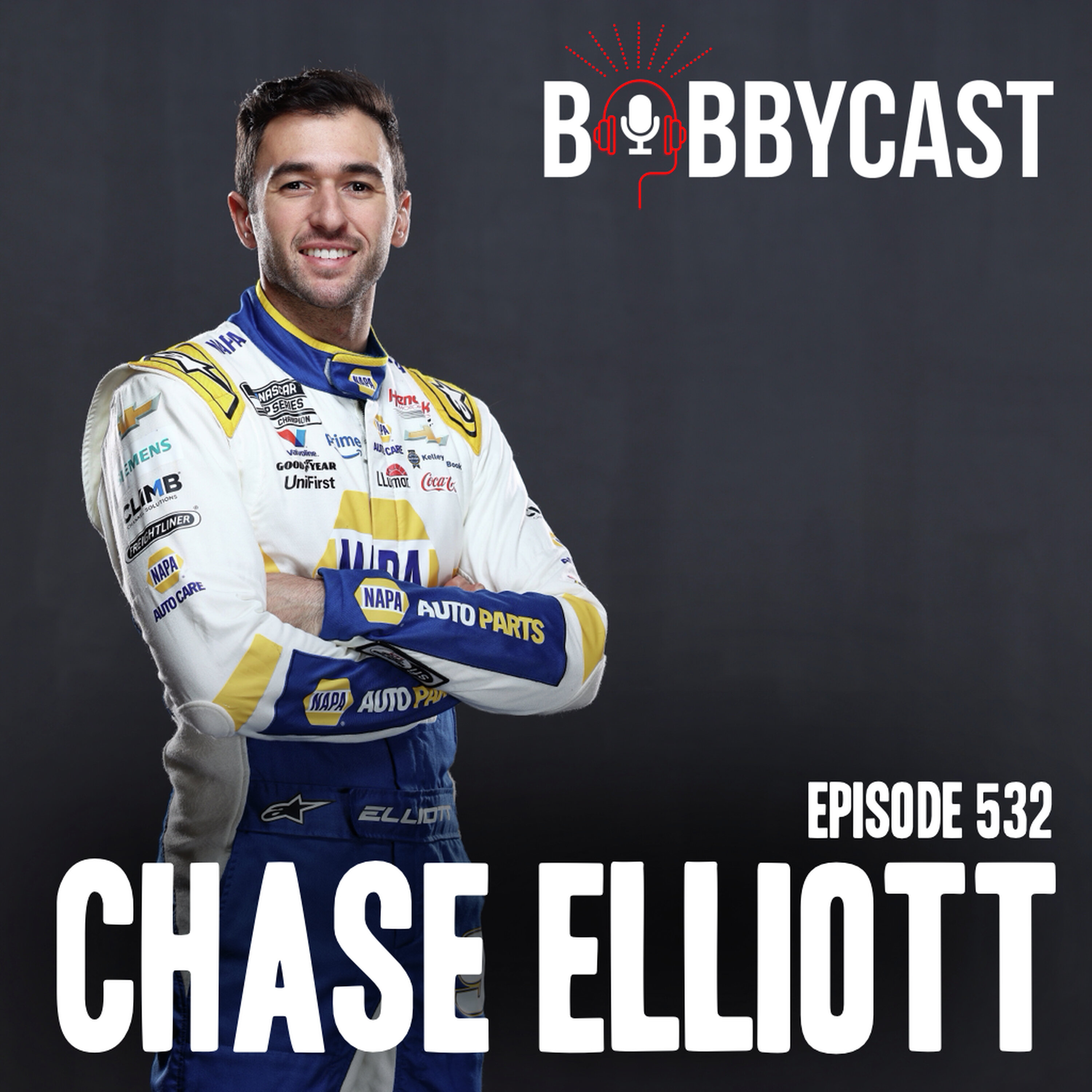
#532 - Chase Elliott on His Music Mt. Rushmore + Why He Switched Numbers Early in His Career + Being Spoiled as a Big Georgia Fan + Bobby & Eddie Discuss Top 10 Live Music Tragedies
On this episode of the BobbyCast, Bobby sits down with NASCAR Cup Series Champion, Chase Elliott. Chase talked about his Mount Rushmore of music, why Eric Church at Red Rocks was his favorite concert ever, and more about his love for music. Plus, Chase told Bobby why he switched numbers during his career and what it's like being spoiled as a big Georgia Bulldog fan. In the second half of this episode, Bobby and Eddie discuss the top 10 live music tragedies that have ever happened, including the infamous Woodstock '99 and Route 91.
Follow on Instagram: @TheBobbyCast
Follow on TikTok: @TheBobbyCast
Watch this Episode on Youtube
See omnystudio.com/listener for privacy information.
Available Results
Generated results are saved to the knowledge database for reuse and search.
Extract Knowledge
Pick what you want extracted first. Model, scope, and chapter options appear after a template is selected.
Transcript
00:00:06
Speaker 1: I don't know how the best way to describe this other than just they race, like some of them just do like people cutting you off on the highway, or just do dumb stuff right that you're like, why was that necessary?

00:00:19
Speaker 2: Welcome to episode five point thirty two with NASCAR driver Chase Elliott, which, by the way, Chase elle will be racing on September thirteenth. It is the Bristol Motor Speedway, the best pro shops night race. Who decides who survives around the sixteen. I thought it was cool. Listen. I'm not a massive NASCAR fan, and I'm glad I didn't know how popular he was because I think I may have handled the interview differently, Like I know who Chase Elli is? The race car driver? Is that even a thing? Can I say racecar driver?

00:00:48
Speaker 3: Yeah?

00:00:48
Speaker 2: He's a race car defensive like I do. I do multiple sports shows, but I don't know much about NASCAR, if I'm being honest. So, but I really enjoyed it, and I think, you know, Morgan number one, who is a massive NASCAR fan, came up and she was like, that was really good. People don't get that much out of him. He doesn't do a whole lot of interviews. I was like, really, I was like, how popular is he? She was like, he's arguably the most popular driver. I was like, great, I'm glad I didn't know that because I might have handled this a bit different. So enjoy this. We do about forty minutes with Chase Elliott. I really like him, and then Eddie and I will talk about the top ten live music tragedies of all time.

00:01:23
Speaker 3: Oh man, yeah, you don't have happy stuff over here.

00:01:26
Speaker 2: Well we'll go happy first. Here he is Chase Elliott, or as many people know, I'm Chase race Lot.

00:01:33
Speaker 3: Yes, that's what I just heard.

00:01:34
Speaker 1: I haven't heard that one in a minute, so it was nice to get. Yeah from Cars three some cars appreciation in there.

00:01:41
Speaker 2: Yeah, I would think that that is a completely different fan base. Like if a kid comes up to you, did they ever introduce you as Chase race Lot.

00:01:48
Speaker 1: Yeah, your parents, you would actually be surprised it happens. Not a lot, but it definitely happens. But you're totally right, Like it's a total different world, right, people see you know, kids see me as that right, that that pay attention to the movie, but certainly not your normal you know, fans at the at the track.

00:02:09
Speaker 2: It's weird. Uh, Like I did a reality show one time. I did Dancing with the Stars and I won the show, so I was on it for a long time.

00:02:15
Speaker 4: Oh nice, thank you.

00:02:17
Speaker 2: Not the flex yet. The flex is this is that that's a big deal though. Yeah, I'm wonderful athlete, much like yourself. But when really old people come up to me, I know they're about to talk about that show, like I can identify. Like if I got a walker and they're like hello, I'd like to say I'm like big Dancing with the Stars fans. It's got to be like the kids. If the kids like, oh my god. So yeah, we're tackling on both ends. Good to see you. Have we met?

00:02:41
Speaker 4: I don't know that. Maybe we've crossed paths somewhere.

00:02:44
Speaker 2: Probably not then, I don't know. I'm pretty generic.

00:02:46
Speaker 1: I'm not gonna lie me too, So I mean, no offense taken at all. I'm really bad about that. And you learn as time goes. It's good to see you, not nice to meet you, right.

00:02:57
Speaker 2: So completely nice to meet you has been eliminated from what I.

00:03:01
Speaker 4: Say, totally not an option.

00:03:03
Speaker 2: Yeah, do you find that having it be a helmet sport, maybe you can go out a little more than like a basketball player because when you're performing, when you're on the track, you're in a helmet.

00:03:15
Speaker 1: Uh maybe that's a good point. I would say people definitely identify with my normal weekend attire, right, So like if I'm walking around in mind driving suit or like if I'm dressed like this, I have a definitely a much better chance of someone recognizing me, I think. But yeah, for the most part, it kind of depends on where you're at. But I do think the helmet aspect of it probably is that's have some truth behind it.

00:03:42
Speaker 2: You do have NAPA on even like your normal clothes today, so do all your clothes have some like even if you're gonna lay around the house, are you sponsored by somebody to lay around?

00:03:51
Speaker 4: You know?

00:03:51
Speaker 1: It is such a you know, NASCAR thing, right, We are walking billboards at all times. So yeah, if you're stopping by the house a random Wednesday, odds are I'm probably you know, sponsored by something on Wednesday at home watching you know.

00:04:06
Speaker 4: A movie.

00:04:07
Speaker 1: So that's just uh yeah, I guess, Yeah, NASCAR issues when it comes to.

00:04:12
Speaker 4: The billboards that we are, but that's part of the deal. You big bulldog fan, big Georgia fan, big Georgia fan.

00:04:17
Speaker 2: Most of my clothes at home, I'll have razorbacks on them because I've noticed. Yeah, so I'm a big razorback gun from Arkansas, but most of my hangout clothes have razorbacks. So I would assume your stuf's either like NAPA or do you have a bunch of bulldog gear you wear?

00:04:28
Speaker 4: I do? I do?

00:04:29
Speaker 1: Yeah, that is very very guilty of that as well. I would say it's probably half and half. It's either sponsor related or it's Georgia. I got some brave stuff in there. And then there's you know, the occasional generic favorite Braves player ever, Chipper Jones.

00:04:42
Speaker 2: I knew you were gonna say that you're the age you're a I mean, Chipper was like the dude, you go back. I don't know what your dad Braves fan, Not really so Dale Murphy probably the generation up probably so yeah, Deyl Murphy. I remember being a kid watching TVs and like I was really young. But Dyl Murphy, you know then, Chippard Jones, you still follow the Braves now, I do.

00:05:03
Speaker 1: I mean they've been a tough year, They've been tough to follow. This year, But I'm uh, I mean, I'm always a fan, right, So yeah, I hope they get it turned around.

00:05:11
Speaker 4: Man, they've had they've had a tough go at it.

00:05:13
Speaker 2: Do you feel that when Georgia doesn't win a football national championship, now that's a letdown and that you're very spoiled.

00:05:20
Speaker 4: I don't feel that way.

00:05:21
Speaker 1: But I'm also you know, I feel like I'm a very I try to be a fair fan. I'm not one of those people that, you know, just throw it in your face all the time either, you know, I feel like that.

00:05:34
Speaker 4: I don't know.

00:05:35
Speaker 1: I spent enough years of being a Georgia fan in an area that had a lot of Alabama fans, and you know, when they were on their run and just wearing us out, I had lived that, and I just don't want to be that person, right So even when they had their couple of years national titles and so on, I just I don't know, I just still want to be that person. So I'm a here ehach fan, love following them, and I'll definitely be pulling for him this year, But I wouldn't say it's a letdown. Like I hate the coaching culture in sports in general, but definitely in football. I think is totally unfair to these guys that they, you know, get hired on by these massive schools or you know, boosters or whoever it is that's paying the bills, right and they come in and they're just expected to win a national championship in like three years. I think that's totally unfair to them. Like, if it was easy, everybody do it, you know what I mean.

00:06:32
Speaker 2: I think that Georgia has fans that are much nicer than they have to be. And I've said this for a long time because you guys have been really good now for a substantial period. I think Kirby Smart coming in complete change the program. Mark greg was awesome. He was Kirby Smart flipped the switch. H And you guys could be a lot cockier and have friends like Cane Brown's a really good friend of mine and he's a Georgia fan. He could be way more cockier and way more arrogant about it, and he's really not. And so for a team that wins a lot and all the time, Georgia fan's pretty cool. Bam fans, we got to talk. I don't disagree with that.

00:07:03
Speaker 1: I don't disagree with that, but you know, they've had to change their tune a little little, you know, but I still left it changed for them. I still think they're going to be very good. But yeah, look, I mean you're right, and I think we're really lucky as Georgia fans too, because it was never it was never like they were just a total joke, you know, Mark, Mark Rick. I think it was a great coach, and it was a great culture, and it was just a really easy team to pull for. They weren't winning national championships every year, but they were always really solid and and even those years that they weren't winning at all, they were still winning a lot of games and it was still a lot of fun to go and and uh be a part of. So yeah, I think we got really lucky on that front. And then yeah, obviously Kirby came in and totally changed the you know, change the game and changed the game, really, I think for the whole sport. Probably from the recruiting side of things. I feel like he kind of has has spearheaded a lot of the movement on that side of the fence.

00:07:57
Speaker 4: But it's been fun to watch.

00:07:58
Speaker 2: So I have some really uneducated questions I'd like to ask, or how did drivers get their numbers?

00:08:07
Speaker 1: That could be a that could be a number of different ways. For some people, it could just simply be what your favorite number is, and you might have had the option or the choice to pick doesn't have.

00:08:21
Speaker 2: To be open. I guess that you can't have two cars with the number with the same number.

00:08:25
Speaker 1: Correct, Yeah, you definitely can't have two cars the same number. The teams own the numbers, you know, basically, so you know, the drivers work for the teams that feel the cars more or less. So like in my case, when I came into racing Cup and I've been with Hendrick Motorsports throughout my whole career, Jeff Gordon was retiring, right so I came in the next year, I was I was filling in, you know, filling the spot, fill in the open seat. So the twenty four was the car that I stepped into. For those first couple of years. I had no tie to the twenty four, to the number twenty four or anything, but you know, that was that was what it was, and I you know, nobody asked and obviously I was fine with anything at that point. Now, later on down the road, I had an option, and you know, nine was my favorite number, and nine, you know, had some family ties to and and made a lot of sense, so I got to switch. So most of the time, I would say it's more whatever team you're driving for, if they already have a number that's fielded or a number that's been around for a while, you typically kind of get assigned that number. It just kind of happened. The stars are lined up really perfect for me to end up with the nine that that I run now. But that's not I wouldn't say that happens very often, and I was kind of surprised that it even happened in my case.

00:09:50
Speaker 2: Are there better numbers, meaning are some numbers more expensive for a team to buy than others.

00:09:57
Speaker 4: Well, they're not necessarily buying them.

00:09:59
Speaker 1: They and that's probably part of the reason why most of the time they're not going to change, because if a team has rights to a certain number, odds are is probably not going to make sense for them to go out and get a different one. So yeah, I wouldn't say it changes for me. In my case, the nine was not being used, so it.

00:10:20
Speaker 2: Just floating out there. It's a free agent that's a free agent number.

00:10:23
Speaker 4: It was. It was kind of a free agent number.

00:10:25
Speaker 1: It was owned by Petty Enterprises because you know, Evernham turned into Gillette, you know, George Gillette bought Evernham and then Gillette turned into Petty Enterprises on down the road. So it kind of got passed down and passed down, and it got passed down so far that the nine was not being used, you know. So it was Casey Kine and then it was Marcus Ambrose and I'm not sure where it went after that, and then it kind of just disappeared for one reason or another. I don't exactly know why, but ended up not being used. And so yeah, when we had some switch up at Hendrick, I think in two thousand and eighteen, you know, was the year, and we were you know, there was it was Actually Dylle Junior really deserves the credit for the number switch from my perspective, because he he's like, hey, you know, if you're going to make this change, which kind of he knew I wanted to do it, but I never really said. He's like, hey, you need to speak up about this right now because you're probably not going to have another opportunity to do it. He knew there was some change coming. And yeah, so I kind of thanks to his nudging, you know, I reached out to the boss and was like, hey, what do you think about doing this? Or can we do this? Is this even possible? So somebody had a conversation with Richard Petty and you know, he said, hey.

00:11:44
Speaker 4: You can have it.

00:11:45
Speaker 1: You know, we're not using it totally, you know, totally yours. You have you know, family ties to this number, and it'd be really cool for you guys to you know, to take it if if that's what you want to do. So the king let us have it, and we ran with it, which is really pretty neat that way it all worked out.

00:12:01
Speaker 2: Another dumb question, and that's actually a good question, well, a very uneducated question. I had no idea.

00:12:06
Speaker 1: Yeah, so it's better than what you do when you go, you know, have to go to the bathroom, which is totally it was about it.

00:12:13
Speaker 4: Mark.

00:12:15
Speaker 2: My next question is when it comes to pre race, have athlete friends. Some of them like to be pumped up. They like to listen to music and get freaking fired up. I have other athlete friends who like to not be fired up, so they can be as calm as possible, so they can think as clearly as possible. Where do you fall when a race begins? Do you like to be keyed up or do you like to be all the way down?

00:12:35
Speaker 1: I would say most of the time, I like to be more on the down side of just being able to think and be as clear minded as I can be. I think that's the most productive way for me to go about my job, because the beginning of the race is like, you know, the beginning of the marathon. You know that there's there's just so much work to be done. And while there are moments throughout races where you might need to be fired up or need some of that, you know, heightened excitement, it's typically pretty easy to reach in and grab that. But I just don't think you can sustain that for four hours, you know. I think that's kind of unrealistic to do, at least in our world. And I think so much of what we do is more you know, I've compared it a lot to golf, I think in a lot of ways, because I think it's more of a of a mind gain than it is anything else, and I think just being sharp on that front is probably the best way for success, at least in my view.

00:13:38
Speaker 5: Let's take a quick pause for a message from our sponsor, and we're back on the Bobby Cast.

00:13:52
Speaker 2: I want to talk about visualization for a second. And again you mentioned golf in every hole is different, right, Every fairway is different, every green is different. You walked, of course, with a lot of these tracks. The circle is the same. How do you visualize more than just the circle's They're not all the same at all. You know, the shape to me is the same when I watch it on television, right.

00:14:13
Speaker 1: And and I think that's another you know, great comparison. You talk about fairways, and you know, you might look from overhead shot and you might have two dog leg lefts that look the exact same from a helicopter view, and you're thinking, oh, these are the same shot. As long as you hit the same shot shape these get you know, should be fine, right. The same for us when when we go to different race tracks. While some places might look really similar and might from you know, a bird's eye view, every place has its own character, and it has its own bumps in the road and cracks in the surface, and and uh, some tracks have preferred lanes that you know are different than others that might totally be shaped the same. So no that they even if even if they might look the same, they're all they're all very different, and you know, it just takes some time, I guess, to kind of recognize that and and pick up on it. But but they all have their own character for sure.

00:15:10
Speaker 2: What if like one pothole is added each course, one pothole, Yeah, yeah, I guess you have a lot of flat tires and you really wouldn't know where it was till it started, but then it just stayed there. Because I think of how the Savannah Bananas make everything like Live Has Golf, Savannah Bananas in baseball. What if it's like a Mario Kart version of what you guys do, and all of a sudden there are.

00:15:28
Speaker 1: These power ups and hm, I feel like we have enough of the Mario Kart version as it sits, so I am not going to advocate for more, but I'm sure it'd be fun for somebody to watch. But you know, I do I give I give them credit. The Savannah Bananas thing is, I've never been to one, but I could see where like I'm more of a purest sports fan at my age, right, but I could totally see if you had kids or you know, whatever it may be that that would be a super fun thing to take your family to for you know, for sports fans to get into baseball or kind of have an introduction to that. So maybe there's space out there for it.

00:16:05
Speaker 4: I don't know. There's actually a guy in Florida that.

00:16:10
Speaker 1: It's called the Freedom Factory, and it's almost it's not like totally what you're talking about, you know, Mario Kart status, but they do a lot of really fun you know, it's not so much about competitive, super serious racing. It's more of like a having fun type playground, that type stuff, very similar to Travis Pastrana.

00:16:36
Speaker 4: So I think there's a space for that.

00:16:38
Speaker 1: I'm just not sure how you take that to a, you know, a bigger level, but I'm sure someone's thinking about that, no doubt.

00:16:44
Speaker 2: Is your cousin still your spotter?

00:16:45
Speaker 4: He is?

00:16:47
Speaker 2: So again, do you know him? I don't know. I have a lot of cousins, and I've worked like the people on the show for the most part, we've been together for twenty plus years. Right, they were all my friends, and we all kind of came together and grew, you know, we weren't put together. We didn't have a big show to begin with. But to have somebody that you're close to outside of work and then also work with them, how do you manage that dynamic because you depend on him a lot.

00:17:11
Speaker 1: Yeah, it's uh, you know, we know each other really well, and you know, he knows me as well as anybody, and I would say likewise on on the other end, and we do a good job of just you know, look, I've I might cuss him up and down, you know, deer in the race or whatever it may be, but it's always really easy to turn that off, I think just because we do have a strong relationship outside the car, and we are family and we've spent most of our lives around each other. So I might be mad at him, but I don't not like him, and he and he knows that. So uh, you know, he's family and always will be. And you know that that's easy for me to to prioritize regardless of of anything else.

00:18:00
Speaker 4: You know, on the workfront.

00:18:02
Speaker 2: Do you have a race hurt and not tell anyone you're hurt so they don't take advantage of it. There's not an injury like an official injury report like NFL like Thursday, they got to give the injury report.

00:18:12
Speaker 1: Well that's not totally true, like for us, Like, for instance, I crashed on Saturday night this past weekend. So like one of the things that you go through as soon as you wreck, you know, they take you to the infield care center at whatever racetrack it is, you go through protocol of like concussion testing, and they'll make you go every I think like every year every year and a half, we have to go through and do like a concussion standardized test basically to set your baseline so that when you do get into wreck and you go through to take this concussion test, that you pass it in a similar time and in a similar way that you took the baseline test when you were you know healthy.

00:18:57
Speaker 2: See, I would cheat on the baseline and make make my baseline worse. People do that, No, I would do that immediately. Yes, people, people totally have tried to do that before.

00:19:04
Speaker 4: I don't.

00:19:06
Speaker 2: You shouldn't. No, you shouldn't do it, But that would be I would. I would be worse at that, So then when I was worse after my whatever.

00:19:12
Speaker 1: They've Yeah, the way that they do the testing, I think that you could get away with that before. But the way they do the testing. Now, A, I think it would be really hard for you to cheat bad at and then b I you know, I'm not interested in that because you're just hurting yourself.

00:19:32
Speaker 4: Like if you go and.

00:19:32
Speaker 2: Good thing to say, that's the exact right thing to say, you.

00:19:35
Speaker 1: Know, Like what happens you go and you have a bad concussion and you get race the next weekend you get another bad wreck.

00:19:41
Speaker 4: I mean, like you're just.

00:19:44
Speaker 1: I mean that's bad, You're bad. I agree, Like that's just a bad decision.

00:19:48
Speaker 2: Amen. Do you have your smelling salts?

00:19:50
Speaker 6: Uh?

00:19:50
Speaker 2: Yeah, pretty awesome?

00:19:52
Speaker 4: Pretty awesome, is right? Different?

00:19:55
Speaker 2: Yeah, like makes me feel like a new person for a minute.

00:19:59
Speaker 1: Yeah, I wish it. I wish it lasted longer. I wish it lasted longer. But yeah, it's uh yeah, it's one of those things where you want it to like I don't know, you want it like keep the energy level up.

00:20:16
Speaker 4: But it's yeah, it'll get you, it'll get you.

00:20:21
Speaker 3: It like that. When when do you take that, like at what point?

00:20:24
Speaker 1: I don't regular basis, obviously you do. I don't on a regular basis, but some of our pit crew guys do it, and it's always kind.

00:20:34
Speaker 4: Of a running joke.

00:20:35
Speaker 1: They'll run up to me with with these smelling salts, you know, like right before the race, and you know, smell one.

00:20:40
Speaker 4: But so I've done it.

00:20:42
Speaker 1: But I'm not like a regular I'm not a regular user by any means.

00:20:46
Speaker 2: Let me ask you about music. Favorite three artists of all time, of all time, all time, and then I will we'll go more current, but all time right now.

00:20:56
Speaker 1: In what John doesn't matter? Wide open, that's all is too broad. I mean for me, Eric Church is the goat. I would put him at the top of the list.

00:21:08
Speaker 4: Period. Now.

00:21:10
Speaker 1: Now from there, it's like, okay, you have two more spots to fill in any genre. I think that could be do four total. I would have to study this, I think a little bit.

00:21:22
Speaker 2: Okay, if you study during an interview, that's a boring interview. You're not committed. This is not a contract you have to sign where.

00:21:29
Speaker 4: They I know, but I don't want to.

00:21:33
Speaker 1: I don't want to answer this and then get done and be like, dang, I wish I had said somebody else.

00:21:37
Speaker 4: But whatever I'm gonna I'll go for it.

00:21:41
Speaker 2: Have to smelling salt to come out.

00:21:43
Speaker 4: I need to need to study. Let's see I would probably.

00:21:47
Speaker 1: Put Eric Church up there, no question.

00:21:52
Speaker 4: I think that.

00:21:58
Speaker 1: I would probably put Tyler Chills in in the realm as well.

00:22:05
Speaker 2: So you got Kentucky and now you have Carolina.

00:22:08
Speaker 4: Yep, Kentucky and Carolina.

00:22:10
Speaker 2: No pressure to put anybody from Georgia in there. I'm just making sure we know where we are regionally. We're marking them off.

00:22:14
Speaker 1: Yeah, I'm just gonna keep it in the country category just because that we're in Nashville, right so country category. We'll just go current like what I like. Right now, We'll go Musket one blood Line.

00:22:31
Speaker 2: I think you think you're gonna be killed if you get a wrong answer, You're not.

00:22:34
Speaker 3: You're good.

00:22:34
Speaker 4: You're saying I just want to I just want to preface where my head's at.

00:22:39
Speaker 3: And if you want to call in later and change.

00:22:41
Speaker 1: Yeah, we'll go Musket one blood Line. Love their stuff, big big fans of theirs. I like Mega Maroney right now. I think she's got some good stuff.

00:22:53
Speaker 2: We'll accept all four of those answers, all four great picks. Yeah, if you come back in the year and you say I want to change all four No penalty.

00:23:00
Speaker 1: No, I'm not looking for a penalty or or or anything else. But I just, you know, I think rush more of music, and you get like, I don't know, I dive in pretty deep on that stuff.

00:23:12
Speaker 4: So I just I.

00:23:12
Speaker 2: Would, uh, your favorite non country artists.

00:23:14
Speaker 1: Ever, I would probably go like something When I think non country, my mind goes to like classic rock, you know, something like you know, the Eagles or some something in that area.

00:23:31
Speaker 2: Right, we had a segment we were doing. It's like if you had on a seven hour road trip and you can only listen to one artist, who would you pick? And I picked Tom Petty just because it's unlimited greatness. Unlimited greatness. So let me ask you that question. Then you got you're on a seven hour road trip.

00:23:48
Speaker 4: I would I would go Eric Church.

00:23:50
Speaker 1: I think he has a plethora of albums and music and totally different choices from album to album. And yeah, I just I think I think you're listening to you know, like a just a legend that you'll talk about and people will appreciate for years to come. Uh, you know George Strait type. Uh, you know, legendary status you know down the road that I think you'll be like, Dang, I should have appreciated that person more when you had the chance to go watch them live.

00:24:24
Speaker 4: So I think that that's fair.

00:24:26
Speaker 2: Best concert you ever been to Red Rocks Church of Red Rocks, Yeah, the recent one.

00:24:31
Speaker 4: Both of them.

00:24:33
Speaker 1: I went to the one that was what about ten years ago, and then I did go to the recent one as well. You know Eric, uh yeah, a little bit not not super well, but a little bits. Houses I don't need to know.

00:24:48
Speaker 4: Yeah, we take you all good.

00:24:51
Speaker 2: All right, let's talk about this, uh the last the race of Bristol for a second. What is that track? Like what you say every all these tracks have their own characteristics, what's that track about?

00:25:04
Speaker 1: Well, Bristol is you know, that place has changed a lot over the years, and the racing has changed a lot there. But it's it is a short track, right, It's only a half mile, so it's a pretty small place. But to me, it's it's not so much about the track there as it is about the experience. I just think it is such a great place to go watch a race. Like anytime my friends asked me, you know, where should we go, or you know, meet somebody for the first time, getting them in a NASCAR and they want to come check it out, I always say the Bristol Night Race. Truthfully, I mean it's not just because we're here promoting the Bristol Night Race, but honestly that that is the best answer, because I just think it it really gives people a true appreciation and understanding of what we do and seeing it up close in a stadium like environment. It's just not something that we do every week, and it's special. It's special. It's fast, it's it's it's tight quarters racing. You have to be very precise. Everything about it is just to me what NASCAR, what I grew up appreciating about NASCAR racing, and I think it does a great job of exemplifying that.

00:26:10
Speaker 2: Today, September thirteenth, the Bass Pro Shops Night Race at Bristol Motor Speedway decides who survives the round of sixteen. So if you're out, so some people just don't make it, you just go without them, right, you leave them behind and you get then the top twelve.

00:26:25
Speaker 4: Go, Well you don't they still race the next week.

00:26:28
Speaker 2: Literal they can't. But they can't win, right.

00:26:29
Speaker 1: They're eliminated from the from the playoff, you know system.

00:26:33
Speaker 2: I draw by them like this l on my head.

00:26:35
Speaker 3: Yeah, you're not even real.

00:26:36
Speaker 2: We don't even see what n seen them. You can't see me.

00:26:38
Speaker 4: Old smelling salt, Yeah, exactly.

00:26:40
Speaker 2: I've already smelled them, have the old one?

00:26:41
Speaker 7: Ye?

00:26:42
Speaker 2: What'd you think of F one?

00:26:44
Speaker 4: The movie? I have not seen the movie.

00:26:46
Speaker 2: I know nothing about F one at all. I thought they they held my hand pretty through it. I liked it.

00:26:52
Speaker 1: You ever, Dripley, those cars, No, never have never had. Nobody's ever asked, so I've never done it, but probably never will be asked. Which is, you know, totally respect that too, But why do you say that, Uh, well, it's a totally different path number one, not saying that I could or or couldn't do it. You know, it's a it's just a different discipline. Truthfully, I'm way too old, which is crazy, but I'm I'm too old at this point in my life to even think about making a transition of that nature. I mean that they're those teams are are signing kids when they're you know, probably ten years old or something and bringing them up through some sort of a farm system, and if they get developed and they have think they have a chance, then they you know, get opportunities. But the cars, you know, certainly from you know, being a motorsports fan. I love watching F one. I've really enjoyed watching their racing over the past probably I don't know, six seven years or something like that. Uh, you know, had seen some great battles between Max and Lua, and you know Lewis and Nico Rosberg. You know that was a great rivalry. If you're just now watching the F one movie, you probably.

00:28:08
Speaker 2: All I know is Lewis, he wars the likes on each wrist. It's the only thing I know about it. I mean, I know, ye, he's super famous and rich.

00:28:13
Speaker 4: That way, great race car driver too.

00:28:14
Speaker 1: I know he's had a tough year, but some amazing battles and yeah, F one has been a great product and they've done a great job marketing it.

00:28:22
Speaker 4: And you know, I've heard the movie is great.

00:28:24
Speaker 1: I haven't seen it, But I've never been huge on motorsports movies in general. I just always feel I'm very much a purist when it comes to like I want things to be represented exactly like it should be, and I just think it's really hard to put what we do as as you know, race car drivers and motorsports in general the perfect way in a film. So I always get super picky about that, but everybody, everyone says it was done really well and I should probably go, you know, check it out.

00:28:56
Speaker 2: My favorite F one driver, Brad Pitt.

00:28:58
Speaker 4: Oh, well, easy choice.

00:28:59
Speaker 2: I'm new to this part. Yeah, my favorite though.

00:29:02
Speaker 4: Yeah, he's good, perfect, He's probably one for one. He I assume he won the race.

00:29:05
Speaker 2: Not spoiling it.

00:29:06
Speaker 4: Okay, he might die, maybe he does.

00:29:09
Speaker 2: Okay. I got two more uneducated questions, although you said my other one was pretty educated, so I appreciate that. Yeah, I'm curious about what it does to your body, meaning do you weigh yourself and this may sound so stupid pre and post because and do you lose a lot of water during the race? And how do you stay hydrate? I mean, is there like a hamster tube like what happens in there with your body?

00:29:36
Speaker 4: Yeah?

00:29:36
Speaker 1: So you you are sweating a lot, no doubt. I mean you're definitely losing a lot of water weight throughout a race.

00:29:40
Speaker 4: It's hot.

00:29:41
Speaker 1: I would say that's the toughest part for us physically, is the heat and sustaining that for three or four hours. But we do have water, you know, you know, drink bags almost like a camelback.

00:29:53
Speaker 4: I guess would be the best way.

00:29:54
Speaker 2: To not like a hamster too how I described it now?

00:29:57
Speaker 4: Okay, okay, no, but what do you lose?

00:29:59
Speaker 2: What do you per race?

00:30:01
Speaker 1: You know, I have never personally weighed myself after a race, but I have had friends who who have, and it's on a really really hot weekend, like five.

00:30:09
Speaker 4: To eight pounds something along those lines.

00:30:12
Speaker 2: So is there specific food that you eat before a race or race day that you know does your body the best?

00:30:19
Speaker 4: Yes?

00:30:19
Speaker 1: I mean I'm typically really really boring on just race day food in general, like chicken rice or you know, some sort of pasta type situation.

00:30:29
Speaker 4: But it's uh, if you.

00:30:30
Speaker 2: Went to El Chico before a race, would that be bad? That would be bad? Okay? It really does some work on you while you're in there.

00:30:36
Speaker 1: Absolutely, yeah. I mean drinking hydration is a huge piece of it. But also what you eat too, I mean you can you can make bad, bad choices on that side of things too.

00:30:45
Speaker 2: Final question, do you ever just want to turn heel? Because you're very popular? You want all the he's our favorite, he's you're in car, you're in cars. Do you ever just want to turn heel one day and same sponsor for show up on like all black and be like screw everybody, like a little bit. That'd be fun, right, Oh, it definitely Hogan type stuff.

00:31:01
Speaker 1: It would definitely be fun, for sure. And I think it would just catch a lot of people off guard. Maybe I will, maybe I will. Maybe you know, maybe one day you just show up and dry by a flip off, you know, go to the dark side. Yeah, that's that's it. That's the next step.

00:31:16
Speaker 4: It's not out of the question. It's not out of the question.

00:31:19
Speaker 1: You know, you never know. Somebody might be getting the bird this weekend. Now that you get me fired up about it.

00:31:24
Speaker 2: What makes you like a mean driver? What makes someone like it's someone that is it because they like bump you.

00:31:30
Speaker 1: I wouldn't say, you know, I don't look at somebody and be like, oh man, he's mean. I just think that most you know, some guys just choose to race, like, you know, I don't know how the best way to describe this other than just they race like some of them just do.

00:31:47
Speaker 4: And and like people drive, yeah, like.

00:31:49
Speaker 1: People drive on the road, like people cutting you off on the highway or you know, just do dumb stuff right that You're like, it's not even that it was, it's just sometimes you're like, why was that necessary? You know what I'm saying, And I think there's just a certain level of racing etiquette, and you know, you have either have respect for your competitors or you don't. Sometimes you get shown signs of disrespect and you're like, man, that was just kind of unnecessary. So it's not really like hey, you're being mean. It's just more like, hey that you know, you're not doing either one of us any favors.

00:32:22
Speaker 4: That was kind of dumb.

00:32:24
Speaker 2: Chase Elliott I really appreciate the time my final final final question is I.

00:32:28
Speaker 4: Know you got you any more last questions?

00:32:30
Speaker 2: You're like, A, well, I do final, then I do final Final, then I do final final Final, Okay, it's the final, final Final. Do you still get excited when like a box of cool like merch comes in like front, you know, like if you get boxes of shoes and stuff, you're like, oh cool, let's see what we got this time?

00:32:43
Speaker 1: Oh man, for sure. Yeah, Like you asked about the Georgia attire. Yeah, yeah, they they sent me some stuff like a couple months ago.

00:32:53
Speaker 2: So it's still cool to you when that stuff comes in. Oh yeah, it's awesome.

00:32:56
Speaker 1: I'm like a you know, a kid in the candy store, right like like you know, Christmas came in August, you know, and I'm just excited for uh, you know, for the season, and you know love you know, love that stuff. So yeah, absolutely, I get fired up for for that sort of thing. I don't think you ever grow out of that when you know, when you're a fan of something.

00:33:19
Speaker 2: Saturday, September thirteenth, the Best Pro Shops Night Race at Bristol Motor speed Away. Coverage began to six thirty pm Central on USA Chase. Good to see you appreciate the time and good luck, man.

00:33:28
Speaker 4: Yeah, thanks for having me, guys, appreciate it.

00:33:31
Speaker 7: The Bobby Cast will be right back. This is the Bobby Cast.

00:33:44
Speaker 2: Okay, we're gonna go into the top ten live music Tragedies. We're gonna call this when the music turned deadly? Oh man, what comes to your mind?

00:33:52
Speaker 3: So like explain, like, uh, it happened like during a live show.

00:33:57
Speaker 2: People die at a live music event.

00:33:59
Speaker 3: I mean, this is I mean, let's start with because I.

00:34:02
Speaker 2: Have ten and I won't start where you start, But I wonder what you think makes it? Din Bag Daryl, No, I think you're going individual like dine Back Darrel. Okay, I think that counts because he was shot during a show, and that guy shot in the middle of the show on stage, Pantara guitar player. Yeah, this is what you're saying, though, I'll give you number ten.

00:34:21
Speaker 3: Okay.

00:34:22
Speaker 2: Astro World Festival in Houston, Texas.

00:34:24
Speaker 3: Dude, there's a whole documentary on that that is.

00:34:26
Speaker 2: Yes, Travis Scott or fifty thousand people. As Travis Scott took the stage, the massive crowd surged forward. Thousands were pressed into barricades at the front, with a little room to breathe or move. Despite visible distress, unconscious bodies, and calls for help, the show continued for over thirty more minutes. Emergency response was delayed and overwhelmed. Video of fans screaming for the show to stop when viral. Ten people died hundreds were injured.

00:34:51
Speaker 3: I don't understand how the communication doesn't get sent to the authorities that something bad is happened. You know, Like we've been at a show where we're playing and you see that something's not right, you know. I remember we were playing a show somewhere and somebody was like he's dead, and turns out they just passed out. But you know, we saw that, and yes that was kind of daylight and all that, but these were hundreds of people screaming at the guards saying like we are getting crushed.

00:35:20
Speaker 2: I think the difference is and I'm not justifying it, but I'm going how did they miss this one? The biggest factor of this was understaffed security, so they didn't have enough people to actually stop it because we don't know that some people didn't see it and try to stop it.

00:35:35
Speaker 3: Right.

00:35:35
Speaker 2: There was very poor crowdflow, the organization of getting people places and people could get out and people would get trapped like that. It was set up poorly.

00:35:44
Speaker 3: From what I understand is a lot of people snuck in. I think it was more people than they anticipated to be there were actually there because they broke the gates.

00:35:51
Speaker 8: And it was almost encouraged to run in.

00:35:54
Speaker 2: And Travis Scott has been known to encourage his crowds to get rowdy, to do a lot of I mean thinking of a mosh pit though, oh crazy, right, so it's a version that so I mean, looking down, I don't know that he saw it was anything different because he's just seeing people jumping around freaking out. Screaming, but he's also got ears in and he's also got.

00:36:14
Speaker 3: Oh totally, I wouldn't even put it on the artist. I wouldn't put it on him because I don't think it was right in front of him. Really, I would just put it on security.

00:36:21
Speaker 8: I watched the documentary a little bit. It is on him because they were telling him in his ear that people are getting hurt of really and he chose to continue.

00:36:28
Speaker 3: Wow.

00:36:29
Speaker 8: And what actually like what happened was that there was one stage that was just meant for Travis Scott. Nobody else used that stage the entire time, so whenever he went on, all these people rushed to this stage and this one particular area they all just came in flowing from the other stages, and that's where people got crushed.

00:36:45
Speaker 3: That area.

00:36:46
Speaker 8: Yeah, this one specific area like stage the left, that all these people were piling into because it was flowing in from the other stages, and that's where people were dying.

00:36:54
Speaker 3: Yeah.

00:36:55
Speaker 2: I think what I'd like my official statement on this is it wasn't one thing. There were like nine things that went wrong, and I think the biggest thing was just not having enough staff and not having it not having just from I didn't watch the documentary, but from what I read about it, not having enough people make proper decisions about the safety of people.

00:37:16
Speaker 8: Yeah, because there were like a few text messages that went out before he went on stage saying, Hey, something bad it's gonna happen here.

00:37:21
Speaker 2: And it just kept going. Over four hundred lossits were filed. Live Nation and Travis Scott were heavily scrutinized. I can tell you the good thing that's come from this is now, when an artist see something happening, you see it all the time, they stop a show, Yeah, they and it always goes viral. But that this is why, because that triggered everybody to go, oh, we got to watch. Now we have to also be in charge and not just trust the people on the ground to do it, because maybe there's not enough people on the ground, or maybe they haven't been trained enough or maybe so Yeah, that's number ten on the list, number nine the WHO Consort of nineteen seventy nine since out of Ohio. I went there for that Riverfront Coliseum. Were you alive? December three, nineteen seventy nine.

00:38:00
Speaker 3: I was born. I just turned I just was born March twenty first that year.

00:38:04
Speaker 2: So you could have been there. I wasn't born yet. Attendance was more than eighteen thousand, thousands of fans all general emission, waited outside. It was December and Ohio, so that means it was snowing cold. When they heard the Who's sound check, they thought the show had started. So there was only like a couple of doors open. All the people that were waiting out thought the show had started. So then what happens They run in. They stampeded. Wow, a stampeded toward the entrance. Eleven fans died. They were trampled, they were crushed. Lack of communication again it all. It almost always goes back to inadequate staffing. And then also the staff you do have, they're not really being taught properly. But also that job turns over so much, it's not like you have full time.

00:38:51
Speaker 4: Yeah.

00:38:52
Speaker 2: Yeah, fans were told the band hadn't started, but because the music had started, other fans were saying, I think the band is still so then then it's group think and then it's chaos. And so that was it.

00:39:04
Speaker 3: And you think people, I mean people in crowds, like it's just if you're all running a crowd of say you know, five hundred people and a few people fall.

00:39:15
Speaker 2: No one's stopping because you don't even see them because everybody's so packed, so tight.

00:39:20
Speaker 3: No same with Astra World, you know, like there's so many people you don't even know anyone's getting crushed.

00:39:25
Speaker 2: Cincinnati banned festival seating for decades. The who devastated learned of the deaths after the show met with victims' families. It's used as a case studying event training even today. Number nine the Altamont Free Concert nineteen sixty nine, Northern California, The Stones Jefferson Airplane. An eighteen year old was stabbed to death by Hell's Angels.

00:39:45
Speaker 3: Does it say his name?

00:39:46
Speaker 2: Yeah, it's very like Meredith Hunter. It pulled a gun apparently during the Rolling Stone set. Meredith Hunter, an eighteen year old black man, was stabbed to death by Hell's Angels after allegedly pulling a gun.

00:39:55
Speaker 3: Yeah.

00:39:56
Speaker 2: One murder, dozens of injuries, multiple beatings during the day. Boy, you get Hell's Angels in there, They're not you're talking about it, not trained.

00:40:04
Speaker 3: They're a motorcycle gang, right like, it's a motorcycle club with a bad reputation, and they held up to that reputation again. Hold documentary on that. I think it's called Gimme Shelter.

00:40:15
Speaker 2: Because I've always heard that that that tail, the tail of the Rolling Stones hiring the Hell's Angels.

00:40:19
Speaker 3: Yeah, I didn't realize it was a music festal I have video of it too.

00:40:22
Speaker 2: Woodstock ninety nine. I've seen this documentary.

00:40:24
Speaker 3: Oh this is crazy, this one's crazy.

00:40:25
Speaker 2: Over two hundred thousand people. They had it at an abandoned Air Force base. Yes, and it was so hot, and I think if the Air Force bace it was all concrete.

00:40:34
Speaker 3: Ye, all concrete. They didn't have enough water for everyone.

00:40:37
Speaker 2: Bottle water costs four dollars. Well, now that's not even that much, but that was a lot. Yeah, food was overprised, the toilets were overflowing. I remember that being a big part of it. They can try to blame the artists, and they do. They blame Limp Biscuit. They did break stuff the documentary. They did that stuff, the chili peppers. You know, people start sitting fire then earn it. But the crowd was already there and it was a very aggressive lineup. Anyway, because I remember that documentary, I think it was Joel was like I was like the only girl.

00:41:10
Speaker 3: Yeah, and I think Atlantis maybe.

00:41:12
Speaker 2: Maybe that's even who it was. It was like it was just so aggressive.

00:41:15
Speaker 3: And it was you know like Sandwich by Offspring and Limp Biscuit, you know, so interesting.

00:41:20
Speaker 2: Zero official deaths, but a lot of sexual assaults. Yeah, and then a lot of people getting treated for like dehydration, yeah, heat stroke, being hurt. It's kind of hard to get out of there as well, because there's so many people in an area that there weren't that many roads in and out, kind of like the original Woodstock. They credit it to greed, just agreed because people wanted to make money. They didn't make sure the other stuff was taken care of.

00:41:46
Speaker 3: Which wasn't the problem with the original Woodstock. I think they lost a lot of money because again they broke down the fences there.

00:41:53
Speaker 5: Let's take a quick pause for a message from our sponsor.

00:42:04
Speaker 7: And we're back on the Bobby Cast.

00:42:07
Speaker 2: A lot of this stuff has documentaries on h huh.

00:42:09
Speaker 3: Yeah, so far, I think everything you've mentioned has a documentary on it.

00:42:12
Speaker 2: Do you know about Pearl Jam at the rose killde Festival.

00:42:15
Speaker 3: Pop Pop Pop Skilled or is it Sweden?

00:42:19
Speaker 2: It's in Denmark?

00:42:19
Speaker 3: Or Denmark.

00:42:20
Speaker 2: Yeah yeah, yeah, yeah yeah, rose killfestor on they trying to say it June thirtieth to two thousand, over one hundred thousand people.

00:42:25
Speaker 3: What do you know? It was the same kind of situation where people were getting crushed in the front, a lot of mud. Maybe three people died, nine oh gosh, nine people. Eddie noticed something was wrong. Eddie Vedder noticed something was wrong. He tried to stop it. But by that time, yeah, people were already hurt. And they didn't play for two years.

00:42:42
Speaker 2: It says that almost disbanded out of grief.

00:42:44
Speaker 3: He said it too, He's like, if I swear if anyone's hurt here, like we'll never play again. And they didn't play for like two years, and then they eventually played again.

00:42:51
Speaker 2: But during Pearl Jam set, fans rushed forward. Slippery mud, crowd density and low visibility led to fans falling and being trampled. Pearl Jams stopped playing is they know to chaos in the crowd. Nine young men died, crushed or suffocated. Organizers were overwhelmed, so to respond, Pearl jem nearly disband out of grief.

00:43:09
Speaker 3: I've been to shows where like I feel, I felt like we were getting really squashed, but never to the point where I can't even imagine what it feels like to be so pushed up against something where you're gonna die, you know what I mean. Like, I've definitely been in tight quarters where we're trying to like stop stop, like stop pushing. It's getting tight, but to the point where like you die because you're getting squished so hard?

00:43:33
Speaker 4: Is it? Man?

00:43:35
Speaker 2: The Indiana Fair State collapse. I remember that one sugar Land, sugar Land the storm, yea, the wind this is the stage right, yep, So twelve thousand people there, a sudden sixty to seventy mile per hour gust of wind hits right before sugar Land set the stage, rigging collapsed onto the crowd. Fans had little warning or time to evacuate. Seven people died, fifty eight injured severe. Whether alerts were ignored or downplayed, there were inadequate structural reinforcements. It led to legal battles over responsibility was at the state, the stage, the company, the band, families got big settlements in the millions, and that ended up creating new standards for outdoor stages.

00:44:15
Speaker 4: Yeah.

00:44:15
Speaker 2: Yeah, So have you ever.

00:44:16
Speaker 3: Talked to a Christian about that, like, have you ever done a Bobbycast or anything with Christian?

00:44:20
Speaker 2: Yes, but it's a long time ago, over ten years ago, and I don't remember what he said, but I'm pretty sure we touched on it, right, Mike, I'm pretty sure we did.

00:44:28
Speaker 8: Yeah.

00:44:29
Speaker 2: Yeah, I've been going through the archives, done so many interviews. I was thinking the other day I saw somebody on Instagram and it was a songwriter and I was like, Oh, that's interesting. I don't think I've ever met them, And then I clicked to see if they've ever a message to me, because I'll do that sometimes. And we've done a Bobbycast together.

00:44:46
Speaker 3: That's crazy. How many how many do you have?

00:44:51
Speaker 2: Uh, this is five thirty two?

00:44:52
Speaker 3: Wow, that's insane.

00:44:54
Speaker 2: So I would imagine we've done four hundred and fifty interviews at least.

00:44:58
Speaker 3: Yeah, that's amazing.

00:45:01
Speaker 2: It's a lot. I don't even remember everybody I've interviewed, obviously, about looking at that Instagram and going like, I wonder if I ever met them or if we ever DMed, and it's like, Oh, we've done it.

00:45:10
Speaker 3: What's cool. Has most of them been to your house? That's the cool part too.

00:45:13
Speaker 2: Yeah, almost all almost all and to think of the house as the condo downtown.

00:45:19
Speaker 6: Hm.

00:45:19
Speaker 2: That's where we started this.

00:45:21
Speaker 3: Where would you do that?

00:45:21
Speaker 2: Where would you a room? We set up a little thing. I remember, Caitlin Smith and Ryan heard being two of our first ones, right. And so then the condo flooded because they broke a pipe above and so I had to move to another house and we set up another studio in another bedroom at the very top of this house, and so people would come in the house front door going up. That's crazy, yeah, looking back and kind of crazy. And then from that house moved to the other house when I was in Bellmead, and that was in the house too, but you came in the front door and went right up the stairs.

00:45:52
Speaker 3: I remember that one.

00:45:52
Speaker 2: That was a bigger kind of like extra room they call it. So we had a studio space up there, but they still had to come in the house. And so that's also when COVID hit and my wife who was my girlfriend at the time before she was my fiance, she was there and she was like, man, it's kind of weird people come in your house. And I was like, oh, I never really.

00:46:08
Speaker 3: Thought about that because you were just single dude.

00:46:10
Speaker 2: Yeah, and she was also liken, I weird, you never come out of your bedroom, and I was like, yeah, you know, I never thought of that. I never really thought about that either. This is live in the bedroom. And so we got a new house with gates around it and it had a separate building on the property for the first time. And so we lived there, sold that one in the place where now there's a building on property. You don't have to come in the house. It's perfect, it's perfect. But we're moving out of that, not the house. Yeah, we're going to have our own independent property off the no one lives there. Yeah, because now it's like it's weird people are coming to my yard all the time because I don't even know these people. So yeah, we used to do them in a bedroom. And I know Christian and I had to talk about that. Now we're at Route ninety one Harvest Festival number three, So our connection there is we played Eddie and I played the night before it happened. Now we were gone, we were already home.

00:46:58
Speaker 4: Yep.

00:46:59
Speaker 2: I remember we had played our show and we played late in the night. Believe it or not, they we were at dark playing that massive festival.

00:47:06
Speaker 3: I think we were like third before yeah, third of the end.

00:47:11
Speaker 2: So it's like main headhead Maine support us in like five acts before us.

00:47:16
Speaker 3: Yep.

00:47:17
Speaker 2: Yeah, it's kind of crazy that they had us in bizarre places.

00:47:20
Speaker 3: Man, I don't know. I didn't argue with that one enough. I know that's pretty good.

00:47:24
Speaker 2: So we played on like a Saturday night. We wake up, we get our flights, we go back home the next morning on Sunday and whatever. And then I get a call late at night from Jaco and who I think he had played Sunday, yes, like pre Aldan was like where are you? It was like eleven o'clock it was even later because they're at two hours back correct, And I was like huh. He's like are you here? And he was acting weird. I was like what and he's like, somebody just shot and killed a bunch people at the festival and I was like, no, I'm gone. It weren't as and I couldn't really connect because it was half asleep. So I got up and that's when we realized there was all that the guys are shooting and killing everybody from the hotel.

00:48:05
Speaker 3: He was barricaded, right, so he called you from wherever he was barricaded.

00:48:09
Speaker 2: Yes, but he and I don't know which version of barricade because I think he moved around a little bit like that. He was in like a behind stage and like a refrigerator or something. Then gotten a butt. I don't know what happened. But then we came on the air like three o'clock that morning, just turned on the switch and the satellite because we're like, what is happening. But that was October first, twenty seventeen, the Route ninety one Harvest Festival. A gunman fired over one thousand rounds from thirty second floor the Mandala Bay Hotel directly into the concert crowd. Chaos erupted. It lasted ten minutes. Think about that ten minutes. It's a long time of just shooting.

00:48:42
Speaker 3: Yeap.

00:48:43
Speaker 2: Fifty eight people were killed. Over eight hundred and fifty people were injured. The shooter had stockpiled over twenty assault rifles. The motive still is unclear. It exposed the vulnerability of open air concerts that area. Is it even being used now?

00:48:57
Speaker 3: No?

00:48:58
Speaker 2: Or is it still down?

00:48:59
Speaker 3: It's just an open lot. Really drove by it a few months ago. It's just still there. There's nothing there.

00:49:06
Speaker 2: Because that festival was there, but we also did stuff for our company. We had a big outdoor festival before our I Already Music festival was kind of used a lot for that, Yeah, because it was right on the right of the edge of the strip.

00:49:16
Speaker 3: Yeah.

00:49:17
Speaker 2: Yeah, that's crazy.

00:49:18
Speaker 3: That was a crazy moment.

00:49:20
Speaker 2: It's kind of a sad one to do. Like, it's wild to think about the stuff because we were alive for most of them. But yeah, it's kind of bringing me down and be honest with you.

00:49:27
Speaker 3: Yeah, I mean, I guess it's good to talk about this stuff, but yeah, it's sad.

00:49:31
Speaker 2: Number two. I remember where we were when this happened. It's the I think it's called the Bodiclon Theater in Paris. Is this some the Eagles of death Metal were playing, Oh yeah, and during the concert, three armed Iis terraces stormed in open fire on the crowd, reloaded several times, took hostages. French special special forces storm the building. Ninety were killed over one hundred and thirty across Paris that night, but ninety people were killed from that show. There were coordinated ices attacks from what I remember, all across Paris. We were doing a show in Richmond, Virginia.

00:50:04
Speaker 3: That's right.

00:50:05
Speaker 2: What I remember about that show is we were we were about to go on. Yeah, we were right about to go on.

00:50:11
Speaker 3: We were right about to go on, and I guess you know Paris, France time is what is it, five hours? Maybe seven seven hours? So yeah, so it had just happened and we were it was nighttime here. Yeah, We're just about to go on stage, and you were just like what.

00:50:26
Speaker 2: I was like, what do we do? We went on. I remember I blew my voice that night, singing.

00:50:31
Speaker 3: H five thousands and we were Mike, it was so stupid, like we had just like I think somebody was playing chords and we're like that sounds like that song, and we just started singing it and Bobby's like, let's do that tonight, Let's practice it.

00:50:46
Speaker 2: Over and over and over.

00:50:48
Speaker 3: I think we blew our voices out on the and then yeah, and then Bobby's like, whoa, well, hold on, Like I was like, theaters, gotta tell we were in a theater.

00:50:58
Speaker 2: I didn't think it was gonna be but I was like, what if this is like all over?

00:51:02
Speaker 4: Yeah?

00:51:03
Speaker 3: Absolutely?

00:51:03
Speaker 2: Yeah? Number one? What do you think Number one is? So? Number one? Your first guest? I don't. I wasn't wrong, because I think you just had a different idea of what this was.

00:51:14
Speaker 3: I understand what we're doing now.

00:51:16
Speaker 2: You know this one.

00:51:18
Speaker 3: I mean, gosh, I would put route ninety one and number one, but I did think of Ariana Grande.

00:51:24
Speaker 2: That was honorable mention. That was the Manchester Arena bombing. Yes, May twenty second, twenty seventeen. The show ended and fans began exiting a twenty two year old suicide bomber detonated explosive device. Twenty people were killed. And that was the one that it was basically number eleven, and.

00:51:39
Speaker 3: She still comes back and gives.

00:51:41
Speaker 2: She canceled the rest of her tour, then returned the host to the One Love Manchester benefit concert two weeks later with Coldplay, Bieber Miley. They raised over thirteen million dollars.

00:51:51
Speaker 3: Number one give me him like maybe a time frame.

00:51:56
Speaker 2: Two thousand and three America.

00:52:00
Speaker 3: Thousand three in America.

00:52:02
Speaker 2: It's tough to remember. You're gonna know it as soon as I say it.

00:52:06
Speaker 3: Eighties Rock, Van Halen, def Leppard, Guns N' Roses, Motley Crue.

00:52:17
Speaker 2: Not as famous.

00:52:21
Speaker 3: I don't know. Great White, oh, Great White, I don't what happened. I don't, I don't. Oh is there a fire? It's a fire?

00:52:29
Speaker 2: During their shadowe.

00:52:30
Speaker 4: Yeah.

00:52:30
Speaker 2: So February twentieth, the rock band Great White took the stage at the Station, a small club with four hundred people inside. Oh yes, During the opening song, the band's tour manager set off pyro. It sent sparks fifteen feet into the air.

00:52:44
Speaker 3: And it's a small club, right.

00:52:46
Speaker 2: Within seconds Because the club had foam, I wouldn't there was soundproofed. The walls ignited. The fire rapidly spread due to highly flammable poly eurothene foam or your athane foam. The entire club isn't goal and flamed in a five minutes. Over one hundred people died.

00:53:03
Speaker 3: Oh my goodness, they were all.

00:53:05
Speaker 2: Trapped in their two hundred and thirty were injured.

00:53:07
Speaker 3: Man, that's crazy.

00:53:09
Speaker 2: Criminal charge were filed against club owners and the band's tour manager to owners played guilty to one hundred counts in the voluntary manslaughter. Yeah, that was a crazy one, and I think maybe.

00:53:17
Speaker 3: It's not as known because it's Great White.

00:53:19
Speaker 2: And not only that, but because the club only had four hundred people. Yeah, a lot of people die.

00:53:24
Speaker 3: But massive, you really hurt.

00:53:26
Speaker 2: Yeah, yeah, how do you even end this podcast?

00:53:31
Speaker 3: Who's whose idea was this is Mike?

00:53:35
Speaker 2: It was gonna be so dark, man. I mean I thought I was like, hey, do you want to hang out and do the top live music tragedies?

00:53:41
Speaker 3: And I love talking to you about this stuff.

00:53:43
Speaker 2: But and he's like yeah, And then at about three n I'm like, man, this sucks. Yeah, yeah, I don't know what do we learn here?

00:53:51
Speaker 3: I mean, the pirate thing. It's like I don't even like, why would you even in a club have pyro? You know, like that's I It's so it's so hard because like concerts are such a cool thing, you know, and like it's people that are there are there to have the greatest of times. So when they end like this, it just is a gut renchery, right, Like it's just like this is not what's supposed to happen at a concert. This is the last thing that's supposed to happen at a concert.

00:54:21
Speaker 2: There's like a understanding of vulnerability whence the like this happens because you don't realize how vulnerable you are in a setting like that.

00:54:28
Speaker 3: With a big crowd like that too.

00:54:29
Speaker 2: Yeah yep, so well thanks everybody for listening.

00:54:34
Speaker 3: Yeah, man, I think doesn't Ariana? Is that a That one has a documentary too. I think all of these might have documentaries.

00:54:40
Speaker 2: I think the Great White One does. I don't like watching those. I did watch the nine nine Woodstock with mostly I like the bands. I want to see what this was about, and didn't realize it was that.

00:54:50
Speaker 3: I thought it was more about putting it, put it together, you know, like how what it took to put that that festival together.

00:54:56
Speaker 2: Thank you guys, thanks to Chase Elliott and we have enough. The episode coming up later this week with Chit Jay Renshaw.

00:55:03
Speaker 3: Yes, do it?

00:55:04
Speaker 6: Do it? Do it?

00:55:05
Speaker 2: Lady?

00:55:06
Speaker 3: Success do it?

00:55:07
Speaker 2: Uh? If you want to go and check out what Chit's about. So Chit is a dude. Jay Renshaw created this character him another guy that actually films it in his the voice behind behind the camera, and it has gone massively viral on TikTok and Eddie and I sent the episodes back and forth and so we got Chit to come on and so we'll talk to Chit. Jay Renshaw, you a little here, Yeah.

00:55:28
Speaker 6: Is there a black person here?

00:55:30
Speaker 3: What did you just say?

00:55:31
Speaker 6: I said, is there a black person here? Do you have a question. Yeah, is there a black person here?

00:55:36
Speaker 3: Chit?

00:55:36
Speaker 4: Why are you asking that?

00:55:38
Speaker 6: Jenna said there was one in here? Can to check there's a white person here too. I don't need one of those.

00:55:44
Speaker 3: Chit, Please stop what you're doing.

00:55:46
Speaker 6: What's the big deal. I'm just trying to find the black person here. Well you found her. Let me set my sparkling down back. Oh here it is.

00:55:52
Speaker 4: Chit. Are you saying, is there a black purse in here?

00:55:57
Speaker 6: Yeah? Success? I like your haircut, Linda, Thank you, Chit.

00:56:02
Speaker 3: It's so good. Yeah.

00:56:04
Speaker 2: That was the one that got us on it.

00:56:05
Speaker 3: Oh man, I was like, what is this? It's great?

00:56:07
Speaker 2: Yeah, a black person here and she's black, And you're like, where is this going? By black person here and he's looking for a black purse?

00:56:16
Speaker 3: Shit.

00:56:16
Speaker 2: So Jay Renshaw Chit will be on later this week. All right, you guys, thank you for listening to the Bobby Cast. We will see soon.

00:56:23
Speaker 7: Thanks for listening to a Bobby Cast production