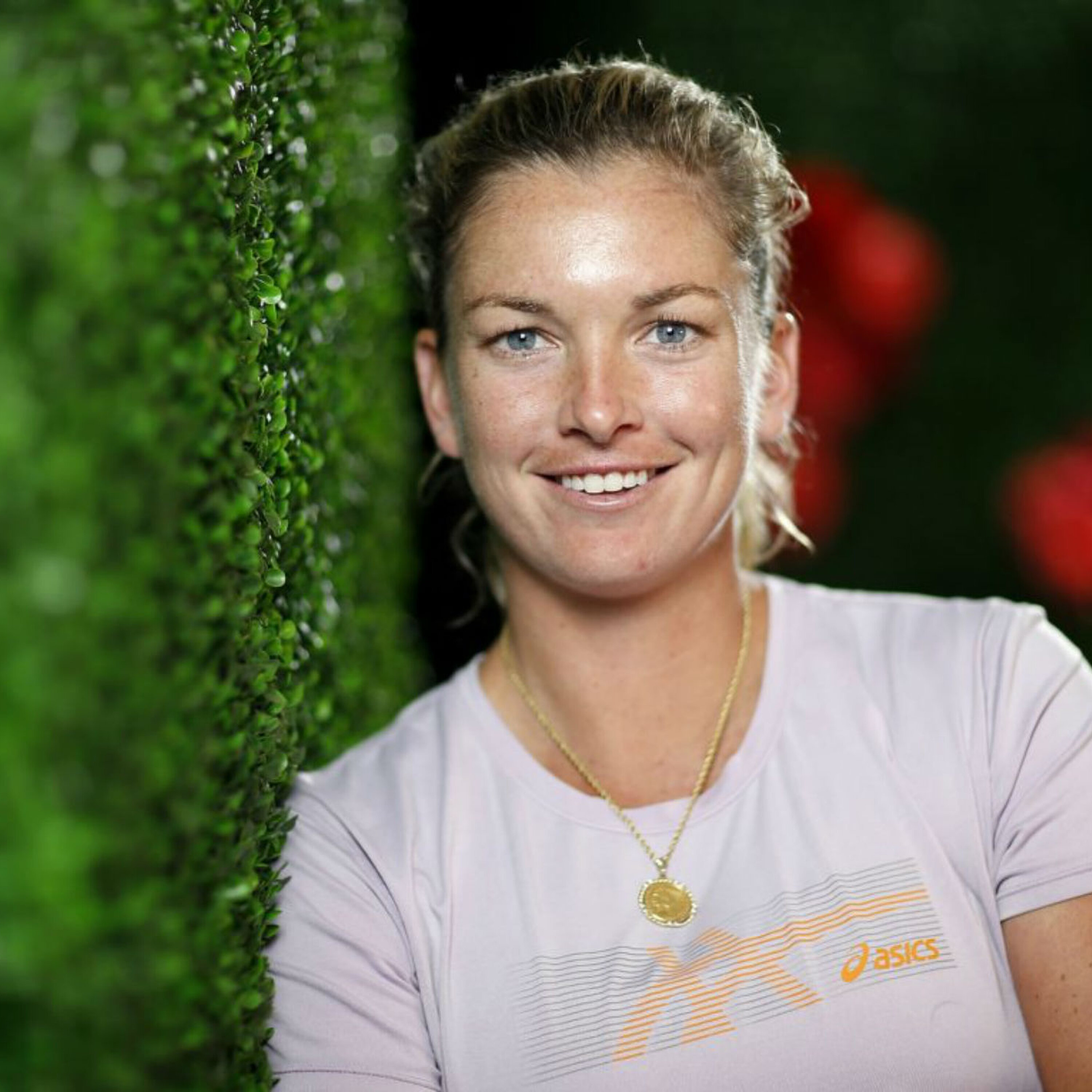
CoCo Vandeweghe
The provocative American player—and newly minted Grand Slam doubles champion—joins the podcast to take us behind the scenes of last year's victorious Fed Cup team, talks about her humble origins and reveals the origin of her distinctive walk.
Hosted on Acast. See acast.com/privacy for more information.
See omnystudio.com/listener for privacy information.
2018-10-01
59 min
Transcript
Available Results
Generated results are saved to the knowledge database for reuse and search.
No generated results are available for this episode yet.
Extract Knowledge
Pick what you want extracted first. Model, scope, and chapter options appear after a template is selected.
Generated results for public episodes are saved to the knowledge database so they can be reused and searched later.
Transcript
00:00:01
Speaker 1: I was crying before I even shook hands.

00:00:15
Speaker 2: Meehow Rene, meehow Caitlin. Good to hear from you.

00:00:19
Speaker 3: Nice to hear your voice.

00:00:20
Speaker 1: How is it in China?

00:00:21
Speaker 4: My friend, China is fantastic, Caitlin. Actually, as you know of somebody who'd lived here for a while, the smog here in China is not great, but we are having tremendously windy days here, and so therefore the wind is blowing.

00:00:37
Speaker 2: The pollution away.

00:00:39
Speaker 4: And we're also now in a holiday, so as you know, when they're on a holiday here, they shut down the factory. So when they shut down the factories, there's not quite as much pollution. So on that note, I feel like I'm in.

00:00:50
Speaker 3: La minor pollution but not Beijing level. Yeah. I got an ammonia when I lived there, almost dead.

00:00:55
Speaker 2: It was bananas. What happened.

00:00:57
Speaker 3: I lived in a hutong where they burn call for fuel, and I was breathing it in every day. And then eventually I went to the hospital and they were like, oh, you have a lung infection. And I was like, a lung infection that doesn't sound great. And my doctor was smoking a cigarette while she told me.

00:01:13
Speaker 4: So.

00:01:14
Speaker 3: Yeah, shit got real but I like living in Biding very much, so a lot of stuff's been happening. Let's start, as we usually do, by saying thank you, thank you to all of the people who have made amazing suggestions for who we should have on the podcast. The list continues to grow. The latest suggestion that I love Mirka Federer.

00:01:34
Speaker 2: Well why not?

00:01:35
Speaker 4: I mean, what a great behind the scenes. You know a lot of people don't realize. Well maybe they do because they're Federal fans and they follow tennis.

00:01:42
Speaker 2: But Mirka was a very good tennis player in.

00:01:44
Speaker 4: Her own right, which is how her and Roger actually met, which was at the Olympics, and then they fell in love and got married. And you know, she was a really good tennis player her own right, which is being helpful I think for Roger because she knows the life.

00:01:58
Speaker 2: So that's been really good.

00:01:59
Speaker 4: But sadly, Rodger's not playing here in China, so the chances of me getting America are zero at this point. But having said that, we will endeavor to try and get her at some point, maybe in Australia.

00:02:10
Speaker 2: Even so, fingers crossed on that one.

00:02:12
Speaker 3: Fingers cross. You guys can talk tennis, you can talk fashion. Mierica has her shit together. Seemingly, she seems to run the whole Federer operations. Yes, America. Another idea for twenty nineteen is a rule change. You and I had a very spirited back and forth about a video that caught Spanish player Fernando Verdasco seeming to basically abuse a ball kid for not bringing him a towel fast enough. This is all going down on Twitter. It is pretty reprehensible, and you had some really strong thoughts about it.

00:02:41
Speaker 4: Yes, obviously, our Racket Magazine podcast listeners are pretty cool and awesome and well because hopefully some of them follow me on Twitter, and if they do, they would have held they would have seen my rant, which was.

00:02:55
Speaker 2: Pretty it was pretty pretty aggressive.

00:02:57
Speaker 4: I'm not gonna lie, but I'm so over it, Calin, I'm so over these professional players thinking that these kids are like their servants. And you know, having said that, even if you have servants, you don't treat them like this like he was such he was. I mean, the word for him in that moment was just ridiculous. Listen, I was a player. I know what it's like to be out there and be stressed out. I wasn't exactly the best human being on the court. But when it came to the ball kids, I mean no chance I was rude to them.

00:03:24
Speaker 2: It's like, what are you doing? This kid is.

00:03:27
Speaker 1: Trying his best.

00:03:27
Speaker 4: He runs over there, he like gestures that he didn't move fast enough, and then the poor kid, God love him, he like nods his head at the end like I got it, sir, I got it, Like, oh my god, so enough with the towel. I'm so over it. Back fifteen years ago, nobody got a friggin towel. Steffi grapp would do the old finger under the chin, flick it, and Pete Sampress would do the finger across the forehead and flick it, and you know, maybe use their shirt wristbands.

00:03:51
Speaker 2: People people wore wristbands.

00:03:53
Speaker 4: And you know what, if you're really desperate for the towel, they'd run over after a long game and tell themselves down. But now every single player, after every single point wants the towel, and it drives me bananas. Literally, someone will get aiste and then they'll walk over and get the towel.

00:04:07
Speaker 1: It's like, what.

00:04:07
Speaker 4: Exactly did you do in that time of telling yourself down and getting aiste, it's like, give me a break. Half the time they're doing it to like, I don't know, like take their time. But back in the day, you know, people would, as we talked about, like play with their strings, turn around, walk to their.

00:04:21
Speaker 2: Sites, say oh my god.

00:04:23
Speaker 4: So the ATP I believe in the next general Gen tournament at the end of the are going to have towel racks. So instead of getting the kids to bring it to you, you got to go get your own towel off the rat which I think is a great idea. And I'll stop all this bullshit toweling down after every single point it drives me nuts. And yelling at kids not okay.

00:04:42
Speaker 3: Yelling at kids is never okay, especially volunteer kids who are there having what you have to assume is like a dream experience, getting to be up close and personal with the best tennis players on the planet. Benice, the kids shouldn't be hard, nice, the kids fall star.

00:04:56
Speaker 2: No, shouldn't be hard.

00:04:57
Speaker 3: Let's move into this week's interview. While you've in China, you nabbed our second player current Player interview and it's a great one with somebody who is a little bit controversial.

00:05:07
Speaker 4: Yeah, a little controversial, a little polarizing. I would say, you know, people either love her or hate her. You know, players that people that watch her have that feeling and they and it's Coco Vanderway. And so Coco was over here in is over here in China. She's had a bit of a rough year as far as her singles is concerned, because she's had a few injuries and her ankle has been.

00:05:28
Speaker 2: A real problem for her.

00:05:29
Speaker 4: She had to pull out of Wuhan in the middle of the match last week because of the ankle again, and struggled here in the first round.

00:05:35
Speaker 2: But you know, Coco's battling away.

00:05:36
Speaker 4: Of course, she had an amazing moment about a month ago when she, of course won her first Grand Slam doubles title and Grand Slam title with Ashbardy in the doubles at the Years Open. So she's battling in doubles and she's trying to keep her shit together in singles, and but you know she's Yeah, she's absolutely polarizing on the court. But the great thing about her is that she's super honest and she's very very different off the what then she is on. I mean, she still sort of has that bravado when she walks around, but she's going to explain to you why she has that walk and why she has that bravado. And you know, I like Coco a lot and I enjoy my one on one conversations with her. We spent a couple of breakfasts together here in China and just sat there and just talked about life and talked about some stuff and I thought, God, Coco, you got to tell these stories on the podcast, so you're going to get to listen to that today.

00:06:23
Speaker 3: The stories were great. She is super self aware and what I like so much about it, in addition to being an admirer of her all court game that is filled with great volleying and obviously, like you said, spectacular doubles play, which is stuff that I love. She's really self aware and you guys start at that moment where you kind of disact her on the court bravado and where it comes from, which is I think is a very very useful way to understand her. So it was a great interview. I'm really excited for people to listen to it, check it out and enjoy it.

00:06:56
Speaker 4: Right, all right, we are here in wu Hard, Yeah, I'm here with Coco Vandawaykoko.

00:07:04
Speaker 1: Thanks for joining me, mate ah, thank you for having me. Yeah.

00:07:07
Speaker 4: So, I don't know if you've listened to the podcast, the Racket Magazine podcast, but you're going to have to now because you're going to be on it.

00:07:13
Speaker 1: You're I'm gonna I'm gonna have to check to make sure I'm represented properly.

00:07:17
Speaker 4: Pressure is on then, pure Speaking of pressure, so obviously growing up in your family, let's talk about that a little bit.

00:07:25
Speaker 1: Sure was it difficult?

00:07:28
Speaker 4: I mean, obviously if people don't realize you grew up in a very well known sort of sporting family.

00:07:35
Speaker 1: How was that growing up in a family like that, Well, I grew up in a well known family in general, not just sports.

00:07:42
Speaker 5: My lineages insane.

00:07:43
Speaker 1: My grandmother was Miss America. My grandfather was as a patriarch or the family was kind of the leader. He was going to medical school and playing in the NBA. He created the Staples Center, and he worked for the president as developing the physical education of the school systems. I mean, he did all sorts of crazy cool things. Then it goes to my uncle played in the NBA Kiki, my mom two time Olympian and two different sports my aunt became a doctor but played professional horse polo, and then my other uncle, Brooke, played pro beach volleyball and won metal at the Goodwill Game. So I definitely come from a very sporty family, but just a very courageous family and just doing so many different things and different sports, and everyone asked me how cool it is, but it's.

00:08:38
Speaker 5: All I knew.

00:08:39
Speaker 1: So it was very normal for me to have success. Well, just famous people around the house, being able to go and do different things, like I could go in the Lakers locker room no problem. I could go shoot baskets at the Staples Center and I went to when I played at the Tiebreak Tens at Masison Square Garden, people were coming up to me asking me how my grandfather was because he played at the Old MSG, and just things like that were normal to me, and it was more just fun of learning from different people that would come through my house. I thought all the people that came to my house were way cooler than my actual family, Like Bill Walt used to stop by my house all the time because he lived in San Diego, and I thought Bill Walton was the coolest person ever in comparison to my family. But everyone revered my grandfather. My grandparents lived with me, and so that was just totally normal for me to have these kinds of experiences. But looking back at it as an adult, I'm like, yeah, that was pretty darn cool. And when I started coming out on tour and people were asking me about it, I'm like, this is not a big deal. These were my aunts and uncles, just like everyone else has aunts and uncles and my cousins, and my family all in general is very competitive. We're a huge family, but were very close knit, and we were very quick to kick someone off their pedestal, even if they think there's somebody so super important. So it's just the way I was raised. Everything was competitive, card games, horse everything was gonna be competitive whatever I did. Is that.

00:10:09
Speaker 4: I guess one of the questions I want to know is, and I think a lot of people want to know about you, is because what do you think the most misunderstood part about you is? Uh, thinking about your the way you grew up, So what is some of the.

00:10:24
Speaker 1: I think arrogance is one I hear a lot, and also I think Braddy, I think, uh, those are the two that I get a lot that I hear a lot or I get trolled by or whatever that is totally misunderstood. I'm I wouldn't say I'm like fan favorite anywhere, but I because that's just not my personality. I even inside the close knit circle of the WTA tour with the players, like everyone knows I joke and kid and I'm probably one of the louder ones in the locker room, but and one of the messier ones in the lot definitely tests. But as far as like being open and boisterous and and and going and talking to everyone, that's just not my personality. So I am definitely like run of the mill in that area. But I'm definitely not the same personality off the court that I am on the court. It's just the way I was raised to be. A competitor is who you see on the court of you know, wanting to hate somebody so much that you can beat them.

00:11:28
Speaker 5: That's how I think of somebody.

00:11:29
Speaker 1: Whether I do or not, you know, I can play one of my good friends like I did Ash And I was interfaced from the first game because I wanted to make that point that you know, I'm here to compete and I'm here to win, whether whoever you are across the net.

00:11:44
Speaker 4: So okay, so we talk about the misunderstanding of you being braddy or sort of arrogant, et cetera, because you do get that lot.

00:11:52
Speaker 1: I mean, I know you pretty well.

00:11:54
Speaker 4: So why why why do you think that it's the case and tell people what it is about you off the court that is different till on the court then arrogance.

00:12:06
Speaker 1: I I think it's more just the way I walk and carry myself more so than anything else, which is funny because I was how my grandmother taught me how to walk. It's more of like a pageantry kind of thing. She taught me how to walk in heels. I went to Katillion, I did all that sort of thing, you know, did the went to church every Sunday, so I knew how to dress to the nines and present myself. And that's kind of the persona I have when I walk into the room. She always said, you know, shoulders back, head held high, walk with a presence of you know, you're not looking at anybody, but you know, you pick who you want to go to. If you see a friend and you go there, and people and I walk around the court, it's I don't know what whatever word you want to use a struttut andrut. Yeah, and it's it comes off as arrogant, but it's just the way I was taught how to stand up straight, shoulders back had held high. That's just what I was taught. And it comes off as arrogance, but it's really just not It's how I walk. You see me walking a hallway, just.

00:13:08
Speaker 4: The same way and off the court though, So what's the difference with you that people that don't see you because I don't follow you around or go home with you or hang out with your friends?

00:13:20
Speaker 1: What is it about you that they wouldn't know. I'm actually a very good listener a lot of my friends. I'm the person that they come to to listen. I'm not very in your face. I sit there, I'm always I give very good hugs. That's what I'm also known for.

00:13:37
Speaker 4: And you dons.

00:13:40
Speaker 1: And liftering about ten feet.

00:13:42
Speaker 2: Off the ground.

00:13:42
Speaker 1: But yeah, I'm not. I'm not the same person at all. I'm very quiet, introverted. It takes I'm actually very introverted. It takes a lot of energy for me to go out and to interact with a lot of people, and I'm very tired at the end of the day when I have to do that, but one on one, I'm fantastic. I've relished in those moments of talking one on one with somebody and getting to know somebody on that level, because I feel like that's the best way I can articulate myself, is when I'm one on one and I have someone's attention and I can see how they're reacting to what I'm saying or how they're presenting something towards me. But I'm very much a home buddy. I love being at home. I love having my siblings around and being a younger sibling and getting told what to do. Actually it's something.

00:14:28
Speaker 5: That I enjoy.

00:14:30
Speaker 1: But I think those are some of the things that off the court aren't seen, is how I mean. A lot of people were telling me about my older brother who came to the US Open because he was like the lot of the girls. I mean is because he was so passionate about watching his sister play and compete, which is so funny to me, because I mean, that's amazing as a younger sister. Because my brother and I were teammates always, we grew up playing the sports together. We're only a year and a half apart. And for me to have my brother like so proud of me and pumped and all this and just taking care of me, which was really enjoyable. I like to be taken care of. I like to be quiet and by myself at all at the same time. So it's really a catch twenty two with me sometimes on and off the court.

00:15:14
Speaker 4: Yeah, that's interesting. I don't think people would ever think that about you. So I'm glad that you told people that.

00:15:20
Speaker 1: Fed Cup.

00:15:21
Speaker 4: I know how much that means to you. But you and I were talking yesterday about fed Cup and you have.

00:15:26
Speaker 1: Sort of memories of go through, go through the history.

00:15:30
Speaker 4: Of your fed Cup.

00:15:31
Speaker 1: Oh, the history of the fed Cup. I was started from the bottom. I was a fed Cup hitting partner my first ever event. I was actually three years I was a hitting partner, and I watched peers of mine playing and I was still a hitting partner, mainly probably the one that everyone would recognize as Melanie Oudin, where we were the same age growing up, going through the juniors, and I was a hitting partner for her. And my first time was in Moscow. I'd never traveled overseas, seriously never. My family didn't have the money for me to travel. I luckily, I grew up in California where tennis was, especially southern California where tennis is very booming. So I never played its. I never did any that. I went to a regular school. I don't have time and my parents didn't have money for me to go anywhere, and so I went to Europe for the first time and that was a shock. That was a shock to go to Moscow and then I finally got my first call up onto the team and I was My first tie was in San Diego, which was a final, and I was on the team and I did not expect to play. I'd just broken into the top hundred at the time, and the team was Bethany. Bethanye and I weren't friends like we are now Melanie Liesel Hubert and myself. We were a team in San Diego, It's my hometown, and I was scared out of my mind playing.

00:17:00
Speaker 5: I was playing.

00:17:02
Speaker 1: We were playing against Italy, which was Panetta, Francesca Skiavoni, a little name from Vinci and Irani. There were no names at that point. And yeah, they were a great doubles team. There were great singles players on their own, but Panetta was top notch and Francesca had not won the French Open yet, but she was still a heck of a player. So the night before I get called up by Mary Joe after a dinner and she says, Coco, I'm gonna put you in. Melanie's gonna sit. And Melanie had won every gosh darn match we swear on the pod and gone got us all the way there, and I'm like, how the heck am I getting thrown in right now?

00:17:48
Speaker 5: I mean I'd won a few matches in Asia.

00:17:51
Speaker 1: And and propelled myself, but Melanie was higher ranked, and I was like, Okay, I can do this. I remember going into the locker room. I was second match and I was playing Francesca the first day and I was getting so nervous. I was getting sick to my stomach and it was dry. He being a whole different. Oh, I never experienced it. I worked because it was like my dream to play for my country. That's what I was raised to represent Your country is the biggest thing you could ever do, and whatever sport you were playing, I just wanted to be an Olympian and represent my country. So fed Cup is tennis's closest next thing to Olympics, and I was out there playing and honestly, I couldn't tell you what the score was. I couldn't remember how to play tennis. Like it was straight sets. It wasn't bad, but I definitely was way out of my league, and so I thought, oh, I cried after the match. I never really cried after playing matches. And I was for sure I.

00:18:49
Speaker 5: Was getting pulled out.

00:18:50
Speaker 1: The next day, We're down to zero, Melanie and Bethany were for sure going to go in.

00:18:54
Speaker 5: Mary.

00:18:54
Speaker 1: Joe pulls out Bethany and puts Melanie in. Melanie wins her first match, so now it's too on. I'm playing again now to keep us now live, and I'm like again panicking, and I get spanked by Panetta. I think it was like only a single break or something.

00:19:12
Speaker 5: I don't even remember.

00:19:13
Speaker 1: It felt like it felt like it was Oh no, it felt bad, and there's I was crying before I even shook hands because I was like, I lost the tie for Team USA in the final in San Diego, in San Diego, in front of all my friends and family, and I was just absolute wreck. I drove home with my grandfather that night. I even wasn't far away but he stayed with me at the hotel to make sure I was okay and drove home and I was like this was terrible and never playing again. And then my next one, I was called randomly to go to Argentina.

00:19:47
Speaker 5: I was last minute. I actually didn't even have any clay.

00:19:49
Speaker 1: Court shoes to go because she didn't expect. I didn't expect to play because Venus and Serena were there, and I asked Mary Joe. I was like, you know, she's my chance. She's like, you're not gonna play, don't worry about it. I was like, great, because Dubai and Doha next are hard courts. I'm gonna practice on a hard court if that's all right, Yeah, it's all good. I got thrown in because Serina was sick that morning, and I got thrown in to play Ramice. I got spanked on clay and I.

00:20:15
Speaker 4: Had this auspicious start.

00:20:17
Speaker 1: Yeah everything, I'm never gonna win a Magice, like never never. I want a dead rubber doubles with Taylor Townsend. It doesn't count. But I was like, I'm never playing fed Cup. This is the worst experiences I'm having is during fed Cup. I feel like I can't play tennis like it's so nerve wracking. I never know what the heck's happening in front of me. And then we go to Australia.

00:20:40
Speaker 4: I'm gonna exist an interesting story because Australia ends up being quite an amazing place for you.

00:20:45
Speaker 1: Yes, it does. It keeps coming back for me. So we go to Australia and this time I actually know I'm going to be there. I'm on the team. This is like, for sure it's happening. I'd made on the Yeah, I wasn't a player, but I would. I knew I was gonna play, at least because it was Mass and Keys. It was myself, Bethany and Christina McHale. The only reason I wasn't sure if I was gonna play was because it was on red clay, and clay is not my specialty at all. But Christina is very good on clay. Mattie Keys was number one, and Bethany was better on.

00:21:22
Speaker 5: Clay than I am still is now.

00:21:24
Speaker 1: So I get there and we're training and practicing, and I'm good friends with Bethany already, and Christina and I are friends. But as funny as it was, even though we travel every week, I didn't know Maddie all that well. And there was like moments that you have to do during fed Cup. There's you know, kids days, there's meet and greets, there's the press days and things like that.

00:21:49
Speaker 4: And you're with each other twenty four secs and you.

00:21:51
Speaker 1: Are with each other. But I hadn't practiced with her, even because I was practicing with Bethany.

00:21:55
Speaker 5: I was practicing with Christina.

00:21:56
Speaker 1: And it's like the third or fourth day and we're interacting at dinners and things like that, and I didn't get Maddie's sarcasm at all, Like I was missing it because I had never interacted with her. And I'm like, I can't tell she likes me or not honestly like I. And it was actually Bethany were at dinner and Bethany's like, all right, guys, what's your favorite drink? And Maddie jumps quickly, well, first it was Christina, and Christina's like, I don't drink really, you know, I don't know. I like a mohito here or there. And Bethany's like, nah, it's tequila. Where you're drinking tequila when we win this, And Maddie's like, I love tequila and I'm like same. So we bonded over tequila and then it was great because Maddie uh won the first day against Dash. Christina won the first day against Sam. So Mary Joe puts me in instead of Maddie to play Sam because I had a good record against Sam and she wanted me to play Sam under pressure to force it. I get. I lose the first set, and you haven't won a singles match. I haven't won a singles match. I haven't won a live match. Okay, and I lose the first set. Bad. I was playing bad again, and I'm like it. My fed Cup career is absolute crap. It's crap, this is ridiculous. I'm terrible. I hate fed Cup, like all this stuff. I win the second set, I win the third set. I finally won my first ever tie playing fed Cup on.

00:23:27
Speaker 5: A surface I hate.

00:23:29
Speaker 1: Against against a great fed Cup player, great clay court player, and I mean Sam was like top twenty at the time and I was like forty or fifty in the world.

00:23:39
Speaker 5: And so we had.

00:23:41
Speaker 1: A great celebration afterwards. Bethany and I played dead rubber doubles. We had just won the inning Weells titled together randomly when we were playing, they'd see if we could play together for the Olympics, and so we go out there and we're playing. I sweat my tail off at Brisbane in basically indoors in that rafter arena, and I cramped serving for the match in doubles, and I hit my first serve I land. I go to swing at a forehand, I don't really reach it and it's one of those bounces before the net.

00:24:13
Speaker 5: Bethany turns around looks at me like.

00:24:15
Speaker 1: Are you okay. I'm like, I am not okay. I am cramping in my calf right now. And I never cramped because I just I never imagined that I could cramp, especially in doubles. I don't care what I do before, but doubles. Bethany's moving like a crazy person at net, like she's doing enough of the work for me. I don't have to do anything because I'm get a servant and make a return every once in a while, and I'm like, bee, we got we gotta hold here, like got a home, we got tequila waiting, We have tequila waiting, and I cannot play a thirsty here. And somehow we hold and I had enough energy to lift her up and give her a big old hug, and so I hop in the ice bath and everyone's like, Coca, come on, we got tequila. We got a party here. When you just put tequila, they didn't have it ready.

00:25:02
Speaker 5: No one was prepared.

00:25:03
Speaker 1: They didn't realize the kind of alcoholics they had on the fucking tape. Now they're prepared, they have the alcohol waiting for us, and it's it's actually a running joke that like, especially with Lisa and Kathy on the team note and Bethy and I have been a staple on the team little we were always like, all right, so we want some tequila. We want some champagne waiting, like none of this like bougie stuff for like the sponsors and everything, like the fancy red wines and stuff. No, no, no, we want the good stuff. We want to pop a bottle of champagne and then get going. And so we ended up doing tequila. We gave Christina mchaelor for a shot, which she did not enjoy, but she did it. But yeah, we had a great time together. We bonded and then we became friends ever since.

00:25:52
Speaker 4: And winning it last year, yeah.

00:25:55
Speaker 5: That was amazing.

00:25:56
Speaker 1: That was amazing because I had worked so hard personally and as a team collectively to get to the final. I had sacrificed so much in my WTA Season four Fed Cup, and honestly it was a huge sacrifice, you know, in hindsight into this year of how late I had to play, how many matches I had to play, and how much energy it took out of me to rally my team be team leader at some of the instances because Bethany, which which.

00:26:25
Speaker 4: You now after telling people that you know, everyone thinks that you'll brash and you know, arrogant and all that sort of stuff because of what they see on the court. But why they don't realize is that you're not really that person off the cool No, you're not really the Rah rah team person.

00:26:38
Speaker 1: But people make you that. Yeah, major, I get looked at to be that person, which is which is okay for me. Like I lead by play. That's how I like to lead. And I don't mind checking other people just because you know, I've been checked myself for my antics and things like that, and I I can check other people. And you know, at the time in the final, it was Sloan, myself, Shelby Rogers and Alison Risk and Ali Risk was dog sick and Shelby uh was had the bad knee. Now she had to have surgery, and so Sloane and I Sloan I hadn't been on a team. I'd been on a team with Shelby and Ali Risk. So Kathy was making it a big point that like, hey, Coco, like we need to have Sloan be part of the team and everything like that. And Sloan's great in just being able to get get in and but you know, it's not always receptive, especially when you're texting and trying to figure out the stupid things that fedcop comes along with what what's everyone gonna wear for the official dinner? You know, who wants to hit what times? You know, just dumb things, Yeah, don't matter. But some people are like, oh, this is really important. It's like guys like who gives a crap? Like for me, I'm super southern California, super laid back, like whatever, I'll take the crappy time at eight am.

00:28:00
Speaker 5: It's fine.

00:28:00
Speaker 1: I I'll take a nap like it's not a big deal. And so it was it was more tough for me to be like, all right, Sloan, I know you've had a great US Open, a great time, but you really, Ali and Shelby need to see that you're in this for team, and Kathy as well needs to see it. And so I talked with her over the phone when I was actually in London before the tie, before we saw each other in China, just you know, kind of because i'd been getting messages from the other two girls and Kathy had I heard from Sloan and things like that, and I'm like, no, I haven't heard from Sloan, but honestly, like I've been playing and traveling and it's not like I text Sloan every day. So I called her up and she's like, honestly, Kogo, I've turned my phone off since the US Open because everyone's just like blasting me with messages. I'm like, cool, just like send the girls like aet thumbs up, like that's all they need to make sure you're like aware of what they're doing. And she was super receptive and was great and it was a great tie together as a team and celebrated afterwards. Uh. Jenny Brady was there as team captain cheerleader. She actually got smashed way before the press conference was even done, and we have videos of us spraying champagne in the locker room, and my trophy ended up being the trophy that everyone was doing the chalice out of, Like it was a communal chalice of drinking out of and it's it was the stickiest thing I got back when I like unpacked my suitcase, my trophy was a mess, and I'm like, oh what my trophy had to be the one because she was.

00:29:37
Speaker 4: You held the team together through thick and thin.

00:29:39
Speaker 1: Yeah, ye, try. I went at it again this year and we're in the finals. Yeah, I don't know, dynasty again.

00:29:50
Speaker 4: You know, Well, maybe it's your family upbringing as well that my few country is so important. Speaking of Australia, we're gonna go back to that because now you have Pat Cash as your coach.

00:30:05
Speaker 5: Yeah he's an assy.

00:30:06
Speaker 4: Yeah yeah, bash body your double's Patna, who's an assy?

00:30:10
Speaker 1: Yeah?

00:30:10
Speaker 4: What's up with the Australian affiliation here? And and secondly, I want you to talk a little bit about your role with Ash and the Doubles and how much it meant to you. Congratulations for winning the USA.

00:30:23
Speaker 5: Oh, thank you, thank you.

00:30:25
Speaker 1: Well, the Australian connection was totally random. I had the only time I had ever met Pat before is I did an exhibition at Indian Well's John McEnroe's charity event and it was like a World Team Tennis deal. So that was the only time I met Patt and we actually had a hit the next day and I never saw him again. And I was at the French Open, not last yeah, it was last year. Last year French Open, and the coach I was working with at the time, Craig Carden, and I stopped right at French Open. I lost my singles. I was still in in doubles and mix, but we stopped it was it had run its course and we both wanted different things and we're we're still friendly now and so I was basically ready to get out of Europe. Yeah, essentially, I mean that happens. It. We had worked together for two years and it was stale for both of us. There were some weeks where I was super receptive. There was other weeks where he wasn't full on because you know, you travel every week, and yeah, it's just it's it gets tough and if you don't want to do it anymore, you don't want to do it, and neither of us did. So it worked out for the better, and I'm like, I'm out of here. I'm out of the French. I'm going home for some TLC because I just Craig was, you know, super I was super close with Craig and I just needed some TLC with my mom and my family, and so I wasn't planning on going home after the French. I was supposed to stay in Europe. I just bolted. I was out of there.

00:31:57
Speaker 5: I went here.

00:31:58
Speaker 1: I do but it was kind of supid, but it was well worth it. I was only home for three days. Three days before I was back on a flight back to Europe, and I get a call from my agent day one and they're like, Okay, what are you going to do? And I'm like, I'm just gonna play the rest of the Europe Grass Court season by myself. I don't need to mean curious whatever, like I don't, I don't care, I don't need it, Like I can't deal with this. I'm I'm off on my own anyway. And they're like, that's that's a terrible decision. I'm going to give you some options. So they gave me like three coaches options and Pat's name was one of them. And I was like it's Pat, like, why would he be interested in coaching you know, me one, but also a female player two? Because he's such a legend in a men's game, you know, it's it's like a weird concept. And I knew he had coached other players before and they were all men, Rasetski and stuff like that. So he hasn't coached in a while. And so I said, well, if Pat's interested, like, I love his number, and I'll give him a call. So this is day two. Now it's countdown. I have only one more date left at home. So I have a phone call with Pat. And the second day he's in London and I call him up and talk a little bit and he's like, I'm gonna call you tomorrow. I'm like, cool, I'm gonna be at the airport coming back to Europe. We had even decided to work together. So I was at the airport in San Diego and I get a call back and he's like, you know, I don't I don't think Wimbledon's enough time. I think we gotta work. If you're all in, we're gonna we're gonna finish out the year together and I need your commitment to that. And I was hesitant because I'm like, I don't even know you, Like I don't know how you talk when you're on the court and personality off the court, because you got to spend it all the time with this person and you don't know me at all.

00:33:48
Speaker 4: So I was you might hype me up.

00:33:50
Speaker 1: Yeah, I mean that happened. So I was like, I just was like, basically, screw it, let's go, Like, yeah, let's do it. We'll go to USO. And that was our end date. And so first tournament we play, I had match points against Witthoff and her Togg and Bosh. First round.

00:34:08
Speaker 5: I was defending champion.

00:34:11
Speaker 1: I lost first round. First start with Pat and I had and we went straight out to the practice court afterwards, trained for two more hours out there on the practice court, and then we were just breaking down technique technique technique of every stroke of my game and simplifying and and doing different things and and working on obviously grass court stuff, the balls, transition slice and yeah. Then I he couldn't come to Birmingham, so I was solo Birmingham because he was doing commentary for Queens and I made quarters there and then I make quarters of Wimbledon. I lose to Magdalena, and it was It was such a hurting loss for me because I lost because I wasn't mentally prepared, and it shell shocked me to the point where I was like, I don't ever want to feel like this ever again. Where mentally like I always had good days, bad days in between days, but I never were because I saw you. I think I saw you the next day. I see you the next day to see I was there. Oh my god, I was there the final. Yeah, but you.

00:35:28
Speaker 4: Said to me your woods were what do you do when you just choke? Yeah, I mean you admitted that.

00:35:33
Speaker 1: I can just I completely, for lack of a better term, ship in the bed, I completely did. I was my moment I next round. I believe I was gonna play Mugarusa. Did you feel pressure because you'd made the Semis the Aussie? No, I hear is that right? Yes? I made Semis? I lost a Venus. I felt pressure because I knew I could make the final there because I had a good record against Mugarusa. Was on grass Don't look ahead one.

00:36:01
Speaker 5: But I ended up hiring a mental coach after that.

00:36:05
Speaker 1: Pat recommended a guy's name's Don McPherson and still work with him now, and so I was there and also another pouring salt in the wound. Pat made me stay in London to the end of the tournament practice, where normally my emma was like, peace, I'm out of here.

00:36:22
Speaker 5: I'm going back to California.

00:36:23
Speaker 1: I'm parking myself on the beach and you won't see me for like another week. When I practiced two days before, I play a World Team Tennis match and then I go play Stanford and that's that's usually.

00:36:33
Speaker 5: What I end up doing.

00:36:35
Speaker 1: And He's like, I was on the phone, you know, with my Mom's like asking me because I called my mom and she's like, what's what are you gonna come home? And I'm like, I'm gonna look at Flay tomorrow. And Pat's like, no, you're not, You're here. I remember, Oh god. We worked on simplifying the serf, simplifying the forehand, simplifying the backhand, ball toss of the serf, and all sorts of things that can't even keep track. And he basically stripped my game down from A to B, which I hadn't done since I created my game and created my technique.

00:37:11
Speaker 4: How much does it do you think it changes throughout a career of a player.

00:37:15
Speaker 1: I think it changes constantly, because if you're not evolving, you're you're staying still, and people are new players are coming in, new styles of game are coming in. I mean, you can't say that ten years ago. The same style of play is being played now, even on the Women's Tour.

00:37:32
Speaker 5: It's just different.

00:37:32
Speaker 1: So I'd never had I created my technique and I had the same technique since I started playing tennis.

00:37:38
Speaker 5: No one had ever touched anything that I've that have done.

00:37:41
Speaker 1: Tried to control you, and sometimes most of the time in different ways, and I'd never had that. So I went home for two days after the finals of Wimbledon, and Pat joined me two days later and we trained at my house and and everything, and then we went to Stanford and I made the finals of Stanford and lost some Mattie Keys, and then we went to Montreal and I was zomped. I was zonedition, yeah, and it was tough transition. I was gonna pull out if the fine wasn't so crazy big, because I knew I was a zombed and I wasn't going to be able to play to what I wanted to play, which is always hard for an athlete.

00:38:28
Speaker 5: When you want to play.

00:38:30
Speaker 4: Stage how to manage playing a lot of matches because you really hadn't hadn't had that consistency.

00:38:35
Speaker 1: And also people forget how much of a mental toll it is to be changing technique. You know, you you're really good one day and then the next day your crap, and you're like, why didn't I just go Why can't I just make like two balls in a row like things like that, And so the whole thing was just like, then you make it to a final. I made finals of singles and doubles that week. I won the doubles and I lost them in the finals of singles. So I had tons of matches, lost to Aga, who was like one of the toughest people you could play in a first round and be mentally like, I'm here to play. So I last there.

00:39:07
Speaker 5: I go to Cincinnati.

00:39:09
Speaker 1: After that, I'd actually went to New York for a couple of days. I have some friends in New York and hung out and kind of just like put the tennis rackets away for like three days before going to Cincinnati, and I'm playing Maddie Keys again. First round, tough three center but it was a good match, and I went to New York afterwards trained in the Hampton's for a little bit, actually hit with Austin Panko a ton there. She was also there.

00:39:37
Speaker 4: And how much did like all the transitional work change, working on the technique mentally now you start to feel like you want the best plays in the world, which you were. Yeah, you go into the Open. It was how special was that day with the four of you, four Americans in the semis of the US Open? And what do you take from that? It was tournament.

00:39:59
Speaker 1: It was actually in the moment not special because I didn't realize, you know, you're so focused on yourself when you're playing, and I was like, who cares? But then afterwards you're like, holy crap, that.

00:40:11
Speaker 5: Was a huge, big deal.

00:40:12
Speaker 1: I mean, being an American, all four of us playing for a Grand Slam title. There's gonna be an American guaranteed, there hasn't That hasn't happened since like the seventies, And and it was showing kind of there was a moment of showing like the new guard of American tennis versus the old guard of Venus, which you know, for players to compete against Venus or Serena for a Grand Slam title. That's like you're playing against the greatest of all times for a Grand Slam title. These are people you watched growing up. And I played.

00:40:44
Speaker 5: Venus at Australian Semis.

00:40:46
Speaker 1: But I had my moment and I got spanked again in the Semis by Mattie Keys, and Maddie played you.

00:40:54
Speaker 4: Were like Kryptonide and Sloan's Madison's Kryptonide.

00:40:58
Speaker 1: It was first time I'd ever played Madison was at Stanford and then we played each other three times in a row. Yeah, and I was like, gosh, I'm gonna get I was convinced. I was like, third time's charm, I'm gonna get her this time. Like I was close the second time for sure. The third time she played lights out. She played unbelievable and you know, it was another learning curve. But I was like, Okay, well, now now we have fed Cup to look forward to. And I was super pumped to get going to get to Fed Cup. And Pat informed me that I was probably gonna be taken out of my doubles retirement that I had self put myself in because he was forcing me to play doubles like in places, and it wasn't with people I didn't want to play with, like I played with Abby Spears Is one of my good friends.

00:41:46
Speaker 2: We grew up together and see you always.

00:41:50
Speaker 1: I remember I like playing mix better a little bit much pressure.

00:41:55
Speaker 4: But you also told me how it was difficult playing with Martina Hingis when he when Craig made you play, even though it was good for you, it was difficult because you had a lot of pressure on you because she has such a good doubles player and she was playing doubles only, and it didn't feel good for you because if you were tired and didn't want to play, you felt obligated to still play and still do well with her.

00:42:13
Speaker 1: So what's the difference. And also she was I was following up her in Sonia's incredible couple of years. So every time I lost, it was like, oh my fault because it's a new partner this and that. Yeah, for probably for sure, And so I was like, I don't need this, like I'm playing well on singles, like I just want to focus on singles, And so that's what I decided to do. And I also had a bet with Craig that if I ever won a doubles Grand Slam title, I could officially retire, or if I made final four of every Grand Slam, which on your French is the only one that's missing, if I made final eight club.

00:42:49
Speaker 4: So you've now won the US Open. So what is it about Ash and what makes you guys click on the court and the personality.

00:42:56
Speaker 1: I actually was. I've teased her about this a couple of times. Is first of all, she's pulled me out of doubles retirement. Yeah one, And I'm like, not many people could have done that. And I had no idea who you were. Like, obviously I know who Ash Party is, but I was like, I had never spoken to her really.

00:43:14
Speaker 4: Because you're both now we know she's quite on coote and off yeah, but you are definitely quite as well off course.

00:43:21
Speaker 1: Yeah, I mean we jab each other a lot. We have actually very similar personalities in our banter and humor. But we play at Indian Wells as the first one because I was sick in Australia and ties and had as coach talked to Pat asking if I was even interesting and playing and playing and playing doubles, and I'm like, and Pat's answered for me because I was sick with the flu, and plus my answer would have been no. And so we go to Indian Wells and she she has her mom there with her and it's my first tournament since I was sick, and uh, anyone sorry Australia and warming up and we actually losing a tie breaker like super close, like ten six ten eight something super breaker and I'm like, you know, we were almost there, like we were, we were playing some really good points, but we didn't. I didn't know her signals. I didn't and we never had a call when she came when she was playing with Casey, who does way different things than I'm capable of doing. And you know, she hash was like, yeah, you can just love this return. I'm like, what, dude, I don't love returns. I hit through a return. I'll try and love a return, but it's probably have you hit. I don't think I have, nor has that ever been my first idea? Well maybe this year I'll love well this turnament. I were playing doubles, I could love my first return. I played the duke side, so the Lisa Raymond Bok Police, it's got to teach me that. And then we go to Miami and I'm having a crap time in singles. I'm having a crap time off the court. My you know, personal life is like I really was like a mess, a mess. I hated the world, I hated tennis, and I was still beat up from last year. I played till November fourteenth, winning the Fed Cup, was getting over the flu after Australia, and I was just in Miami and I'm like, I hate this. I hate warming up, I hate going through stretches life. Yeah, and here I am playing freaking doubles with that.

00:45:34
Speaker 4: Isn't it funny?

00:45:35
Speaker 1: Though? Can I just stop you there?

00:45:36
Speaker 4: Isn't it funny that people don't realize that tennis players actually have normal lives I have to deal with.

00:45:41
Speaker 1: Yeah, you get done, so you have your parents mad at you, you have your siblings mad at you. You basically you know, something broke in the house and you're like, god, I have to pay for all this, you know, whatever it may be.

00:45:53
Speaker 4: People don't realize it about you. Yeah right, They just think, oh, there's tough color coat.

00:45:56
Speaker 1: What's your problem? Why she breaking her tenth records? Yeah? Yeah, well it's few and far between, but I was ash called me out on how many I claimed I broke during the US Open, But I'll tell that when we're done with Miami. So we played Miami and we play bablist Mandanovich first round and we win that in a buster, and then the next round we roll through. We roll through the next couple of rounds and we're playing Macarova as Nina, who are the best double team at the time, and we lose the first set and I'm thinking, I'm like, God, how do you how do you beat these guys because they're so solid off the baseline and.

00:46:37
Speaker 5: They returned so well.

00:46:37
Speaker 1: Macarov is lefty service, it's tricky. She places it well, as Nina is confident at the net, so it's hard if you hit a crummy return, she'll she does the right things up at the net, and we sneak out the second set and we're in the super breaker, and that was That was kind of the moment where I felt like I picked ash up with my energy and I could feel It's funny when you're you're in a partnership and you feel when someone's nervous, or you feel when they're not feeling their best or when they're drived up, and that they pick you up also and I could feel I'm like, she's not confident.

00:47:13
Speaker 5: Why is she not confident?

00:47:14
Speaker 1: We're going into a buster. This is when you need to puff your chest out and your own cocot.

00:47:21
Speaker 4: It's the same thing as what I noticed in New York.

00:47:23
Speaker 1: And that was the first moment where I'm like, I got a kick her in the ass. And that was kind of like when I was like when she I guess, deem me team leader of the team, because at that point we were even. She actually was leading me a couple of times because I was still learning from her. I had taken a year off in double so it's.

00:47:42
Speaker 4: Learning positioning and is it more important and seeing is it more important? Because I felt like that was the same with the US Open, and I actually commentated your match and one of the things that I said was that I think one of the things that stopped Casey and Ash winning Grand Slams, even though they were in a number of finals, I know, was that they that there was not a real true team leader in the most important times in the finals. And I said, I think the difference maker here will just be your personality, not that you were better than Casey, not the Casey was better than you, or Ash was better than you. Whatever it is that doubles is really truly a matter of somebody has to lead sometimes and it doesn't mean they're better.

00:48:22
Speaker 1: No, and it changes captain.

00:48:24
Speaker 4: Or the team leader of my teams. I certainly wasn't the best player at Lisa will tell you that she.

00:48:29
Speaker 1: Was the best player.

00:48:29
Speaker 5: No, it actually changes.

00:48:30
Speaker 1: But that was a joke, I'll ask Lisa. But it's it actually changes for us a couple of times, and not in a way of like cause I get two hypes. I was saying. Lisa was like Ash, and I was like, and Ash will be like, okay, rein it in, like I'll you know, there's moments where you pick a fight over something and she just knocks me. It's like shut it down, and I'm all right, yeah, my bad. Or like you saw it at the US Open. One missed the overhead and I snapped the racket. I came back and I apologized to Ash because I was like, that's my bad, Like I let my temper slip and my emotions slip, like I'm here for you again, and that's what I do well. With Ashes. I know that she's gonna be the utmost professional for me, and that gets me to be the utmost professional for her. And that was funny when you asked the question when we walked out for the US opened in the final of question of who's the team leader of your team? And she's like cocoa, and I was like, I wouldn't have said that, but like I would have been.

00:49:36
Speaker 4: Like, god, I didn't mean to make you think think that's the final.

00:49:39
Speaker 1: No. No, I would have been like equal, but maybe me sometimes because you know I come with the fire quicker and you know Ash has her own quiet fire, and our back and forth conversations is a lot of curse words and banter and like, you know, I.

00:49:55
Speaker 4: What's the first uzzie word that comes to mind when you think?

00:49:58
Speaker 1: Right?

00:49:59
Speaker 5: Oh right?

00:50:02
Speaker 1: I think that she always says that one. But it's like it's I'm always a positive teammate because Ash sometimes gets down on herself and I'm never like down openly because I've played team sports, so I'm like, okay, like I have my mind. Did you pick tennis because I had a bad basketball season with a bunch of girls that were too catty, and I'm like, I don't need this.

00:50:23
Speaker 5: I can go play tennis.

00:50:25
Speaker 1: Really that's it. I didn't like tennis all that much. I like basketball way better.

00:50:29
Speaker 4: So you if you, which is probably why you play it well on a team sport, because ultimately you wanted to be on a team.

00:50:33
Speaker 1: Yeah, I couldn't handle you're saying. Could. I grew up with guys, so the girl cattiness I still don't get to this day. I grew up with my brother all his friends, all older guys are a year and a half older, two years. And if I wasn't good enough, I didn't play. Did you think about it going to college?

00:50:50
Speaker 3: No?

00:50:51
Speaker 1: Never.

00:50:51
Speaker 5: I was never that into school.

00:50:53
Speaker 1: And if I was gonna go into school like it'd be.

00:50:55
Speaker 5: For studying and learning, and I didn't care.

00:50:59
Speaker 1: I didn't care about I mean, I knew the quota I had to make at school, which was I was only allowed two bees and that was it.

00:51:06
Speaker 5: Everything else had to be a's. But other than that, I didn't care.

00:51:10
Speaker 4: So that's interesting because I'd been wanting to be on a team. That would have been the one tennis experience other than.

00:51:16
Speaker 1: I actually played tennis for my high school. Oh there you go.

00:51:19
Speaker 5: Yeah, so you had that experience.

00:51:20
Speaker 1: I have a letterman jacket. I played varsity.

00:51:22
Speaker 4: Who would have thought, all right, so a couple more because you've been awesome. But quick, quick, quick, five question New York or Kelly.

00:51:31
Speaker 5: Which was California? California?

00:51:34
Speaker 4: Yeah, okay, good, good good.

00:51:37
Speaker 1: Do you feel with the results you've had over the last couple of years.

00:51:42
Speaker 4: In the semis of a couple of Grand Slams?

00:51:44
Speaker 1: Now, do you feel a pressure to win one?

00:51:47
Speaker 4: Do you feel like because I've always said that tennis now has become a marathon rather than a sprint, Like if you're not winning a Slam by twenty two to twenty three, you know, back fifteen years ago, you like you're getting.

00:51:58
Speaker 1: Close to thirty, Like it's time to when I turned pro at sixteen. If I wasn't, that was when people were winning Grand Slams at eighteen nineteen.

00:52:05
Speaker 4: Yeah, do you think that that has changed now? It's particularly good for you because I always said that you. I always felt that you were always going to be better older, because I feel like you're an aw colt player. I feel like you can come into the ned, I feel like you can play from anywhere in the court. But I also felt like you had to learn a lot how to play.

00:52:22
Speaker 1: Yeah, I was not a tennis player.

00:52:24
Speaker 5: I was just an athlete.

00:52:26
Speaker 1: You were a great athlete. Shit out of the ball. I didn't know any point construction. I didn't know any of that until about first time I ever learned about point construction was actually I was twenty one. I was Marshak, who was a Polish coach I was working with, was the first person that gave me point construction of how to play a point, you know, watching the game, score that sort of thing. Otherwise I just played how I felt.

00:52:50
Speaker 4: So do you feel like do you feel like actually winning the doubles in New York and having that experience in front of a packed house?

00:52:57
Speaker 1: It was packed.

00:52:58
Speaker 4: It actually was packed, which was a because they came in for the men's singles and you guys played so long you went into the.

00:53:03
Speaker 1: I know it was great too because the USCA let the lower ball film and talk to me because you know, this is part of it.

00:53:09
Speaker 4: You didn't actually get to do a winner's speech. No, they rushed you off because of television. You were backed up into the men's singles final.

00:53:16
Speaker 1: Yeah, so Coco, here it is.

00:53:18
Speaker 4: Here's your moment, mate, What would you have said if you've got the mic that day?

00:53:24
Speaker 1: First, can I just say, it's pretty fucking.

00:53:27
Speaker 4: You didn't get that chance.

00:53:28
Speaker 1: I agree, I agree. It was an amazing moment of a player's careers. And may it only happen once, you know, hopefully not, that's not hopefully not. But well, first I would have cried because it was super emotional. I wasn't even gonna play the US Open. I was going to call it a year because of my ankle. That's right, your ankle. Yeah, I wasn't. I wasn't gonna play. I told Ash at Stanford, I'm like, I'm probably not going to play the US Open. You might as well, you know, find somebody else to play with. And she was playing with Demi a little bit and doing well and doing well. They want like I kept giving her crap, like I'm side chick now, and so I would. I would have probably cried because it was such an unexpected victory in the physical state I was in, the tennis shape I was in, and I lost first round a syl and I had only been pain free for about two days before that first round singles. I was still playing with pain all the way till then I had to get an injection into my foot. I mean it was. It was it's still an uphill battle. It still gets it's still gets swollen up every after every practice, every training session, every match. So I would have I would have thanked, you know, the whole obviously crowd because it was so packed. It was really electrifying. And I only experienced that one other time as a smaller scale at ending wells with Bethany when Bethany and I won, and I would have first thanked them, and then I would have obviously thanked my team with Pat and Scott and everyone behind the scenes, because you know, Pat and I were having a rough patch from basically the grass play and grass court season because I was uninterested in tennis at the time still, and then I got injured and I was uninterested to take care again. I was taking care of myself, but I was already ready to say protected ranking, I'm not playing again. And then when I found out it would cost me Australia because I needed more time than the three weeks I had to get ready for the US Open, and so you wanted to shut it down. I wanted to shut it down, but you had to be off longer than that. Yeah, your protected ranking, Yes, So then I was like, oh my god, my first Grand Slam's gonna be the French open kill me. That was honestly what I thought. I'm like, I called it pat up. I'm like, hey, I'm booking you a flight. We're gonna try and play Cincinnati. So Pat and I kind of, you know, came back together in a mutual understanding, and I rededicated myself to twenty nineteen, and that was what I'm still training for is twenty nineteen, and you know, ranking be what it is. I'm gonna get my ankle. Wait, I'm going you're still in your speech. Oh yeah, well I'm in my speech. So I want to think, Pat, I want to thank Scott, my physio who was there, Julian who was not there, who's been my physio all year, and everyone, uh doctor Ferkele for getting my ankle better in time, and most importantly my partner Ash for pulling me out of Double's retirement and also getting me my first Grand Slam out of two tries, which was less than her four. I had to throw it a little jab into there.

00:56:41
Speaker 4: Yeah, I'm sorry that you didn't get that opportunity to have that speech.

00:56:44
Speaker 1: Yeah, maybe if we play in Australia. The Aussies will do us better than the Americans can.

00:56:48
Speaker 4: Guarantee that you will get your speech and your time in Australia.

00:56:52
Speaker 1: I told Ash I'm gonna come to Brisbane afterwards and we're going to play golf once we're both done with it. It's going to be who's the better golfer.

00:56:58
Speaker 5: I don't know. I don't know.

00:57:00
Speaker 1: She's pretty good. Yeah, I told her if we make Singapore, we're gonna go play golf more than we're going to go play tennis.

00:57:05
Speaker 4: Well, geez, we're in Wuhan, We're in the hotel in Wuhan, hen and it's into it. So thankfully we're getting to the end of this podcast because we've now got the music going. But last question, who is your idol aside from your family?

00:57:22
Speaker 3: Oh?

00:57:22
Speaker 4: Okay, who is your idol growing up?

00:57:24
Speaker 5: Aside from my family? Because usually my my grandmother was my idol.

00:57:28
Speaker 1: With no family, I know, I would have to say the person I looked up to the most is I liked I was like my kid Michael Jordan. Yeah, okay, it's a good one. And last question, who is the biggest influence in your life? Oh? My mom, hands down, single mother raised me. My biggest influenced person I talk to pretty much every day who I call when I need help.

00:57:56
Speaker 5: And look to for advice. So for sure, my mom and.

00:58:00
Speaker 1: Oko to finish the year out.

00:58:01
Speaker 4: I know it's been a hard year for you with the injuries and you know what happened to you. You had an amazing year last year, but this year I think winning the US Open doubles is certainly going to be Obviously it's.

00:58:13
Speaker 1: A highlight of your career.

00:58:15
Speaker 5: Absolutely, You've had.

00:58:17
Speaker 1: Amazing results in singles.

00:58:19
Speaker 4: And I've told you this for many years and you know this, and you can say this because it's my podcast, but I've told you that I believe in you and winning your Grand slamon singles.

00:58:29
Speaker 1: I know that you have the can to get closed. So, like I said, I'm twenty nineteen. I'm training for twenty nineteen.

00:58:34
Speaker 4: To give you hope that people like Kerber and Pinetta and Skivoni and Lina and all these players one Grand slams at twenty nine thirty, to give you the impotence to think that you've got tons of time.

00:58:45
Speaker 1: I never thought about each thing, but sure I never even thought about it. I'm telling you Okay, then yes, trust me, I will look at them for motivation that I can still do it.

00:58:56
Speaker 5: If I'm playing Times at.

00:58:57
Speaker 4: Thirty, it will be, It will be all right, Coka, thanks for joining me today. I hope everybody out there understands that Coco might be that cocky, brazen sort of person on the court, but like she said to me on the court one time, you got to fake it till you make it, and she's the queen of that because she's actually a very different person off the court. So I hope everybody enjoyed today. So thanks Coco, thanks for being man, and good luck this week.

00:59:20
Speaker 3: Thank you, and that's it for this episode of the Racket Magazine podcast.

00:59:25
Speaker 5: Thanks for listening.

00:59:26
Speaker 1: Our host is Renee Stubbs.

00:59:28
Speaker 3: Our co host and producer is me Keaitlin Thompson. Music by internationally renowned DJ Stretch Armstrong.

00:59:34
Speaker 1: Thanks to Tim Or, Jerry, Taylor Dalton and the team at Aircast.

00:59:38
Speaker 3: Find us at racketmag dot com, slash podcast, and subscribe

00:59:41
Speaker 5: To us at any of your favorite podcatchers.
Chapters
No chapters available.