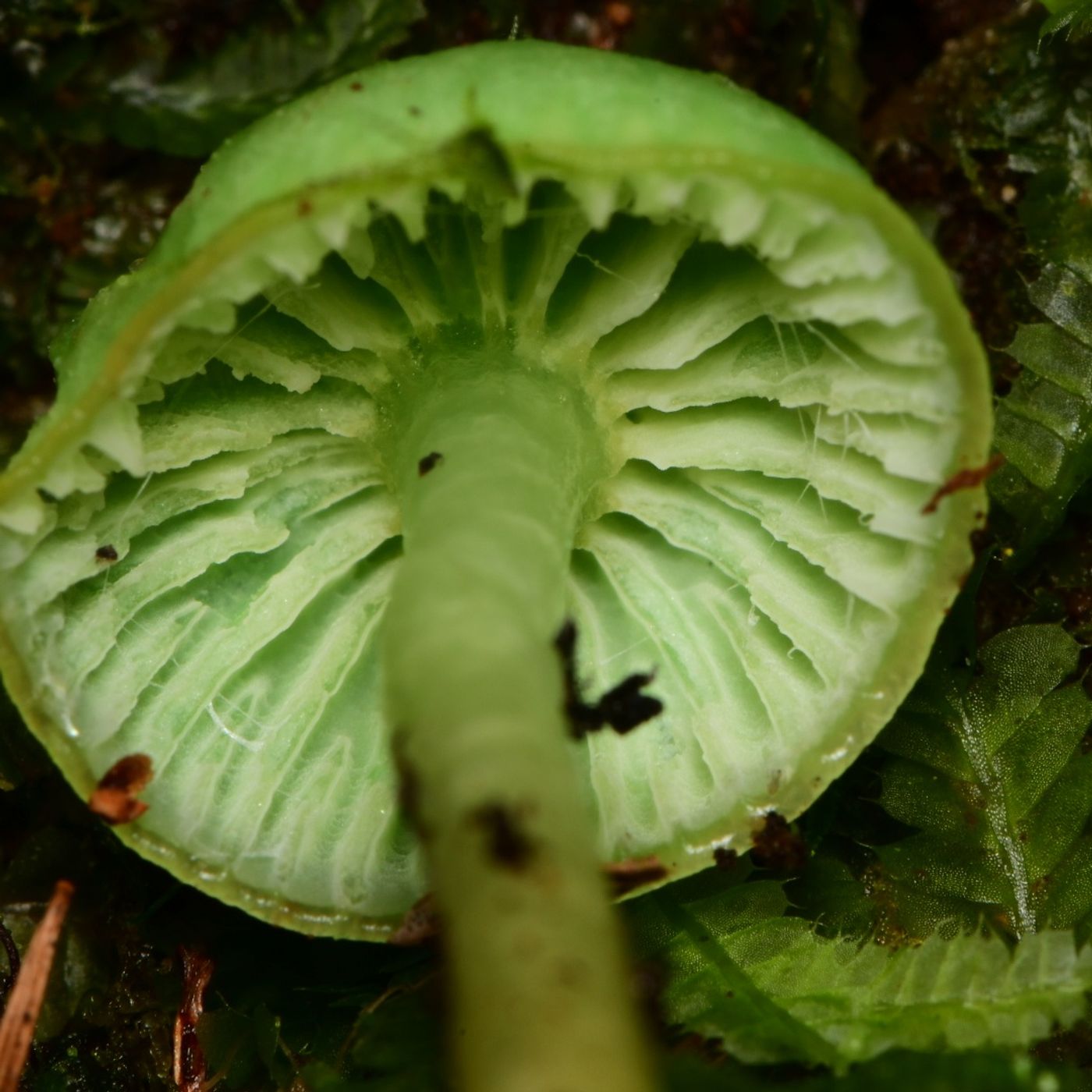
A Conversation About New Zealand Fungi
A conversation with my mycologist friend Alan Rockefeller about fungal diversity in New Zealand/Aotearoa, fungi with caps that don't open (which may be an adaptation to bird dispersal) and some of the weird complexity in the genus Psilocybe.
2023-06-18
71 min
Transcript
Available Results
Generated results are saved to the knowledge database for reuse and search.
No generated results are available for this episode yet.
Extract Knowledge
Pick what you want extracted first. Model, scope, and chapter options appear after a template is selected.
Generated results for public episodes are saved to the knowledge database so they can be reused and searched later.
Transcript
Hey, what's going I welcome to the crime pace of Botany doesn't podcast.
Today. I am having a conversation with Alan Rockefeller, and I'm recording the
intro after the fact. I think when we had this conversation, I was
a little out of it and it was like the day before we do to
fly out. But man, I've been out of it for the last few
days. Honestly, I got the fucking jet leg. That sounds so pompous
that an elitist. It sounds pompous and elitist when you say I have jet
leg. I like that. Well, let's just call it, you know,
having my circadian circadian rhythms all messed up from you know, switching nineteen
hours between different time zones in uh, you know, on the other side
of the globe. It sounds kind of fucking I don't know, I never
mind. Anyway. The point is I've been having trouble sleeping because it's in
New Zealand. Shit, what time is it now? It's like seven pm.
It's noon in New Zealand right now. But god damn, what a
great time we had over there. Two weeks, just every day getting up,
botanizing and look for mushrooms really hard and learning a ton of new shit
and having great conversations and uh, it was just a fucking wonderful time and
just getting to know a new flora and a new uh fungal fungus sphere what
he called it, a new new Uh. I don't know, man,
I don't know. Give me a fucking break when uh and a new cast
of fungal species and a new just entirely new landscape. It was. It
was fucking great. You know, it's it's a really fun work. But
anyway, regardless, UM, we talked for I don't know, an hour
hour and a half, and uh we talked about the philosopy diversity in New
Zealand, of which there's like I think like fifteen species maybe more. They're
supposedly an undescribed um member of the zabat the quorum group of the genus Philosopy.
I mean, philosopy is so big. It's divided up into sections or
groups as well, you know, as sometimes happens with plant species. You've
got philosopy section semi lanciat, you've got silosopy section cyan essensum, philosophy sections
out at the quorum, etc. So anyway, that's Alan's jam, not
mine. But we talk about that um and uh. We just have a
really good conversation about um the fungal diversity in New Zealand, and there's certainly
a lot of it because it is a temperate rainforest, essentially the same way
you get a lot of fungal diversity in the Pacific northwest of the United States.
So I'm not gonna I'm not gonna drag the intro out too long.
But the regardless enjoyed this conversation. And oh yeah, the last episode I
put out, the ads got all fucked up. The iHeartRadio has this ad
optimizer thing and there was some glitch in it, so it put you know,
normally, it's supposed to detect periods of silence and then put the the
ads in those periods of silence, you know, and it puts in my
opinion, it puts way too many fucking ads in. But it makes it
easier for me because then when I auto optimize, I don't have to go
in and put them in select where they go myself. But since there was
this glitch, it put like fifteen ads within the first ten minutes, And
so I apologize to any of you who are listening. But a reminder that
if you want to listen to the podcast add free just join the Patreon.
I upload all the episodes. They're free once they come out. So that's
a good way to get around the ad the advertising bit, because I have
no choice. I have no clue and no choice what ads go up.
I think it's depending on what region you are. It's fucking terrible, you
know, it's basically you know how advertising works in America. Right that said,
my apologies and hopefully I'll try to do better this time. I'll try
to do better. All right, Well that's all I got for you.
Enjoy this ninety minute, nearly ninety minutes conversation about fungie with my friend Alan
Rockefeller, and uh, go fucking so by. I'm gonna show you what
it's like where I'm not gonna show you, you know. I mean,
they got a nice sho quash come out. You know, I've seen a
couple of night things in the room before. Get a bunch of hippies twelve
money change who come farting to do down there, but they're not. Hashtag
food Forest, hashtag big Pharma Fight Big Pharma hashtag march against Montsanta. Do
you have anything? Do you have anything else you want to say? Dude,
it's like we need like this perma culture Facebook group I started is fucking
tight, Dude. Like it's dude, It's like, I'm sorry, I'm
sorry. Anyway. Um here, welcome to the crime Page Buttons a podcast.
We're here in in Puka cooee in Puca Co, New Zealand, just
south of Auckland, and we're gonna record a little conversation about some of the
cool ecological traits among the mushrooms here and some of the other things. Dan
is a squeakiest here some of the other things that we've noticed here. After
spending roughly twelve or thirteen days, which is not enough time, but in
the depths of winter, Alan, would you like to what did you what
was some of your favorite things you've noticed about the ecology or what do you
have to say about it? Um, there's been a lot of really cool
things here. Um. You know, New Zealand has very very different plants
than North America or anywhere else I've ever hunted mushrooms. One of the most
striking things is that all of the ectomac rizals that we saw were mostly with
Kanzia and the lithuspermum and just a little with the invasive Pinus radiata. But
it's really interesting to see all the macarizal mushrooms under what looked like shrubs.
Yeah, like Coonsio robusta, Mertasa Eucalyptus family is is a it's like a
shrub that became a tree candem someone were fucking huge. Some of them were
rather large, but that's I guess that's the majority of Ecto micro rizal stuff
is all mertasy or the Natho vegas two and then the radiata the fucking Monterey
pines. It's insane. Yeah, it was really crazy seeing Pinus radiata everywhere
because you know, in California where I live, it's almost native, you
know, natives not too far from where I am, and we consider it
a really good tree because that's where we get most of our porcini in the
Bay Area is under Pinus radiata and lots of other cool native Vecta macarizal mushrooms
too. So seeing it planted like a weed out here just in plantations and
you know, just taking over a whole hillsides and it's like the main cash
cropper ontire that was. That was really something else. Corn fields, corn
fields of Pinus radiata that that spanned for miles over hillsides and we even saw
it. We saw a cornfield of redwood two, which was hilarious because it
was like, you brought in the redwoods, but of course, you know,
you can't bring the whole ecosystem, which is good, but for me
it just illustrated. You just bring the redwoods and it's just like a it's
like a desert. It was so barren. It was even aged redwoods,
like an even aged redwoods stand with nothing beneath it. Yeah, I'd never
seen anything like that because redwood forests so usually beautiful with all the huckleberry and
tan oak interspersed, and this had none of that. There was the redwoods
and the redwoods stuff and barely anything else, you know, growing in between
them. No plants, no other trees. It was. It was depressing,
man, It was fucking weird. And of course desert because redwoods aren't
aren't ecto like a rise o there am, so there's nothing, no fruit.
Yeah, I expected to see some mushrooms there, but there was you
know, the rains were good and there was no mushrooms there. In California,
we have some pretty good mushrooms with redwoods, you know, they're they're
not ectomcas also nothing like that. But there's a lot of mushrooms that grow
really well into redwoods, like hygroscopy and Pseudobiospora and some lepiotas, but none
of that was in the redwood forest. Start hearing. What was cool though,
is once the redwoods stopped, I mean for me, it was Yeah,
it was just like an ecologically blind and ecologically illiterate planting of redwoods,
like there was nothing else. Just illustrates you know, nothing exists by itself.
It's part of these these networks, part of an ecosystem. But once
that ended and it tapered off into more of the potocarp forest, then you
got we got those glyophorus and the other what was that weird the white one
that had the split gills that split in like a hexagon. I think maybe
you're talking about this thing. Um. I put it on a naturalists as
pseudocaria, and I don't really think that was right. But it looks a
little like our California's Pseudolocaria, and Jerry Cooper put it in as hygrophaca.
That seems reasonable because I had pretty pretty like wide waxy gills, So yeah,
probably is. I ended up seeing that in a bunch of different places,
always splitting like that, though the caps splitting open at the margins.
I'm not sure we're talking about the same mind, it might be something different.
It looked like an asterix like. It looked like a big, fat,
juicy asterix went because the way that the cap split it was like perfectly
geometrical. And I saw it in a few other places too. I thought
it might have just been this one dried out early, but it was I
forget the name that I don't have to look it up later, but it
was cool. But then we saw the Gleophrus two in the firm life pop
back up, you know, once you transition back to the potal carp forest,
you know where there's Decritium and Dacricarpus and all the other stuff. Yeah,
the Gleiophrus diversity out here was really good. We saw a lot of
colorful ones. I think my favorite one was the Gleiophorus lie Lacapiece, which
was blue on the cap, and then some of them had shades of pink
and kind of this really bumpy, translu sent layer of slime on the stem.
What was the in the pine plantation? The pine plantations weren't totally wear
And there's actually there's philosophy that comes up there too, right, like mcarrory
and other ones. And then we saw that what I thought was a mutinus,
but that stinkhorn, what was that? That was a mutinus and undescribed
mutinus. Yeah, really skinny. Yeah, that was really cool. And
the interesting thing about that stinkhorn is that no matter what stage of development you
caught it in, it had no odor. Yeah, it didn't stink.
It was weird. Yeah, I've never seen one like that. And then
there was Crwento mycena which is fucking awesome, that tiny little red mycina with
a viscid stipe. Yeah. I wish we had seen more of those because
that one is super slimy and just crimson red, and I mean, you
cannot get a redder shade of red than that. And then the other one
that I liked even more was mycena Ura, which was also very red,
but without a slimy stem. And that one had margin at gill, so
the gill edges were bright red, the same color as the top of the
cap. Let's talk about Coordinarius because there's quite a bit of Coordinarius diversity here.
Eh. Yes, New Zealand's pretty famous for Cortinarius and they're all ecto
Michael Rosal, all of them. Yeah. What did you like about the
courts, because that's I mean, this is you know, I don't I
don't see a lot of these things in North America, especially where I live.
Well, courts are awesome because it's the largest genus of mushrooms, so
there's you know, there's no other genus that's more difficult or you know,
more ecologically varied. Recently, there's been some attempts to split up Cortinarius into
a whole bunch of other different genera, and those attempts recently got propagated on
naturalists, so maybe they will actually stick. Um. I don't think they're
really needed to split Cortinarius because it still was a monophyletic group before, but
now it's a whole bunch of monophyletic genera. But whatever, it doesn't really
matter what you call them. They are really diverse you have the mixaceums,
and those are like really slimy on the cap and the stem, and you
get a lot of purple colors. Those are all edible. You got the
flag maciums, which are also big ones often have like a bull based stem
base. Lots of dermocibes. Those are the ones that have the really bright
colors, and they turn really bright colors when you put potassium hydroxide on them.
And then lots of telimonias, and the telimonias can look, you know,
a lot of them out here look like little mycenas. But then you
flip up the mushrooms and they have like bright orange gills and kind of that
cortinarious texture on the stem. But there's this huge variety of Cortinarius. Some
of the best ones were in I'm going to call it section or subgenus walk
Away, and those are the ones with the bright green caps. Stuck.
It's not quite a few of those really beautiful. What was what are the
deadly ones that Miguel was talking about? Yeah, the deadly ones have a
toxin called orellaning in them from Coortinaria section or lana, and those all turned
bright colors and khu. They're not very common. I've only seen one of
them in California. They get a couple in Michigan, and then in Europe
there's a whole bunch of them. But orellaning is a really interesting toxin because
you eat it, it doesn't really have any flavor and you're fine for a
while, even the next day you're fine, and then you get really sick
a week or two later. So with this really long delay, people don't
always realize there was the mushrooms that eight a week or two ago, that
we are causing the problem. That's fucking terrible. It's so morbid. Yeah,
and they're deadly, you know, they destroy the liver and kidneys,
so they cause a lot of deaths Orellan how do you spell it? O
R E L L E N I N E Jesus. But again, Coordinarius
are micro rizals, so you'd have to be hunting for You have to be
in a place where there's already ecto micro ryzal stuff growing to be looking for
it. It's not like, you know, if people are looking for peloscopy
somewhere in woodship landscaping, unless there's ectomico rizal trees around pines, oaks,
etc. Murtasy myrtle family, you wouldn't really have to worry about it,
I suppose, huh yeah, though Miguel said that about twenty years ago a
bunch of philosopy hunters in Tasmania u ate some Cortinarius and died that that had
that aurellanine in it um. It's not very common because Cortinarius have bright orange
spores and nothing in Philosopy has bright orange spores. But if you're really just
not paying any attention at all to what you're eating, you could certainly get
confused. When we were looking at the subpad and this is like a whole
other conversation too, because the subruginosa, the Celosopy subruginosa phenomenon here is fucking
nuts and hilarious. I mean, they're basically these landscaping beds along the freeways
and in towns, and they're basically like breeding celosopy, like there's just there's
there's they're they're supplying it with so much food along with other cool stuff.
We saw an Asceroi there too, that looks like the pro lefted butthole stinkhorn,
like one of the most heinous mushrooms I've ever seen in my life.
But really cool. Yeah, those are crazy looking. Um, I think
their native to hear. I've seen them in Mexico as well. Yeah,
the same that same species. Yeah, as they can look like a Clavo
gaster though too, isn't there a Clavo gaster they can resemble? I don't
know what Clavi gaster is. Fuck? What am I thinking of? Never
mind, I'm not I forget the name of it. You know what.
I'm a I'm a plank guy. Anyway, I think Clavi Gaster is that
secretari you know green, that's it, claval Gaster arrests. Fuck what is
the goddamn Yeah? I was looking at it on an eat. I mistook
something. I was like, oh, and then I looked at the tax
on page and I was like, that's fucking hold on, hold on now,
I got to find the Yeah, there's a lot of different general of
stinkhorns and they all look crazy. Um. What's really weird is there's another
anso that was I forget the name of it, that was moved in Delizas.
A little white one that just identified the other day. Doesn't do that
same thing. It looks like an octopus or yeah it does, so I
can't believe that it's you know, more closely related to Lizarus than Azero.
But um. But Larissa moved it into Lizarus in twenty fourteen, and she's
a Brazilian stint corn expert who definitely knows what she's doing, so there must
be an interesting story there. I can't remember it was another member of Fellacy.
Fuck it's whatever, um anyway, but um, but the philosophy.
When I was when we were looking at the subs that came up in that
that landscaping patch and there was Gallerina marginata right next to him, it kind
of blew my mind because I was like, if someone wasn't if someone was
just going by look alone without really knowing what characters to look for, like
presence of an annualist, sport, color gills, etc. I mean,
you could really easily mistake them, or you could be picking a place where
there's subs and then you know, by accident, get like a Gallerina or
two in there. Yeah, they look really similar sometimes, and there's not
any one particular character that you can just reliably use every time to separate celosopy
from the deadly Gallerina marginata um. But with the combination of characters, you'll
never really be confused. What I think is really interesting is that, you
know, Gallerina marginata grows really close to silosopy. In fact, I found
some that was just a couple feet away from cilosopy on this trip, and
it had been sprayed by weed killer that had the green dye in it,
and so the gallerina had like all these green stains all over it, and
you know, definitely could be confused for the silicon bluing um. But despite
their being gallerina all throughout the philosopy having cats, there don't seem to be
any galerina poisonings from Australia and New Zealand. So it makes me wonder,
like, there's there's no way that everyone is so careful all the time that
then never Maybe they're just really educated down here about mushrom i benefit, you
know, maybe they're really educated um. But also maybe the potency of these
deadly mushrooms isn't really that great, and of course the potency of any mushroom
varies a lot. Maybe you got to eat like a kilo Galerina marginata.
Usually people estimate like ten to twenty um Gallerina marginata um could make you really
sick or be fatal. But um, it's problem. It's pretty unlikely that
just one would do anything. But the potency varies so much, and that
people's individual sensitivity but varies so much that you know, you never really know.
I was at I was at a punk show once, like ten years
ago, and this kid I knew, this guy k who brought these fucking
mushrooms in and he was like, these are you know, silasobe cyanescens.
I got him from Neil Young's property and down in Lahnda. He's like,
I went trespassing on Neil Young's property and and that was like part of the
story he had to include, you know, okay, cool well, and
I was looking at him and I was like, these are not I mean,
I didn't argue with him, but I was like, I'm not going
to have any of those. That's you know, that's obviously not. Maybe
it was al radio mics or something, but um. And then I was
thinking about that, I'm like, yeah, they kind of did. They
had like a pinkish tinge to them. I mean, who knows what they
wore. They weren't pelosopy but probably the radio series, right, yeah,
which we saw here too, But I was it was still kind of funny.
I was like, fuck, man, that's but yeah, I suppose
you'd have to eat quite a few. Um. I just when you look
at the you flip the cap over and you look at the sport color,
it becomes really obvious. Yeah, it's just that sometimes, you know,
the celosopies don't make spores, so the gills stay kind of orange, and
they have a similar stem texture. I tasted some of the deadly Gallerino marginata
and they had the exact same flavor as the Pelosopy subruginosa that was growing nearby.
They both have this kind of farinaceous cucumber like flavor and their interesting family
too. Yeah, yeah, not too distantly related. You know, it's
safe to taste any mushroom, but if you tasted deadly mushroom, you should
spit it out because you know, it's really bad to swallow. Okay,
And it was claithrous archer eye, which is from an entirely different family the
one I was confusing with the butthole stinkhorn. Oh yeah, those those are
really cool. Clathrous archer eye. Is that native to hear either here or
Australia. It's got a really similar form, yeah, known as octopus stinkhorn,
but it lacks that. You know. The asceoi was hilarious because it
looked like it looked like it was producing shit like that slimy that brown slime
on it, like that resembles and it smells like shit, like if it
smells like, you know, like human shit you encounter on the street somewhere.
Yeah, there's a few different smells you get off stinkhorns. The big
stinkhorn I was finding around here was the eli adictyon. I don't know if
you saw those are the white basket cage fungus. Are they native or is
it? Yeah, they're native to hear Um. They're all over in the
wood chips and we got some beautiful photos of them. But they smell like
rotting meat, and rotting meats are really common smell and get off stinkhorns.
But they some of them are definitely spermatic and others smell like shit. Start
your shit. I guess it's just sulfur compounds for the ship smell. Huh.
Oh, I don't know what the chemicals are, but um, I
didn't really get a sulfur smell out of it. I think it's more like
some kind of like like or something not like a hydrogen sulfide like sewage smell.
Yeah, it didn't really smell like the geothermal vents. It was or
to vault toilets, remember it, like that ammonia sulfur smell and those wonderful
vault toilets at that spot we camped near the beach and woke up freezing.
Yeah, it was more like um, like the shit smell is scatole,
which is an indoll compound, and it was a little bit more like that
scatle shit. It's kind of interesting. Wow't even though that existed. Um,
well, the the Galarina spot was there were more slay suburgenosa there,
but um, let's talk about subrugenosa because it might it seems like it's a
species complex, especially that that lecture you send me by at a stem and
Teggart, Yeah, that which was fucking awesome and he talks about tetrapolar mating
and kind of gets into that like how the mating works between fun guy,
which isn't really a kin at all to human gender. It's more like these
weird parts of the genome that polar, you know, need to be polar
opposites to attract. But basically, whereas like in humans he talks about bipolar
mating, it's like it's male or female and mushrooms. You know, so
you can mate with fifty percent of the population in mushrooms, it was more
of like you can only you know, a given phenotype can only mate with
another twenty five percent of the population because there's four different possibilities and sometimes a
lot more than that, and sometimes a lot more like that than that.
Like schizophelim right, schistophile them community has like twenty eight thousand different mating types.
That's nuts. Do you know much about that? So what is it?
It's just it's different parts of the genome basically that need to It's got
to be like it's like a lock and key thing where they different parts of
a certain individual phenotypes genome needs to match with another certain individual phenotypes genome and
there's twenty eight thousand different possibilities. That sounds about right, But I know
nothing about this stuff. It's fucking weird. It's so wild, But I
guess the end benefit of course, is promoting outcrossing. Yeah, or you
know, with humans, you're only compatible with half of the population, whereas
with something like that you're compatible with almost anyone that you come across. Or
well, in the case of philosophy, there was a reduction in the amount
of possibilities of mating types, like you're only compatible with twenty five percent.
But I don't know, I thought it was se nah was the opposite what
he was saying, you're only compatible with twenty five So I think people who
put saw philosophy sports on the auger say that on average three quarters of your
monocaryons will actually mate become dicharyatic mycelium. Tell everybody what a monocaryon. It's
a haploid, one single haploid nucleus in a cell. Yeah, When a
sport germinates, it makes monocaryatic mycelium, and that has just half of the
genome. And then the monocariatic mycelium has to find some other monocaryatic mycelium from
a different germinating spore, and then the nuclei from both of these organisms goes
into the cell and grows together. And that's what's required for the mushrooms to
foot they've still only got each nucleus still only has half the set of chromosomes,
right, so it's not complete. And then it's chariogamy is one I
fuse and then meosis is the actual genetic recombination event reshuffling the card deck.
That's when you can get allowed for new phenotypes, etc. Yeah, exactly
in the zygote so and that note, what do you think is happening?
We were lurking around on the bushes in Silosopy Alley in the suburban area outside
of Hamilton, and we saw, like I mean, there was the sterile
subrugenosa, there was subscotioides, and then there was regular subrugenosa, and then
there were there were like three or four different phenotypes of Subruginosa that were noticeably
different. What did you think about it? I think it's interesting how diverse
Subruginosa was and it indicates that it probably evolved here because wherever you find the
most diversity is usually where it evolves, and then one or two phenotypes escape
to other parts of the world and you know, kind of evolve other places
and eventually become their own species. But you know, here you get a
lot of different Subrugenosa type things, So you have the macarora and all the
different you know, kind of like different shapes and sizes of subrugenosa. Some
of them were really tall, some of them were short with wavy caps.
There was kind of everything in between, similar to how like silosopy Cubensis is
in Asia, because in North America we just have cilosopy cubenzis um and the
closest relative is selows to by a Voidio sistidiata, which is kind of far
away. But in Asia you got a bunch of species that are very closely
related to seloso by cubenzis, like slaso by Indicas allows to by Chucks gien
Nzis sellows to be natal enzsum. So they have a whole bunch of close
relatives over there, indicating that that species came from that part of the world.
But also the interesting thing about about Subruginosa is that it's well a lot
of a lot of like the I guess it's where things pop up too,
right like sub Secotioides has only really been found in human landscaping here, like
silas to b a lenei right right where Subruginosa actually is found in the wild
in places like Tasmania and Australia. Like it's like wild habitats where it's a
little bit more unlikely that it was brought there by people. What about cyan
essens and azarsens, which are thought to be part of the species complex is
subruginosa, Yeah, the azure essence is mostly in that dude ground, which
is a European invasive um. The cyanessens you'll find in wild habitats, usually
along streams on alder Oh. Really you find science and wild habitat and we're
in Oregon and Washington and northern California, Oregon, Washington, far northern California.
As you get further south along the coast, it gets warmer and it's
less ideal habitat for sin essence, so then it will only fruit where you
have it's concentrated food, the woodchip landscape thing. But as you go further
north along the coast, it's better and better environment first allows to be sin
essence, and you start to see it more often in wild habitats. When
was it first collected nineteen forty six was described by at least Wakefield, and
she collected the holotype in the Q Botanical Gardens in the United Kingdom, but
she collected it there in Q. Yeah. Oh no, shit, wow.
So it's quite possible that this thing is kind of that sion essence has
been brought around the world by people relatively recently, I think so, yeah,
and probably originated in Australia. Yep. What other species are part of
the Subruginosa complex. It depends on how you want to define it. But
you know, the celosopy Aurora, the pouch fungus is very closely related to
subrugenosa um. Really the thing looks so different though, it's so distinct.
Yeah no, there's lots of its sequences and sequences from several genes in gen
bank, and it's very closely It's very closely related. It's definitely in the
section cyanessens or you can say sections subruguinosa Um, the clotsopby Subrugenosa complex.
And then you have seloso by a. Lennei described from Seattle, which has
not been found in native habitats, but you know rips through the wood chip
landscaping selotsoy sanessns. I love that description. It does like it's shredding.
You should you should make a time lapse of it. It would be awesome.
It's just shredding. And then Celotsopy sinessens has turned up in both Hawaii
and in in South Africa, and people have sent me collections from both of
those places and I sequenced the its green and they it was one hundred percent
match to the epetype sequence of pilosopy cyan essence. And then if you go
a little bit further but still not very far from those, you have pilosopy
serbica and solosopy as decorum. So Serbica is from Europe, and then as
decorum is from the tops of the volcanoes in Central Mexico. And you also
have solosopy hopii and solosopy mescalerowensis, which are synonyms, and they were described
from New Mexico and Arizona. But as decorum is also in Canada too.
Didn't you get a similar its Yeah, it's one base different. So whether
you want to say that you you should split species based on one base or
not is a judgment call. But yeah, you can call it the same
or you can call it different, depending on what you want to call a
species. Because that guy in the lecture last night was looking at at whole
genomes, not just it ts. Yeah, and noting that I think he
said mcarrory isn't like notably different, but all these other things are basically subs
subrugenosa. So it's interesting to think about this, that this in the very
recent past, like likely last one hundred two hundred years, this species complex
has been spreading all around the world, and then at some point it's likely
gonna be start being selected for according to the differences in each differing climate.
Yeah, that was different different traits so make it do better in different parts
of the world. You know, like Hawaii is usually pretty warm, but
it's doing really well in the botanical gardens and Hawaii and lots of people have
noted it there over the years, and so yeah, it's it's definitely going
to be rapidly speciating because here things were, I mean, these things were
fruiting when it was like thirty eighth degrees fahrenheit, forty degrease fahrenheit here,
typically a cold weather fruit are right, right, But I'm just saying Hawaii
is different. So at some point Hawaii will be selecting for warm tolerant phenotypes
of sin essence, which is. Yeah, that'd that'd be a great place
to get the warm, warm phenotype of sin essence. There's I mean,
there's already a phenotype of Aleni that's a summer fruit or in Oakland. Yeah,
maybe that's just regular allennii that does that sometimes, right, But it
was I mean, I remember Damon Tide told me about it. Instead,
it was not that it was different. I mean it was fruiting and really
warm days in Oakland, like midsummer. Yeah, I've seen it there in
the summer. That's so weird. So anyway, what do you think about
the unintentional breeding that the of Selassaby and and other wood lovers that's going on
here. I mean it's I looked at like a thirty football pile of wood
chips, which is presumably just radiot of pine and probably leptos. You knows
what else but a thirty foot pile of wood chips in like a woodyard that
they're then landscaping these freeway ramps with. I mean, it's just like acres
of formium along the freeway, which is native here and provides perfect shade and
cover, you know, for these microclimates to stay cool and wet even though
the sun may come out and start to dry the local environment a little.
And that's where you know, these subs were coming up, the acero was
coming up, the gallerina was coming up. Yeah, I'm surprised how much
they use woodchips here. Like in California, you kind of have to,
you know, look around a lot to find really large patches of woodchips,
because little patches of wood chips are everwhere. But to find philosophy, really
need to find those big patches of woodchips that just go on and on for
many, many hundreds of square meters. A lot of people use like the
Google or satellite view to find, you know, large patches of woodchips.
But here in New Zealand, it was like these kind of spots were just
everywhere around town. There were really big fans of woodchipping everything. I mean,
you kind of have to it keep sweeds down and builds soil. But
I think it's definitely tied to the forest industry because they've decimated so much of
the potocarp forest and planted this shitty radiat of pine that there's now this whole
industry, you know. Obviously, I mean we saw miles of Monterey pine.
Like, I don't know if you were paying attention, but when one
of the spots we were driving to, we were going to Mount tera Yaki
we went, you could look on the side, off to the side at
the horizon. We were kind of on a bluff and you could just see
miles, like endless miles of Monterey pine, which was like, it was
kind of heartbreaking to see because you're like, that was all this cool temperate
rainforests, all these cool potocarps and pseudopanax and all the all the stuff we
were seeing, but now it's just pine. And where does that all go.
It gets exported and then certainly some of it gets turned into chips for
the landscaping. So you've got an abundant supply of this material that you can
both export and which also works good for the you know, landscaping the shitty
freeways and suburban areas and stuff. So yeah, and it's kind of sad
how they're all planted in rows, because if they at least just kind of
like scattered around where they put the sea things, that would look a lot
more like a real forest, you know. Right now it just looks like,
you know, the whole country is covered in these plantations, and it's
like a big cash crop too. Like Luke was saying that his dad bought
a little bit of land and how Pinus radiata planted on it, and it
was going to be his college fund because in twenty years you can sell it
for a hundred dollars a tree or more, and so that was going to
be how they were going to pay for his college. And then a fire
came through and burned them all down. Jesus Christ. Really, yeah,
it's hard to imagine it getting dry enough for a fire here. I guess
it happens though, Well we're here in the rainy season, right, but
it also they get some rainier. They got like ten inches of rain on
one day. Here it's it's still water. It's not like California where it's
Mediterranean, where you get like six months of dry or recently eight months of
dry in the last couple of years. But because it's still wet and moist.
But also, I guess when you fucked up the ecology so much and
you've removed that forest, that intact diverse potocarp forest, and you replace it
with these these like corn fields of Radiata pine and his pines grow, of
course, especially if they're all in a oh the lower branches die and you
get a ladder fire. I mean, it becomes like a perfect way because
no one's going in there to prune off these dead branches which are just waiting,
you know, to catch, and so it becomes this you basically create,
like a perfect tinder box. You know. I didn't hear Luke tell
that story. It was fucked up. Yeah, you weren't there, Jesus
Christ, that's brutal man. How big was the plot of Landy Head?
He didn't say, Jesus damn. But also it's I mean, you see
a lot of the native fungi adapting to it here, adapting to the Radiata
dove. I don't know if this stuff was really that native. Like I
turn this russola last night. We had a really awesome night ultra violet hike
and we found the glow worms and all sorts of cool stuff at night.
But yeah, it was a big bright rustolat that we turned up with the
ultra violet light. And when I looked at it closely, it was not
any of our rusola's that we have in California, And a lot of the
fungi that I saw with the Pinus radiata out here was not California and dry
well. No, I mean native native, possibly new native New Zealand species,
either that or European. Yeah, but we saw quite a few natives
that we're eating the we're separate trophic on the on the pine Miguel was talking
about, He's like, well, maybe you know so many because in Tasmania,
I guess the native funki there don't There's not many conifers that are dominant
forestries, so the native fungi there don't really adapt. You don't find that
many native fungi in the radiot of pine plantations that they have in Tasmania.
But here conifers potocarps were such a dominant part that all the second air metabolized
they produce in the dead wood. That's that's left over in the dead wood.
You know a lot of these spar separate trophic native funk i already used
to eating it, so they don't. It's the switch over to the stuff
that's in pine is not too far fetched. Yeah, that makes a lot
of sense, because I tasted a bunch of those powder carps and a lot
of them is tasted like pine. Oh. Yeah, they're super resinous.
Man, it's not you see that red baberry and you're like, oh,
it'll be good and sugary, and then it's like, nah, it's kind
of sugary, but it's also still pretty turpine rich and taste like tastes like
pine snap. So but but yeah, so okay, anyway, So what
do you think about subsecotioides. Tell everybody about that. Yeah, I guess
there's a couple of species going under the name Pelosopy subsecotioides. They're kind of
halfway between the secretary celoscopy waraa and the fully opening Solosopy sub urruganosa. Secretoid,
of course means it's like a pouch fungus. It doesn't open, the
cap doesn't open. Yeah, the gills are just kind of all scrunched up
inside and the cap never opens and adjunct spores um. But I guess the
ones we were finding, I think if one was to sequence them, you
get the same exact sequence as philosopy cyan essence. And then there's some other
ones they call philosophy subsecretoides that look a little bit closer to waraa whereas the
caps don't been hardly at all, and those have a DNA sequence closer to
selosoby wara. So apparently there's a few intermediate forms there may be not different
enough to be described as their own species, so it should probably be described
at the variety level. I was thinking it'd be a good idea to describe
solos by describe one of them is sloso by sin essence var subsecodioides, and
the other is closo by war or vara subsecodioides, And then you would have
two names for two different species that both have the same variety epithet, And
that would probably be a good way to to name them, but still distinguish
them, and note that there's two different things at least, such a clusterfuck
of taxonomy just because no people would it's cool, but I don't people would
never be able to really know which one they got. Unlet's say, yeah,
well, LEAs look at him. You can tell really easily by looking
at them which one they have. Oh shit, really yeah, because the
one that sequences like sinescence opens up a lot more, and the one that
sequences like wara that doesn't open up nearly as much. But either way,
these are stay they appear to be stable, fixed phenotypes. They're popping up
in multiple plays. Oh yeah, hundreds of different places. They're all over
the place. Now, God, they're so cool. There there's how would
you describe them? They basically it's it's like intermediate. The cap opens a
little bit, but then you've got this like furled wrinkling along the margins.
It looks like a you know the way a flag gets when it's Yeah,
it has a strongly pleated cap a lot like philosophy BAO systems, like a
skirt or some corduroy pants. Yeah. God, it's so cool. But
they were remarkable and you get like huge clusters of them popping up too.
Yeah, they were fruiting in really dense clusters, looking like looking like dense
little bumps. Okay, there we go. We took a short break so
I could I could snort some fucking allergy nasal sprain and taken inhaler because there's
a cat here and I'm definitely allergic, so I can't really breathe. So
anyway, I can't believe that Gabriel Bets and John's had to get banned from
my prema culture Facebook grew for abusing other other other members. No offense to
Gabriel Bets and Johns. I'm sorry. She's actually the person that wrote this
wonderful paper that I'm looking at on secodioid fungi, and there is no permaculture
face. But it's just a fucking joke I've been running with that I thought
was kind of hilarious anyway. The name of the paper is Dispersal and Trait
Evolution the New Zealand sequestrate a secodioid fungi evolve unique traits to match bird's sensory
ecologies. And it's got a nice little image of five different species of scodioid
fungi here mushrooms with caps that don't open by Gabriel bets and Johns. It's
a really I think it's open to download. It's her thesis. I think
it's open to download on the internet. But it's definitely a paper that's worth
a read, and it goes into exquisite depth about this really unique ecological trait
among the fungi. Here. What else did we see? We saw clavo
guest vorescence, that bright blue one not staining blue, but bright blue.
Yeah, that one was really cool, had a lot of blue pigments in
it, but doesn't stain at all where it's damaged, and it did you
know, all these secretarid things really look a lot like something a bird would
eat, So yeah, maybe they are evolved to try to trick birds into
eating it and dispersing the sports. Yeah, it looks like the pigeon one.
For the hediocara fruits you'd see on the ground, there's a species.
There's one species of passion flower here, pass and flora, the tantra,
which the fruits look like little orange I mean, if you know, if
they were the same, they're basically the same size as the philosophy wuer a
rolla that we were seeing. And the clavo gastro too, looks like a
wad of gum that someone spit on the ground that's somewhere around and brightly colored,
like really conspicuous on the dark floora these these dark, shady wet forests.
Yeah, and there's also a couple very bright cortinarious and subgenus Mixatium that
are secretarious. We didn't see them. We didn't see them, but they
looked like they would be really attractive to birds too, because that's the main
There were no mammals here but bats, except for Polynesian rats that the Maori
brought, which I think was intentional. God, what the fucking we went
to the museum or today some of these canoes they had like a replica of
the canoe, these ocean free canoes. They were like one hundred and twenty
feet long. Wow, like five feet wide. There was you know,
you hear someone took a canoe on the ocean, Like, how the fuck
did that work? And then you realize like no, this was like an
actual these were basically ships. It was really cool. Um but anyway,
Um, so there were birds were the primary birds directed the ecology of everything
here, from the like twelve different species and now extinct Moa to the numerous
other bird species that many you know that are here, many of which quite
a few which it went extinct. But they would presumably just be on the
ground, you know, looking for fruit to eat, especially in the down
season right now when not a lot is fruiting, and they would pick up
some of these fungi. But it's just the I guess what is hard to
think about is how these spores would get out there. Then yeah, I
think birds is a really good theory. There's not that many insects around here,
and the ones that are around are like very small versions of insects I've
seen other places. Yeah, so mostly there's like really small insects, not
too many animals. So yeah, the birds definitely disperse a lot of fungi.
So there's a you said, there's a there's a coodioid coordinarias a few
of them. We found one of them, that yellow puffball type thing.
When I cut it open, you can see they wrinkled up gills in there,
and it tasted kind of like radish, just like a bunch of cortinarias.
The one that was just on the trail that had been kicked offers them.
Yeah, did you collected it right? Yeah? Fuck, that's so
cool. But so you dissected it and you could it was indeed Secodioida.
Ah, if only we'd been able to find it. And these things don't
appear to pop up in clumps though, it's weird. Have you have you
heard of any of them appearing in clumps? The ones like the clavo guster
we saw were I mean, there were a few there, but they were
isolated and apart from each other. The ware a row is always we found
only found individuals. They grow on clumps where they grow a little bit better,
like down by Wellington. Oh really, there's a is there a Is
there a Laardium mices? Yeah, it's like Lardium mics arethacephialus um is bright
cherry red. Secodioid laradiom myce series. Where else do you see where else?
Tell everybody where else you see cecodioid? The secotioid habit usually in dry
places, um, so it gets really common out in deserts and see it
sometimes like in the mountains of California. Which the adaptive benefit of the desert
um. Well, I guess it's probably just to keep the spores, you
know, keep the humidity up. Well, it's making the spores, you
know, normally in guild fungi, the spores eject forcefully using a drop of
water called the Buller's drop. So that drop transfers from the stagmata to the
spore, and when that weight shifts, then it fires the spore off.
Where's the sterrigmata. Staragmata is coming out of the basidia, So it's those
little four intena looking things on top of a basidium, which you can't see
with your naked eye, right, and the stericmata is where it's not coming
out of the tip of the basidia, so it kind of often like in
two sports pieces, it looks like devil's horns coming off of the basidium.
And so that's what forcibly ejects spores. Yeah, but in these secretoid things,
they don't really uh, you know, forcefully ejects, so they're kind
of more like puff balls. But since they're all wrapped up in there,
than it keeps the humidity apps so they want to dry out nearly as much
as the spores of materia. What does the stigmata look like on some of
these secodioid fungi, whether from New Zealand from a desert Have you looked at
them before? I haven't looked at him. Might expect him to be kind
of short, kind of not really useful, maybe vestigil, Yeah, but
the idea being like in a species like pot Axes pistilarious kind of desert mushroom,
it's gonna just create this little rod, it dries out, it gets
kicked open. All those spores are still good and then you get this cloud
of spores. You know, if some if it's something is big enough or
a gust of wind is strong enough to knock that thing over and crack that
that sack cap open, then it's going to be strong enough to carry those
spores quite a distance too. Yeah, and its gonna disperse the spores over
a really long time frame, because you know, mushrooms, all the spores
disperse at once, whereas if you have this kind of stocked puffball type thing,
then they get they're protected in there, and when the strong winds come
or it gets kicked over, they can disperse the spores and that will happen
over a much longer period. Someone get blown out, some might stay in
right, and you get another gust to win later on. Yeah, did
you know about this possible, like the possibility of this trait being having been
directed by forgivorous birds, by fruit eating birds before the first time I heard
about it was from you last week, But we were thinking like slugs or
snails before that. Maybe, right, It's so fucking cool to think about,
like the traits. It's like the heteroblast im plants, the difference between
you know, juvenile and adult leaf shape or the divaricating habit that's did I
tell you about that? Do you have you noticed that? You know what
divaricating it's like the zig zag branching. We talked about it briefly, but
not weird. I've never seen it to that extent, like the same thing
occurring amongst so many unrelated taxa. And why were the plants doing that zigzag
branch because you have to think about the way the differences between how mammals and
birds brows. So you had these these herbivorous birds that you know, it's
thought to have been an evolutionary arms race, and there were like someone just
sent me a paper today where there was actually a study done on you know,
because all the moasar extinct that to all different species. They were.
Some of them were you know, ten feet tall, somewhere like a foot
and a half tall. Some of them were four feet tall. They look
like fucking tanks, built like their their legs were far too big for their
body, you know, and they were they lost I don't even think they
had wings anymore. I think they kind of lost them. They were like
little t rex arms or something. But the way that bird's brows versus mammals,
they'll you know, you've got this beak that's pretty hard, and you
know it's got the consistency of a fingernail, spines and spikes. Normal plant
defenses against browsing aren't going to do much like this's not, you know,
like it would for a mammal. It's got soft flesh, it's only hidden
behind fur. It's not going to do much for a bird beak. So
they would snip off branches and rip things. And so I think the thinking
is, if you've got the zig zag pattern with leaves kind of spread out,
you can't just grab a clump on one hand. You can't just grab
a clump with your beak rip the whole thing out. You've got to kind
of go from node to node on this zig zag pattern. They're all over
the place. It's it takes long to get The paper I read too was
basically saying like if Emu's the tests they did on EMUs and the rat eyes,
this extant species of bird that's similar to moa that's flightless, they they
there was like a third there was a very noticeable, like thirty to seventy
percent reduction in browsing on the heteroblastic divaricating plants then compared with uh non heteroblastic,
non divaricating plants, Like it was just more of a pain in the
ass. So, like the plants are creating a pain in the ass for
the birds to eat to the point where browsing is not you know, and
you're also extended out, so you've got this it's like holding your arms out.
You know, they're going to be trying to like get at your fingers.
They can't get to your face, you know what I mean. Yeah,
that makes kind of a shitty naga. But it's really weird. M
Yeah, it's just nuts. I mean, it's nut to see such a
huge piece of land with no native mammals except bats and see how that changes,
you know, millions of years of that directs, It causes things to
evolve you don't see in other places. So anyway, what else we got
to talk about? What else did you find interesting? Well, one thing
I found fascinating about New Zealand was how good the naturalist is here. You
know, in the United States, you take a picture of a plant or
a mushroom, put it in an I naturalist. Maybe someone identifies that,
Maybe they don't whereas in New Zealand, within a day of putting any mushroom
or any plant on there, I had several experts going over and looking at
it, and they put names on everything, and that is something that we
did not often see in the United States. So I thought that was really
cool. Yeah, the biologists here really love their native organisms, which I
think is pretty cool. There's like a deep appreciation for it, definitely more
so than I think we have in a lot of places. Definitely more so
than where I live. No one gives a fuck where I live. In
California, it's a little different. You've got kind of a bigger native plant
and native mushroom community. But yeah, I don't know. What did you
notice about the force that we went through, Like some of the being that
the only ectomicroizal species are the members of Martasi to eagle to his family and
the not the vegas um, the native ones. What else? I mean
did you see? Did it seem kind of barren here? It did,
but mostly just because the mushroom season wasn't as good as it could have been.
Um, you know, it's been a lot of rain, but mushroom
seasons kind of come and go and the rain isn't the only thing that predicts
how how well the mushrooms will fruit. Some years are just really good,
in other years not so much. So. Um, you know, it
took a lot, a lot of walking to find the mushrooms. We did
find a lot, but you know, usually if the season's really good,
it'll take me about four hours to go one hundred meters and out here we
were walking miles per day mushrooms. I don't know, it felt pretty slow
still, Yeah, that was that was really really fast. You know.
In California, I'll just find a log and sit down there for four hours
and that's just one log, and I'll I'll find about ten percent of what's
in that log. But you're like a kid in a candy store. Yeah.
Absolutely, You'll be out there for fucking twelve hours of time. Allows
Yeah. Yeah. Usually I don't start heading back until it's pitch dark,
and often several hours after that, because that's when you start to see all
the glowing stuff and fluorescent stuff. So you'll go out there and just spend
the whole day in the forest. Yeah. You know, usually wake up
at the crack of noon and get out there by two pm and just spend
all afternoon and evening and night out there photographing stuff. Jesus, that's great,
man. So why do you think despite having a lot of rain,
that there just wasn't a lot going off? We didn't see that cool Anteloma
ecstetera that blew one. That was kind of a bummer. I have no
idea. What about the earth tongues? You suck quite a few, I
wouldn't say quite a few. We saw a couple. There's definitely some geoglossom,
definitely some trick a glossom. You can tell because it had little hairs
all over. The glossom has hairs, right. What about the orange ones
and we see clavularia too, well, the orange ones are clavulent opsis um.
So yeah, those are not exactly earth tongues, but they kind of
look like it, right, right, right. But but then there was
the purple I'm just talking about that same general kind of shape and other other
species. Yeah, that purple one, that was the Rameriopsis Rameriopsis purple isma
was beautiful. It is bright purple, tiny little um you know, coral
fungus. Yeah, the color was incredible on those in the geothermal spot.
You found a couple different Lacaria, and then what was the thing that was
near the donuts someone throughout. Yeah, well, the Lucarias were cool because
I didn't recognize that species from other places, so probably a little Carria with
Kanzia. But what was really cool the geo thermal spots was the dusk Colia.
And des Colia is a genus that I've been wanting to see for many
years, ever since Inski posted photos of the Duskolia like fifteen years ago.
And they are too maca rhizome, but they're really closely related to the sapotfic
genus Foliotina, so a lot of the Foliotinas are deadly and they have that
big ring on the stem that's very noticeable and movable, and the desk Kolia
is a little bigger than Foliotina, and they also have a very noticeable ring.
And it's really beautiful if you look at it close, like with a
loop, because you can see these vertical grooves on the top of the annulus.
But it's an Ectomica rezolo genus that we really only get in the southern
hemisphere. There's a couple of spots in California that you can find it with
like imported trees, but for the most part it's the southern hemisphere endemic.
It's all over like Argentina, Uruguay, South Africa, Australia, And so
that's the genus I wanted to see. And there was a bunch of desk
Kolia at this geothermal zone growing with the Kunsia and Laptospermum, and they're thrown
out donuts next to the boiling mud pit too. Yeah, and so the
ones that I photograph are right next to the boiling mud pit. And there
was a lot of them, and so I pulled out the ultra violet light
and some of them were fluorescing bright yellow and others were fluorescing bright blue.
And there were clearly different species, but I could not tell them apart just
by looking at them. But there is, you know, a patch of
yellow ones and one under one tree, a patch of blue ones under another
tree five meters away. You don't think they could just be slight phenotypic variation
on the same species. No, there's definitely something indicating those a different species.
There's because there's some other chemical in there that's causing that. Yeah,
it means probably a whole different section of dust colia. Probably all the dust
colia is you know, can look very similar. But um, you know,
so they look really similar due to convergent evolution, but they're chemically very
different, and probably very different microscopically too. I noticed that whenever anyone puts
a dusk COOLi on I naturalists then never try to put a name on it
because there's a bunch of them and you can't tell them apart by looking it.
Just that'll be a cool one to get sequence data back from. Yeah,
but apparently the ultra violet light is really helpful in duskolia. Yeah,
you bring that thing everywhere. I mean, I've gone one. I only
use it to look for scorpions. I need to start doing that with plants
because we put that. That's how we found that weird ass liver word that
we otherwise would have looked over. Yeah, you know, the ultra violet
light is like a chemical sensor, and so is normal vision, just like
you know, the different colors you see in the forest or all indications of
the chemistry of what's in the forest, and then ultra violet light extends your
ability to sense a whole bunch of different chemicals that you can't sense normally,
So you just shine it on a tree and what looks like just one or
two species of lichen all the suddenness obvious that there's a dozen different species alike
in because they're all fluorescing different colors. And so yeah, you're you're sensing
the chemicals that are in there, and there's a lot of cool things you
can do with ultra violet light. They just bring your attention to things that
you would normally never notice. So tell everybody what's actually going on. Because
it's not reflecting the light. There's chemicals in there that are absorbing it and
then and then putting out visible light. Yeah, there's three kinds of glowing
that happens. There's phosphorescence, which when you shine light on something and it
just gives out light back later. So like that, there's no phosphorescent life.
There's just but you'll see phosphorescent rocks, like you shine a light on
a rock and then those rocks are glowing for a couple of seconds. But
then in life you have a bioluminescence and fluorescence. The bioluminescence is when it
glows and gives off its own lights. So you just walk at night without
any sort of light at all, and you see the bioluminescence stuff. In
fact, last night we found the bioluminescent glow worms. And that's the only
thing that I have seen that glows blue, because I find a lot of
bioluminescent mushrooms and those glow green always right around five hundred and thirty five nanometers,
which is a specific shade of green, whereas these glow worms were glowing
blue. And when you shine the ultraviolet light around, they make these beautiful
webs that are like hanging down. And this is a new Zealand endemic species
in the order Diptera, the fungus. Yeah, yeah, so there like
flies, but they, yeah, they have these really the really cool blue
glow. And then the fluorescence is when you shine ultra violet light on something.
And ultra violet light is like a really high energy photon, real short
wavelength, and certain things when that short wavelength hits it, it traps it
for a second and then re emits it at a lower wavelength, lower energy
wavelength, so it shifts the color towards the red side of the spectrum.
See, you shine ultra violet light on it, and you can get any
color back from blue to orange depending on how fire it's shifting it. And
then some things they're fluorescent, but you shine the light on it and they
fluoresced the exact same color as they would be just normally, which is rare,
but it's just kind of a coincidence that happens. Yeah, that liver
war was amazing because I would just would have I mean, I don't really
pay attention to most liver wards unless there's something notable about them, or if
they're in a desert and they're you know, they're uh, you know,
they're in their dormant state and they're kind of they can form a cool pattern.
But that thing was like I would I never would have. I never
would have paid attention to it, except when you shine all the ultra violet
light on it, it's becomes this like neon blue. Yeah, that's one
of the brightest things I've ever seen with the ultra violet lights. Its right
up there with like some of the foliotas and hyphlomas and russell or scorpions.
If you if you shine a black light flesh on a scorpion from twenty feet
away, you can see even like one hundred meters away. You can see
a scorpion in the distance with an ultra violet light, but you you don't
see much, uh much of that in the desert, huh in plants.
In plants, I don't see any of that in the desert because none of
the because I think the plants in the desert have a lot of protection from
ultra violet lights, so they absorb all the UV um and so when you're
shining black light on you just don't see anything because being absorbed. Whereas in
a dead understory where there's not much light, a lot of stuff is florescent.
What do you think that, I mean, do you think that's just
because they're trying to collect as much light as possible, or is there some
sort of you know, a second of metabolite that is aiding in light collection
that's also fluorescing UV light. I think that there's a lot of chemicals that
are fluorescent in nature, and that there's so many, so much chemical diversity
in the forest that you were shining UV light around, some of them just
by chance will be fluorescent. What else did we find at at the geothermal
area? Which was really I mean, that was a weird spot. It
was cool, it was really nice. I wish the USA plays like that.
It was like a big public park with mostly native species, and then
all these mud holes everywhere. I mean, that makes sense. They did
it because they couldn't. You can't build anything there, especially if I mean
that's the other thing is like these these mudholes randomly appear every you know,
a few months or years or whatever. I mean, it's it's a very
unstable area too, so they fenced these things off. But other than that,
it's just a park. You can walk through and see these pits of
you know, one hundred degrees celsius water. Yeah, that was a really
cool place with that actom carisal host the rare kunzia that only grows in geothermal
areas, and also the leptisperm and will over the place. One really cool
thing there that I didn't see anywhere else was this little cortinarius, probably from
SubGenius Telimonia. And it was a little tiny one, no bigger than a
mycena or a galerina. And there was just like carpets of hundreds of them,
and you freked them up and you're like, wow, that's a cortinarius.
But yeah, very cool. Cool middle is probably endemic cortinarius. How
long will it take you to sequence all this stuff? I mean, it
takes about a day to do the sequencing, but I can do I usually
do twenty four in a day. I could do forty eight or ninety six
if I really wanted to do the same pipetting motions hundreds of times over and
over. But the last sequencing run I did, I just did eight of
them. And so it took me about ten minutes to set up the PCR
and run the PCR, and then I had to wait a couple hours,
and I submitted my sequencing order at noon, and at three pm somebody came
by my house to pick it up and they send a courier over, and
then about one am, the sequence data came in. And so yeah,
I got this the sequence data in less than twenty four hours from when I
started the PCR, and it cost me forty eight bucks to get eight sequences
forward and reverse reads. So yeah, pretty good. Yeah, that's great.
Holy shit, how many You've got quite a bit of stuff to sequence
and you get back. I have so many things to sequence from so many
places, and then there's a lot of stuff that comes in the mail that
I sequence. So yeah, there's a huge backlog. I think I have
about five thousand things in the queue that I need the sequence, and all
that data will go on mushroom observer and I naturalist and gen bank. Something
I thought that was remarkable here is the community of people that that are in
especially into mycology here or mushrooms or whatever. Maybe it starts out at selospy
and then it starts branching out into just studying fungal ecology and forests or even
in a place like human like the human landscaping beds here. Think that that
phenomenon is so cool to me. I mean, it's it's unintentionally created this
ideal substrate for all these different species to thrive and then end up producing more
phenotypes. You know, you've got larger populations, you've got more genetic recombination,
you've got species mixing in the same genera like Subsecodiodes might be a hybrid
of hybrid origin, right, could be. And so you've created this this
unintentional landscape for I mean for board suburban kids to like go fuck around and
explore and kind of be a become obsessed with biology, you know. Yeah,
and I think we saw that happening. There was a bunch of people
that were just into drugs, so they started looking for mushrooms. And now
they're like, you know, really interested in not just the psychedelic mushrooms,
but all the different fungi that are out there, and kind of looking at
the plants too, and just like, you know, it really changes their
life to get so into nature. And it's not something they intended to do.
They thought they were just going to go out and pick some mushrooms one
day. Yeah. You never a lot of people, I'm sure never thought
you could get a dopamine shot from looking at a mushroom or a plant or
learning about something like that, you know, but like for me, that's
what I had no idea you could, But for me, that's what it
is now. That's why it becomes so addictive. Yeah, and it's it's
really like when you see a plant or a mushroom that you recognize, then
you know, it's it's like seeing an old friend. You're like, oh
wow, it's that thing again. You get really happy, and you know
it's just like a really good reason to travel out into the woods and take
a close look at everything and then you start noticing other subtle differences about it,
psychology, it's setting, where it's coming up, what it might be,
you know, interacting with Yeah, and if you're curious about enough about
it, I think I'll take a little bit and sequence the DNA and build
a phylogenetic tree. And then the next time you see it, you're like,
oh, yeah, I've seen the sequenced that, and you know what
its closest relatives are. And that's not ours obvious because a lot of times
the stuff that looks like it is are not as close as relatives, and
then things that don't look anything like it are as closest relatives. I when
you first see those sequenced data come back, you're like, no way,
it must have been like a switch sample or something. But then you look
closer and you're like, actually, the spores are almost the same and kind
of taste the same, and you realize that they are actually very closely related.
And it's really cool when that data comes back because you're like the first
person ever to know what the closest relatives of these things are. But once
you've sequenced something and you see it again out in the woods, then you
have an even deeper appreciation for it because you know where else in the world
it occurs, because you've done the blast search and look at the locations on
all the close matters. And then it's extremely fun to think about how these
things might have evolved. And you start thinking about converging evolution among unrelated taxa,
and it becomes more enthralling and exciting. Now you got to learn about
all these other things you didn't know about before, but that you just found
out about because you were researching this one thing. And yeah, you learn.
The more exciting it gets, the more fun it is to go out
into the woods. Well, I think, is there what else? Is
there anything else that you want to talk about here that's notable? You know,
one thing that's really interesting is just the incredible soloso by diversity here.
Like l was saying that she thinks that New Zealand has twenty different solosopy species
and if that's true, that would make New Zealand, how the solosopy capital
of the world. And there's more Plosoby species here than in any other country.
And I know people everyone always says that Mexico is the solosopy capital of
the world because there's over fifty species described from there, but most of them
are synonyms. And I recognize like sixteen actually different species of solosoby in Mexico.
There's certainly more, but not a whole lot more. And it seems
like, you know, there's twenty in New Zealand. Then I wonder if
that makes New Zealand the soloso by diversity capital of the world. And if
so, does that means Soloso bey evolved in New Zealand and then spread to
other places or you know, or as did it really? Did they really
come from South America? People? Somewhere in Australasia? It seems like,
I mean that's kind of where, Yeah, maybe New Zealand somewhere. I
mean, who knows. It's it's really wild stuff to think about, but
definitely, like per capita surface area here is is pretty wild. I mean,
there's there's how many what are some of the there's so many species we
didn't even see. Are there any that around the South Island? What are
the fucking I should have pulled this up like a list of solowsoby species here,
but um, what are some other ones that you'd really like to see
that we didn't? Well, the main one that I wanted to see that
I didn't was solosopy alutasia, so that one grows in horse dung and cow
down. It's just a dun lover um described in nineteen ninety six by Changin
Mills and probably the same as silosopy Tesmaniana, which is described in nineteen seventy
eight by Guzman Um. So if they are the same, then Tesmaniana is
the real name for that. But that needs to be preven in Tasmaniana needs
to be studied more like A careful morphological examination of the holotype would be really
good, and DNA barcoding of the holotype would really help. UM. But
that one um is really cool. You know. It looks a lot like
a Dakonica um. Last night our friends thought they found silasoby Aucklandia, the
fucking ironhead. Big is a picture of a box? Yeah, Tasmaniana.
Yeah that's a picture I took. Um. It doesn't occur in Tasmania.
No, but oh well it was described from Tasmania. But it doesn't occur
there. Now it wasn't there confusion over it? Does? It's really common
there? No shit, um, but it's going on. It's hiding under
the name slows to be alotasia. Yeah, so selaso alotasia is really common
there. Um, but nobody really knows what Tasmaniana looks like. So um,
when I was in Um the Institute of Ecology and Halapa, I studied
the holotype and I took a picture of the box. And so that's why
the the official photo Tasmaniana is a box. What did you what did the
actual bisidio carp look like? What? It just a couple of dried up
mushrooms. It's a very small homes. Yeah, from there's alutasia. Oh
wow, the camp on that is that's a lot like Dconica. But you
know, if like ultra violet light, Daconica usually goes red or sea green,
and there's no pelosopies that go red um in ultra violet light. So
that's a good way to tell pelosopy from from Dakonica if you if you're not
really sure. Also, the taste is way to get the snipe on Alutasia
too almost looks like exactly the corn. Yeah, it's actually in section semi
lanciade, really close to Pelosopy polliculosa. Those are all bows photos that's only
been observed in Australia and here. Huh. Oh, it kind of depends
on your definition of here, because there's an island that's like a few hundred
miles off the coast that it definitely turned up. I'm seeing that, yeah,
port h Then it's also turned up in Argentina according to some DNA barcodes
that Brandon Mathany submitted the gen bank um. He put him in his Soloso
by Tasmaniana. No, he put him in his Soloso by Polyculosa. But
if you actually look at the DNA barcode data for Soloso by Aloticia and Brandon
Mathani's Soloso by polyculosa um barcodes from Argentina, they match perfectly, so it's
actually the same thing. Yeah, so solosopy Alotasia, curs and Argentia always
on Catha Island photographing Pilotsopi's man. That's hilarious. Jesus Christ. How far
is that from New Zealand. It's kind of far, isn't it. That'd
be a really cool place to check out. Yeah, it's not quite as
far as Australia. It's like maybe half the distance as Australia. From New
Zealand, but it's way out in the middle of the fucking ocean. That's
wild. Oh God, looking at the terrain map layer of the ocean floors
that you can see the subduction zones Jesus Christ on either side of the island.
That's so cool. Anyway, all right, what else? Is there
anything else you want to talk about? I think we've covered a lot of
stuff. Yeah, this is an hour and five minutes, so all right,
cool? Well, thanks a lot, man. I guess your flights
at eleven. I'm flying out in a few hours, so I hope your
flights into painful. You're stopping over in Hawaii. Yeah, I'll be in
Hawaii for a couple of hours. I got like a straight flight to SFO,
New Zealand. Air New Zealand ain't too bad. I normally hate hate
airlines, but Air New Zealand's not too bad. All right, anyway,
thanks a lot. That's all. I gotta go fucking s a bike
Chapters
No chapters available.